Abakcus
← Back to home

A Reading Map · Self-Study Mathematics

A Self-Learner's Roadmap Through 30+ Great Math Books

Not a pile of recommendations. A path — the order to read in, the choices to make, and the places people quietly give up.

Abakcus · Ali Kaya

A Self-Learner's Roadmap Through 30+ Great Math Books

Every list of great math books has the same problem. It hands you thirty covers and walks away. The reader, usually someone teaching themselves at a kitchen table after work, is left holding a stack with no idea what to open first, what to skip, or what to do when page forty of Rudin stops making sense. A list is not a plan. The books below are arranged the way a person actually climbs them: from learning to write a proof, to standing inside real analysis, to wandering the wide country of algebra, number theory, and topology that opens up once the climbing muscles are built.

A few of these books reward you the moment you open them. A few will defeat you if you open them too early, then feel inevitable once you arrive with the right preparation. The notes try to say which is which, and to be honest about it, because a self-learner's scarcest resource is not access to books. It is the judgment to know which one to be holding right now, and the patience to stay with it until it gives way.

All 30 books

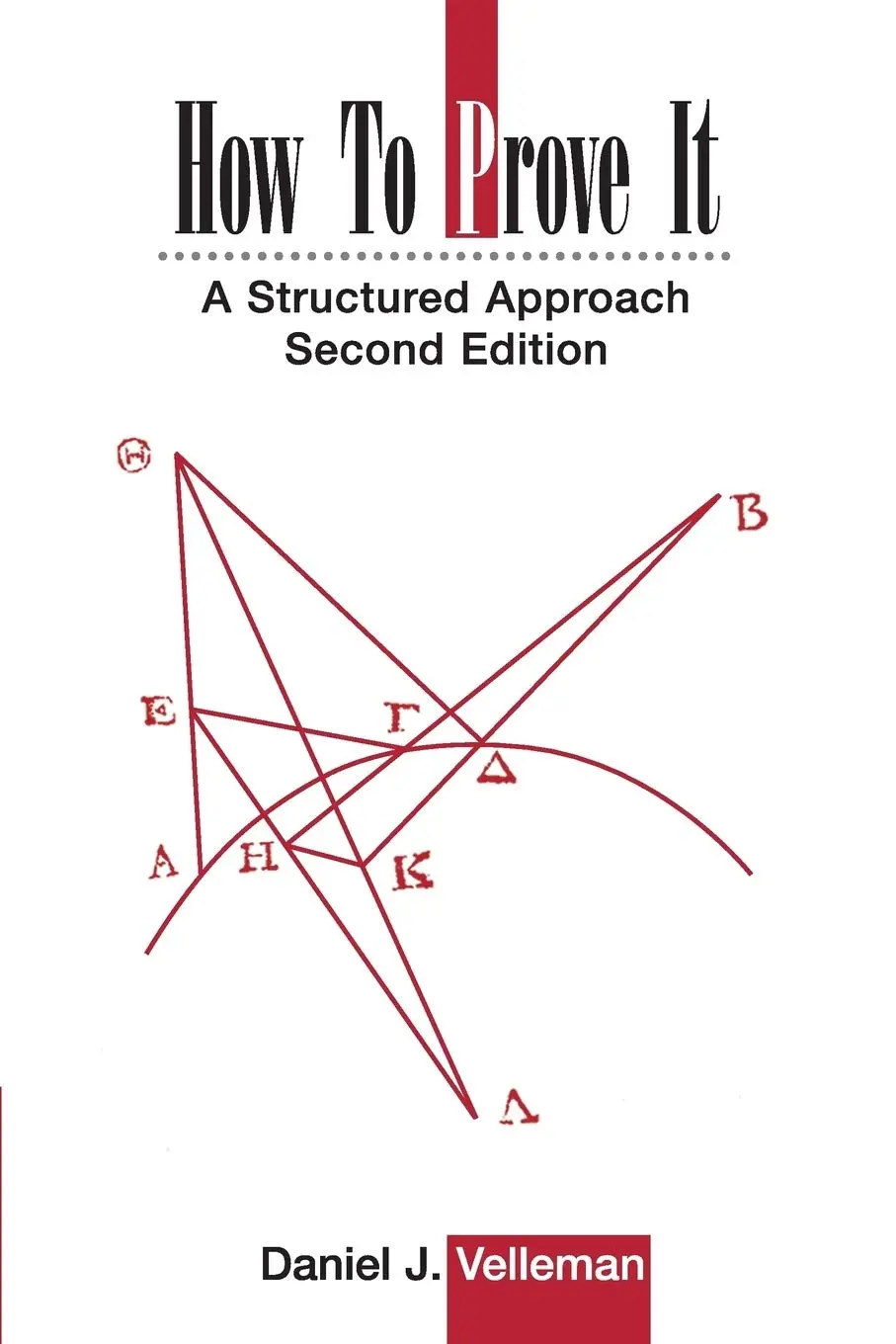
Cover: How to Prove It by Daniel J. Velleman
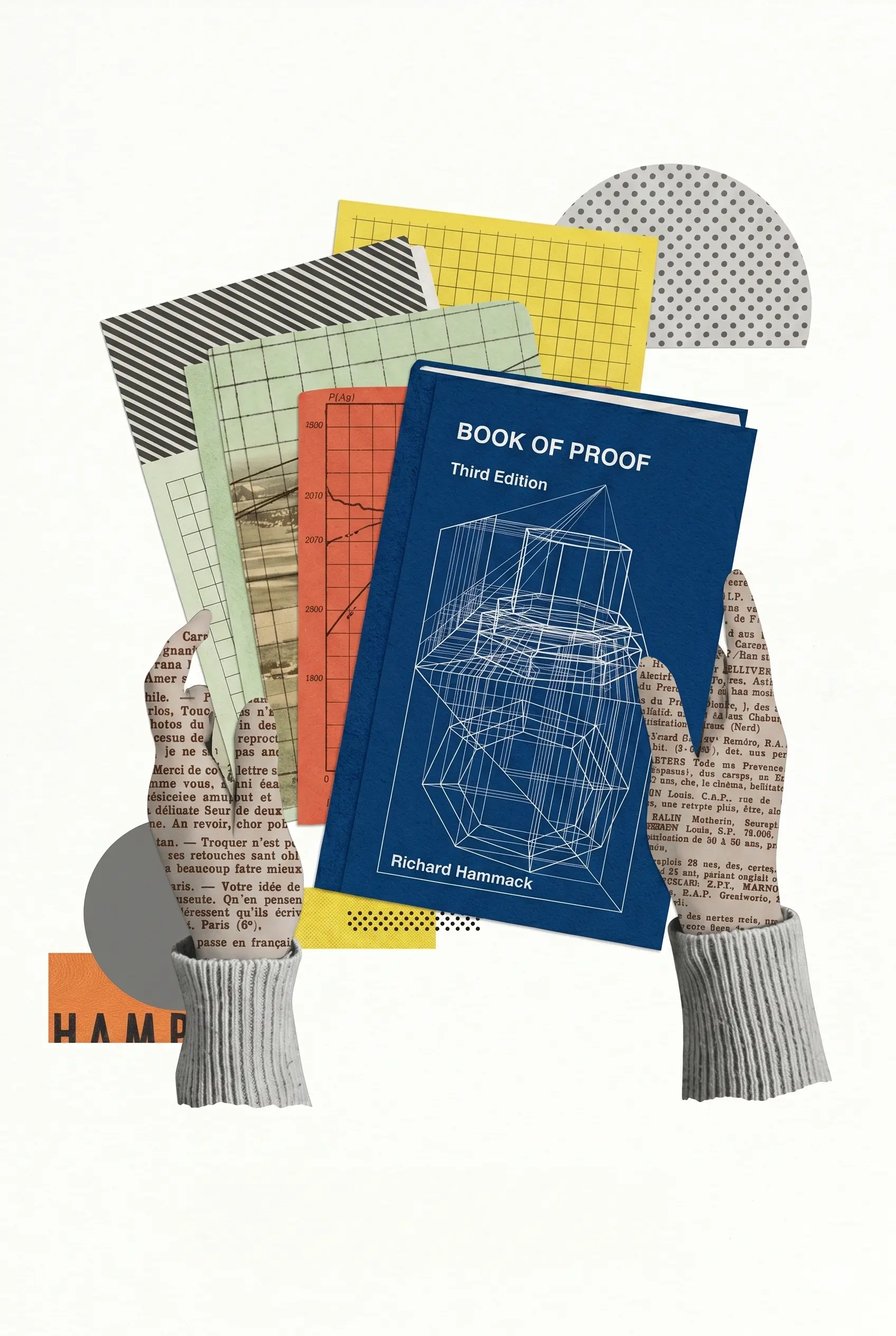
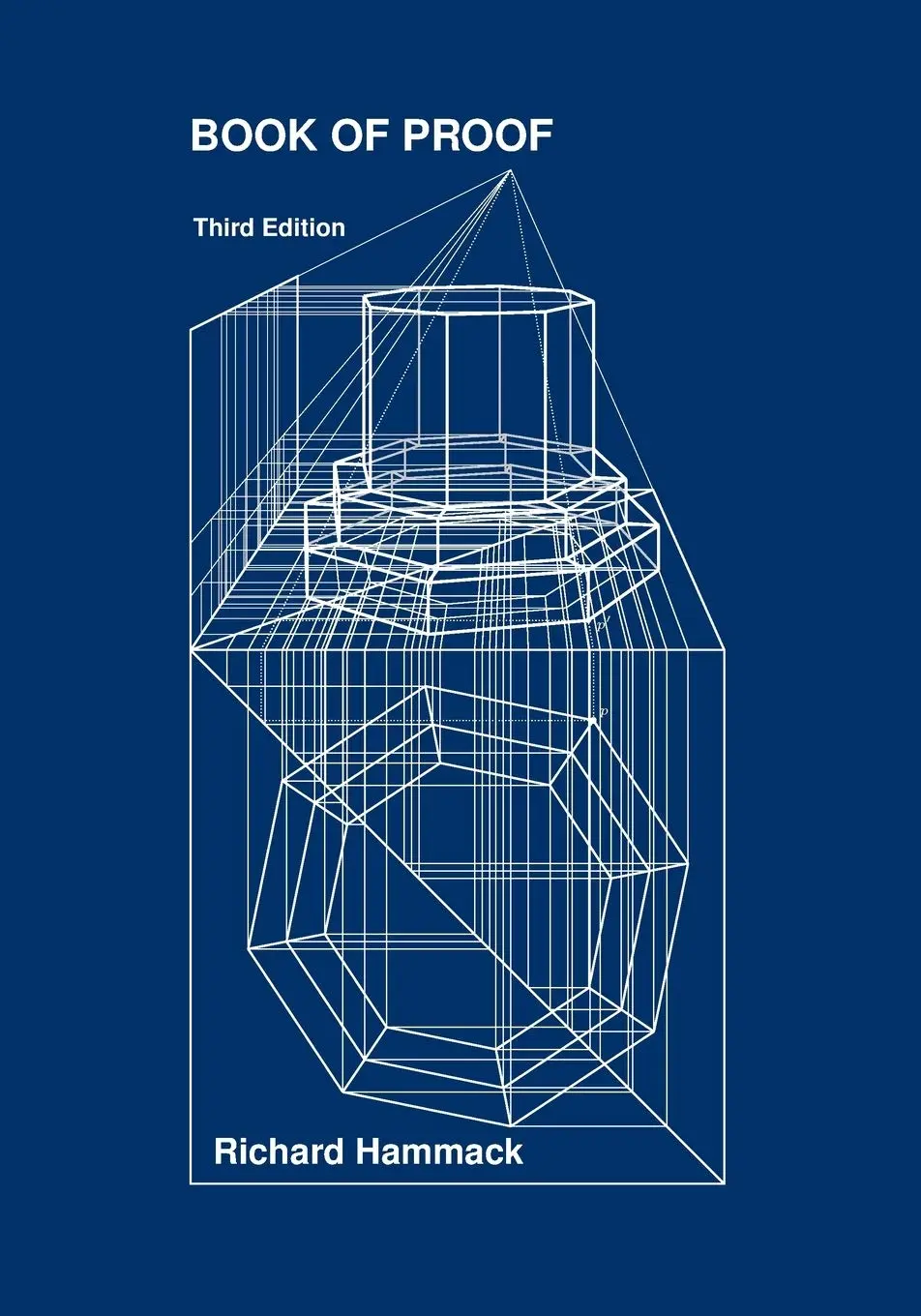
Cover: Book of Proof by Richard Hammack
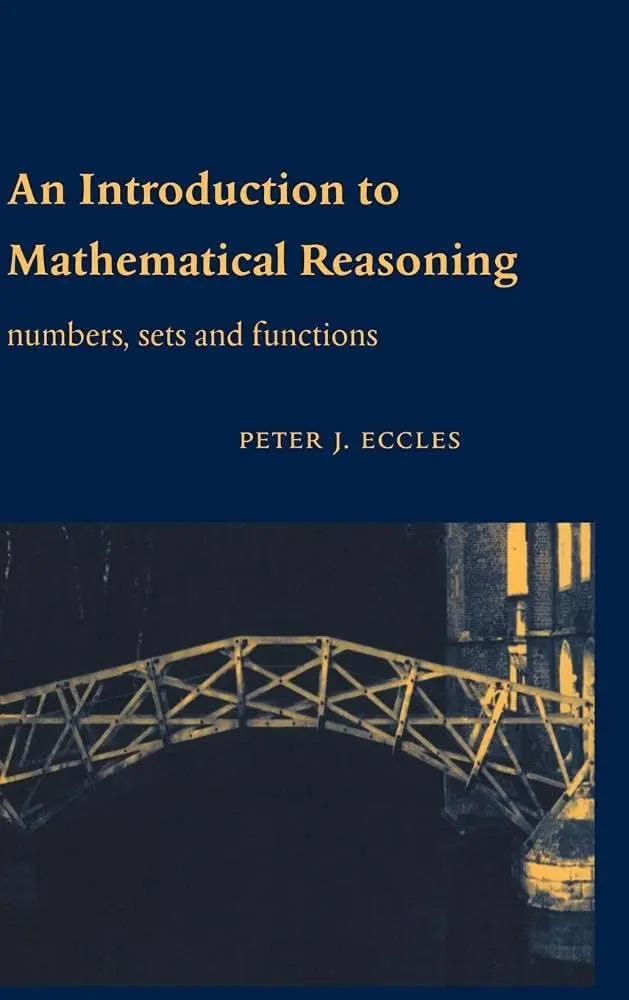
Cover: An Introduction to Mathematical Reasoning by Peter J. Eccles
Cover: Concepts of Modern Mathematics by Ian Stewart
Cover: Introduction to Topology by Bert Mendelson
Cover: What Is Mathematics? by Richard Courant and Herbert Robbins
Cover: Mathematics and Its History by John Stillwell
Cover: Mathematics for the Nonmathematician by Morris Kline
Cover: Calculus by Michael Spivak
Cover: Calculus, Volume 1 by Tom M. Apostol
Cover: Ordinary Differential Equations by Morris Tenenbaum and Harry Pollard
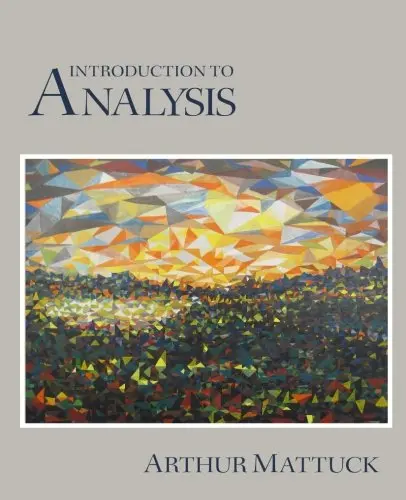
Cover: Introduction to Analysis by Arthur Mattuck
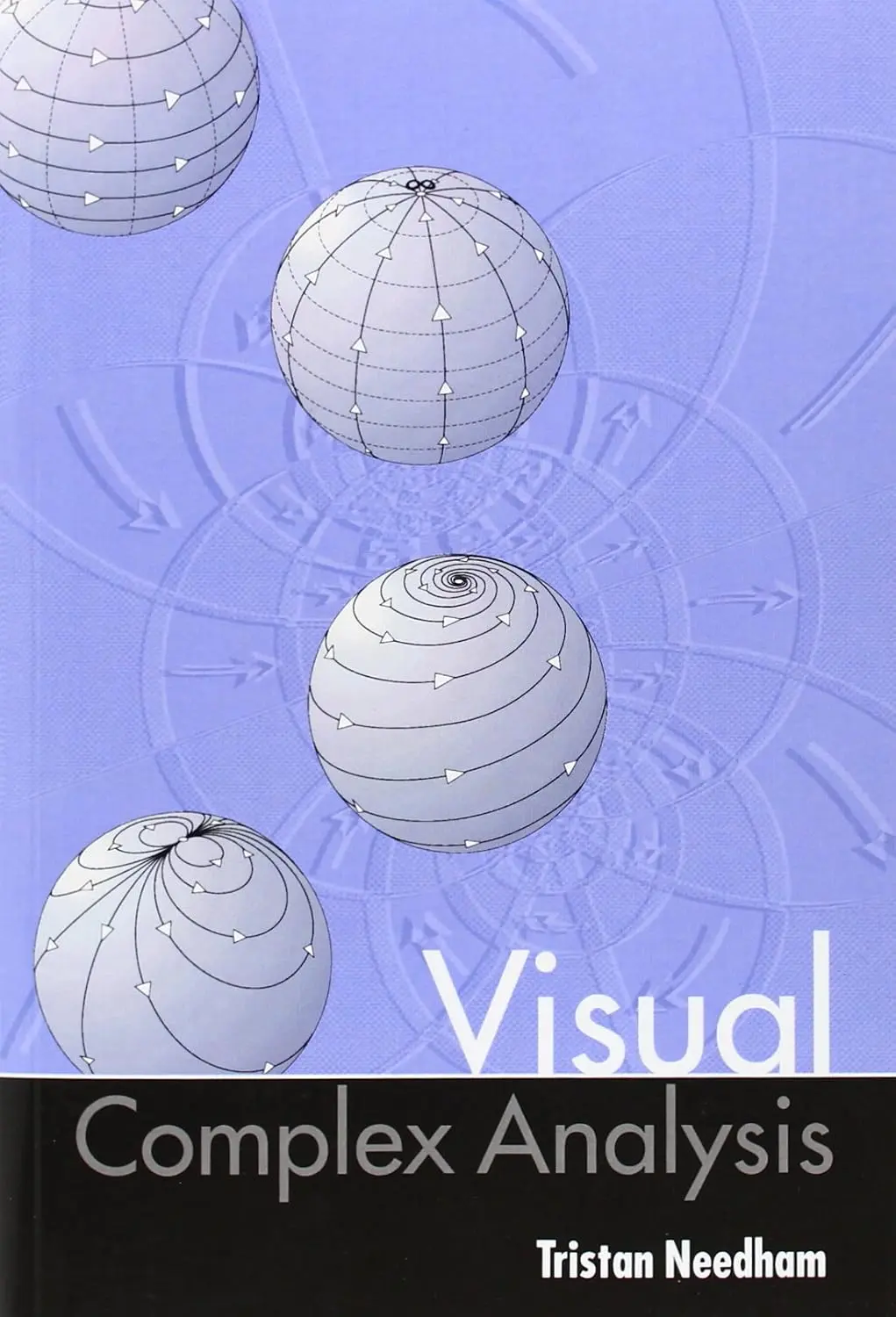
Cover: Visual Complex Analysis by Tristan Needham
Cover: Principles of Mathematical Analysis by Walter Rudin
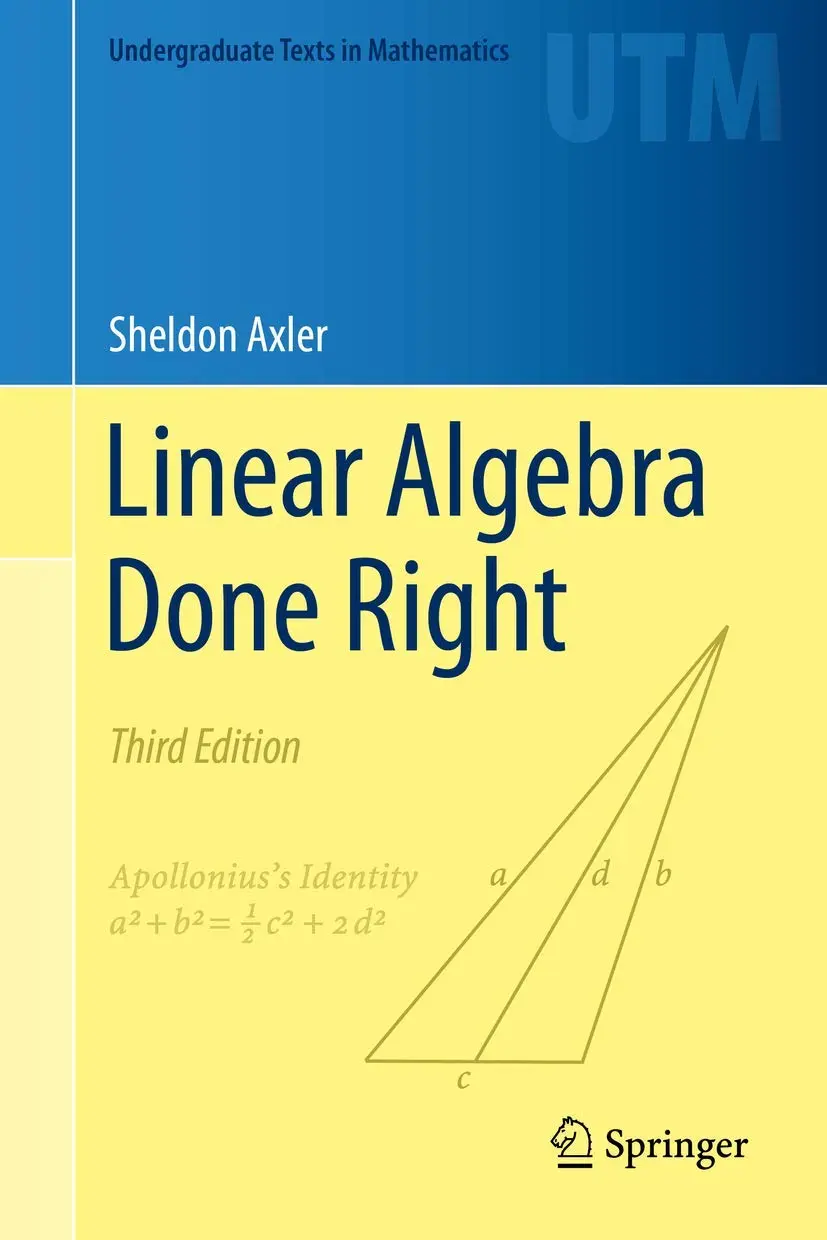
Cover: Linear Algebra Done Right by Sheldon Axler
Cover: Introduction to Linear Algebra by Gilbert Strang
Cover: A Book of Abstract Algebra by Charles C. Pinter
Cover: Abstract Algebra by David S. Dummit and Richard M. Foote
Cover: Topology by James R. Munkres
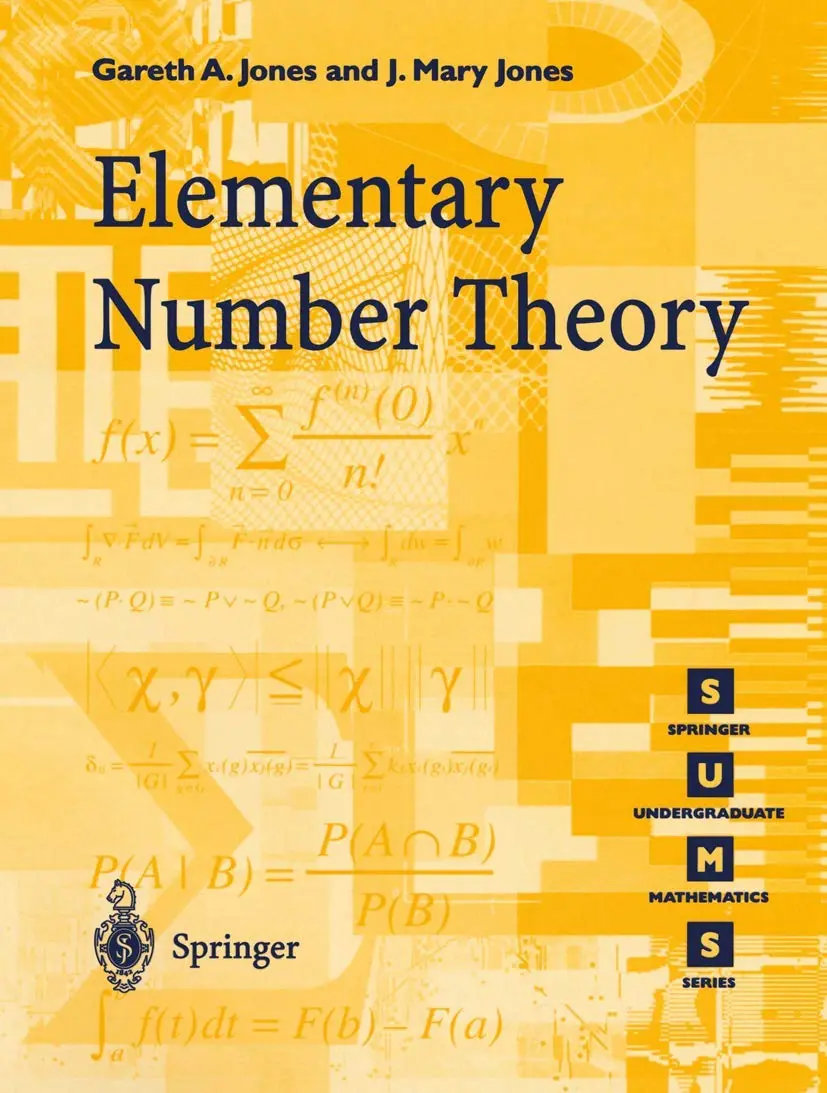
Cover: Elementary Number Theory by Gareth A. Jones and J. Mary Jones
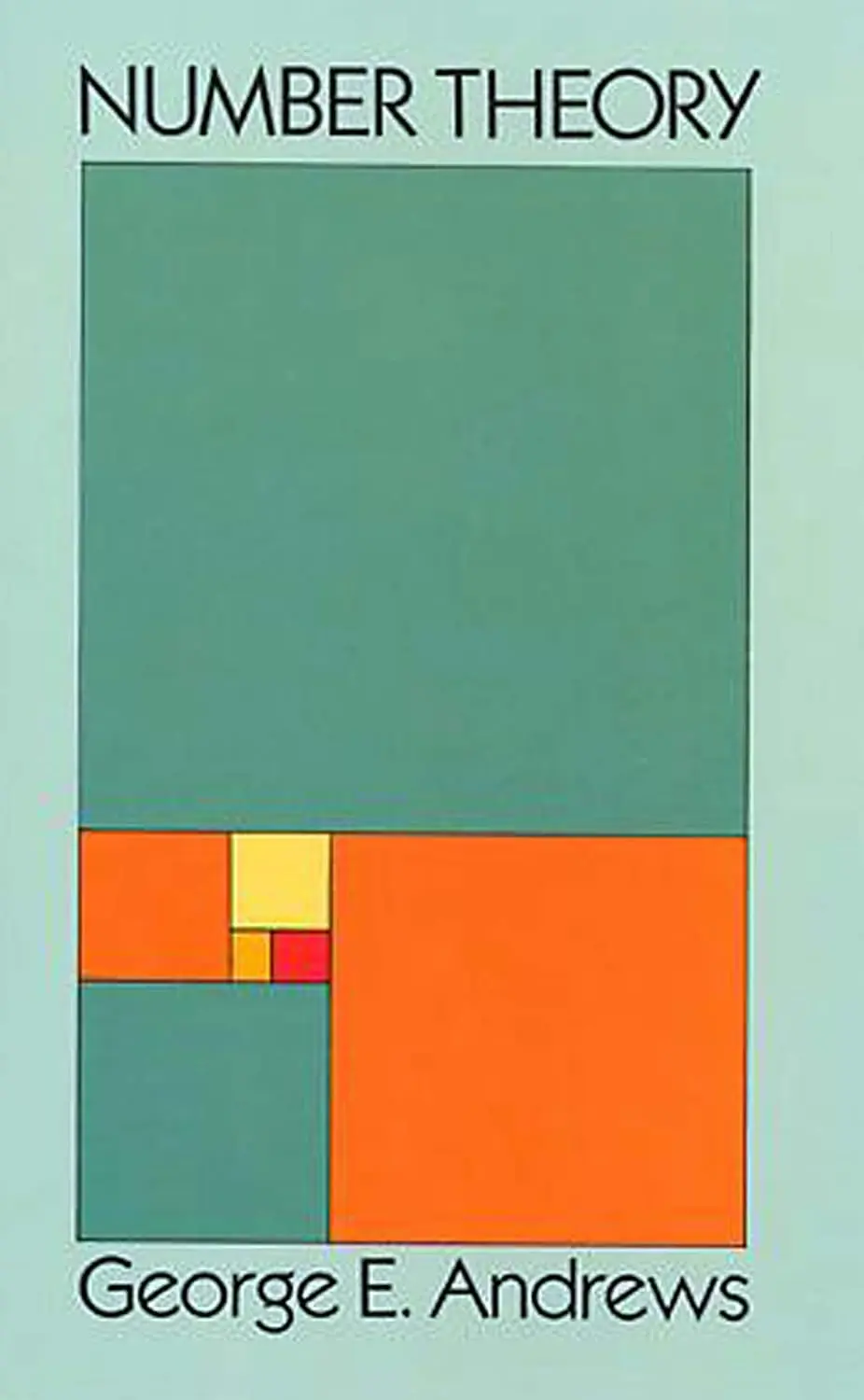
Cover: Number Theory by George E. Andrews
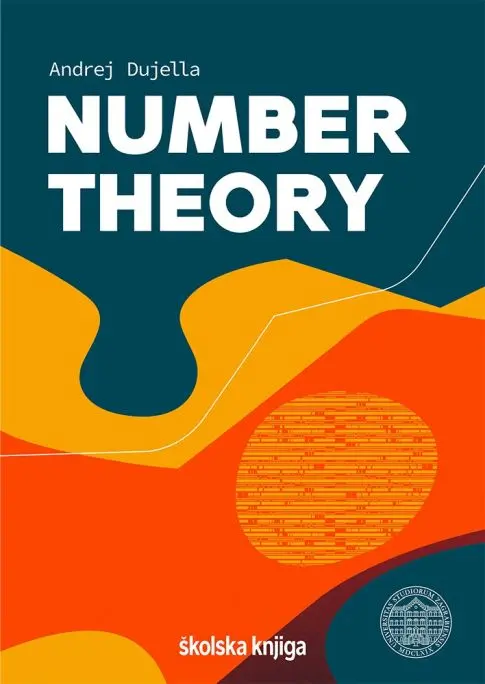
Cover: Number Theory by Andrej Dujella
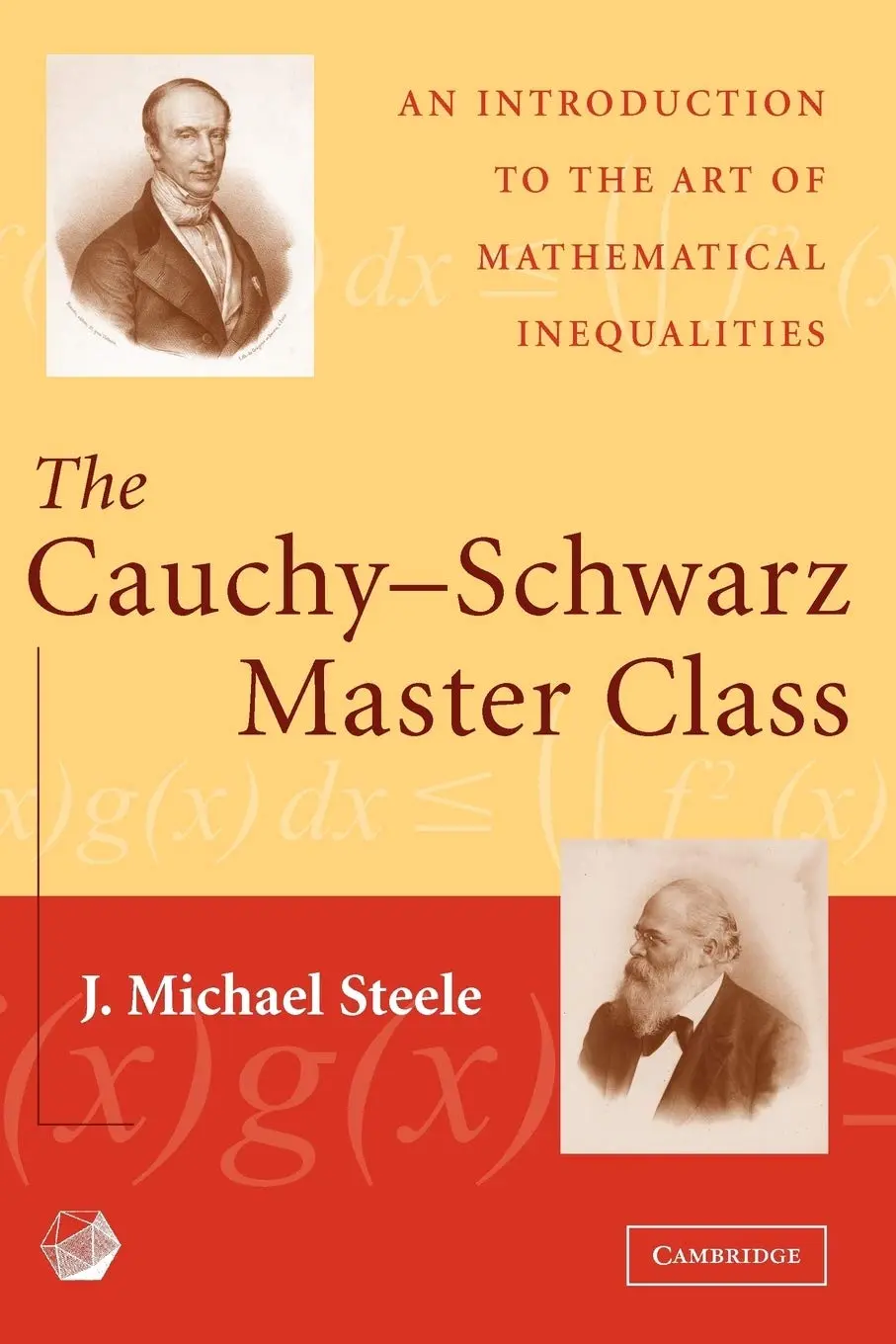
Cover: The Cauchy–Schwarz Master Class by J. Michael Steele
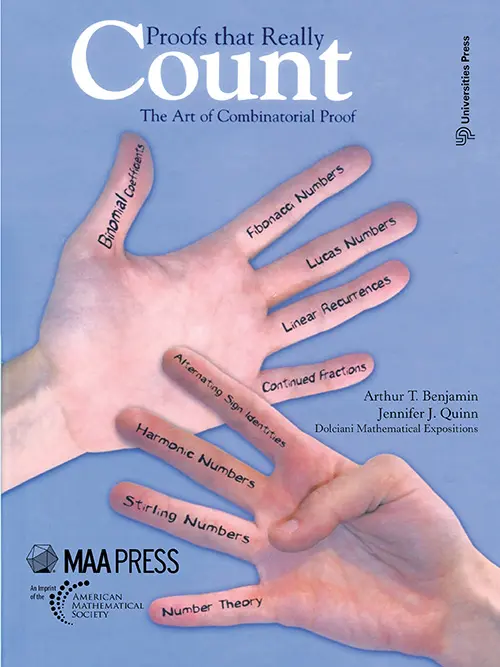
Cover: Proofs that Really Count by Arthur T. Benjamin and Jennifer J. Quinn
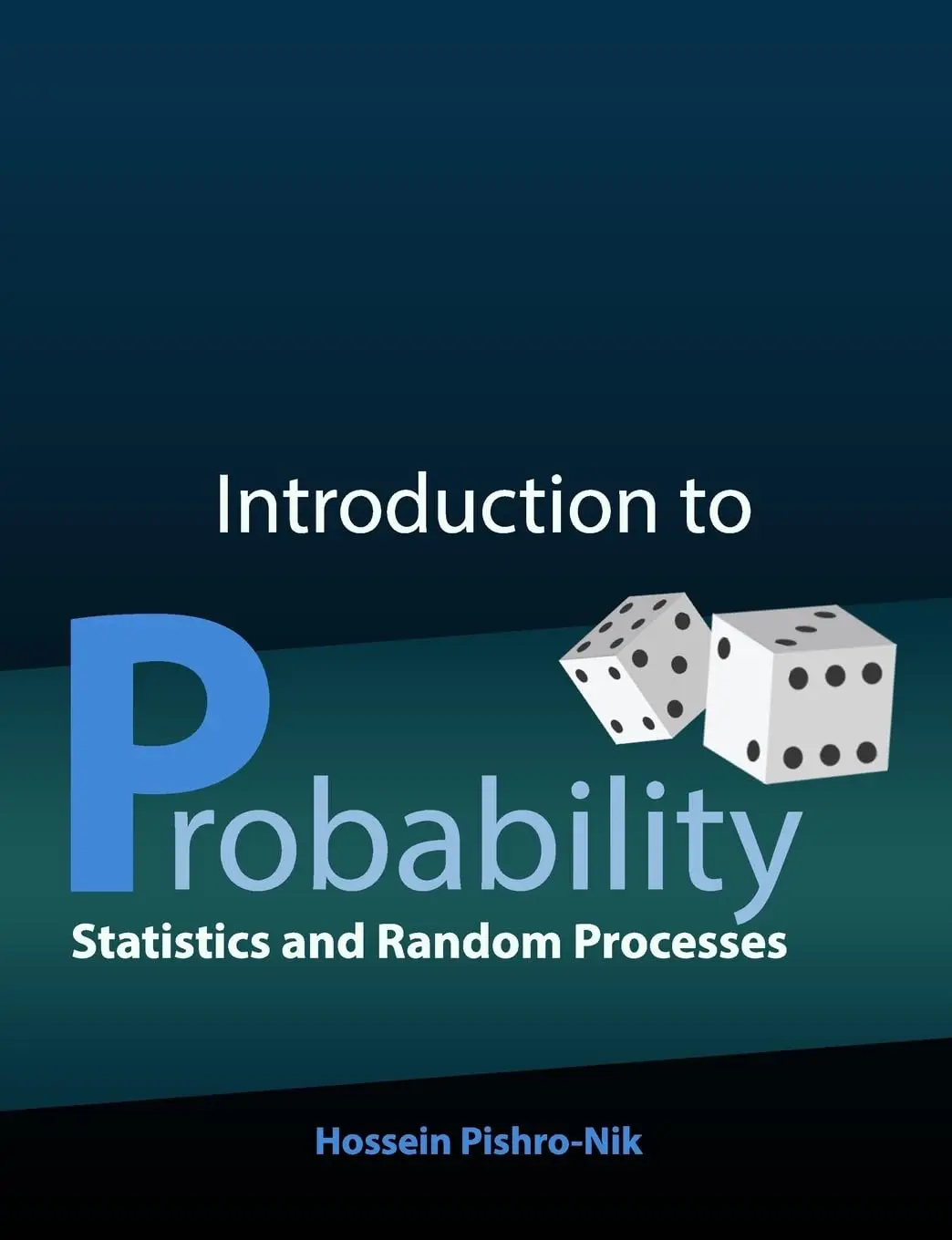
Cover: Introduction to Probability, Statistics, and Random Processes by Hossein Pishro-Nik
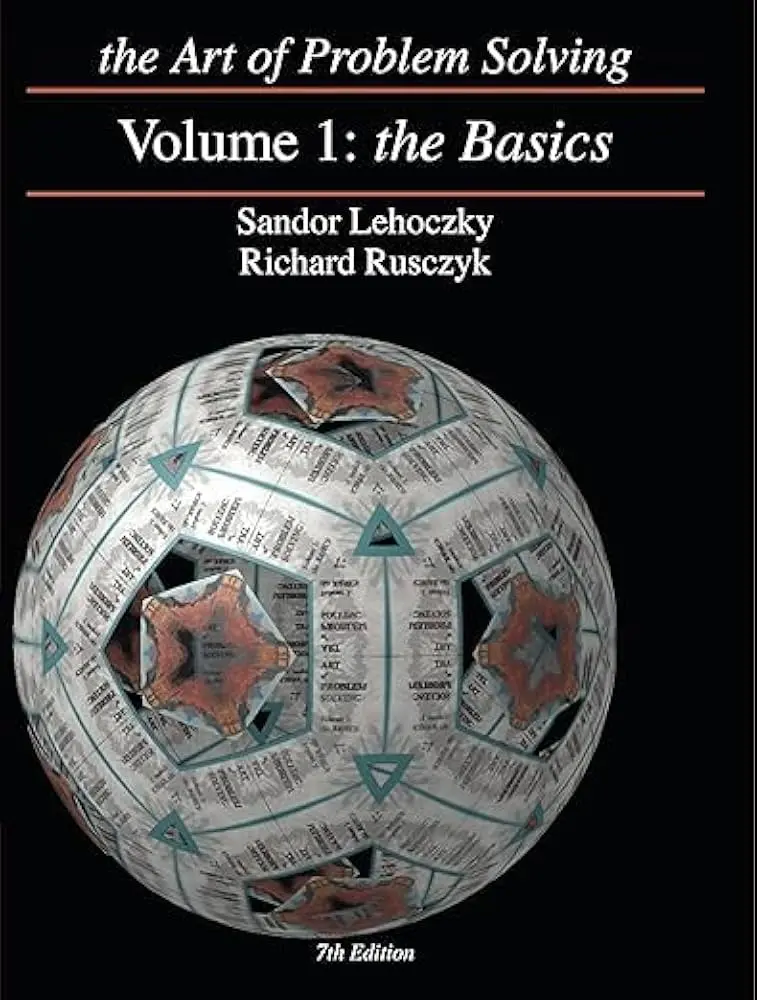
Cover: The Art of Problem Solving by Sandor Lehoczky and Richard Rusczyk
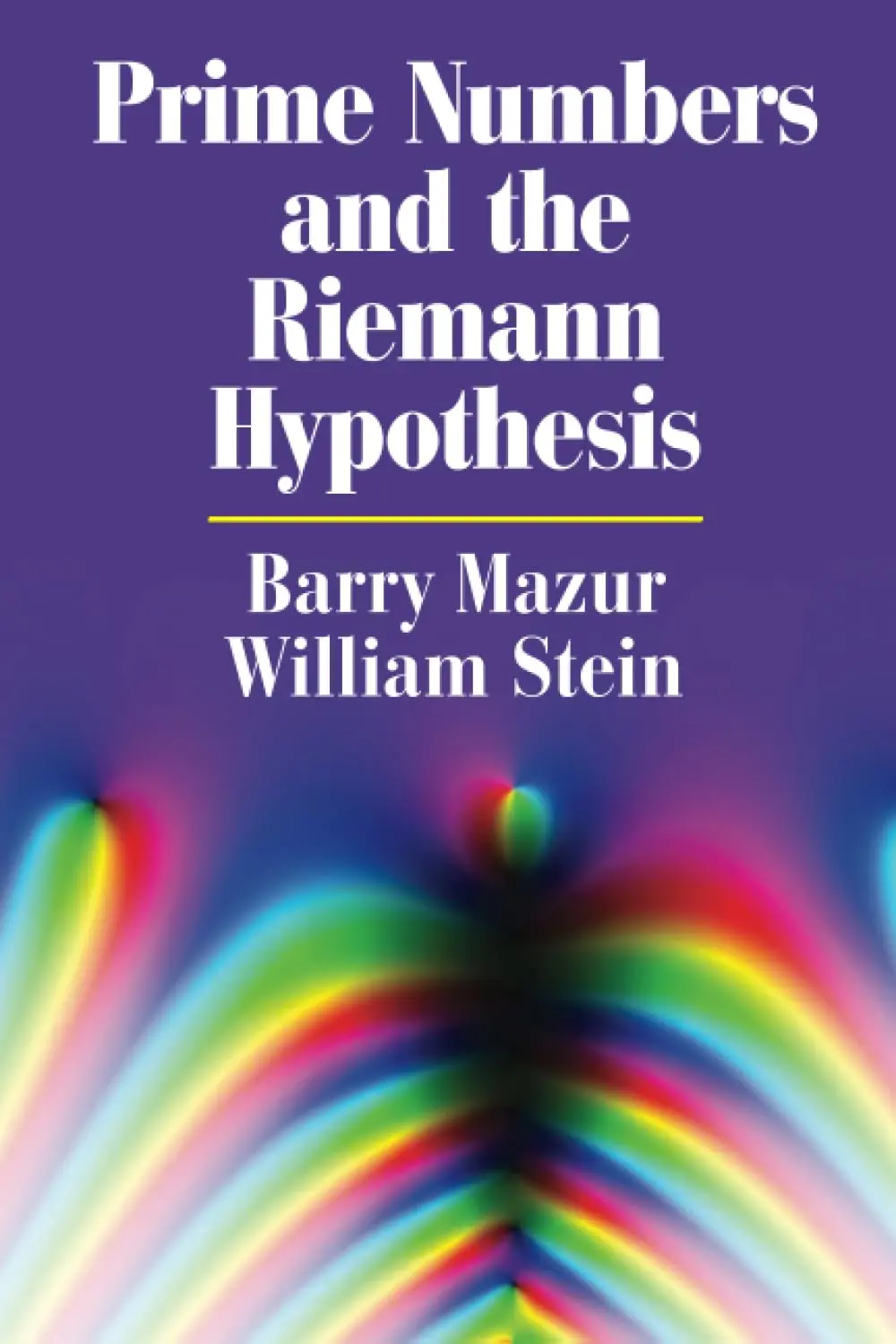
Cover: Prime Numbers and the Riemann Hypothesis by Barry Mazur and William Stein
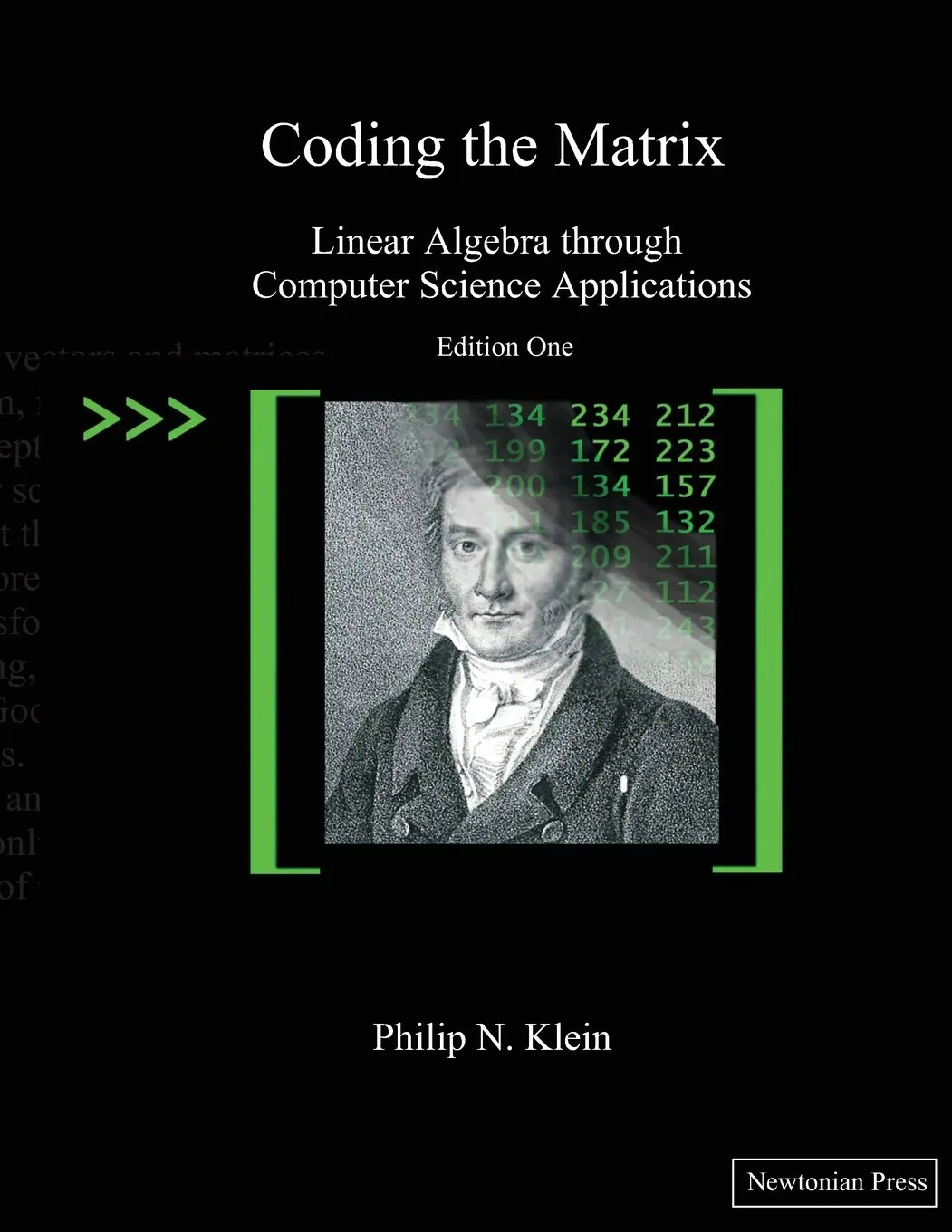
Cover: Coding the Matrix by Philip N. Klein
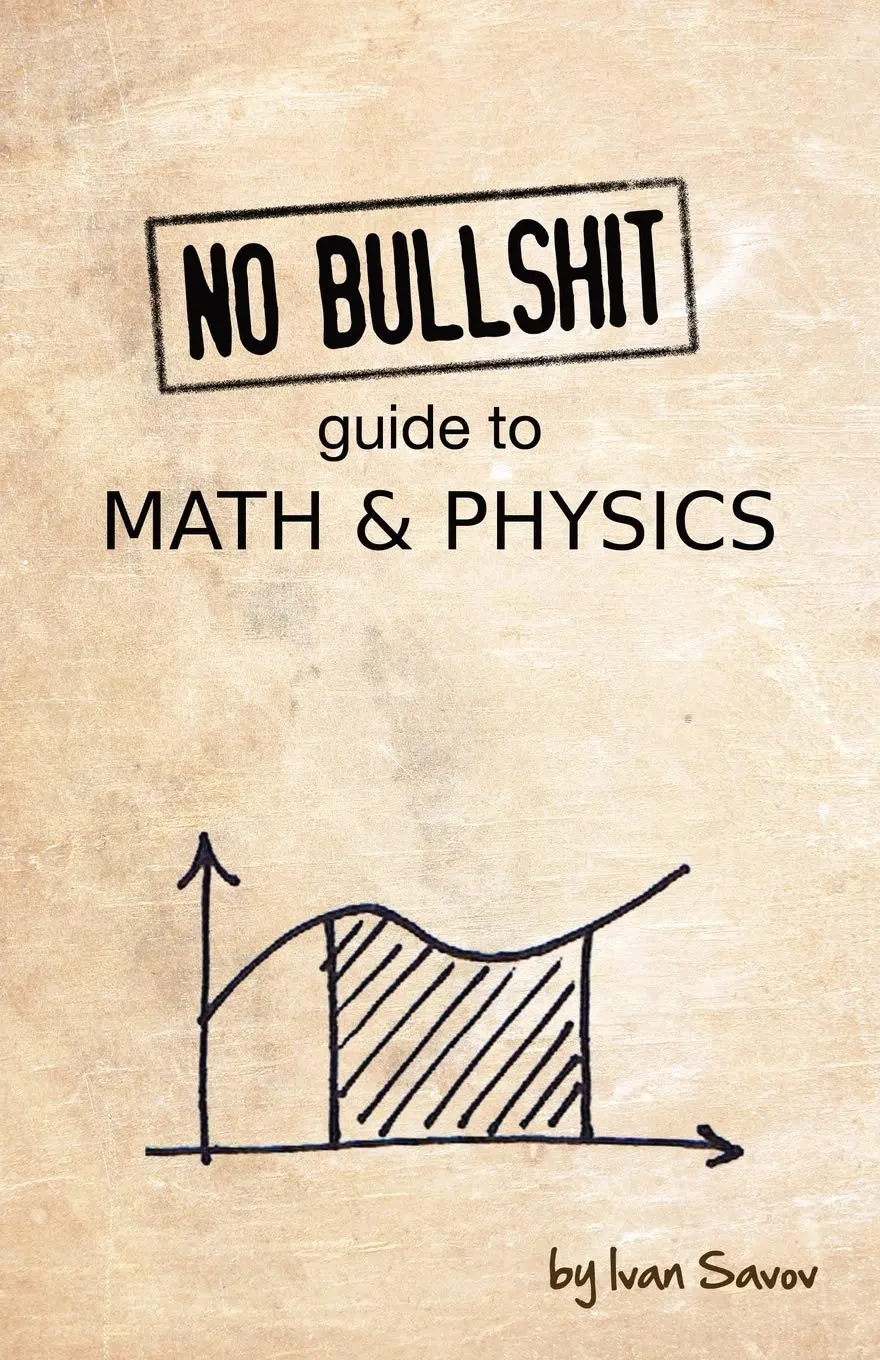
Cover: No Bullshit Guide to Math & Physics by Ivan Savov
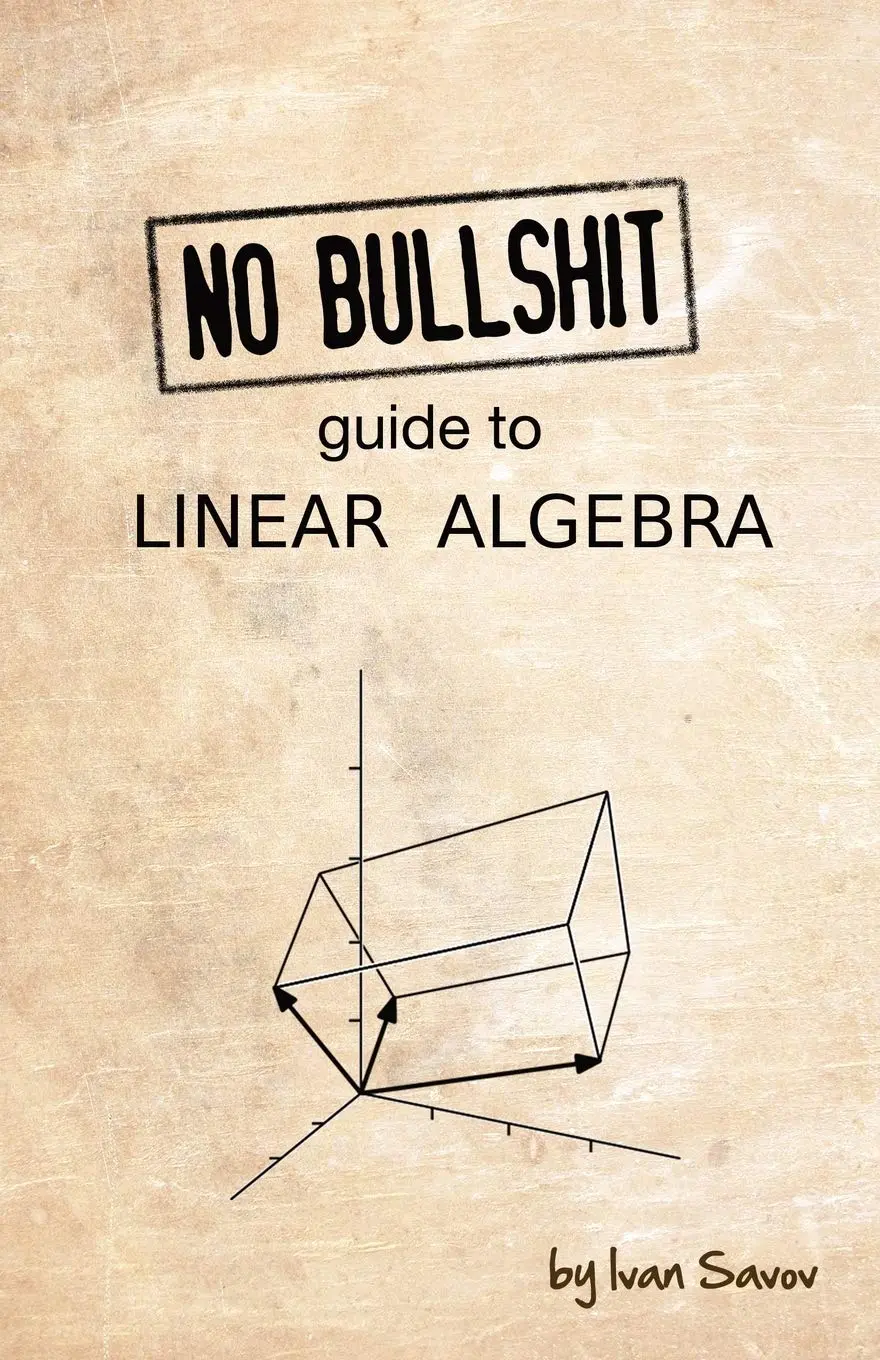
Cover: No Bullshit Guide to Linear Algebra by Ivan Savov

Stage One

Learning to Write a Proof

Before any subject, the language. This is the stage most self-learners skip, and it is the reason the later stages collapse on them.

  1. How to Prove It

    Daniel J. Velleman

    Start here, even if you think you are past it. Most people arriving at higher mathematics have spent years computing answers and almost no time justifying them, and the gap between those two activities is the whole subject. Velleman closes it deliberately. He builds the machinery of proof from the logic up, beginning with quantifiers and the anatomy of an implication, then showing how a definition quietly contains the strategy for proving things about it. By the end you are not memorizing proof templates. You are reading a statement and seeing, almost automatically, what its first line must be.

    It also does double duty as a gentle introduction to logic, which everything later on this map silently assumes you already have. Work the exercises in writing, not in your head — this is the one book here where reading passively is reading wasted, because the skill being taught is a physical habit of the hand as much as the mind. Give it a month of real attention and the rest of the climb changes character. Definitions stop feeling arbitrary, and proofs stop feeling like magic performed by other people.
  2. Book of Proof

    Richard Hammack

    The freely available companion to Velleman, leaner and more direct, and a quiet standard for first proof courses because of it. Hammack covers the same essential ground — sets, logic, relations, functions, and the standard techniques of direct proof, contradiction, and induction — but strips away the conversation to leave a clean, well-lit path. For some readers that economy is exactly right; the structure of the subject shows through without distraction.

    The two books work beautifully in parallel. When a Velleman section runs long, the matching Hammack chapter often says the same thing in half the space, and seeing one idea explained two ways is itself a kind of understanding. If budget is a constraint, know that this book alone, free and complete, will carry you through the gate and into Stage Two without owing anyone anything. Do its exercises with the same discipline. A proof book read without a pen is a novel about exercise.

  3. An Introduction to Mathematical Reasoning

    Peter J. Eccles

    Numbers, sets, and functions, taught as a way of thinking rather than a syllabus to clear. Eccles is the warmest of the three proof books, more willing to pause and talk around an idea before formalizing it, which makes him the right choice for a reader who finds the terser texts a little cold or fast. His treatment of mathematical induction is especially good, returned to from several angles until the technique feels less like a trick and more like an obvious response to a certain shape of problem.

    What sets it apart on this map is where it points. Eccles spends real time on the integers and on counting, so his later chapters lean naturally toward number theory and combinatorics, two subjects that arrive in full force in Stages Four and Five — and that have their own long literature of books devoted to single problems. Read him if you want your introduction to proof to come with a sense of momentum, a feeling that these techniques are already pulling you toward real mathematics rather than rehearsing in a vacuum.

  4. Concepts of Modern Mathematics

    Ian Stewart

    Read this alongside the proof books, not for technique but for the lay of the land. Stewart walks through sets, groups, symmetry, topology, and the other great abstractions of modern mathematics in plain, vivid prose, with no exercises and nothing to prove. Its job is orientation. When these same words return later as formal definitions — a group in Pinter, a topology in Munkres — they arrive as old acquaintances rather than strangers, and that familiarity is worth more than it sounds.

    There is a deeper reason it belongs early. Self-learners often grind through the mechanics of a subject without ever seeing why anyone built it, and that missing picture is what makes abstraction feel pointless and motivation drain away. Stewart supplies the picture in advance. He shows you the cathedral before handing you the bricks, so that every technical chapter later has somewhere to fit. Keep it light, read it in the gaps between harder work, and let it quietly raise your sense of where all this is going.

  5. Introduction to Topology

    Bert Mendelson

    A short, kind first taste of topology that asks for little beyond comfort with sets and functions, which is exactly why it sits here in Stage One rather than alongside the heavier Munkres much later. Mendelson introduces metric spaces, continuity, and connectedness with patience and a minimum of machinery, and in doing so he quietly prepares the ground for analysis. The notions of open set, limit, and continuity that feel so abstract in Rudin are far less frightening if you have already met their friendly metric-space versions here.

    Treat it as an appetizer with two jobs. It softens the entrance to real analysis in Stage Three, and it plants a seed that Munkres will later grow into a full subject in Stage Four. It is also simply a pleasure to read — slim, clear, and confidence-building at a point in the journey when confidence is the thing most likely to run short. Do not rush it, but do not linger either. Its purpose is to open a door, not to be a destination.

A list hands you thirty covers and walks away. A map tells you what to open first, and what will defeat you if you open it too early.

Stage Two

Seeing the Whole Country First

Before the long technical climb, spend time with books that show you why any of it matters. Reading these is not procrastination. It is fuel for the months ahead — the same kind of motivation you find in mathematics books written by artists, architects, and writers who arrived at the subject from the outside.

  1. What Is Mathematics?

    Richard Courant & Herbert Robbins

    The classic that has turned more people toward serious mathematics than perhaps any other single book. Courant and Robbins move from the natural numbers through geometry, calculus, and the beginnings of topology, and the friendly surface hides genuine rigor — this is a survey you can actually work, not just read. Einstein's line on the cover is not marketing. The book really does present the fundamental ideas and methods of the whole field with a clarity that has not aged in eighty years.

    For a self-learner its value is twofold. It is a map of the territory you are about to enter, and it is a standard. Read it slowly, over weeks, doing what problems you can, and let it calibrate your sense of what understanding is supposed to feel like — the click of a definition that was clearly the right one, the satisfaction of a proof that explains rather than merely verifies. Everything in the harder stages is easier to bear once you have felt, here, what you are climbing toward.

  2. Mathematics and Its History

    John Stillwell

    The single best argument that history is not a sideshow to mathematics but a way into it. Stillwell presents ideas in roughly the order people actually discovered them, which turns out to be, more often than not, the order in which they make sense. Why did anyone need complex numbers, or groups, or non-Euclidean geometry? The historical answer — someone was stuck on a concrete problem and these were the tools that freed them — is far more memorable than a definition handed down from nowhere.

    Keep it on the desk as a companion through every later stage rather than reading it once and shelving it. Whenever a definition in Rudin or Munkres or Pinter feels arbitrary, there is a good chance Stillwell explains who first needed it and what problem it solved, and that context is often the difference between memorizing a thing and understanding it. It is also a genuinely beautiful book, written by a mathematician who clearly loves the subject's long, strange, human story, and that affection is contagious.

  3. Mathematics for the Nonmathematician

    Morris Kline

    Kline ties mathematics to the cultures, problems, and arguments that produced it, building motivation rather than technique. It is the most accessible book in this stage, written for the intelligent reader with no special background, and it is the one to hand a curious friend or a student who suspects mathematics is just rules. Kline's thesis throughout is that mathematics is a human enterprise, shaped by astronomy, navigation, art, and physics, and that its abstractions were answers to real human questions.

    For the self-learner it plays a specific role: it is the light read between the heavy ones, the book you turn to when the technical climb has worn you down and you need reminding why you started. It will not teach you to prove a theorem, but it will keep alive the conviction that the theorems are worth proving. That conviction is not a luxury on a journey measured in years. It is the fuel that gets you to the next chapter when the first attempt at Rudin has left you doubting yourself.

Stage Three

The Core Climb — Calculus into Analysis

This is the spine of a mathematical education. Everything before was preparation for it. Move slowly here, and do not let the abundance of books fool you into reading all of them.

  1. Calculus

    Michael Spivak

    Not a calculus book so much as a first course in analysis wearing a calculus title. If your only experience of calculus is computing derivatives and integrals by rule, Spivak is where the subject becomes mathematics. He builds it from the properties of the real numbers, proves the theorems you previously took on faith, and treats the familiar machinery of limits and continuity as something to be earned rather than assumed. The exposition is elegant, occasionally funny, and never hurried.

    The real curriculum, though, is the problems. Spivak's exercises are famous for a reason: many are small theorems in disguise, and wrestling one to the ground teaches more than a chapter of reading. This is slow, demanding work, and it is the most transformative single book many self-learners ever finish. Budget months, not weeks, and resist the urge to look up solutions before you have genuinely struggled. The struggle is not an obstacle to the learning. It is the learning.

  2. Calculus, Volume 1

    Tom M. Apostol

    The rigorous alternative to Spivak, and the better fit for a reader who wants structure, completeness, and a steady systematic march over charm. Apostol famously develops integration before differentiation, which feels strange at first and then quietly justifies itself, and his treatment is more encyclopedic — closer to a reference you will return to than a course you pass through once. Where Spivak delights, Apostol builds, brick by careful brick, leaving very little unstated.

    It has one practical advantage worth weighing. The second volume carries directly into linear algebra and multivariable calculus, so committing to Apostol sets up a coherent two-volume path through much of the core at once. Self-learners who like to see the whole architecture, who are reassured rather than bored by thoroughness, tend to prefer it and stay with it. Either this or Spivak will get you up the mountain. The mistake is not choosing wrongly between two excellent books. The mistake is choosing both and finishing neither.

  3. Ordinary Differential Equations

    Morris Tenenbaum & Harry Pollard

    Once you can handle calculus seriously, this is the friendliest serious book on differential equations in print. It is thorough without being forbidding, generous with worked examples, and patient in a way that makes a reputedly dry subject feel alive. The applications — to mechanics, growth, decay, and the rest — are woven in throughout, so the methods never float free of the problems that motivate them. For a self-learner this matters enormously, because differential equations taught as pure technique is one of the easiest subjects to forget.

    Place it after Spivak or Apostol, where exactly is up to you. Some readers slot it in as a breather between calculus and the abstraction of real analysis, a stretch of concrete, satisfying problem-solving that rebuilds confidence before the hardest climbing. Others run it in parallel with analysis to keep one foot on solid computational ground. Either way it earns its place: differential equations are where a great deal of mathematics meets the physical world, and this is the book that makes that meeting feel natural rather than mechanical.

  4. Introduction to Analysis

    Arthur Mattuck

    The bridge many people need between Spivak and Rudin, and the book that has rescued more than one stalled attempt at real analysis. Mattuck writes with an unusual amount of conversation around the proofs, explaining not just that a step is valid but why anyone would have thought to take it — the reasoning behind the reasoning, which terser books leave for you to reconstruct alone. For a self-learner with no instructor to ask, that running commentary is close to having one.

    If analysis has bounced you before, and for many self-taught readers it has, begin your next attempt here rather than with a leaner text. Mattuck covers the essential material — limits, continuity, differentiation, integration, sequences and series — at full rigor, but with the difficulty distributed humanely rather than concentrated into dense, unforgiving pages. Finish this and Rudin becomes a sharpening of something you already understand, instead of a wall. It is the gentlest honest road into the subject, and there is no shame in taking the gentle road. There is only the difference between arriving and giving up.

  5. Visual Complex Analysis

    Tristan Needham

    A whole subject that the usual lists leave out entirely, taught through geometry instead of computation. The standard approach to complex analysis, in force for two centuries, runs on long algebraic manipulations; Needham replaces them with hundreds of carefully drawn diagrams and direct visual reasoning. The result is that ideas which normally arrive late and abstract — analytic functions as transformations, the derivative as what Needham calls an amplitwist, the deep link to non-Euclidean geometry — become things you can see and almost feel, often far earlier than convention says you should.

    The current 25th Anniversary Edition adds a foreword by Roger Penrose and new captions that walk you through the geometry of each figure, making an already generous book even more readable. Come to it once you are comfortable with real calculus; you do not need a formal course in analysis first. What you take away reaches beyond the complex plane. Needham quietly retrains how you look at all of mathematics, replacing the instinct to compute with the instinct to see, and that shift stays with you long after the specific theorems fade.

  6. Principles of Mathematical Analysis

    Walter Rudin

    The summit of this stage, known to generations simply as Baby Rudin, and a genuine rite of passage. It is spare to the point of austerity: every proof compressed to its essential bones, nothing explained twice, not a wasted word in three hundred pages. That severity is the point. Working through Rudin, filling in the steps he leaves to you, forces a level of mathematical maturity that gentler books cannot, and readers come out the other side thinking differently — more precisely, more confidently, more like a mathematician.

    But the danger is real and worth stating plainly. Rudin assumes a reader who has already met analysis and wants it distilled, not a beginner meeting it for the first time. Treated as a starting point it is one of the most reliable ways to convince yourself that mathematics is not for you, when the truth is only that you opened the right book at the wrong time — a confusion Feynman diagnosed decades ago in how we teach the subject.

A Note on Pace

The honest timeline is years, not weekends

No one reads this map in a season. A self-learner working steadily through the core climb alone is looking at a year or more, and that is the right pace, not a sign of slowness. The people who finish are not the fastest. They are the ones who picked one book per subject, worked the problems in writing, and kept a notebook of what they did not yet understand.

The newsletter where this kind of slow, deliberate reading is the whole point is Abakcus — written for people who would rather understand one proof completely than skim ten.

Stage Four

The Open Country — Algebra, Number Theory, Topology

Once analysis has built your stamina, the rest of mathematics opens at once. These branches can be read in almost any order. Follow what pulls you.

  1. Linear Algebra Done Right

    Sheldon Axler

    The proof-first introduction to linear algebra, written for exactly the reader this map produces — someone who learned to write proofs in Stage One and now wants the subject as a structure of ideas rather than a toolbox of computations. Axler's signature move is to delay determinants almost to the end, building the theory of vector spaces and linear maps on cleaner foundations first — the same instinct that drives Naive Set Theory at the foundations level. The effect is that concepts which usually feel like opaque formulas, eigenvalues above all, arrive instead as natural and almost inevitable.

    This is where to begin algebra, and it pairs naturally with the abstract algebra that follows, since the habits of thinking about structure transfer directly. It rewards slow reading and full engagement with the exercises, which are designed to make you reconstruct the theory rather than merely apply it. If you have ever computed with matrices without feeling you understood what you were doing, Axler is the cure, and the understanding it gives is permanent.

  2. Introduction to Linear Algebra

    Gilbert Strang

    The most widely used applied linear algebra book in the world, and one half of a package — the other half being Strang's MIT lectures, among the most beloved mathematics courses ever recorded and freely available to anyone. Strang teaches you to see a matrix as an action on space, to think in terms of column spaces and projections and the four fundamental subspaces, and to compute with genuine confidence. His instinct is always toward intuition and application rather than abstract proof.

    That makes it the right door for anyone whose path runs toward data, engineering, machine learning, or scientific computing, where the geometric and computational fluency Strang builds is exactly what you need day to day. It also works beautifully as a first pass before Axler: get the pictures and the intuition from Strang, then return for the rigorous structure from Axler, and the two together give you a command of linear algebra that neither alone quite reaches. Watch the lectures alongside the book. They are that good.

  3. A Book of Abstract Algebra

    Charles C. Pinter

    The kindest first encounter with groups, rings, and fields you will find in print, and an inexpensive Dover volume on top of it. Pinter moves in small, well-motivated steps, introducing each abstraction only after you can see what problem it answers, and his exercises build patiently rather than ambushing you. For a self-learner meeting abstract algebra for the first time, this gentleness is not a weakness. It is the difference between the subject opening up and the subject slamming shut.

    Begin abstract algebra here, without exception, however confident you feel. The ideas — that symmetry has an arithmetic, that the integers and polynomials are two faces of one structure — are genuinely deep, and they reward an introduction that gives them room to breathe. The comprehensive references can wait. Pinter gets you to the point where groups and rings feel like familiar objects you can reason about, and from there the heavier books become useful rather than overwhelming. Read this first, and the whole subject is friendlier ever after.

  4. Abstract Algebra

    David S. Dummit & Richard M. Foote

    The comprehensive reference that lives on working mathematicians' shelves, a thick and demanding book that covers far more than any first course needs — group theory, ring theory, field and Galois theory, modules, and more, all at full depth and full rigor. Its completeness is its great virtue and also its trap. Approaching it before Pinter, as your first taste of abstract algebra, is a familiar way to stall out, because Dummit and Foote explains thoroughly but motivates sparingly. It assumes you already want the depth.

    Come here once the basics are comfortable and your appetite has grown past what an introduction can satisfy. As a second book it is superb: the place you go to see every theorem proved in full, to find the topic Pinter only gestured at, to settle a question definitively. Most self-learners do not read it cover to cover, and they should not feel they must. They keep it, work the sections their interests demand, and treat it as the reliable reference it is built to be — a book for years, not for a season.

  5. Topology

    James R. Munkres

    The standard text in the subject, and standard for the honest reason that it is very hard to do better. Munkres is rigorous, complete, and unusually well-written for a book of its weight, carrying you from the point-set foundations — open sets, continuity, compactness, connectedness — toward the threshold of algebraic topology and the fundamental group. The exposition is clean and the exercises are excellent, ranging from routine checks to small research-like problems that genuinely deepen your grasp.

    Mendelson, back in Stage One, was the appetizer that made the basic vocabulary familiar. This is the full meal, and you should expect to live inside it for a good while. The reward is large: topology is where many of the abstractions you have been accumulating — continuity from analysis, structure from algebra — fuse into a single powerful way of seeing space and shape. For self-learners it is also deeply satisfying, because the subject is visual and surprising in equal measure, and Munkres lets both qualities come through without ever sacrificing rigor.

  6. Elementary Number Theory

    Gareth A. Jones & J. Mary Jones

    A clean, modern introduction to number theory with the proofs done properly and a clear thread running from the elementary results toward deeper structure. For a reader who has been through Stage One, this is an ideal first number theory book: it assumes the proof fluency you built there and uses it, moving through divisibility, congruences, and the classical theorems with a steady, well-organized hand. Nothing about it is padded or coy. It respects the reader.

    Number theory is an unusually good subject for self-learners, because so many of its problems can be stated in a sentence and chewed on with nothing but a notebook, and this book leans into that accessibility without sacrificing depth. Pair it with whichever of the two number theory books below matches your appetite — Andrews for combinatorial elegance, Dujella for serious range — or with the books that orbit one famous problem once you want to see where the subject leads. Either way it makes a fine entry into one of the oldest and most beautiful parts of mathematics.

  7. Number Theory

    George E. Andrews

    A Dover classic — inexpensive, elegant, and beloved — with a combinatorial flavor that sets it apart from the other introductions. Andrews is one of the great expositors of partitions and generating functions, and his enthusiasm for counting problems gives the book a distinctive character: number theory here feels close to combinatorics, full of clever bijections and surprising identities rather than only the classical machinery of congruences. For a reader who delights in that kind of argument, it is a particular pleasure.

    It works either as a companion to the Joneses, approaching the same subject from a different and complementary angle, or as a standalone introduction for someone drawn to the combinatorial side from the start. Being a Dover book, it costs almost nothing, which makes it an easy addition to any self-learner's shelf. It is also simply a joy to read, the work of a mathematician sharing favorite results with evident affection, and that warmth makes the material stick in a way drier treatments rarely manage.

  8. Number Theory

    Andrej Dujella

    A thorough, problem-rich treatment for the reader who wants to go well past a first introduction. Dujella covers more ground and more advanced topics than the entry-level books — moving toward the genuinely modern material, with a generous supply of exercises that range from routine to demanding. It is the natural next step once the basics from Jones or Andrews are secure and you find that number theory is a subject you want to pursue seriously rather than merely sample.

    For a self-learner it rewards exactly the habits this whole map tries to build: patience, willingness to sit with a hard problem, and the proof fluency assembled back in Stage One. This is not a book to rush or to read passively. It is a book to work, slowly and with a full notebook, the way you would work Spivak or Munkres. Treat it as the place number theory stops being an introduction and starts being a real, open field you could imagine contributing to one day.

  9. The Cauchy–Schwarz Master Class

    J. Michael Steele

    A book about a single inequality that turns out to be a book about mathematical taste. Steele takes the Cauchy–Schwarz inequality as a starting point and uses it to teach the art of estimation: how to bound a quantity you cannot compute exactly, how to build one inequality out of another, how to recognize the shape of a problem that yields to these techniques. This is craft knowledge that standard courses almost never teach directly, and it is exactly the kind of thing a self-learner can otherwise go years without acquiring.

    Read it any time after Stage Three, and read it in small doses — a problem or two at a sitting, given real thought before you look at the solution. It is not a textbook to march through but a series of beautiful, self-contained challenges, each teaching a transferable trick of the trade — the same spirit as 99 Variations on a Proof, though Steele stays inside analysis. The pleasure is in the cleverness, and the lasting gain is a sharper instinct for analysis everywhere else. Few books do more to make you feel like a mathematician rather than a student of mathematics.

Stage Five

Breadth, Problems, and Delight

Books to weave through everything above — for problem-solving muscle, for fields the core climb skips, and for sheer enjoyment of the subject.

  1. Proofs that Really Count

    Arthur T. Benjamin & Jennifer J. Quinn

    Combinatorics is the other great gap in most reading lists, and this is the most delightful way imaginable to close it. Benjamin and Quinn prove algebraic identities by counting the same collection of objects in two different ways, so that a dry formula about Fibonacci numbers or binomial coefficients becomes a story about tilings, paths, or arrangements. Once you have seen a few of these combinatorial proofs, you cannot unsee them, and identities that used to look like accidents reveal themselves as descriptions of something you can picture.

    It asks very little background, which is why it can be read in parallel with almost anything else on this map, and it rewards you almost immediately, which makes it perfect for the stretches when the heavier books are wearing you down. Beneath the fun it is teaching a whole style of mathematical thinking — the habit of asking what a quantity counts — that pays off across number theory, probability, and algebra alike. Few books this accessible leave so deep a mark on how you reason.

  2. Introduction to Probability, Statistics, and Random Processes

    Hossein Pishro-Nik

    Probability is essential and badly underrepresented in the standard core path, and this book fills the gap cleanly — the full text, worked examples, and solved problems all freely available online, which makes it one of the most generous resources on the entire map. It begins from the foundations and carries you through random variables, distributions, and on into statistics and random processes, never losing the beginner along the way. The writing is clear and example-driven, the kind of book you can genuinely teach yourself from.

    Read it once you are comfortable with calculus, since probability leans on integration the moment it moves to continuous distributions. For a self-learner the payoff is enormous: probability is the gateway to statistics, to data science, to machine learning, and to large parts of modern applied mathematics, and a real understanding of it opens all of those doors at once — including the kind of puzzle that tripped up ten thousand letter writers who were sure they understood it. This is the book that gets you there without cutting corners and without assuming a classroom you do not have.

  3. The Art of Problem Solving, Vol. 1 & 2

    Sandor Lehoczky & Richard Rusczyk

    Written for talented competition students, but quietly the best problem-solving training a self-learner can get anywhere. The two volumes — the first covering the foundations, the second reaching well beyond — are built entirely around the experience of facing a problem you do not yet know how to solve and finding a way in. That single skill, attacking the genuinely unfamiliar, is the thing every subject on this map ultimately demands — the same habit the Feynman technique tries to build outside mathematics — and it is precisely the thing most textbooks never train directly.

    Dip into them throughout your journey rather than treating them as a course to complete. A hard problem from Volume 2 is a fine way to spend an evening when you want to think rather than absorb, and the mental muscle it builds transfers everywhere — to Spivak's exercises, to Rudin's omitted steps, to Steele's inequalities. Competition mathematics has a reputation for being a separate world, but the problem-solving instinct these books cultivate is the same one that carries you through serious mathematics of every kind.

  4. Prime Numbers and the Riemann Hypothesis

    Barry Mazur & William Stein

    A short, gorgeously illustrated invitation to the deepest unsolved problem about the prime numbers, written by a great mathematician and his collaborator to be understood with far less background than the subject would seem to require. Through pictures and patient, layered explanation, Mazur and Stein lead you to genuinely glimpse why the Riemann Hypothesis matters and what it would mean for the distribution of the primes — an astonishing thing to convey to a general reader about a problem this hard.

    Read it as a reward, somewhere after the core climb when you have the mathematical sensibility to feel the weight of what it describes. Its purpose on this map is partly inspirational: it is proof that the country you have been climbing through has peaks no one has yet reached, that the subject you are teaching yourself is alive and unfinished, with its greatest questions still open. Few books do more to leave a self-learner hungry for what lies beyond the textbooks, and that hunger is worth cultivating.

  5. Coding the Matrix

    Philip N. Klein

    Linear algebra taught through code and computer science applications, and the ideal choice for a reader who thinks best by building things. Klein develops the core ideas — vectors, matrices, bases, dimension, eigenvalues — and immediately puts them to work on real problems like image manipulation, error-correcting codes, and search, with everything implemented in Python as you go. For the kind of learner who only really believes a concept once they have made it run, this hands-on framing makes the abstractions stick faster and deeper.

    It pairs naturally with Strang for anyone whose path runs toward computation, data, or engineering, giving the computational and applied side of linear algebra a concrete, project-driven home — and, for the curious, toward books like How Smart Machines Think once you want to see where the ideas land in practice. It is not a replacement for the conceptual rigor of Axler, and it does not try to be. Think of it as the laboratory to their lecture hall — the place you go to get your hands dirty and watch the theory come alive in working code. For programmers teaching themselves mathematics, it is close to perfect.

  6. No Bullshit Guide to Math & Physics

    Ivan Savov

    A compact, plain-spoken bridge from high-school mathematics into calculus and introductory mechanics, and a genuinely useful one for anyone whose foundations feel shaky before committing to the core climb. Savov is concise to a fault, stripping each topic to what actually matters and refusing the padding that bloats conventional textbooks, and he is refreshingly honest throughout about which ideas are central and which are merely traditional. The tone is direct, almost conversational, and the brevity is the point.

    For a self-learner this book has a specific and valuable role. If the jump toward Spivak feels too steep, or if it has been years since you last did mathematics seriously, this is a fast, confidence-rebuilding reset that gets the prerequisites back into working order without a months-long detour — or try Silvanus Thompson's century-old primer for the same gentle entry from another angle. It will not take you to the summit of anything, and it does not pretend to. What it does is make sure you are standing on solid ground before the real climbing starts, which for many returning learners is exactly what they need.

  7. No Bullshit Guide to Linear Algebra

    Ivan Savov

    The same direct, no-padding approach turned on linear algebra, working from concrete computation up toward the abstractions rather than starting with definitions and hoping intuition follows. Savov keeps things short and practical, walking through vectors, matrices, and transformations with worked examples and a minimum of ceremony. For a reader who wants the essentials laid out plainly before facing a fuller treatment, it is an efficient and unintimidating way in.

    On this map it serves as a gentle warm-up before Axler, or as a quick reference when Strang's thoroughness is more than you need for a particular question. It does not have the conceptual depth of the former or the applied richness of the latter, and it is not meant to. Its value is in clearing the ground: getting the basic vocabulary and mechanics of linear algebra into place quickly, so that the serious books can build on a foundation rather than starting from zero. Light, clear, and entirely unpretentious.

How to Walk It

The map is not the territory

No one needs every book here, and trying to read all of them is its own quiet way of never finishing. Walk one subject at a time. Pick a single book per fork, work its problems in writing, and keep a running list of what you do not yet understand — that list is the real curriculum, and it is yours, not anyone else's.

The stages are a suggestion, not a fence. A reader who falls for number theory in Stage Four and follows it for a year has not strayed from the path. They have found it. The only mistake the map can truly save you from is the common one: opening Rudin first, alone, on a Sunday afternoon, and concluding from the silence that mathematics was never yours to learn. It is yours. It only asks to be approached in the right order, and to be given the years it honestly deserves.