n 2018, the year this book came out, the AI headlines looked like this: AlphaGo beat the Go world champion. IBM Watson triumphed on Jeopardy. Netflix had just closed a million-dollar competition for a better recommendation algorithm. Self-driving cars were navigating desert roads in DARPA challenges. These were the frontier events of the moment — the things that came to mind when someone asked what machines could do. Gerrish walked through each one: how it worked, what was underneath, which mathematics made it possible. The book did exactly what it set out to do.
Then 2022 arrived. ChatGPT launched. And suddenly all those frontier events started to look like items in an antique shop. The distance between Watson parsing a Jeopardy clue and GPT-4 analyzing a novel is roughly the distance between a horse-drawn cart and a commercial jet. Gerrish's book did not see this coming. It couldn't have — nobody did in 2018. But that doesn't make the book obsolete. Strangely, it does something closer to the opposite.
The foundations Gerrish describes are still running inside today's models. The building on top just got much taller.
The deep learning, reinforcement learning, and recommendation systems Gerrish explains are still operating inside current models. Beneath ChatGPT are transformers. Beneath transformers are attention mechanisms. Beneath attention mechanisms are matrix operations. Gerrish explains the first links in this chain clearly. Understand a system that teaches itself to play Atari and you understand reinforcement learning. Understand reinforcement learning and the concept of how a language model gets “rewarded” during training becomes much less mysterious. The book is structured to build in exactly this order, and the sequencing holds.
The Netflix chapter is a good example of how Gerrish works. In 2006, Netflix offered a million dollars to any team that could improve their recommendation algorithm by ten percent. The competition ran for three years. A winning team eventually claimed the prize — but Netflix had since pivoted to streaming and realized the algorithm couldn't be deployed in production. Too complex, too slow. A million-dollar solution that never ran. Gerrish uses this story to explain ensemble methods: how hundreds of different algorithms playing the same game together outperform any single one. This is an idea that still applies to how large language models are trained today.
Teaching a computer by giving it treats
How do you teach a computer to play Breakout? You don't write rules. You give it one instruction: increase the score. The system presses buttons at random. Then it notices that moving the paddle in a certain direction correlates with a higher score. It reinforces that.
After thousands of attempts, it discovers strategies no human would think to try — like punching the ball through a gap in the top corner and letting it ricochet endlessly from behind. Nobody taught it this. It found it.
This is reinforcement learning. And it is still the mechanism underneath how today's most capable models are shaped after training.
This is a pedagogically efficient example because it makes the abstract definition of reinforcement learning concrete. And that is what Gerrish does throughout: he anchors complex algorithmic ideas to reference points everyone already knows — driving a car, recommending a film, playing a game. Someone with a mathematics PhD can read this book; so can someone with high school math. Both will learn different things. Both will learn something. It shares that quality with the best science writing — the kind that makes you feel like you're understanding something real, rather than memorizing a name for it.
Gerrish's real achievement isn't technical accuracy. It's that a Google engineer chose to explain his own field from the outside rather than from within it.
The book has a real limitation and it is worth naming: Gerrish never changes register. Every chapter moves through the same rhythm — define the problem, give historical context, explain the technical idea with a simple example, show the result. In the first five chapters this works well. By the tenth it starts to feel like a pattern. The second half of the book isn't as alive as the first. The Watson chapters in particular lose some of the balance between information, context, and momentum that the earlier sections handle well.
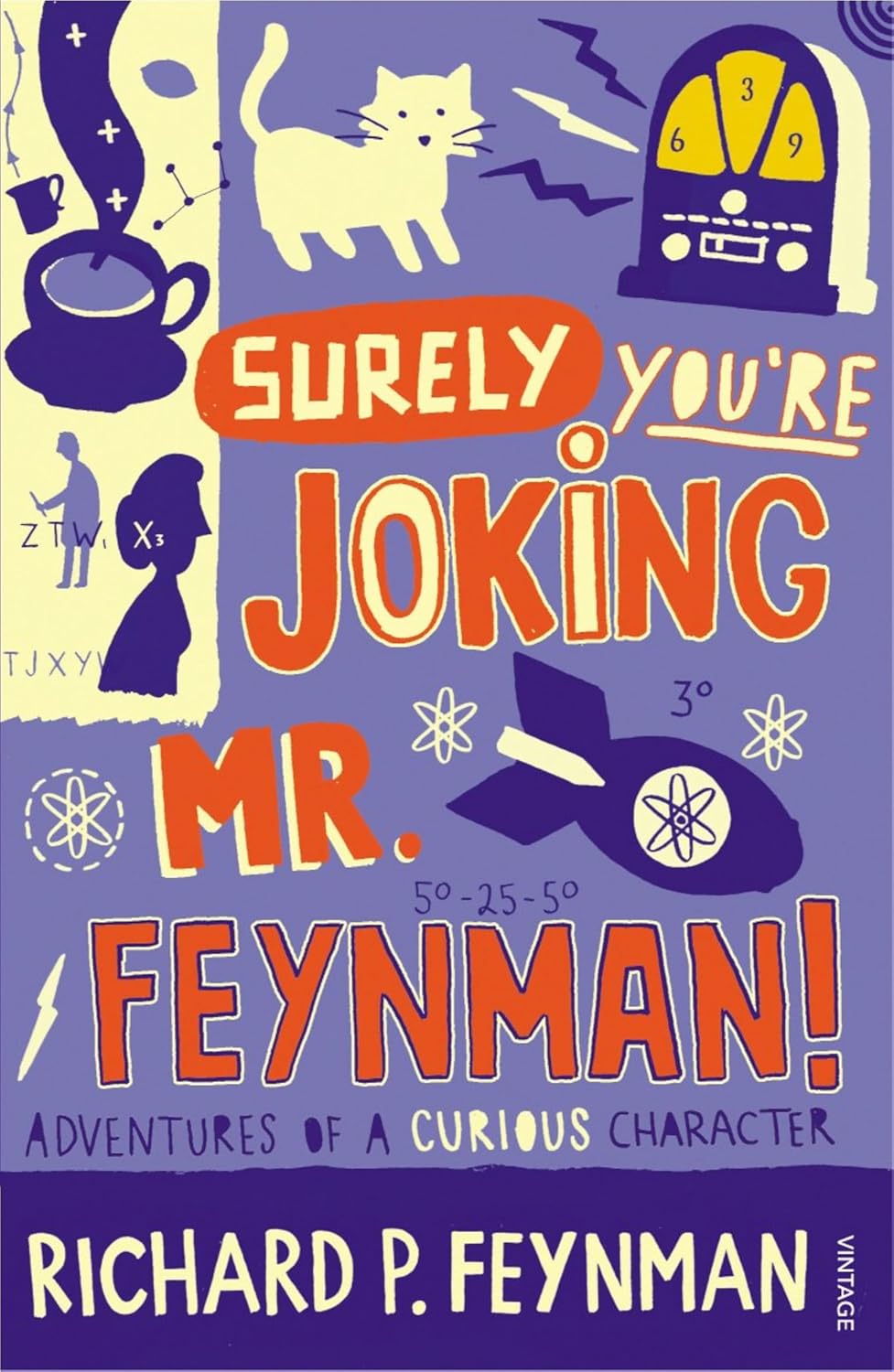
Still: most introductory books about artificial intelligence are either too technical to finish or too vague to learn from. Gerrish's book occupies the narrow region between those two failure modes. In 2026, when someone asks how any of this actually works, having read this book is still a reasonable place to start — not because it covers the current state of the field, but because the concepts it explains are the same ones the current state of the field is built on. If you want to understand why curiosity is the right attitude toward complex systems, Feynman is where you go. If you want to understand what those systems actually do under the hood — this is where you start.
1 The foreword was written by Kevin Scott, then CTO of Microsoft. He describes the book as “the best introduction to AI that shows it isn't magic.” In 2026, that sentence is simultaneously accurate and inadequate — which is itself an interesting place to be.
2 Gerrish devotes considerable space to explaining why StarCraft remains an unsolved problem for AI — too complex, too real-time, too many moving parts. AlphaStar beat professional players the following year. The problem Gerrish called unsolvable got solved while the book was still in print. That is the best footnote in the book, and it isn't in the book.
In short
Written before the world changed, and more useful because of it. The foundations Gerrish explains — reinforcement learning, ensemble methods, recommendation systems — are still the floor every modern AI model stands on.
Sean Gerrish — How Smart Machines Think
MIT Press, 2018 · 312 pages · abakcus.com