Learning · Cognition · Study Methods
The Feynman Technique
A complete guide to the learning method that turns the act of teaching into the deepest form of understanding

Most study advice is about what to do after you understand something: flashcards, summaries, spaced repetition. The Feynman Technique is different. It is a method for building understanding in the first place — and for exposing, with uncomfortable precision, exactly where you think you understand something but don't.
The technique takes its name from one of the most unusual minds of the twentieth century. Understanding where it came from helps explain why it works.
Who Was Richard Feynman?
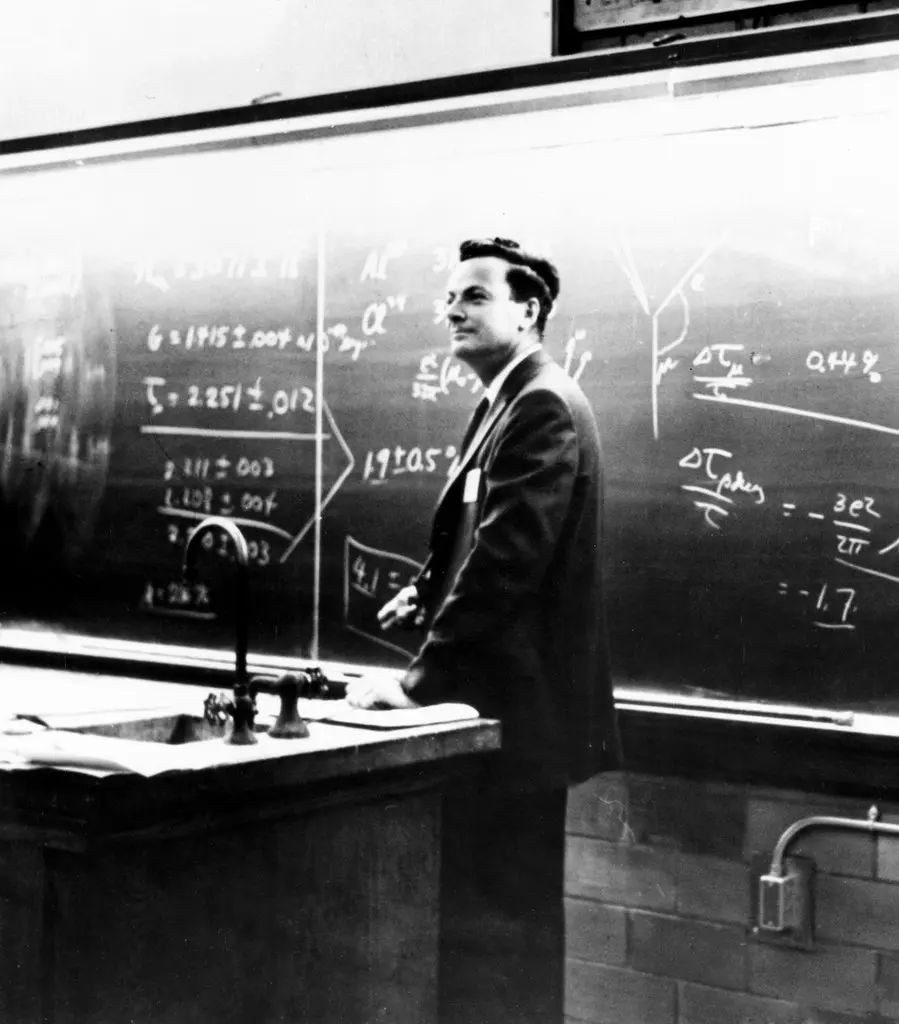
Richard Phillips Feynman (1918–1988) was an American theoretical physicist who won the Nobel Prize in Physics in 1965 for his work on quantum electrodynamics. He pioneered the path integral formulation of quantum mechanics, introduced Feynman diagrams as a bookkeeping tool for particle interactions, and made foundational contributions to the theory of superfluidity and parton physics. He played a central role in the Manhattan Project and served on the Rogers Commission investigating the Space Shuttle Challenger disaster.
He was, in short, operating at the absolute frontier of human knowledge in some of the most technically demanding fields that exist.
"There's no miracle people. It just happens they got interested in this thing and they learned all this stuff. There's just people."
Despite this, Feynman described himself as an ordinary person who studied hard. That combination — extraordinary depth of knowledge and genuine intellectual humility — shaped everything about how he thought and taught. He was named "The Smartest Man in the World" by Omni Magazine in 1979, but what made him stand out among scientists was less his raw intelligence than his insistence on understanding things from first principles, in simple language, from scratch.
Feynman's instinct was not to review what he knew but to map what he didn't know — and then fill those gaps through active reconstruction, not passive re-reading. Like physicists before him, he kept notebooks of questions more than answers. This instinct is the seed of the Feynman Technique.
What Is the Feynman Technique?
The Feynman Technique is a four-step process for learning any concept — regardless of field, complexity, or prior knowledge. Its central premise is that the ability to explain something in simple terms, to someone with no background in the subject, is the most reliable test of whether you actually understand it.
The Feynman Technique is a learning method that uses the act of teaching — to a child, a rubber duck, or a blank page — as a mechanism for identifying gaps in understanding and forcing genuine comprehension over surface memorization.
This is not the same as summarizing. A summary restates what you have read; it can be produced without understanding. The Feynman method requires you to reconstruct the idea from the inside out, in language stripped of jargon, in a form a twelve-year-old could follow. Understanding a concept deeply, rather than knowing its name, is what lets you recognize patterns in complex systems. The moment your explanation stalls — the moment you reach for a technical term you cannot actually define, or skip a logical step because you are not sure how to justify it — you have found a gap. That gap is what you study next.
"The first principle is that you must not fool yourself — and you are the easiest person to fool."
The Four Steps, in Full
Here is a summary of the four steps before we go deeper into each one.
Choose a concept
Pick a topic small enough to cover on one or two pages. Write it at the top of a blank sheet. This act alone forces specificity.
Teach it to a child
Write out everything you know as if explaining it to a sixth-grader. No jargon allowed. If you cannot define a term, you don't understand it.
Identify gaps & return
Where your explanation stalls — that is where your knowledge is weakest. Go back to source material. Fill the gap. Try again.
Simplify & use analogies
Once you can explain fluently, strip it further. Replace complexity with analogies. A good analogy is compression of genuine understanding.
Step 1: Choose a Concept
The first move is deceptively simple: pick up a blank page and write the subject at the top. But this act carries real weight. It forces you to be specific. You cannot Feynman-technique "economics" — both are too large. You can Feynman-technique elasticity of demand or gradient descent. Specificity is where learning begins.
Step 2: Teach It to a Child
Write out everything you know as if explaining to a twelve-year-old. Not a precocious one — a regular one. The audience constraint is load-bearing: it prevents you from hiding behind technical language. When you simplify an idea to its essence, you demonstrate understanding. Only then.
Step 3: Identify Gaps and Return to the Source
As you write, you will hit patches of fog. You will reach for a word you cannot define. You will find gaps between concepts you thought were connected. These are not failures — they are the technique working. Mark every place you falter, then return to source material and fill that specific gap. Iterate until your explanation flows without interruption.
Step 4: Simplify and Create Analogies
Once you can explain fluently, strip it further. Every field has specialized vocabulary that obscures understanding. If you cannot say what a term means in ordinary words, you have only memorized its label. The final element is analogy — compression of genuine understanding. When you find an analogy that works, you have identified the structural essence of the concept.
Why It Actually Works
The Feynman Technique is not a trick or a hack. It works because it engages several cognitive mechanisms that passive reading and rote memorization bypass entirely.
Active Recall vs. Passive Recognition
When you read a textbook, your brain recognizes information as familiar. Recognition is easy. Retrieval — reconstructing the information from memory without external prompts — is significantly harder and more effective at consolidating memory. The Feynman method forces retrieval at every step.
The Illusion of Explanatory Depth
Cognitive scientists describe a robust finding: people consistently overestimate how well they understand complex systems. The Feynman Technique punctures this illusion by making you produce an explanation rather than recognize one. The gap between what you thought you knew and what you can articulate is the precise gap between familiarity and understanding.
Compression and Transfer
When you simplify an idea to its essence and encode it in an analogy, you compress it. Compressed knowledge transfers more readily. Feynman's understanding of physics was so compressed — so reduced to fundamental principles — that he could approach unfamiliar problems without needing to have seen them before.
Knowing vs. Knowing the Name
Feynman's father taught his son a distinction that shaped everything. You can know the name of a bird in every language and still know nothing about the bird. You will only know something about people — what they call it.
"See that bird? It's a brown-throated thrush, but in Germany it's called a halzenfugel, and in Chinese they call it a chung ling, and even if you know all those names for it, you still know nothing about the bird. You only know something about people: what they call the bird."
This distinction is the philosophical engine of the Feynman Technique. Most education is primarily the acquisition of labels — as any entrance exam will reveal. The Feynman method asks you to confront what things actually are.
Knowing the Name
- You can reproduce the definition
- You recognize the term when you see it
- You can pass a multiple-choice test
- You get stuck when asked "why?"
- You cannot generate examples
- You cannot apply in new contexts
- Confidence collapses under questioning
Knowing the Thing
- You can reconstruct from scratch
- You can explain to a non-expert
- You answer "why" questions fluently
- You generate your own examples
- You apply to unfamiliar problems
- You identify limits and exceptions
- Confidence is stable under questioning
This is why jargon is so dangerous as a learning crutch. If you can hide behind technical vocabulary without defining it, you never discover that you cannot define it. Feynman's method strips all such hiding places away.
Strengths and Limitations
The Feynman Technique is powerful. It is not universal. Understanding when to use it — and when not to — is itself an application of the kind of clear thinking it cultivates.
Strengths
- Exposes gaps immediately and specifically
- Forces active recall over recognition
- Builds genuine comprehension
- Develops communication skills
- Works for any subject with mechanisms
- Creates transferable knowledge
- Iterative by design
- Requires only a blank page
Limitations
- Time-intensive — not for cramming
- Poorly suited to pure memorization
- Requires honest self-assessment
- Less effective for procedural knowledge
- Requires adequate source material
- Not a replacement for practice
A useful heuristic: if a subject has an underlying mechanism — if there is a why behind the what — the Feynman Technique applies. For most academic subjects, most professional knowledge, and most intellectual endeavors worth pursuing, the mechanism exists.
How to Apply It Today
The practical implementation is straightforward. The difficulty is the honesty it demands.
A Practical Routine
The Notebook Habit
Feynman's "Notebook of Things I Don't Know About" is worth taking seriously as a habit. The premise inverts normal note-taking: instead of recording what you have learned, you record what you have not yet understood. A clearly mapped ignorance is actionable.
Keep a notebook with one section per subject. Each section contains the concepts you are working on, your explanation drafts, and the gaps you have identified. Revisit it every few weeks. You will find that gaps you could not explain have closed, and new gaps — more sophisticated ones — have opened. That progression is what learning actually looks like.
"When you know something, the labels are unimportant because it's not necessary to keep it in the box it came in."
The Feynman Technique does not make hard things easy. It makes hard things honest. The difficulty does not disappear — you simply stop being able to fool yourself about whether you have actually met it. That is what understanding requires: not a shortcut around the difficulty, but the willingness to face it plainly, without the camouflage of borrowed vocabulary, and stay there until it yields.
Sources & References
James Gleick — Genius: The Life and Science of Richard Feynman (1992)Richard Feynman — Surely You're Joking, Mr. Feynman! (1985)National Training Laboratories — Learning Pyramid & retention methodology