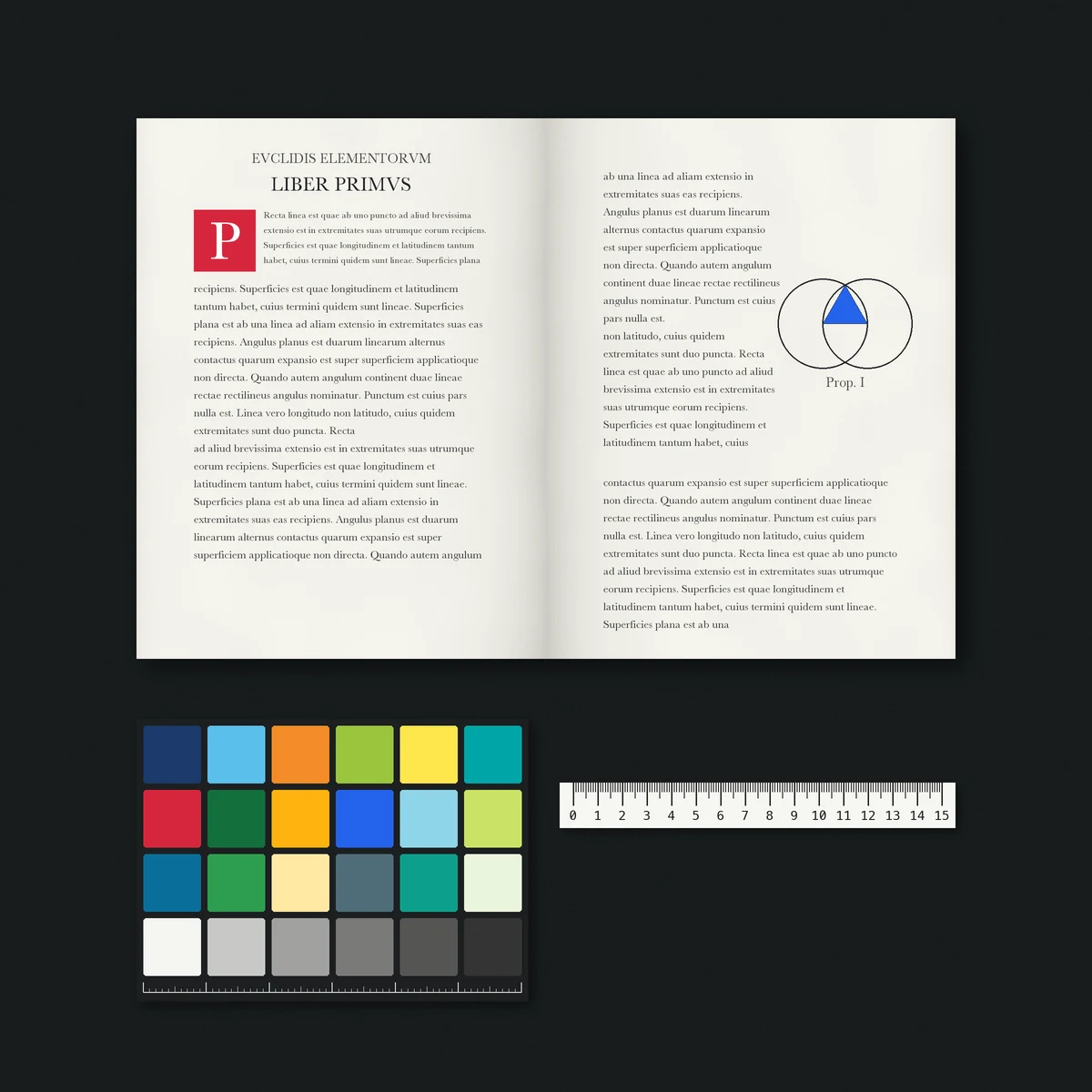
The first English Elements — and the first time a reader could lift a solid off the page. Four centuries later, the trick still lands.
The problem with describing a solid
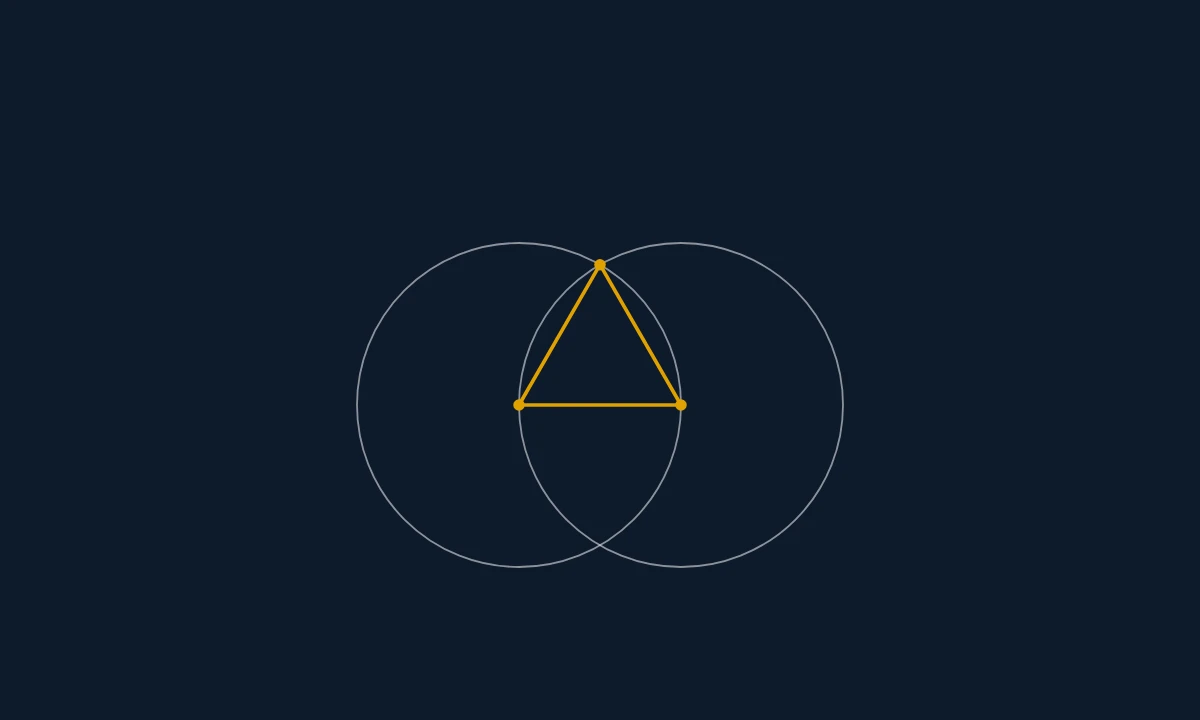
There are two ways to explain a tetrahedron. The first is words: "A solid figure contained by four equal and equilateral triangles." The second is to put one in someone's hand. The first method was the only option for roughly two thousand years of mathematical education. Euclid wrote in Greek. The Arabs translated him. The Europeans translated the Arabs. By the time a geometry student in Tudor England sat down with the text, they were already two translations removed from the original, reading Latin they barely spoke, trying to picture shapes no one had shown them.
This was the standard. No one considered it a problem. It was just how learning worked: you read until you understood, or you gave up.
What Billingsley actually did
In 1570, Henry Billingsley published the first English translation of Euclid's Elements. That alone was significant — it meant English speakers could approach the text without needing Greek or Latin as prerequisites. The language barrier, for many the first and only barrier, was gone.
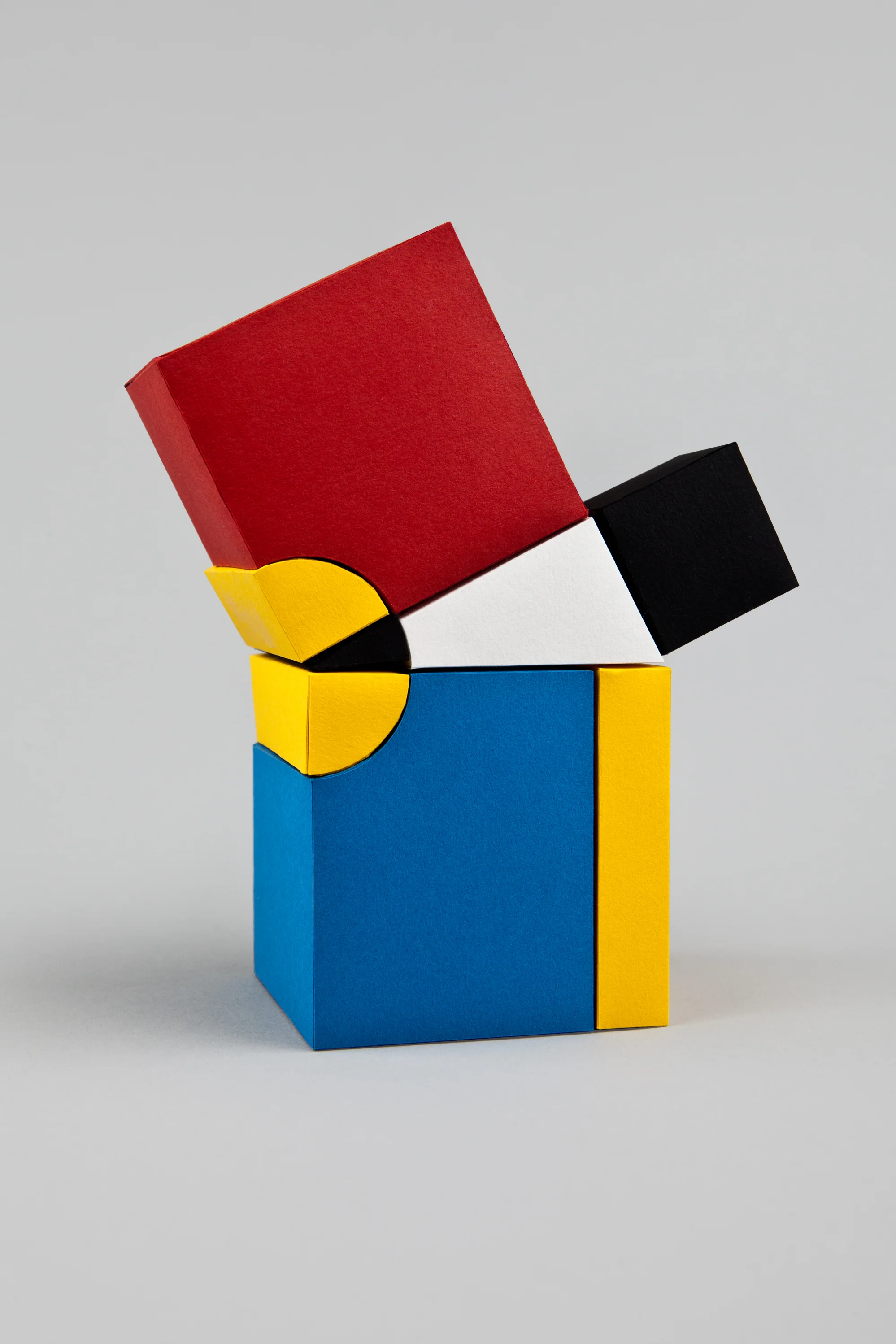
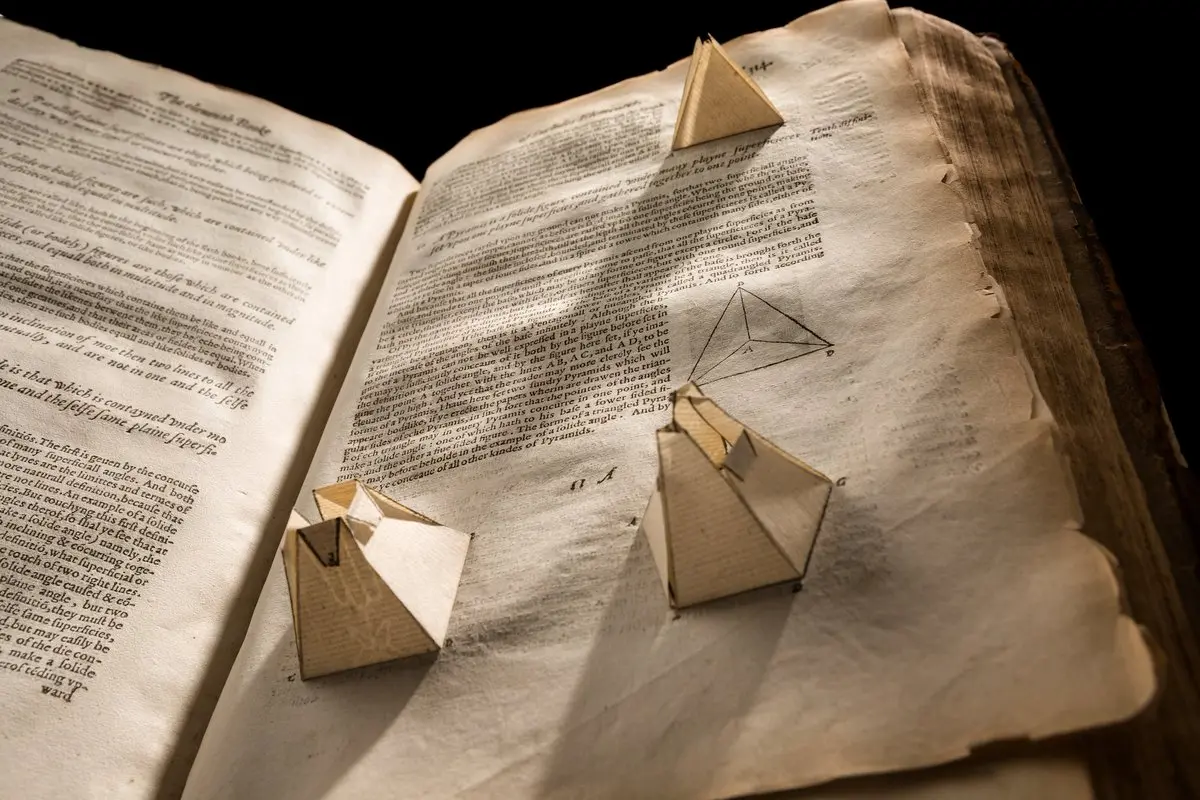
But Billingsley went further. For the sections covering three-dimensional geometry — Books XI through XIII — he attached folded paper flaps to the pages. Those three books are where solid geometry lives — and where a flat page fails first. Readers could lift the flaps, fold them into shapes, and hold the actual solid described in the proposition.
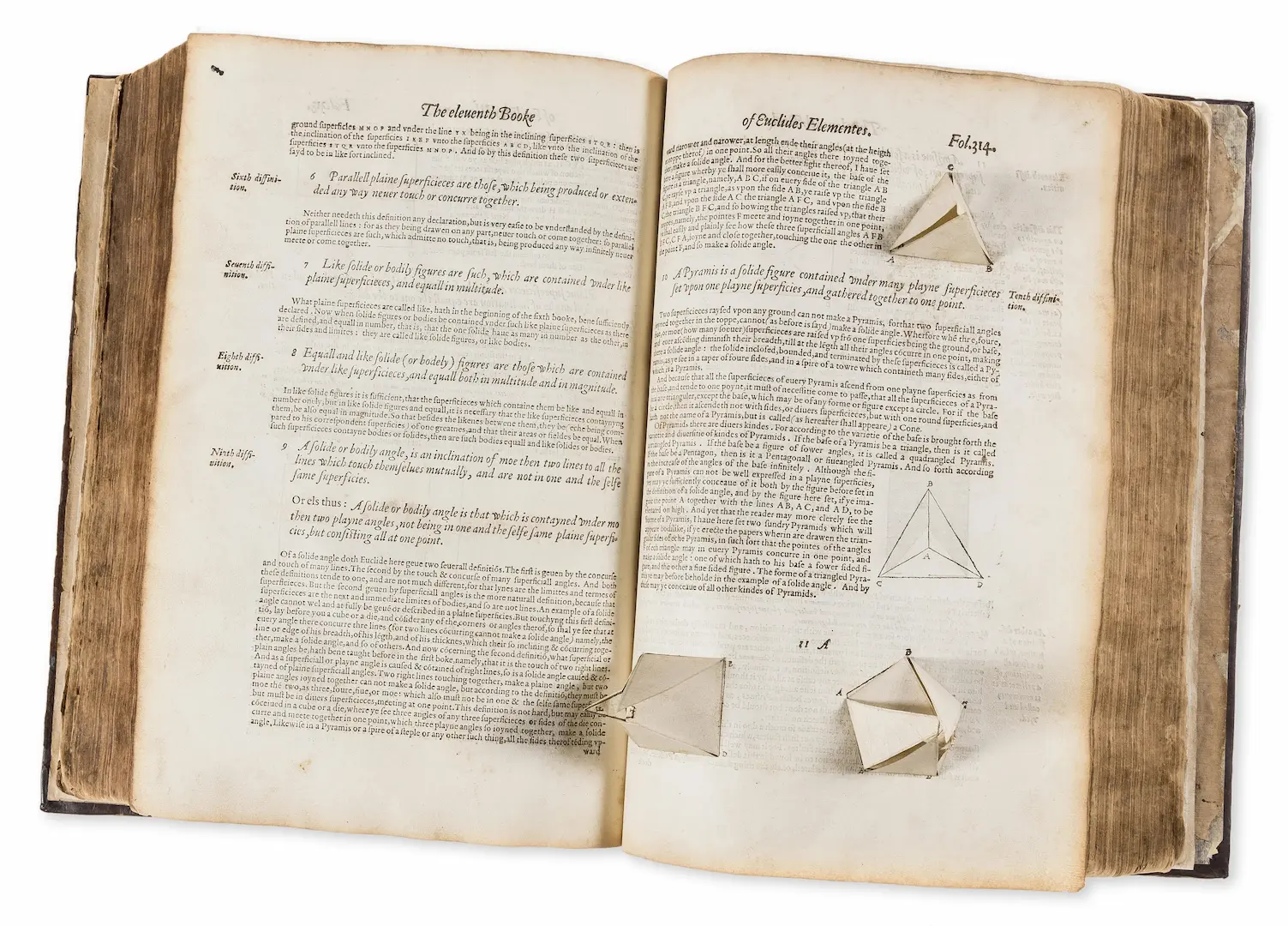
This was not a gimmick. The flaps were precisely constructed to illustrate specific propositions. When a proof referred to the angles of a triangular pyramid, you could hold that pyramid and trace the angles with your finger. The abstraction became an object. The object made the abstraction obvious.
The timeline of getting geometry across
The text had traveled Greek → Arabic → Latin; Billingsley's was the first edition to carry the full argument into English — so readers no longer needed three languages to reach the mathematics.
How solid geometry reached the reader
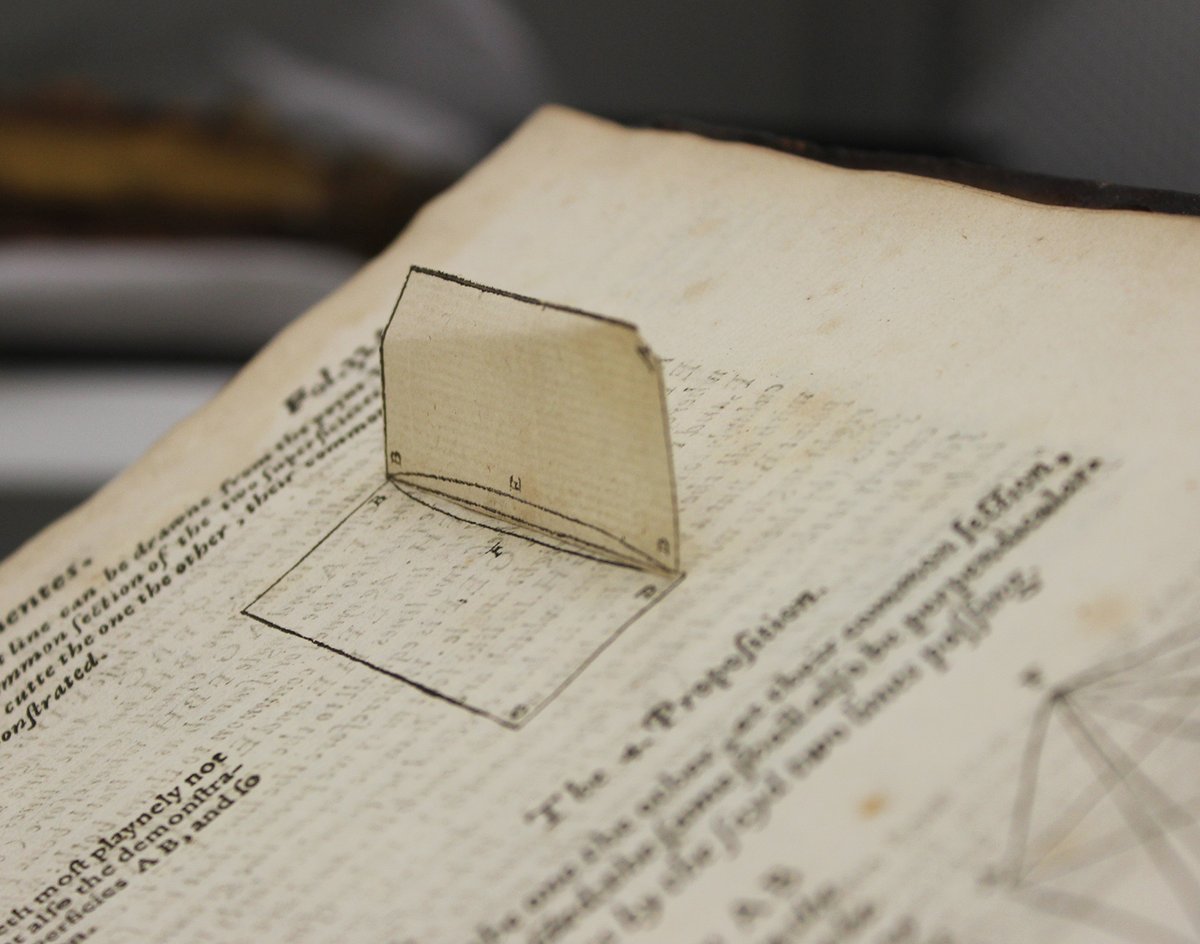
Why it worked
The hardest thing in mathematics is not calculation. It's visualization — being asked to hold a three-dimensional object in your mind when no such object exists in front of you. Most people who fail at geometry fail here, not at the logic itself. They follow the proof step by step and lose the picture.
Billingsley understood this. Not in the language of cognitive science, obviously, but as a practical matter: the propositions in Books XI–XIII deal with things you can't really see in a flat diagram. A cube, a pyramid, a dodecahedron — these are spatial objects. Showing them in projection on a page is already a compromise. Letting readers fold and hold the actual form is closer to the real thing than any diagram can be.
Reading about a cube is one thing. Having a cube assemble itself in your hands is another. The gap between those two experiences is where most mathematical education still gets lost.
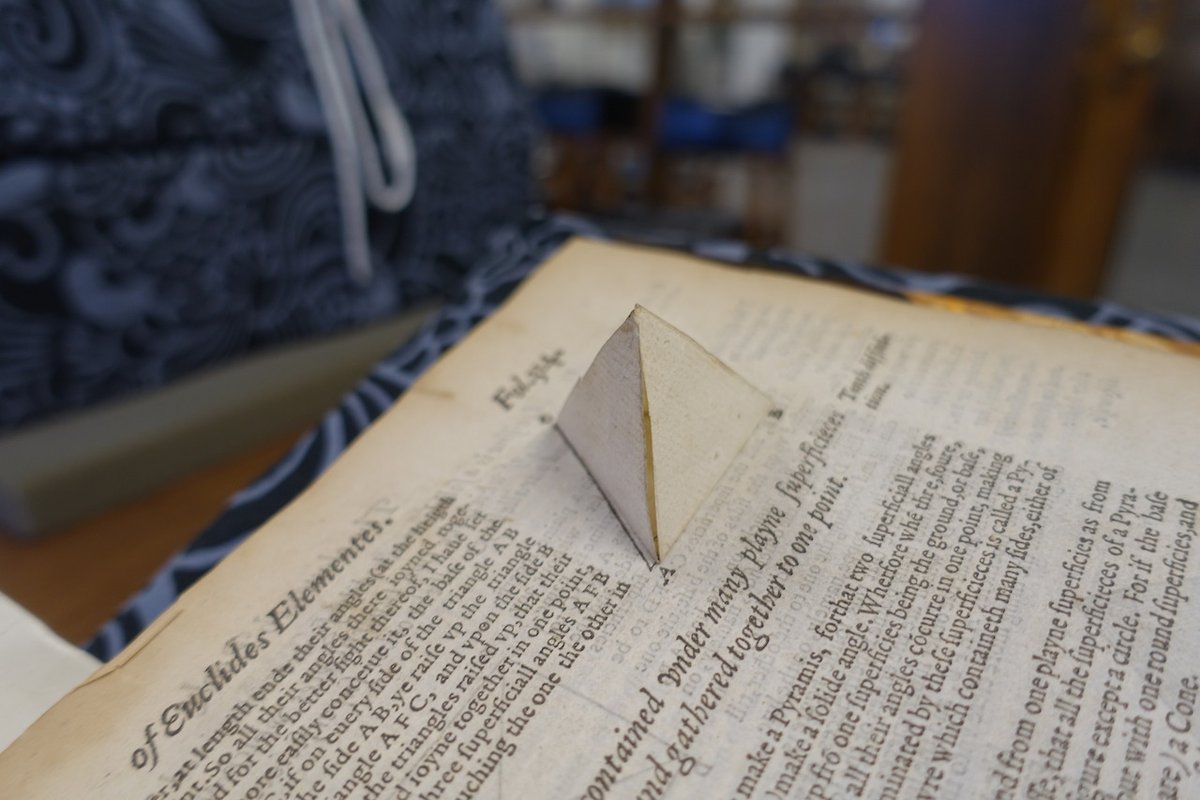
When you hold a shape, you stop translating. You're not converting words into a mental image; the image is already there, in your hands. The cognitive load drops, and the proof steps into a space that makes sense.
The comparison we keep refusing to make
Every few years, someone announces that augmented reality, or 3D printing, or virtual reality will finally fix mathematics education. The language is always forward-looking: "immersive," "spatial," "embodied learning." As if the idea of putting a solid object in front of a student is a recent breakthrough that required a billion-dollar device to discover.
| Method | Year | Cost | What the student holds |
|---|---|---|---|
| Billingsley's pop-up flaps | 1570 | a few shillings | a folded paper solid, labeled with the proposition's letters |
| 3D-printed geometry models | 2010s | $200–2,000 | a plastic solid, usually unlabeled |
| AR headset | 2020s | $3,500+ | a projected solid, which you cannot actually touch |
The irony is that Billingsley's version wins on the most important criterion: the student's hands are in contact with the shape. AR projections are not. A headset shows you a tetrahedron floating in space; Billingsley's flap puts one in your palm. Four hundred years of technological progress and we've managed to make it more expensive and less tactile.
What it tells us about the book itself
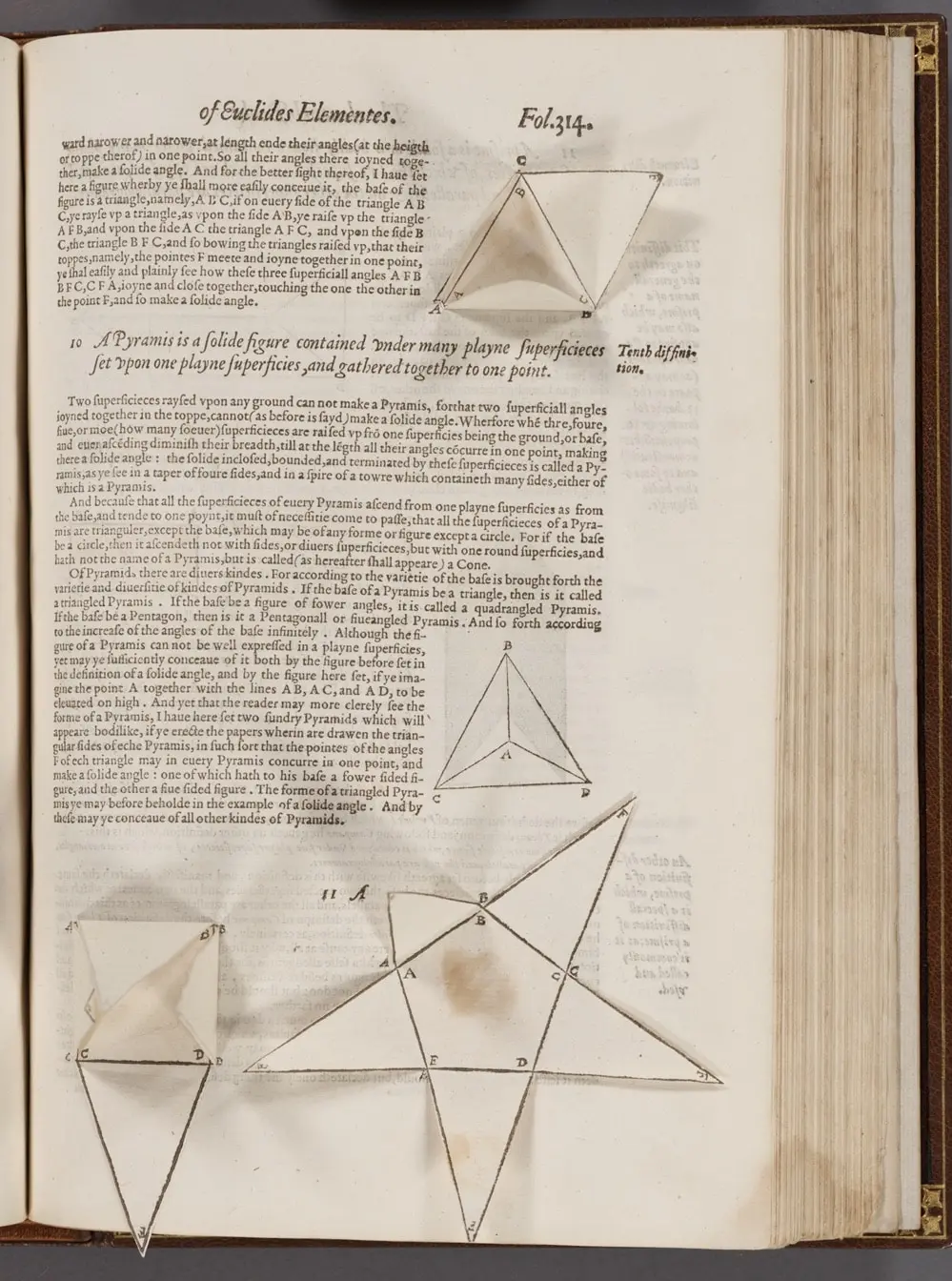
The Elements is one of the most printed books in history — second only to the Bible by some counts. Most editions present it as a monument: authoritative, austere, not to be tampered with. Billingsley tampered with it. He added English, added prefaces, added pop-up geometry. He treated it as a teaching tool rather than a sacred text, which is precisely what Euclid intended it to be.
The decision to translate it into English was already a democratic gesture: geometry for people who don't read Latin. The paper flaps extended that gesture further: geometry for people who can't picture solids from descriptions alone. Which is most people. Billingsley seems to have known this.
The book ran to 928 pages. It included a preface by the mathematician John Dee, who used the occasion to argue, at length, that mathematics was the foundation of all other knowledge. The pop-up flaps are in the back. In all the fuss about Dee's preface, they're easy to overlook. They shouldn't be.
The actual lesson
We keep asking: how do we make mathematics more accessible? The question usually leads toward technology, toward interactivity, toward novelty. Billingsley's answer was simpler: remove the barriers between the student and the thing being described. Language is a barrier. Abstraction is a barrier. A flat diagram of a solid is a barrier. Remove them when you can.
He couldn't remove all of them. A 16th-century book was still a book; you had to read it. But where the text described something three-dimensional, he put something three-dimensional in the reader's hands. That's the whole trick. It doesn't need a headset.
Billingsley wasn't trying to make mathematics entertaining. He was trying to make it clear. The pop-up flaps aren't a flourish — they're a solution to a specific problem: how do you show someone a shape that a flat page can't adequately represent? You fold one and attach it. Done. The elegance is in the simplicity of the answer, not in the question.