Interactive · Mathematics · Quanta Magazine
The Map of Mathematics
Quanta Magazine made the geography of mathematical research visible — not as a list, but as a territory with borders that break down at exactly the right places.
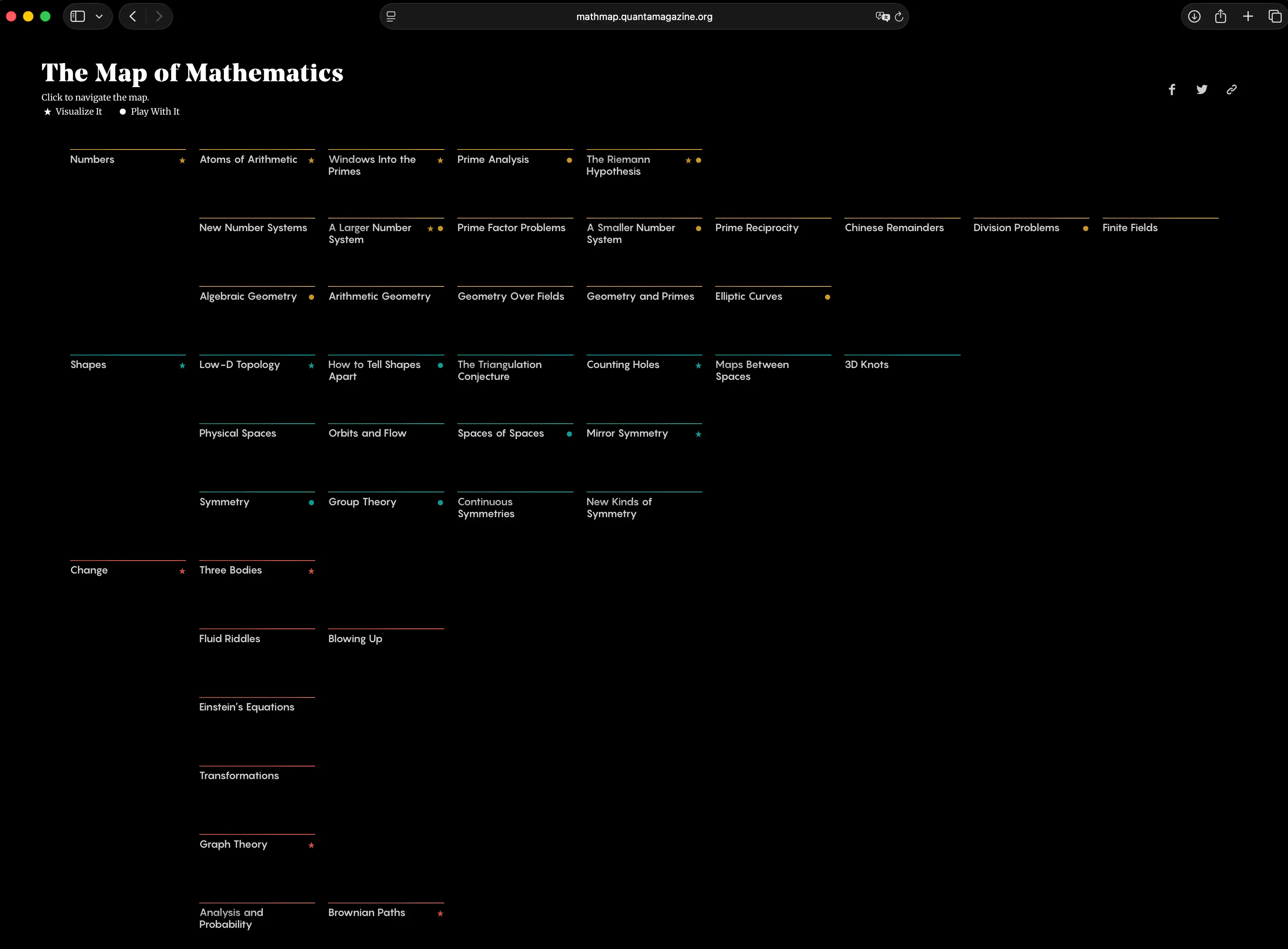
Mathematics is not a single subject. It is closer to a continent — with distinct territories that have their own languages, open problems, and local customs, but are connected by passes that most residents never use. Quanta Magazine made that geography visible.
Their interactive map covers the living frontier of mathematical research across four territories: numbers, shapes, change, and passages. Each node links to original reporting. The Riemann Hypothesis sits next to its neighbors. Elliptic curves connect back to prime reciprocity. Mirror symmetry bridges geometry and physics. The structure is the argument.
What makes the map unusual is not the breadth — it is the editorial judgment about what connects to what.
The Numbers section alone contains 16 nodes. It does not start from counting. It starts from the atoms of arithmetic and moves toward algebraic geometry through prime analysis, new number systems, and elliptic curves. That path is not obvious from a textbook table of contents. It reflects how research actually flows — the same kind of hidden coherence that makes Mandelbrot's fractal geometry feel less like a branch of mathematics and more like a new lens on everything.
Four Territories, 41 Nodes
Territory I
Numbers
16
From the atoms of arithmetic to algebraic geometry, through primes, new number systems, and elliptic curves.
Territory II
Shapes
12
Topology, knot theory, symmetry groups, and the strange spaces where geometry and physics overlap.
Territory III
Change
9
Differential equations, fluid dynamics, the three-body problem, and probability's deep structures.
Territory IV
Passages
4
Where territories dissolve into each other. The Poincaré Conjecture. Strange geometries. Algebraic topology.
The Passages section is the most honest part of the map. It names the places where one territory bleeds into another. These are not transitions — they are where the map's borders break down, and where some of the deepest results in modern mathematics were found.
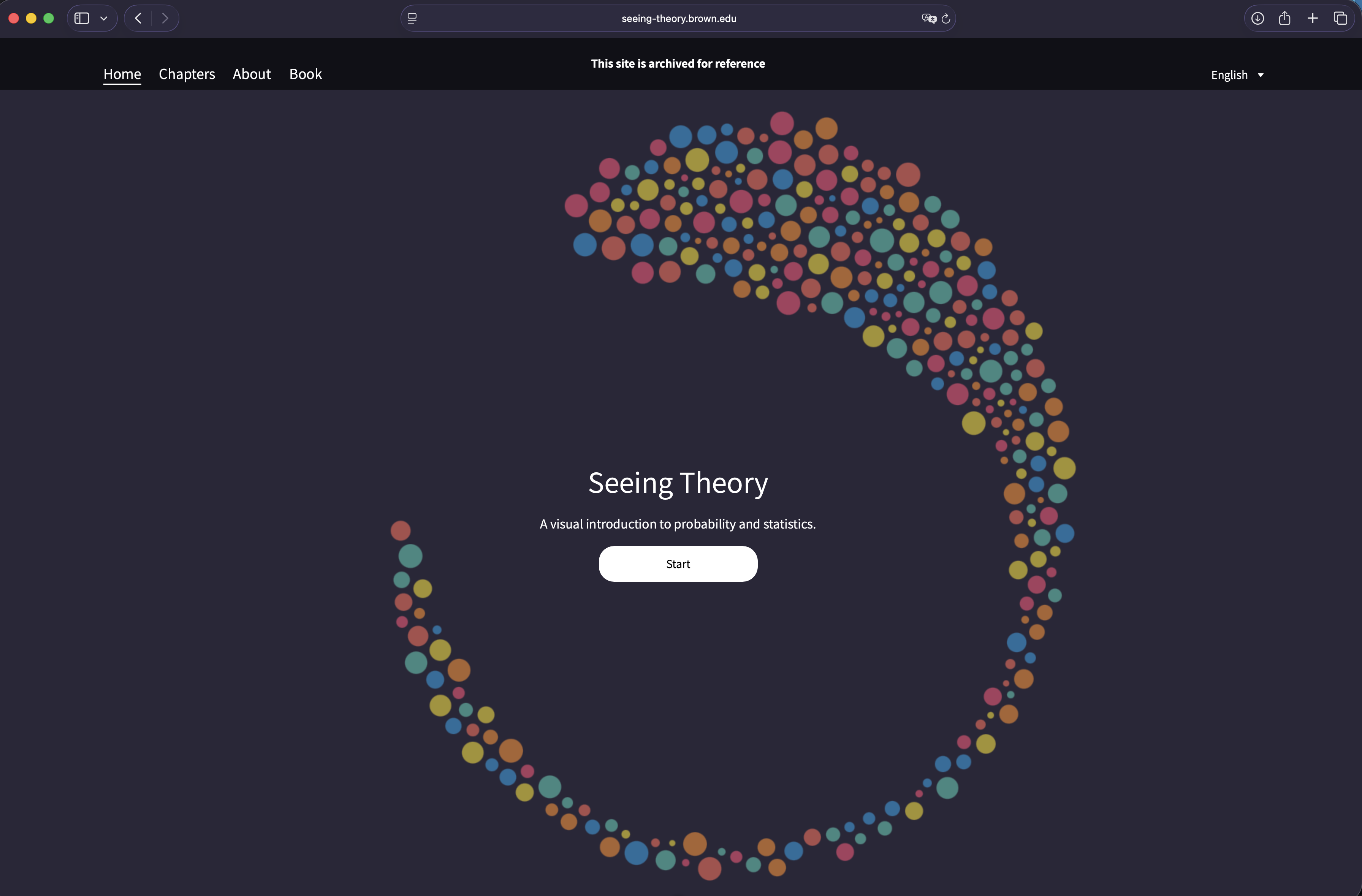
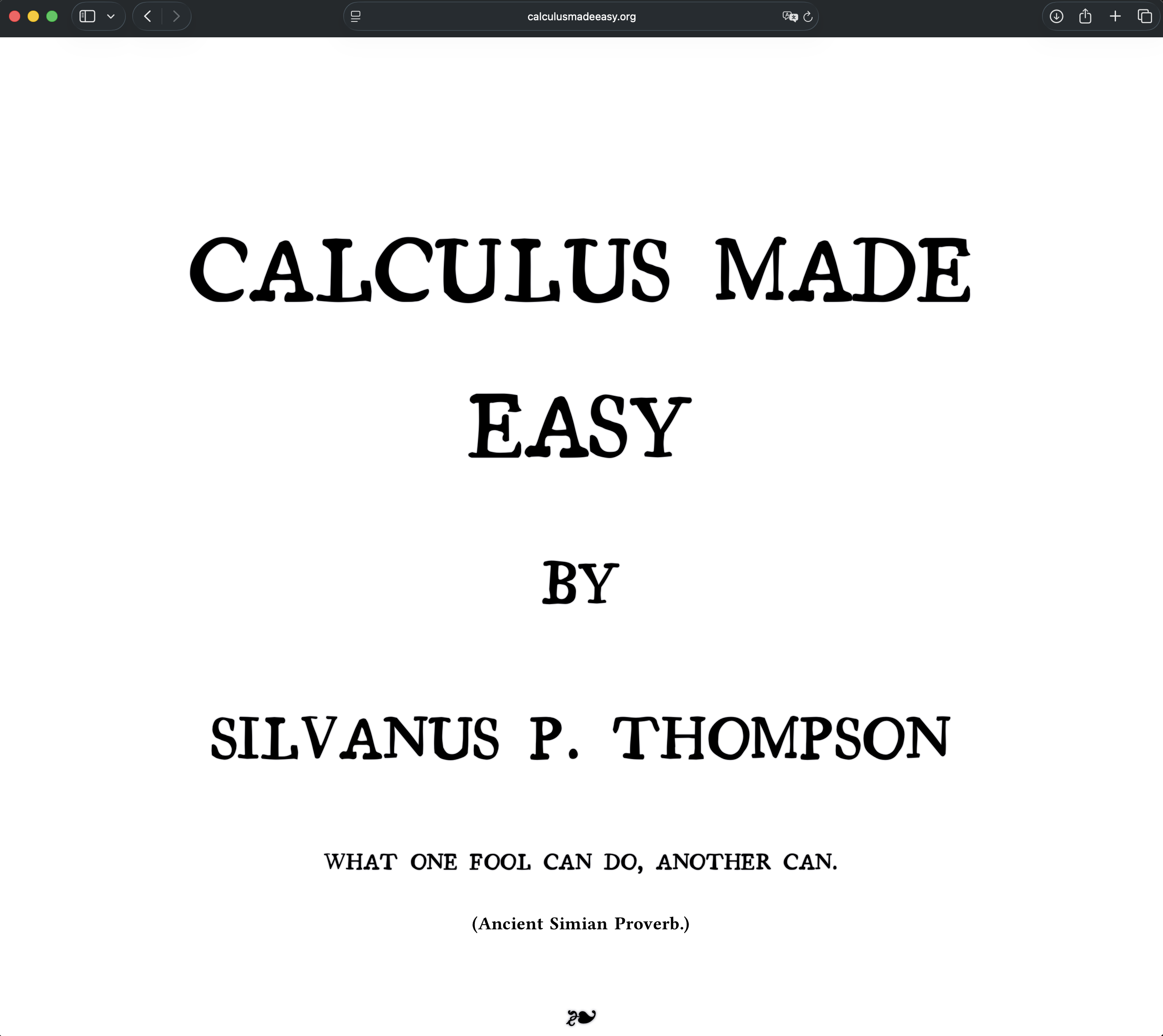
The map was written by Kevin Hartnett and published in February 2020. It is not a beginner's guide. It does not explain what a prime number is. It assumes you want to know what is unsolved, and where the hard problems live relative to each other. For a gentler approach to building mathematical intuition, Seeing Theory makes probability visible through interaction — the same impulse, directed at earlier terrain. And if you want the historical roots of proof and structure, Calculus Made Easy remains one of the most honest introductions ever written. You can read it free online, or buy the print edition on Amazon.
Each of the 41 nodes is a live link into Quanta's original reporting on that topic. The map is navigable — not a static diagram. You can follow the connections between open problems, read the research context behind each node, and trace the paths that real mathematicians walk between territories.
That is a rarer thing than it sounds.
At a Glance
Each node links to original Quanta reporting. The map is navigable — not a static diagram.
Visit
The Map of Mathematics is published by Quanta Magazine and freely accessible at mathmap.quantamagazine.org/map. Written by Kevin Hartnett, published February 13, 2020.