Abakcus
← Back to home

Reading list — five books on proof and mathematical thinking

Five Books That Teach You to Think Like a Mathematician

There is a specific frustration that belongs exclusively to mathematics. You open a textbook, the first page looks manageable, the second page looks harder, by page five you have quietly closed the book and placed it on a shelf where it will live for the next several years, spine outward, as a monument to good intentions. This is not a failure of intelligence. It is a failure of entry point.

The books on this list are entry points. Not because they are easy — some of them are genuinely demanding — but because they understand that mathematical thinking is a skill, not a talent, and that it can be taught. The thing they are all teaching, in different ways, is proof: the art of constructing an argument so airtight that no counterexample can survive it. Once you have this, the rest of mathematics opens up in a way that no amount of calculation practice can replicate. You stop following and start seeing.

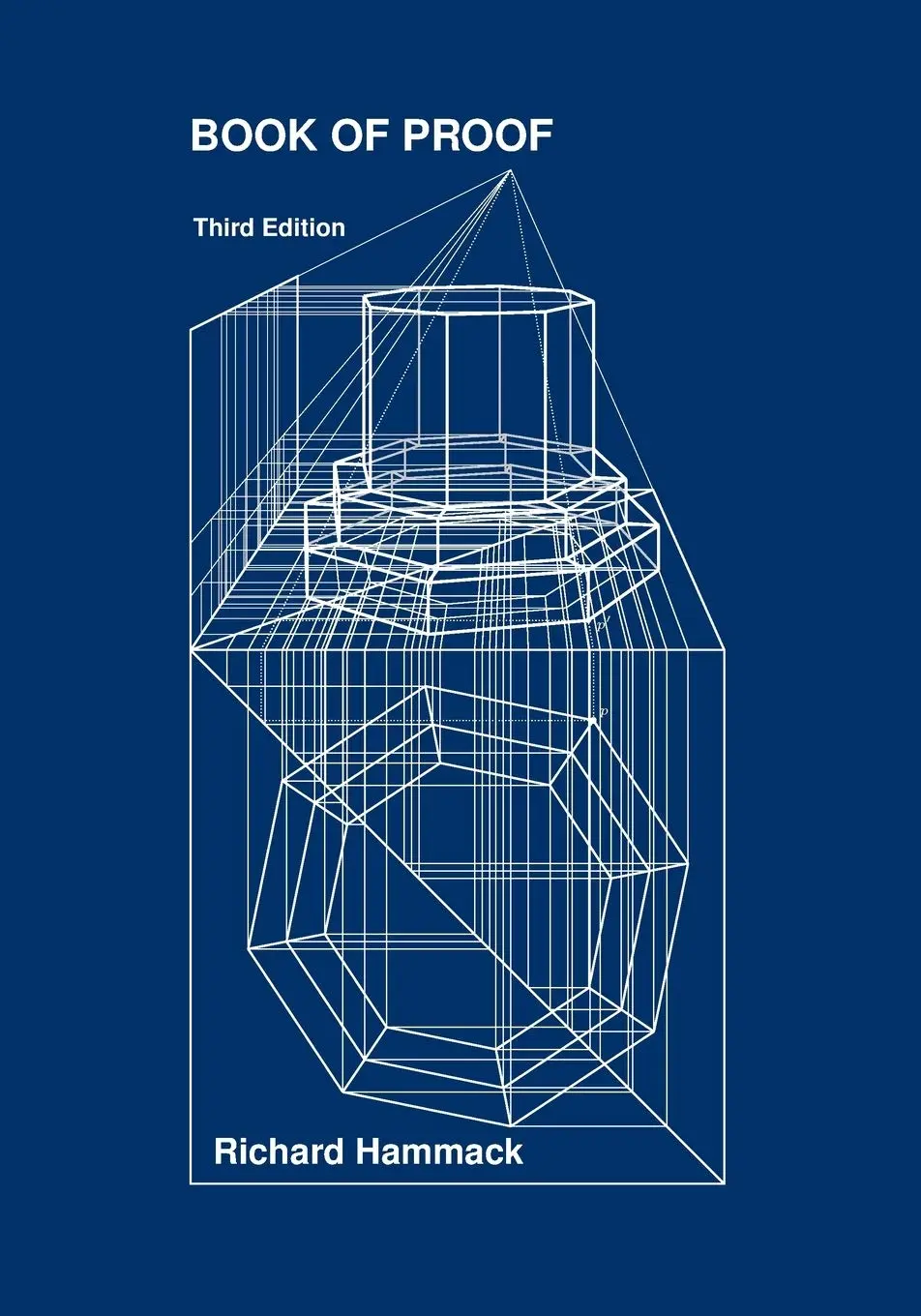
Cover: Book of Proof by Richard Hammack
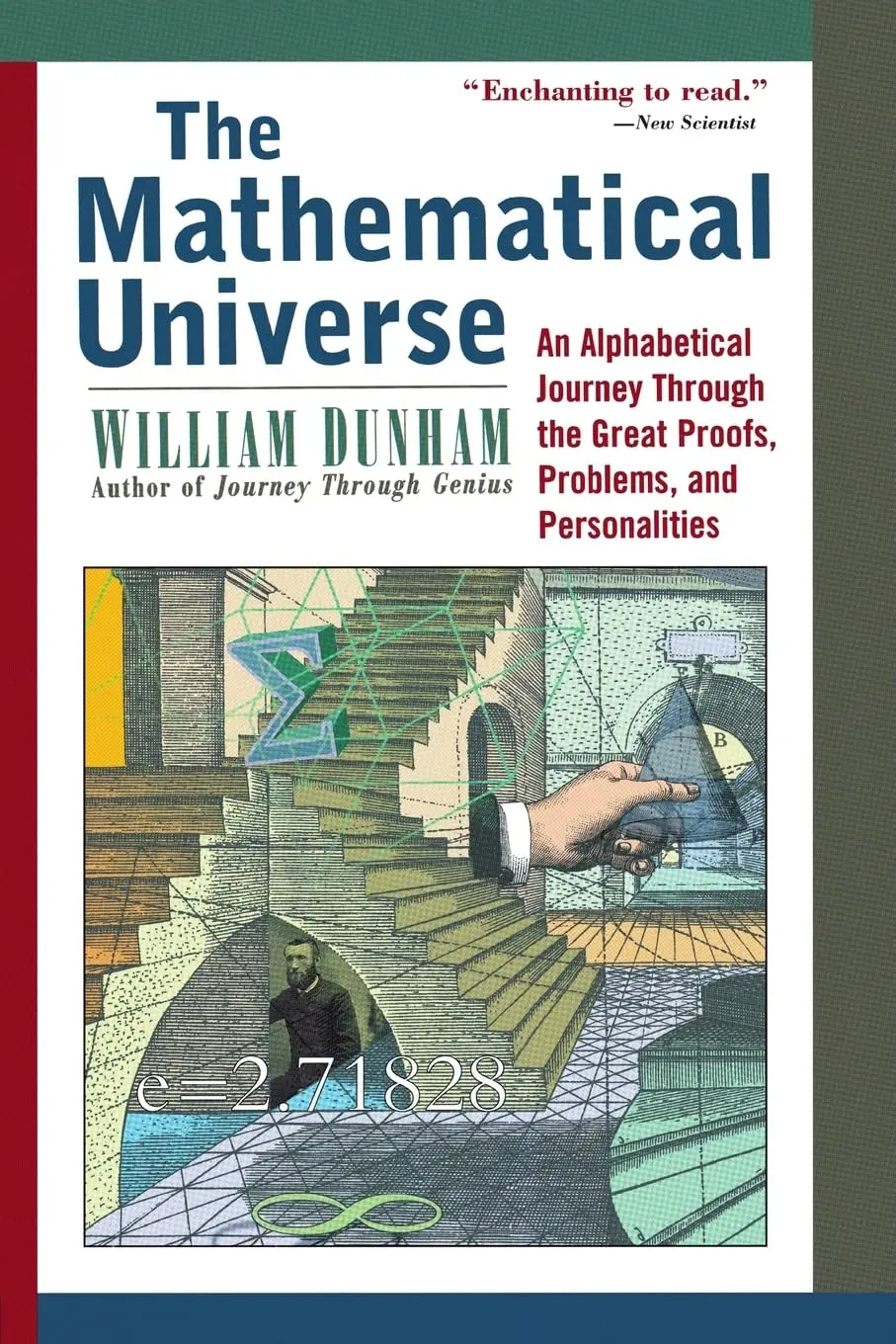
Cover: The Mathematical Universe by William Dunham
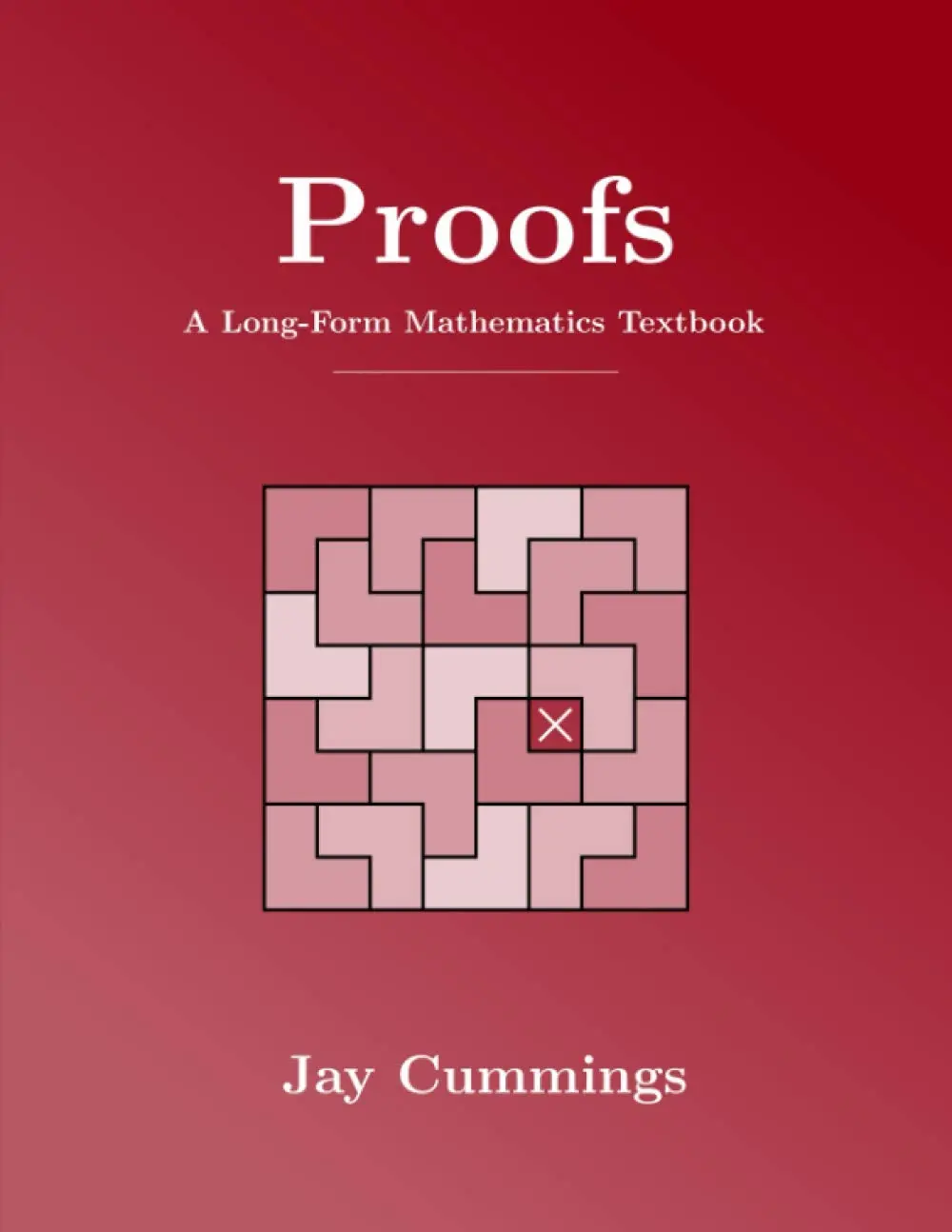
Cover: Proofs: A Long-Form Mathematics Textbook by Jay Cummings
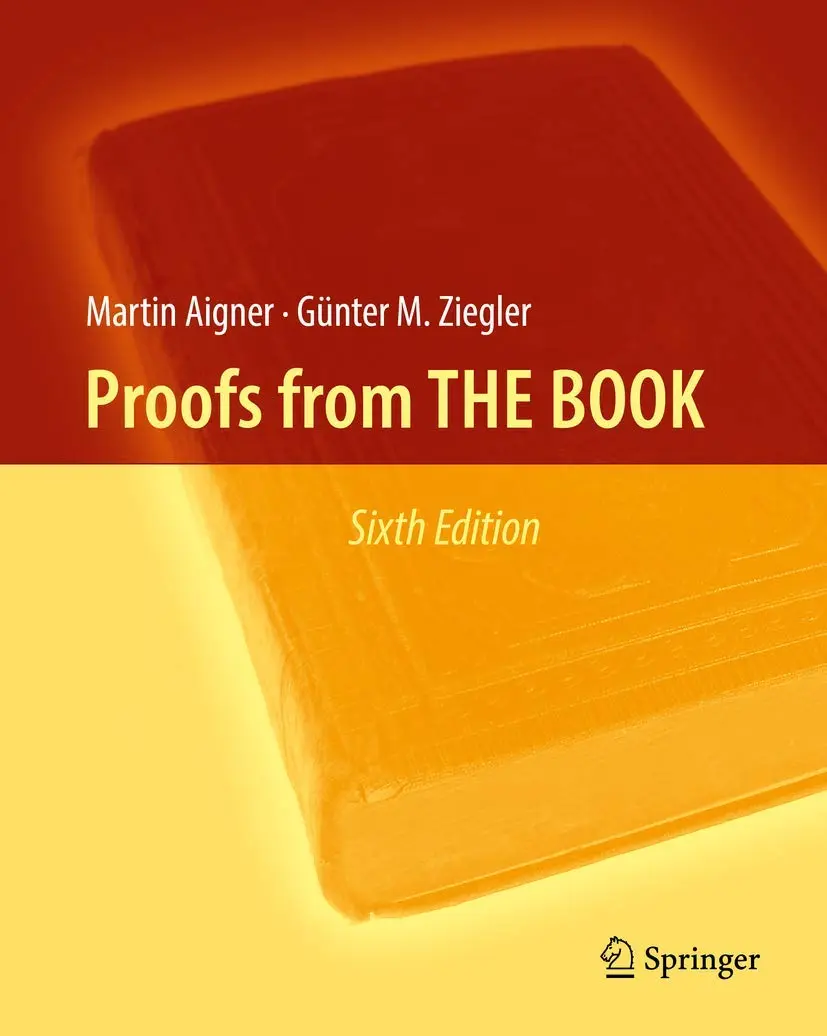
Cover: Proofs from THE BOOK by Aigner & Ziegler
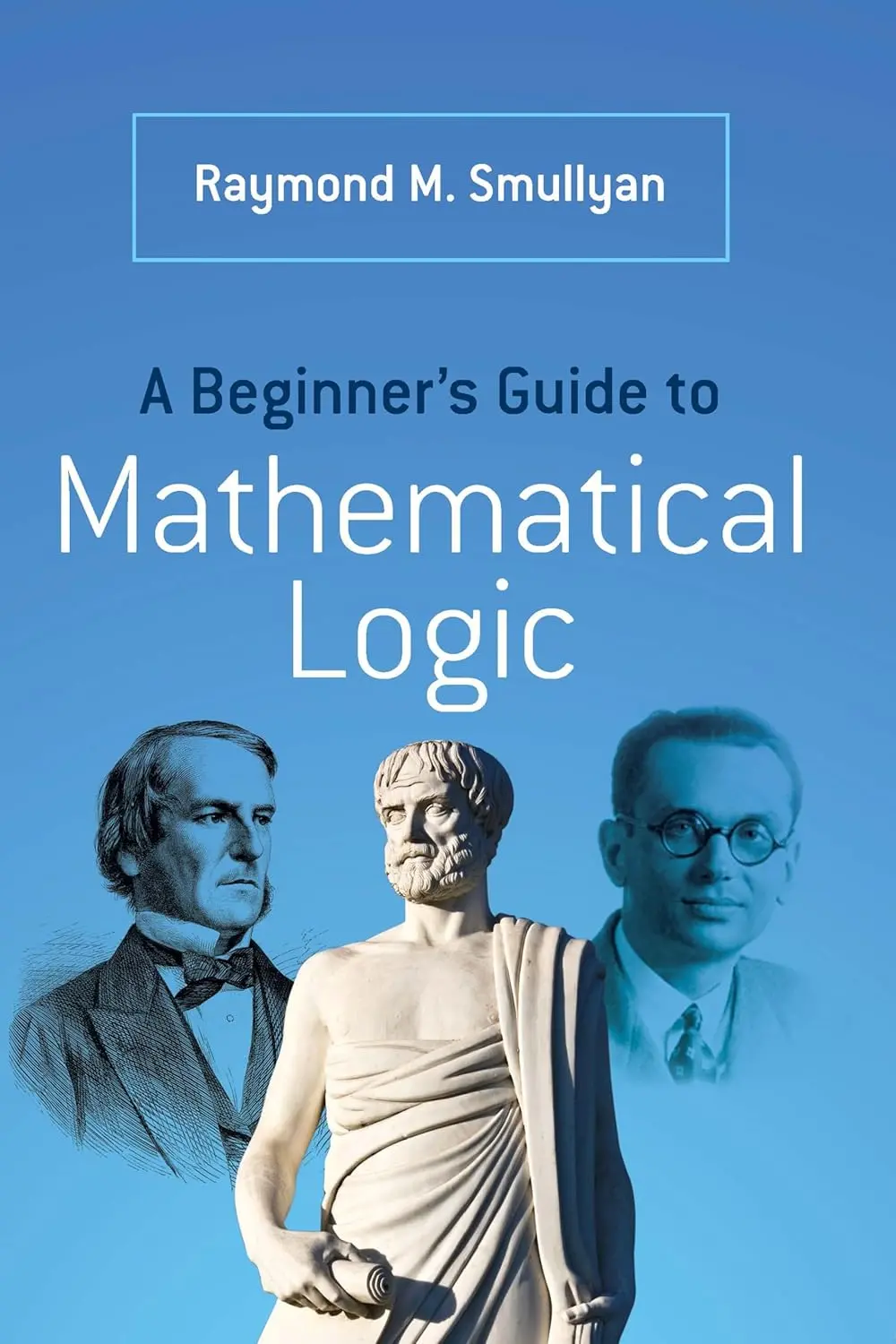
Cover: A Beginner's Guide to Mathematical Logic by Raymond Smullyan
  1. 01

    Book of Proof

    Richard Hammack · 2009 / 2022

    • Proof fundamentals
    • Self-study
    • Free PDF

    Most proof textbooks assume you arrive already knowing how to think about mathematics. Hammack does not make this assumption. He builds from the very bottom — sets, logic, quantifiers, what it even means to say something is true — and he builds upward with the patience of someone who has watched students struggle with these ideas for decades and has figured out, through that watching, exactly where the difficulties lie.

    The structure is the achievement here. Each chapter assumes the previous one. This is not unusual in textbooks, but the degree to which Hammack earns each transition is unusual: nothing appears before it has been prepared for, nothing is assumed that hasn't been established. If you skip around, you will feel the gaps immediately, which is actually a sign of how tight the scaffolding is. A book where skipping doesn't cost you anything is a book where the chapters don't genuinely depend on each other.

    Hammack also made the book freely available as a PDF on his university website. This is an unusual act of generosity and an accurate signal of what kind of teacher he is.
    Who forThe most structurally honest introduction to proof in print. Start here if you have never written a proof. Start here even if you think you have.
  2. 02

    The Mathematical Universe

    William Dunham · 1994

    • History
    • Proofs in context
    • Accessible

    William Dunham is one of the few people alive who can make the history of mathematics feel like a thriller. The Mathematical Universe is organized alphabetically — A for Arithmetic, B for Bernoulli, and so on — which gives it the texture of a reference book but the rhythm of something you cannot put down. Each entry is a self-contained argument for why this particular corner of mathematics matters, and Dunham makes each argument by showing you not just the theorem but the person who found it and the problem that made it necessary.

    The chapter on Archimedes and the area of a circle is the book in miniature: you see a man with no computers, no calculus, and no notation working out the value of π through sheer geometric cunning, and by the end of the chapter you understand both what he did and why it was an act of genius. This is harder to pull off than it sounds. Most mathematical history writing tells you that someone was a genius. Dunham shows you the evidence.

    The book requires no advanced mathematics. What it requires is the willingness to slow down and follow an argument to its conclusion. That willingness is exactly what the book teaches.

    Who forThe book that answers “but why does any of this matter?” It does so by showing you the minds that first asked the questions — and what it cost them to answer.
  3. 03

    Proofs: A Long-Form Mathematics Textbook

    Jay Cummings · 2021

    • Long-form
    • Generously paced
    • Self-study

    The subtitle is accurate: this is a long-form textbook, which means it takes its time. Cummings explains things at the pace at which a good teacher would explain them in person — not assuming you have already absorbed the point, not moving on until the idea has been given room to settle. There are worked examples with full solutions and then, beside them, exercises without answers. This pairing is deliberate: you see how the thinking works, then you are asked to reproduce it on your own. The gap between those two things is where mathematical understanding actually lives.

    The book also has cats in it. Cummings uses cat-related examples throughout, which is either endearing or eccentric depending on your tolerance for that sort of thing, but in either case it signals something accurate about the book: this is written by someone who is not performing seriousness. He genuinely wants you to enjoy this. You can feel it on every page, and it turns out that feeling has a measurable effect on how much you learn.

    Cummings explains things at the pace at which a good teacher would explain them in person — not moving on until the idea has been given room to settle.
    Who forThe most generous proof textbook available. Long-form means it trusts you with complexity but never abandons you in it.
  4. 04

    Proofs from THE BOOK

    Martin Aigner & Günter Ziegler · 1998 / 2018

    • Elegant proofs
    • Advanced
    • Inspiration

    The title comes from Paul Erdős, who believed God maintained a book containing the most elegant proof of every theorem — “the Book.” When a proof was particularly beautiful, Erdős would say it was from the Book. Aigner and Ziegler, two German mathematicians, compiled this volume as a tribute to Erdős after his death: a collection of proofs that they considered candidates for inclusion in that hypothetical ledger.

    The result is not a textbook. It does not build systematically or assume you are working toward a credential. It is closer to a museum: each proof is presented as a self-contained object to be looked at, appreciated, and returned to. Some are accessible to a careful undergraduate. Some require more. All of them share a quality that is difficult to define until you have encountered it — a sense of inevitability, of this being the only way the argument could have gone, of the proof revealing something that was always true and could not have been otherwise.

    This is what mathematical beauty actually is. Not decoration, not difficulty, not cleverness for its own sake — but the particular sensation of watching a proof close with exactly the piece it needed and no piece more.

    Who forNot where you start. Where you go when you want to understand what you're working toward. Keep it close; come back to it as your reading level rises.
  5. 05

    A Beginner's Guide to Mathematical Logic

    Raymond M. Smullyan · 2014

    • Logic
    • Formal systems
    • Foundations

    Smullyan is an unusual figure in mathematics: a logician, philosopher, pianist, and writer of puzzle books who could make formal systems feel playful without making them feel small. This book is aimed at beginners, but Smullyan's idea of a beginner is someone with patience and curiosity, not necessarily prior training — and the book rewards both qualities in full.

    What Smullyan is teaching here is the machinery underneath proof: propositional logic, predicate logic, the formal rules by which an argument is constructed and evaluated. This is the grammar of mathematics — the system that makes it possible to say, with precision, what it means for something to follow from something else. Most mathematicians absorb this informally over years of doing mathematics. Smullyan makes it explicit, which turns out to be extraordinarily useful because it forces you to notice exactly where the reasoning does its work.

    The book is out of print in some editions but findable. It is worth the search. Smullyan died in 2017 at ninety-seven, still writing. This is a book from a man who spent his entire life thinking carefully about what it means to think carefully, and it shows on every page.

    Who forThe only book on this list that teaches the rules of the game rather than the game itself. Read it and you will never write a sloppy argument again — in mathematics or anywhere else.