Mathematics is supposed to be the most rational of disciplines — the one domain where argument alone determines truth, where personality and biography vanish behind the austerity of proof. And yet the history of mathematics is quietly haunted by the irrational: by dreams, obsessions, and debts owed to the dead. The story of Robert Thomason and Thomas Trobaugh is among the strangest and most moving of these hauntings. It begins with a friendship, and with a problem that refused to yield.
Three Years, One Obstruction
Robert Wayne Thomason was born in Tulsa, Oklahoma, on November 5, 1952. He earned his doctorate from Princeton in 1977 and built a reputation as one of the most formidable mathematical minds of his generation — a figure who held topology, algebraic geometry, and K-theory simultaneously in his head in a way very few could manage. Colleagues described him as looking like a beat poet, dressed always in black, with a pointed goatee.
By the mid-1980s, Thomason had fixed his attention on a central problem in algebraic K-theory: proving a localization theorem for schemes that did not require regularity — a condition that previous results, including those of Daniel Quillen, had demanded. For fifteen years, the absence of such a theorem had blocked the field’s development. Thomason spent three years attacking it. He assembled nearly every piece. But one step refused to fall: he needed to show that perfect complexes on a scheme could be extended from an open subscheme to the whole scheme. The obstacle was the K₀ obstruction — a topological invariant that, for some perfect complexes, is nonzero, seemingly making such extension impossible. Thomason explored this avenue and concluded it was hopeless. He was stuck.
The Ninety-Fourth Night
Thomas Trobaugh was Thomason’s close friend — described by Thomason as “quite intelligent, singularly original, and inordinately generous.” He died by suicide, a consequence of endogenous depression, sometime before January 1988. Then, ninety-four days after Trobaugh’s death, Thomason had a dream.
In the dream, Trobaugh’s simulacrum spoke a single mathematical sentence. When Thomason woke, startled, he was certain the idea was wrong. He had already proved to himself that this approach led nowhere. And yet the dream had been insistent enough that Thomason sat down and worked through the argument, looking for the gap he was sure was there.
“The direct limit characterization of perfect complexes shows that they extend, just as one extends a coherent sheaf.”
Thomas Trobaugh, in Robert Thomason's dream — January 1988
There was no gap. The idea was correct — not because perfect complexes extend directly, but because the insight pointed toward a deeper structure: by working in the right derived category, the obstruction could be circumvented entirely. The approach did not eliminate the K₀ obstacle; it reorganized the problem so that the obstacle became irrelevant. This realization unlocked everything. Within a short time, Thomason had the key results of the paper.
What the Paper Says — and What It Doesn't
In 1990, the paper appeared in The Grothendieck Festschrift — a collection assembled to honor the sixtieth birthday of Alexander Grothendieck, the most brilliant member of the secret Bourbaki group. It runs to 189 pages and is considered a landmark in algebraic K-theory. It proves a localization theorem for the K-theory of commutative rings and schemes in full generality, without requiring regularity, and its consequences — the Bass fundamental theorem, Mayer–Vietoris sequences, Nisnevich cohomological descent spectral sequences — had been inaccessible for a decade and a half.
The paper’s authors are listed as R. W. Thomason and Thomas Trobaugh. Trobaugh had been dead for two years by the time it appeared. Thomason explains this in the introduction, in a passage that has been reproduced and discussed many times since — not because it is mathematically significant, but because it is almost unbearably human. He does not sentimentalize. He states the facts plainly: his friend died, he had a dream, the dream was mathematically correct, and therefore his friend must be listed as a coauthor.
“The first author must state that his coauthor and close friend, Tom Trobaugh, quite intelligent, singularly original, and inordinately generous, killed himself consequent to endogenous depression. Ninety-four days later, in my dream, Tom’s simulacrum remarked, ‘The direct limit characterization of perfect complexes shows that they extend, just as one extends a coherent sheaf.’ Awaking with a start, I knew this idea had to be wrong, since some perfect complexes have a non-vanishing K₀ obstruction to extension. I had worked on this problem for 3 years, and saw this approach to be hopeless. But Tom’s simulacrum had been so insistent, I knew he wouldn’t let me sleep undisturbed until I had worked out the argument and could point to the gap. This work quickly led to the key results of this paper. To Tom, I could have explained why he must be listed as a coauthor.”
Robert W. Thomason, preface to “Higher Algebraic K-Theory of Schemes and of Derived Categories,” The Grothendieck Festschrift, Vol. III, 1990
The last sentence carries a peculiar weight: to Tom, I could have explained why. The explanation could only have been made to the living Trobaugh, in the mathematical language the two of them shared. To everyone else, Thomason offers only the account itself — and trusts that it is enough.
An Invitation, and a Birthday That Ended Twice
The publication launched Thomason to the front rank of his field. He was invited to give a plenary lecture at the 1990 International Congress of Mathematicians in Kyoto — one of the highest honors a mathematician can receive. From October 1989, he held a position at the University of Paris VII, in Max Karoubi’s laboratory, where he continued to produce outstanding work.
That work ended suddenly. In early November 1995 — accounts differ on the exact date — Thomason went into diabetic shock and died alone in his apartment in Paris. He was 43 years old. He died on November 5, his birthday. One author died in 1987 or 1988, before the paper was written; the other in 1995, five years after it appeared. Between them they produced what Charles Weibel, in his obituary for the Notices of the American Mathematical Society, called a landmark paper — one that, in its 189 pages, finally resolved a fifteen-year impasse.
What Dreams Can Do
Mathematicians who write about this episode tend to focus, understandably, on the mathematics. The localization theorem is genuinely important. But it is worth pausing at the human fact. Thomason had judged the dream’s idea to be wrong. He had worked for three years and arrived at a firm conviction that this avenue was closed. The dream did not give him a solution he hadn’t thought of. It gave him a sentence he had already dismissed — and it gave it with such insistence that he felt compelled to examine his dismissal one more time. That re-examination changed everything.
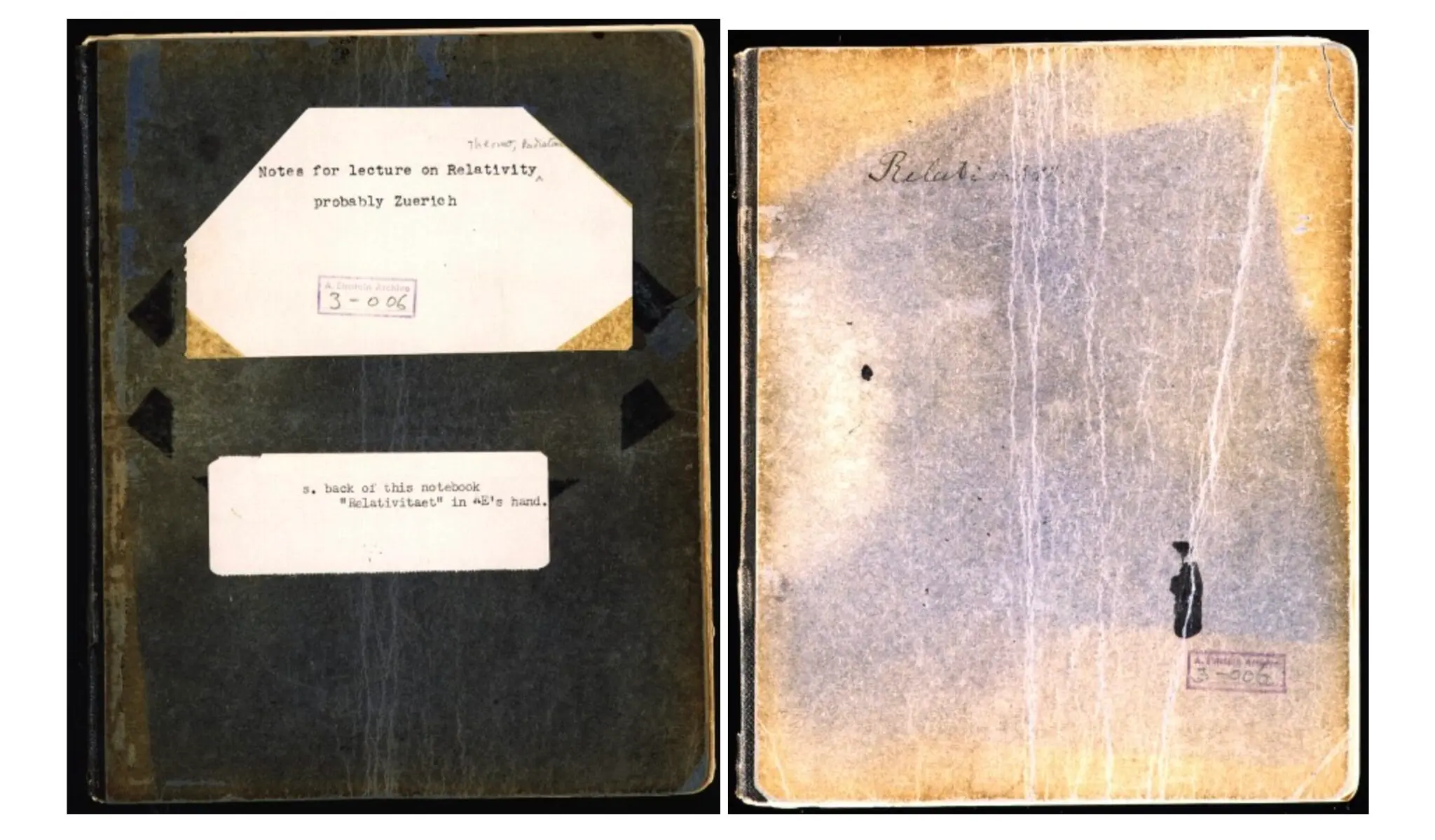
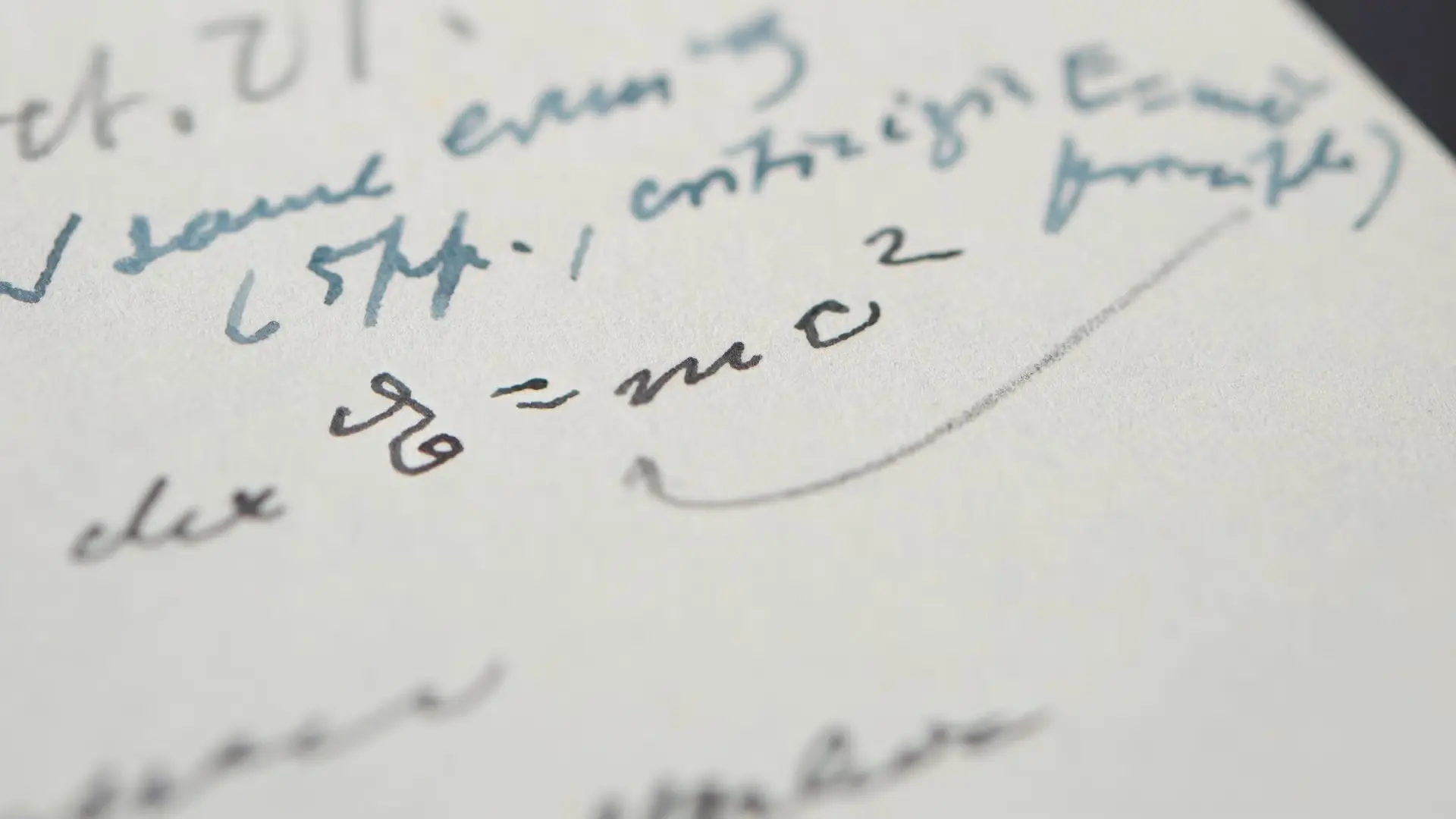
There is a philosophical puzzle here that mathematicians tend not to dwell on, perhaps wisely. Mathematical truths are supposed to be discovered, not invented — a theorem proved is true regardless of who proved it, or how, or in what state of grief. And yet the history of how theorems are found is entangled with the most contingent and irrational facts of human life. The same messiness shows in Einstein’s Zurich notebook, where general relativity didn’t work yet — pages of wrong turns on the way to a finished theory. The proof is indifferent to friendship. But this proof would not exist — at least not when it did, and perhaps not at all — without that friendship, the dream, and Thomason’s decision, against his own mathematical judgment, to check one more time.
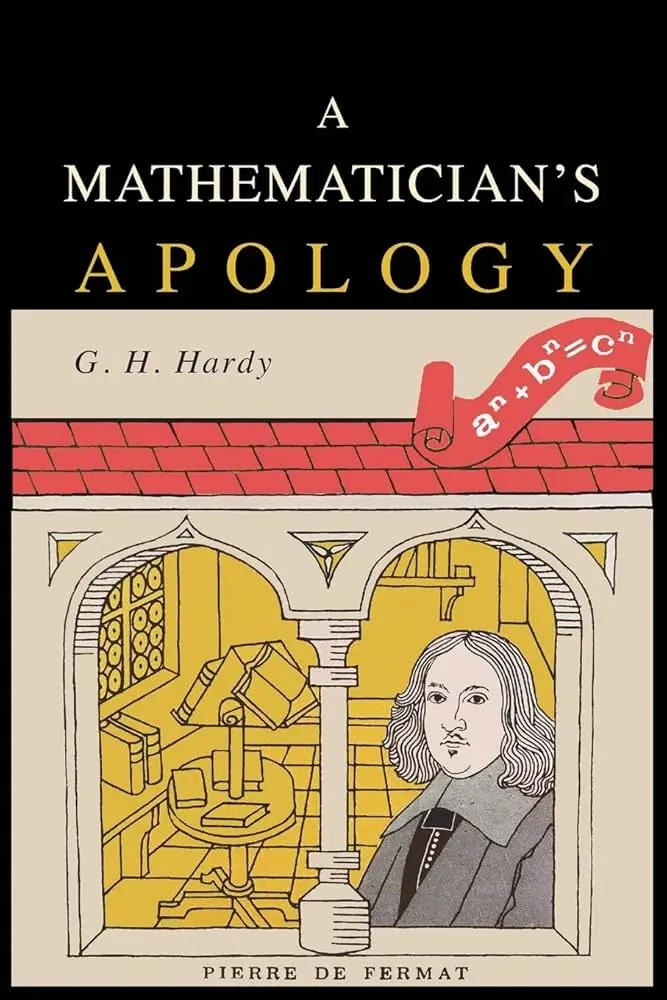
It is the kind of story that complicates the picture of mathematics as cold and impersonal — the picture G. H. Hardy both defended and quietly undercut in A Mathematician’s Apology. As Futility Closet’s Greg Ross put it in a brief note about the episode: perhaps the two are working again together somewhere. It is the kind of sentence mathematics does not usually permit — and the kind this story, uniquely, seems to earn.
Sources
- R. W. Thomason & Thomas Trobaugh, “Higher Algebraic K-Theory of Schemes and of Derived Categories,” The Grothendieck Festschrift, Vol. III, Progress in Mathematics 88, Birkhäuser, 1990. Full text: webhomes.maths.ed.ac.uk.
- Charles A. Weibel, obituary of R. W. Thomason, Notices of the AMS, vol. 43, no. 8, 1996, pp. 860–862.
- Greg Ross, “A Helping Hand,” Futility Closet.