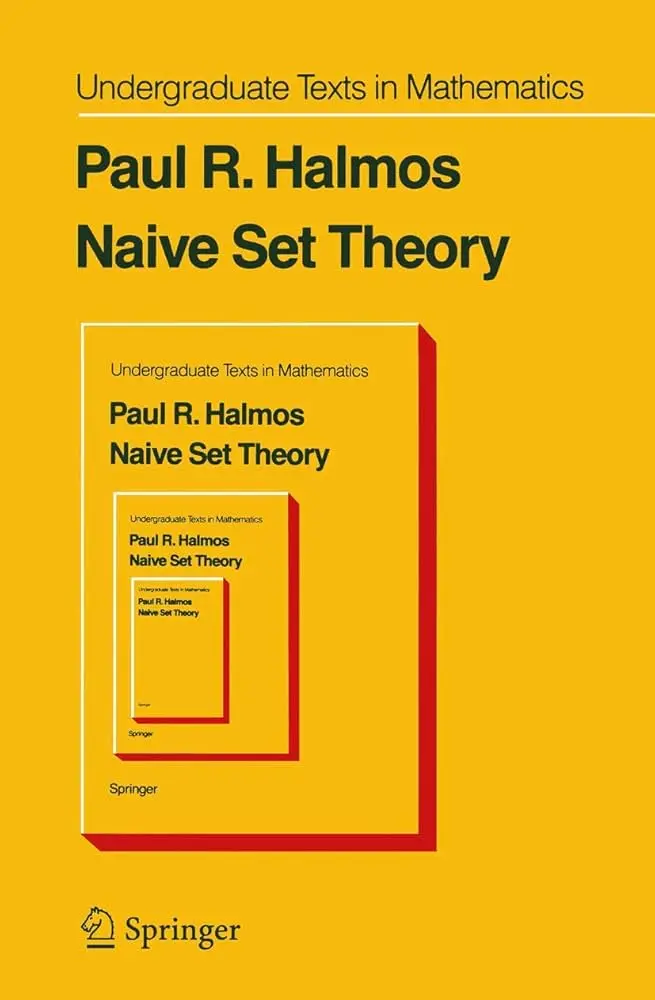
Author
Paul R. Halmos
Published
1960
Publisher
Springer (1974 ed.)
Pages
104
Genre
Mathematics / Set Theory
Level
Undergraduate+
almos opens the book with this sentence: “Every mathematician agrees that every mathematician must know some set theory; the disagreement begins in trying to decide how much is some.” This single sentence summarizes both the book's program and Halmos's prose style: precise, wry, not a wasted word. The remaining 103 pages are the same.
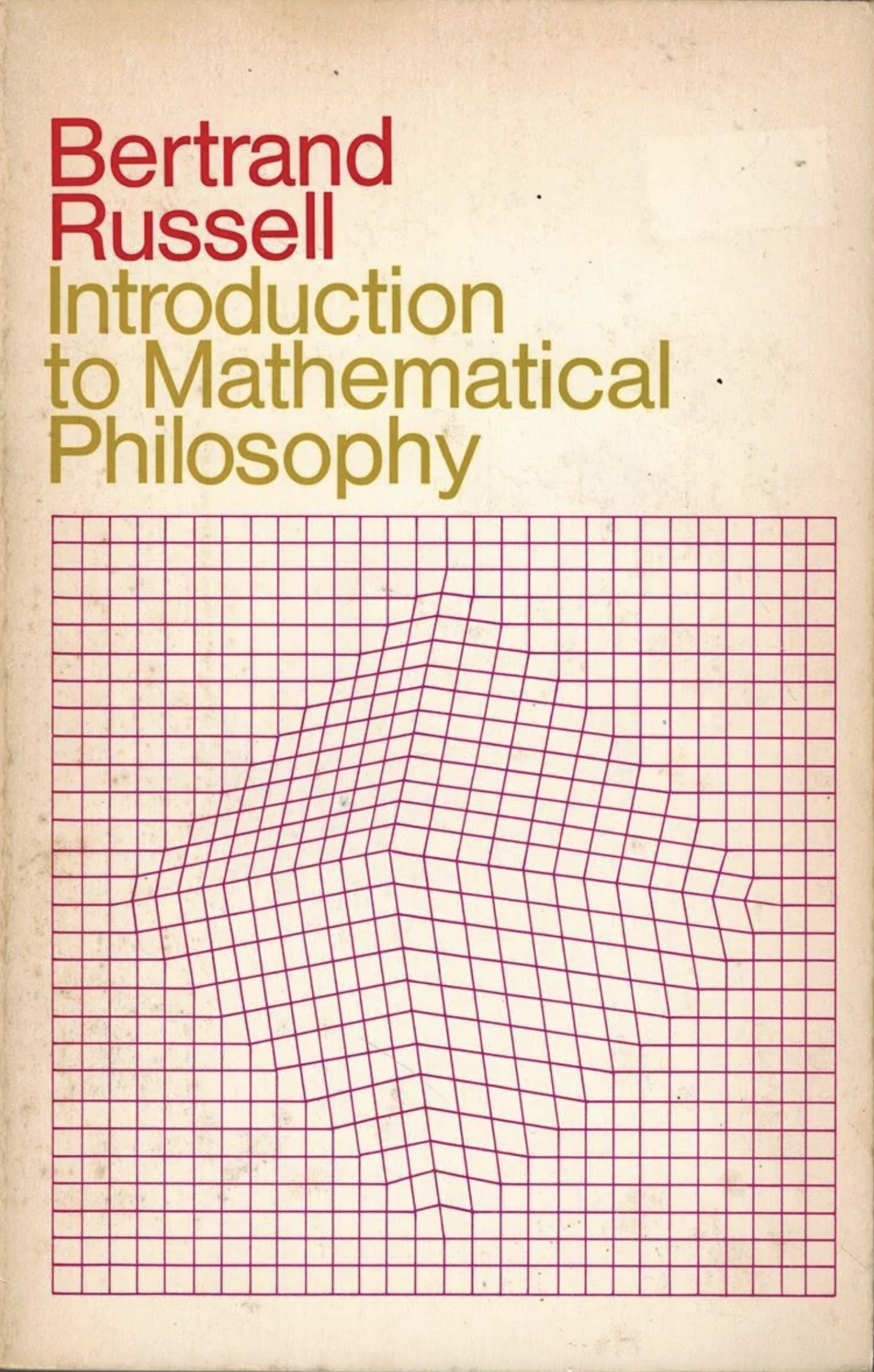
One hundred and four pages. One of the shortest serious books that teaches the foundational language of mathematics. Set theory seems intuitive at first — a collection of objects, things in a box — but Halmos's first few pages make that intuition inadequate almost immediately. A set cannot contain everything, because if you try to define such a thing you produce an object that contradicts itself. This is the core of the paradox Bertrand Russell discovered in 1901, the one that dismantled what everyone thought was the foundation of mathematics. To escape it, Halmos builds from the Zermelo-Fraenkel axioms — the foundation on which mathematics actually rests — in language that is intuitive without being imprecise.
“The axioms are not a brief and convenient summary of set theory; instead, set theory is a long and elaborate example of the axioms.”Paul Halmos — Naive Set Theory, Preface
The book appears on the MAA's list of essential texts for undergraduate mathematics libraries. First published by Van Nostrand in 1960, it entered the Springer Undergraduate Mathematics series in 1974 and has never gone out of print.
The word “naive” in the title is a deliberate provocation. In mathematical terminology, “naive” and “axiomatic” are opposites: the naive approach proceeds by intuition without formally stating axioms, while the axiomatic approach grounds every step in explicit rules. Halmos's book is actually axiomatic — it uses a system of axioms equivalent to ZFC set theory, with the sole exception of the axiom of foundation. But it presents those axioms not as a starting point to be accepted on faith, but as a distillation of intuitive truths that can be understood before being formalized. This distinction is not cosmetic. Understanding why the axioms are shaped the way they are requires far more than memorizing them. Halmos builds that understanding first.
Russell's Paradox — The Foundation of the Book
Start with “there exists a set that contains everything.” From this set, apply the axiom of specification to derive “the set of all sets that do not contain themselves.” Now ask: does this set contain itself?
If it does, then by definition it shouldn't. If it doesn't, then by definition it should. Either answer produces a contradiction. Russell communicated the paradox to Frege in a letter in 1901. Frege, who had spent years building a logical system for mathematics, saw it collapse in real time. Halmos resolves the problem in the book's early pages by showing how “there is no set that contains everything” follows from the axioms — presenting those axioms as lessons learned from exactly this collapse.
The book teaches more than set theory. It teaches how mathematics is done. Every chapter follows the same rhythm: a new concept is introduced, derived from the axioms, and then shown to produce further results naturally. What is a function? When is the inverse of a function well-defined? How is an infinite set defined? How are the natural numbers constructed from sets alone? The surface answers to these questions can be known without Halmos. But his treatment makes visible why things are the way they are — why they could not be otherwise — and that is a different and rarer kind of understanding. It belongs alongside the small shelf of books that teach mathematical thinking rather than mathematical content.
The book's difficulty is uneven — some sections move faster than expected, some notation reflects 1960 conventions that have since shifted. These are fair criticisms. But for a book of 104 pages to present the foundations of mathematics with this clarity is rare enough that the criticisms sit beside rather than against it. One reviewer put it simply: “This isn't just a reference book. It's a glimpse of how mathematics, and mathematicians, work.” That is correct. After reading Halmos, you have not merely learned set theory. You have seen the machinery underneath mathematical thinking.
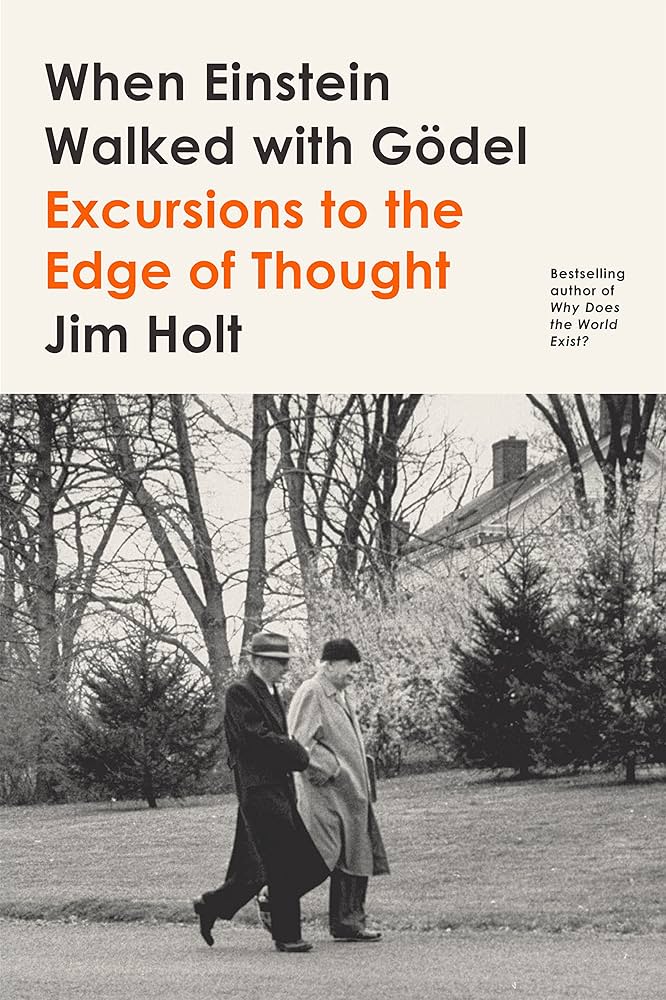
In 1926, Hilbert said: “No one shall expel us from the paradise that Cantor has created.” The paradise he meant was the world where infinity could be handled mathematically, where different sizes of infinity existed and could be compared, where everything could be expressed in the language of sets. That program — formalizing all of mathematics in a single consistent system — was later shown by Gödel to have limits Hilbert never anticipated. But Halmos's book is one of the shortest and cleanest routes into that paradise regardless. Its brevity is not a limitation. It is the proof that nothing unnecessary was included.