Book List · University of Cambridge · Faculty of Mathematics
Every year, the University of Cambridge hands sixth-formers who want to study mathematics the same list of books. You do not have to read any of them. Most people who get in have read a few.
From Hardy’s apology of 1940 to the hunt for the Higgs boson
Tap a cover to open the book. Scroll the shelf sideways for all fifty-four.
54
books on the faculty's list, in its own order
6
shelves, from problem-solving to first-year textbooks
1940
the oldest: Hardy's A Mathematician's Apology
2
Fields Medallists among the authors: Gowers and Tao
Somewhere on the website of the Faculty of Mathematics at Cambridge sits a modest PDF called the Mathematical Reading List. It has no pictures, no rankings and no hype. It is written for students in the last two years of school who are thinking about a maths degree, and it is quietly one of the best book lists in mathematics: chosen by people who teach first-year undergraduates every autumn and know exactly what those students wish they had read in the summer before.
What makes it unusual is its tone. The faculty tells you not to read everything, that it is perfectly fine to have read nothing, and that a book does not have to be hard to be good for you. Then it hands you sixty-five of them anyway, from biographies and puzzle collections to the textbooks you will meet in your first term. Below are fifty-four of them, our pick from the list, in the faculty’s own order and its six groups, with a note on each book about why it earned its place and who it is really for.
If you only want somewhere to start, use the finder below. If you want to keep track, tick off what you have read and your shelf fills up as you go. And if you are coming at this from the other side, as an adult who simply wants to learn, our guide on how to learn mathematics and the self-learner’s roadmap pick up where this list stops.
How Cambridge says to use this list
Don't read them all
Nobody could. The list is a menu, not a syllabus. Pick what pulls at you.
Easy is allowed
Medicine may need to taste bad to work. Mathematics books do not.
Libraries first
Almost all of them can be ordered at a local library; most are cheap in paperback.
Reading is a skill
Learning to work through a maths book on your own is half of what a degree asks.
Start here · Which reader are you?
The books that make the first term feel like the second.
Your Cambridge shelf
0 / 54
Tick “I've read this” under any book and your progress stays here, in this browser.
Shelf I · Books 1–3 · 3 books
Three books about the craft itself: how to attack a problem you have never seen, how to study at university, and how to write mathematics that says exactly what you mean.
No. 01 · Princeton · first published 1945
George Pólya
The problem-solving manual Terence Tao says he learned from.
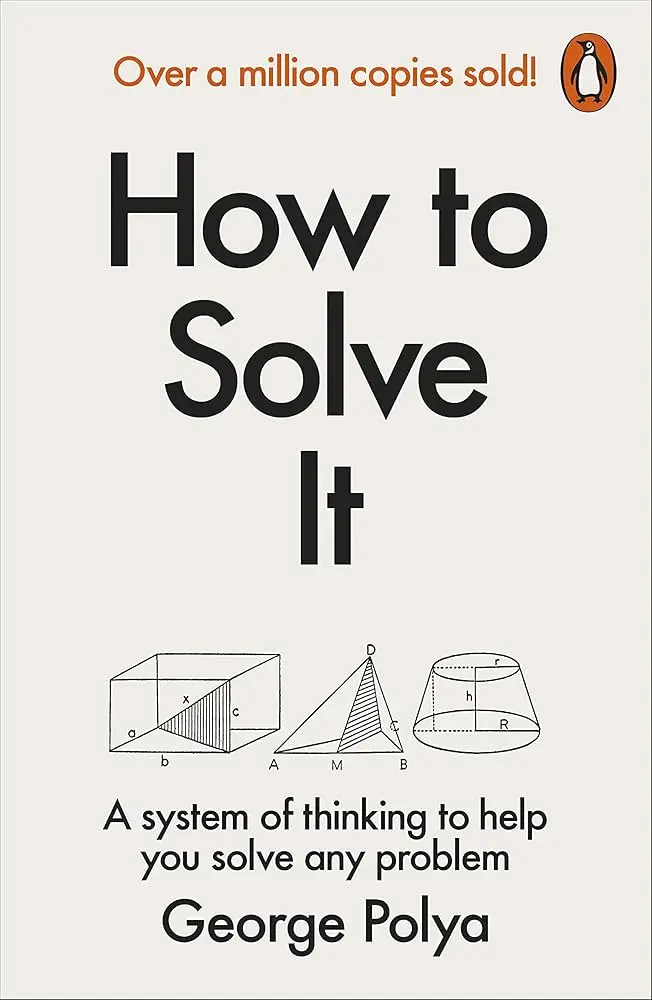
George Pólya was a Hungarian mathematician at Stanford who noticed that nobody actually taught problem-solving; teachers just showed solutions and hoped. So he wrote down the method. Understand the problem. Make a plan. Carry it out. Look back. Inside that skeleton he packs dozens of heuristics, from “draw a figure” to “solve a simpler related problem first,” each with a worked example.
It has sold more than a million copies since 1945, and Terence Tao has said it is where he learned to solve problems. It is short, it is cheap, and it is the single book on this page most likely to change how you do your homework next week. We include it in our list of the best books for learning proofs for the same reason.
No. 02 · Oxford University Press · 2013
Lara Alcock
Exactly what the title promises, and that is rarer than it sounds.
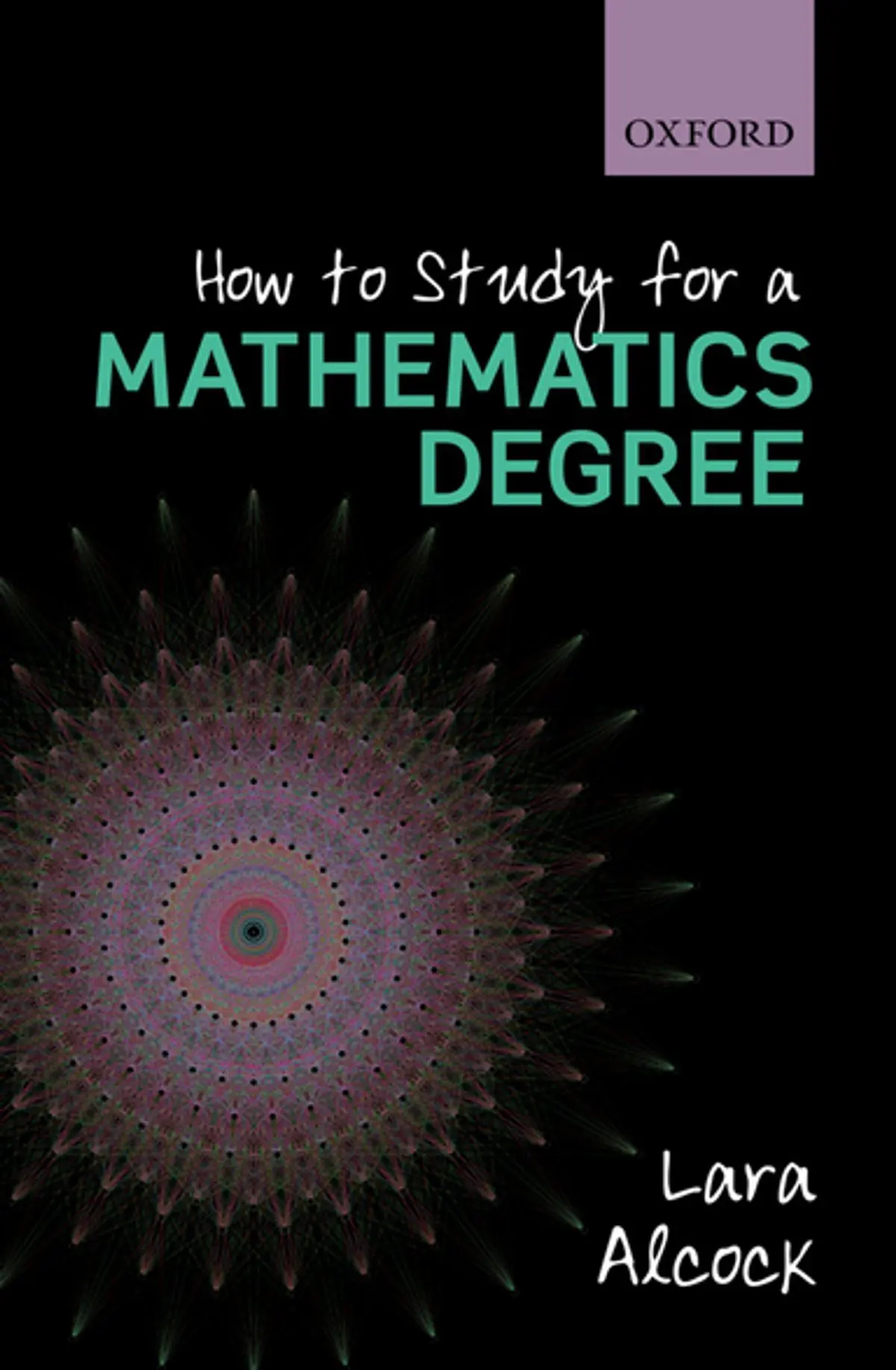
Even the faculty admits this sounds like the kind of book that could be terrible. It is not. Lara Alcock, who teaches mathematics at Loughborough, explains what changes when you arrive at university: lectures that move faster than you can write, definitions that suddenly matter word by word, proofs instead of methods, and the strange new experience of being stuck for days.
Then she tells you what to do about each of those, practically, down to how to read a page of lecture notes. Read it in August and your first October will feel like your second.
No. 03 · Cambridge University Press · 2009
Kevin Houston
How many months have 28 days? A mathematician says: all of them.
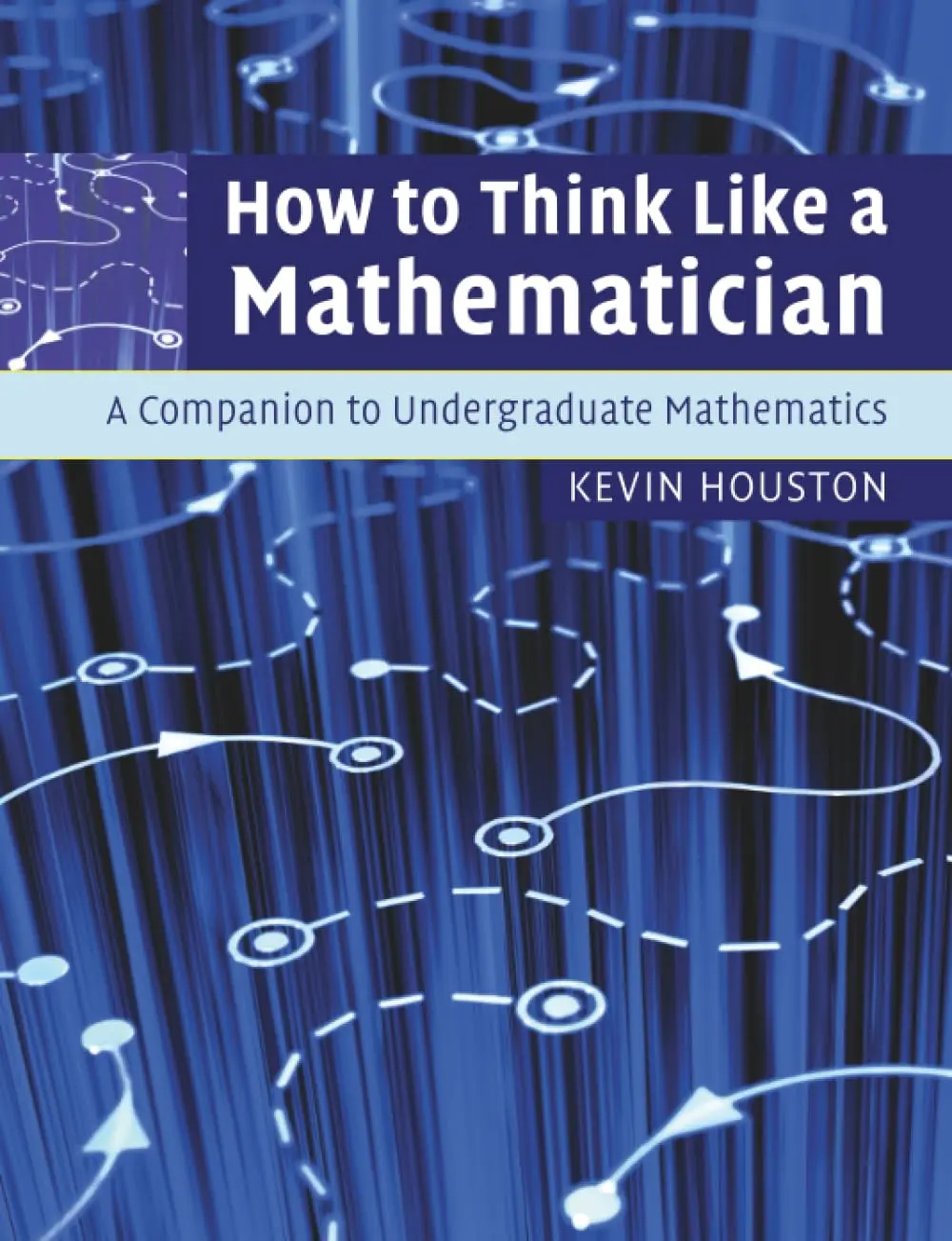
Kevin Houston opens with a joke that is also the whole lesson. Question: how many months have 28 days? The mathematician’s answer: all of them. From there he teaches the habits that separate school mathematics from the university kind: reading a definition slowly, writing a sentence that can only mean one thing, knowing the difference between “if” and “only if,” and building a proof one honest step at a time.
It is full of exercises and full of good advice, and it treats you as someone who is about to become a mathematician rather than someone who needs to be persuaded.
Shelf II · Books 4–15 · 12 books
The faculty's complaint is that undergraduates copy down theorems without knowing why anyone needed them. These twelve books fix that: the people, the problems and the stories behind the subject.
No. 04 · MAA Spectrum · 1951, reissued 1996
E. T. Bell
Euclid to Einstein in twenty chapters, with a foreword by Martin Gardner.
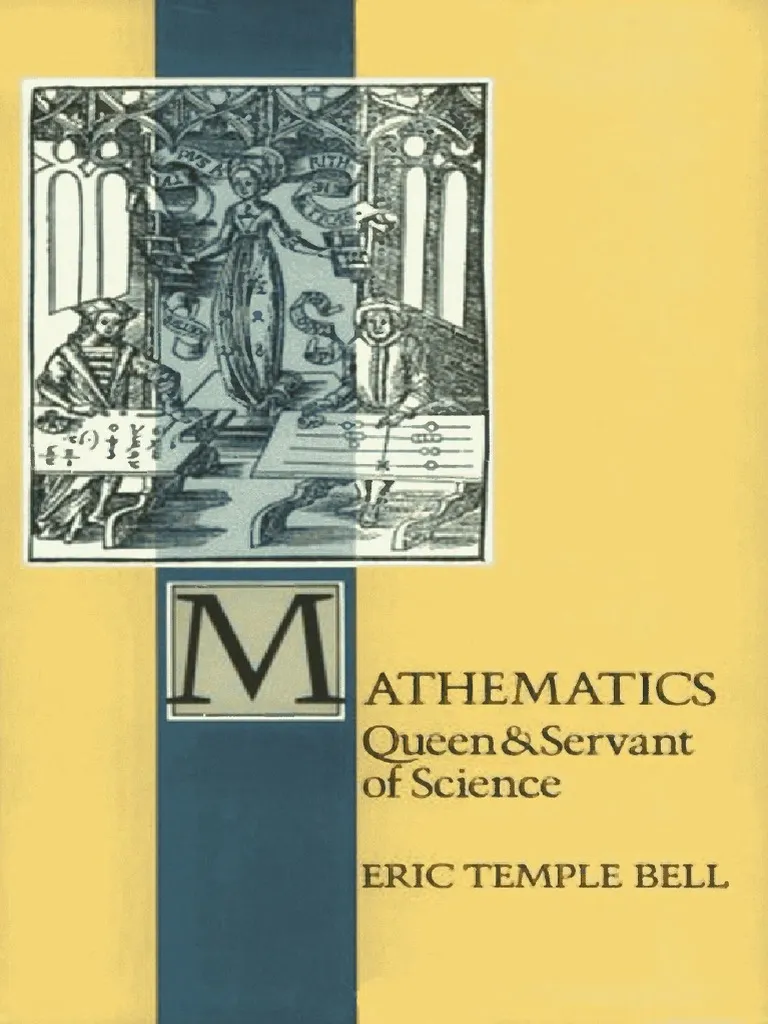
E. T. Bell was a Scottish-born mathematician at Caltech and one of the great popularisers of the twentieth century. This book is his tour of the whole subject, from Euclid’s geometry to Riemann’s and on to the relativity that needed it, through algebra, groups, number theory, logic, probability and the foundations of infinity, in twenty confident chapters.
Martin Gardner wrote the foreword to the revised edition and called it one of the finest introductions to the structures mathematicians invent. Some of its history has been corrected since, but nothing else gives you the shape of the whole subject in one sitting quite like it.
No. 05 · Princeton University Press · 2009
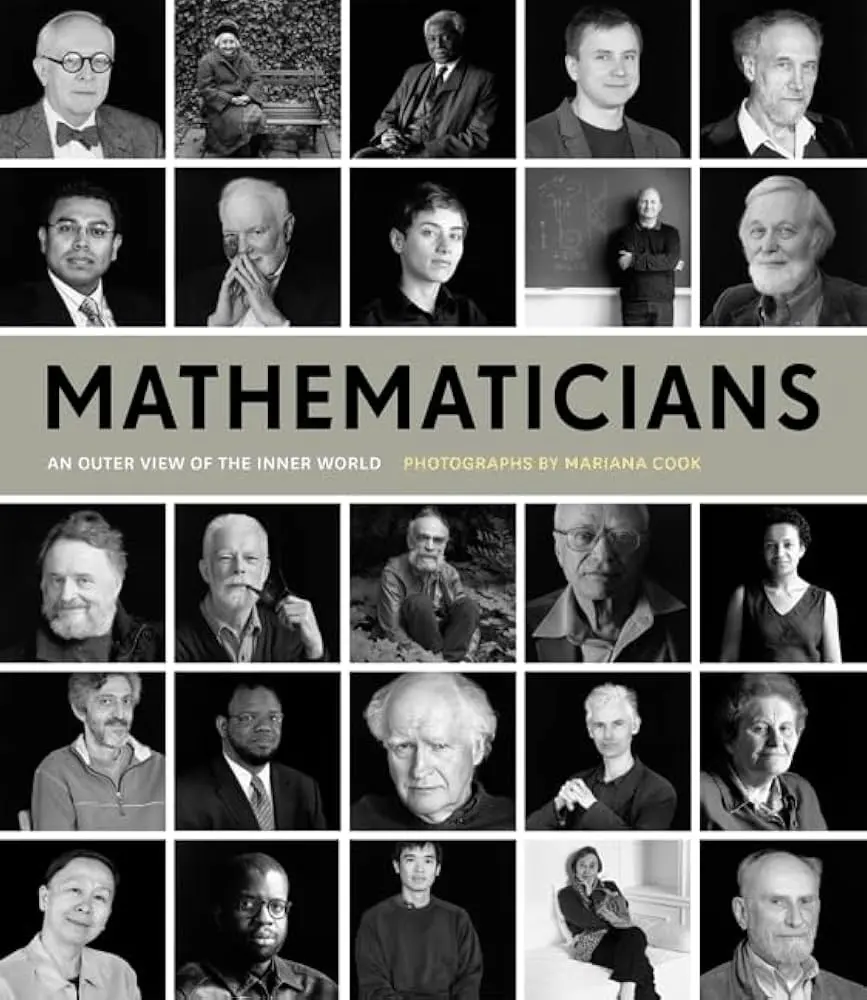
Mariana Cook
Ninety-odd mathematicians, photographed and speaking in their own words.
Mariana Cook is a photographer, not a mathematician, which is the point. She photographed mathematicians, from Fields Medallists to young researchers, and asked each to write a page about themselves: how they started, what it feels like when something works, what they do when it does not. The portraits are beautiful and the pages are startlingly personal.
It is the quickest cure for the idea that mathematicians are a different species. Open it anywhere; it is a book to dip into, not to read straight through.
No. 06 · Springer · 1978 · trans. Beatrice Stillman
Sofya Kovalevskaya
She learned calculus from the wallpaper of her nursery.
Sofya Kovalevskaya became, in 1889, a full professor at Stockholm, the first woman in modern times to hold such a post in Europe, despite being a woman, a foreigner and a socialist. This memoir is about the years before all that: a childhood on a Russian estate, an older sister who wrote stories, and a nursery wall papered, for lack of anything else, with pages of lecture notes on calculus.
She studied those pages as a child without understanding them, and later said the formulas felt familiar when she finally learned them. The book itself has almost no mathematics, and it is one of the most moving things on this list.
No. 07 · Vintage · 2014
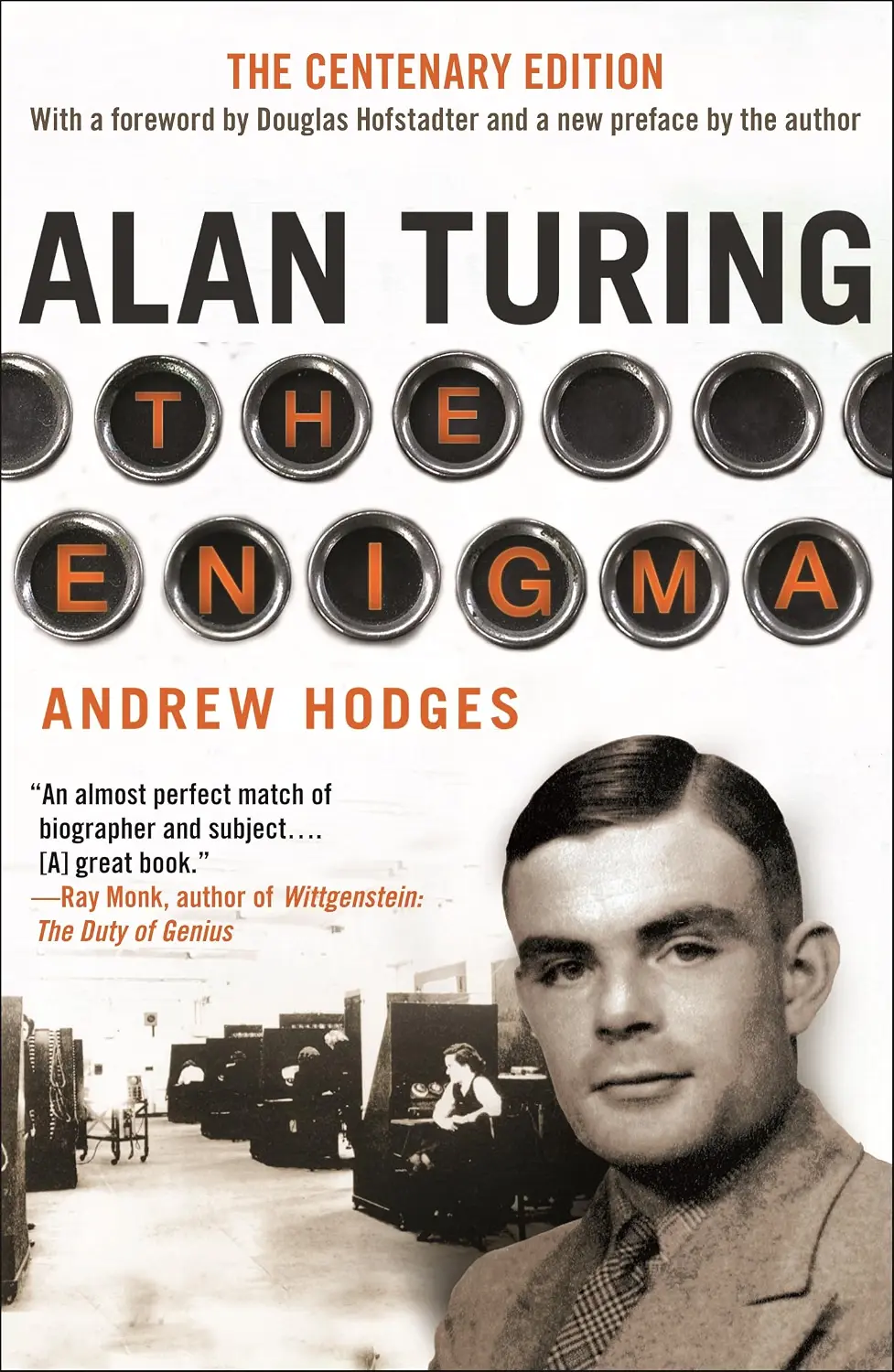
Andrew Hodges
The biography behind the film, and far better than the film.
Andrew Hodges is a mathematical physicist at Oxford, and his life of Alan Turing is the biography the film The Imitation Game was based on. The title has two meanings: the German cipher machine Turing helped break at Bletchley Park, and the man himself, private, brilliant and treated shamefully by the country he helped save.
Hodges does not simplify the mathematics. You get the real Turing machine, the real argument that some problems can never be decided by any procedure, and the real answer it gave to a famous question of Hilbert’s. It is long, and every chapter earns it.
No. 08 · Cambridge University Press · 1940
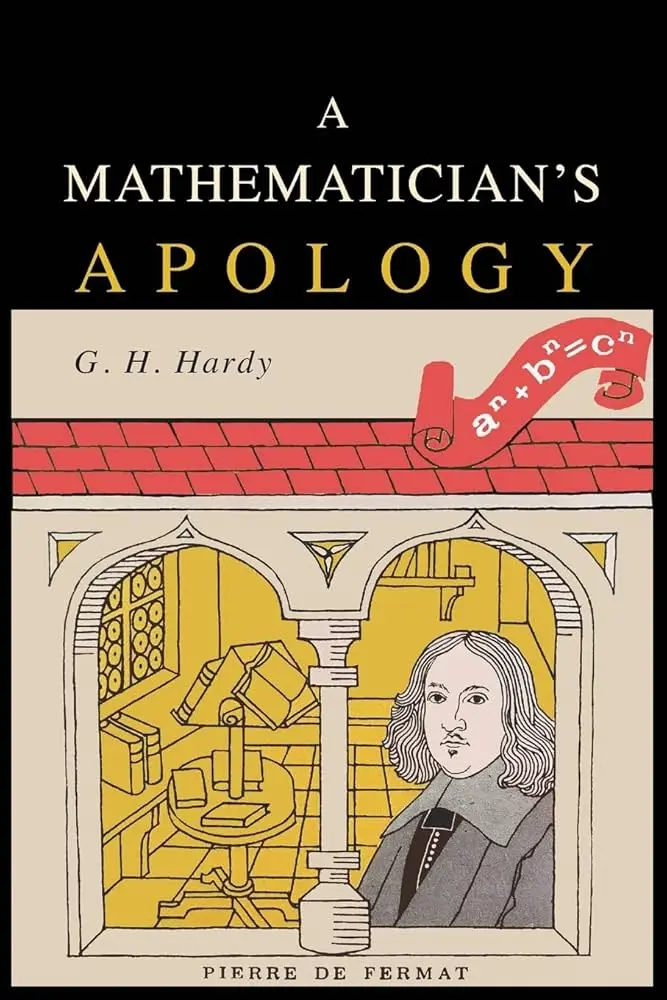
G. H. Hardy
The most honest essay ever written about why anyone does mathematics.
Hardy wrote this short essay in 1940, when he felt his creative years were behind him, to answer one question: was a life spent on pure mathematics worth it? His answer is proud, funny and sometimes wrong. He was certain number theory would never be useful in war; it now protects every bank transfer on Earth.
Graham Greene said he knew almost nothing that conveyed the excitement of the creative artist so clearly. Read it in an afternoon, then read our full review and see whether you agree with him about beauty. It also appears in our list of short math books.
No. 09 · Fourth Estate · 1999
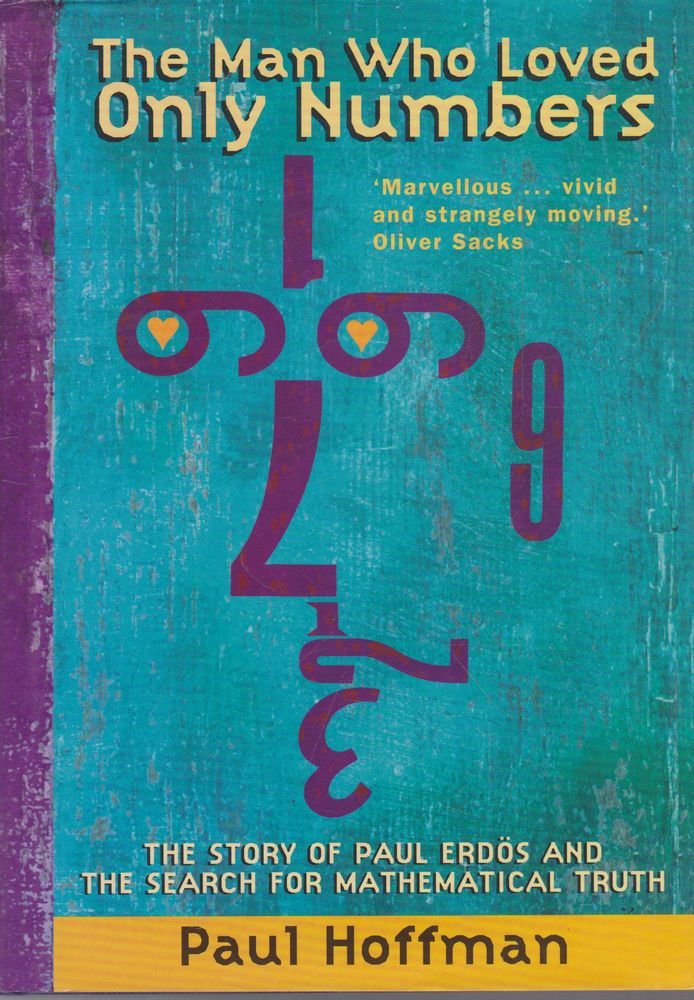
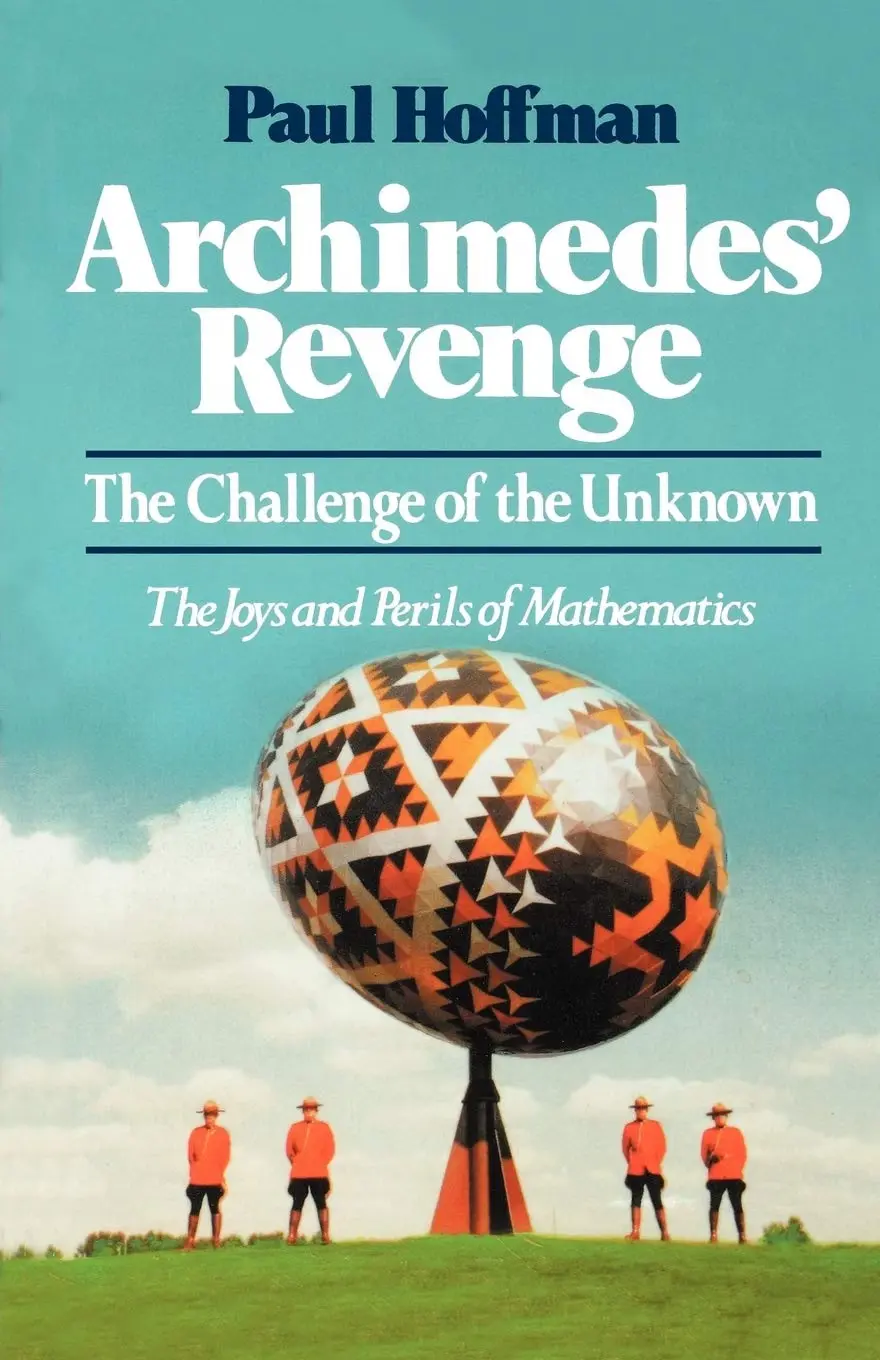
Paul Hoffman
Paul Erdős, 1,500 papers, no home and one suitcase.
Paul Erdős wrote around 1,500 papers with more than 500 collaborators and owned almost nothing. He would arrive at a colleague’s door with a suitcase, announce “my brain is open,” work for a week on whatever problem they had, and leave for the next door. Paul Hoffman, who followed him for years as a journalist, captures the man and the mathematics together.
There is real number theory and combinatorics here, the kind of problem that takes one line to state and a lifetime to solve. It is the book that best explains why mathematicians talk about their “Erdős number,” and it is also one of the funniest books on the list.
No. 10 · Arrow · 1992
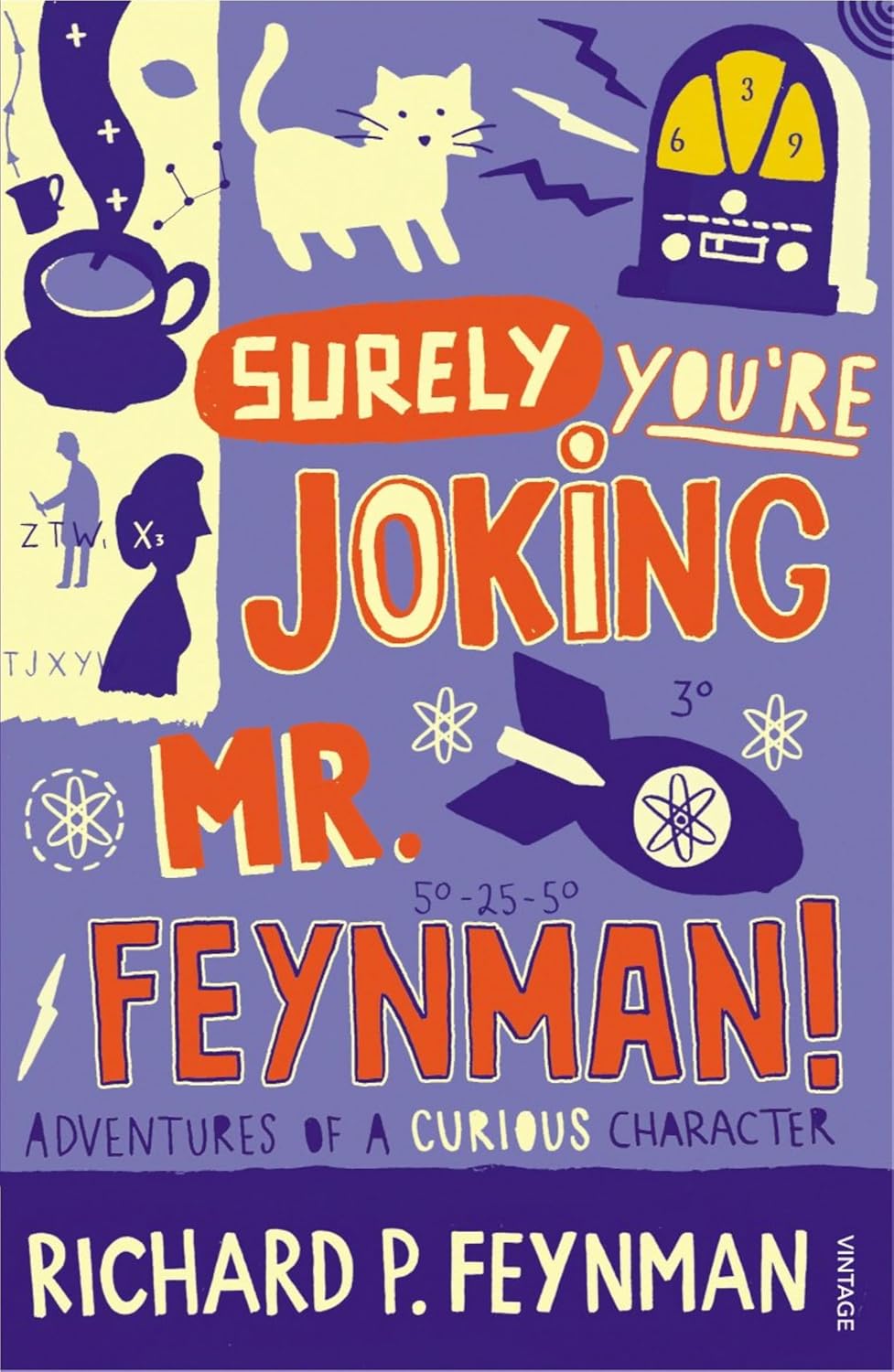
Richard P. Feynman
Safecracking, bongo drums and, somewhere in between, physics.
Richard Feynman was a Nobel physicist, but this collection of stories, told to his friend Ralph Leighton and written down, is about everything else: picking safes at Los Alamos, learning to draw, playing drums in Brazil, and refusing to accept any explanation he could not rebuild for himself. It was an instant bestseller and it has never stopped selling.
Cambridge includes it because the attitude is contagious: curiosity as a way of life. If you like it, our pages on the Feynman technique and the book itself go further.
No. 11 · HarperCollins · 2003
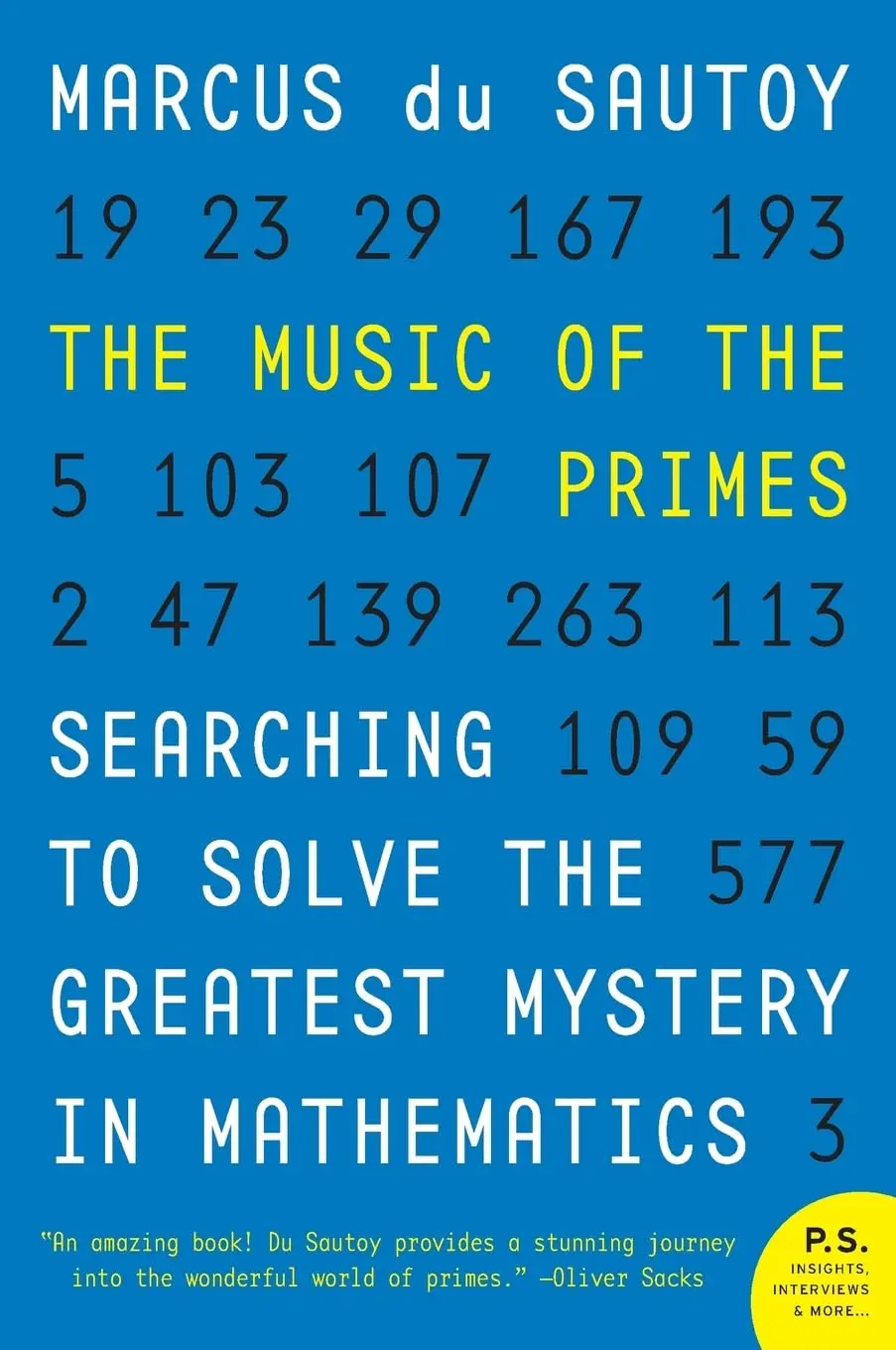
Marcus du Sautoy
The Riemann Hypothesis as the thread through 150 years of mathematics.
The Riemann Hypothesis says something precise about how the prime numbers are scattered, and it is one of the Clay Institute’s million-dollar problems. Marcus du Sautoy, Oxford’s former professor for the public understanding of science, uses it as a thread through 150 years of mathematics: Gauss, Riemann, Hilbert, Hardy and the cryptographers of today.
Some of it is tough, but the storytelling carries you. It sits naturally next to our Riemann Hypothesis explainer and our list of books devoted to a single problem.
No. 12 · Fourth Estate · 2008
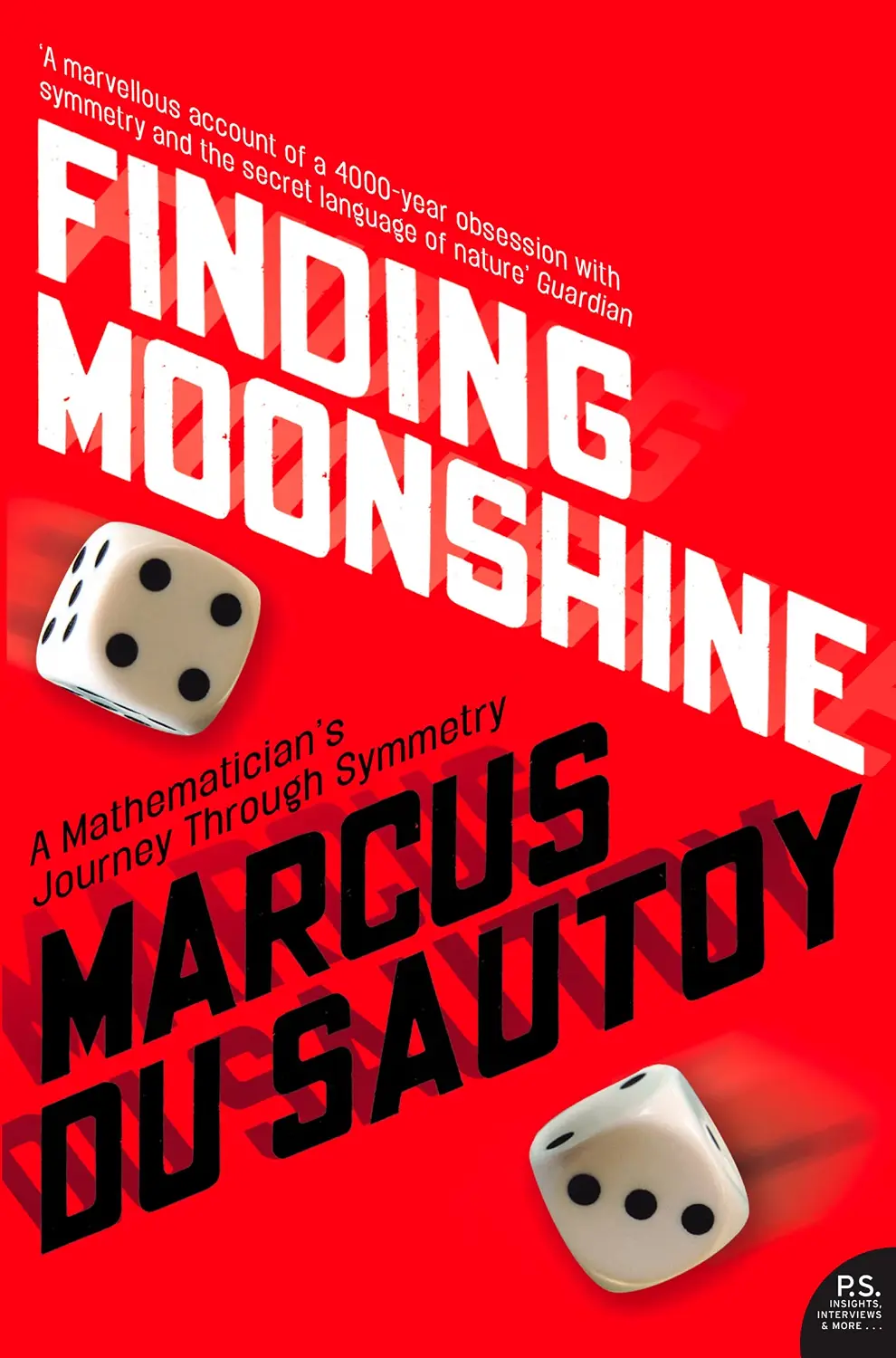
Marcus du Sautoy
A year in a mathematician's life, chasing a group nobody has named.
Du Sautoy’s second book is a diary of one year in his own life, mixed with the history of symmetry from the Alhambra to the Monster, a group with more elements than there are atoms in the Earth. The title refers to monstrous moonshine, the bizarre link between that group and numbers in a completely different field.
It got even better reviews than his first, and it shows what research is really like: a lot of trying, a lot of doubt, and occasionally a moment of light. It even invites you to discover a group of your own and have it named after you.
No. 13 · Prometheus · 2004
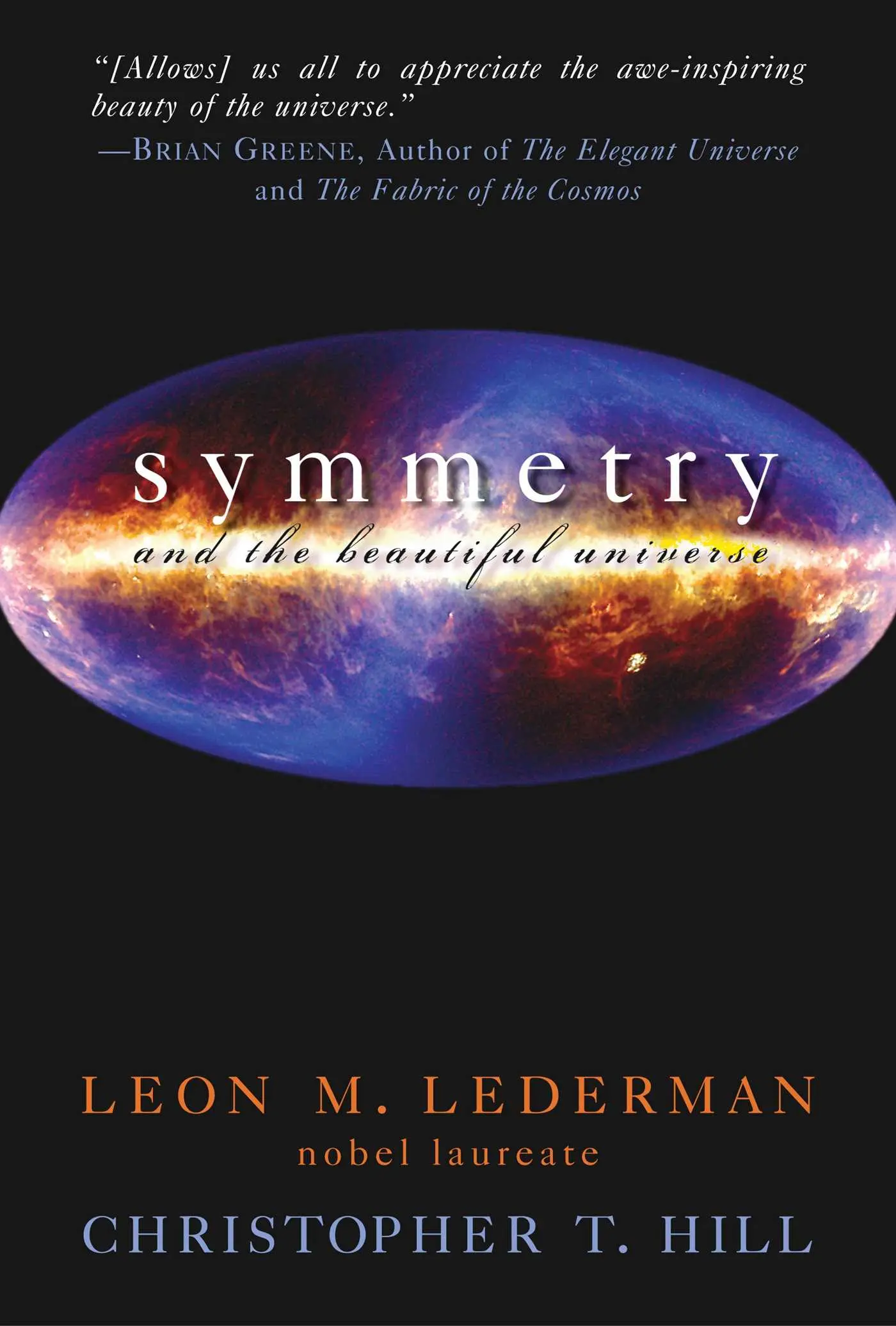
Leon M. Lederman & Christopher T. Hill
Why every symmetry of nature hides a law that something is conserved.
Leon Lederman won the Nobel Prize in physics; Christopher Hill is a theorist at Fermilab. Together they explain the single most important idea linking mathematics to the laws of nature: Emmy Noether’s theorem, which says that every symmetry of a physical system comes with a quantity that is conserved. Time symmetry gives you energy; space symmetry gives you momentum.
From there it climbs, with almost no equations, to relativity, the Standard Model and the Higgs. The faculty recommends it warmly but warns that the Kindle edition is full of misprints, so get the paper one.
No. 14 · Oxford University Press · 2017
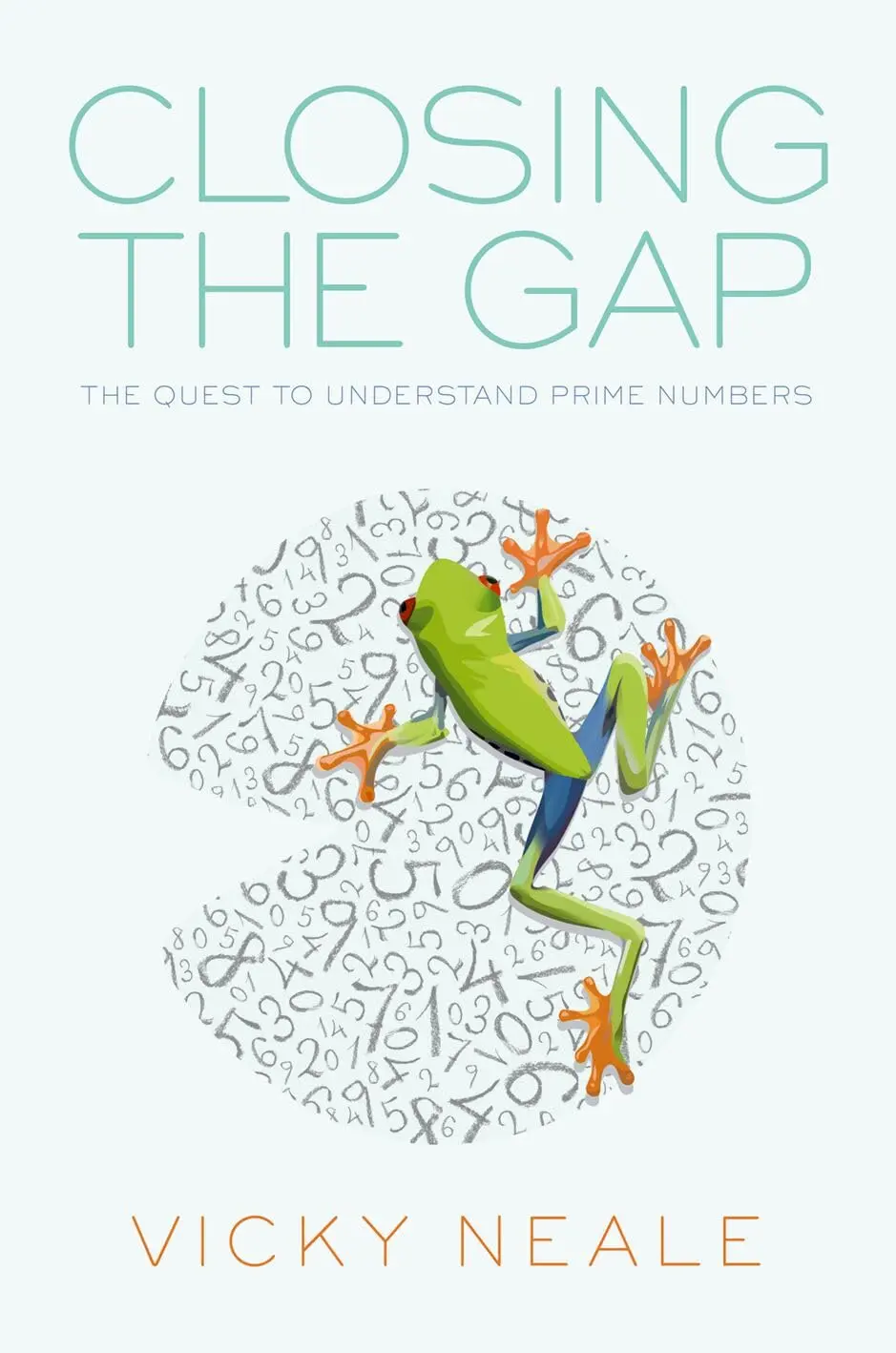
Vicky Neale
The twin prime conjecture, and how close we got in 2013.
The twin prime conjecture says there are infinitely many pairs of primes that differ by two, like 11 and 13 or 41 and 43. It is easy to state and nobody has proved it. In 2013 a little-known mathematician named Yitang Zhang proved that there are infinitely many pairs differing by at most 70 million, and then the world joined in to shrink the gap.
Vicky Neale, who taught at Oxford, tells that story, including the online Polymath project started by Tim Gowers, alternating chapters of narrative with chapters of real number theory and problems to try. It is short, rigorous and exciting, and one of the best introductions to how research happens now.
No. 15 · Oxford University Press · 2018
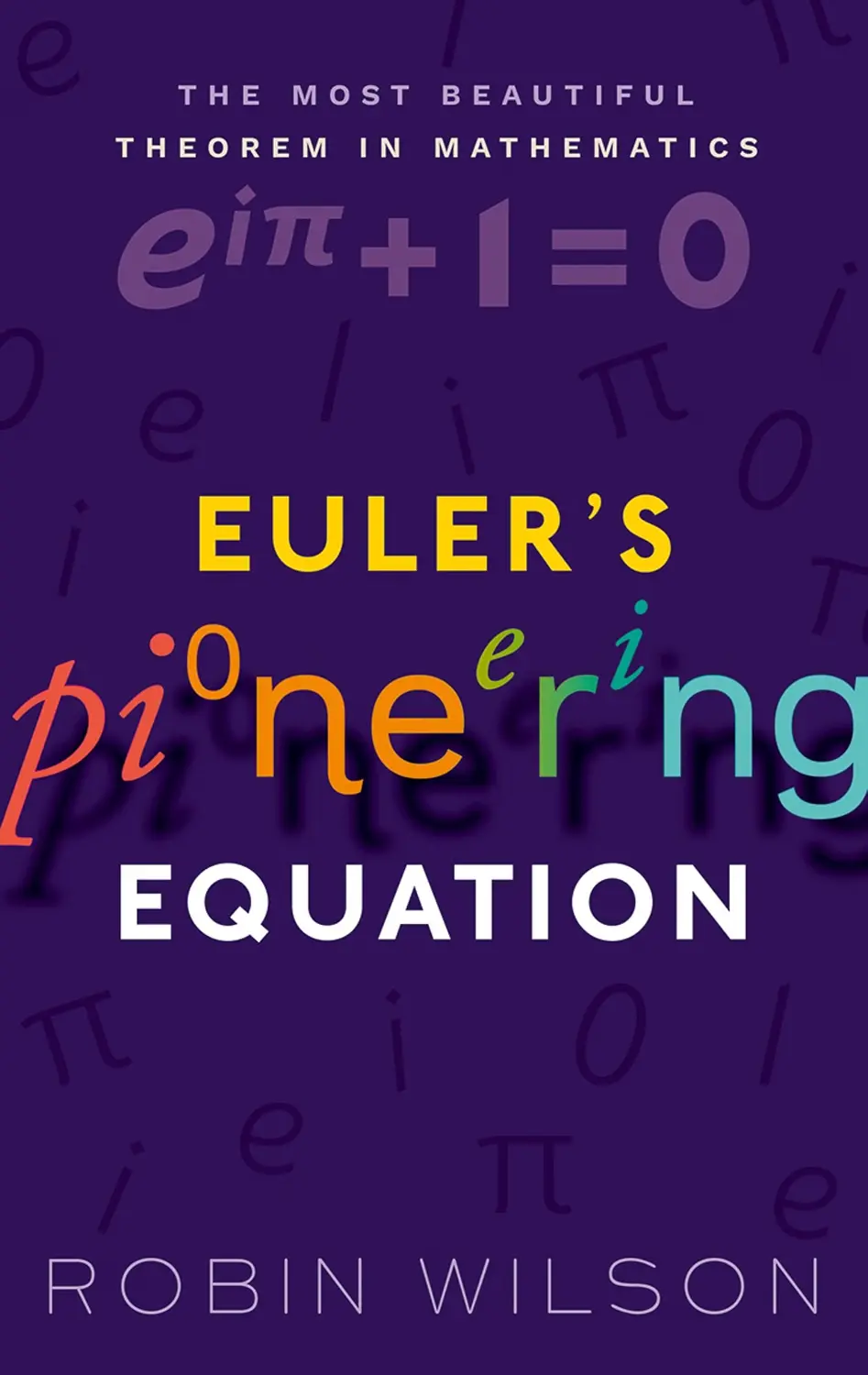
Robin Wilson
Five numbers, one line, and a whole history of mathematics.
The equation eiπ + 1 = 0 connects the five most important numbers in mathematics, and it keeps winning polls for the most beautiful formula ever written. Robin Wilson, a historian of mathematics, gives each of the five a chapter, tracing how it was discovered and what it does, and saves the equation itself for the end.
Along the way you meet ways to approximate π, the near misses of great mathematicians and several proofs. It is a small book, ideal for the curious, and one of the best on the list for a student who has just met complex numbers at school.
Shelf III · Books 16–20 · 5 books
Puzzle books and mathematical games, plus a few books that set you no problems at all and simply show you something beautiful. The point is to keep your brain working through the summer.
No. 16 · W. W. Norton · 2001
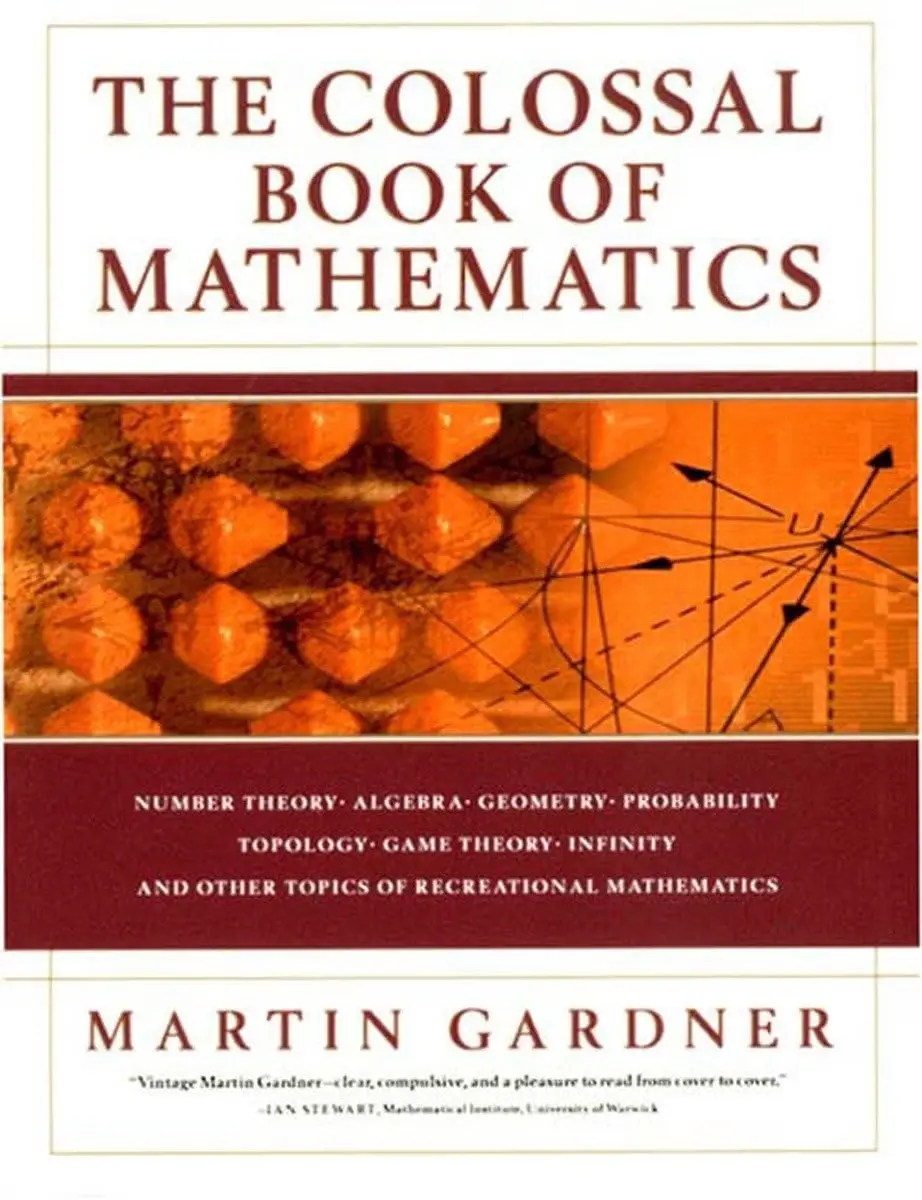
Martin Gardner
Seven hundred pages of the man who taught a generation to play.
For twenty-five years Martin Gardner wrote the Mathematical Games column in Scientific American, and a whole generation of mathematicians says that is where they started. This anthology collects the best of it in more than 700 pages: flexagons, polyominoes, Penrose tilings, the game of Life and, first of all, a problem about a monkey, five sailors and a pile of coconuts.
The faculty calls it an astonishing bargain, and it is. If it hooks you, Gardner wrote dozens more, and none of them disappoint.
No. 17 · Dover · 2000
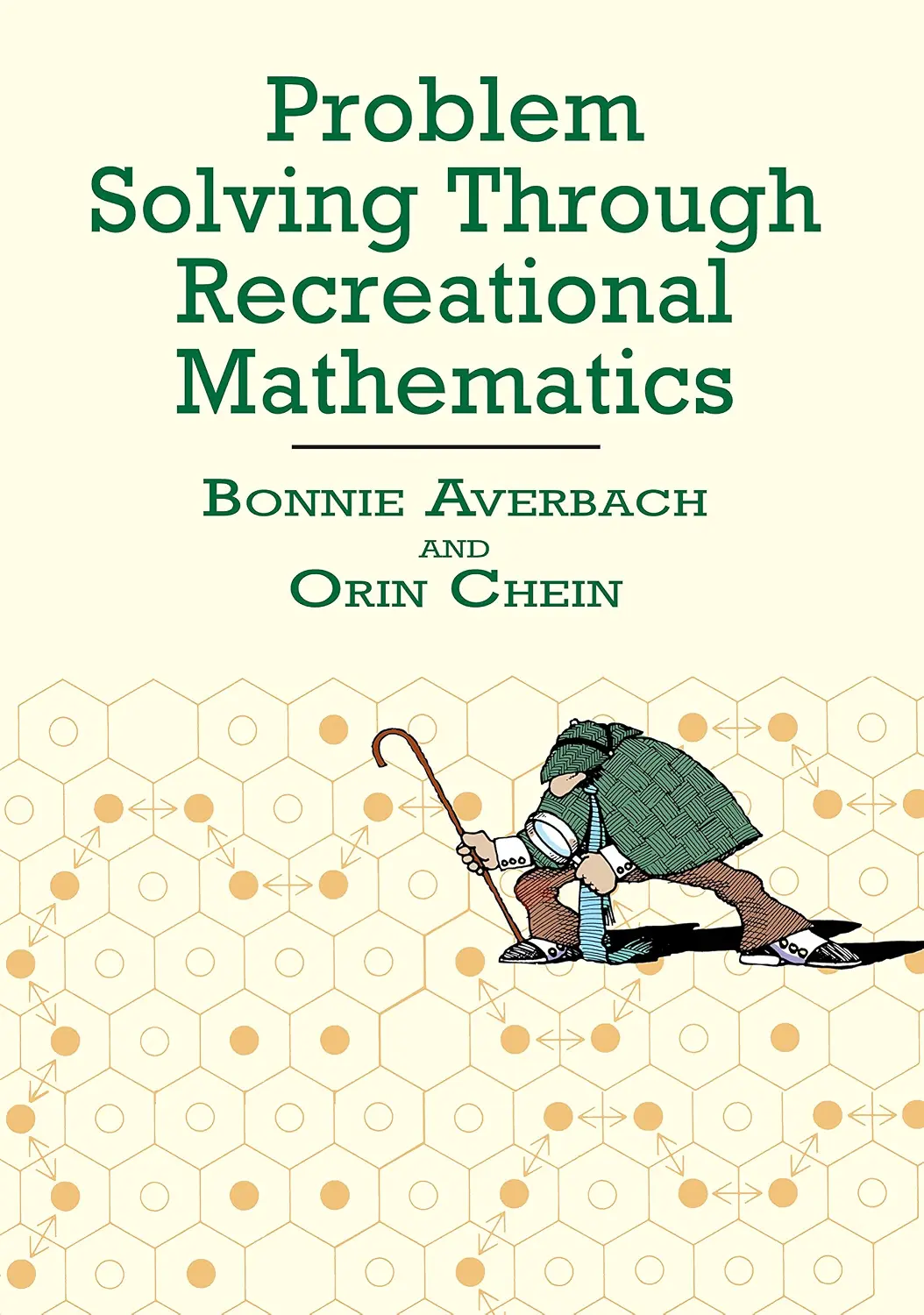
Bonnie Averbach & Orin Chein
Puzzles first, and the mathematics sneaks in behind them.
One can never have enough puzzles, the faculty says, and this Dover collection proves it. Bonnie Averbach and Orin Chein arrange hundreds of recreational problems by the area of mathematics they secretly teach: logic, number theory, graphs, probability, games.
The difficulty ranges from warm-up to properly stumping, and there are hints and solutions for most. It works as a quiet summer course disguised as fun.
No. 18 · Penguin · 1991
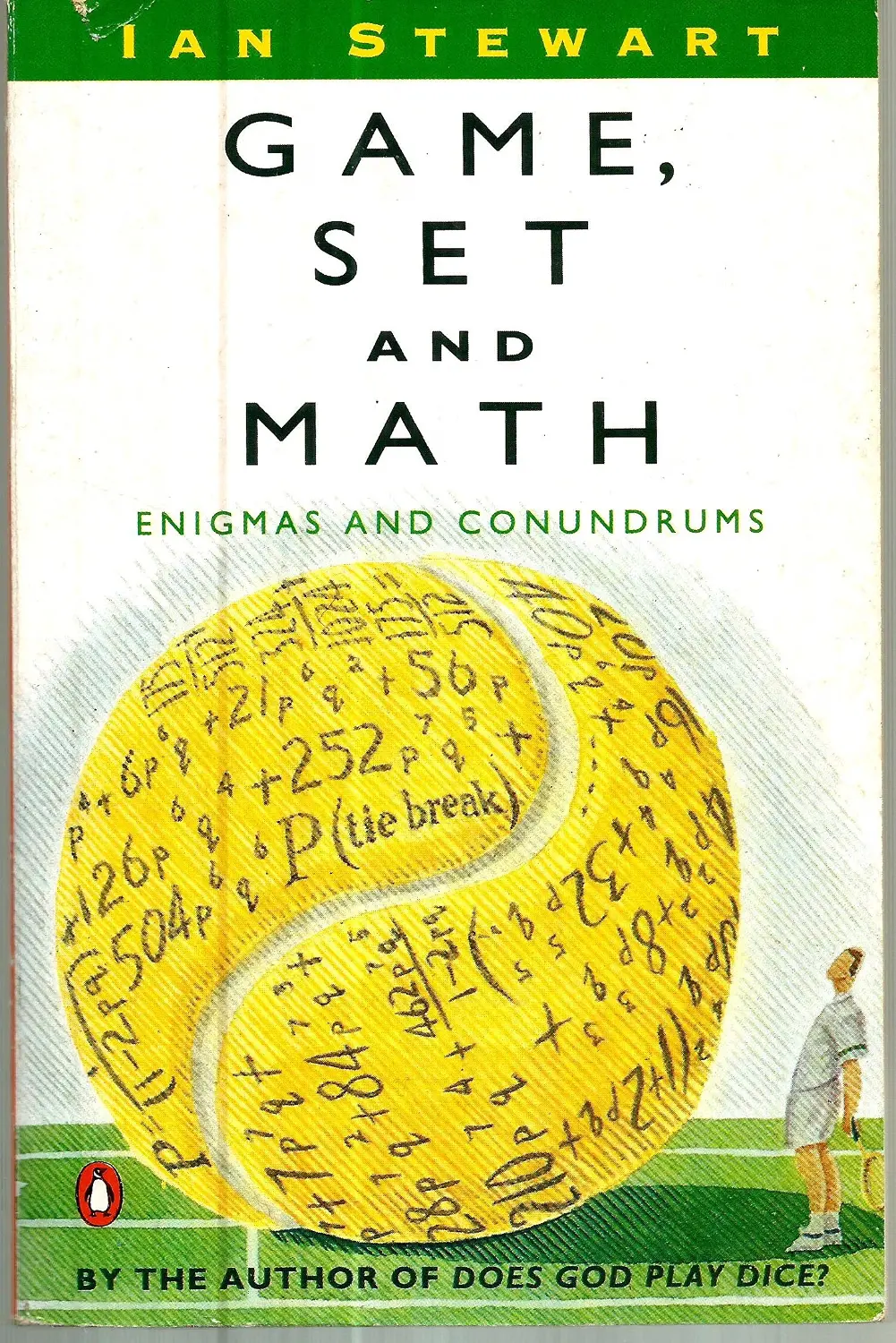
Ian Stewart
Why being only slightly better wins you most tennis matches.
Ian Stewart is one of the best mathematical writers alive, and this is a collection of his short, playful essays, first written in French for Pour la Science. The title piece shows why a player who wins only slightly more points than their opponent wins a surprisingly large share of tennis matches; others tackle knots, dice and paradoxes.
Some puns lost something in translation, but the joy did not. If you like it, the faculty also suggests Stewart’s Does God Play Dice?, on chaos.
No. 19 · Princeton · 1991
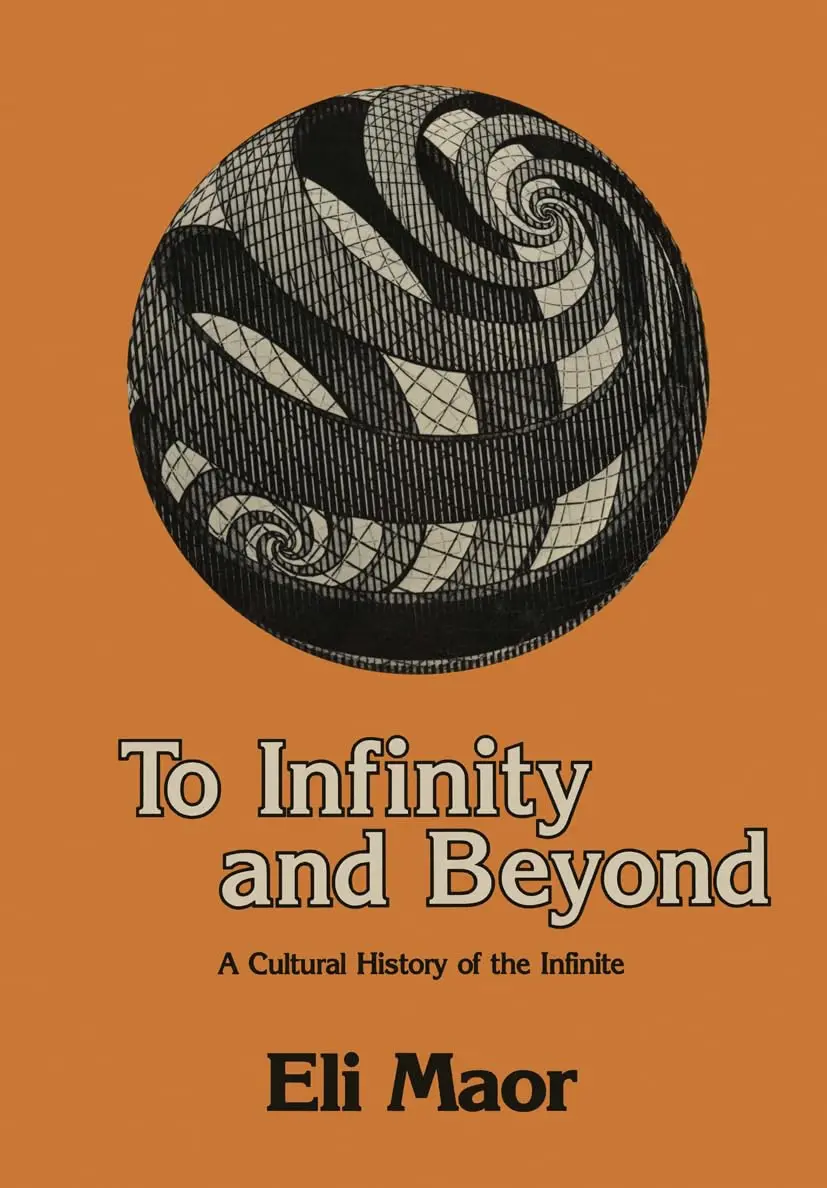
Eli Maor
Infinity in mathematics, art and the night sky.
Eli Maor follows infinity through mathematics, art and the cosmos: primes and irrationals, the sizes of infinite sets, Escher’s endless tilings, and Olbers’ paradox, which asks why the night sky is dark if the universe goes on forever. There is little hard mathematics and a great deal of wonder, with lavish illustrations.
Maor went on to write a whole book about a single number, e: The Story of a Number, which you can find in our list of books about a single number.
No. 20 · Profile Books · 2015
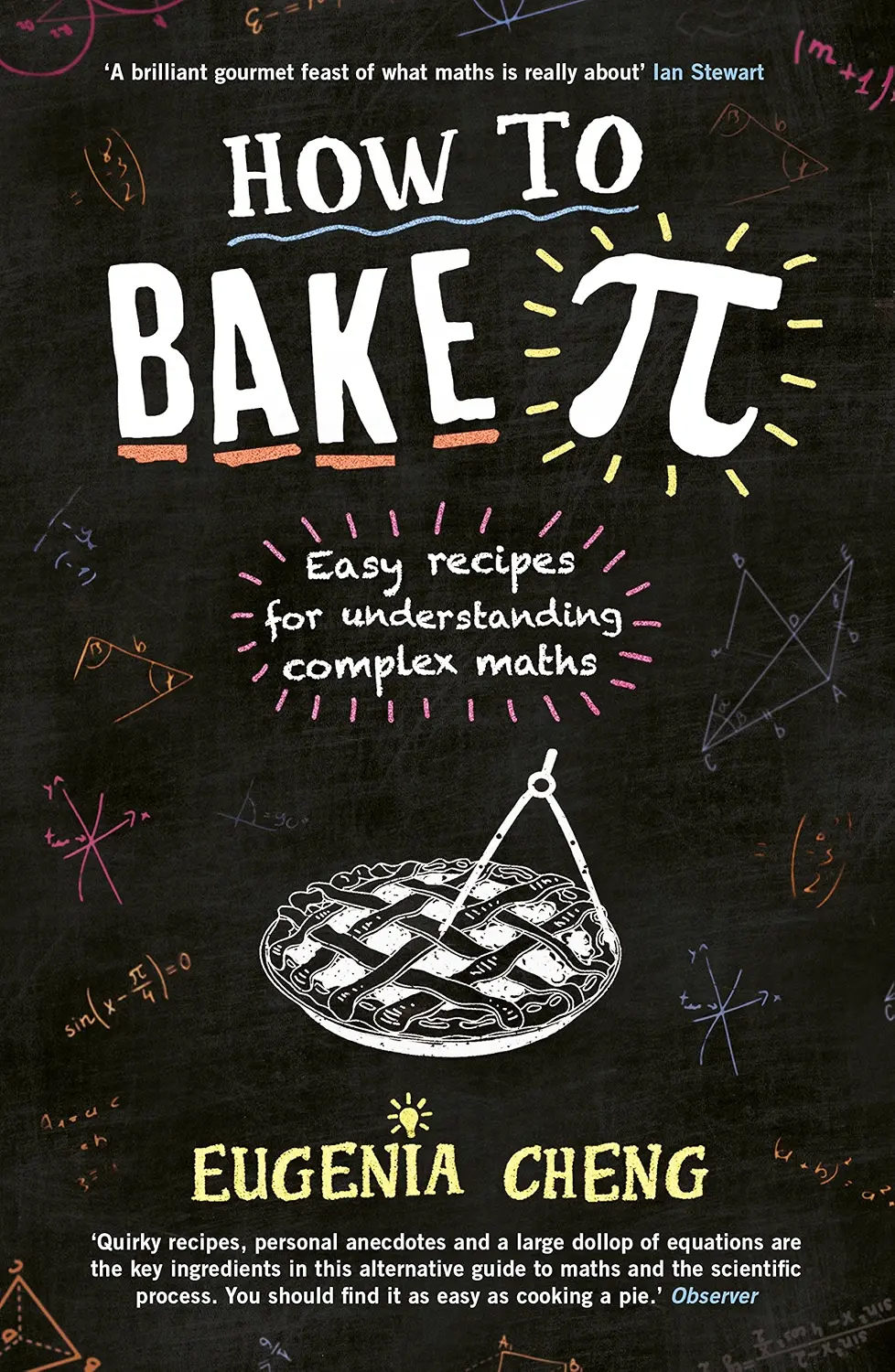
Eugenia Cheng
The most abstract corner of mathematics, explained with recipes.
Eugenia Cheng is a category theorist and a serious baker, and every chapter of this book starts with a recipe that turns out to illustrate a mathematical idea. Custard explains axioms; a Yorkshire pudding explains abstraction. By the end you have a real sense of category theory, the “mathematics of mathematics.”
Some metaphors are stretched, as the faculty admits, but her enthusiasm is infectious and the book explains abstract mathematics better than almost anything else written for the general reader.
Shelf IV · Books 21–39 · 19 books
The biggest shelf: nineteen books with real mathematics in them, written to be read rather than studied. Infinity, chaos, games, primes, codes and the question of what mathematics even is.
No. 21 · Penguin · 1990
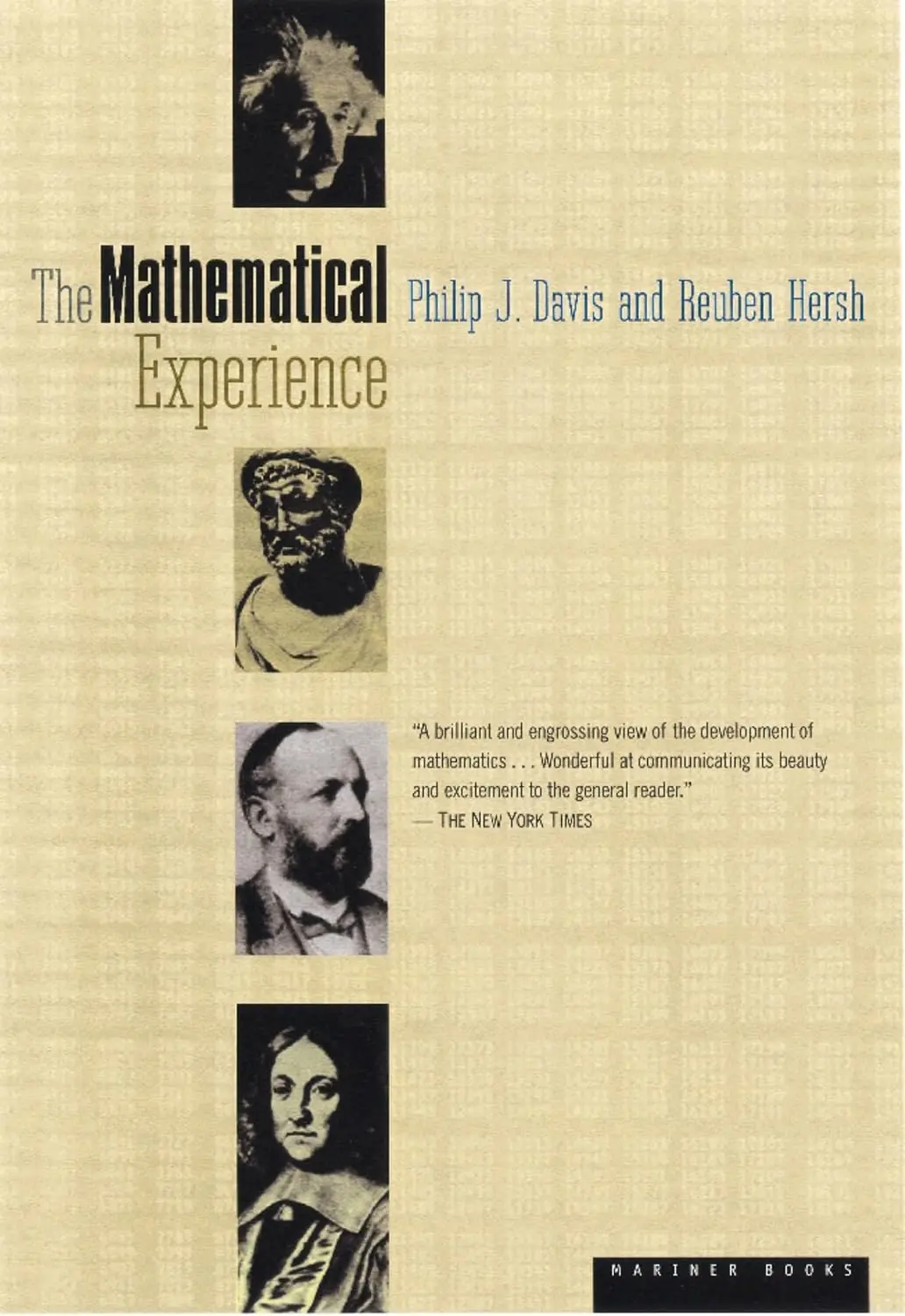
Philip J. Davis & Reuben Hersh
What mathematics feels like from the inside. A National Book Award winner.
Two working mathematicians ask the questions mathematics textbooks never do. Does mathematics exist before we discover it? Why does it work in physics? What does a proof actually prove, and who checks it? Then they answer with essays, history, examples and the occasional fictional dialogue.
It won the National Book Award in 1983 and the faculty simply calls it a classic. It is the best book on the list for understanding what you are signing up for. It is also central to our guide on how to learn mathematics.
No. 22 · Oxford University Press · 2002
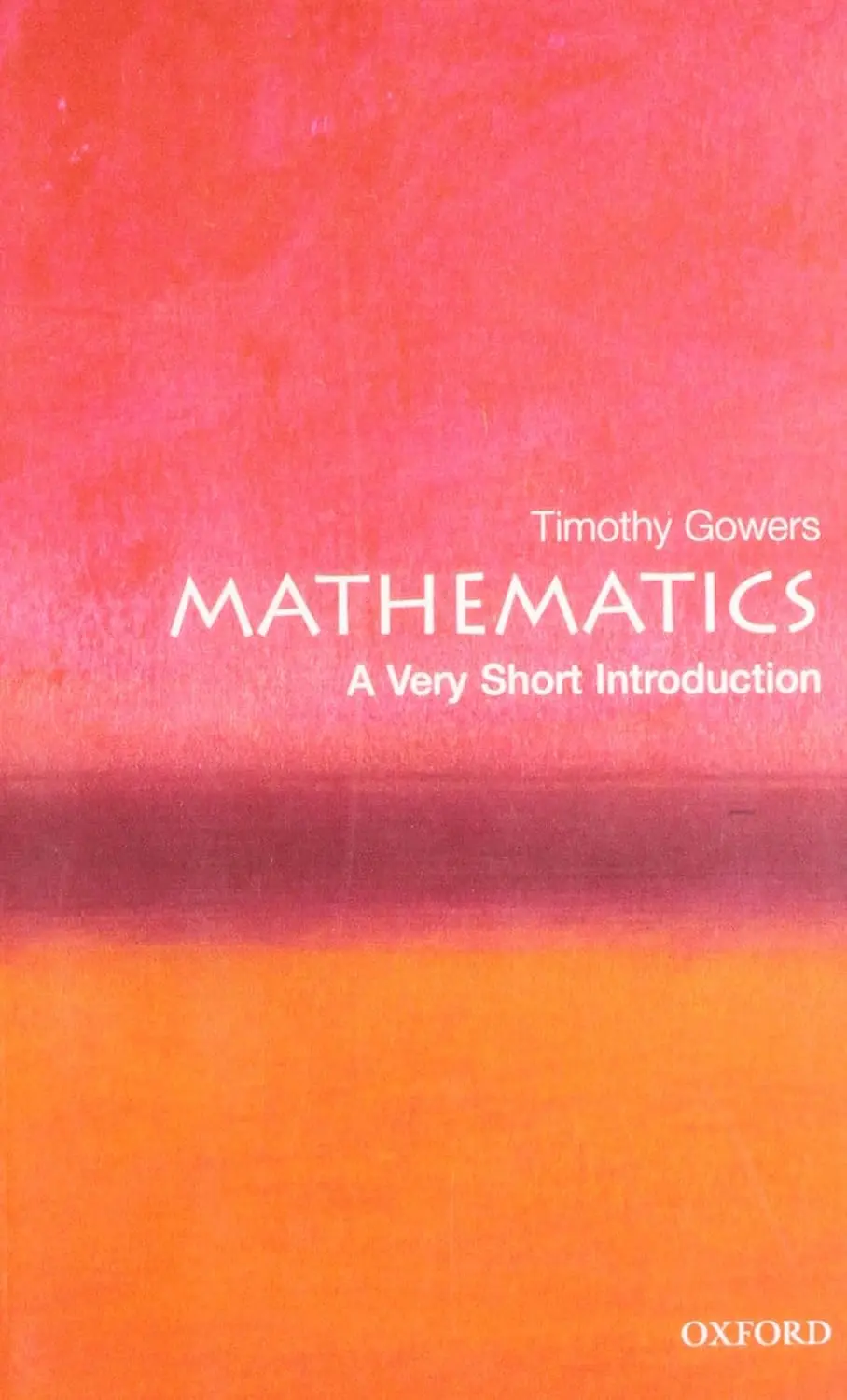
Timothy Gowers
A Fields Medallist, a pocket-sized book, and no wasted page.
Timothy Gowers won the Fields Medal in 1998, and he is a Cambridge professor. You would expect his introduction to be worth reading; what surprises is how easy and charming it is. In about 150 pages he explains what abstraction is, what a proof is, why limits matter, how mathematicians think about dimension, and why some questions are hard.
The faculty’s verdict is short: it will fit in your pocket, and you should get it. We agree. If you read only one book from this page before university, make it this one. It also leads our list of short math books.
No. 23 · Oxford University Press · 2006
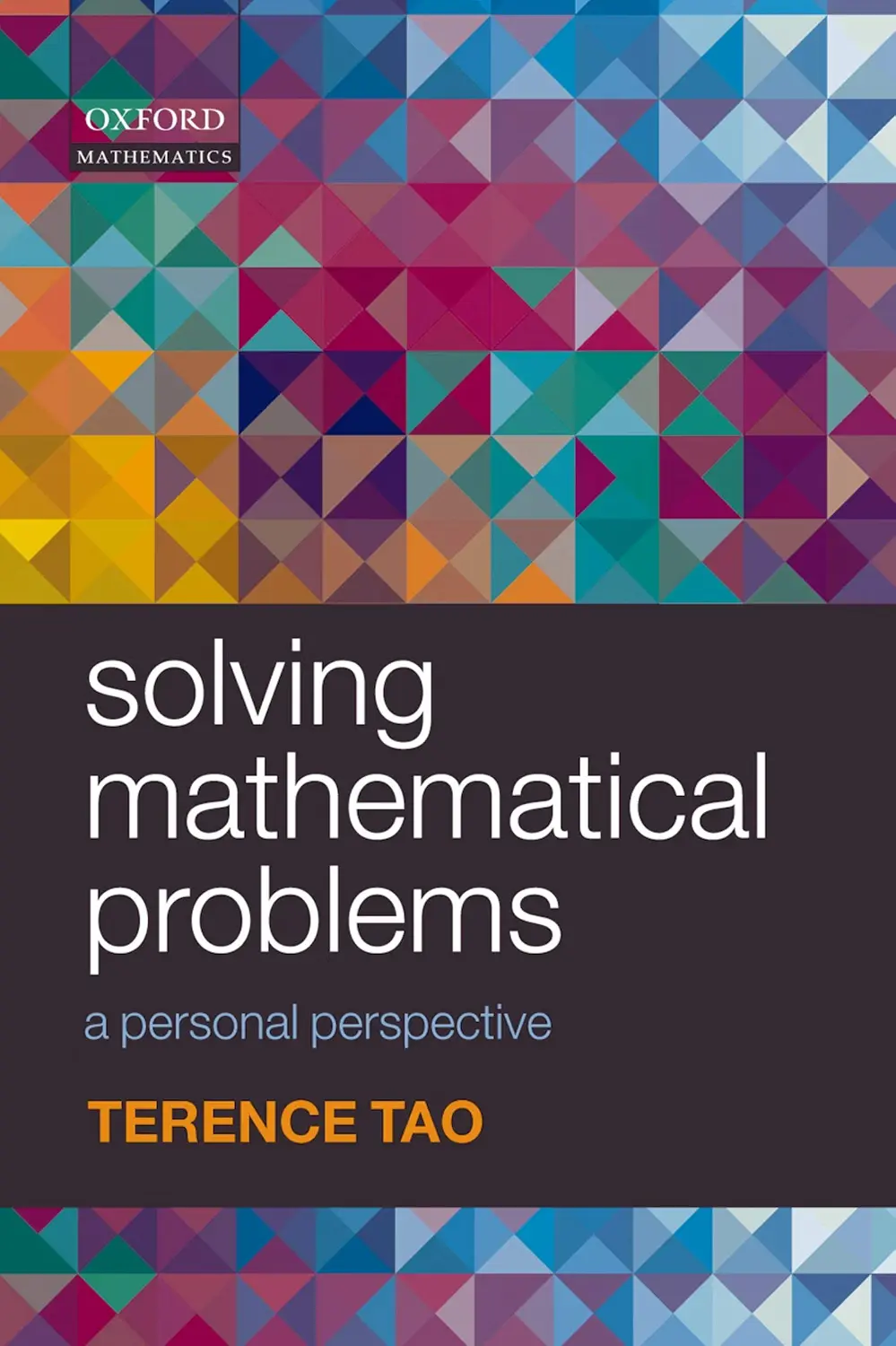
Terence Tao
Written by the youngest gold medallist in Olympiad history, at fifteen.
Terence Tao won a gold medal at the International Mathematical Olympiad at thirteen, still the youngest ever by a distance, and wrote this book at fifteen. Later he won a Fields Medal. It is a personal guide to Olympiad-style problems in number theory, algebra and geometry, with no calculus, where every solution comes with the thinking that found it.
Some problems are easy and some are very hard, and the insights throughout are the real prize. It is the natural next step after Pólya.
No. 24 · Penguin · 1991
Paul Hoffman
Why no voting system is fair, and other unsettling results.
Before he wrote about Erdős, Paul Hoffman wrote this tour of strange and useful mathematics: why no voting system can be perfectly fair, what a Turing machine can and cannot do, why the travelling salesman problem is so hard, and how Archimedes’ cattle problem produces a number with more than 200,000 digits.
It is not a difficult read, but the ideas stay with you. The faculty’s only complaint is that, remarkably, there is no chapter on chaos.
No. 25 · Cambridge University Press · 1996
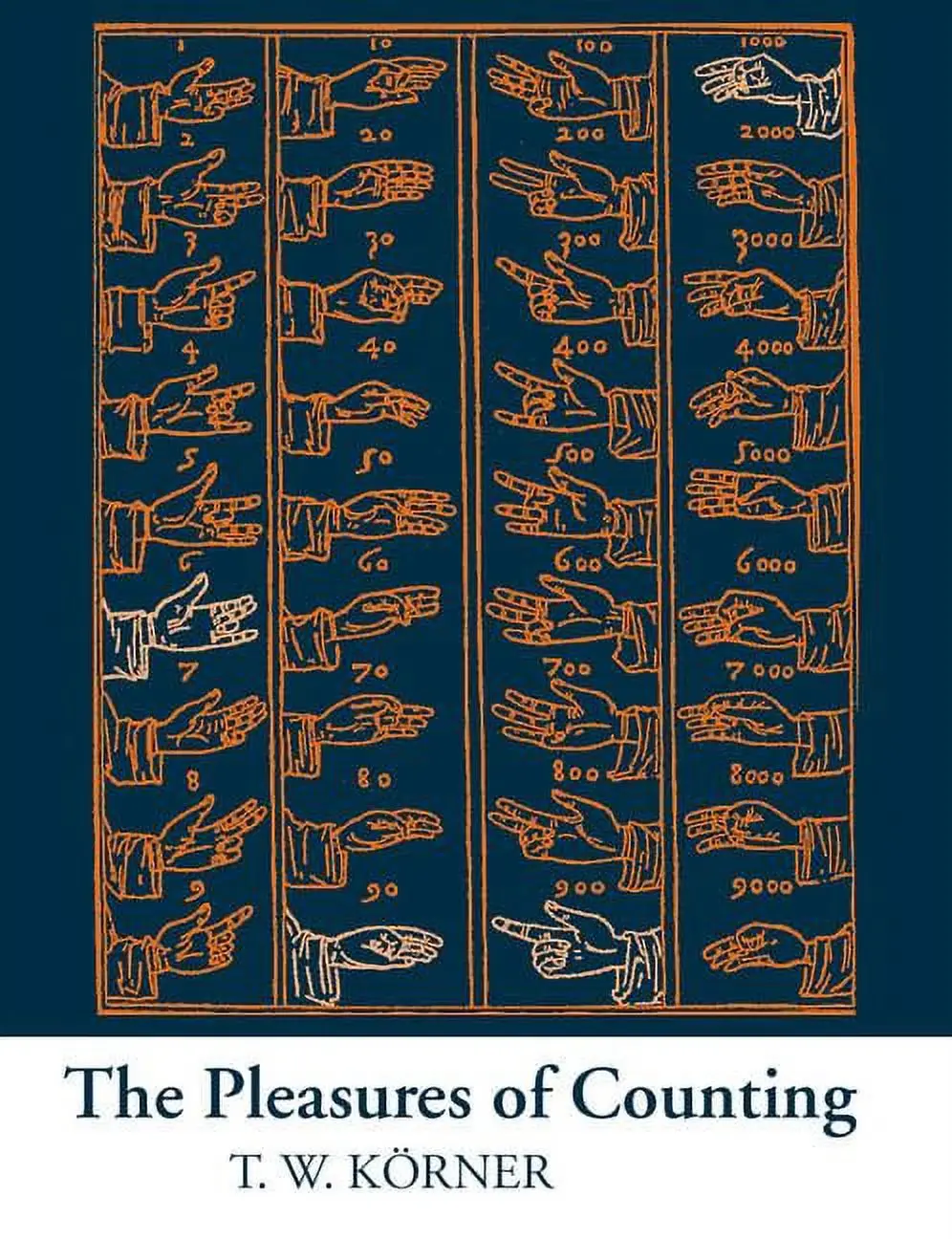
T. W. Körner
Cholera, codebreaking and why a new road can slow traffic.
Tom Körner teaches at Cambridge, and this is his love letter to applied mathematics. It opens with John Snow tracing a cholera outbreak to a water pump in London, explains Braess’s paradox (why building a new road can make traffic worse), shows why we should all eventually be called Smith, and tells the story of Enigma from the codebreakers’ side.
Some chapters need first-year university mathematics, but you can skip the technical parts and still follow. The faculty calls it brilliant and promises that even professional mathematicians will learn something. It is the wittiest book on the list.
No. 26 · Cambridge University Press · 2014
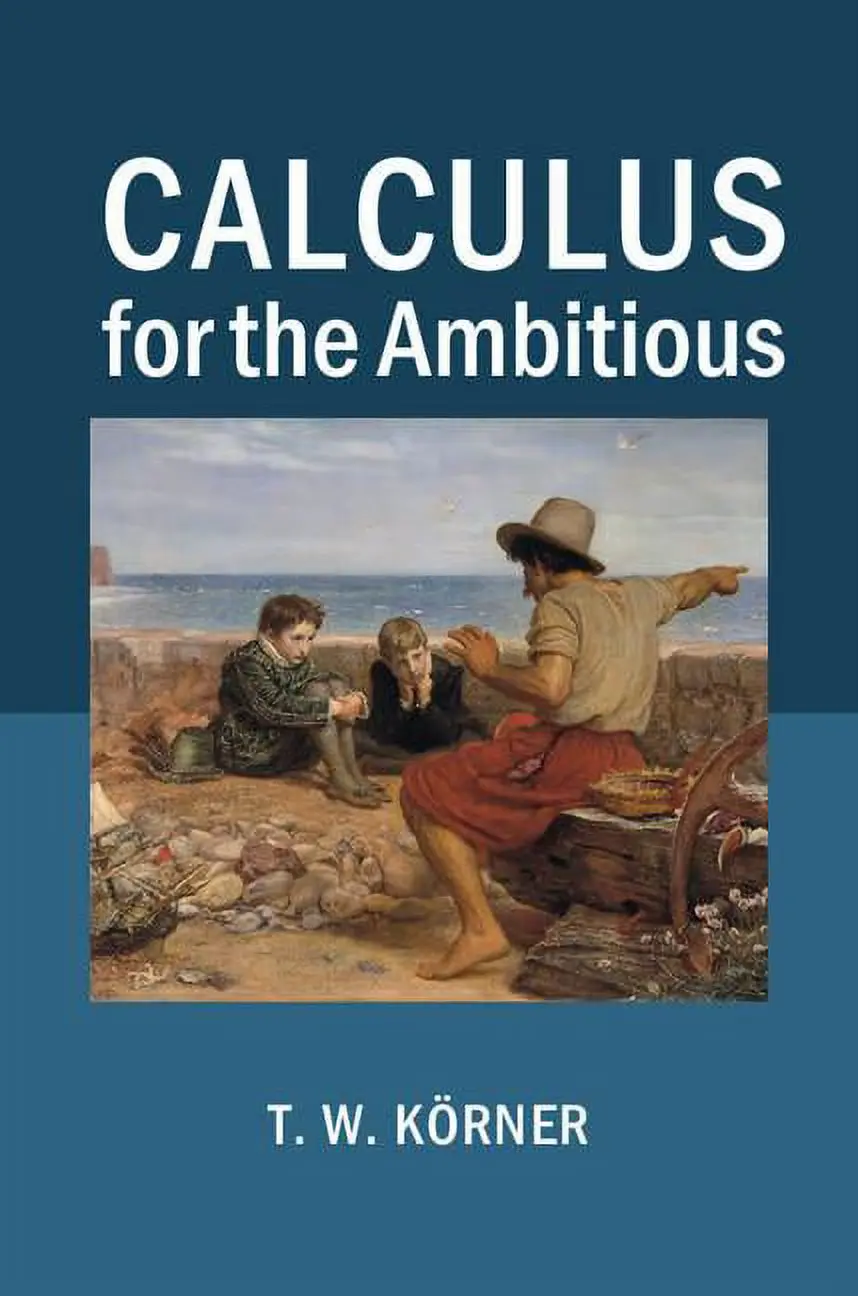
T. W. Körner
School calculus, seen from the angle a university will show you.
Körner again, this time aimed straight at sixth-formers: the calculus you know, seen from angles you do not, and then the calculus you will meet next, including functions of more than one variable. It is the most direct preparation for first-year analysis on this shelf.
His introduction borrows Brahms’ apology on leaving a party, to anyone he has not yet offended, addressed to the logicians, historians and teachers who may dislike how he treats their subject. That tone runs through the whole book.
No. 27 · A K Peters / CRC Press · 2009
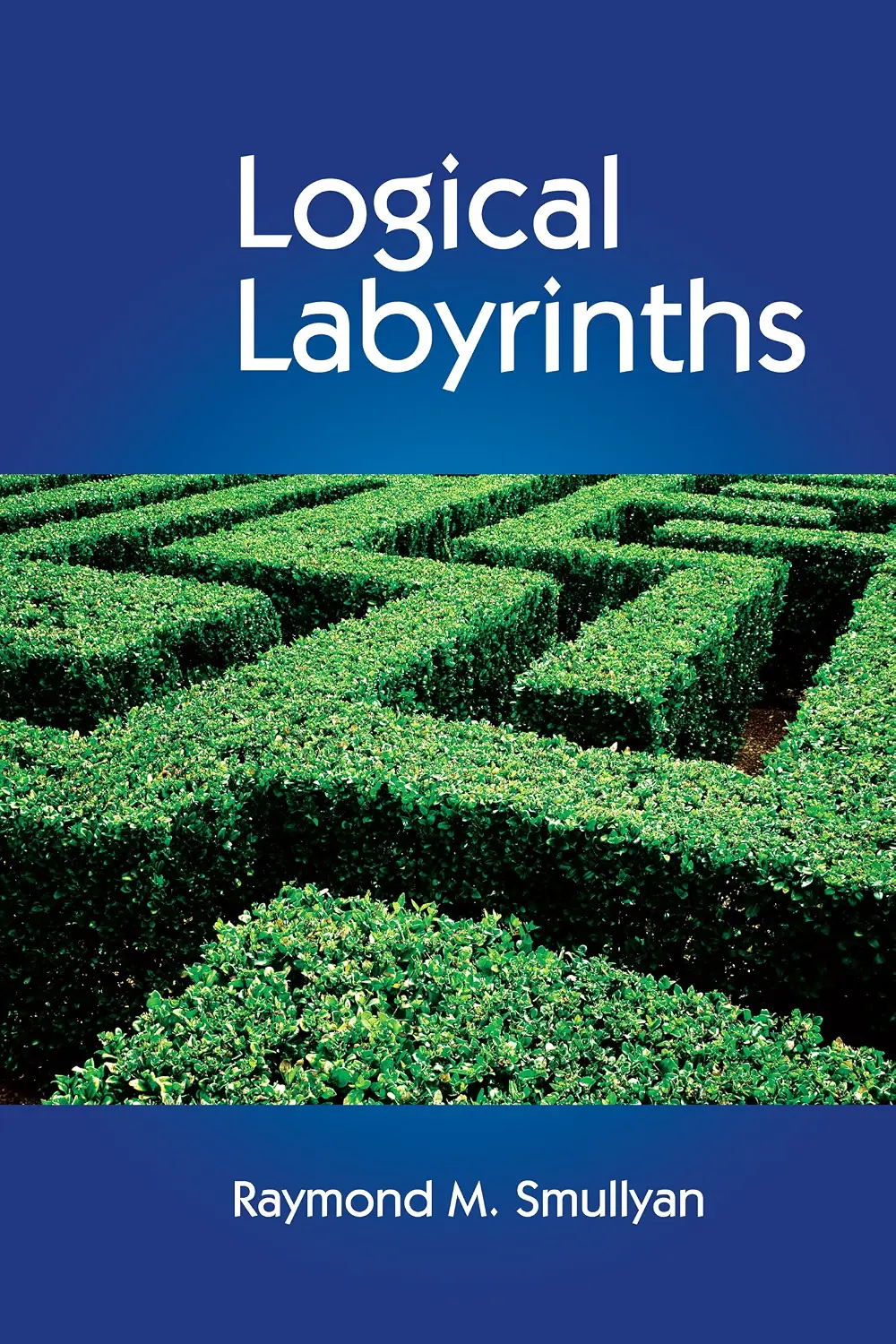
Raymond M. Smullyan
Knights, knaves, and then, quietly, a course in logic.
Raymond Smullyan was a logician, magician and pianist, and the master of the knights-and-knaves puzzle, where knights always tell the truth and knaves always lie. This book starts with exactly those puzzles and, so gradually you barely notice, turns them into a rigorous course in mathematical logic, ending with ideas close to Gödel.
The progression is beautifully graded: always challenging, never hopeless. It is the best way on this list to learn what a formal proof really is.
No. 28 · A K Peters · 2004
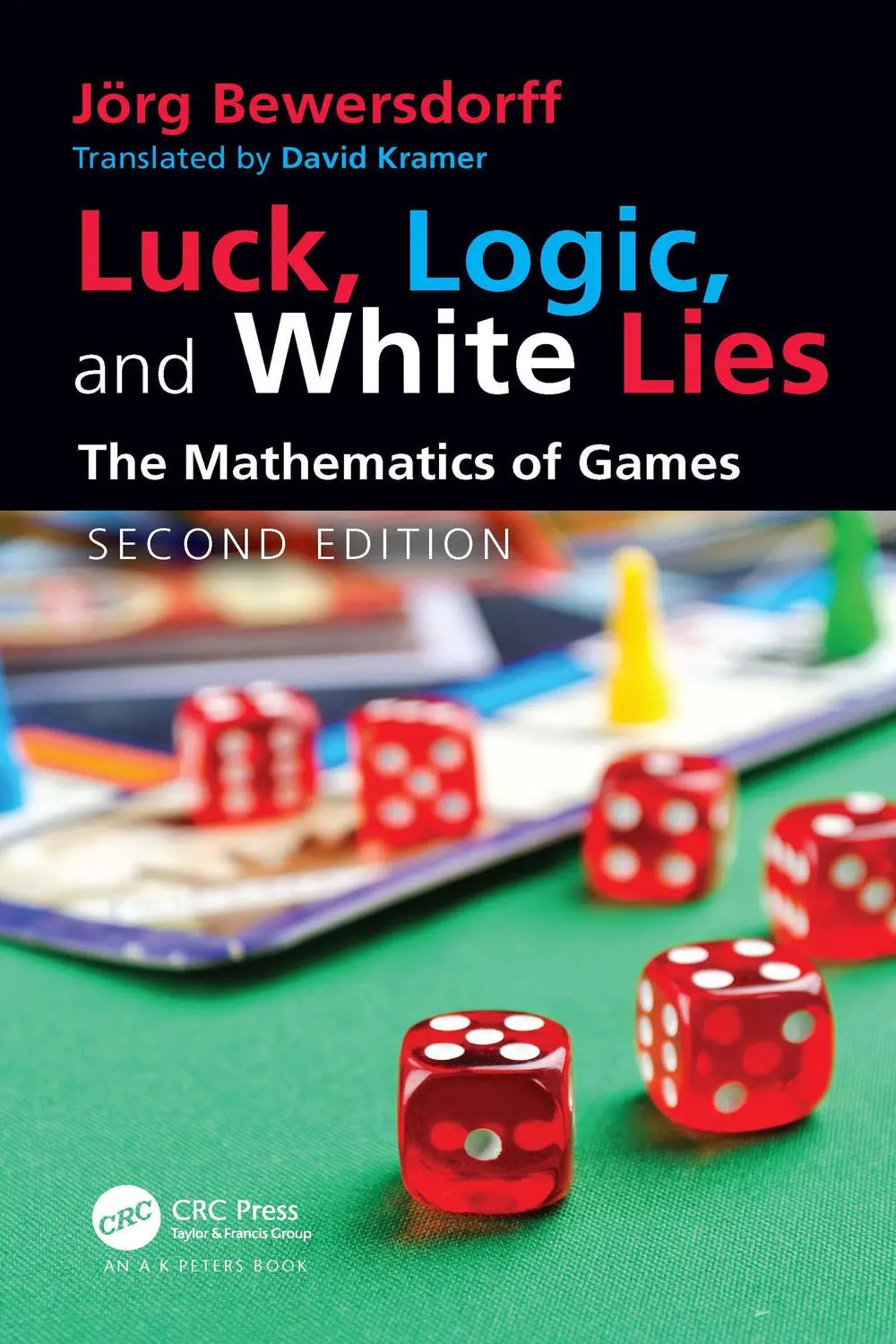
Jörg Bewersdorff
Dice, cards and bluffing, worked out properly.
Jörg Bewersdorff, a mathematician who designed games for a living, divides games by what makes them hard: luck (dice and lotteries), logic (chess, Go, Nim) and white lies (poker and bluffing). For each he works out the mathematics properly, from probability to combinatorial game theory to the optimal way to bluff.
It is clear, practical and myth-busting, and it will make you a better player of almost any game. It is also the book on this list most likely to change how you play cards at a family gathering.
No. 29 · Cambridge University Press · 2008
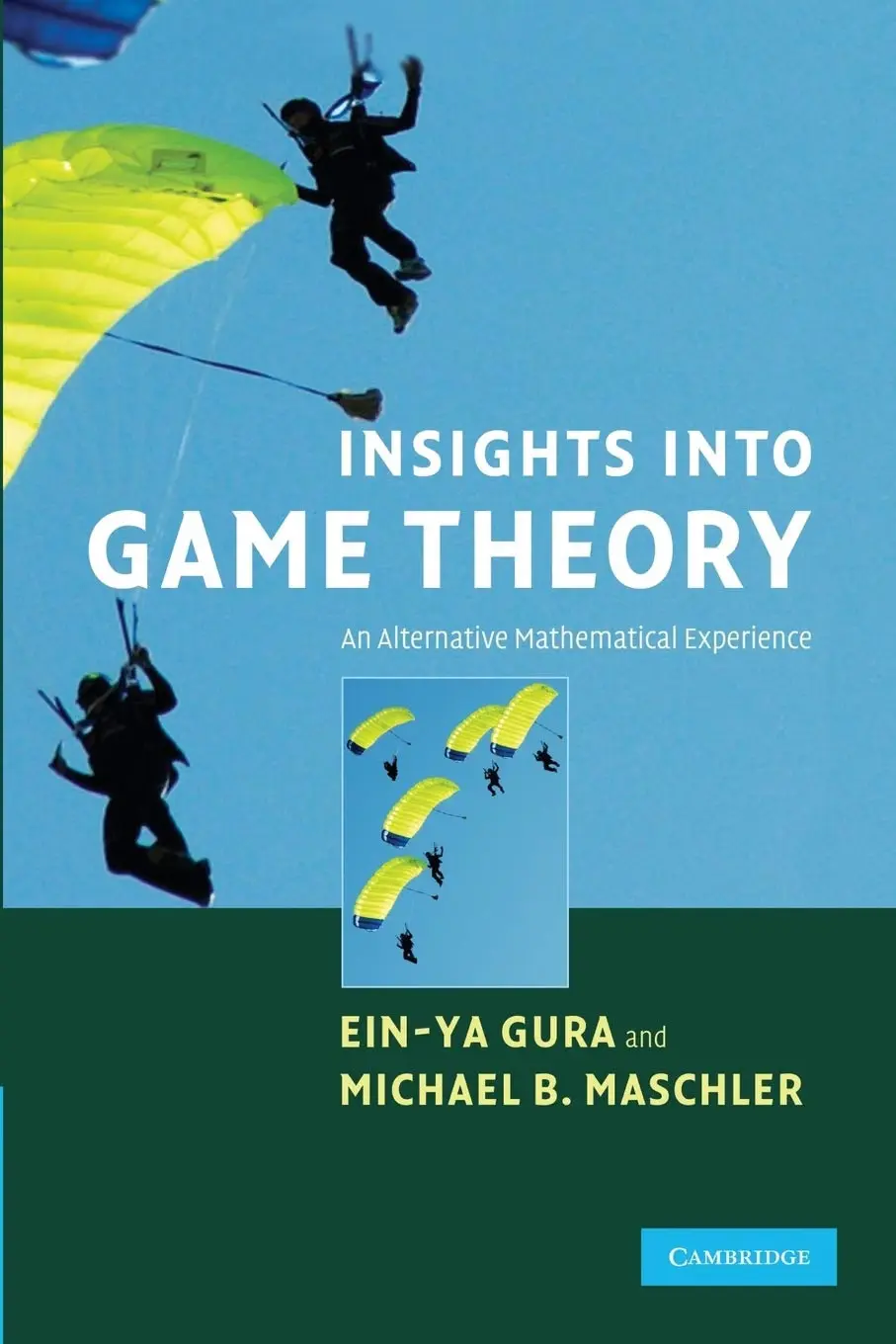
Ein-Ya Gura & Michael B. Maschler
Real proofs from game theory, almost no notation.
Game theory is the mathematics of strategy: auctions, elections, negotiations, matching students to schools. This book grew out of Ein-Ya Gura’s doctoral work on teaching it to people without a background in higher mathematics, written with Michael Maschler, one of the founders of the field.
It avoids formal notation but not rigour: you get real proofs of major results, like the stable marriage theorem, with exercises to make them stick. It is a rare chance to do research-grade mathematics with school-level tools.
No. 30 · Oxford University Press · 1941, revised by Ian Stewart 1996
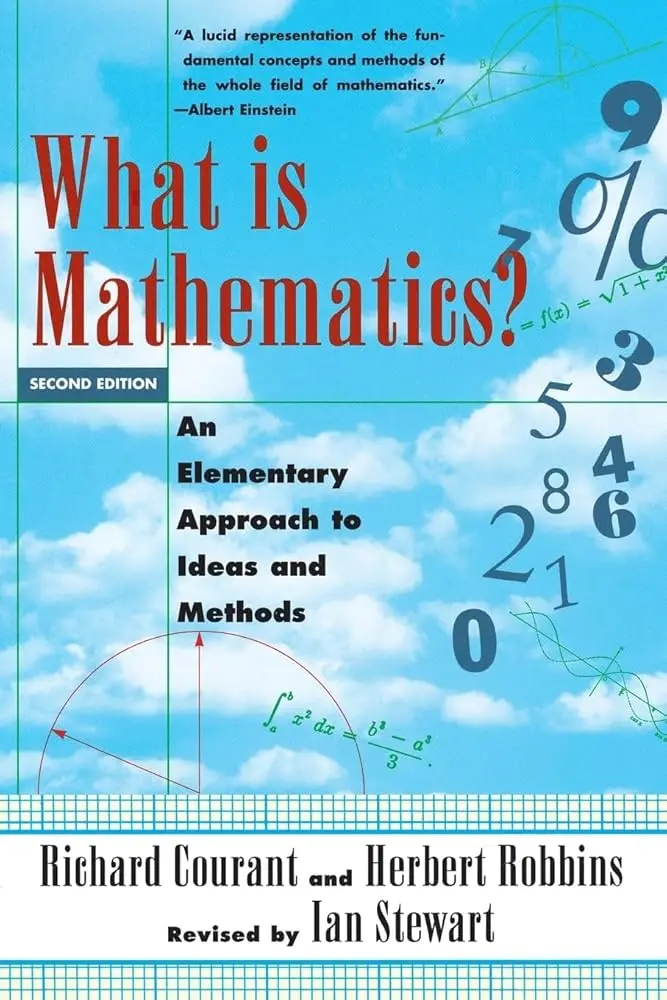
Richard Courant & Herbert Robbins
The 1941 classic that Einstein praised for its lucidity.
Richard Courant founded one of the world’s great mathematics institutes, and this 1941 book, written with Herbert Robbins, is his tour of the subject: numbers, infinity, geometric constructions, topology, soap films and calculus. Ian Stewart updated it in 1996 with the four-colour theorem and Fermat’s Last Theorem, without tampering with the original.
The subtitle promises an elementary approach. The faculty suggests that “challenging” would be more accurate. Read it slowly, with a pencil, and it will teach you more than any other book here. It is the backbone of our self-learner roadmap.
No. 31 · Penguin · 1991
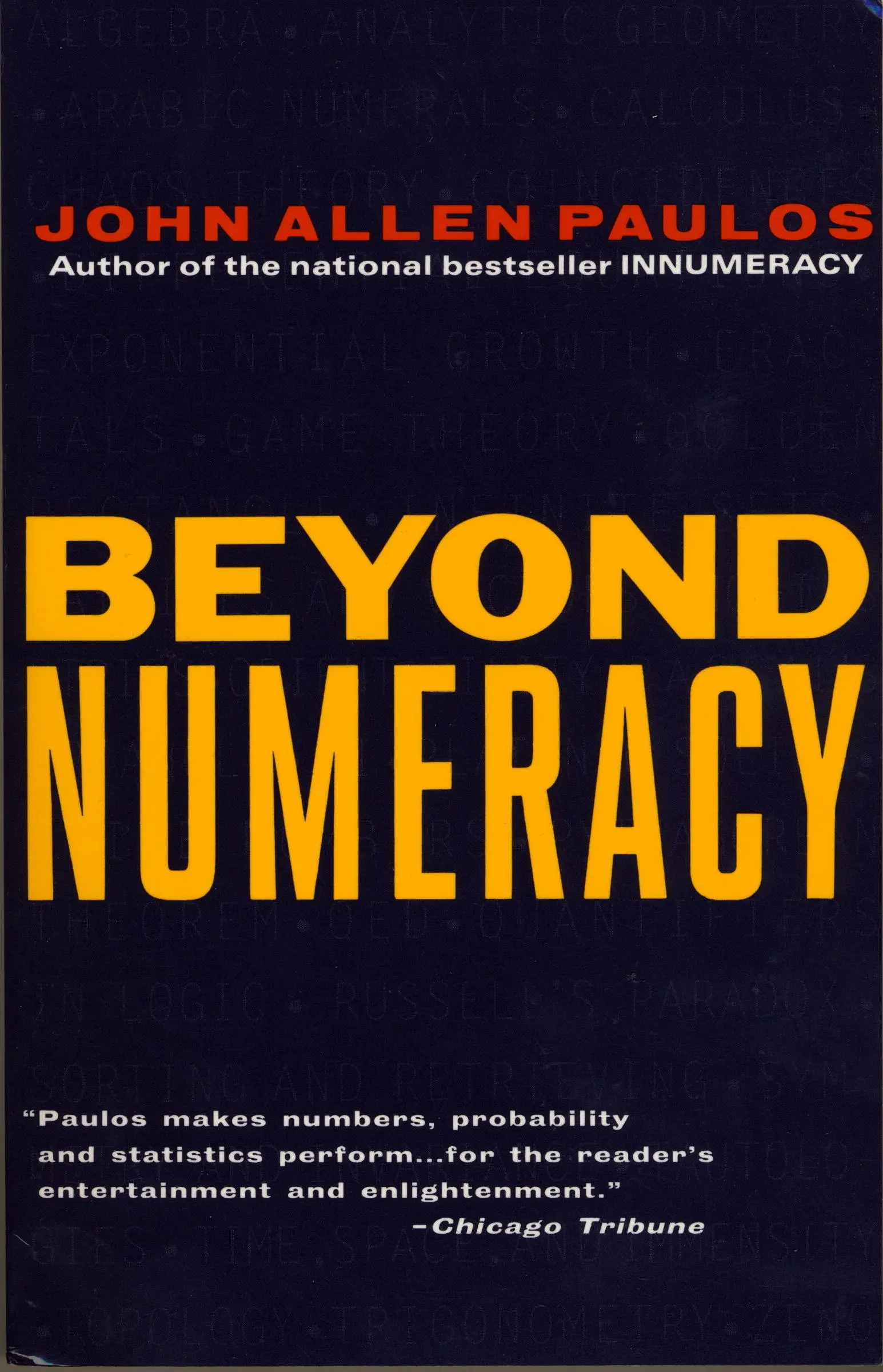
John Allen Paulos
An alphabet of mathematical ideas, one short essay each.
John Allen Paulos made his name with Innumeracy, about the cost of not understanding numbers. This sequel goes further: an alphabetical run of short essays on fractals, game theory, countability, convergence, the golden ratio and more, each a few pages long.
It is a little more technical than its predecessor and just as entertaining, and it is easy to read in the gaps of a day.
No. 32 · Oxford University Press · 1996
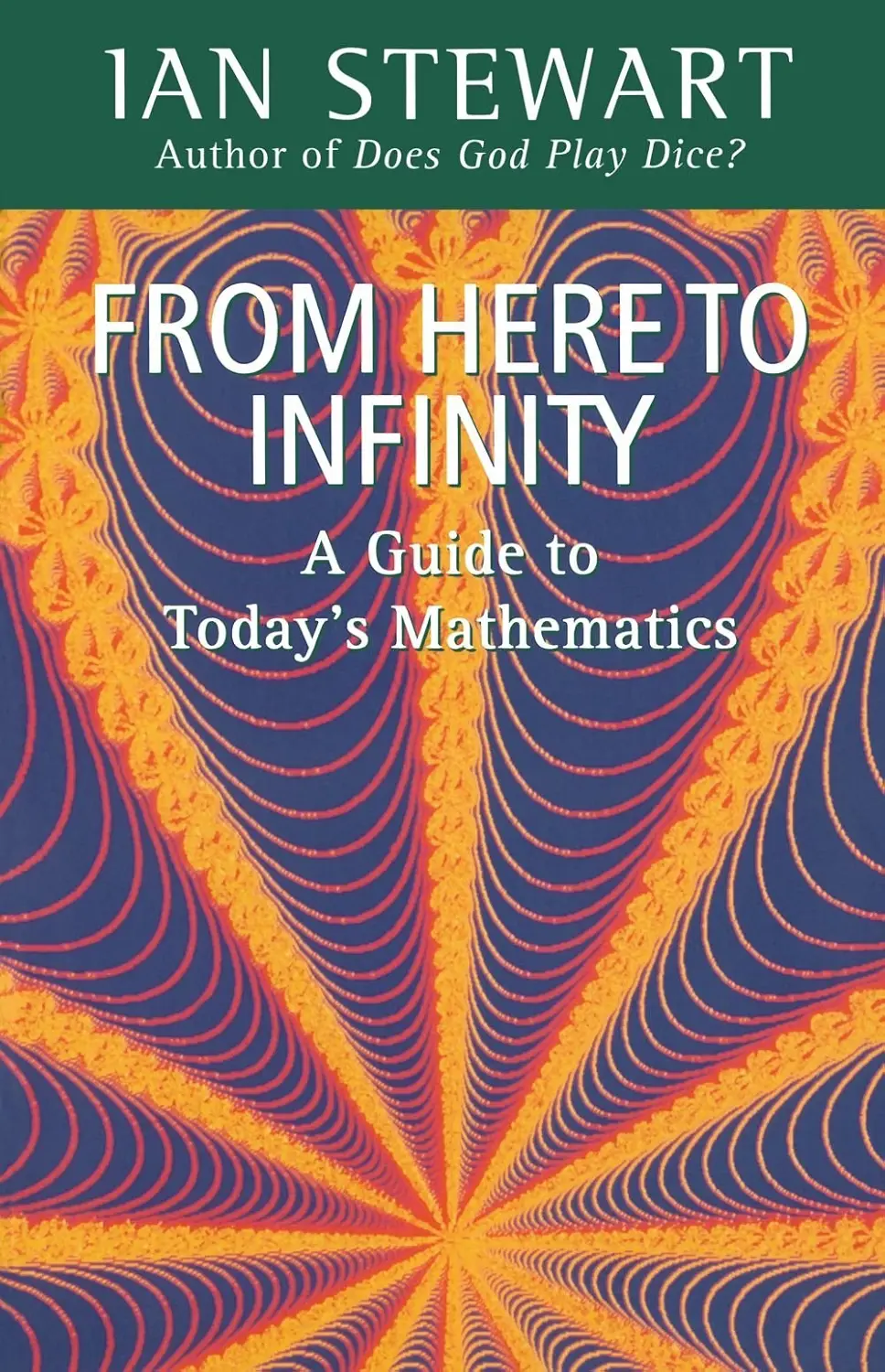
Ian Stewart
A book that had to be rewritten because its open problems got solved.
Ian Stewart first published this book as Problems of Mathematics, then had to revise it because several of its open problems had been solved, which says a great deal about how fast research moves. It covers the quintic, map colouring, knots, infinitesimals, computability and chaos.
Stewart promises in the preface that at minimum you will understand that research is not about inventing new numbers. What you actually get is a clear picture of what real mathematics looks like.
No. 33 · Penguin · 1997
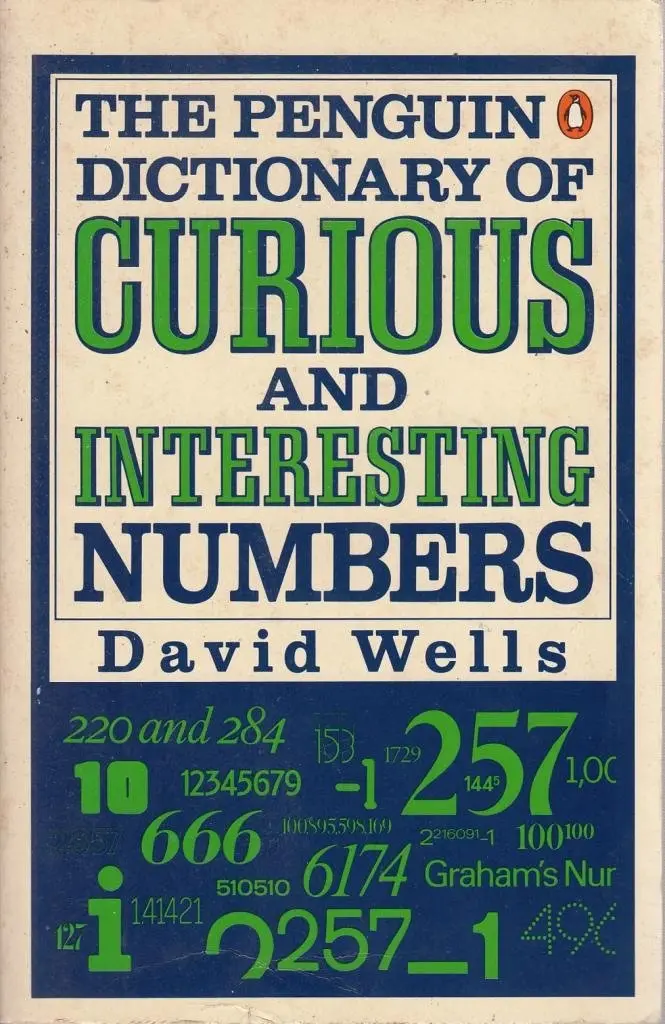
David Wells
Numbers in order of size, each with its story. Look up 1729.
David Wells lists numbers in order of size and tells you what is interesting about each one. Look up 1729 to find out why Hardy’s taxi became the most famous number in mathematics; look up 0.7404 for the best way to stack oranges; look up Graham’s number, so large it could not be written down in the observable universe.
The faculty calls it a book for the bathroom, to be dipped into at leisure, and recommends its sister volume on curious and interesting geometry too.
No. 34 · Princeton University Press · 2019
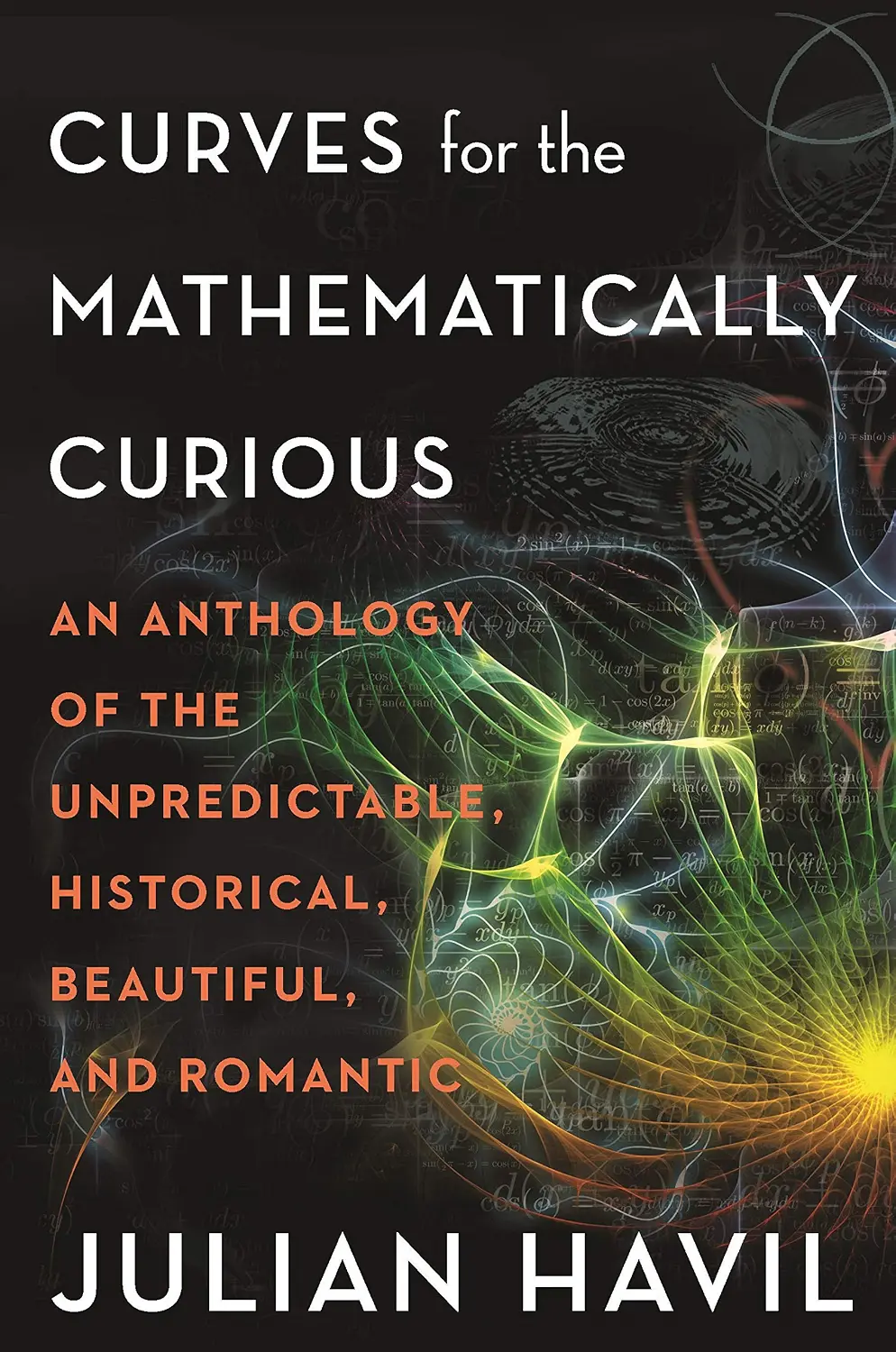
Julian Havil
Ten curves, and the whole of mathematics hiding behind them.
Julian Havil, who taught at Winchester College for decades, picks ten curves, some famous and some obscure, and uses each as a doorway: into statistics, cryptography, analysis, geometry and the history behind them. He opens with Felix Klein’s remark that everyone knows what a curve is, until they have studied enough mathematics to become confused.
There are plenty of fun facts and historical nuggets, but also real mathematics. It is a good test of whether you enjoy following a long argument.
No. 35 · Oxford University Press · 2014
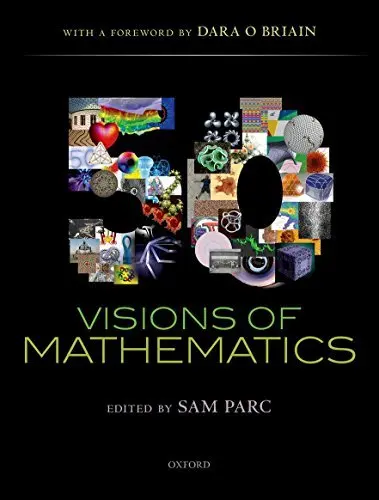
Sam Parc (ed.)
Fifty short essays on where mathematics turns up in real life.
Written for the fiftieth anniversary of the Institute of Mathematics and its Applications, this is a collection of fifty short essays by fifty authors: how GPS works, how medical scanners see inside you, why traffic jams appear out of nowhere, and even a proof by pizza.
Equations are kept to a minimum and the pictures are excellent. After reading it, you may change your idea of what applied mathematics is.
No. 36 · MIT Press · 2000
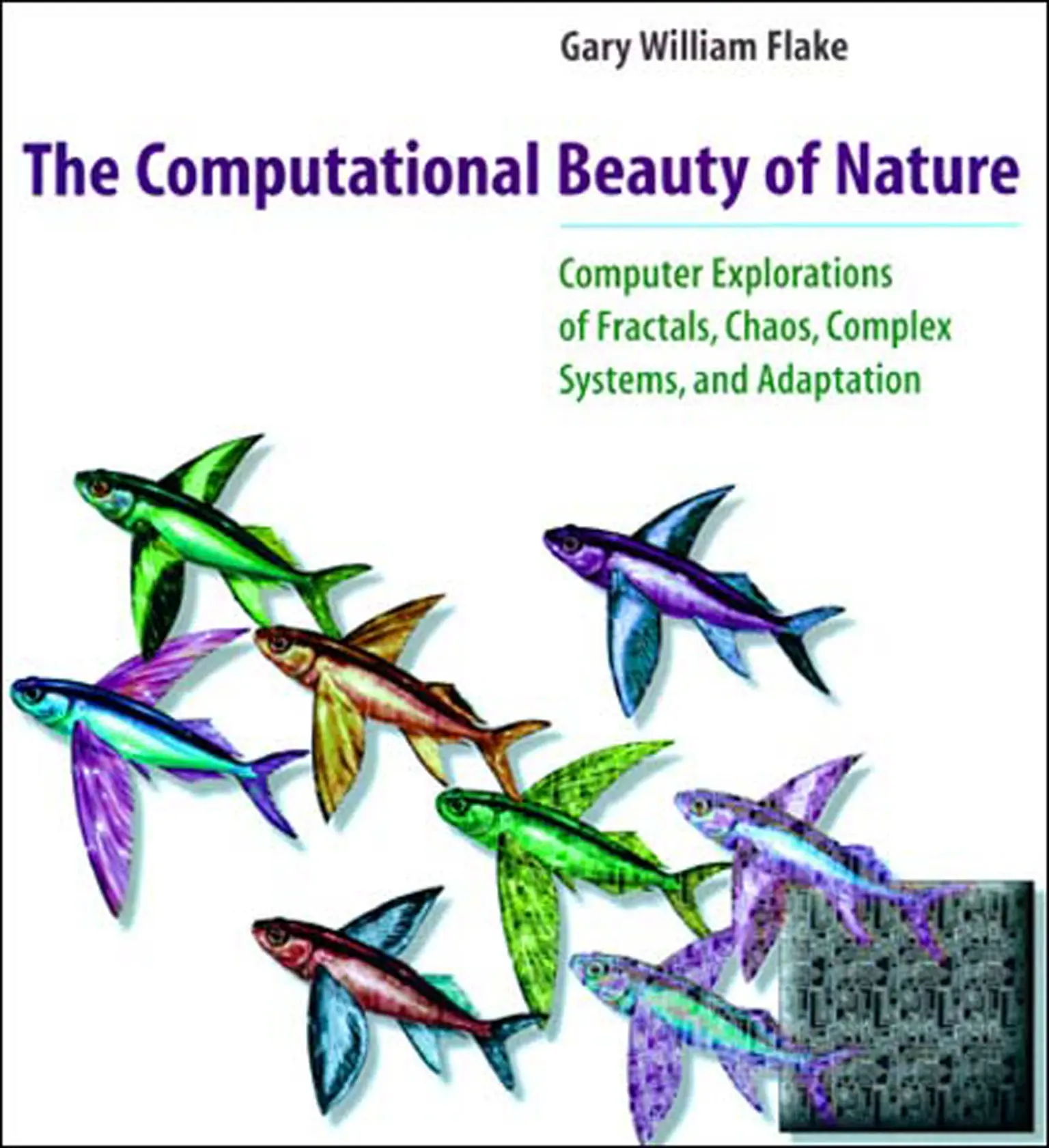
Gary William Flake
Fractals, chaos and evolution, all as code you can run.
Gary Flake covers a startling range: fractals, chaos, Gödel’s incompleteness theorem, cellular automata, genetic algorithms and neural networks. It assumes almost nothing to start, builds every idea from scratch, and gives pseudocode so you can run the experiments yourself.
It is the best book on the list for anyone who learns by tinkering, and an excellent introduction to using computers as a laboratory for mathematical ideas.
No. 37 · Minerva / Random House · 1997
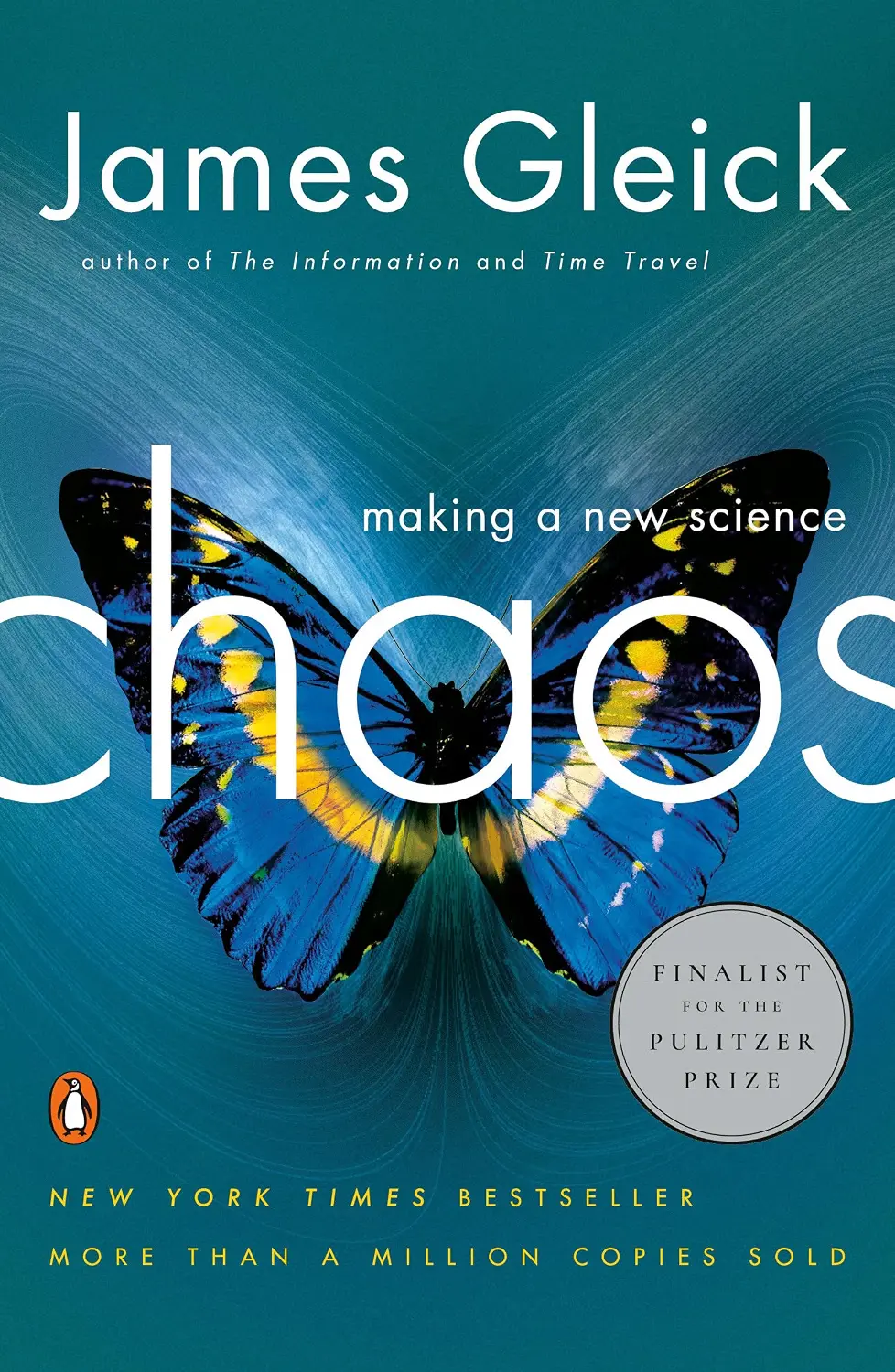
James Gleick
Once named by nine out of ten Cambridge interviewees.
James Gleick tells how a handful of meteorologists, biologists and mathematicians discovered, in the 1960s and 70s, that simple deterministic rules can produce behaviour that is impossible to predict: the butterfly effect, strange attractors, fractals. It is history first and mathematics second.
The faculty notes that at one point nine out of ten interview candidates who named a book named this one. It is still a very enjoyable read. If you mention it at interview, be ready to say something original. For the mathematics itself, see Mandelbrot’s fractal geometry.
No. 38 · Oxford University Press · 2012
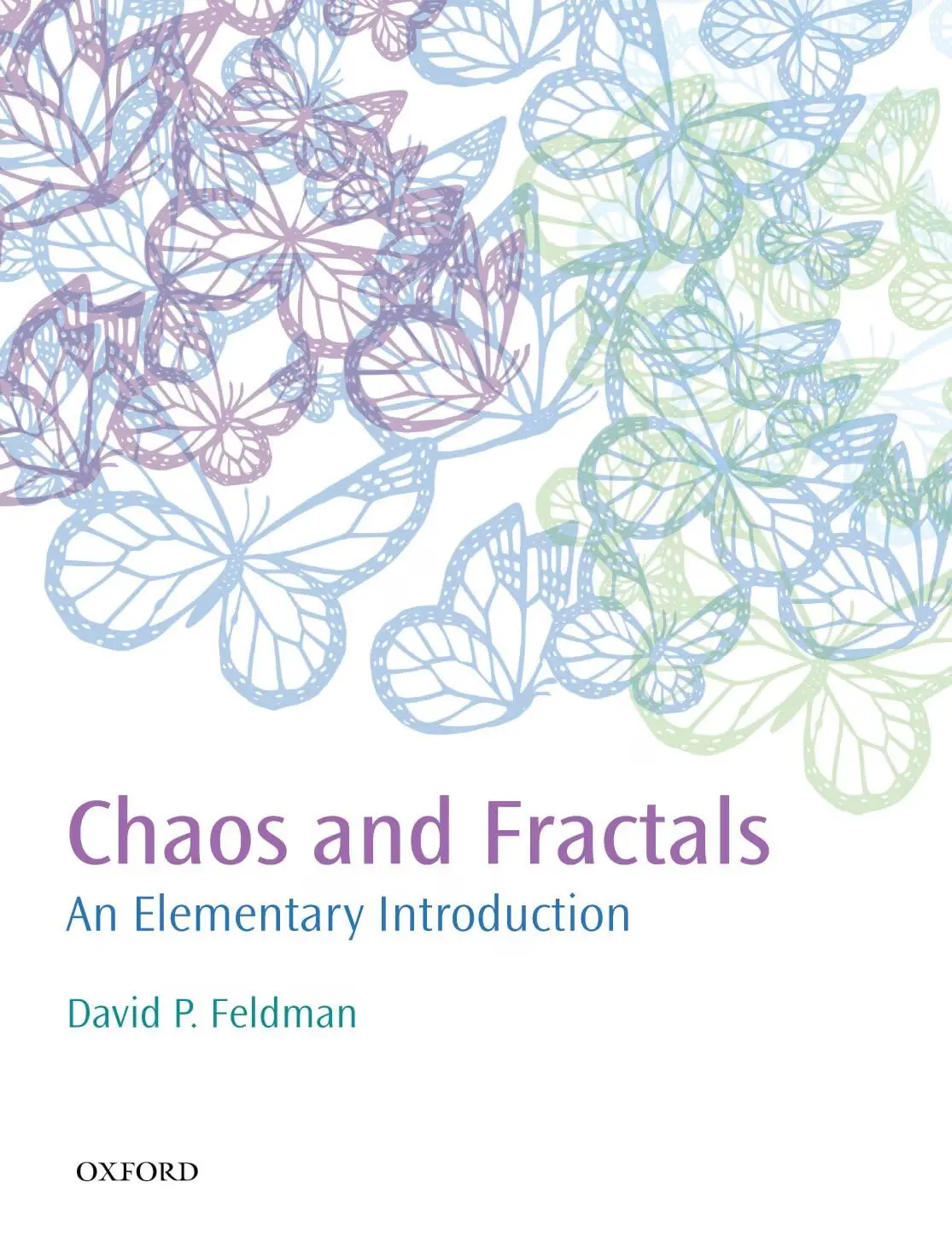
David P. Feldman
A real textbook on chaos that needs only school algebra.
If Gleick tells the story of chaos, David Feldman teaches you the mathematics. Starting from nothing beyond school algebra, he builds up iterated functions, bifurcation diagrams, fractal dimension and Lyapunov exponents, with exercises throughout.
It is technically a textbook, but it reads like a conversation, full of opinions and anecdotes about the people involved. It is the perfect second book after Chaos.
No. 39 · MIT Press · 2013
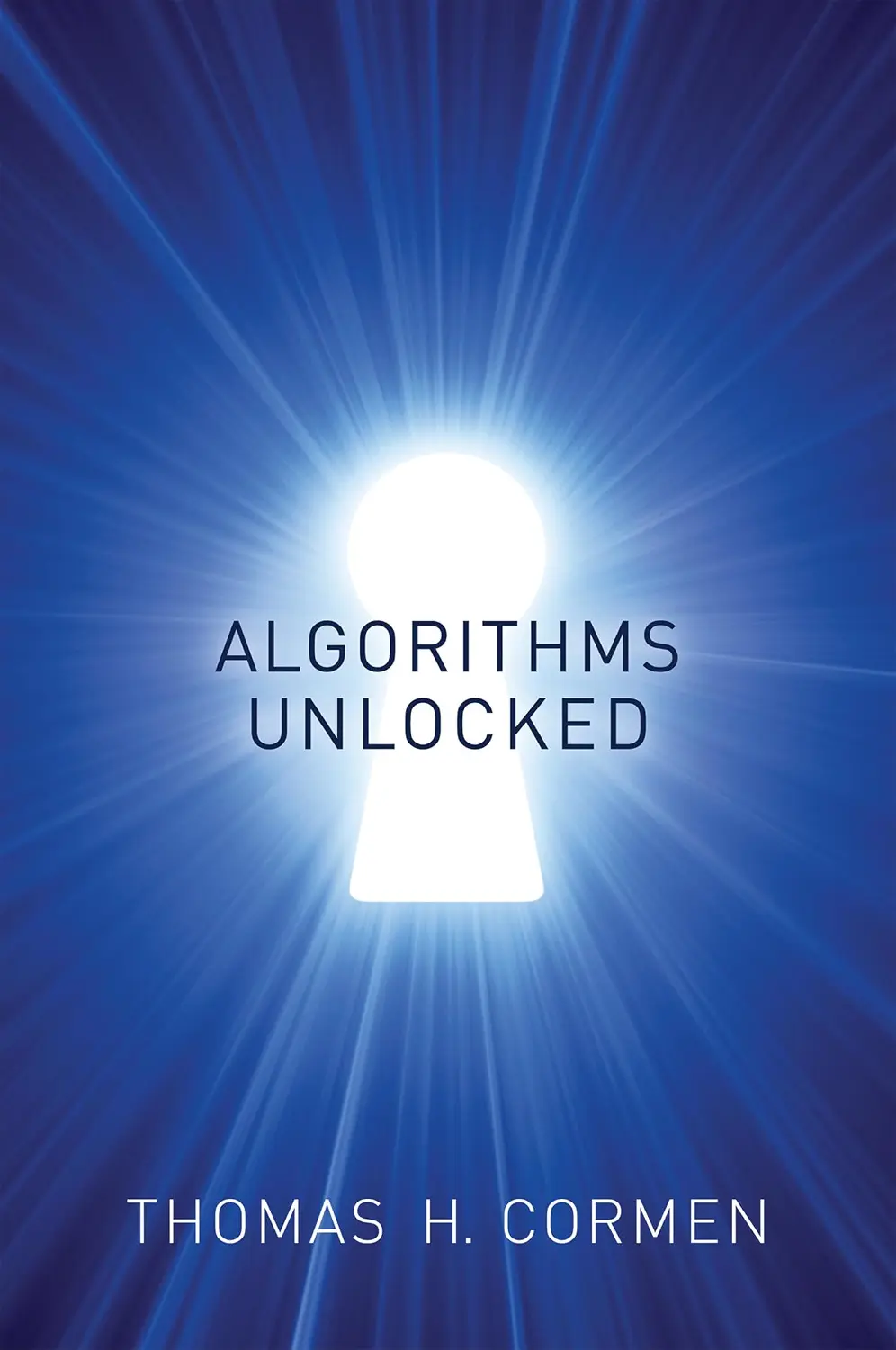
Thomas H. Cormen
What an algorithm is and why a mathematician should care.
Thomas Cormen co-wrote the standard university textbook on algorithms. This is his short, friendly version for everyone else: how computers sort, search, find shortest routes, compress files and keep secrets, and what it means to prove an algorithm correct.
The faculty points out that Donald Knuth found algorithmic and mathematical thinking overlap almost completely, except that only algorithms care about efficiency and only mathematics deals with infinity. This book sits right in that overlap.
Shelf V · Books 40–44 · 5 books
A Cambridge maths degree includes a great deal of theoretical physics, from relativity to quantum mechanics. These five books are a preview of where the mathematics will take you.
No. 40 · Black Swan · 2004
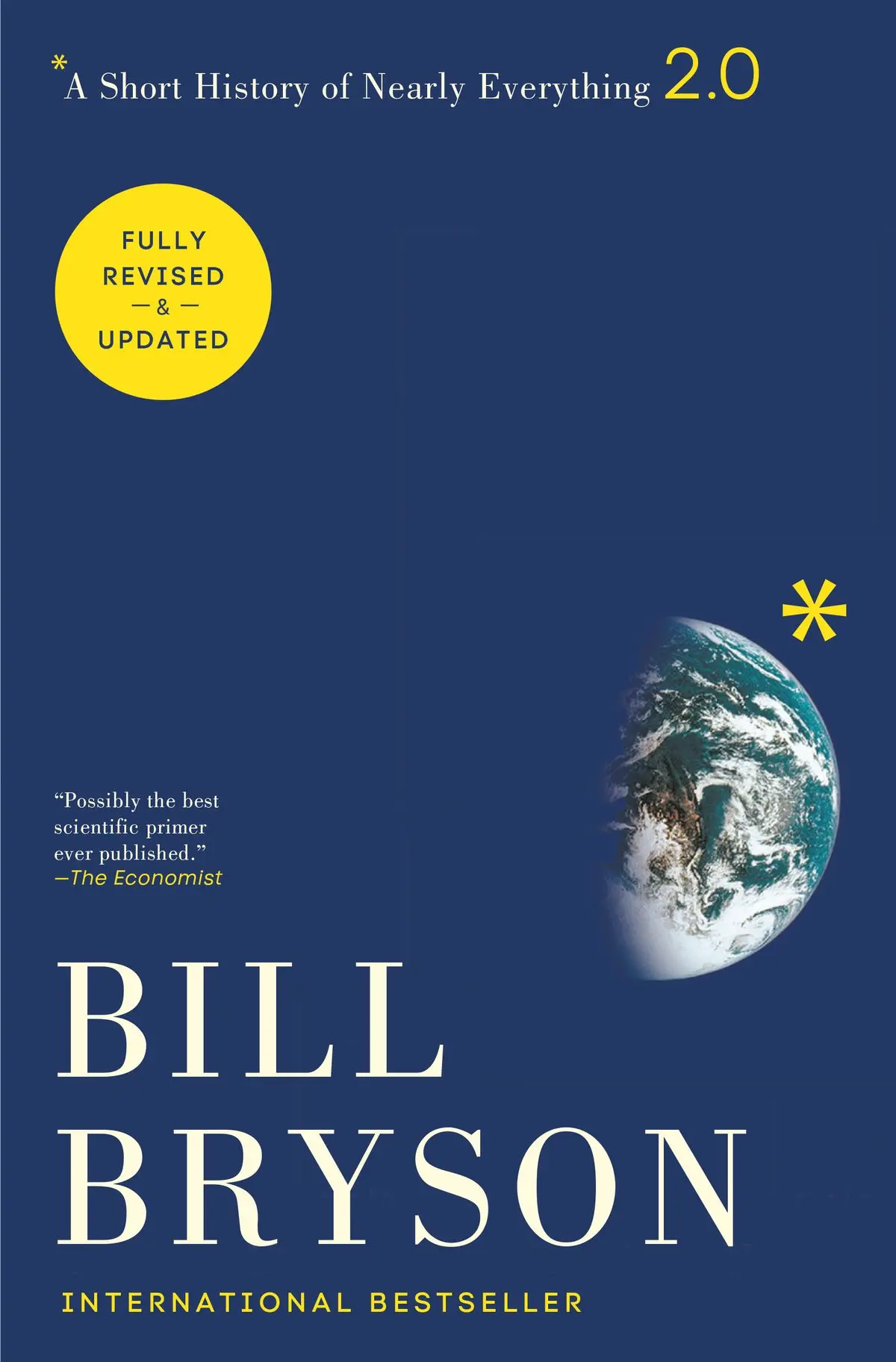
Bill Bryson
The universe and everything in it, told by a very funny outsider.
Bill Bryson is a travel writer who realised he knew nothing about the planet he lived on and set out to find out. The result covers everything from the Big Bang to the extinction of the dodo, told through the eccentric people who worked it out.
The faculty describes it as one for readers who are more polymath than pure math. It is the most fun book on this shelf and the easiest to recommend to family.
No. 41 · Faber & Faber · 2009
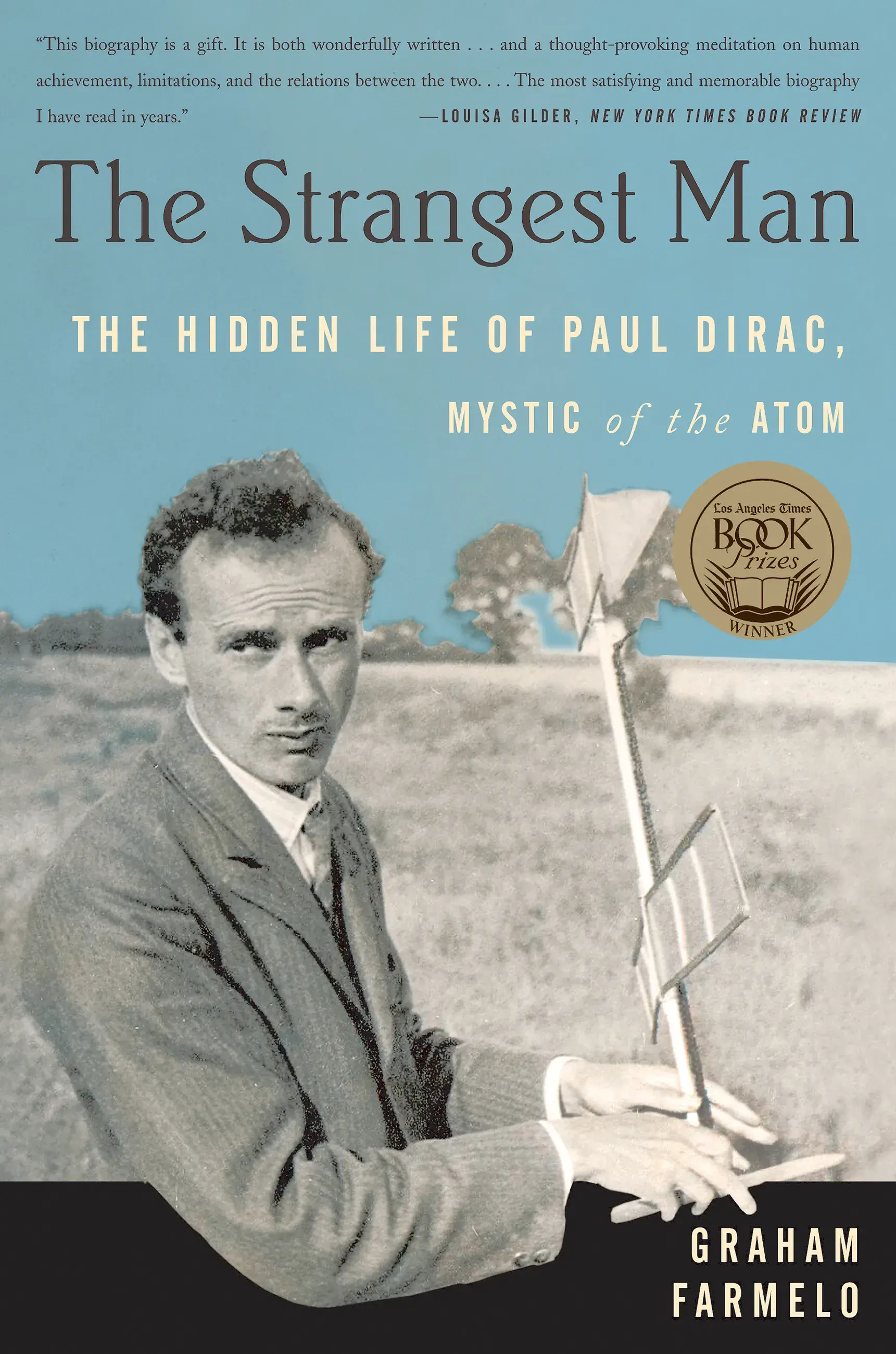
Graham Farmelo
The most beautiful equation in physics, and the silent man behind it.
Paul Dirac combined quantum mechanics and special relativity into one equation, predicted antimatter from it, and won a Nobel Prize at thirty-one. He was also famously silent, literal and socially baffling. Graham Farmelo’s biography explains both the physics and the man, and won the Costa Biography Award.
Dirac held the Lucasian chair at Cambridge, and his equation turns up throughout the Cambridge degree. To see his mind on paper, look at Dirac’s handwritten thesis.
No. 42 · Vintage · 2016
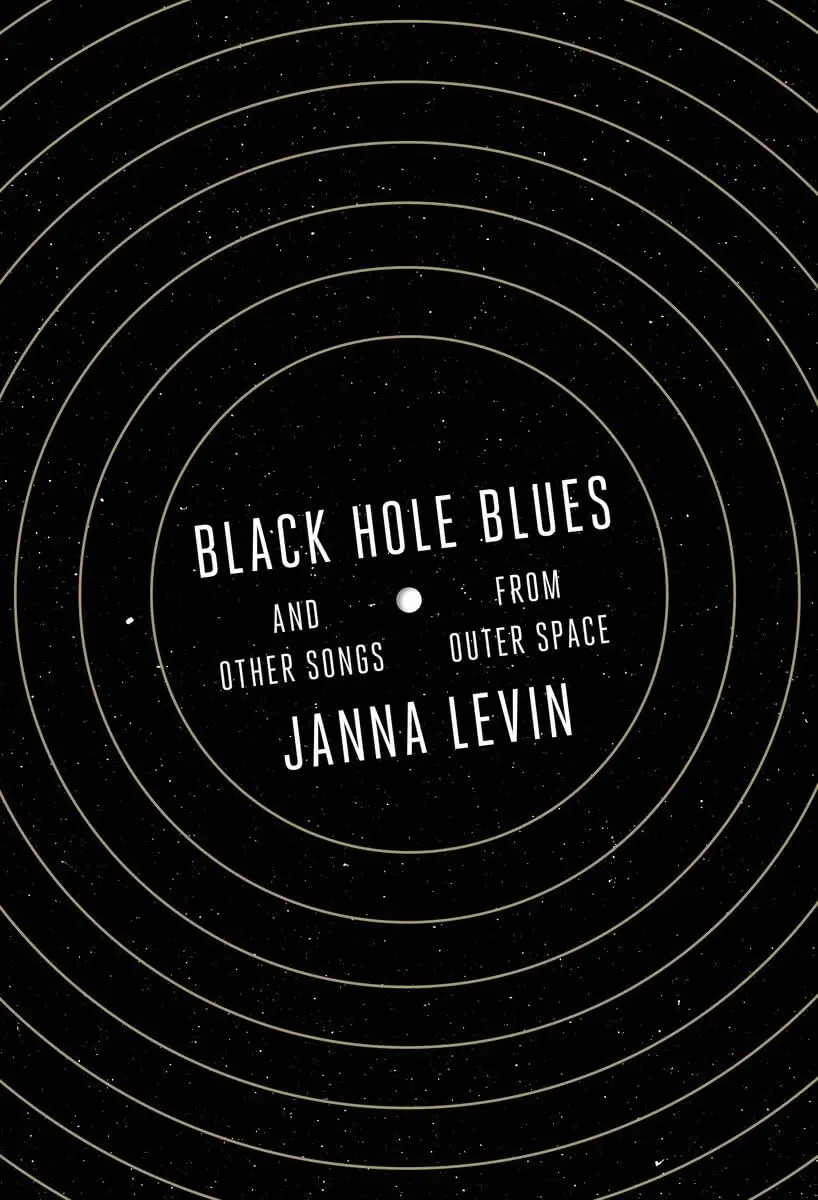
Janna Levin
Fifty years of building a machine to hear spacetime ring.
On 14 September 2015 two detectors in the United States felt a ripple in spacetime from two black holes that collided 1.3 billion years ago. Janna Levin, a cosmologist, tells the story of the people who spent half a century building those instruments, with their rivalries, failures and nerve.
Cambridge students meet general relativity and gravitational waves properly in the third year. This short, lyrical book is the best way to want to get there.
No. 43 · Oneworld · 2013
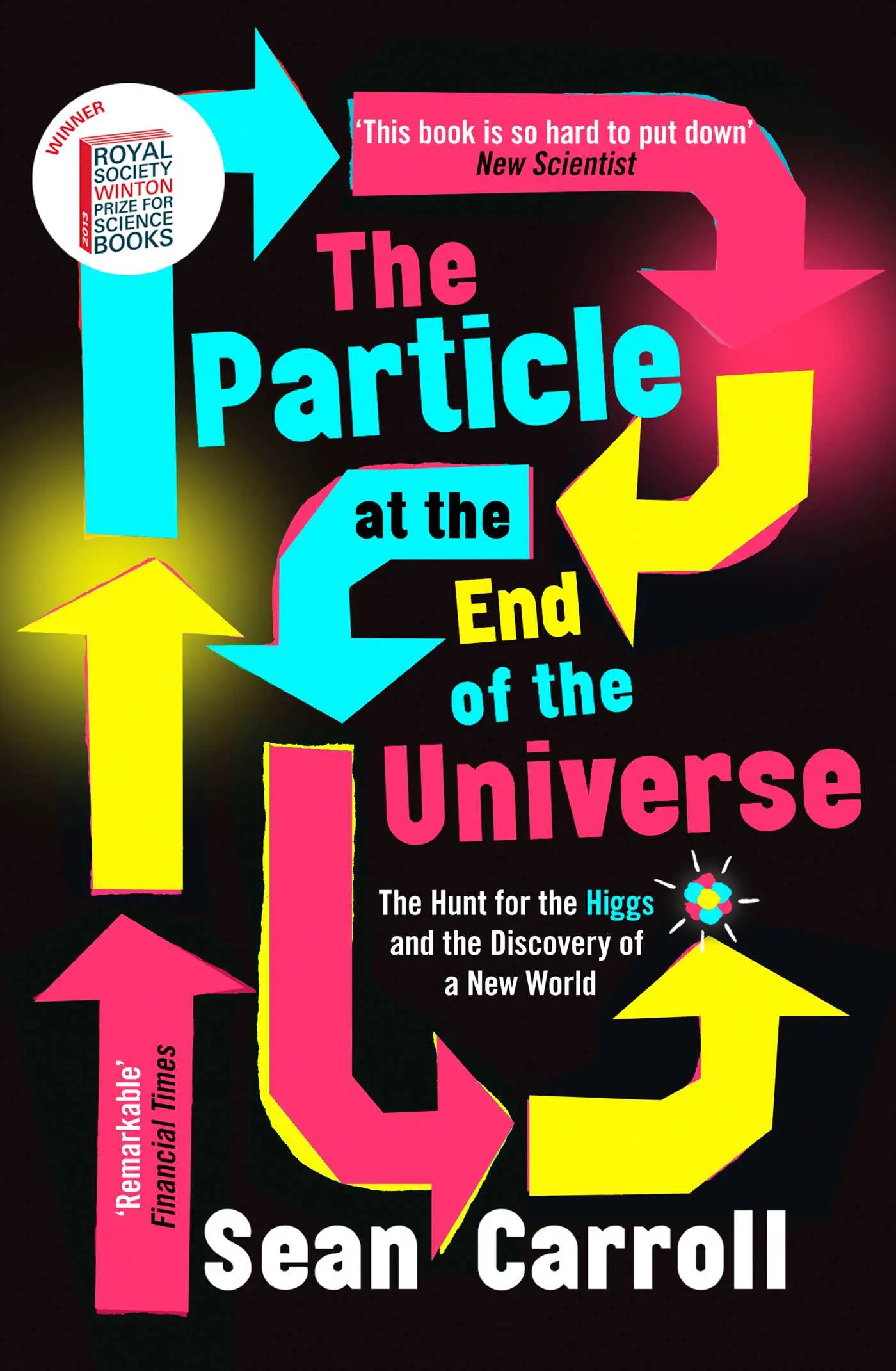
Sean Carroll
The Higgs boson, and why it took a 27-kilometre ring to find it.
Sean Carroll, a theoretical physicist, explains the Higgs boson: why the Standard Model needed it, why it took the 27-kilometre Large Hadron Collider to find it, and what its discovery in 2012 does and does not tell us about mass and the universe.
It is clear, generous and up to date on the most famous particle hunt in history, and it connects the smallest scales of physics to the biggest.
No. 44 · Cambridge University Press · 2003
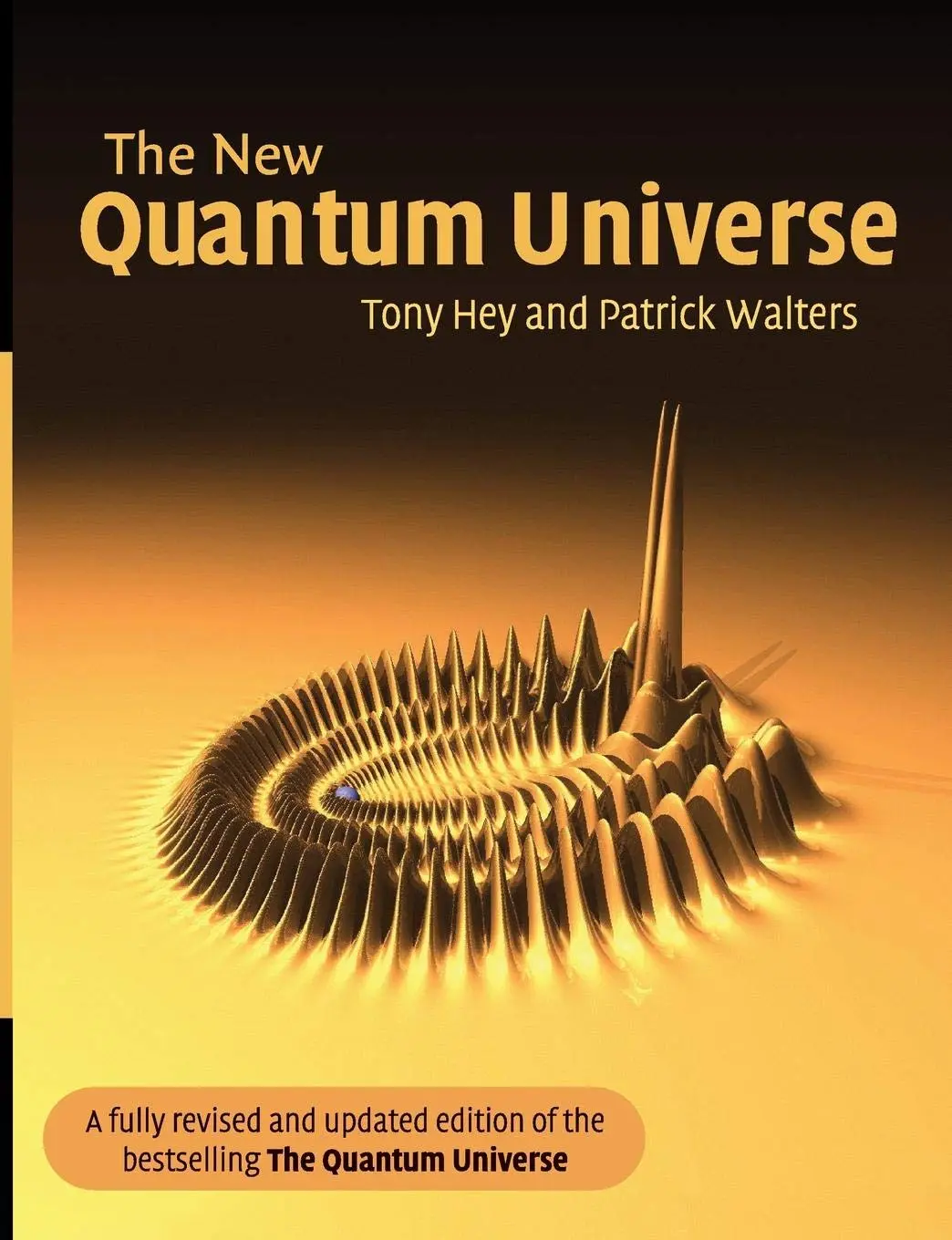
Tony Hey & Patrick Walters
Quantum mechanics told through the machines it made possible.
Tony Hey and Patrick Walters tell the story of quantum mechanics through what it made possible: lasers, transistors, MRI scanners, the nuclear physics of stars and, finally, quarks and the Higgs. Every idea is illustrated with the device or experiment that proved it.
The underlying mathematics is taught in the fourth year at Cambridge. This book makes sure you will know why it matters long before then.
Not books, but on the list
01
NRICH
An online maths club run from Cambridge: thousands of problems, graded from primary school to sixth form, each with student solutions.
02
Plus Magazine
Cambridge's free online magazine about the mathematics in the news, in nature and in research, written for a general reader.
03
Cut the Knot
Alexander Bogomolny's labyrinth of interactive mathematics, running since 1996. Its collection of more than a hundred proofs of Pythagoras's theorem is famous.
04
Dimensions
A free film in nine chapters by Étienne Ghys, Aurélien Alvarez and Jos Leys that walks you from Flatland to the fourth dimension.
Shelf VI · Books 45–54 · 10 books
Not to cover your first year in advance, but to get used to its kind of mathematics, and to the skill of working through a textbook alone, which school rarely teaches. Most have exercises, and many have answers.
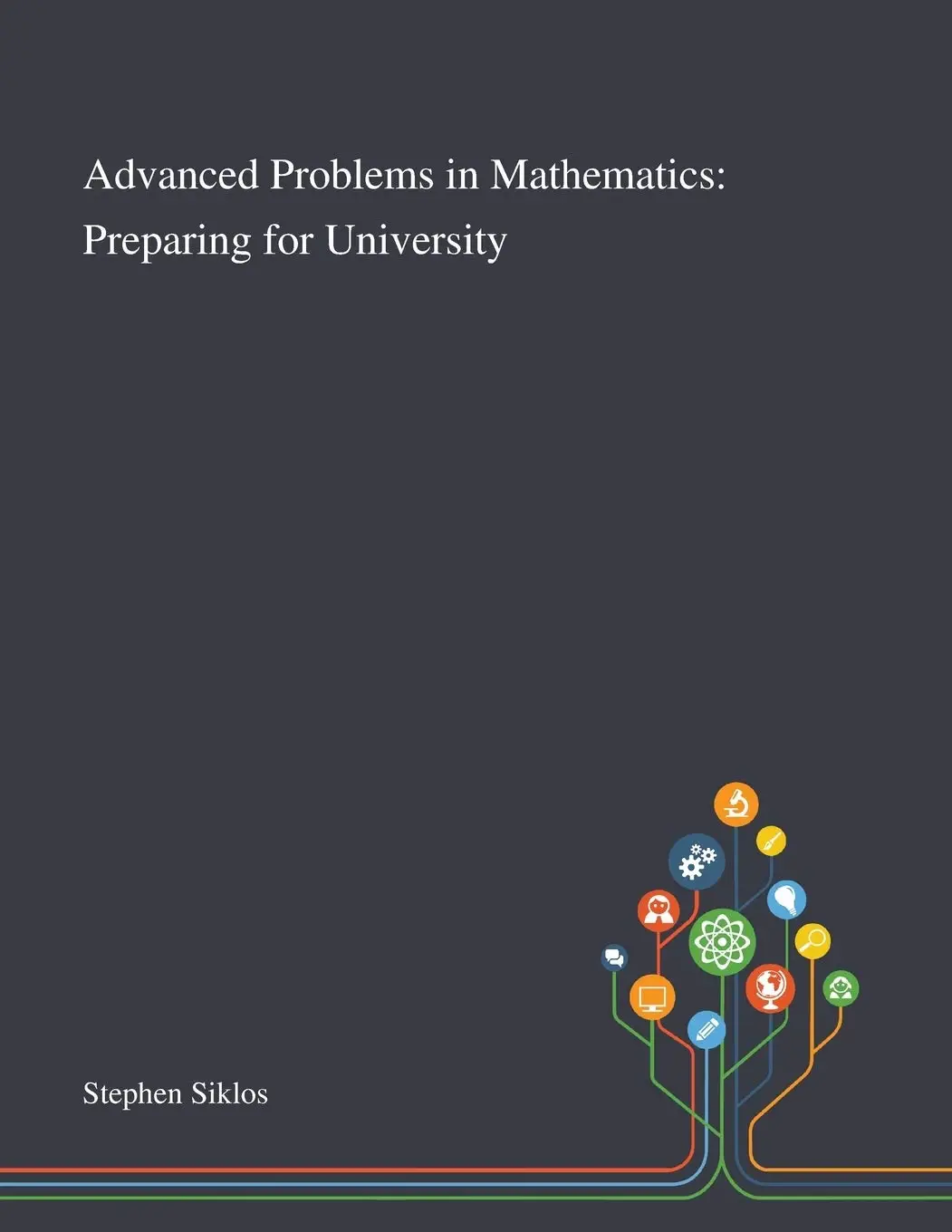
No. 45 · Open Book Publishers · 2016 · free online
Stephen Siklos
STEP problems with full solutions, free from the publisher.
Stephen Siklos spent years helping to set the Cambridge STEP papers, and this book is his preparation guide: STEP-style problems with hints, discussion and full solutions, plus two fully worked examples that show how to attack a long problem. The problems are longer than A-level questions and often connect areas that seem unrelated, which is exactly what university problems do.
Even if you will never sit STEP, working through it is the best way to get back up to speed after a summer off. It is free to download from Open Book Publishers or available in paperback.
No. 46 · Cambridge University Press · 2017
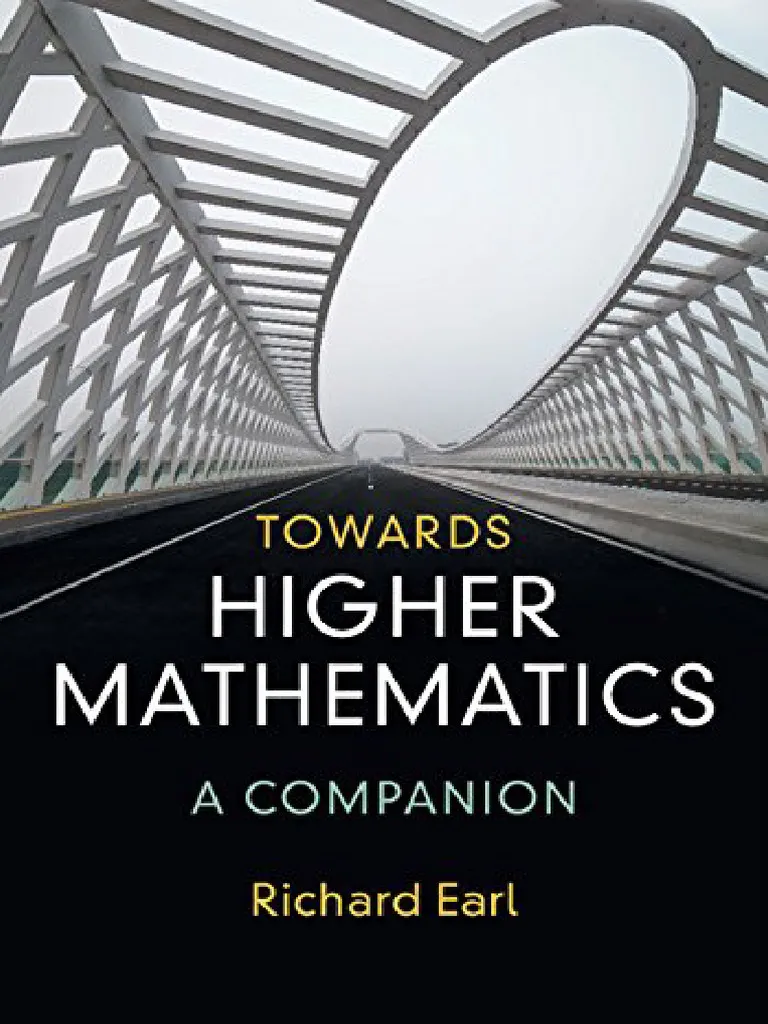
Richard Earl
More than 1,500 exercises that bridge school and university.
Richard Earl teaches at Oxford and has long been involved in its admissions. This companion uses the language of school mathematics to reach well beyond it, covering number theory, complex numbers, induction, analysis and more, with very sound advice at the start.
Its strength is more than 1,500 carefully graded exercises, with hints in the text and solutions online. Pick a chapter that interests you and work through it properly.
No. 47 · Pelican · 2019
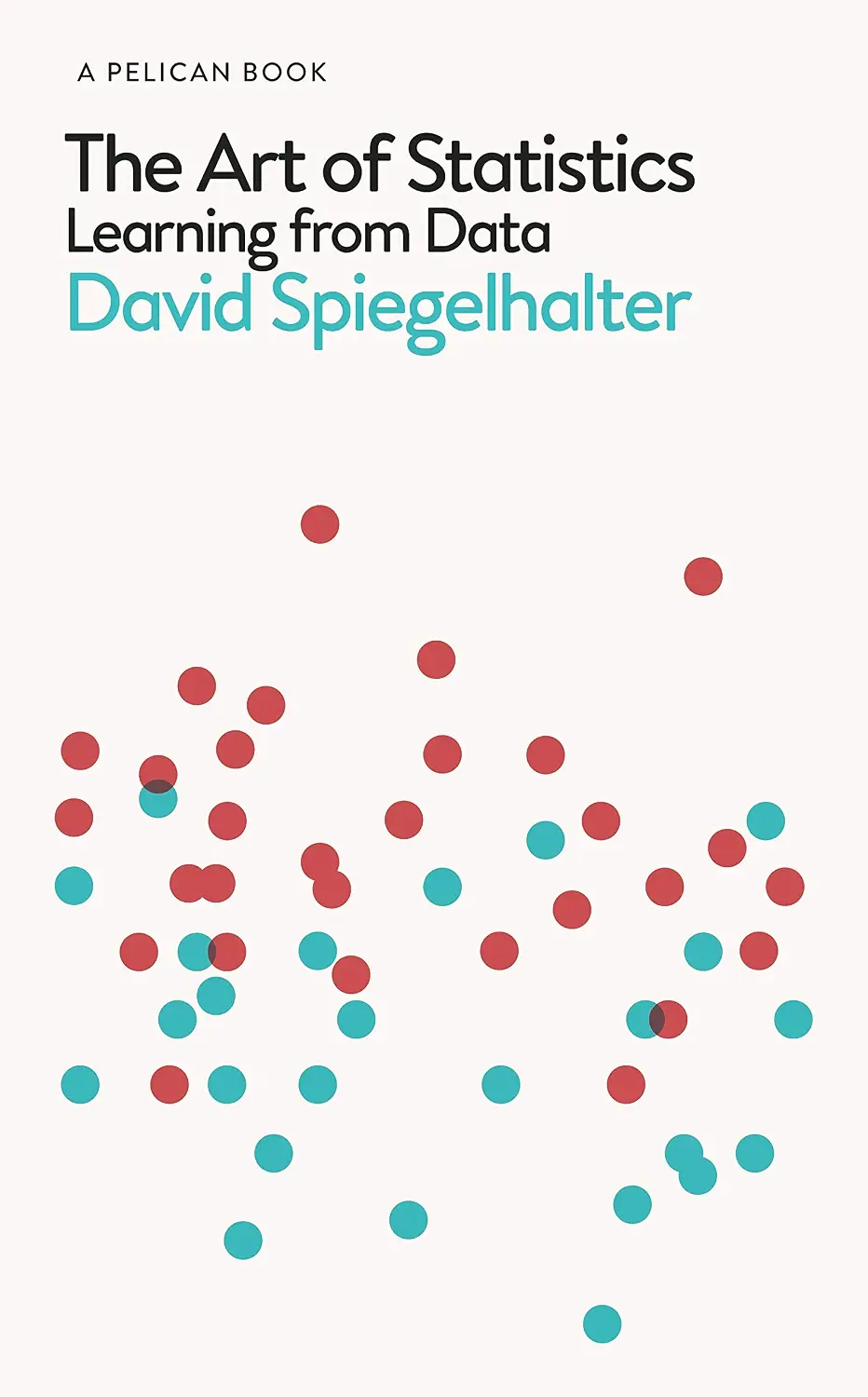
David Spiegelhalter
Statistics as detective work, with no formula in the main text.
Sir David Spiegelhalter, a Cambridge statistician, teaches statistics through cases: who was the luckiest survivor of the Titanic, could the murderer Harold Shipman have been caught sooner, was the skeleton under a Leicester car park really Richard III? Every concept comes with a real problem.
There are no formulas in the main text, but it covers a full introductory course and gets genuinely deep. You will learn to tell good data from bad and to spot when numbers are being abused.
No. 48 · Longman · 2nd edition 1973
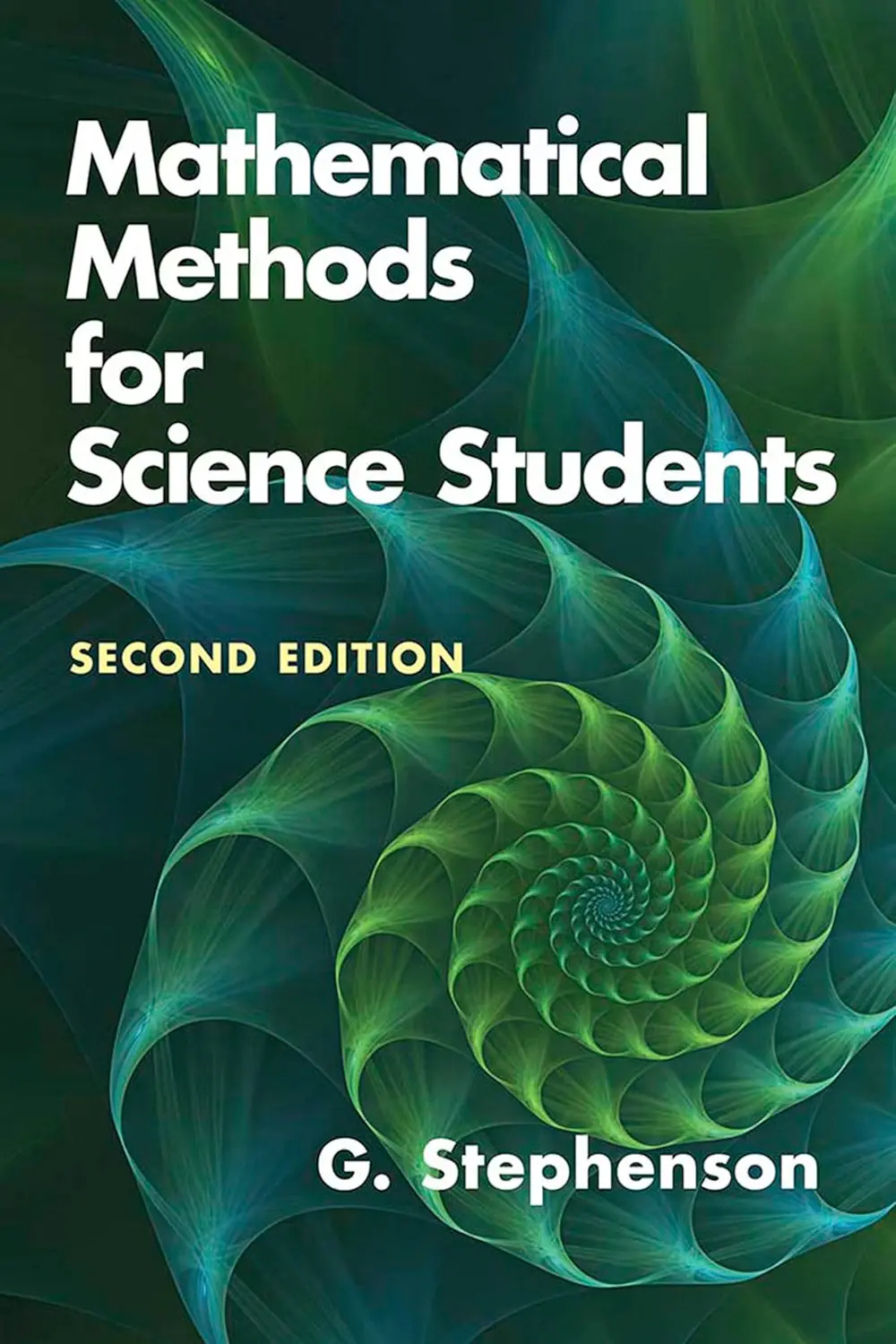
G. Stephenson
Patient, careful and full of examples. Unglamorous and very useful.
G. Stephenson starts from what you already know and moves carefully into the methods every science degree uses: series, differential equations, vectors, matrices. It is not exciting, as the faculty admits, but the explanations are patient and the worked examples numerous.
If you prefer learning only from problems, the same author’s Worked Examples in Mathematics for Scientists and Engineers is the alternative.
No. 49 · Cambridge University Press · 1998
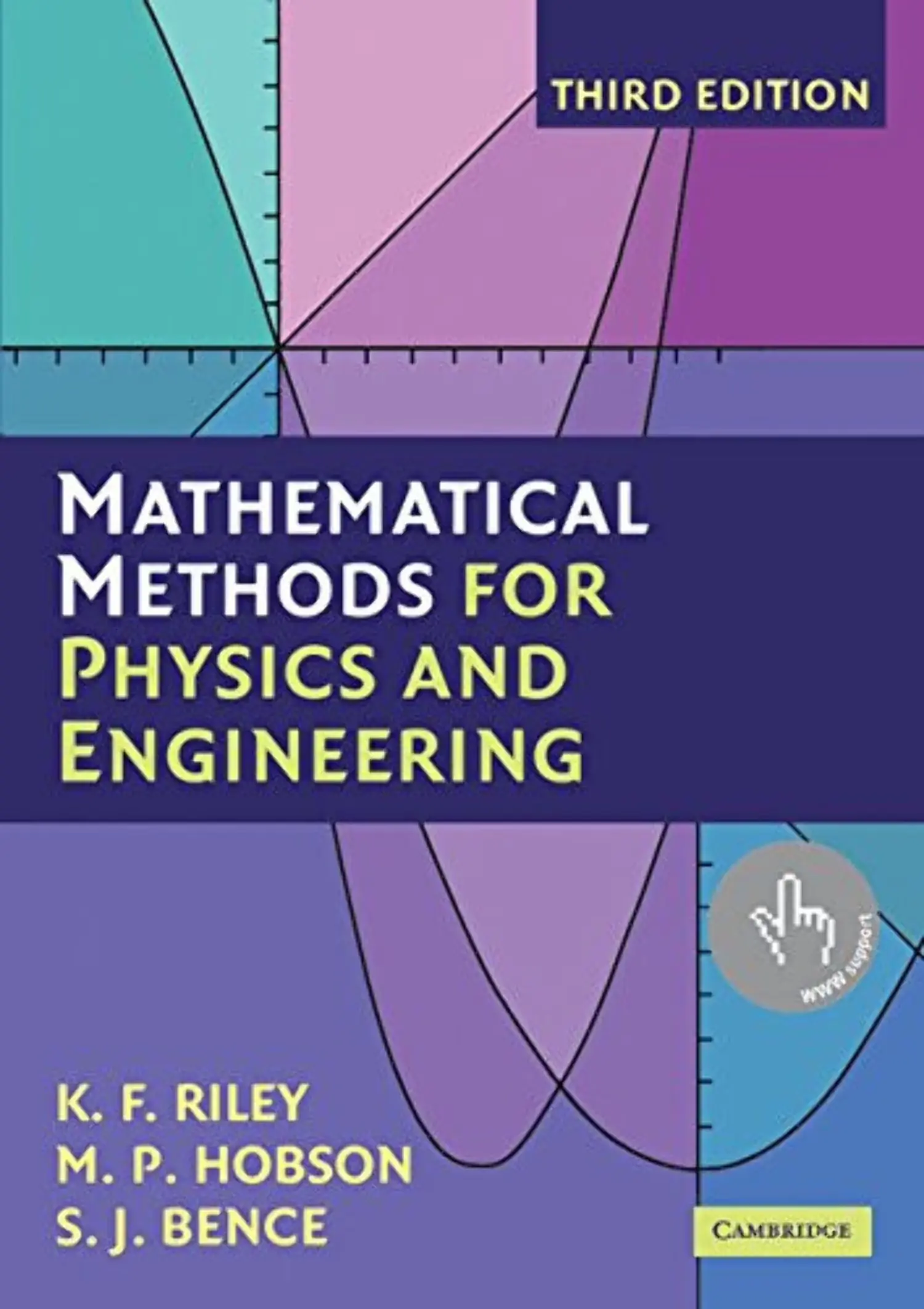
K. F. Riley, M. P. Hobson & S. J. Bence
The Cambridge methods doorstop that lasts the whole degree.
Ken Riley, Mike Hobson and Stephen Bence all taught at Cambridge, and this is the methods book many Cambridge natural scientists and mathematicians keep for their whole degree. It continues A-level techniques into the mathematical toolkit used across applied mathematics and physics.
It is enormous, so do not try to read it cover to cover. Use it as a reference and dip into the chapters that extend what you know.
No. 50 · Chapman & Hall / CRC · 2010
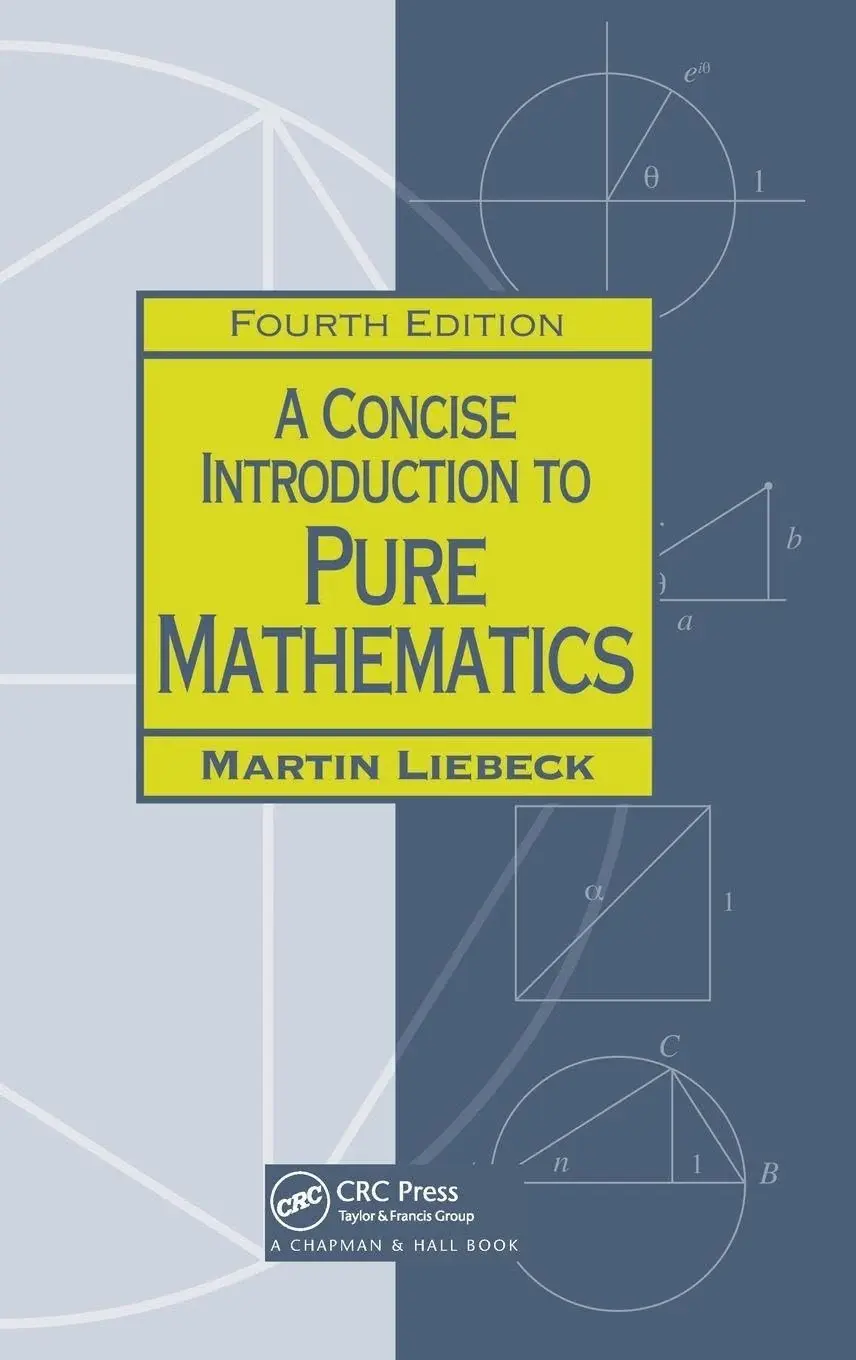
Martin Liebeck
The first year of pure mathematics, with a light touch.
Martin Liebeck offers a short, clear introduction to the topics of every first-year pure mathematics course: number systems, complex numbers, prime factorisation, infinities. It is rigorous, but stops before you get lost in detail.
The worked examples, such as proving there is an irrational number between any two real numbers, show you what proof looks like at university. The faculty calls it really excellent.
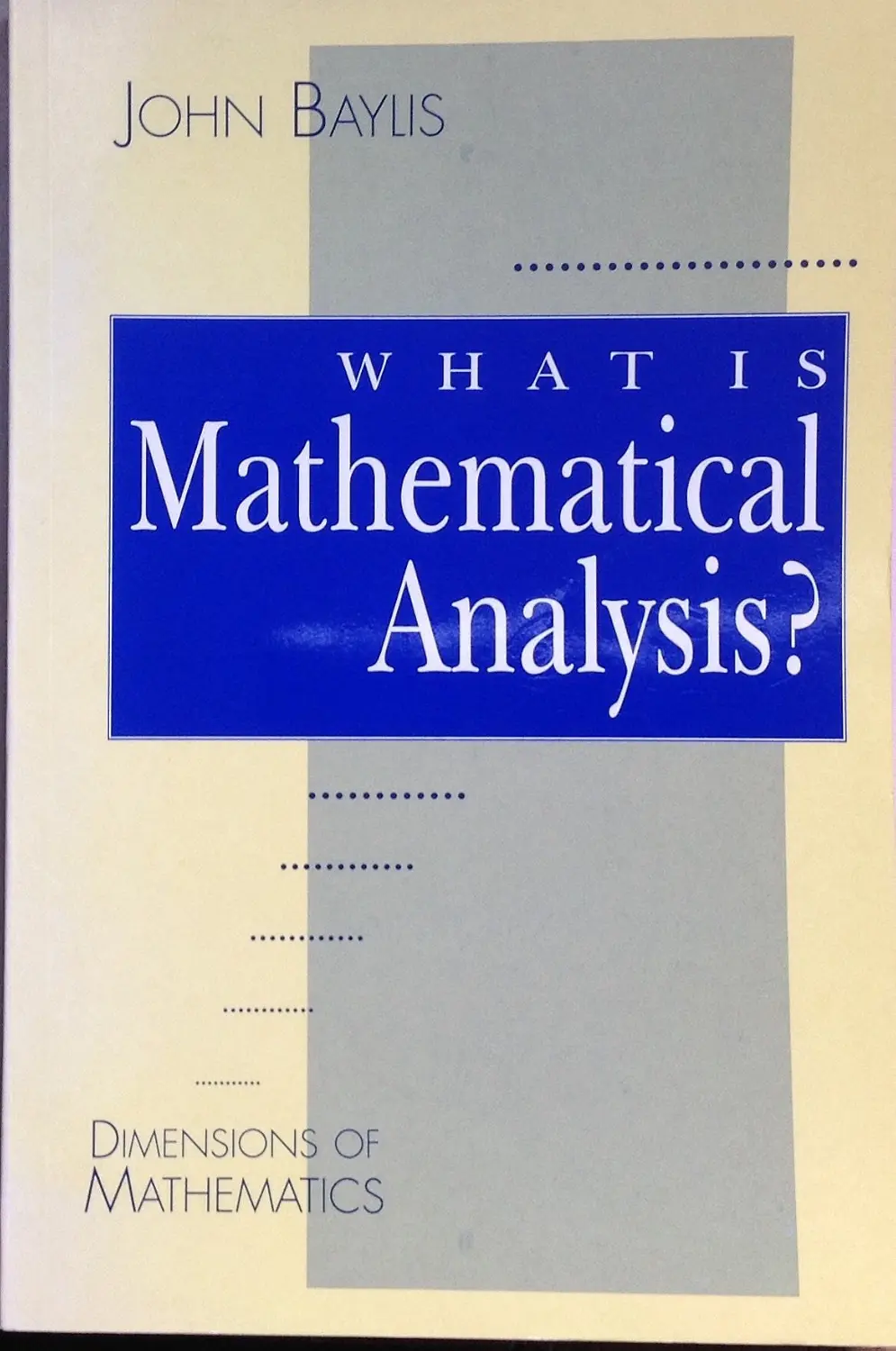
No. 51 · Macmillan · 1991
John Baylis
A function continuous at every irrational and broken at every rational.
John Baylis wrote this as part of a series meant to bridge school and university, and it covers serious analysis, from the intermediate value theorem to limits, differentiation and integration, in a gentle style. It is out of print, but libraries have it.
The layout is plain, but do not be put off. Inside is a function that is continuous at every irrational number and jumps at every rational one. Who would have thought that was possible?
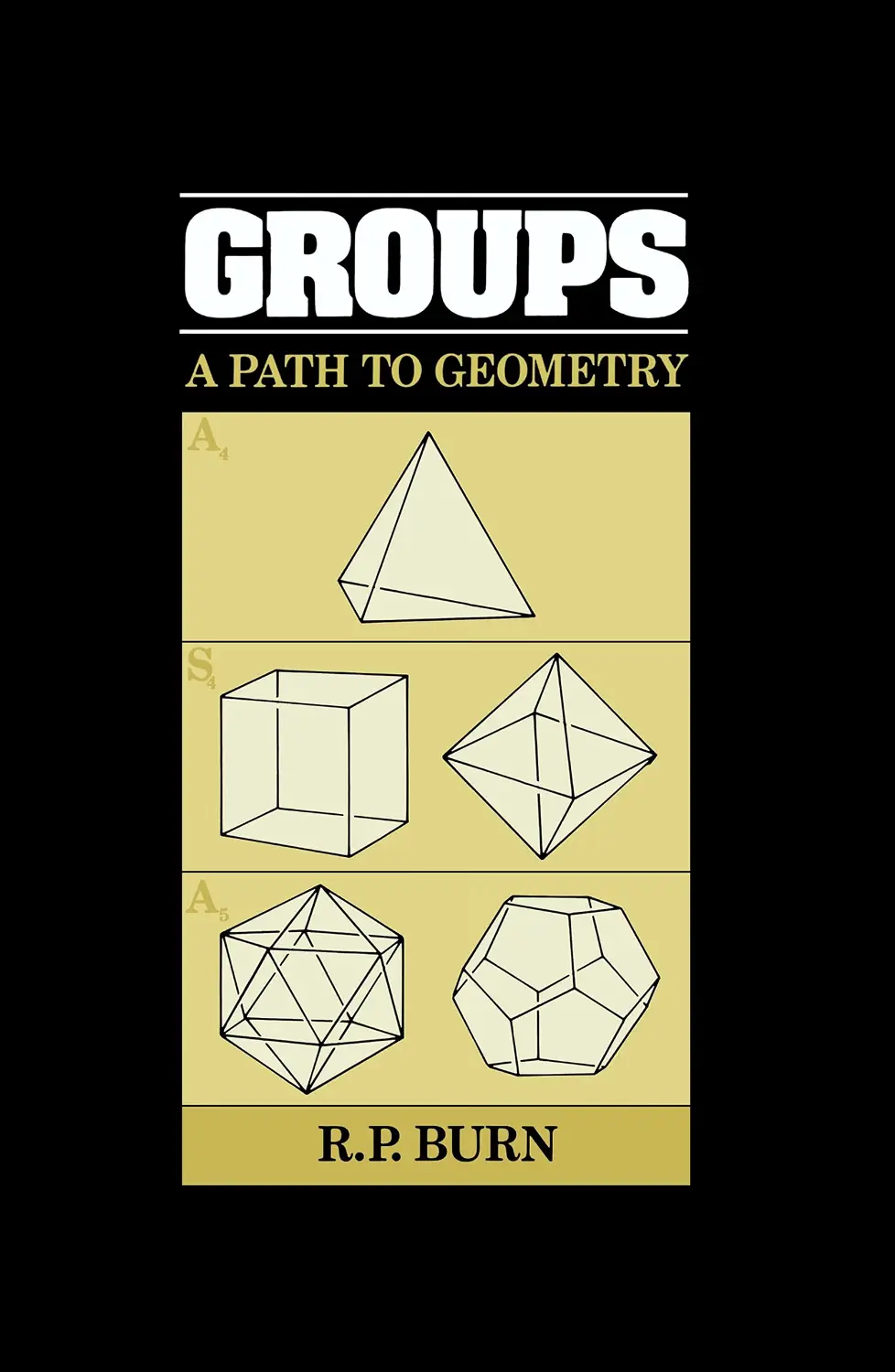
No. 52 · Cambridge University Press · 1985
R. P. Burn
Group theory taught through the geometry it describes.
R. P. Burn teaches group theory through geometry: symmetries of shapes, permutations, matrices and complex numbers, all leading back to the geometry they describe. Like all his books, it is built from carefully sequenced questions rather than explanations.
Work through the questions in order and you build the theory yourself, which is how it sticks.
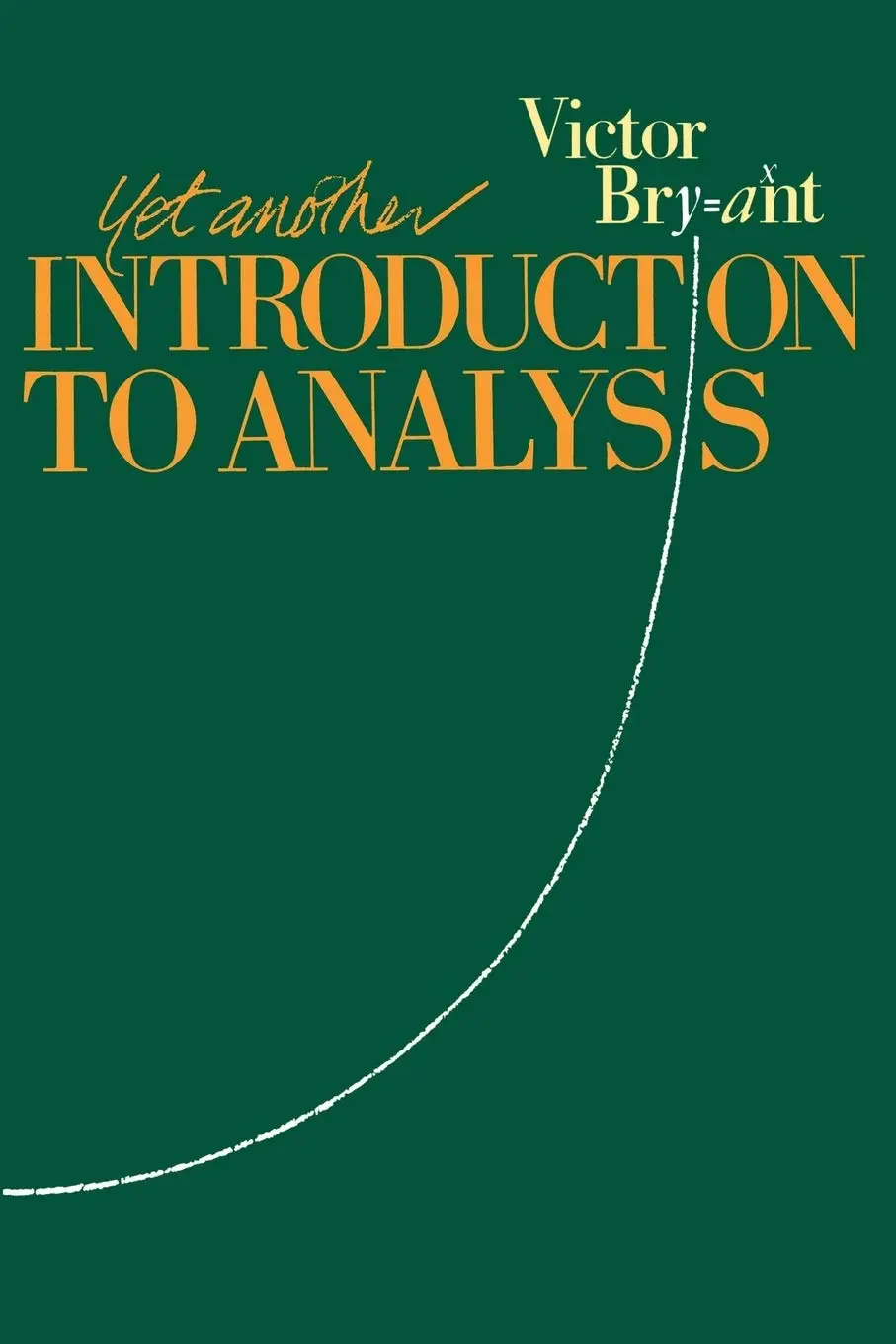
No. 53 · Cambridge University Press · 1990
Victor Bryant
Everything you think you know about calculus, proved from scratch.
Analysis is the study of everything you think you already know how to do, like differentiation and integration, from first principles. Victor Bryant covers functions, continuity, series and calculus at a brisk pace, with solutions to the many problems.
The faculty calls it essential material for any mathematician. Yes, another introduction to analysis, but a very good one.
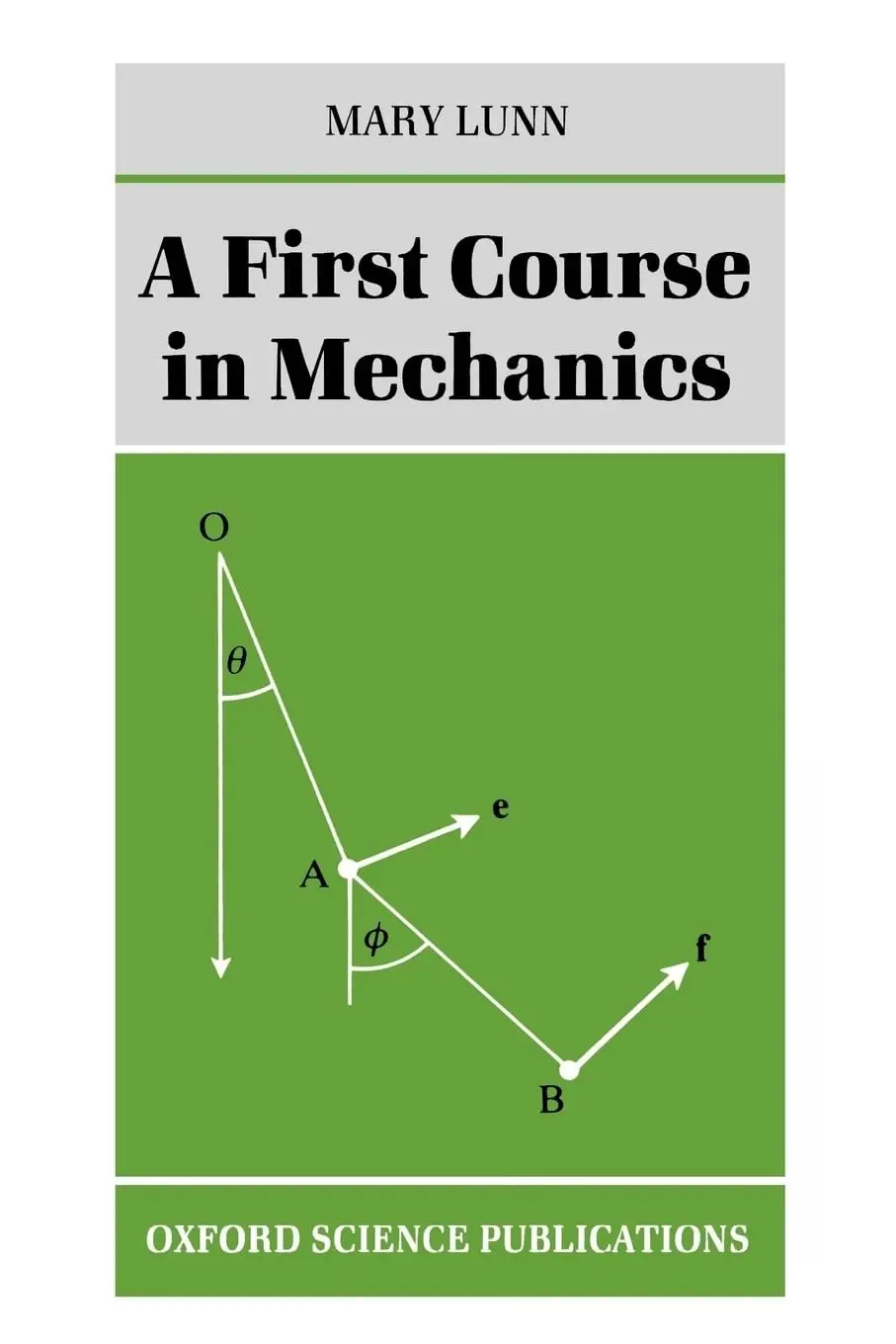
No. 54 · Oxford University Press · 1991
Mary Lunn
A bridge from A-level mechanics, and a good stretch of road beyond.
Mary Lunn wrote this as a bridge between A-level mechanics and the mechanics taught at university, starting from Newton’s laws and moving on to the vector methods and modelling that university courses expect.
As the faculty puts it, it is not just a bridge but a good stretch of road on the far side.
The best thing about the Cambridge list is not any one book on it. It is the attitude: read what interests you, read it properly, and do not confuse difficulty with value. That advice works whether you are seventeen and applying, or fifty and finally coming back to mathematics.
If you want our three picks, start with Gowers for the big picture, Pólya for the craft and Hardy for the reason anyone bothers. Then let the rest of the list pull you wherever it wants. For a different kind of challenge, try our list of free math textbooks.
Source: Mathematical Reading List, Faculty of Mathematics, University of Cambridge (revised September 2022). The book notes on this page are our own.
The Faculty of Mathematics at the University of Cambridge keeps a reading list of about 65 books for sixth-formers, in six groups: doing mathematics, history, recreational mathematics, readable mathematics, readable theoretical physics and readable textbooks. The best-known titles are Pólya's How to Solve It, Hardy's A Mathematician's Apology, Courant and Robbins' What Is Mathematics? and Gowers' Mathematics: A Very Short Introduction.
No. The faculty says plainly that nobody should try to read most of it, and that it is fine not to have read any of it. It is a menu: pick one or two books that genuinely interest you, read them properly, and be ready to say what you thought of them.
Start with Timothy Gowers' Mathematics: A Very Short Introduction for the big picture and Pólya's How to Solve It for problem-solving. If you are preparing for STEP, Stephen Siklos' Advanced Problems in Mathematics is free online and written for exactly that.
Yes. Stephen Siklos' Advanced Problems in Mathematics: Preparing for University is free to download from Open Book Publishers The four websites on the list, NRICH, Plus, Cut the Knot and Dimensions, are free too.
Any book you have actually read and can discuss. Interviewers care far more about what you took from a book than which one it was. The faculty itself jokes that for years nine out of ten candidates named James Gleick's Chaos, so a less obvious choice you can talk about with real enthusiasm will stand out more.
Keep wandering
A few more pieces in the same spirit — math, design, and slow attention.
How to Learn Mathematics: A Self-Study Roadmap
A course-by-course, book-by-book roadmap for learning undergraduate mathematics on your own, with a prerequisite map, a readiness check and a study planner.
Open
A Self-Learner's Roadmap Through 30+ Great Math Books
Not a pile of recommendations. A path — the order to read in, the choices to make, and the places people quietly give up.
Open
25 Short Math Books You Can Finish in One Sitting
Every one of them under 200 pages — classics, modern picks, novels, and a three-book starting route for beginners.
Open
The 17 Best Books for Learning Mathematical Proofs
A reading order for anyone moving from computing answers to writing proofs, from the first textbook all the way to Gödel.
Open
23 Mathematics Books Dedicated to a Single Problem
Riemann, Fermat, Poincaré, Goldbach, Gödel — twenty-three books that each orbit a single mathematical problem, a single question, sometimes a single number.
Open
18 Books Einstein Recommended: From Euclid to Dostoevsky
Einstein never wrote a reading list. He left something better: the books that changed him, the ones he argued over in Bern, and the ones he wrote prefaces for.
Open