
Video · Number Theory · Quanta Magazine
Sixteen minutes, no advanced mathematics, and you come out understanding the greatest unsolved problem in the field.
Ali Kaya
Quanta Magazine · Alex Kontorovich · 16 min
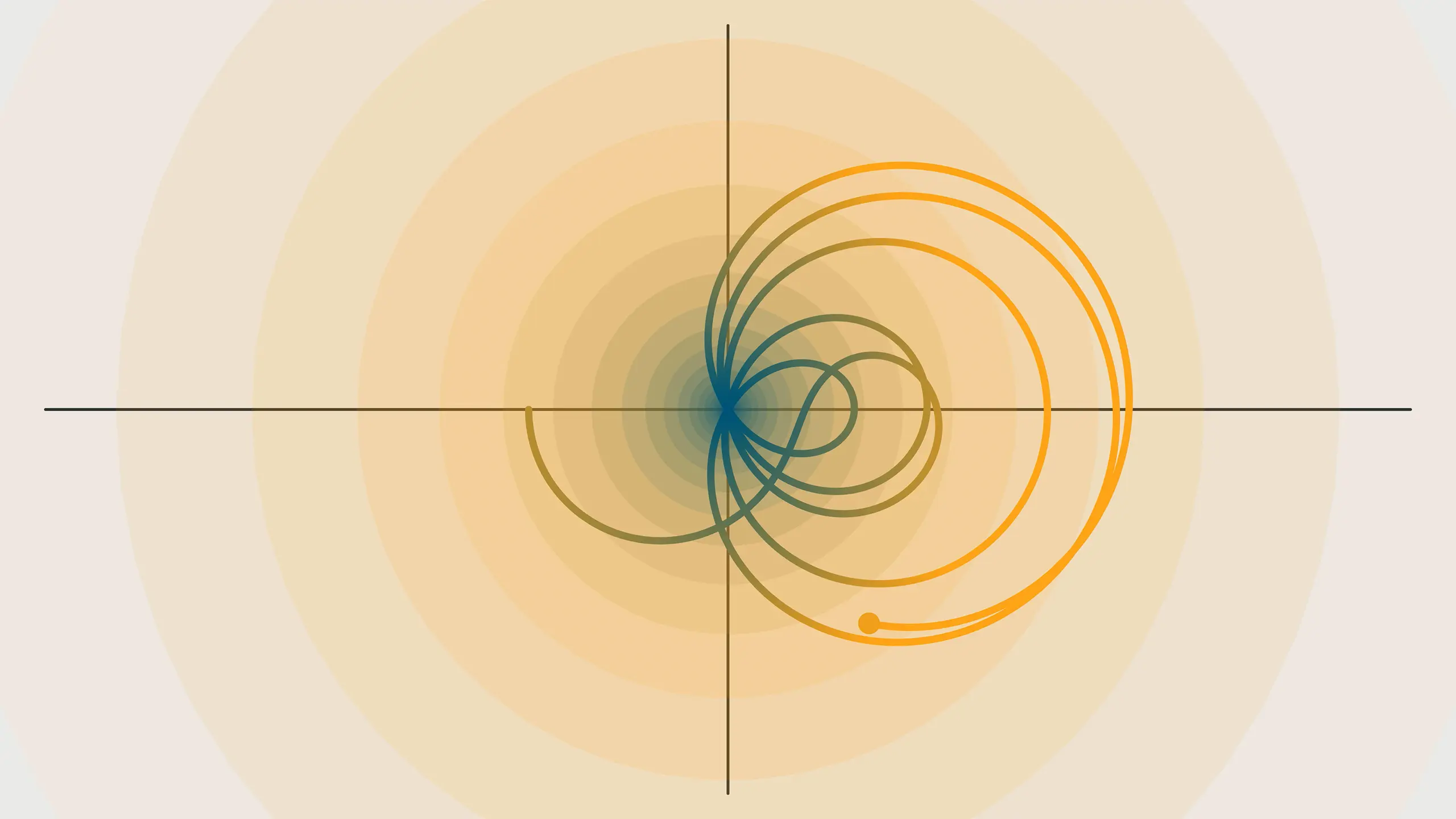
have watched a great many videos about the Riemann hypothesis. Most either bury you in definitions from the first minute or never touch the mathematics at all and just keep repeating that primes are mysterious. This video, which Quanta Magazine commissioned from the Rutgers mathematician Alex Kontorovich, does neither, and to my mind it is the single best explanation available right now. In sixteen minutes it takes someone with no advanced mathematics and leaves them genuinely understanding the greatest unsolved problem in the field. So what is the thing that deserves all this trouble?
The Riemann hypothesis is one of the seven Millennium Problems of the Clay Mathematics Institute, and whoever proves it not only enters the history of mathematics but collects a million-dollar prize. The money is not really the point. This hypothesis answers a question as old as mathematics itself. How are the prime numbers distributed along the number line? Primes are the building blocks of every number, yet they appear with no visible order, and there is no formula that tells you where the next one will show up.
The story begins before Riemann. In the late 1700s a young Gauss computed by hand every prime up to three million, filled his tables with them, and sensed that the thinning out of the primes obeys a rule, the ratio 1/log x. Around the same time Euler discovered that the zeta function can also be written as an infinite product with one factor for every prime, and he was the first to see a hidden bond between that function and the primes. The man who joined the two clues was Bernhard Riemann. In the eight-page paper he published in 1859 he carried the zeta function into the complex plane and proved that the points where the function takes the value zero control the distribution of the primes down to the letter. Then he wrote the famous sentence. All the important zeros lie on a single vertical line in the complex plane, the critical line, where the real part is exactly one half. That is the whole hypothesis. Riemann died without proving it, and from that day to this nobody else has managed to either.
Not for want of trying. For more than 150 years the biggest names in mathematics have wrestled with this problem, and computers have been thrown at it as well. For a time an enormous distributed computing project was checking more than a billion zeros a day, and what it was hunting for was a single fugitive, because one zero falling off the line would demolish the hypothesis on the spot. Every one of the ten trillion zeros checked so far has landed on the critical line. But a pattern that holds ten trillion times is no guarantee that it holds forever, and no machine can count forever. Brute force will never finish this job. One road remains, and it is the same road the ancient Greeks walked. A rigorous mathematical proof.
And if that proof ever arrives, what happens? Countless theorems, in fields as far apart as cryptography and quantum physics, have been proved on the assumption that the Riemann hypothesis is true, which means an entire edifice is resting on a single unproven sentence. A proof would turn all those conditional results into settled theorems overnight, and we would know everything we have any right to know about how the primes are distributed. That follows from what Riemann showed. Each zeta zero adds one harmonic to the prime counting function, and when you sum them all you get a formula that fits the jagged staircase of the primes perfectly. Pinning down the zeros means pinning down the primes.
Kontorovich tells this whole story with remarkable patience. He has you picture the primes as a city of single-storey houses, turns Gauss’s staircase into a smooth curve before your eyes, builds up complex numbers and analytic continuation from nothing, and in the finale shows how the zeta zeros construct that staircase one harmonic at a time. The spiral at the top of this piece is the video’s opening image. Set aside sixteen minutes this weekend. It is worth it.
Where to go next
If the part that grips you is the proof rather than the primes, there is a book that proves one small theorem ninety-nine different ways, which is the best demonstration I know of what mathematicians mean by style. For the cast that built the modern language this problem is written in, see the mathematician who never existed. And for the short list of statements that carry this much weight, there is the seventeen equations that changed the world.
Keep wandering
A few more pieces in the same spirit — math, design, and slow attention.
A Beautiful Mind (2001): The Bar Scene Gets Nash Wrong
Ron Howard's film builds one scene to explain the Nash equilibrium, and the solution in that scene is not a Nash equilibrium.
Open
Pi (1998): Aronofsky's Math Thriller, Explained
Aronofsky's first film follows a number theorist chasing a 216-digit number. Where the mathematics holds up, and where it turns into numerology.
Open
Mr. Finch Explains Pi to a Classroom
Harold Finch steps to a chalkboard and delivers one of the most moving speeches about mathematics ever written for American television — and one claim that mathematicians still cannot prove.
Open
Powers of Ten (1977): The Eames Film Explained
Forty jumps, one continuous camera move, from a picnic blanket in Chicago to a hundred million light-years — and back into a single proton. Nine minutes, one idea.
Open
Impossible Triangle Explained: Henry Segerman's Real-Life Model
The impossible (Penrose) triangle can't exist. Henry Segerman built one anyway — then lit it in the one way that gives the cheat away.
Open
32 Metronomes and the Strange Sympathy
Start 32 metronomes at different times. Walk away. Come back in three minutes. Physics will have done the rest.
Open