Abakcus
← Back to home

Abakcus — Book Lists

The 17 Best Books for Learning Mathematical Proofs

Curated by Abakcus

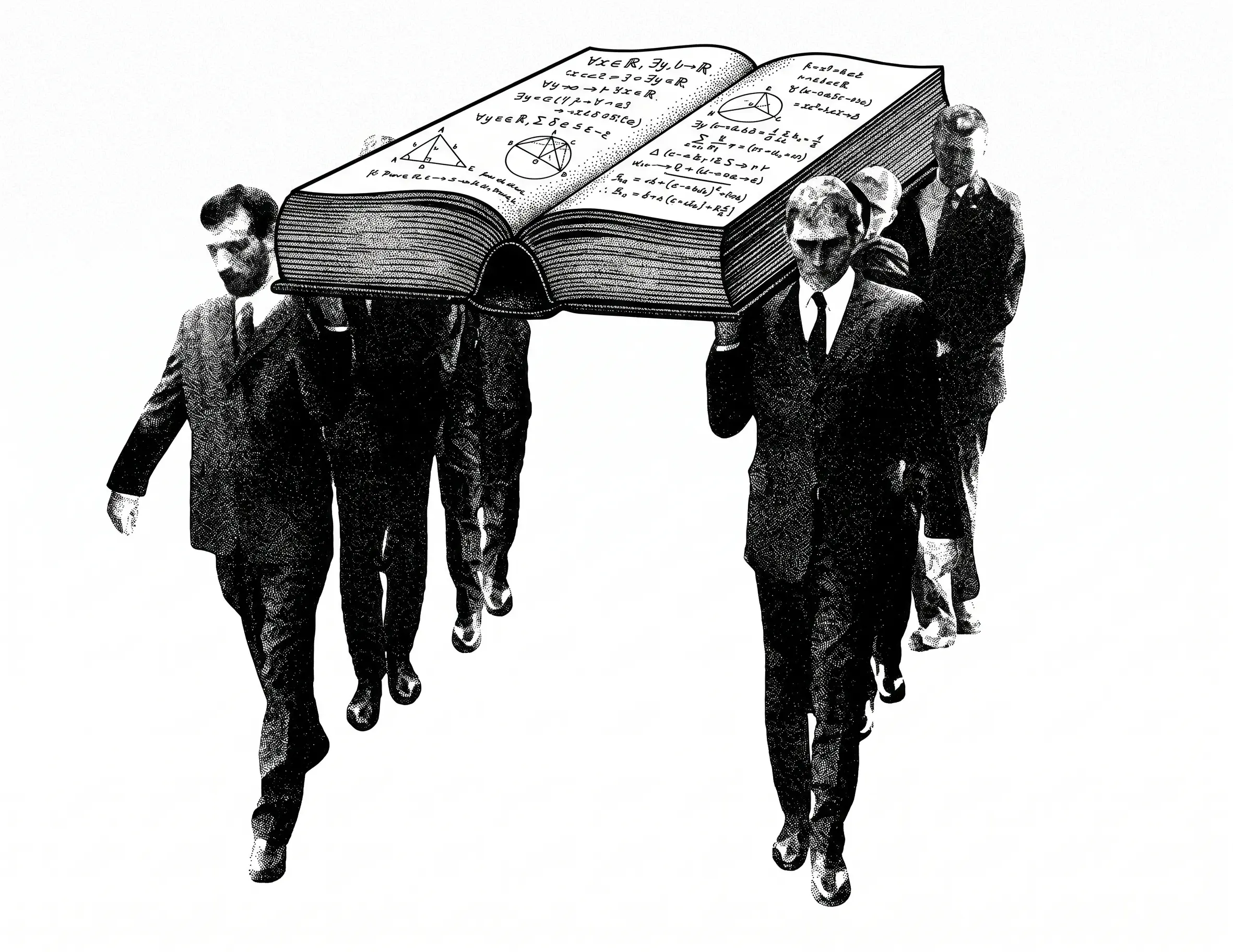
Men in dark suits carrying a giant open book of proofs on their shoulders, like pallbearers

For years at school, mathematics is taught as a job of computing, you solve equations, take derivatives and integrals, multiply matrices, and once the right number is in the box you are done. Then one day at university a question ends with the words "show that", and you realize the answer is no longer a number but a paragraph, and that the paragraph has a grammar of its own.

Almost every proof book was written for this crossing. Richard Hammack describes it exactly this way in the introduction to his book, explaining that until now mathematics has probably been presented to you as a computational discipline where the goal was to find the answer, and that now an entirely different goal begins, understanding structures and proving statements. I think this is the least discussed bridge in mathematics education, and a good book makes it half as long.

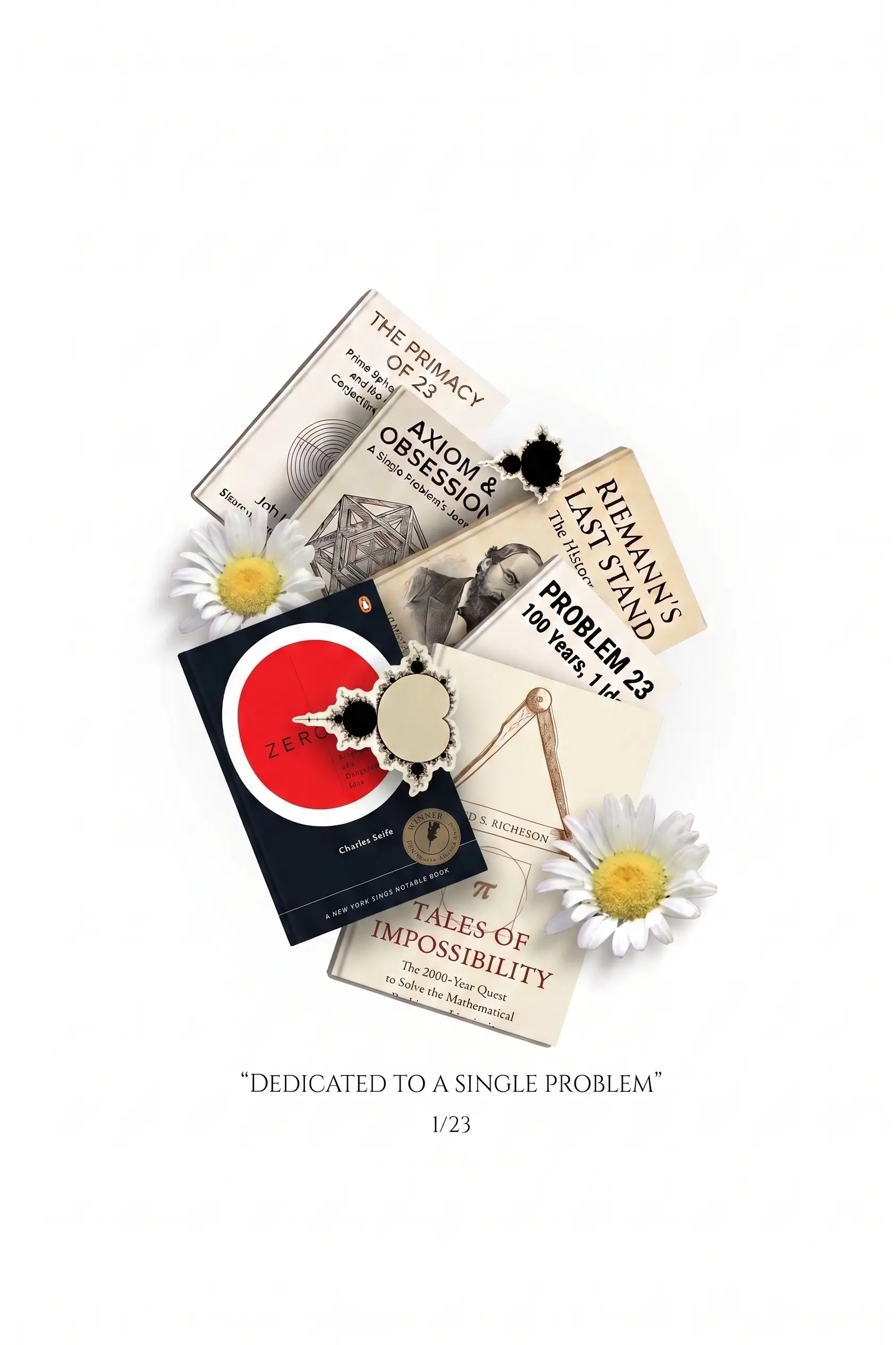
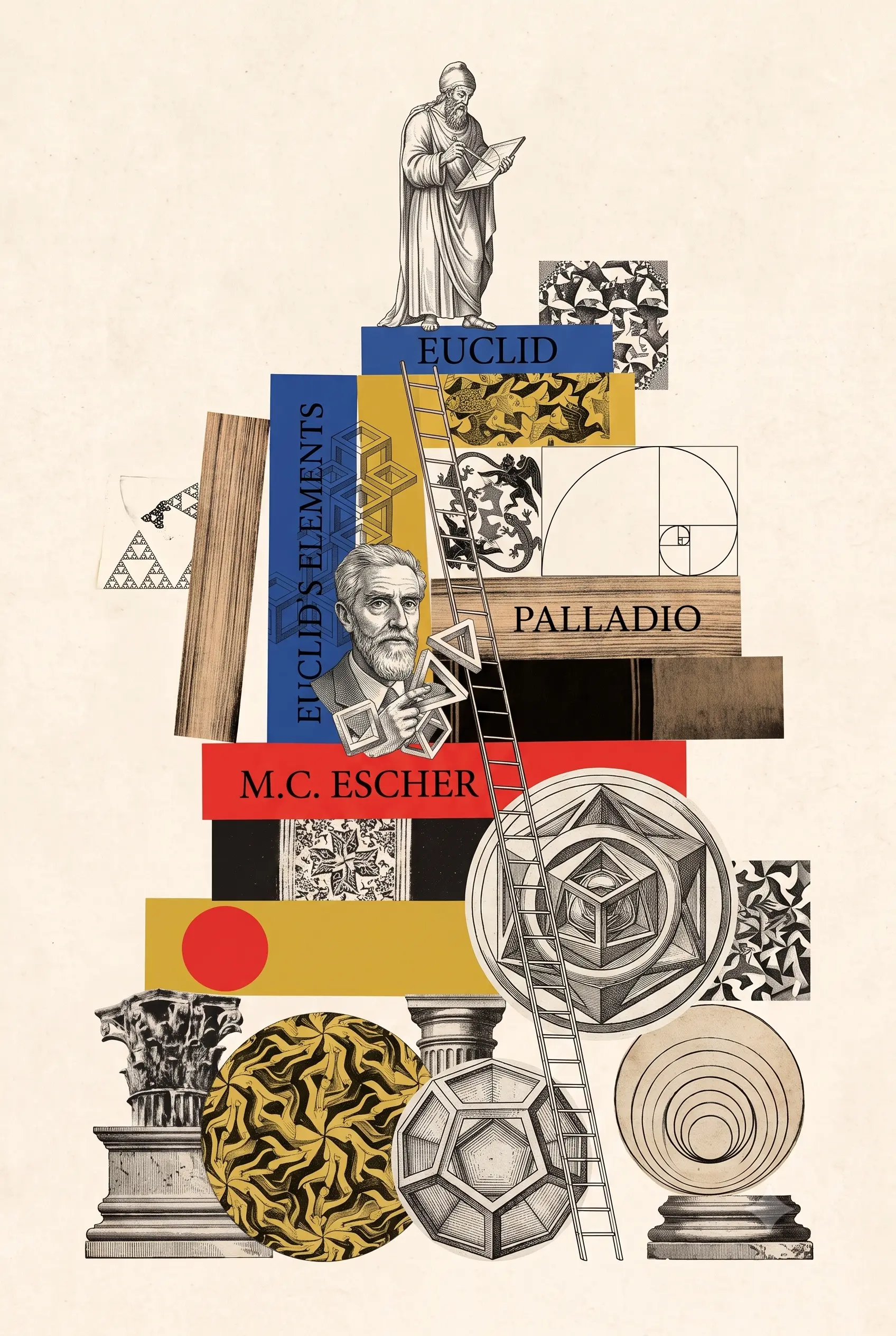
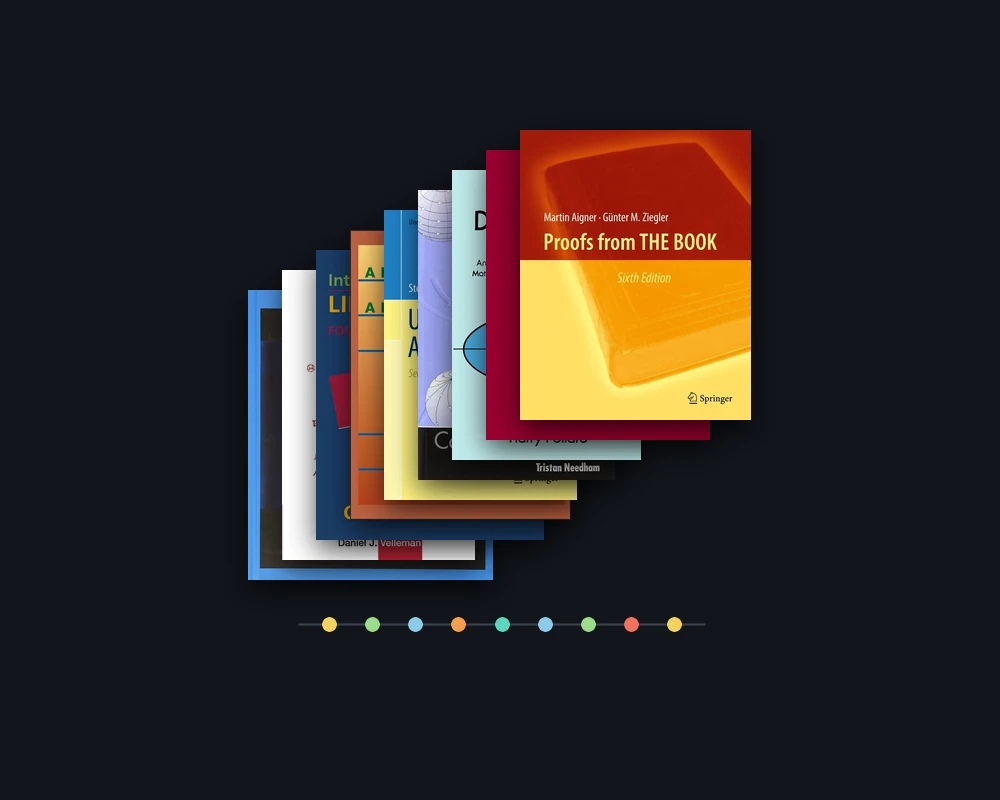
The core of this list is the books in the graphic I made for Abakcus. I added eight more that I think belong on the shelf of anyone learning proofs and arranged them all into a reading order. The order matters, because learning to write a proof and reading a good proof for the pleasure of it are not the same thing, and the second comes after the first.

The first five books open the same door in different tones, and finishing one of them is better than starting three and dropping them halfway. If you don't know where to begin, begin with the first one, it is good and it is free. The next two are about writing and solving problems, the five after that make you read beautiful proofs, and the last five ask what a proof is, where it came from and where it stops.

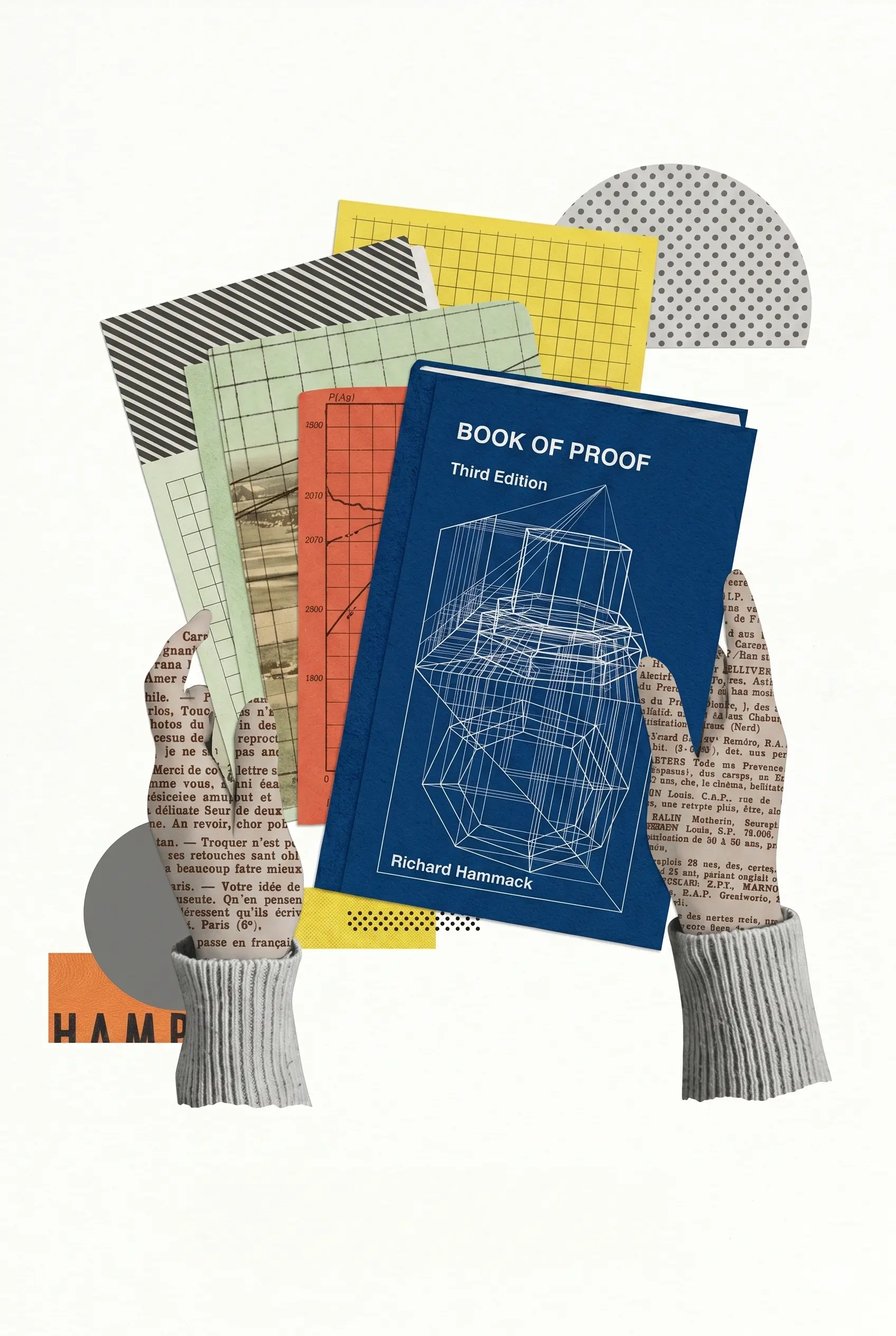
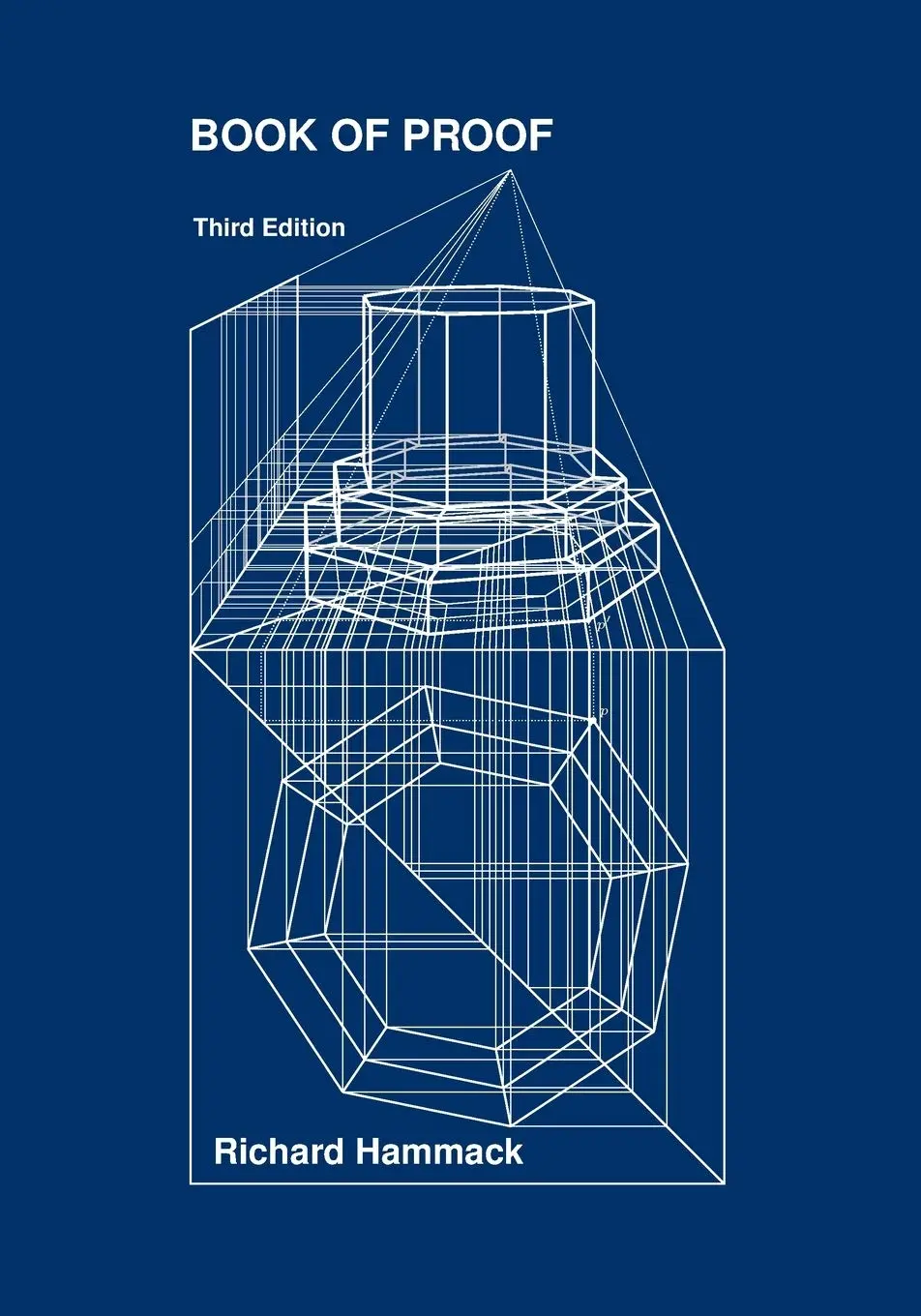
Cover: Book of Proof by Richard Hammack
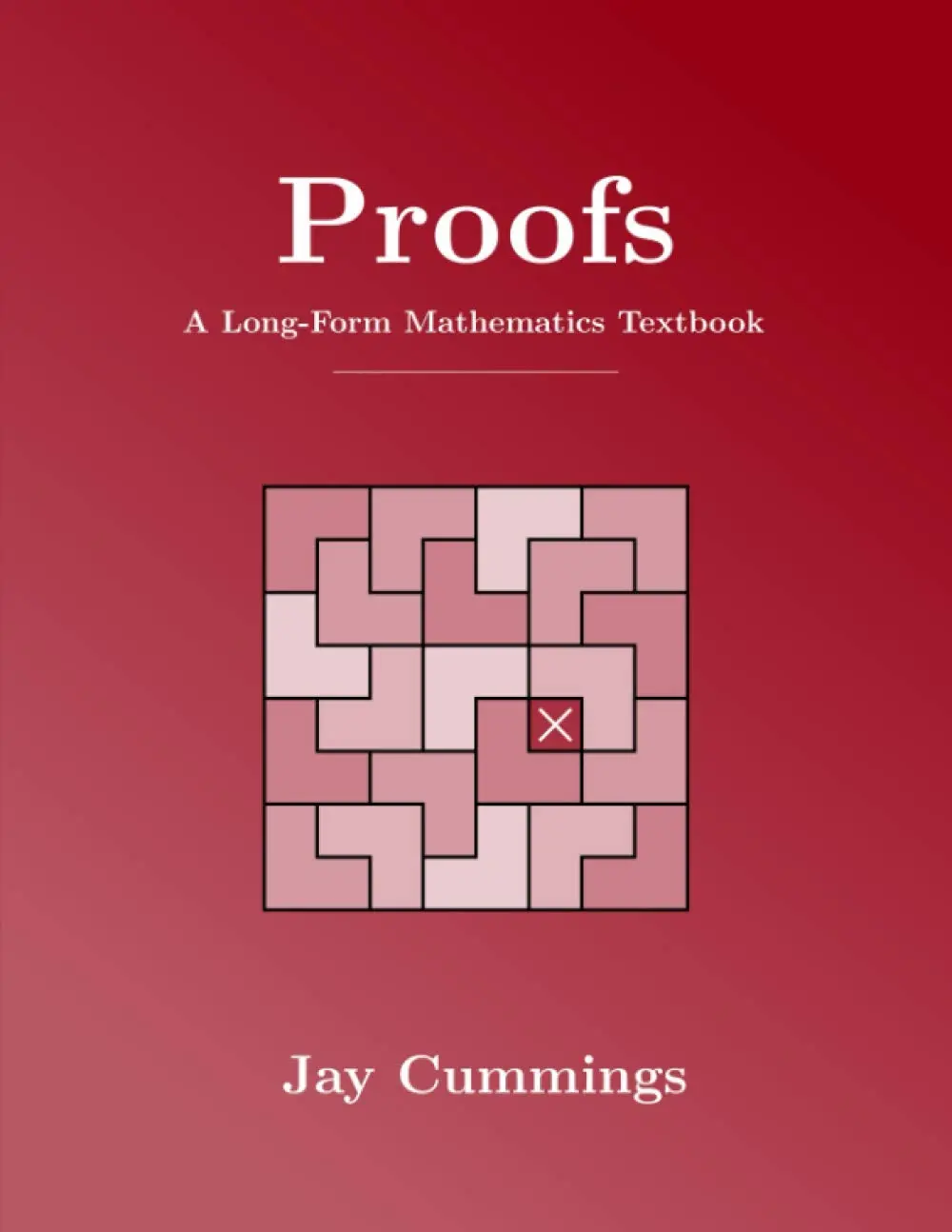
Cover: Proofs: A Long-Form Mathematics Textbook by Jay Cummings
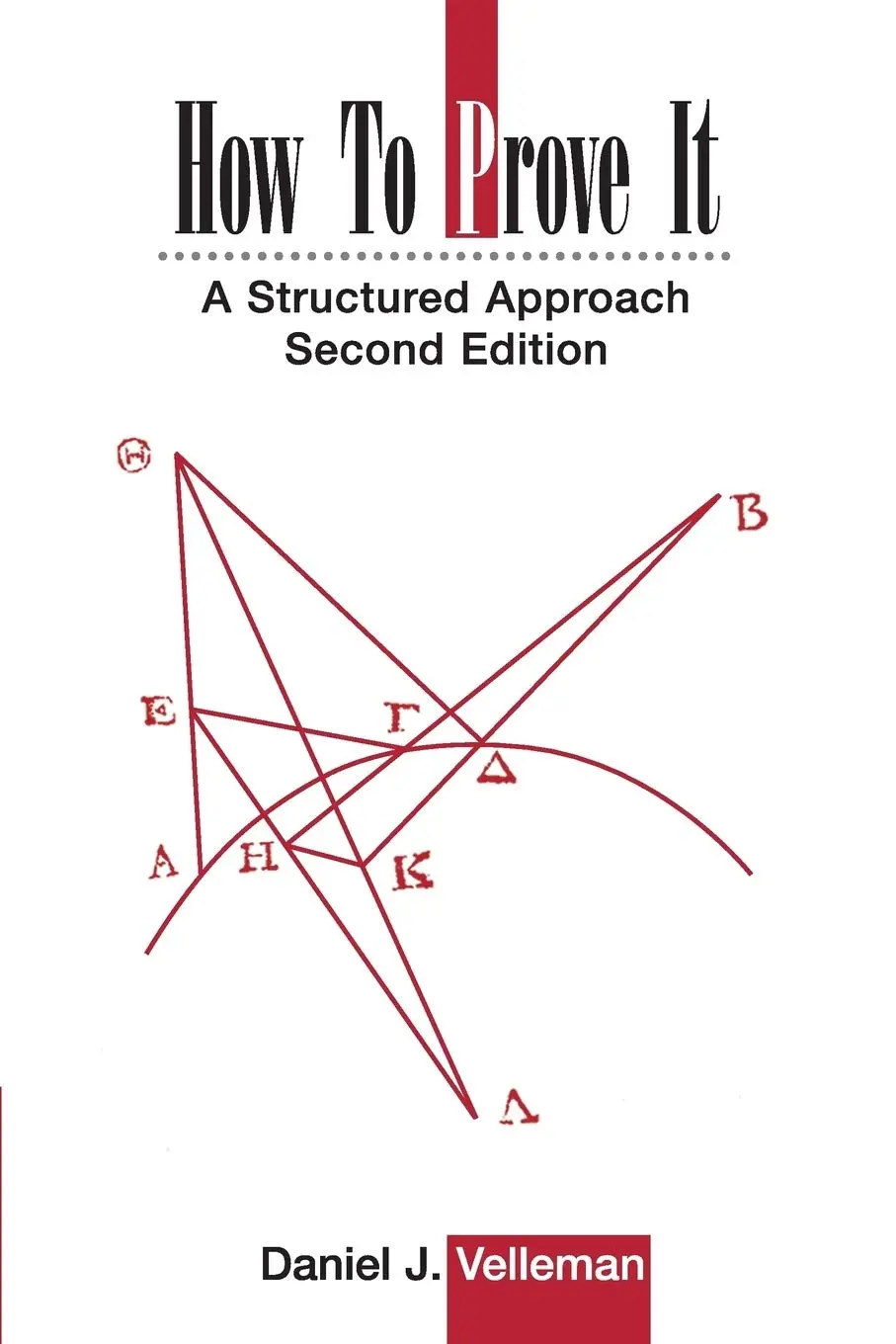
Cover: How to Prove It: A Structured Approach by Daniel J. Velleman
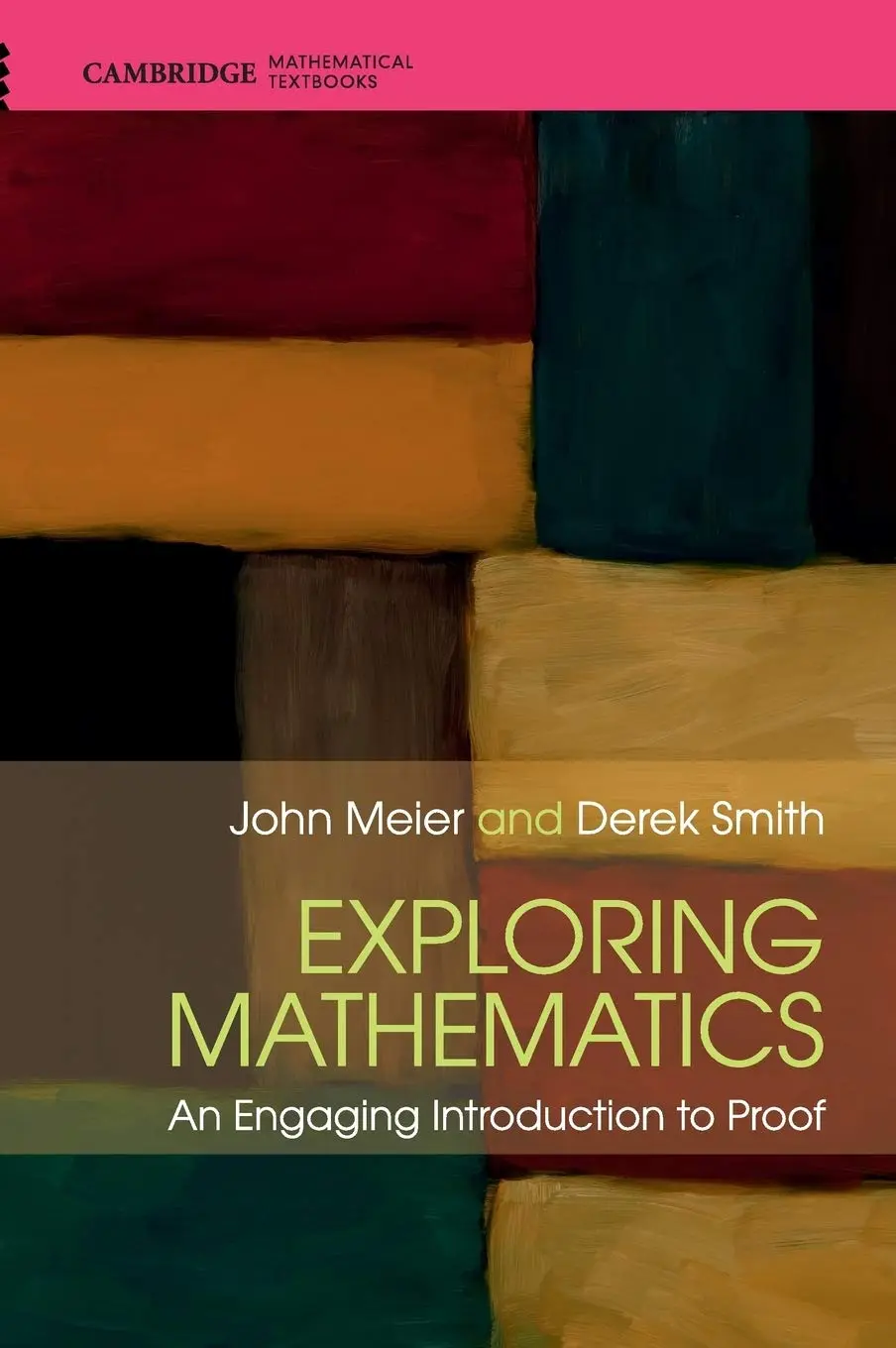
Cover: Exploring Mathematics: An Engaging Introduction to Proof by John Meier and Derek Smith
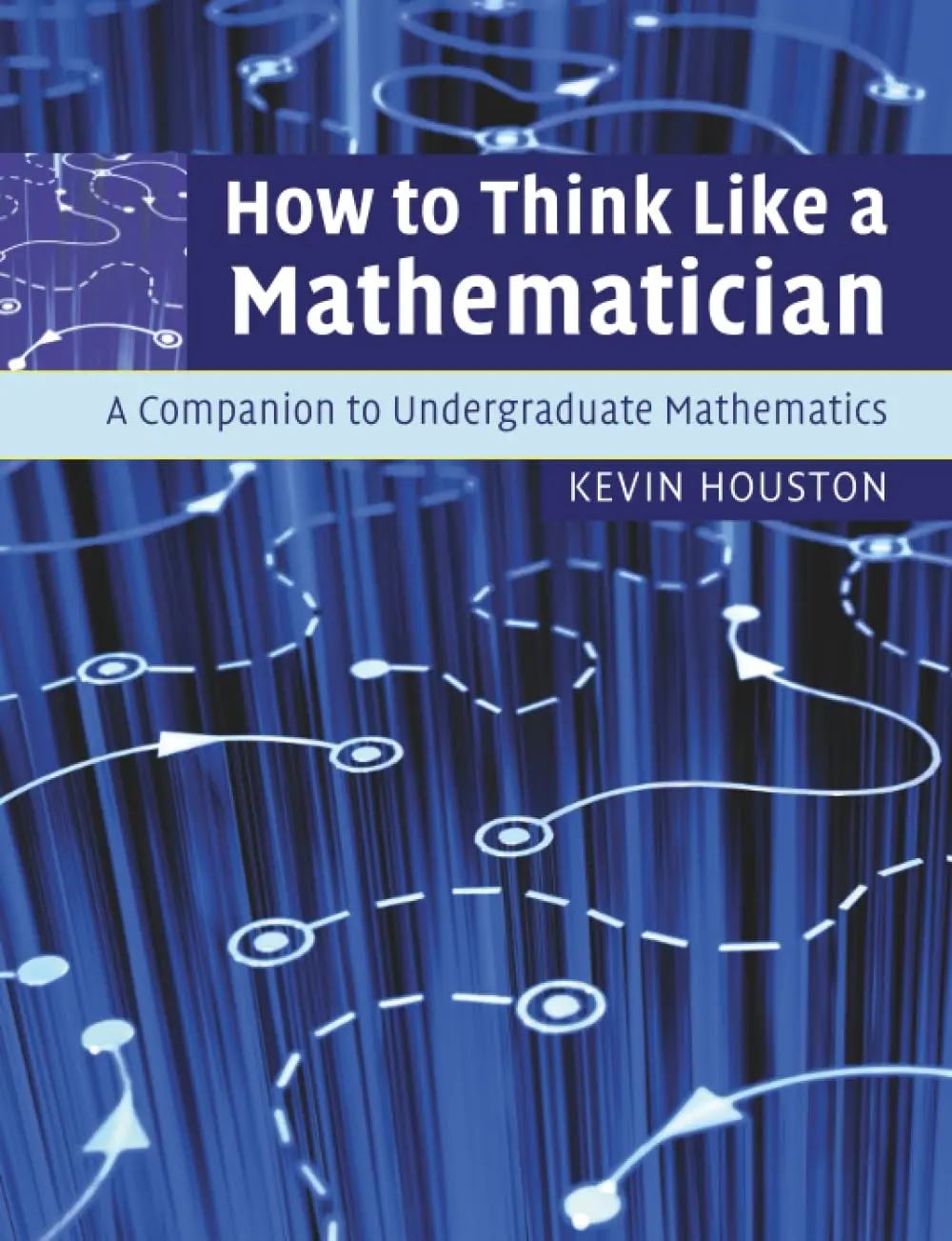
Cover: How to Think Like a Mathematician by Kevin Houston
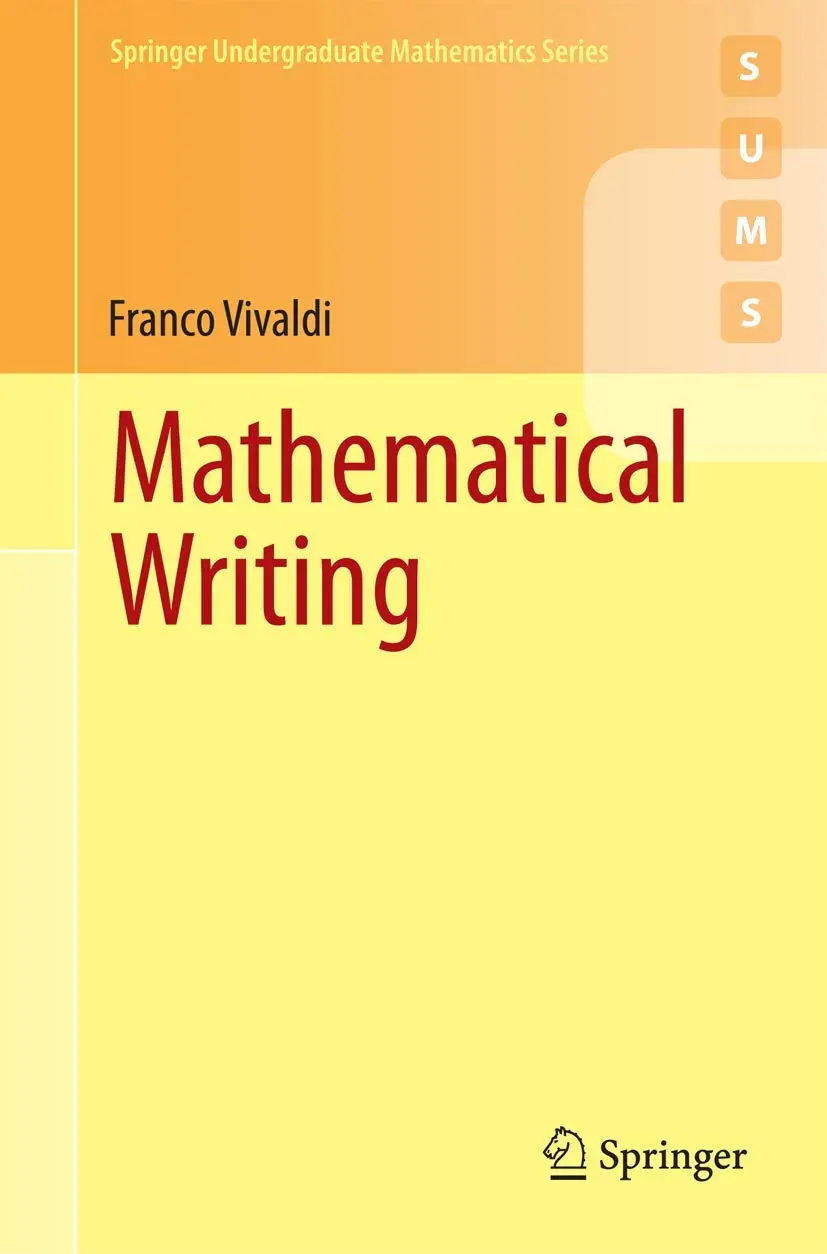
Cover: Mathematical Writing by Franco Vivaldi
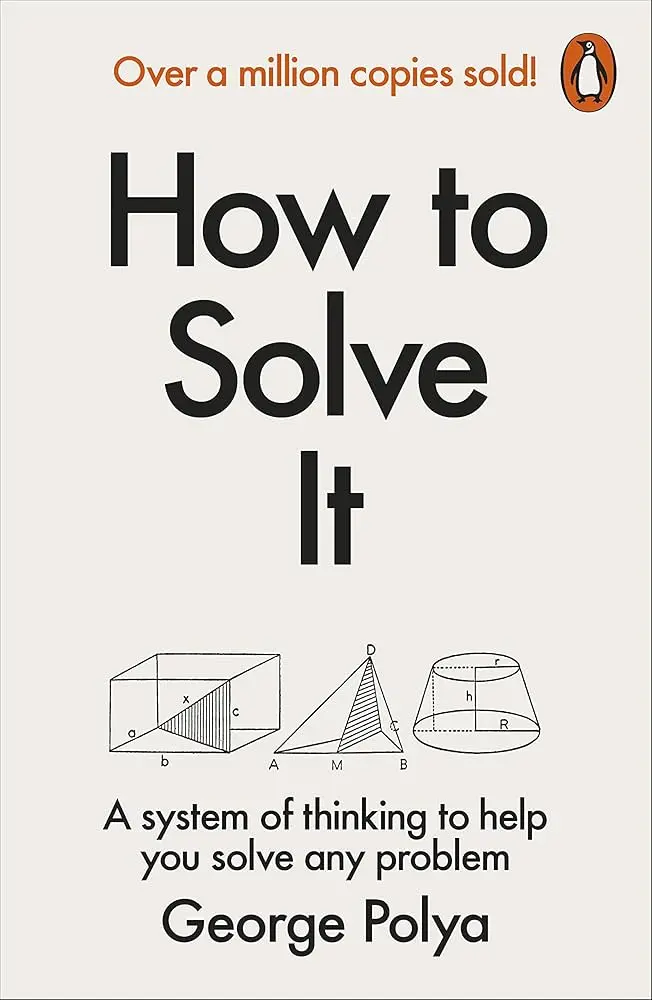
Cover: How to Solve It by George Pólya
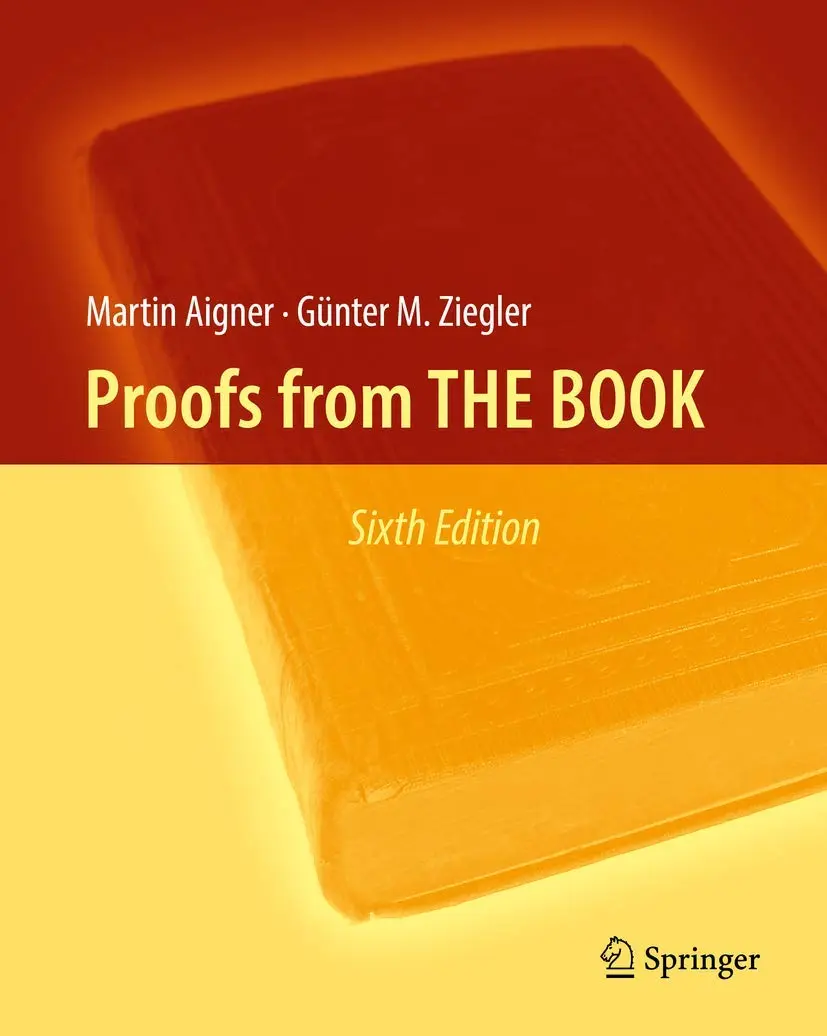
Cover: Proofs from THE BOOK by Martin Aigner and Günter M. Ziegler
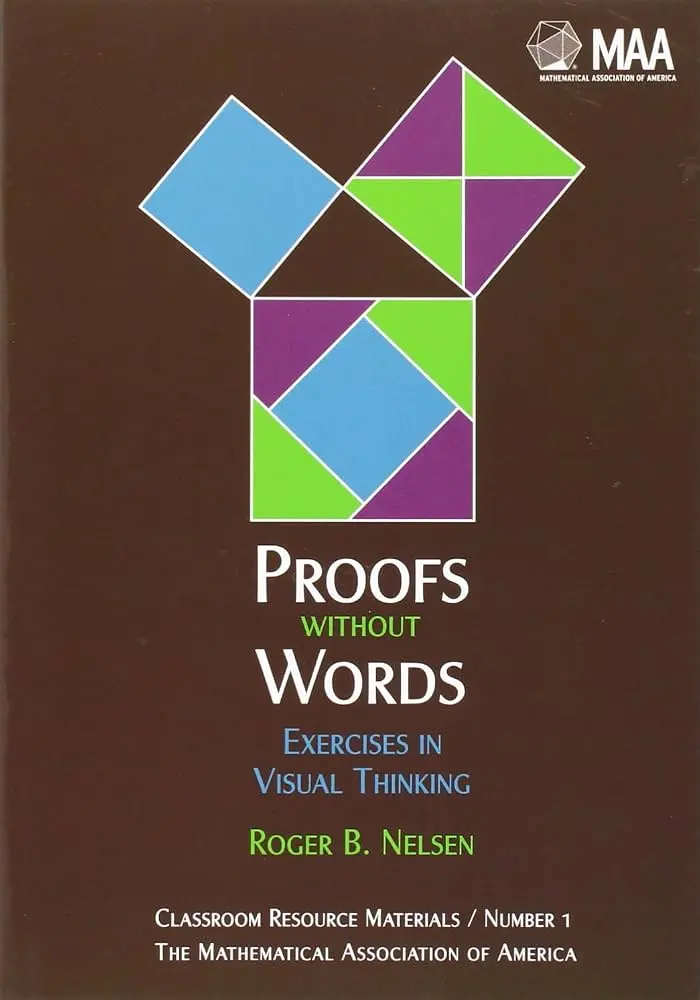
Cover: Proofs Without Words by Roger B. Nelsen
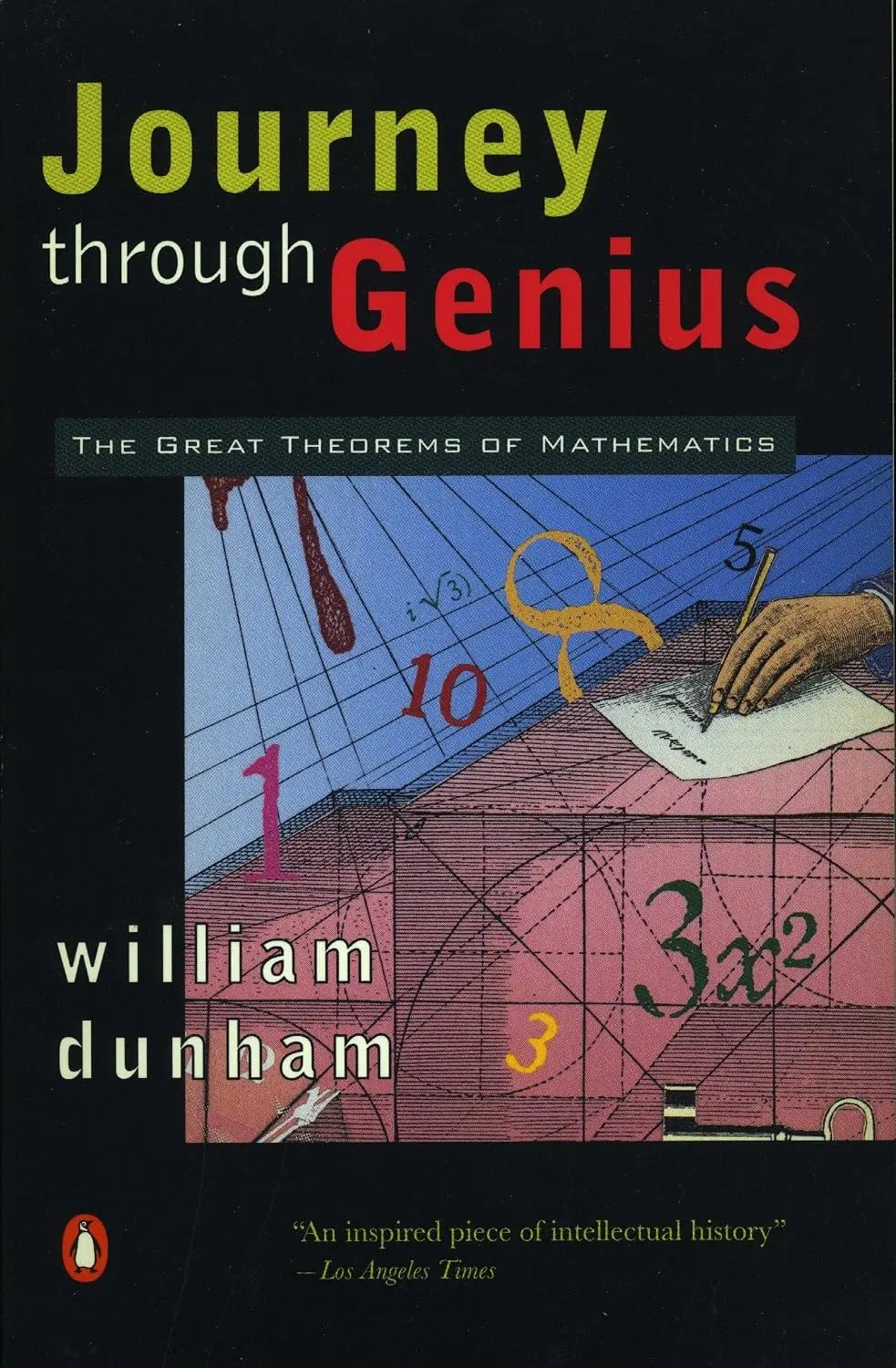
Cover: Journey Through Genius by William Dunham
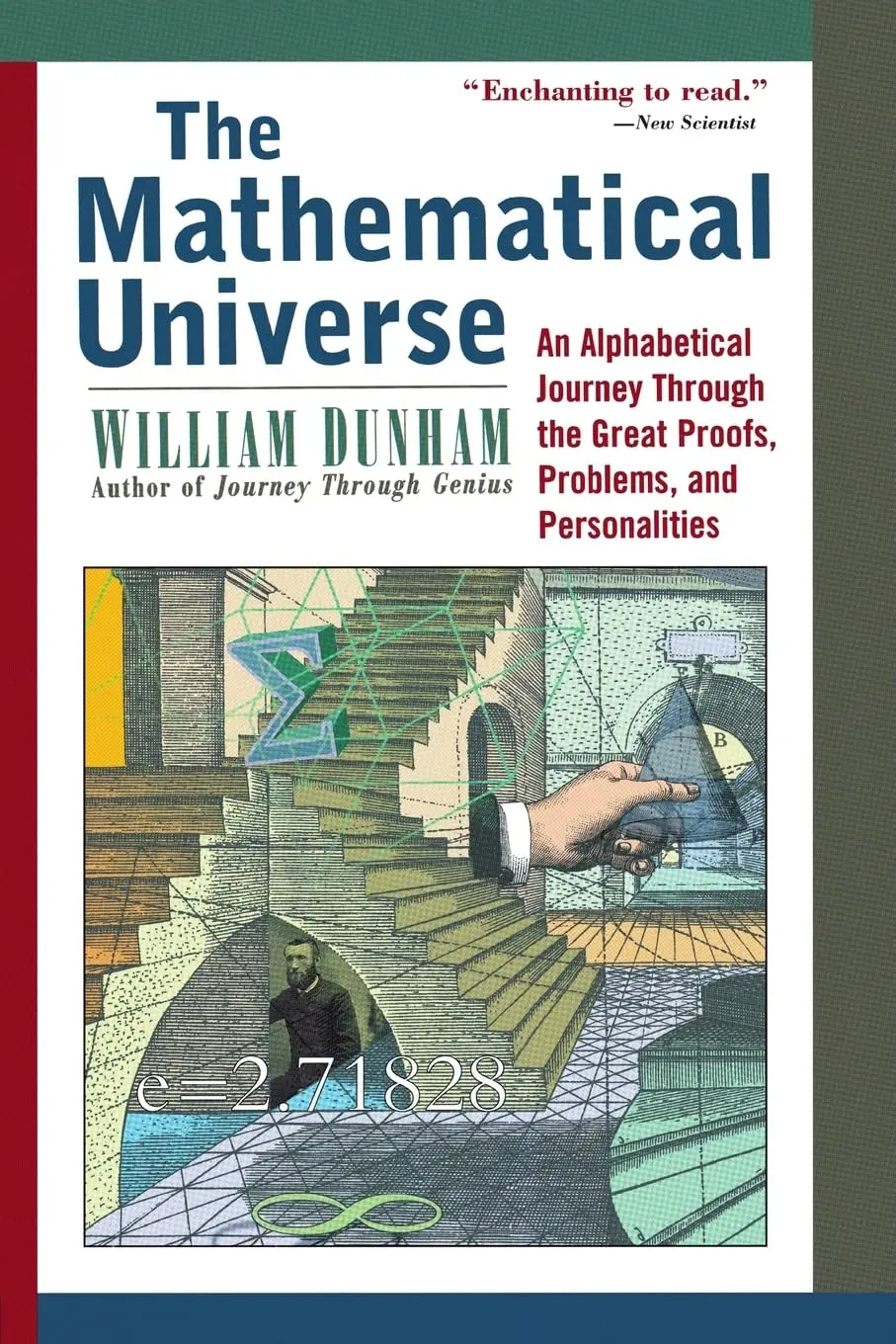
Cover: The Mathematical Universe by William Dunham
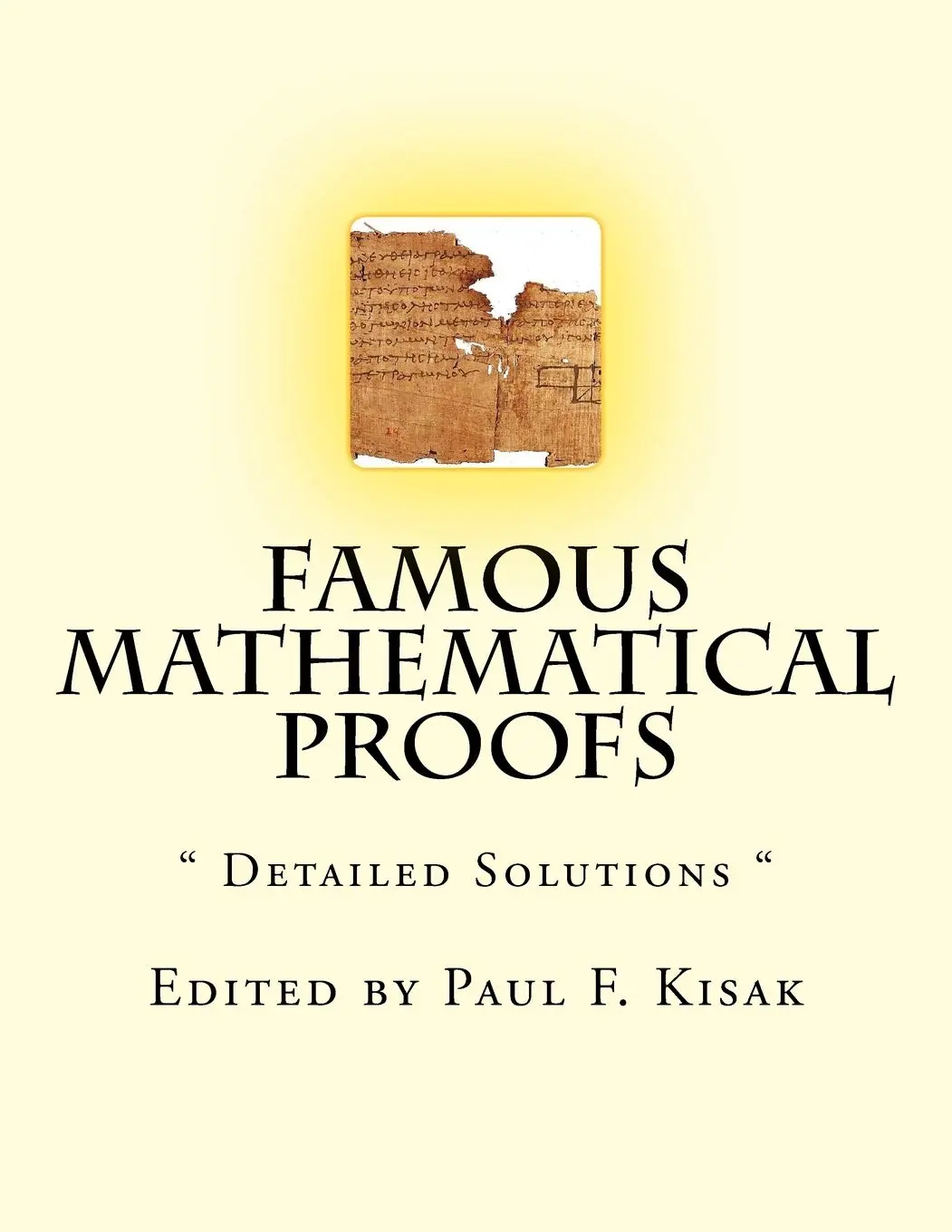
Cover: Famous Mathematical Proofs edited by Paul F. Kisak
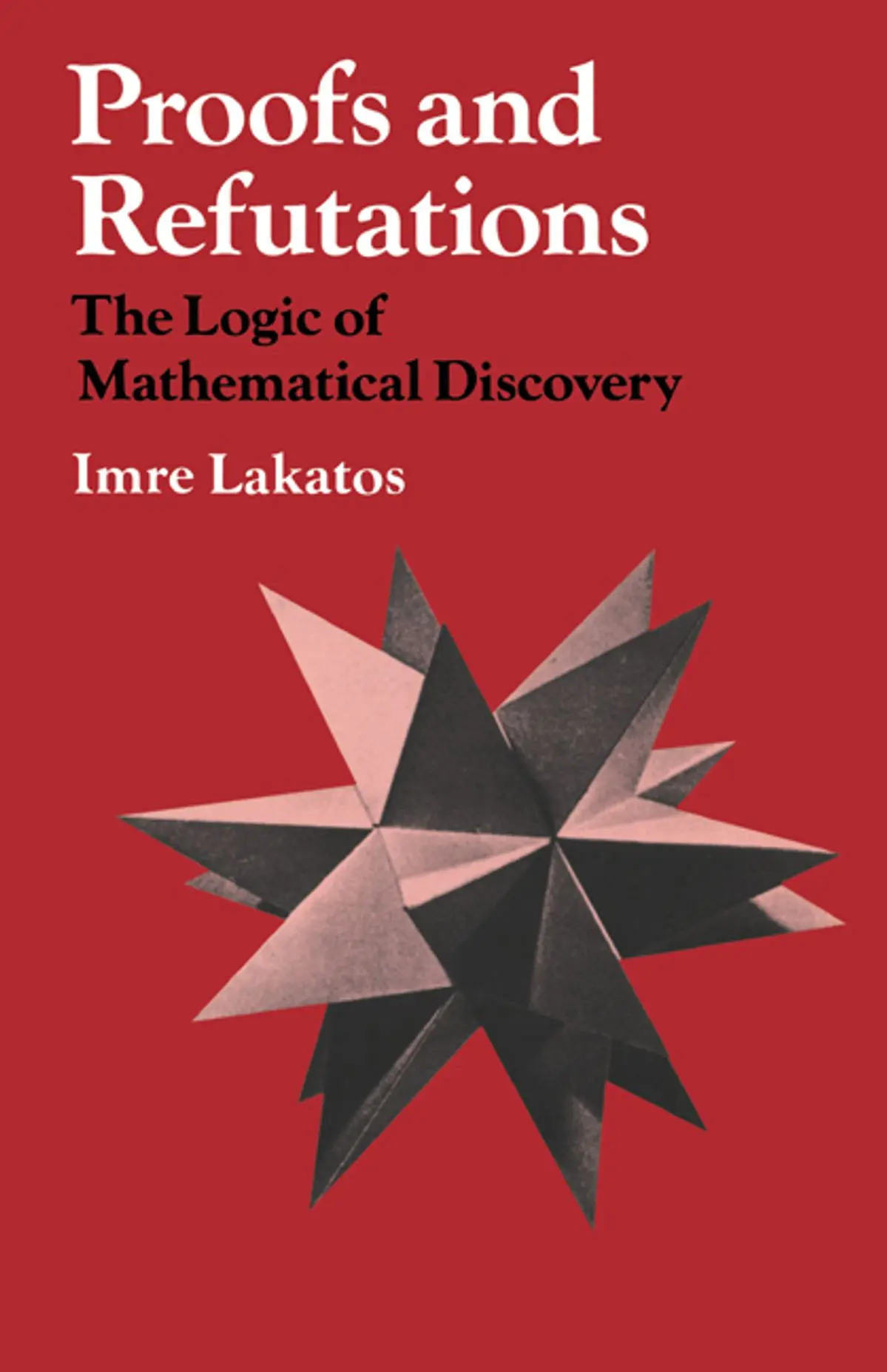
Cover: Proofs and Refutations by Imre Lakatos
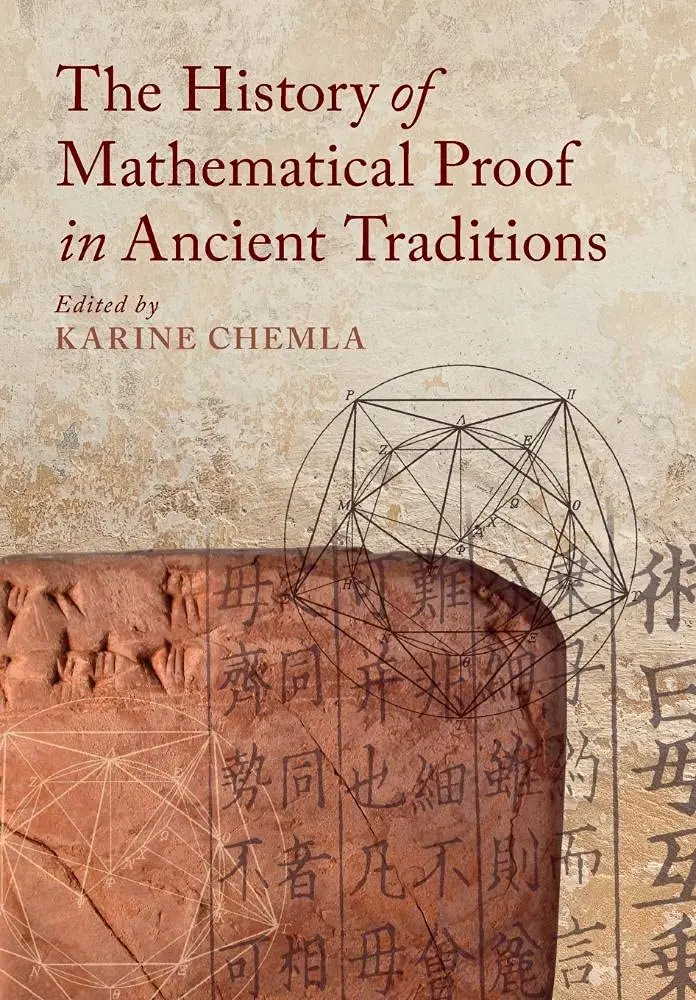
Cover: The History of Mathematical Proof in Ancient Traditions edited by Karine Chemla
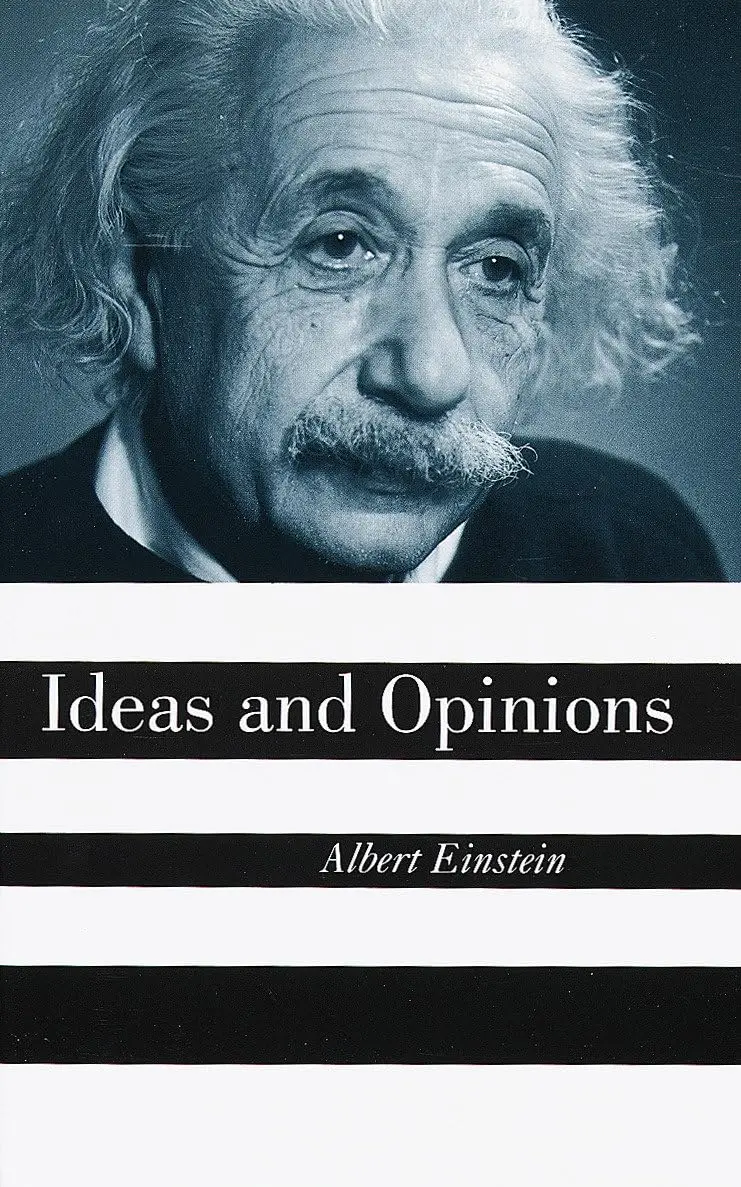
Cover: Ideas and Opinions by Albert Einstein
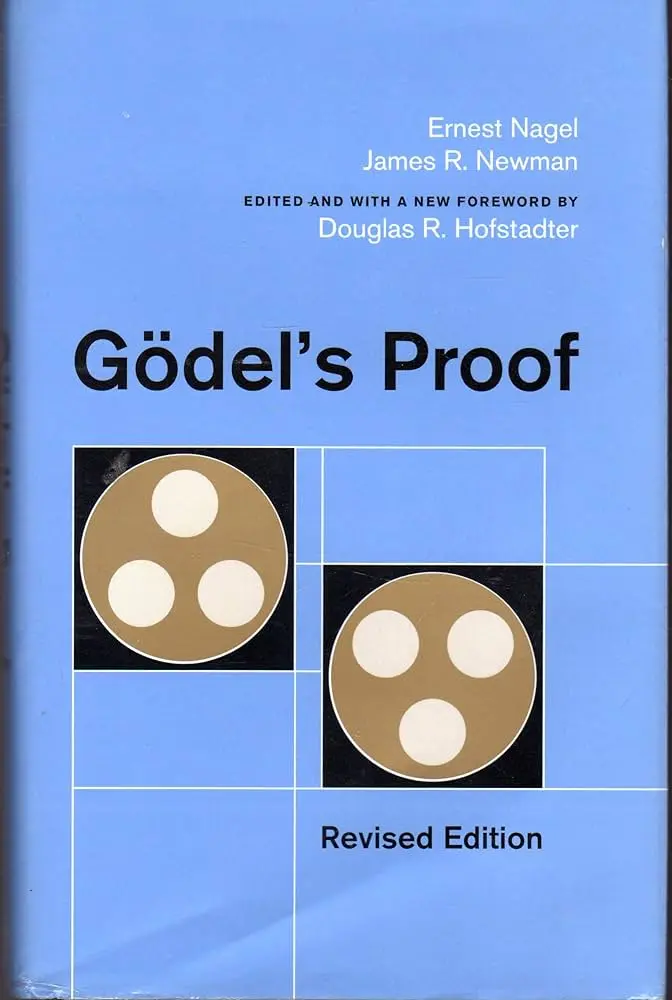
Cover: Gödel's Proof by Ernest Nagel and James R. Newman
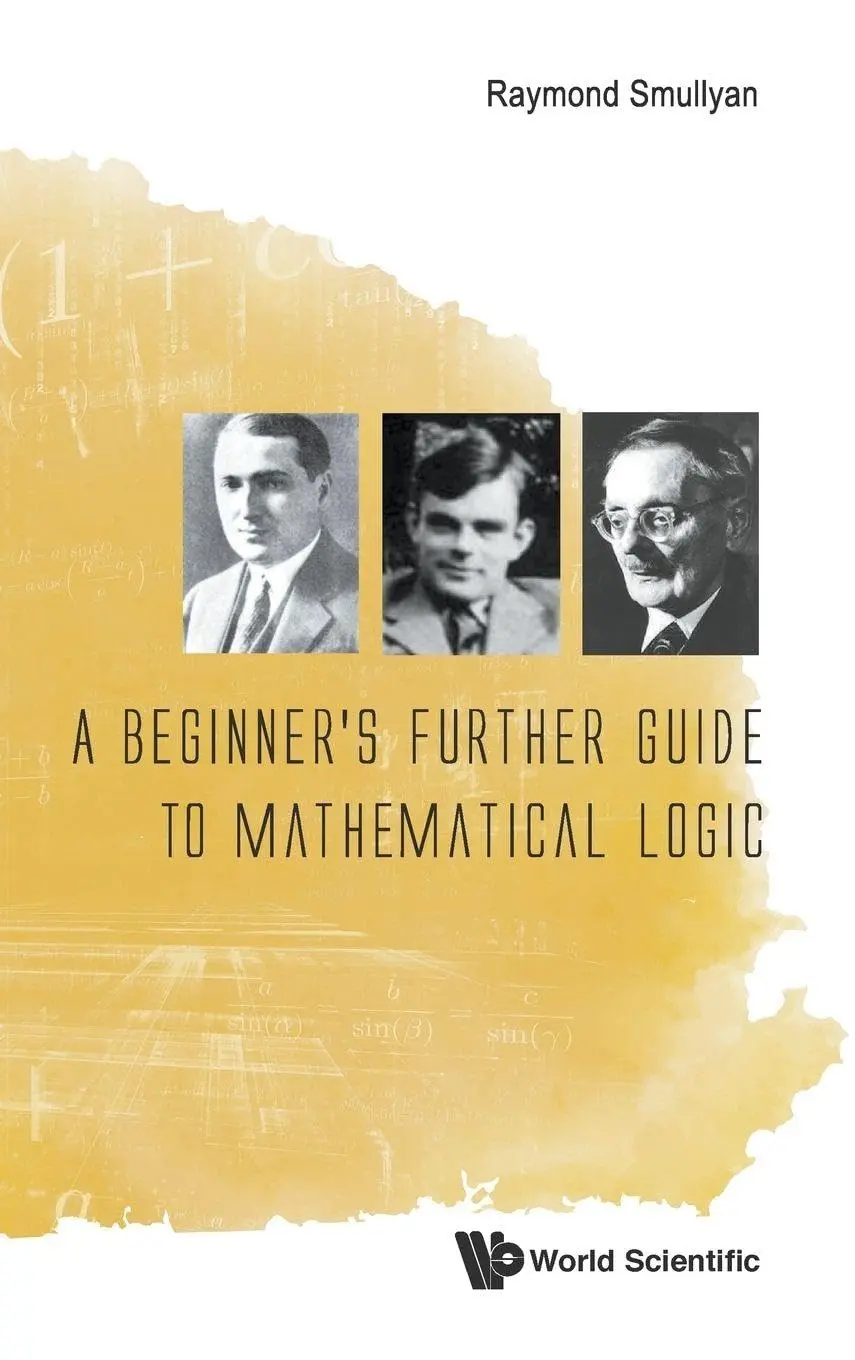
Cover: A Beginner's Further Guide to Mathematical Logic by Raymond Smullyan
The sum of the first n odd numbers is n squaredA square built from L-shaped pieces. Each piece contains as many unit squares as the next odd number.13579

1 + 3 + 5 + 7 + 9 = 25 = 5²

Every new L-shaped piece adds as many unit squares as the next odd number, and at every step the shape closes into a perfect square again. So the sum of the first n odd numbers is always n², without a single word. Roger Nelsen collected a gross of pictures like this in one book, and it is number nine on this list.

  1. 01

    Book of Proof

    Richard Hammack · third edition 2018 · free PDF

    If you ask me for a single book to start with, this is my answer. Hammack grew the book out of 18 years of notes from the proofs courses he taught at two different schools, one a large state university and the other a small liberal arts college, and he says the needs of the students at both turned out to be nearly identical. He also made the third edition free for everyone as a PDF under a Creative Commons license, and he keeps the book alive by fixing the mistakes readers report, the latest corrected version, 3.4, came out in February 2025.

    It starts with sets and logic and goes on through direct proof, contradiction, induction and all the way to cardinality, giving each method first as a plain template and then with plenty of examples. Even the cover teaches something, since it is based on Piero della Francesca's method for drawing a correct perspective view of an octagonal column from its floor plan. Hammack writes that after living with a red cover for two years he switched in 2020 to a more contemplative blue, which may be the most charming reason I have ever heard from a textbook author.
  2. 02

    Proofs: A Long-Form Mathematics Textbook

    Jay Cummings · 2021 · 511 pages

    The words "long-form" in the subtitle are not decoration. In this 511-page textbook Cummings does not compress his proofs, he gives them as much room as they need to be understood and usually answers the question forming in the reader's head in the very next sentence. The thickness may scare you at first, but the load per page is lighter than in most of the other books.

    Before any formal definitions, the first chapter opens with chessboard problems, so you start showing why you know something for certain before you have even heard the word "proposition". Then come direct proofs, sets, induction, logic, the contrapositive, contradiction, functions and relations, and of the appendices at the back one is devoted to proofs from Erdős's "Book" and another to writing advice.

  3. 03

    How to Prove It: A Structured Approach

    Daniel J. Velleman · third edition 2019

    Velleman's book first came out in 1994, with a second edition in 2006 and a third in 2019, and to me it has stood as the measure of this kind of book for thirty years. What sets it apart is the scratch work, before showing a finished proof Velleman shows how the proof was reached, the attempts made in the margin of the page. A student who sees the difference between the clean version of a proof and the version being written also understands why their own proofs start out so messy.

    The book assumes nothing beyond high school mathematics, and once logic and sets are in place it builds proofs about numbers, relations and functions step by step, and the third edition added more than 150 new exercises and a new chapter on number theory. Velleman is also one of the authors of the problem book Which Way Did the Bicycle Go?, and whoever reads the two together learns both the rules and the game.

  4. 04

    Exploring Mathematics: An Engaging Introduction to Proof

    John Meier and Derek Smith · Cambridge University Press · 2017

    Meier and Smith treat proof not as a technique to be learned but as work to be done. The book invites the reader to interrogate mathematical claims, explore definitions, form conjectures, attempt proofs and present the results, which means it has you do, in order, the work a mathematician actually does at the desk.

    The core topics are proof techniques, sets, functions, relations and cardinality, and the chapters end with longer projects. For the exercises scattered through the text, complete solutions or strong hints sit in an appendix at the back, and that detail makes it one of the most comfortable choices on this list for someone studying alone outside a classroom. The hardest part of studying proofs without a teacher is not knowing whether what you wrote is right, and this book quietly fills that gap.

  5. 05

    How to Think Like a Mathematician

    Kevin Houston · Cambridge University Press · 2009

    Houston teaches mathematics at the University of Leeds, and the book's description speaks straight to the student who now feels lost in a subject they once loved and tells them not to panic. No other textbook on this list addresses the reader that warmly.

    The book does not try to teach any particular piece of mathematics. It teaches what a mathematical statement is, how to read a definition and a theorem, and the standard methods of proof, and it does this through topics you already know. There are more than 300 exercises, and the last of its 35 chapters is called "The biggest secret", which to me is reason enough to read the book to the end.

  6. These five books open onto the same door. The next two are less about proof technique and more about the head and the pen of the person writing the proof.

  7. 06

    Mathematical Writing

    Franco Vivaldi · Springer · 2014

    A proof that is correct but unreadable is half a proof, and Vivaldi's book supplies exactly the missing half. Based on a course tested for years at Queen Mary, the book builds writing from the small to the large, first words, then phrases, sentences, paragraphs, and finally short compositions such as the introduction of a concept, the abstract of a talk or the proof of a theorem.

    It teaches you to choose a coherent notation, to keep the balance when mixing words and symbols, to write neat formulae and to build a definition properly, and at the end there is advice for thesis writers on choosing a title, writing an abstract and compiling a bibliography. More than 150 exercises come with complete solutions. Vivaldi's own research sits where dynamical systems meet number theory, so this book was written not by someone who thinks about writing for a living but by a mathematician who writes proofs every day.

  8. 07

    How to Solve It

    George Pólya · Princeton University Press · 1945

    Pólya's book is not a proof book, it is a book about finding the road that leads to a proof. Pólya wrote the preface at Stanford on August 1, 1944, and Princeton agreed to publish it after four other publishers had turned it down. Since then the book has been translated into more than 15 languages and sold over a million copies.

    It takes a problem through four phases, first understanding the problem, then devising a plan, carrying out the plan, and finally looking back at the solution you found. It sounds simple, but under each phase there are concrete questions to ask, and strategies like induction, analogy, specialization and working backwards are the most honest ways I know of finding the first line of a proof. Pólya taught his last course at the age of ninety, and the subject was combinatorics.

  9. Once you have the technique, the enjoyable part begins. The next five books have you read well-written proofs more than write them, and I think that is one of the fastest ways to learn to write proofs anyway.

  10. 08

    Proofs from THE BOOK

    Martin Aigner and Günter M. Ziegler · sixth edition 2018

    Paul Erdős liked to talk about a Book in which God keeps the best proof of every theorem, and he used to say that you need not believe in God but, as a mathematician, you should believe in The Book. When Aigner and Ziegler suggested writing a modest first approximation of it together, Erdős went to work immediately and filled page after page with suggestions, and the book was supposed to appear in March 1998 as a present for his 85th birthday. Because Erdős died in 1996, he is not listed as a co-author, and the book is dedicated to his memory.

    The sixth edition has 45 chapters, including a new proof for the Basel problem and new sections on Latin squares. Most of these proofs, running from number theory to geometry and from combinatorics to analysis, are within reach of an undergraduate, but every one of them asks you to stop and think. The book won the American Mathematical Society's Steele Prize for Mathematical Exposition in 2018 and has been translated into fourteen languages. Don't start it before you have finished one of the first five books, and once you have, don't wait.

  11. 09

    Proofs Without Words: Exercises in Visual Thinking

    Roger B. Nelsen · Mathematical Association of America · 1993

    If you played with the square at the top of the page, you already know what this book does. Nelsen gathered proofs without words that had piled up in journals over the years and sorted them into five chapters, geometry and algebra, trigonometry and calculus, inequalities, integer sums, and sequences and series. By one reviewer's count the book holds exactly a gross of them, 144 pictures.

    Honesty is needed here, most of these pictures are not proofs in the strict sense but signposts showing where the proof passes. Nelsen knows this too, which is why he called the subtitle exercises in visual thinking. For a student whose mind gets stuck on symbols, the door a picture opens is not something to look down on, and when you sit down to write the proof in symbols that picture is still there in your head.

  12. 10

    Journey Through Genius: The Great Theorems of Mathematics

    William Dunham · Wiley · 1990

    Dunham gives each chapter to a single great theorem and presents it with both its history and its step-by-step proof. The journey begins around 440 BC with Hippocrates of Chios finding the area of a lune, passes through Euclid's proof of the Pythagorean theorem and the infinitude of primes, reaches Archimedes and the area of the circle, and goes all the way down to Cantor.

    The real work of the book is that it brings the people who wrote the proofs onto the stage as well. From Archimedes, so absorbed in his work that he forgot to eat or bathe, to Cardano and his endless misadventures, there is a life behind every theorem, and high school mathematics is enough to follow them. This is the first book I would hand to someone who wants to see proof somewhere other than a textbook.

  13. 11

    The Mathematical Universe

    William Dunham · Wiley · 1994

    Dunham's second book is more playful. The chapters run in alphabetical order, starting with Arithmetic and going through Bernoulli trials, the circle, Euler and Fermat all the way to the letter Z, with a chapter on justification along the way and another that asks "Where are the women?". The subtitle on the cover sums up the contents honestly, great proofs, problems and personalities.

    A year before this book, in 1993, Dunham received the Mathematical Association of America's George Pólya Award for expository writing. I like that a prize named after the author of the seventh book on this list went to another author on it.

  14. 12

    Famous Mathematical Proofs

    Edited by Paul F. Kisak

    This is the book on the list that explains itself the least. Kisak is a compiler rather than an author, the book is made up of short entries written with the input of many contributors, and its own description presents it as an affordable reference that gives an overview of the topic.

    Gathering famous proofs in a single volume is useful, but don't expect it to take you by the hand like a teacher. Use it as a reference book lying open at the edge of the desk, look there when you need to remember how a theorem was proved, and go back to the books above to actually learn.

  15. So far I have treated proof as a tool. The last five books look at the tool itself, at what a proof is, at who started proving things and when, and at whether there is a place a proof cannot reach.

  16. 13

    Proofs and Refutations

    Imre Lakatos · Cambridge University Press · 1976

    Lakatos wrote his book as an argument that takes place in a classroom. A teacher and his students try to prove Euler's formula V − E + F = 2 for polyhedra, and every time the students find a counterexample either the proof gets repaired or the definition of the word polyhedron changes. The conjectures and counterexamples the students put forward are not invented, they were taken from the real history of the formula.

    The text first appeared in four parts in a philosophy journal in 1963 and 1964, and after Lakatos died in 1974 John Worrall and Elie Zahar published it as a book in 1976. This is the book that gives names to moves mathematicians make every day without naming them, like declaring a counterexample a monster and pushing it outside the definition. Can Başkent's paper treating Lakatos's methods with formal logic is a good next step for those who finish the book. It is a book I would want everyone learning proofs to read, because I know no text that shows better that a proof is not carved in stone but grows by argument.

  17. 14

    The History of Mathematical Proof in Ancient Traditions

    Edited by Karine Chemla · Cambridge University Press · 2012

    School books always tell the same story, that proof was born with Greek geometry and Aristotle's logic. This volume edited by Chemla argues that a large part of that story is an artefact of nineteenth-century historical scholarship, and it shows that there are proofs in ancient writings about numbers too, and that people doing mathematics in Mesopotamia and China knew how to prove that an algorithm works correctly.

    Inside there is a chapter on the uncertainties of Heiberg's edition, which established the text of Euclid's Elements we read today, a chapter comparing the diagrams in ancient Greek manuscripts with those in modern editions, and chapters on reverse algorithms in Mesopotamian texts and algebraic proofs in Chinese commentaries. The project grew out of a working group that met in Paris in the spring of 2002 and reached 16 chapters. Not everyone was convinced, one reviewer wrote that it is not clear who still holds the standard view Chemla sets out to overturn in her prologue. It is a thick, expensive and academic book, but for anyone who wants to see that proof did not come from a single place, it is the most serious source there is.

  18. 15

    Ideas and Opinions

    Albert Einstein

    Of the books in the graphic, this is the only one that is not a book about proofs, and there is a reason it is there. On January 27, 1921, Einstein gave a lecture titled Geometry and Experience at the Prussian Academy of Sciences, and the English translation of that lecture appears in Ideas and Opinions. Its best remembered idea is that as far as the propositions of mathematics touch reality they are not certain, and as far as they are certain they do not touch reality.

    Here Einstein separates a geometry that follows from axioms alone, certain but empty of content, from a geometry that describes how rigid bodies behave and can be tested by experiment. I know no other text that says so briefly what a proof guarantees you and what it does not.

    One of Einstein's closest friends in his Princeton years was Kurt Gödel. In a letter written in 1965, the economist Oskar Morgenstern recalled Einstein telling him that his own work no longer meant much and that he went to the Institute merely to have the privilege of walking home with Gödel. The man with the round glasses in the middle of the graphic is him.

  19. 16

    Gödel's Proof

    Ernest Nagel and James R. Newman · 1958 · edition revised by Douglas Hofstadter 2001

    In 1931, when he was only 25, Gödel showed that any consistent axiomatic system containing arithmetic has true statements it cannot prove from within, and that adding new axioms to the system does not change this. Since the first book on this list I have been describing the power of proof, and this book shows where that power ends.

    Nagel and Newman explained the proof for the non-specialist reader in 1958 in under 130 pages, and the book has stayed in print ever since and been translated into ten languages. It shows step by step how Gödel numbering works and how metamathematics is translated into arithmetic. Hofstadter revised the 2001 edition and wrote a new foreword, and this was also the book that inspired Gödel, Escher, Bach. The committee that gave Gödel the first Albert Einstein Award in 1951 included Einstein and Oppenheimer.

  20. 17

    A Beginner's Further Guide to Mathematical Logic

    Raymond Smullyan · World Scientific · 2017

    Smullyan was a logician known for his puzzles, and in the last years of his life he wrote two logic books, the first in 2014 when he was already in his ninety-fifth year, and this second one three years later in 2017. Its publisher presents it as the final book Smullyan wrote.

    It opens with propositional and first-order logic, continues with five chapters on formal systems, recursion theory and metamathematics, and closes with five chapters on combinatory logic. Smullyan writes proudly that this last subject has important applications in computer science and that researchers at Argonne National Laboratory have found use for his results. The significant problems are scattered through the chapters, with detailed solutions waiting at the end of each one, which makes it a book to work through rather than just read.

Keep wandering

A few more pieces in the same spirit — math, design, and slow attention.