History · Mathematics · James Garfield · 6 min read
James Garfield’s proof of the Pythagorean theorem
Or, the president’s trapezoid. America’s twentieth president proved a 2,400-year-old theorem in a corridor of Congress. Five years later he walked into the White House. Only one of them lasted.
April 1, 1876 · New England Journal of Education
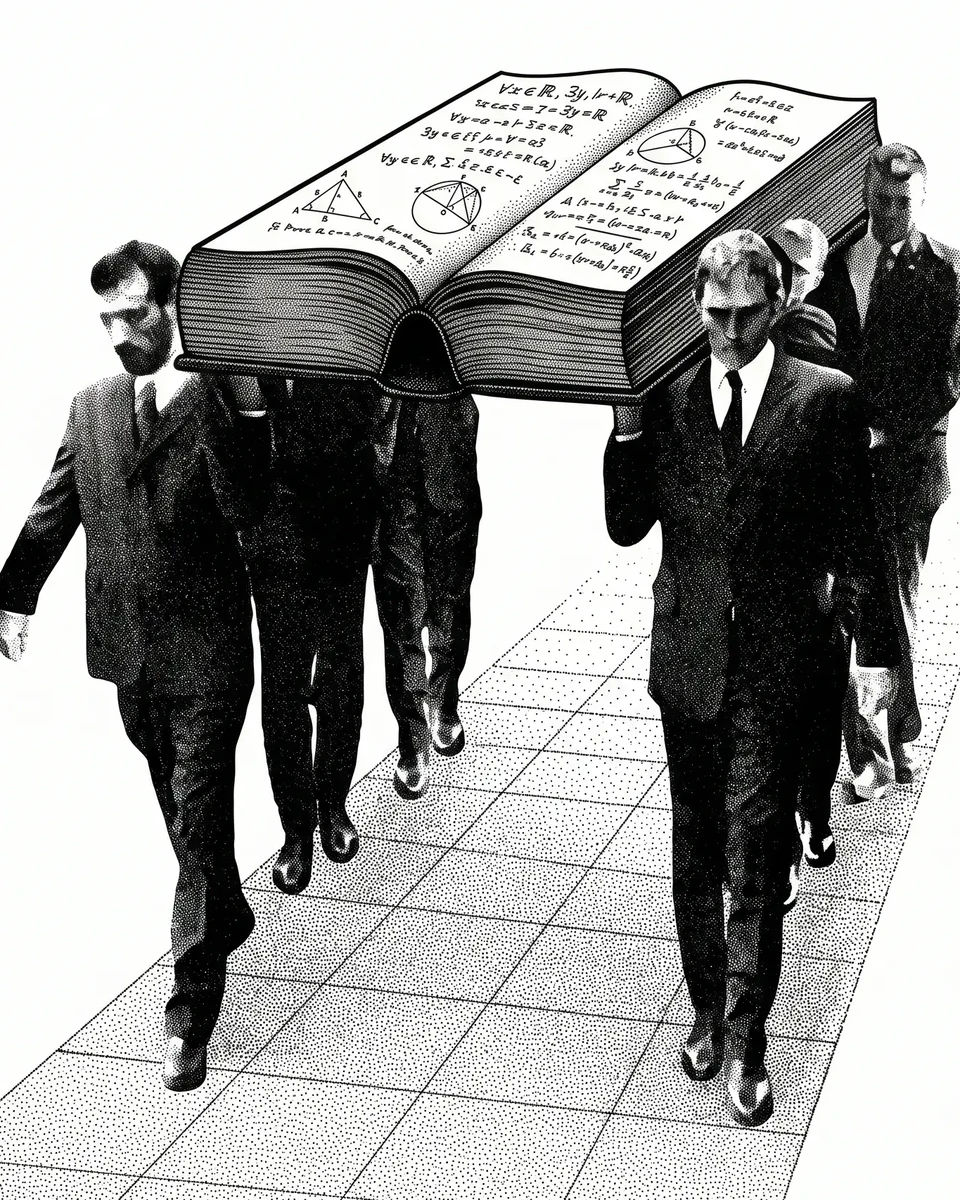
The year is 1876. In Washington a handful of congressmen have gathered in a hallway, leaning over a sheet of paper. The subject is not the budget. It is not the election either. James Abram Garfield, a representative from Ohio, has drawn a trapezoid on the sheet and is explaining how he has proved a twenty-four-century-old theorem by a route no one had tried. The proof appeared that same year in the New England Journal of Education. Garfield tucked a small joke into the introduction: he supposed the proof was something the members of both houses might agree upon regardless of party.
I have no idea how many propositions in the history of Congress were accepted without objection by both parties. But a right triangle at the top of that list still strikes me as entirely reasonable.
From canal boy to the chamber
Garfield was born in 1831 in a log cabin in Ohio. His father died when he was two. At sixteen he was driving mules along a canal boat for a living. Then he went back to school, graduated from Williams College, and taught classical languages and mathematics. At twenty-six he became principal of the very school where he had taught. He rose to the rank of general in the Civil War, was then elected to the House of Representatives, and stayed there for seventeen years.
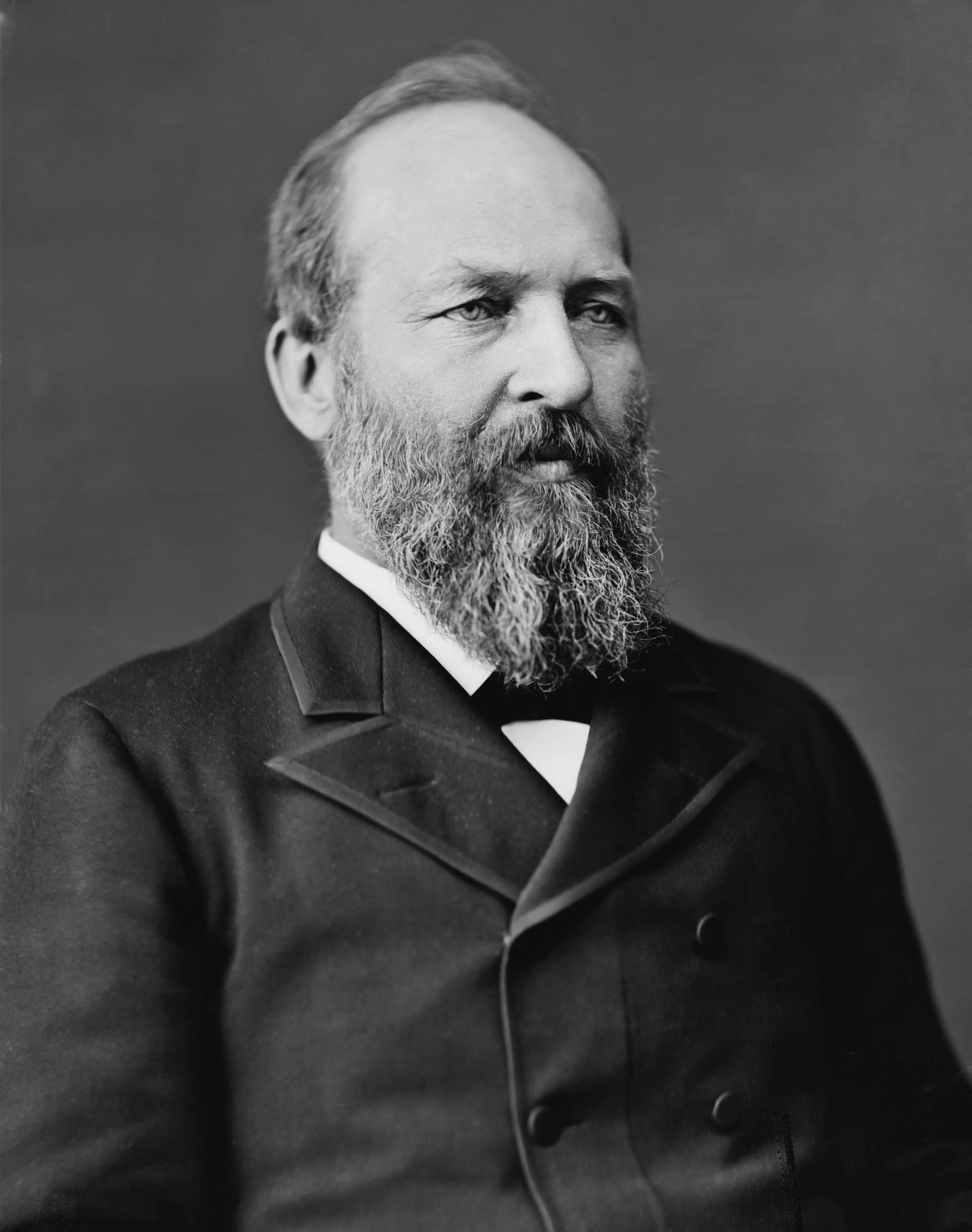
There is a story that circulates about him: that he was equally skilled with both hands, supposedly able to write Latin with one while writing Greek with the other, at the same time. The source of this claim is unclear and its truth is disputed. But the idea of a politician scribbling ancient languages with one hand and geometry with the other feels, given today’s politics, like something out of science fiction.
The ingredients first
Before the proof, let us see what we have put on the table. We hold a right triangle. Its legs are a and b, its hypotenuse c. The claim of the theorem is familiar: a² + b² = c². There are hundreds of ways to prove this equality — the same restless search for a shorter path shows up in the proof that √2 cannot be written as a fraction. Elisha Loomis’s compendium lists more than three hundred proofs of the Pythagorean theorem alone. Garfield’s is one of the most frugal in the whole collection.
I colored the figures with the palette of Oliver Byrne’s 1847 color edition of Euclid, which used color in place of letters. Here I use both, so that no one is left short.
I marked the two acute angles because that is where the proof turns. The interior angles of a triangle add up to 180 degrees. Since one corner is already 90 degrees, the two remaining angles satisfy α + β = 90°. This one modest observation is about to hand us a right angle for free.
Enter the trapezoid
Garfield’s idea is this. Take two copies of the same triangle. Lay one flat, turn the other ninety degrees, and set it alongside. Join the ends of the two hypotenuses. What emerges is a trapezoid — a right trapezoid whose parallel sides are a and b and whose height is a + b.
Now we pull the observation back out of our pocket. The two congruent triangles meet at the same point along the bottom edge. At that point one triangle contributes angle α and the other contributes angle β. Since the angles on a straight line add up to 180 degrees, the angle left over for the middle triangle is 180° − α − β = 90°. So the middle triangle is an isosceles right triangle with two sides equal to c. No one used a ruler, no one measured anything. The right angle simply fell out of the angle sum.
Computing the same area twice
The engine of the proof is a single honest idea: if you compute one shape two different ways, the two results have to be equal. Write the trapezoid’s area first with the trapezoid formula, then by adding up the three triangles inside it. Two lines of grade-school knowledge, and the rest is algebra.
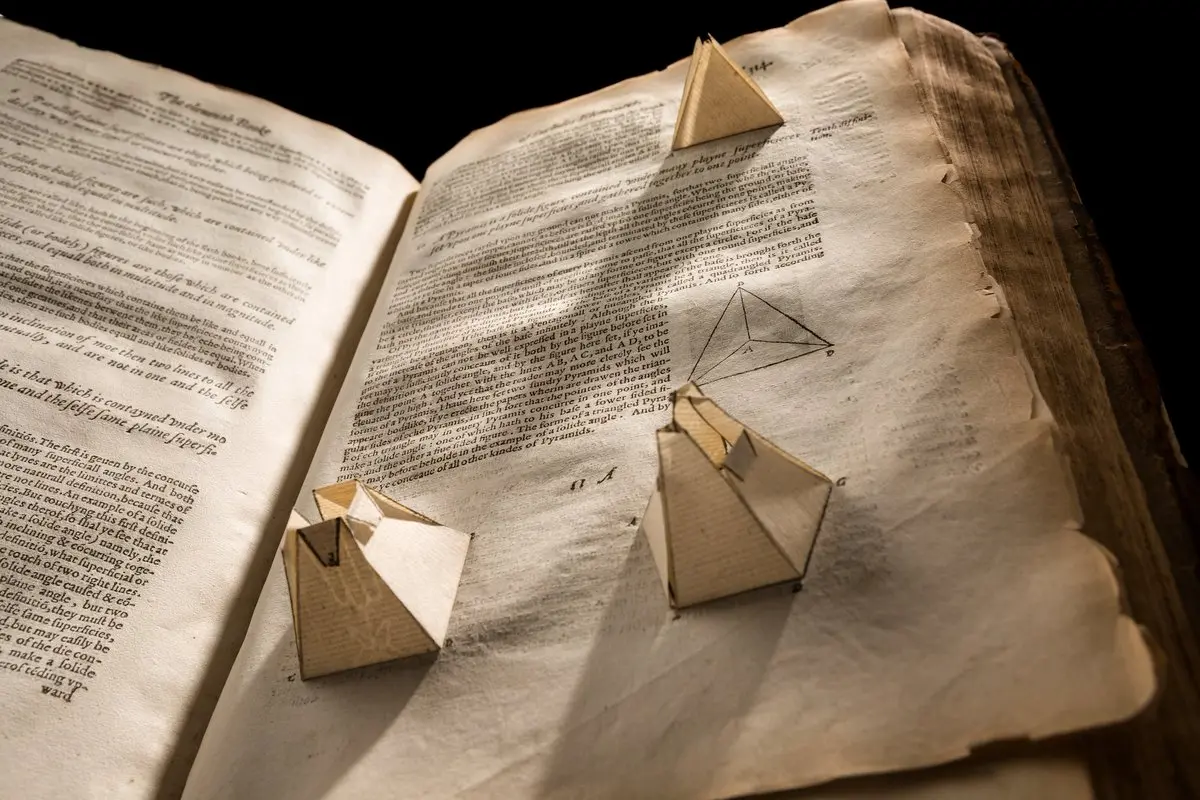
That is all. The 2ab terms quietly withdraw from both sides and the theorem is what remains. The entire proof fits on a calling card. Euclid’s proof in the Elements asks for auxiliary lines, congruent triangles, and a page of justification. Garfield’s asks for a trapezoid formula and an identity. Three centuries before Garfield, English readers met that same Elements through Henry Billingsley’s 1570 translation, complete with fold-out paper solids so a proof could be held in the hand rather than just read.
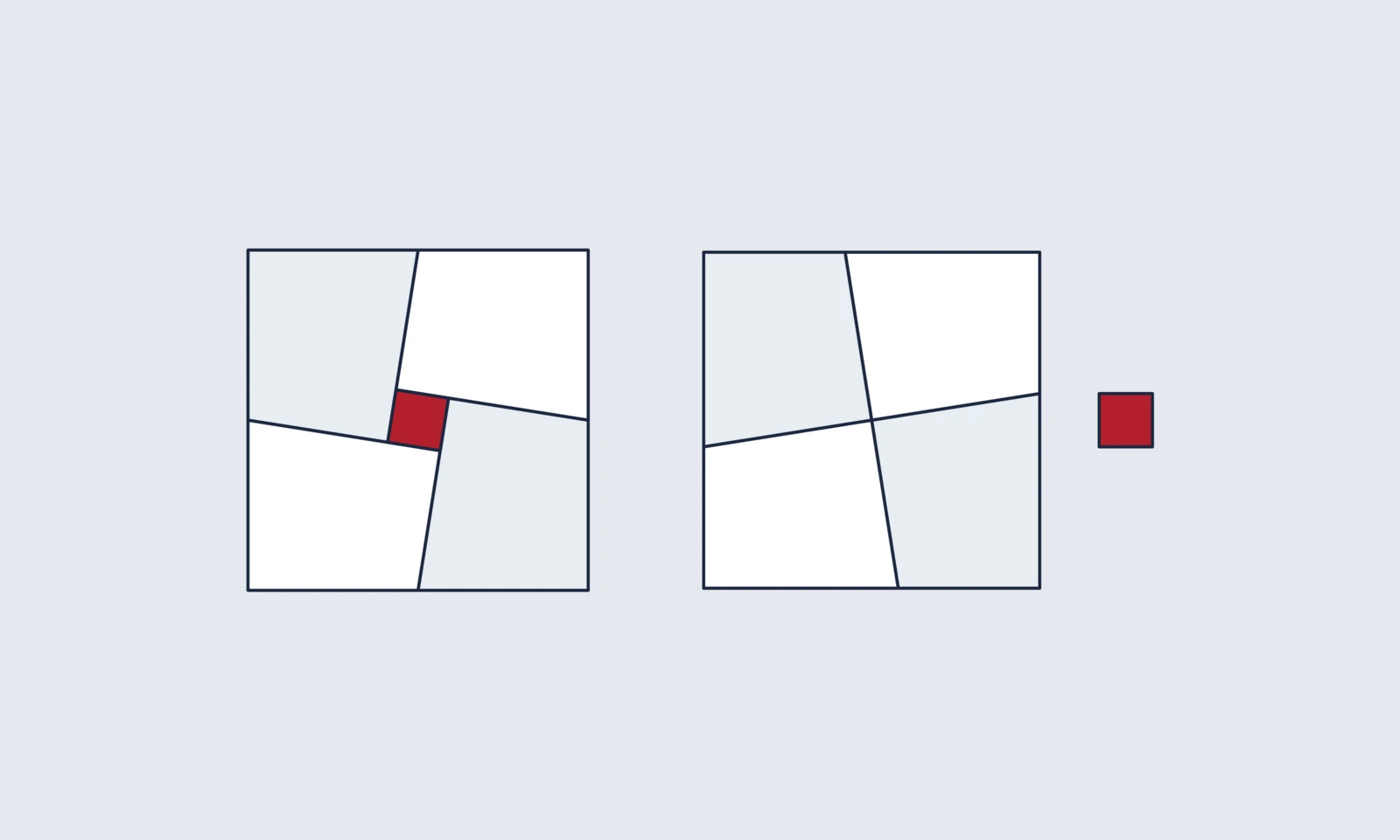
Here is the elegant part. One of the best-known proofs of the Pythagorean theorem places four congruent right triangles inside a large square. Garfield’s trapezoid is that square cut in half along the diagonal. It reaches the same conclusion with half the idea — like handing back half the ingredients and still serving the whole meal.
“Something upon which the members of both houses might agree, without distinction of party.”Garfield’s note introducing his proof, 1876
Afterward
Garfield was elected president in 1880. In the fourth month of his term he was shot by Charles Guiteau at a railway station. The bullet was not fatal. What actually finished him was doctors who did not believe in sterilization probing his wounded body with bare hands. Alexander Graham Bell even got involved, designing a metal detector to find the bullet — thrown off by the metal springs of the bed the president lay on. The bullet was never found. Garfield died in September 1881. His presidency had lasted two hundred days.
Today no one but historians remembers the laws that bear Garfield’s signature. His trapezoid, on the other hand, is drawn on blackboards in geometry classes across the world every year. It stands alone among the proofs in Loomis’s collection, with a small note beside it: discovered by a president of the United States.
Politics is a daily paper, geometry is not. Garfield tried both. The figures are keeping score.
References: James A. Garfield on Wikipedia · en.wikipedia.org/wiki/James_A._Garfield
Pythagorean theorem, proof #231 (Garfield) · en.wikipedia.org/wiki/Pythagorean_theorem