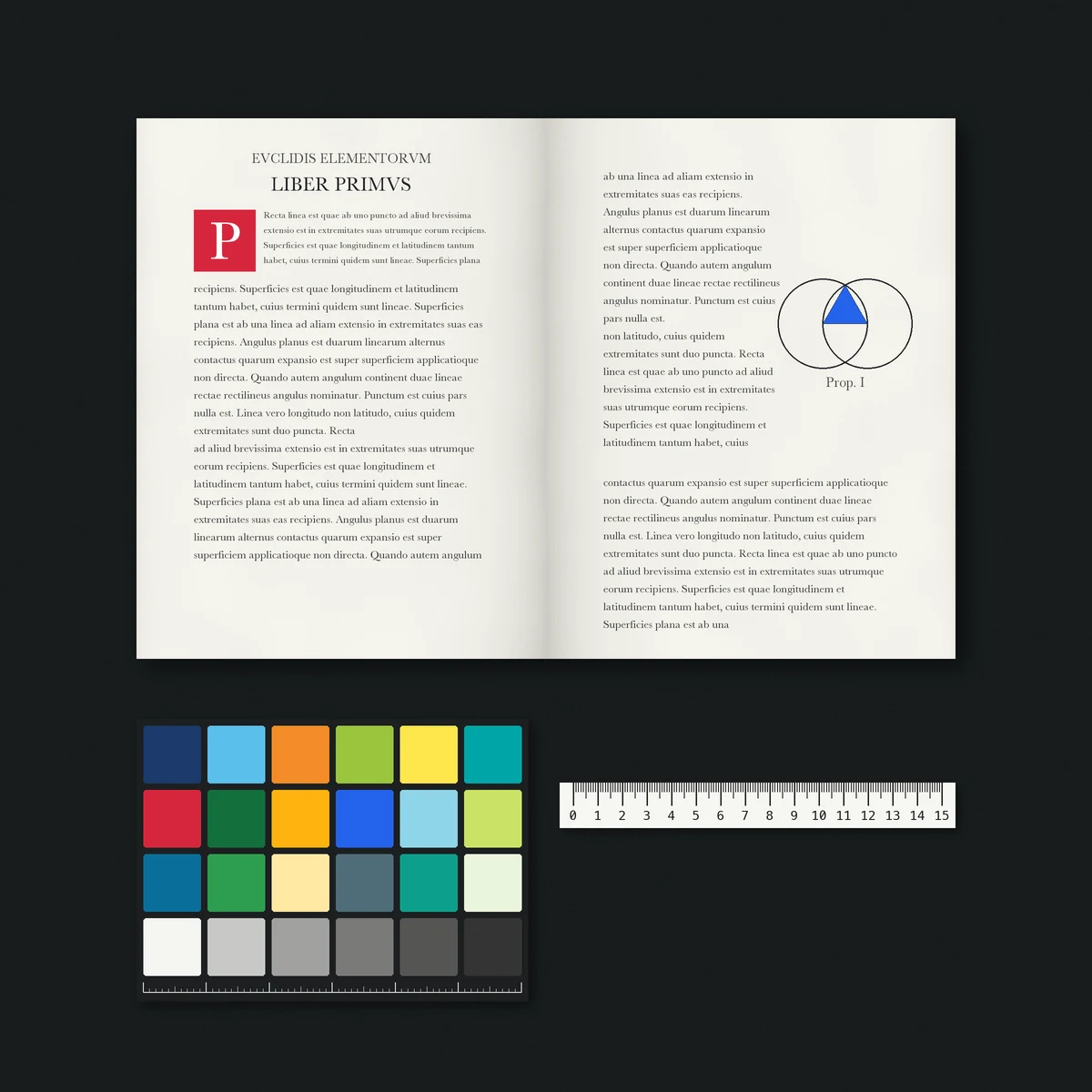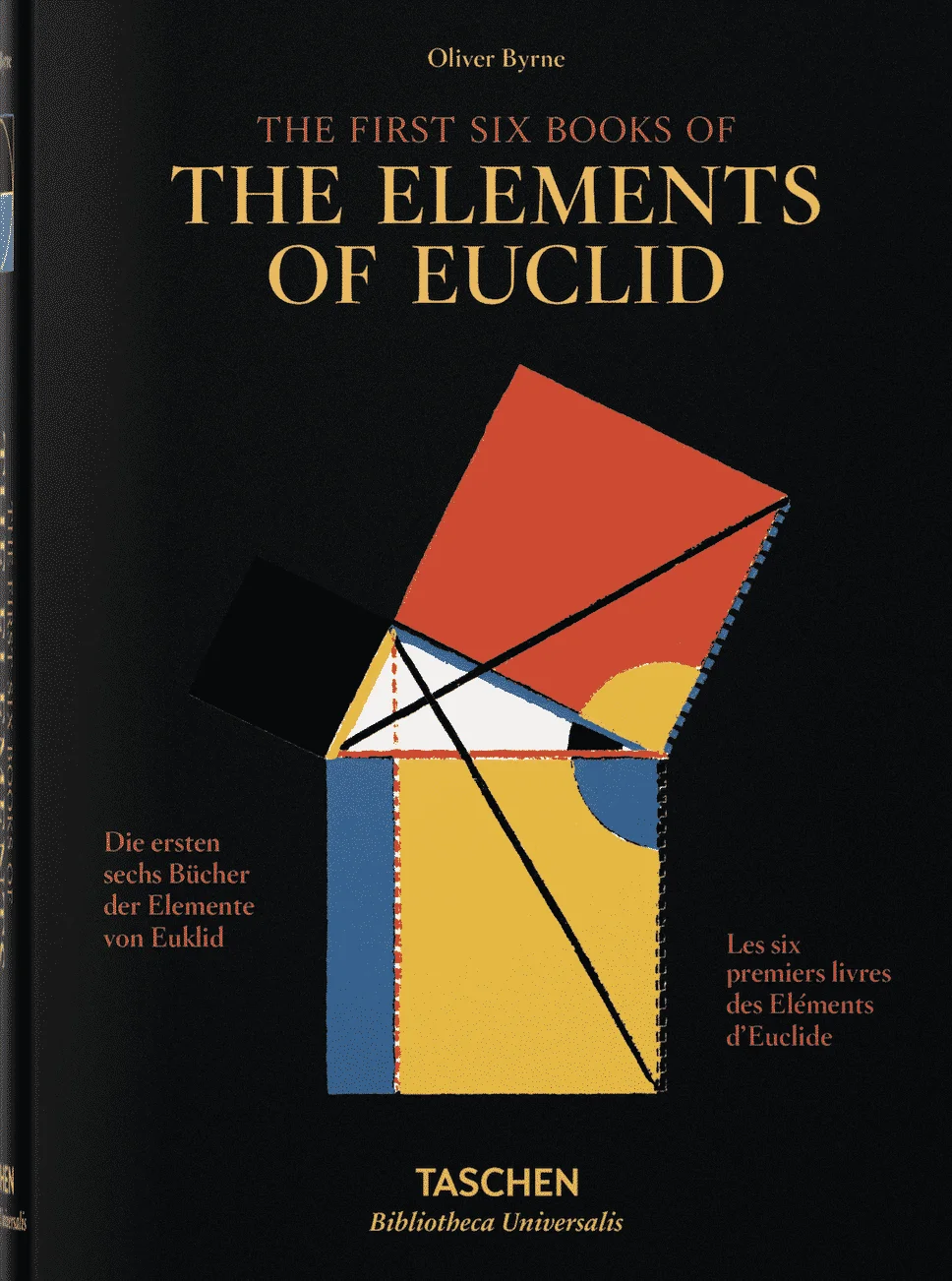
There is almost no lettering in a Euclid printed in London in 1847. Instead of labelling the angles and edges A, B, C, Oliver Byrne painted every one of them red, blue, and yellow and translated the proof, from start to finish, into a visual language. Open a page and what you see looks less like a textbook than like a Mondrian printed seventy years before Mondrian.
Byrne freed the proof from letters
Byrne's claim was not a modest one either. He wrote that Euclid's Elements could be learned this way in less than a third of the usual time, and added that it would stay in the memory far longer. His publisher, William Pickering, paid dearly for that claim. Each colour was printed from a separate plate, so the cost soared; the volume sold for twenty-five shillings while a black-and-white equivalent went for two, and of the thousand copies printed, seventy-five percent stayed on the printer's hands. When Pickering went bankrupt a few years later, this book carried part of the blame.
The book historian Ruari McLean called the same volume one of the oddest and most beautiful books of the whole century. That is often what a commercial disaster looks like from the other side. The full edition — reissued as a facsimile you can still buy — is worth seeing in colour: Oliver Byrne's The First Six Books of the Elements of Euclid. We wrote about the book itself in our note on Byrne's coloured Euclid.
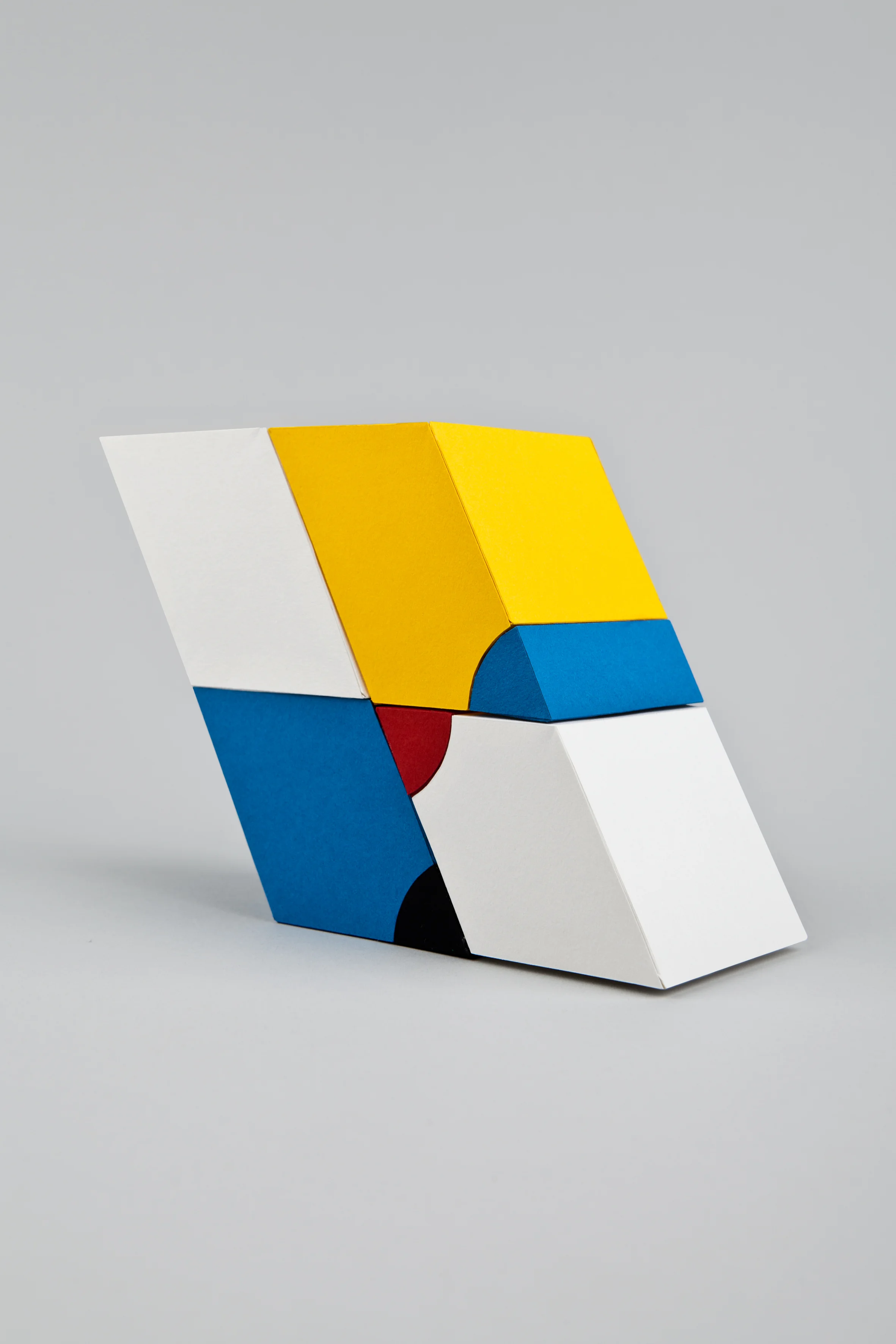
Friel picked the proof up off the ground
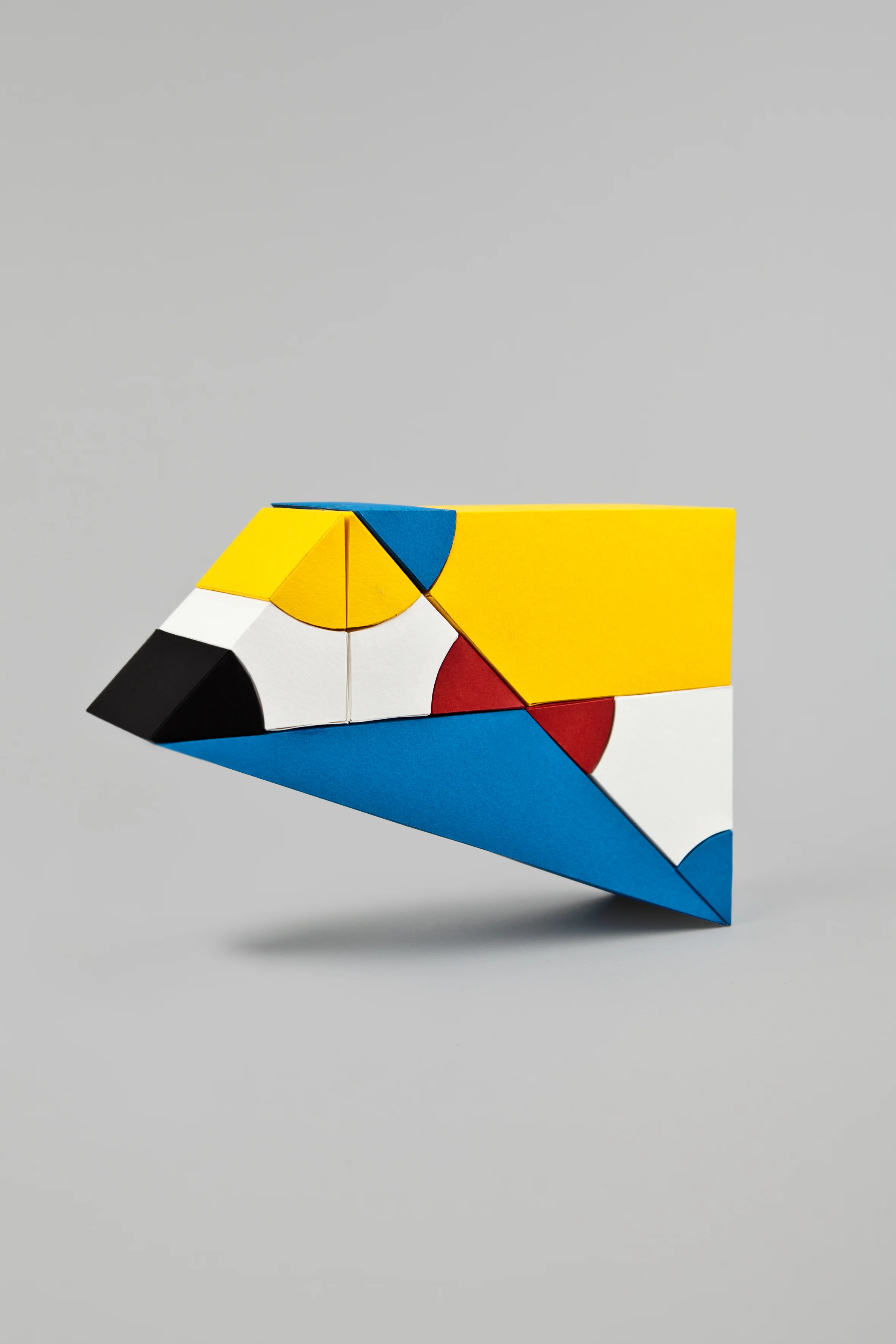
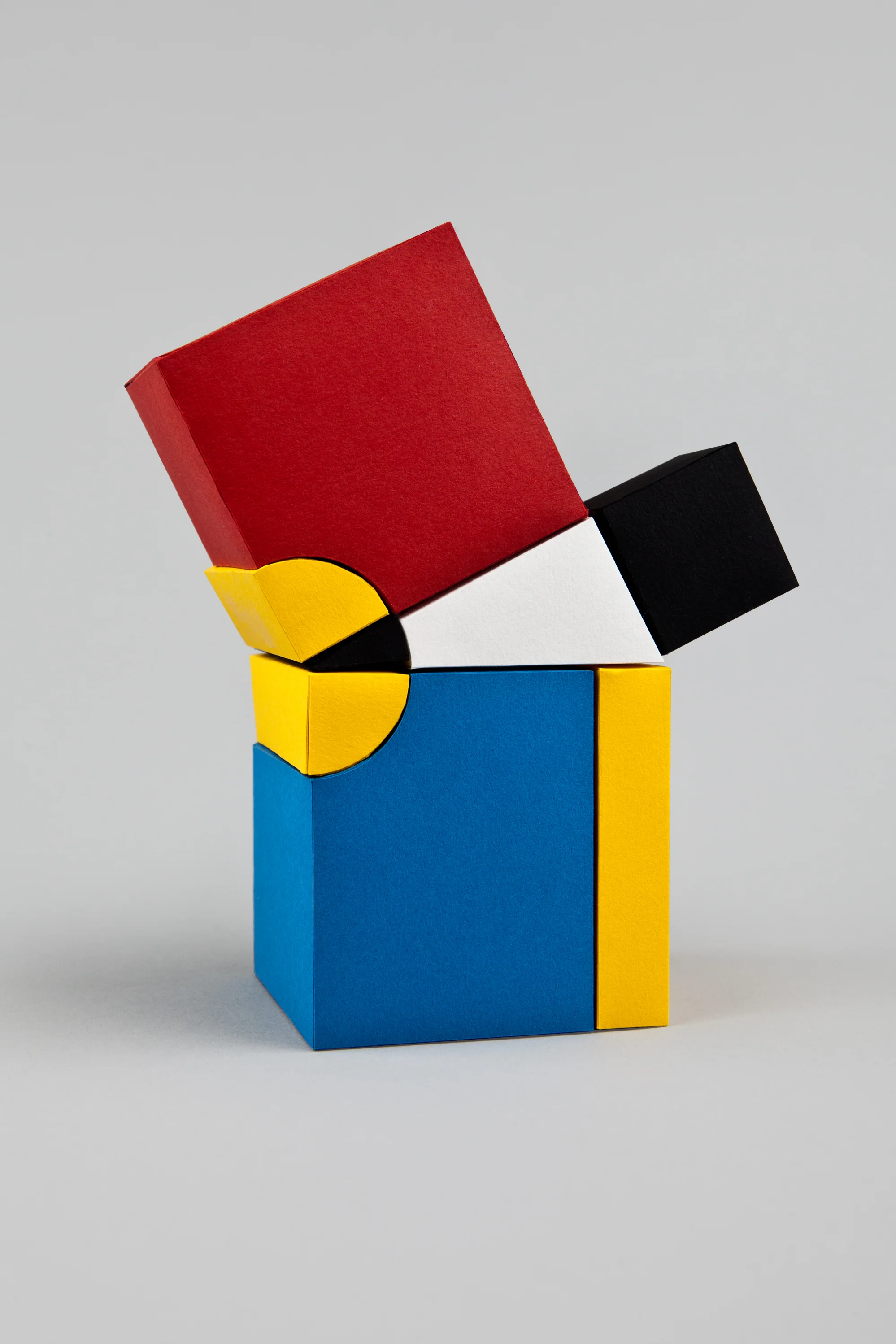
What Byrne did has a curious side effect. The moment you drop the letters and move to coloured planes, the parts of the proof stop reading as abstract labels and start looking like things you could cut out and lift away. Looking at the page, you half feel you could take hold of the red square and turn it. In 2012 the London paper engineer Helen Friel did exactly that.
Here's Looking at Euclid is a set of three-dimensional paper models of Byrne's diagrams. Rather than enlarge and repaint the figures, Friel turned them into templates, worked out the fold allowances, and converted a proof that lay flat into an object that stands on a desk. What comes out is neither a model nor an illustration so much as a physical copy of the proof itself.
Byrne flattened the proof. Friel picked the same proof up off the ground.
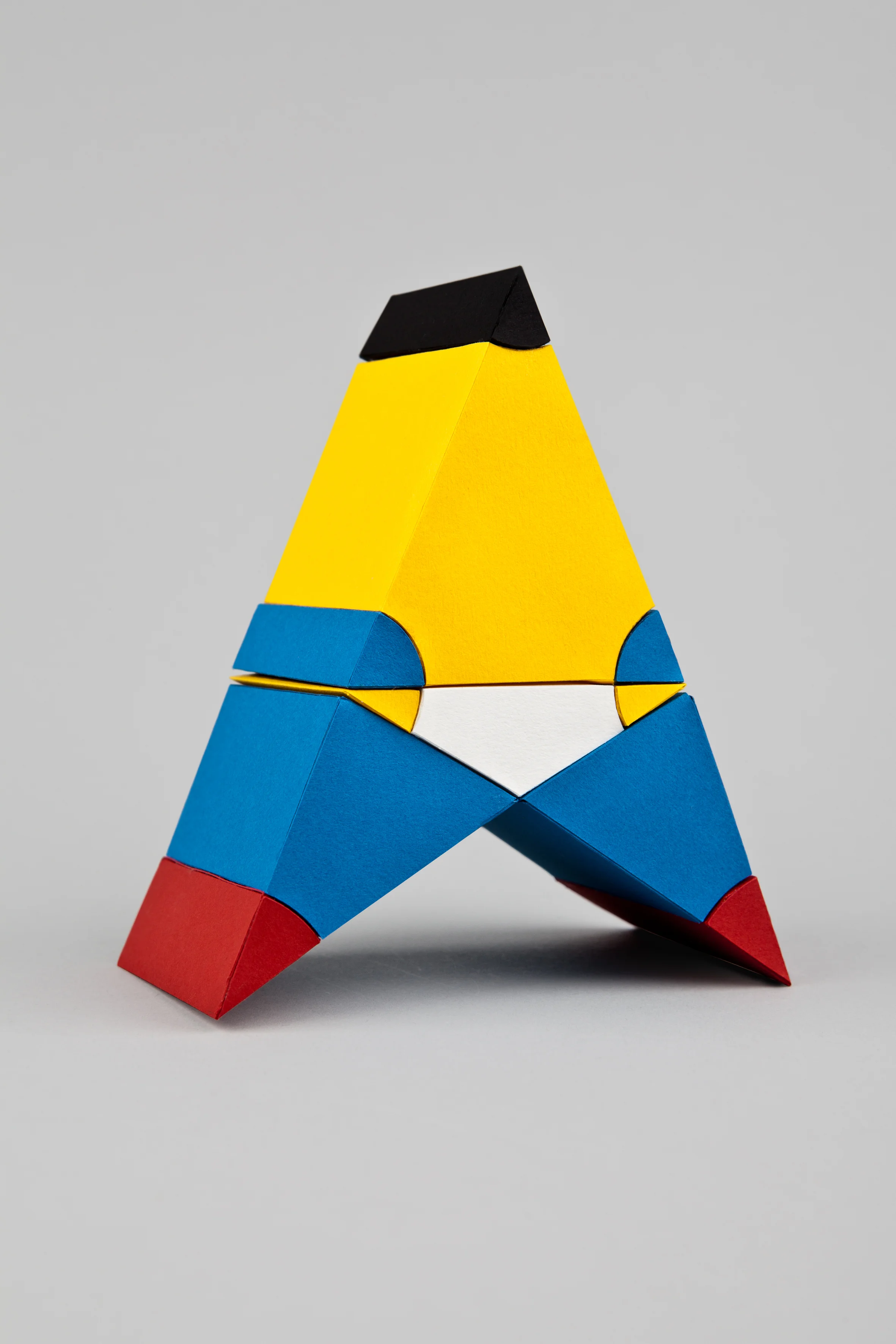
Why paper works where a diagram doesn’t
It is not hard to see why this works. The classic figure for the Pythagorean theorem is three squares set on the sides of a right triangle, and those squares already mean area. Folded in paper, area stops being a symbol to be read and becomes a surface with weight in your hand. The most maddening thing about the figure drawn on a classroom board is that students look at the squares as pictures. In the paper model there is nothing left to look at, only something to hold.
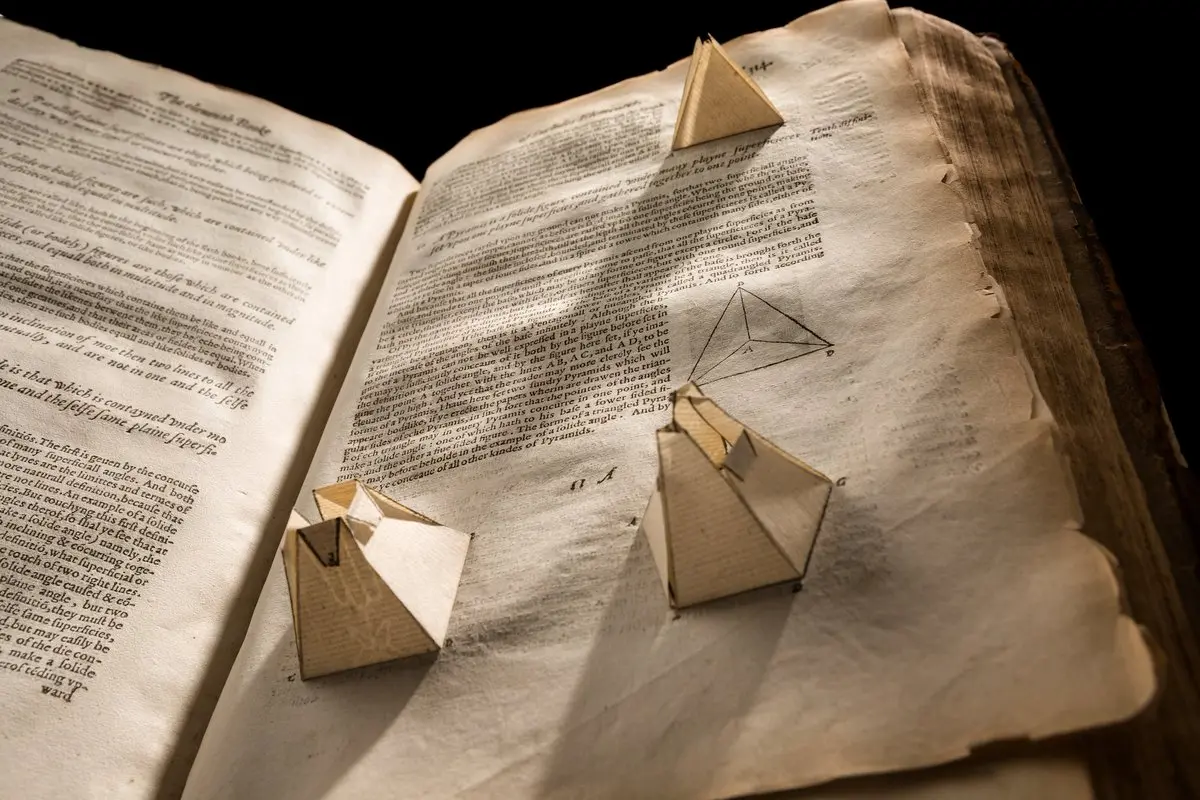
This is the same instinct behind the very first English Euclid. Three centuries before Friel, Henry Billingsley glued folding paper solids into the pages of his 1570 translation — the story we tell in Paper that stands up. The tool changes; the idea does not. When you hold a shape, you stop translating.
A late repair from Byrne’s side
Friel's work counts as a late repair from Byrne's side too. When the book first appeared it was largely ignored and even criticised, and it took until the twentieth century to draw fresh interest — helped in no small part by the room Edward Tufte gave it in Envisioning Information and by Taschen's facsimile. Byrne's page turns up in a different medium almost every generation: first in an exhibition case, then in design books, then in a browser, and finally as a template to be cut out and folded.
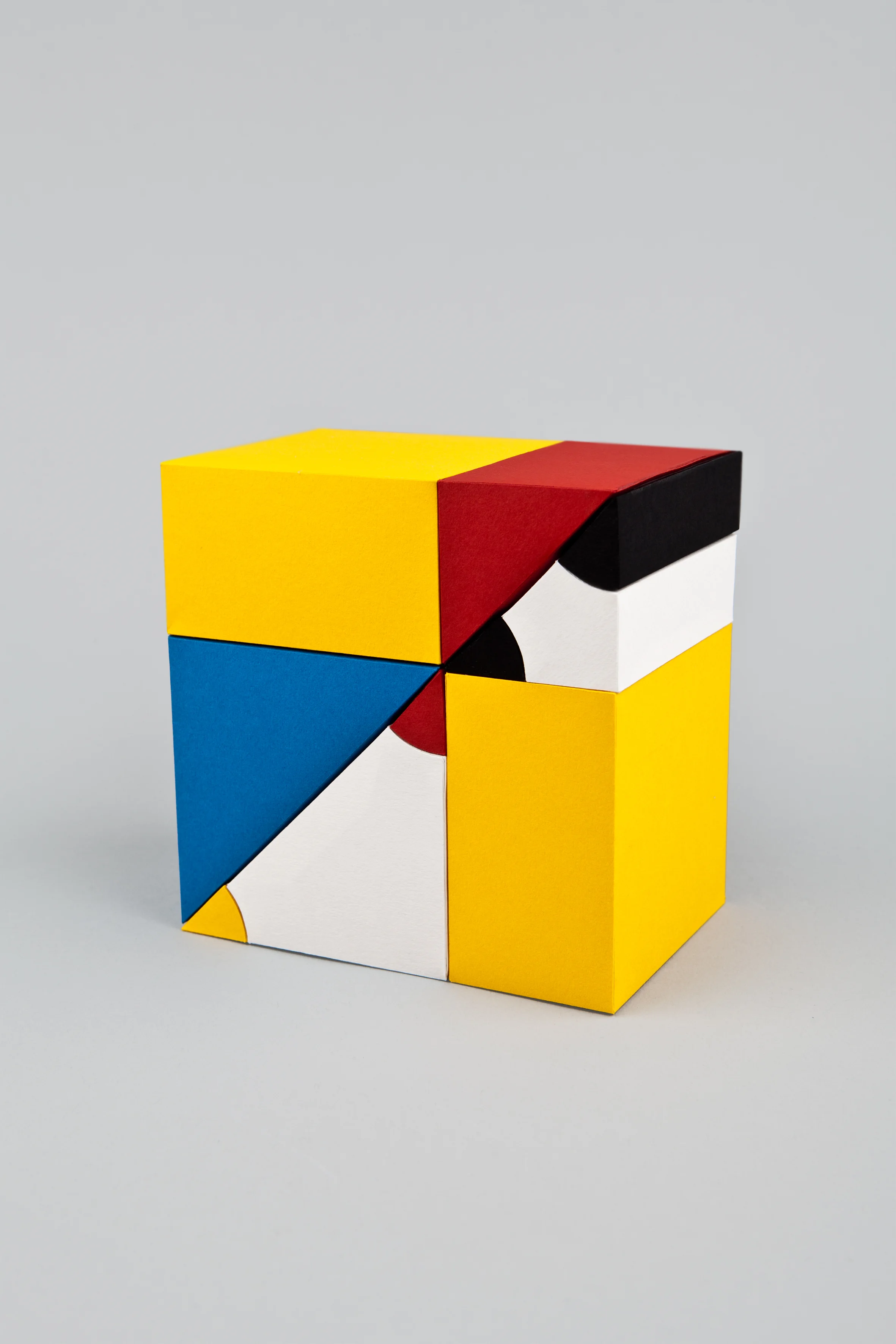
The name, and the joke inside it
The name is its own matter. Here's Looking at Euclid is a play on that very well-known line from Casablanca, and for exactly that reason the project reads less like a self-serious study of geometry than like something that looks at mathematics with a smile. Given what happened to Byrne's book, a little humour from someone working geometry in paper seems fair enough.
Friel shares her Byrne-inspired Pythagorean theorem template free on her site, cleared for personal use and for use in schools. Printing it on coloured paper and cutting it out is all it takes. Seeing a figure that has been drawn on classroom boards for years finally stand on its own on a desk is another thing entirely.