Abakcus
← All articles

Mathematics · History · Rare Books

QA21 .K39 2026

29 Historic Math Books You Can Read for Free

From a papyrus roll to Principia Mathematica, books that libraries have scanned and opened to everyone.

29 cards · 1550 BC – 1913 · 5 drawers

1550 BC1009508201202147814821494152515451557157016141619162116371638168717131748174818011843184718541884189919081910

Run a finger along the tabs; click one to pull the card.

The parchment that carries Archimedes’ lost works finds a buyer at auction in 1998 for 2 million dollars, and today anyone can download more than 4,000 images of it for free. Most of the books on this list are like that, the originals sit in library vaults or in collectors’ hands, but the libraries photograph them page by page and put them online, and to read these copies you need neither a reader’s card nor white gloves.

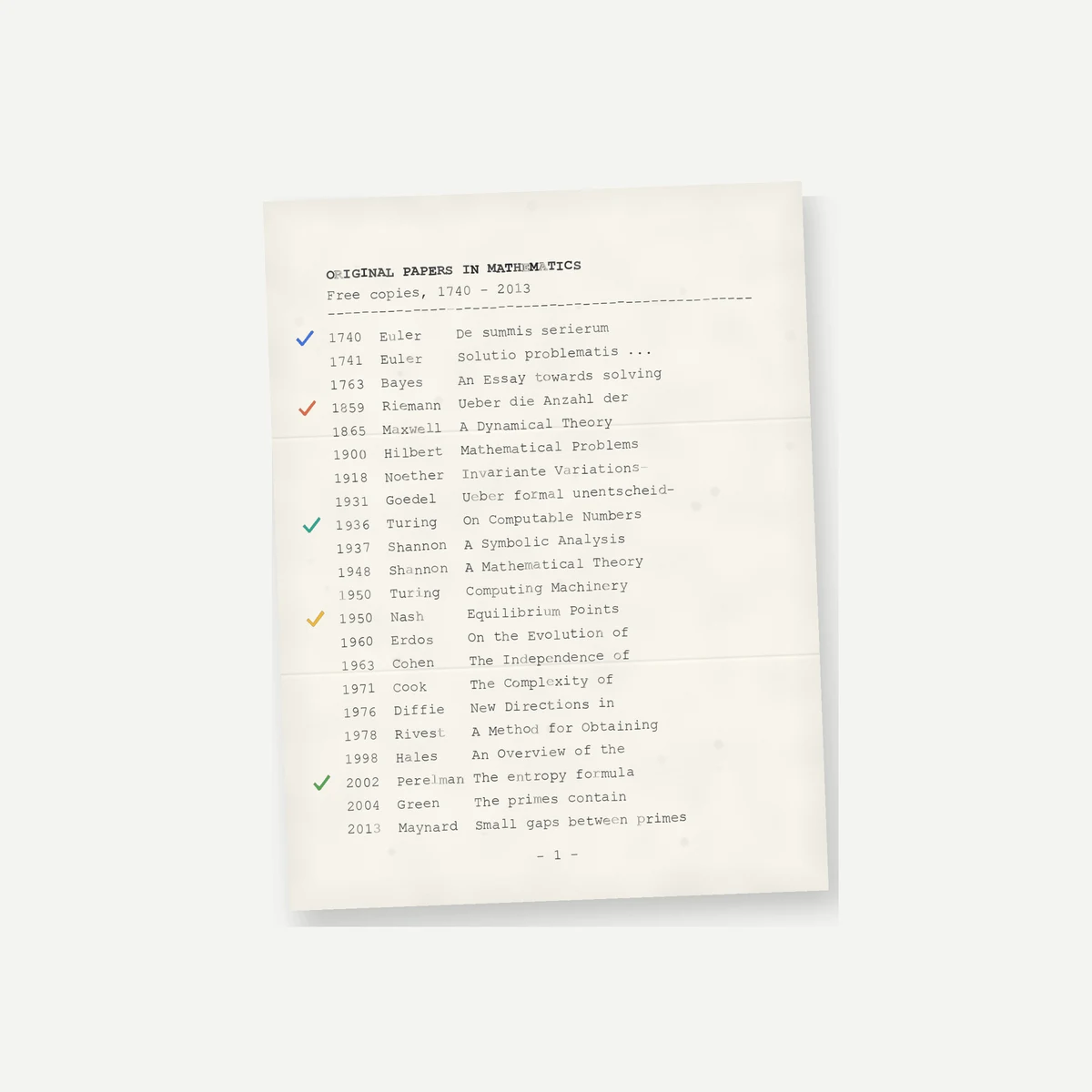
There are 29 books here, from a papyrus copied around 1550 BC to Principia Mathematica, finished in 1913. Under each one I wrote whose copy it is, what language it is in and why it is worth opening. Most are scans of a first edition or a manuscript, a few are texts retypeset by Project Gutenberg’s volunteers, and I marked those separately. If you want the story that runs between them, it is in the history of mathematics, written in the margins; for the papers that came after, see 22 original math papers you can read for free.

You don’t need Latin or Italian. What there is to see in these books is often the figures, the marginal notes, the errata lists, and the page where someone put down for the first time a sign everyone uses today, like the page where Recorde draws his equals sign three times longer than ours.

Drawer I · Nos. 01–05

Written by hand

From 1550 BC to 1202, on papyrus, parchment and paper

01

1550 BC

around

The Rhind Mathematical Papyrus

Scanned copy

The scribe Ahmes

British Museum, EA 10057 · Hieratic script · Papyrus roll
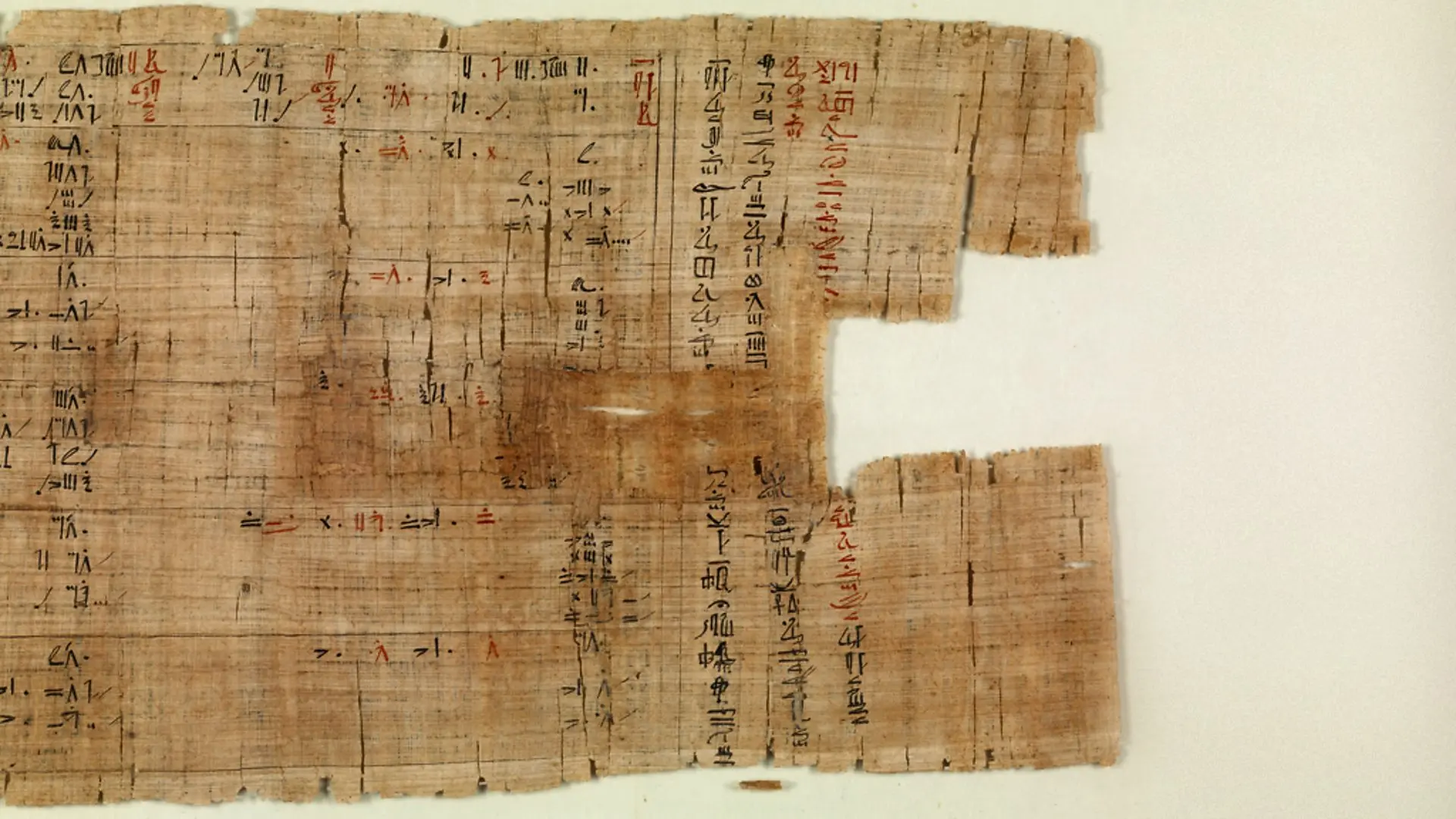
A section of the Rhind Mathematical Papyrus: columns of hieratic numbers in black ink with headings and totals in red, the papyrus torn along its right edge
ABK_001_rhind_0001.tif

The scribe Ahmes says himself in the opening lines that he copied this roll from an older text, so one of the oldest known mathematics books is also a copy. It holds 84 problems, running from sharing loaves among workers to the slope of a pyramid. Because the Egyptians wrote every fraction except 2/3 as a sum of unit fractions of the form 1/n, a long table at the start of the roll gives 2 divided by the odd numbers ready-made in that form.

The roll survives in pieces today, and most of it can be seen with photographs on the museum’s collection page.
See the papyrus

02

100

around, 1773 copy

九章算術, The Nine Chapters on the Mathematical Art

Scanned copy

Author unknown, Han dynasty

Hand copy for the Siku Quanshu, 1773 · Chinese · Volumes 7 to 9

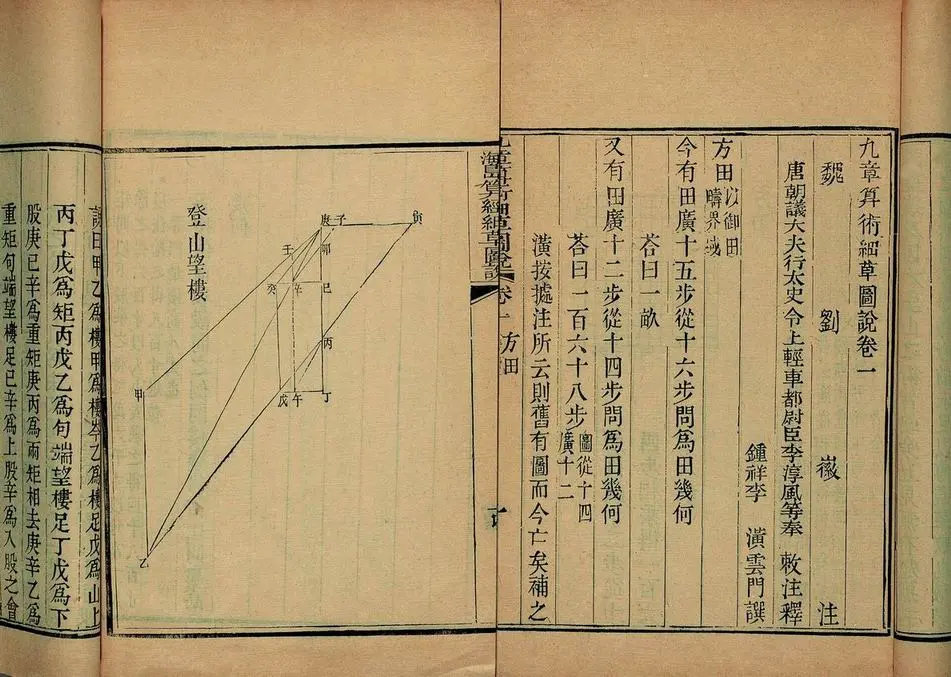
An open printed edition of the Nine Chapters: on the right, the opening of chapter one on field areas in vertical Chinese columns; on the left, a line diagram for sighting a tower from a mountain
ABK_002_nine_chapters_0001.tif

China’s oldest mathematics handbook, compiled over several generations and given its final form in the Han period, made up of 246 problems. In the eighth chapter, systems of linear equations are solved on a table of numbers with the method we now call Gaussian elimination, and negative numbers are told apart with red and black rods. Where the Greek tradition goes from axiom to theorem, this book says everything as problem, answer and method, and I don’t know a better source for seeing that second face of mathematics.

The copy made by hand for the imperial library in 1773 can be read online, with the volumes on linear equations scanned in full.

Read the 1773 copyThe English translation on Amazon

03

950

around, copy of a 3rd-century BC text

The Archimedes Palimpsest

Scanned copy

Archimedes

Private copy imaged at the Walters Art Museum · Greek · Multispectral images

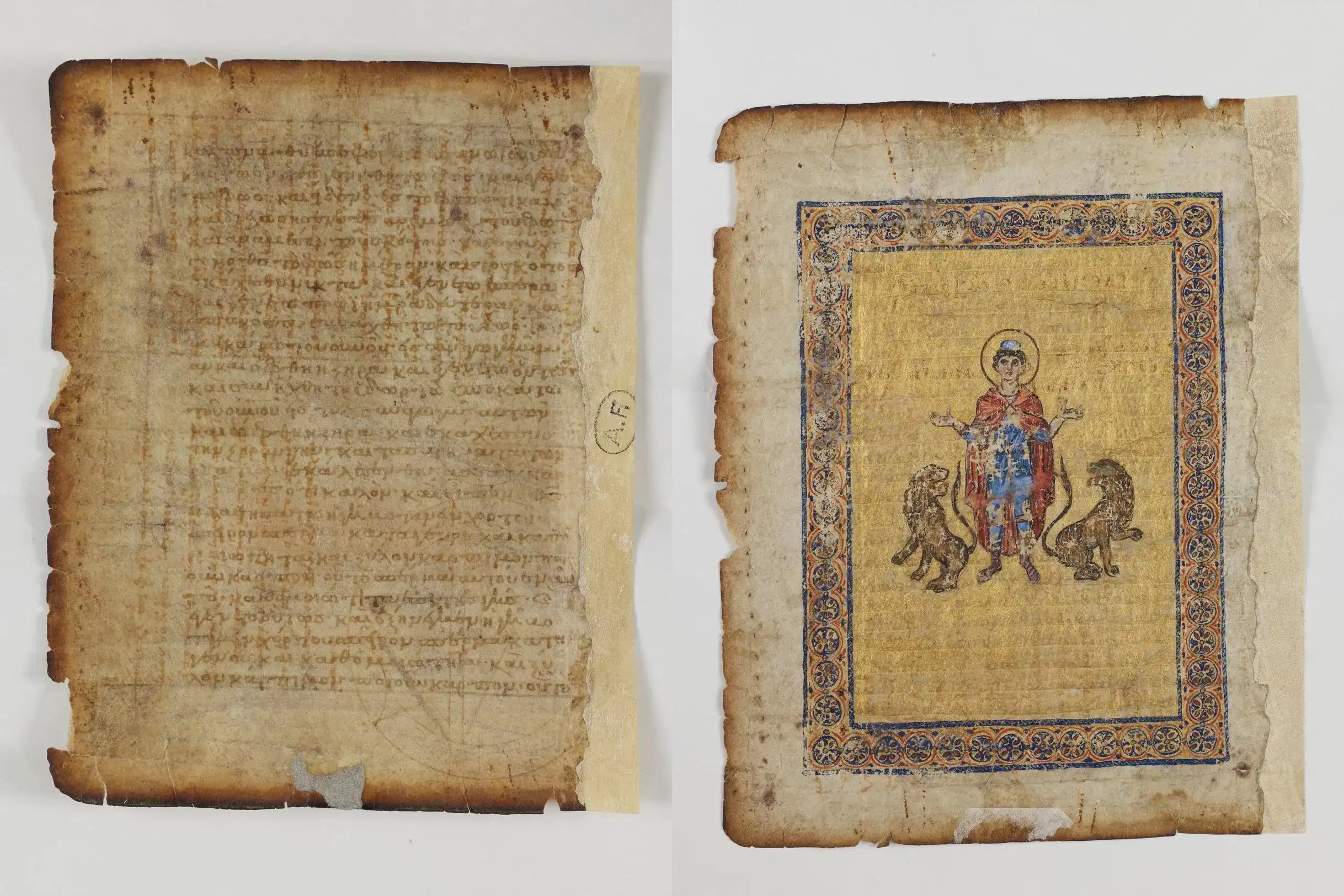
Two leaves of the Archimedes Palimpsest: a page of faded writing scorched at the edges, and a leaf painted over with a figure between two lions inside a gilded border
ABK_003_archimedes_0001.tif

Seven works of Archimedes are copied onto parchment in Constantinople in the 10th century. In the 13th century a monk scrapes and washes the leaves, writes a prayer book over them, and Archimedes’ lines stay buried under those prayers for centuries. After the book finds its buyer in 1998, the Walters Museum in Baltimore spends ten years photographing it in 12 different bands of light and brings the erased text back line by line. The Method and the Stomachion, found in no other copy, come out of these pages.

It is also the only book on the list written in Istanbul. The images, processed layers and transcriptions are all open under a free licence.

Open the images

04

820

around, 14th-century copy

Al-Kitāb al-mukhtaṣar fī ḥisāb al-jabr wa'l-muqābala

Scanned copy

Muhammad ibn Musa al-Khwarizmi

Bodleian Library, MS. Huntington 214 · Arabic

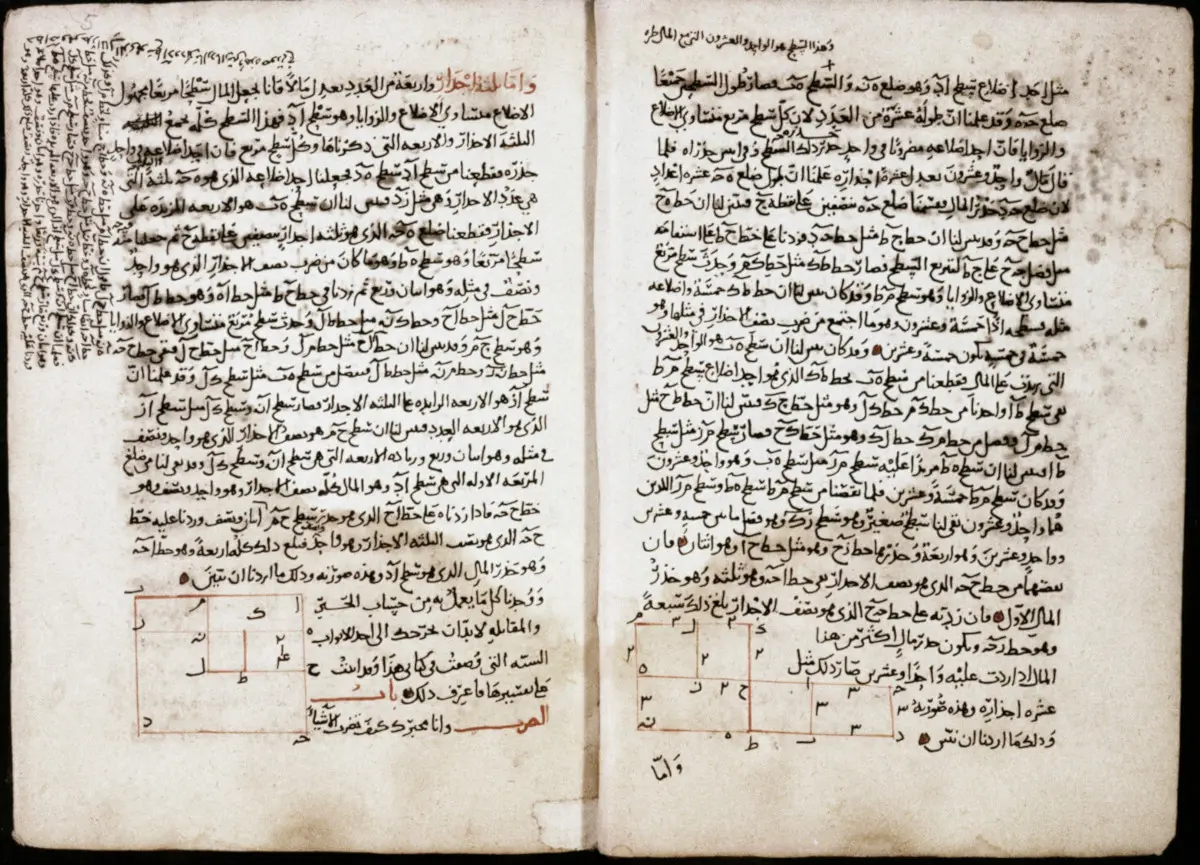
Two facing pages of al-Khwarizmi's al-Jabr in Arabic script, with red-ink diagrams of squares and rectangles drawn at the foot of each page
ABK_004_al_khwarizmi_0001.tif

The word algebra comes from the al-jabr in this book’s title. In 9th-century Baghdad, al-Khwarizmi sorts quadratic equations into six types and solves each one both with a rule written out in words and by drawing squares and rectangles. This Oxford copy is the only manuscript behind the book’s first printed edition in 1831.

The library’s digital archive holds only two pages of it, not the whole book, but those two pages carry the geometric solutions of x² + 21 = 10x and x² = 3x + 4. The library catalogue leads to these pages.

See the two pages

05

1202

Liber Abaci

Scanned copy

Leonardo of Pisa, Fibonacci

Biblioteca Nazionale Centrale di Firenze, Conv. Soppr. C.I.2616 · Latin manuscript

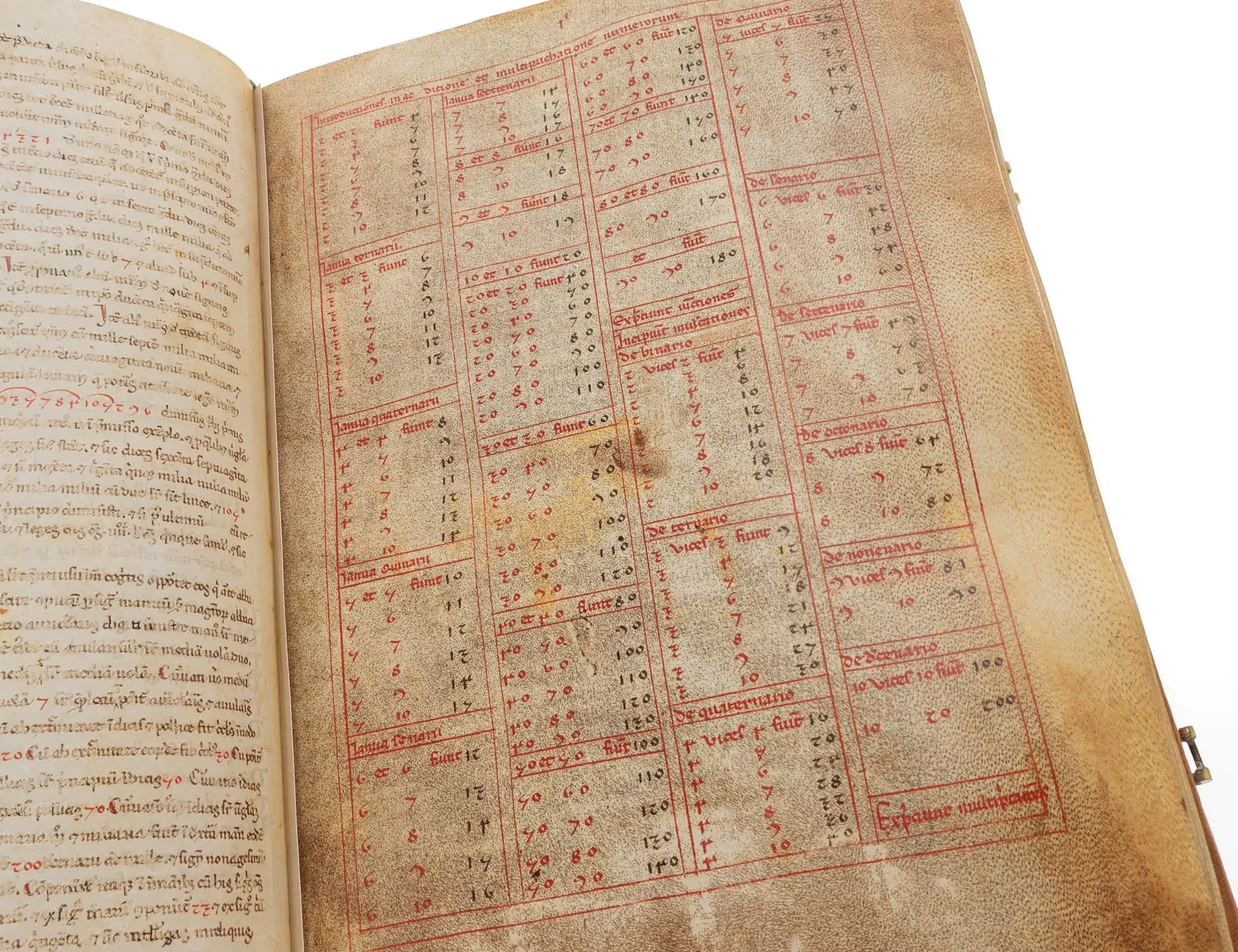
An open manuscript of Liber Abaci: a page of Latin text on the left and, on the right, a multiplication table ruled in red ink with columns of numerals
ABK_005_fibonacci_0001.tif

Leonardo of Pisa spends his youth in North Africa beside his merchant father and in 1202 carries the numerals and methods of reckoning he learned there into Europe with this book. The famous rabbit problem is in it too, and in the Florence copy a small column of numbers runs down the right margin of the page, starting 1, 2, 3, 5, 8 and going all the way to 377.

This is one of the 19 known manuscript copies of the book, and in 2020 the Museo Galileo and the Florence National Library put it online from first page to last.

Read the Florence copy

Drawer II · Nos. 06–12

The first century of print

From 1478 to 1570, Treviso to London

06

1478

Larte de labbacho

Scanned copy

Author unknown, the Treviso Arithmetic

Columbia University, Plimpton collection · Treviso 1478 · Venetian Italian

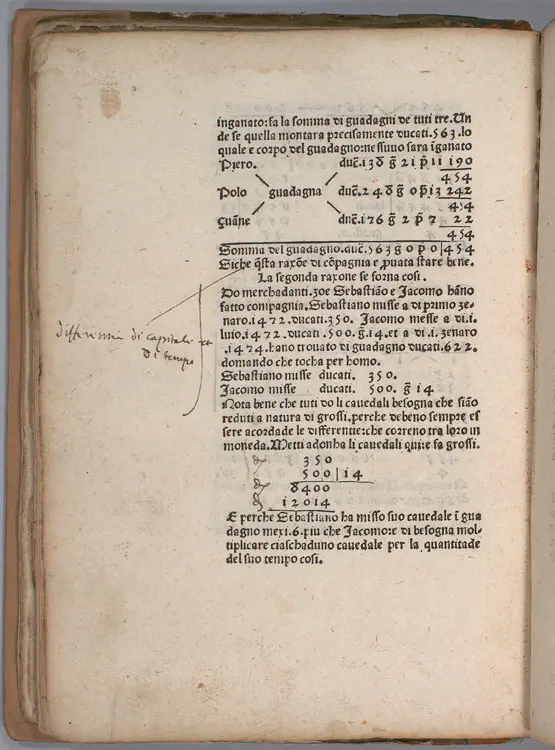
A printed page of the Treviso Arithmetic working out how partners share a profit in ducats, with a reader's handwritten note in the left margin
ABK_006_treviso_0001.tif

The first mathematics book printed in Europe. It comes out in Treviso on 10 December 1478, its author puts his name nowhere, and he says right at the start that he wrote it not for scholars but for young people learning trade. It teaches adding, subtracting, multiplying and dividing with the new numerals through everyday problems, from buying cloth and spices to splitting a partnership’s profits, and it has multiplications done by the lattice method too.

Copies are extremely rare, and this one is bought at auction by the publisher George Arthur Plimpton and later left to Columbia. The pages of the book can be viewed in Columbia’s digital collections.

Read the Columbia copy

07

1482

Elementa geometriae

Scanned copy

Euclid, Elements, Erhard Ratdolt edition

University of Utah Marriott Library · Venice 1482 · Latin

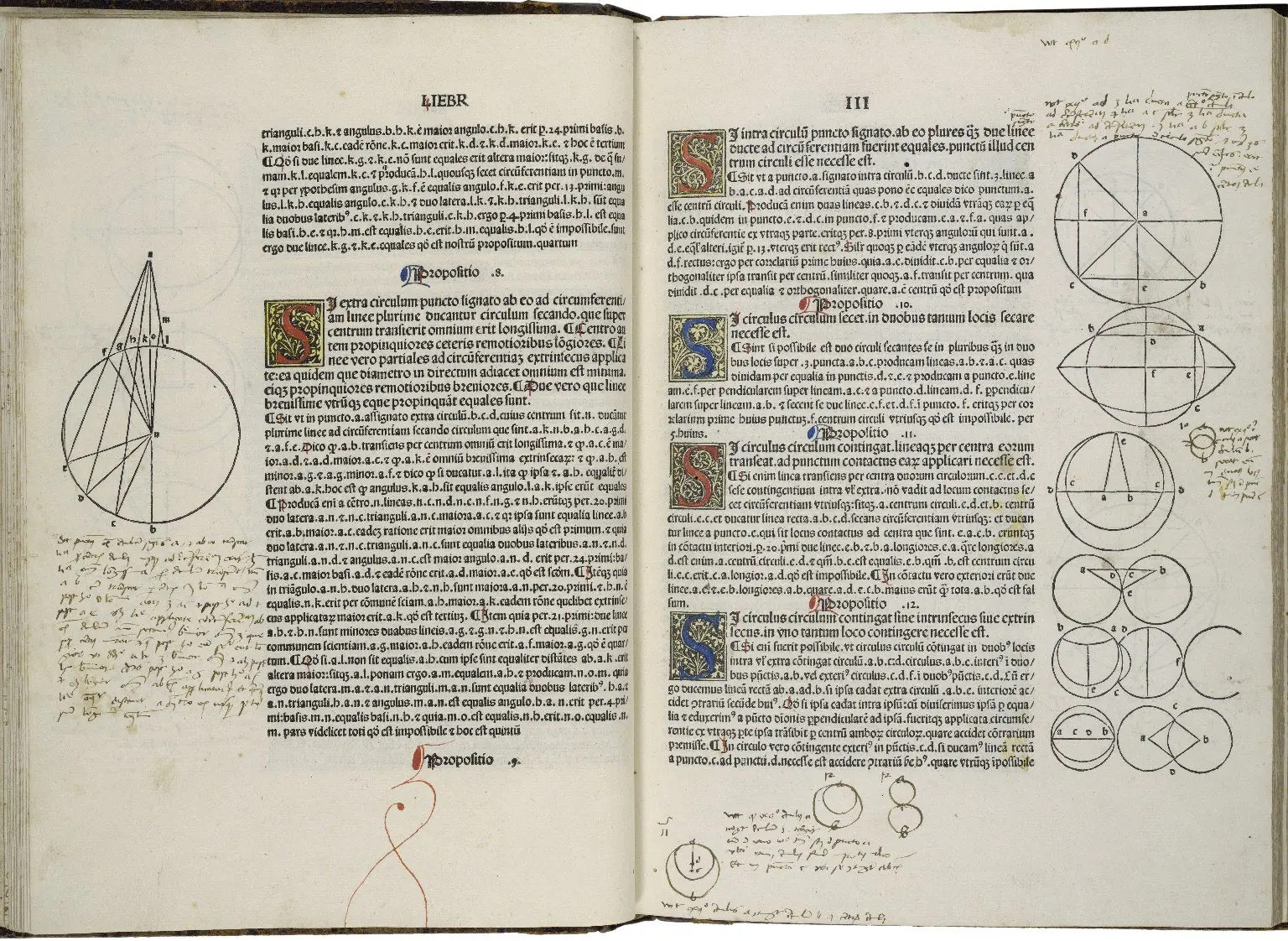
An open spread of the 1482 Ratdolt Euclid from Book III: Latin text with decorated initials and circle diagrams printed in the margins, surrounded by handwritten notes
ABK_007_ratdolt_0001.tif

The first printed edition of Euclid’s Elements, four years after the Treviso Arithmetic. The text rests on a Latin translation made from the Arabic, and the real difficulty is printing hundreds of geometric figures next to the words, which Ratdolt solves with fine woodcut figures set into the margins.

The University of Utah scans this copy with a 39-megapixel Hasselblad at 600 ppi, and the whole 1482 edition is open page by page.

Read the 1482 edition

08

1494

Summa de arithmetica, geometria, proportioni et proportionalità

Scanned copy

Luca Pacioli

Wellcome Collection · Venice 1494 · Italian · 308 leaves

DareAvereCassa100Cavedale100Merci60Cassa60160160
ABK_008_pacioli_0001.tif

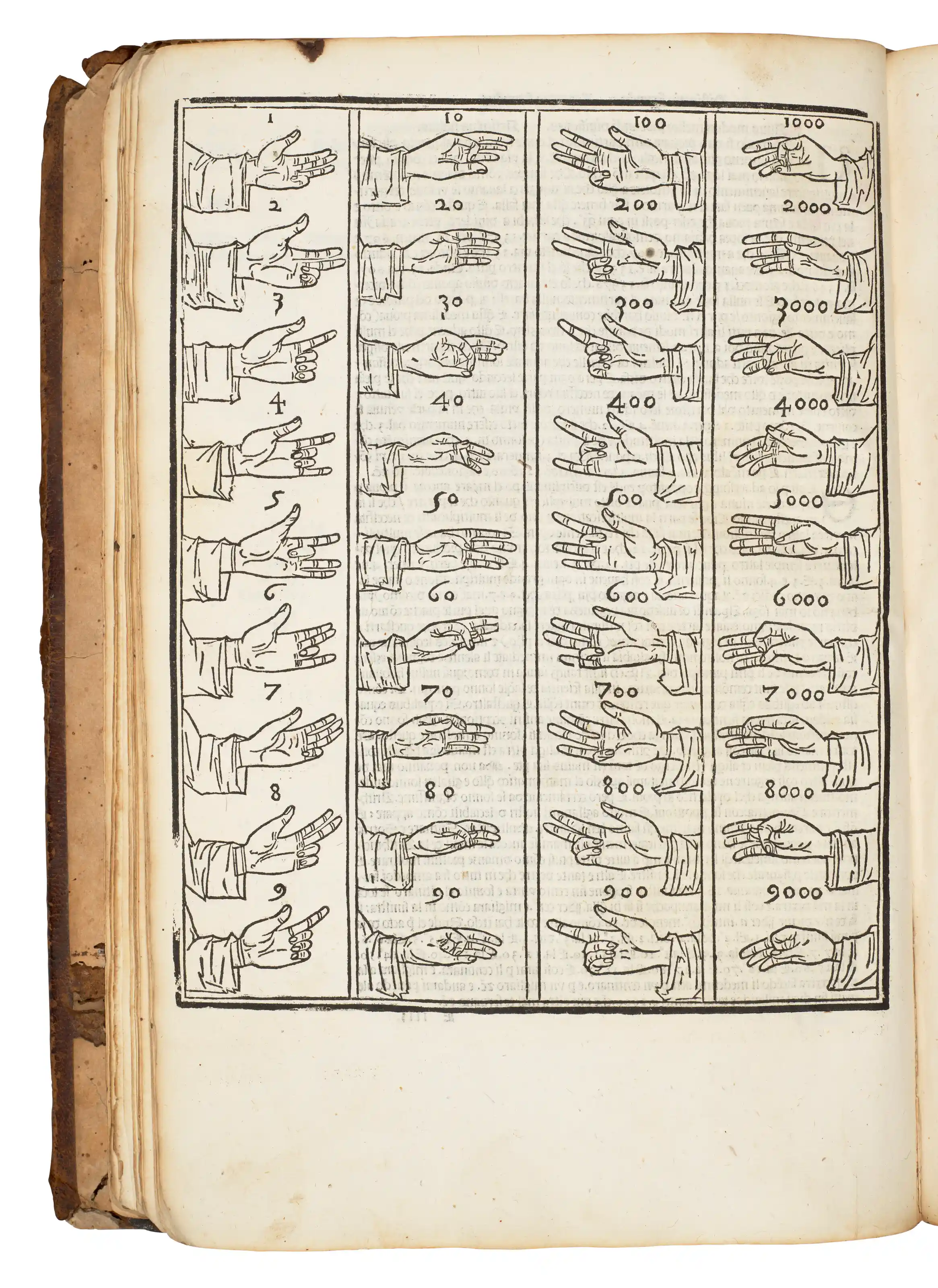
Pacioli’s Summa gathers arithmetic, algebra, geometry and commercial reckoning into one volume, and it holds the first printed account of double-entry bookkeeping. That is why accountants count a Franciscan friar as their founder. There is even an illustrated table in it showing how to count to 10,000 on your fingers.

A few years later in Milan, Pacioli teaches geometry to Leonardo da Vinci, and the two work together on a book about the golden ratio. The 1494 copy scanned by the Wellcome is free.

Read the 1494 copy

09

1525

Underweysung der Messung, mit dem Zirckel und Richtscheyt

Scanned copy

Albrecht Dürer

Getty Research Institute copy · Nuremberg 1525 · German

cut · fold · close
ABK_009_durer_0001.tif

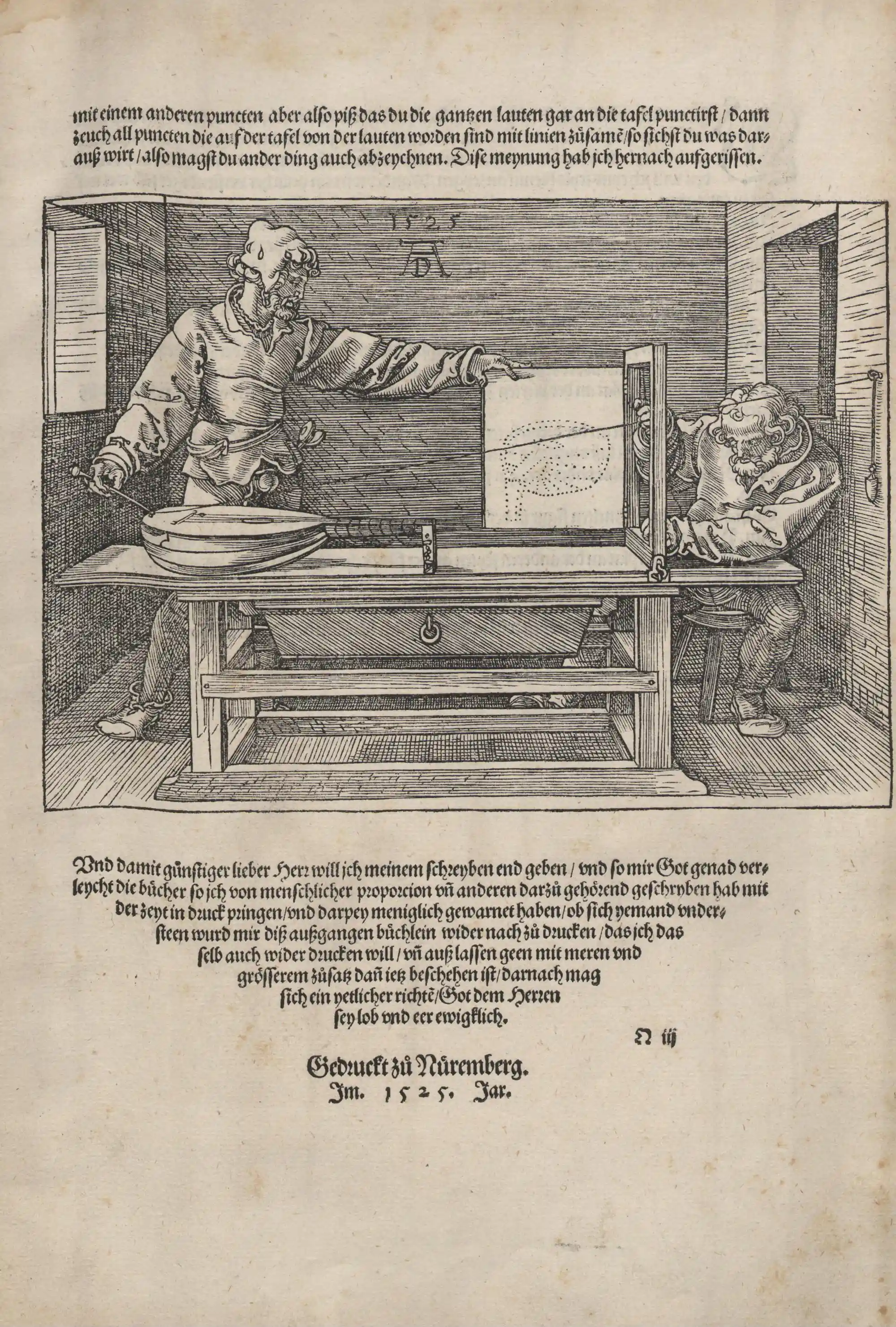
Dürer writes this book not in Latin but in German, for painters, goldsmiths, stonemasons and carpenters. In the fourth book he draws polyhedra unfolded flat on paper, as nets that close up when you cut and fold them, and these are the first known polyhedral nets. At the end of the book come the famous woodcuts of an artist drawing in perspective with a thread and a frame.

I’d send anyone curious about where the strange polyhedron in Melencolia I comes from to this book. The Getty copy is scanned from cover to cover.

Read the Getty copy

10

1545

Ars Magna

Scanned copy

Gerolamo Cardano

National Central Library of Rome · Nuremberg 1545 · Latin

5 + √−155 − √−155sum 10 · product 40
ABK_010_cardano_0001.tif

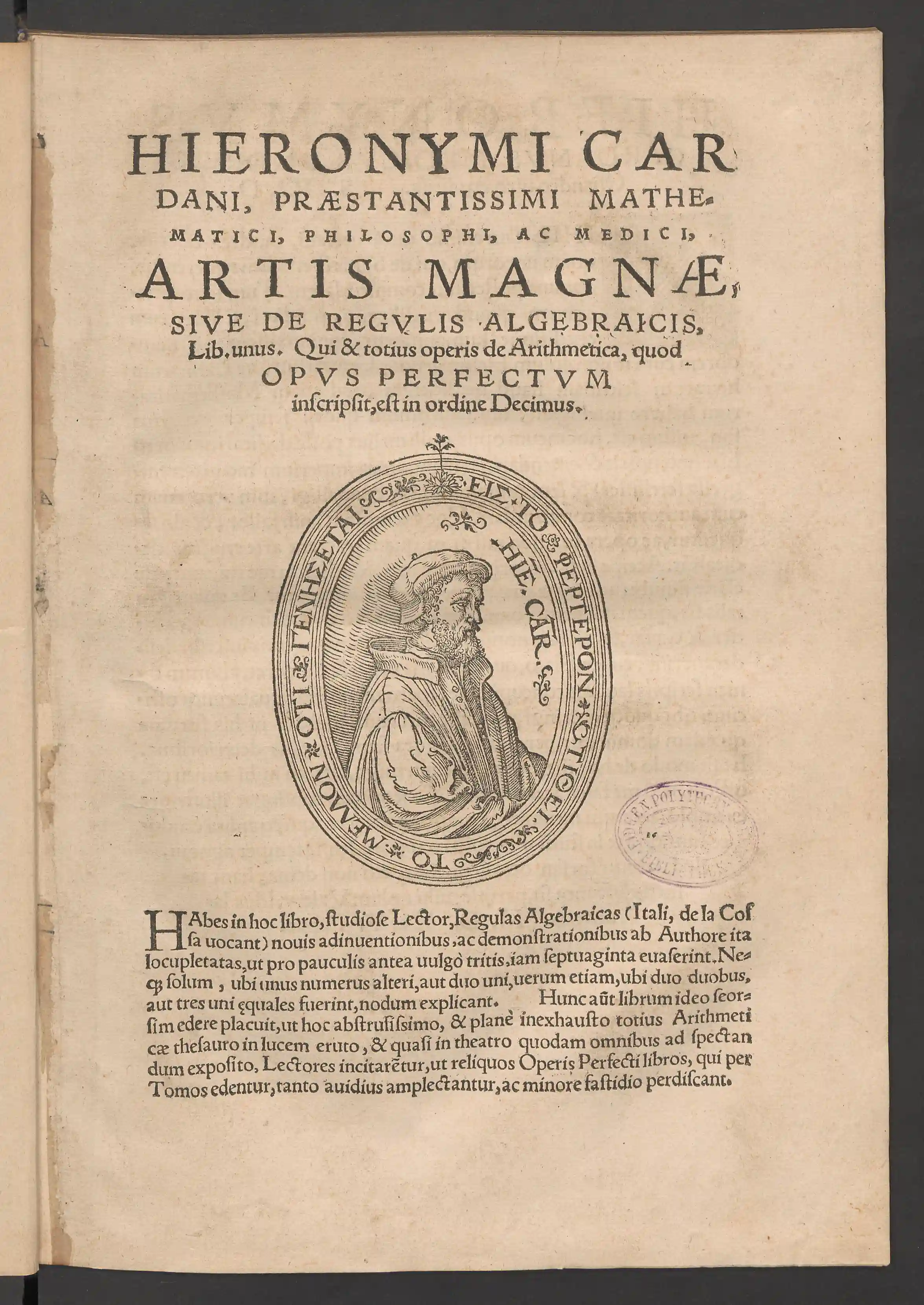
The general solutions of cubic and quartic equations are printed for the first time in this book. Tartaglia gives Cardano the solution of the cubic in 1539 and makes him swear not to publish it, and when Cardano learns that Scipione del Ferro had found it earlier, he breaks his oath and one of the ugliest fights in the history of mathematics begins.

The book has the problem of splitting 10 into two parts whose product is 40, and the answer comes out as 5 + √−15 and 5 − √−15. Cardano finds these numbers useless and puts them aside, but this is the first calculation done with complex numbers. The pages of the 1545 first edition can be read as scans.

Read the 1545 edition

11

1557

The Whetstone of Witte

Scanned copy

Robert Recorde

Wellcome Collection · London 1557 · English

14x + 1571155714x + 1571today
ABK_011_recorde_0001.tif

The equals sign appears here for the first time. Recorde explains that he chose two parallel lines because no two things can be more equal, and his lines are much longer than ours, nearly the length of a word. The book moves through dialogues between a master and his scholar and is one of the first algebra books in English.

A year after the book comes out, Recorde dies in the debtors’ prison he was sent to over damages he couldn’t pay in a lawsuit against him. The whole 348-image copy is open in the public domain.

Read all 348 images

12

1570

The Elements of Geometrie of the most auncient Philosopher Euclide of Megara

Scanned copy

Euclid, Elements, Henry Billingsley translation

Smithsonian Libraries · London 1570 · English

Book XI
ABK_012_billingsley_0001.tif

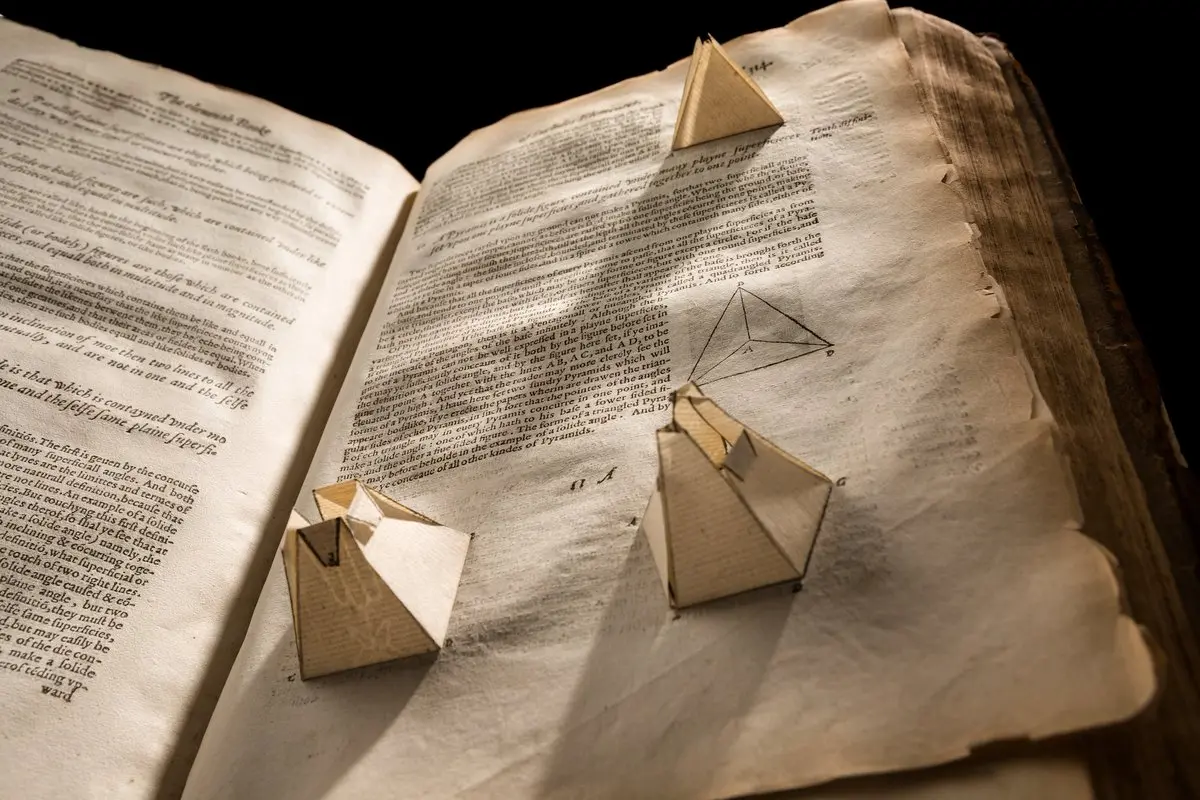
The first complete English translation of Euclid, with a long preface by John Dee. The Euclid of Megara in the title is actually the wrong man, the Renaissance kept mixing up Euclid the mathematician of Alexandria with Euclid the philosopher of Megara. What makes the book a legend is the fold-up paper models in Book XI, lift them off the page and pyramids and prisms stand up, and the printer pastes them by hand into every copy.

I wrote about Billingsley’s paper models at length in a separate piece. The scan of the Smithsonian copy includes photographs of the pop-ups.

Read the Smithsonian copy

Drawer III · Nos. 13–18

From logarithms to the Principia

From 1614 to 1687

13

1614

Mirifici Logarithmorum Canonis Descriptio

Scanned copy

John Napier

Smithsonian Libraries · Edinburgh 1614 · Latin

2.5 × 3.2 = 8.00
↔ drag the slider · ABK_013_napier_0001.tif

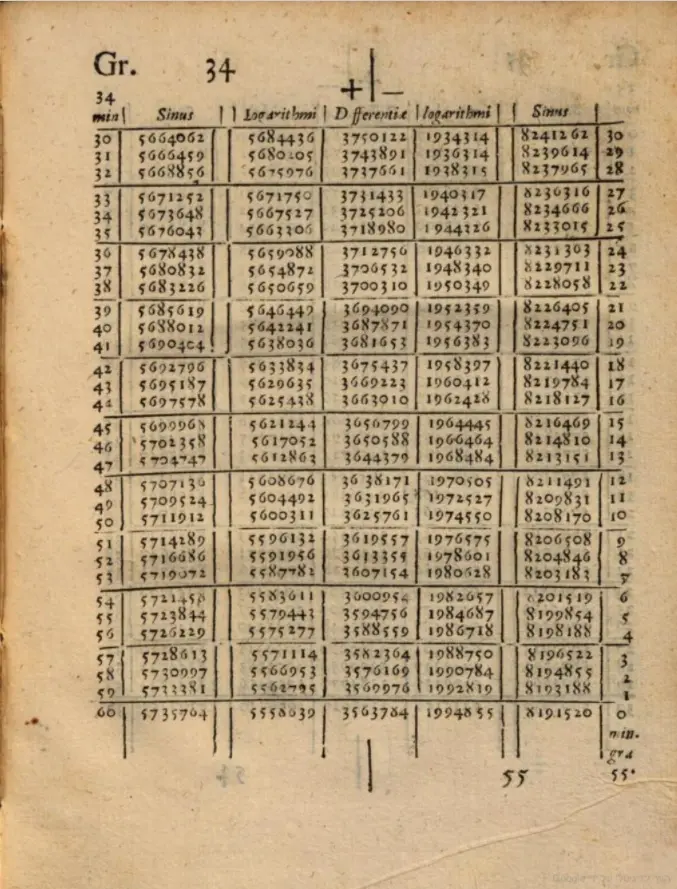
Napier spends about 20 years computing his tables, and with this book he turns multiplication into addition and division into subtraction. Kepler gets so much out of the tables that in 1619 he writes Napier a letter of thanks, not knowing Napier had died two years earlier. Three years after the tables, Napier also describes the calculating rods called Napier’s bones.

The 1614 edition is scanned among the Smithsonian’s books on logarithms.

Read the 1614 edition

14

1619

Harmonices Mundi

Scanned copy

Johannes Kepler

Library of Congress and Smithsonian Libraries · Linz 1619 · Latin

MercuryVenusEarthMarsJupiterSaturnT² ∝ a³distance from the Sun (log)
ABK_014_kepler_0001.tif

Kepler’s third law, that the square of a planet’s orbital period is proportional to the cube of its mean distance from the Sun, sits in the fifth book among pages devoted to the music the planets make. In the second book he studies systematically the ways of tiling the plane with regular polygons and draws the star polyhedra.

The man who asked why a snowflake has six points writing out notes for the planets in the same book is, to me, the best picture of Kepler there is. The Library of Congress scan downloads as a PDF too, and the Smithsonian copy is in the archive as well.

Read the LOC scan

15

1621

Diophanti Alexandrini Arithmeticorum libri sex

Scanned copy

Diophantus, Claude-Gaspard Bachet edition

Kyoto University, Department of Mathematics · Paris 1621 · Greek and Latin

xⁿ + yⁿ = zⁿ · hanc marginis exiguitas non caperet
ABK_015_diophantus_0001.tif

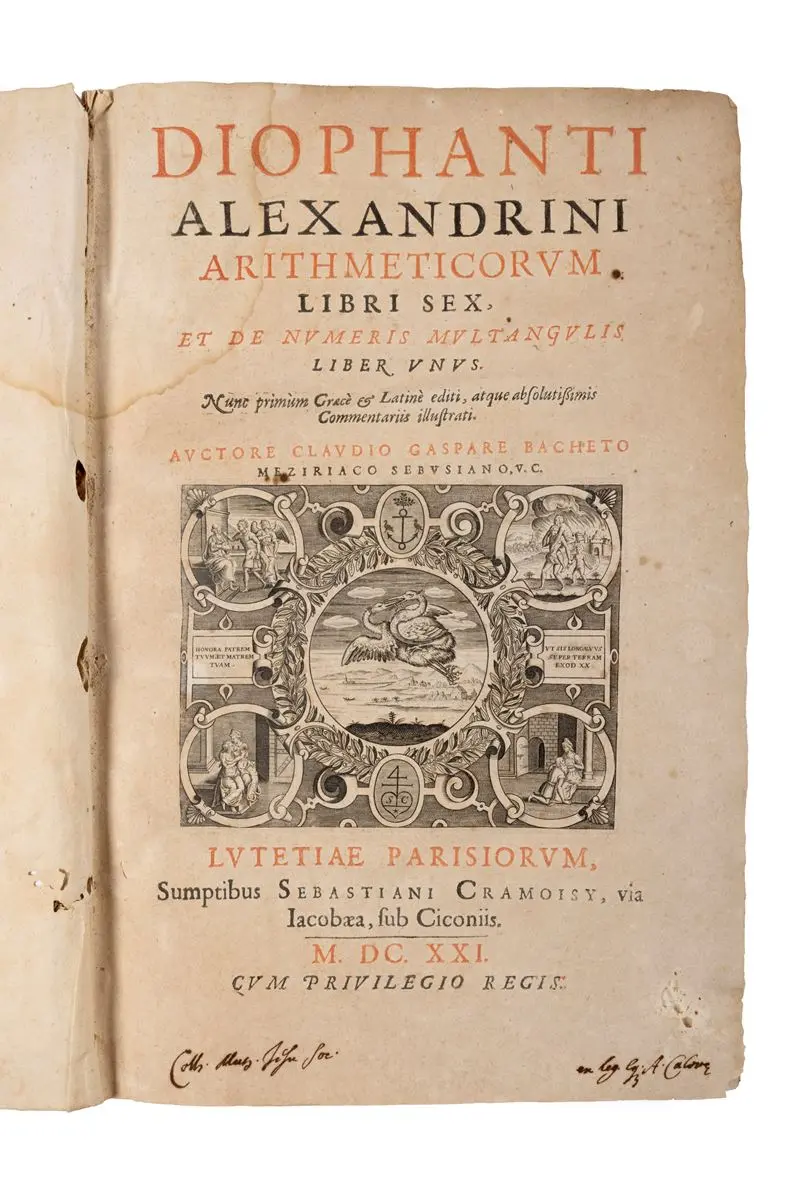
This is the edition in whose margin Fermat wrote that he had found a marvellous proof but the margin was too narrow to hold it. Fermat’s own copy is lost, and the notes survive only because his son Samuel adds them to a new edition in 1670. The theorem stays open for 357 years, until Andrew Wiles proves it in 1994.

The Kyoto copy isn’t Fermat’s, but it is the same edition, so the margins are just as narrow. The scan of the 1621 edition is open in high resolution.

Read the 1621 edition

16

1637

La Géométrie

Scanned copy

René Descartes

HathiTrust · 1925 translation with a facsimile of 1637 · French and English

xyy = ax²x, y, z unknowna, b, c known
ABK_016_descartes_0001.tif

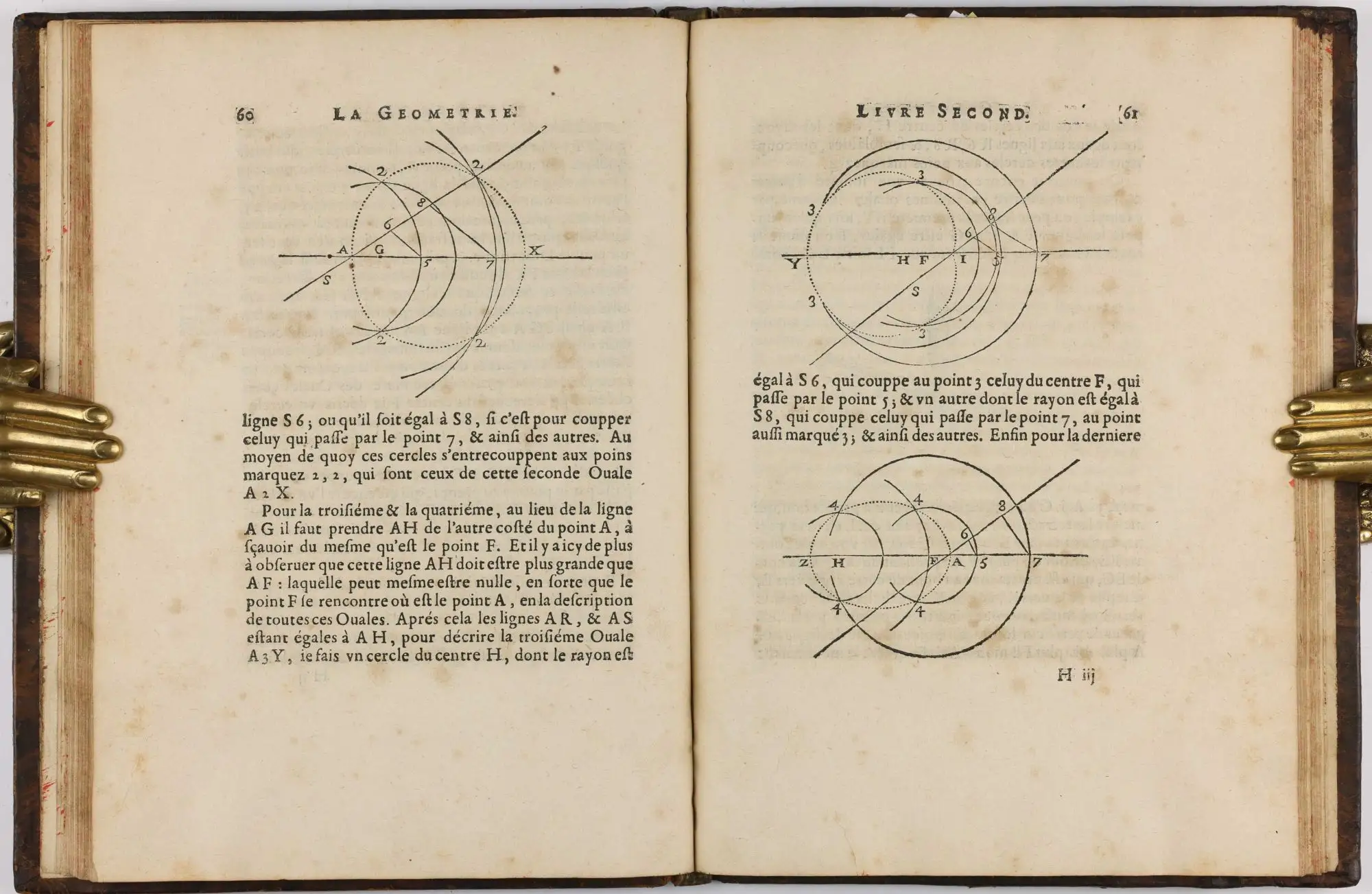
Descartes publishes La Géométrie as one of three essays following his Discourse on Method. The way to turn geometry problems into algebra, the habit of writing unknowns as x, y and z and knowns as a, b and c, and exponent notation like x³ all come out of these hundred-odd pages. The book reads as if it were made difficult on purpose, and Descartes leaves many proofs to the reader as exercises.

David Eugene Smith and Marcia Latham’s 1925 translation is printed side by side with a facsimile of the original, so you see Descartes’ own pages too.

Read the facsimile

17

1638

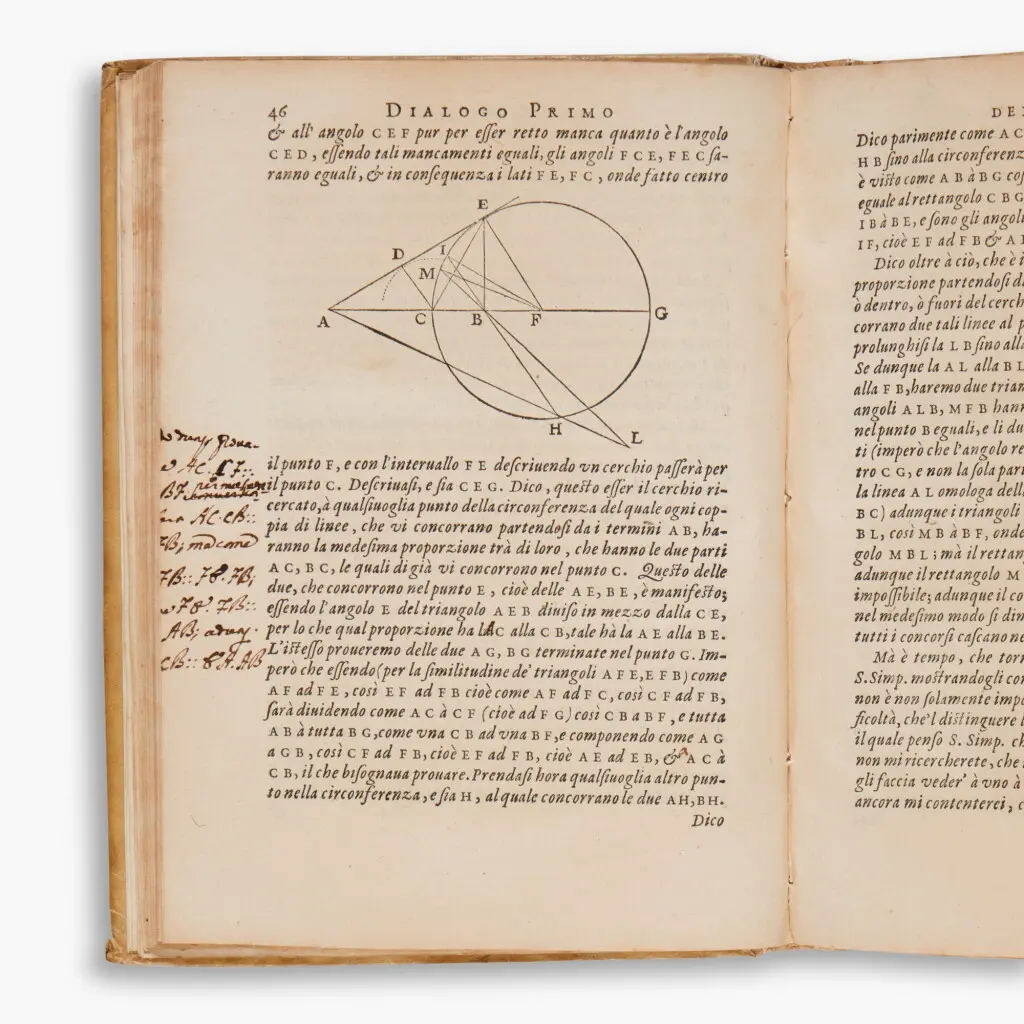
Discorsi e dimostrazioni matematiche intorno a due nuove scienze

Scanned copy

Galileo Galilei

New York Public Library · Leiden 1638 · Italian

112439416525636749……one to one, forever
ABK_017_galileo_0001.tif

Galileo writes this book under house arrest and can’t print it in Italy, the manuscript is smuggled out, and the book comes off the Elzevier press in Leiden. On the first day Galileo notices that there are as many square numbers as natural numbers, because the two can be paired one to one, and decides that saying more or fewer about infinite sets makes no sense. Cantor comes back to that question 240 years later.

On the second day he explains why the bones of a giant animal have to thicken out of proportion, the square-cube law. NYPL’s 1638 copy is scanned, and the 1914 English translation is in the archive.

Read the 1638 copy

18

1687

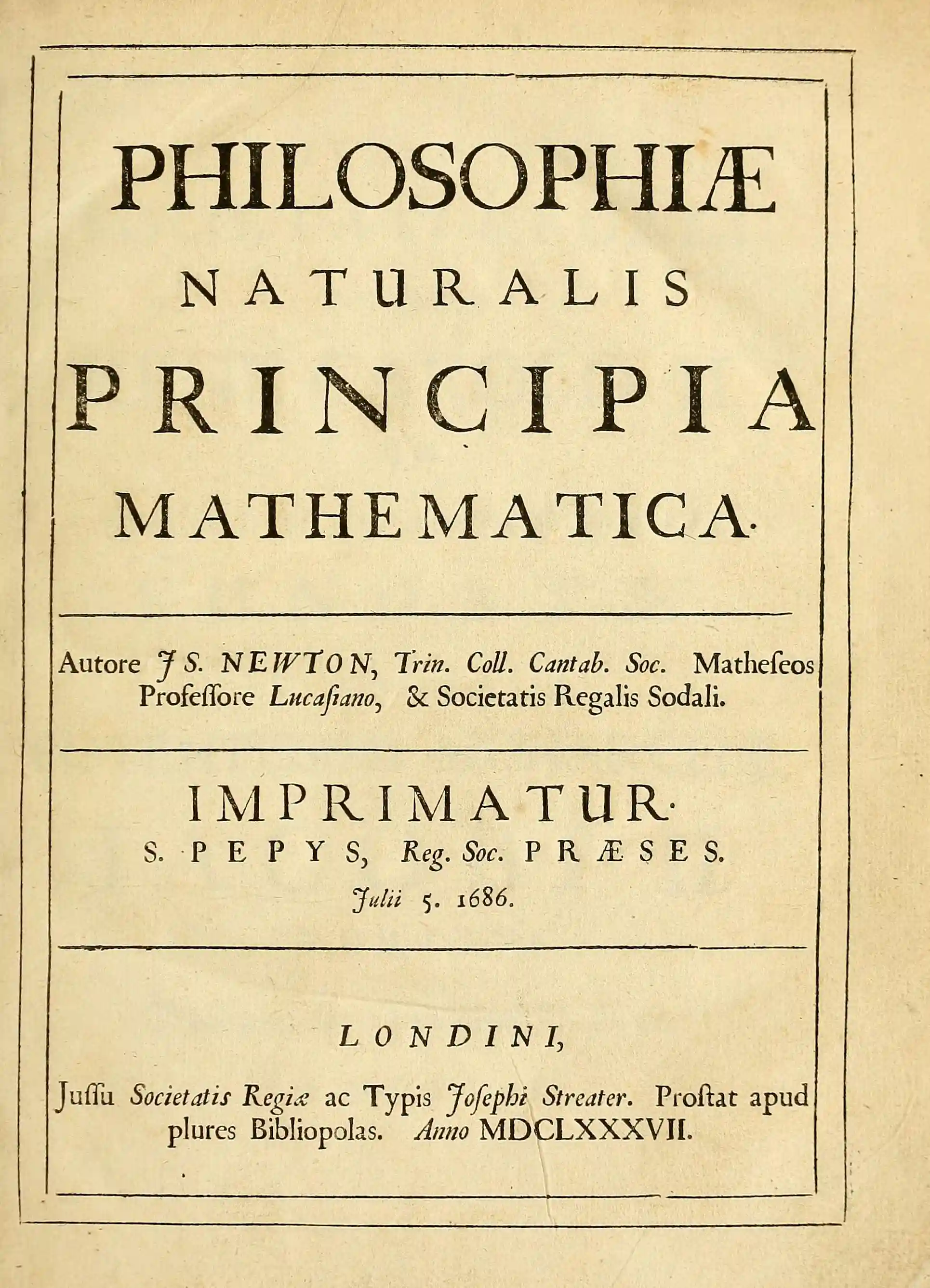
Philosophiæ Naturalis Principia Mathematica

Scanned copy

Isaac Newton

Cambridge University Library, Adv.b.39.1 · London 1687 · Latin

ABK_018_newton_0001.tif

This is Newton’s own copy. Blank leaves are sewn in between the pages of the first edition, and while preparing the second edition Newton crosses out printed lines, writes corrections in the margins and adds new paragraphs on the blank leaves. You read the book that first set down the laws of motion and universal gravitation while watching it change in its author’s hands.

It is one of the first documents Cambridge puts out when it opens its Newton archive in 2011, and the copy full of Newton’s notes is open in high resolution.

Read Newton's copy

Drawer IV · Nos. 19–21

Textbooks of the Enlightenment

From 1713 to 1748

19

1713

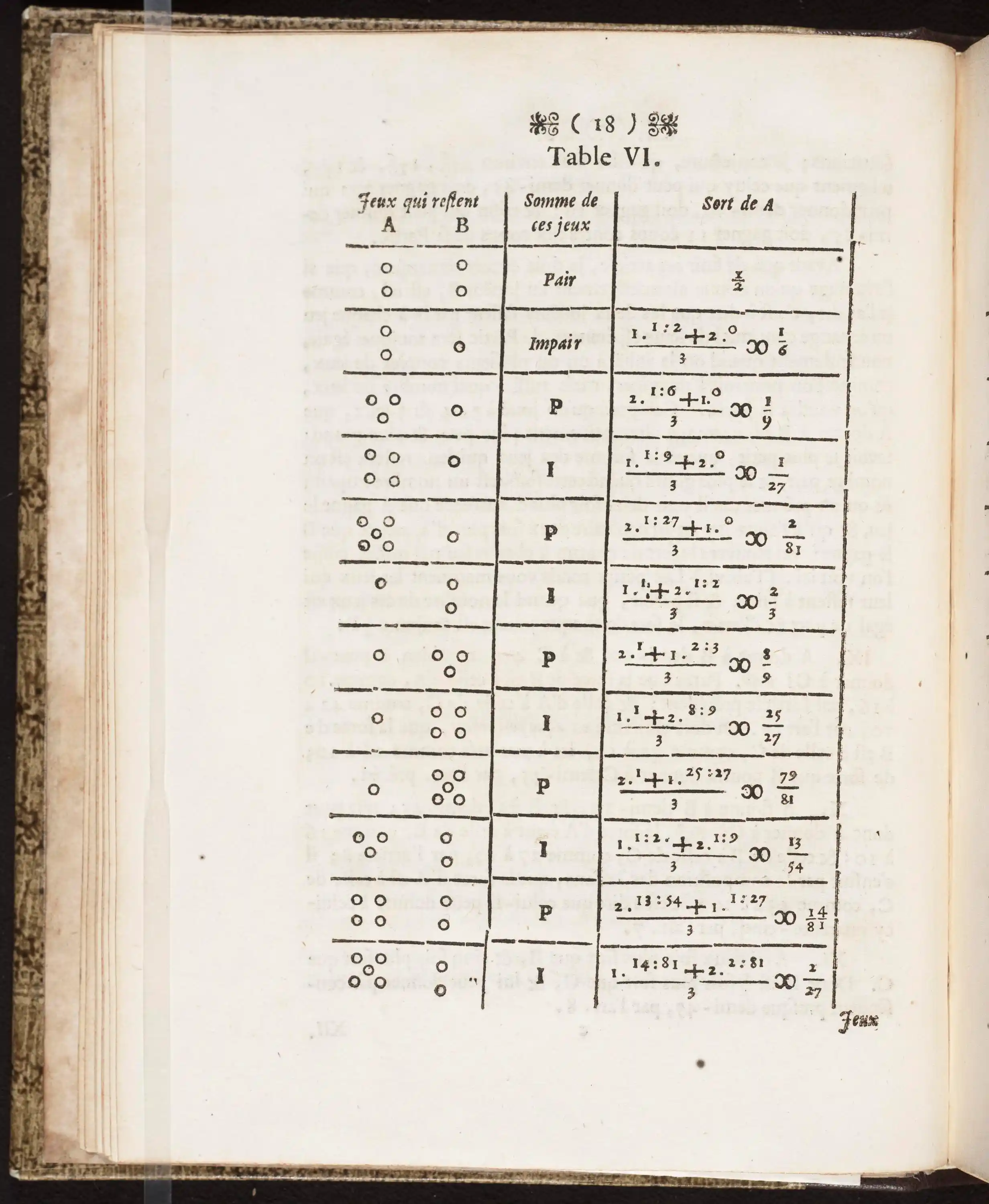
Ars Conjectandi

Scanned copy

Jacob Bernoulli

ETH Zurich and Halle digital libraries · Basel 1713 · Latin

40 tossesheads: 42.5%
↔ drag the slider · ABK_019_bernoulli_0001.tif

When Jacob Bernoulli dies in 1705, twenty years of work on probability are left unfinished, and his nephew Nicolaus publishes the book in 1713. The first proof of the law of large numbers, the idea that if you toss a coin often enough the share of tails gets close to half, is in the fourth part, and the Bernoulli numbers appear for the first time in the second. The fourth part ends unfinished, where Bernoulli left it.

This record leads to scans at two different libraries, and the 1899 German translation is in full view.

Find the scans

20

1748

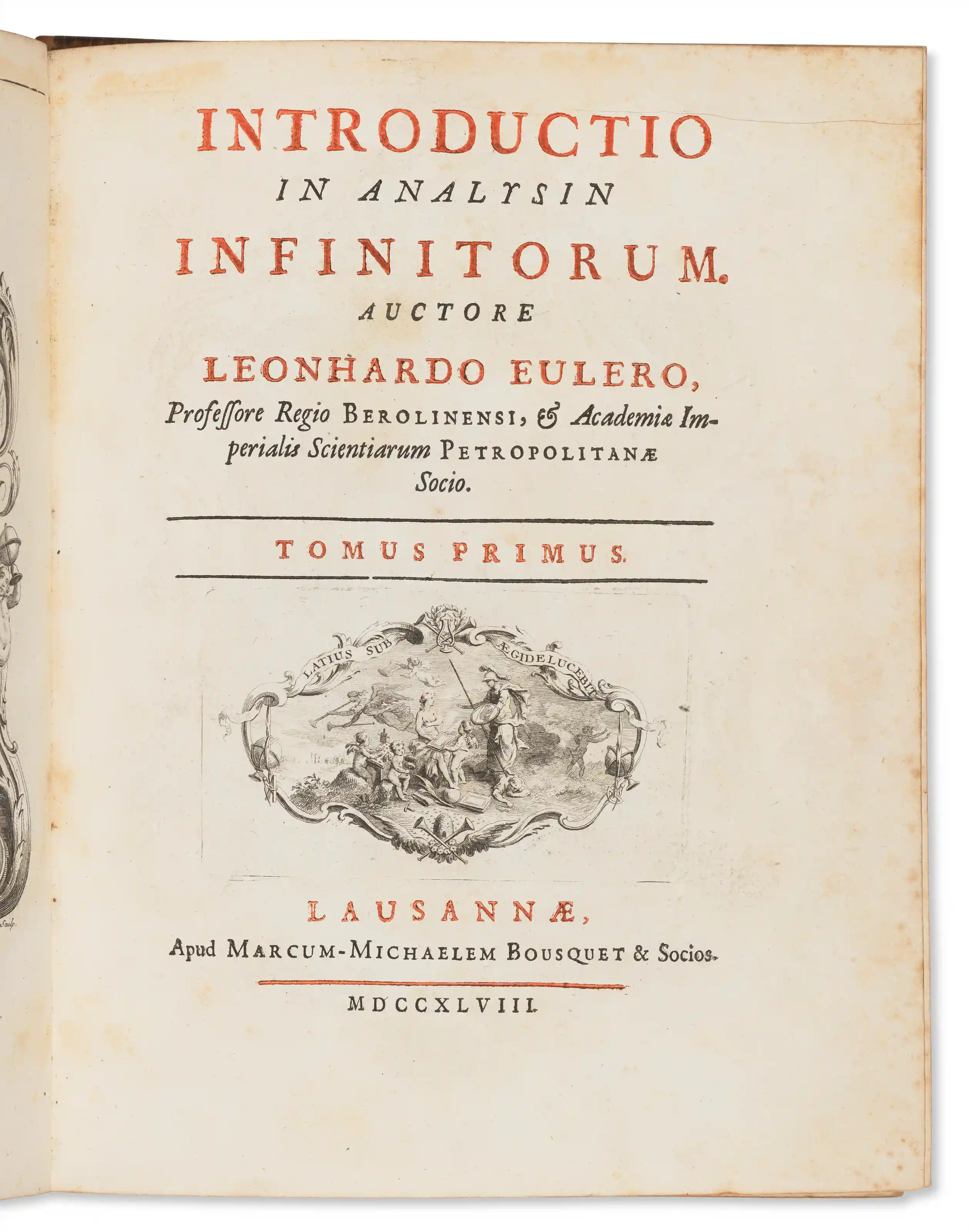
Introductio in analysin infinitorum

Scanned copy

Leonhard Euler

Euler Archive · Lausanne 1748 · Latin · Two volumes

xcos xsin xe^ix =cos x + i sin x
ABK_020_euler_0001.tif

With this book Euler puts the function at the centre of analysis. He defines the exponential and logarithmic functions, sine and cosine in their modern sense, and the relation eix = cos x + i sin x is in this book too. To my eye the chapters on infinite series and products read better than many analysis books written today.

The second volume is given over to curves and surfaces, and the plates at the end draw dozens of curves. The Latin scan is in the Euler Archive.

Read the Latin scan

21

1748

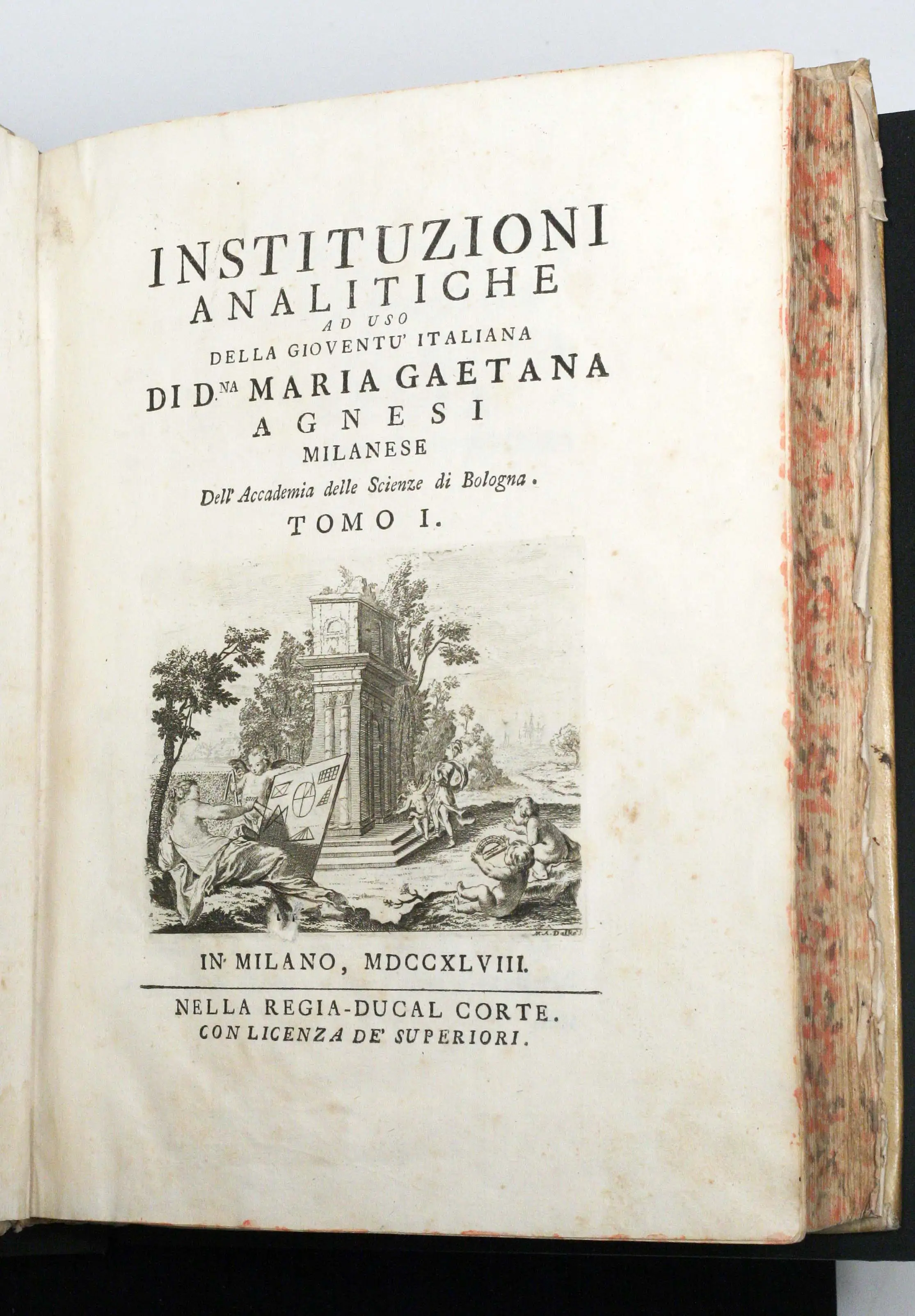
Instituzioni analitiche ad uso della gioventù italiana

Scanned copy

Maria Gaetana Agnesi

University of Seville · Milan 1748 · Italian · Two volumes

versiera
ABK_021_agnesi_0001.tif

Agnesi is the eldest of at least 21 children, and she grows this book out of notes she kept for teaching her siblings mathematics. It is one of the first complete textbooks to teach analysis in Italian rather than Latin. One curve in it is called versiera in Italian, it gets read as witch when it is translated into English, and the curve is still known as the witch of Agnesi.

The Cambridge mathematician John Colson learns Italian late in life just to translate it. Both volumes of the 1748 edition are open access, and Colson’s translation, printed in 1801, is in the archive.

Read both volumes

Drawer V · Nos. 22–29

The century of proof

From 1801 to 1913

22

1801

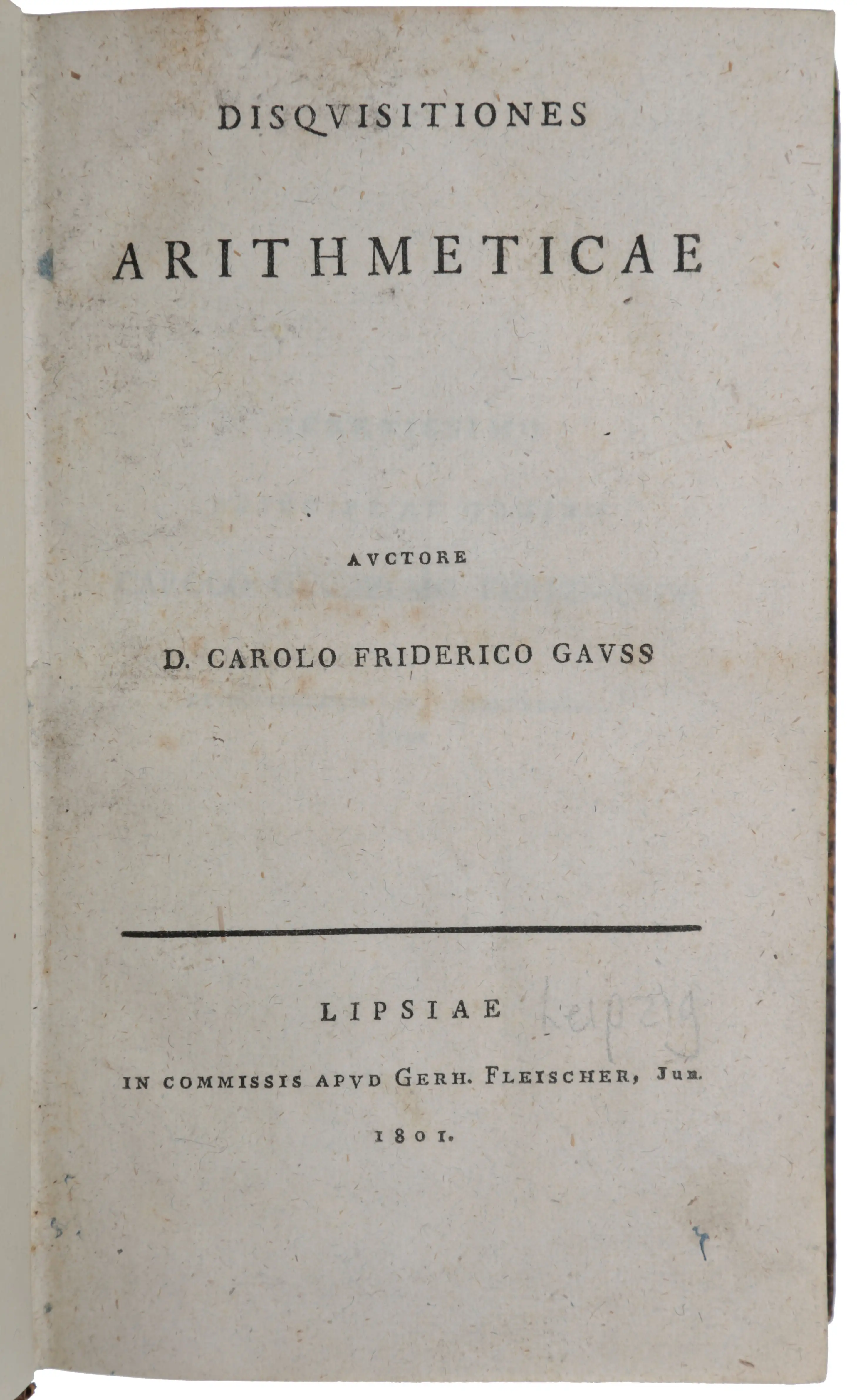
Disquisitiones Arithmeticae

Scanned copy

Carl Friedrich Gauss

Smithsonian Libraries · Leipzig 1801 · Latin

17
ABK_022_gauss_0001.tif

Gauss publishes this book at 24. It contains the proof of quadratic reciprocity and the demonstration that the regular 17-gon can be drawn with compass and straightedge, which Gauss finds when he is 18. With this book number theory stops being a pile of methods and becomes a discipline.

The new mathematics strains the typesetters so much that a four-page errata list is added at the end, and the pages with the worst errors are reprinted and slipped into the bound copies afterwards. The scan of the Smithsonian copy runs to 714 pages.

Read all 714 pages

23

1843

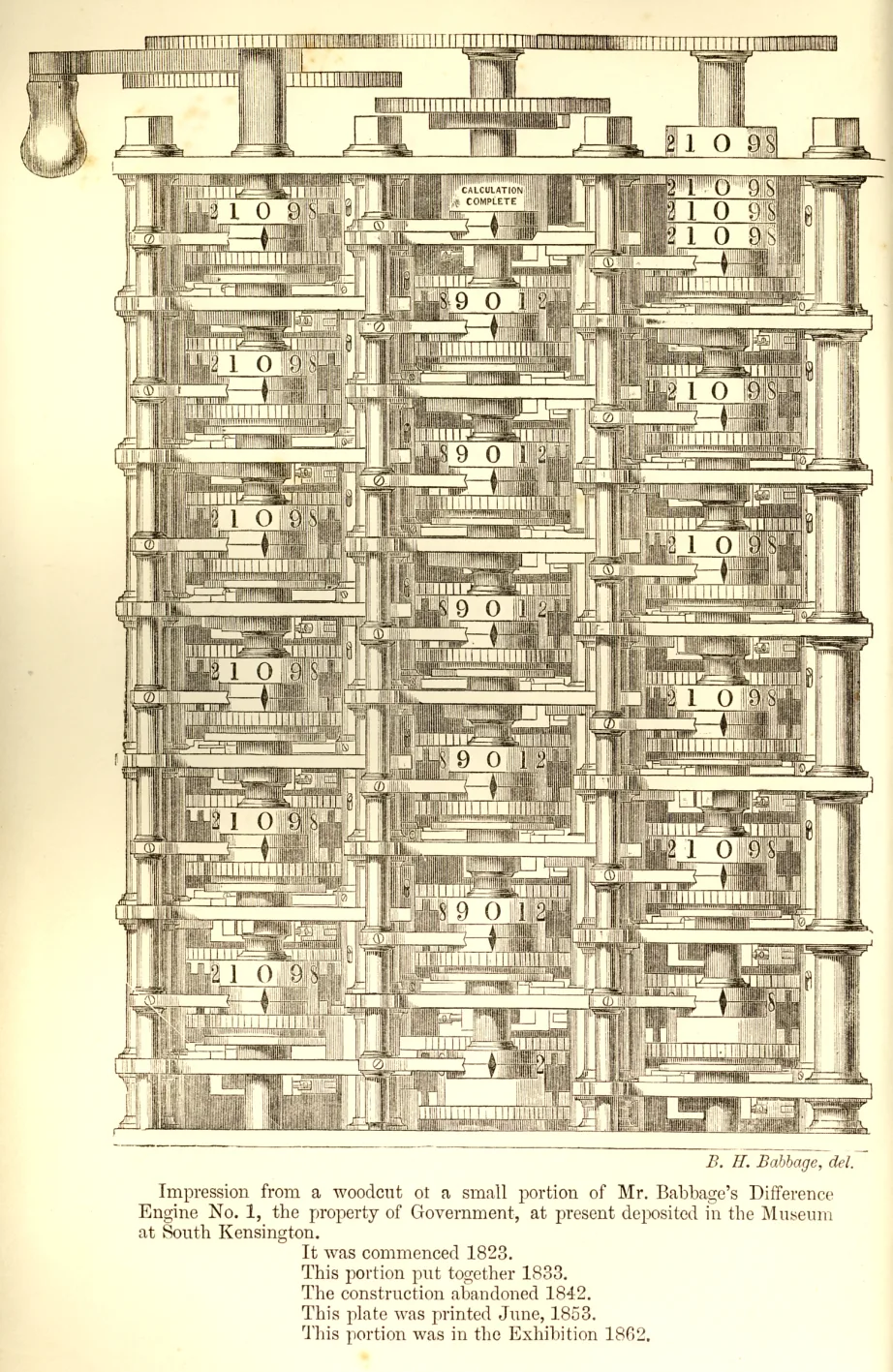
Sketch of the Analytical Engine invented by Charles Babbage, with Notes by the Translator

Retypeset text

Luigi Federico Menabrea, Ada Lovelace

Scientific Memoirs · London 1843 · English · Project Gutenberg

B₂1/6B₄−1/30B₆1/42B₈−1/30
ABK_023_lovelace_0001.tif

Ada Lovelace translates Menabrea’s French paper on Babbage’s Analytical Engine and adds notes about three times longer than the paper itself. In Note G she shows step by step, in a table, how the engine would compute the Bernoulli numbers, and that table is counted as the first published computer program. Lovelace signs her notes only A.A.L.

The engine is never built, but the full text with the notes is free.

Read the notes

24

1847

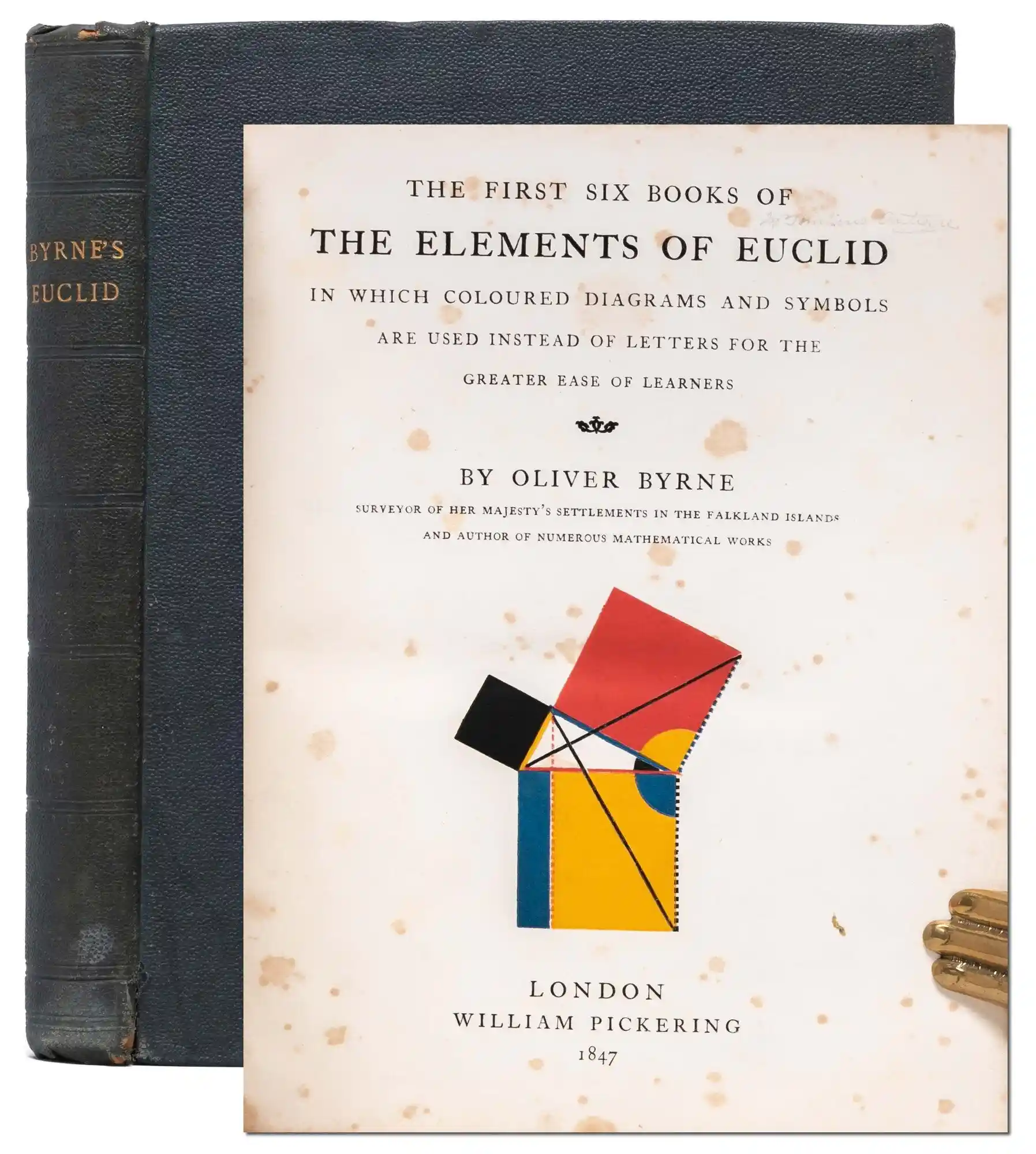
The First Six Books of the Elements of Euclid in which Coloured Diagrams and Symbols are Used

Scanned copy

Euclid, Elements, Oliver Byrne edition

University of Toronto, Thomas Fisher Rare Book Library · London 1847 · English

ABK_024_byrne_0001.tif

Byrne teaches the first six books of Euclid with red, yellow, blue and black shapes in place of letters, and the proofs flow across the page with almost no words. Colour printing is so expensive that the book doesn’t sell in its day, and its publisher William Pickering goes bankrupt a few years later, with the book thought to have played a part.

Today it looks like a piece of design printed seventy years before the Bauhaus, and a paper engineer has since folded Byrne’s figures into three dimensions. Toronto’s scan of the colour copy is open from cover to cover.

Read the colour copy

25

1854

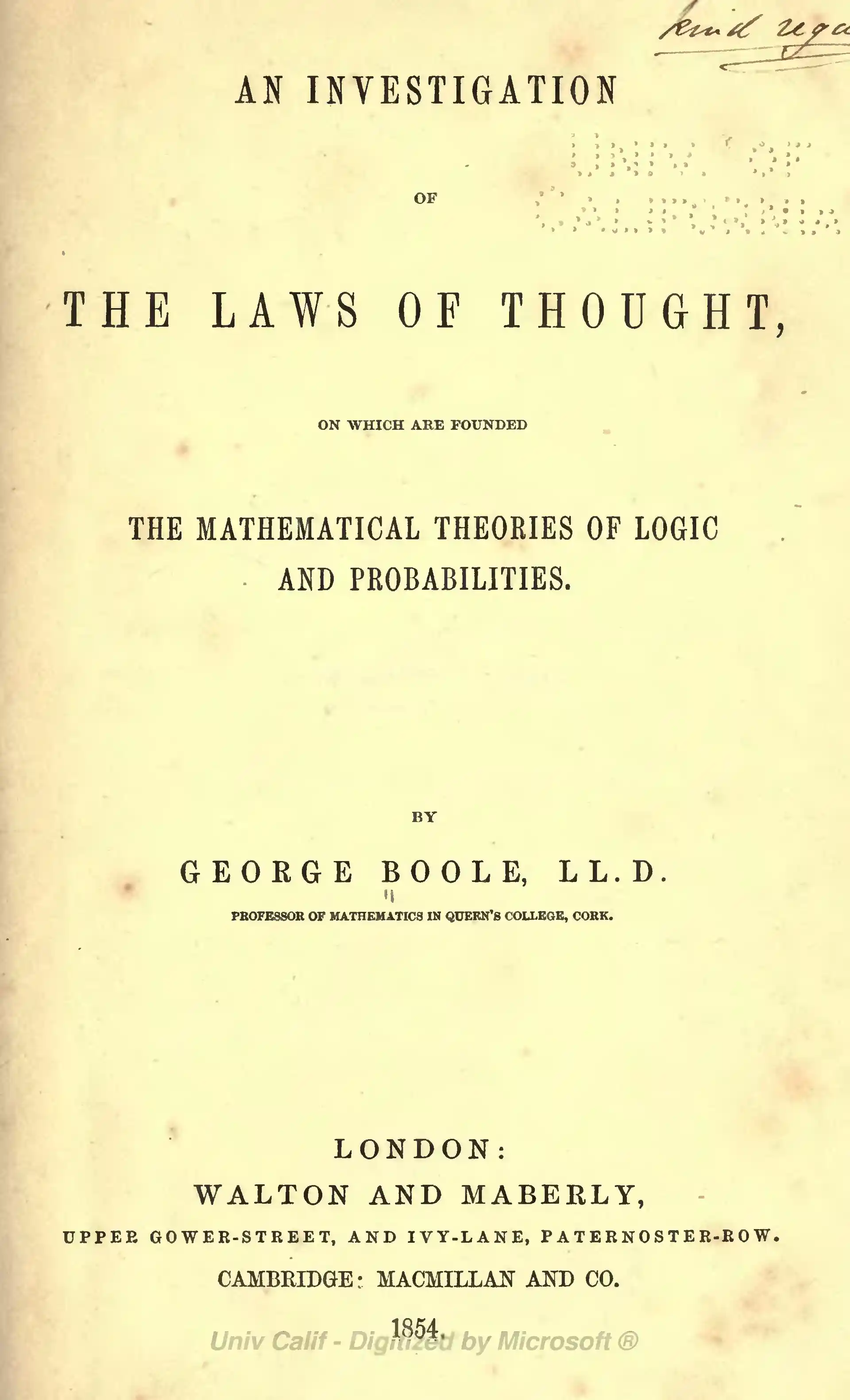
An Investigation of the Laws of Thought

Retypeset text

George Boole

London 1854 · English · Project Gutenberg

1x1 − xx(1 − x) = 0
ABK_025_boole_0001.tif

Boole turns logic into algebra and writes, with a single equation like x(1 − x) = 0, that nothing can be both itself and not itself at once. A teacher in Cork with no university degree takes logic out of philosophy and carries it into mathematics with this book.

When Shannon applies this algebra to the relay circuits of telephone exchanges 83 years later, the cornerstone of today’s computers falls into place. The full text downloads as PDF and TeX.

Read the full text

26

1884

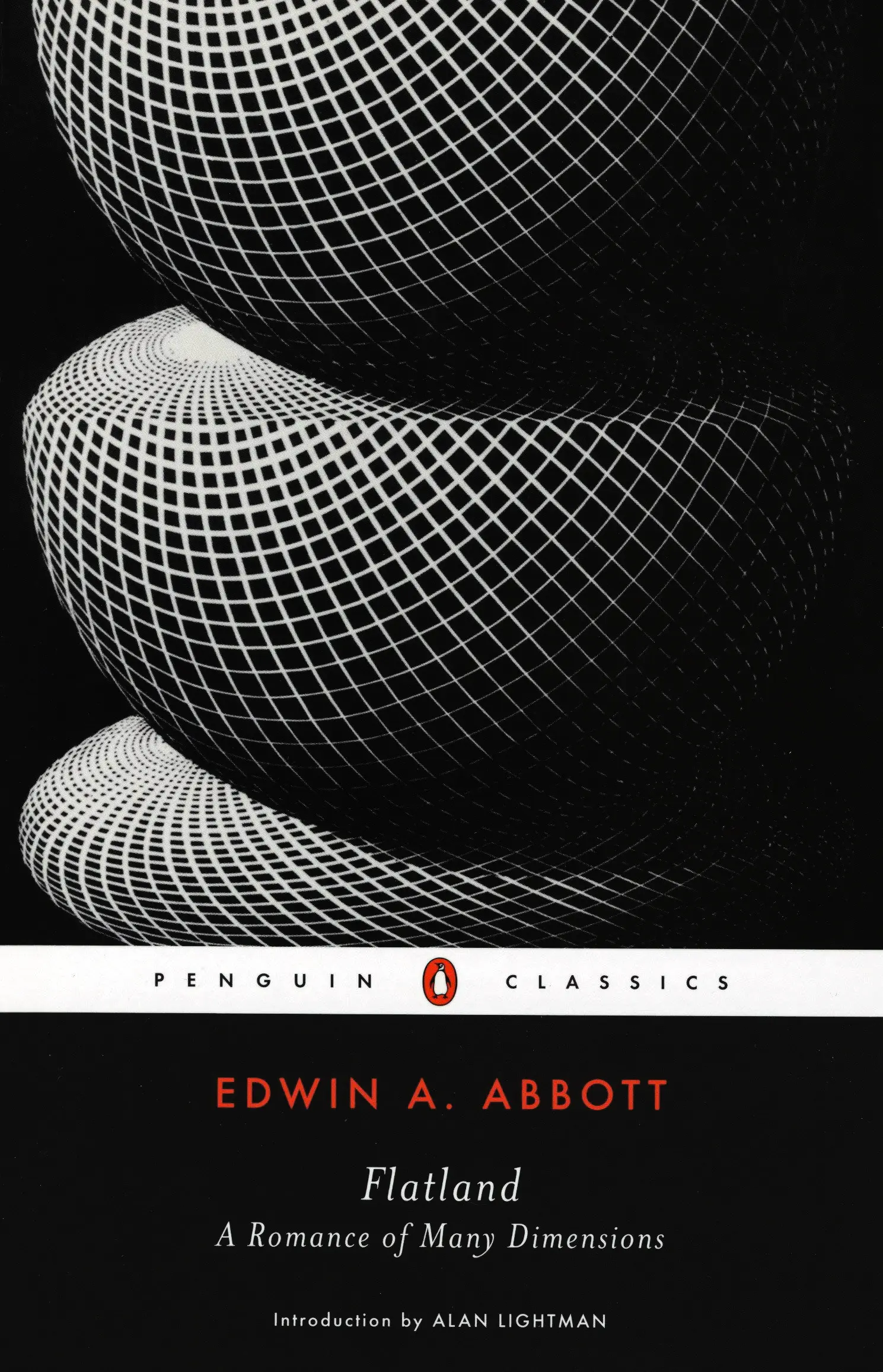
Flatland: A Romance of Many Dimensions

Retypeset text

Edwin A. Abbott

London 1884 · English · Project Gutenberg

what A Square sees, left to right
ABK_026_flatland_0001.tif

A short novel about a square living in a two-dimensional world who one day meets a three-dimensional sphere. It is still the best way in for thinking about a fourth dimension, and at the same time it makes fun of the rigid class and gender lines of Victorian England. Abbott signs the first edition with the pen name A Square.

The only novel on the list, and the full text is on Gutenberg.

Read the novel

27

1899

The Foundations of Geometry

Retypeset text

David Hilbert

Grundlagen der Geometrie · E. J. Townsend's 1902 translation · Project Gutenberg

ABCenter one side, leave by another
ABK_027_hilbert_0001.tif

Hilbert rebuilds Euclidean geometry on undefined terms like point, line and plane and twenty axioms. Hidden assumptions Euclid used unnoticed for two thousand years, such as a line that crosses one side of a triangle having to cross another side too, are written down openly as axioms here for the first time.

Reading Euclid in this book after Byrne’s coloured pages is like putting two different worlds side by side. The full text of the Townsend translation is free.

Read the translation

28

1908

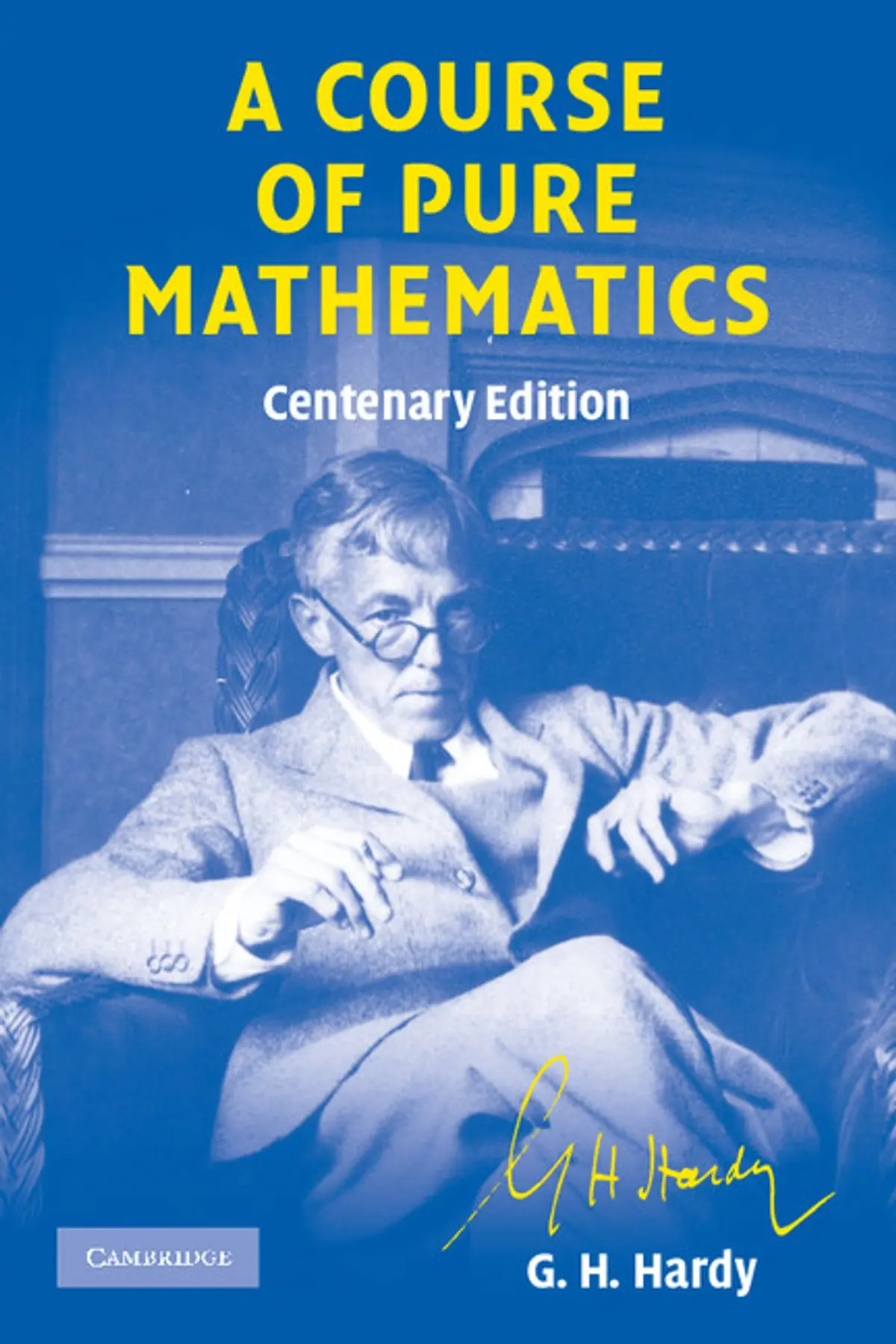
A Course of Pure Mathematics

Retypeset text

G. H. Hardy

Cambridge, third edition 1921 · English · Project Gutenberg

1± εaₙ = 1 + (−1)ⁿ / n
ABK_028_hardy_0001.tif

Hardy writes this book to put the teaching of analysis in English universities on solid ground, and it has hardly been out of print since its first edition. He takes everything from real numbers to limits, from derivatives to infinite series, with proofs, and some of the exercises are old Cambridge examination questions. Decades later he writes A Mathematician’s Apology.

On Gutenberg you can download even the PDF and the LaTeX source of the third edition, which means you can retypeset the book on your own computer.

Read the third edition

29

1910

through 1913

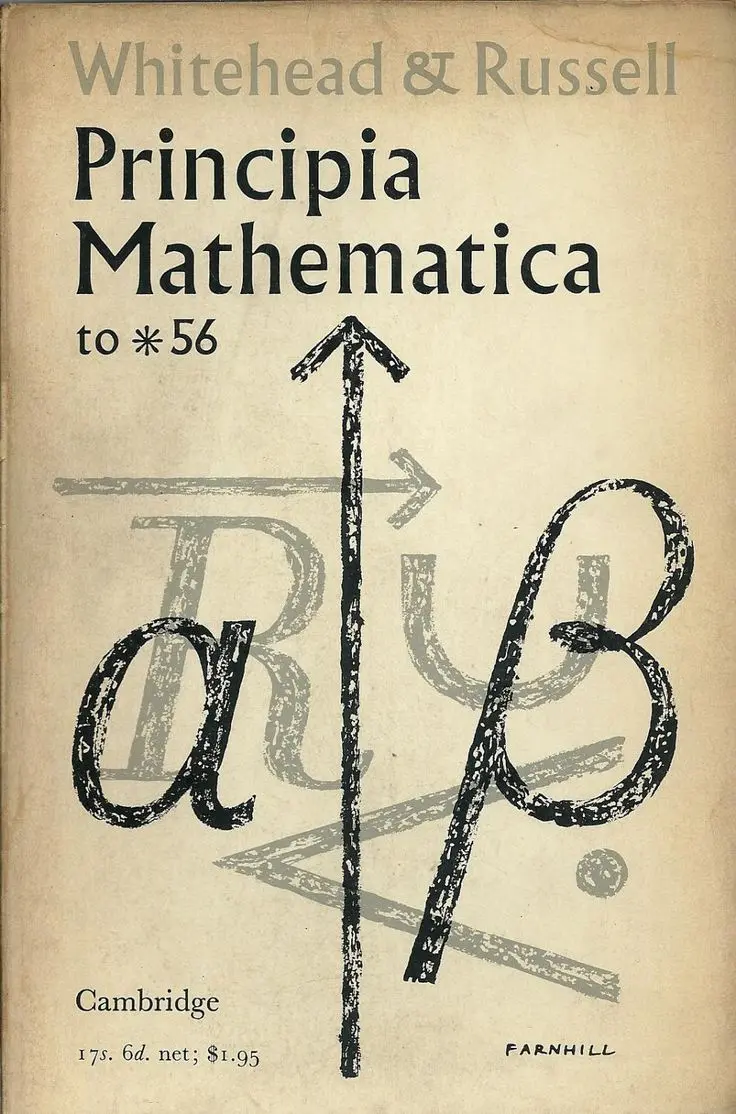
Principia Mathematica

Scanned copy

Alfred North Whitehead, Bertrand Russell

University of Michigan, HathiTrust · Cambridge 1910 to 1913 · English · Three volumes

379*54·43. ⊢ :. α, β ∈ 1 . ⊃ :α ∩ β = Λ . ≡ . α ∪ β ∈ 21 + 1 = 2
ABK_029_principia_mathematica_0001.tif

Whitehead and Russell set out to derive all of mathematics from logic. The proposition 1 + 1 = 2 is only approached on page 379 of the first volume, the arithmetic proof arrives in the second volume, and the authors note under it, with a dry joke, that the proposition is occasionally useful.

When Gödel shows in 1931 that such a system can never be complete, the project’s grand aim is closed off, but the book stays on as the language of logic. All three volumes are open in full view.

Read all three volumes