
Abakcus
← Back to home

Abakcus · The Geometry of Taste

68 Best Geometry Books for Mathematicians and Designers

The beautiful, the rigorous, and the hard to find — one curated shelf

68 books6 shelves1509–2024

68 Best Geometry Books for Mathematicians and Designers — the Abakcus geometry shelf

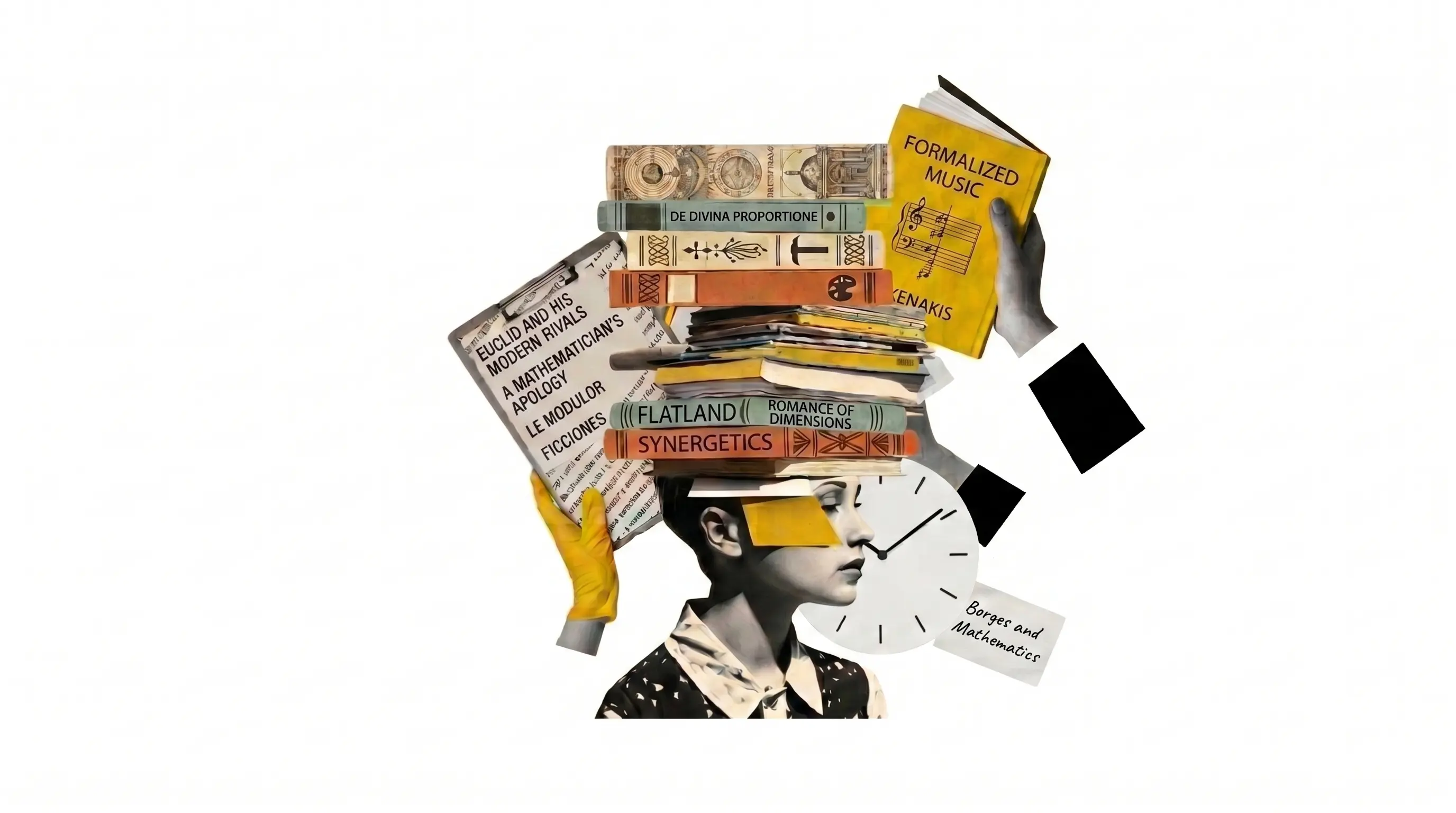
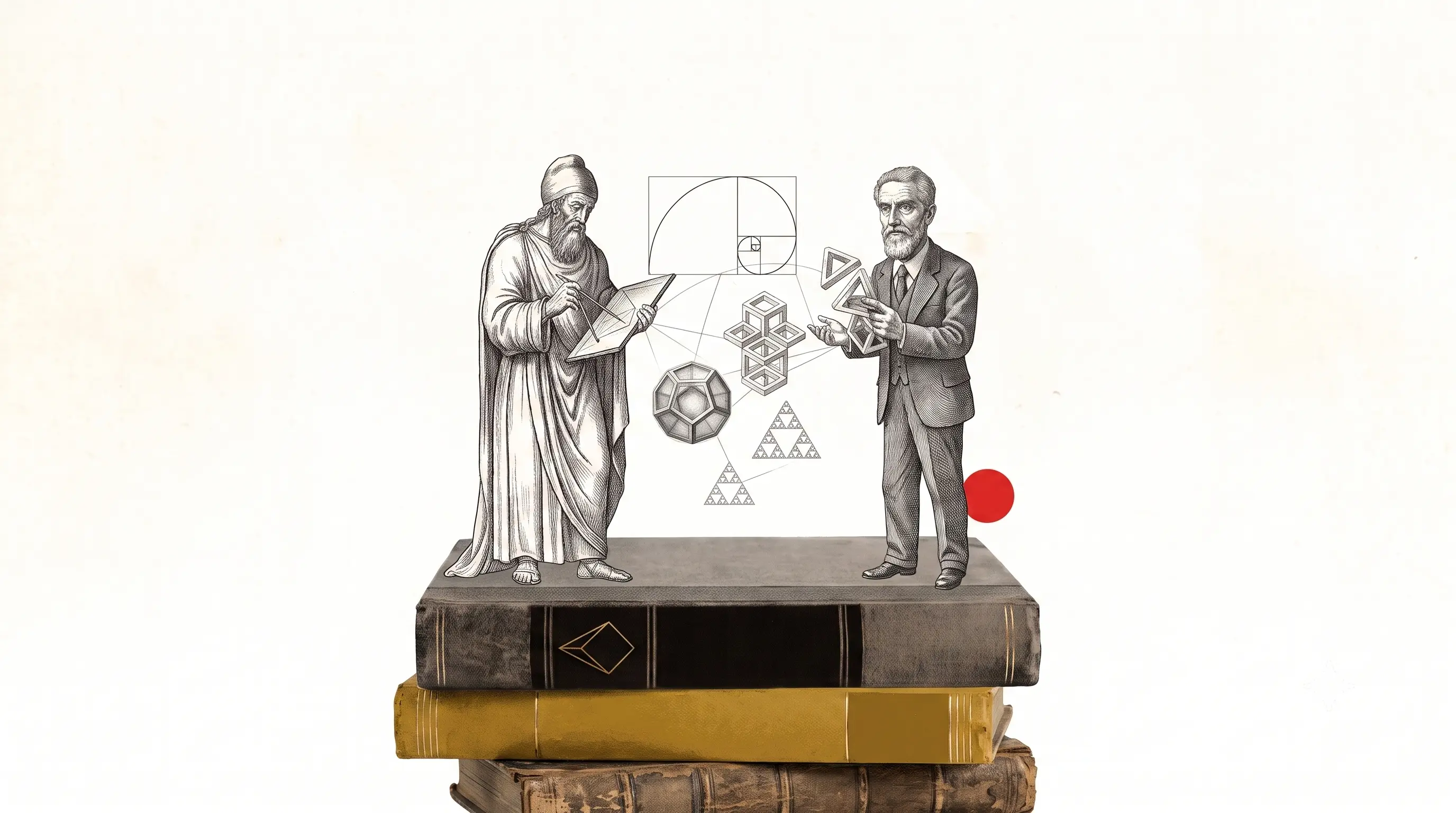
I wrote this list once before; then the page fell victim to one of the accidents that befall good files. Rewriting it, I chose to expand rather than trim, because in the time between, the shelf grew and the thesis sharpened: mathematicians and designers love the same books. Set a topologist's library beside a graphic designer's and the intersection turns out to be surprisingly crowded — and the name of that intersection is geometry.

There's a reason for this. Geometry is the one branch of mathematics that speaks to the eye; design is the one craft that thinks with it. Both ask the same question: why does this form stand the way it does, and what would we lose if it stood otherwise? When Oliver Byrne turned proof into color in 1847, he was answering that question not as a mathematician but as a compositor of pages. When Josef Müller-Brockmann carved the page into a grid a century later, he was working not as a designer but as a geometer. Up close, the line between them isn't there.

Below are six shelves: the canon, pattern, the designer's table, architecture and perspective, the mathematicians' bedside books, and the forms of nature. The order isn't a hierarchy; every book is here because it's the best at its own job. I compiled this from the same vein for people who love numbers but can't give up a beautifully made book, and for people who work in design but want a solid frame underneath.

SHELF I

The Canon: where the page itself is a design object

In these eight books, content and form can't be pulled apart; the printing itself is part of the proof.

  1. 01

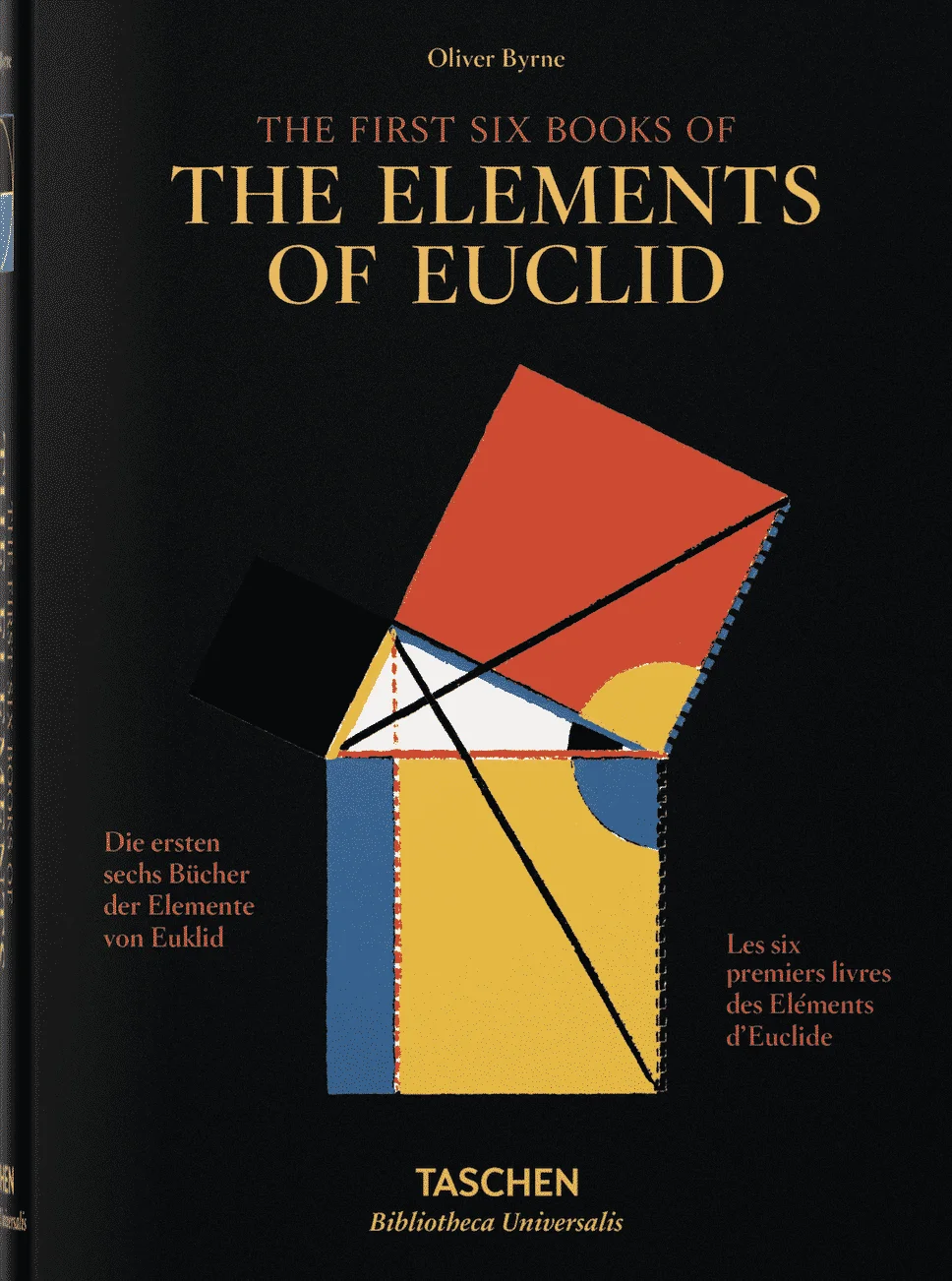
    The First Six Books of the Elements of Euclid

    Oliver Byrne · 1847 · William Pickering

    Byrne's Euclid is less a reinterpretation of Euclid than a radical redesign of how mathematical thought can appear on the page. Byrne replaces letters with color — primary reds, blues, yellows — turning proof from a symbolic puzzle into a visual sequence. The effect is immediate: the eye can follow the proof without shuttling back and forth between text and figure. The book was shown at the Great Exhibition of 1851, was a commercial failure in its own day, and is now counted among the boldest works of nineteenth-century printing. Sixty years before Mondrian and De Stijl, that aesthetic already lived in the pages of a geometry book. Thanks to Taschen's facsimile and Kronecker Wallis's new typesetting, it can now be owned without paying antiquarian prices. No other book has any business opening this list.
  2. 02

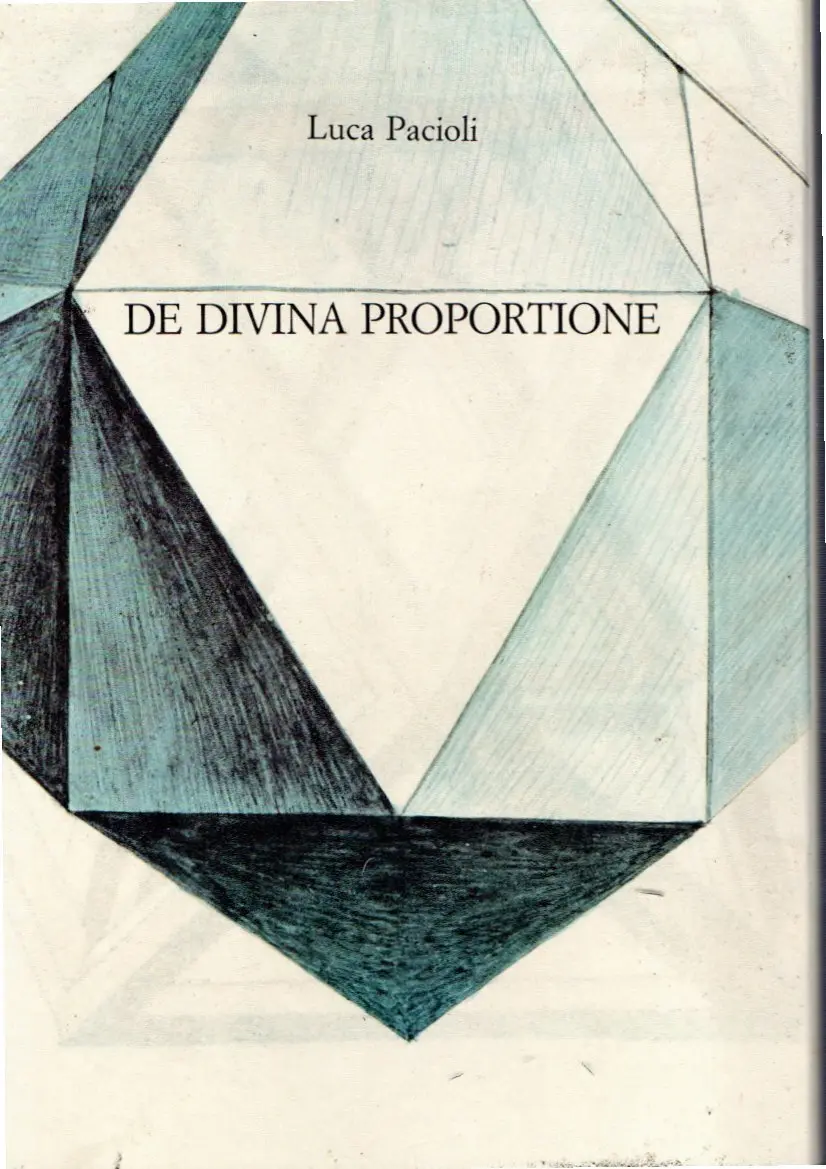
    On the Divine Proportion: De Divina Proportione

    Luca Pacioli · 1509 · Venice

    The zero point of the proportion literature, and probably the finest illustrator arrangement in history: the text from Franciscan mathematician Luca Pacioli, the polyhedra drawings from Leonardo da Vinci. Leonardo's sixty-odd solids drawn as skeletons — hollow, their edges rendered as thick struts — solved the problem of showing polyhedra three-dimensionally on paper five centuries ago; we still draw them the same way today. The theological meanings Pacioli loads onto the golden ratio are contestable, and the mathematics is in places an expanded commentary on Euclid's Book XIII; but the book's cultural weight comes not from the text but from the sight of mathematics and art standing in one volume as equal partners. Facsimiles are also sold as collector's objects, and rarely disappoint.
  3. 03

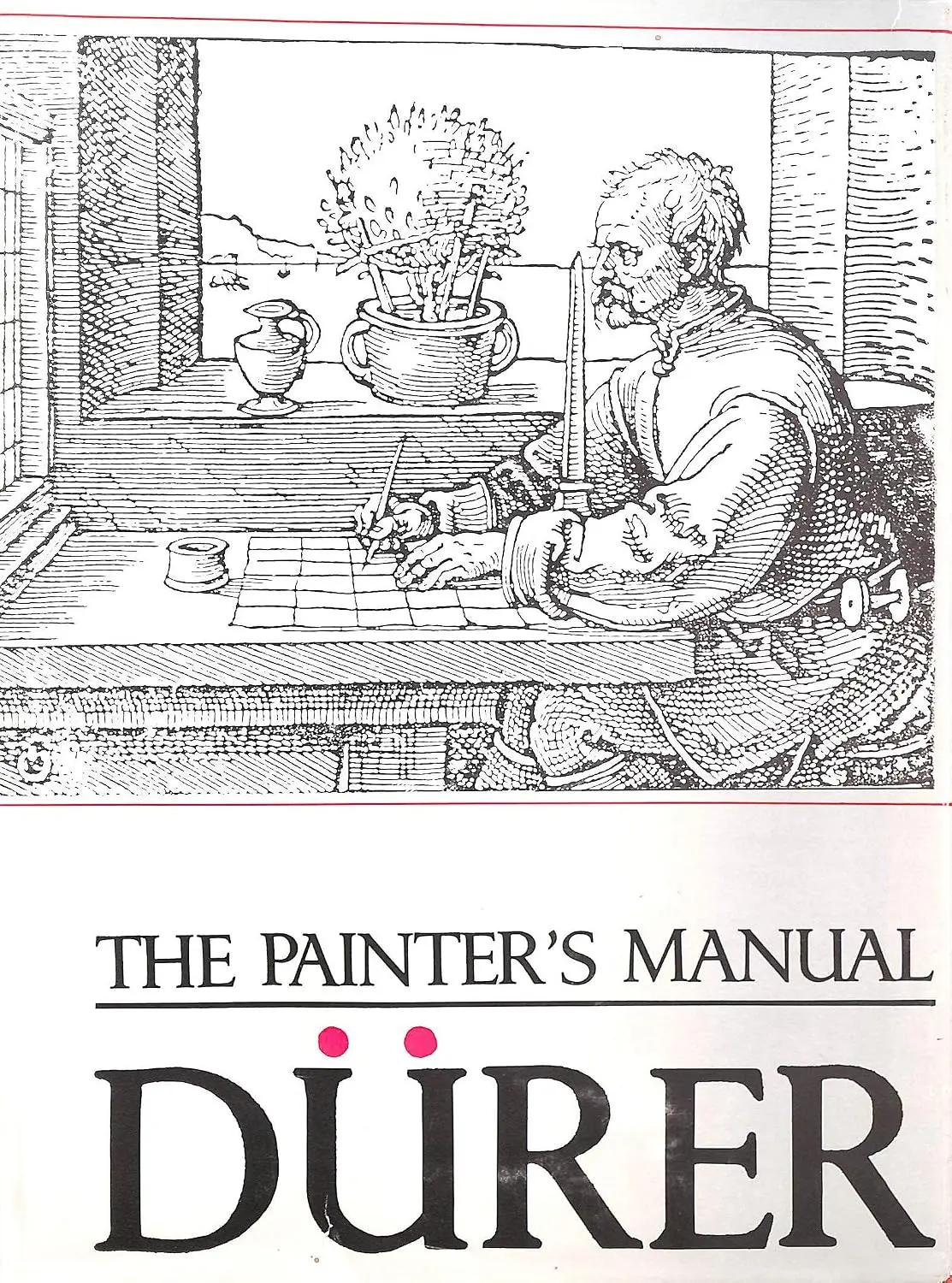
    The Painter's Manual (Underweysung der Messung)

    Albrecht Dürer · 1525 · Nuremberg

    A geometry book an artist wrote for his own needs — and unique for exactly that reason. To pass on to German craftsmen the perspective and proportion he'd learned in Italy, Dürer sat down and wrote the first German textbook of ruler-and-compass geometry: curve constructions, polygon approximations, letter constructions, perspective devices. The passage everyone working with typography should see once is the one where Dürer builds Roman capitals one by one with ruler and compass; the first round of today's "geometric font" debates was fought there, five hundred years ago. Mathematicians love the book for another reason: in some problems Dürer deliberately gives an approximate construction rather than an exact one, and says so honestly — one of the most elegant leaks of craftsman's pragmatism into the history of mathematics.
  4. 04

    The Six-Cornered Snowflake

    Johannes Kepler · 1611 · Prague

    The slim pamphlet Kepler wrote as a New Year's gift for his patron appears to worry a single question: why is a snowflake six-cornered? Chasing the answer, Kepler wanders into sphere packing and proposes that oranges cannot be stacked more tightly than the greengrocer already stacks them — a claim that later took the name Kepler conjecture and whose proof arrived only in 1998, from Thomas Hales. So what you hold is the birth certificate of a problem that stayed open for four centuries, and at the same time the best gift book in the history of science. The Paul Dry Books edition gathers the Latin text, translation, and essays in one thin volume; it finishes in a single sitting, its effect does not.
  5. 05

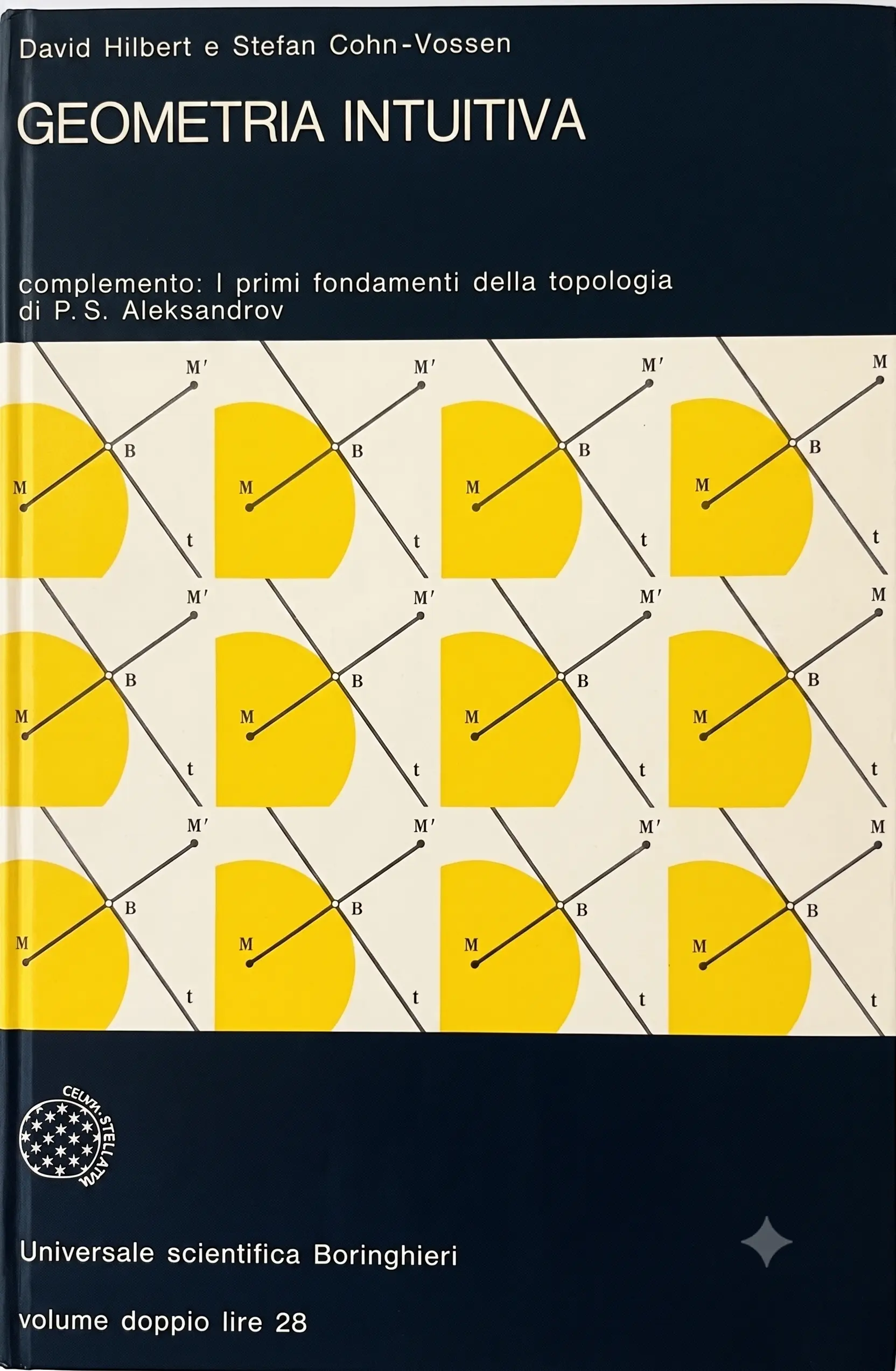
    Geometry and the Imagination

    David Hilbert & Stephan Cohn-Vossen · 1932 · German original: Anschauliche Geometrie

    One of the twentieth century's most abstract mathematicians telling geometry entirely by sight. Built on Hilbert's Göttingen lectures, the text tours from curves to polyhedra, from lattices to topology, keeping formula to a minimum and letting the shape do the talking. When mathematicians say "intuitive geometry," this is the book they mean; the program in the preface can be summed up in one sentence: to understand is to be able to see. Ninety years on, it's still among the best "real mathematics" books you can put in a designer's hands, because it takes the reader into the depth without pushing them through a barrier of equations. The AMS Chelsea edition is the easiest to find.
  6. 06

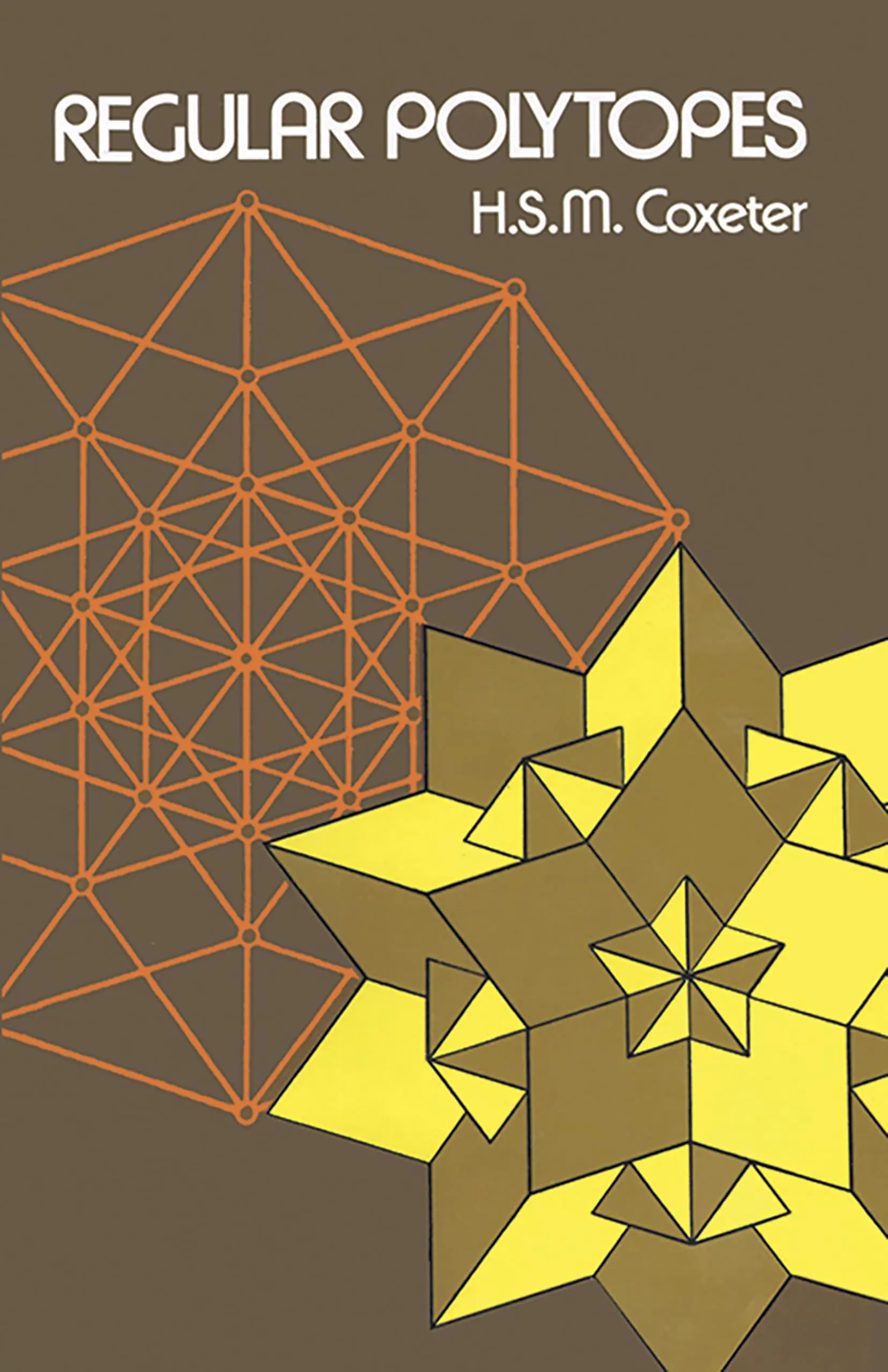
    Regular Polytopes

    H.S.M. Coxeter · 1947 · Dover

    Coxeter was the man who single-handedly kept classical geometry standing in a century that considered it outmoded beside abstract algebra, and this is one of his cornerstones. Regular Polytopes is the standard reference for the regular solids of the fourth dimension — the 120-cell, the 600-cell — laying out their construction and their symmetry with a completeness no one has matched since. Its tie to the design world is direct: M.C. Escher carved his Circle Limit series after seeing Coxeter's figure of a hyperbolic tiling, and the two corresponded for years — one of the rare documented cases where a mathematician's diagram turned directly into an engraving.
  7. 07

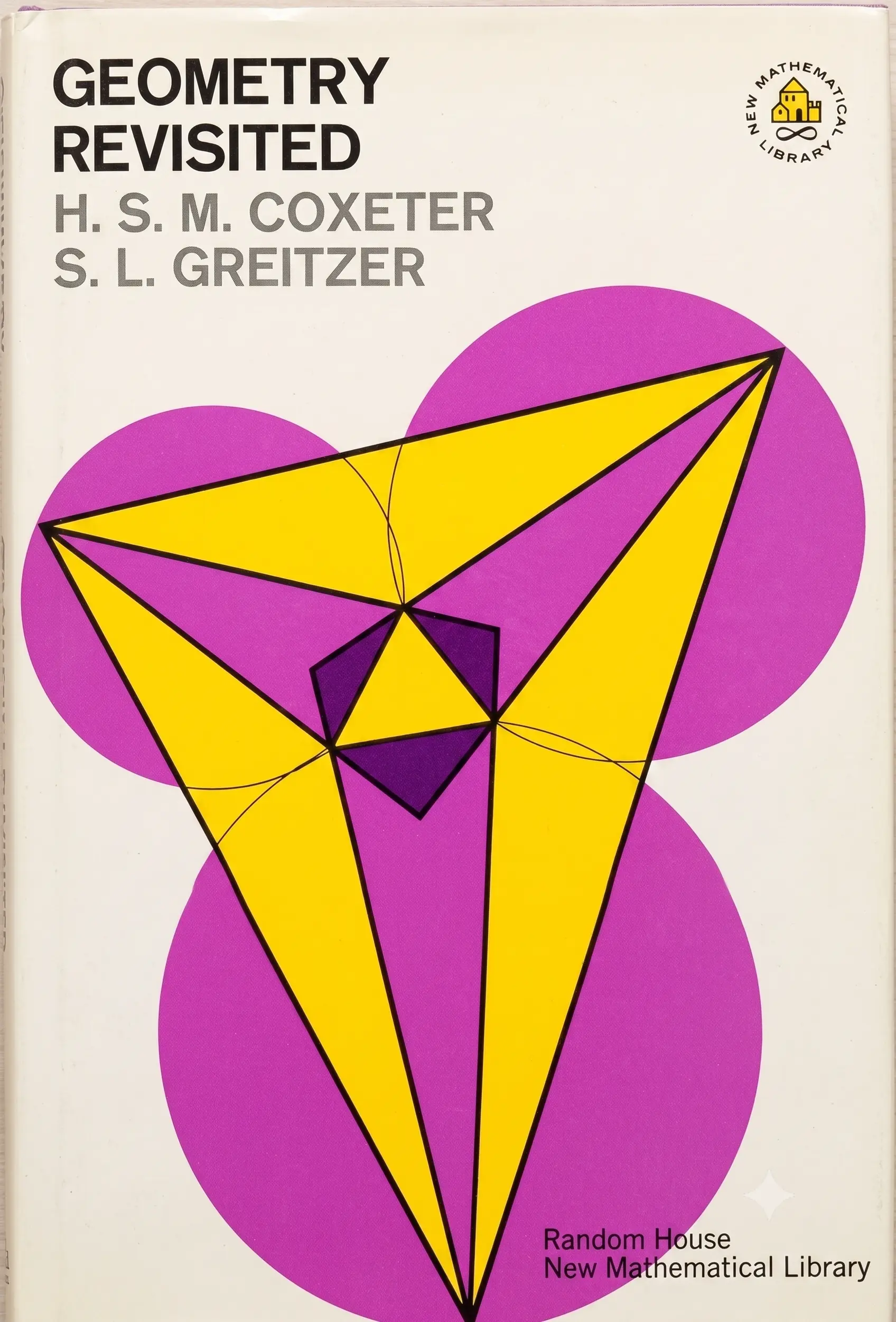
    Geometry Revisited

    H.S.M. Coxeter & S.L. Greitzer · 1967 · MAA, New Mathematical Library

    A second course that begins where high-school geometry ends: the nine-point circle, Morley's theorem, Ptolemy, inversion, projective transformations. In a hundred and fifty pages it opens the floor of Euclidean geometry that no one is ever shown in school, polishing each theorem one at a time like a gem. It's been a fixture of olympiad preparation for decades; but the real value of the book isn't the exam, it's the tone: Coxeter and Greitzer tell the reader "geometry isn't finished, it's only just beginning" — and prove it. Thin, cheap, dense — measured by the ratio of what it gives to the space it takes on the shelf, it may be the most efficient entry on this list.
  8. 08

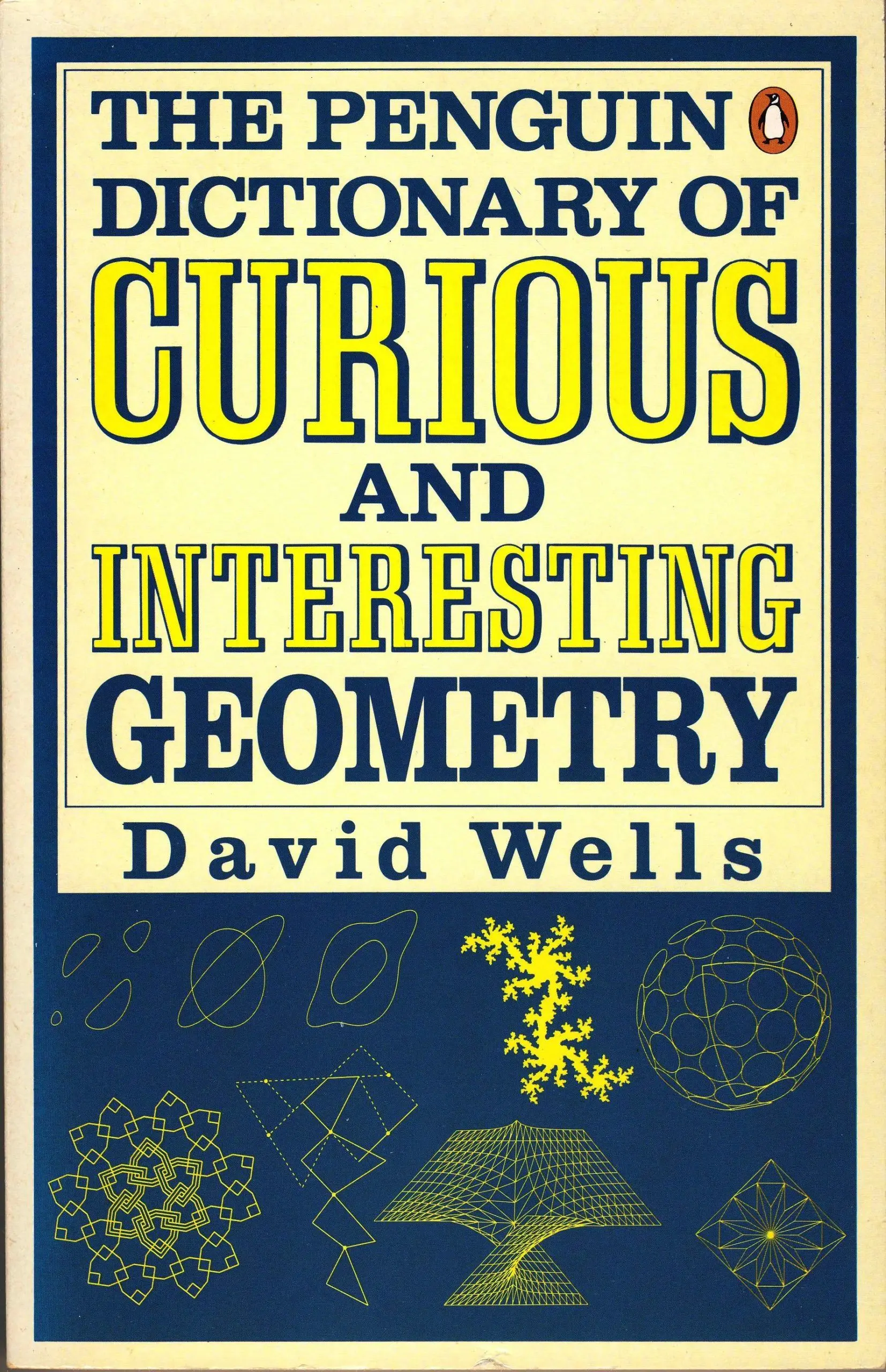
    The Penguin Dictionary of Curious and Interesting Geometry

    David Wells · 1991 · Penguin

    A dictionary of geometric oddities arranged A to Z: pendulum curves, non-tiling pentagons, the Reuleaux triangle, Napoleon's theorem, hundreds of entries you'd never think of. Encyclopedic yet personal; Wells picked every entry with a curator's appetite and tells a little story instead of a dry definition. The book has long been out of print and its price on the secondhand market keeps climbing — an unusual cult status for a reference work. It seems designed to be opened at a random page and lost in for ten minutes; to my eye it's the only real example of the "bedside geometry" genre.
SHELF II

Proportion, symmetry, pattern

The question of how a motif repeats itself leads, in mathematics, to group theory — and in design, to wallpaper.

  1. 09

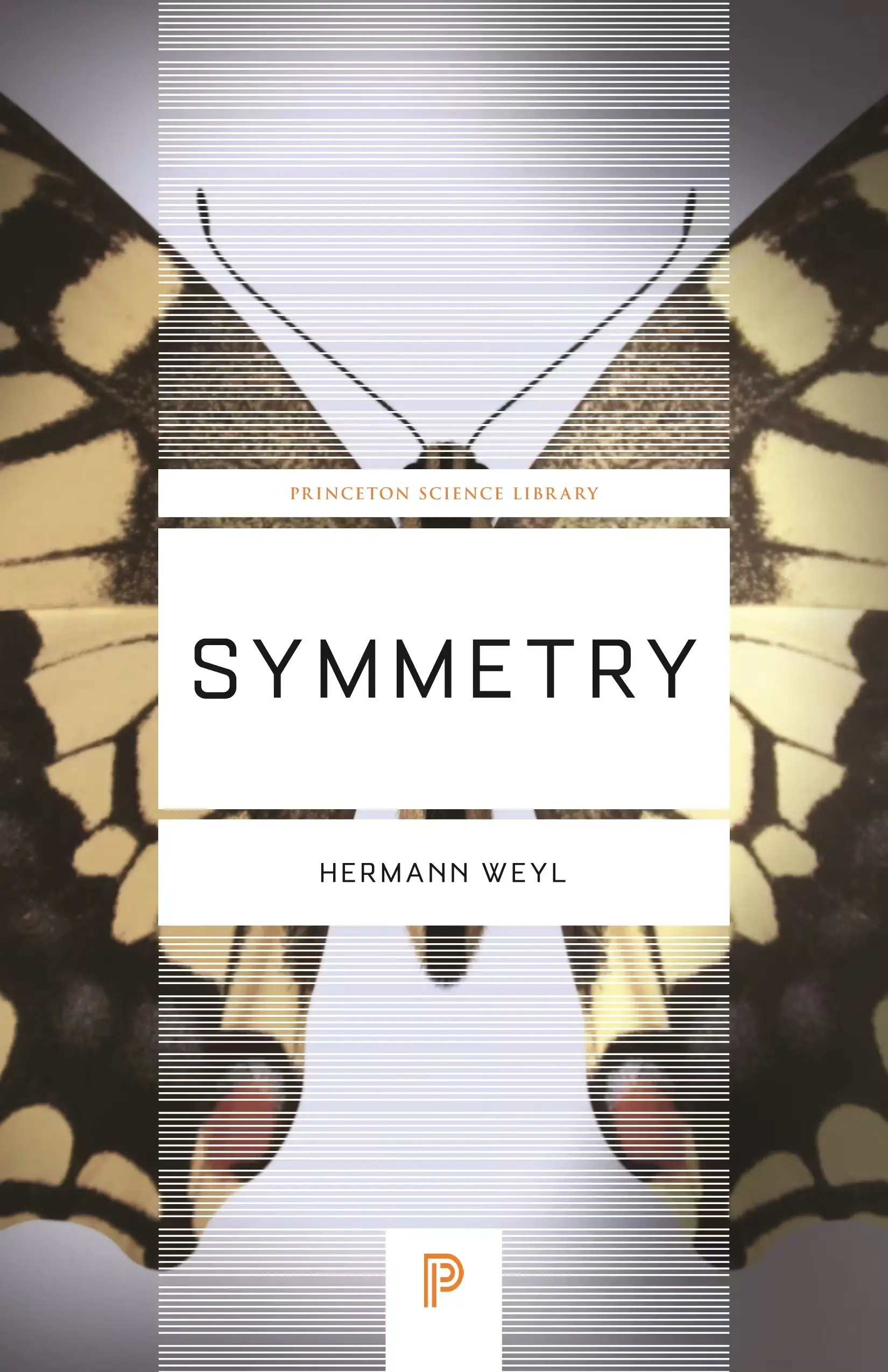
    Symmetry

    Hermann Weyl · 1952 · Princeton University Press

    The slim volume drawn from the last lectures Weyl gave before retiring from the Institute for Advanced Study has held its place for over seventy years as the densest general-reader book on symmetry. Weyl begins with bilateral symmetry — the human face, Sumerian reliefs — and by the book's end has brought the reader, without their noticing, to the notion of a group: symmetry is the sum of the operations that can be performed on an object without changing it. His choice of examples, from art history to crystallography, is flawless, and the sentences are more literary than you'd expect from a physicist. The gold standard of the "light book from a heavy mathematician" genre, and the theoretical backbone of everything else on this shelf.
  2. 10

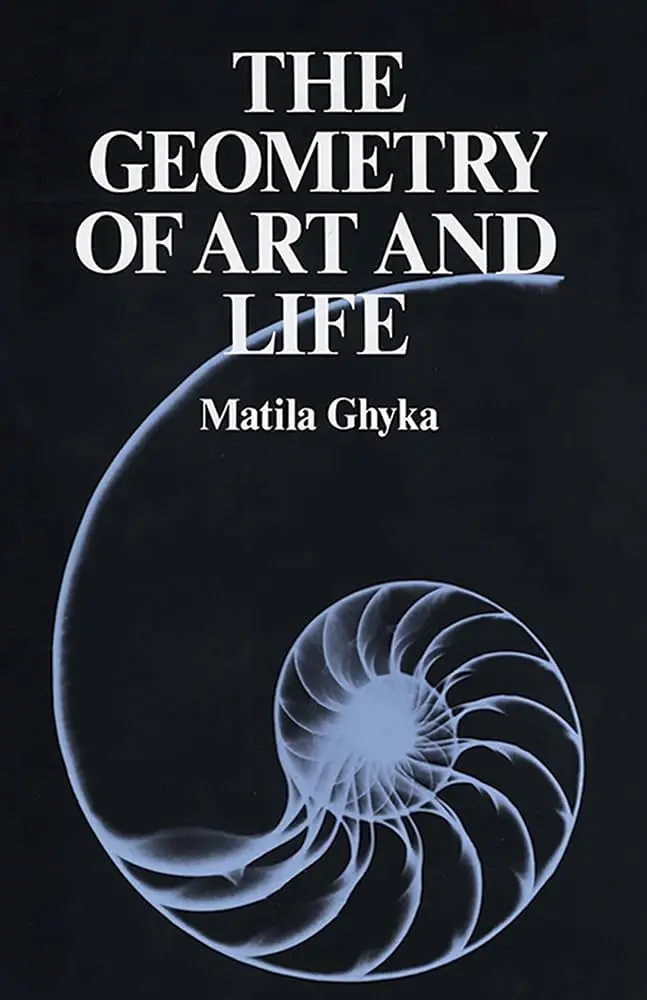
    The Geometry of Art and Life

    Matila Ghyka · 1946 · Dover edition available

    This book by the Romanian diplomat, sailor, and aesthete Matila Ghyka is the reference text of twentieth-century "proportion mysticism": golden rectangles, the pentagram, phyllotaxis, proportion templates laid over Greek vases. To a modern eye some of its claims are forced — finding the golden ratio in every composition is possible once you draw enough lines — which is why it should be read alongside Livio at number 14. But its influence is beyond dispute: the painters and designers of the mid-twentieth century took their idea of proportion largely through Ghyka. A book that documents a period's way of seeing, wrong turns and all, and indispensable for exactly that.
  3. 11

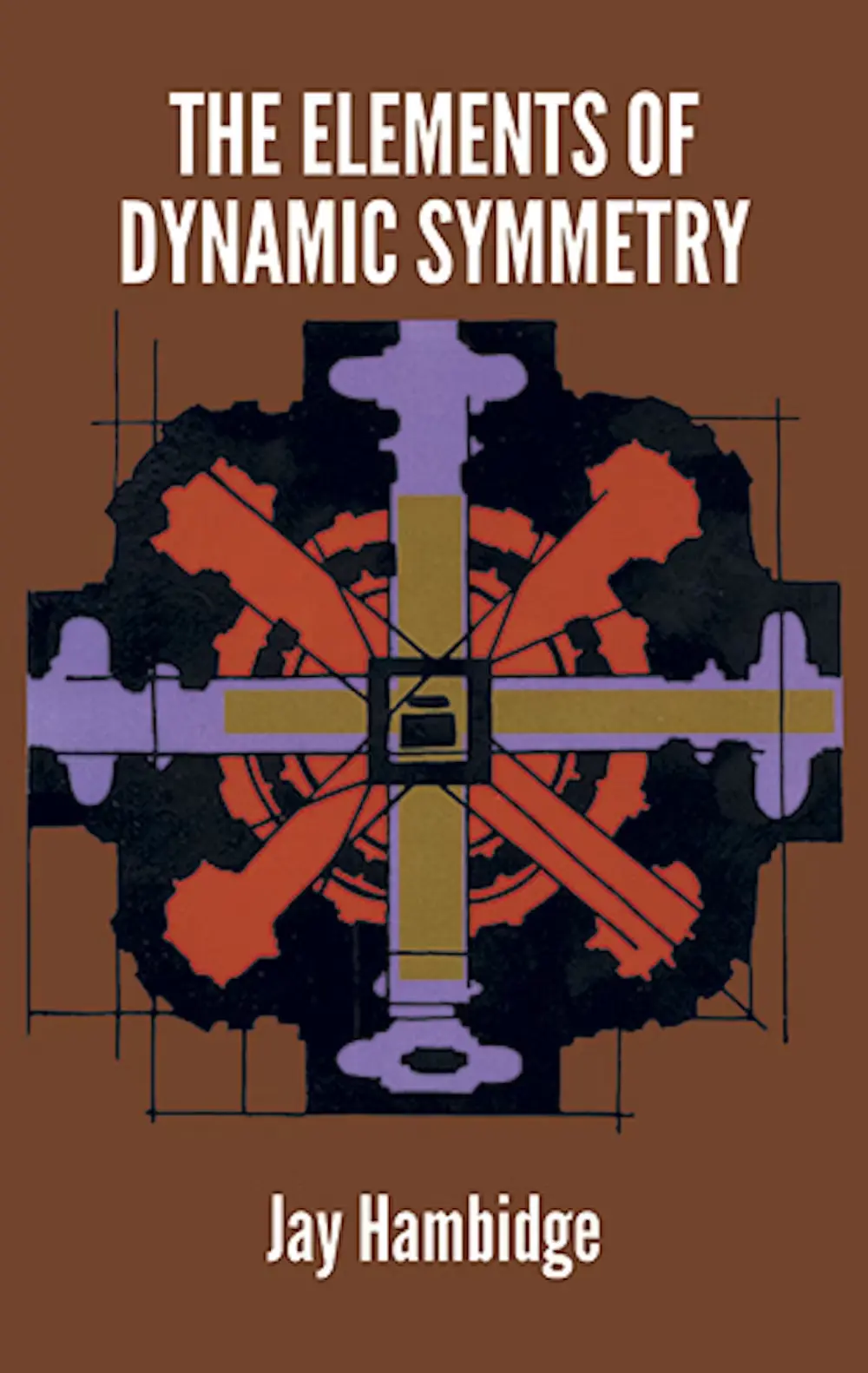
    The Elements of Dynamic Symmetry

    Jay Hambidge · 1926 · Dover edition available

    Hambidge's system of "dynamic symmetry" rests on a single idea: build a composition not with fixed ratios but with root rectangles — rectangles whose sides are 1:√2, 1:√3, 1:√5 — and their internal subdivisions. The system is justified through Greek vases and temple plans; the soundness of the archaeological claims has been questioned, but the practical side still works today: root-rectangle divisions remain a useful frame for laying out a page or a poster. It was taught for generations as a textbook in American art schools; today it stands in graphic-design programs as the grandfather of Elam's books. The Dover edition costs a few dollars; there's no cost to trying it and testing it in your own work.
  4. 12

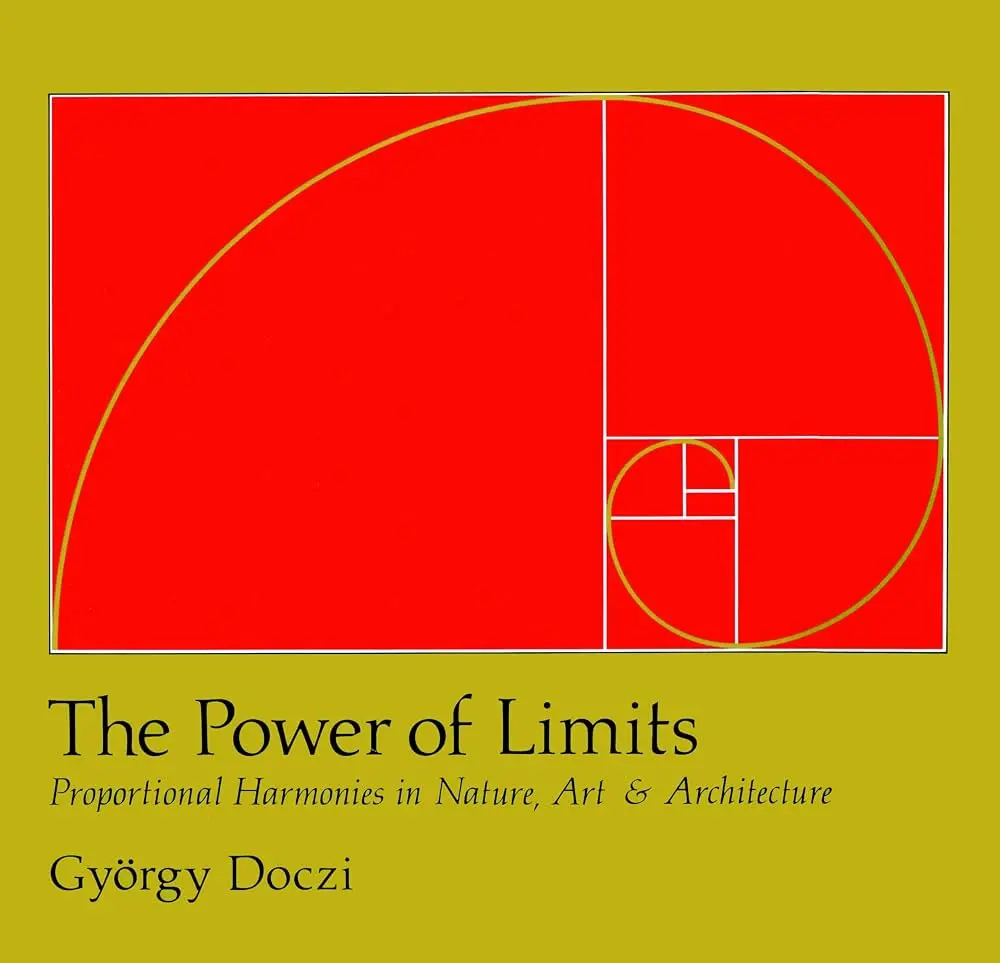
    The Power of Limits

    György Doczi · 1981 · Shambhala

    The thesis of Hungarian-born architect Doczi is in the title: form is born of limitation; where two opposing tendencies — growth and constraint — meet, proportion emerges. Doczi calls this "dinergy" and shows it from seashell to pot, from leaf to building plan, with hundreds of measured drawings. The lasting value of the book is in those drawings rather than the text; each is an analytic diagram built from measurements taken by hand, and amounts on its own to a lesson in drawing. It's among the proportion books that lean least on mysticism and most on observation, and that's why it has passed hand to hand through designers' libraries for forty years.
  5. 13

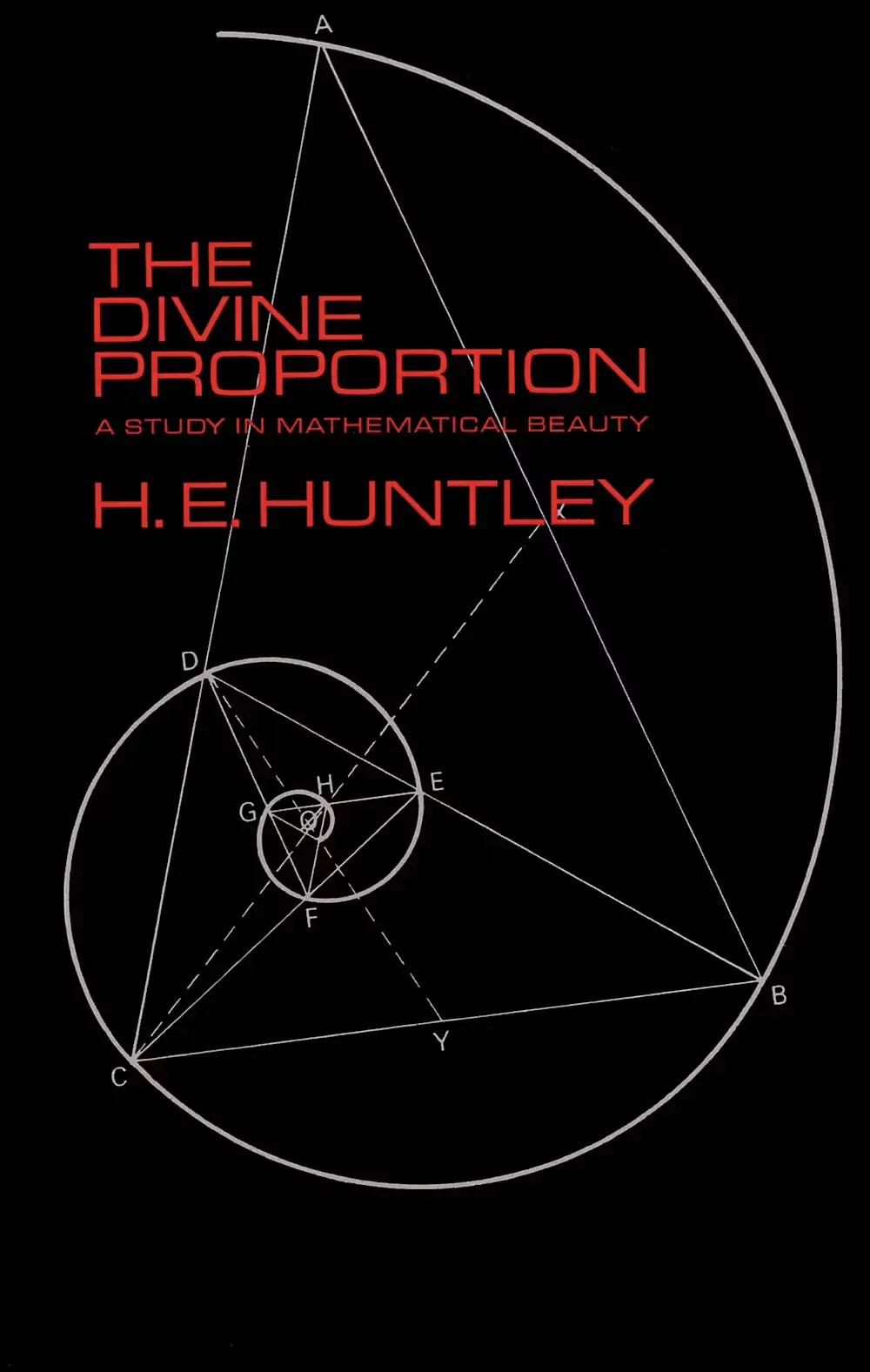
    The Divine Proportion: A Study in Mathematical Beauty

    H.E. Huntley · 1970 · Dover

    The classic Dover volume on the golden ratio; cheap, thin, and — contrary to its title — thoroughly concrete. Huntley treats phi not as an aesthetic talisman but as a mathematical object: continued fractions, the Fibonacci connection, the logarithmic spiral, pentagon geometry — all with proofs you can follow using high-school mathematics. Over the intervening half-century, as the popular mythology around phi has grown, the book's sobriety has only become more valuable. To someone who genuinely wants to understand the golden ratio, I'd give this first and the next entry second; together they build the subject and then clean it up.
  6. 14

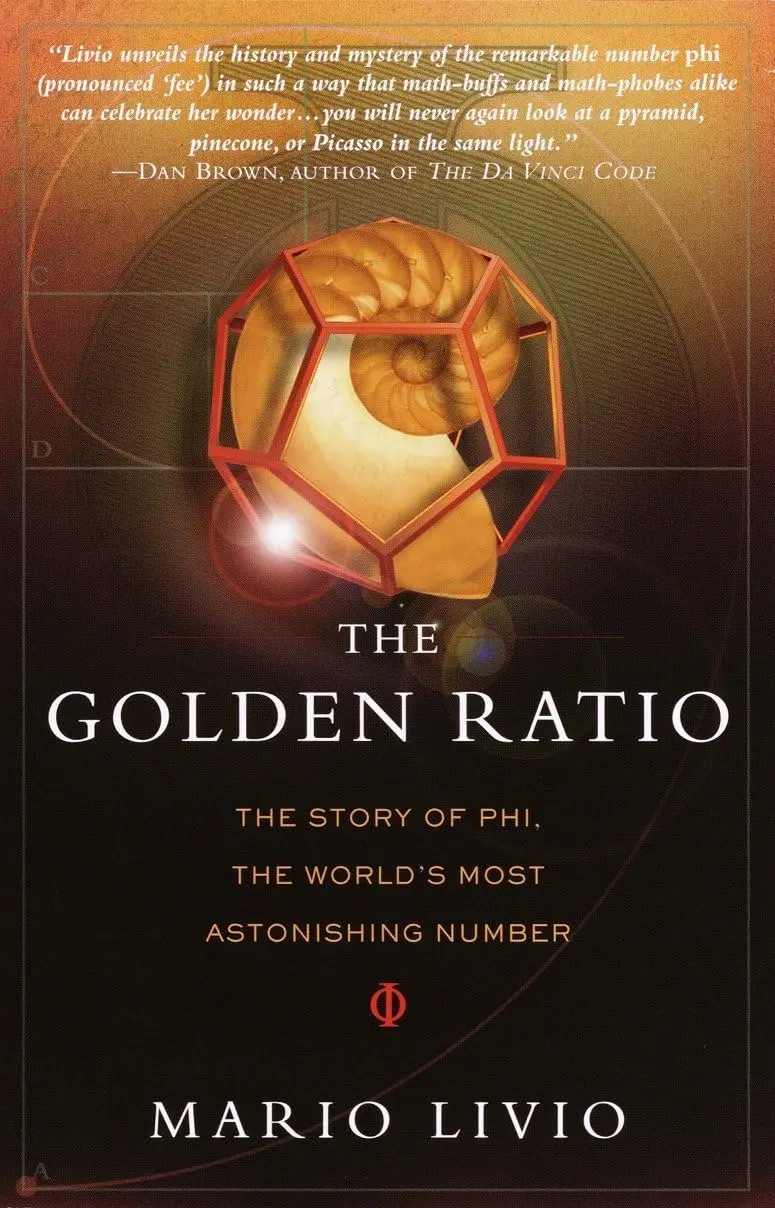
    The Golden Ratio

    Mario Livio · 2002 · Broadway Books

    Astrophysicist Livio's book is the antidote to the golden-ratio literature: it separates, one by one, phi's real mathematical history from the legends later stuck onto it. It goes to the sources to debunk claims that the Parthenon and the pyramids were designed with the golden ratio, while giving full due to the places phi genuinely appears — pentagonal symmetry, phyllotaxis, quasicrystals. It can also be read as the cultural biography of a number. Standing it on the same shelf as Ghyka is a deliberate editorial choice: one represents faith, the other scrutiny, and reading the two together is a lesson in critical thinking on its own.
  7. 15

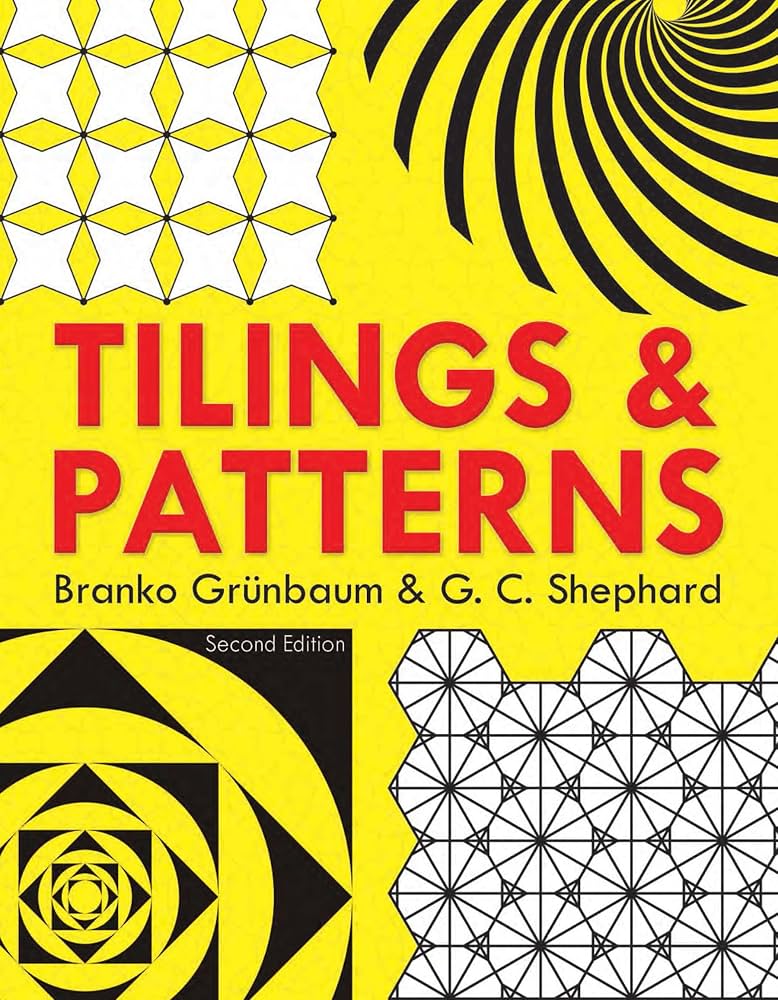
    Tilings and Patterns

    Branko Grünbaum & G.C. Shephard · 1987 · W.H. Freeman; expanded Dover edition 2016

    The bible of plane tilings. Grünbaum and Shephard, for the first time, turned tiling knowledge that until then had lived as scattered folklore into a systematic theory across seven hundred pages: periodic tilings, aperiodic sets, star polygons, colorings — and thousands of meticulously drawn figures throughout. When it was published it was written for researchers; over time it became the secret weapon of pattern designers, ceramicists, and game developers, because the most complete known answer to "how many ways are there to cover a surface" is still in this volume. It's also the ground to stand on if you want to follow the einstein tile debate that made headlines all on its own in 2023.
  8. 16

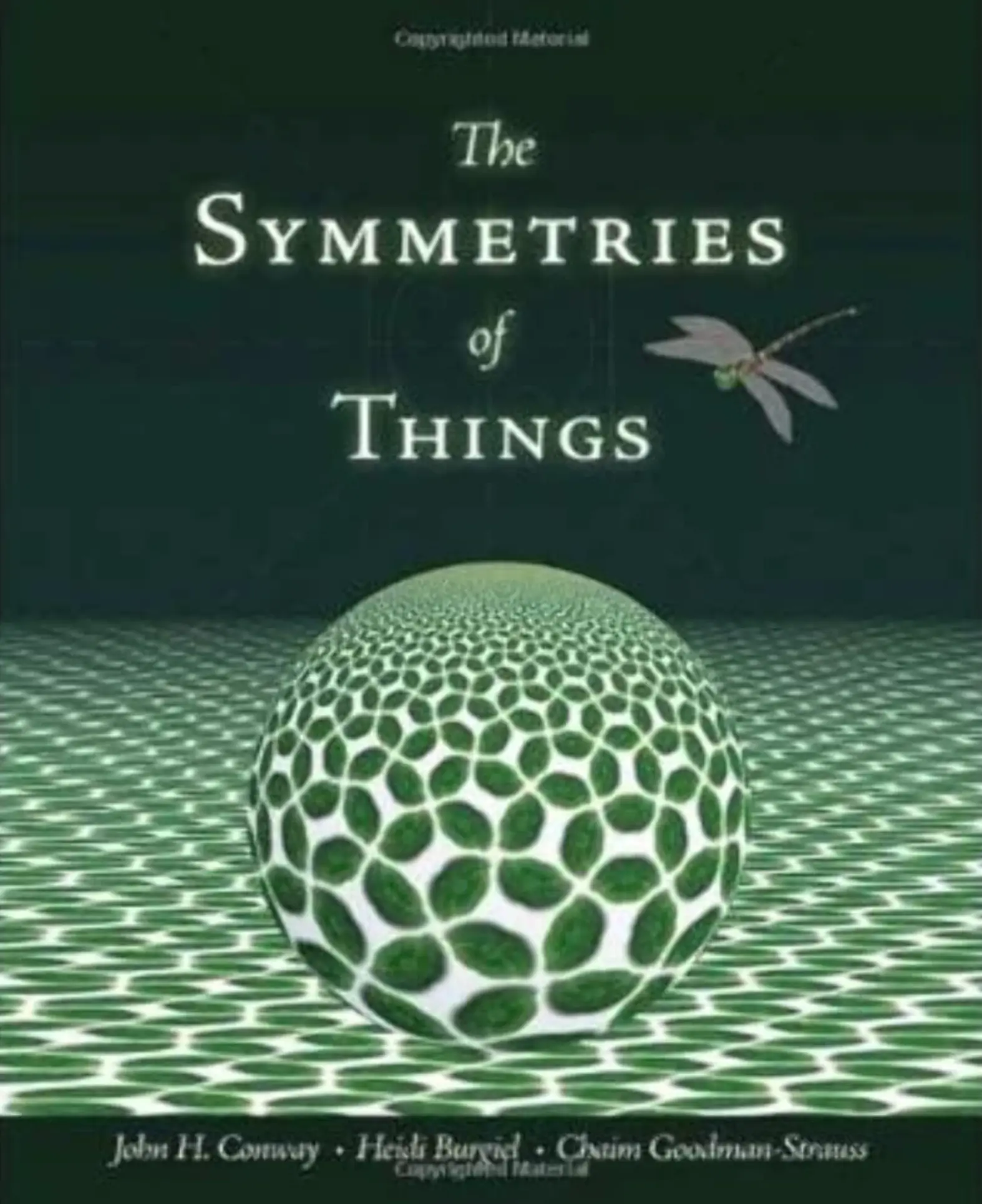
    The Symmetries of Things

    John H. Conway, Heidi Burgiel & Chaim Goodman-Strauss · 2008 · A K Peters

    A full inventory of symmetry in Conway's orbifold notation: the seventeen wallpaper groups, the frieze groups, the symmetries of the sphere and the hyperbolic plane — each with an elegant signature a few characters long, in place of the crystallographers' clumsy labels. The book is written in three layers; the first section speaks to the curious reader with its color figures, the later ones graduate step by step to the professional, so the same volume is at once a coffee-table book and a research reference. For a designer working seriously with pattern, this is now the place to look up "which symmetry class am I in." That it's also the most beautifully produced book in Conway's body of work is no accident; the subject demanded it.
  9. 17

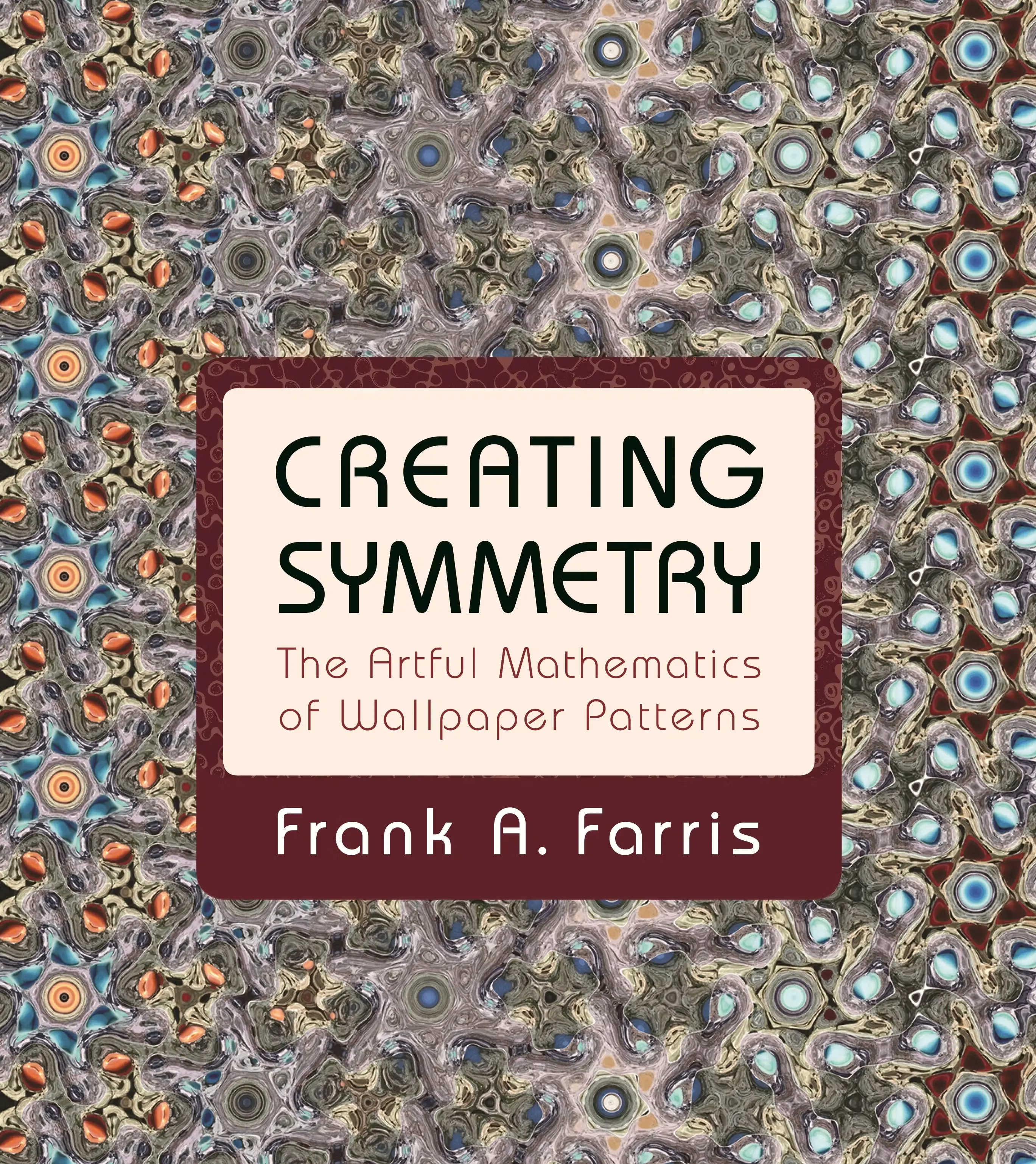
    Creating Symmetry: The Artful Mathematics of Wallpaper Patterns

    Frank A. Farris · 2015 · Princeton University Press

    Farris's question comes from the generative side: instead of analyzing a symmetric pattern, how do we produce one from scratch with mathematics? His answer is Fourier series and complex functions; he runs a photograph through wave functions to derive patterns bearing wallpaper symmetries, and lays out the mathematics of every step openly. It's a perfect match for designers who write code and anyone working with creative coding; the methods in the book can be reproduced in a few lines of Python. The mathematics is at undergraduate level but patiently explained. It's the only systematic book on the work called "pattern generation" done with real mathematics and printed in full color throughout.
  10. 18

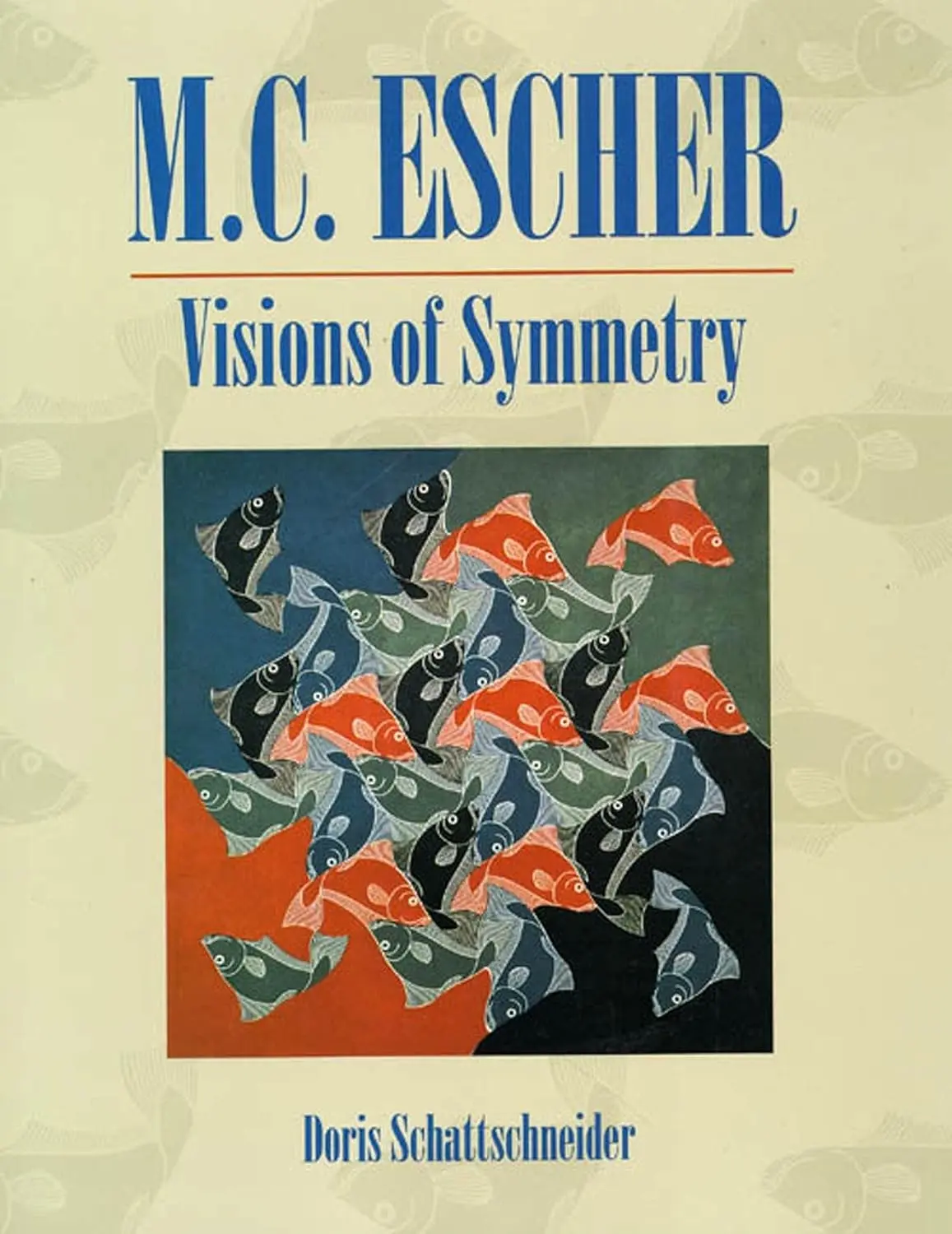
    M.C. Escher: Visions of Symmetry

    Doris Schattschneider · 1990 · Abrams; revised edition 2004

    The full publication and analysis of Escher's plane-division notebooks — the hundred and fifty-odd symmetry drawings the artist numbered and classified by his own system. Mathematician Schattschneider shows, by decoding the notation in the notebooks one entry at a time, that Escher built a theory of symmetry on his own, without academic training. The book therefore reads two ways: an archival study for the art historian, and a case of "an amateur rediscovering group theory" for the mathematician. Among the dozens of albums published on Escher, this is the one that truly gets inside the artist's mind; the rest are mostly a contest of print quality.
  11. 19

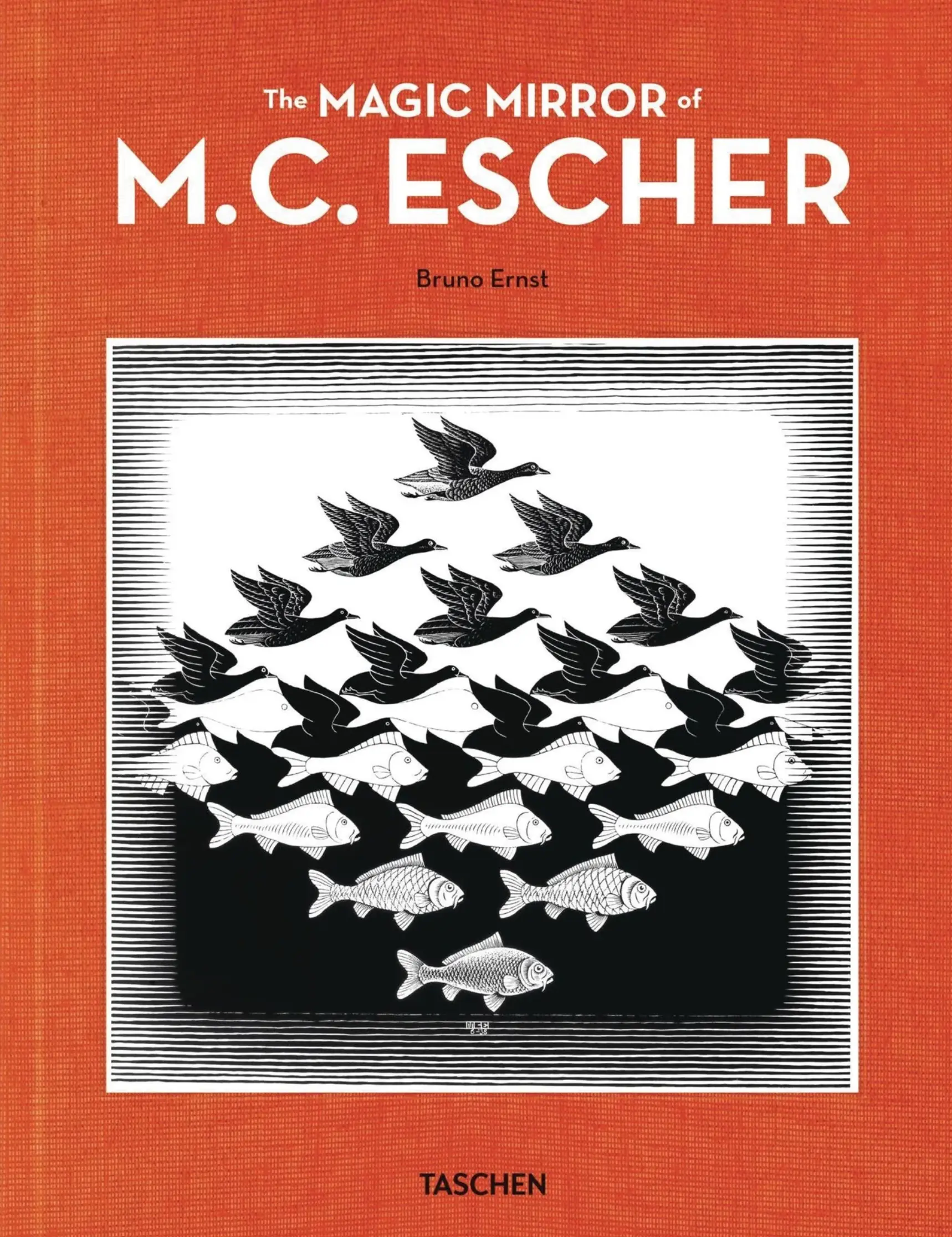
    The Magic Mirror of M.C. Escher

    Bruno Ernst · 1976 · Taschen edition available

    Bruno Ernst — real name Hans de Rijk, a mathematics teacher — was a close friend of Escher's, and wrote this book through weekly meetings with the artist, working together over the drafts. The result isn't a monograph written from outside but a workshop journal kept from within: how the impossible objects were built, which rule-breaking the perspective games rest on, why the famous void in Print Gallery was left empty. It's also the closest testimony to Escher's stance that "I'm not an artist; mathematicians already know what I do." If Schattschneider is the analytic layer, Ernst is the biographical layer; together they give the full picture.
  12. 20

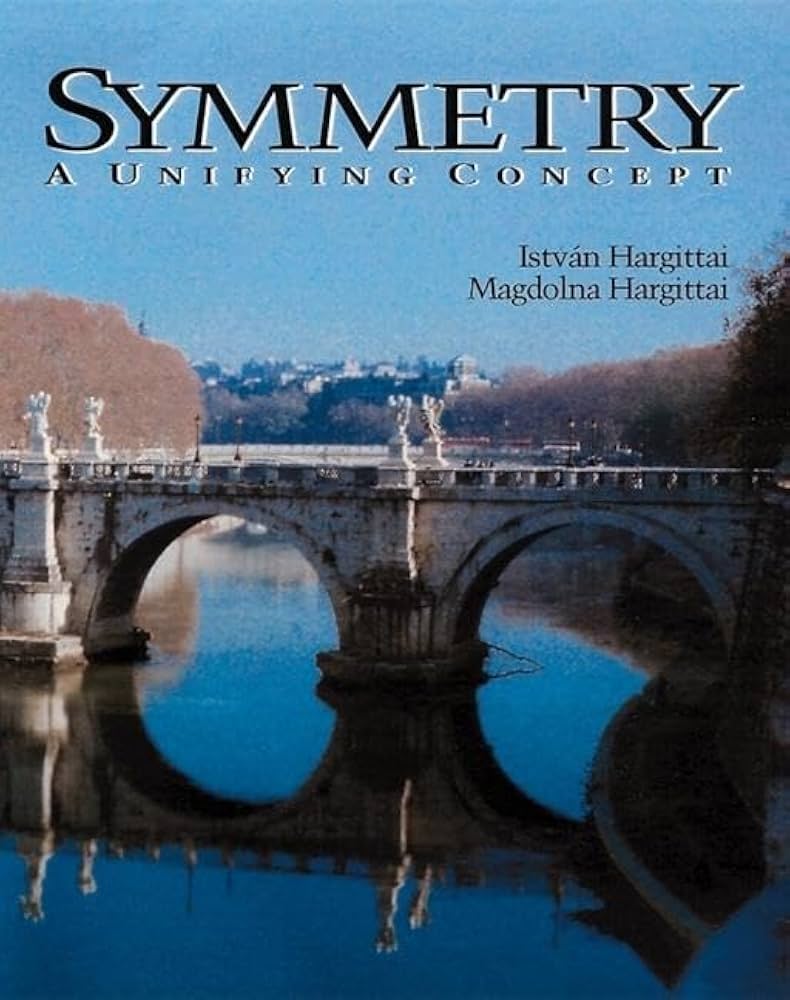
    Symmetry: A Unifying Concept

    István & Magdolna Hargittai · 1994 · Shelter Publications

    Throughout their working lives the chemist Hargittais photographed symmetry everywhere they went: fences, radiator grilles, cathedral roses, snow crystals, traffic signs, virus shells. This book is the distilled form of that archive — an atlas that, with hundreds of photographs and drawings, shows that symmetry lives not in a few scattered "examples" but in the very fabric of the visual world. The text is deliberately kept light; the weight is in the eye. If Weyl builds the conceptual frame, the Hargittais document that frame's counterpart on the street. For anyone interested in photography, it doubles as a lesson in how to look.
  13. 21

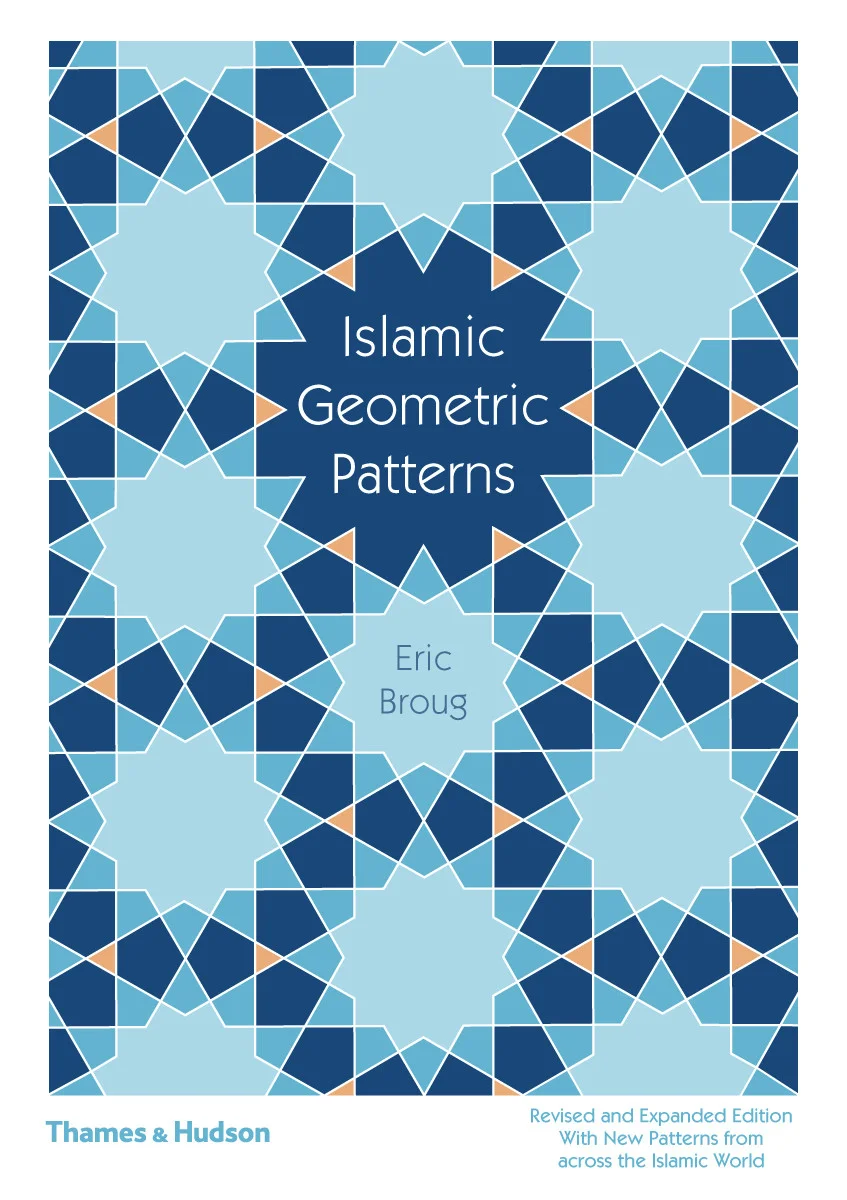
    Islamic Geometric Patterns & Islamic Geometric Design

    Eric Broug · 2008 / 2013 · Thames & Hudson

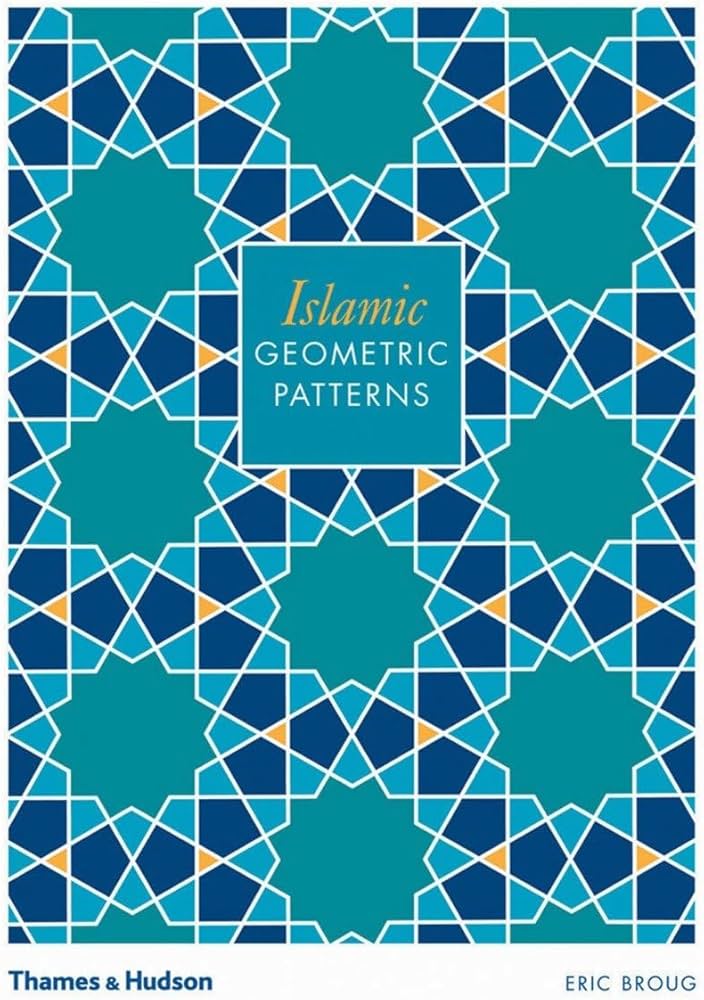
    Broug's two books are the practical and the encyclopedic ends of the Islamic-geometry shelf. The slim Islamic Geometric Patterns is a workshop book: with ruler and compass, step by step, it teaches how historical patterns were built by making you draw them — a book that ends not in reading but in drawing. The large-format Islamic Geometric Design is the visual history of the same tradition: from Cairo to Córdoba, it opens up the logic of composition alongside photographs of the patterns on buildings. For those who want to descend into the deep water of this tradition, the workshop book has a page of its own on the site; here I keep Broug as the door to that shelf.
  14. 22

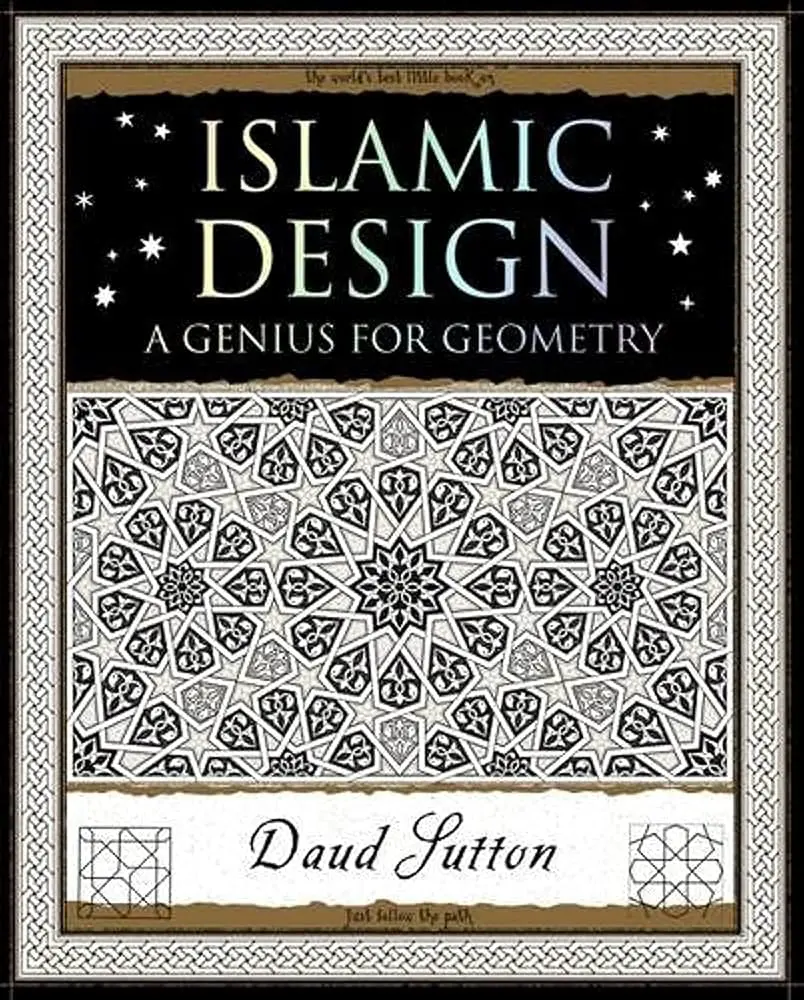
    Islamic Design: A Genius for Geometry

    Daud Sutton · 2007 · Wooden Books

    The volume where the Wooden Books format — sixty-four pages, a plate facing each page, a pocket-sized shape — suits its subject best. Sutton fits the grammar of the Islamic geometric language into that narrow space: the construction of star polygons, ten-fold and twelve-fold systems, the logic of girih. The density of information per page runs higher than in most of the large-format albums on the shelf. The drawings are all taken by hand, in the traditional method. Before starting Broug's workshop book, to see the big picture — or as a "grammar of pattern" to carry in a bag — nothing in this format rivals it.
  15. 23

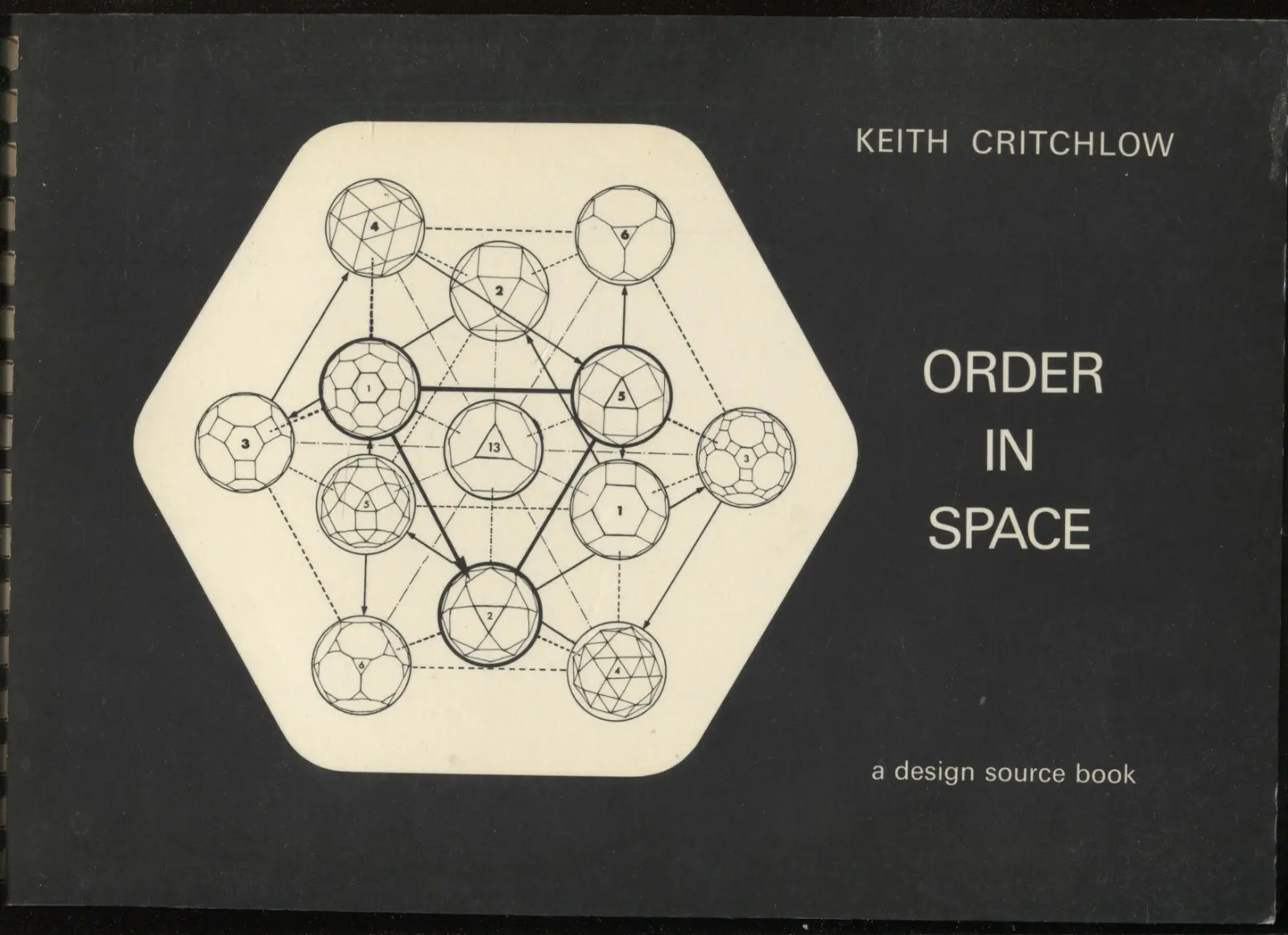
    Order in Space

    Keith Critchlow · 1969 · Thames & Hudson

    This early book by the architect and geometry teacher Critchlow is an inventory, drawn from a designer's eye, of the orders that fill space — polyhedra, packings, lattices. The legend of the book is in its diagrams: Critchlow shows the transformation relationships among solids in fold-out tables and network diagrams, and those plates have been reproduced by photocopy among architecture students for half a century. It feeds from the same vein as the Buckminster Fuller circle but is more systematic, less preachy. For anyone who works with three-dimensional form — the industrial designer, the set designer, the toy inventor — it remains one of the best visual references still in circulation.
  16. 24

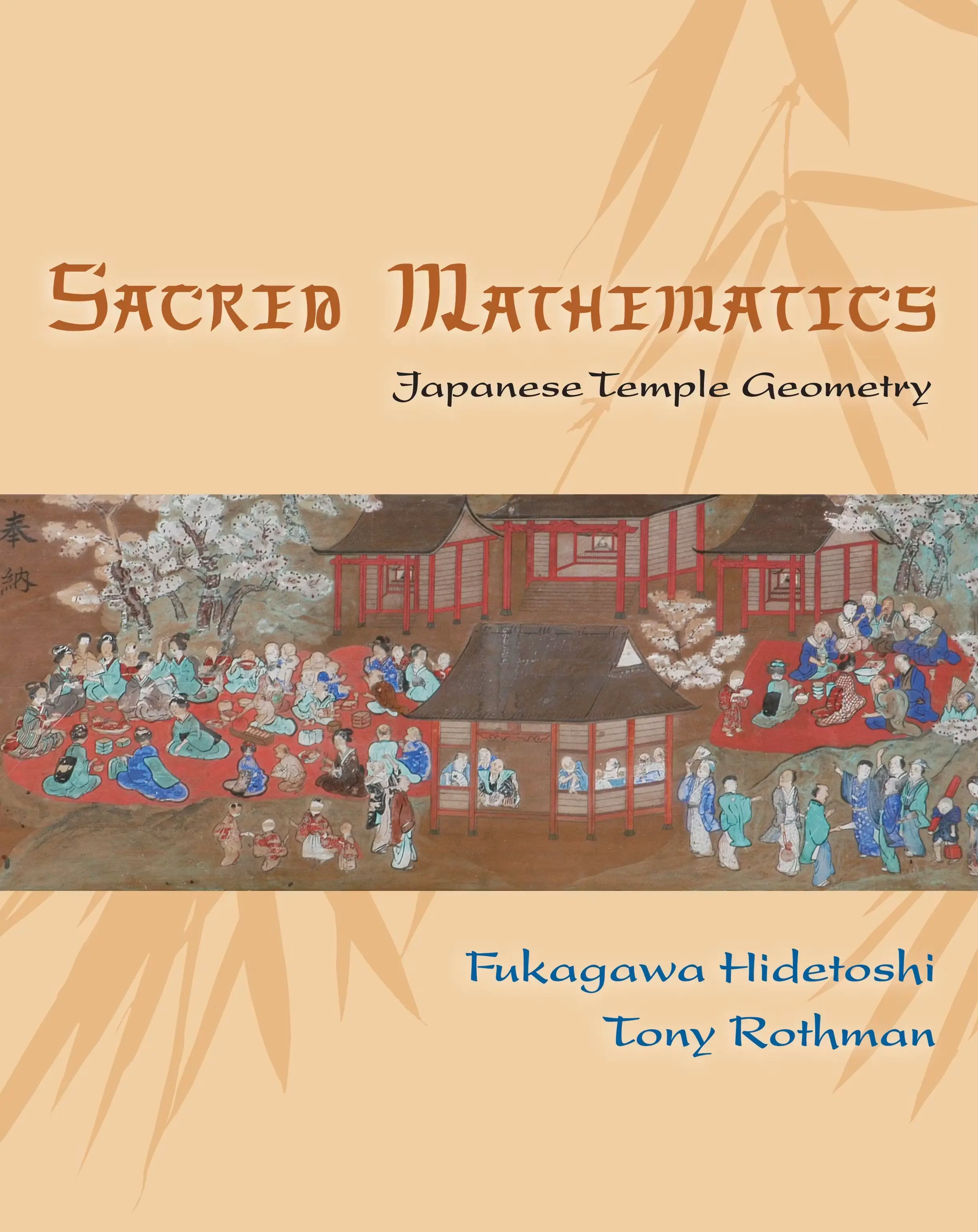
    Sacred Mathematics: Japanese Temple Geometry

    Fukagawa Hidetoshi & Tony Rothman · 2008 · Princeton University Press

    In Edo-period Japan, people painted the geometry problems they'd solved onto wooden tablets and hung them in temples; on these sangaku tablets, theorem, proof, and calligraphy share one surface. Fukagawa and Rothman's book is the most comprehensive English-language presentation of that tradition: photographs of the tablets, solutions to the problems, and the history of a geometry culture that developed for two hundred years cut off from the outside world, all in one place. The foreword is from Freeman Dyson. This case, in which geometry lived intertwined with worship as a public craft within a community, is among the finest historical answers ever given to the question "whom does mathematics belong to."
SHELF III

The designer's shelf

Where geometry comes down to the table: the grid, proportion, the grammar of form, and a certain amount of pasta.

  1. 25

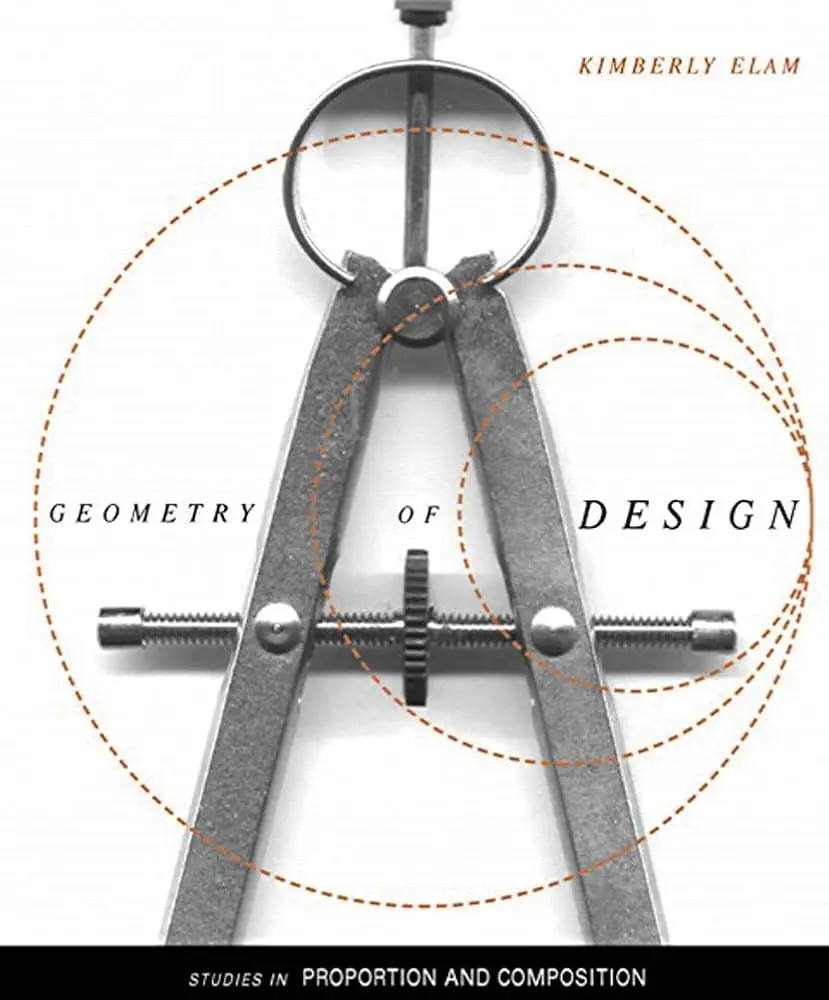
    Geometry of Design

    Kimberly Elam · 2001 · Princeton Architectural Press

    The pocket book design schools haven't set down in twenty-five years. Elam overlays well-known posters, products, and buildings with transparent proportion templates: the golden section, root rectangles, regulating lines — the analytic layer sits on top of the work, in a separate color. The strength and the limit of the method are in the same place: each overlay is a hypothesis, not proof that the designer actually worked to that template; Elam sets this up honestly enough for the book's good readers to notice. One of the rare textbooks that opens the compositional eye in student years and then stays on the desk, turning into a reference.
  2. 26

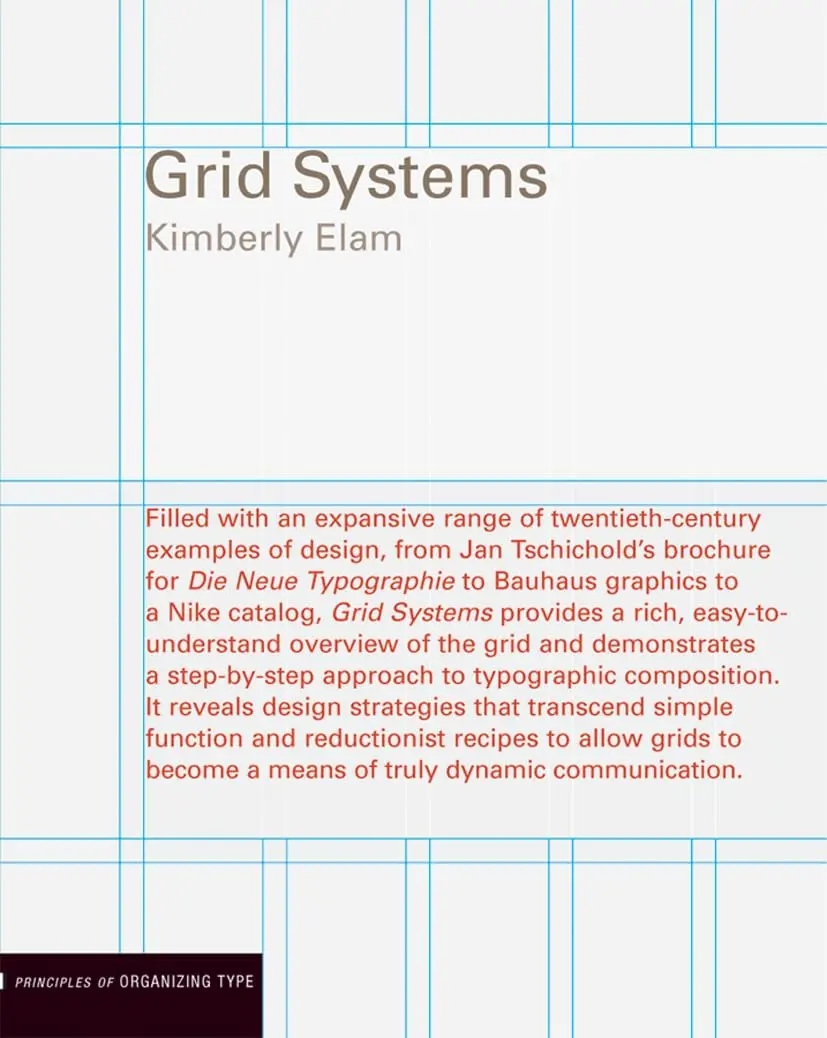
    Grid Systems: Principles of Organizing Type

    Kimberly Elam · 2004 · Princeton Architectural Press

    Elam's second pocket book is the natural sequel to the first: what happens when proportion comes down to the page? The book proceeds by trying dozens of variations over a single 3×3 grid — same content, same grid, different decisions — and so shows in practice that the grid is not a prison but an instrument. Its ready-made exercise structure, usable directly in composition classes, makes it a text that is "done" rather than "read." An ideal warm-up before moving on to Müller-Brockmann's constitution; and, for a mathematically minded reader, the fastest way into grid logic.
  3. 27

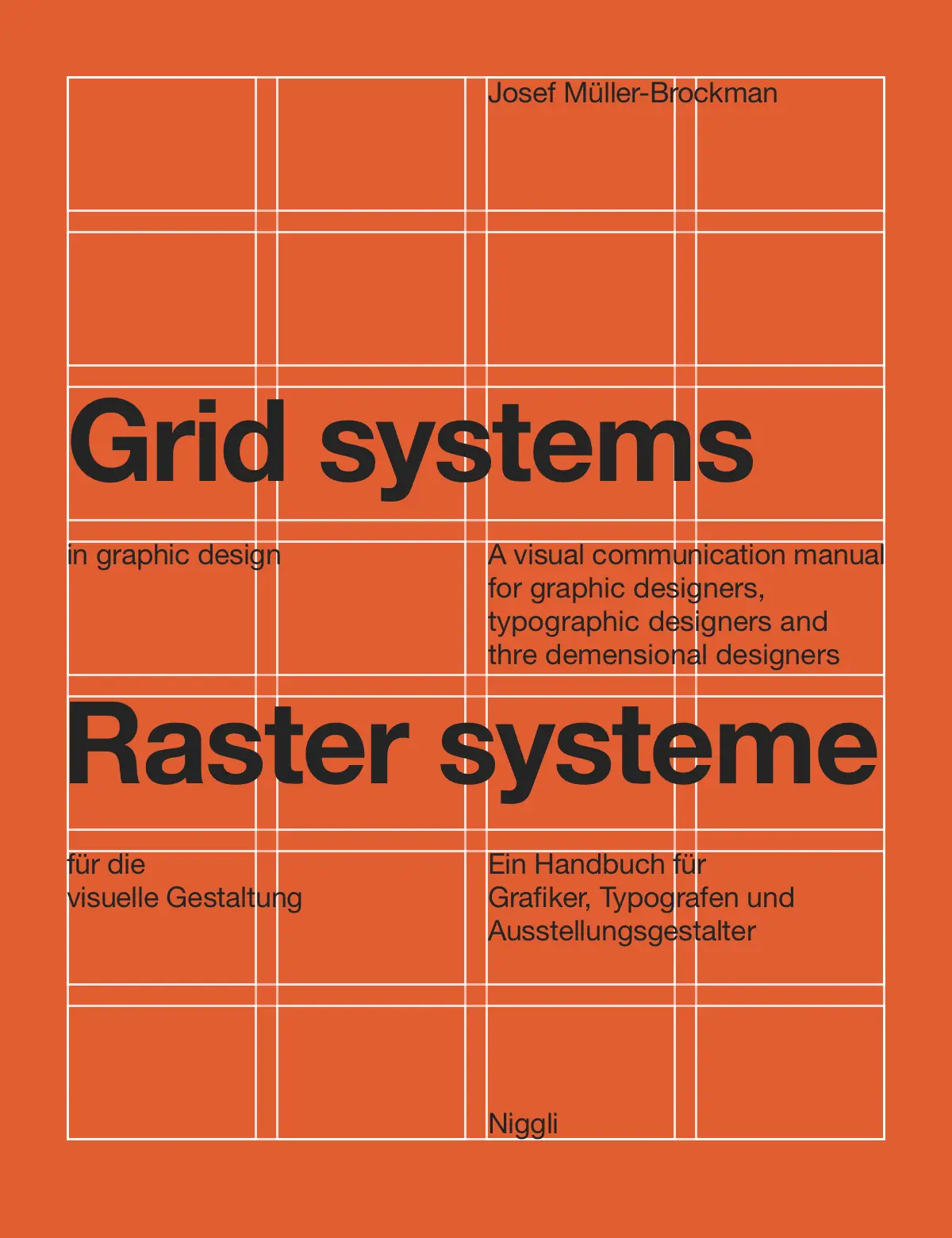
    Grid Systems in Graphic Design

    Josef Müller-Brockmann · 1981 · Niggli, German-English bilingual

    The constitution of the Swiss typography school. Müller-Brockmann takes page layout out of the realm of taste and binds it to a buildable system: from column count to leading, step by step up to the eight-column grid, with a rationale for every decision. The book itself is set with the system it advocates — one of the rare books where the form proves the content. The answer to the "grids constrain" objection is inside it too: constraint, for Müller-Brockmann, is the precondition of having a position. It also carries a morality that will feel familiar to mathematicians: reduce arbitrariness, derive decisions from axioms. The book anyone whose work touches the page should work through once, from front to back.
  4. 28

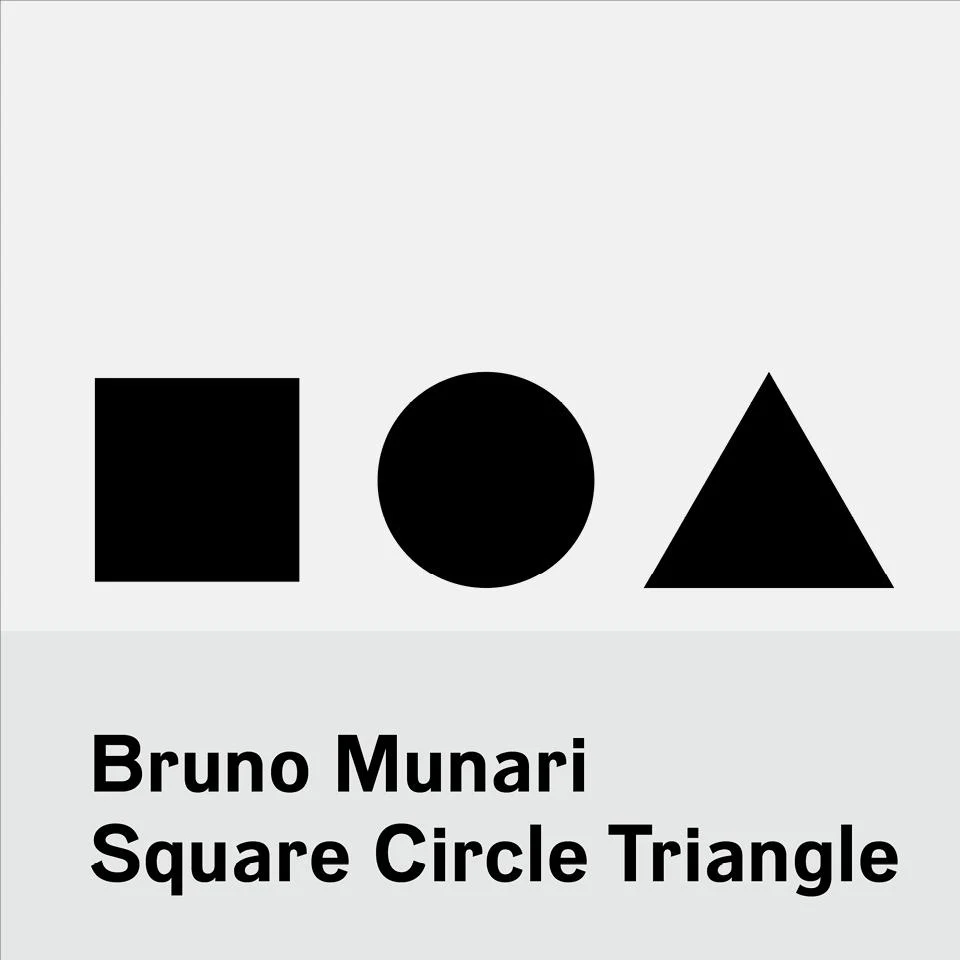
    Square, Circle, Triangle

    Bruno Munari · 1960–1976 · Princeton Architectural Press single-volume edition 2015

    Over the years Munari published three separate booklets: cultural biographies of the square, the circle, and the triangle. Each catalogues the forms each shape takes in architecture, in writing, in play, in symbol, and in the everyday object, through short notes and hundreds of small images — a genre entirely Munari's own, somewhere between encyclopedia and artist's book. Princeton Architectural Press gathered the three into one volume. For anyone who wonders why a logo settles on a circle or a piazza on a square, it's a lesson in fundamental form with zero theory and a hundred percent observation — a Bauhaus-adjacent cousin to the ABC's of triangle, square, circle. Munari's famous line hangs over all of it: complicating is easy, simplifying is hard.
  5. 29

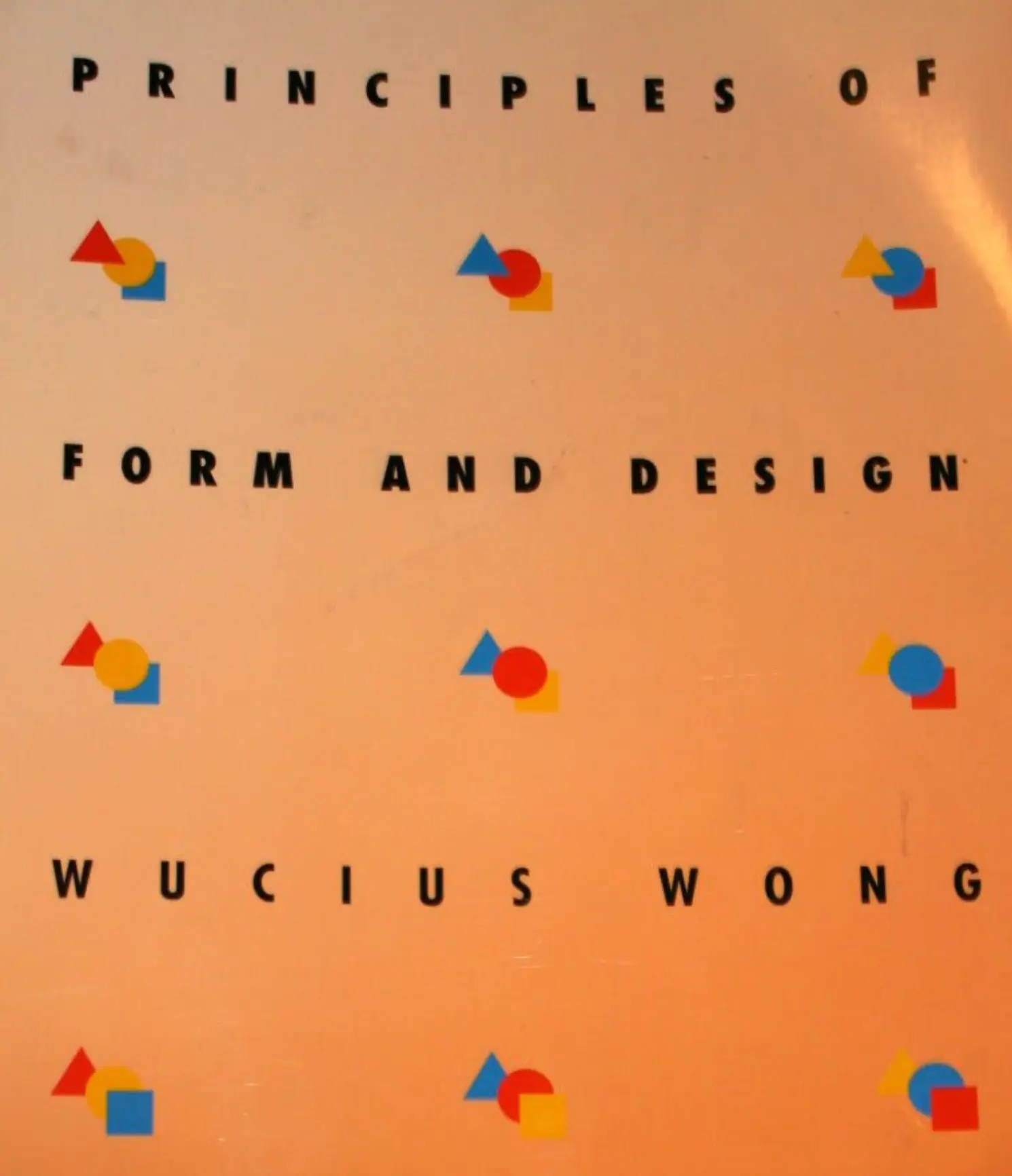
    Principles of Form and Design

    Wucius Wong · 1993 · Wiley

    This book, which gathers the two- and three-dimensional design courses of Hong Kong painter and educator Wucius Wong into one volume, is the most systematic breakdown of the language of form: point, line, plane, unit form, repetition, similarity, gradation, radiation, anomaly — each concept defined, shown with a drawing, exhausted through its variations. The approach is nearly axiomatic; Wong comes at the world of form with a mathematician's definition-and-theorem discipline, and that's precisely why numerically minded readers find it so comfortable. If you need to acquire the "vocabulary" of visual composition somewhere, this is the place.
  6. 30

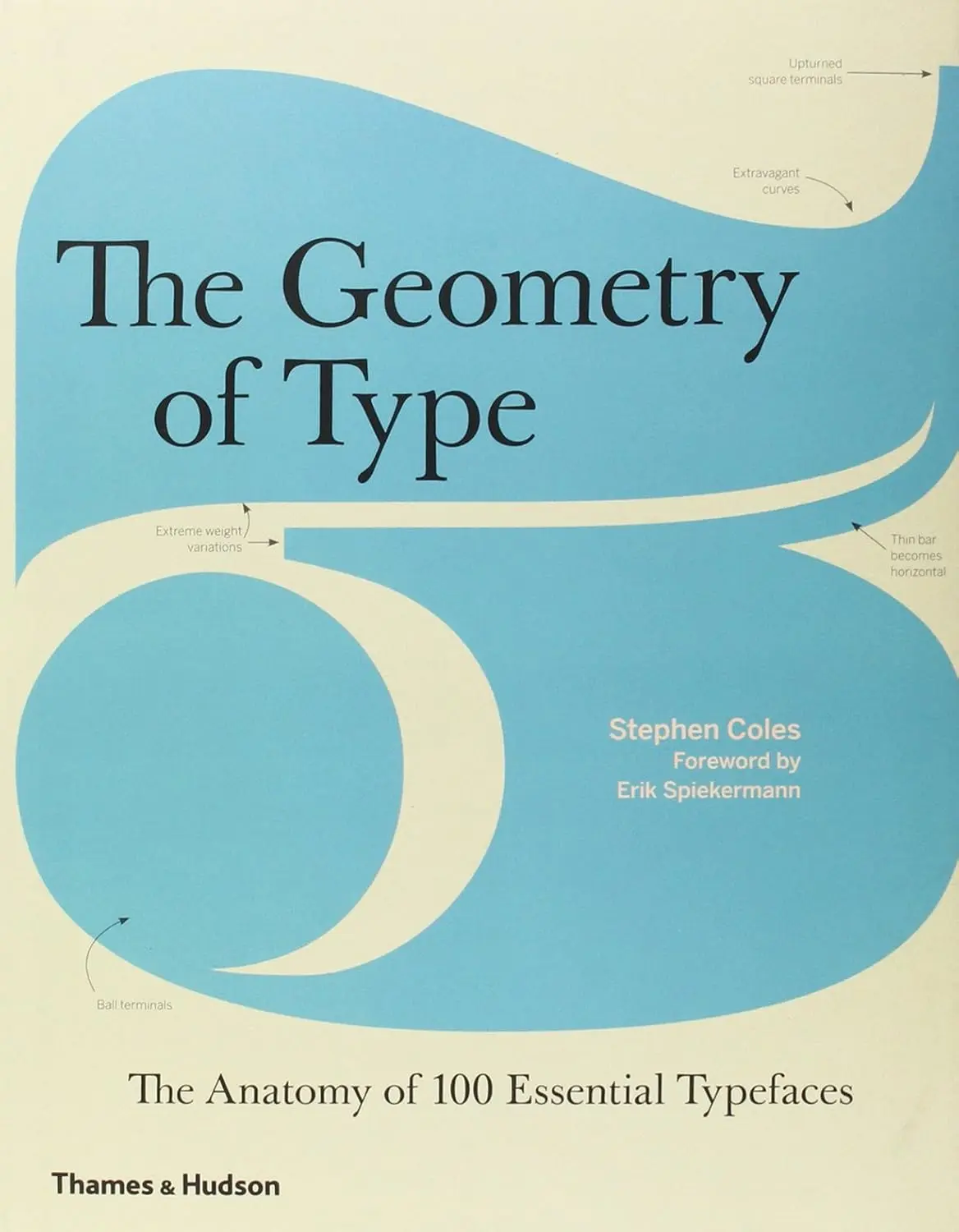
    The Geometry of Type

    Stephen Coles · 2012 · Thames & Hudson; US title: The Anatomy of Type

    A dissection atlas in which a hundred typefaces are laid out one by one: each on a spread, a large-point specimen, marked anatomical details, and a short text explaining what decisions shaped the character. Coles's classification covers the contemporary; the book isn't a mere parade of classics. The title is in exact resonance with this list, but the content earns it too: the letter is the object that carries the most concentrated geometry in the design world — curve continuity, optical correction, the balance of negative space. It's the book to hand someone who says "fonts all look alike"; afterward they don't say it anymore. It has a page of its own on the site.
  7. 31

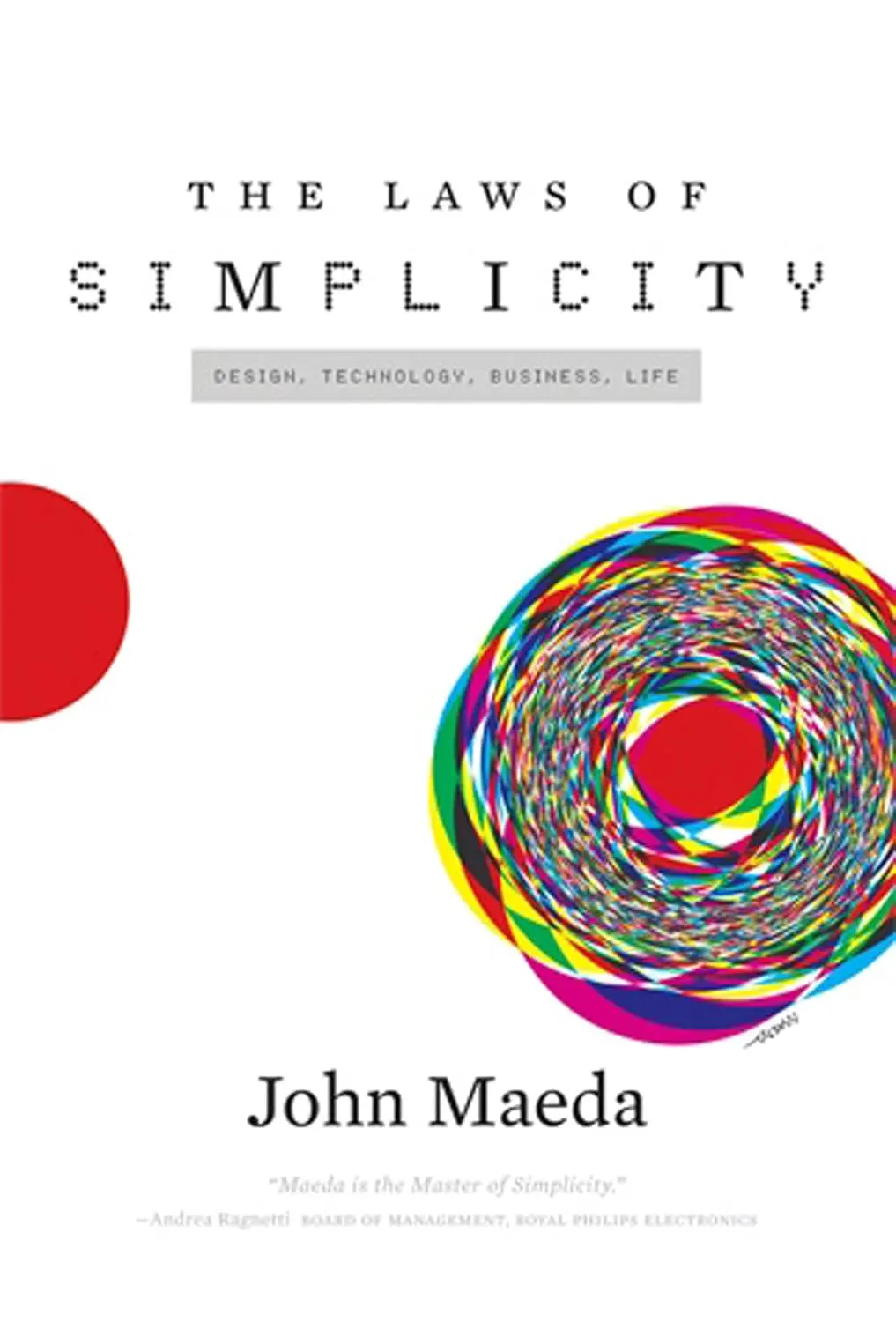
    The Laws of Simplicity

    John Maeda · 2006 · MIT Press

    A small book with a big claim: simplicity is not an accident but a deliberate choice. Maeda approaches this not by building an academic theory but with a designer's reflex — he reduces, groups, leans on lists. The first few laws are especially strong: truly simplifying something often means removing parts of it. The idea at the book's spine is clear: simplicity lives not in the system itself but in the feeling it leaves with the user — an observation that lands right at the intersection where mathematical thinking meets design intuition. The book is not as smooth as the ideal it describes; in places a surplus of examples breaks the flow. It was on my earlier list, and it stays here: as the distilled notebook of someone who kept computation and design on the same desk at the MIT Media Lab.
  8. 32

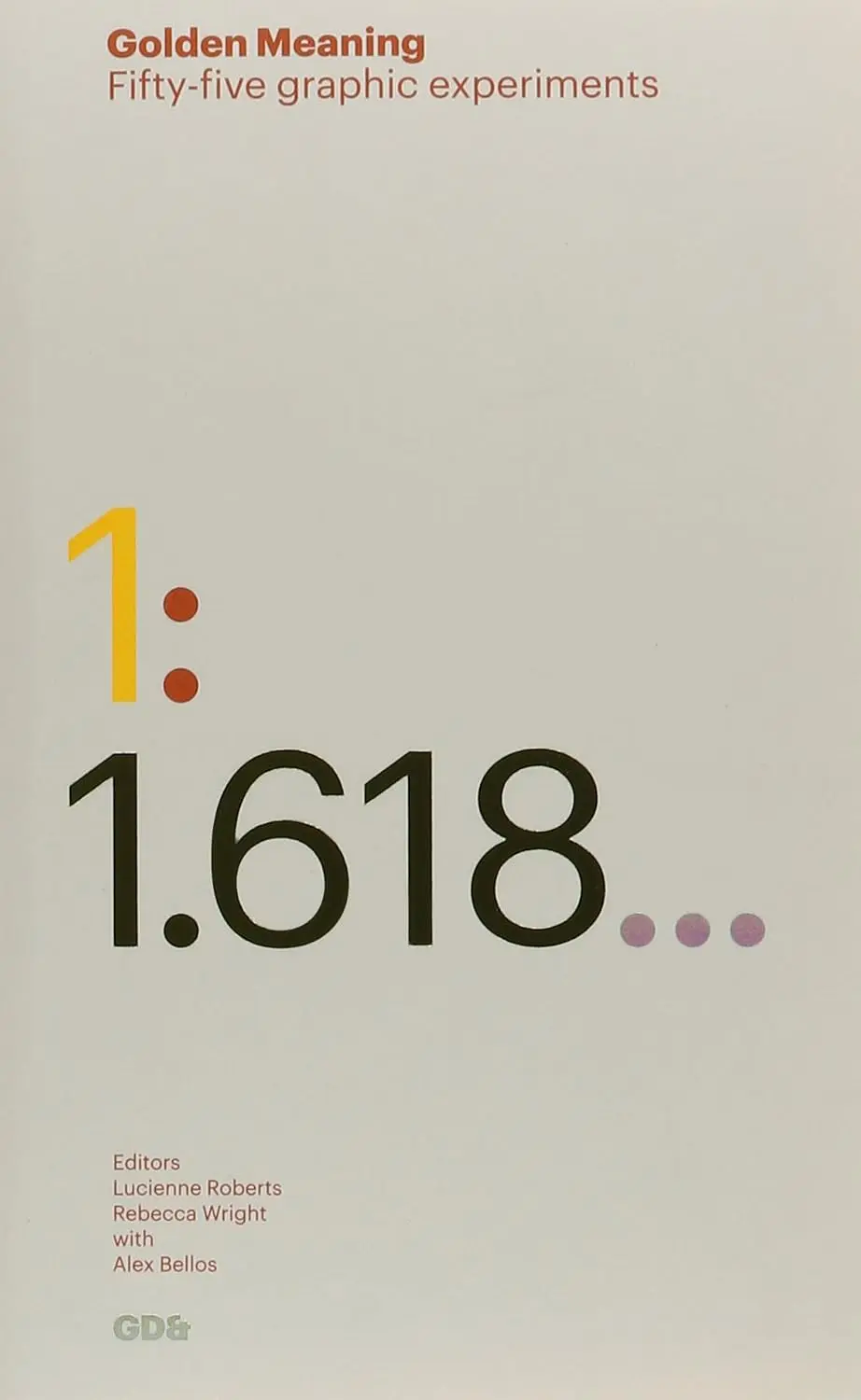
    Golden Meaning

    GraphicDesign& · 2014 · ed. Lucienne Roberts & Rebecca Wright

    The least-known gem on the list. The publisher GraphicDesign& gave fifty-five graphic designers the same brief: visualize the golden ratio. The result is fifty-five different visual interpretations of a single mathematical object — some didactic, some sardonic, some openly mocking the mythology around phi. The intelligence of the book is right there: it neither exalts the golden ratio nor debunks it, but leaves it open-ended as a design problem. One of the best printed answers to "how many ways can the same concept be seen"; and, in workshop classes, an exemplary brief in its own right.
  9. 33

    The Vignelli Canon

    Massimo Vignelli · 2010 · Lars Müller; free as a PDF in circulation

    Vignelli wrote this slim book as a bequest to young designers and gave its PDF away on purpose; the printed edition is from Lars Müller. The content is two layers: first a design morality, in the distinction between the semantic, the syntactic, and the pragmatic, then concrete kitchen knowledge that comes down to paper sizes and grid decisions. Vignelli's famous discipline — a few typefaces, a clean grid, freedom from ornament — has seeped into the pages. A lesson in "reduce arbitrariness" from the man who signed the New York subway map, told in a language that will feel familiar to anyone raised on mathematical discipline. Its cost is zero, its effect lasting; no other book gives that ratio.
  10. 34

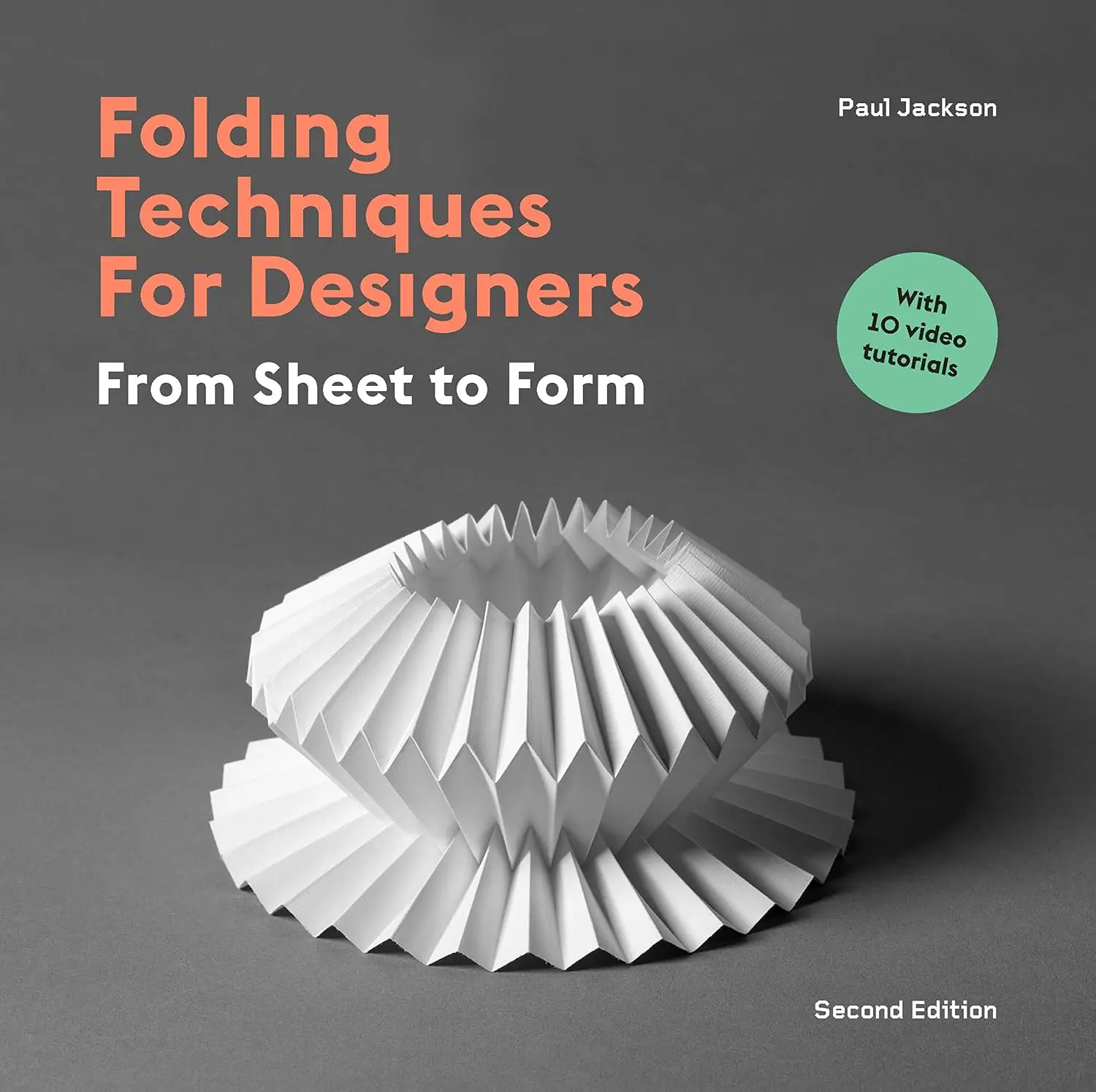
    Folding Techniques for Designers

    Paul Jackson · 2011 · Laurence King

    The grammar of folding. Origami teacher Jackson sets figurative origami aside and systematizes folding itself: accordions, reverse folds, radial folds, box structures — each technique with an illustrated instruction and a photographed result. The audience is clear: anyone in packaging, fashion, architecture, or product design who needs to produce three dimensions from flat material. The mathematics doesn't show on the surface but sits under every page; the crease lines are the physical diagrams of plane geometry. Together with the 3D-printing book coming at number 66, one of the two pillars of the "geometry made by hand" heading.
  11. 35

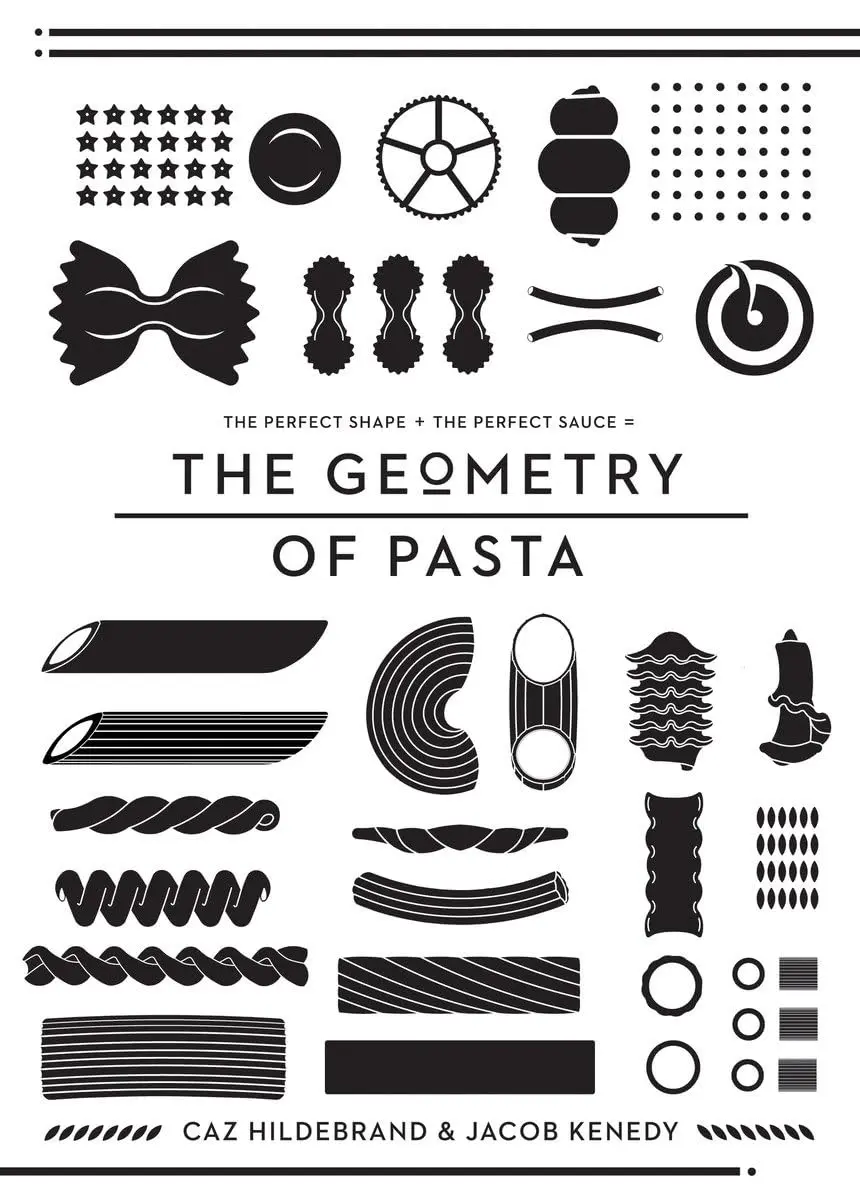
    The Geometry of Pasta

    Caz Hildebrand & Jacob Kenedy · 2010 · Boxtree

    This joint book by designer Hildebrand and chef Kenedy is a pasta morphology printed in single-color black and white: each shape's cross-section, its pattern, and the rationale for the sauce that best suits it. The thesis is serious — a pasta shape is not decoration but an engineered answer to the problem of carrying its sauce; surface area, curl, and channel geometry directly determine the result on the plate. The graphic language is so strong that the book lives on the design shelf rather than the cookbook shelf. It already has a page of its own on the site; its place on this list is as proof that geometry has seeped all the way into the kitchen.
  12. 36

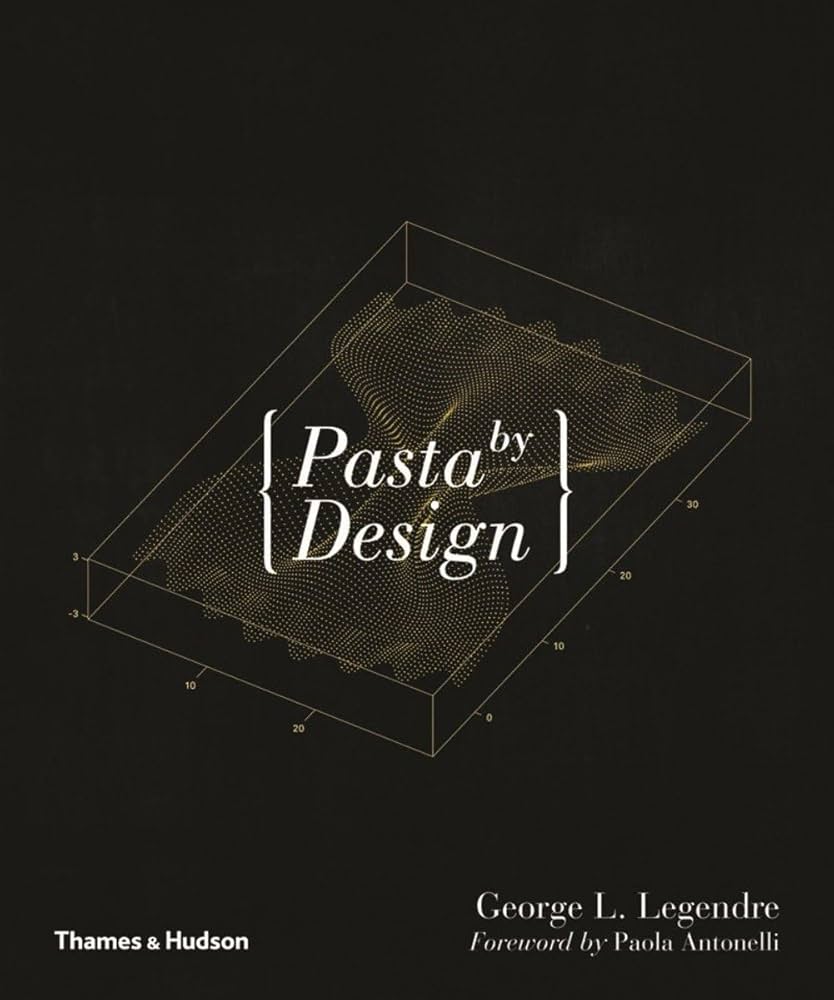
    Pasta by Design

    George L. Legendre · 2011 · Thames & Hudson

    The mathematician's end of the same subject: architect Legendre wrote a parametric equation for each of some ninety pasta shapes. On every spread the shape's photograph, its wireframe drawing, and its x-y-z equations stand side by side — rigatoni reduced to a family of cylinders, farfalle to a sinusoidal edge function. The book has been a small cult in computational-design circles ever since it appeared, and people have taken the equations and reproduced them in Cinema 4D; it has a page of its own on the site. Together with the previous entry, the two are like a controlled experiment in looking at the same object through a designer's and a mathematician's eyes; setting them side by side proves this list's thesis on its own.
  13. 37

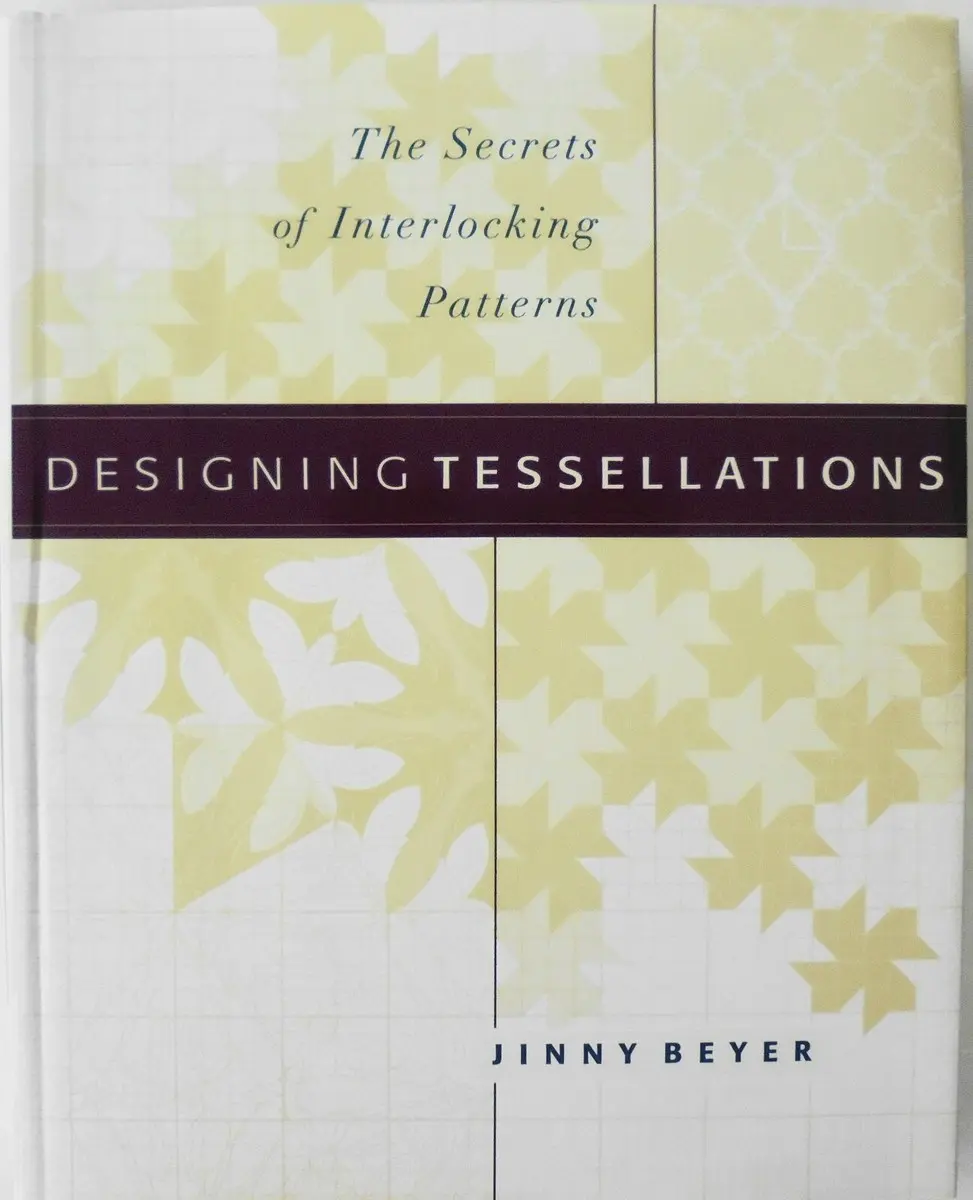
    Designing Tessellations

    Jinny Beyer · 1999 · Contemporary Books

    The book on tiling theory that comes in through the most unexpected door: Beyer is a quilting master and acquired her knowledge of symmetry by testing it on fabric, with a needle. The book teaches the whole of the seventeen wallpaper groups through steps clearer than most of the academic literature, by designing pattern after pattern — including a section on the crossover to Escher-style figurative tilings. Very few texts can hit the seriousness of a craft book and the correctness of a mathematics book at the same time; this is one of them. If Grünbaum-Shephard's seven hundred pages intimidate you, this is the door into the same country.
SHELF IV

Architecture and perspective

Where proportion turns into structure and geometry into a gaze: the vanishing point is a mathematical object.

  1. 38

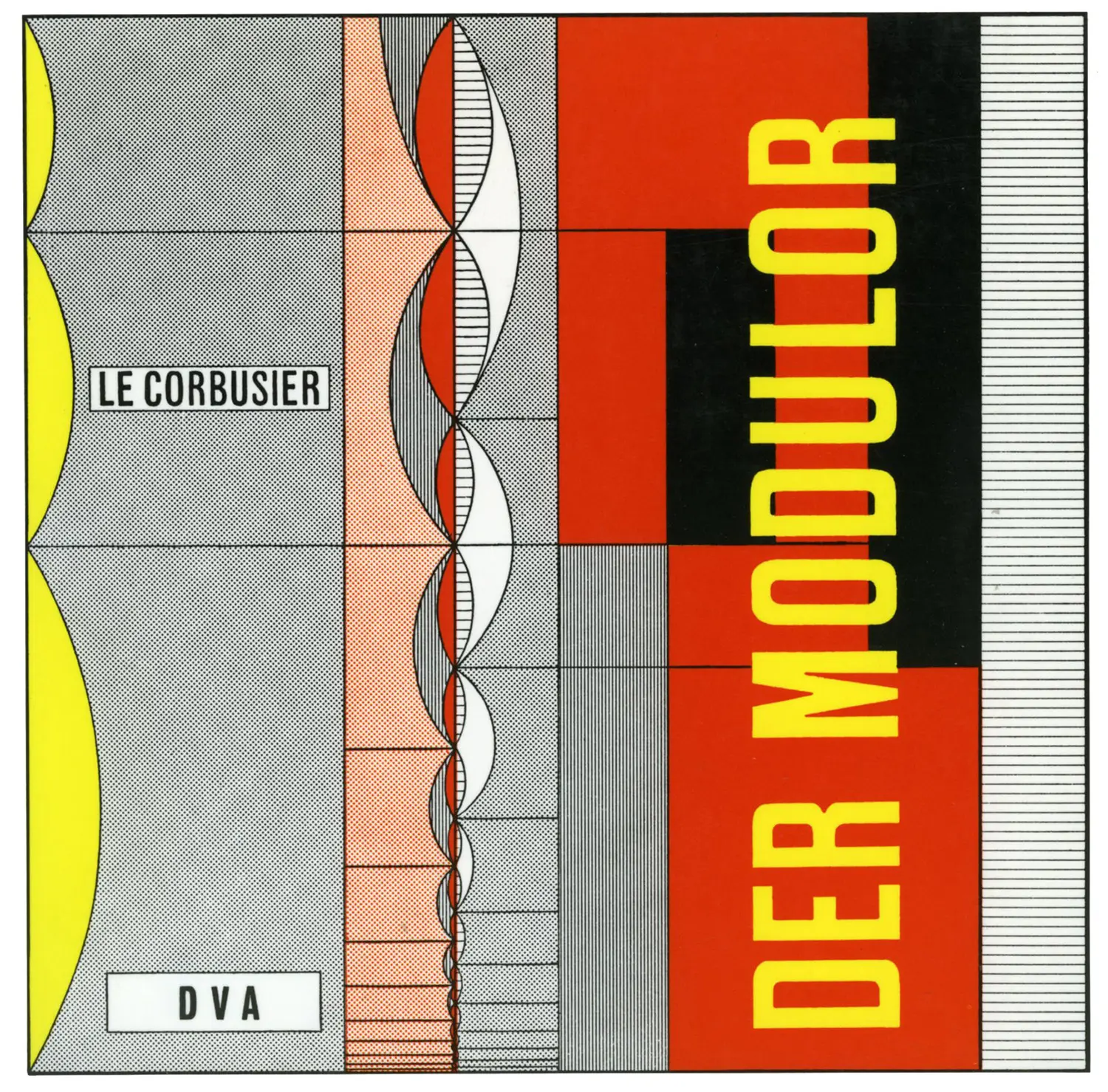
    The Modulor

    Le Corbusier · 1948; Modulor 2, 1955

    Le Corbusier's system of measure derived from the human body: it ties the golden ratio and the Fibonacci sequence to a standard human height, produces two measurement series for architecture, and proposes this as a universal language that would reconcile the metric and imperial systems. The book is half manifesto, half ledger; Le Corbusier folded the objections, the corrections, and his own hesitations into the text. The system never became universal and its proportion claims drew fair criticism; but the Unité d'habitation in Marseille was built to these measures, which makes the Modulor one of the rare proportion theories poured into concrete. Contested, flawed, and indispensable.
  2. 39

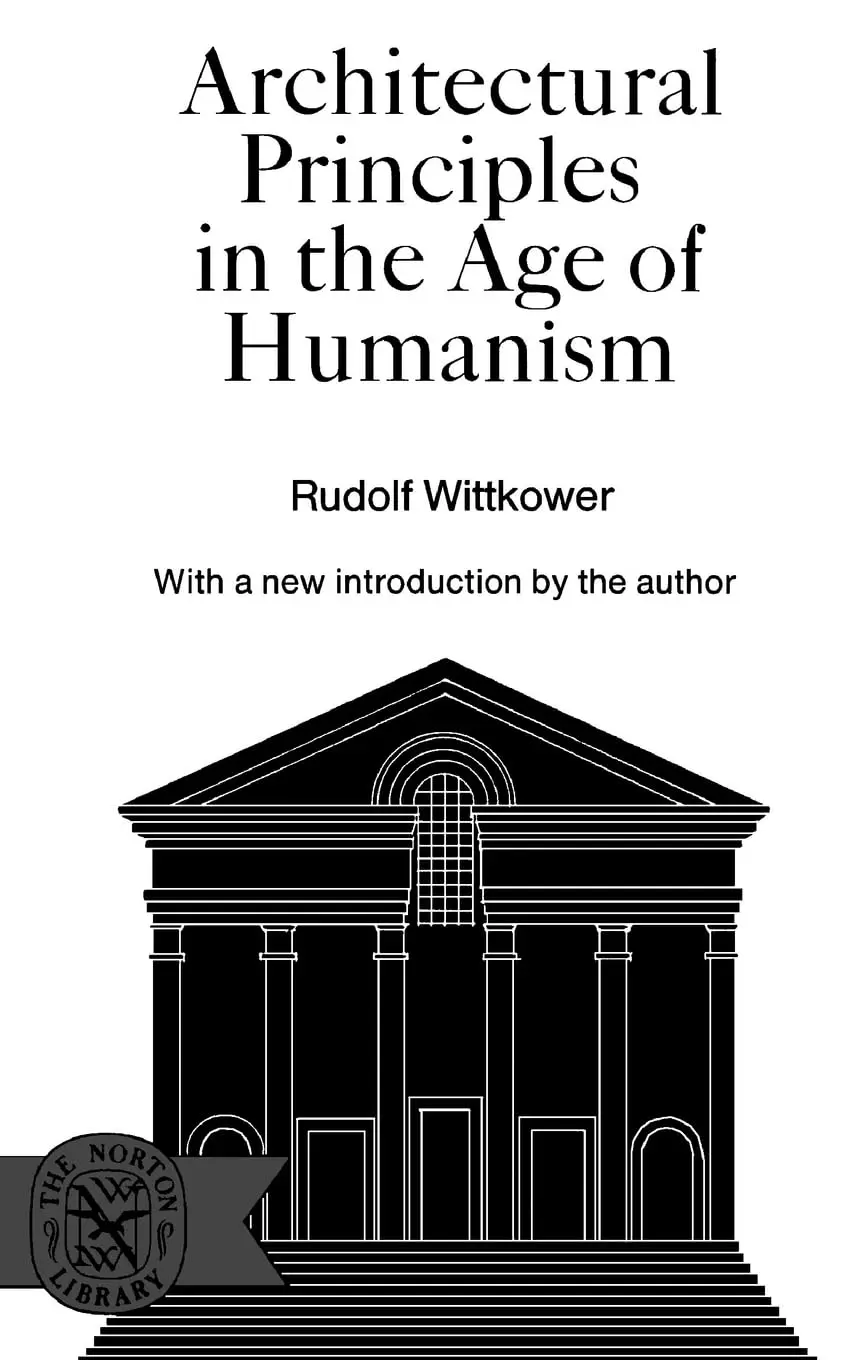
    Architectural Principles in the Age of Humanism

    Rudolf Wittkower · 1949 · Warburg Institute

    The book that wrote the intellectual history of proportion in Renaissance architecture. Wittkower documents that the façade and plan proportions of Alberti and Palladio were not arbitrary aesthetic choices but deliberate numerical systems derived from musical harmony theory: room ratios are constructed like chord ratios. When it appeared, the thesis changed the way Renaissance architecture was read, and turned postwar modernists — the Modulor among them — back toward proportion systems. It's an academic text, but its key sections are open to everyone; seeing once that there is calculation behind what we call a "beautiful façade" permanently changes how you look at buildings.
  3. 40

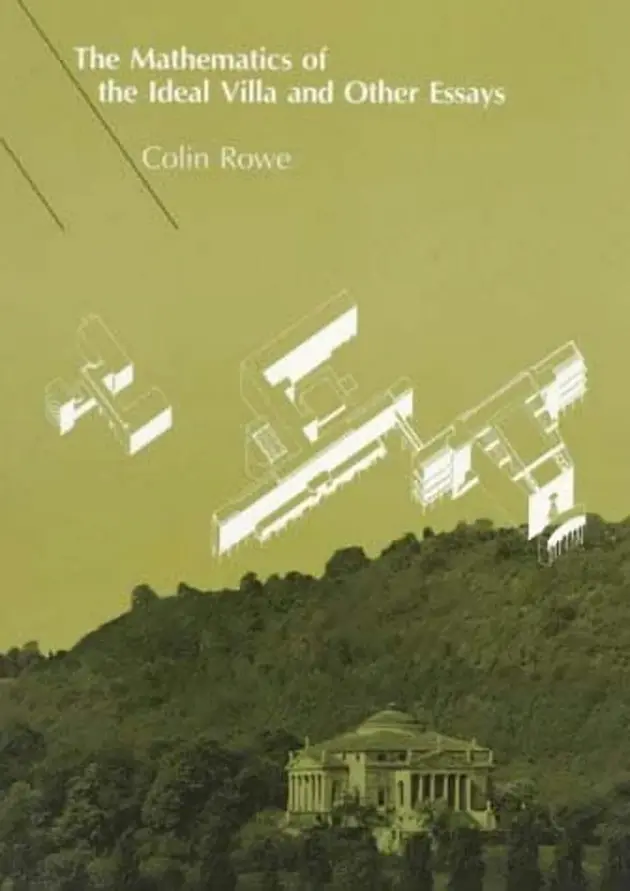
    The Mathematics of the Ideal Villa

    Colin Rowe · 1947 essay; book: 1976 · MIT Press

    Rowe's famous essay is built on a single comparison: Palladio's Villa Malcontenta and Le Corbusier's villa at Garches, four hundred years apart, sit on nearly the same proportional skeleton. Both share a similar column-and-bay rhythm; what changes is not the skeleton but the language over it. It's one of the most photocopied texts in architectural criticism, and the reason is plain: it shows how geometric analysis can cut a debate about style short. The MIT edition gives the essay alongside Rowe's other texts; the main course is the first essay, the rest is garnish.
  4. 41

    The Geometry of Environment

    Lionel March & Philip Steadman · 1971 · RIBA Publications

    Written in 1971 and still fresh: March and Steadman wrote the first book to apply the "new mathematics" — sets, groups, graphs, transformations — systematically to problems in architecture and design. They read plan schemes as graphs, symmetry operations as design tools, spatial relations as topology. The conceptual ancestors of today's computational design, of space syntax, and of parametric software are on these pages. It's hard to find in print and, once found, not let go; for anyone seeking a bridge between architecture and mathematics, it should still be the first stop.
  5. 42

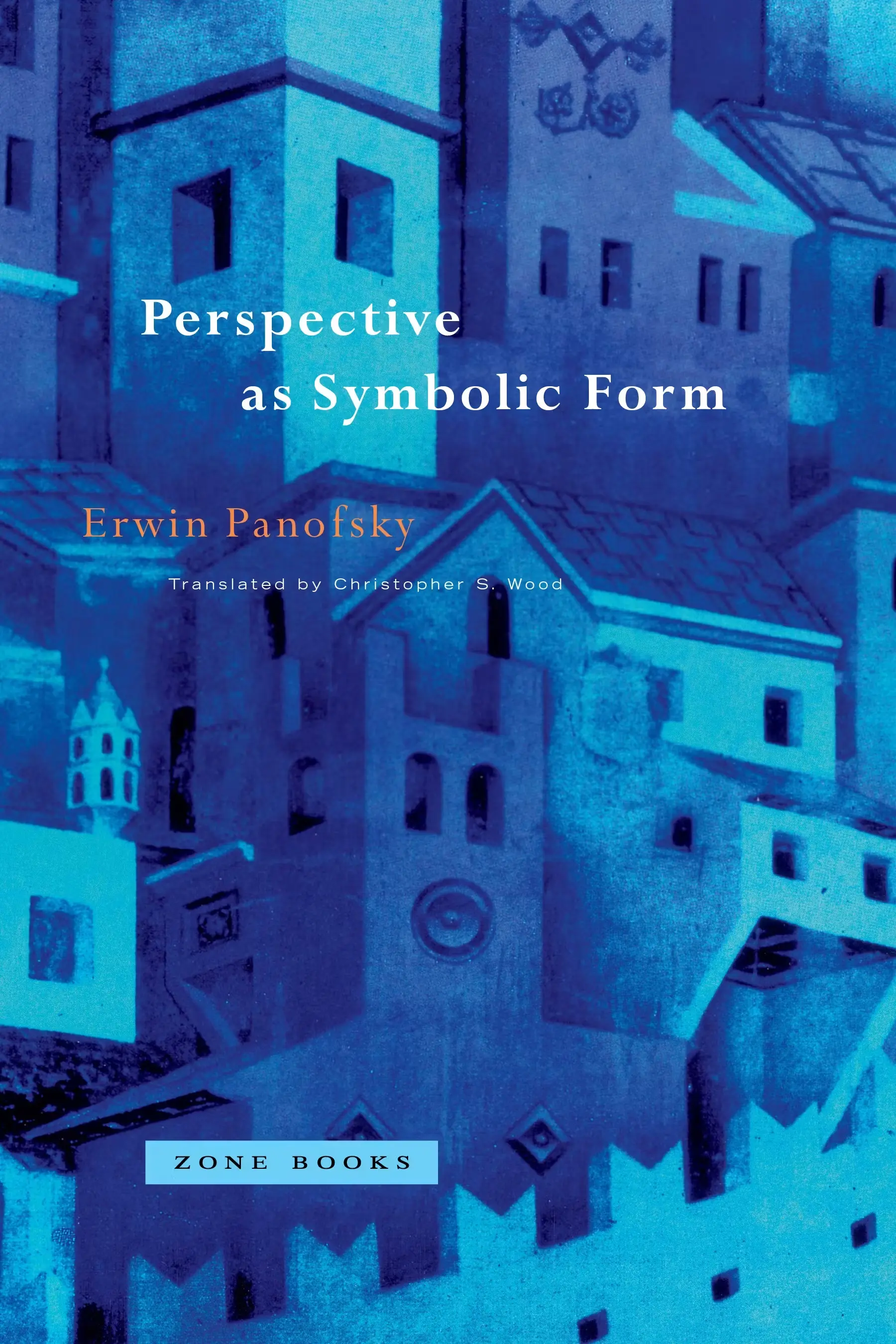
    Perspective as Symbolic Form

    Erwin Panofsky · 1927; English translation 1991 · Zone Books

    After Panofsky's thesis it's no longer possible to look at perspective the old way: linear perspective is not the "correct" representation of the world but the geometric expression of an age's worldview. Antiquity's sense of space differs from the Renaissance's, and each produces its own consistent system of representation; the vanishing point is the translation of the idea of infinity into painting. The text is short but dense, one of the most cited essays in art history. The foundational text that shows everyone who learned the rules of perspective as technical data — architect, illustrator, game artist — that those rules carry a philosophy.
  6. 43

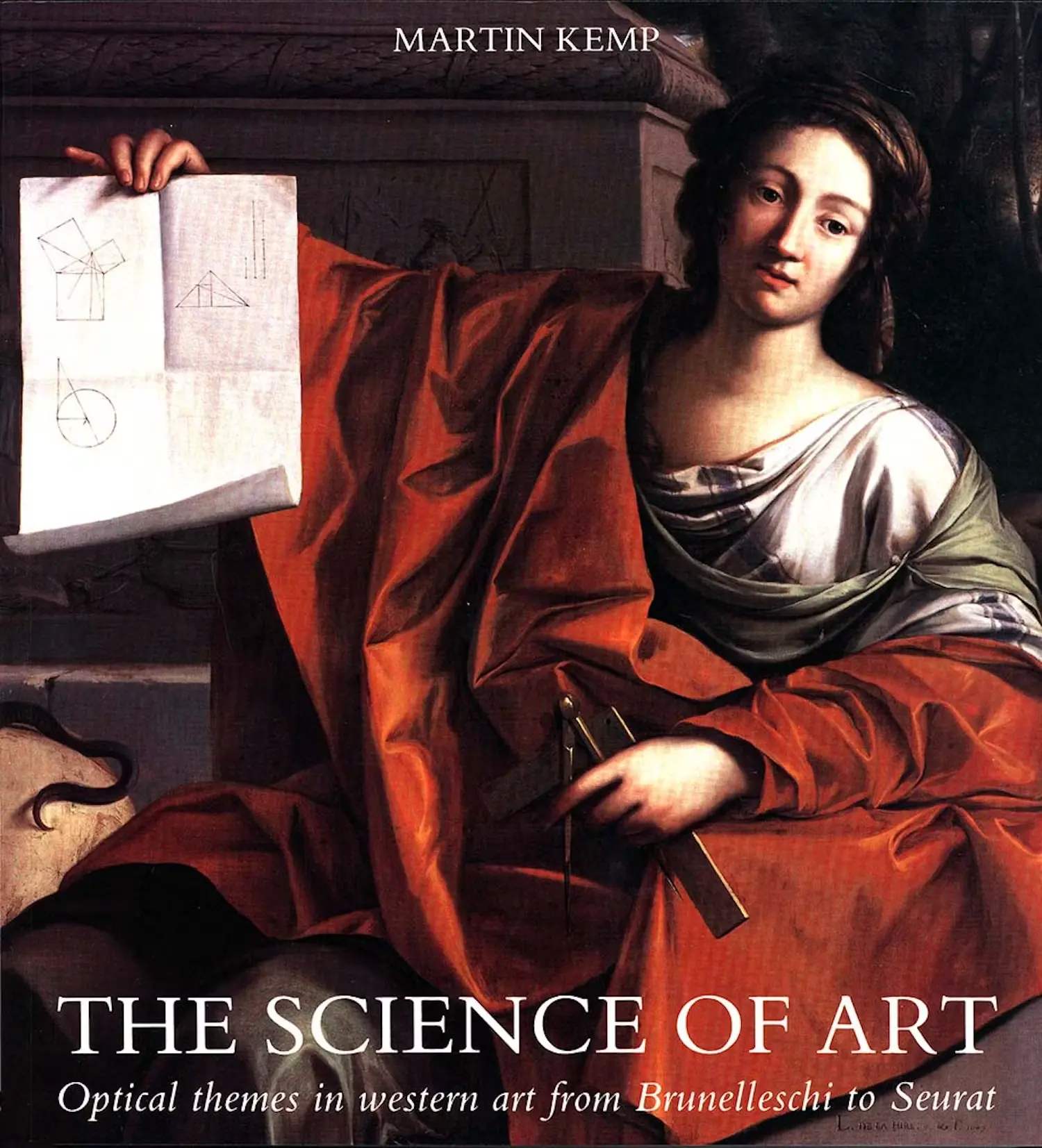
    The Science of Art

    Martin Kemp · 1990 · Yale University Press

    From Brunelleschi's perspective experiment to Seurat's color theory, the four-hundred-year shared history of optics and geometry in Western art. Kemp's strength is in the detail: he works through the perspective machines, the camera obscuras, the proportion instruments one by one, and documents the relationship artists built with these tools — sometimes the faithful user, sometimes the rule-breaker. The book turns the "art or science" dilemma from a question into a non-question; for five centuries the two shared the same workshop. A heavy but unhesitating reference that belongs in the library of anyone working with visual culture.
  7. 44

    The Geometry of an Art

    Kirsti Andersen · 2007 · Springer

    The full scholarly history of the mathematics of perspective: from Alberti's first formulation to Monge's descriptive geometry, across seven hundred pages, going down to the period sources. Andersen tracks not only who discovered what but how the knowledge of perspective moved back and forth between painters' workshops and mathematicians' chairs — over centuries in which two communities solved the same problem in different languages. A specialist's book; written to be consulted rather than read cover to cover. But the definitive answer to any serious question about perspective is now sought in this volume, and generally found.
  8. 45

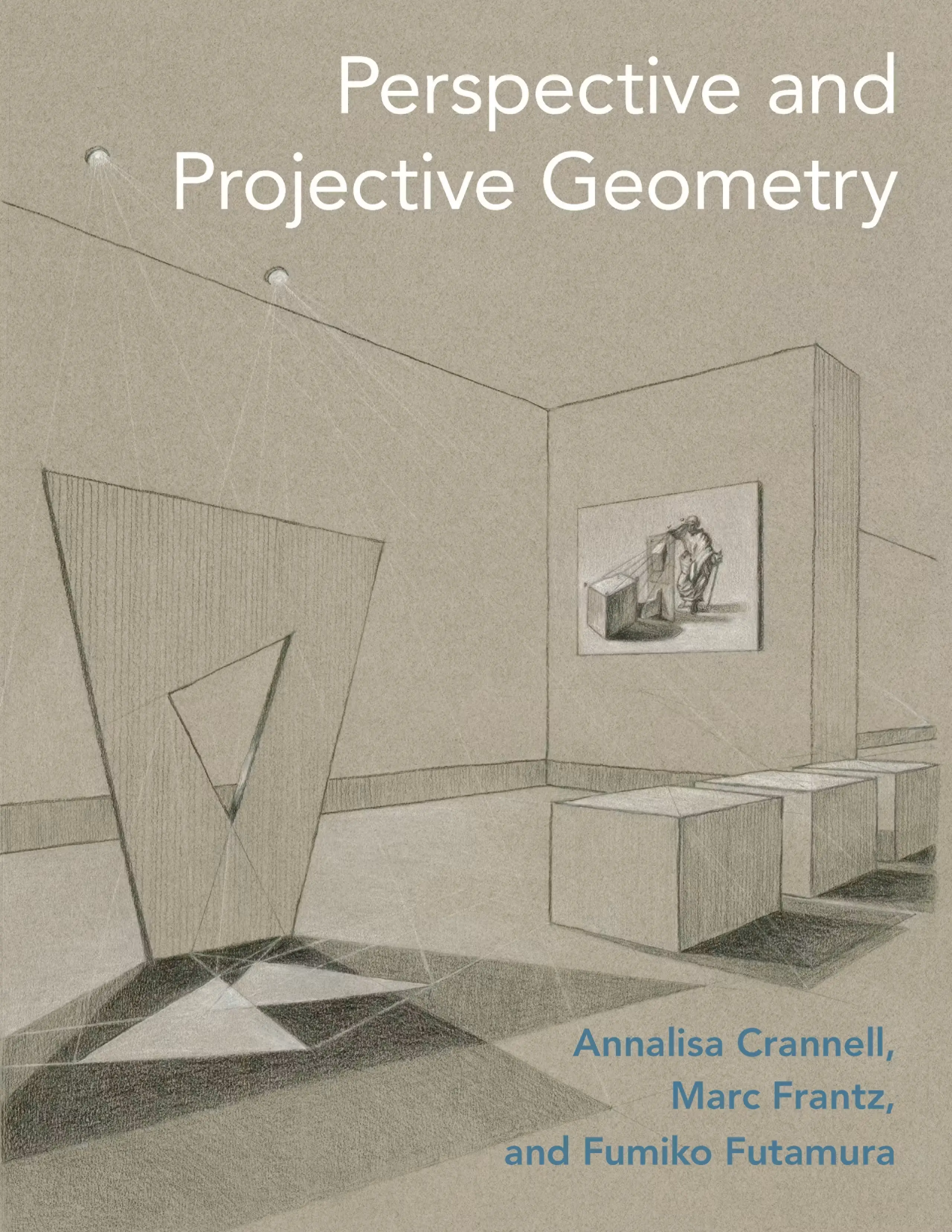
    Perspective and Projective Geometry

    Annalisa Crannell, Marc Frantz & Fumiko Futamura · 2019 · Princeton University Press

    A textbook that teaches perspective by making you draw: each chapter opens with a drawing problem — build a box with two vanishing points, divide a pavement grid into depth — and derives the theorems of projective geometry from that problem's solution. Abstract concepts like the cross-ratio are justified through tangible work such as extracting real measurements from a photograph. A two-way book that teaches mathematics to the art student and drawing to the mathematics student; with its exercises spelled out for anyone working alone outside a classroom too. The modern textbook most faithful to this list's principle of "make first, prove after."
  9. 46

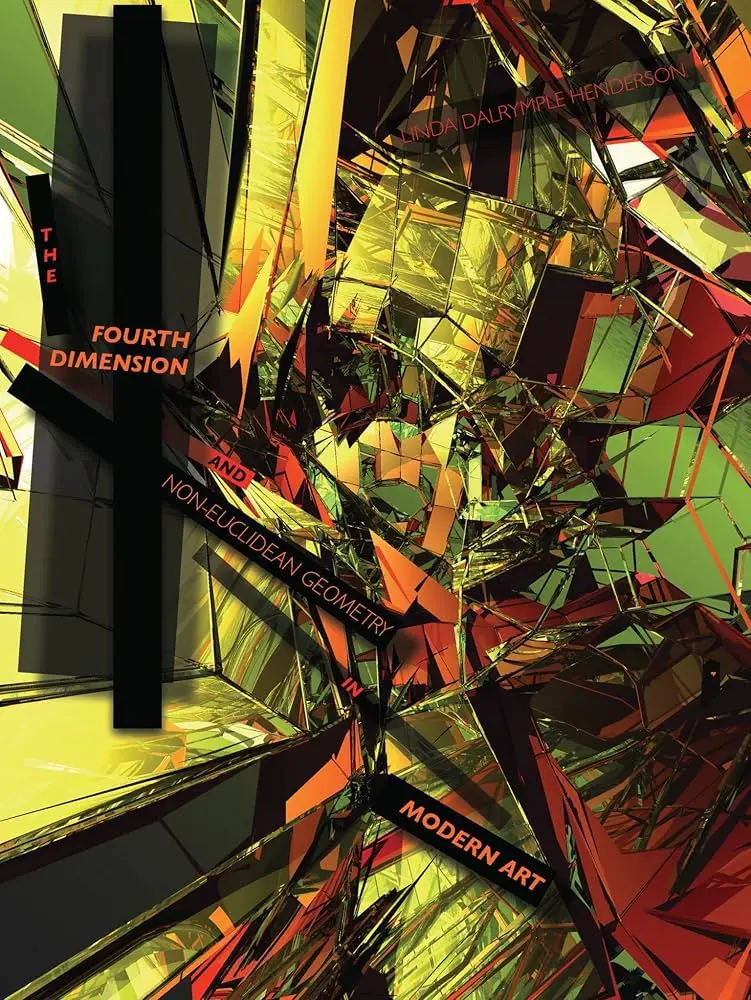
    The Fourth Dimension and Non-Euclidean Geometry in Modern Art

    Linda Dalrymple Henderson · 1983; expanded edition 2013 · MIT Press

    Where did the artists of the early twentieth century hear of the fourth dimension and the non-Euclidean geometries, how did they understand them, how did they carry them onto the canvas? Henderson answers with archival rigor: through popular mathematics books, newspaper debates, and artists' letters she locates the geometry sources of Cubism and its contemporary movements one by one. The widespread legend the book corrects is important too: the early avant-garde's inspiration was not relativity but a "higher dimension" curiosity that ran independently of it. The best documented case study of the speed and the manner in which mathematical ideas seep into culture.
A good diagram is not the ornament of a proof; more often, it is the proof itself.
The working principle for Shelf V
SHELF V

The mathematicians' bedside books

These books carry theorems; but every one was written by someone who knows the theorem is a matter of form too.

  1. 47

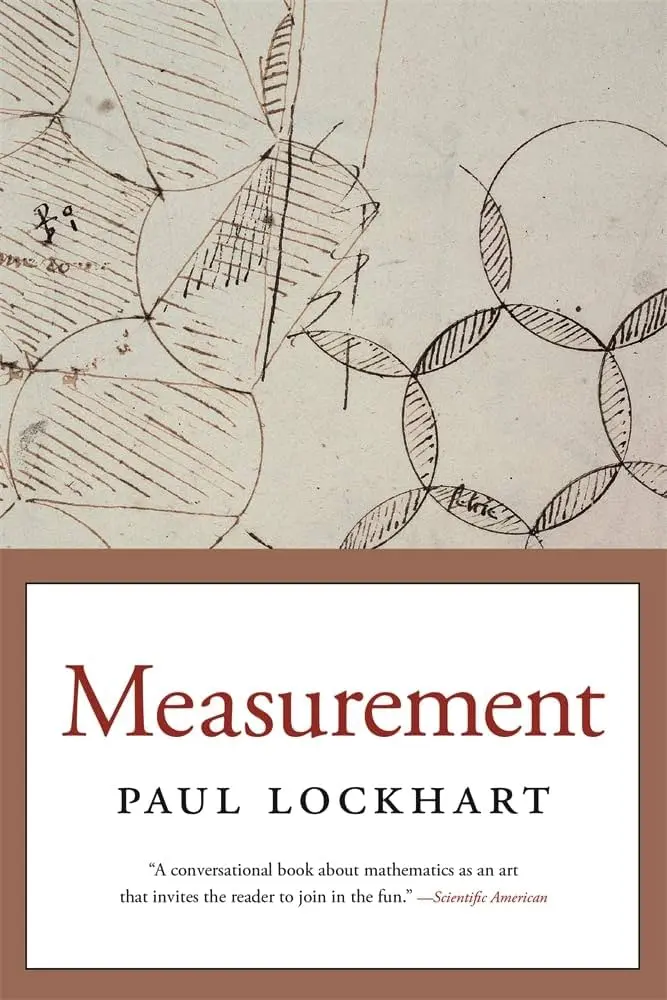
    Measurement

    Paul Lockhart · 2012 · Harvard University Press

    From the author of A Mathematician's Lament, the constructive answer to that critique: if you wrote the complaint about the mathematics class, write too what the class should be. Lockhart doesn't hold the reader's hand; he sets a problem, doesn't hide his own admiration, and often leaves the solution to the reader. The topics are classic — areas, volumes, cones, motion — but the tone is singular: geometry here is not a curriculum item but a lifelong craft. This book, which drills no formulas and makes measurement itself an object of wonder, is the one I recommend first to anyone whose relationship with geometry was spoiled at school.
  2. 48

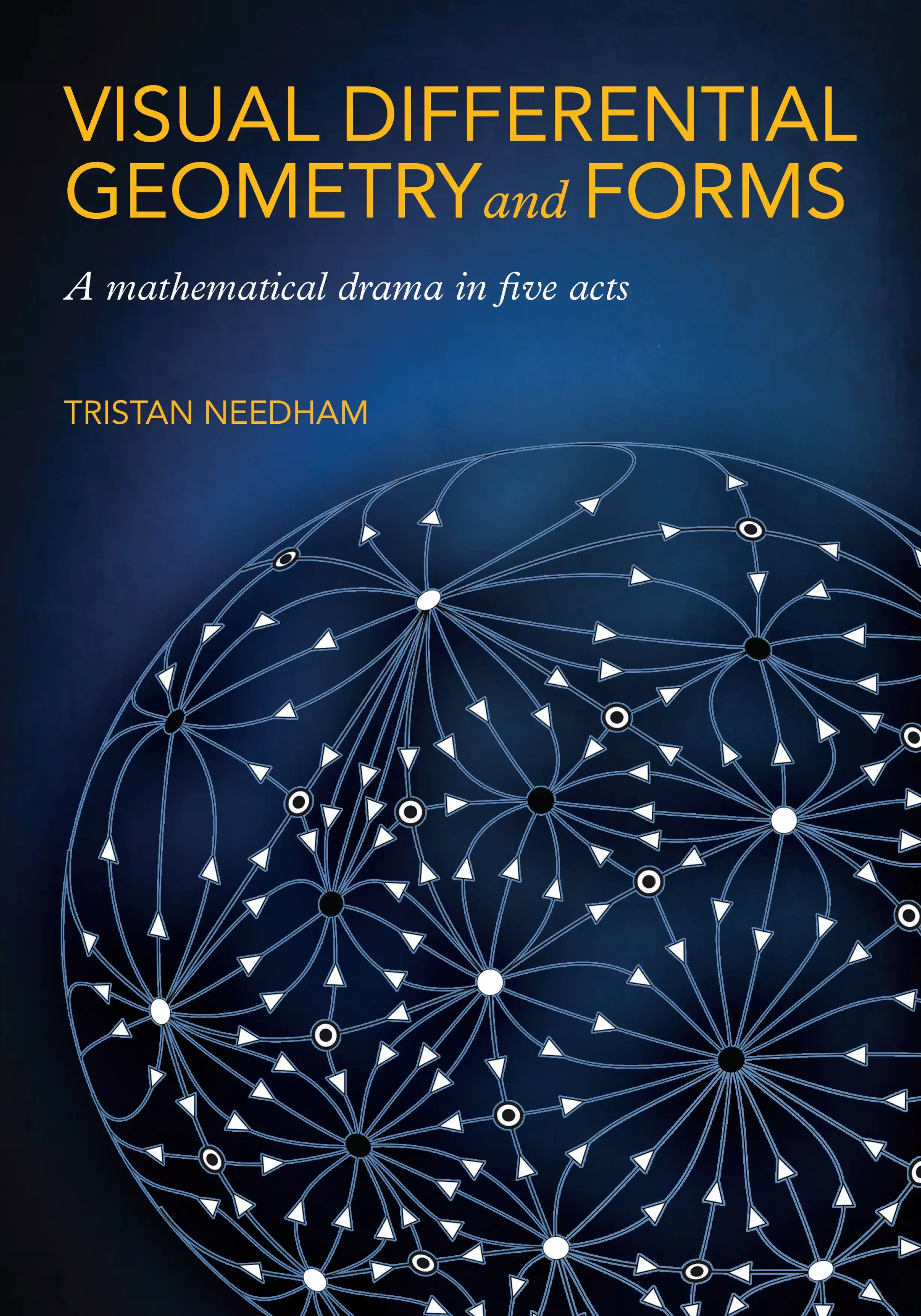
    Visual Complex Analysis & Visual Differential Geometry and Forms

    Tristan Needham · 1997 · Oxford / 2021 · Princeton

    Needham's project is to carry the "proof by seeing" tradition into two of modern mathematics' most abstract-seeming fields. Visual Complex Analysis rebuilt a generation's analytic intuition by telling complex functions not as a pile of formulas but as geometric transformations — rotations, dilations, conformal maps. Twenty-four years later, Visual Differential Geometry and Forms applied the same program to curvature and differential forms; Needham says he wrote the book with an open debt of gratitude to Newton's geometric style of reasoning. There's a drawing on every page and none is decoration; it's the argument itself. The two strongest pieces of evidence on this list for the proving power of the diagram.
  3. 49

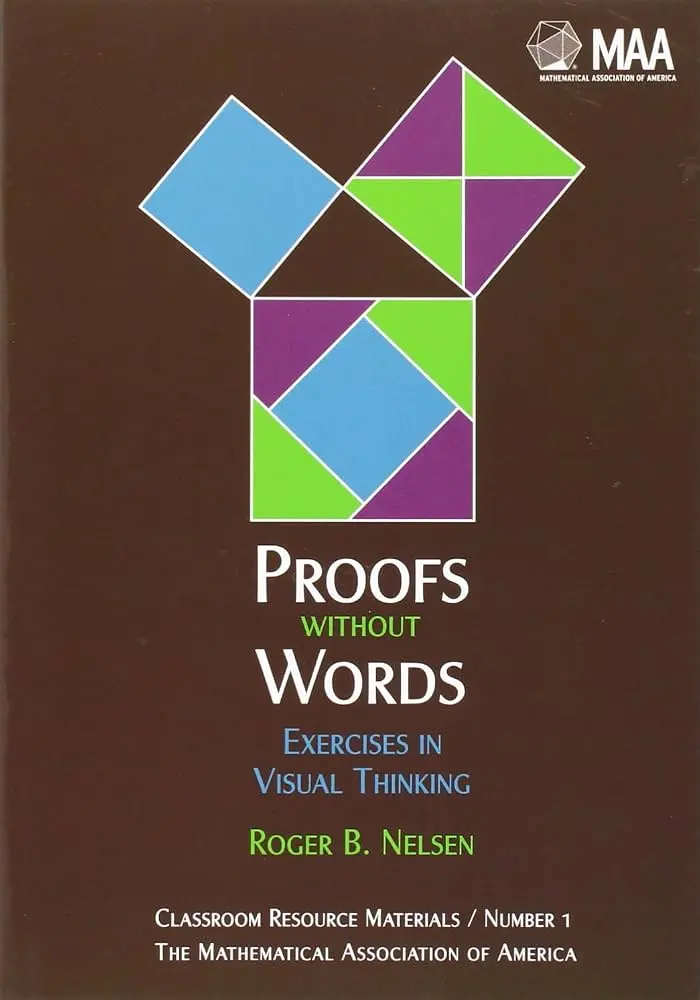
    Proofs Without Words

    Roger B. Nelsen · three volumes from 1993 · MAA

    A series that keeps the promise of its name to the letter: a theorem on each page and a figure that proves it wordlessly — sums of squares, inequalities, trigonometric identities, dozens of different visual proofs of Pythagoras. The game the book plays is in the silent contract it makes with the reader: you look at the figure, for a while nothing happens, then the proof suddenly "appears." That moment is among the purest pleasures mathematics can give. It's a lesson from a graphic-design view too; each page is the solved form of the problem of conveying a single idea with the least ink. A volume should sit on the desk of anyone who teaches.
  4. 50

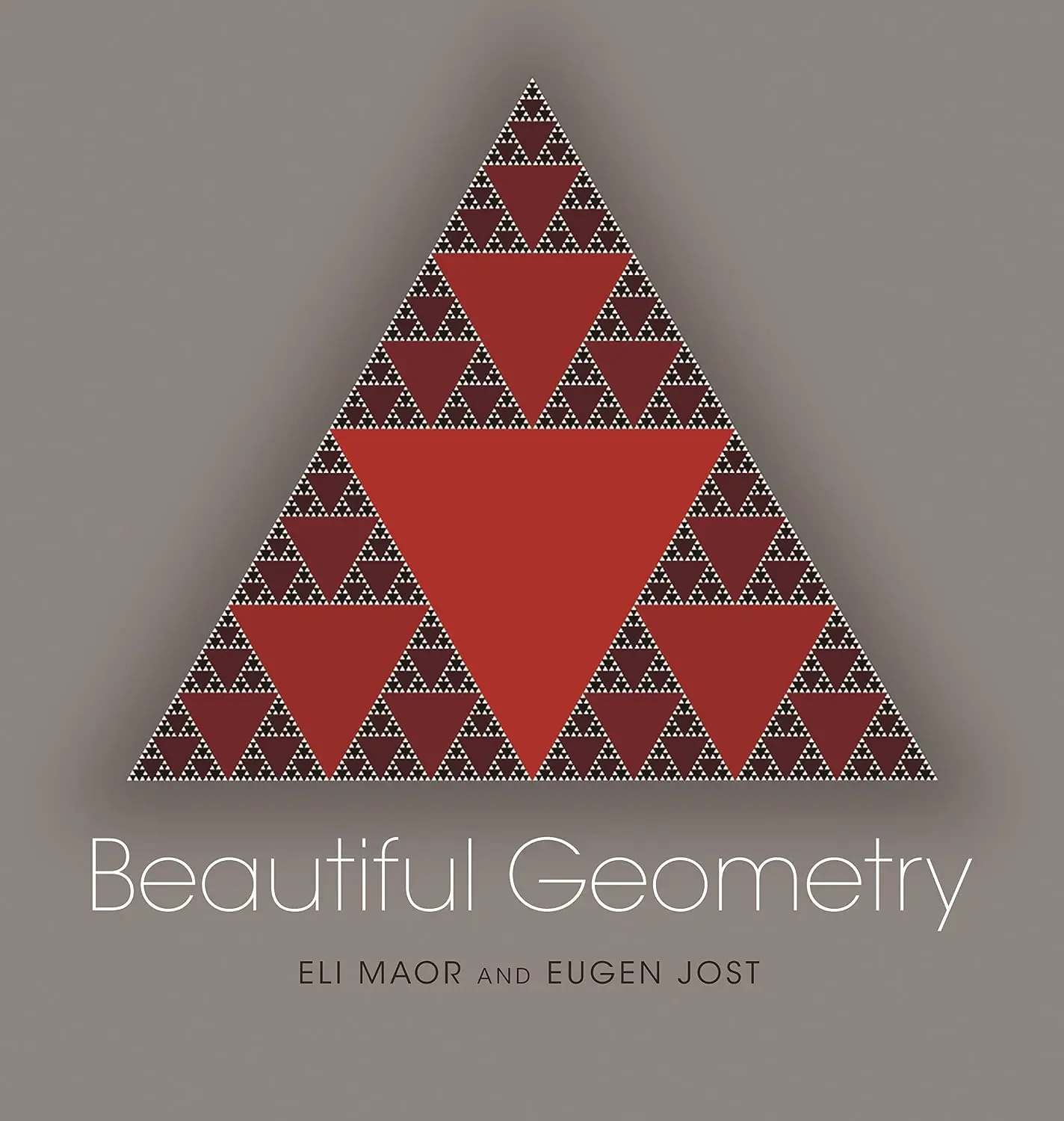
    Beautiful Geometry

    Eli Maor & Eugen Jost · 2014 · Princeton University Press

    Fifty-one short chapters, each on a theorem or a concept — and facing it, a plate painter Eugen Jost produced for that idea. Maor tells the history and the mathematics, Jost says the same content in color; the hierarchy-free partnership of text and image makes the book the conceptual sibling of this list. The selection is balanced from Pythagoras to infinity, each chapter the length of a coffee break. Books of real mathematics printed in gift-book format are very few; this is among the best of the kind. If I had to give someone "the one book to make them love geometry," this would be on the shortlist.
  5. 51

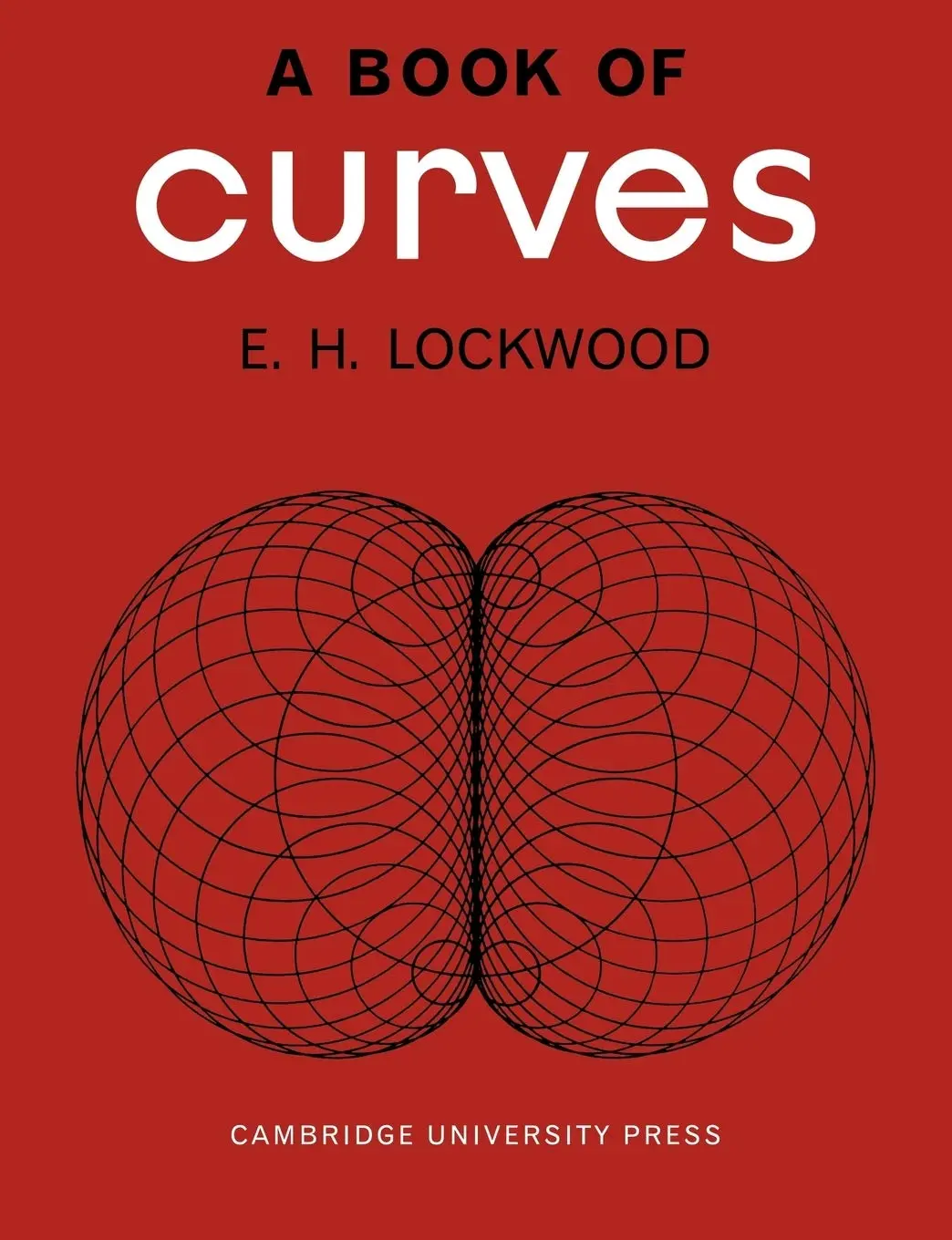
    A Book of Curves

    E.H. Lockwood · 1961 · Cambridge University Press

    A workshop book from 1961: the parabola, the cardioid, the astroid, the Archimedean spiral — each curve first built by hand, point by point on paper, its properties discovered during that drawing. Lockwood's pedagogy looks radically concrete today; to know a curve is to have drawn it. In the computer age this approach is not nostalgia but antidote: for a designer who spends the day with Bézier curves, building the classic family of curves by hand once visibly deepens the intuition for the tool. The book also circulates in open-license archives; there's no barrier to getting it.
  6. 52

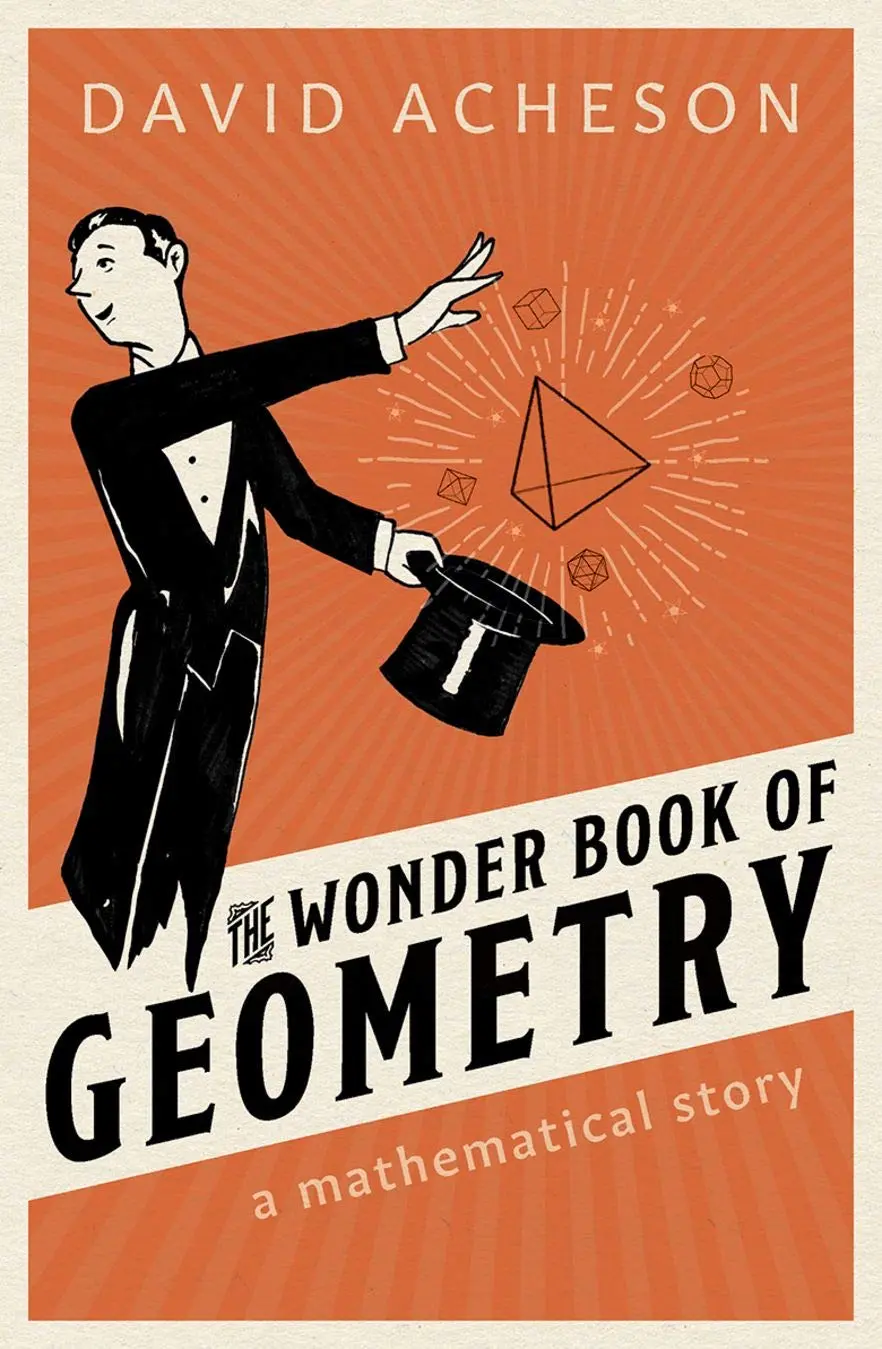
    The Wonder Book of Geometry

    David Acheson · 2020 · Oxford University Press

    Acheson's pocket-sized book is the most endearing modern answer to "why is geometry done with proof." It starts with Thales and moves from interior angles to circle theorems, from conic sections to a simple proof of Pythagoras, each step in a page or two, with half a century of teacher's mischief. Its aim is not to be a textbook but to let the reader taste the feeling that "the thing you call a proof can be this short and this certain." As the first book to hand to a student, a parent, or an adult who fell out with geometry, it's in exactly the right calibration.
  7. 53

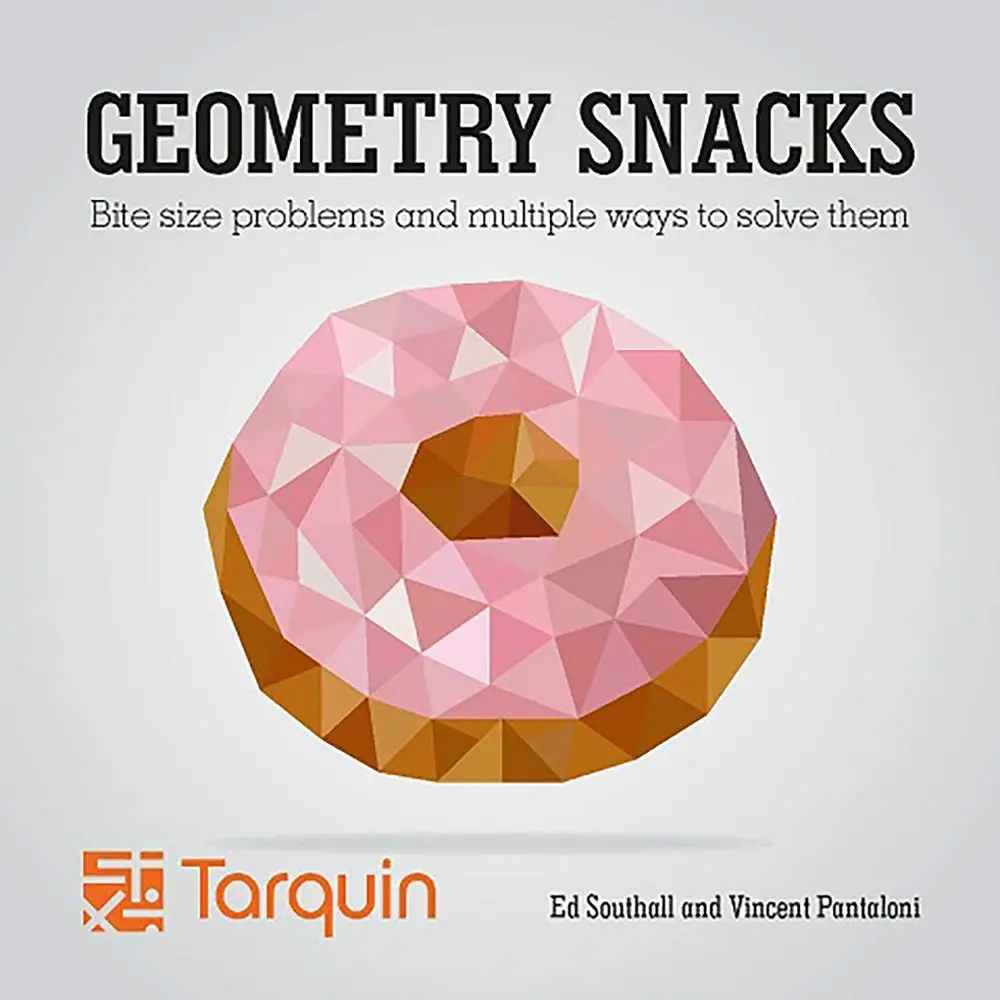
    Geometry Snacks

    Ed Southall & Vincent Pantaloni · 2018 · Tarquin

    The book form of the visual geometry puzzles that went viral on social media: a single figure on each page, a single question — what's the shaded area, what's the angle — and more than one solution behind it. The book's real lesson isn't in the answers but in the variety of solutions; by showing again and again that the same figure can be looked at through five different eyes, it dismantles the schoolroom reflex that "there is one right way." A ready-made lesson opener for the teacher, a bit of coffee-side gymnastics for the adult. Sequel volumes came out too; the odds of it being habit-forming are not inversely proportional to its size and price.
  8. 54

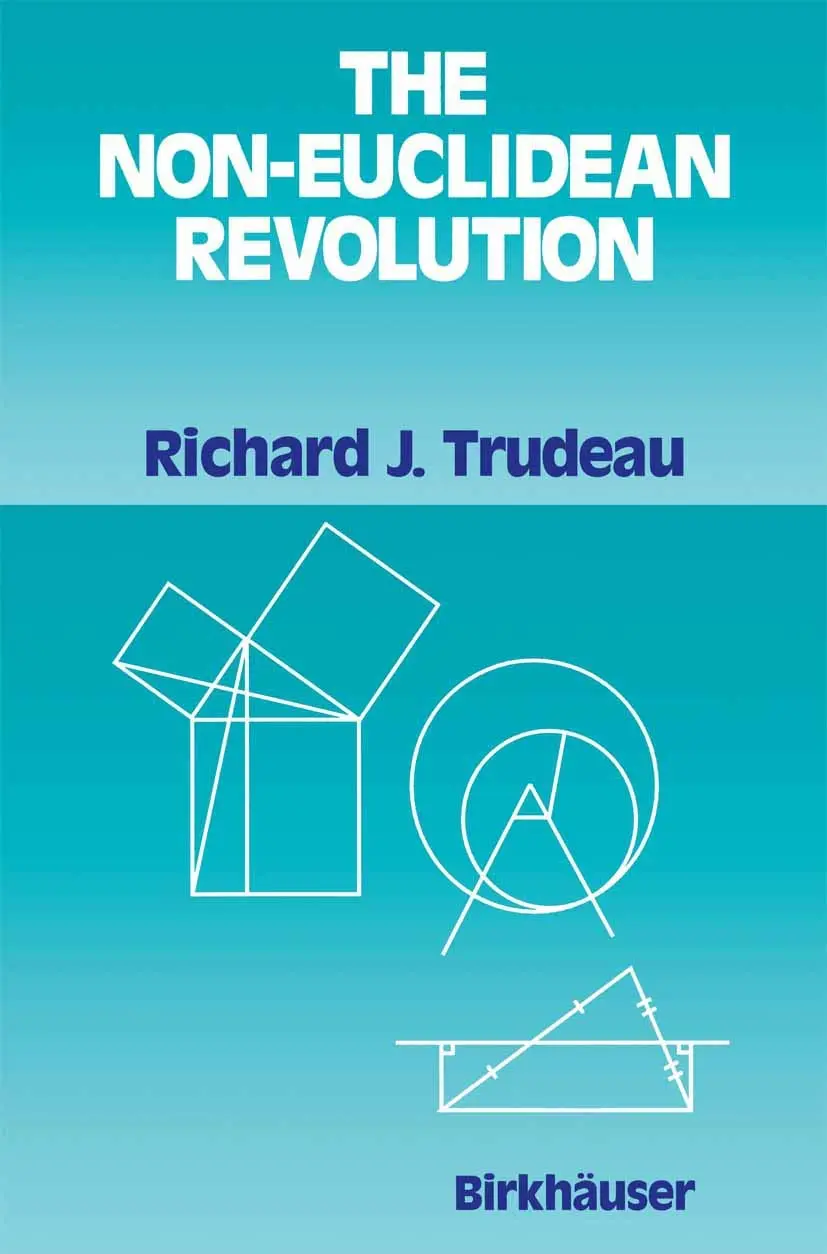
    The Non-Euclidean Revolution

    Richard J. Trudeau · 1987 · Birkhäuser

    The story of the two-thousand-year interrogation and collapse of the parallel postulate — but Trudeau sets it up not as a historical narrative but as a logical case run together with the reader: first Euclid's system is built in all its grandeur and its cracks, then hyperbolic geometry is built with the same seriousness, and the reader is left between two consistent, mutually contradicting worlds. The book's closing question exceeds mathematics: are axioms discovery or choice? A text that gives a lesson in epistemology through geometry, still unsurpassed in its kind.
  9. 55

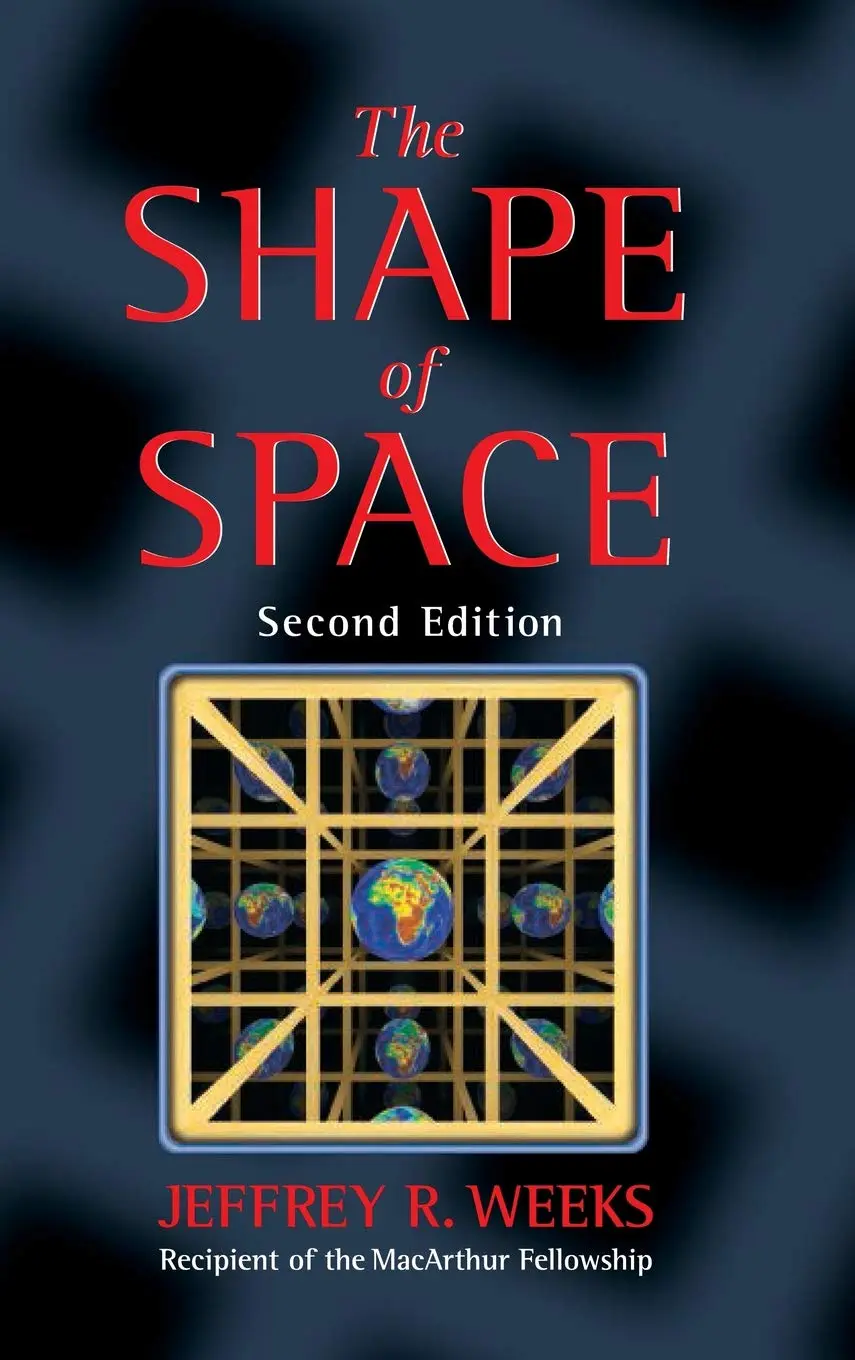
    The Shape of Space

    Jeffrey R. Weeks · 1985; third edition 2020 · CRC Press

    The topology of the universe, told in the language of high-school geometry: Weeks advances the reader by playing games on the flat torus, walking them through mirror rooms, "living" them inside three-dimensional manifolds — the density of formulas deliberately near zero, the density of concepts at doctoral level. For a non-specialist, this book is the only known way to truly understand the question "can the universe be finite yet unbounded." Weeks also lets you roam inside these spaces with the free software he wrote; used with the book, the lesson turns into an experience. A classroom classic that hasn't aged in forty years.
  10. 56

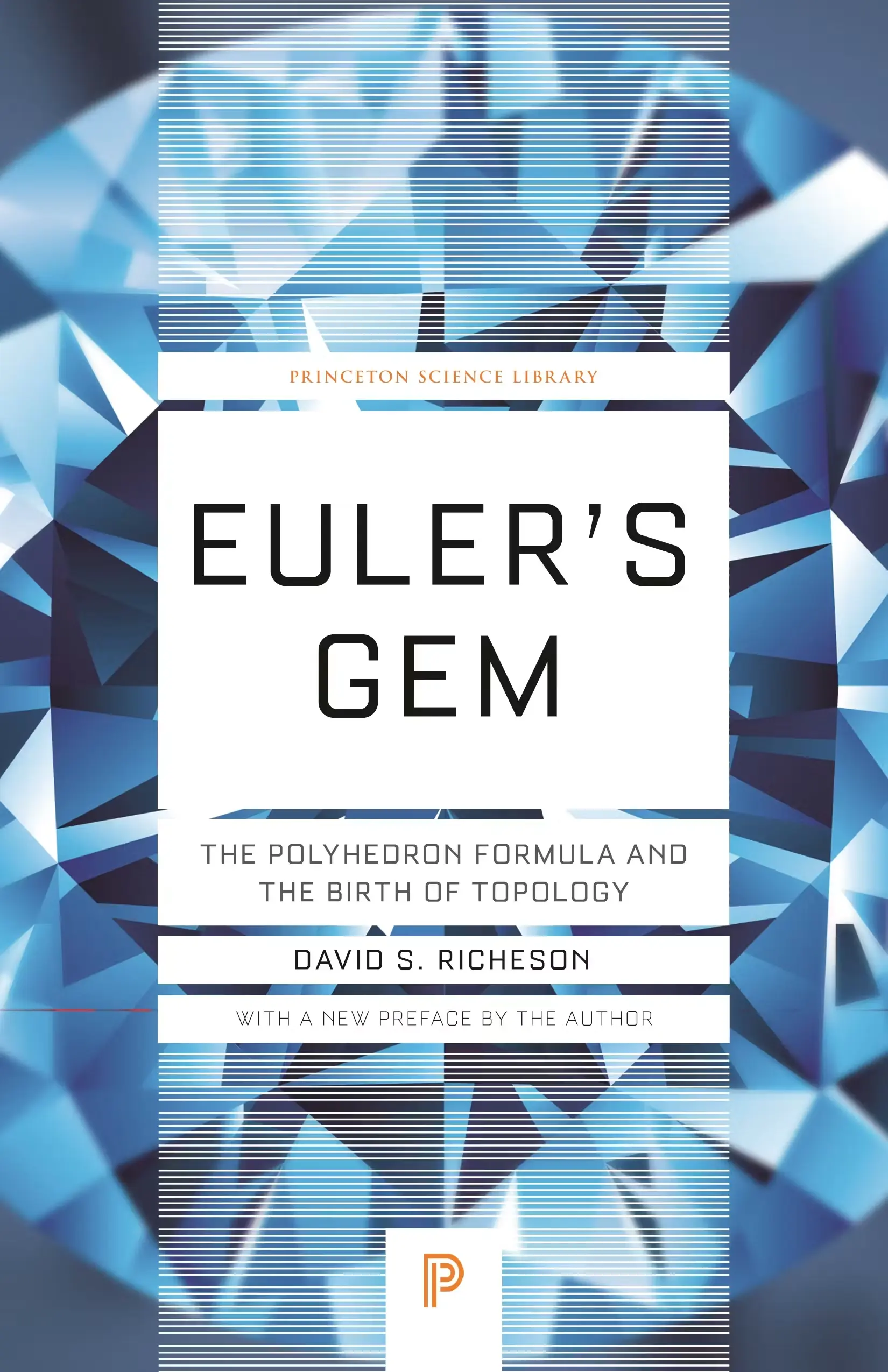
    Euler's Gem

    David S. Richeson · 2008 · Princeton University Press

    The biography of a single formula: V − E + F = 2. Setting out from Euler's polyhedron formula, Richeson reaches the birth of topology — from Descartes's lost notes to Poincaré, from the soccer ball to the hairy ball theorem. The book's mastery is in its sense of scale; the reader follows step by step how an operation as childish-looking as counting vertices, edges, and faces grows into the full classification of surfaces. Most popular-mathematics books string anecdotes; this is among the rare ones that dig deep into a single idea. It also says an unexpected amount to any designer who works with polyhedra.
  11. 57

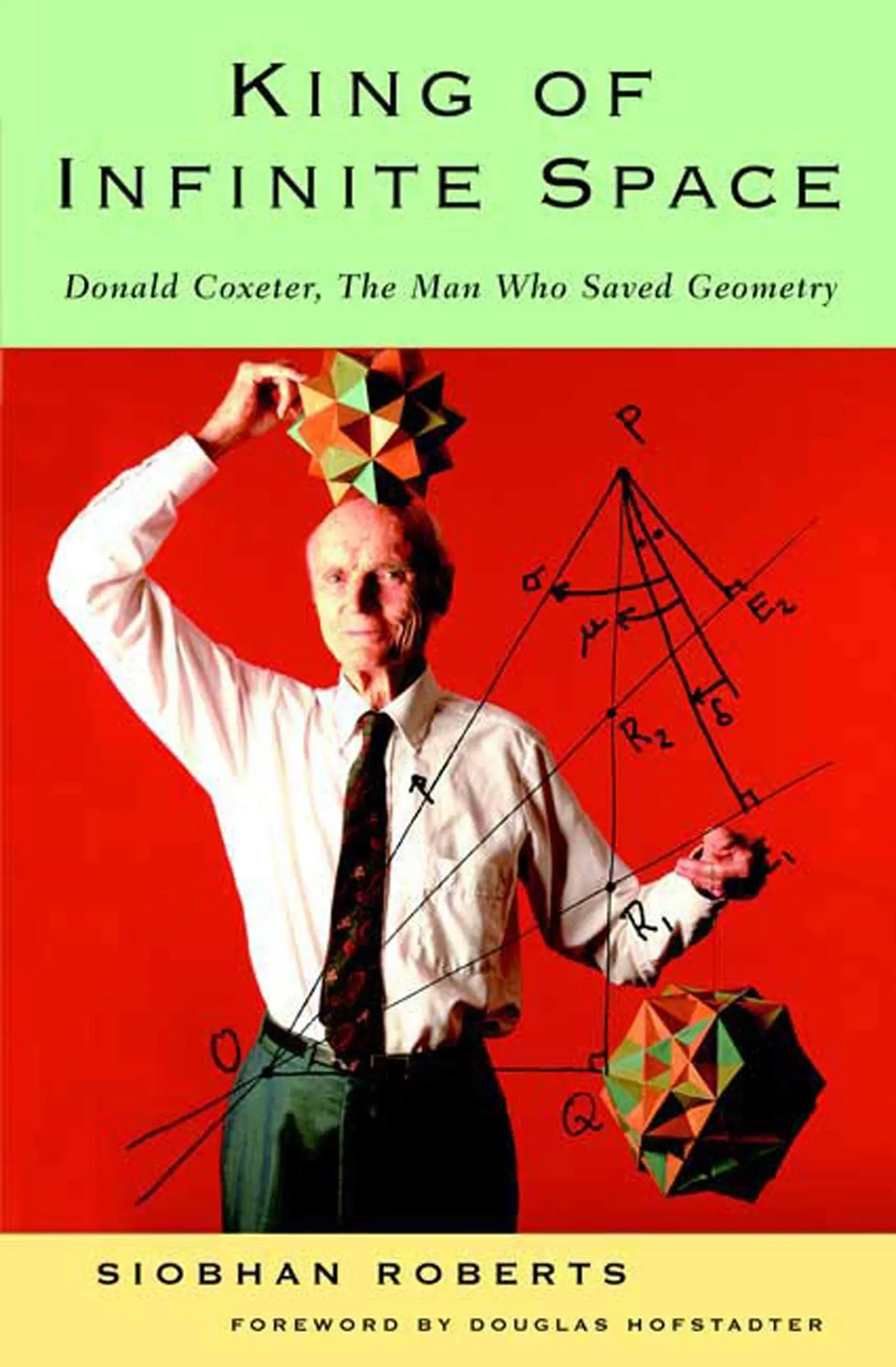
    King of Infinite Space

    Siobhan Roberts · 2006 · Walker & Company

    Coxeter's biography, and at the same time the survival story of geometry in the twentieth century. Roberts recounts how classical geometry fell out of favor in the Bourbaki age, and how Coxeter — through conferences, correspondence, and contacts with Escher and Fuller — carried it almost single-handed. The book reads as a defense too: the documentary of a period in which visual, tangible mathematics was disdained by the institutional mathematical mind. The human story behind most of the technical books on this list is here; if you loved entries 06 and 07, this is the novel of their author.
  12. 58

    A Topological Picturebook

    George K. Francis · 1987 · Springer

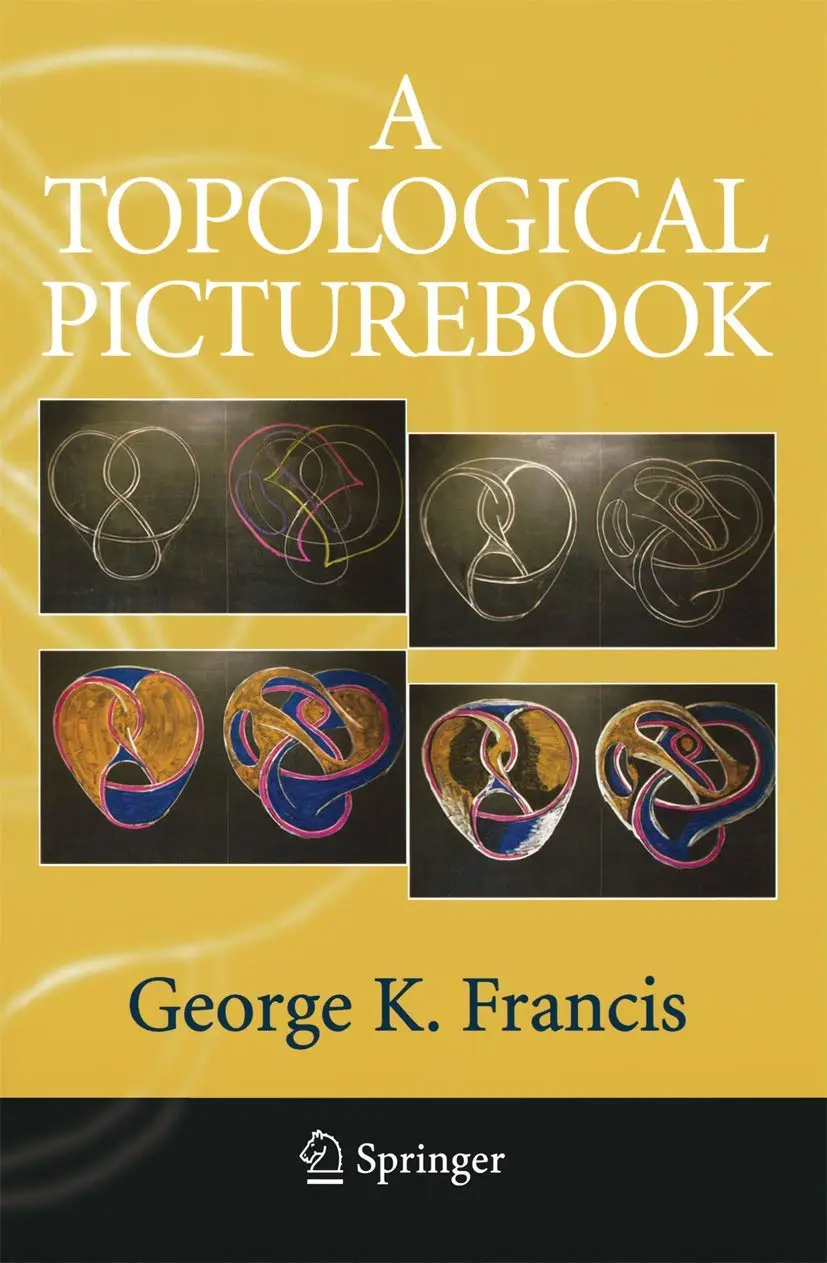
    Its name is a picture book, itself a drawing lesson: Francis teaches how to draw the objects of topology — sphere eversions, knots, self-intersecting surfaces — with a technical pen; from shading decisions to line-weight hierarchy. The thesis is implicit but clear: learning to draw these objects is understanding them. That it was published in the very year computer graphics was about to take over exactly this work sets the book on a historic threshold; the last great defense of hand drawing in mathematical illustration. A hidden treasure worth patiently hunting on secondhand shelves, for illustrators.
SHELF VI

Nature, fractals, the new generation

The geometry of roughness, of the spiral, of everything that isn't straight — plus the most recently dated books on the shelf.

  1. 59

    The Fractal Geometry of Nature

    Benoit Mandelbrot · 1982 · W.H. Freeman

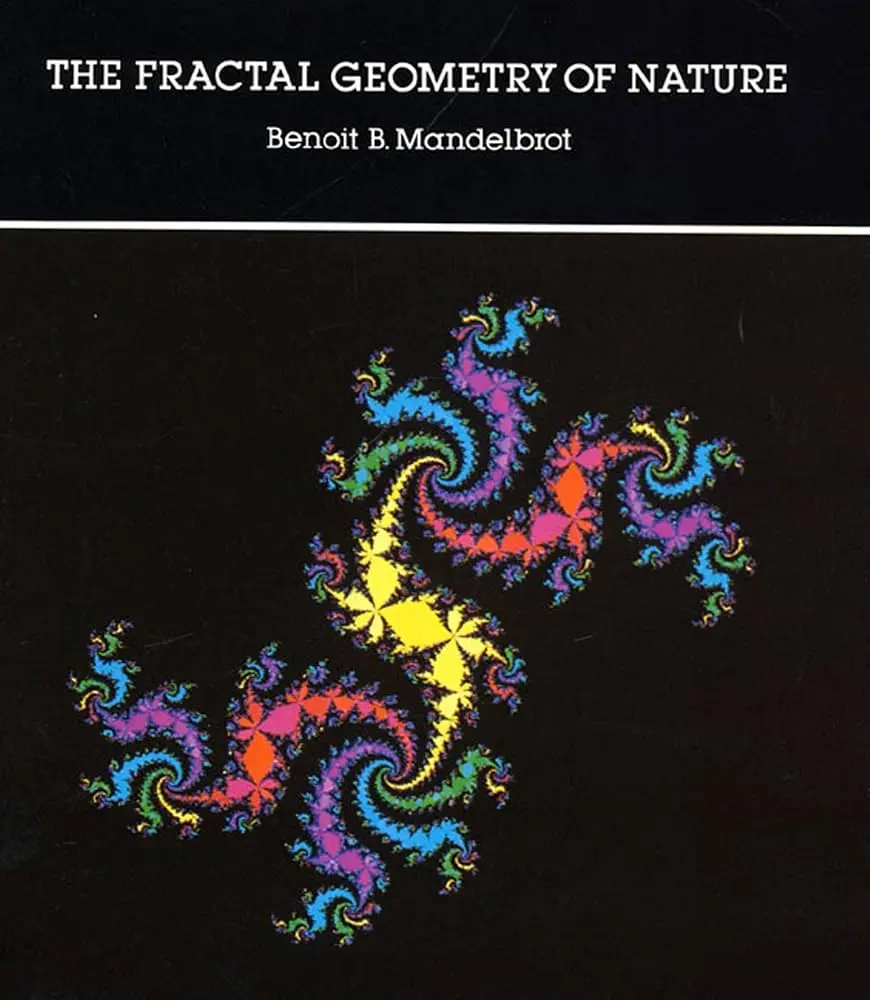
    Its opening line reads like a program statement: clouds are not spheres, mountains are not cones, coastlines are not circles. With this book Mandelbrot gave both a name and a mathematics to the rough, broken, self-similar forms that classical geometry had ignored, and the word "fractal" spread from here into the world. The book is an odd hybrid — half scholarly monograph, half manifesto, heavily illustrated — and that very hybridity made it effective in a way textbooks couldn't: it seeped into every layer of culture, from design to film effects, from antenna engineering to finance. You don't have to read it page by page; even its presence on the shelf shifts the horizon.
  2. 60

    Patterns in Nature

    Peter S. Stevens · 1974 · Little, Brown

    Stevens's thesis is one sentence: the vocabulary of patterns nature uses is surprisingly small — spirals, meanders, branchings, cracks, hundred-and-twenty-degree meetings — because the geometry of space and the economy of physics leave no other option. The river network and the lung, the soap foam and the basalt column, stand on the same page for the same reason. The book is striking even with its black-and-white photographs from 1974; every later "patterns in nature" book stands somehow in its shadow. For the designer seeking a physics answer to the question of why form takes this form, the starting text is still this.
  3. 61

    Patterns in Nature: Why the Natural World Looks the Way It Does

    Philip Ball · 2016 · University of Chicago Press

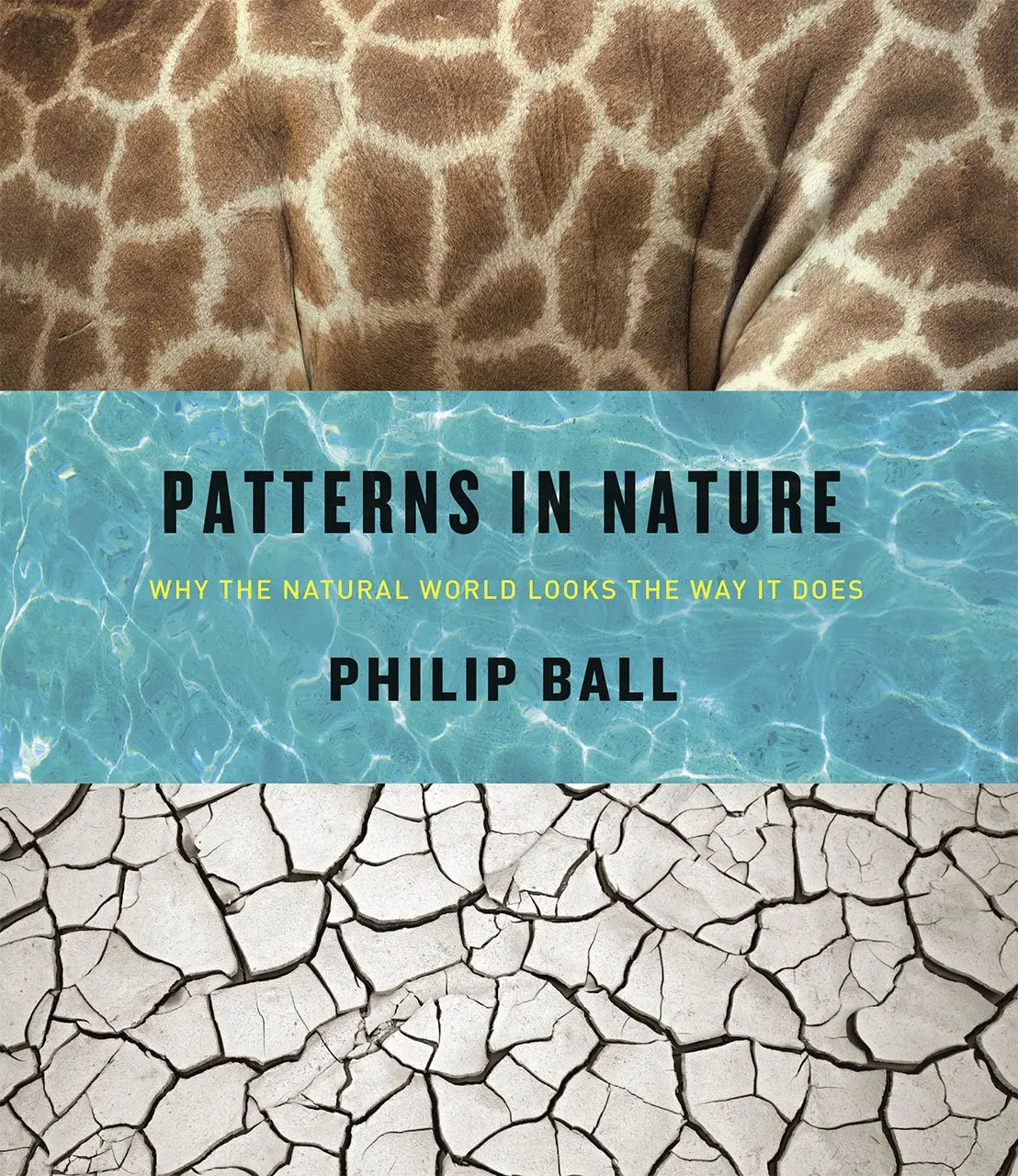
    The same question's photograph-heavy update forty years on. Science writer Ball gathers the literature of pattern formation — Turing patterns, reaction-diffusion, self-organization — into a large-format album with high print quality; from zebra hide to desert dunes, each chapter is at once a visual feast and solid science. Its relation to Stevens's book is not an update but a completion: Stevens gives the geometric skeleton, Ball clothes that skeleton with the last forty years of mechanism knowledge. One of the rare volumes that look like a coffee-table book and work like a reference.
  4. 62

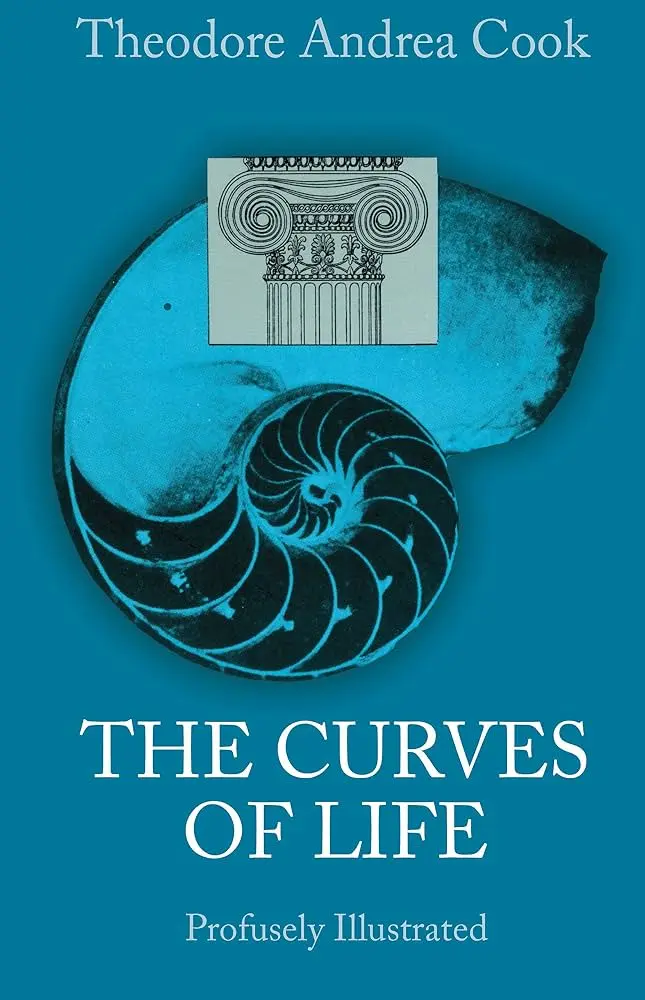
    The Curves of Life

    Theodore Andrea Cook · 1914; Dover edition 1979

    A strange, beautiful classic on spirals from 1914. Cook — art historian, sportsman, editor — makes an encyclopedic tour after the spiral form, from seashells to staircases, from plant shoots to Leonardo's manuscripts; the book's subtitle announces the Leonardo connection in particular. It's written in the style of its period, in places overreaching, but the richness of the material is unmatched even today: over five hundred illustrations. Cook's cautious stance against golden-ratio exaggerations is strikingly sober for a contemporary. It's still cheap to find — thanks to Dover, not the secondhand dealers — a reference store for anyone who draws spirals.
  5. 63

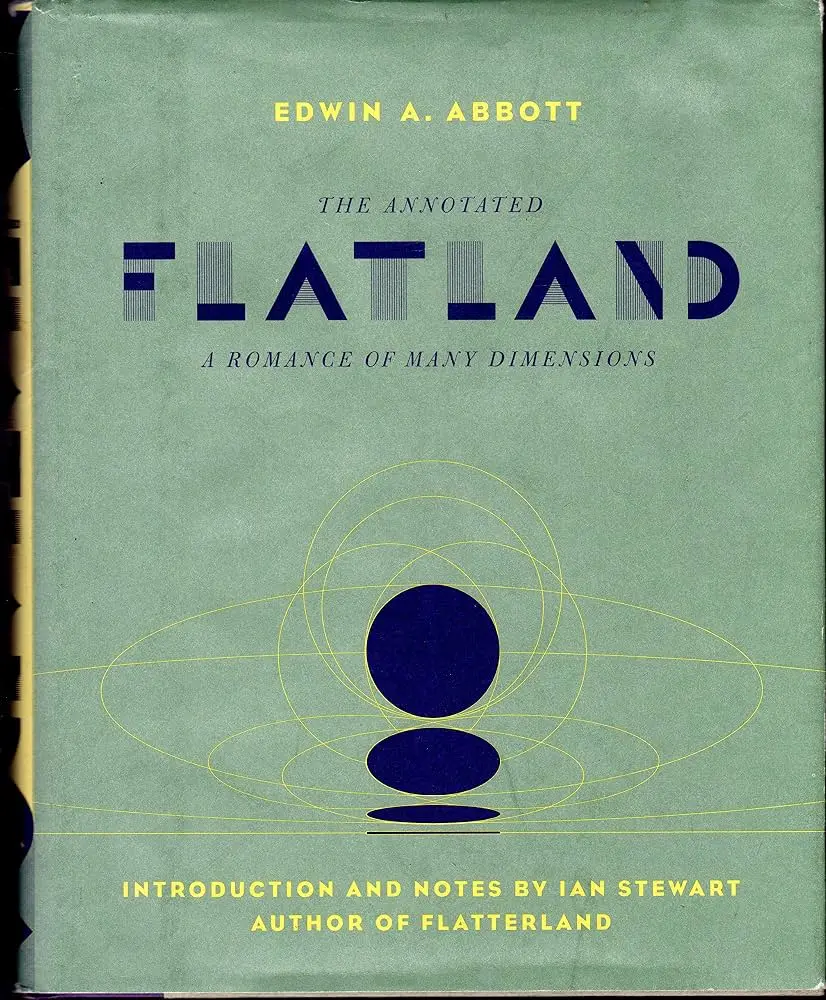
    Flatland: A Romance of Many Dimensions

    Edwin A. Abbott · 1884

    A novel narrated by a Square living in a two-dimensional world, off the shelves at no point since 1884. Its first half is a merciless satire of Victorian society — the class system of the flat country is measured by number of sides — and its second half is literature's best mathematics lesson: the Square's encounter with the third dimension is an exact model of our own failure to grasp the fourth. Still the most effective text ever written for building the intuition of higher dimensions; every later "dimension" book is a footnote to it. Short, cheap, out of copyright — no excuse is left for not reading it. It turns up on more than one Abakcus shelf for good reason.
  6. 64

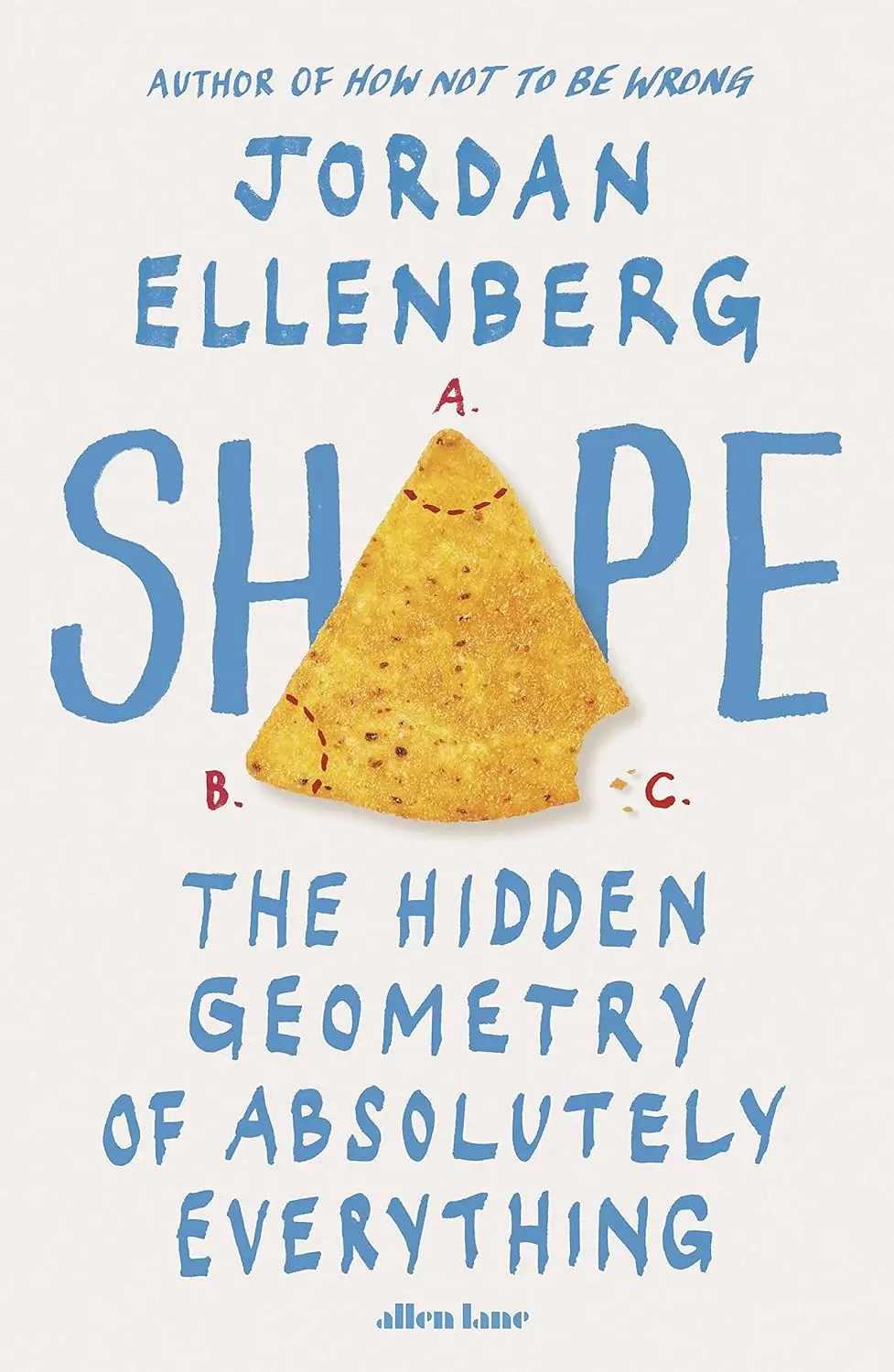
    Shape: The Hidden Geometry of Absolutely Everything

    Jordan Ellenberg · 2021 · Penguin Press

    Ellenberg's thesis is that geometry doesn't stop where school left it: from mosquito-net games to epidemic models, from machine learning to electoral-district trickery, "shape" thinking runs inside the decision mechanisms of modern life. The strength of the book is in the dose of its humor and its honesty; Ellenberg won't settle for the easy analogy but takes the reader through the real argument. The gerrymandering chapter is a case study worth reading on its own, showing that geometry can be a direct matter of democracy. This book holds the "geometry is current" wing of the shelf.
  7. 65

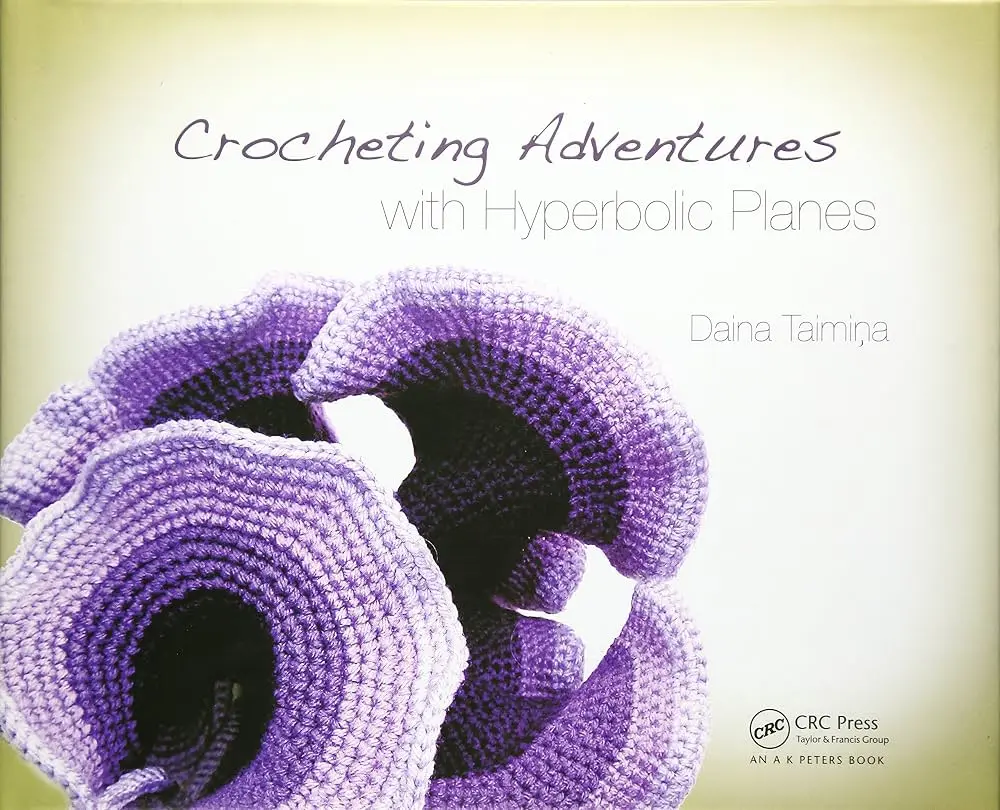
    Crocheting Adventures with Hyperbolic Planes

    Daina Taimiņa · 2009 · A K Peters; Euler Book Prize 2012

    The hyperbolic plane — a surface of constant negative curvature — stayed for a hundred years an abstraction no one could make a physical model of, until mathematician Taimiņa crocheted it in 1997. Increasing the stitch count by a fixed ratio each row, the fabric curls of its own accord into the undulating surface of hyperbolic geometry: parallels multiply, the interior angles of triangles shrink, all of it tangible. The book gives both the mathematics of this discovery and the crochet instructions, and documents the purest example I know of craft and theorem meeting in a single object. The Euler Book Prize did not go astray.
  8. 66

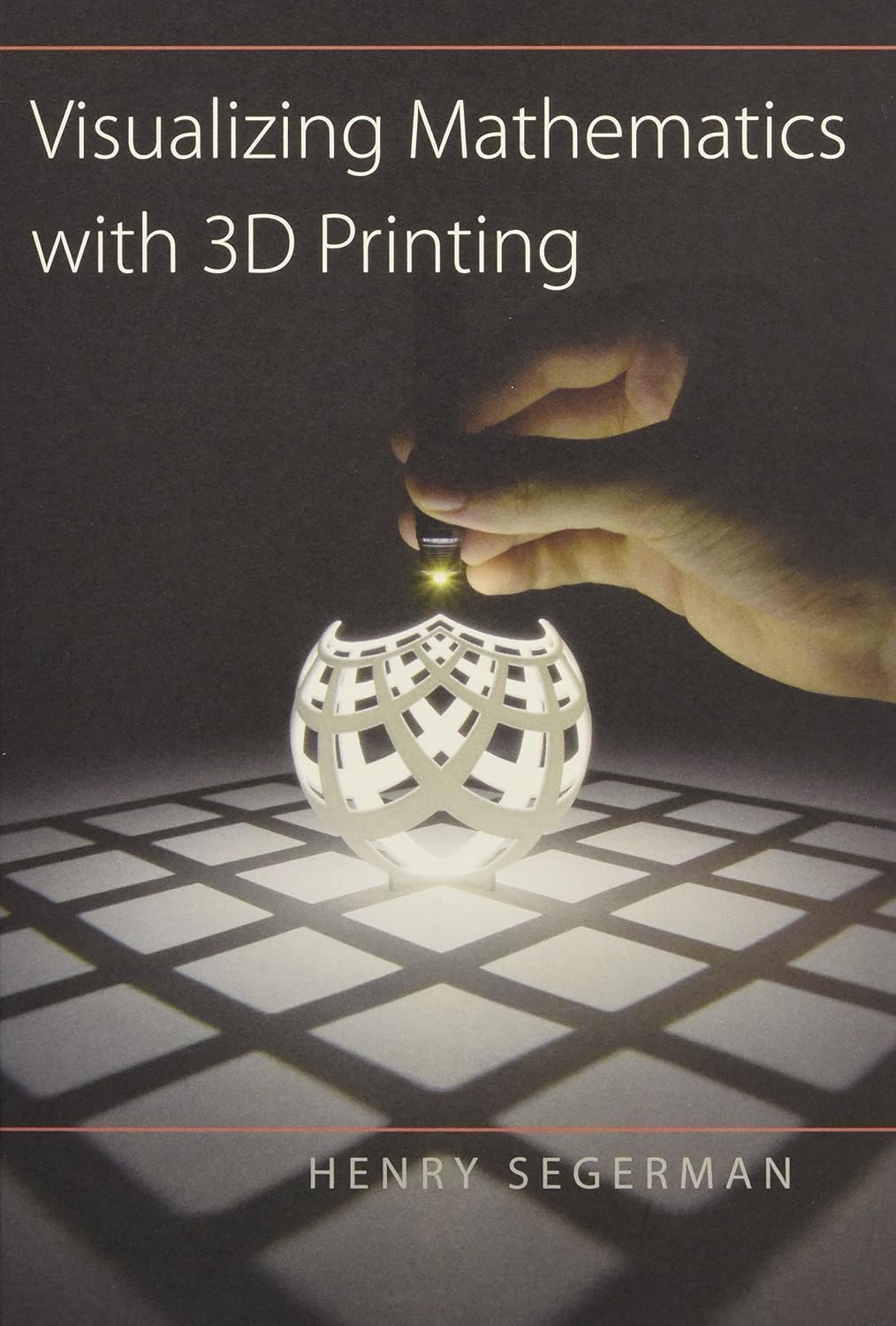
    Visualizing Mathematics with 3D Printing

    Henry Segerman · 2016 · Johns Hopkins University Press

    Segerman's proposal is simple and new: some mathematical objects can only be understood when turned over in the hand, so let's print them. The book advances with models you can design and print yourself, from the shadows of four-dimensional solids to samples of hyperbolic texture; every object's file is accessible, so the reader can read the book by "printing" it if they wish. This is the book of the moment mathematical visualization crossed from screen to matter; the firmest bridge built between maker workshops and mathematics departments. In a school with a 3D printer it can be used as the course program itself.
  9. 67

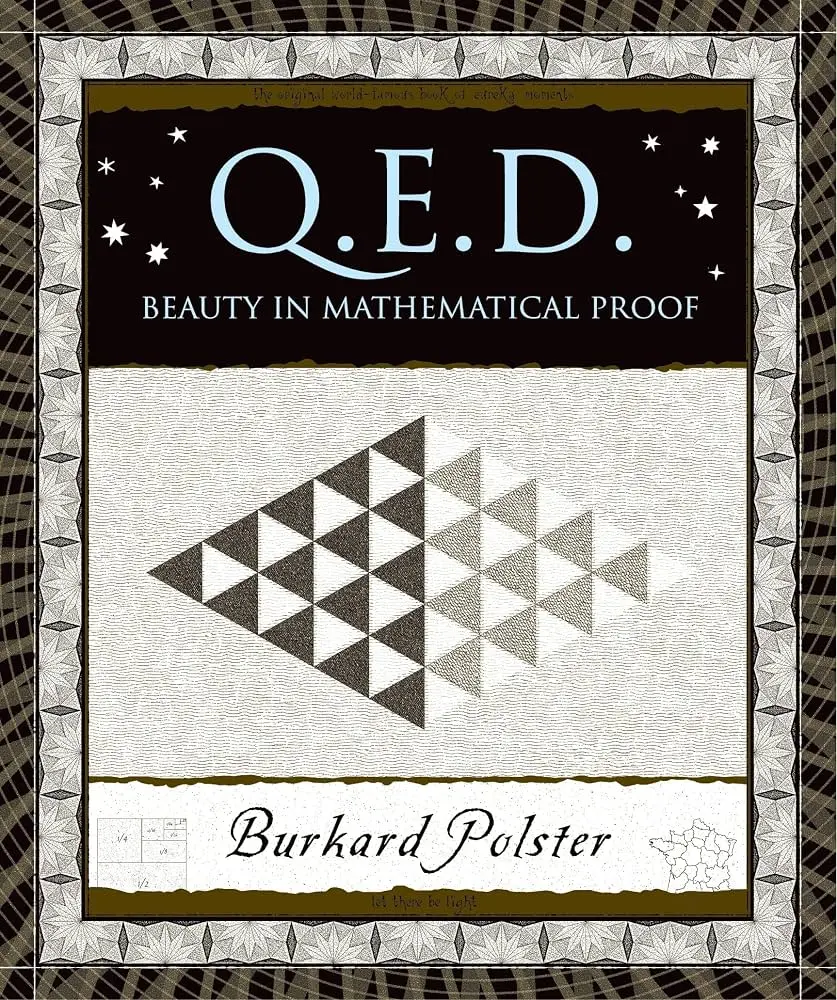
    Q.E.D.: Beauty in Mathematical Proof

    Burkard Polster · 2004 · Wooden Books

    The aesthetics of proof, in a palm-sized format: Polster fits mathematics' most visual proofs into some sixty-odd pages — Pythagoras variations, the calculation of infinite sums by figure, polyhedron counts — each with the plate on the facing page. The Wooden Books discipline overlaps the content here; like the pocket-sized summary of the wordless-proof tradition. It can also be thought of as the distilled, giftable form of the Nelsen volumes at number 49. If you need to show in fifteen minutes what it means for a proof to be "elegant," this is the book that comes out of the bag.
  10. 68

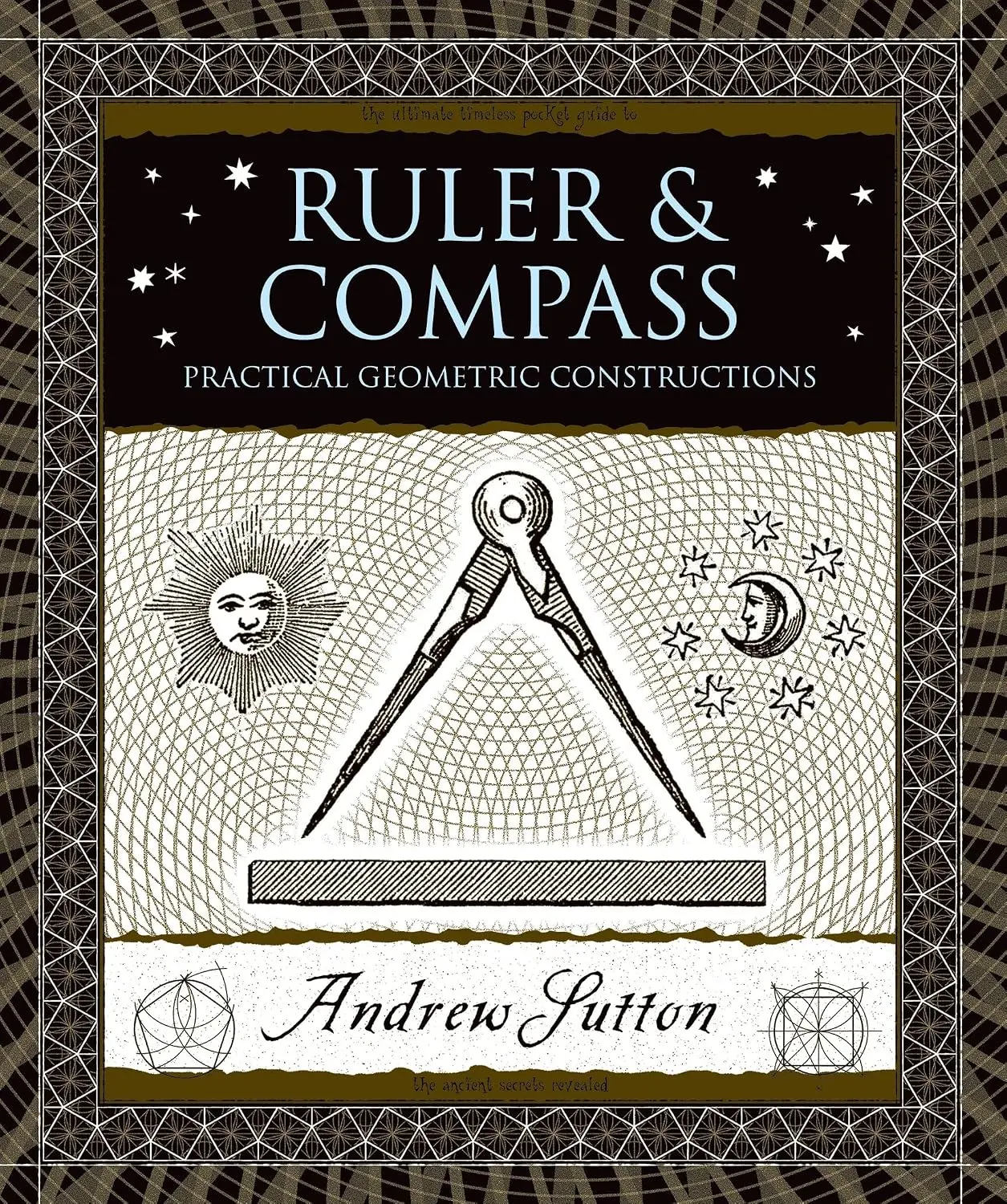
    Ruler & Compass: Practical Geometric Constructions

    Andrew Sutton · 2009 · Wooden Books

    The list closes by returning to geometry's two oldest tools: the ruler and the compass. Sutton gives every construction — from the basics like the angle bisector, regular polygons, tangency problems to lesser-known craft drawings — on a single plate, with numbered steps. The book's quiet claim is that this two-thousand-four-hundred-year-old drawing language still works in full; Euclid's tool constraint is the oldest and most productive of design briefs. The list that opened with Byrne closes with the pocket guide to the same tools — the circle completes, the compass never lifted.
Sixty-eight books, one question: why does this form stand the way it does?
Closing

Closing

Building this shelf a second time, what I noticed is this: not one book on the list says "mathematics resembles art." They all say something harder — good form is form with a reason; and the reason, sooner or later, comes out to geometry. Byrne's choice of color, Müller-Brockmann's column, Kepler's snowflake, and Taimiņa's stitch are products of the same discipline: reduce arbitrariness, make the decision visible.

No one will read all sixty-eight; nor is there any need. Proceed by the logic of the shelf: one book from the canon and two from the shelf that speaks to your own work is enough to begin. Sometimes the best reading plan is the book pulled at random. Compared with the first, deleted version, this list has grown fourfold; losses, sometimes, are made up for this way.