Book list · Numbers · History of mathematics
12 Books About a Single Number: π, e, i, φ and Infinity
A person’s biography begins with a birth. A number’s usually begins with a problem. Eleven numbers, twelve books, laid out along the number line.
Real numbers run across, imaginary numbers run up. Tap a disc to jump to its book.
.webp)
A person’s biography begins with a birth. A number’s usually begins with a problem. π turned up in front of someone who wanted to measure the rim of a wheel. e turned up for someone working out the interest on their money. i turned up for an Italian solving a cubic equation, who found himself holding the square root of a negative number and had no idea what to do with it. Numbers never die, but they do live: they get misunderstood, they change names, they gather bad reputations, and sometimes they wait in a corner for centuries.
For this list I gathered books written to tell the story of a single number. Some read close to a textbook, some read almost like a novel, and one is really the story of a physicist’s obsession. What they share is that each one shows the people, the mistakes and the quarrels behind a symbol. I took the order from the number line: I start with the leftmost number, move to the right, and then climb up the axis to the numbers we were told do not exist.
01 · Absolute zero
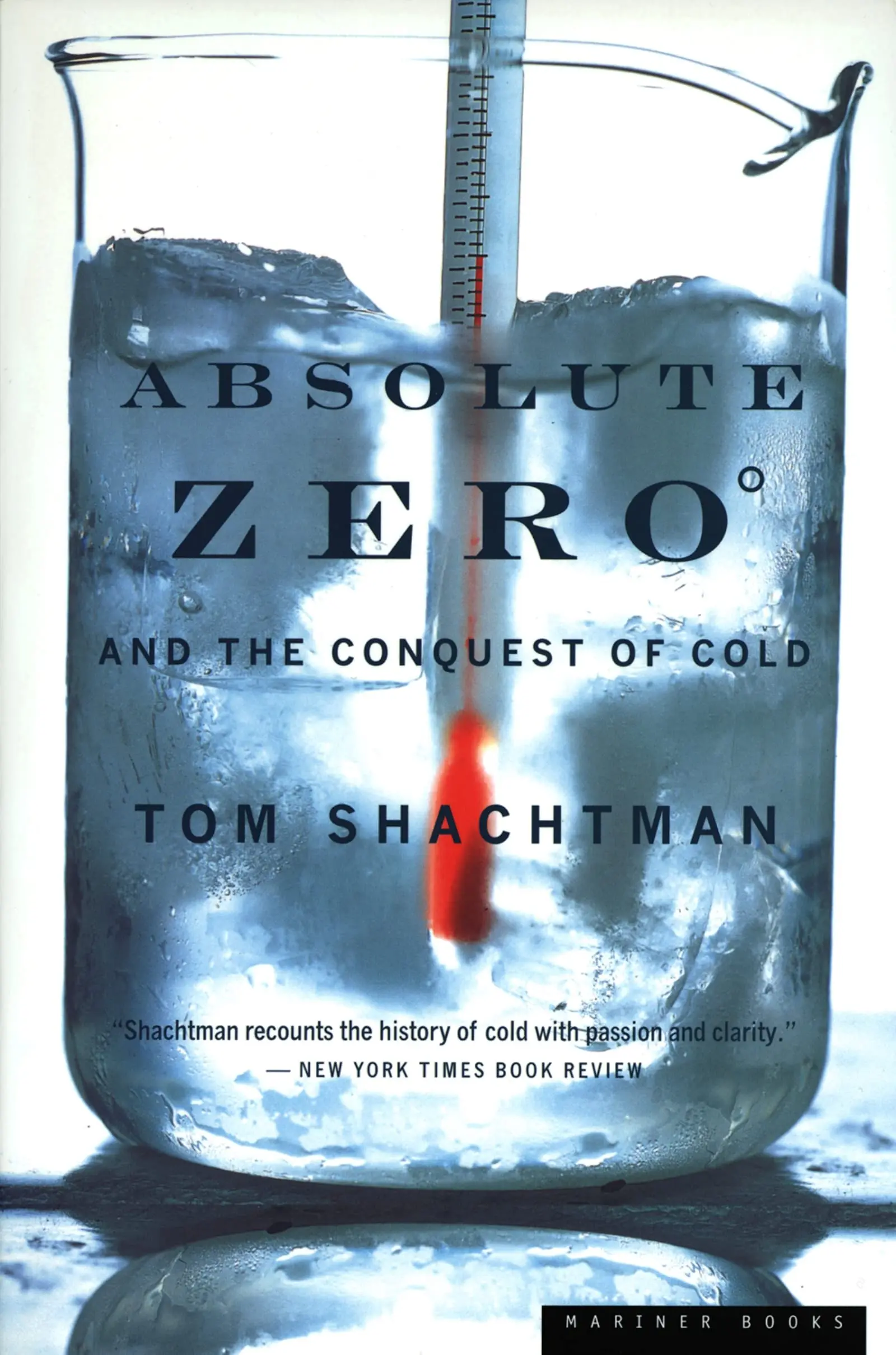
Absolute Zero and the Conquest of Cold
Tom Shachtman · Houghton Mifflin, 1999
- Formulas
- None
- First published
- 1999
Absolute zero is less a number than a limit: the point past which nothing can get any colder. Nobody ever reaches it, people only get closer, and Shachtman tells the whole history of cold as one long attempt to close that gap.
The book opens with the demonstration in which Cornelis Drebbel is said to have cooled Westminster Abbey for the king on a summer day in the 17th century, moves through the invention of the thermometer and the liquefaction of gases, and peaks with Kamerlingh Onnes liquefying helium in 1908 and discovering superconductivity three years later. There is almost no mathematics in it. But if you want to see how the road to a number was paved with experiments, exploding glassware and rivalry between laboratories, this is the easiest door into the list. The book was also turned into a two-part documentary in 2008.
02 · Euler’s constant
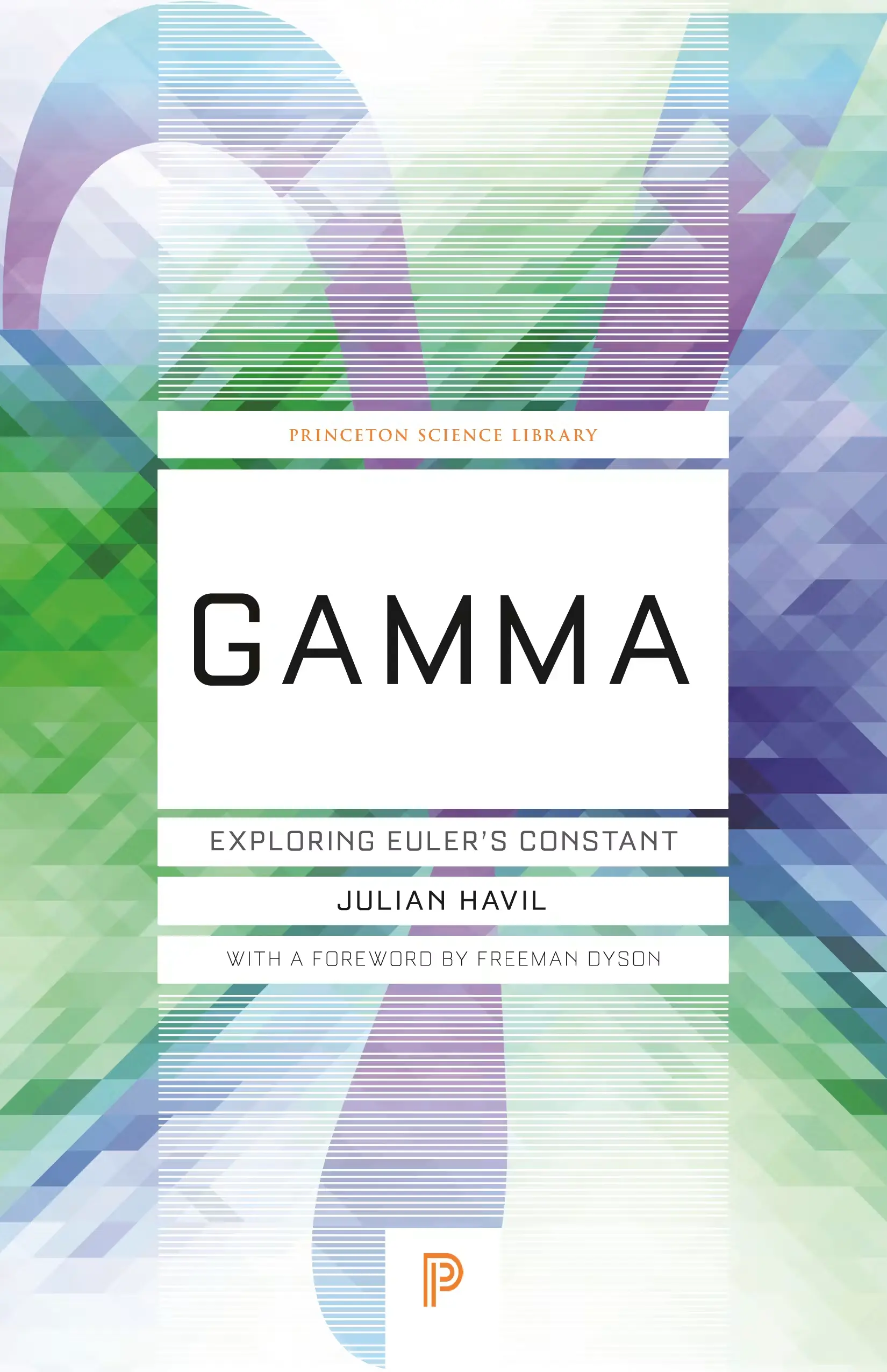
Gamma: Exploring Euler’s Constant
Julian Havil · Princeton University Press, 2003
- Formulas
- Calculus
- First published
- 2003
This is the least famous number on the list, and I think it has the most honest book. Take 1 + 1/2 + 1/3 + … + 1/n, subtract ln n, and as n grows the difference settles on 0.5772… Euler calculated it in the 1730s. Nearly three hundred years later, nobody knows whether it can be written as a ratio of two whole numbers.
Havil builds the book around that unknown. He walks the road from the harmonic series to the logarithm, and from the gamma function to the zeta function, asking the reader to actually follow the formulas. Freeman Dyson wrote the foreword. If calculus is not your friend, you will struggle. If it is, I know no other book that explains the unknown side of a number with this much patience.
03 · The square root of two
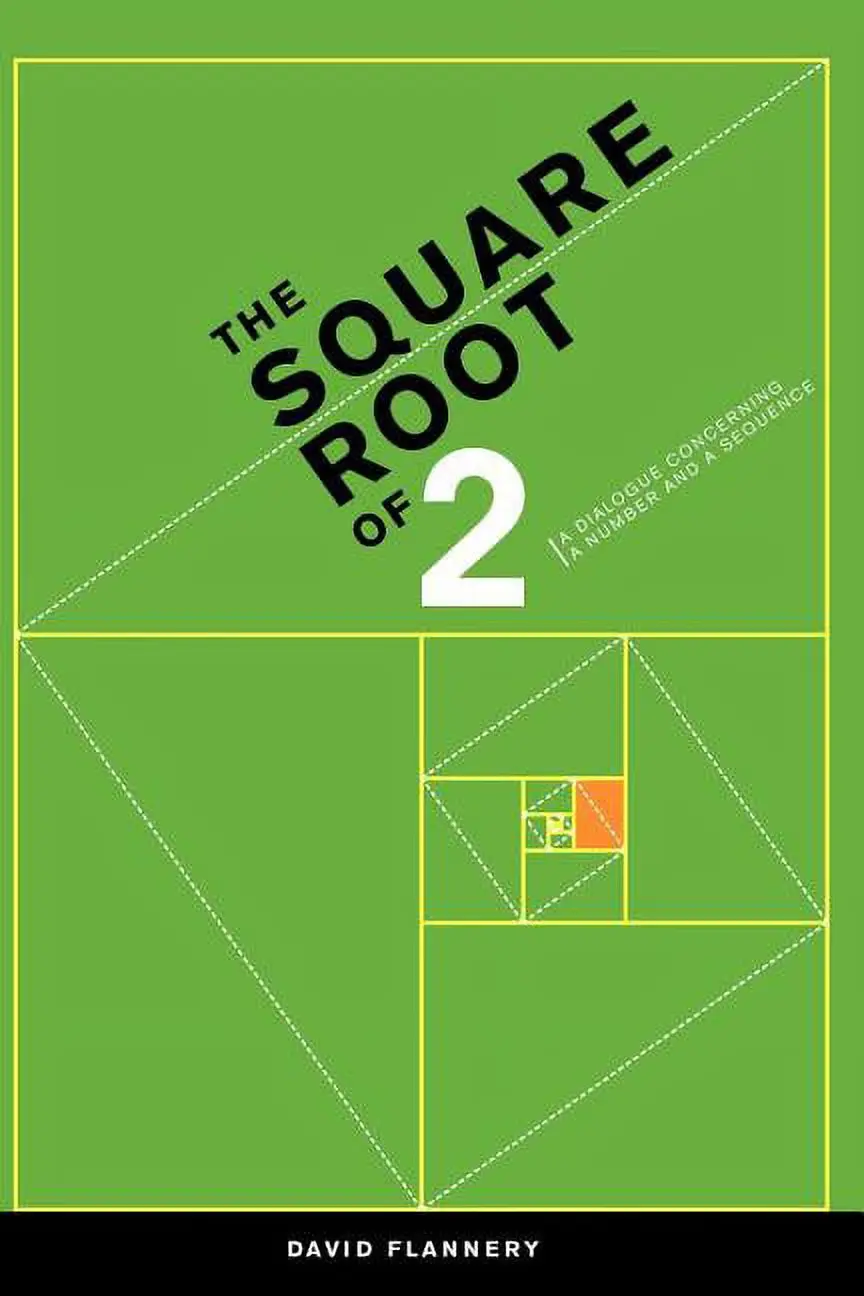
The Square Root of 2: A Dialogue Concerning a Number and a Sequence
David Flannery · Copernicus Books, 2006
- Formulas
- None
- First published
- 2006
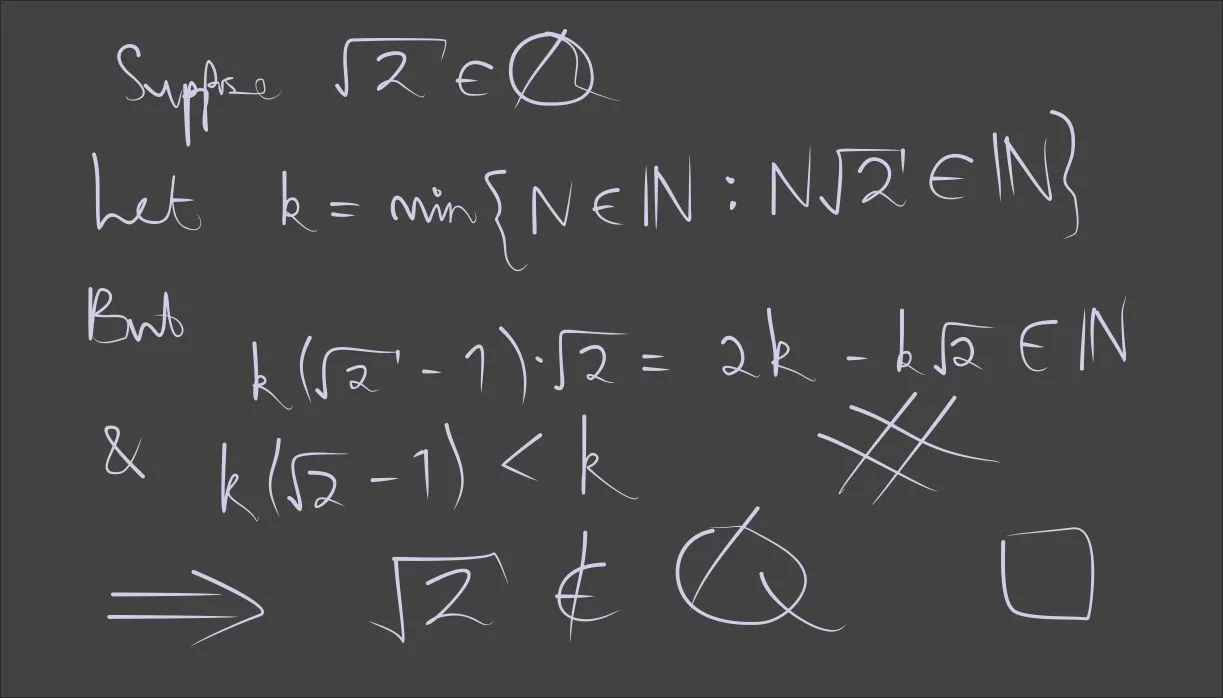
Flannery wrote the entire book as a conversation between a teacher and a student. At first the form struck me as artificial. A few pages in, I understood why he chose it: the proof that √2 cannot be written as a fraction takes four lines on paper, but the first time you see it, a pile of objections comes to mind. The student voices exactly those objections, and the teacher brushes none of them aside.
The second half of the book is given over to fractions that creep ever closer to √2: 1/1, 3/2, 7/5, 17/12, 41/29… Each numerator and denominator comes from the previous ones by a simple rule, and each fraction lands nearer the target than the one before. It can be read with high school mathematics, and it shows why high school mathematics is interesting.
04 · The golden ratio
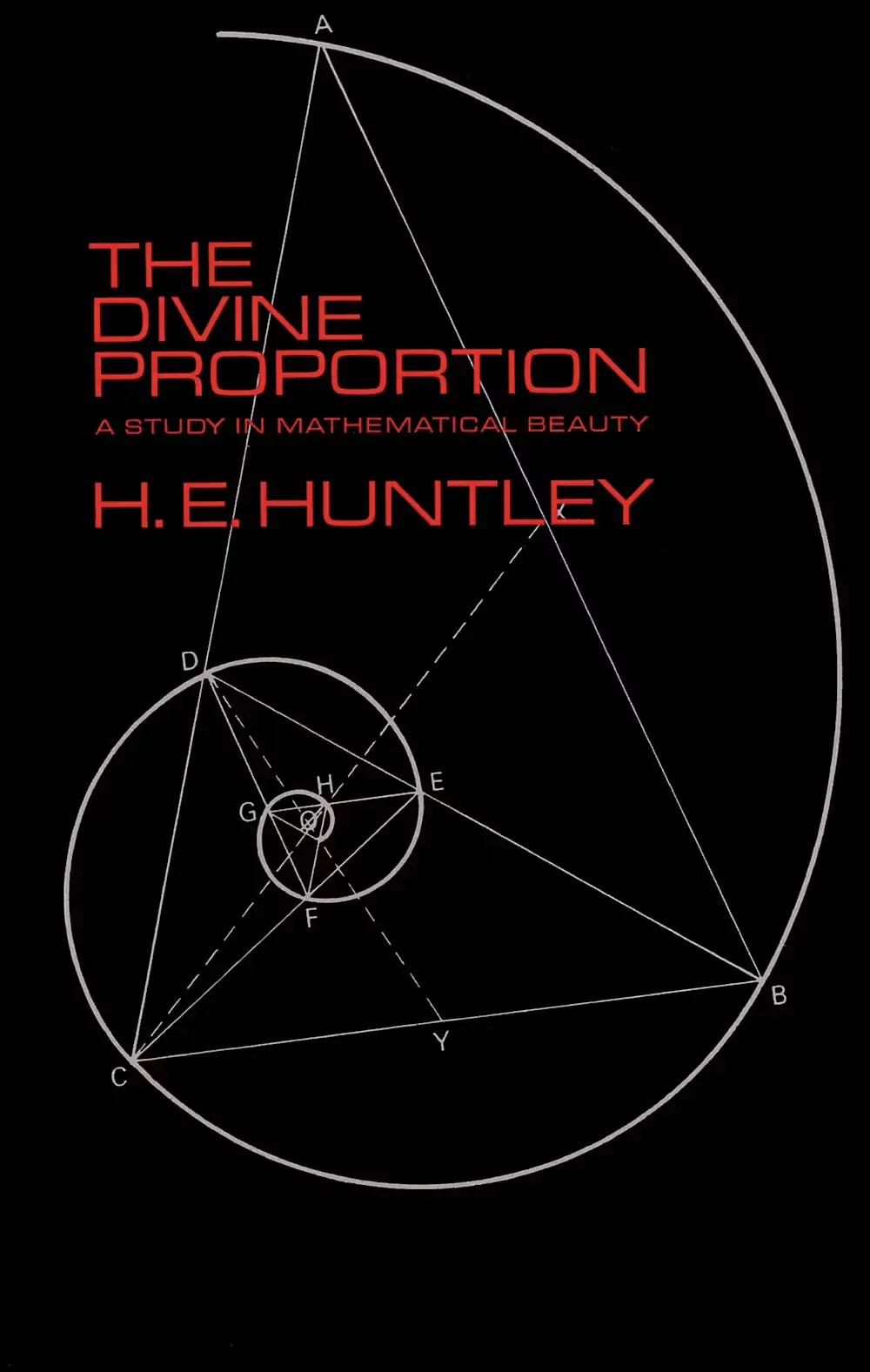
The Divine Proportion: A Study in Mathematical Beauty
H. E. Huntley · Dover, 1970
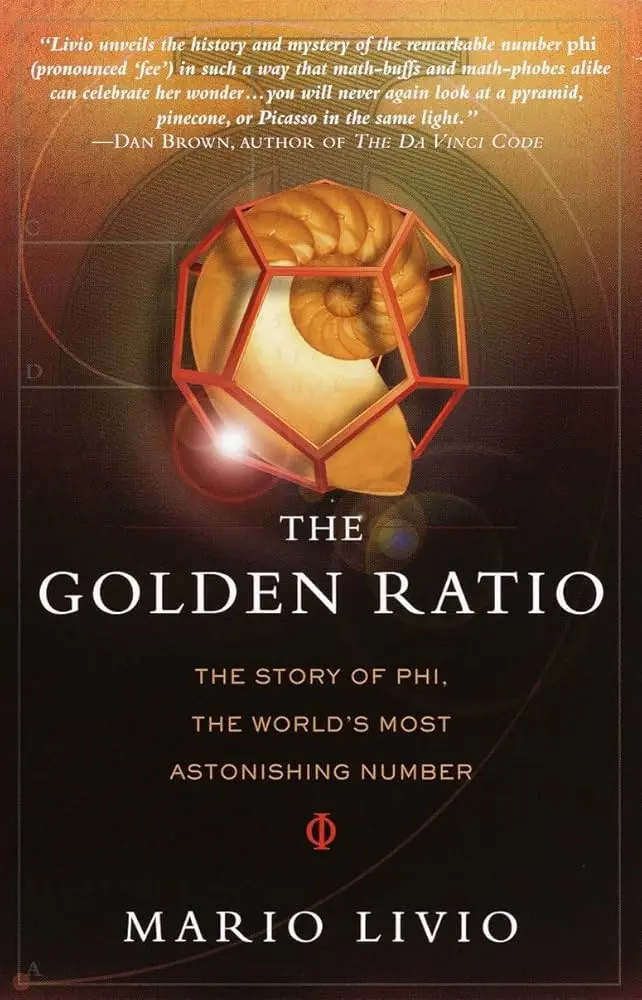
The Golden Ratio: The Story of Phi, the World’s Most Astonishing Number
Mario Livio · Broadway Books, 2002
- Formulas
- Some
- First published
- 1970 · 2002
For the golden ratio I put two books side by side, because one reads like a reply to the other.
Huntley’s book, as the title suggests, believes in φ. The mathematics is solid: the Fibonacci sequence, the regular pentagon, the polyhedra, continued fractions. But Huntley does not stop there; he tries to tie beauty itself to this ratio.
Thirty-two years later, Livio devotes a large part of his book to testing exactly these kinds of claims. Livio is an astrophysicist and he does not believe what he has not measured. Most of the claims that the Parthenon, the pyramids of Giza or the Mona Lisa were designed around the golden ratio fall apart on close inspection. This does not shrink φ; it makes it more interesting. Once the fake examples are cleared away, what remains are the places where the number really lives: the diagonals of the pentagon, the arrangement of leaves around a stem, a continued fraction made of nothing but ones. I suggest reading Huntley first, then Livio. Read them the other way around and you will find yourself objecting on every page of Huntley.
05 · Euler’s number
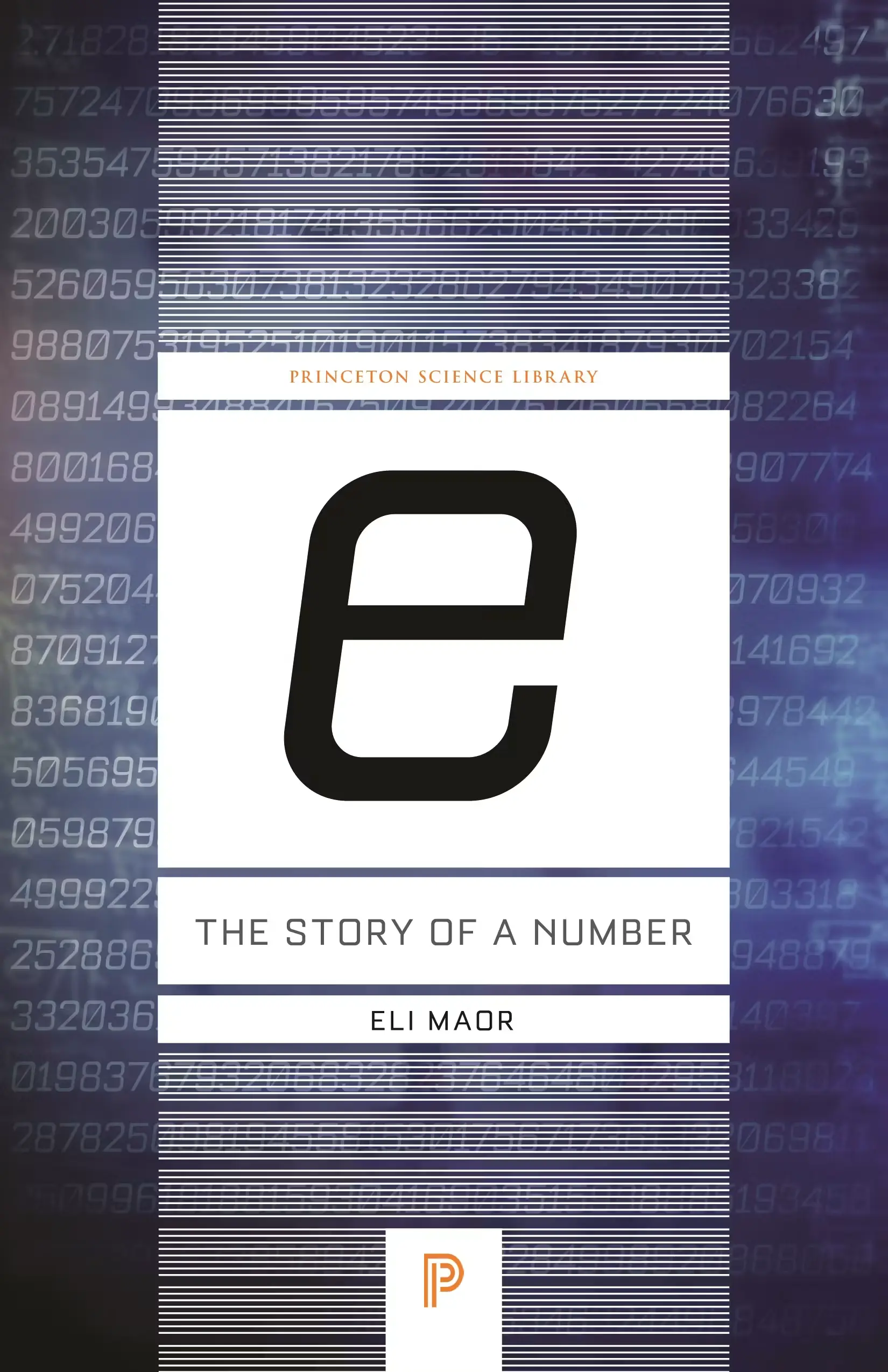
e: The Story of a Number
Eli Maor · Princeton University Press, 1994
- Formulas
- Some
- First published
- 1994
Imagine putting one dollar in the bank at one hundred percent annual interest. If the interest is added once a year, you have two dollars at the end of it. Added every six months, a little more. Added every day, more still. But even if it were added every second, every instant, the money would not run off to infinity. It would approach 2.71828… and stop there.
Maor tells the story of e through questions like this one and the logarithm tables they gave rise to: the tables Napier spent years building to lighten the burden of calculation, the calculus quarrel between Newton and Leibniz, the Bernoulli family, and finally Euler, who gave the number its name. If π is the number everyone knows, e is the number everyone uses without knowing its name. Maor shows how it quietly settled into every corner of mathematics, without skipping the formulas and without drowning the reader in them.
06 · Pi
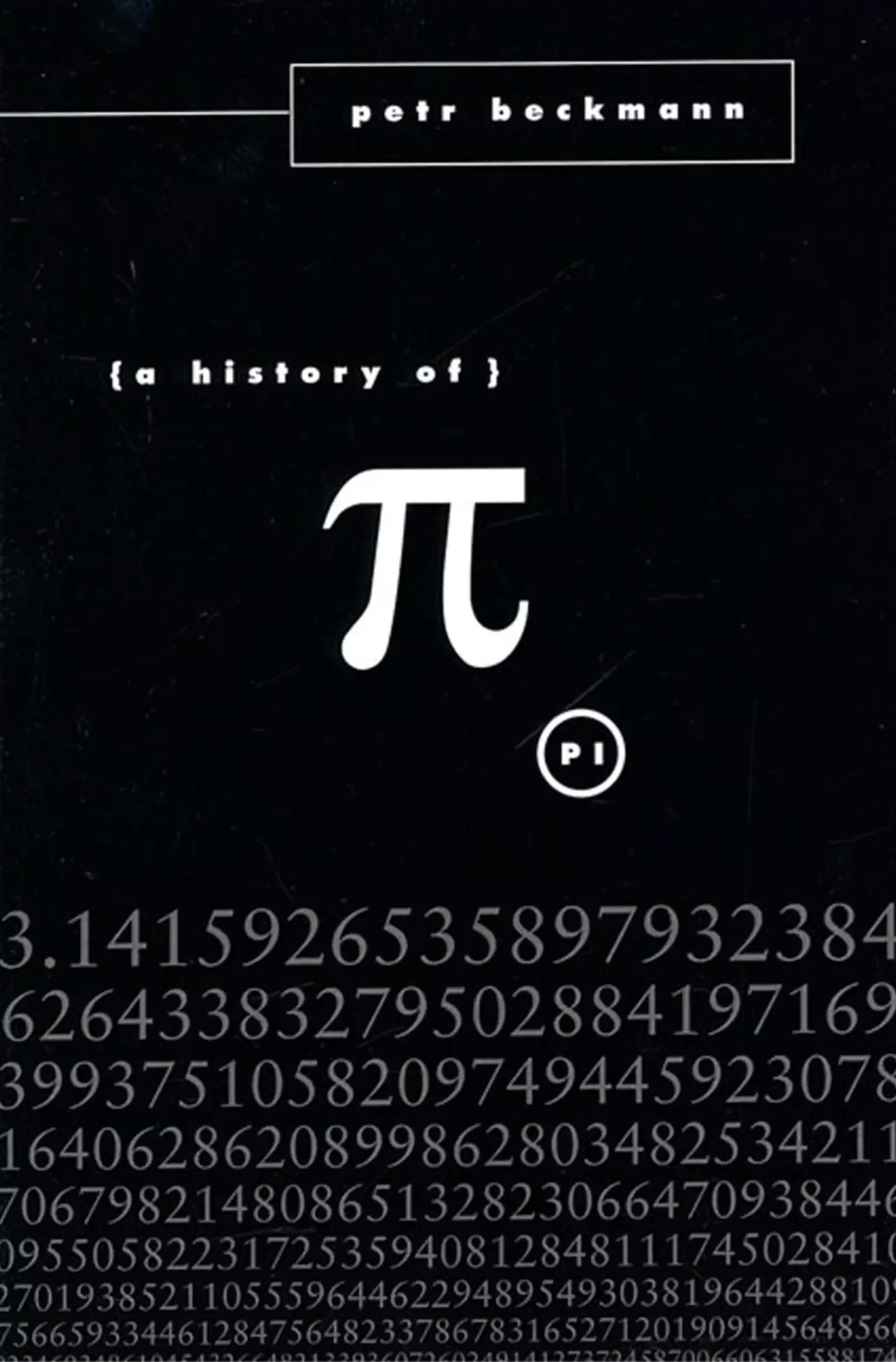
A History of π
Petr Beckmann · The Golem Press, 1970
- Formulas
- Some
- First published
- 1970
The grumpiest book on the list. Beckmann left Czechoslovakia and went on to teach electrical engineering at the University of Colorado, and he hides none of his opinions while telling the history of π. He scolds the Romans for contributing nothing to mathematics, and he needles every institution that bows to authority whenever he gets the chance.
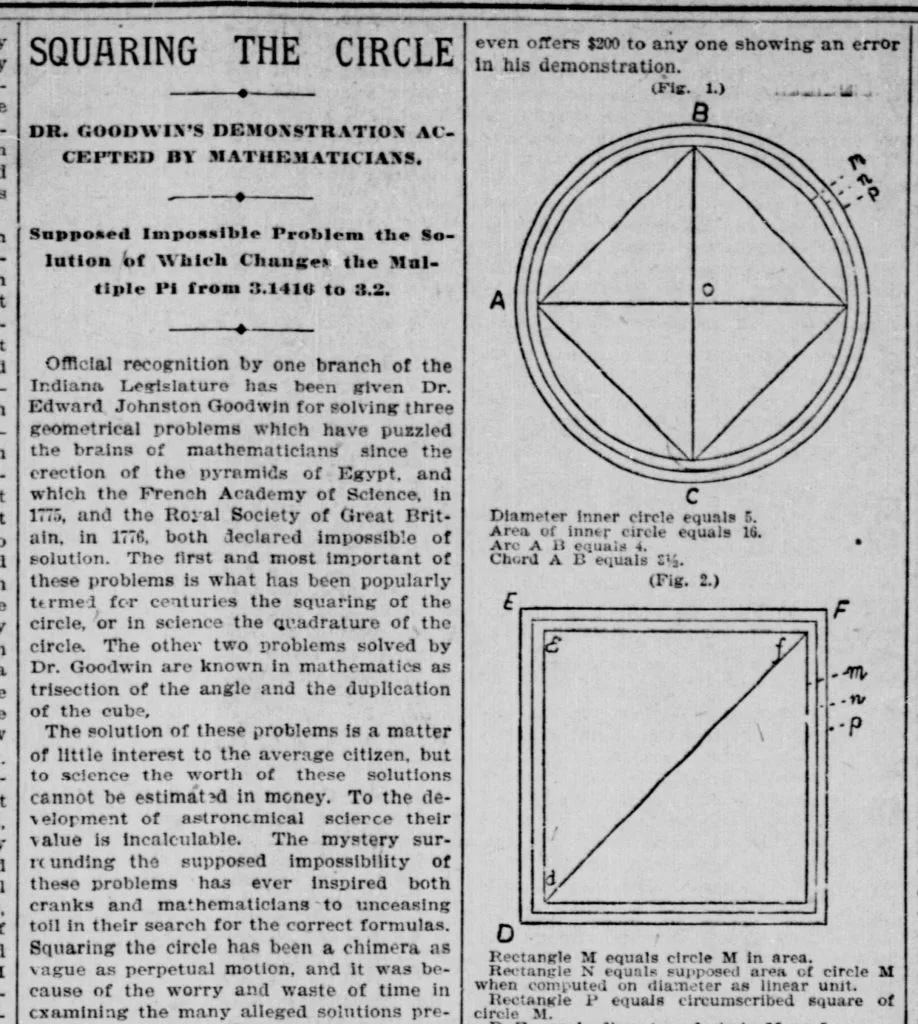
The attitude is tiring at times, but it is also what keeps the book alive. He covers Archimedes squeezing π between polygons drawn inside and outside the circle, the arrival of infinite series, Lambert proving π irrational and Lindemann proving it transcendental, and the amateurs who kept trying to square the circle in spite of that proof. If you want to feel who wrote a history book, you will feel it here, more than enough. And if one book on π is not enough, here are six more.
Interlude · Try it
Five numbers you can only approach
None of the five numbers so far can be written down exactly. All you can write is a sequence that approaches them. Here is one approximation for each, taken from the books. Raise the number of steps and watch the correct digits light up in each row.
Some snap into place within a few steps; others manage only three or four digits even after ten thousand. That difference explains well why these books spend so many pages.
- γ1.00000000001 + 1/2 + … + 1/n − ln n0digits
- √21.00000000001/1, 3/2, 7/5, 17/12, …0digits
- φ1.0000000000ratio of consecutive Fibonacci numbers0digits
- e2.0000000000(1 + 1/n)ⁿ0digits
- π2.6666666666Wallis product0digits
07 · The fine-structure constant
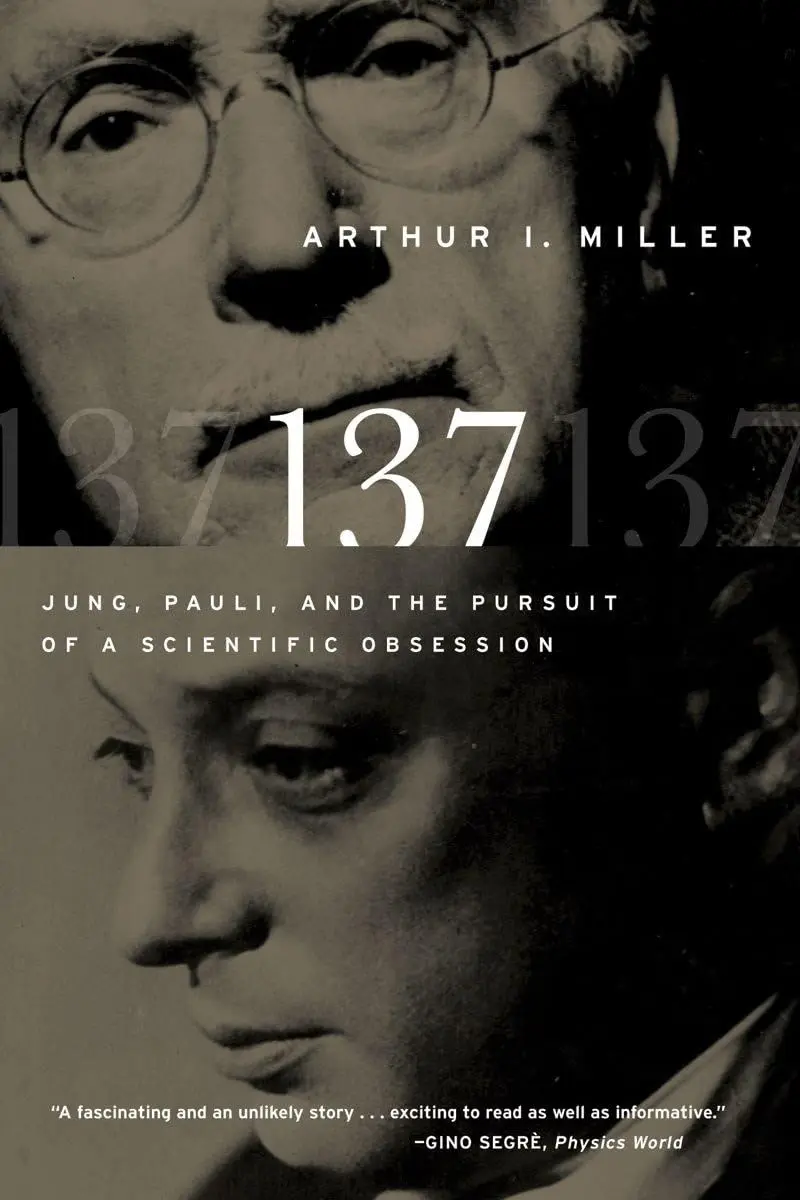
137: Jung, Pauli, and the Pursuit of a Scientific Obsession
Arthur I. Miller · W. W. Norton, 2009
- Formulas
- None
- First published
- 2009
This number has no units, and that is exactly what bothers physicists. The fine-structure constant measures how strongly light and matter interact, and its inverse is roughly 137. Whatever system of units you use, it comes out the same. So it cannot be a convention or a choice of measurement; it is something the universe itself chose. To this day nobody has explained why it takes this value.
Miller tells the story of Wolfgang Pauli, who became fixated on this number: one of the sharpest minds of quantum mechanics working through his dreams with Carl Jung, and the two of them searching for a place where physics and psychology might meet. Pauli died in a Zurich hospital in 1958. The story goes that his room was number 137. The book is the biography of an obsession more than of a number, but I wanted a physical constant on the list and I could not find a better one.
08 · Infinity
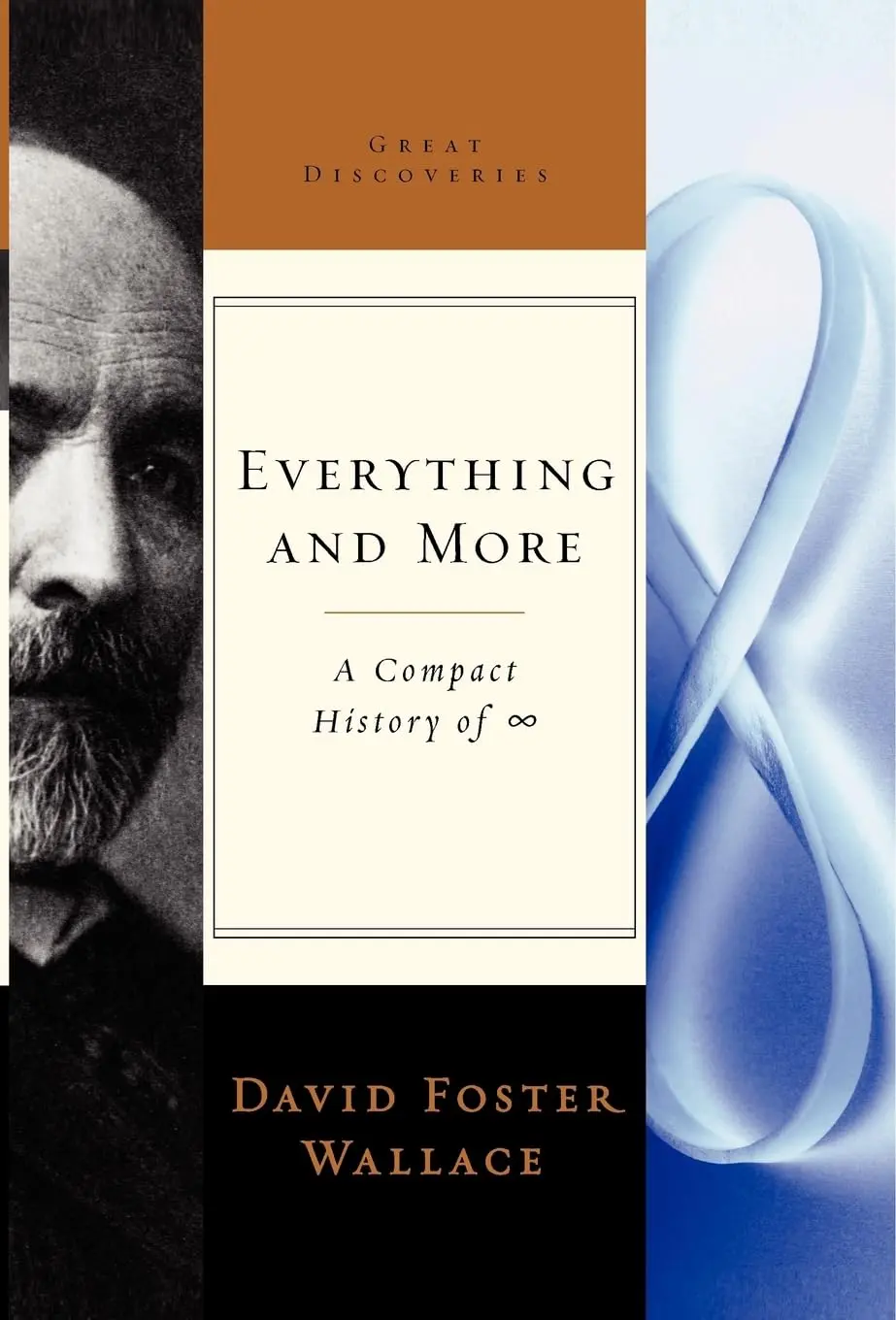
Everything and More: A Compact History of ∞
David Foster Wallace · W. W. Norton, 2003
- Formulas
- Some
- First published
- 2003
The only novelist on the list. Wallace wrote this book for Norton’s Great Discoveries series, and he wrote it the only way he knew how: with footnotes, abbreviations, long winding sentences, and frequent asides straight to the reader. It runs from Zeno’s paradoxes to Cantor showing that infinities come in sizes too.
The book has errors, and mathematicians listed them one by one when it came out. Read it knowing that. But if you want to hear why infinity made people dizzy for centuries, not from a mathematician but from someone who is dizzy himself, there is nothing else like it.
09 · Aleph-null
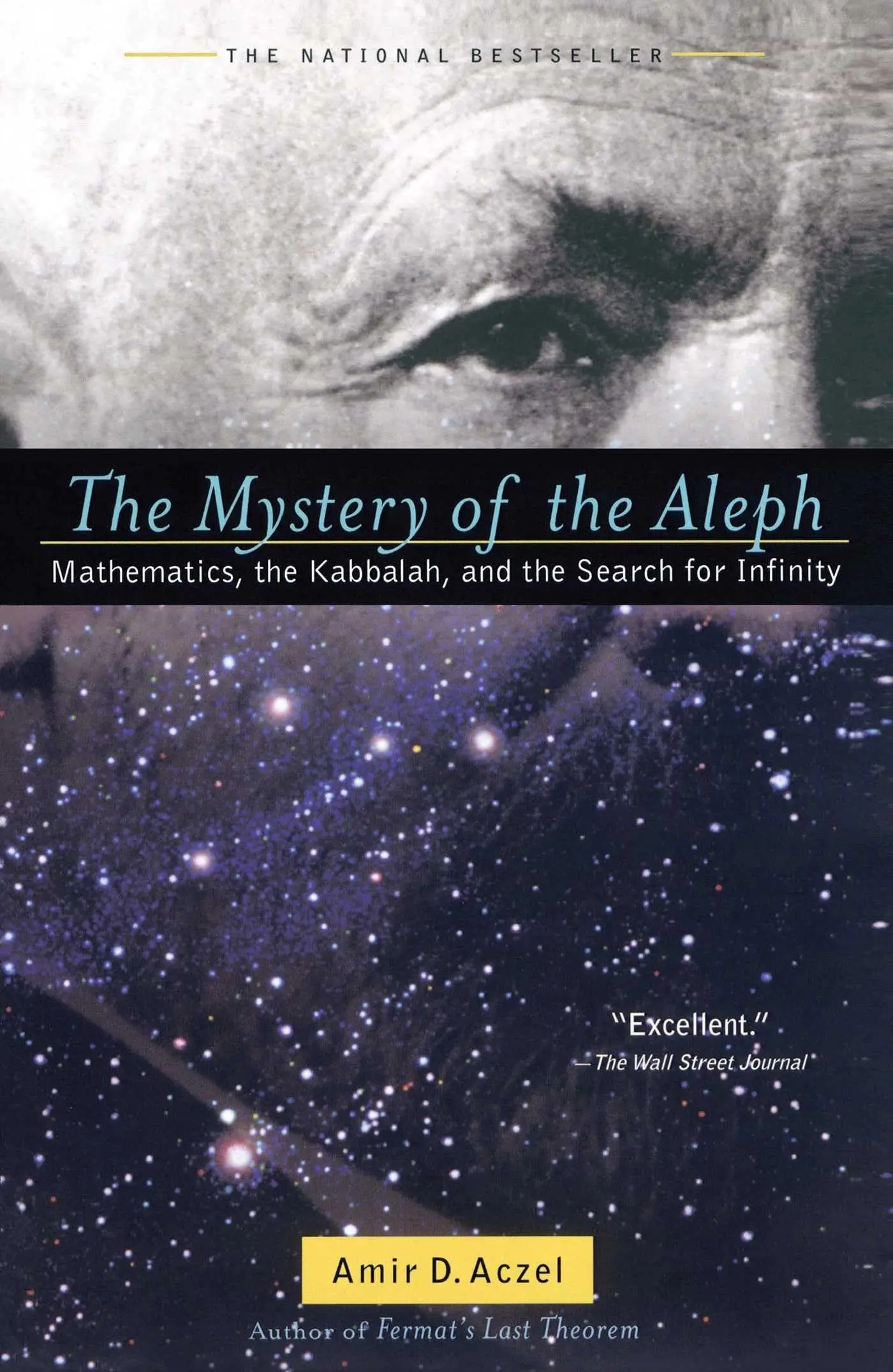
The Mystery of the Aleph: Mathematics, the Kabbalah, and the Search for Infinity
Amir D. Aczel · Four Walls Eight Windows, 2000
- Formulas
- Some
- First published
- 2000
If Wallace tells the mathematics of infinity, Aczel tells the life of the man who made it. Georg Cantor found a way to compare infinite sets with one another, gave the smallest infinity the first letter of the Hebrew alphabet, aleph, and spent the last years of his life in a clinic in Halle.
Aczel tries to connect Cantor’s work to the idea of infinity in the Kabbalah. That link felt forced to me. The chapters on the continuum hypothesis, and on what Gödel and Cohen showed about it, are clear and short. Read alongside Wallace, each book fills the other’s gaps.
10 · The imaginary unit
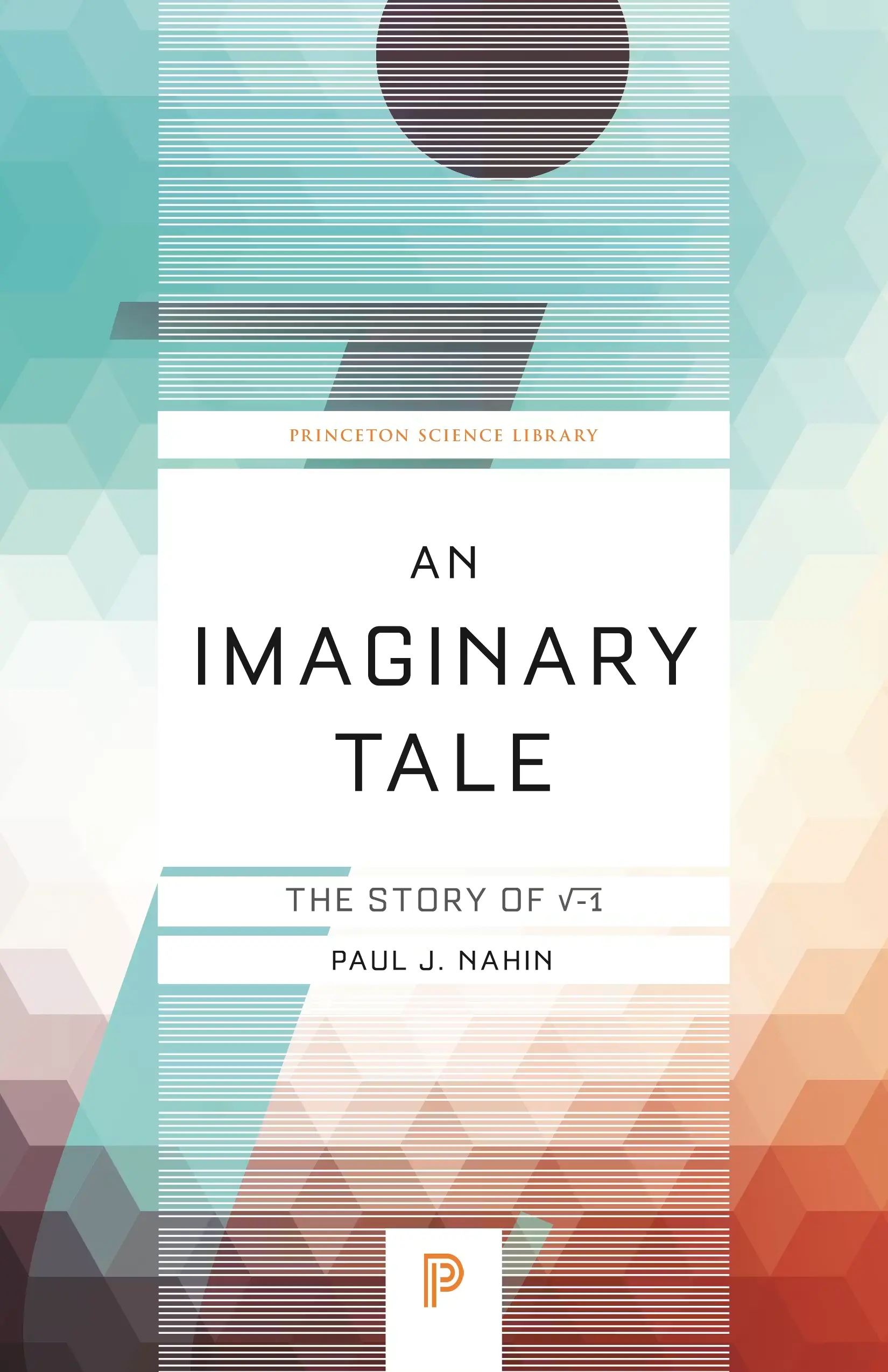
An Imaginary Tale: The Story of √−1
Paul J. Nahin · Princeton University Press, 1998
- Formulas
- Calculus
- First published
- 1998
A negative number has no square root; that is what we were taught in school. Yet mathematicians working on cubic equations in 16th-century Italy saw this root appear in the middle of a calculation, then vanish on its own and leave behind a correct, real answer. Nahin starts the story there: from Bombelli taking those strange middle steps seriously to Wessel, Argand and Gauss drawing imaginary numbers as points on a plane. The drawing at the top of this page is an extension of that idea.
Nahin is also an electrical engineer, and in the second half of the book he shows why engineering finds i indispensable. It is dense with formulas and needs to be read with pencil and paper. By the end you are convinced there is nothing imaginary about i.
11 · Cardano’s impossible root
Imagining Numbers (Particularly the Square Root of Minus Fifteen)
Barry Mazur · Farrar, Straus and Giroux, 2003
- Formulas
- None
- First published
- 2003
It looks at the same number as Nahin, but with a different question: how do you imagine something you know does not exist? Mazur is a number theorist at Harvard, but he did not write this book for mathematicians. The √−15 in the title comes from a problem Cardano posed in Ars Magna in 1545: find two numbers whose sum is 10 and whose product is 40. The answer is 5 + √−15 and 5 − √−15. Cardano wrote it down and immediately declared it useless.
Mazur likens understanding a number to grasping an image in a poem, and he scatters verses, pictures and notes on the imagination throughout the book. Some readers find it scattered. I have read very few books in which a mathematician shows the inside of his own mind this openly.
Where to start
Three ways into the list
No formulas needed
Shachtman, Flannery, Livio and Miller all read without a single equation in the way.
- Absolute Zero and the Conquest of Cold · Tom Shachtman
- The Square Root of 2 · David Flannery
- The Divine Proportion · H. E. Huntley
- The Golden Ratio · Mario Livio
- 137 · Arthur I. Miller
Bring your calculus
Havil and Nahin ask you to follow along with a pencil. They pay it back.
- Gamma · Julian Havil
- An Imaginary Tale · Paul J. Nahin
Read as a pair
Wallace and Aczel back to back is the best advice I can give about infinity.
- Everything and More · David Foster Wallace
- The Mystery of the Aleph · Amir D. Aczel
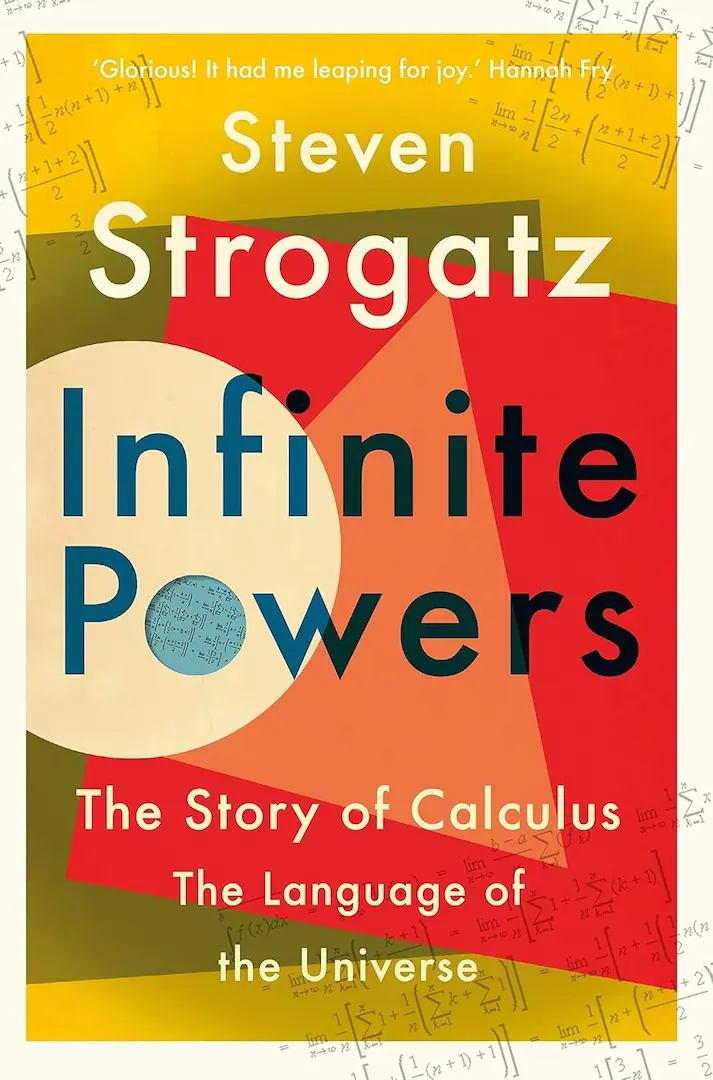
If calculus is not your thing, begin with Shachtman, Flannery, Livio and Miller; all four read without formulas. If you know calculus, Havil and Nahin will satisfy you more, and if calculus itself needs a biography first, Steven Strogatz’s Infinite Powers is the gentlest one I know. And reading Wallace and Aczel back to back is the best advice I can give about infinity.
Some books orbit a question instead of a number: the Riemann Hypothesis, Fermat, Poincaré. Those have a list of their own, 23 mathematics books dedicated to a single problem.
Amazon links are affiliate links; a purchase supports Abakcus at no extra cost to you.