
Video · Kinetic Sculpture · Reuben Margolin
Working out how a caterpillar walks took twenty years, and the error sat between half a circle and five twelfths of one.
Ali Kaya
Film by Chris Potter · music by Lloyd Rogers · 3 min 37
The machine that came out of Reuben Margolin’s shop is eighteen feet long, runs on batteries, and at full speed covers a little over two miles a week. The chariot behind it holds the cams that drive the caterpillar’s legs, so the brain rides in the cart. The cart does not push the caterpillar, though. The caterpillar pulls the cart.
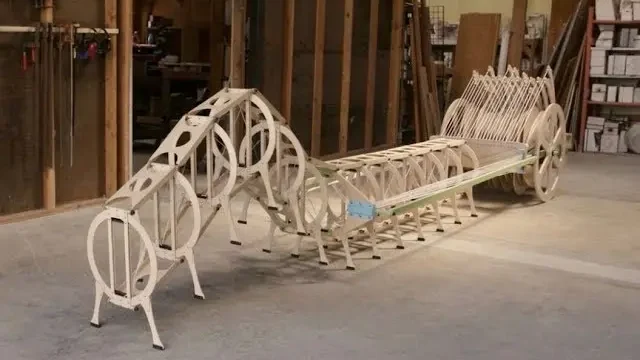
The story starts in 1994. Margolin was camping with friends in the Deep Creek Mountains of western Utah, and one morning, running along a dry streambed, he stopped and found an inch-long green caterpillar at his feet. It was translucent. He could watch the wave passing through it from the outside, and what struck him was that the wave did not begin and end at the animal’s body but looked like the visible stretch of a sine curve running well past it. A step to the left or the right, or a caterpillar that had set out a few minutes earlier, and he would have missed it.
What follows takes a while. He spent four years learning to draw and paint, then turned to the caterpillar in 1998, partly because he wanted to work in wood and partly because he wanted a good math problem. His remark about the second reason is the one that stayed with me. In school we are handed problems and we solve them, when the better part of the work is putting the problem into the right sentence. The solution is the beach at the end of a long river trip where you pull the canoe out for the last time, and there is no reason to hurry toward it.
The mistake he fixed in 2017
For the first three caterpillars Margolin treated the motion as a wave cut in half by the ground, with only the crest of the sine showing. Working from that assumption he chased derivatives for years, trying to find the speed of every element and reach position from there, and the problem would not come out. In 2003 he set the caterpillar aside and moved to the hanging wave sculptures.
When he came back to it in 2017, two things fell into place at once. The caterpillar he had seen in Utah was not a wave cut by the ground, it was a wave riding on top of the ground. And instead of finding a speed and integrating it, he could solve for position directly as a function of time. A clean solution came out within days.
The solution needed the intersections of circles with sine curves, and those intersections have no closed form.
You can find a point by trial and error and check that it satisfies both equations, but you cannot solve for it. This is where Perrin Meyer and Dan Torop came in. An algorithm they wrote in Julia brute-forced its way through millions of intersections and produced a list of coordinates matching one finite moment of the caterpillar cycle. Margolin tiled those points out by longhand trigonometry and built the full motion from them.
What a caterpillar needs in order to advance
The detail Margolin likes best when he walks people through his machines is this one. At any given moment more than half the caterpillar is not moving. The part touching the ground stays put, and the animal needs that stillness as much as it needs the motion. The wave enters at the back of the body and travels toward the front, lifting each section it passes under and setting it down a step ahead, while everything else keeps its feet on the ground.
You can change the width of the wave on the caterpillar below. The green sections are in the air, the pale ones are standing on the ground.
40% of the body is in the air and the rest is standing on the ground. One pass of the wave carries the caterpillar forward by 4.9% of its own length.
The shop part
The mechanism inside the chariot is a story of its own. After weeks with old textbooks on cam design, Margolin settled on twenty-four conjugate oscillating roller cams. It is an unforgiving arrangement, because both the math and the woodwork have to be held to a thousandth of an inch, somewhere around twenty-five microns.
Working out the distance between the center of the cam and the center of the roller at any angle is not the hard part. The hard part is finding the curve tangent to every roller position, because that curve is the actual cam profile. Margolin found a company whose software does this, sent over his list of numbers, got a DXF back, passed the file to a friend with a CNC router and received a promising-looking piece of plywood. He fitted it to the caterpillar. Nothing worked at all.
Where the mistake sat was not obvious. There were pages of trigonometry, and any part of the caterpillar might have been built to a different proportion than the math assumed. He was close to giving up when he found it. He had mapped the dwell onto half a circle instead of five twelfths of one. A large error, and an easy one to correct.
He generated a new set of numbers, and this time he tried cutting a cam on his own machine before going anywhere near a computer. He taped the list under the digital readout of the mill, bolted a piece of plywood to the rotary table, chucked up a hole saw the same diameter as the roller he planned to use, and brought it down just far enough to kiss the wood and leave a circular mark. Then he shifted the x-axis and the angle and made another. Once he had gone all the way around he drew the line tangent to every mark and cut the cam out on a band saw. It worked better than he expected. He made twenty-three more.
He loaded them all into the chariot, took a breath, switched it on, and with the speed turned up too far the caterpillar nearly galloped out the door.
A woodpile, and a trip around the world on cams
Margolin did not stop there. Caterpillar and Woodpile, from 2019, runs on nine electric motors and carries a microcontroller holding a file of a quarter of a million angles. As the motors follow those angles in sequence, the caterpillar makes its way over a pile of wood. The pile is less random than it looks, being a spline worked out in advance within set bounds of curvature.
By his own account the core of the work was the math again. Solving caterpillar motion over arbitrarily curved surfaces was the hardest problem he had taken on, and it cost him several months. The whole caterpillar series reads like a set of answers to one sentence. The wave he saw in that dry streambed in Utah has been getting rebuilt in wood for thirty years.
Where to go next
For another sculpture that is really a piece of arithmetic standing up in a room, there is Kenneth Snelson’s Needle Tower, held together by compression members that never touch. And for a machine built to make a law of motion visible rather than to move anything, the clock swept by two men with brooms.
Keep wandering
A few more pieces in the same spirit — math, design, and slow attention.
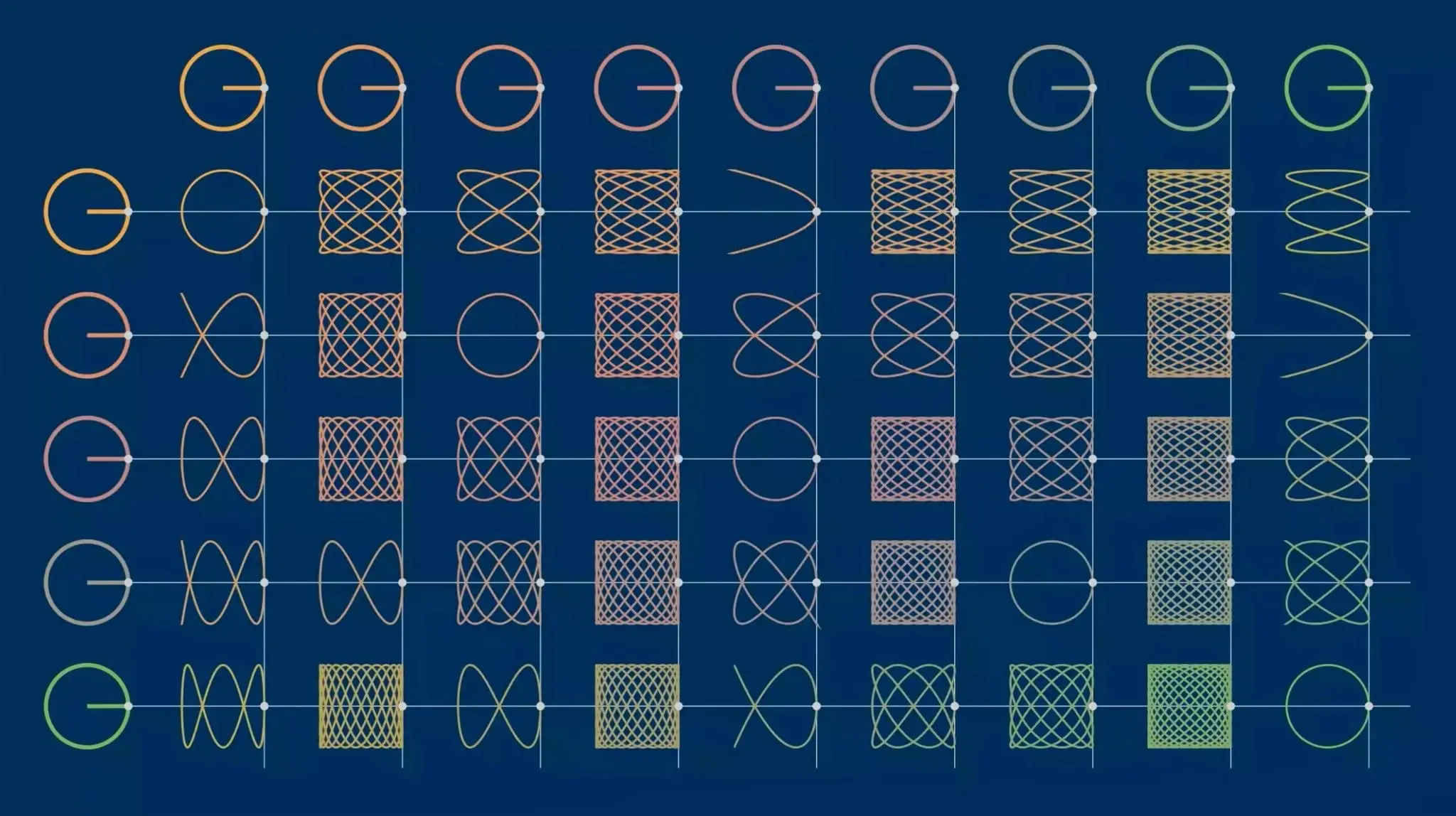
Lissajous Curves Explained: From Tuning Forks to Lidar
Tie two perpendicular oscillations to a single point and the point draws a pattern that tells you the ratio of the two frequencies, the phase between them, and how far they have drifted apart.
Open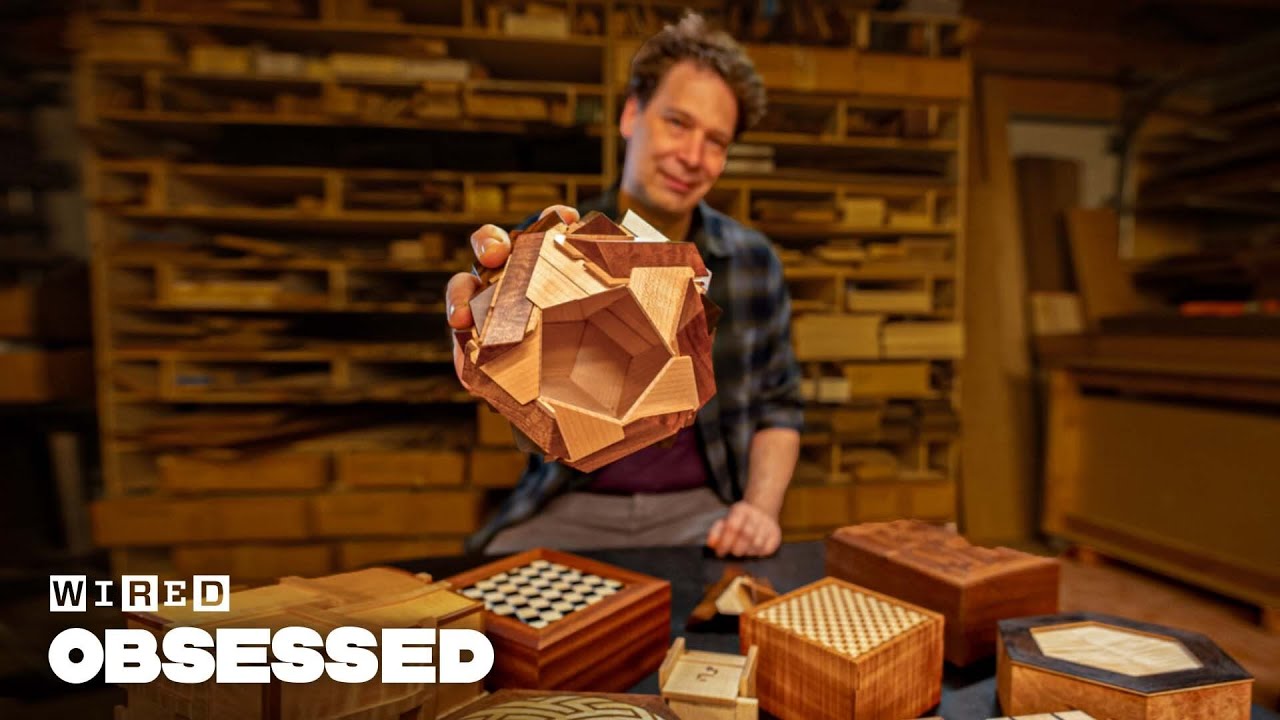
Kagen Sound's Puzzle Boxes: The Maze Is Not in the Box
Kagen Sound builds wooden puzzle boxes with no nails and no metal parts. What he is actually building is a maze, and the maze is not on the box.
Open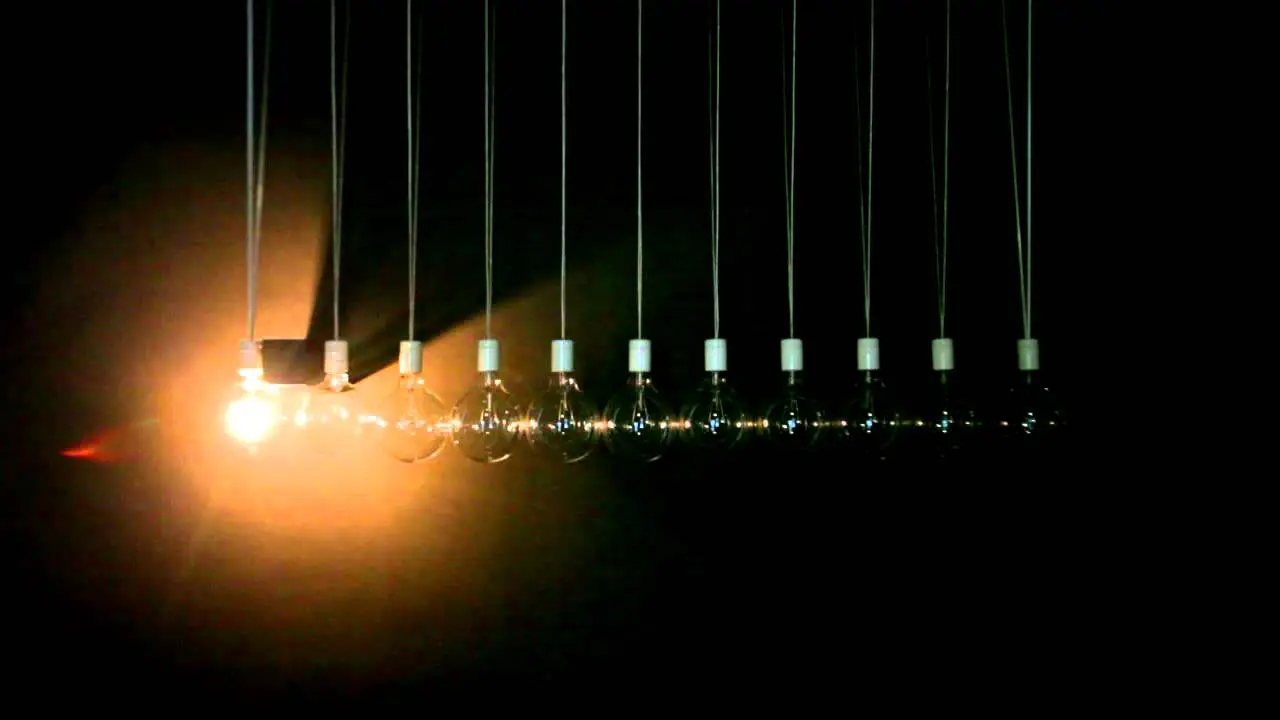
Asobi: Newton's Cradle, Reinvented with Light
Eleven light bulbs. Two hidden pistons. One physics law from 1687. Yasutoki Kariya's senior thesis at Musashino Art University made Newton and Edison share the same sentence.
Open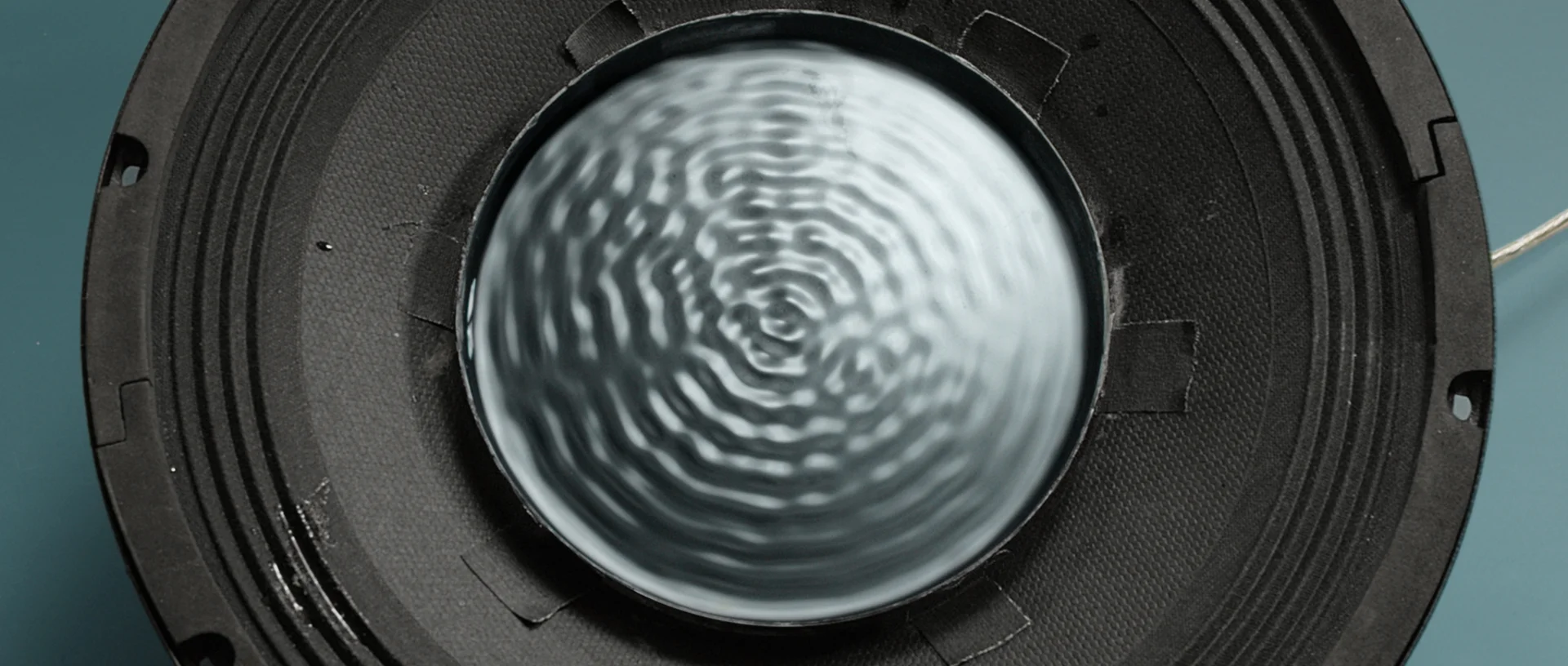
Cymatics: Sound Has a Shape
Nigel Stanford spent months building instruments that don't play music — they reveal it. Five physics experiments, one music video, and the wave equation made visible.
Open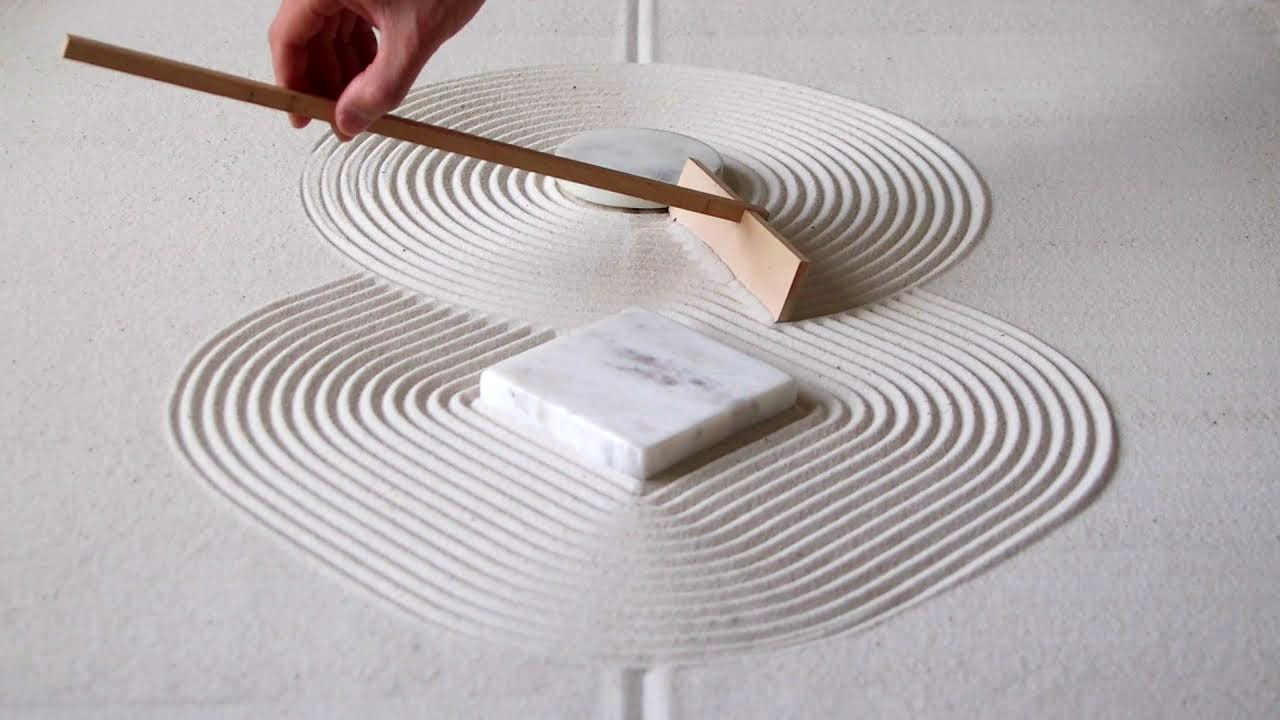
A Drawing That Erases Itself
Yuki Kawae spends hours raking patterns into a sand garden in his apartment. Then he smooths them away. 23 minutes. No narration. The arithmetic stops.
Open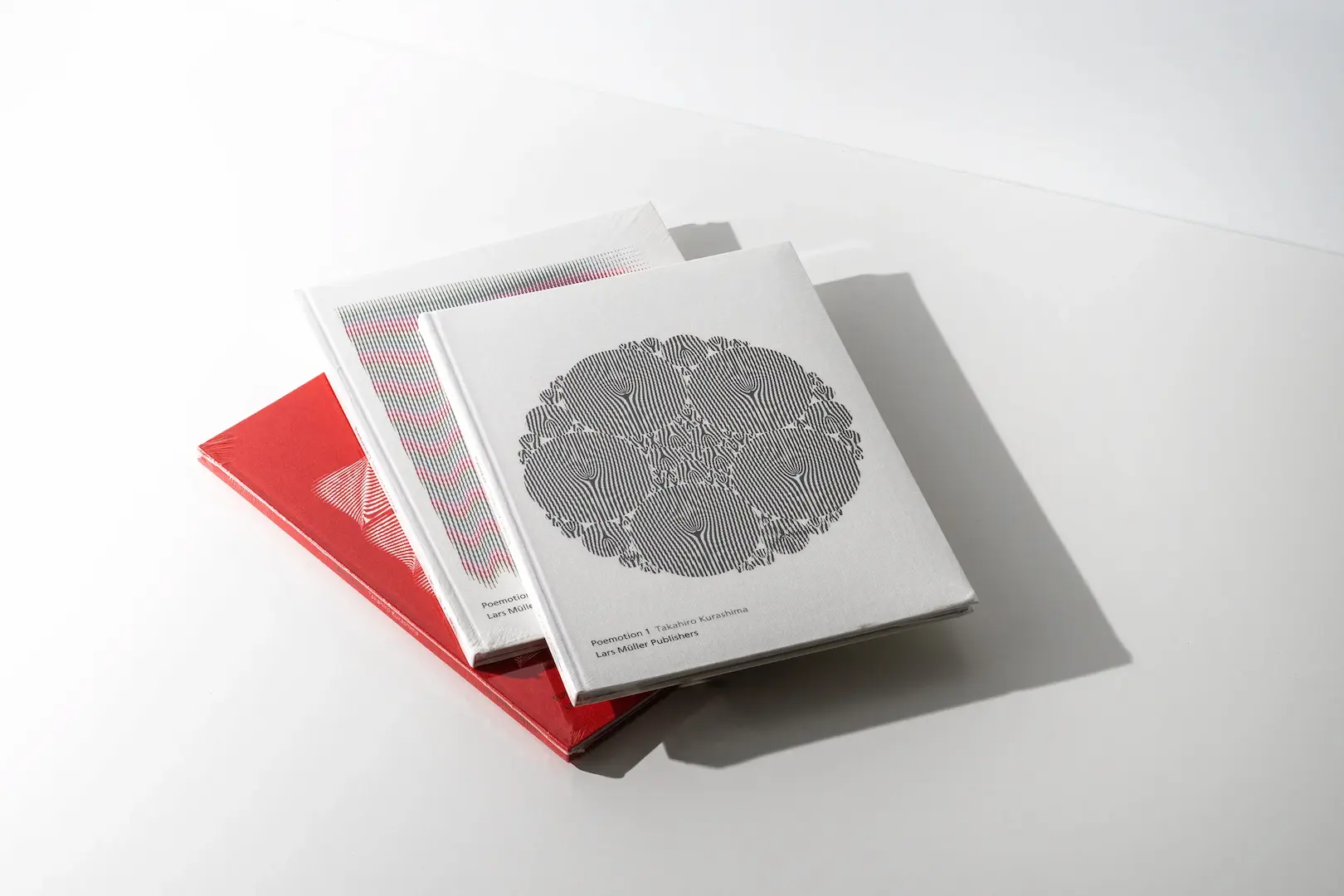
Poemotion — Takahiro Kurashima
Two layers of printed lines. One transparent film. No battery, no code — slide it across the page and the geometry comes alive.
Open