A puzzle box has no keyhole, no hinge and no lid you can see. What looks like a solid side is a thin panel riding in a track, and the box opens only after you move a particular set of panels in a particular order. Kagen Sound has been making them out of a Denver workshop for twenty years, with no nails at all, just interlaced wood and a little glue, and he has taken more awards at the annual Nob Yoshigahara design competition than any other designer working. He has a math degree and he is entirely self-taught as a woodworker, which is roughly the opposite of what you would guess from looking at the boxes.
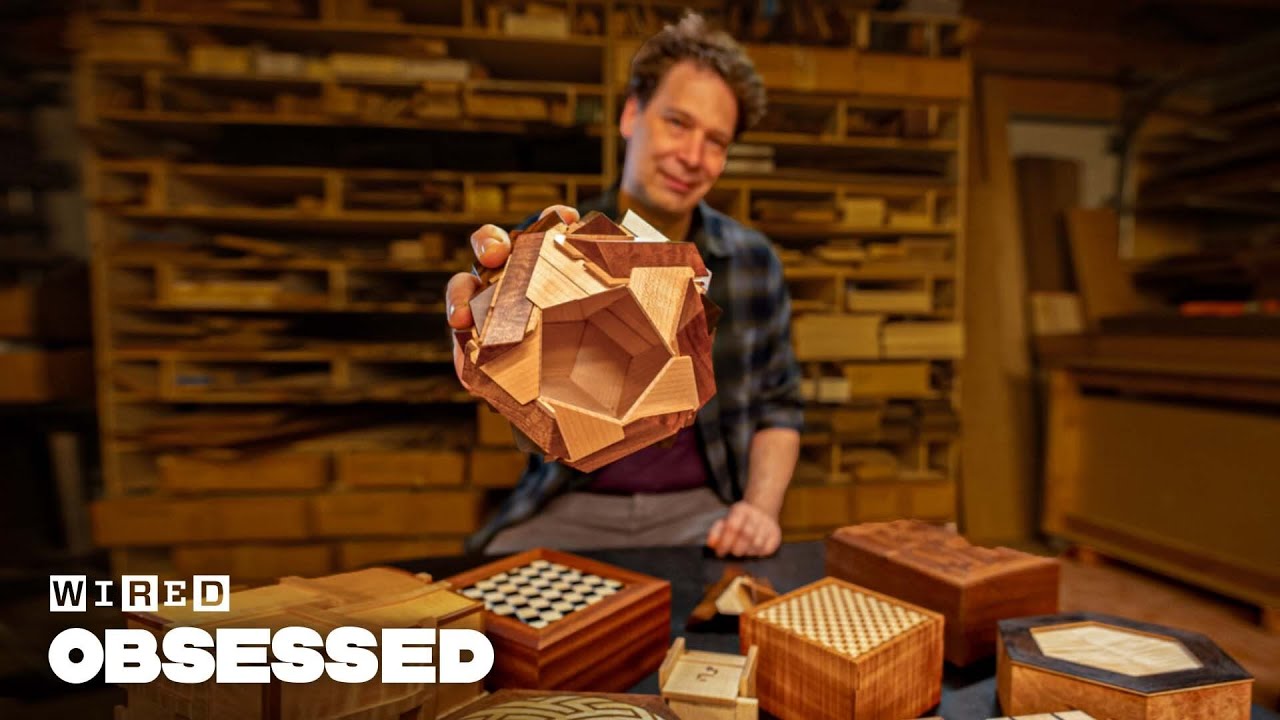
He once built a box that took five thousand moves to open. It worked, but the wooden parts wore each other down before anyone could open it reliably more than a few times, so it exists mostly as a fact rather than as an object.
Where these boxes come from
The tradition Kagen works inside is Japanese. The earliest trick boxes appear in a Hakone hot-spring souvenir journal published between 1830 and 1843, where they are called shikake-bako and chie-bako, device box and wisdom box, and they were plain little containers workmen used to keep tools safe on coaches and ships. Around 1894 a joiner in Hakone-Yumoto named Ryugoro Okawa put the sliding mechanism together with the local marquetry and produced the box we would now recognise, and the count of sliding moves in that tradition runs from four to seventy-two.
The surface pattern is the other half of the craft. Yosegi-zaiku is built by gluing strips of different woods into a block, then shaving veneer off the block, and none of it is stained or painted, so every colour on the box is the colour of a tree. Kagen makes his patterns the same way. He glues up two colours of wood, machines the block into angled rectangular blanks, arranges those into stripes, wets the face with a sponge so the fibres go soft, planes off a veneer and irons it flat before gluing it to a strip of cherry.
A maze made out of rectangles
Halfway through the video Kagen hands a box to the interviewer, watches her push a tile and get stuck, and tells her that what she is holding is essentially a maze but made out of rectangles. That sentence is the reason I wanted to write about this at all, because it is exactly and literally true.
Every sliding panel on the box has a position. Take all those positions together and you have the state of the box, a single point. A legal move is one the notches allow, so from any state only a few other states are reachable. Put the states down as nodes and the legal moves as edges and you get a graph, and opening the box means finding a path from the state it arrived in to the one state where the lid comes free. Nothing about that graph is drawn on the wood. It lives in the space of configurations, and the panels are just a physical interface to it.
This is why a puzzle box feels the way it feels. You are walking a maze you cannot see from above, and the only thing you ever observe is your current node. When Kagen tells the interviewer that she has changed the state of the tiles and so something new might now be possible, he is telling her that she moved to a different node and her edge list changed. The five-thousand-move box was a graph with a very long path through it and no shortcut.
Not every box is a path problem. The pinwheel box runs on what puzzle people call coordinate motion, where several panels each want to move diagonally into the space the next one is vacating, so no panel can move alone and the only legal transition is all of them at once. In graph terms the single-panel edges are all missing and the box only moves when you take a simultaneous step.
Try it · a lock with two sliders
This is the mechanism under the lid of his Cafe Wall Box. Two sliders change the pattern on top, each slider carries a small peg underneath, and both pegs run inside a maze cut into a hidden plate. So you cannot simply set the pattern you want. You have to route to it. The lid pattern below shifts as you move, and the box opens only when the peg reaches the far corner.
Hidden maze plate
Lid pattern now
Pattern that opens it
slider A 0 · slider B 0
moves 0
locked
The pattern on the lid is an illusion with an address
The box is named after a real thing. In 1979 Richard Gregory and Priscilla Heard published a study of a tiling one of their lab members had noticed on the front of a café at the bottom of St Michael’s Hill in Bristol, where rows of black and white tiles were offset against each other and the level grey lines between them looked like a stack of wedges. The offset alone does not do it. The effect needs those mortar lines, and it needs their brightness to sit between the brightness of the dark tiles and the light ones, which is why you can switch the whole illusion off by taking the grey away. Move the sliders below and watch the horizontal lines stop bending while never actually moving.
Café wall · offset and mortar
Every horizontal line here is straight and parallel to all the others, at every setting.
Kagen found the pattern the way a woodworker finds things, by pushing inlay blocks around on the bench and noticing that the same pieces made other patterns. His version of the wall is built from five strips of wood, and the whole shifting illusion comes out of parts that are much simpler than the pattern they produce. Two of the strips slide, so solving his box means assembling the illusion by hand, one wrong pattern at a time.
Why him
There is a guild for this. The Karakuri Creation Group in Japan is the only puzzle box guild in the world, and Kagen is the one member of non-Japanese origin it has recognised. His Hex Flex, a hexagonal box in ziricote, curly English sycamore and maple burl, took both top prizes at the 2023 competition and was named puzzle of the year. To open it you have to bend the box until the wood itself works as a spring, which is a thing you have to decide to do to an object you have just paid a great deal of money for.
Why this video
Twelve minutes, shot in his shop, and it is the rare maker video that shows the parts nobody films. You watch him tilt a saw blade to cut a dovetail track so a trapezoidal slider can travel without ever popping out, then clean the fuzz out of it with a chisel because the machine cannot reach. You watch a wooden spring get explained, and it turns out to be a chunk of wood with a few saw lines cut into it from opposing directions and nothing else.
The best stretch is the one where the interviewer is handed a box and immediately gets lost, thinks she has undone her own progress, and gets told that being lost in a maze is a big part of the thing. Kagen’s own standard for a good puzzle is that you can play with it for an hour, hand it to a five-year-old, and watch the five-year-old open it in five minutes.
Getting lost in a maze is a big part of solving a puzzle box.
He also says he barely draws these. The designs stay in his head as rough sketches and sequences of moves, kept loose on purpose because the design changes too much to commit to paper, which for a man building thousand-state machines out of cherry is either alarming or the whole point.
Watch
How This Guy Makes the World’s Best Puzzle Boxes
Kagen Sound in his workshop, cutting dovetail tracks, ironing marquetry veneer flat, and failing to remember how to open one of his own boxes.
Open the videoWhere to go next
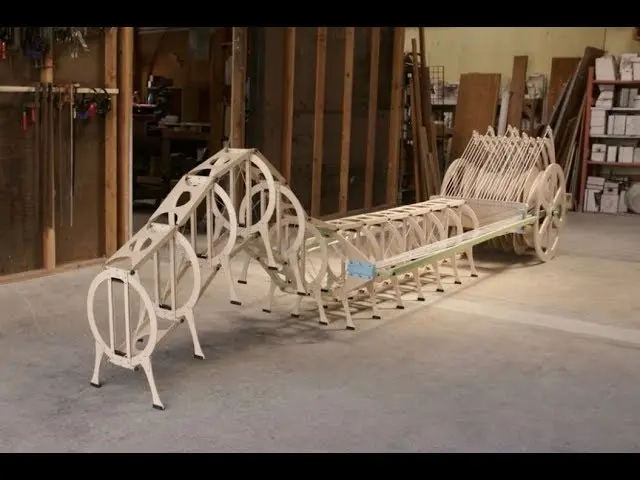
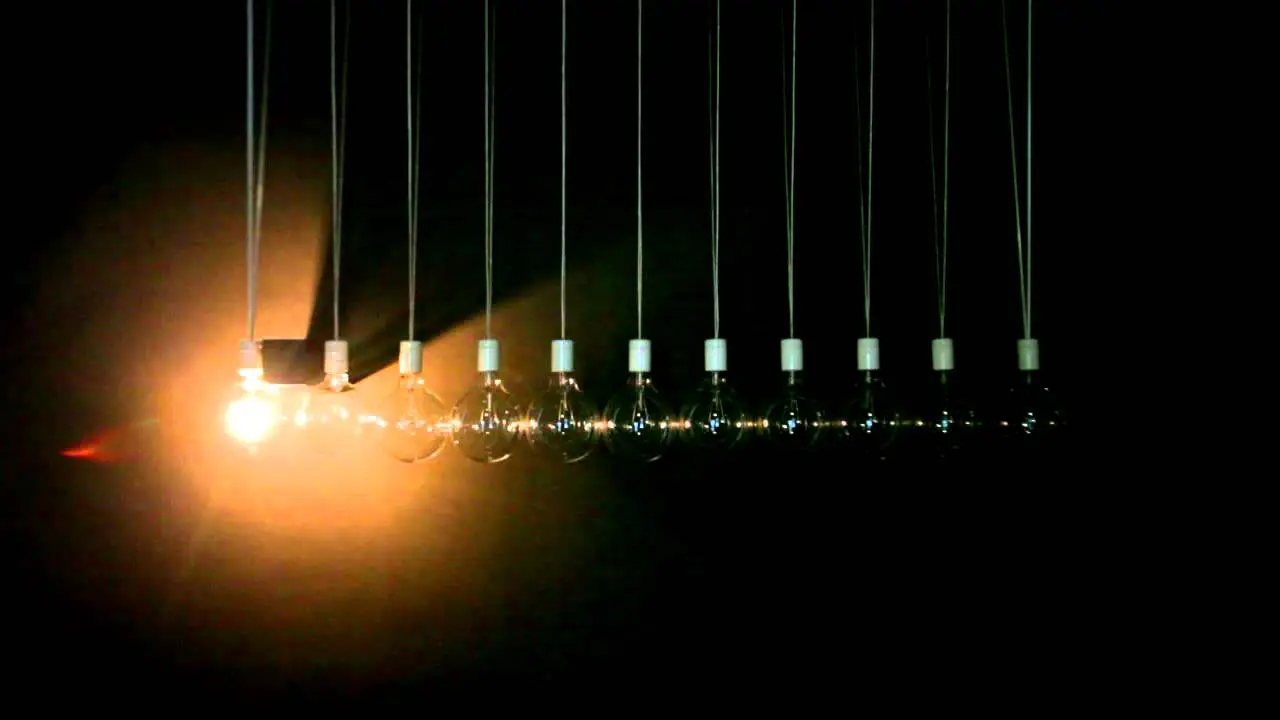
For another self-taught woodworker who spent twenty years on one piece of mathematics and then built it out of plywood, there is Reuben Margolin’s walking caterpillar. And for a mechanism that hides its whole argument in a single moving part, eleven light bulbs standing in for Newton’s cradle.
Video · How This Guy Makes the World’s Best Puzzle Boxes