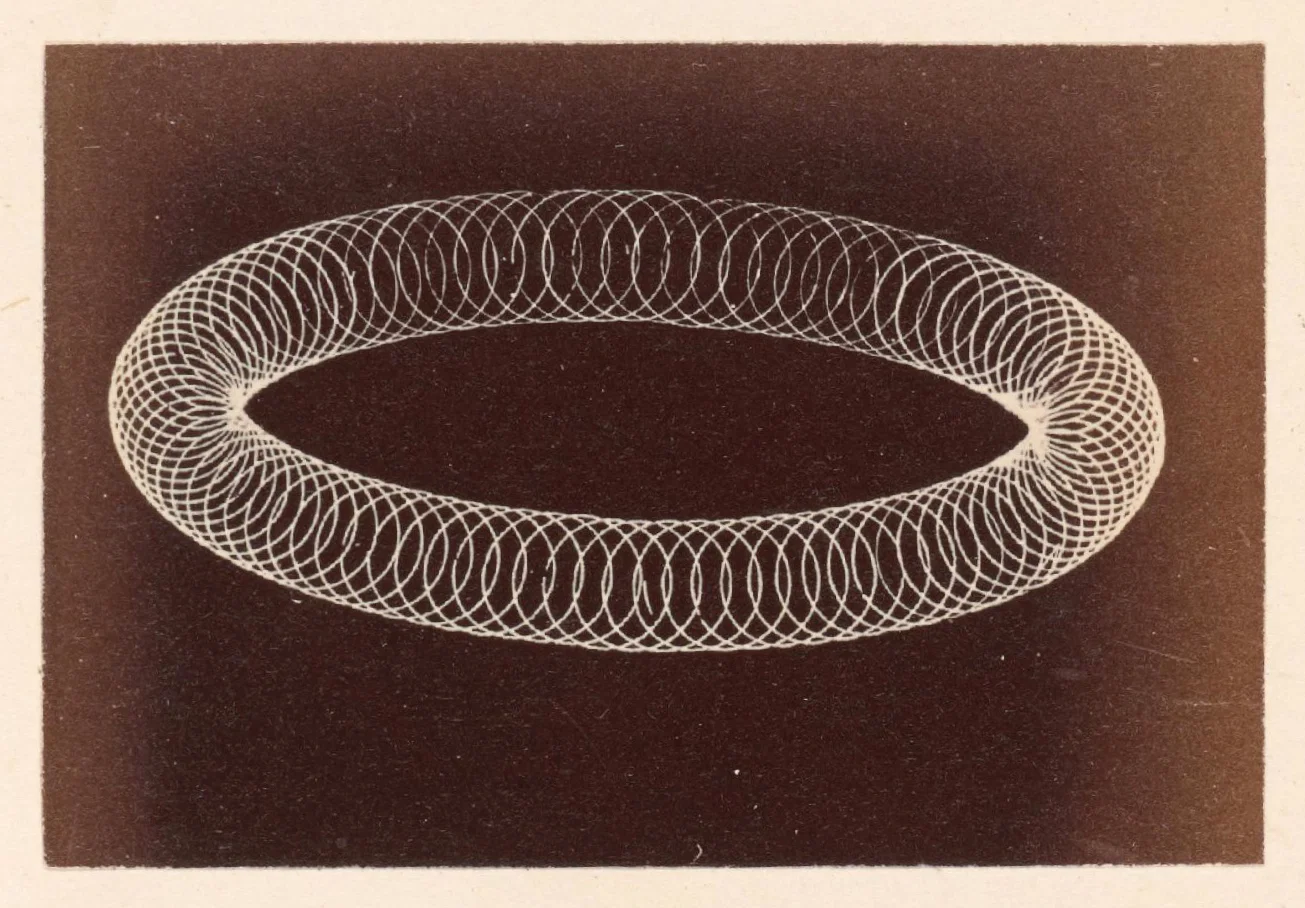
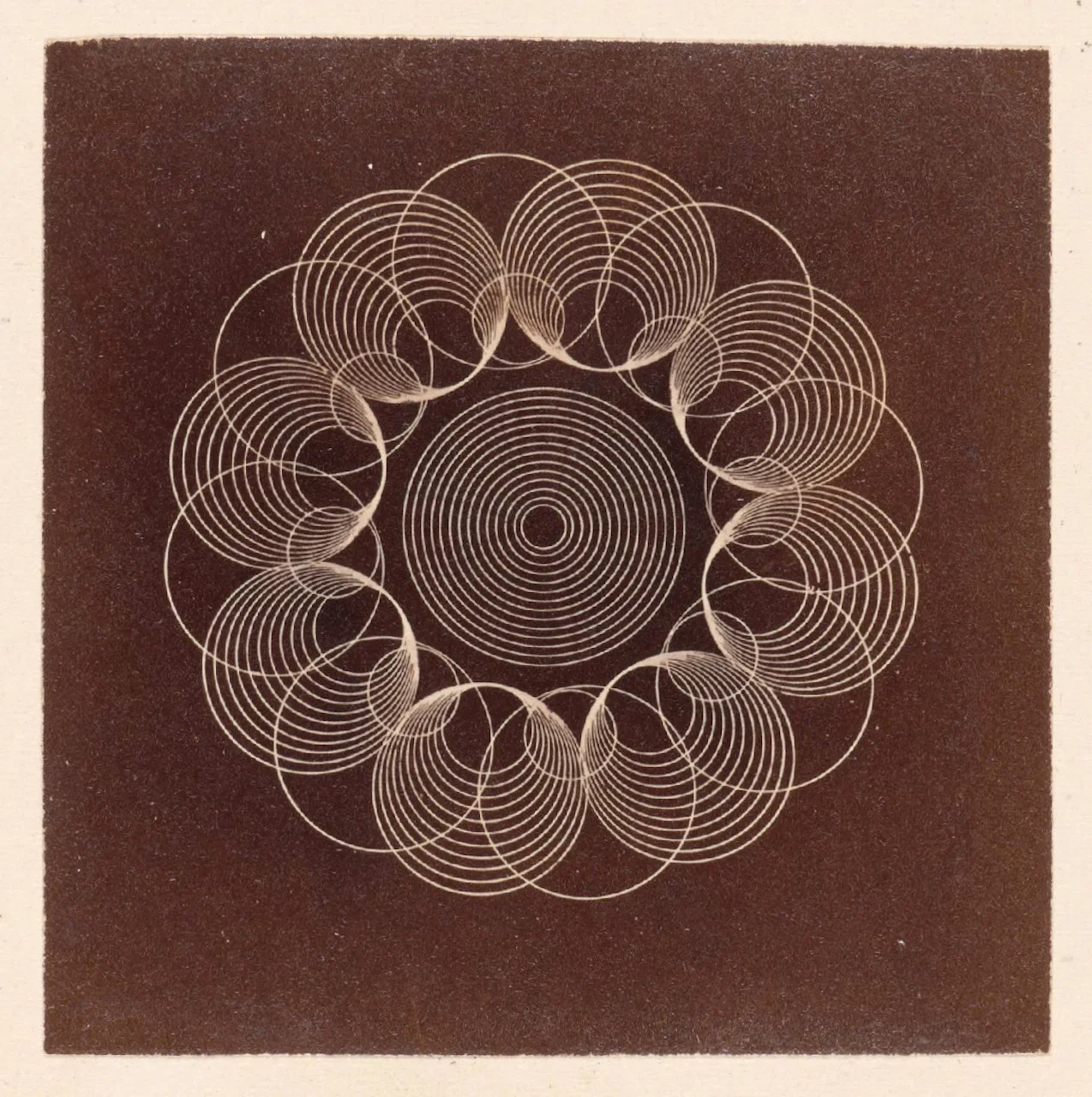
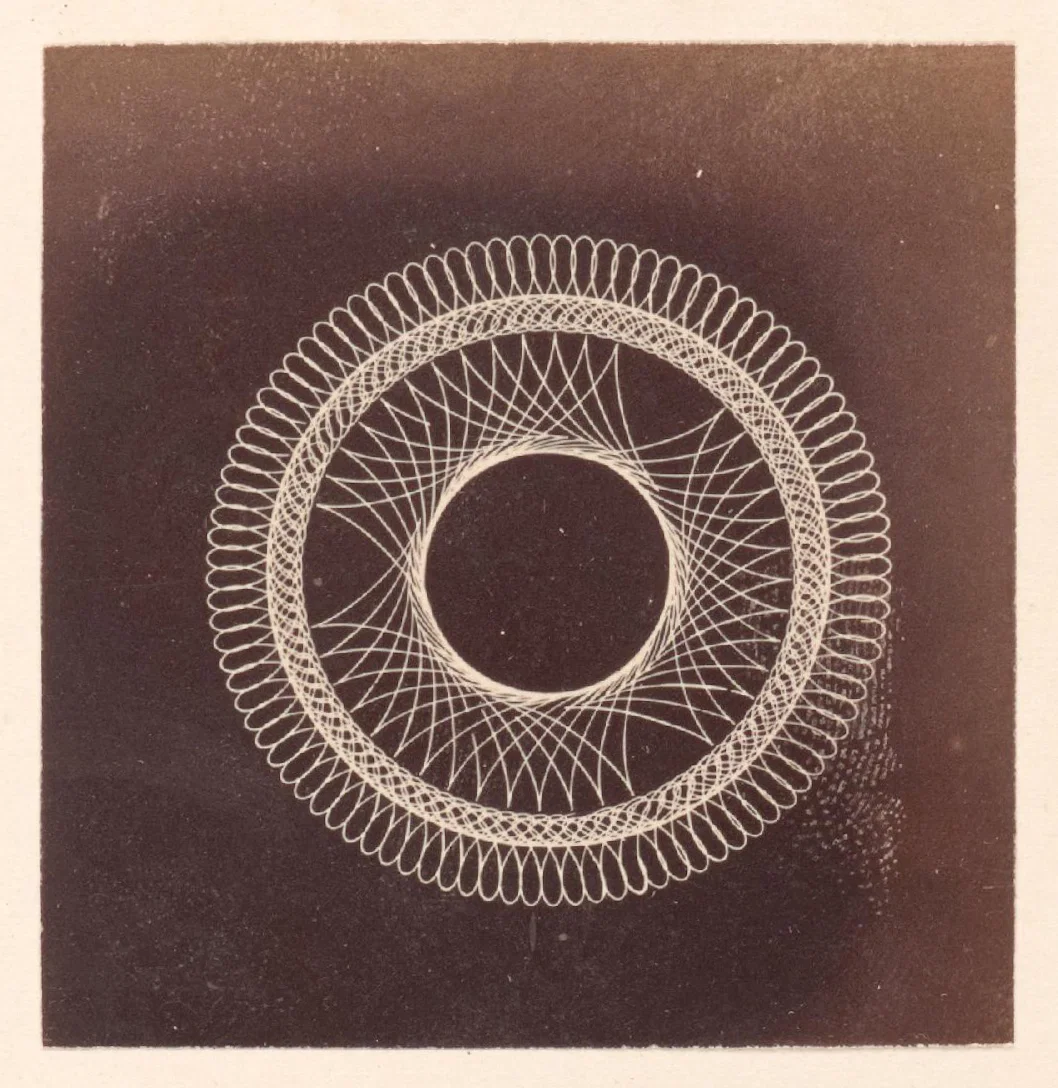
These are not drawings. No hand traced these arcs. No compass defined these curves. The symmetry you are looking at — exact, radial, recursive, obsessive — was produced by a lathe. The craftsman set the parameters. The machine did the geometry.
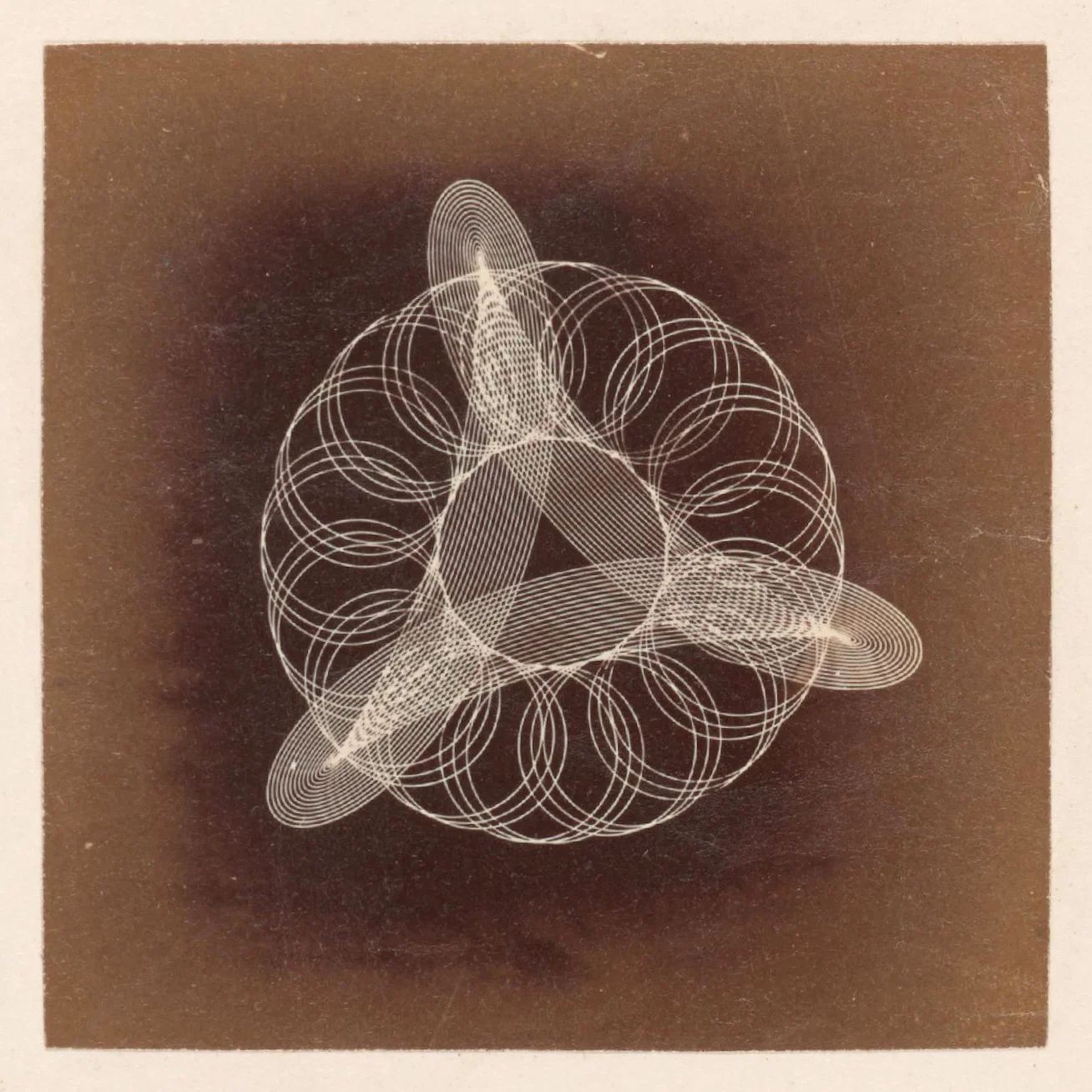
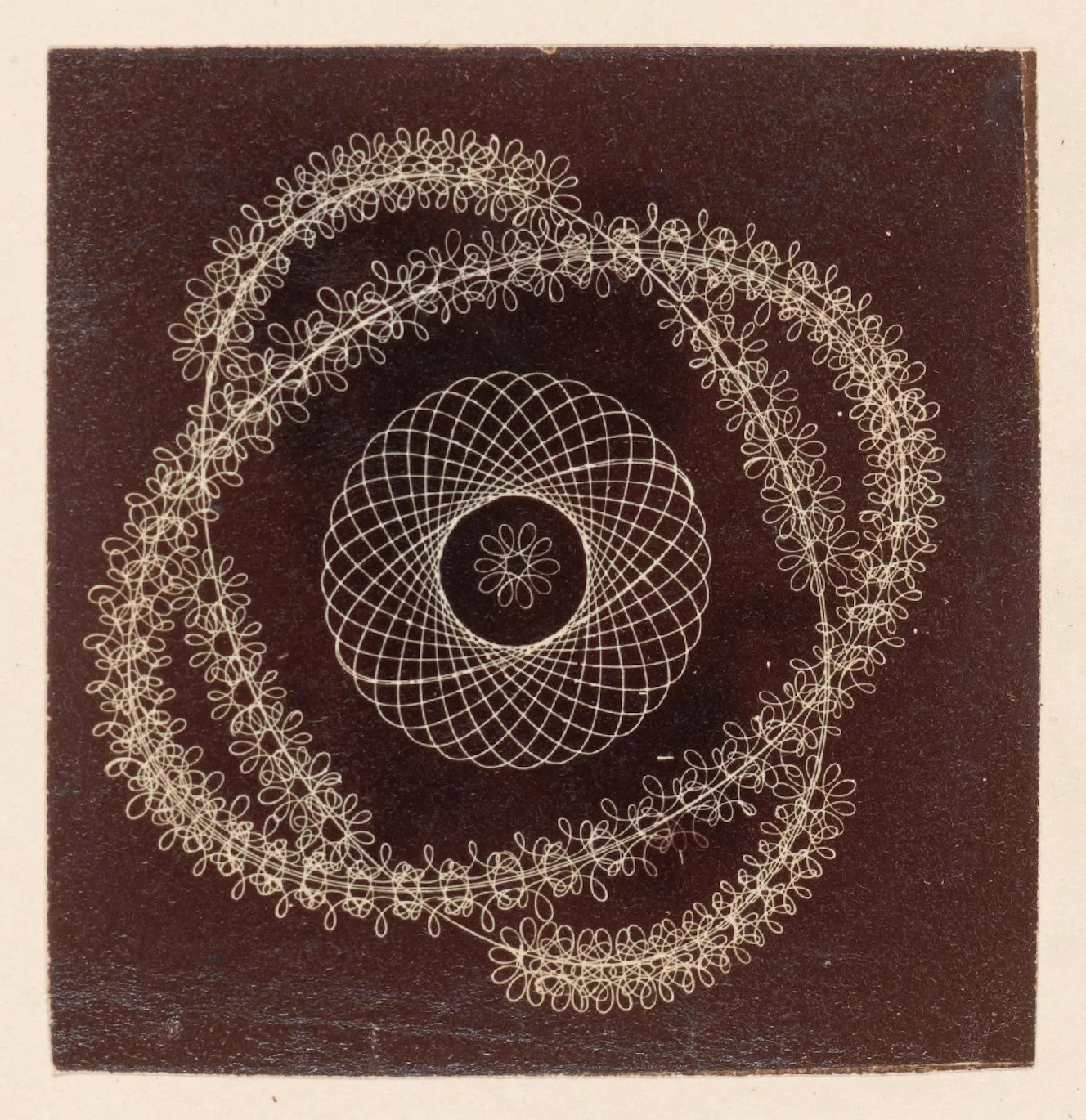
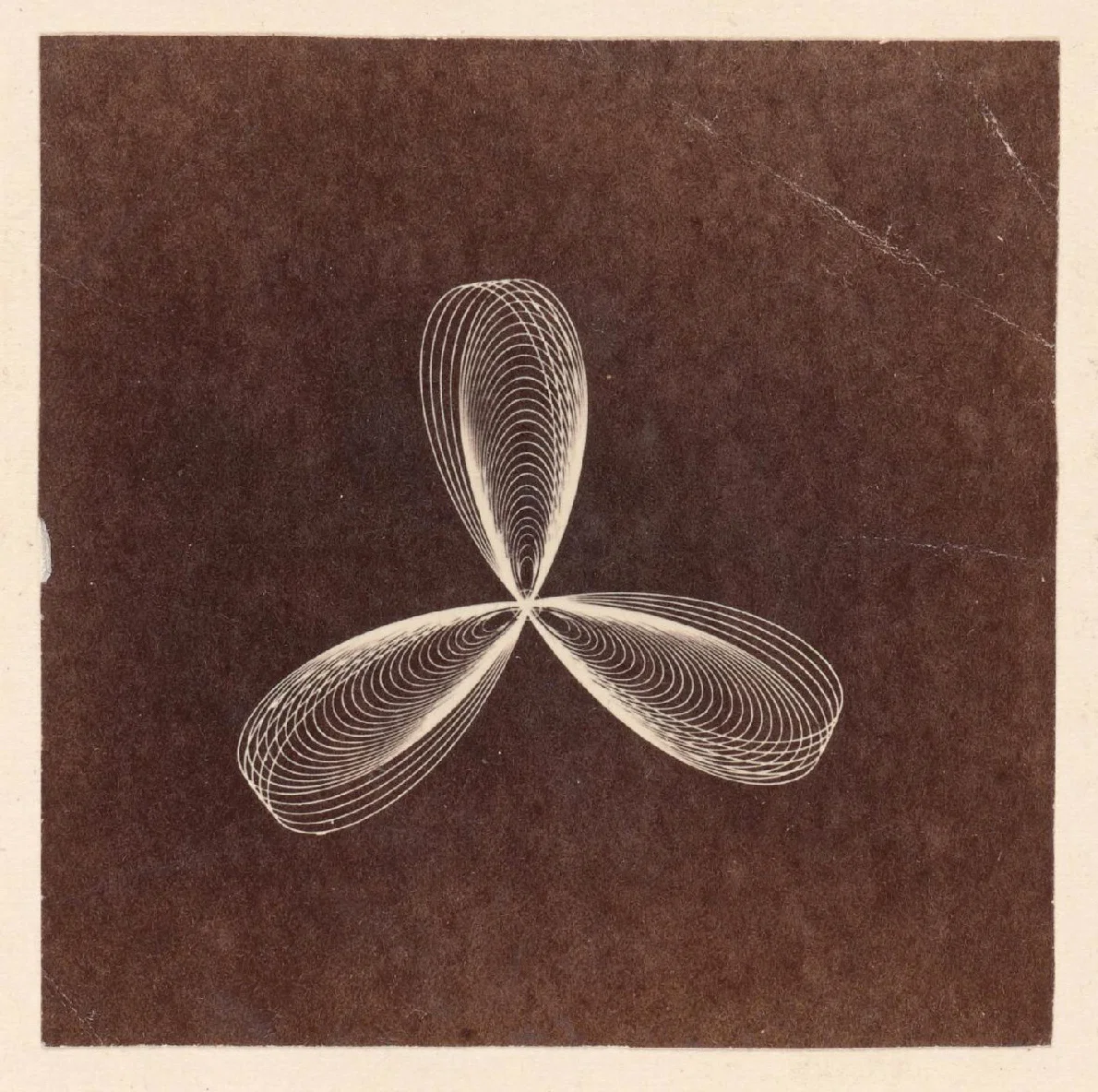
Specimens of Fancy Turning is a Victorian publication that documents what was possible on an ornamental turning lathe equipped with a geometric chuck — a mechanical apparatus of extraordinary ingenuity that attached to the spindle and caused the workpiece to trace compound epicyclic paths as the lathe rotated. The resulting forms look, to a contemporary eye, like output from a Spirograph or the plots of a parametric equation. They are, in essence, both. They are also entirely physical objects: turned in ivory, hardwood, and metal, polished and exhibited as demonstrations of the practitioner's mastery.
The Victorian era produced a remarkable overlap between mathematical recreation and artisanal craft. The ornamental lathe — descended from the rose engines and spiral chucks of seventeenth-century court workshops — became the preferred instrument of that overlap. To own one was expensive. To operate one well required patience, mechanical aptitude, and a working understanding of geometry. The practitioners who mastered it formed societies, published catalogs, and exchanged specimens. This book is one of those catalogs.
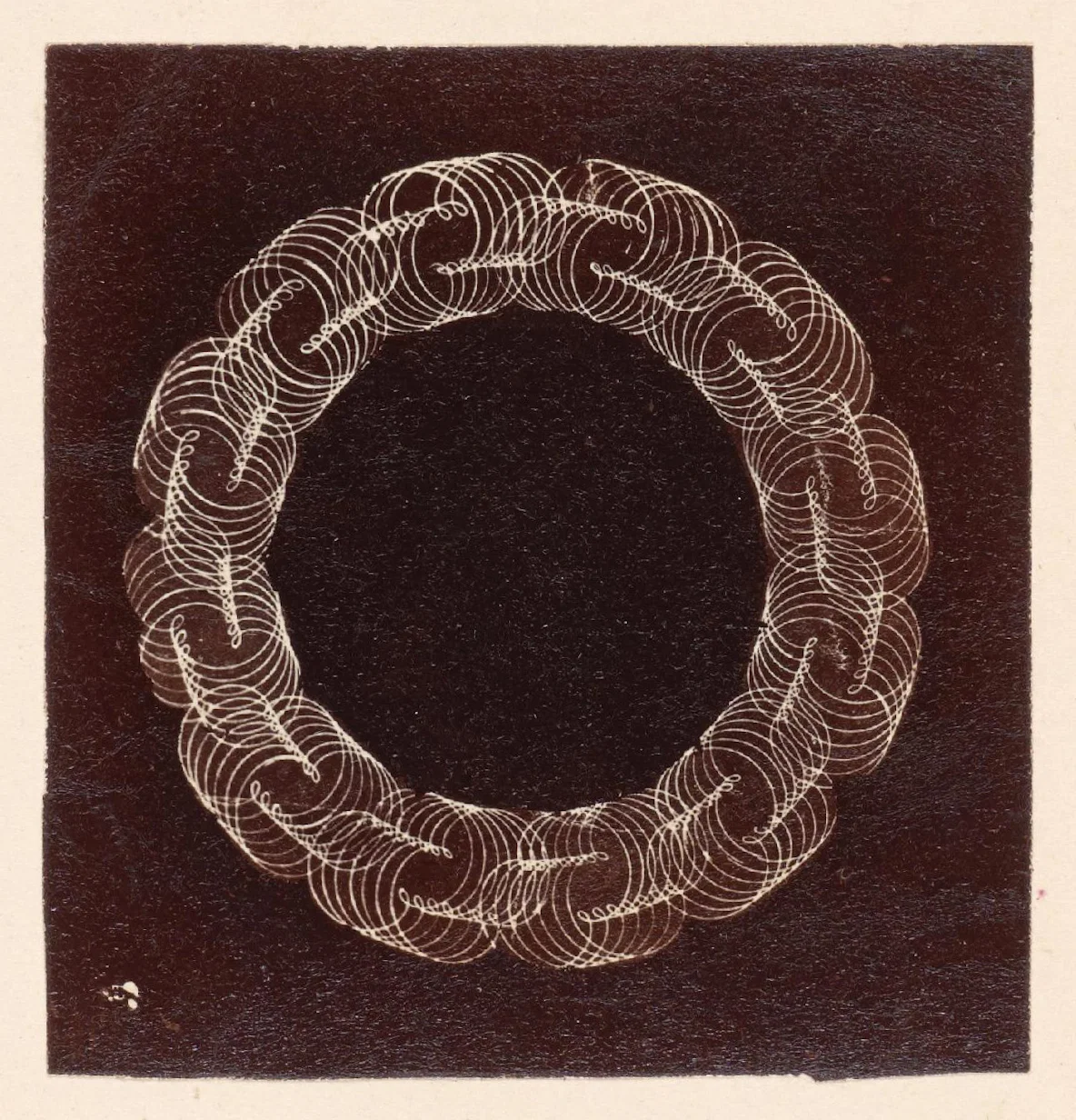
The Geometric Chuck
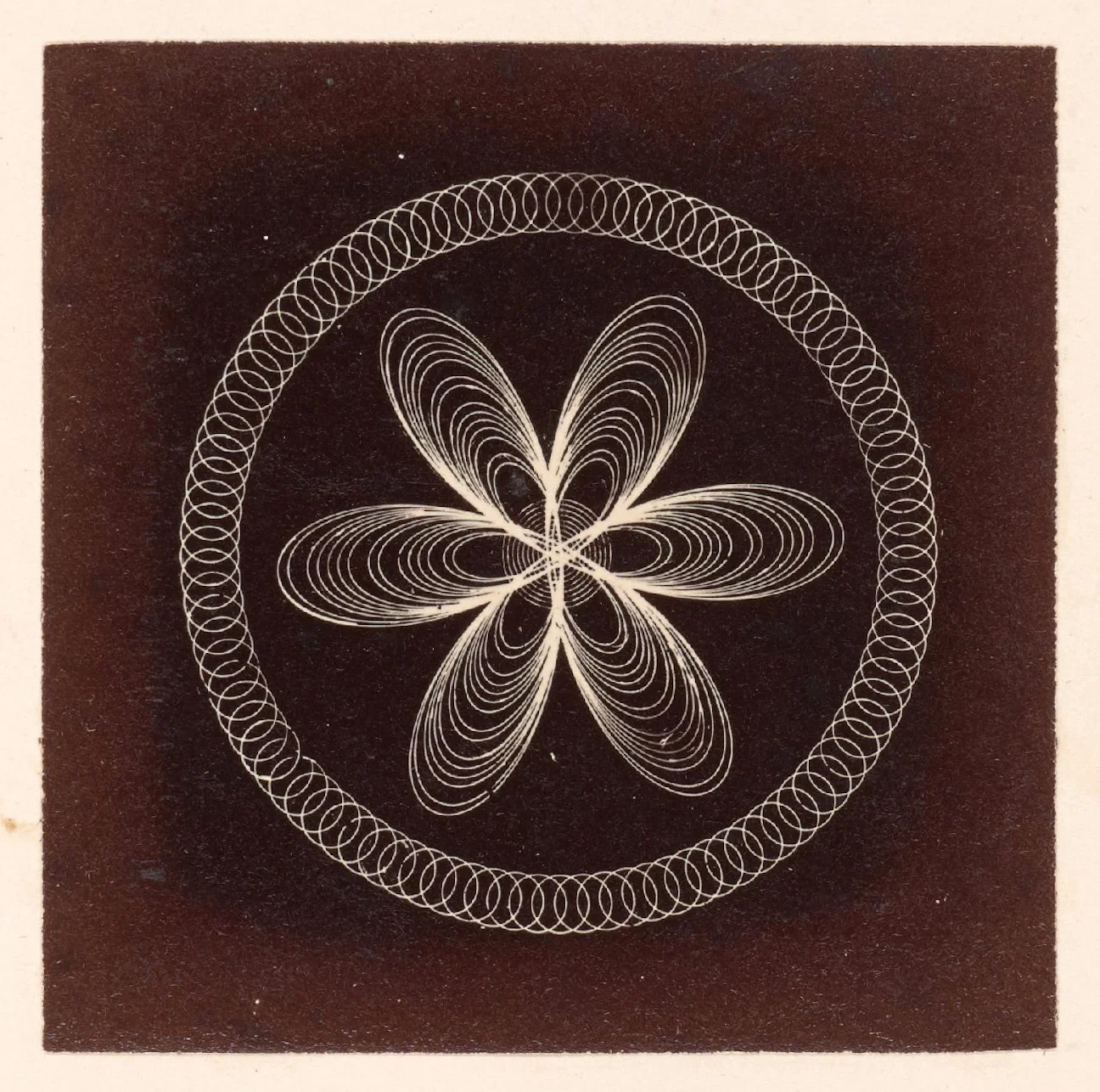
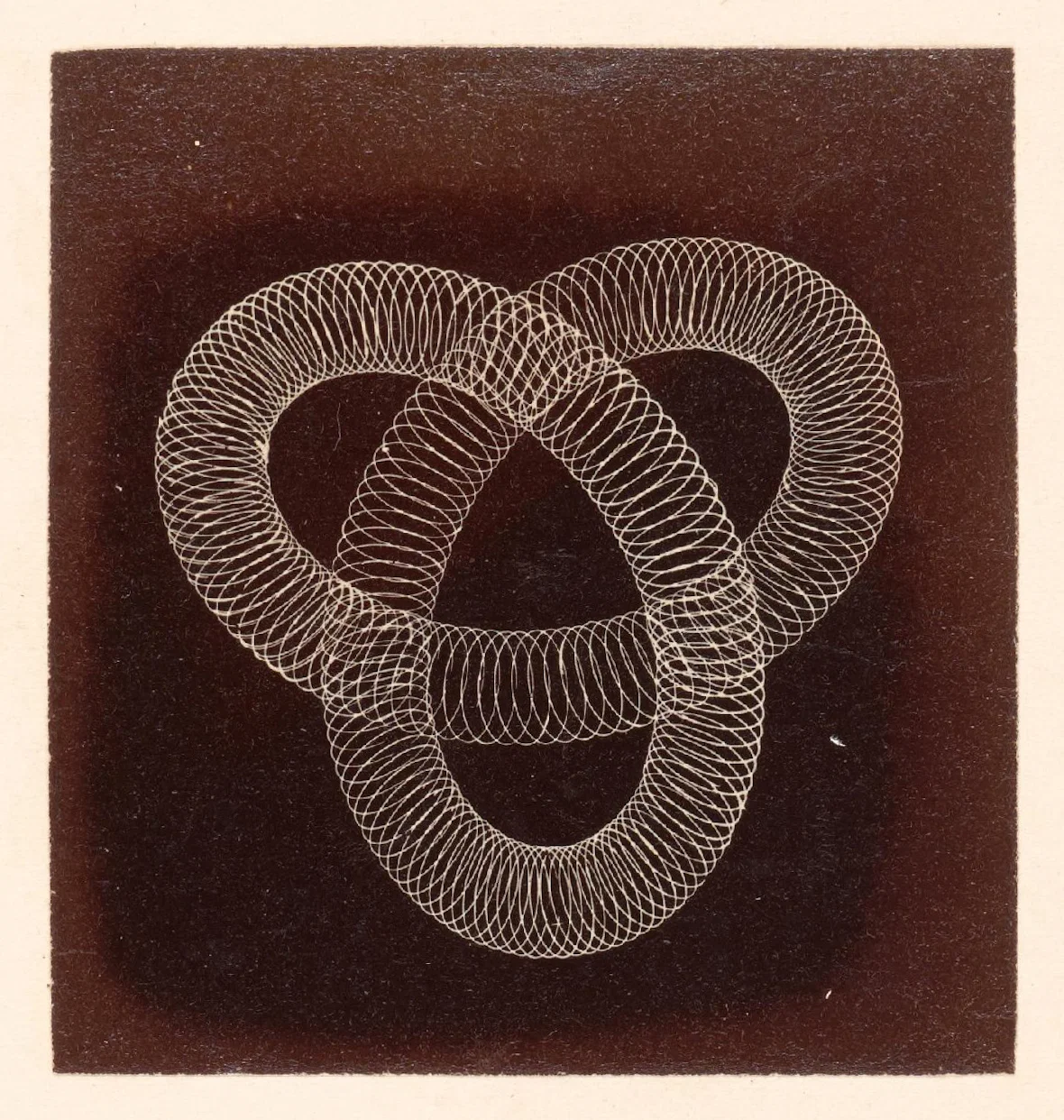
The geometric chuck is a mechanical computer. It consists of a series of graduated wheels arranged concentrically — each offset from the last by a selectable angle, each rotating at a ratio determined by its gear count relative to the wheel below it. When the lathe spindle turns, the workpiece traces not a simple circle but a compound path: the sum of all those offset rotations simultaneously. The cutting tool, fixed in space, records each passage of the workpiece surface as a groove. After many revolutions, the accumulated grooves form a pattern.
The patterns produced this way are mathematically identical to the family of curves known as epitrochoids and hypotrochoids — the same curves that a Spirograph generates, the same curves that describe the orbits of planets in the Ptolemaic model of the solar system, the same curves that appear in Fourier analysis as the superposition of rotating vectors. The Victorian craftsman did not describe them in those terms. He described them as specimens: catalogued, classified, and valued for their visual complexity. But the mathematics was there regardless.
John Jacob Holtzapffel, whose five-volume Turning and Mechanical Manipulation (1843–1884) remains the definitive technical reference for ornamental turning, devoted hundreds of pages to the geometric chuck alone — its construction, its adjustment, its range of possible outputs. The fourth volume, posthumously completed by his son Charles, exhaustively catalogs possible chuck combinations and the forms they produce. Specimens of Fancy Turning is the visual counterpart: not instruction, but demonstration.
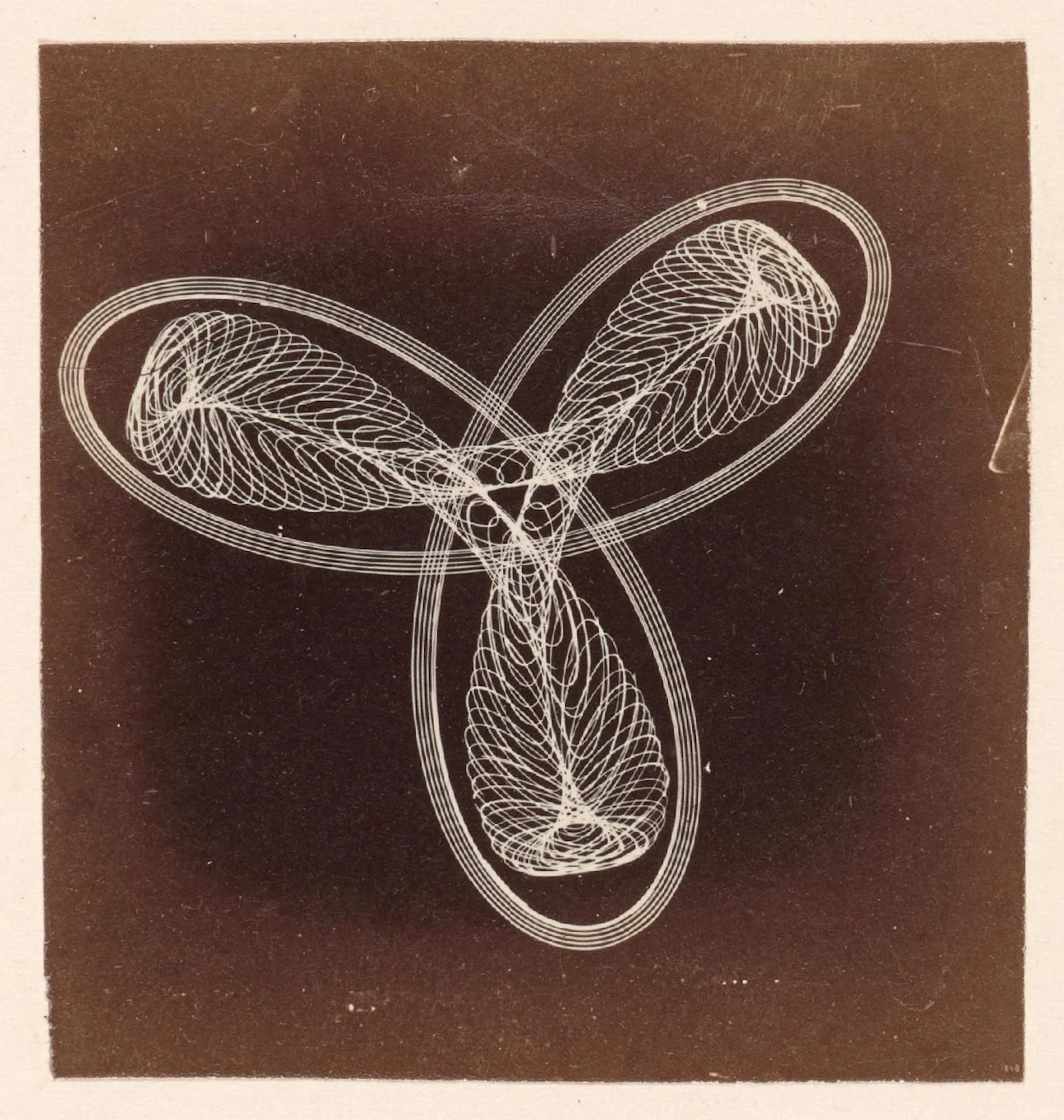
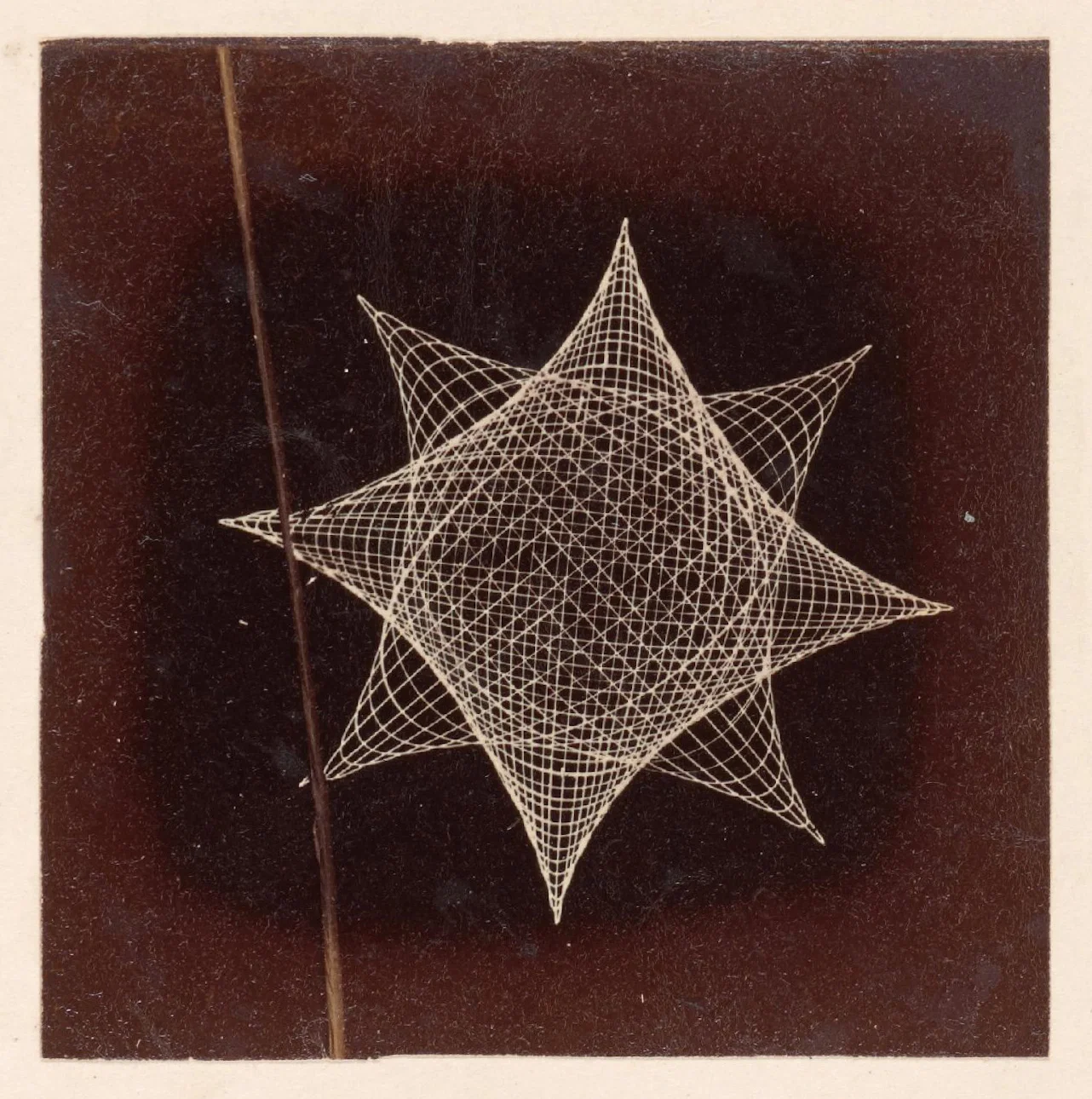
“The patterns produced by the geometric chuck are not approximations. Each pass of the cutting tool follows the same path as every other pass. There is no drift, no variation, no human error. The machine is incapable of imprecision.”
— J.J. Holtzapffel, Turning and Mechanical Manipulation, Vol. IV
What the Eye Sees
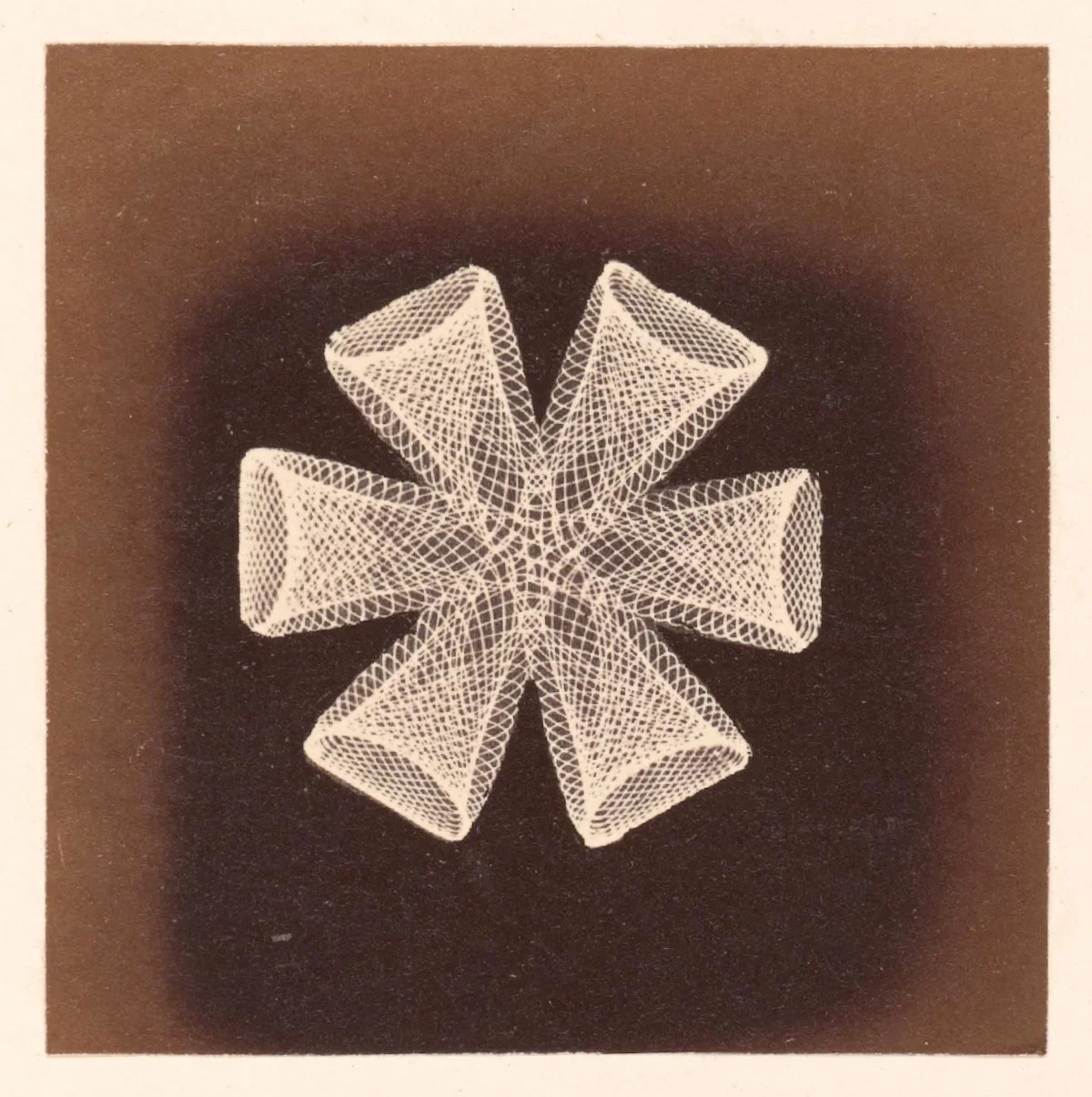
Look at any plate in this catalog for long enough and you begin to feel the depth of it — not physical depth, but mathematical depth. The eye follows a curve and expects it to close, and it does, but only after passing through a complexity that seems, for a moment, unresolvable. Then it resolves. The entire form snaps into legibility: a rose window, a mandala, a lattice, a thing with a name you don't quite have. And then you notice it is also something else from a different angle.
This is not an accident. The geometric chuck is specifically designed to produce forms that sit at the edge of perceptual resolution — complex enough to reward sustained looking, structured enough to eventually yield their order. The craftsman chooses his parameters knowingly. The number of petals in the resulting rosette, the degree of their interlacement, the depth of the cuts, the secondary pattern left at the intersections — all of these follow directly from the arithmetic of the gear ratios selected. To produce a particular specimen is to solve a geometric problem by selecting the right numbers, then letting the machine run.
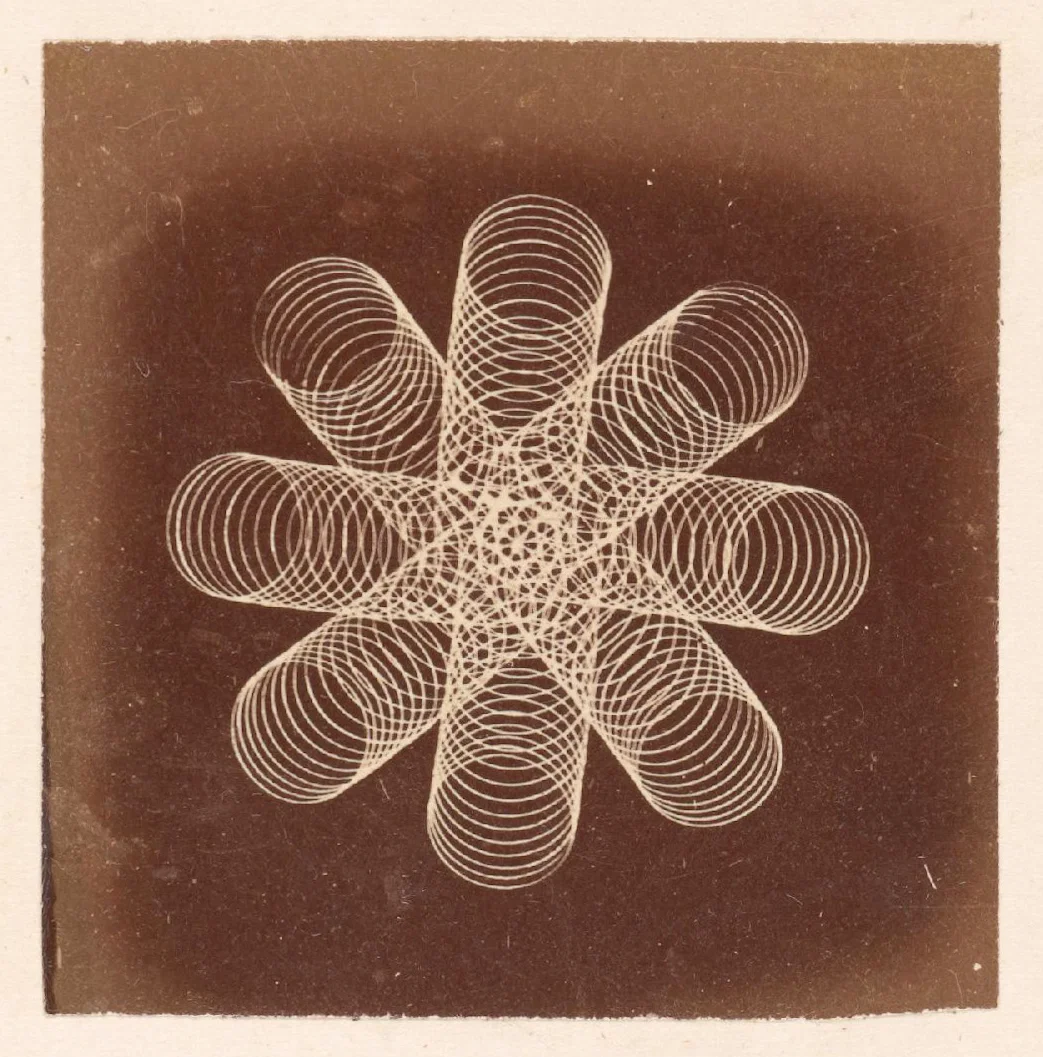
The Catalog as Argument
Publications like Specimens of Fancy Turning served a specific purpose within the ornamental turning community: they demonstrated range. Each plate was evidence that the form shown was achievable — that a craftsman with the right equipment and sufficient skill could reproduce it. The existence of the catalog was simultaneously a challenge and a proof. Here is what is possible. Here is the space of forms that the discipline commands.
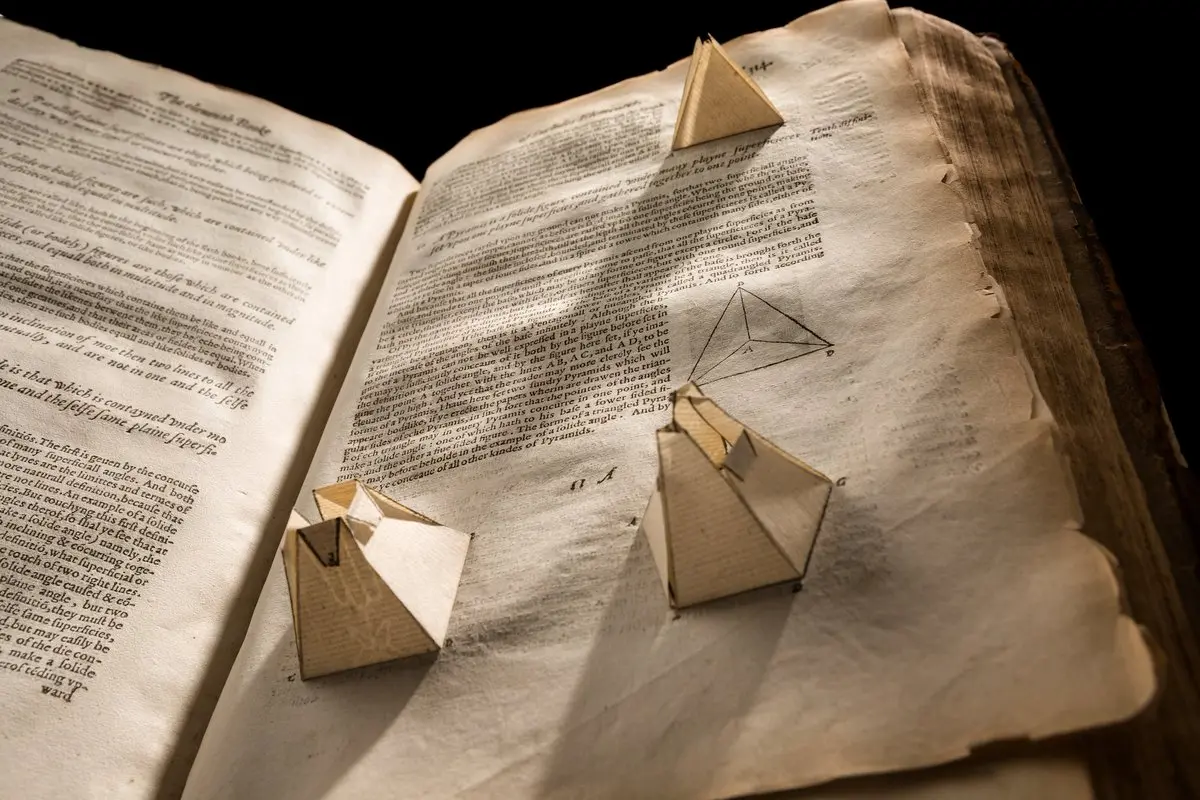
In this sense the book operates very much like the first English edition of Euclid's Elements — as a demonstration that certain things can be proven, set down for those who follow. The ornamental turner, like the geometer, works within strict constraints: the rules of the machine, the properties of the material, the logic of the gear ratios. Within those constraints, the space of achievable forms is nonetheless vast. The catalog charts a portion of that space. It does not exhaust it.
There is also something quietly subversive about a crafts publication that looks exactly like mathematics. The Victorian art establishment drew a firm line between fine art (produced by inspired individuals) and decorative art (produced by skilled craftsmen following rules). Ornamental turning sat uncomfortably across that line. It required genuine skill, genuine knowledge, genuine aesthetic judgment. But its outputs were also, in a precise sense, computed results. The craftsman's creativity lay in problem selection, not in freehand expression. These specimens are what happens when you apply a theorem to ivory.
The Material Problem
Ivory was the prestige material of ornamental turning. It is dense, uniform, and takes a fine cut without tearing. The geometric chuck produces forms that the material needs to hold faithfully: thin walls, sharp ridges, deep undercuts, latticed structures where the remaining material is thinner than a matchstick. Ivory tolerates this. Hardwoods — boxwood, ebony, lignum vitae — tolerate it somewhat less. Metal tolerates it least. Many of the finest ornamental turning specimens are fragile objects. They exist only because ivory is nearly as strong in section as it is in bulk, and because the completed specimens were treated as display objects, placed under glass, never handled.
The patterns in this catalog are photographed flat, as two-dimensional images. But the original specimens are three-dimensional: turned from a disc or a cylinder, with the pattern cut into the face, the edges, or both. In person, the depth of cut creates a play of shadow that the flat image suppresses. The mathematical structure that is legible in the photograph becomes, in the object, also a tactile and optical phenomenon. These are objects that reward touch as well as sight. The Victorian collector who placed them under glass was preventing exactly the engagement the craftsman had designed them for.
What the Machine Cannot Do
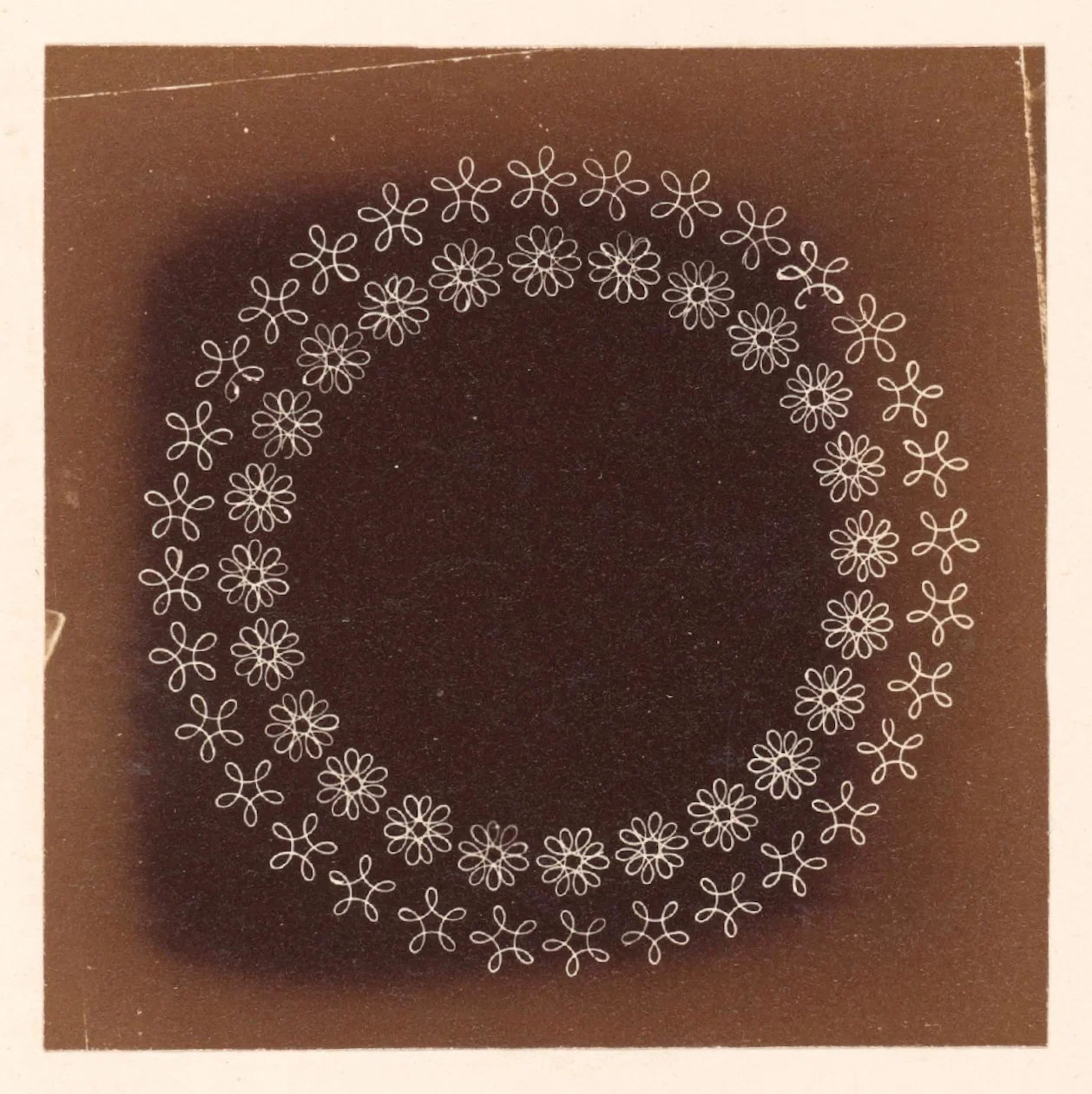
The geometric chuck cannot make a mistake. It cannot make a choice. Given a configuration of gear ratios and offsets, it produces exactly one pattern, every time, without deviation. This is its power and its limitation. The craftsman's intelligence lies entirely in the configuration — in knowing what gear ratios will produce what visual result, in having the spatial imagination to predict the output from the parameters, in knowing which combinations are worth the cutting time and which will produce a form already in the catalog.
This places ornamental turning in an unusual epistemological position: it is a practice in which all the craft lies in setup and none in execution. The actual cutting can be done by anyone who can turn a handwheel at consistent speed. The skill is in knowing what to set up. This is not so different from programming. The programmer who writes a generative algorithm that produces beautiful outputs is doing the same thing: all the creativity is in the parameters, the constraints, the structure. The machine runs. The machine cannot be wrong. The machine cannot be right, either. Only the person who configured it can be either.
The specimens in this catalog are the output of that process. They are beautiful — unmistakably, almost aggressively beautiful — but the beauty is not the craftsman's achievement in the way that a painted canvas is a painter's achievement. The beauty was latent in the mathematics. The craftsman found it. That is a different and perhaps more interesting thing to have done.
The Space of Possible Forms
Holtzapffel estimated that his geometric chuck, in its various configurations, could produce several thousand distinct patterns. In practice, the number is much larger — the number of possible gear-ratio combinations is combinatorially vast, and each combination produces a unique curve. The catalog you are looking at contains a small selection. Each plate was chosen because of its visual quality, its technical difficulty, or its novelty within the tradition. The vast majority of possible forms were never cut, never documented, never seen.
This is the strange melancholy of combinatorial art: the space of possible works is incomparably larger than the space of actual works. Every Spirograph set contains more curves than any child will ever draw. Euclid's Elements contains the seeds of theorems that were not proven for two thousand years after it was written. The geometric chuck has, implied within its mechanism, forms that no one has yet cut — forms that are, in a meaningful sense, already determined by the mathematics, waiting only for someone to turn the wheel and let the machine find them.
Specimens of Fancy Turning is a record of a small number of those discoveries. The book is beautiful. The objects it documents are more beautiful. But the most interesting thing about both the book and the objects is what they imply about a space that neither can contain: the full extent of what the mathematics will produce, most of which no one will ever see.