Kasko's approach to pastry did not come from a recipe book but from an architecture school drawing table. Trained in architecture and design in Ukraine — and later working as a 3D visualizer — she never stopped watching how surfaces break, how geometric forms hold light, how volume shifts with a change in viewpoint. The difference, eventually, was that she was using chocolate instead of plaster, and a CNC cutting machine instead of a drafting pen.
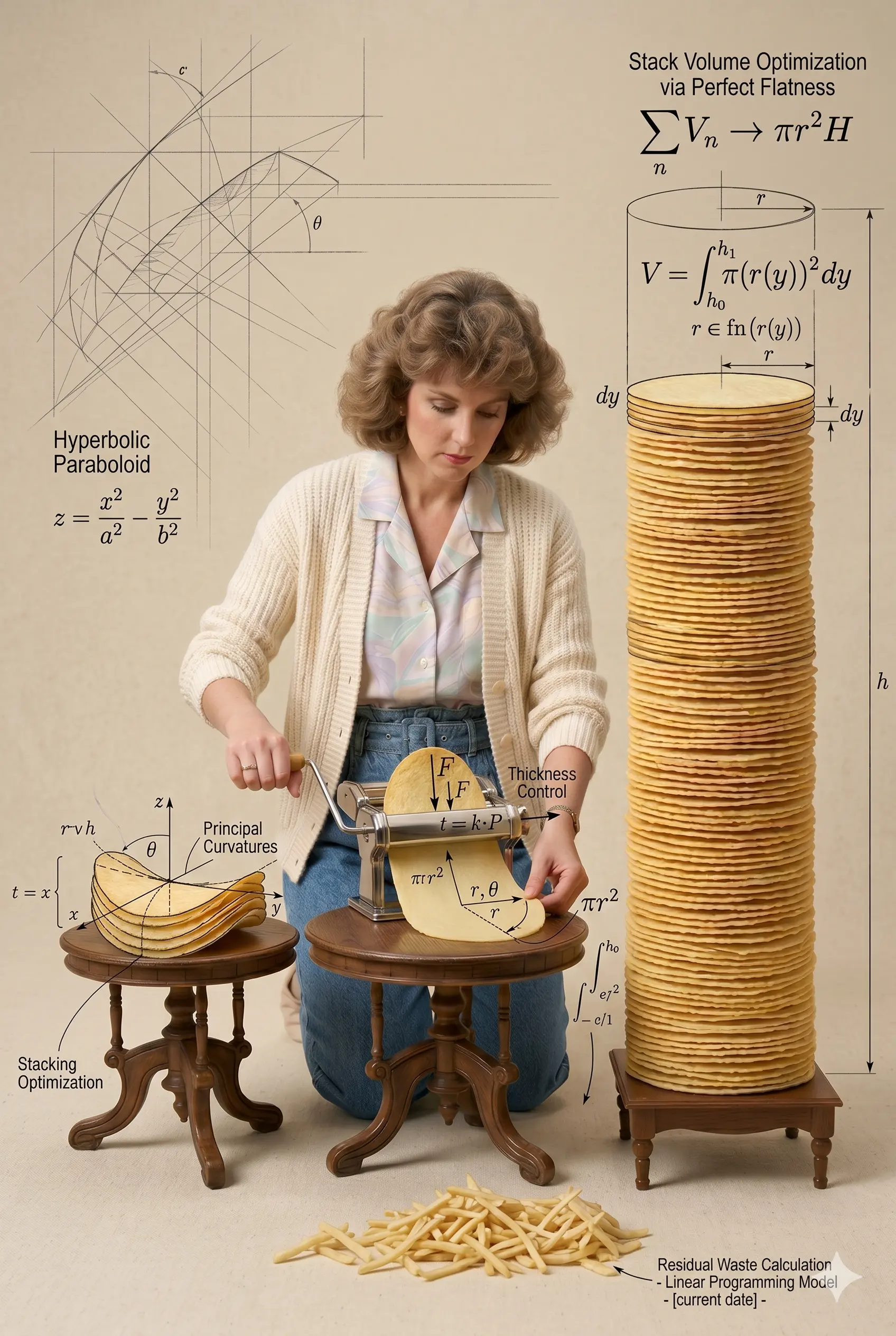
The project fits naturally alongside other Abakcus pieces that find rigorous mathematics in unexpected objects — from the hyperbolic paraboloid hiding inside a Pringle to George Legendre's parametric equations for 92 pasta shapes, to Martin's Chocolatier's nine-planet solar system in Belgian chocolate. Here the geometry is more immediate: you can see it, then you eat it, then it is gone.
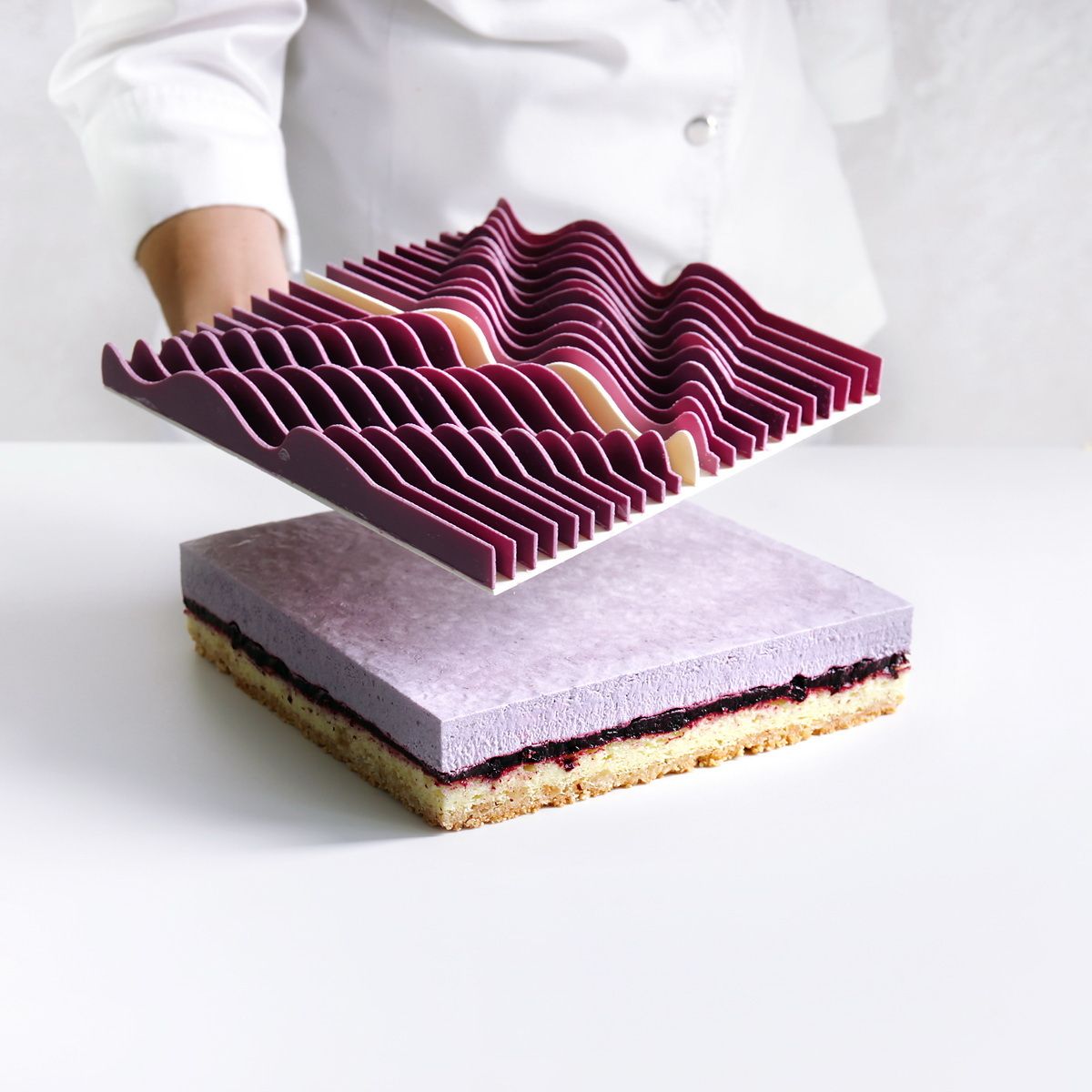
An installation-performance in a pastry kitchen
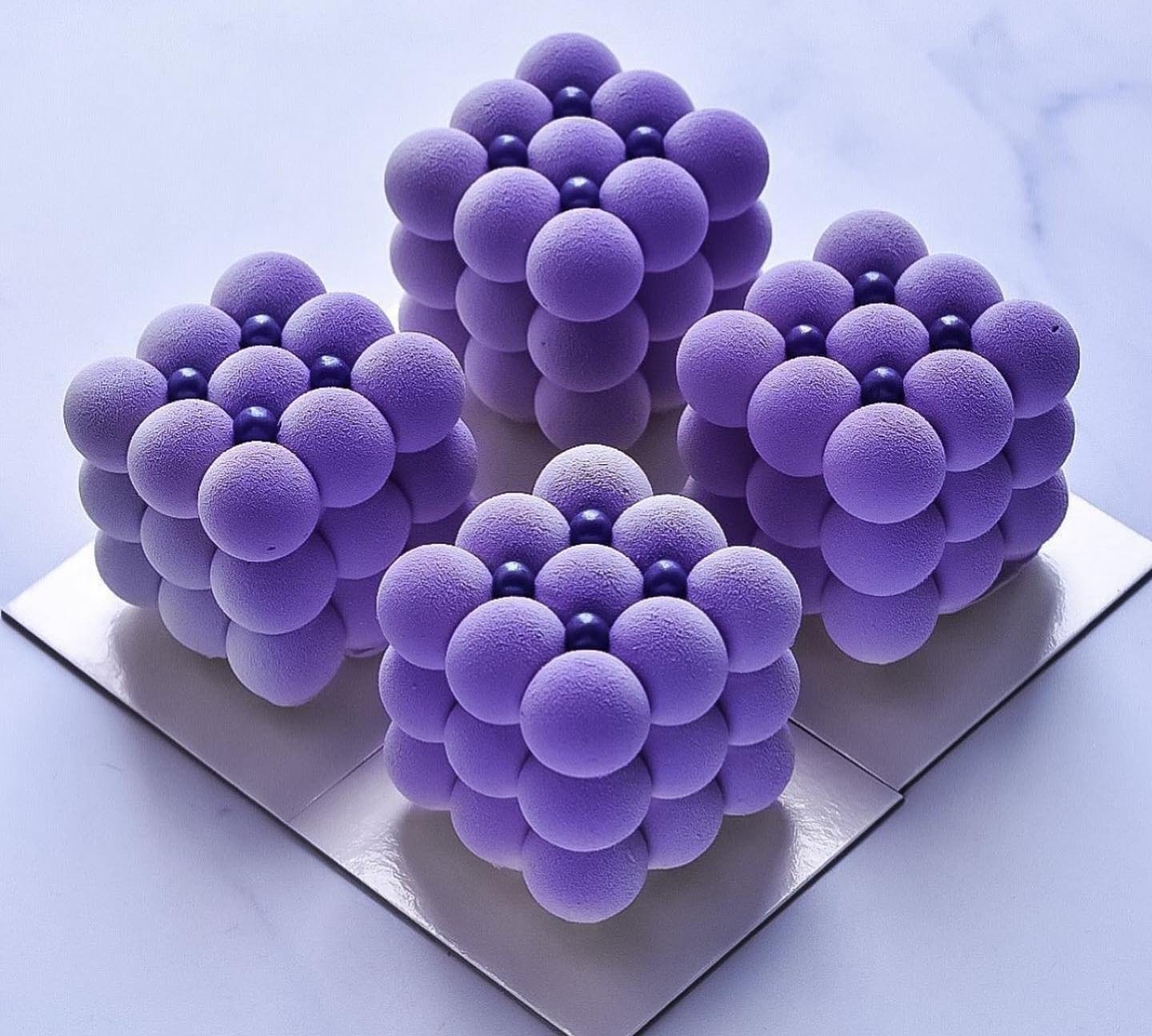
This project was produced for a new issue of SoGood Magazine and came out of a collaboration with Miami-based artist José Margulis, whose sculptural practice involves stacking colorful plastic sheets into forms that shift depending on the viewer's angle. Kasko took those same spatial principles and made them edible. Four tarts. Four geometries. Four different flavors. Every element of Margulis's process — the numbering, the sequencing, the angle tolerances — was preserved, but now in chocolate.
“It had to be an installation-performance where the art was created by José and then transformed by me into an edible piece of art which would be later consumed — thus disappear.”
— Dinara Kasko
That word — disappear — is doing a lot of work in how Kasko frames the project. Margulis's plastic sheets are permanent objects; they sit in galleries, they travel, they accumulate exhibition histories. The chocolate versions had an expiration date measured in minutes. The elaborateness of the construction was matched only by the completeness of its destruction. This is not incidental. It is the point.
Project Coordinates
4
Distinct geometric tart designs
3
Disciplines: sculpture, engineering, pastry
2017
Produced for SoGood Magazine
∞
Layer combinations — according to Margulis
The anatomy of four tarts — color previews flavor
Each tart operates on two separate architectural decisions: the geometric surface layer in chocolate and the flavor stack beneath it. Color previews flavor — red chocolate signals raspberry or blackberry; white signals vanilla cream. This color-taste correspondence is not accidental. Kasko is thinking about what it means to read a dessert before eating it.
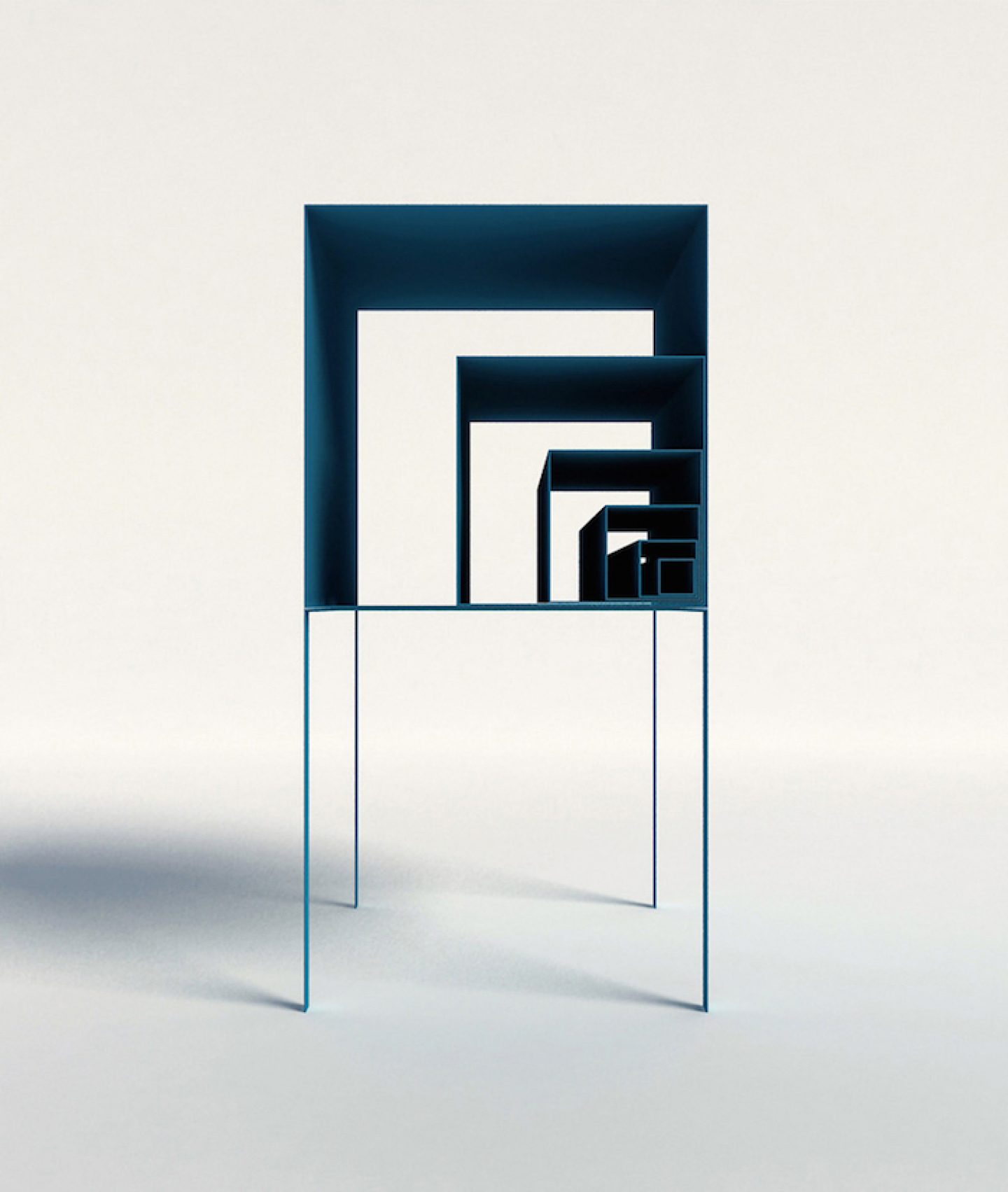
The same principle applies in Peng Wang's Fibonacci shelf — form encodes information before function delivers it. The geometry makes a promise. The structure is expected to honor it.
Four Tarts — Flavor Architecture
White chocolate and red currant
- Streusel base
- Almond cream
- Strawberry–red currant confit
- White chocolate mousse
Blackberry and mascarpone
- Streusel base
- Almond sponge cake
- Blackberry–blueberry confit
- Blackberry mascarpone mousse
Cherry and yogurt mousse
- Streusel base
- Almond sponge cake
- Cherry confit
- Yogurt mousse
Valrhona chocolate and raspberry beer
- Chocolate streusel
- Chocolate sponge with raspberry beer
- Raspberry confit
- Valrhona chocolate mousse with meringue
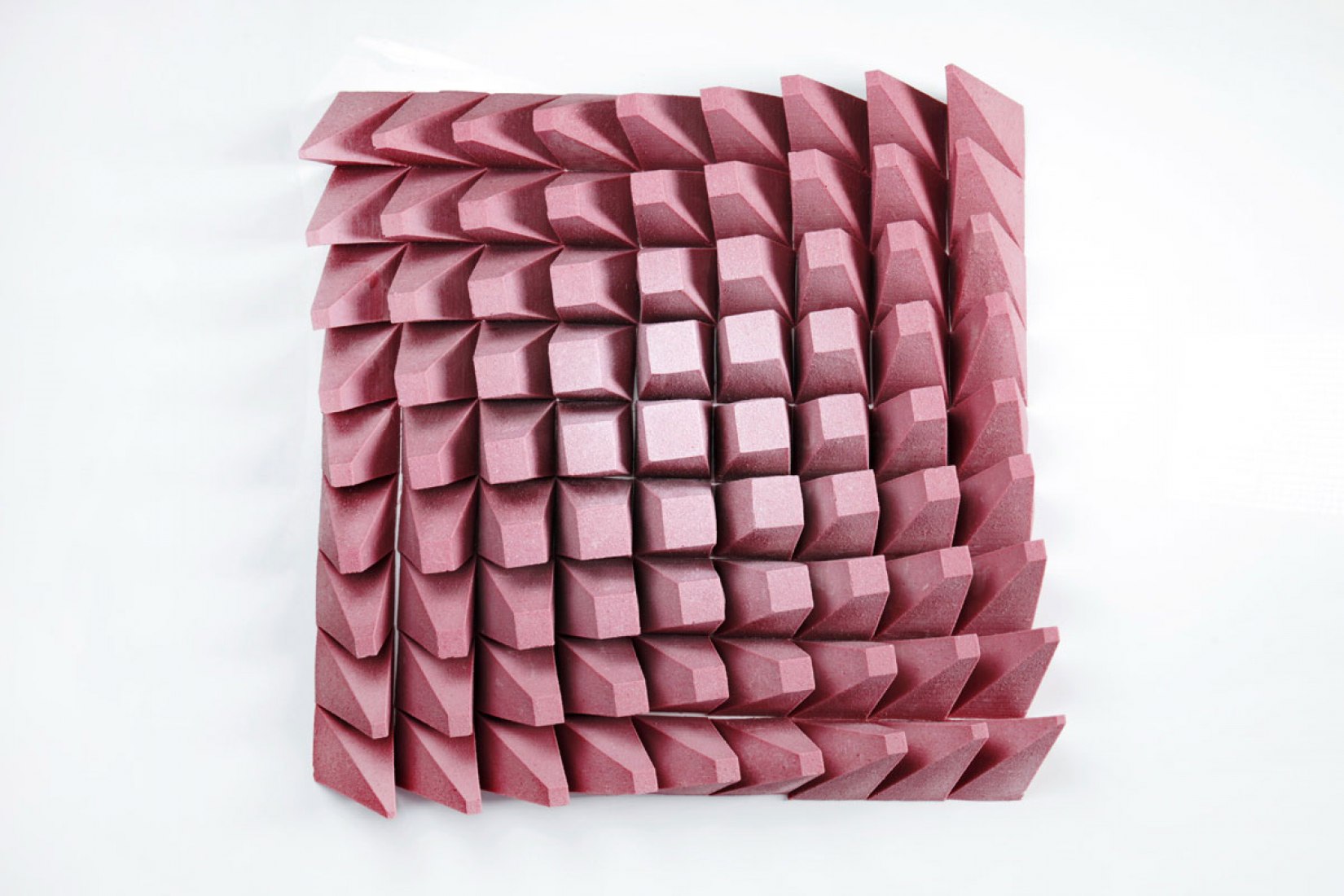
José Margulis — geometry in infinite variation
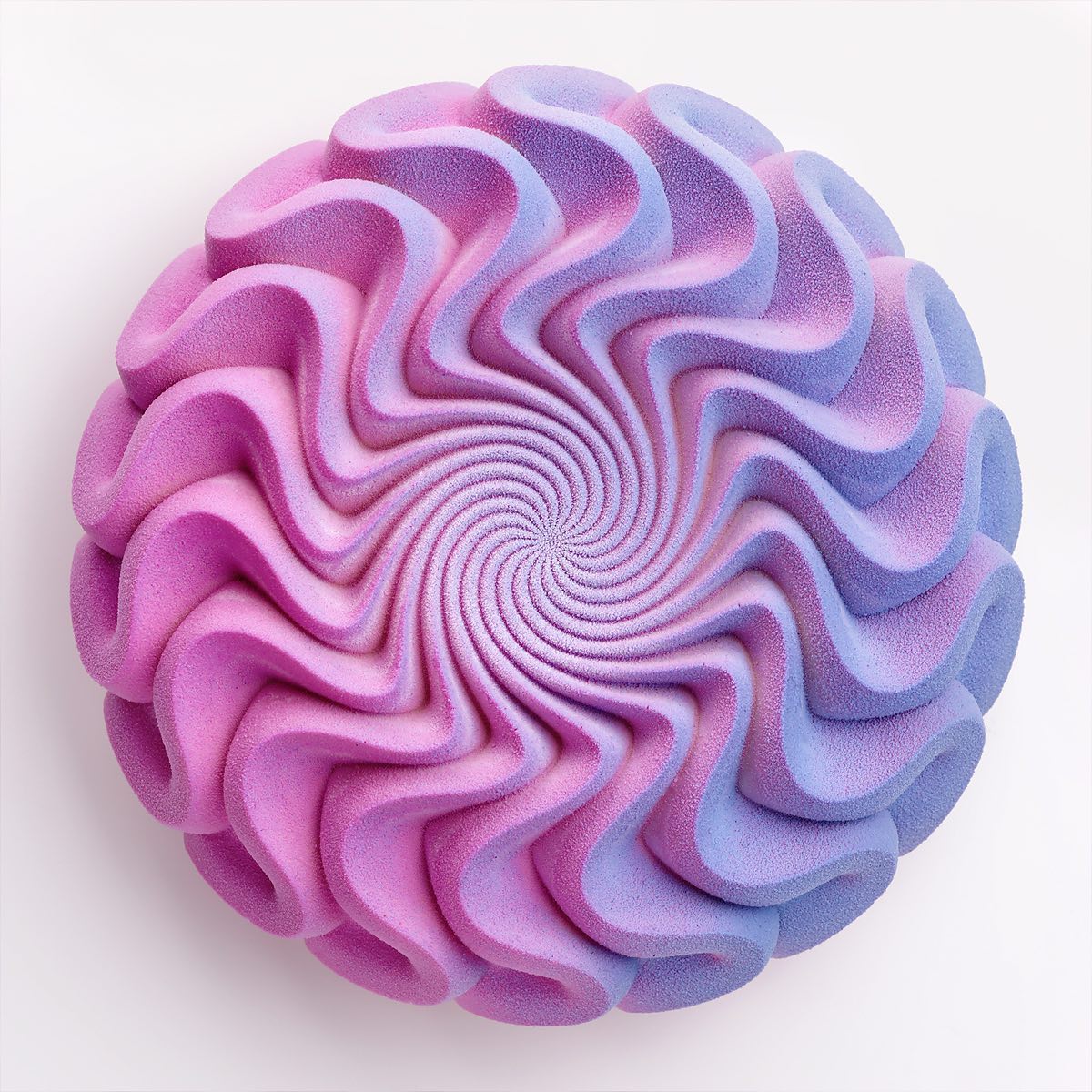
Margulis builds his sculptures by stacking colorful plastic, aluminum, and acrylic sheets so that the visual pattern changes entirely as the viewer shifts position. From one angle: a mountain ridge. Take five steps sideways and it becomes something else. This is kinetic art without motors — the motion exists in perception, not in the object itself. A technique sometimes called virtual movement: the object is still, the viewer moves, the form changes.
Kasko studied his original drawings before attempting a translation into chocolate. She was not only trying to reproduce the form; she was trying to preserve the perceptual shift — the way a slight change in viewing angle would reveal a new configuration. This required precise calculation of blade angles: one degree off and the illusion dissolves.
“It's a dream collaboration project. Can't think of a better cross-discipline one.”
— José Margulis
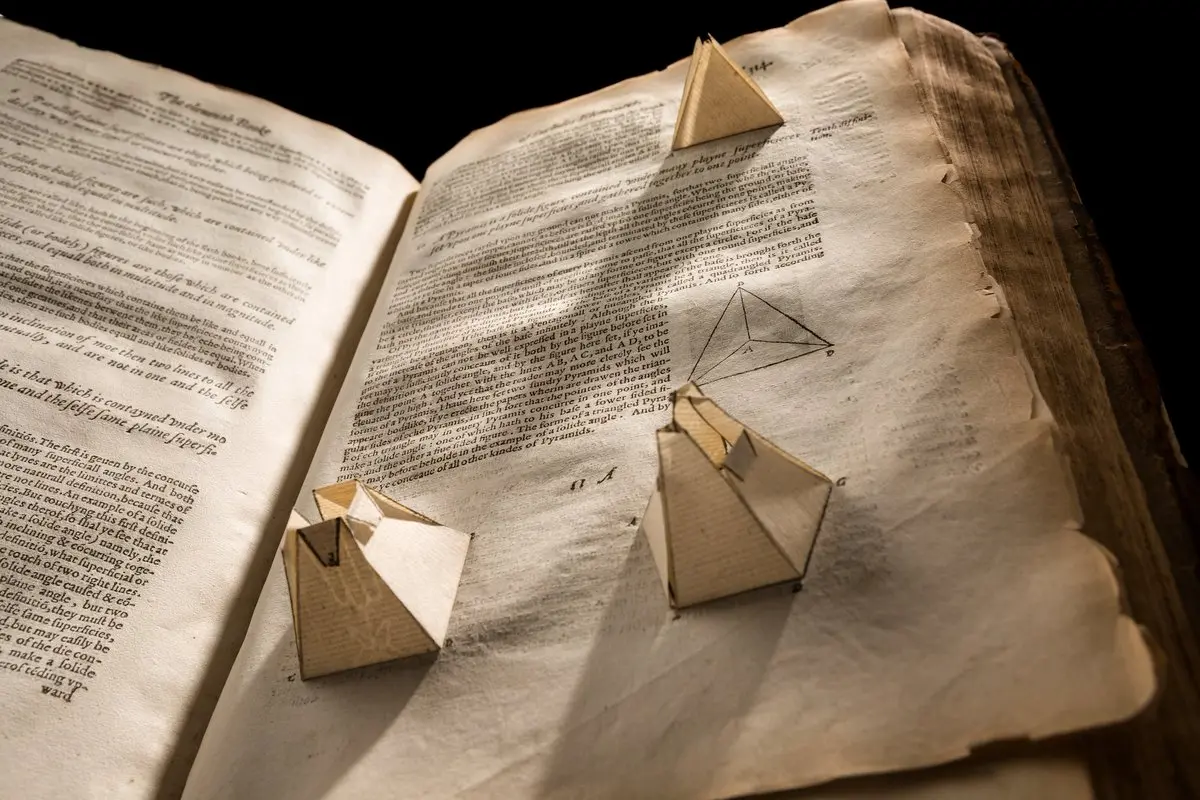
The logic is reminiscent of Henry Billingsley's 1570 paper fold-out solids — flat sheets engineered to become three-dimensional objects. The medium changes across four and a half centuries; the instinct to make geometry tangible does not.
From workshop to table
The technical side involved a sculptor, an engineer, and a pastry chef — each an expert in their domain, and the project requiring all three. Kasko's friends at Garage Hub, a local maker space built by machine enthusiasts, handled the CNC cutting.
Drawing to digital file
Margulis's kinetic sculpture drawings were translated into coordinate files readable by CNC cutting software. Every blade edge curve was defined separately, with angle tolerances tight enough that a single degree of error would be visible in the final composition.
Casting chocolate sheets
Red and white chocolate were poured into large flat sheets and set to the right hardness. Too soft and the CNC blade drags; too hard and the sheet fractures instead of cutting cleanly. The timing was its own technical problem.
CNC cutting at Garage Hub
The CNC machine at Garage Hub — a maker space built by machine-obsessed friends — cut each sheet into numbered blade sections. Every piece was labeled. Assembly order was non-negotiable: an out-of-sequence blade collapses the visual logic of the entire composition.
Tart base and flavor layers
While the chocolate architecture was being prepared, Kasko built the flavor foundations: streusel, almond sponge, fruit confit, and mousse. The finished body needed to be structurally stable enough to hold the chocolate sculpture without deformation.
Assembly and disappearance
The numbered chocolate blades were assembled in sequence, reconstructing Margulis's geometry in edible form. Then it was eaten. The sculpture ceased to exist — which was the project completing itself, not ending.
Why does mathematics taste good?
In Kasko's framework, aesthetics and flavor have equal standing. Form is a kind of content: the geometry of the surface carries information about what is underneath, and that information should be accurate. The hard angular edges of the chocolate blades are in deliberate contrast to the yielding softness of the mousse below. Architecture's fundamental tension — structure must be both functional and formally honest — migrates into pastry.
In other projects, Kasko uses Grasshopper — a visual algorithm editor built on top of Rhino, widely used in parametric architectural design — to generate molds algorithmically. The kinetic tart series uses a different logic: Margulis's organic drawings are the raw input, not a mathematical function. Forms that came from an artist's hand are transferred into chocolate via the precision of a cutting machine. That gap — between the hand-drawn and the numerically exact — is where the project lives.
Tart № 02 — Layer Cross-Section
What Kasko ultimately wants, she has said, is to expand the observer's definition of what a cake can be — through appearance first, through taste second. The appearance doesn't just decorate. It makes a claim. And the flavor is expected to honor it.
What, exactly, was eaten?
The tarts were eaten. But the way Kasko narrates the act makes the question genuinely uncertain. Was it sculpture? Was it a spatial argument rendered in chocolate? Was it a demonstration that permanence is not a requirement for significance?
Even asking the question shows something about where pastry is going as a discipline. Kasko, by making Margulis's abstract geometry into something with nutritional value, punctures the assumption that artworks exist only to be looked at. Consumption, here, is not a loss of value — it is the completion of the project.
What remains are photographs. And the photographs are the only evidence that something this exact ever existed.
Dinara Kasko
Pastry Chef · Architect · 3D Visualizer · Ukraine
Trained as an architect and interior designer in Kharkov before shifting to pastry. Uses Grasshopper, Rhino, and 3D-printed molds to generate forms not possible through traditional confectionery methods. Her work has appeared in over 150 international publications. The kinetic tart series was produced for SoGood Magazine in collaboration with Miami-based kinetic sculptor José Margulis.
Source: dinarakasko.com