A standard Sudoku has 81 cells. A beginner puzzle gives you around 54 filled in. A hard one gives you 27 to 30. Arto Inkala's 2012 puzzle gives you 23. But the count alone is not the point — minimum-clue Sudokus exist with only 17 filled cells and are solvable. What makes Inkala's puzzle different is not how many numbers are given. It is which numbers, and where.
The puzzle has exactly one solution. Finding it requires techniques that don't appear in any newspaper Sudoku: Death Blossom, Digit Forcing Chains, chains of inference that require tracking eight simultaneous constraint relationships across the grid. Most Sudoku solvers — human or algorithmic — stall out completely. The puzzle doesn't give you a foothold. Every move exposes just enough to make the next move look possible, then reveals it isn't.
Inkala said the most difficult parts require thinking ten moves ahead, exploring permutations at each stage to eliminate all routes except one. A tree search through a forest with no trail markers.
The puzzle itself
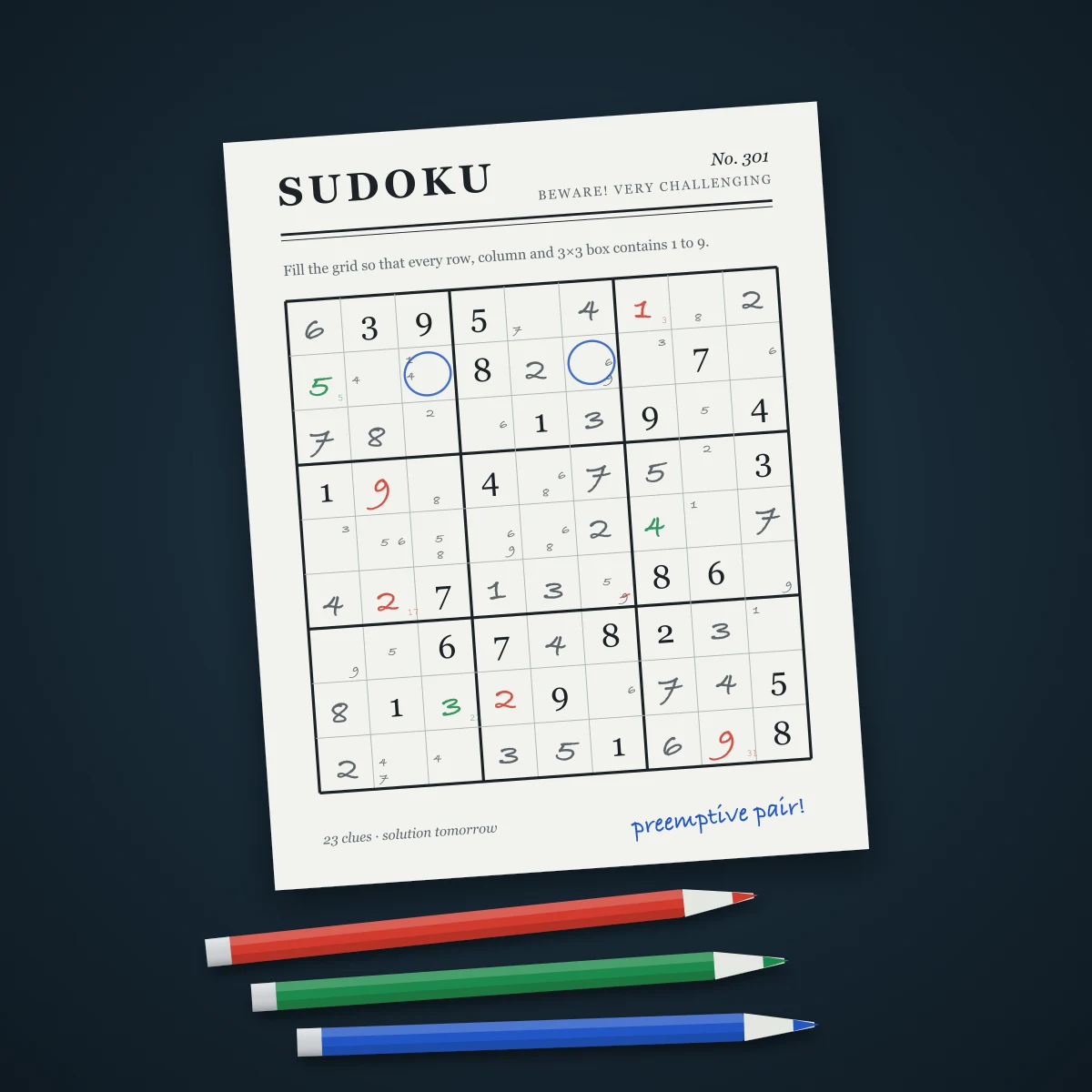
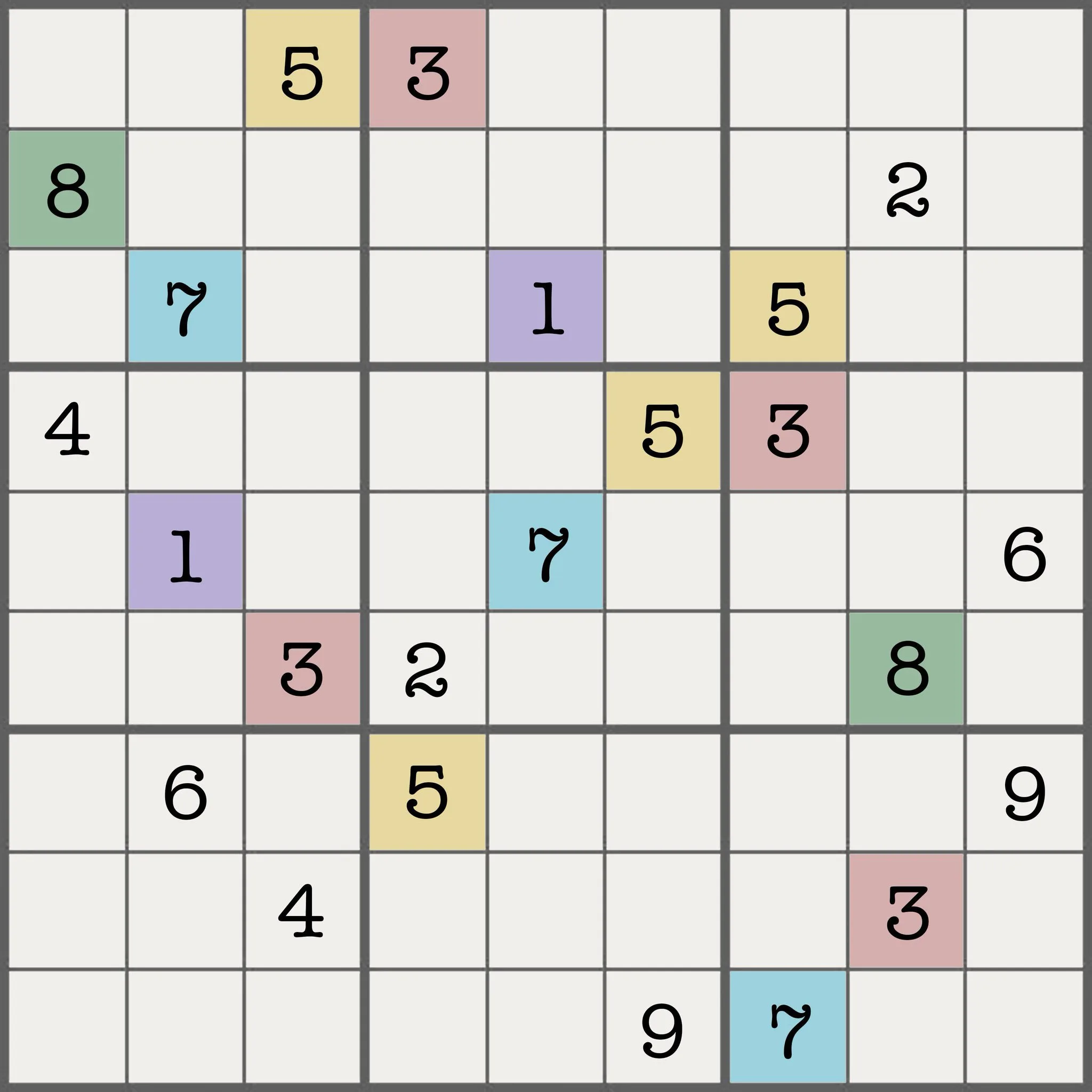
Below is Inkala's 2012 puzzle — the one he published in The Daily Telegraph and The Sun, the one that circulated under the headline “world's hardest Sudoku.” The 23 given cells are marked. The 58 empty ones are yours.
How difficulty is actually measured
Saying a Sudoku is “hard” is not a mathematical statement until you define a metric. The one used to evaluate Inkala's puzzle is the trivialization rate — a measure developed by Andrew Stuart at SudokuWiki.org. The concept: take every pair of empty cells in the puzzle. If logically filling one cell would trivialize (significantly simplify or make solvable) the other, that pair counts. The trivialization rate is the fraction of such pairs among all possible empty-cell pairs.
A puzzle with a high trivialization rate has many such helpful pairs — filling one cell opens up many others. A puzzle with a low rate gives you almost nothing. Each logical step is isolated. Progress doesn't cascade.
Inkala 2012
4.5%
trivialization rate
AI Escargot (2006)
5.0%
Inkala's earlier puzzle
Typical "extreme"
5–30%
most hard puzzles
Beginner puzzle
54
clues given
At 4.5%, Inkala's 2012 puzzle sits below his own earlier AI Escargot (5.0%) on this scale — meaning even by Inkala's own prior standard, the 2012 version is harder. The scoring isn't the only measure of difficulty and the puzzle community continues to debate it, but it provides a concrete basis for the claim: this puzzle offers fewer logical shortcuts than almost anything else in circulation.
Arto Inkala and the AI Escargot
Inkala is a Finnish applied mathematician. He first came to public attention in 2006 with AI Escargot — named after his initials and the French word for snail, because the given numbers spiral across the grid in a snail-shell pattern. He described solving it as an “intellectual culinary pleasure.” The puzzle required him to test over one billion number combinations during construction.
AI Escargot earned coverage in major newspapers and became the reference point for Sudoku difficulty for several years. Then in 2012, Inkala published the puzzle above — and claimed it was harder. The puzzle community, which had already catalogued many puzzles harder than Escargot by 2006 standards, debated the claim. The debate continues. But in terms of the trivialization metric and media attention, the 2012 puzzle holds its ground.
153 attempts, two months
The most-cited human solution story came from a commenter on SudokuWiki.org, who wrote: “I just finished today, Sept 3. I began on July 2. It took me 153 tries before I got it.” That's two months of returning to a single puzzle, starting over each time a contradiction appeared, keeping notes on which paths led where. 153 documented attempts before a clean solution.
This is not unusual for the puzzle. Others report weeks. Some report giving up. Computer solvers handle it trivially through brute force — a machine can enumerate all possibilities in milliseconds — but the interesting question, the one the puzzle community cares about, is whether a logical deductive path exists: whether a human can solve it without ever guessing, using only constraint propagation.
The answer appears to be yes, but the path requires technique combinations that most solvers never encounter. Death Blossom involves identifying a cell where all candidates force the same value in another cell through separate chains. Digit Forcing Chains require tracing what must be true if a specific digit occupies a specific cell, then following that implication through five, seven, ten subsequent moves. These are not intuitive. They are algorithmic, and executing them by hand across a grid this sparse is what separates the puzzle from everything else in the category.
Inkala's puzzle is not the objectively hardest Sudoku that has ever been constructed — the puzzle community has documented grids with lower trivialization rates, found algorithmically. But it is the hardest Sudoku that has been published, named, and handed to humans to solve with a pen. That distinction matters. The difficulty of a puzzle is not only a property of the grid. It is a property of the grid in the hands of a person, with time, and without a computer.
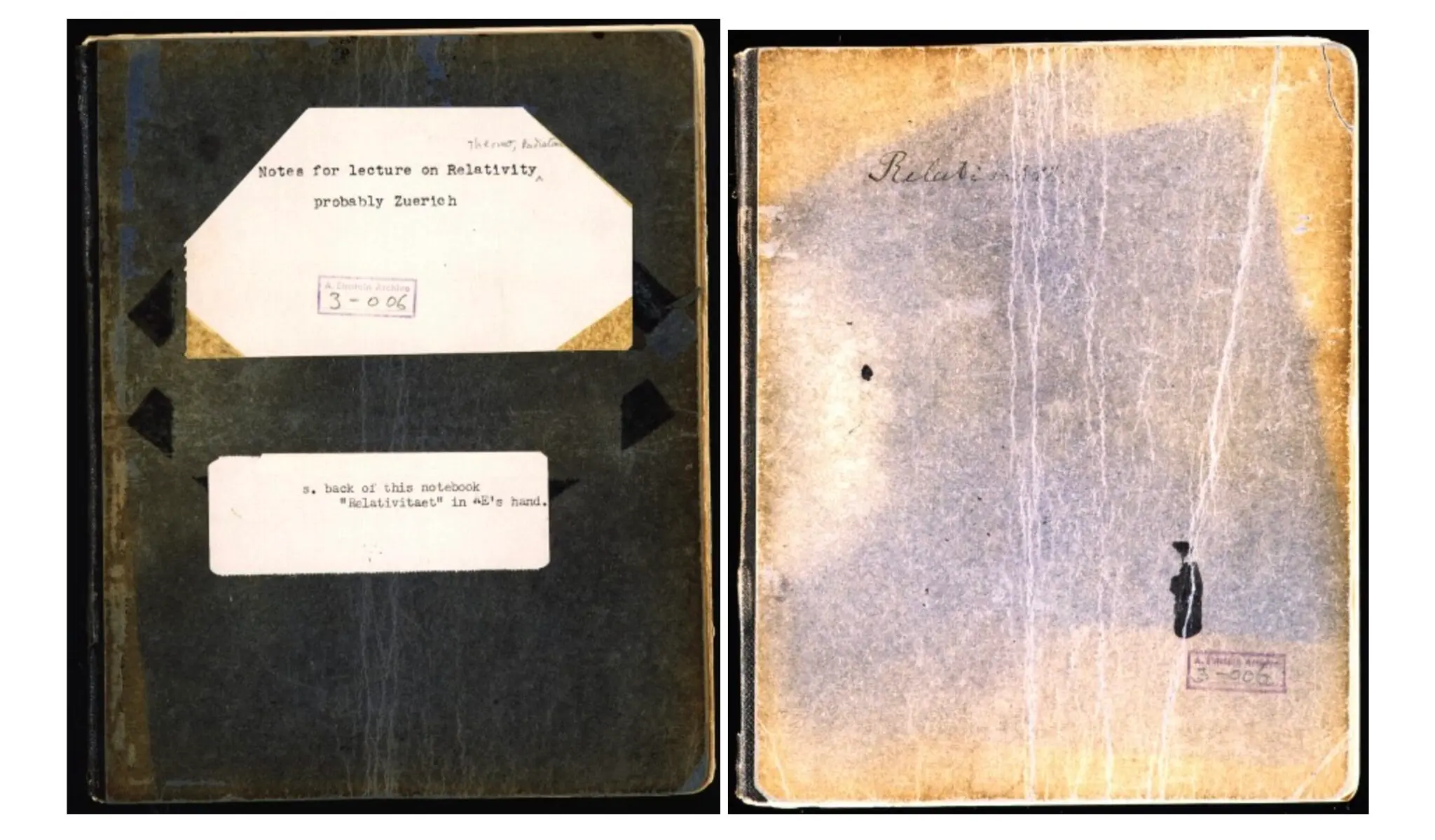
The same patience tax shows up in other corners of mathematics — from Einstein's Zurich notebook full of dead ends to MIT's 1869 algebra exam, where the questions look innocent until you try to work them under exam conditions. Twenty-three numbers. One correct arrangement. Three months to design, two months for the fastest documented human solver to finish. The puzzle sits online. It is waiting.
Puzzle source: SudokuWiki.org — Arto Inkala Sudoku · ABC News, 2012