
Video · Physics · History of Photography
The first cat ever committed to film was not being petted. It was being dropped, and the reason was an argument about physics.
Ali Kaya
Marey’s 1894 falling cat sequence — and how chronophotography worked
or anyone about to feel sorry for the animal, the drop is a short one, the cat lands on all four feet every time, and at the end of the sequence it turns and gives the camera a look so eloquent that the editor who wrote up the results read it as a want of interest in scientific investigation. I have never found a shorter or funnier sentence in the history of science.
The images were made in 1894 at the physiology station in the Bois de Boulogne in Paris, and this is the first live cat known to have been filmed. The animal turns itself over in less than half a second. To the naked eye the whole thing is a smear, and inside that smear sits a contradiction nobody had been able to explain.
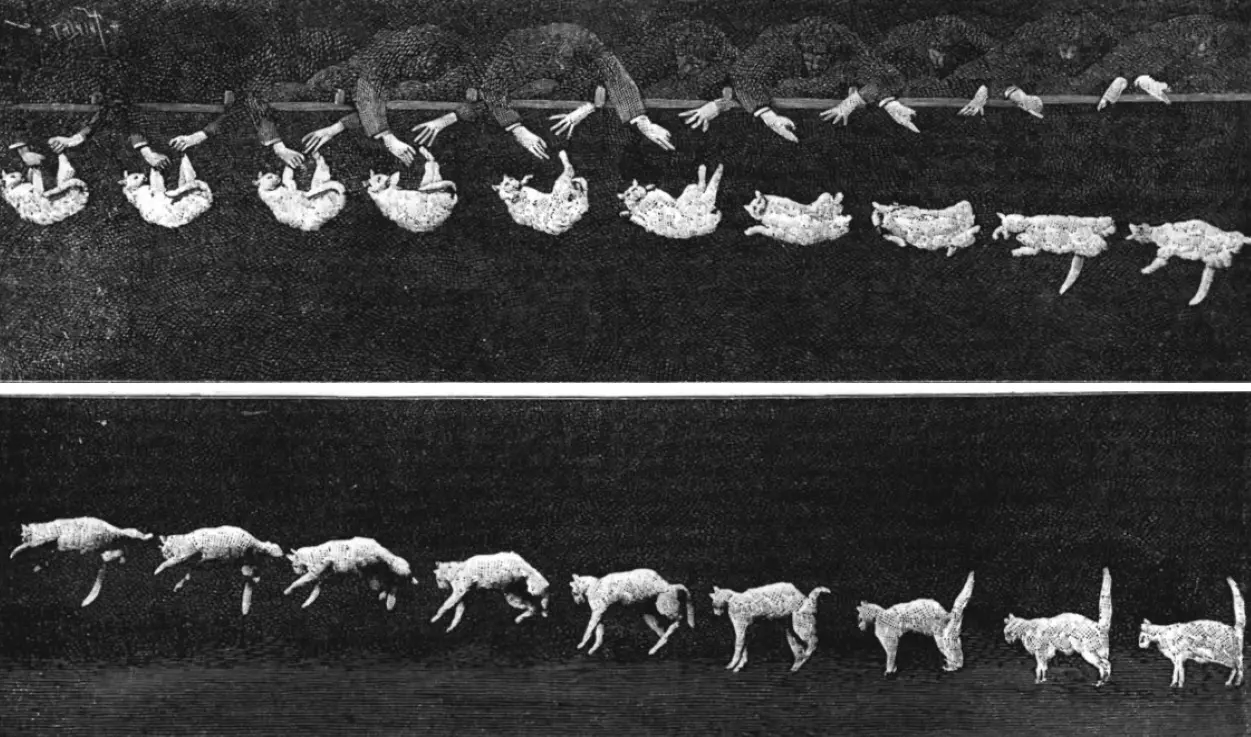
Today a cat twisting in midair looks like a charming detail. In the nineteenth century it was a genuine irritant, because an object cannot change its orientation without an outside force acting on it, and the cat appears to do exactly that. The people who worried about it were not cranks. George Gabriel Stokes worked on it. So did James Clerk Maxwell.
Maxwell got a small scandal out of the bargain. In a letter to his wife he had to correct a rumour going around Trinity that he used to throw cats out of windows, explaining that what he actually wanted to know was how quickly the cat could turn, that the proper method was to drop it two inches onto a table or a bed, and that even from that height it landed on its feet. A man writing home to insist he was not defenestrating cats is about as endearing as scientific self-defence gets.
The man who settled it was Étienne-Jules Marey, a physiologist and inventor with a fixation on measuring motion. At a time when photography was still mostly used to document things that held still, he pointed the camera at movement, and he did it without inventing anything new. He simply worried at the most basic principle photography has. Expose the sensitive surface to light, then bury it in darkness.
To make that alternation happen on demand he put a slotted disc in front of the lens. The disc turns, a slot opens, then darkness, then another slot. As the subject crosses the frame the successive exposures pile up on a single glass plate, and what comes out shows something the human eye can never see on its own, which is the individual stages of a movement. His gun-shaped camera managed twelve frames a second, and by the standards of the 1890s that counted as high speed.
A few years later Kodak released celluloid film and Marey changed one thing. He replaced the fixed glass plate with a roll of film that advanced between exposures. Light, and an image is made. Darkness, and the film moves on. What he was holding at that point was a movie camera, arrived at by a man who was not trying to build one.
Back to the cat. Held upside down and released, it rotates without pushing off anything, which looks like a straight violation of the conservation of angular momentum. One of Newton’s laws says a body in motion cannot change direction on its own unless something acts on it. You cannot stop in midair and turn around, Wile E. Coyote style. And yet the cat does.
So the popular explanation at the time was that the cat was cheating, giving itself a small kick off the hands of whoever dropped it. It sounds reasonable and it is wrong. Marey’s film kills it in the first few frames, because the cat has not begun to rotate at the moment it leaves the hand. What it does instead is arch its back, and the entire trick lives there.
The moment it arches, the cat has divided itself into a front half and a back half, and those two halves can now turn independently. The rest is the figure skater’s move. Pull your arms in and your moment of inertia drops, so the same angular momentum spins you faster. The cat’s legs are the skater’s arms.
Through the first half of the turn it tucks the front legs in and leaves the back ones splayed, so the light front half whips around while the heavy back half barely budges. Halfway through it does the reverse, stretching the front legs out and tucking the back ones in, and now the rear half comes around. By the time it nears the ground all four legs are extended as far as they go, which means the rotation has slowed right down. The cat finishes the job and brakes on the way in.
The cat turns inside itself without turning overall.
The two halves rotate in opposite directions at every instant, and at every instant one of them is light and the other heavy, so the contributions cancel. Total angular momentum stays at zero from the first frame to the last and Newton’s law comes through without a scratch. All the cat does is use the inertia of its own weight to turn one half against the other. That is not cheating. That is bookkeeping.
Below you are looking at the cat down the length of its spine, straight on. Drag the slider and the angles of the front and back halves change, while the two bars underneath show each half’s contribution to angular momentum. Those bars cancel each other at every point. No need to fetch your own cat. Marey did it for you.
Tucking the legs in drops that half’s moment of inertia, so the same contribution spins it far faster. The two bars stay equal in length and opposite in direction throughout, which is another way of saying the cat rotates inside itself while the total angular momentum of the system never changes.
Marey gathered his findings into a paper presented to the Paris Academy in 1894 and broke the falling cat problem down step by step for the first time. He ran the same rig on other animals too. A rabbit and a chicken were both dropped. What the chicken took away from the experience is not recorded.
The mathematical account we accept today did not arrive until 1969. Thomas Kane and Mike Scher at Stanford modelled the cat as two jointed cylinders, worked out the differential equations and showed that the midair turn sits comfortably inside the laws of physics. The good part is who paid for it. NASA funded the work, because an astronaut trying to reorient in weightlessness with nothing to push against is the identical problem. A year earlier Kane had put a gymnast in an astronaut suit on a trampoline to imitate the cat’s motion. Saying the cat taught us how to turn in space is barely an exaggeration.
Sixteen years before Marey, in 1878, Eadweard Muybridge settled a similar quarrel by lining a racetrack with twelve cameras and wiring each shutter to a thread stretched across the horse’s path. Shot at exposures as short as a thousandth of a second, those frames showed that a galloping horse does lift all four hooves clear of the ground, and they also showed that painters had been getting it wrong for centuries, because the airborne moment comes with the legs gathered under the body rather than flung out front and back.
Where to go next
Marey’s question — what does a body actually do while it moves — never went away, it only got better instruments. A century later Tobias Gremmler fed motion-capture data from Kung Fu masters into five moving sculptures, which is the slotted disc with the shutter thrown wide open. For the same argument settled with equations instead of film, there is the free kick that took thirteen years to explain. And for another animal that looks like it is breaking a rule and is only keeping better books than we are, see the owl that crosses a field without a sound.
Keep wandering
A few more pieces in the same spirit — math, design, and slow attention.
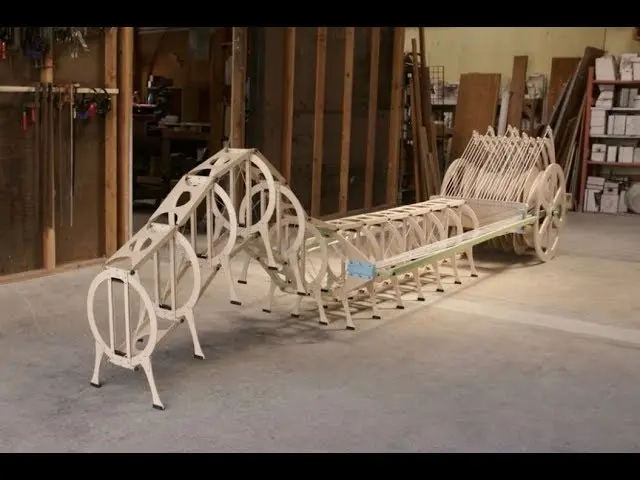
Caterpillar with Chariot: Reuben Margolin's 20-Year Problem
Working out how a caterpillar walks took twenty years, and the error sat between half a circle and five twelfths of one.
Open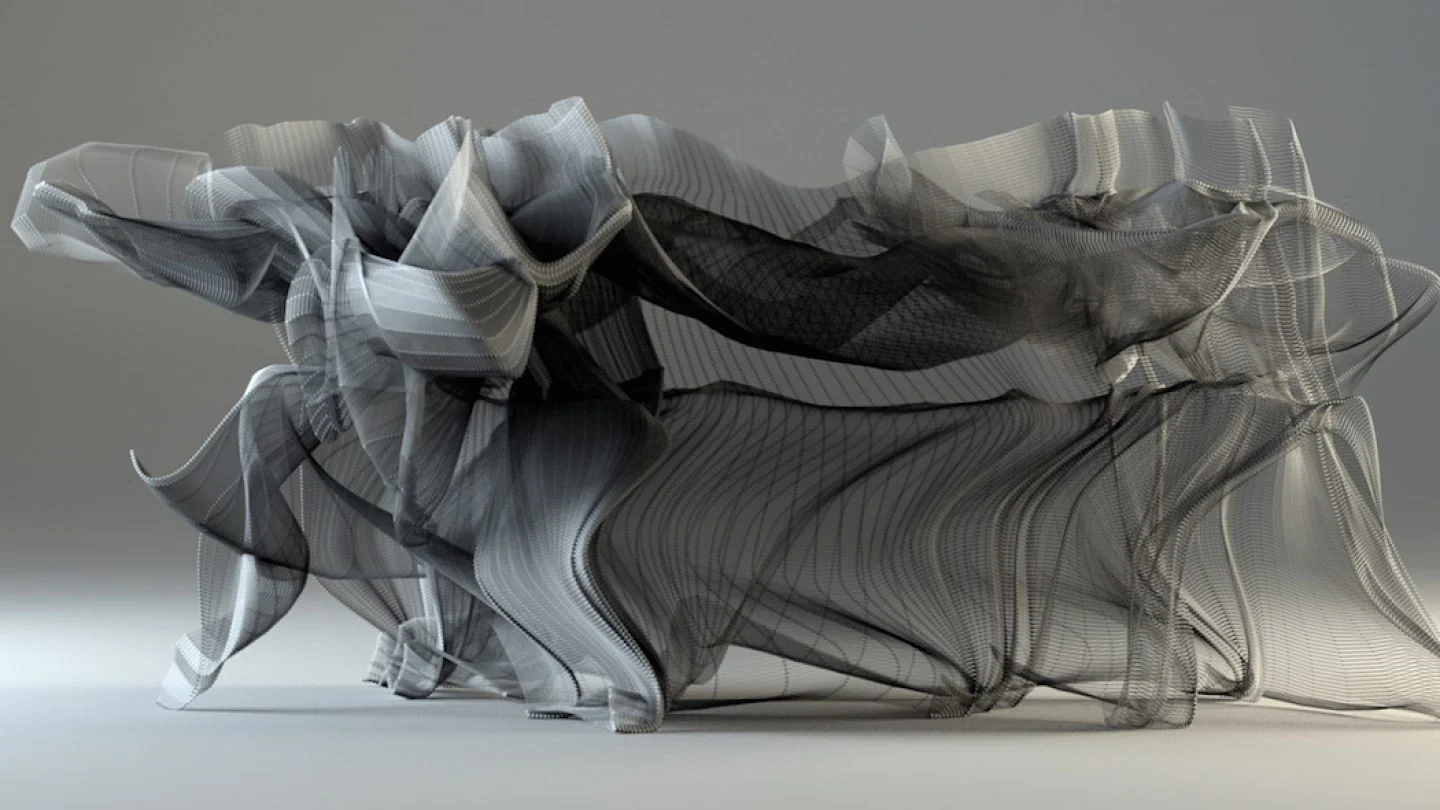
Kung Fu Motion Visualization: Hareketin İçindeki Yapı
Tobias Gremmler turned motion-capture data from Kung Fu masters into five moving sculptures. Veri heykel oldu; zaman kumaş, hız madde.
Open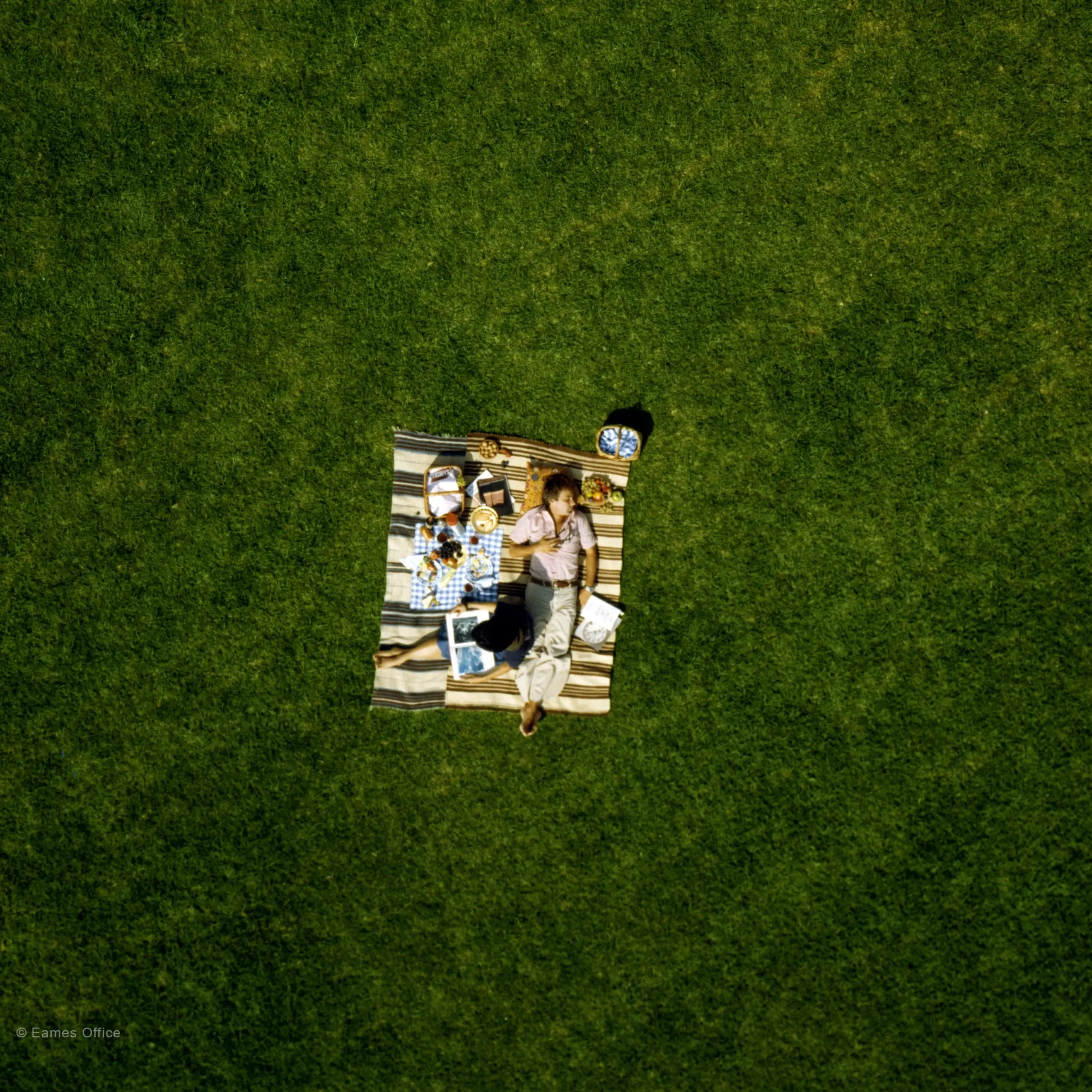
Powers of Ten (1977): The Eames Film Explained
Forty jumps, one continuous camera move, from a picnic blanket in Chicago to a hundred million light-years — and back into a single proton. Nine minutes, one idea.
Open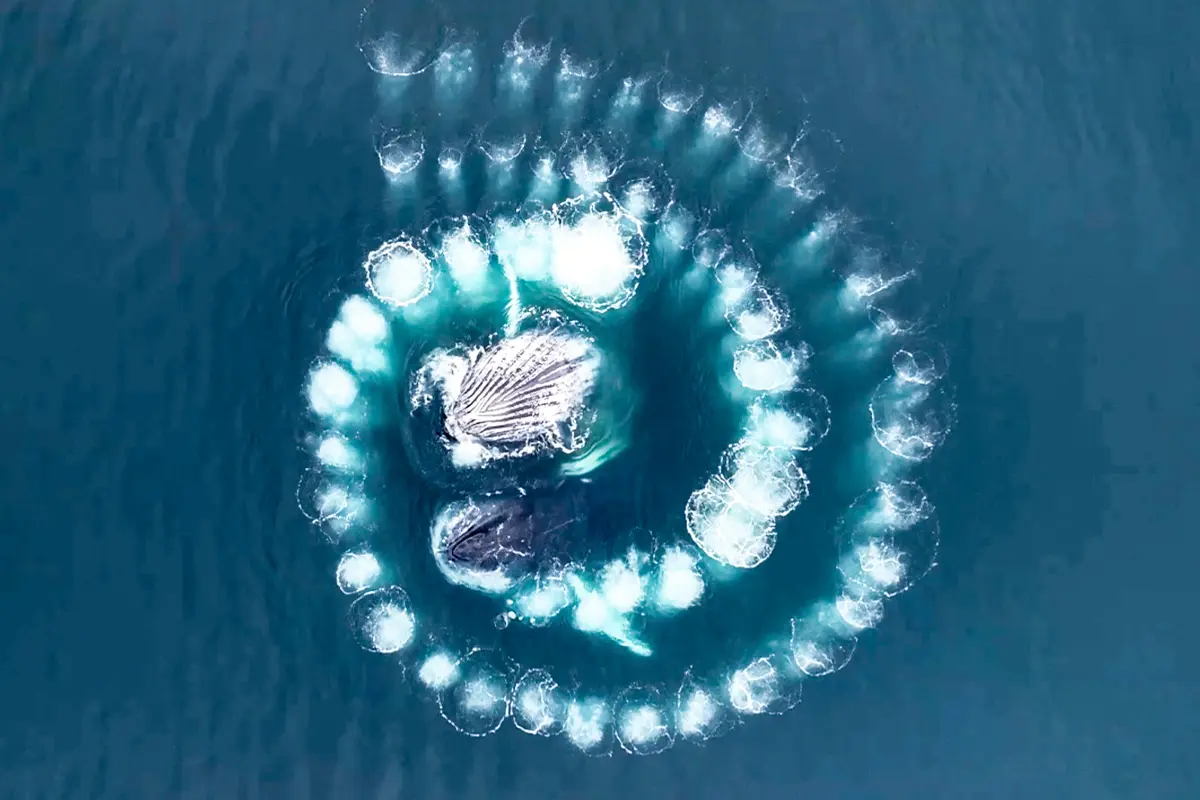
The Two Whales That Drew a Fibonacci Spiral
A drone caught two humpback whales tracing a spiral beneath the cold water off Antarctica. One word came to mind immediately: Fibonacci.
Open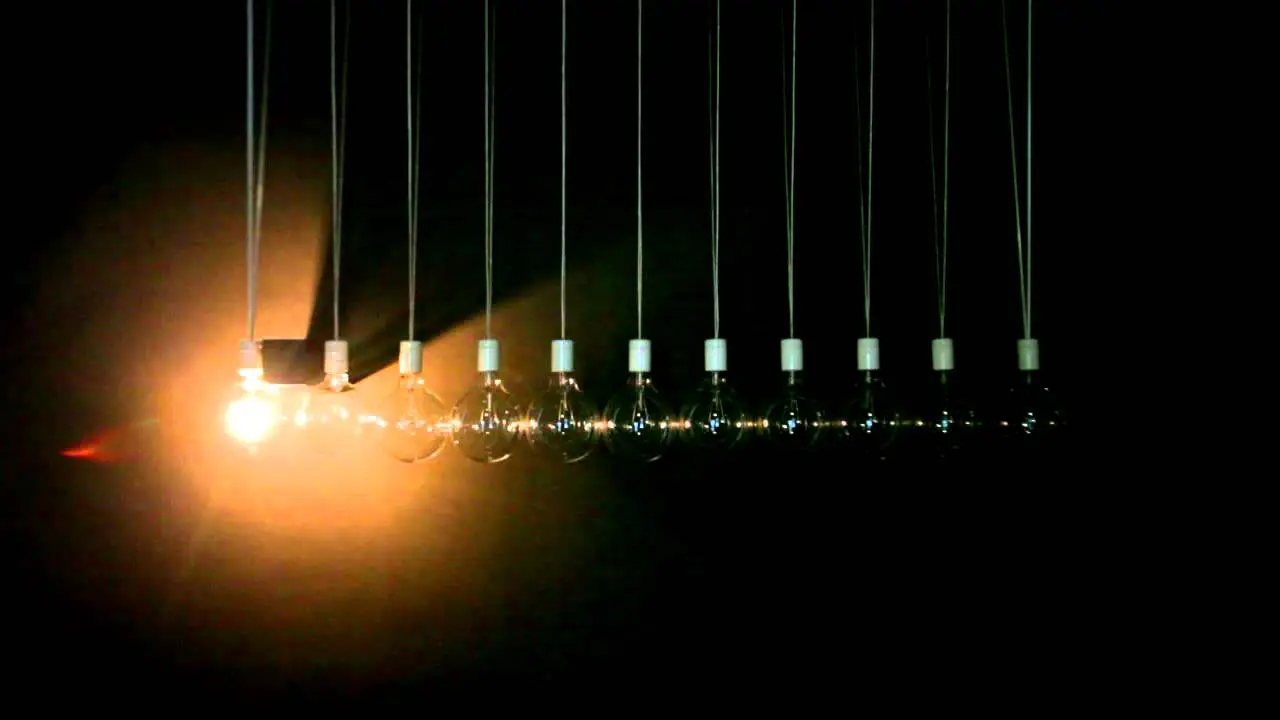
Asobi: Newton's Cradle, Reinvented with Light
Eleven light bulbs. Two hidden pistons. One physics law from 1687. Yasutoki Kariya's senior thesis at Musashino Art University made Newton and Edison share the same sentence.
Open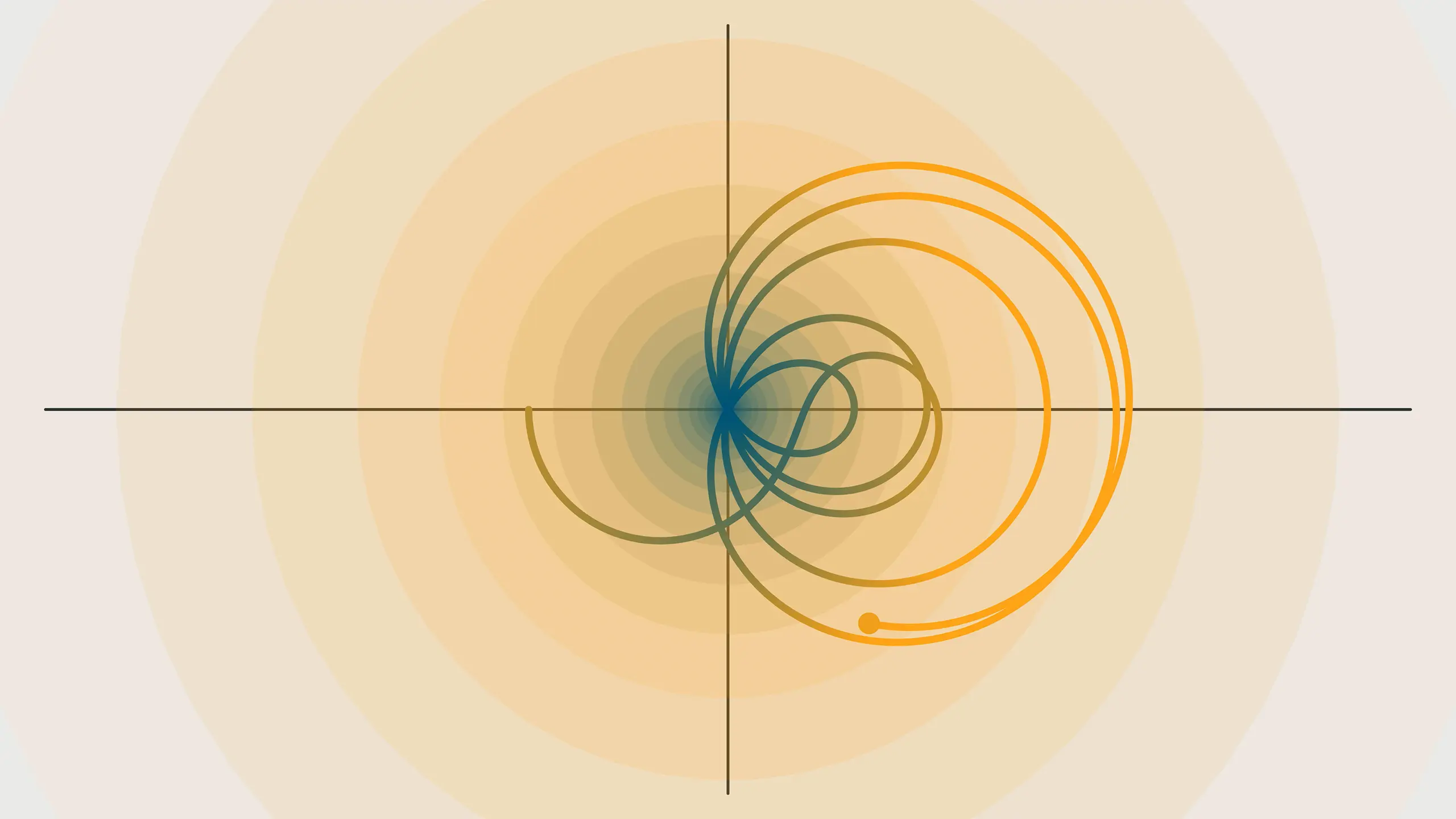
What Is the Riemann Hypothesis? A 16-Minute Explanation
Alex Kontorovich takes someone with no advanced mathematics and, in sixteen minutes, leaves them genuinely understanding the greatest unsolved problem in the field.
Open