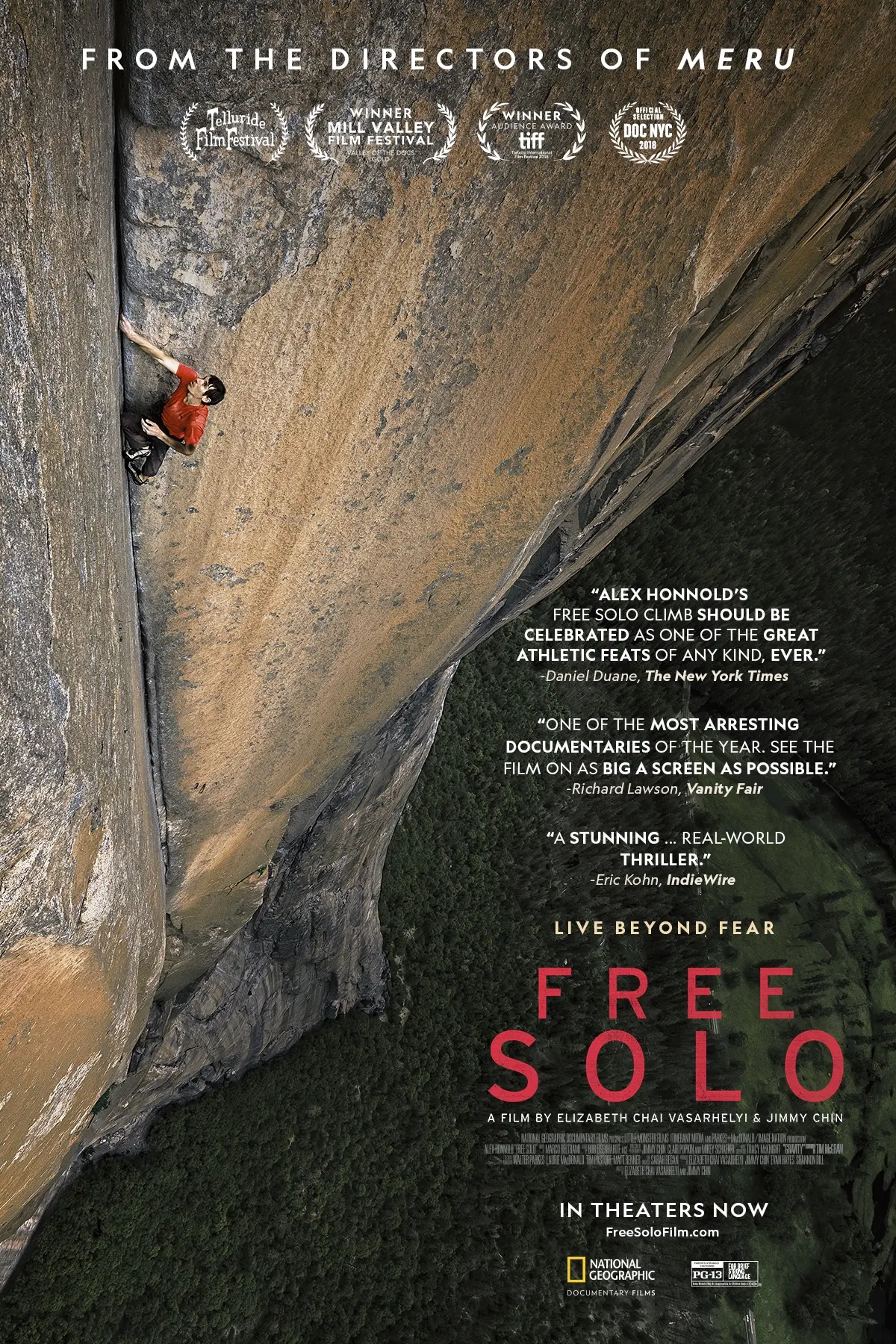
Alex Honnold climbed El Capitan's 884 metres without a rope in 3 hours 56 minutes. The film is about the two years he spent driving the odds of a single mistake toward zero.
t 5:32 on the morning of 3 June 2017, Alex Honnold laced up his climbing shoes at the foot of El Capitan in Yosemite and clipped a chalk bag to his waist. He was wearing his favourite red T-shirt and a pair of cut-off nylon trousers, and for breakfast he had eaten what he always eats: oats, flaxseed, chia and blueberries. He had no rope, no protection, and no one climbing with him. In front of him was 884 metres of granite. At 9:28 he was on the summit.
Free Solo is the film of those 3 hours and 56 minutes, but most of its running time is about the two years that led up to that morning. To me that is what makes it a good film. The climb itself is a result. The film is about how a man, in a line of work where one mistake means death, spent two years pushing the probability of that mistake down far enough to do the job without one.
The start
The film was directed by Elizabeth Chai Vasarhelyi and Jimmy Chin. Chin is a mountaineer and climber himself, the only American to ski down from the summit of Everest, and a National Geographic photographer. Vasarhelyi is a documentary filmmaker who studied comparative literature. The two are married. Free Solo premiered at Telluride on 31 August 2018, won the audience award in Toronto, was named Best Documentary at the BAFTAs, and on 24 February 2019 became the first climbing film to win an Oscar. It took around $29 million worldwide, which is a very large number for a documentary, and it sits comfortably beside the best documentaries we have covered.
First the term, because it gets confused all the time. In free climbing, the climber uses only hands and feet to move upward, but the rope at the waist catches them if they fall. The rope doesn't help them climb, it only keeps them alive. In free solo, that rope is gone too, and the only things holding the climber on the wall are where the fingertips press the rock and the friction of the shoe rubber. If a mistake happens, there is no system left to correct it.
The route Honnold chose is Freerider, a line first freed in 1998 by the Austrian climber Alexander Huber and considered the “easiest” free route on El Capitan. It is graded 5.13a, and the word “easiest” deserves its quotation marks: most parties climb it roped and protected, split into about thirty pitches over three to five days, sleeping at night in portaledges, tent-beds hung from the wall. Honnold finished the same line in the time of a morning run.
Freeblastthe first 10 pitches
The first section of the route is called Freeblast, and for ten pitches it is made of granite slabs that water has polished over thousands of years, with almost nothing to hold on to. On a slab the climber doesn't grip anything. They press the sole of the shoe onto the rock and put their weight on that rubber. Climbers call it smearing.
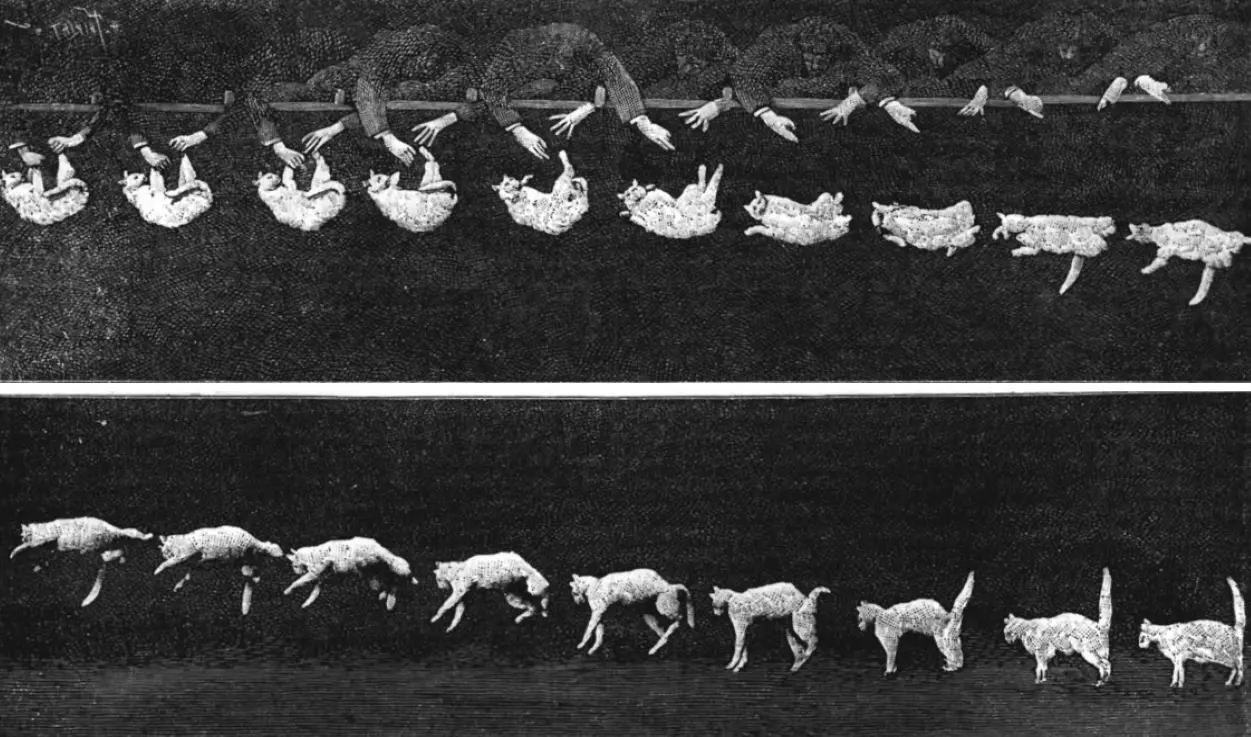
It is one of the cleanest examples of physics there is. For an object resting on a surface inclined at an angle θ not to slide, the coefficient of friction has to be at least tan θ. The soft rubber of a climbing shoe gives far more friction on granite than an ordinary sole, but that coefficient is not a fixed number. As the rubber warms it softens and slips more easily. Change the angle of the foot a little and the contact area shrinks. A pinch of dust or a little moisture on the surface and the coefficient drops. On a slab a fall rarely happens all at once: the foot first slides a few millimetres, and then everything happens. It is the same kind of physics that decides how a falling cat lands, and it is why climbers love cool mornings and want to be off the slabs before the sun hits them.
The film shows twice how heavy this section is for Honnold. In autumn 2016 he falls on Freeblast during a roped practice run and sprains his ankle. In November that year he sets off on his first ropeless attempt and stops at the top of the slabs. He doesn't go on upward, he climbs back down. Afterwards he puts it down to too many people being around and to not feeling right that morning. It is one of the most honest scenes in the film, because hero stories usually cut the days someone turned back.
Heart Ledges58 metres down
The place where Freeblast ends is called Mammoth Terraces. On 3 June, Honnold climbed 58 metres back down from here to cross over to the ledges called Heart Ledges. Downclimbing without a rope is harder than climbing up, because you can't see where your feet are going. Honnold found this variation himself, and its purpose was to avoid an insecure 5.11 slab move higher up. To erase one hard move, he chose a longer path he trusted more.
The film has a dilemma of its own, and Chin doesn't hide it. The whole crew were experienced climbers, and for every camera they first asked one question: will this camera distract Honnold for even a second? They used cameramen positioned on the wall, remotely triggered fixed cameras, operators on the ground, and a helicopter shooting with a 1,000-millimetre lens. On the hardest section, the Boulder Problem, there were two remote-controlled cameras instead of people. In one scene a cameraman stops looking through the viewfinder and turns his head away. When I read that Shannon Dill, one of the producers, is not a climber, and has a well-known fear of heights, I admired her agreeing to take the project on. Vasarhelyi, meanwhile, gave birth to the couple's second child in the second month of production.
Can the presence of a film crew change the probability of what it is filming?
That was Chin's real fear. If Honnold felt obliged to commit to a day because the cameras were there, or did a move slightly differently to look better on film, the film would stop being a neutral observer and become part of the event. In that sense the November retreat was also a relief to the crew, because it showed Honnold could walk away without caring about the camera.
Boulder Problemabout 518 metres
At around 518 metres is the hardest part of the route. Bouldering is the word for short, very hard problems on rocks a few metres high, climbed above a crash pad. This really is a boulder problem, graded V7, a 17-move slab. The only difference is that it is more than five hundred metres off the ground. The holds are thin and polished enough to take half a fingertip, and there is nowhere decent to stand. Honnold had two options for this section. The first was to jump for a distant hold. The second was to press his thumb down on a tiny edge and swing his left foot out to the corner beside it like a kick. Climbers call the second one the karate kick, and Honnold chose the kick. With a jump you either catch it or you don't. A kick you can memorise piece by piece, and I think that is why he chose it.
Here there is a calculation the film never states but which sits under every scene. National Geographic promoted the climb as “perfection or death”. Perfection can be turned into a number.
Break the route into individual moves and call the probability that any one move ends in an error p. If the moves are independent, the probability of making all n of them without a mistake is (1 − p)n. The expression looks innocent, but it behaves very harshly as n grows. How many moves Freerider has is not a fixed number. My rough guess is somewhere between one and two thousand. If you want a 99 percent chance of success on a thousand-move route, the probability of error on each move has to be about one in a hundred thousand. That is 99.999 percent certainty on every move. A human being has to hit that a thousand times in a row, tired, with the sun rising, five hundred metres up. It is the same kind of reasoning as Buffon's needle, where a simple probability hides behind a physical act.
But the moves are not equal. For Honnold most of the route is no different from climbing stairs, and almost all of the risk is concentrated in a few places. In the small model below I split the moves into two groups. The easy moves are many, but each is nearly certain. The hard moves are few, but each is genuinely dangerous. At the default values, the 17 moves of the Boulder Problem carry most of the total risk on their own.
The arithmetic of perfection
A toy model. It assumes the moves are independent. The numbers aren't real, they are there to give a feel for the orders of magnitude.
Easy moves
Hard moves
Play with the sliders and two things show up straight away. First, doubling the number of easy moves barely changes the result, while changing the error rate of the hard moves by a factor of ten changes everything. Second, taking the same risk again and again erodes the number for a single climb. Someone who makes a 98 percent climb fifty times has close to a 40 percent chance of surviving all of them. This is the calculation that explains why free solo careers are so short, and it sits in the background whenever the film mentions the climbers Honnold knew who lost their lives.
Honnold's two years of preparation really came down to one thing: bringing the p of the hard moves down to the level of the easy ones. He did it with roped repetition. He worked the Boulder Problem on a rope again and again, wrote every finger position and every foot angle in his notebooks, and memorised the moves until he could do them without thinking. Two weeks before 3 June he climbed the route roped once more with a friend, and that friend said he looked most uneasy on the slabs, the Boulder Problem and Enduro Corner. Those three places are exactly the red part of the risk model.
By then Honnold had free soloed around two thousand pitches, and on his twenty-ninth birthday he had climbed 290 pitches in a single day in Squamish, Canada. That number is the real-life version of the “how many times” slider in the model, and it shows that Honnold, at least on paper, is someone who pushed that slider far to the right. That he is still alive after so much repetition points to one of two things. Either he is very lucky, or the p on each of his moves is much smaller than we can imagine. I believe the second.
Enduro Cornerthe brain
One of the most talked-about scenes in the film has nothing to do with climbing. Honnold slides into an MRI tube and the neuroscientist Jane Joseph looks at his brain. In 2005 Joseph was one of the first researchers to use fMRI to scan the brains of sensation seekers, people drawn to intense experiences and ready to take risks for them. In March 2016 she showed Honnold, and another climber as a control subject, the same series of harsh photographs meant to provoke fear and disgust. In the control climber, the amygdala, the brain's threat centre, lit up. Honnold's amygdala barely responded to the same images.
Let me say first that Honnold's amygdala is there and looks healthy. The issue is not structure, it is response. Joseph has two explanations. The first is that Honnold is built with a higher threshold for arousal, so what frightens an ordinary person is not enough to set off his alarm. On the scale, Honnold scores twice as high as an average person on sensation seeking, and about 20 percent above the average sensation seeker. The second is that years of repetition raised that threshold afterwards. Honnold himself leans toward the second. He says he knows fear, but that once he has done a move enough times it stops being frightening, and that this is how he widened his comfort zone, step by step.
Which of the two explanations is right can't be settled by a single scan, because a conclusion drawn from one brain isn't statistics, it's a story. But the second explanation fits the calculation above well. Fear can be thought of as something that raises the p of a move. A trembling leg, a hold gripped too hard, someone holding their breath. If repetition reduces fear, and reducing fear lowers p, then what Honnold did for two years was training his muscles and his nervous system at the same time.
The summit884 metres
On the morning of 3 June, Honnold didn't stop after the Boulder Problem. He linked Enduro Corner and the Freerider Traverse, normally split into three pitches with climbers hanging on the wall at the belays between them, a total of 46 metres, in one go. After Roundtable Ledge there were 183 metres of easy cracks left, and Honnold climbed them in 20 minutes, almost running. His girlfriend, Sanni McCandless, had left the valley that morning and got the news by phone from the summit. From the top Honnold left a voice message for a friend, saying he had finished the project and thanking him.
The edit gives this last part almost like a calm scene, and I think it is right to, because the place where the audience held its breath was the Boulder Problem, and the rest is the long black stretch of the bar in the model.
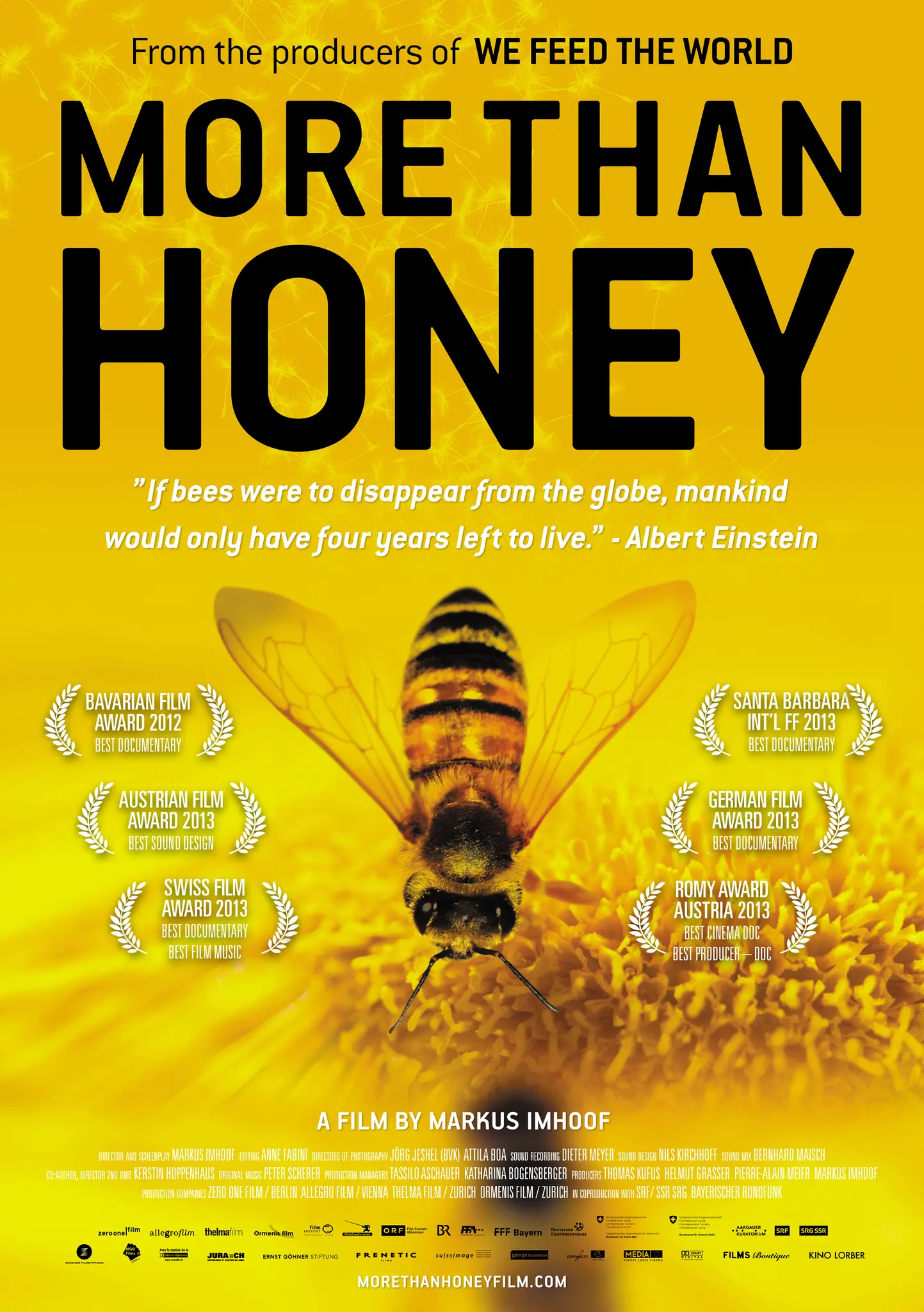
With this climb Honnold became the first person to climb El Capitan without a rope, and in January 2026 he free soloed the Taipei 101 skyscraper in Taiwan. The film ends on the day he comes down from the summit, with him hanging from his training board again. Like More Than Honey and Feynman on beauty, it is a film that leaves you looking at the world a little more carefully.
In short
A hundred minutes on 884 metres of granite. An edge-of-the-seat thriller that is really about probability, repetition and fear, and how one man made a near-impossible number small enough to live with.
Free Solo · Dir. Elizabeth Chai Vasarhelyi & Jimmy Chin · Prod. Evan Hayes & Shannon Dill · National Geographic Documentary Films · 2018 · IMDb