Gifts for Nerds: 18 Gadgets for Engineers and Math Lovers
A soroban, a paper plane with a motor, a Game Boy made of bricks and a lamp shaped like a tired duck: gifts for the people who take things apart to see how they work.
Every family has one. The person who took the back off the radio to see where the voices came from, who reads the manual before switching anything on, who answers “how was your day?” with something about load paths or prime numbers. Buying for them is hard because they have already bought the obvious things, and they can smell a novelty mug from across the room.
So here is the rule this guide follows: every gift has to do something, or explain something, or both. A plane that teaches lift. A bridge that teaches compression. Beads that teach place value. A duck that teaches debugging. Some of them are new finds; others have already had their own page on Abakcus, and earned a place here again. If the person you're shopping for is a working mathematician, start with thirteen gifts that give mathematics itself and come back for the rest.
Gift finder · who is it for?
Part I · 4 gifts
Things to Build
For the engineer: a plane, a bridge, a pen with a screwdriver inside, and a ruler that keeps two systems honest.
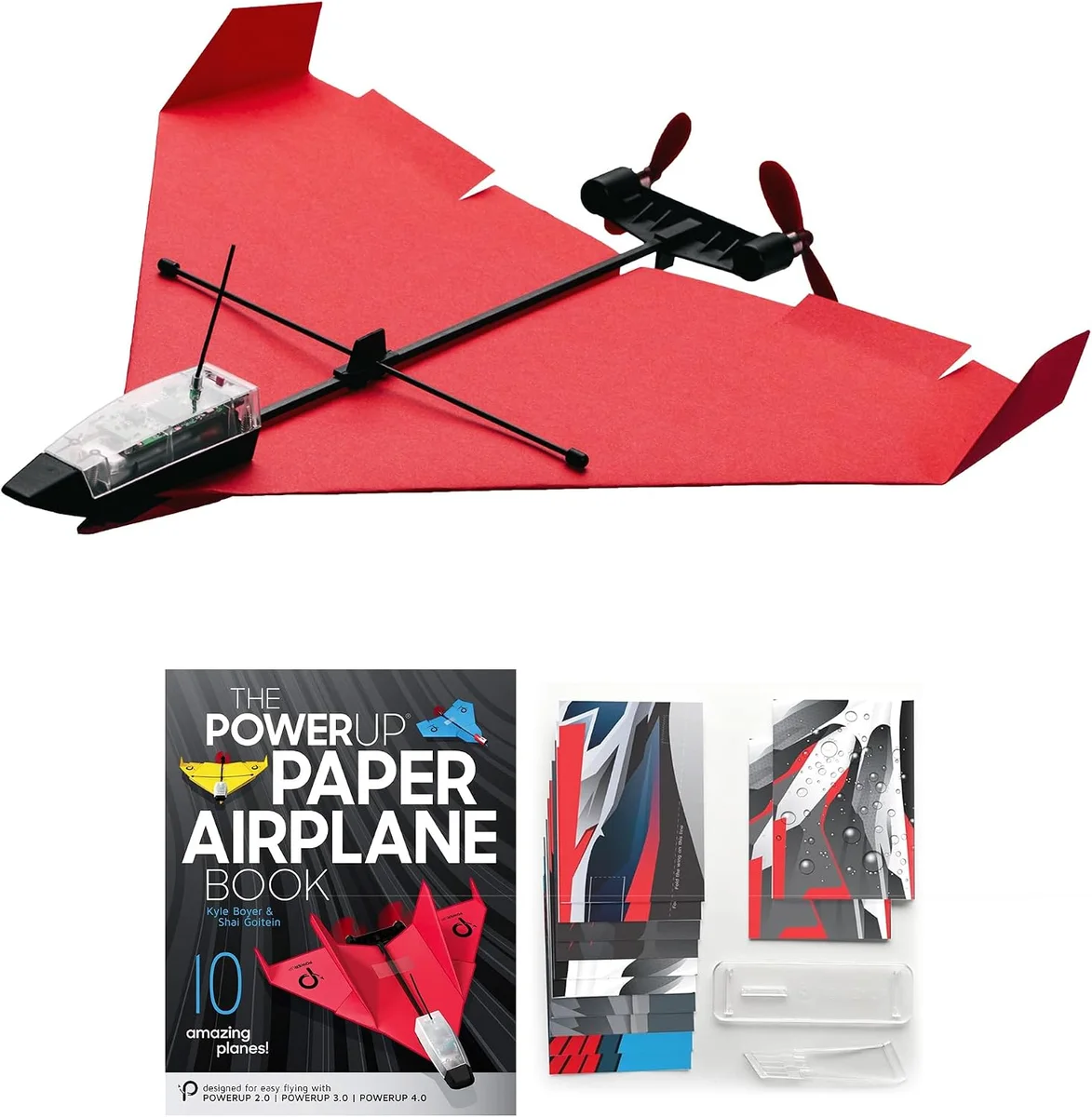
01For the engineer who still folds planes in meetings
You fold a sheet of paper into a plane, clip a small motor module with a propeller to its spine, and fly it from your phone. That is the whole trick, and it is a very good one. The bundle adds a book by paper-airplane designer Kyle Boyer and POWERUP founder Shai Goitein with ten folds, plus twelve printed templates, two of them on waterproof Tyvek for wet grass and snow.
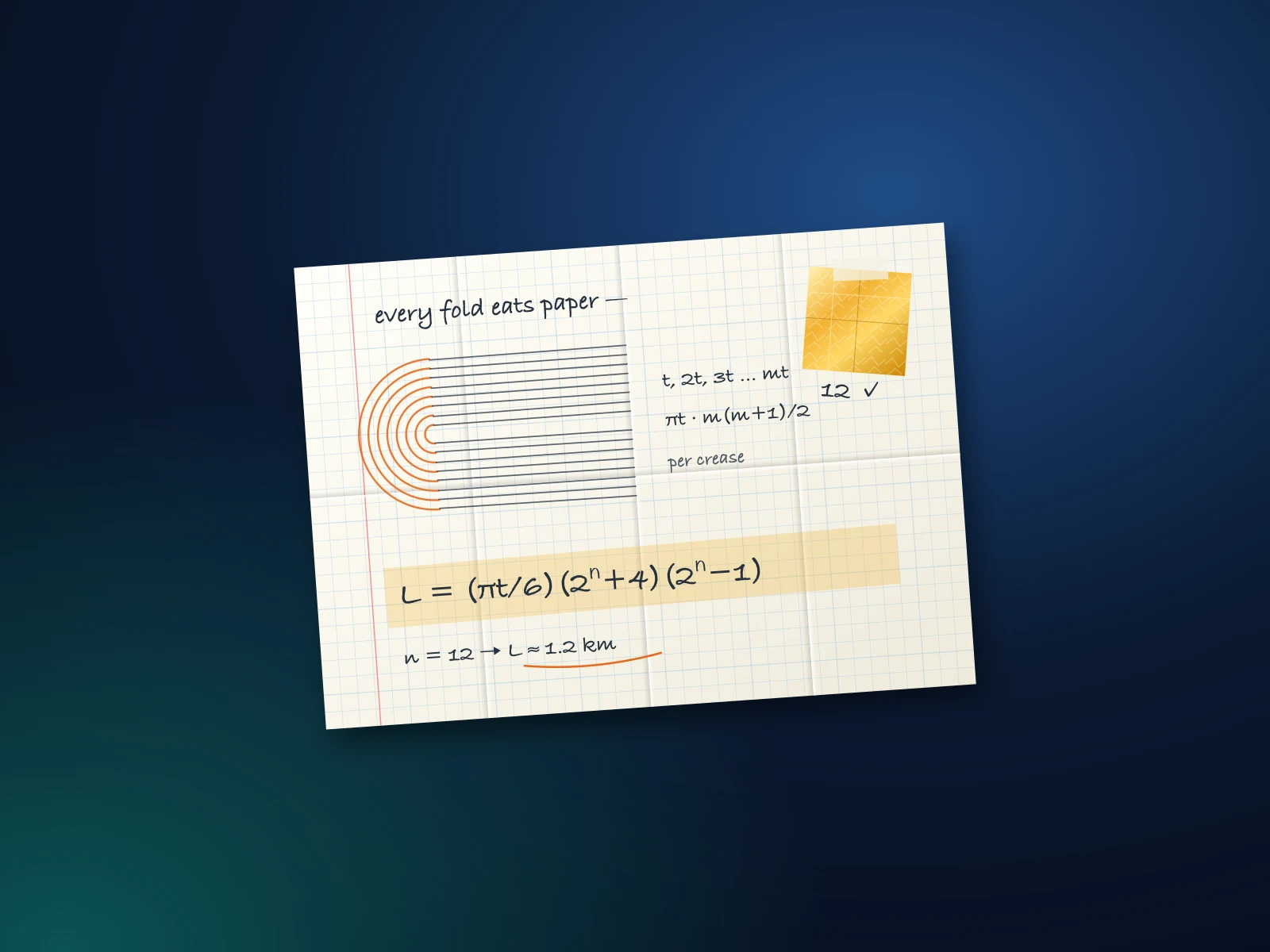
The nerd payoff is the feedback loop. Change one crease, fly again, and the plane tells you what you did to lift, drag and stability. Anyone who liked the story of the girl who folded paper twelve times will get it immediately: paper is a material, and folding is engineering.
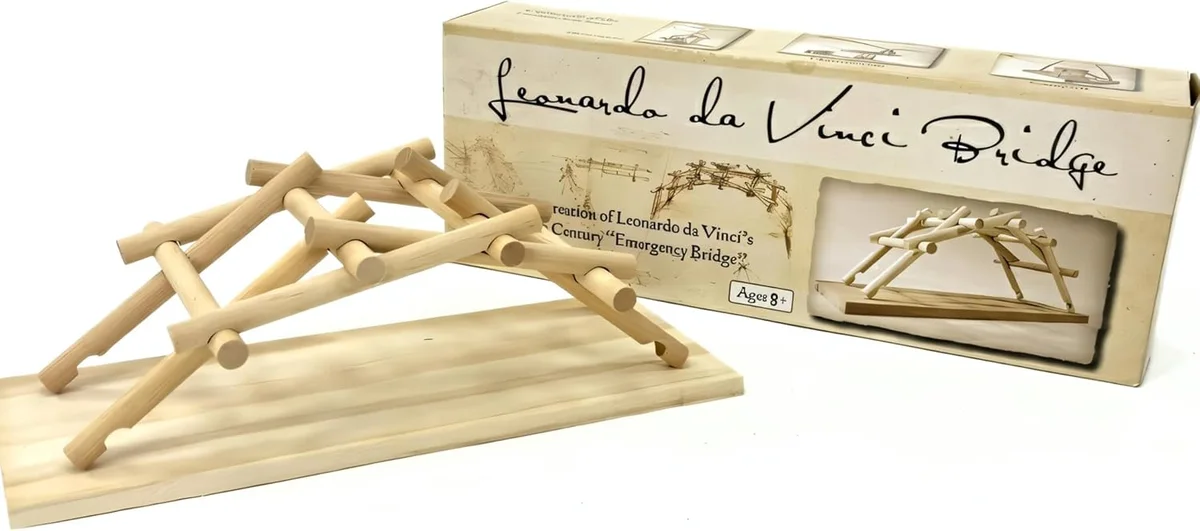
Leonardo sketched a bridge an army could build in minutes from straight timbers: no rope, no nails, no pins. Each log rests on one neighbour and holds up another, so the load runs around the whole structure in a loop. Engineers call it a reciprocal frame.
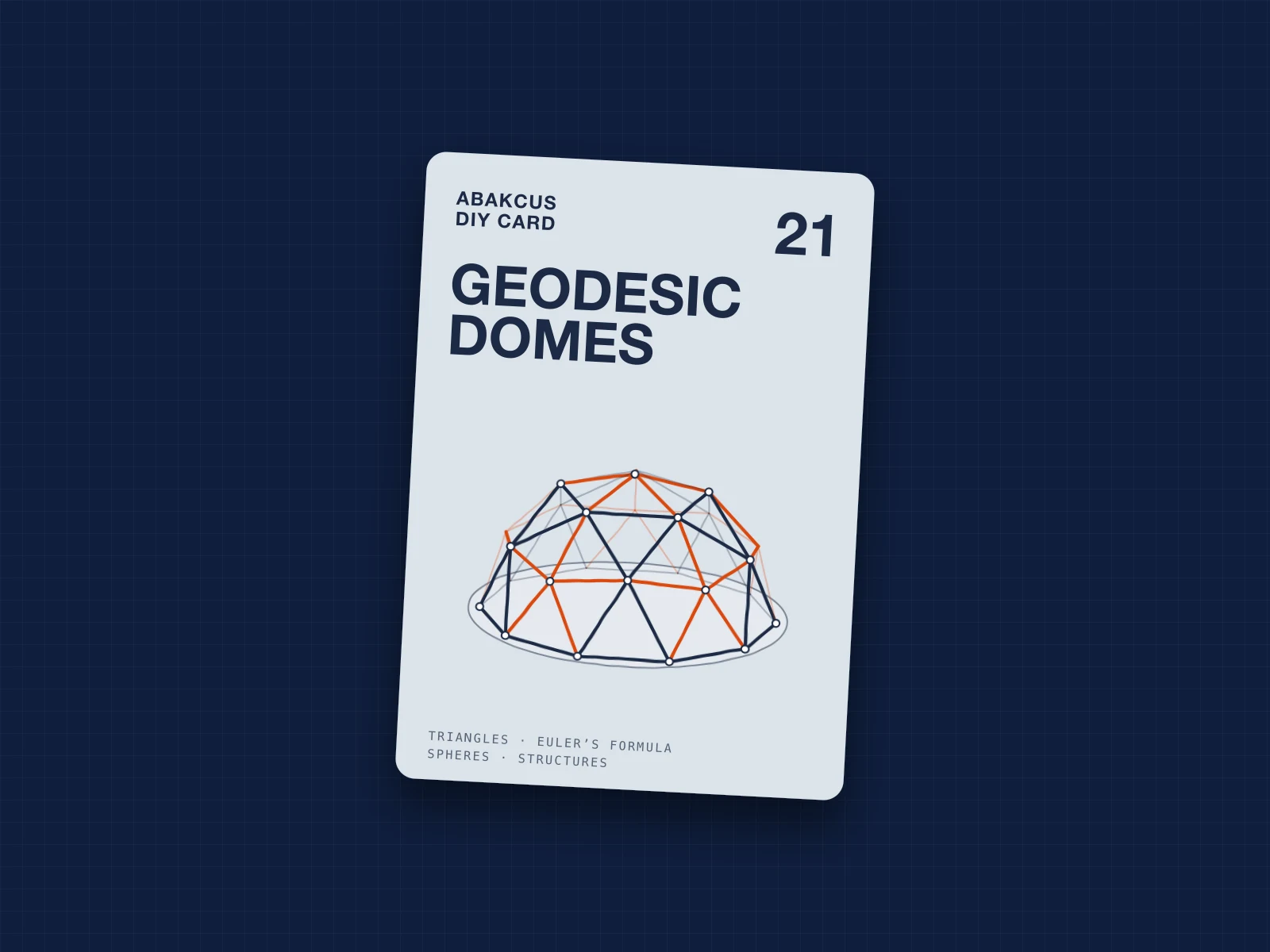
This wooden kit takes about an hour, and the best moment comes at the end. Press down on the finished arch and it locks tighter. Lift one piece and the whole thing falls apart in your hands. It is the same idea that holds up a geodesic dome made of straws: short members, clever joints, and the geometry does the rest.
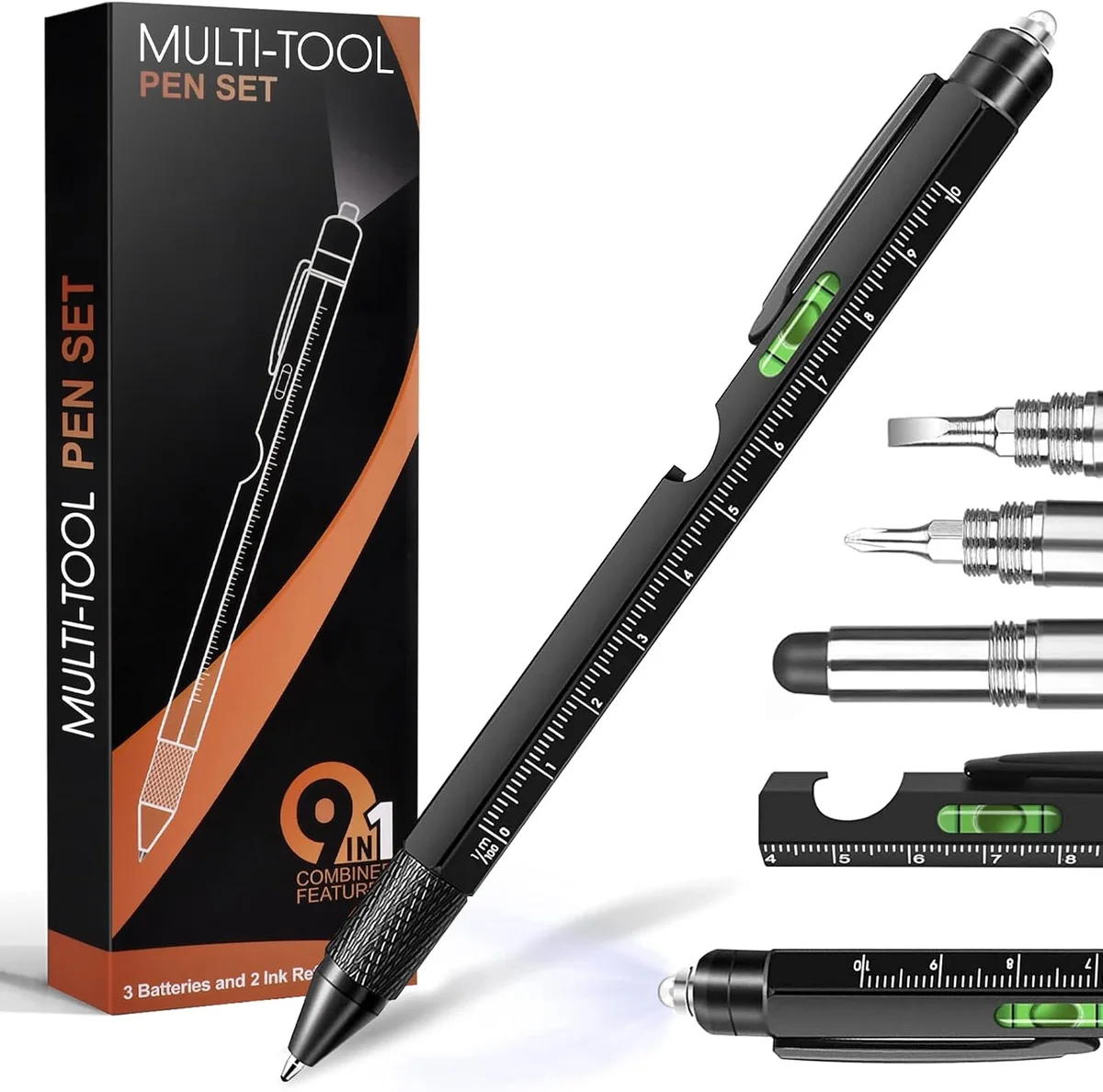
03For the person who is always looking for a screwdriver
9-in-1 Multitool Pen
PEN · 2 SCREWDRIVERS · RULER · LEVEL · LED · STYLUS · OPENER · STAND
A ballpoint pen that has quietly swallowed a toolbox. Unscrew the cap for a flat-head or a Phillips bit; turn it over for a stylus and an LED. The barrel carries a ruler and a small bubble level, and a notch in the side opens bottles and holds a phone upright.
It will not replace a real driver set, and it doesn't try to. It is for the loose screw in a laptop hinge, the wobbly shelf at a friend's place, the moment someone says “does anyone have a…”. It is cheap enough to be a stocking stuffer and useful enough to stay in a pocket all year.
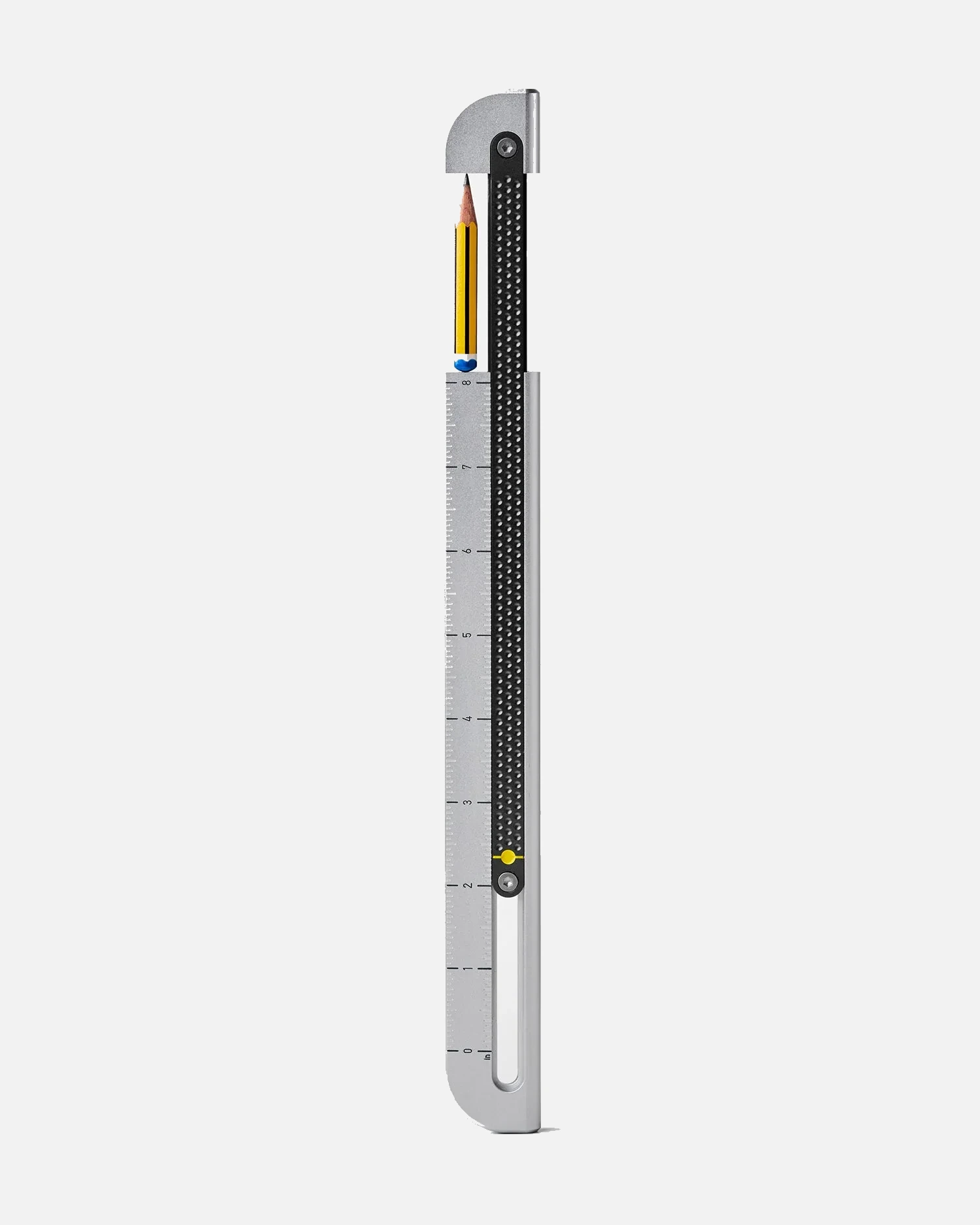
A CNC-milled aluminium ruler with inches on one edge and millimetres on the other. Across its eight inches the two scales line up on the same tick exactly once, at five inches, which is 127 millimetres. It is a desk object for the person who has opinions about tolerances and who has, at least once, been bitten by a unit conversion.
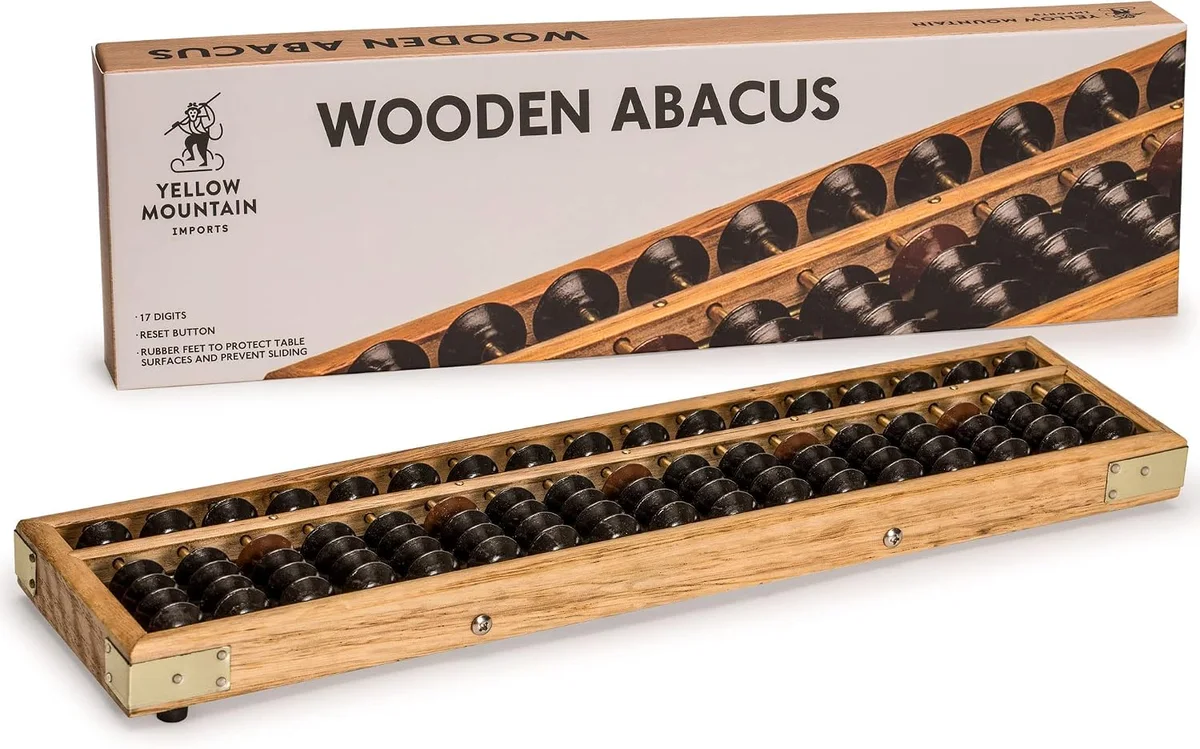
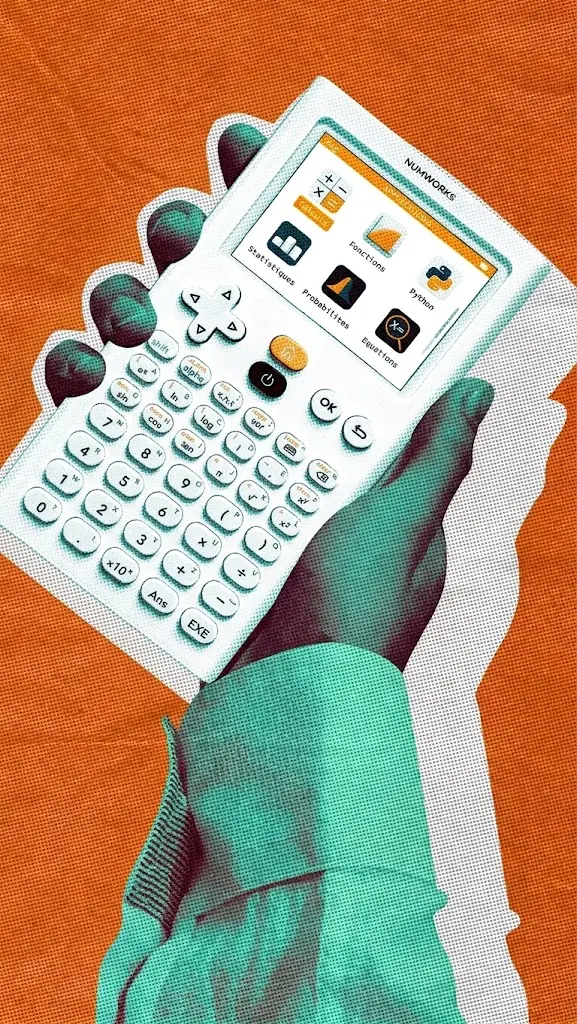
The Japanese soroban is the calculator that never needs charging. Each rod is a decimal place. The single bead above the bar is worth five, the four below are worth one each, and a number is whatever you have pushed toward the bar. Japan settled on this lean one-and-four layout in the 1930s, after centuries of heavier Chinese-style frames.
This one has seventeen rods, a wooden frame, rubber feet, and a reset button that clears every bead in one push. Skilled users eventually put it away and calculate on an imagined abacus in their heads, a practice called anzan. For the person who already owns every calculator worth owning, this is the oldest one of all.
06For the one who knows why sunflowers love 137.5°
Helicone
GOLDEN ANGLE · ONE TWIST · TWO SPIRALS
John Edmark's kinetic sculpture is a stack of identical pieces, each turned from the one below by the golden angle, about 137.5°. Twist it one way and spirals appear, like the seeds of a sunflower or the scales of a pine cone. Twist it the other way and they vanish. Mathematicians usually explain phyllotaxis on a whiteboard; this lets you do it with one hand.
07For the wall of someone who dreams in complex numbers
The Mandelmap Poster
z → z² + c · DRAWN AS A 17TH-CENTURY SEA CHART
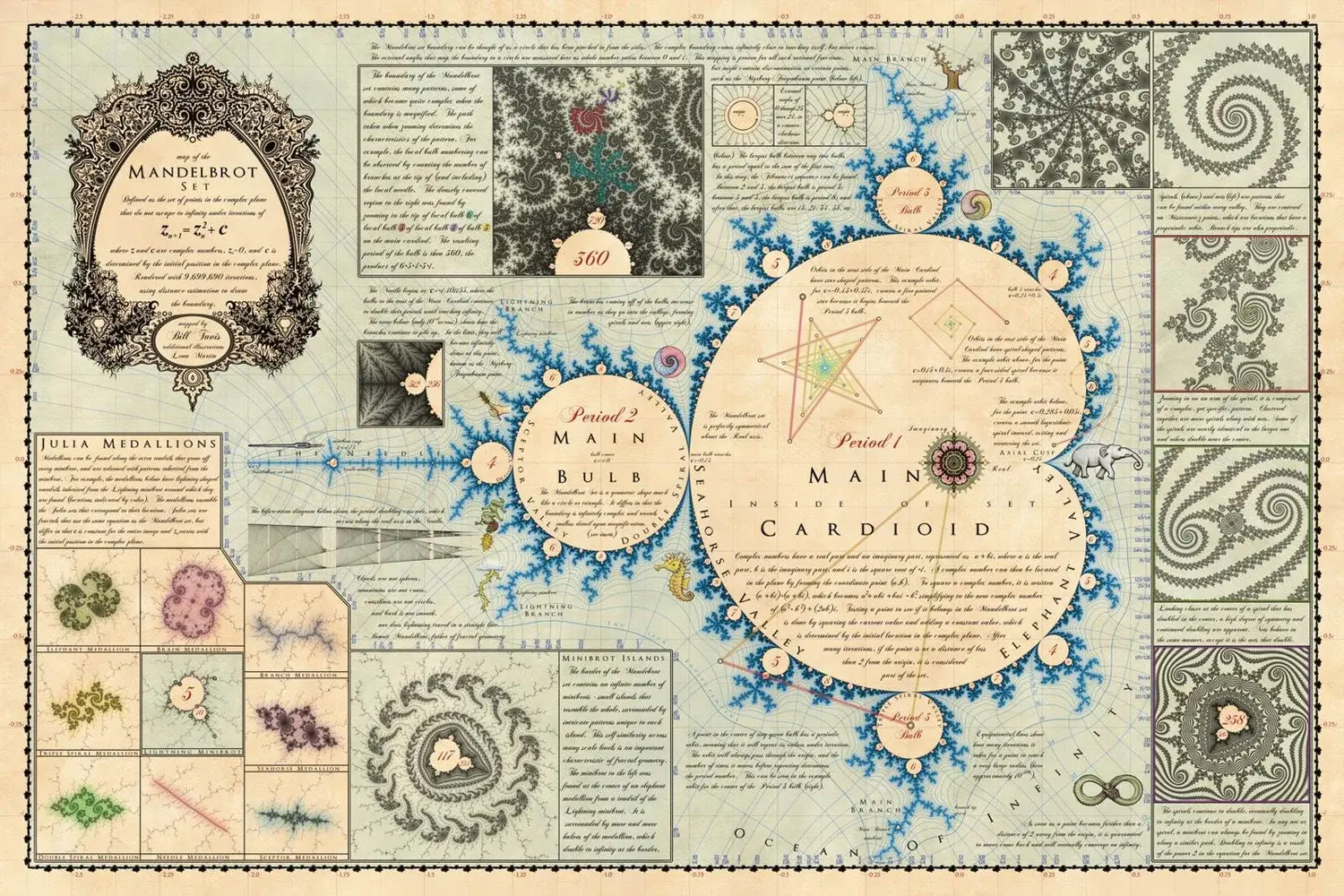
Bill Tavis spent over a year drawing the Mandelbrot set as a seventeenth-century sea chart, with a compass rose, sea monsters, and named valleys you could plot a course to. The iteration behind it fits on a napkin. The coastline never ends. It belongs on the wall of anyone who has zoomed into the set at 3 a.m. and lost an evening.
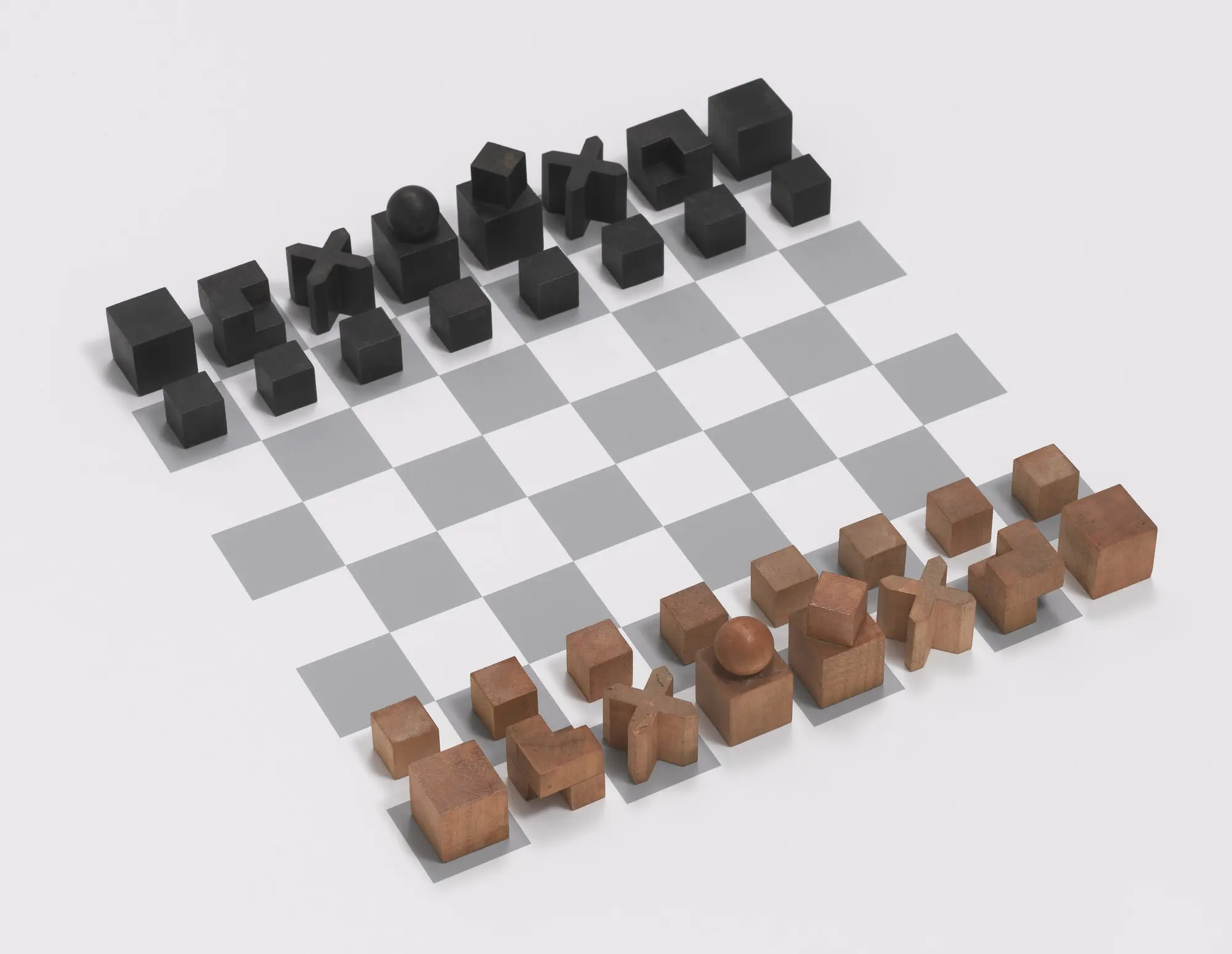
In Josef Hartwig's 1924 Bauhaus set, each piece is shaped by how it moves. The rook is a cube because it moves straight; the bishop is an X because it moves on the diagonals; the knight is an L-shaped block. Volume tracks value. It is geometry written as a rulebook, and a beautiful thing to leave on a table.
When the Japanese maker of Hagoromo Fulltouch announced in 2015 that it was closing, mathematicians around the world started buying boxes in bulk. The chalk is smooth, bright and barely dusty, and the company's machines and recipe now live on in Korea. For anyone with a blackboard at home, a few boxes are the most practical luxury on this list.
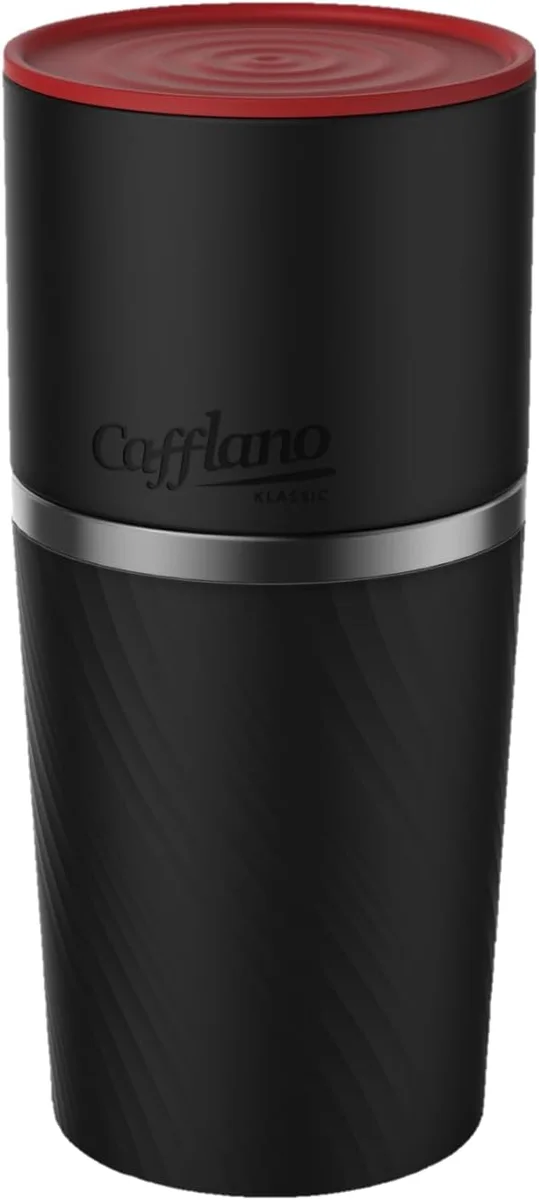
A whole pour-over setup packed into one black cylinder: a ceramic burr grinder, a small drip kettle, a reusable stainless steel filter and a double-walled tumbler that holds the coffee at the end. Markings inside the grinder hopper show 10 to 30 grams of beans, so you don't even need a scale.
It is made for camping and travel, but its real home is a lab bench, a conference hotel, or the office where the coffee machine is a crime scene. Grind, pour, wait, drink, and you are back at work.
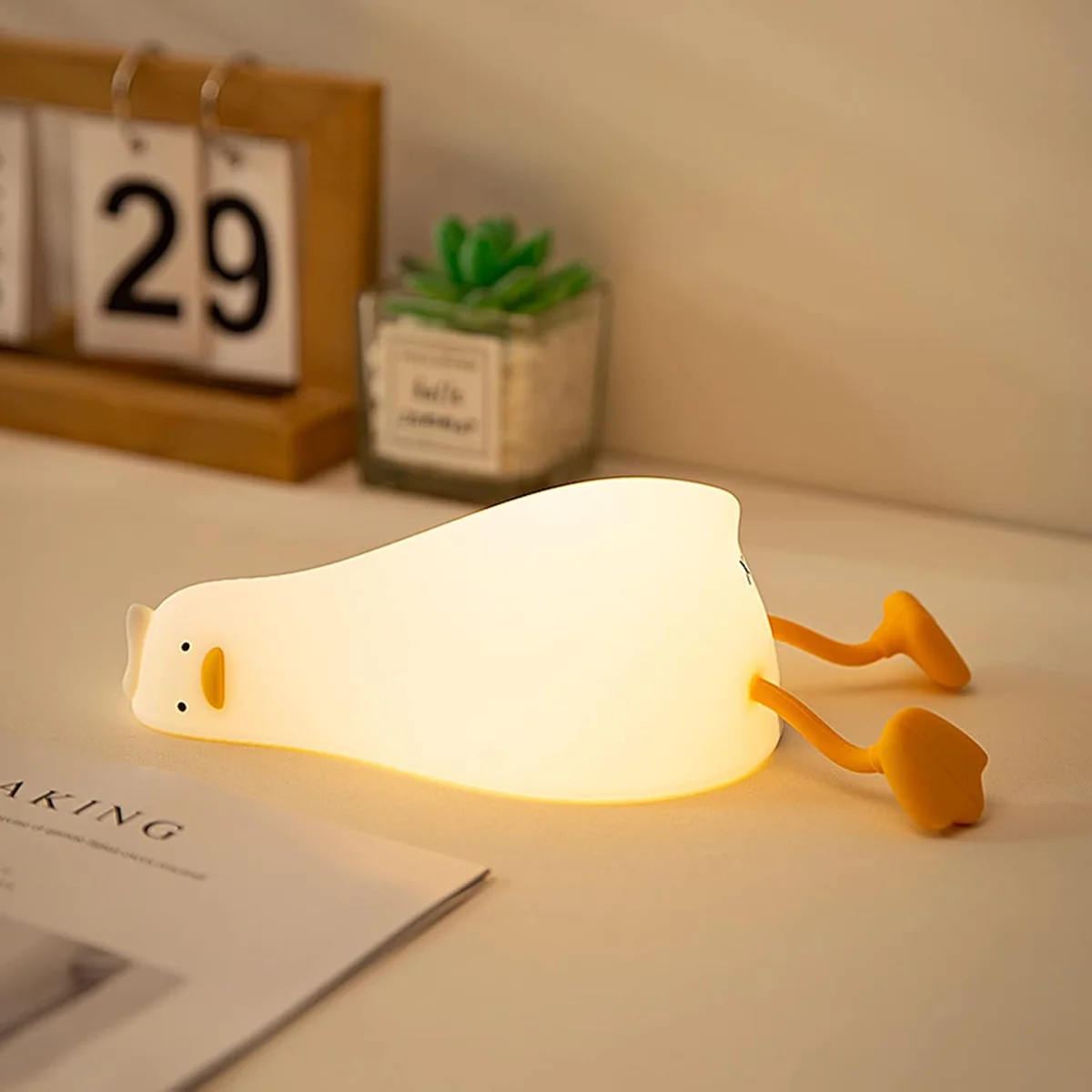
A soft silicone duck lying face down on the desk, which is roughly how everybody feels at the end of a sprint. Tap its back to cycle through three brightness levels; it charges over USB and gives off a warm, low light that won't wake anyone up.
Programmers will see the joke straight away. The Pragmatic Programmer (1999) popularised rubber duck debugging: explain your code line by line to a duck, and somewhere around line forty you hear the bug yourself. This one glows while it listens.
A desk clock that tells the time with a line from a book: a quote for every minute, each one containing that minute somewhere in the sentence. E-paper screen, white oak housing, brass base. It raised nearly a million dollars on Kickstarter, and MoMA sells it. It is the rare gadget that reads as well as it counts.
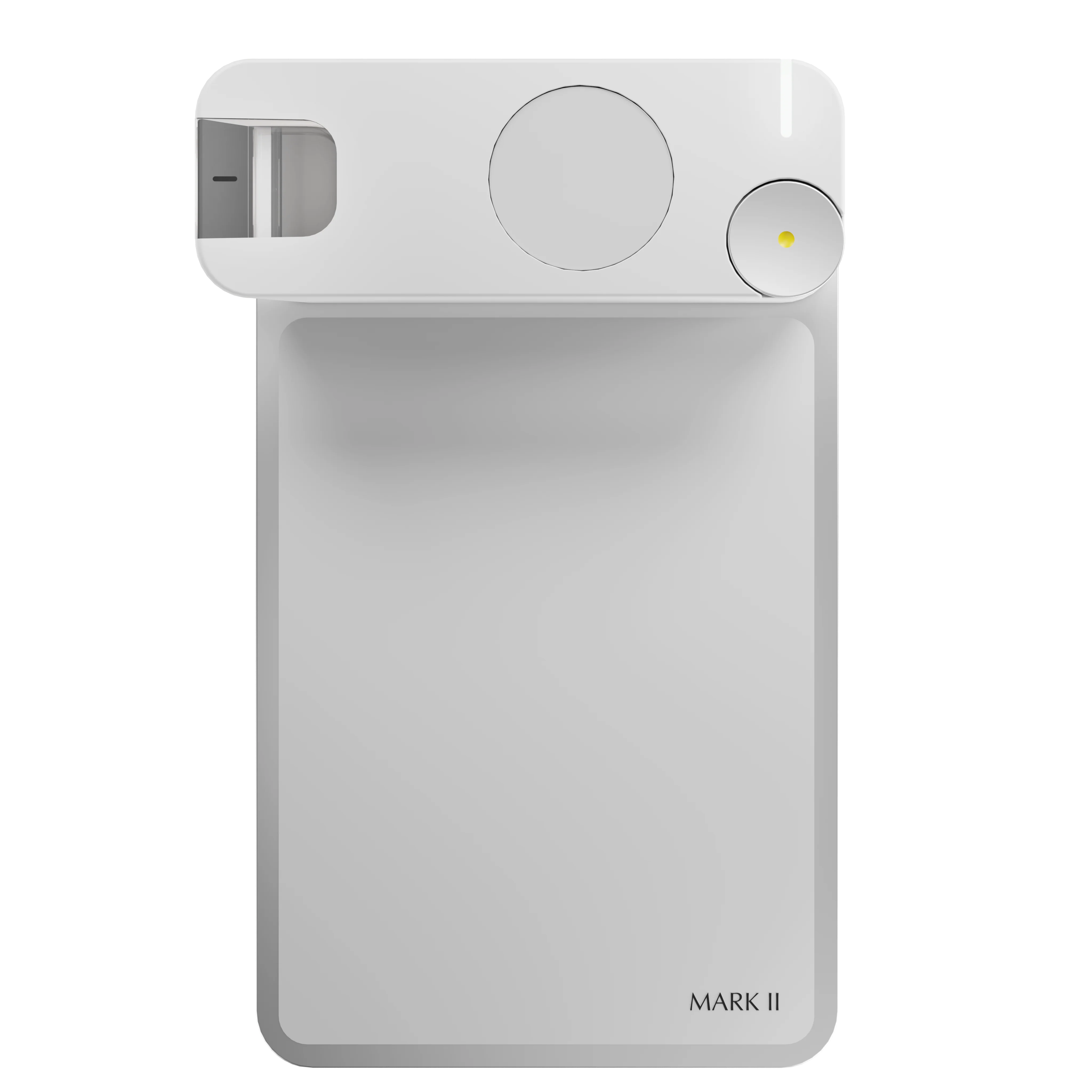
A scanner shaped like a highlighter. Run it along a line in a paper book and the sentence lands on your phone, searchable and tagged. John Locke was doing the same job in 1685 with a two-page index for his commonplace book; this is the version for anyone whose margins are already full.
For the kid at heart: a Game Boy made of bricks, a solar system on sticks, your whole life in front pages, and two more small joys.
14For the one whose first computer was in their pocket
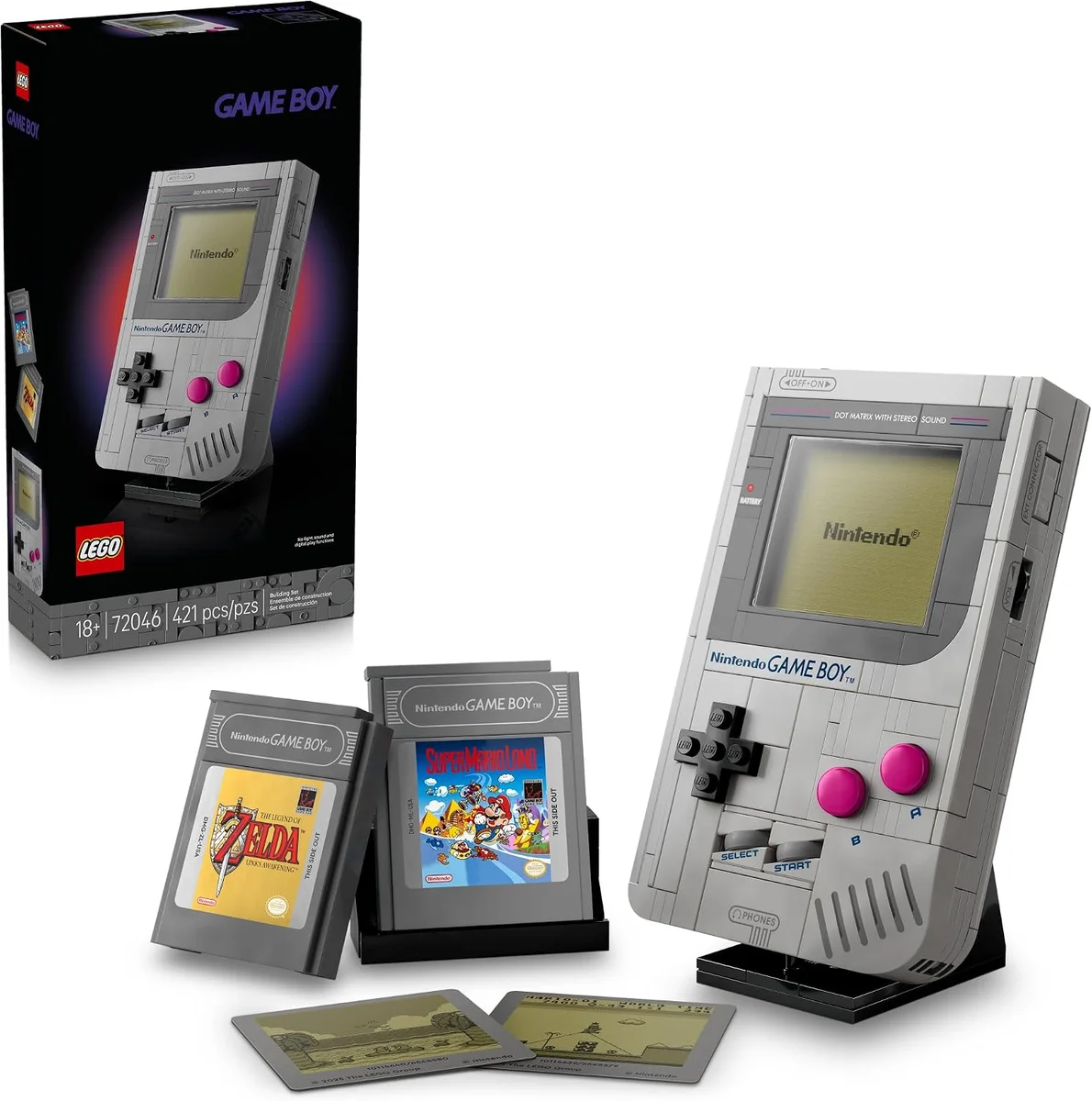
LEGO Super Mario Game Boy
SET 72046 · 421 PIECES · 2 GAME PAKS · DISPLAY STAND
Nintendo's Game Boy came out in 1989 and taught a generation that a computer can live in your pocket. Its designers, led by Gunpei Yokoi, built it from cheap, proven parts instead of the newest ones, and it outsold machines with colour screens for years.
LEGO set 72046 rebuilds it at life size in 421 pieces, with two Game Paks, Super Mario Land and The Legend of Zelda: Link's Awakening, and a display stand. It is rated 18+, which is LEGO's way of saying this one is for the grown-ups who used to blow into cartridges.
Ten hard candies, each painted as a body in the solar system: the Sun, eight planets, and Pluto. They are handmade in Los Angeles, taste of watermelon, and look a little too good to unwrap. Each one is individually wrapped, so they also work as a party favour for a launch day or a thesis defence.
Note who got invited. The Belgian chocolate planets stick to the International Astronomical Union's 2006 decision and leave Pluto out. Sparko Sweets kept it. Give both and let them argue.
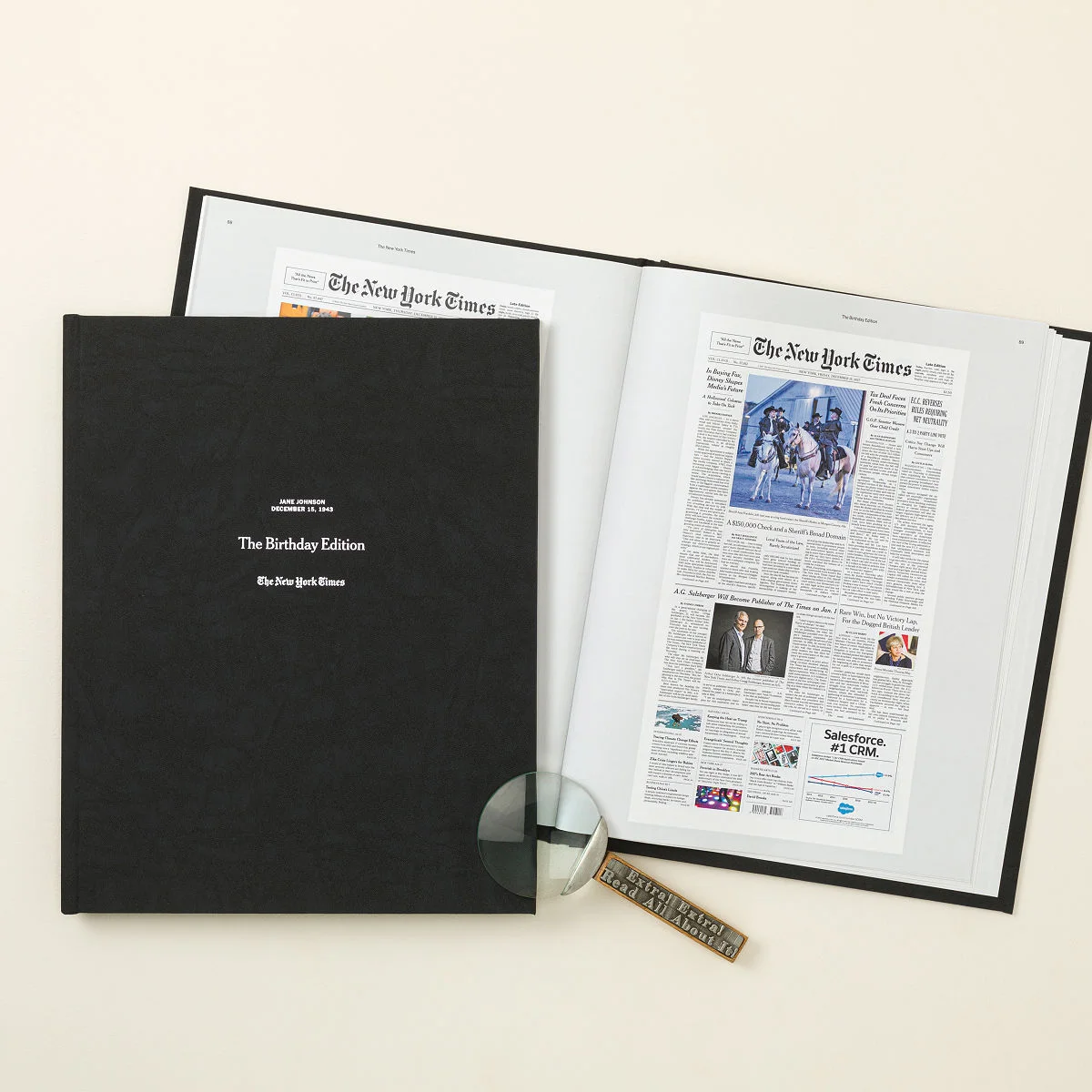
A large bound book of New York Times front pages: one from the day the person was born, and one from every birthday since. Their name and birth date go on the cover. The premium edition is printed at 10.5 by 13.25 inches and opens with a short history of the paper itself.
For a history nerd it works as a data set. Read it in order and you can watch the decades change in typefaces, photographs, and which stories earned the top of the page. It is the most personal gift on this list.
A keychain camera the size of a chestnut, a small descendant of the 1987 Kodak Fling. It shoots at 1.6 megapixels and comes in a blind box, so you don't know which colour you got until you open it. It is not a serious camera, which is exactly why people take it everywhere.
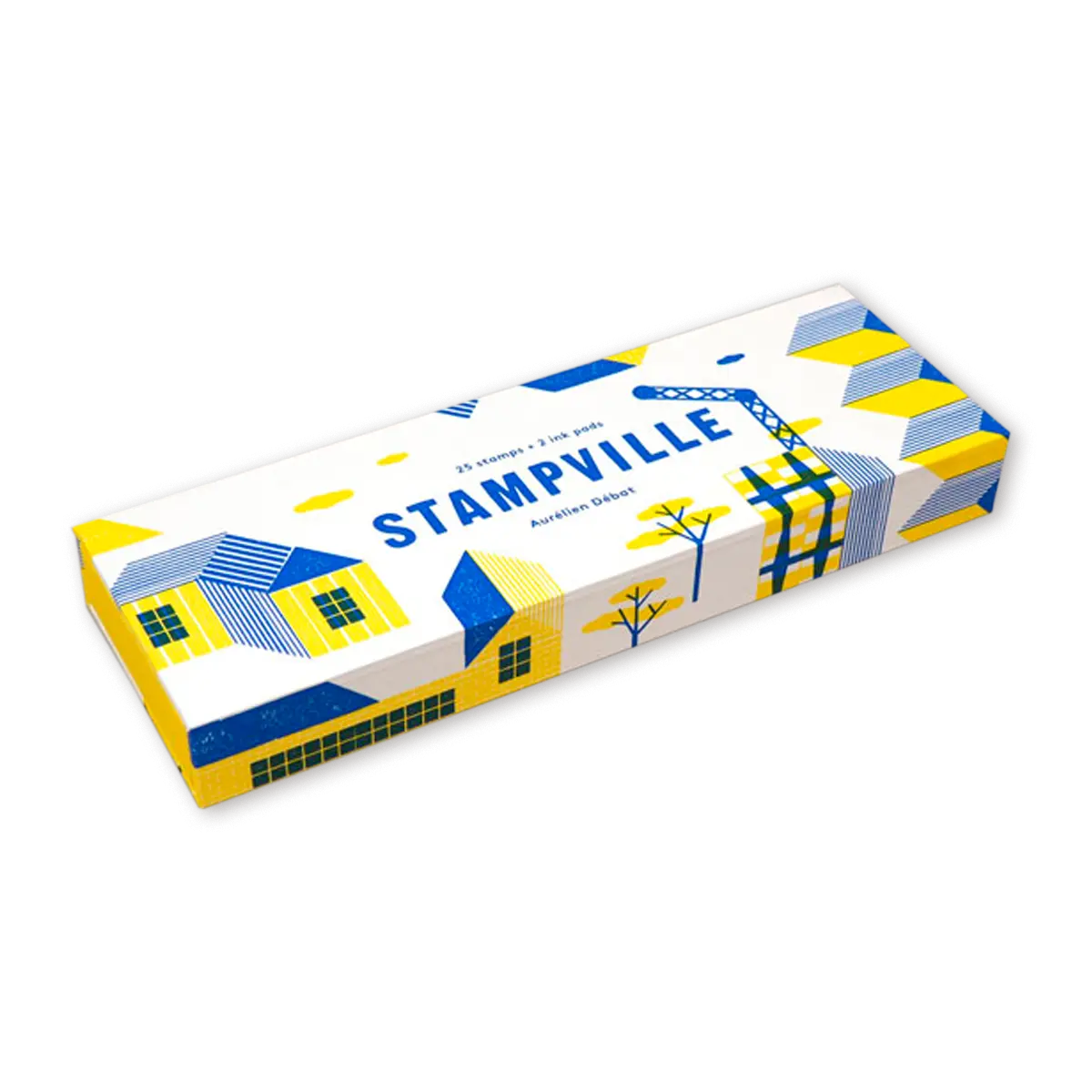
Aurélien Débat's city in a matchbox: 25 rubber stamps of buildings, trees and cars, and two ink pads, yellow and blue. Stamp one over the other and a third colour, green, appears where they overlap. It is a lesson in subtractive colour mixing disguised as a toy, and it keeps a desk-bound engineer busy longer than you would expect.
“A mathematician is a device for turning coffee into theorems.”
Alfréd Rényi, usually credited to Paul Erdős
Which is the real argument for gift number ten. Feed the device, and the theorems take care of themselves.
Questions people ask
What do you buy a nerd who has everything?
Look for something that explains how it works the moment you use it: a soroban, a Helicone, a self-supporting da Vinci bridge. Objects built on a real idea get used and talked about, while generic gadgets end up in a drawer. A personal piece like the New York Times birthday book is the other safe bet.
What are good gifts for engineers?
Things they can build, test or fix. The POWERUP 4.0 kit turns paper airplanes into a flight experiment, the Leonardo da Vinci bridge kit shows load paths without glue or nails, and a multitool pen covers the small repairs. The LEGO Game Boy suits engineers who grew up with the original.
What is a good gift for a mathematician?
A 17-column soroban, the Helicone sculpture, the Mandelmap poster and a few boxes of Hagoromo chalk are all built on real mathematics. For a longer list, see Abakcus's thirteen gifts that give mathematics itself.
Which of these gifts work as stocking stuffers?
The multitool pen, the galaxy lollipops, the duck night light, Hagoromo chalk, the Kodak Charmera and the da Vinci bridge kit are all small and inexpensive. Use the gift finder at the top of the page and pick “Stocking stuffers” to see them together.
✦Read more✦
Keep wandering
A few more pieces in the same spirit — math, design, and slow attention.