Buying gifts for mathematicians looks easy and turns out to be hard. The vast majority of “math-themed” products are either t-shirts printed with the π symbol or notebooks stuffed with meaningless formulas. The gifts that actually work are different: objects with a real concept inside them, things that mean something when held or watched. The thirteen items below fit that description.
01
Helicone Kinetic Toy
Fibonacci Sequence · Golden Angle
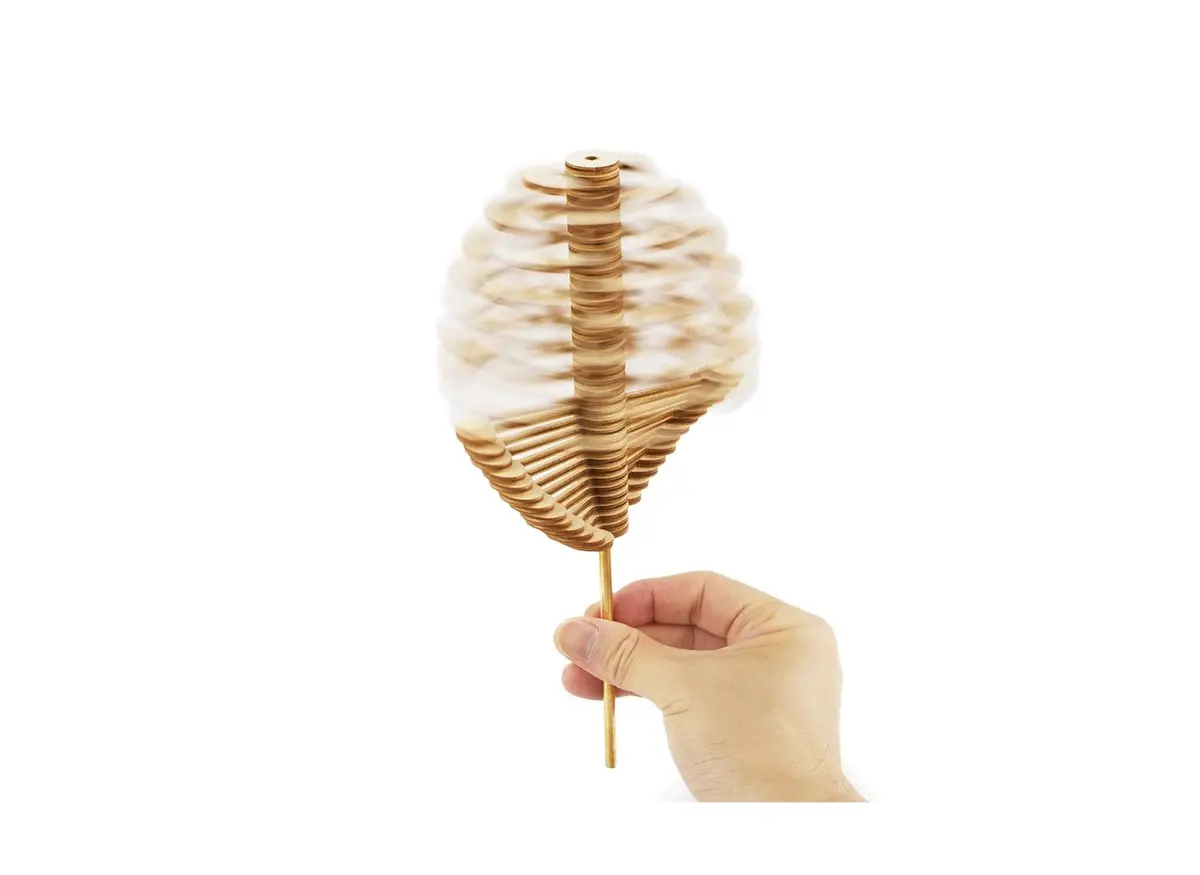
John Edmark, who teaches design at Stanford, built the Helicone by threading 38 laser-cut wooden pieces onto a brass tube. Twist the handle one way and the structure opens into a helix; twist it back and it closes into a pine cone. The reason the transition looks so fluid is that both shapes emerge from the same mathematical relationship: the Fibonacci sequence and the golden angle — the same number series behind the spirals on pine cone scales, sunflower seeds, and many plant structures. As a desk object it is measured and elegant; once you start spinning it, an hour later you still haven't stopped.
02
“How to Tie Knots” Coffee Mug
Knot Theory · Topology
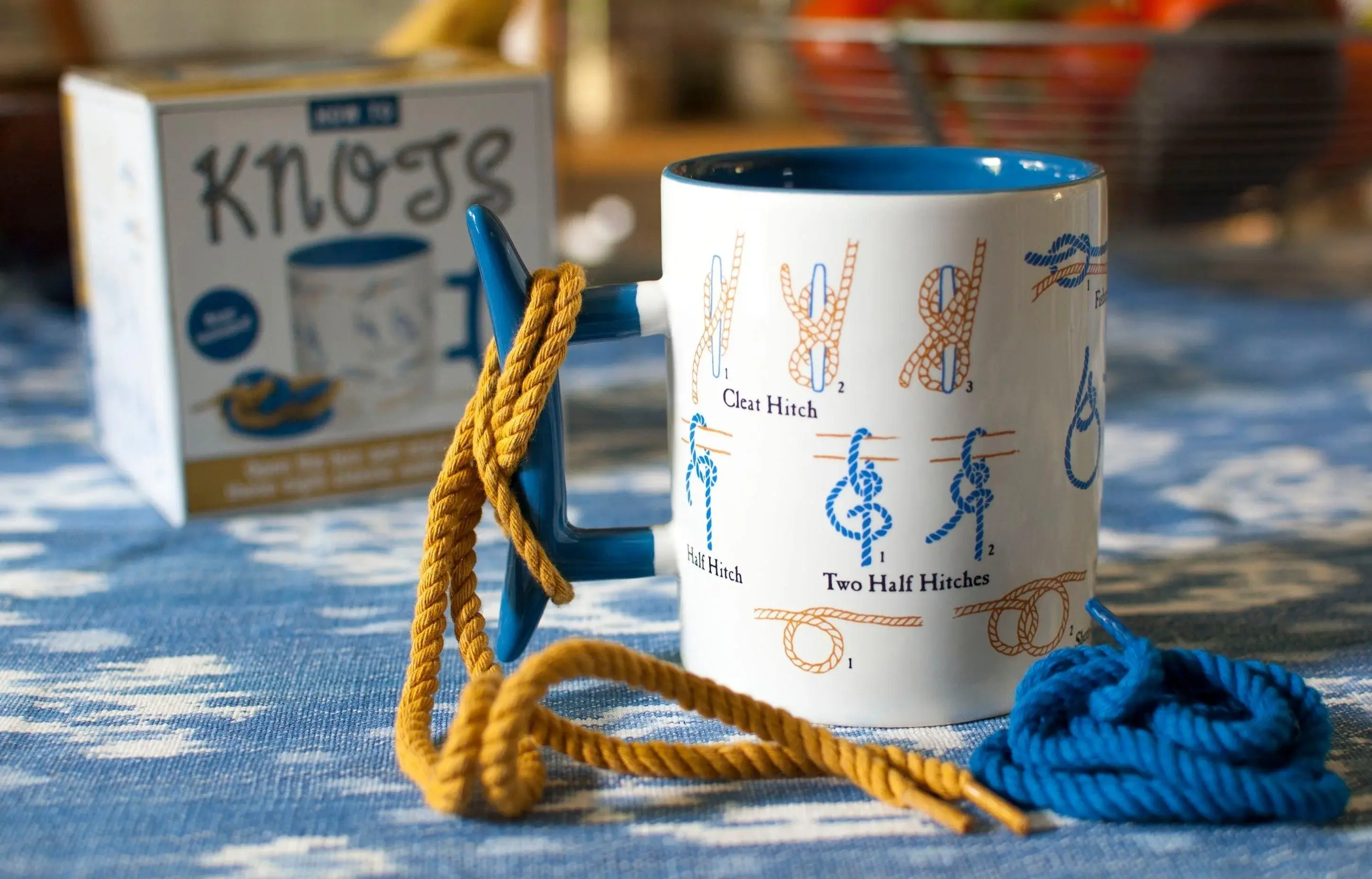
Knot theory is a branch of topology that began in the 19th century when physicist Lord Kelvin tried to explain atoms as knots in the ether of space, and today contributes to our understanding of DNA replication. The Unemployed Philosophers Guild mug is not interested in the theory — it is interested in the practice: step-by-step diagrams of eight classic sailing knots printed on the ceramic, two short lengths of cord attached to the handle, ready to practice the moment you open the box.
“In mathematics, a knot is a closed curve with its ends joined — it cannot be untied or separated. In sailing, that is precisely what you want to avoid.”
If you are giving it to a mathematician, the real weight sits here: what exactly is the difference between a knot's mathematical definition and a sailor's intuitive one? A good question to think about over coffee.
03
Euler's Disk
Angular Momentum · Conservation of Energy
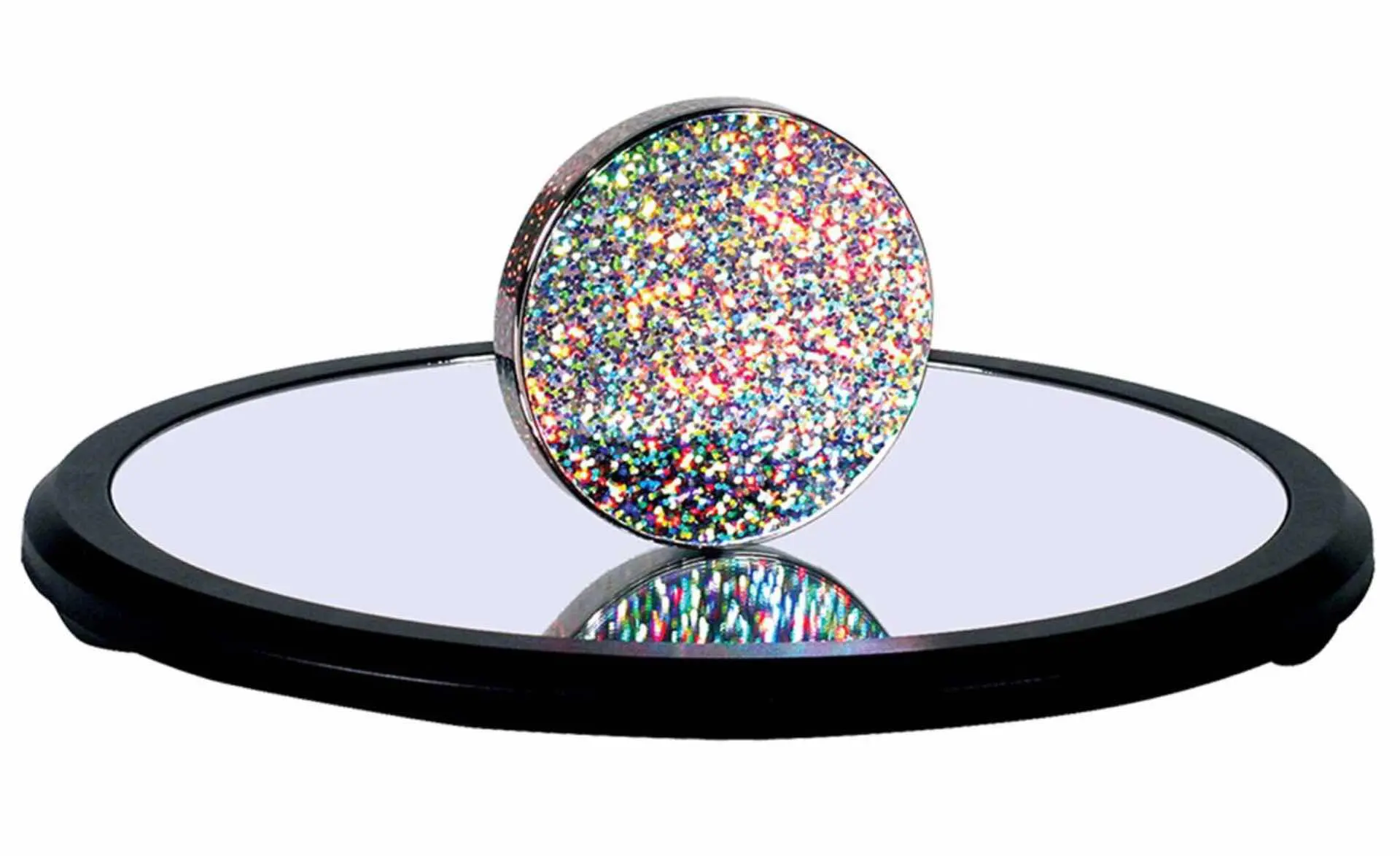
Joseph Bendik, an engineer at Hughes Aircraft, spent his lunch breaks between 1987 and 1990 spinning a heavy disk on his desk. What caught his attention was this: instead of slowing down smoothly, the disk seemed to accelerate as it approached a stop — the vibration pitch rising, the motion almost hovering until the last instant. By the law of conservation of energy, energy had to be decreasing. But everything visible suggested the opposite.
Bendik fine-tuned the variables to maximize this paradoxical effect and released the toy under the name of 18th-century mathematician Leonhard Euler. The commercial version consists of a chrome-plated steel disk and a slightly concave mirrored base. How exactly the disk stops is still the subject of active papers; the mechanism remains in dispute. The name is not coincidental: Euler wrote the foundational equations describing the dynamics of spinning bodies.
04
The Galton Board
Normal Distribution · Central Limit Theorem
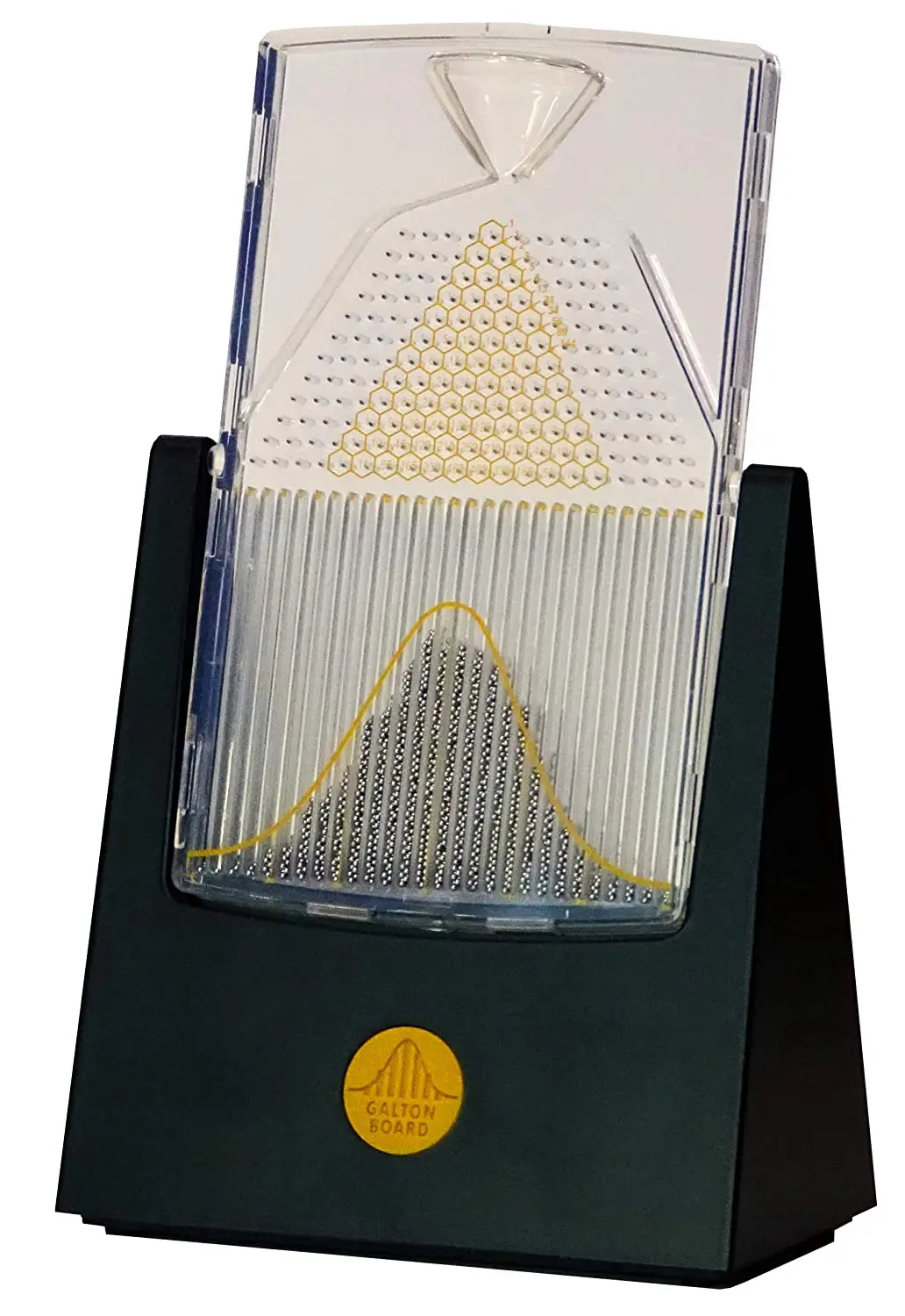
Sir Francis Galton designed this device in 1894 to show people that the normal distribution is not an abstract formula — it is a shape that randomness produces directly. Four Pines Publishing's modern version — black base, gold bell curve printed on the front, transparent acrylic body — is the best physical realization of that idea ever made. Flip the board and 3,000 steel balls drop through 12 rows of pegs; each ball goes left or right at each peg with equal probability, entirely at random. But every time, the same thing happens: the balls form a bell curve at the bottom.
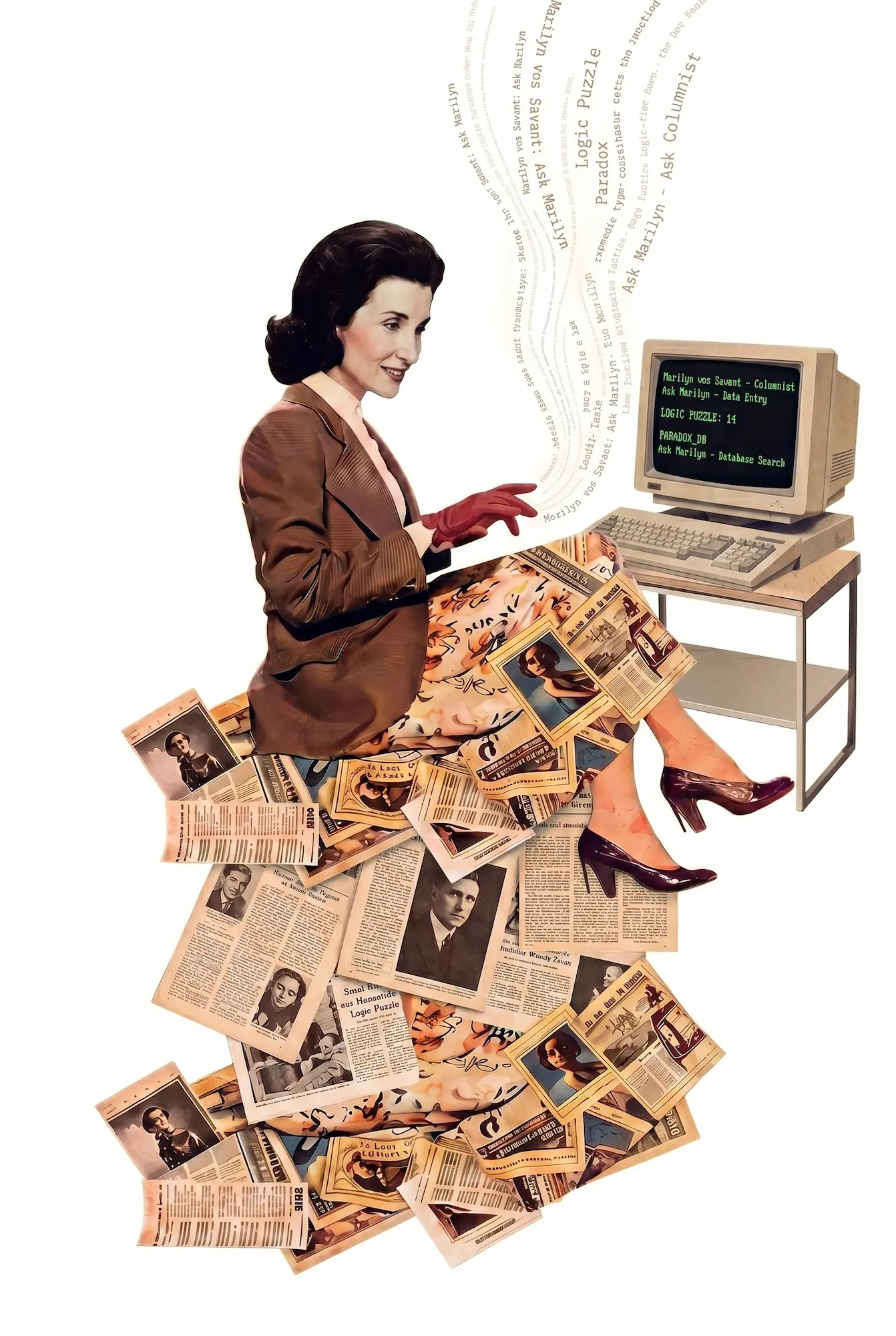
The Central Limit Theorem, stated without a single word. The board also marks Pascal's triangle and the binomial distribution — one object, four connected concepts. The probability failures of smart people are just as reliable as the Galton Board's bell curve: if you want the best story of exactly that, Marilyn vos Savant Was Right All Along is a good companion piece.
05
NumWorks Calculator
Open Source · Python · Visual Computing
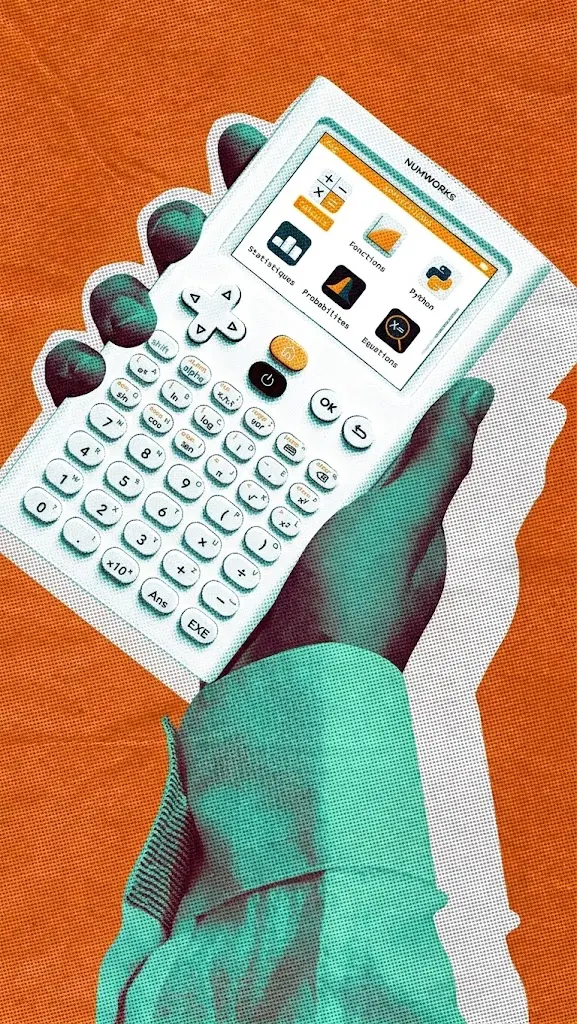
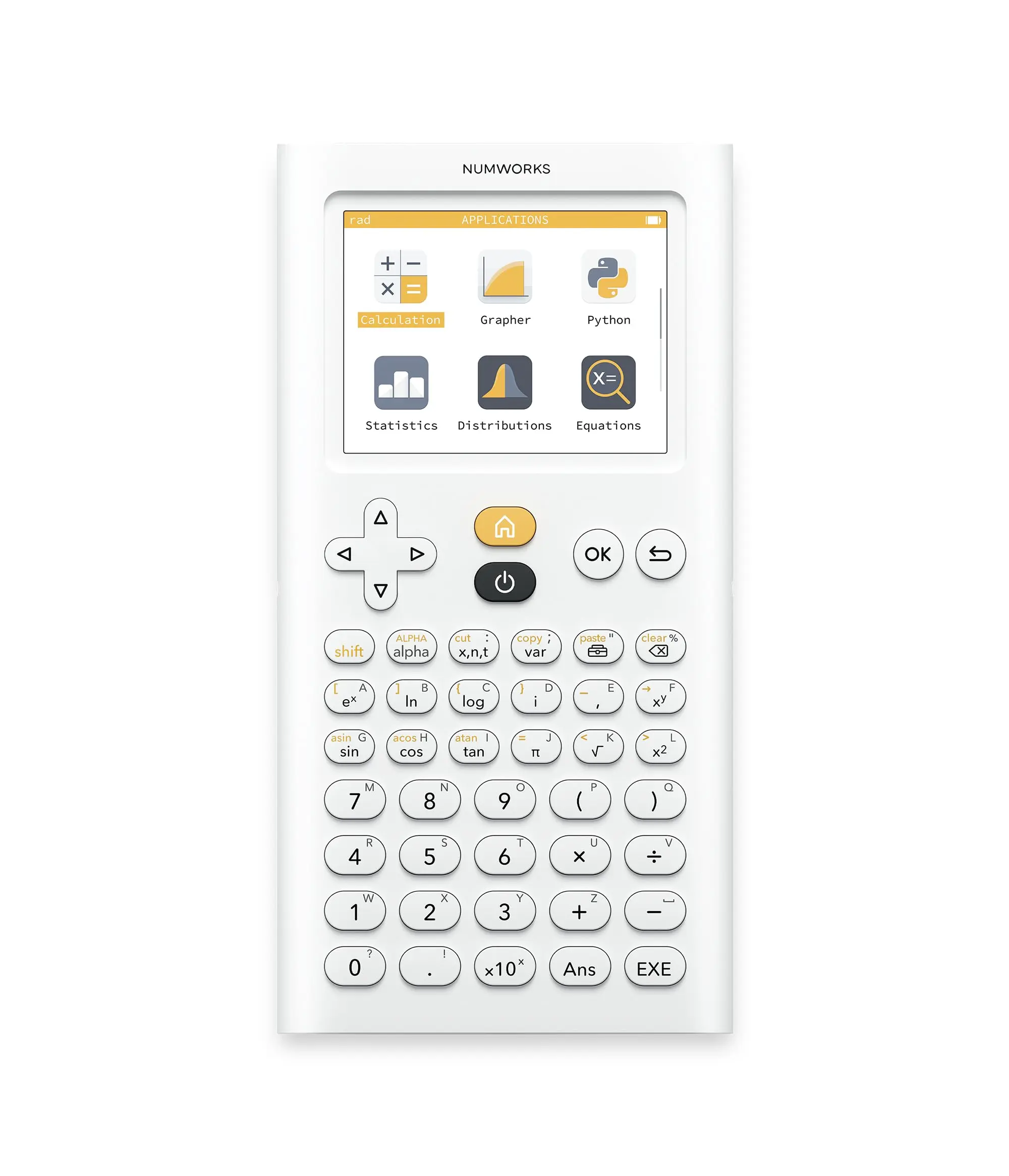
The TI-84 series has dominated the market since 1996; the design has barely changed, the software has not been updated, and the price has not dropped. NumWorks was founded in 2016 by Romain Goyet, a former Apple software engineer, to fill exactly that gap. The calculator has a color, high-resolution screen and an interface designed with smartphone logic; graphing, equation solving, statistics, probability, and Python programming are all accessible through app icons.
The software is open-source and updatable over USB — the direct opposite of Texas Instruments' closed ecosystem. Approved for the SAT, ACT, and AP exams. Two-variable function graphing, parametric and polar coordinates, sequences, and regression analysis all come standard. Price is around $100 — noticeably below comparable TI models. If you know a mathematics student, this is the most practical gift on this list.
06
Acme Klein Bottle
Topology · Non-Orientable Surface
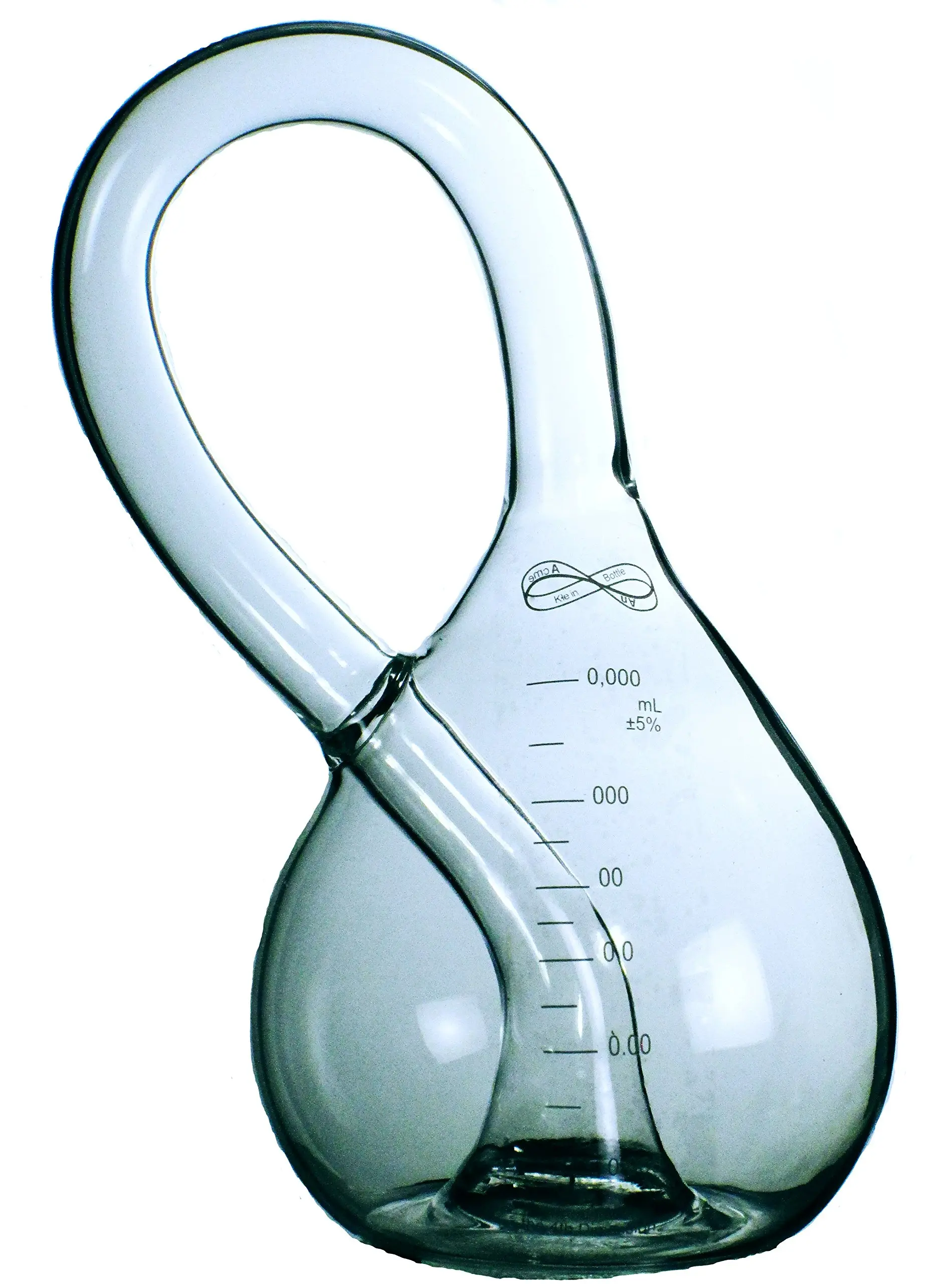
After finishing his astronomy PhD, Cliff Stoll started selling glass Klein bottles from the basement of his house in Oakland. He describes his business as “the world's only zero-volume enterprise” — fairly, because a Klein bottle is by mathematical definition a manifold with no interior or exterior surface and zero volume. It is the answer to the question: what do you get when you close a Möbius strip in three dimensions?
It can exist in its true form only in four-dimensional space; constructing one in three dimensions forces the surface to intersect itself somewhere — which is where the characteristic “neck” on Stoll's bottles comes from. Each bottle is hand-blown from borosilicate glass, dimensions varying slightly. When Stoll receives an order he packs it himself, inserts playful explanatory documents, and sends photos of himself doing the packing. This is probably the most theatrical purchasing experience on this list.
07
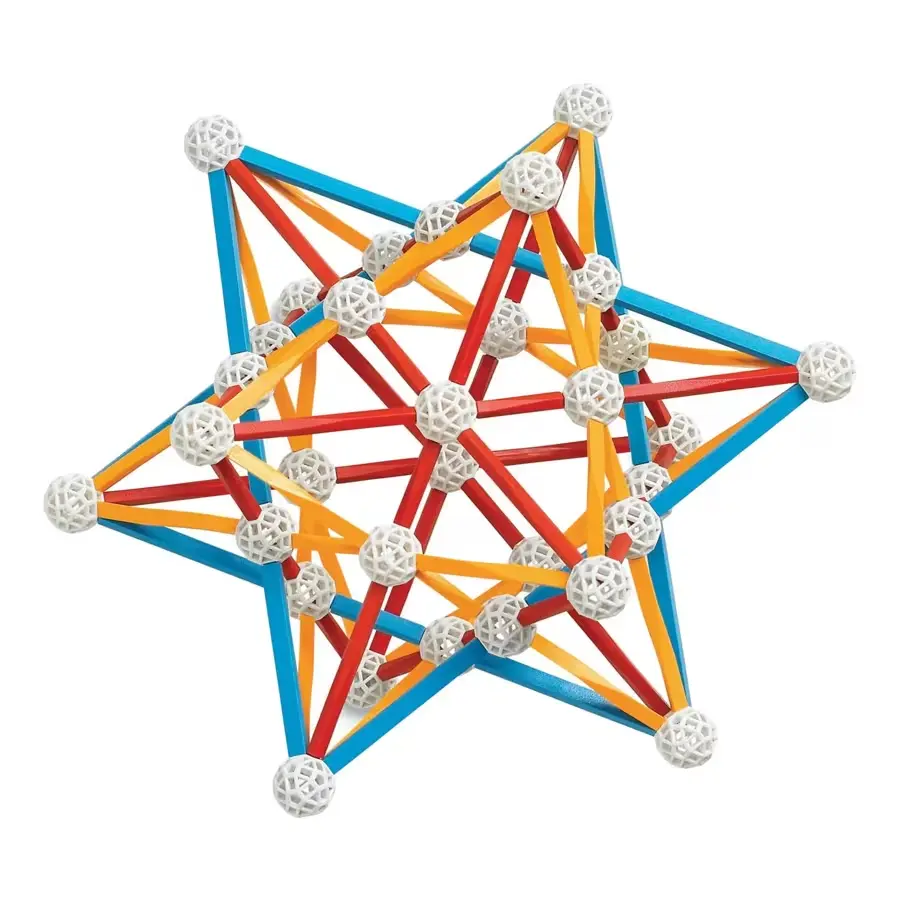
Zometool
Polyhedral Geometry · Quasicrystal · 4D Space
Zometool is the construction set Nobel Prize-winning chemist Dan Shechtman used to model the atomic structure of quasicrystals. It is also the set John Conway described as helping him “make beautiful objects,” that Roger Penrose called “perfect for quasicrystal models,” and that NASA has used in AIDS virus research. The system is built on plastic connector nodes and color-coded struts based on golden ratio proportions; each ball has 62 holes, allowing construction in 92 different directions.
Platonic solids, the three-dimensional shadow of a 4D hypercube, three-dimensional analogs of Penrose tilings — all of these can be built with Zometool. One of the rare products designed as a children's toy that is used by actual researchers.
08
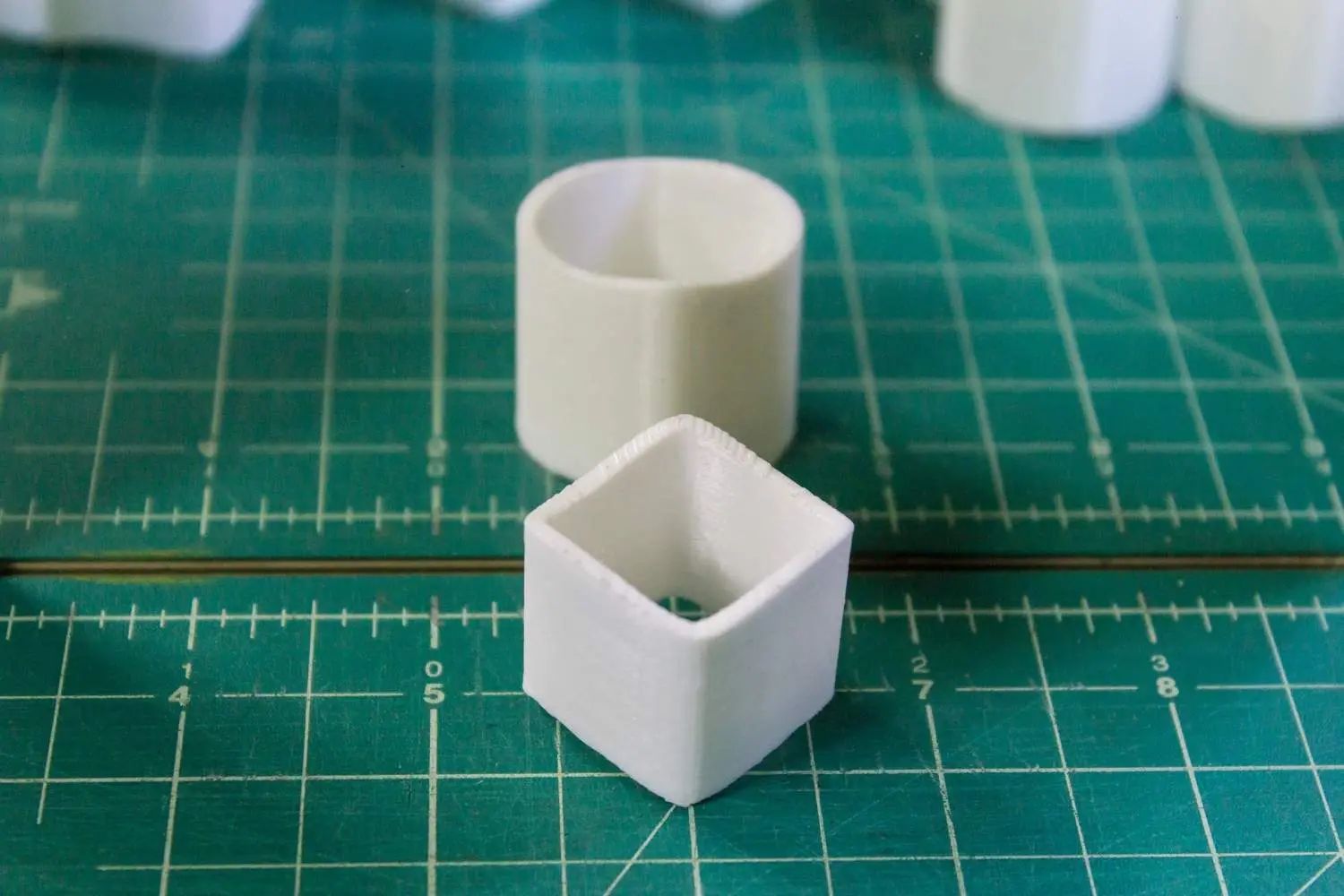
Sugihara's Ambiguous Object Set
Perceptual Geometry · Differential Geometry
Kōkichi Sugihara, a mathematical engineer at Meiji University, designed an object in 2016 that took second place at the “Best Illusion of the Year” competition: a cylinder that looks rectangular from straight on but appears circular in a mirror — or the exact reverse. Even if you rotate the object, the brain cannot correct its perception; the illusion does not disappear.
The mathematics behind it concerns differential geometry and how the depth cues used by the visual system work; Sugihara manipulates these systematically. A commercial four-piece set, developed with the Vsauce team and including the famous “stubborn arrow,” features several different objects. 3D-printed versions are available freely on Thingiverse; Sugihara's own book is available on Amazon.
09
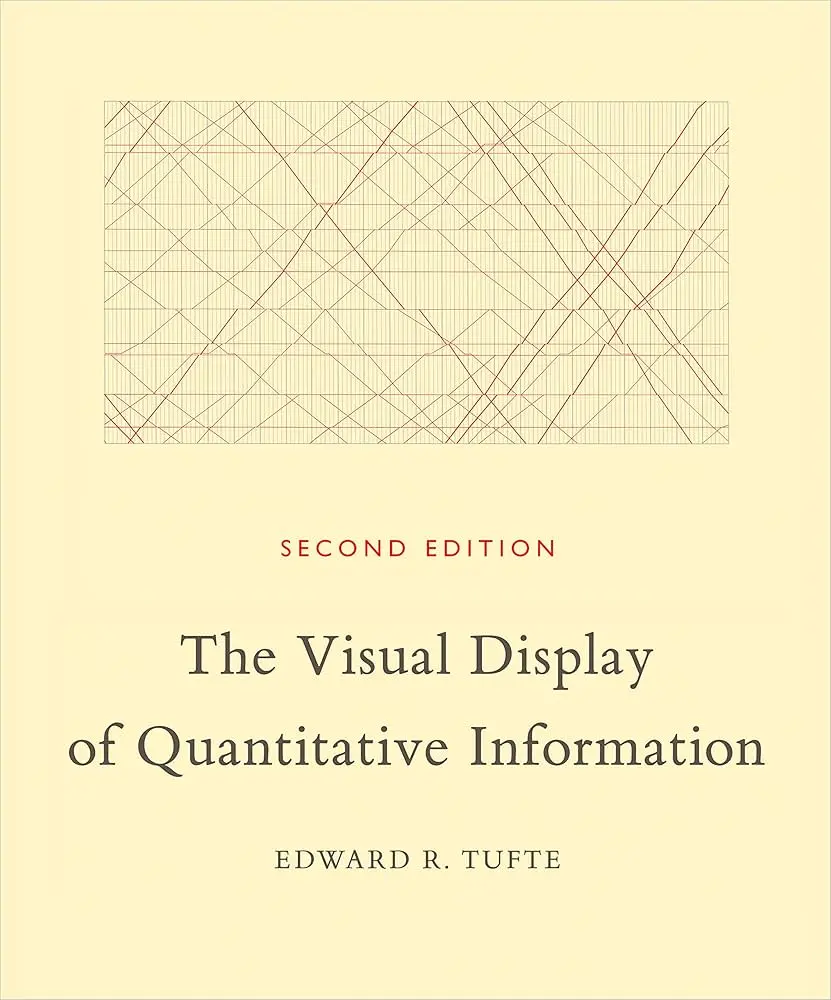
Edward Tufte's Books
Data Visualization · Statistical Design
Edward Tufte was a professor of statistics and computer science at Yale; in 1983 he mortgaged his house to publish The Visual Display of Quantitative Information, because publishers insisted on compromising the print quality. The book made Amazon's list of the 100 best books of the 20th century. Tufte's central argument was this: the visual representation of data cannot be separated from its analytical content — badly designed graphics hide data, well-designed ones reveal it.
Over the following decades came Envisioning Information, Visual Explanations, Beautiful Evidence, and Seeing with Fresh Eyes. All five books are published by his own imprint, Graphics Press, and the print quality is exceptional. If your recipient is a mathematician, statistician, or data scientist, you have a very strong gift; buying the series together makes it even better.
10
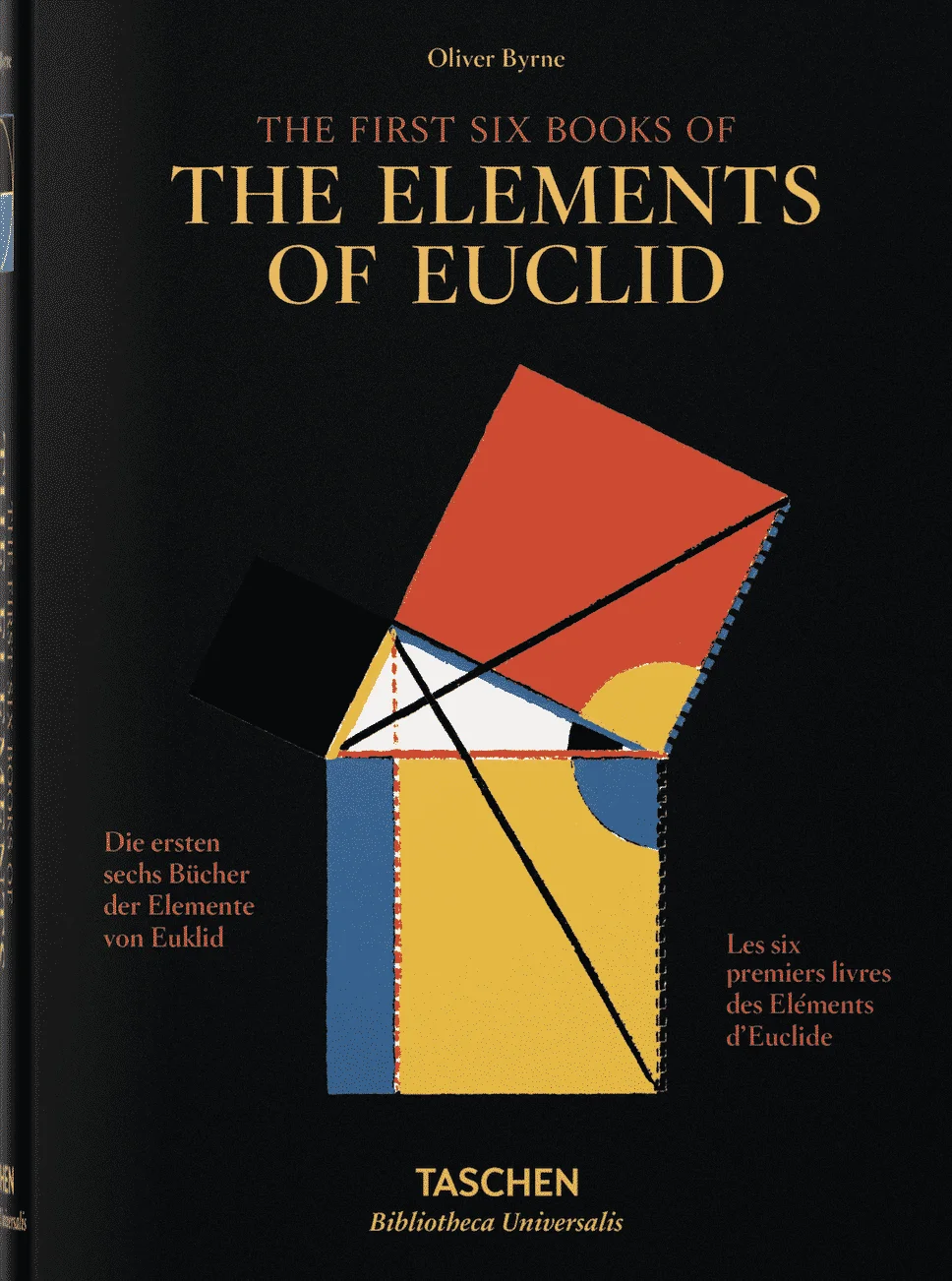
Oliver Byrne — The First Six Books of the Elements of Euclid
Euclidean Geometry · Information Design · Taschen
In 1847, Irish engineer-mathematician Oliver Byrne republished Euclid's 2,100-year-old geometry book — removing all traditional letter labels and coding every angle, side, and shape in red, yellow, blue, and black. Seventy years before Mondrian launched the De Stijl movement, 72 years before the Bauhaus was founded. The book received almost no attention at the time; the publisher lost money. Its rediscovery came at the end of the 20th century, when information designer Edward Tufte identified it as one of the important references in the history of graphic design.
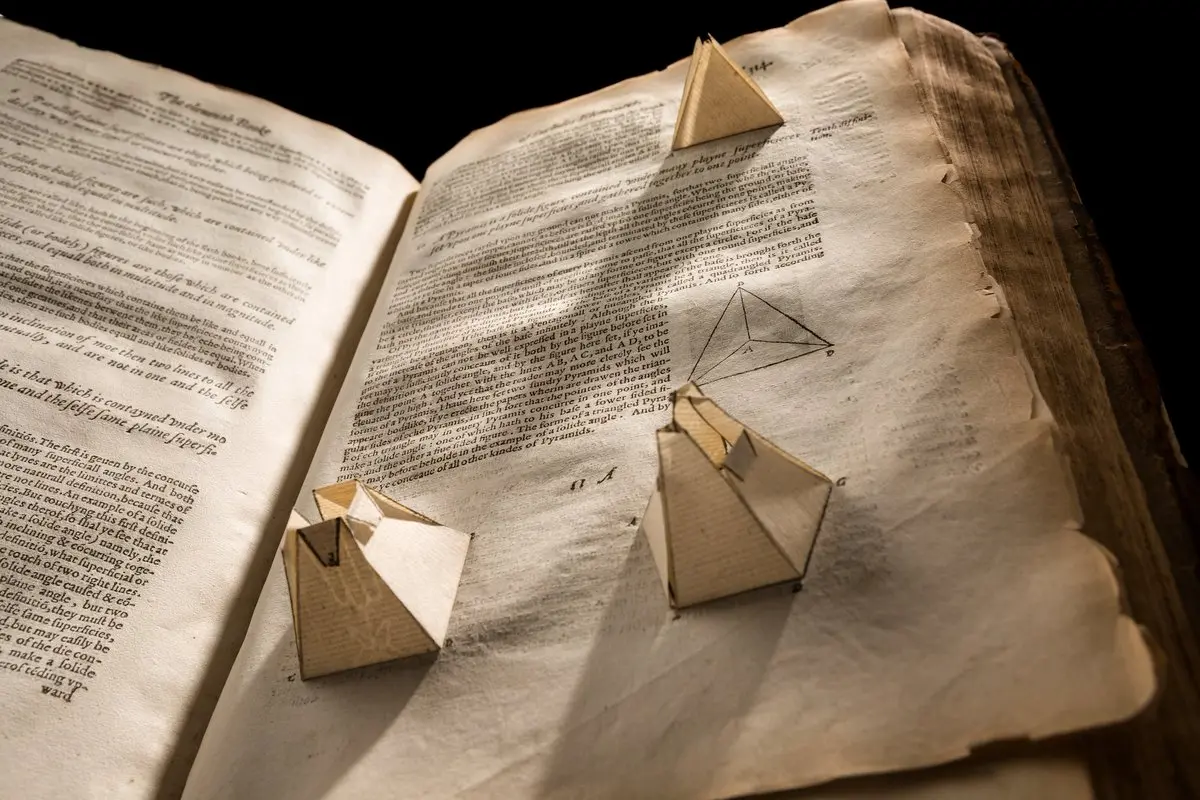
Taschen published a facsimile edition in 2010: 396 pages, 8.1 × 10.1 inches, hardcover, every page of the original reproduced in facsimile. As a gift for a mathematician it works on two levels at once — the history of mathematics and the history of visual design; it also looks exceptional on a shelf. For an even older precursor — Henry Billingsley's 1570 first English translation of Euclid, with its extraordinary three-dimensional pop-up geometry — there is a separate piece on Abakcus worth reading alongside.
11
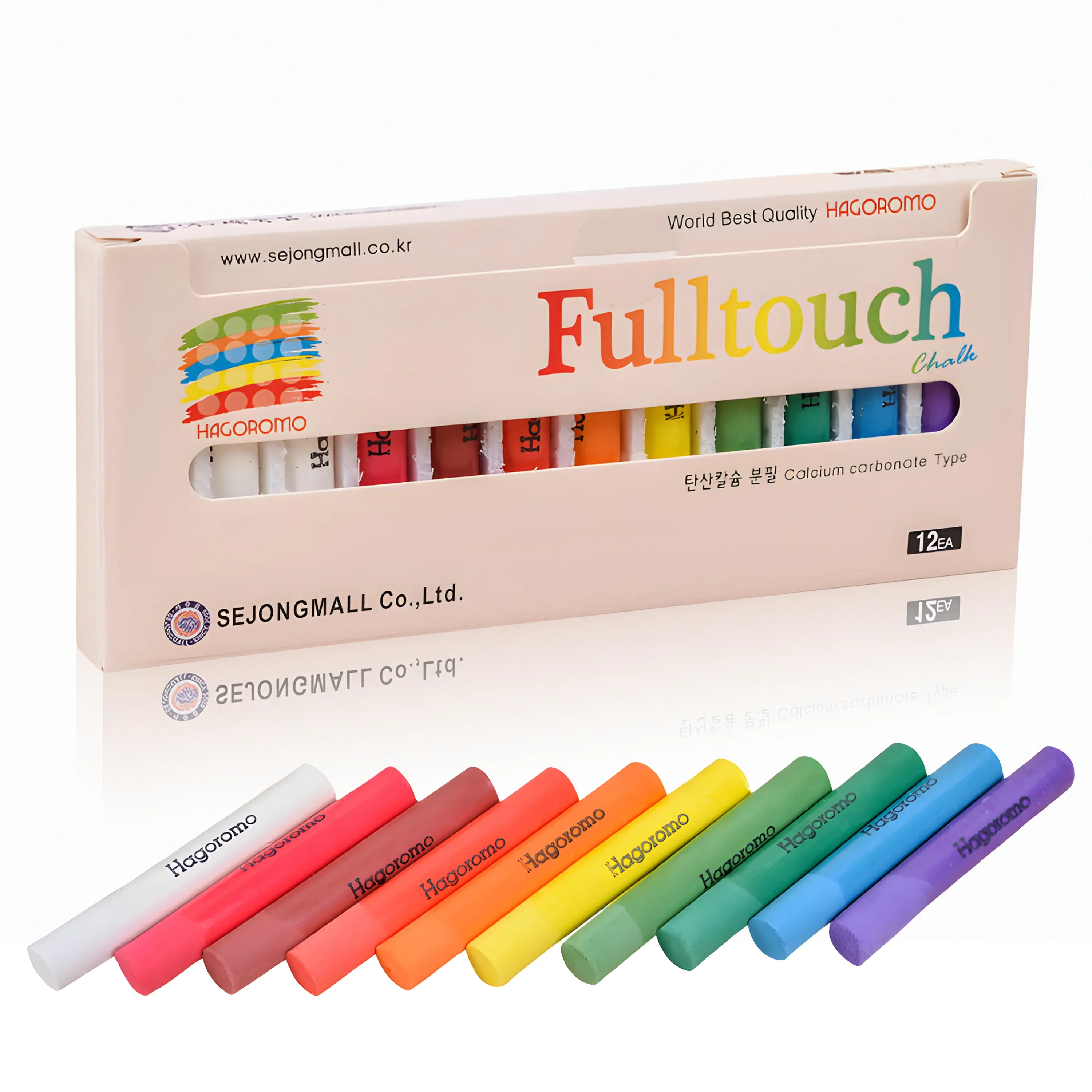
Hagoromo Fulltouch Chalk
Mathematical Culture · Japanese Craftsmanship
When the Japanese company Hagoromo Bungu announced it would close in 2015, mathematics professors around the world began panic-buying. Stanford's Brian Conrad was storing boxes in his office and selling sticks to colleagues; Berkeley's David Eisenbud talks about the legend that it is impossible to write a false theorem with this chalk — “but I've disproved that many times,” he adds.
Founded in Nagoya in 1932, the company had grown to produce 90 million sticks a year; what changed the blackboard writing experience was Hagoromo's coating — the chalk doesn't crumble in the hand, leaves almost no dust, glides smoothly, and lasts up to four times longer than other brands. Before closing, the company's formula and machines were acquired by Korean importer Shin Hyeong-seok; the original recipe continues to be manufactured in South Korea. We've written about it in full — the complete story of the panic-buying, the acquisition, and what exactly is in that coating. If your mathematician has a blackboard, this is the most practical and most culturally loaded gift on this list.
12
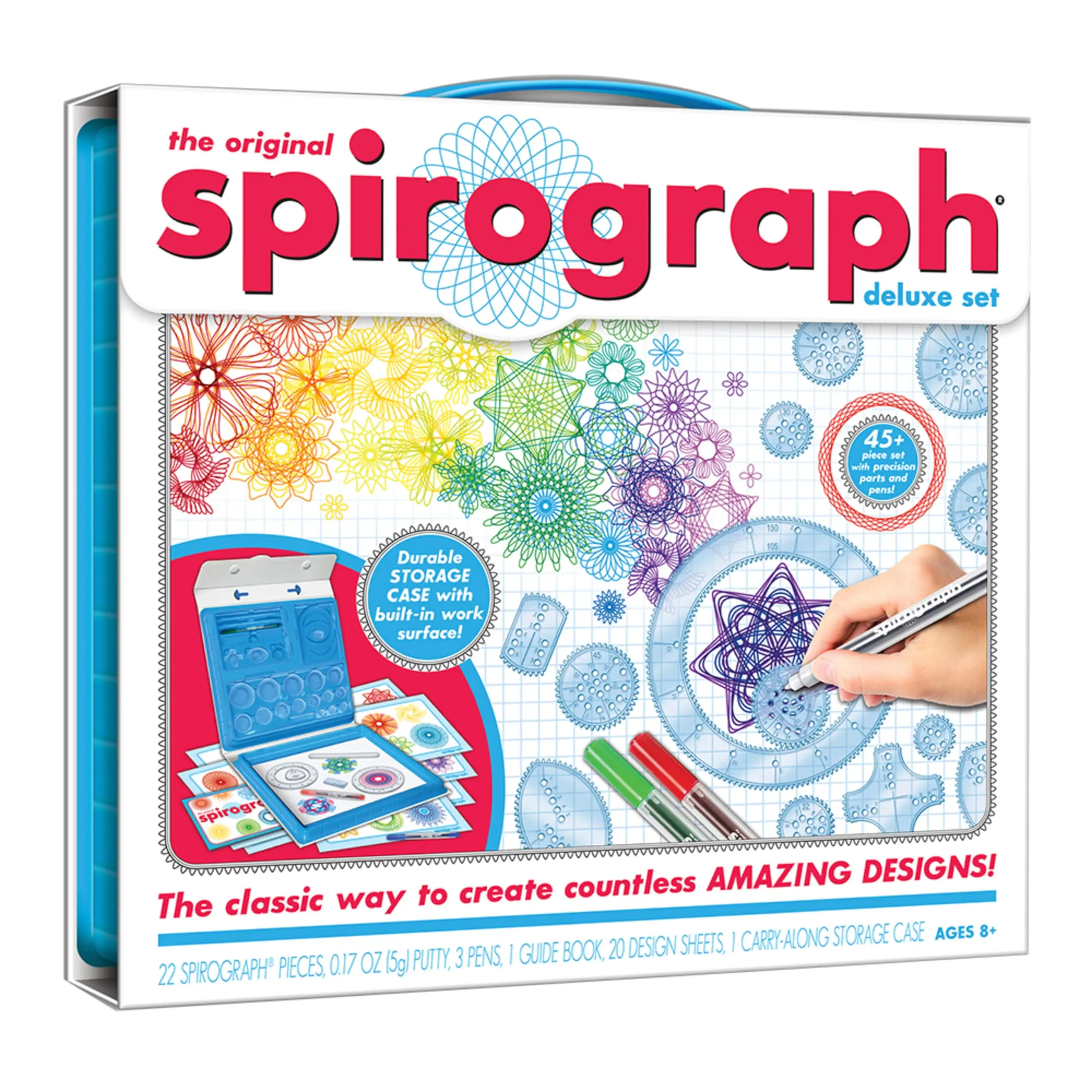
Spirograph Deluxe Design Set
Hypotrochoid · Epitrochoid · Gear Geometry
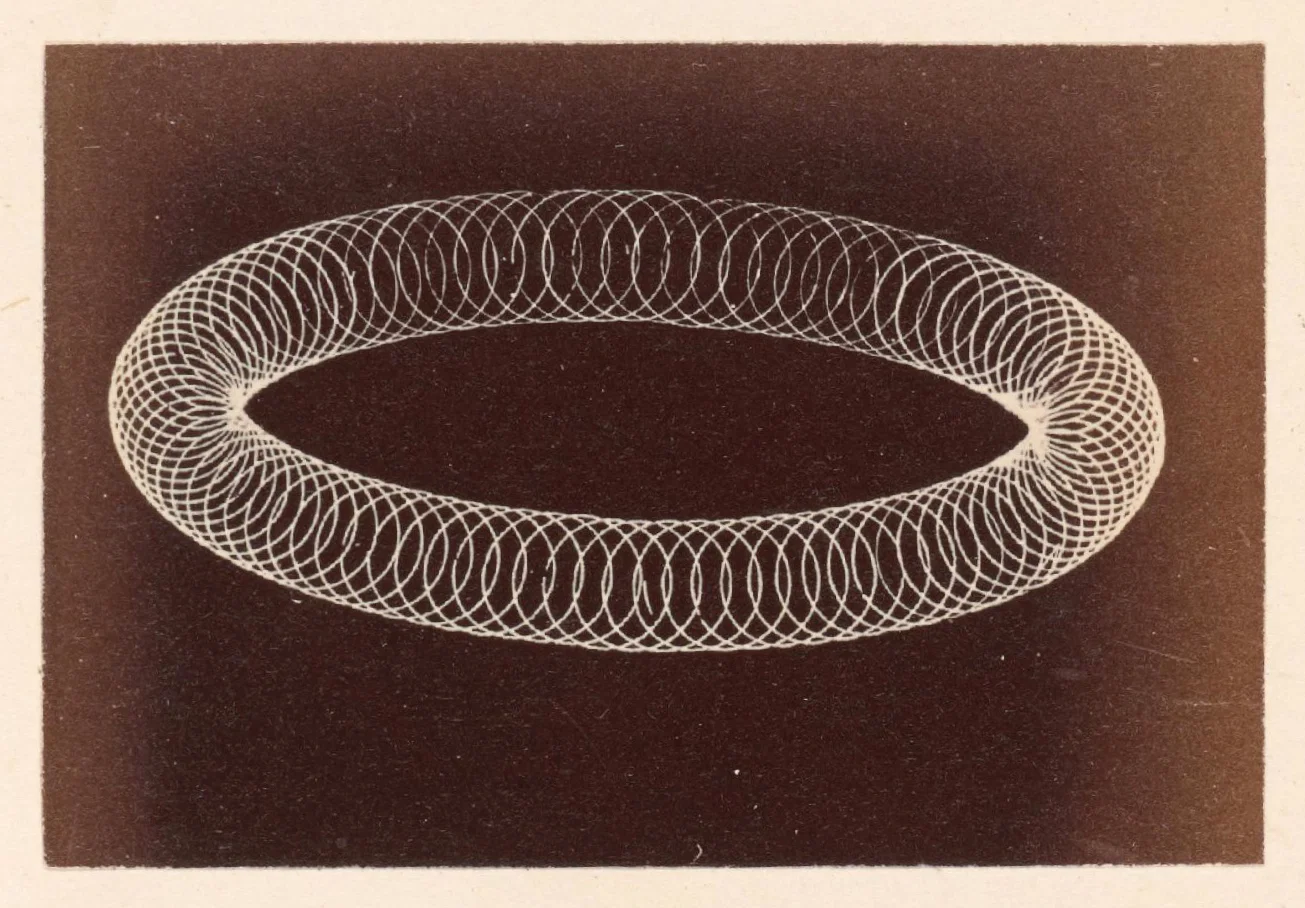
Denys Fisher brought a mechanical drafting tool to the 1965 Nuremberg Toy Fair. He didn't expect it to be treated as a toy — but Kenner, which licensed it for mass production that same year, sold it as one, and Spirograph became one of the world's best-selling toys. The mathematics behind it was hypotrochoid and epitrochoid curves: the equation of the path traced by a pen hole as one gear rotates inside or outside another had been a classic problem in analytic geometry since the 17th century.
The curves produced change depending on the gear combination you set — some look like stars, some like flowers, some approximate Lissajous figures. The Deluxe set comes with 22 gears and rings, 3 pens, design paper, and a carry case. Give it not as a childhood memory, but as the hands-on version of differential geometry.
13
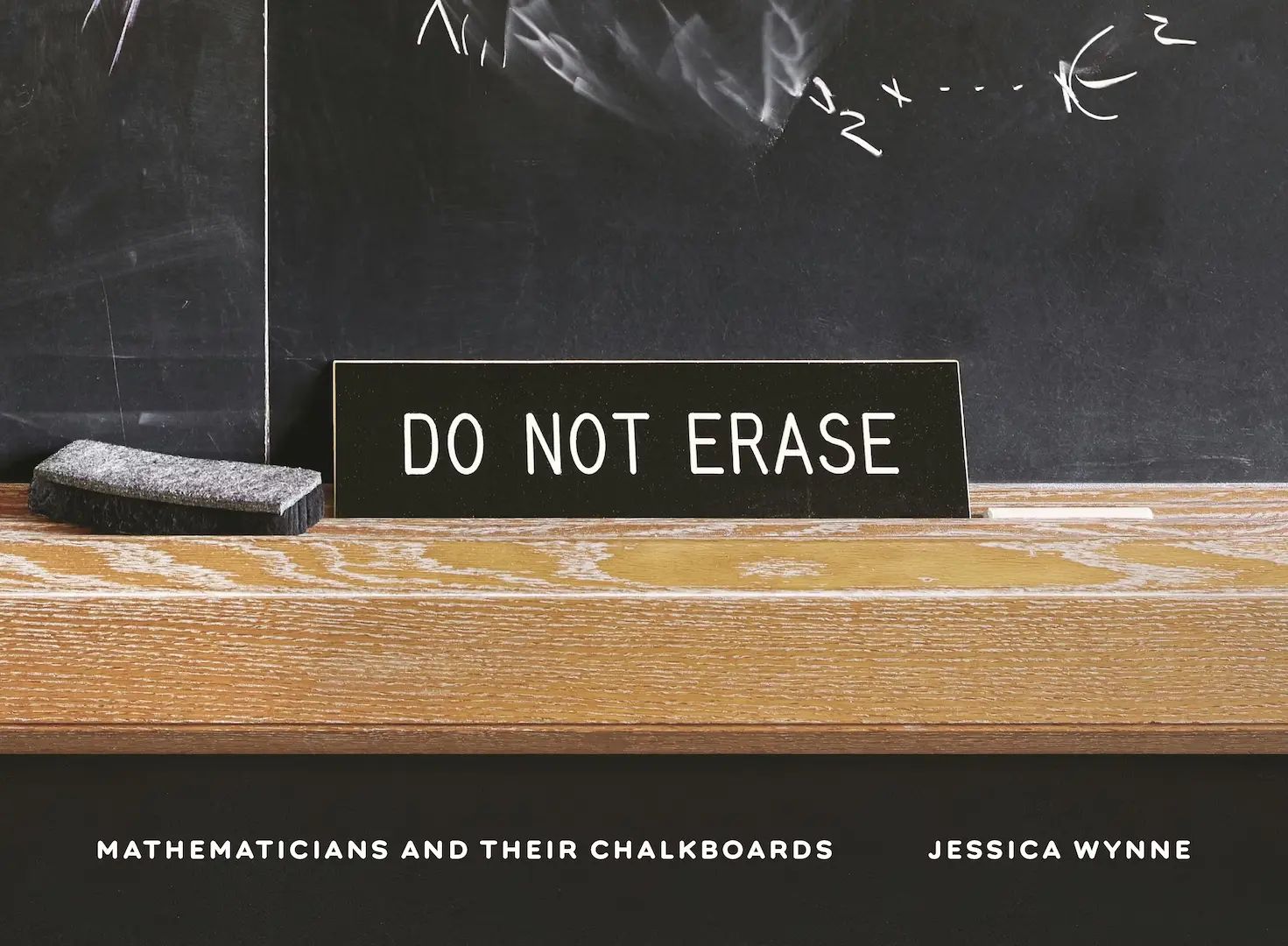
Do Not Erase: Mathematicians and Their Chalkboards
Photography Book · Princeton University Press · 2021
Jessica Wynne, who teaches photography at the Fashion Institute of Technology, planted the seed for this project while watching her Cape Cod neighbors — married mathematicians Amie Wilkinson and Benson Farb. She wanted to photograph the traces Farb left leaning over the dining table sketching symbols on paper — she didn't understand them, and that incomprehension made her more interested, not less. She photographed the chalkboards of more than a hundred mathematicians from around the world, with a single rule: no whiteboards, no glass.
The resulting book was published by Princeton University Press in 2021 and won the AAP PROSE Award. Each spread pairs a photograph of a chalkboard with an essay by that mathematician, in their own voice, about their work. Jordan Ellenberg called it “an unprecedented document of creativity frozen in calcite.” Alejandro Guijarro did something adjacent for particle physics — three years photographing blackboards at CERN, Cambridge, Stanford, and Oxford. Pair this book with a box of Hagoromo chalk and the effect doubles.
If you have a product you'd like to see added to this list, write to us at abakcus.com. More to come.