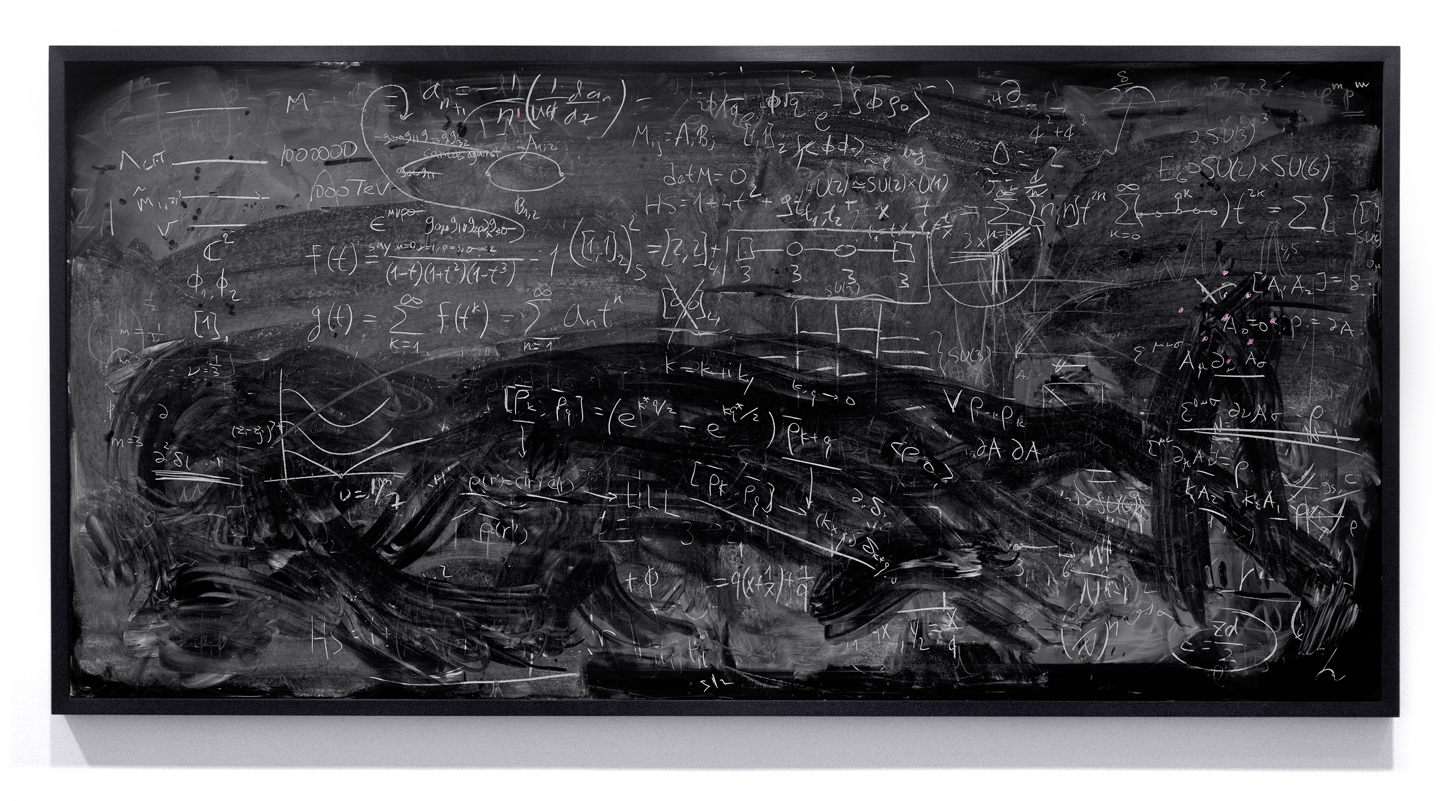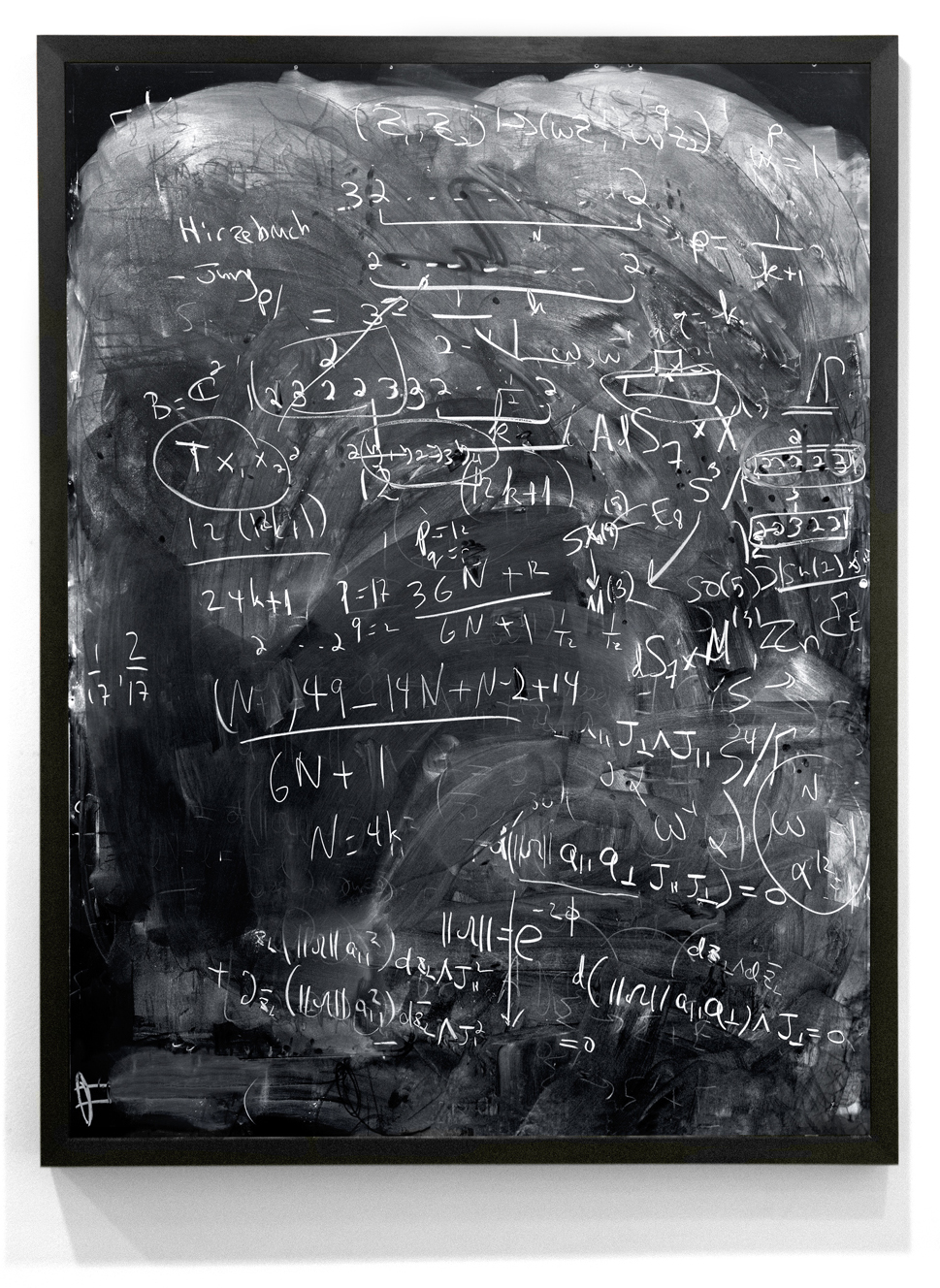
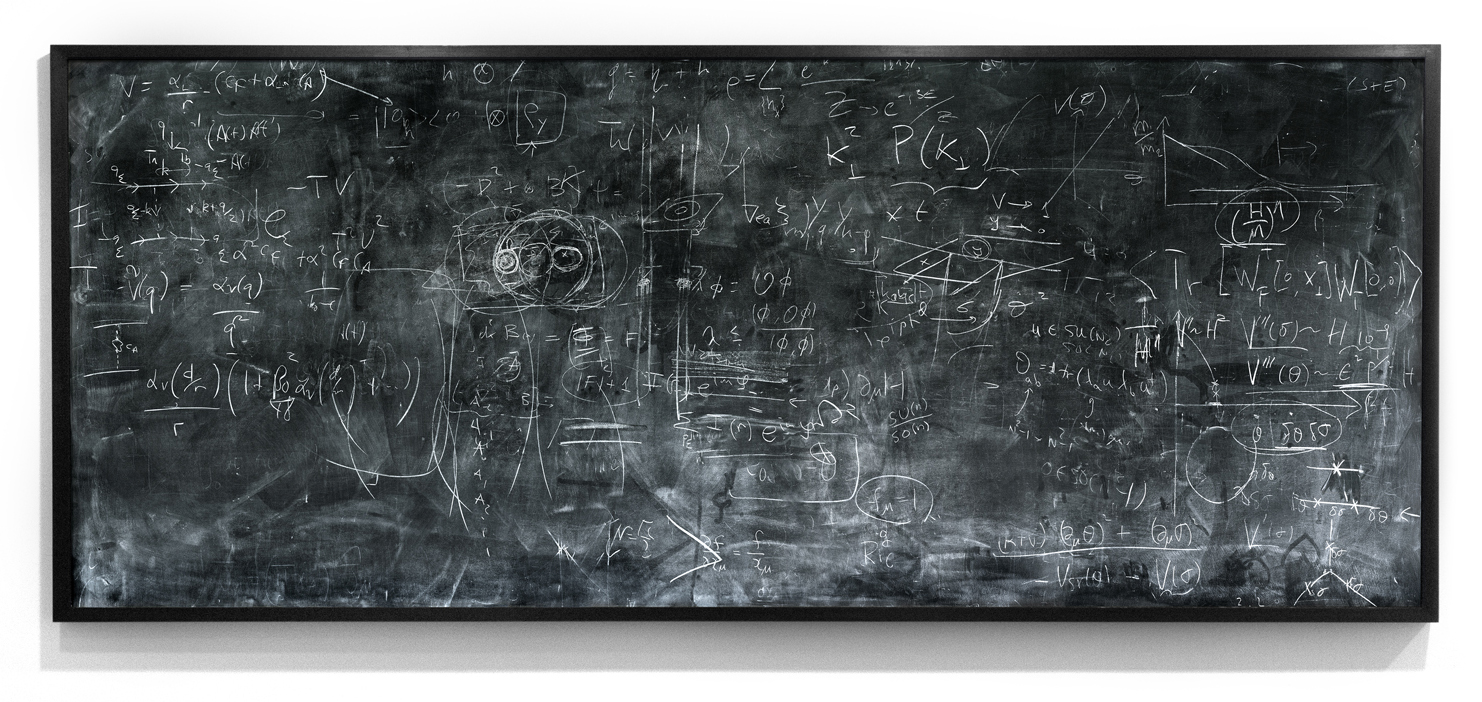
The lecture is over. The physicist has collected their notes and left the room. On the blackboard behind them: a surface dense with chalk — operators, Greek letters, arrows connecting states, a half-erased wave function, a diagram that might be a Feynman diagram or might be something else entirely. Within the hour, a caretaker will wipe it clean.
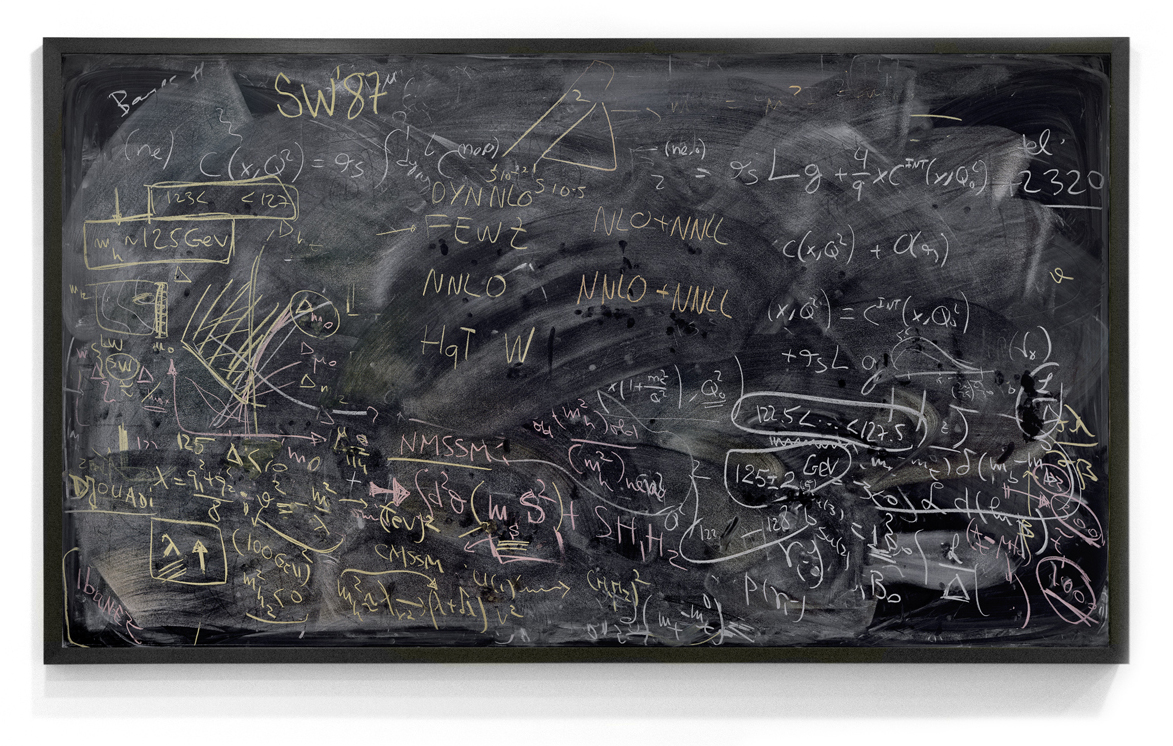
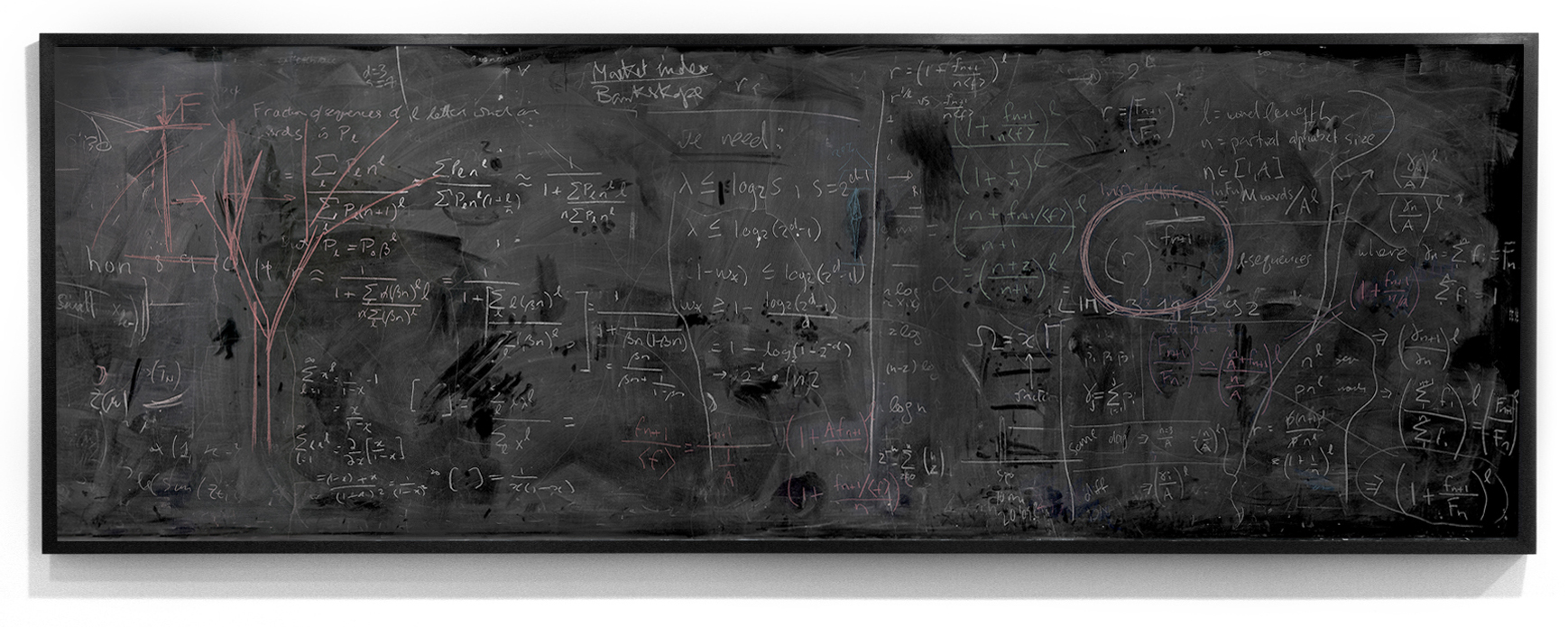
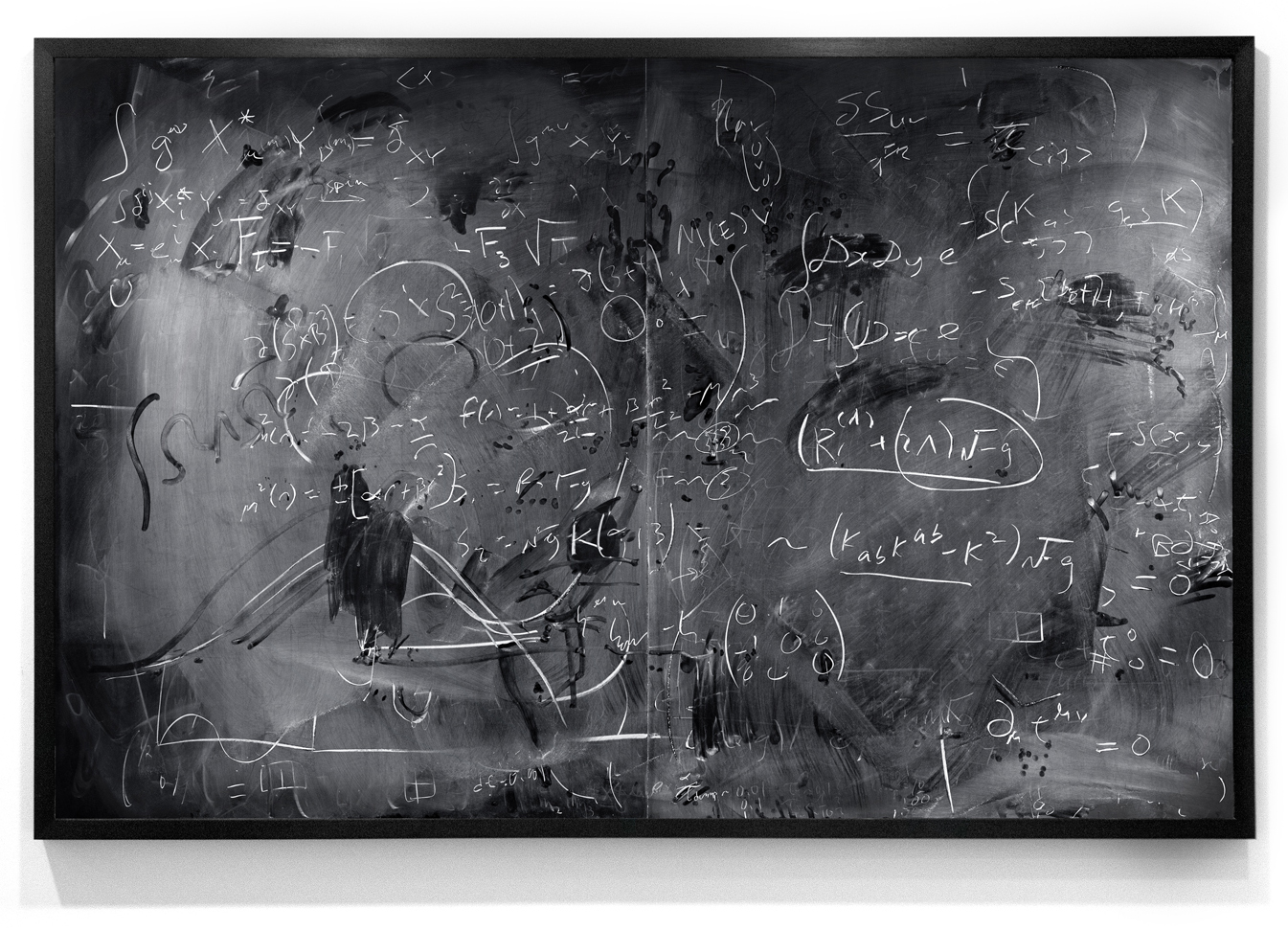
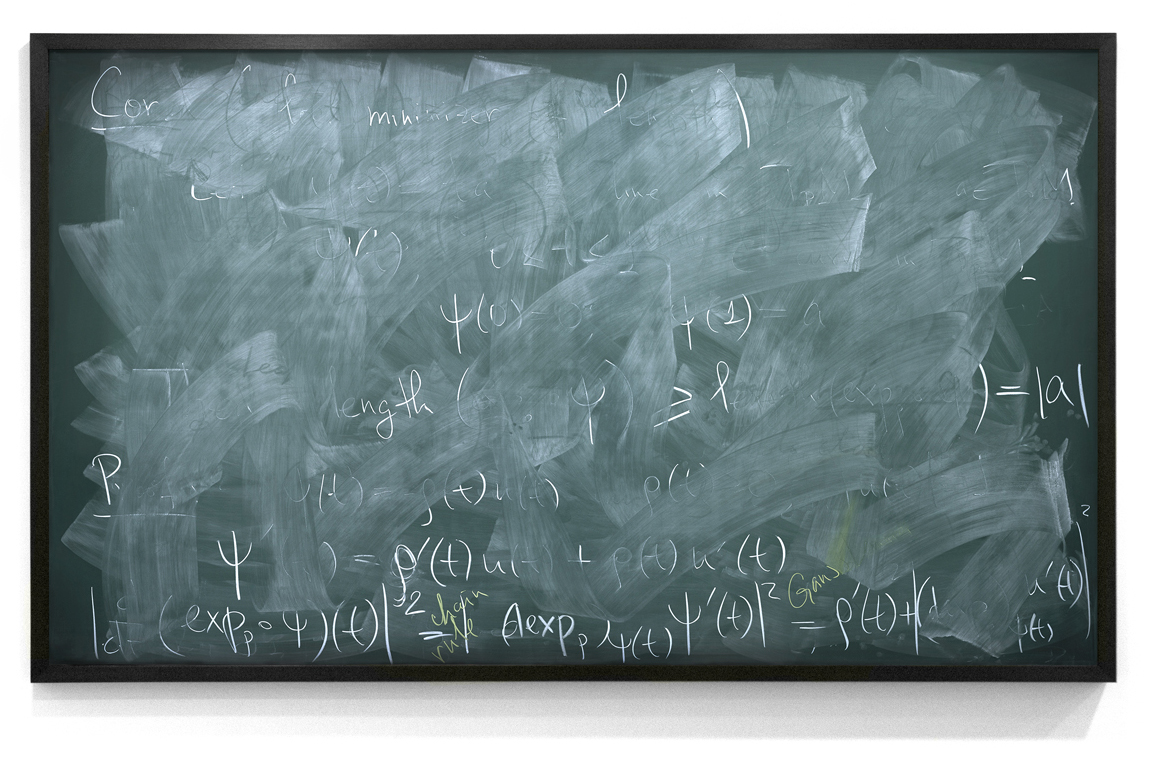
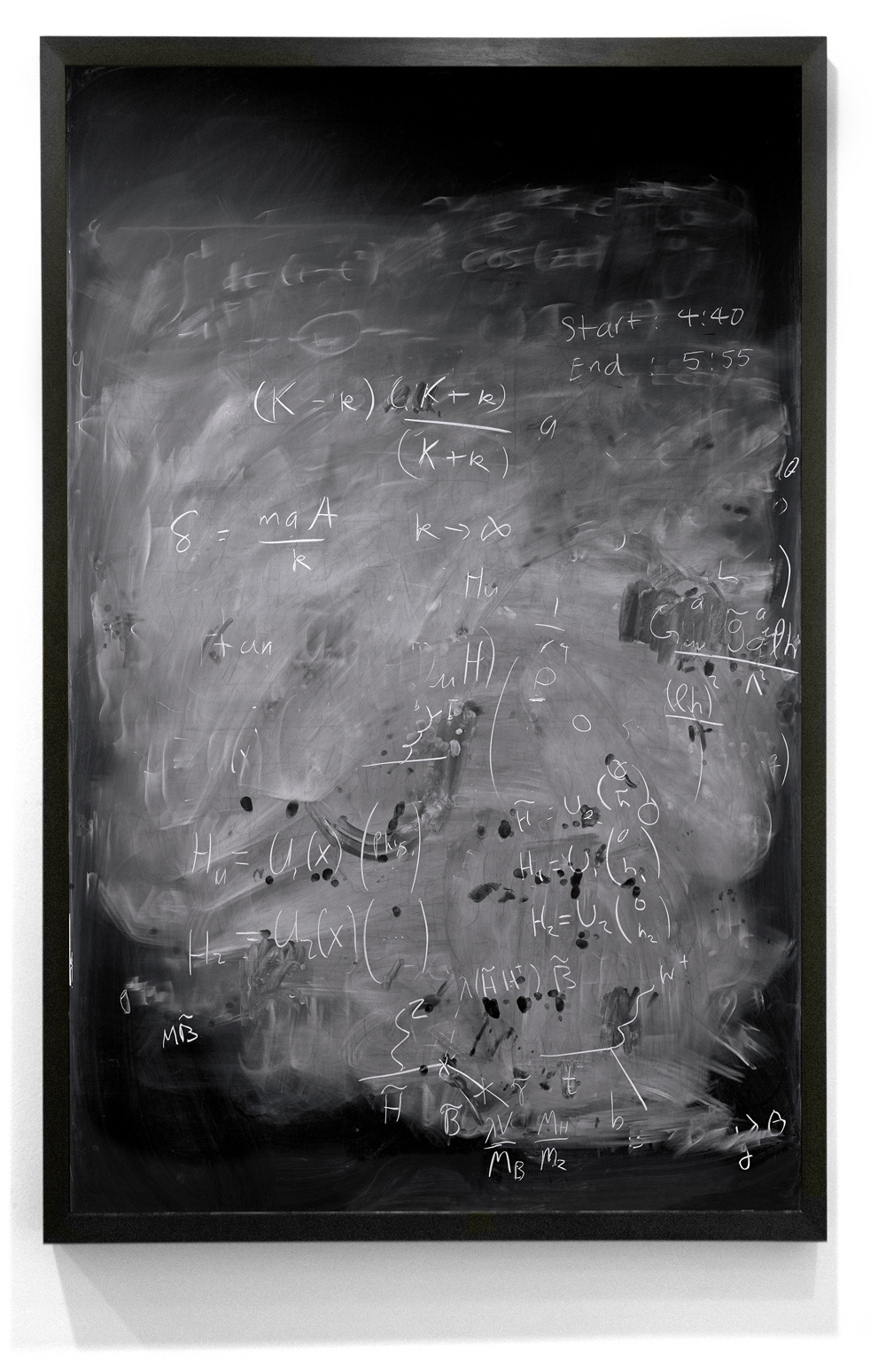
Alejandro Guijarro arrived in between. Born in Madrid in 1979, trained at the Royal College of Art in London, he spent roughly three years doing exactly this — traveling to the quantum mechanics departments of the world's most prestigious universities and photographing their blackboards immediately after lectures. No staging, no physicists, no context. Just the board, a large-format camera, and whatever the previous hour had deposited there. The resulting series is called Momentum.
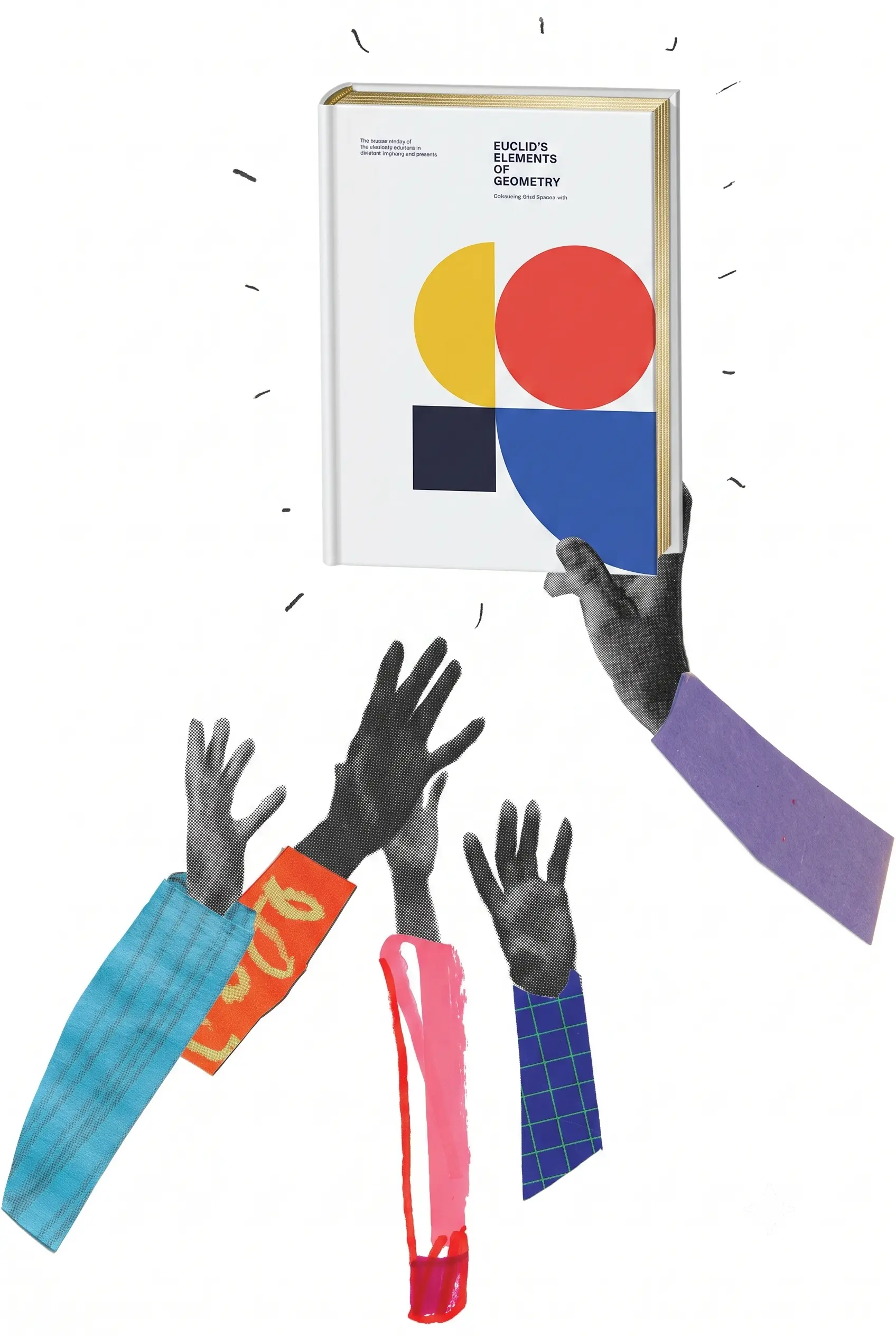
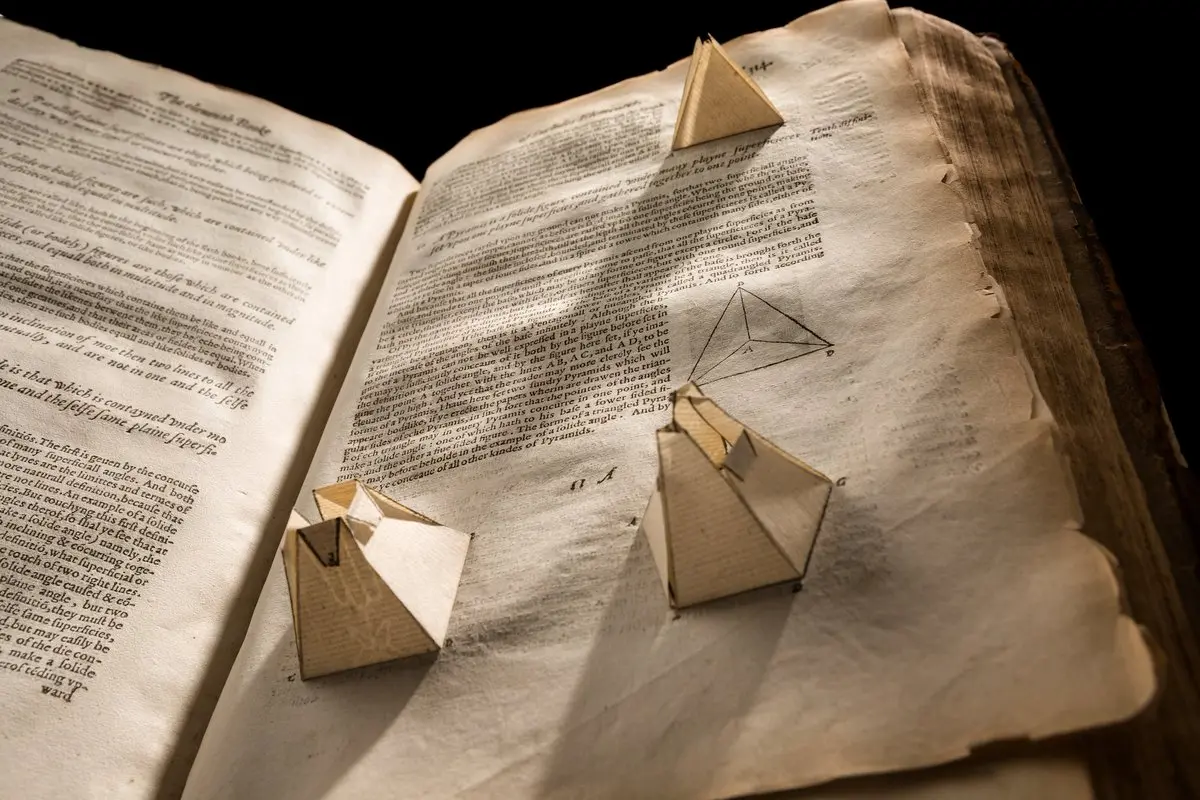
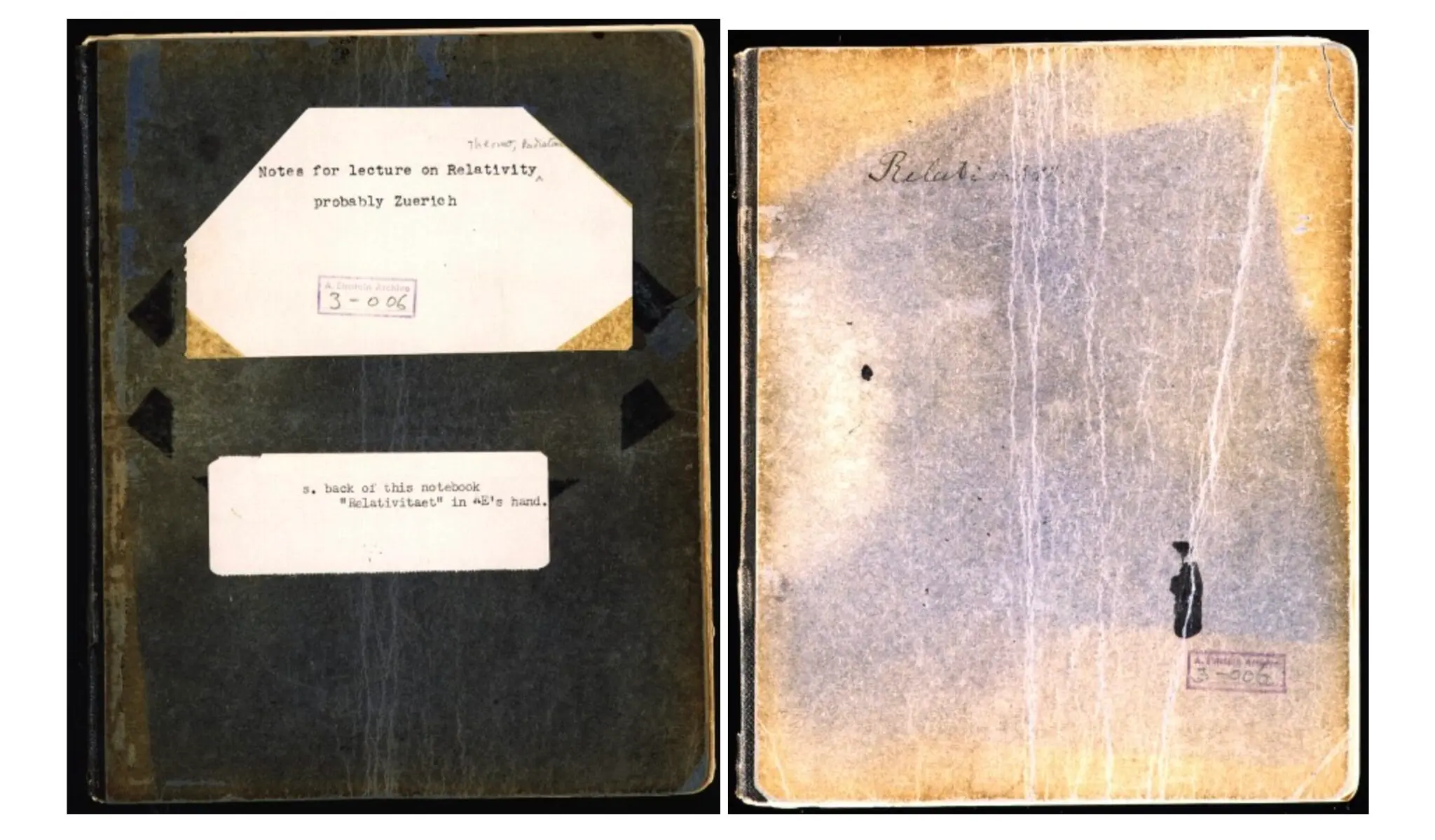
It sits in a tradition of art that treats scientific thinking as visual material. The geometric diagrams in Euclid's Elements are drawings before they are proofs. The notebook pages of Roger Penrose are indistinguishable, at a glance, from abstract expressionism. Guijarro's photographs make this latent connection explicit by doing almost nothing — he photographs what was already there and hangs it on a gallery wall.
The Institutions
Guijarro traveled to the places where the hardest thinking in physics currently happens. Cambridge, Oxford, Stanford, UC Berkeley, SLAC National Accelerator Laboratory, CERN in Geneva, the Instituto de Física Corpuscular in Valencia, and MIT. He entered these rooms with a single operating principle: minimum interference. No detail of the lecture hall appears in the photographs. The blackboard frame is cropped out. What remains is only the surface — the layered record of the hour before.
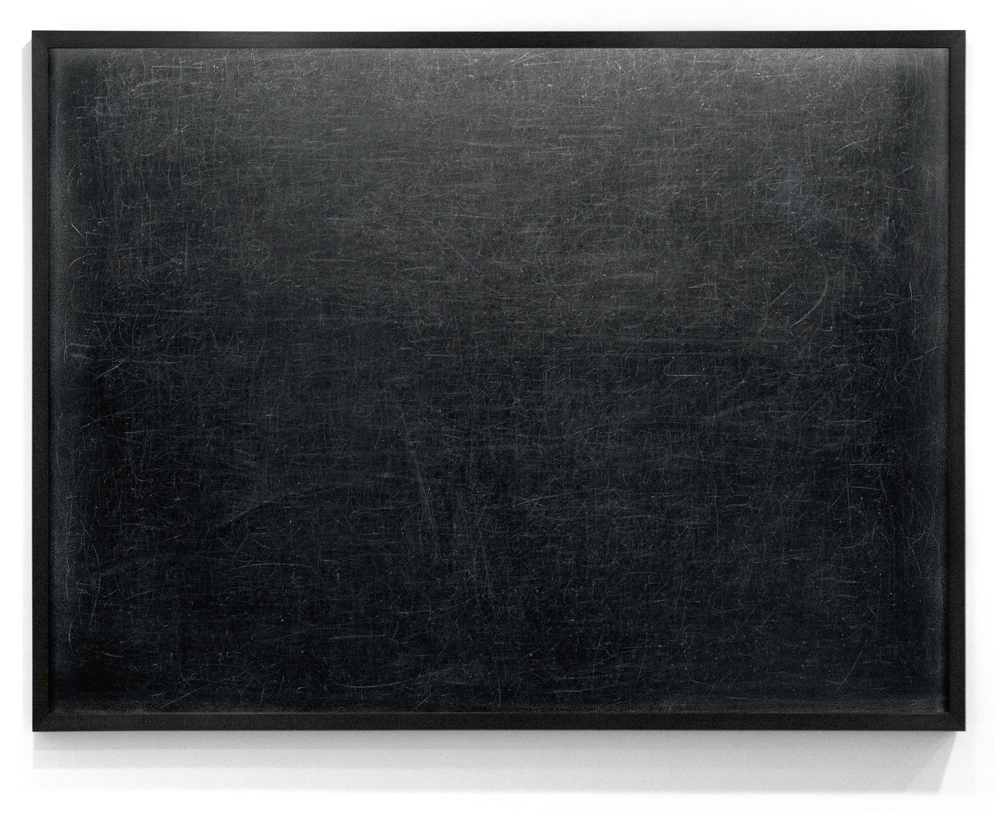
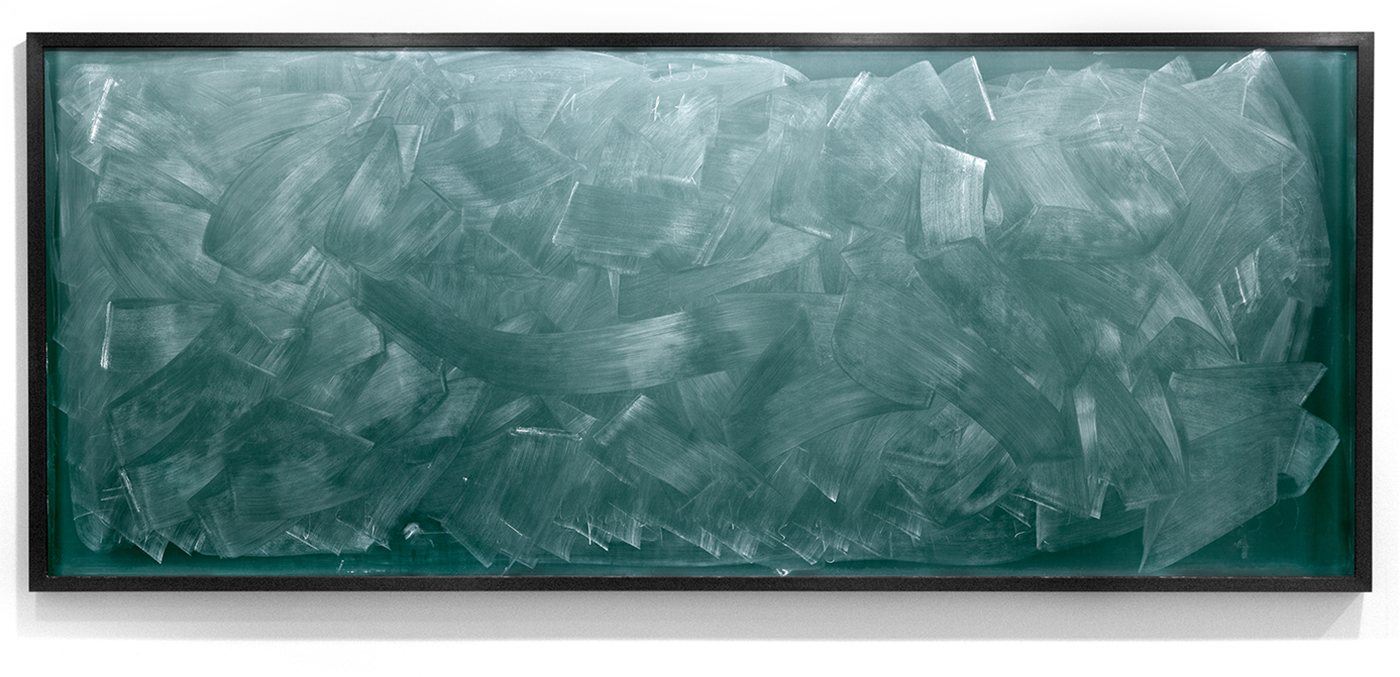
“Before he walks into a lecture hall Guijarro has no idea what he will find. He begins by recording the blackboard with the minimum of interference. No detail of the lecture hall is included, the blackboard frame is removed and we are left with a surface charged with abstract equations.”
— Alejandro Guijarro, Artist Statement
What Quantum Mechanics Looks Like
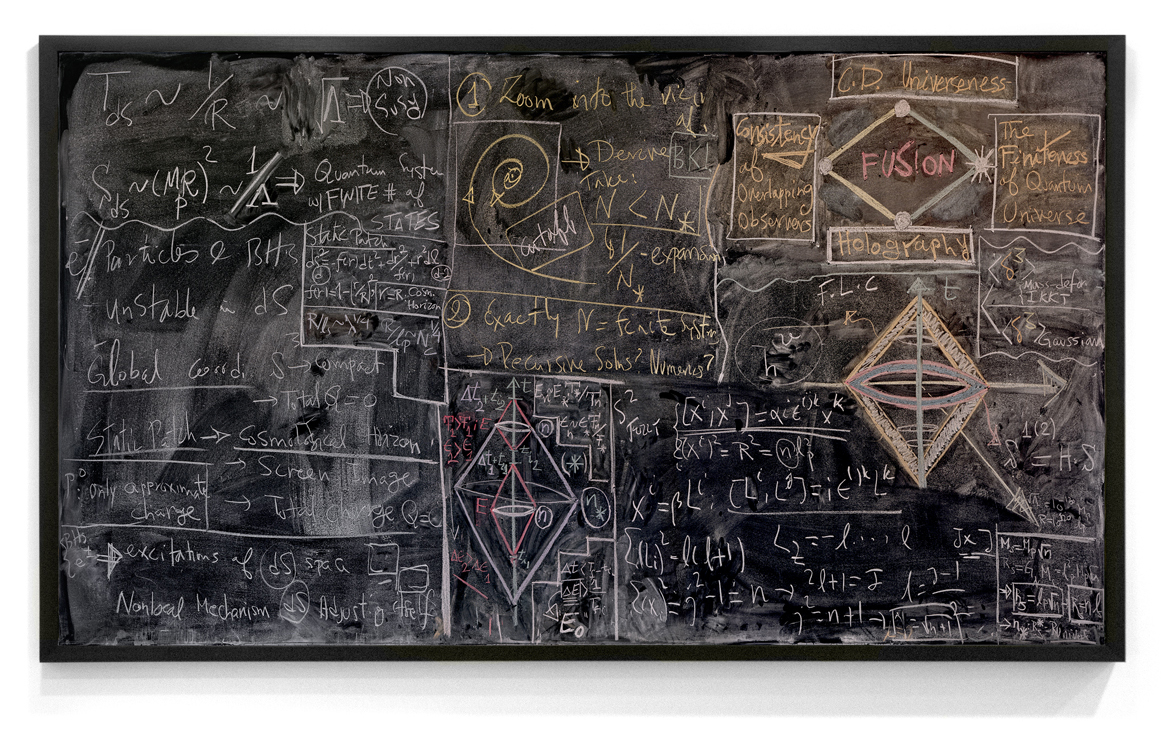
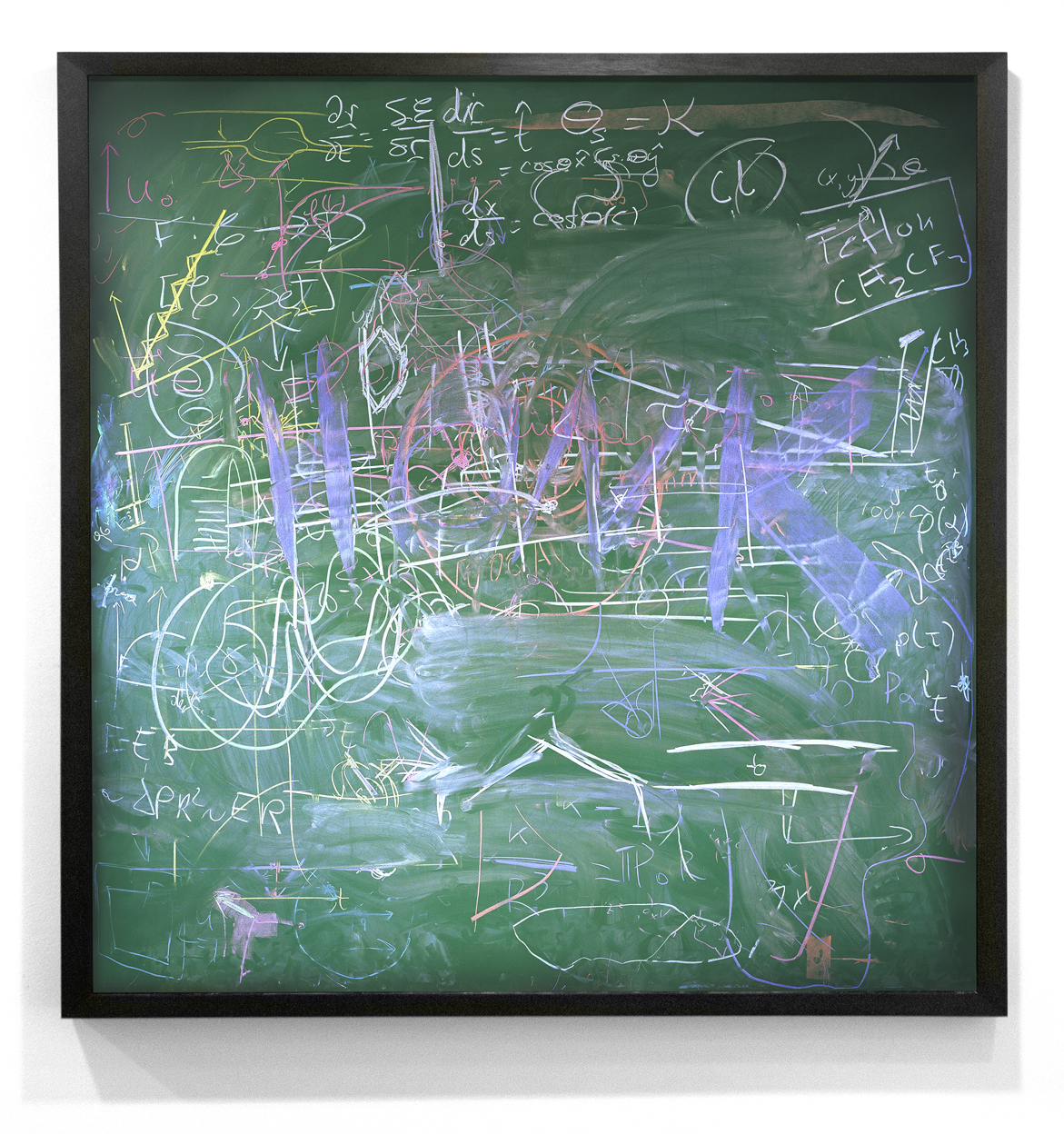
The photographs divide roughly into two types. Some boards are dense with notation — equations chase each other across every inch of available surface, colors clash where different lecturers have added to the same session, diagrams interrupt strings of symbols, words appear suddenly amid pure mathematics. These boards document the physical texture of a working physics lecture: not elegant, not clean, but alive. They have much in common with the annotated working papers behind something like the Inkala Sudoku — knowledge as evidence of effort, not performance of ease.
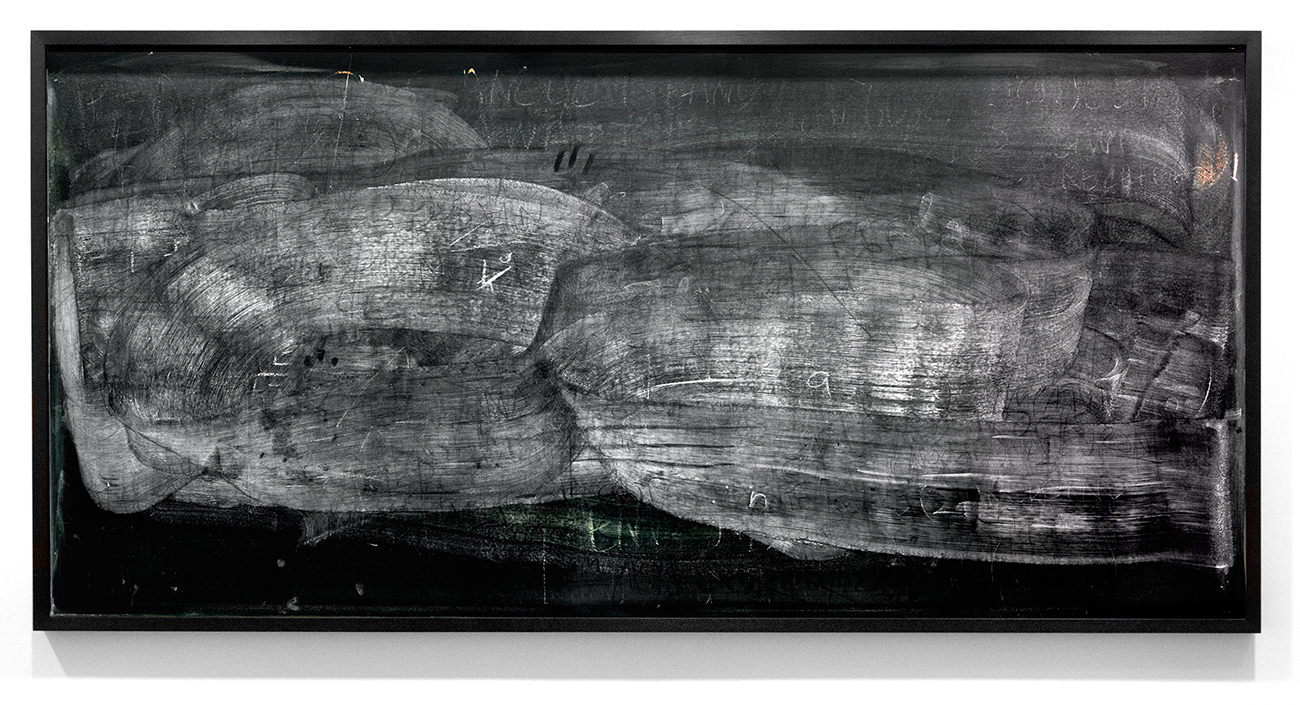
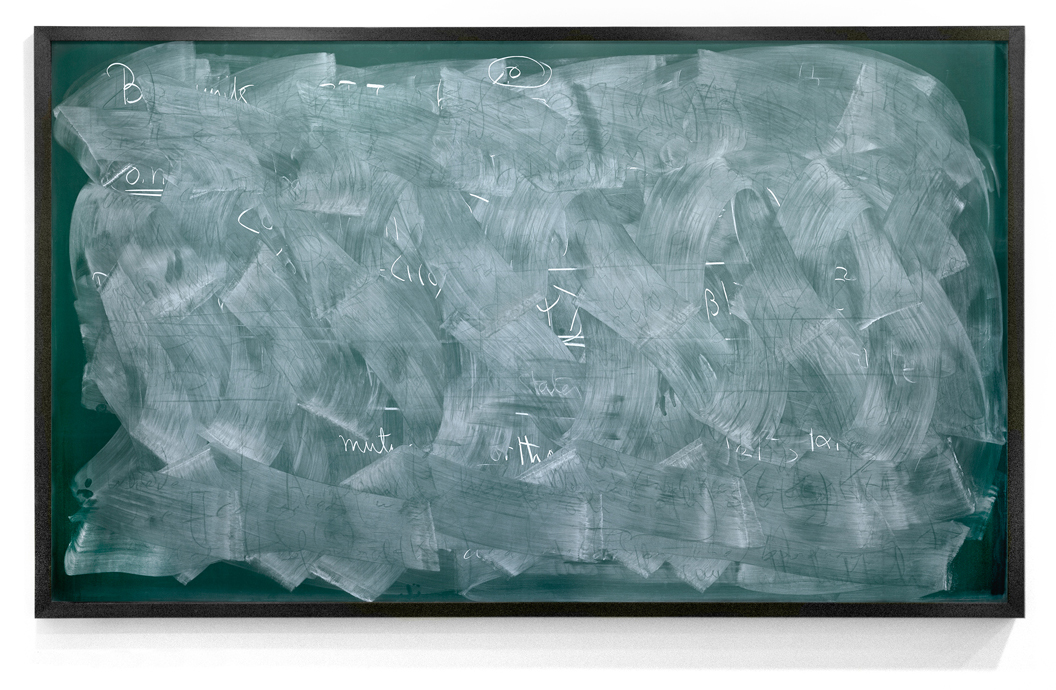
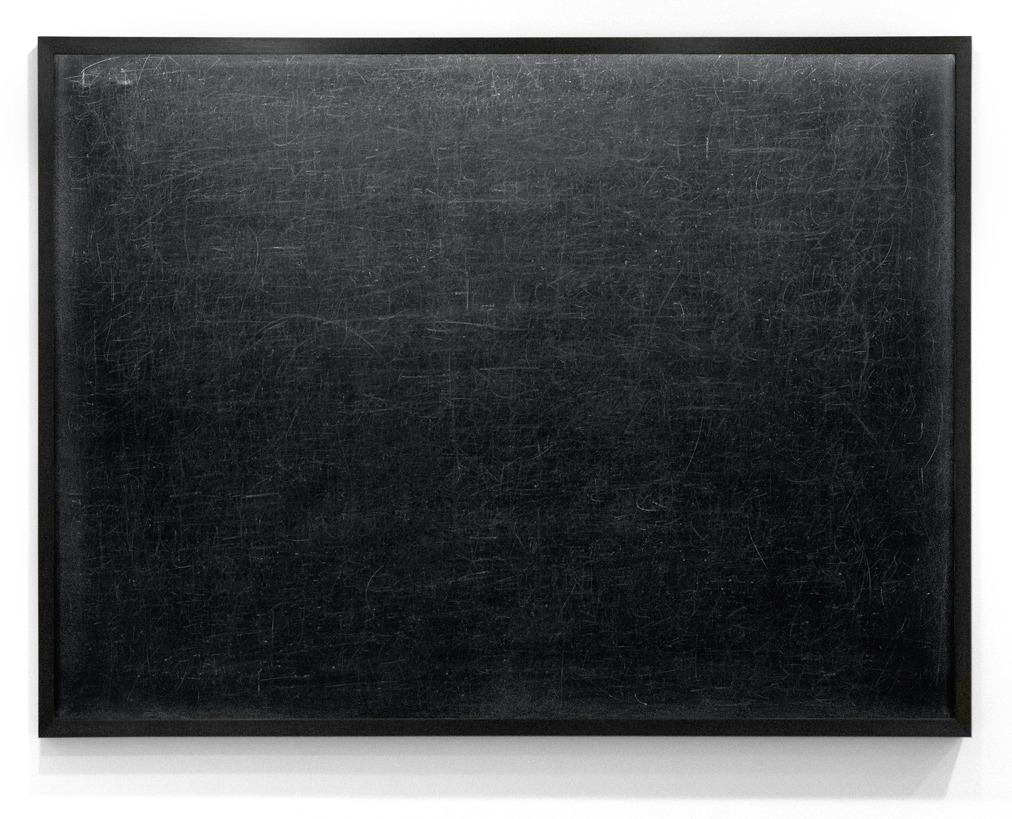
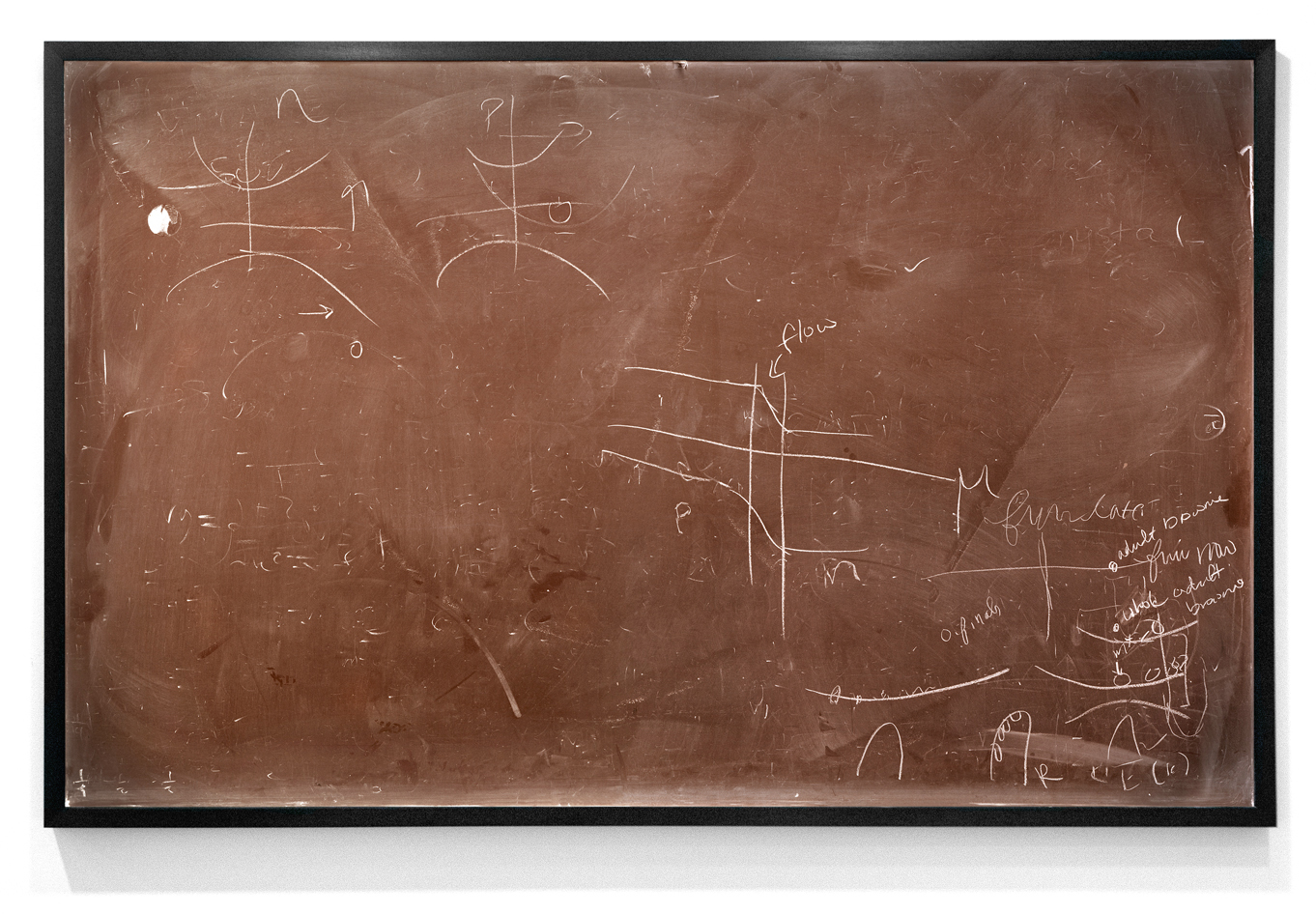
Others have been erased — not cleanly, but substantially. What remains is the chalk dust of the act itself: broad arcs left by the eraser, ghost traces of equations that barely survived, layers of previous sessions showing through the grey-green haze. Guijarro's own best photograph, as he described it to The Guardian, is one of these: a Cambridge board wiped by a caretaker who had no idea he was making anything. The marks look, as Guijarro put it, like Cy Twombly or Jackson Pollock. He showed the photograph to the caretaker afterward. The caretaker was surprised.
The Scale Decision
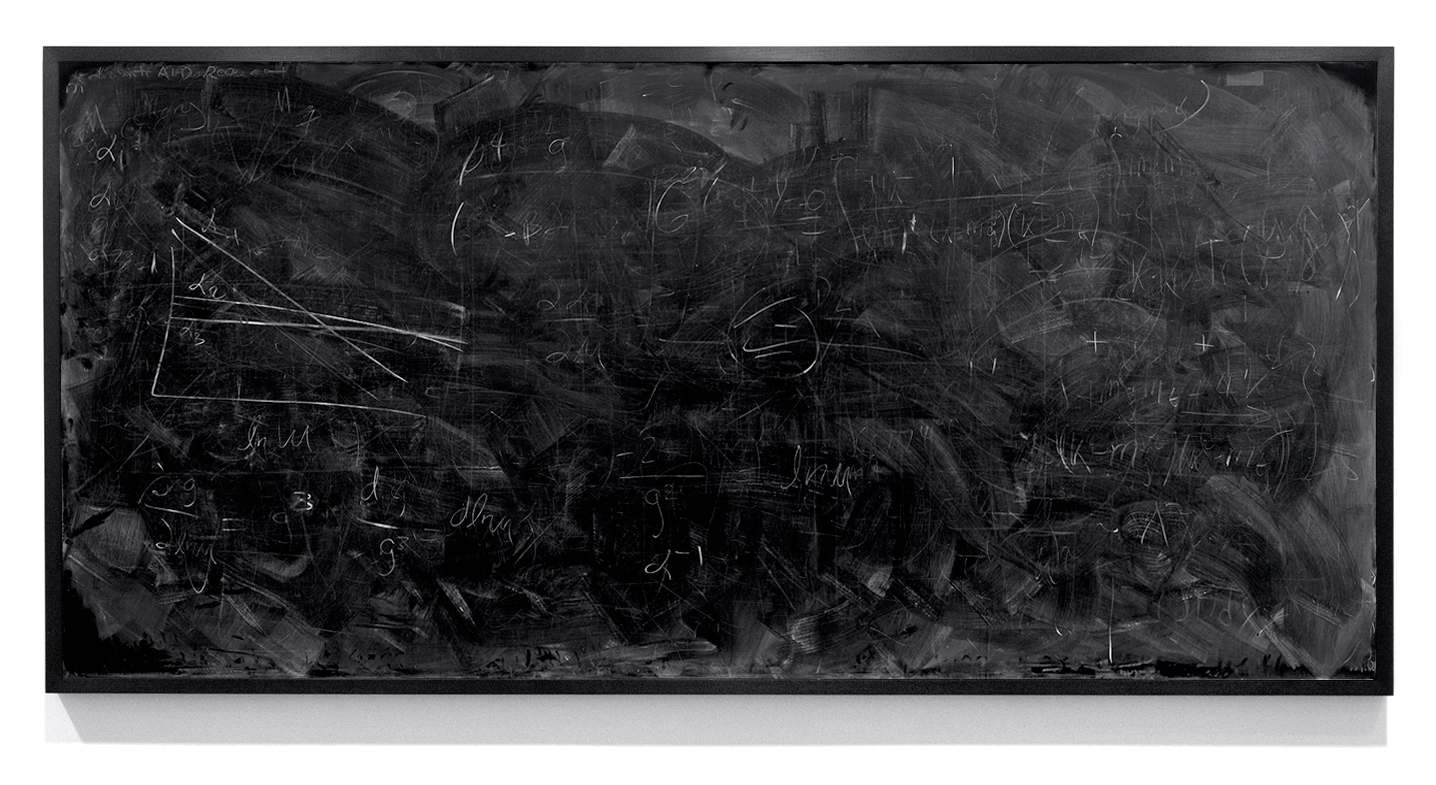
One technical choice determines the entire experience of seeing these works in person: Guijarro prints every photograph at exactly the same size as the original blackboard. When you stand in front of Cambridge I, 2011 in a gallery, you are standing exactly as close to it as a student in the front row would have been. The scale is not approximate — it is measured and reproduced precisely.
A large institutional blackboard can run two meters wide. Printed at that scale, the chalk marks are actual size. The hand that made them becomes present in a way that a standard print does not allow. You are not looking at a record of the board. You are, in some functional sense, looking at the board.
The gallery format then does something strange: the blackboard, now a framed photograph hung on a white wall in clean light, has become a painting. Visitors who do not know what they are looking at often assume they are looking at a painting. The confusion is appropriate. That is precisely the territory Momentum inhabits.
The Palimpsest Problem
A palimpsest is a manuscript from which an earlier text has been scraped away and written over. The earlier text, never quite gone, bleeds through the new one. Every blackboard in the Momentum series is a palimpsest. The boards at Cambridge and Oxford and CERN are not erased between every use — layers accumulate. A faint equation from last week sits beneath a definitive one from this morning. The eraser does not erase so much as redistribute. Chalk is moved; some stays.
As critic Francis Hodgson observed, this makes the blackboards formally identical to the scientific process they record. Science advances by revision — by writing over what no longer works while leaving traces of why it had to go. The boards do not document finished knowledge. They document knowledge in the act of correcting itself. The algebra problems MIT set in 1869 are still recognizably the same questions — but the blackboards they were worked out on vanished within the hour.
Equations as Abstract Marks
There is a question the series refuses to resolve: are these photographs of meaningful marks or abstract marks? The answer is clearly both, and the refusal to choose between them is where the work lives.
A physicist looking at a board from the Stanford linear accelerator program reads specific things. The notation has meaning. The errors matter. The relationship between one symbol and the next is either correct or incorrect. For the physicist, these are not abstract marks at all.
For everyone else, they are nothing but marks. The density, color, pressure, and layering of chalk on a dark surface. The way the eraser's arc creates a landscape-like sweep across the lower third. The way multicolored chalk turns a board that could be a map into something that could be a painting by Basquiat — a comparison the gallery notes for Momentum make explicitly, alongside Twombly. The photographs hold both readings simultaneously. Neither cancels the other.
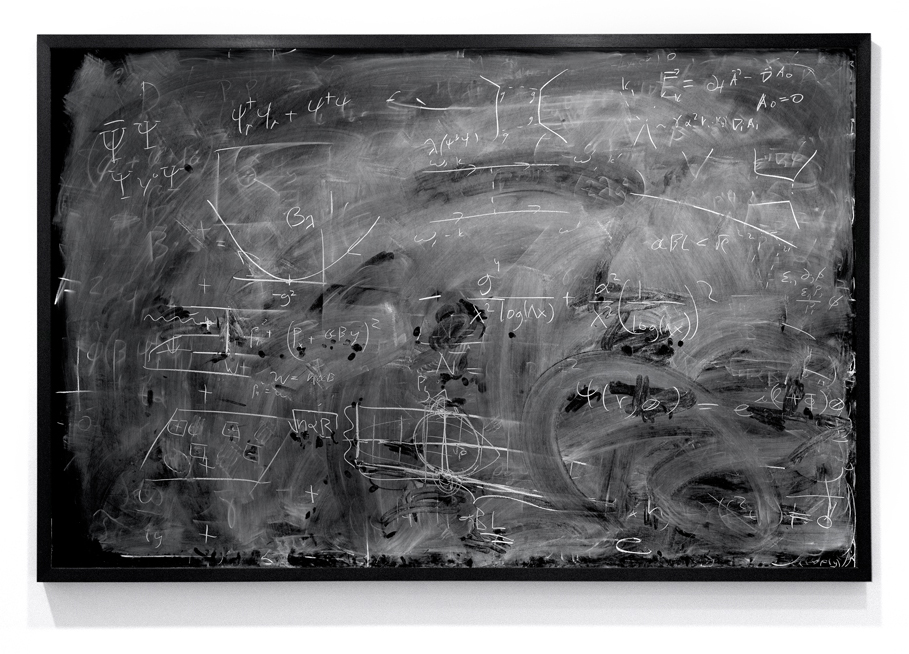
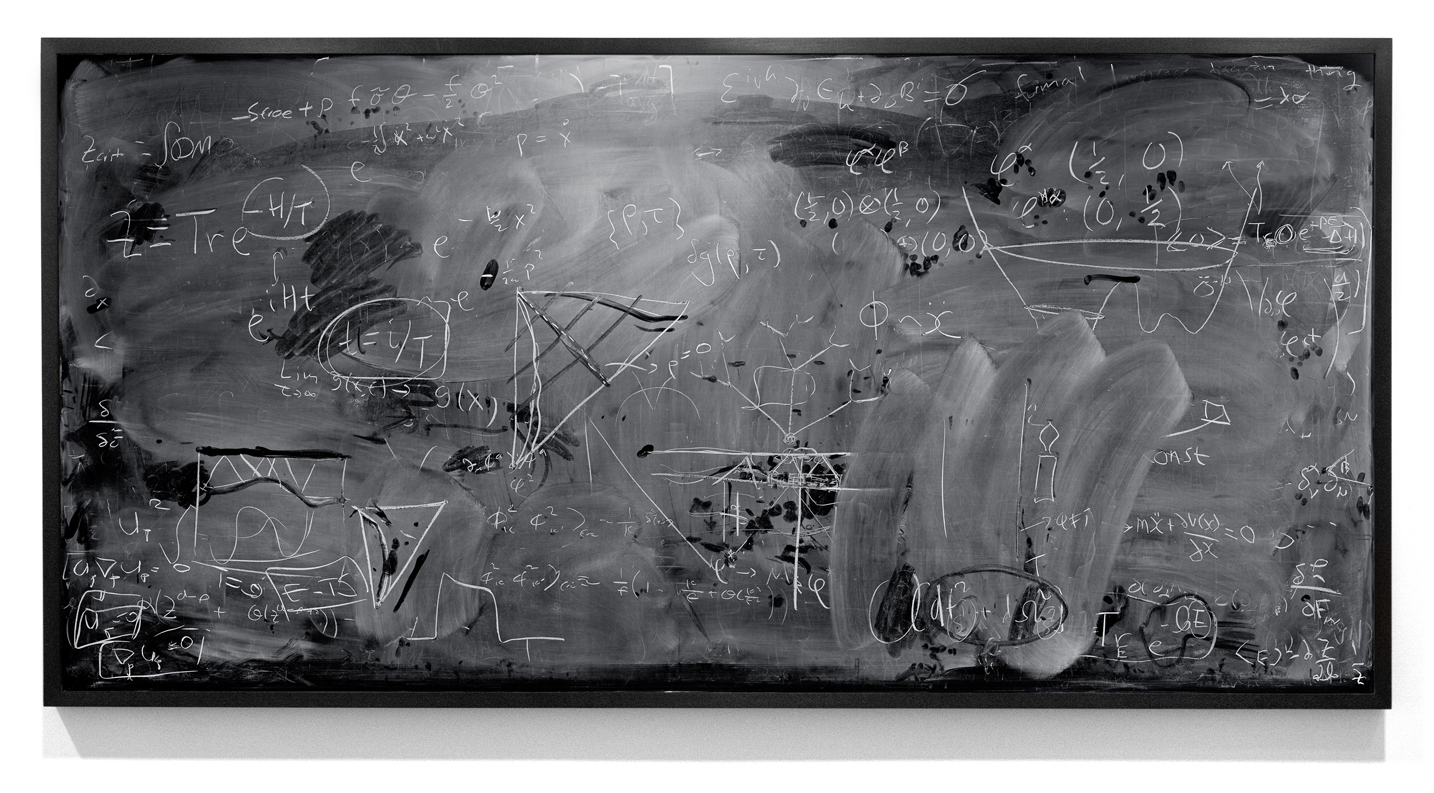
“These are not works that pretend to hold any kind of objective truth. Stripped of their wrapping, they are photographs of large drawings. Yet the process of finding, documenting and collecting them has a transmutational effect.”
— Alejandro Guijarro
The Challenge of Finding Blackboards
An unexpected practical difficulty: blackboards are disappearing. By the time Guijarro began this project, many physics departments had migrated to whiteboards or interactive screens. He found boards primarily in two places — lecture theatres that had not yet been renovated, and the private offices of senior researchers who had specifically requested them.
Working physicists who still use blackboards tend to use them for a particular kind of thinking: the sustained, non-digital kind that involves standing up, moving, erasing, and reconsidering. Some of the physicists Guijarro approached were puzzled by the project. They did not consider what they had written to be important — certainly not important enough to photograph. They did not see it as art. They saw it as yesterday's work, now superseded. Guijarro photographed it anyway.
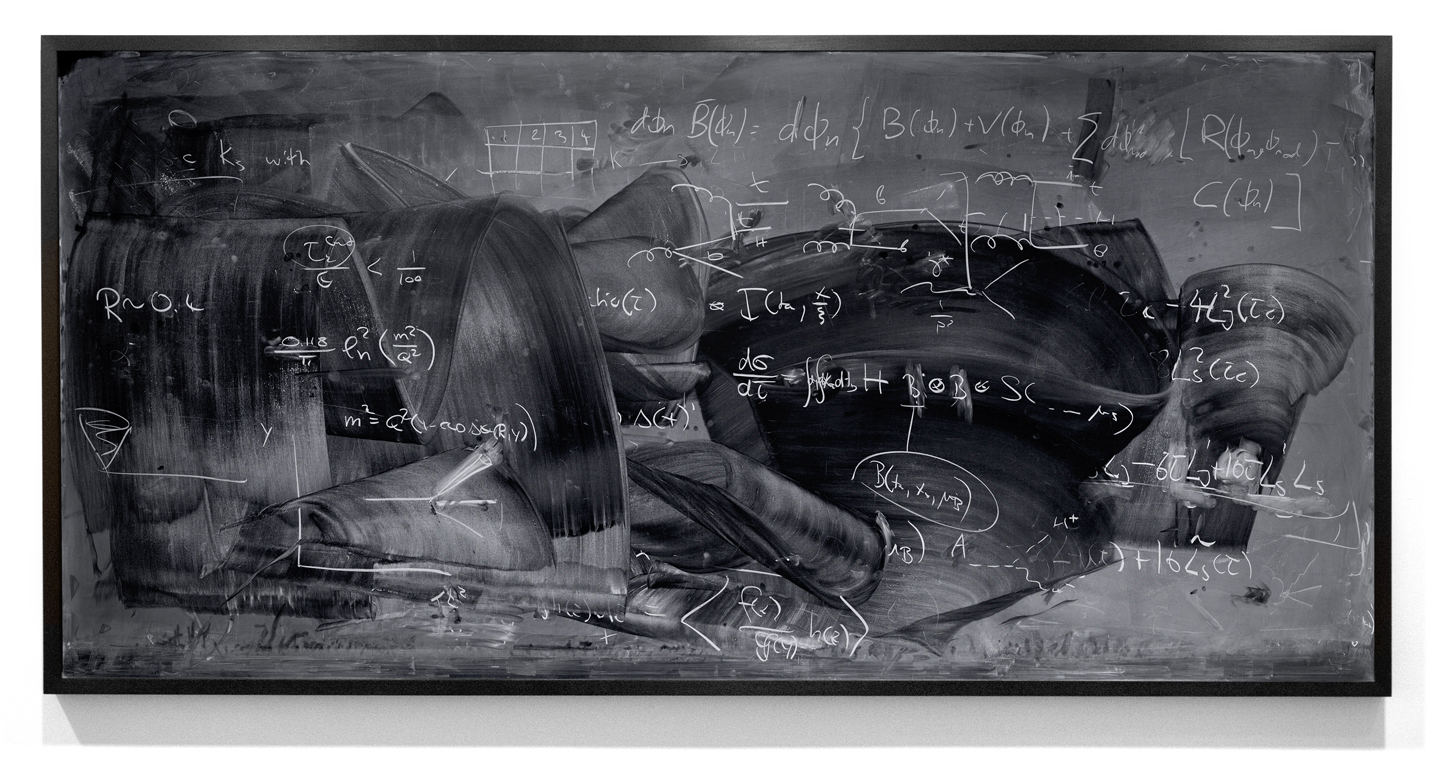
What the Photographs Actually Are
The cleanest description of Momentum is also the one Guijarro offers himself: they are photographs of large drawings, made by people who did not know they were drawing. The physicist wrote in chalk on a black surface, moved through the material problem at hand, and left. Photography intervened and reclassified it. A crime scene becomes a document. A face becomes a portrait. A lecture becomes a painting. The conversion is irreversible.
That gap — between the maker's intention and the final meaning of the mark — is where Momentum permanently resides. Three years of travel, careful measurement, and precise printing to land in a space that quantum mechanics itself might recognize: the meaning depends entirely on the observer.