
DIY · Card 01 · Physics · Chemistry
A raw egg, a glass of vinegar and an empty bottle. Two days later the egg slides through a mouth narrower than itself, and nobody touches it.
01The brief
Make a raw egg go into a bottle whose mouth is narrower than the egg. You are not allowed to push it, and it has to arrive whole.
1.4 L
of carbon dioxide fizzes out of a single eggshell in vinegar
12 N
push on the egg from cooling air alone, about 20 times the egg’s weight
26 N
push once the bottle is full of steam, which is why the trick goes pop
Most people meet this trick with a peeled hard-boiled egg and a burning strip of paper pushed into a milk bottle. The paper flares, the egg wobbles on the mouth, and then it slides in with a small rude noise. It is a good trick and a bad lesson, because the fire hides what is happening. Everyone watching walks away thinking the flame “used up the air.”
This version has no fire. The egg is raw. It spends two days in vinegar until the shell is gone and only a soft, bouncy egg is left, held together by its own skin. A warm bottle and a little patience do the rest. Every step is there for a reason you can measure, and the egg itself turns into a second experiment along the way.
02Kit
Everything is in a kitchen already. The one thing worth choosing carefully is the bottle: its mouth has to be a few millimetres narrower than the egg.
Tick off what you have
0 of 7 ready
03Method
Three steps are waiting for the vinegar. The other five happen in about ten minutes. Each one says what to do, why it works and what to look out for.
Step 1 of 8 · Day 0
Stand a raw egg in a tall glass and pour in white vinegar until it is covered by a couple of centimetres. Leave it somewhere it will not be knocked over.
The egg sits on the mouth and nothing happens.
Why
Air is leaking past it, or the bottle was not warm enough.
Fix
Re-oil the egg, press it gently so it seals all round, and stand the bottle in cold water. A spoonful of hot water inside helps the most.
The egg splits in the neck.
Why
The mouth is too narrow for this egg, or the membrane was already nicked.
Fix
Pick a bottle with a wider mouth, or do not leave the egg in vinegar past two days so it swells less.
Patches of shell are still there on day two.
Why
The vinegar has run out of acid.
Fix
Change it again and give it another half day. Rub the soft patches off under running water.
04Chemistry
An eggshell is about a tenth of the egg’s weight, and around 95 percent of it is calcium carbonate: the same stuff as chalk, limestone and seashells. Vinegar is about 5 percent acetic acid. Put the two together and the acid takes the shell apart.
CaCO3 + 2 CH3COOH → Ca(CH3COO)2 + H2O + CO2↑
shell + acid → calcium acetate (dissolves) + water + carbon dioxide (the fizz)
The carbon dioxide is the part you see. Within minutes the egg is covered in fine bubbles, and after an hour or so it starts to rise and turn in the glass as the bubbles lift it. The calcium acetate stays dissolved, which is why the vinegar turns cloudy.
The amount of gas is worth working out, because it surprises people. A 60 g egg carries about 6 g of shell, so roughly 5.7 g of calcium carbonate. At 100 g per mole that is 0.057 mol, and every mole of carbonate releases one mole of carbon dioxide. A mole of gas at room temperature fills about 24 litres, so one eggshell gives off around 1.4 litres. Dissolving it takes twice as much acid, about 0.114 mol, which is all the acid in roughly 140 ml of vinegar. That is why the vinegar gets changed halfway. Try your own egg:
Shell
6.0 g
Calcium carbonate
0.057 mol
Carbon dioxide
1.37 L
Vinegar used up
137 ml
What is left after two days is strange to hold. Under the shell sit two thin membranes, a mesh of protein fibres that the acid does not touch, and they keep the egg in shape. It feels like a water balloon with a firm skin, and it bounces if you drop it from a few centimetres.
It is also bigger than when it started. The membrane lets water through but holds back the proteins dissolved in the egg white. Vinegar is about 95 percent water, the inside of the egg less so, and water moves toward the side where it is scarcer. So the egg drinks the vinegar and swells. This is osmosis, the same reason a cucumber shrivels in brine and a hospital drip is made of salt water at about the strength of blood.
In vinegar
Water outside is plentiful. It flows in and the egg swells.
In golden syrup
Water outside is scarce. It flows out and the egg goes limp.
For this experiment the swelling works against you, since a fatter egg needs a stronger push. Two days is enough.
05The big idea
Nothing
sucks.
It looks as if the cooling bottle sucks the egg in. That is the wrong picture. A gas cannot pull. It only ever pushes, on every surface it touches, all the time. What changes here is not a pull from inside but a weaker push from inside.
We live at the bottom of a sea of air that presses on everything with about 101 kPa, roughly the weight of ten tonnes on every square metre. On the circle of egg over a 3.5 cm mouth, about 9.6 cm², the room pushes down with close to 100 N, as if a 10 kg sack sat on the egg. We never notice, because while the bottle is open the air inside pushes back just as hard.
Heating the bottle lets some of the inside air escape. The egg then seals the mouth, and the bottle cools. Fewer molecules, moving more slowly, strike the underside of the egg less often and less hard. The room keeps pushing as before. If you have ever tried explaining something to a child in plain words, this is the sentence to use: the egg is not pulled in, it is pushed in by the air in the kitchen.
06The math
1 · Sealed gas, fixed volume
p₂ = p₁ · T₂ / T₁
Pressure is proportional to absolute temperature. Usually credited to Gay-Lussac; Guillaume Amontons noticed it a century earlier. Temperatures in kelvin.
2 · Pressure into force
F = Δp · πd² / 4
The force on the egg is the pressure difference times the area of the mouth it covers.
3 · Add steam
p = pair + pvapour
With water in the bottle, the inside pressure is air plus vapour. The vapour part collapses as the bottle cools (Dalton’s law).
Seal the air at 60 °C (333 K) and let it cool to 20 °C (293 K). The pressure inside falls to 293/333 ≈ 0.88 of what it was, about 89 kPa. The difference is about 12 kPa, and over a 9.6 cm² mouth that pushes down with about 12 N. The egg weighs 0.6 N. A twelve percent drop is enough to press on it with twenty times its own weight.
Play with the numbers. The dots are air molecules, the same density inside and outside before the bottle cools; watch the inside thin out and the upward arrows shrink.
Inside after cooling: 89.2 kPa, a drop of 12.2 kPa
The air pushes the egg in with 11.7 N
Like a 1.19 kg weight resting on the egg, about 20 times the egg’s own weight.
Two things stand out. The mouth matters more than you would guess: force grows with the square of the width, so a 4.5 cm mouth gets more than twice the push of a 3 cm one. And air alone is a modest engine. Sealing it at 95 °C and cooling to 20 °C only takes away about a fifth of the pressure.
Now tick the steam box. At 60 °C, water vapour can make up about 20 kPa of the pressure in the bottle. At 20 °C almost all of it has condensed back into droplets on the glass, leaving about 2.3 kPa. Air shrinks a little when it cools. Steam nearly vanishes. The difference more than doubles, from about 12 kPa to about 27 kPa, and the push goes from 12 N to around 26 N. The widget assumes the air is fully saturated, so treat those numbers as the upper limit. The fog on the inside of the glass is the missing pressure, made visible.
The same arithmetic sets a ceiling. Even if the bottle held a perfect vacuum, the push could not exceed 101 kPa × 9.6 cm² ≈ 97 N. Everything this trick can do happens below the weight of a 10 kg sack.
07Real life
Once you stop thinking of suction as a pull, the egg turns up everywhere.
The button on a jam jar lid
Jam is poured in hot and the lid screwed on. As the jar cools, the pressure inside drops and the outside air presses the lid’s centre down. If the button pops up when you press it, air has got in and the seal is broken. That is the whole safety check.
Dented panels on juice bottles
Juice is often bottled near 85 °C to kill microbes. When it cools, the pressure inside falls, and a smooth plastic bottle would crumple. So hot-fill bottles carry flat recessed panels, designed to flex inward and take the pull of the air politely.
Drinking through a straw
You do not pull the drink up. You lower the pressure in your mouth and the air pressing on the surface of the glass pushes the drink up the straw. With a perfect vacuum, that push could lift water about 10.3 metres and no higher.
Suction cups
Pressing a suction cup flat squeezes the air out from under it. When the rubber tries to spring back, the space under it is at lower pressure than the room, and the room holds the cup to the tile. Nothing on the inside is gripping.
A crushed can, or a crushed tanker
Boil a little water in an open drinks can, flip it into cold water, and it crumples with a bang. Railway tank cars have imploded the same way after being steam-cleaned and sealed before they cooled. The steam condenses and the atmosphere does the rest.
Descaling a kettle
The white crust inside a kettle is calcium carbonate left behind by hard water: the same stuff as the eggshell. Fill it with vinegar, leave it an hour, and the same reaction fizzes the scale away. Acid rain eats marble statues by the same chemistry, only much more slowly.
1654
The idea was first shown with a much bigger lid. At Regensburg, Otto von Guericke pumped the air out of two copper hemispheres fitted rim to rim, and teams of horses pulling in opposite directions could not separate them. Let a little air back in through a valve, and they fell apart in his hands. His hemispheres and the egg run on one rule: the air outside is always pushing, and you only see it when something takes away the push from the other side.
The sealed glass of an old carbon-filament bulb, like the one that has been glowing in a Livermore fire station since 1901, holds back the same push every second it stays lit.
08Is and isn’t
The cooling air sucks the egg in.
Air cannot pull. The air inside pushes less; the air outside keeps pushing just as hard as before.
In the burning-paper version, the flame uses up the oxygen and leaves a vacuum.
Burning swaps oxygen for roughly the same amount of carbon dioxide and water vapour. What matters is that the flame heats the gas, and the gas cools once the egg seals it.
The hotter the bottle, the better.
Air alone gives a modest drop: sealed at 95 °C and cooled to 20 °C, it loses only about a fifth of its pressure. Steam doubles the effect, and boiling water on cold glass can crack it.
The vinegar cooks the egg.
The egg stays raw inside. Only the outer layer of white firms up a little where the acid touches it; the yolk and most of the white stay runny.
09Go further
A
Weigh it
Weigh the egg before it goes into the vinegar and after it comes out. The gain is the water that crossed the membrane, measured on a kitchen scale.
B
Shrink it
Put a naked egg in golden syrup overnight. Water leaves it, and in the morning you have a limp, wrinkled egg. Back into water, and it plumps up again.
C
Bounce it
Drop the naked egg onto a plate from 2 cm, then 5, then 10. Find the height at which the membrane gives up. Do this one over the sink.
D
Swap the egg for a balloon
Stretch a balloon over the mouth of a warm bottle and let it cool. The balloon turns itself inside out and is pushed into the bottle, which shows the push without any egg in the way.
E
Try the boiled version
A peeled hard-boiled egg works too. Cooked white is firm and slippery enough to slide through a mouth that a raw egg would split on.
Like the metronomes that fall into step on a shared board, this is an experiment where your job is to set things up and then keep your hands off. The physics does the rest, and it is more convincing for it.
10Questions
Soak a raw egg in vinegar for two days so the shell dissolves and only the soft membrane is left. Warm a glass bottle in hot tap water, set the oiled egg narrow end down on the mouth, and let the bottle cool. The air outside pushes the egg in as the pressure inside falls.
An eggshell is about 95 percent calcium carbonate, and vinegar contains acetic acid. The acid reacts with the carbonate to make calcium acetate, which dissolves, plus water and carbon dioxide, which is the fizz you see on the shell.
No. A gas can only push. As the sealed air cools its pressure drops, so the push from inside gets weaker while the push from the room stays the same. The difference, over the area of the mouth, is the force that moves the egg.
Turn the bottle upside down so the egg plugs the neck from inside, blow hard into the mouth so air squeezes past the egg, then pull away quickly. The pressure inside is now higher than outside, and it pushes the egg out.
About two days, with the vinegar changed after the first. Longer makes the egg swell more by osmosis, and a fatter egg is harder to get through the neck.
Safety · A grown-up should handle the hot water and the warm bottle. Use hot tap water, not boiling, and never heat a cold bottle quickly. Wash hands after handling raw egg.
All DIY cards →Keep wandering
A few more pieces in the same spirit — math, design, and slow attention.
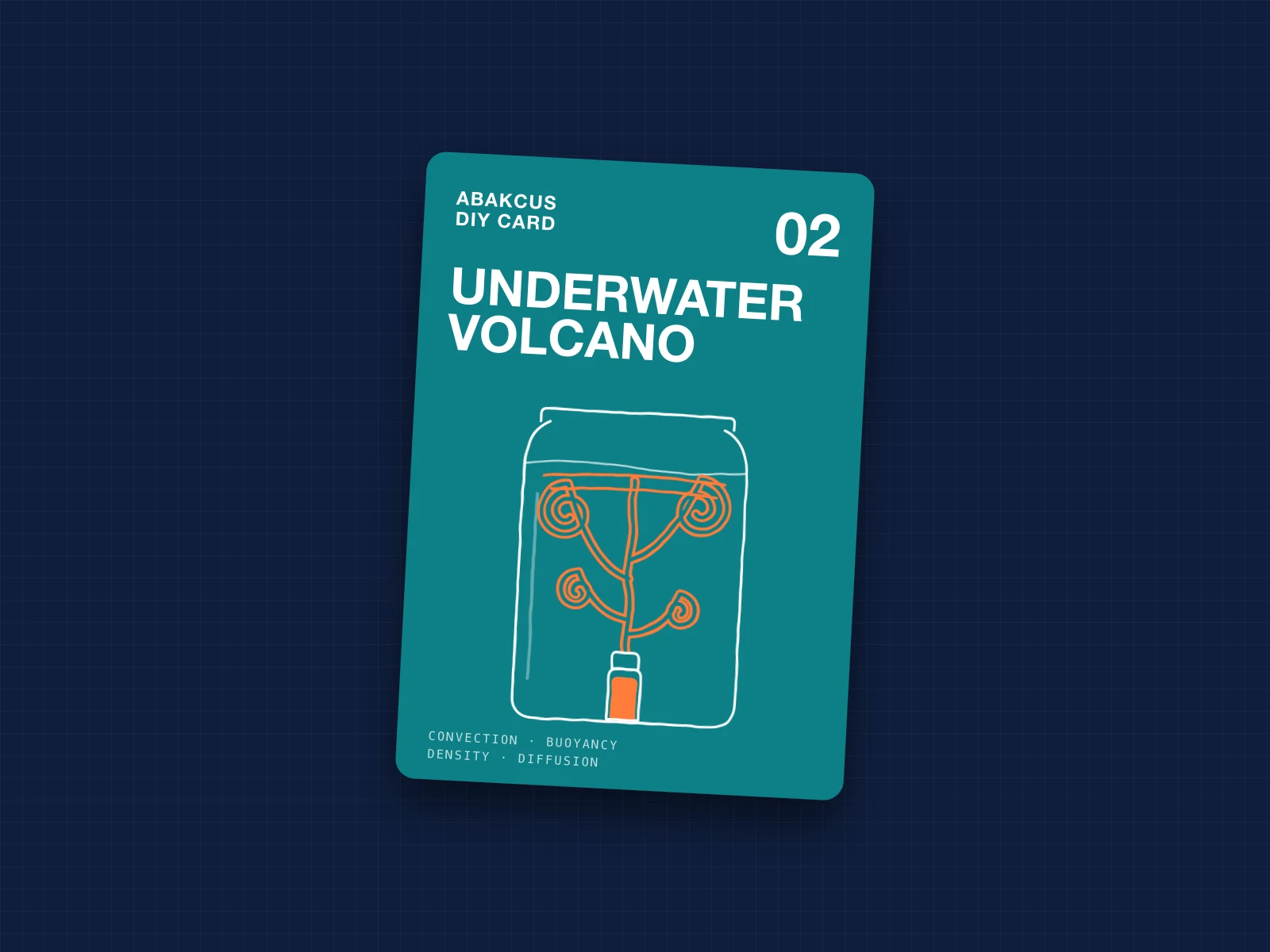
How to Make an Underwater Volcano: Convection in a Jar
Hot red water in a salt shaker, lowered into a jar of cold water. It erupts, curls into a mushroom, and lies on the surface like oil, because water one and a half percent lighter has nowhere to go but up.
Open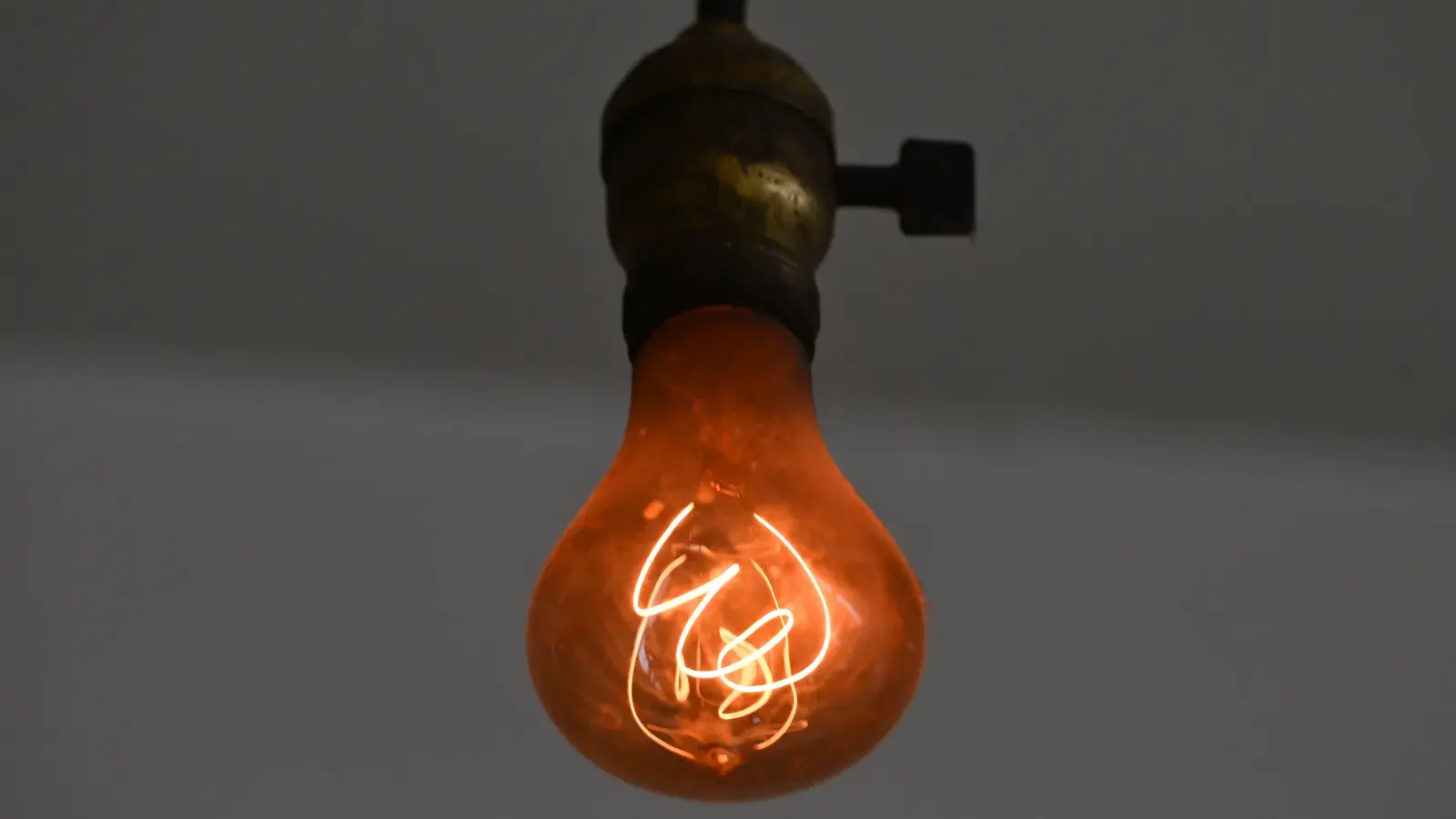
The Centennial Light: The Bulb That Never Went Out Since 1901
A hand-blown carbon-filament bulb in a Livermore fire station has burned for over 1,090,000 hours since June 1901 — while the industry around it later learned to make bulbs die in 1,000.
Open
The Feynman Technique: A Complete Guide
The four-step learning method developed by Nobel Prize-winning physicist Richard Feynman. How it works, why it works, and how to apply it to anything.
Open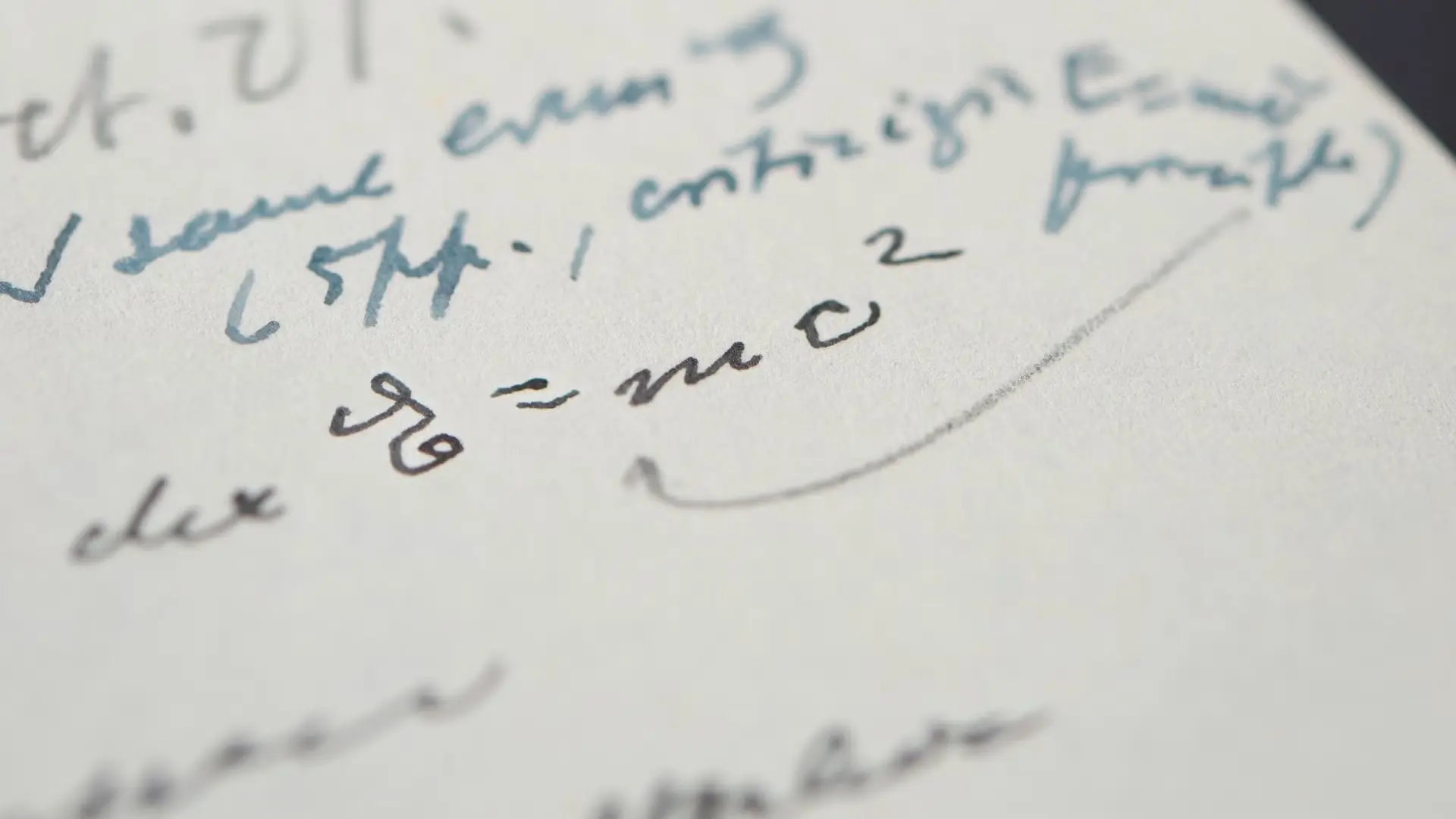
When Did Einstein First Write E = mc²?
The world's most recognized equation did not appear in its familiar form in 1905. The paper trail from Einstein's journal paper to the 1912 manuscript to the 1946 letter.
Open
Thirteen Gifts That Give Mathematics Itself
Not the mug with the pi symbol. Thirteen objects — a Galton Board, a Klein bottle, a Helicone — each one built on a real mathematical idea.
Open
The ABCs of Triangle, Square, Circle
Sixty-nine pages on the shapes that rewired twentieth-century design. Still the sharpest Bauhaus primer ever written.
Open