
DIY · Card 06 · Physics · Heat
A balloon on an empty bottle, a bowl of ice water and a bowl of hot. Move the bottle from one to the other and the balloon stands up on its own.
01The brief
Blow up a balloon without blowing, using only a bottle of air and a bowl of hot water.
+18 %
how much more room the air needs, warmed from ice water to hot tap water
+9 %
how much faster its molecules fly, on average, after the same warming
−273 °C
where the straight line through your measurements says the air would vanish
This is the gentlest experiment in the deck and, quietly, the deepest. A limp balloon sits on the neck of an empty bottle. You stand the bottle in hot water, and after a few seconds the balloon lifts itself upright and begins to fill, with nobody blowing into it.
Nothing has been added. The same air that was in the bottle is still there. It just needs more room when it is warm. Follow that one idea carefully, with a ruler and a few measurements, and it leads somewhere remarkable: to the coldest temperature there can be.
02Kit
A bottle, a balloon and two bowls. The size of the bottle matters more than anything: the bigger it is, the more air there is to expand.
Tick off what you have
0 of 4 ready
03Method
Cold first, to trap as much air as possible, then hot to make it expand, then cold again to watch it shrink.
Step 1 of 8 · Minute 0
Fill one bowl with cold water and a handful of ice, and another with the hottest water from the tap. Each needs to be deep enough to cover most of a bottle.
The balloon only flops about.
Why
The air didn’t change temperature enough, or the bottle is small.
Fix
Chill the bottle properly in ice water first, use the hottest tap water, and try a 1.5 or 2 litre bottle.
It stands up but won’t swell.
Why
A brand-new balloon is stiff, and the bottle’s spare air can’t push past its resistance.
Fix
Blow the balloon up a few times and let it down before fitting it.
The bottle crumpled.
Why
The water was too hot for thin plastic.
Fix
Use hot tap water rather than a kettle, and a sturdier bottle.
04Physics
The air in the bottle is about thirteen thousand billion billion molecules of nitrogen and oxygen, flying about at roughly the speed of a rifle bullet and bouncing off the walls. Every bounce is a tiny push. Billions of them, every instant, add up to the steady pressure of the air.
Warm the air and its molecules fly faster, so they hit harder and more often. If the bottle were rigid and sealed, the pressure inside would simply climb, as it does in a car tyre on a hot day. But this bottle has a soft spot, the balloon, and the extra push shoves the rubber outward until the air has enough room that its pressure is back near the room’s.
The amount of room follows a simple rule, as long as you measure temperature from the right zero. It is less than most people expect. See for yourself:
Bottle
The balloon holds 80 ml, about a lemon
Free to expand, the warm air would need 90 ml more room. The rubber pushes back, so the balloon takes 80 ml and the air inside ends up 1.7 kPa above the room’s pressure.
Two things fall out of the lab. First, the size of the bottle matters most, because each millilitre of air expands by the same fraction. Second, the balloon is not a free bag. Its rubber pushes back, hardest just as it begins to stretch, which is why the balloon card found the first breath the hardest. A balloon stretched once beforehand is softer, and lets more of the expanding air in.
05The big idea
Temperature
is motion.
We feel temperature as warm or cold, as if it were a substance that flows in and out of things. It isn’t. Temperature is a measure of how fast the molecules in something are jiggling. Hot air is air whose molecules are flying faster; cold air is the same air, slower.
That idea has a startling consequence. If temperature is motion, then there must be a lowest possible temperature: the point where the motion is as small as nature allows. The balloon is about to show you how to find it.
06The math
1 · Charles’s law
V₁ / T₁ = V₂ / T₂
At constant pressure, a gas’s volume divided by its absolute temperature stays the same. T must be in kelvin.
2 · The ideal gas law
PV = nRT
Pressure, volume and temperature together. n is the amount of gas, R a constant. Fix P and you get Charles’s law back.
3 · Kelvin
T(K) = T(°C) + 273.15
The absolute scale starts at absolute zero; a kelvin is the same size as a degree celsius.
Seal a 500 ml bottle at 5 °C, which is 278 K, and warm it to 55 °C, 328 K. Free to expand, the air would grow to 500 × 328 / 278 ≈ 590 ml: ninety extra millilitres, about the volume of an egg. That is all the balloon has to work with, and its rubber takes a share of the push. The card’s drawing of a big, round balloon is generous; a plump lemon is closer to the truth.
The second formula hides the molecules. That 500 ml of air holds about 0.022 mol, some 13 thousand billion billion molecules. Their typical speed goes as the square root of the absolute temperature, about 490 m/s at 5 °C and 530 m/s at 55 °C. Speeding them up by less than a tenth is enough to need a fifth more room.
And here is the leap. Measure a gas’s volume at a few temperatures and the points fall on a straight line. Follow that line down, past anything you can measure, and it reaches zero volume at about −273 °C, whatever gas you start with. In 1848 William Thomson, later Lord Kelvin, proposed measuring all temperatures from that point. Try finding it:
Your line hits zero at -266 °C
2 readings, each with about a millilitre of measuring error. That is 8 degrees above the true absolute zero. Readings spread far apart pin the line down best; Gay-Lussac, with only 0 °C and 100 °C, got about −267 °C.
07Real life
Warm a gas and it needs more room; give it less pressure and it takes more room. Between them, the two rules run kitchens, cars and the weather.
Tyres on the first cold morning
The air in a car tyre obeys the same law, except the tyre can’t grow, so its pressure drops instead. On the first frosty morning of autumn, a dashboard warning light comes on all over the country. Nothing has leaked; the air has just cooled.
Bread in the oven
Dough is full of tiny bubbles of carbon dioxide made by yeast. In the first minutes in a hot oven, the gas in every bubble expands and water turns to steam, and the loaf jumps in size before the crust sets. Bakers call it oven spring.
Car engines
This is the engine the card was really reaching for. Burning fuel heats the gas trapped in each cylinder to a couple of thousand degrees in an instant, and the expanding gas shoves the piston down. Heat in, motion out.
Crisp packets on a plane
The cabin of an airliner at cruising height is kept at a pressure like that on a mountain about 2,400 metres high. A sealed bag of crisps swells by about a third. That is the other gas law: squeeze less on a gas and it takes more room.
Weather balloons
A weather balloon leaves the ground about the size of a large sofa. As it climbs, the air pressure around it falls and the gas inside expands until, some 30 kilometres up, the balloon is several times wider and the rubber finally bursts.
The ping-pong ball repair
Drop a dented ping-pong ball in hot water and the dent pops back out. The air sealed inside expands as it warms and pushes the dent out from within. It is this experiment in miniature, with the ball as both bottle and balloon.
1783
Jacques Charles was a balloonist before he was a law. On 1 December 1783, ten days after the first crewed hot-air flight, he and Nicolas-Louis Robert rose from the Tuileries Garden in Paris in a balloon filled with hydrogen, in front of an enormous crowd. Later that day Charles went up again alone and climbed to about 3,000 metres.
Around 1787 he measured how several gases expand when heated, and never published it. In 1802 Joseph Louis Gay-Lussac published careful measurements of his own, found every gas he tried grew by about 1/267 of its volume at 0 °C for each degree, and generously credited Charles. That is why it is Charles’s law, and why the egg in the bottle ran on its close cousin, Gay-Lussac’s law for pressure.
08Is and isn’t
Steam engines work by heating air until it expands.
They boil water. The steam, a gas that takes up about 1,700 times the room of the water it came from, pushes the pistons. Engines that really do run on hot air exist, but they are a different machine, the Stirling engine, patented in 1816.
Heating the bottle puts more air into the balloon.
No air gets in or out. The same molecules are there, moving faster and pushing harder. Weigh the bottle and balloon hot and cold, and the weight doesn’t change.
Warm air from 10 °C to 20 °C and it doubles in size.
The celsius scale starts at an arbitrary zero. On the kelvin scale, 10 °C to 20 °C is 283 K to 293 K, a rise of only 3.5 percent, and so is the gain in volume.
At absolute zero a gas would shrink to nothing.
Long before that it turns into a liquid: air liquefies below about −190 °C. The straight line pointing at −273 °C describes how a gas would behave if it stayed a gas, and absolute zero itself can never quite be reached.
09Go further
A
Turn it upside down
Hold the bottle upside down in the hot water, balloon hanging below. It still inflates. That rules out “hot air rises”: the air is expanding, not climbing.
B
Race the bottle sizes
Set up a small and a big bottle side by side and move both into the hot water together. The big one fills its balloon several times as much, exactly in proportion to its volume.
C
Measure the change
Instead of a balloon, put a drop of washing-up liquid film across the neck. Warm the bottle with your hands and watch the soap film bulge. Your hands are enough.
D
Find absolute zero yourself
Trap air in a long clear straw with a drop of coloured oil, seal one end, and mark the drop’s position in ice water, room air and hot water. Plot the points and extend the line to zero length.
E
The freezer test
Put the bottle, balloon and all, in the freezer for twenty minutes. The balloon is pushed right down into the neck, and springs back up as it warms on the table.
10Questions
The hot water warms the air sealed inside the bottle. Warmer air molecules move faster and push harder, so the air needs more room at the same pressure. The only place it can go is into the balloon, which lifts and swells.
Charles’s law says that, at constant pressure, the volume of a fixed amount of gas is proportional to its absolute temperature. Warm a gas from 278 K to 328 K (5 °C to 55 °C) and its volume grows by the same ratio, about 18 percent.
Because the air only expands by its absolute temperature ratio. Going from ice water to hot tap water adds less than a fifth of the bottle’s volume, and the balloon’s rubber pushes back as well. A bigger bottle and a pre-stretched balloon give the most dramatic result.
When the air cools below the temperature it was sealed at, it needs less room than it had. The pressure inside drops below the room’s, and the outside air pushes the balloon down into the neck.
If you measure a gas’s volume at several temperatures and extend the straight line downward, it reaches zero volume at about −273 °C. That temperature, absolute zero, is the starting point of the kelvin scale.
Safety · A grown-up should handle the hot water. Use water from the hot tap, never boiling, and keep the bowls on a stable surface away from the edge.
All DIY cards →Keep wandering
A few more pieces in the same spirit — math, design, and slow attention.
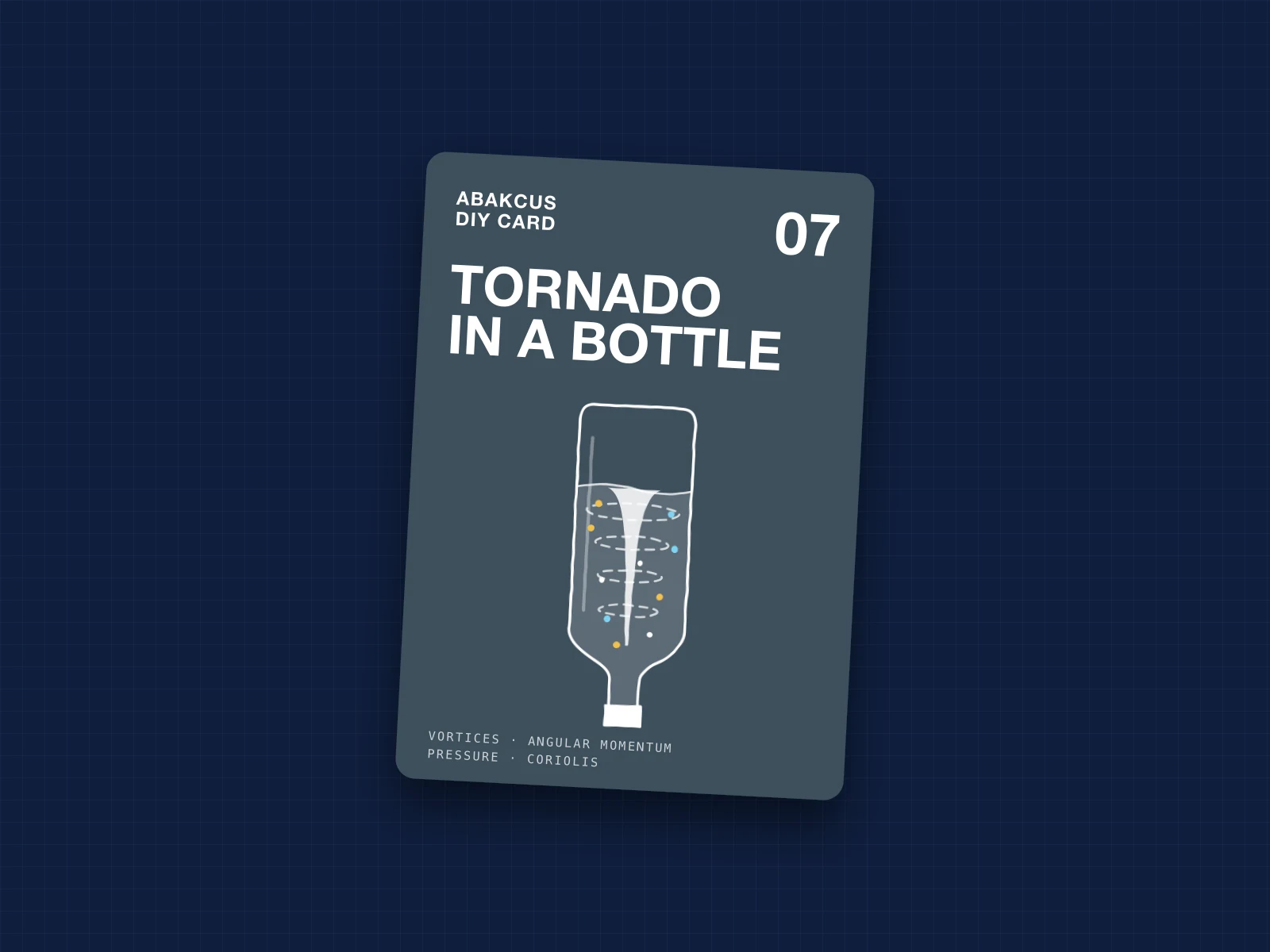
How to Make a Tornado in a Bottle: Vortex Science
Swirl an upside-down bottle of water and a funnel of air drills down through the middle. It spins fastest at the centre for the same reason a skater spins faster with arms pulled in, and it has nothing to do with which hemisphere you live in.
Open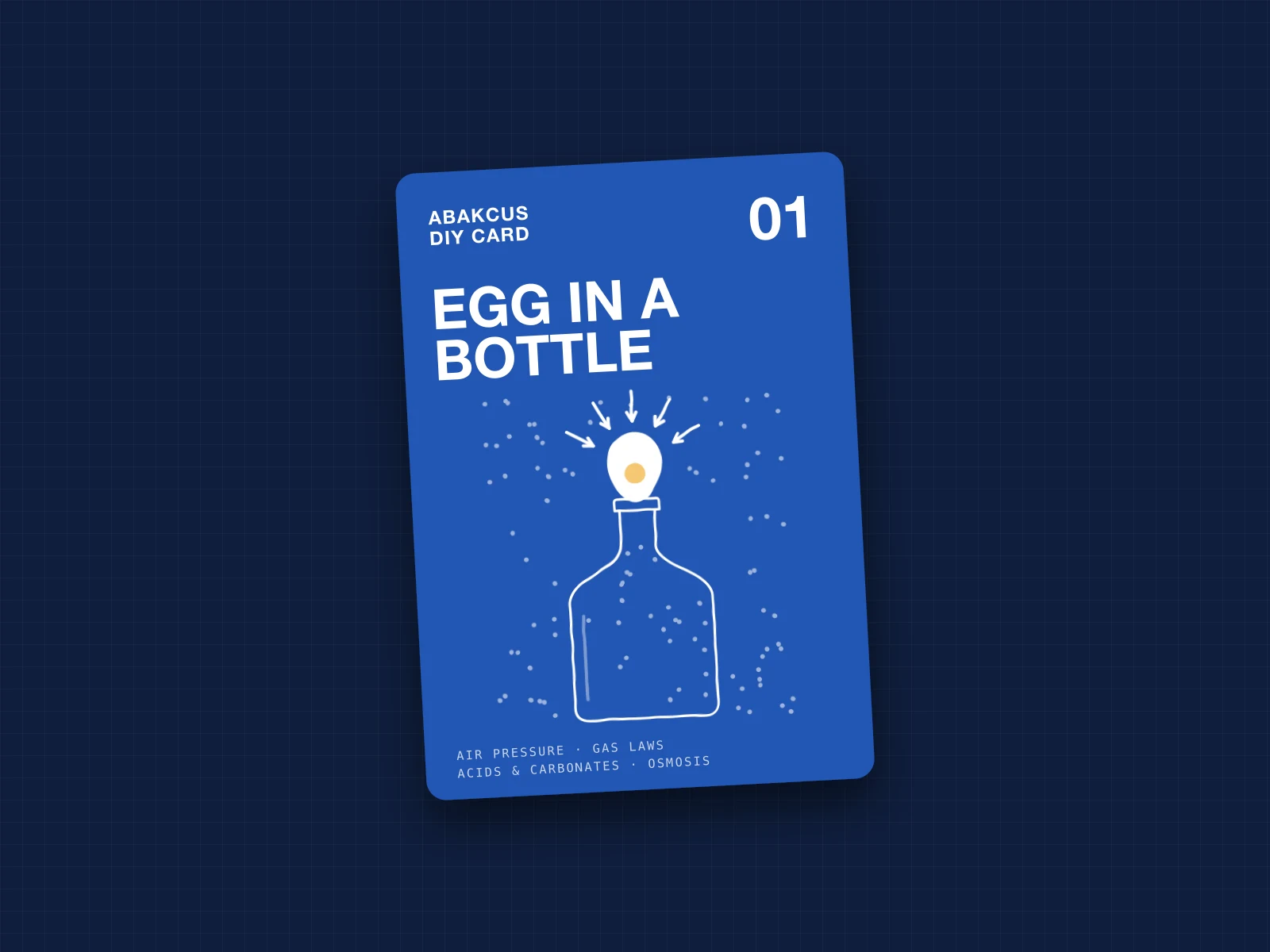
How to Get an Egg Into a Bottle Without Touching It
Two days in vinegar take the shell away, a warm bottle does the rest. The egg goes through a mouth narrower than itself, pushed by ten tonnes of air per square metre.
Open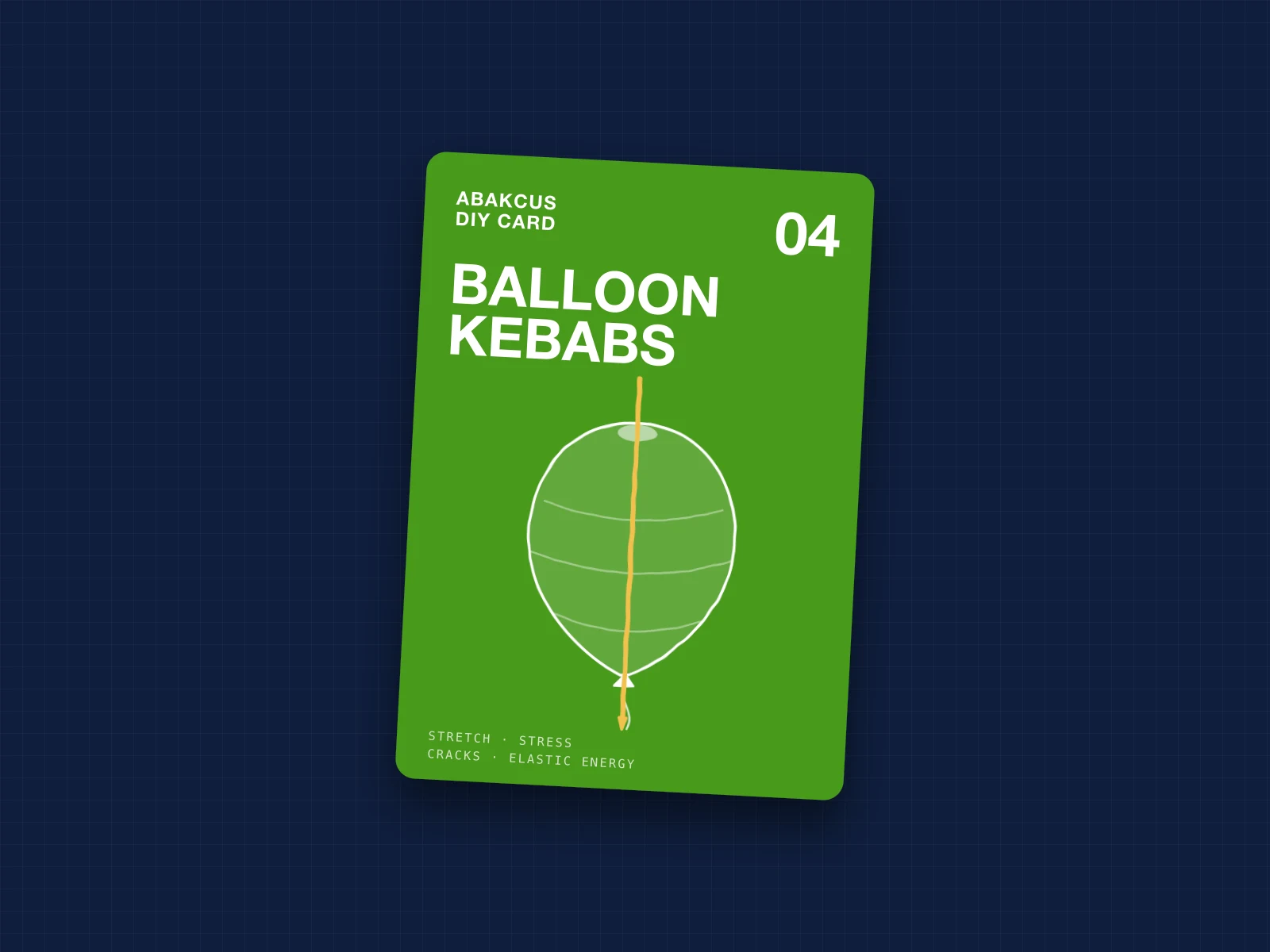
How to Push a Skewer Through a Balloon Without Popping It
A wooden skewer goes in at the top of a balloon and out beside the knot, and the balloon just sits there. The trick is knowing where the rubber is least stretched, and why stretch decides everything.
Open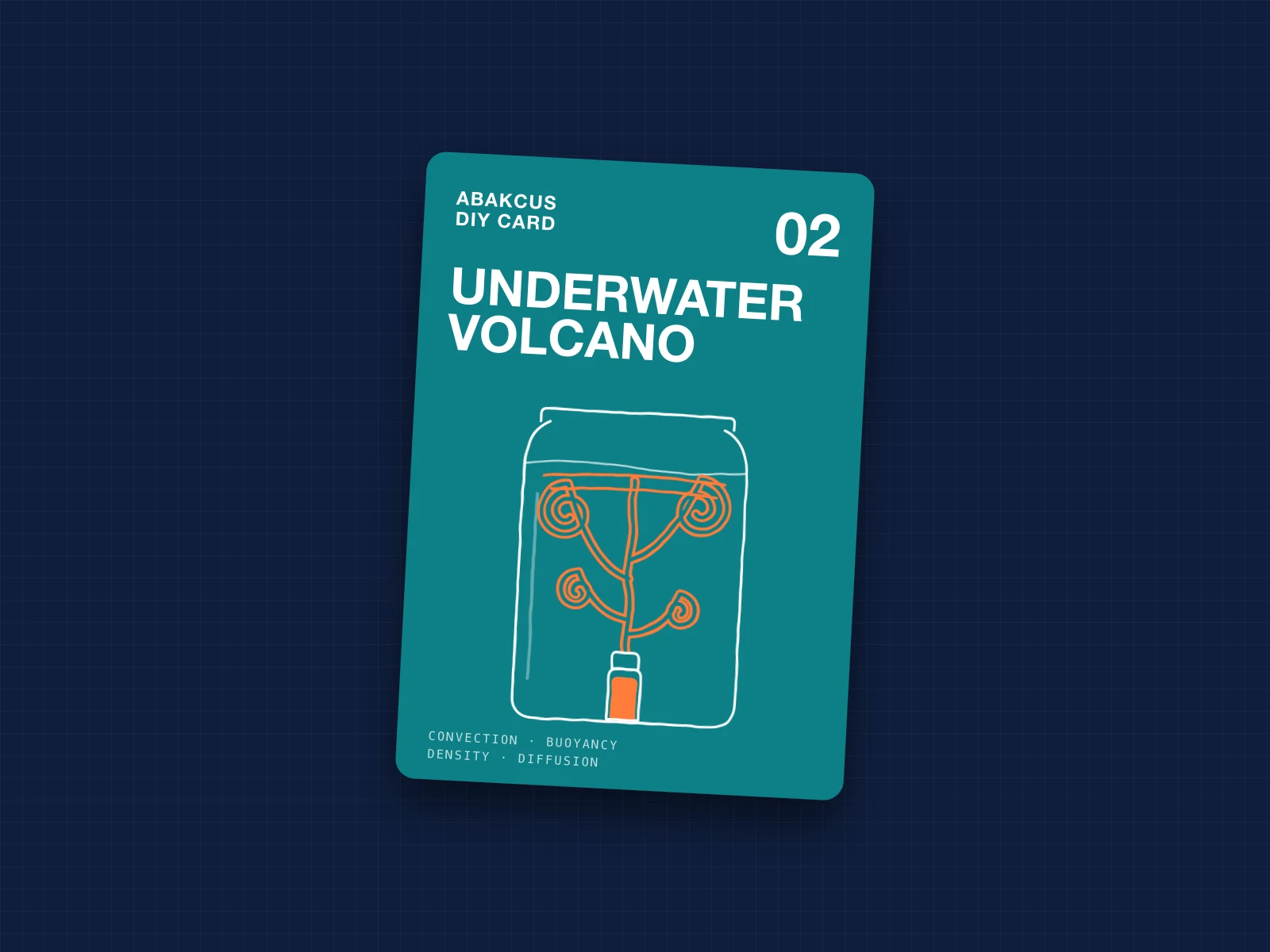
How to Make an Underwater Volcano: Convection in a Jar
Hot red water in a salt shaker, lowered into a jar of cold water. It erupts, curls into a mushroom, and lies on the surface like oil, because water one and a half percent lighter has nowhere to go but up.
Open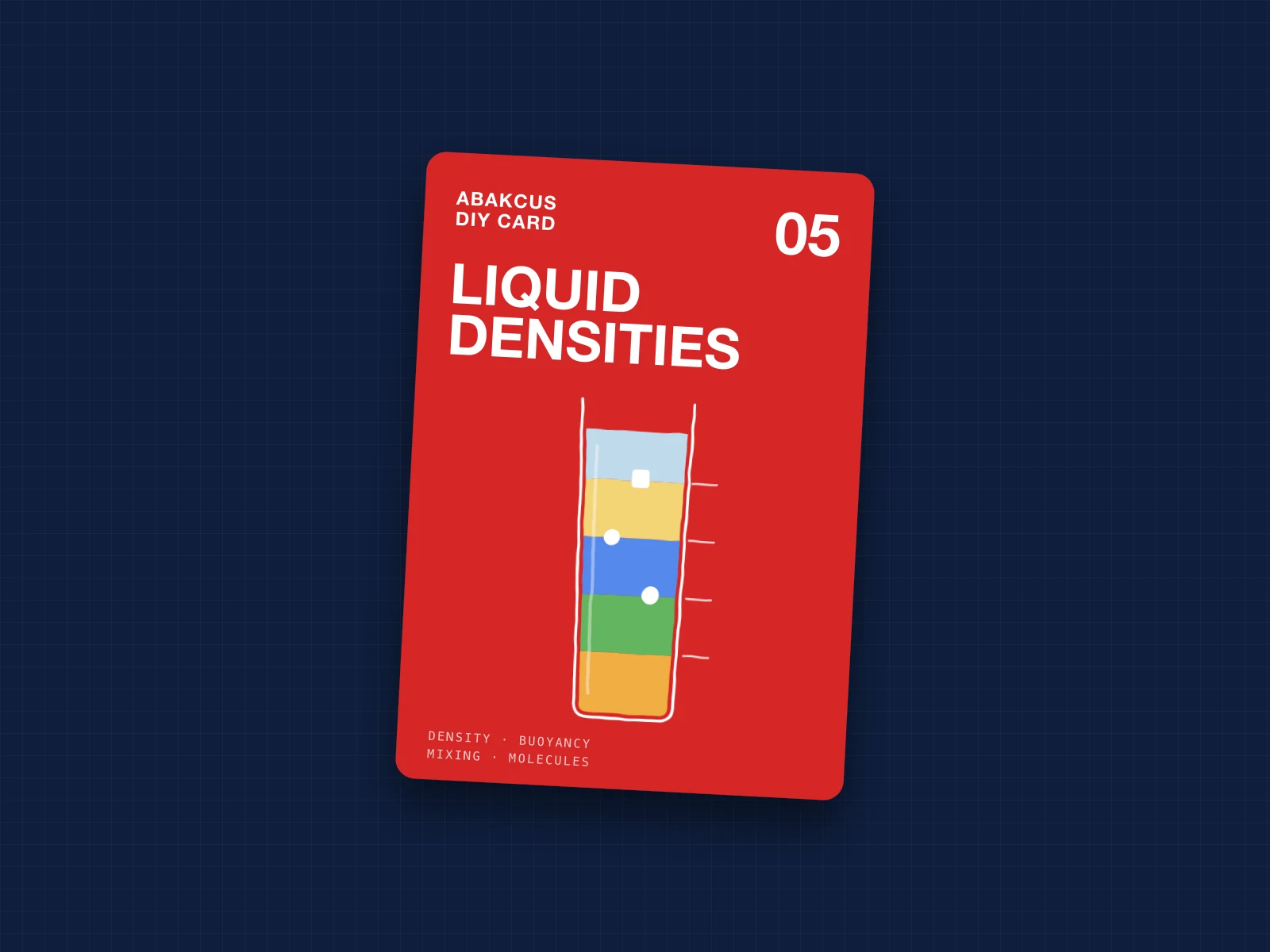
How to Make a Density Tower: Stacking Liquids in a Glass
Honey, washing-up liquid, water, oil and rubbing alcohol, poured one by one into a glass, settle into five sharp layers. Which goes where is decided by one number, and one of them only stays put thanks to the oil.
Open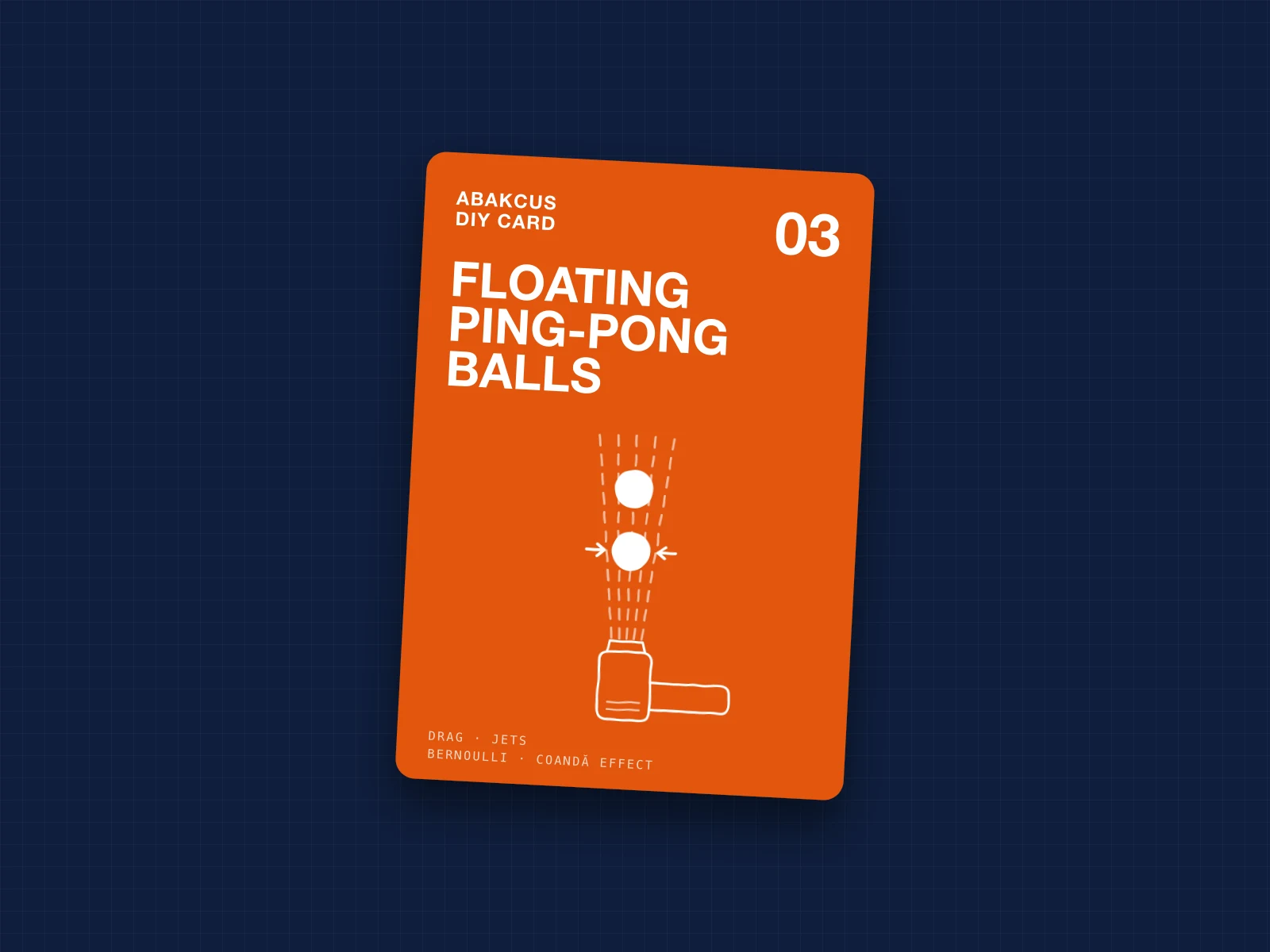
How to Make a Ping-Pong Ball Float With a Hair Dryer
Point a hair dryer at the ceiling and a ping-pong ball sits in mid-air, wobbling but never falling out. Most explanations of why are wrong, and the real one is better.
Open