
DIY · Card 44 · Science · Chemistry
A jar, some baking soda and a splash of vinegar. Wait for the fizz to settle, tip the jar over a candle as if pouring water, and the flame goes out, smothered by a gas you can’t see.
01The brief
Put out a flame by pouring something you can’t see.
1.5×
as dense as air: why carbon dioxide sinks and can be poured
16 %
roughly the oxygen level below which a candle flame can’t survive; air has 21 %
1848
the year Michael Faraday gave his famous lectures on the chemistry of a candle
Tip an empty-looking jar over a candle, and the flame goes out. No water, no breath, no lid. The jar was full of something all along: carbon dioxide, made by a spoonful of baking soda and a splash of vinegar.
The trick works because carbon dioxide is heavier than air. It pours, it flows downhill and it pools, and wherever it goes it pushes away the oxygen a flame needs. It is the same gas that drives the fizz-powered boat, and the same air you weigh in the expanding gases card.
02Kit
A candle, a jar and the two fizzing ingredients. And a grown-up for the match.
Tick off what you have
0 of 4 ready
03Method
Make carbon dioxide in a jar, keep it in, and pour it gently over the flame.
Step 1 of 8 · Minute 0
You need a tea light or a short candle on a plate, matches or a lighter for a grown-up, a glass jar, baking soda, white vinegar and a spoon. A tall drinking glass is good for the encore.
The flame doesn’t go out.
Why
The gas escaped before you poured, or you poured too far from the flame.
Fix
Cover the jar until you pour, hold it close to the candle, and tip slowly.
Liquid splashes onto the candle.
Why
The jar was tipped too far or too fast.
Fix
Use more jar and less vinegar, and tip only until the liquid reaches the rim.
It works once, then not again.
Why
The jar has emptied of gas and filled with air.
Fix
Add a fresh spoonful of baking soda and a splash of vinegar before each pour.
04Chemistry and physics
Vinegar’s acetic acid and baking soda’s sodium bicarbonate react to make carbon dioxide gas. A molecule of carbon dioxide is heavier than the nitrogen and oxygen molecules that make up air, so the gas is about one and a half times as dense. It settles in the bottom of the jar, pushing the lighter air out of the top.
A candle flame burns wax vapour in the oxygen of the surrounding air. Pour carbon dioxide over it and the heavy gas flows down round the wick, diluting the oxygen. Below about 16 % oxygen the flame can’t release heat fast enough to keep the wax burning, and it goes out. Make the gas and pour it:
Gas made
2.0 L
Gas poured
0.63 L
Oxygen at the wick
7.7 %
Out · The heavy carbon dioxide has flowed down round the wick and pushed the air away. With too little oxygen left, the flame can’t keep going. Air is 20.9 % oxygen; a candle struggles below about 16 %.
Carbon dioxide works by taking away one of the three things every fire needs. Firefighters learn them as a triangle: heat, fuel and oxygen. Break any side and the fire goes out. Choose a way to fight a fire and see which side it breaks:
Removes the oxygen · Heavy gas pushes the air away from the flame, the way your jar does. Used on electrical fires, because CO₂ leaves nothing behind and doesn’t conduct.
The pouring model is a simple mixing estimate: how much of the air round the wick the poured gas replaces. Draughts and the shape of the jar change it a lot, which is why pouring close and slowly matters.
05The big idea
Gases have
weight.
We think of gases as nothing, but a gas is matter like any other, made of molecules with mass. Some are lighter than air and rise, like helium. Some are heavier and sink, like carbon dioxide.
A heavy gas behaves like a very thin liquid: it pours, it flows into hollows and it can be carried in a jar. You can’t see it, but a candle can feel it, and a candle flame has been used to test the air for centuries.
06The math
1 · Gas made
V = (m ⁄ 84) × 24 L
Each mole of baking soda (84 g) gives one mole of CO₂, about 24 litres at room temperature.
2 · Density
ρ_CO₂ ⁄ ρ_air = 44 ⁄ 29
At the same temperature and pressure, a gas’s density goes with the mass of its molecules: 44 for CO₂, 29 on average for air.
3 · Diluted oxygen
O₂ = 21 % × (1 − x)
Replace a fraction x of the air round the flame with CO₂ and the oxygen falls from 21 % in proportion.
Two teaspoons, about 10 g, of baking soda would make 10 ⁄ 84 × 24 ≈ 2.9 L of gas, if there were enough vinegar. Half a cup of ordinary vinegar, about 120 mL with 0.1 mol of acid, can react with all but about one and a half grams of it, so the jar overflows with more gas than it can hold.
Carbon dioxide molecules weigh 44 units against air’s average 29, so the gas is 44 ⁄ 29 ≈ 1.5 times as dense, and sinks. To bring the oxygen round the wick from 21 % down to 16 %, the poured gas has to replace about a quarter of the air there: 21 × (1 − 0.24) ≈ 16.
07Real life
From the extinguisher on the wall to the firebreak in a forest, every way of fighting fire breaks the triangle.
CO₂ extinguishers
The extinguisher with a big horn and a black label is full of liquid carbon dioxide under pressure. Squeezed out, it blasts a cloud of gas over the fire, smothering it. It is the one for electrical fires: it doesn’t conduct and leaves no mess behind.
Fire blankets
A fire blanket thrown over a burning pan cuts off the oxygen at once. It is the safest way to deal with a small kitchen fire, because water on burning oil flashes into steam and throws the burning oil everywhere.
Server rooms and archives
Rooms full of computers or priceless papers can’t be sprayed with water. Some are protected by systems that flood them with an inert gas, and some keep the air permanently a little low in oxygen, about 15 %, enough for people to breathe but too little for a fire to start.
Firebreaks
Forest firefighters cut or burn strips of land ahead of a wildfire, clearing away the dry grass, shrubs and trees. When the fire reaches the break it has nothing left to burn, and it stops: the fuel side of the triangle taken away.
Snuffing a candle
A candle snuffer is a little cup on a stick. Lowered over the wick, it traps the flame in a pocket of air that it quickly uses up, putting it out without the smoky splutter of blowing.
Valleys of gas
Because carbon dioxide is heavy, it can collect in cellars, wells and hollows, where it can be dangerous to people, who need oxygen just like a flame. Miners once carried candles: a flame burning low was a warning of bad air.
1848
At Christmas 1848, Michael Faraday gave a course of six lectures for young people at the Royal Institution in London, all about a single candle. Where does the flame come from? What does the candle need? Where does it go when it burns?
Among his demonstrations, he showed that the gas a candle makes as it burns, carbon dioxide, which he called carbonic acid, is heavy enough to pour from one jar to another and puts out a flame. Published as The Chemical History of a Candle, the lectures are still read today. Your jar repeats one of his tricks.
08Is and isn’t
Water puts out any fire.
Never use water on burning oil or on electrical equipment. On oil it flashes to steam and throws burning fat everywhere; on electrics it conducts. Smother oil fires and switch electricity off.
The carbon dioxide freezes the flame out.
From a real extinguisher it is very cold, which helps a little, but the main job is pushing oxygen away. Your gas from the jar is at room temperature and still works.
Blowing on a fire always makes it bigger.
Blowing on a campfire’s embers feeds them oxygen. Blowing out a candle works the other way: the puff sweeps the hot, burning vapour off the wick and cools it, faster than the wax can supply more.
An empty-looking jar is empty.
After the fizzing, the jar is full of carbon dioxide, which is colourless. You can only tell it is there by what it does: tip it over a flame and the flame dies.
09Go further
A
Candle staircase
Stand three candles of different heights in a row and pour gas over them. Which goes out first? Why?
B
Pour it twice
Pour the gas from the jar into an empty glass, then from the glass over the candle. Does it still work after being poured twice?
C
How long does it last?
Make a jar of gas, uncover it, and wait 10, 30 and 60 seconds before pouring. How long before it no longer works?
D
Count the spoonfuls
What is the least baking soda that still puts the candle out? Try half a teaspoon, then one, then two.
E
Measure the fizz
Stretch a balloon over a bottle neck with soda and vinegar inside. How big does it get? Work out the volume of gas you made.
10Questions
Put two teaspoons of baking soda in a glass jar and pour in about half a cup of vinegar. When the fizzing settles, the jar is full of carbon dioxide. Tip the jar slowly over a lit candle, as if pouring water but without letting any liquid out, and the invisible gas flows down and puts the flame out.
A fire needs oxygen. Carbon dioxide is about one and a half times as dense as air, so it sinks and spreads over a flame, pushing the air away. When the oxygen around a candle drops below about 16 %, the flame can no longer release enough heat to keep burning, and it goes out.
Yes. Because it is heavier than air, carbon dioxide flows downhill and collects in low places, like an invisible liquid. You can pour it from one jar into another, and pour it onto a candle from above, even though you can’t see it at all.
Heat, fuel and oxygen, often drawn as the fire triangle. Take away any one and the fire goes out: water removes heat, a fire blanket or carbon dioxide removes oxygen, and turning off a gas supply removes the fuel.
For a tiny candle flame, with a grown-up lighting it and watching, yes. The gas is harmless in these amounts. But it is far too weak for a real fire: if anything else catches, leave it, get out and call the emergency services.
Safety · A grown-up must light and watch the candle, on a plate on a clear table, with long hair tied back. This works only on a candle flame: it is no use on a real fire. If anything else catches, get out and call the emergency services.
All DIY cards →Keep wandering
A few more pieces in the same spirit — math, design, and slow attention.
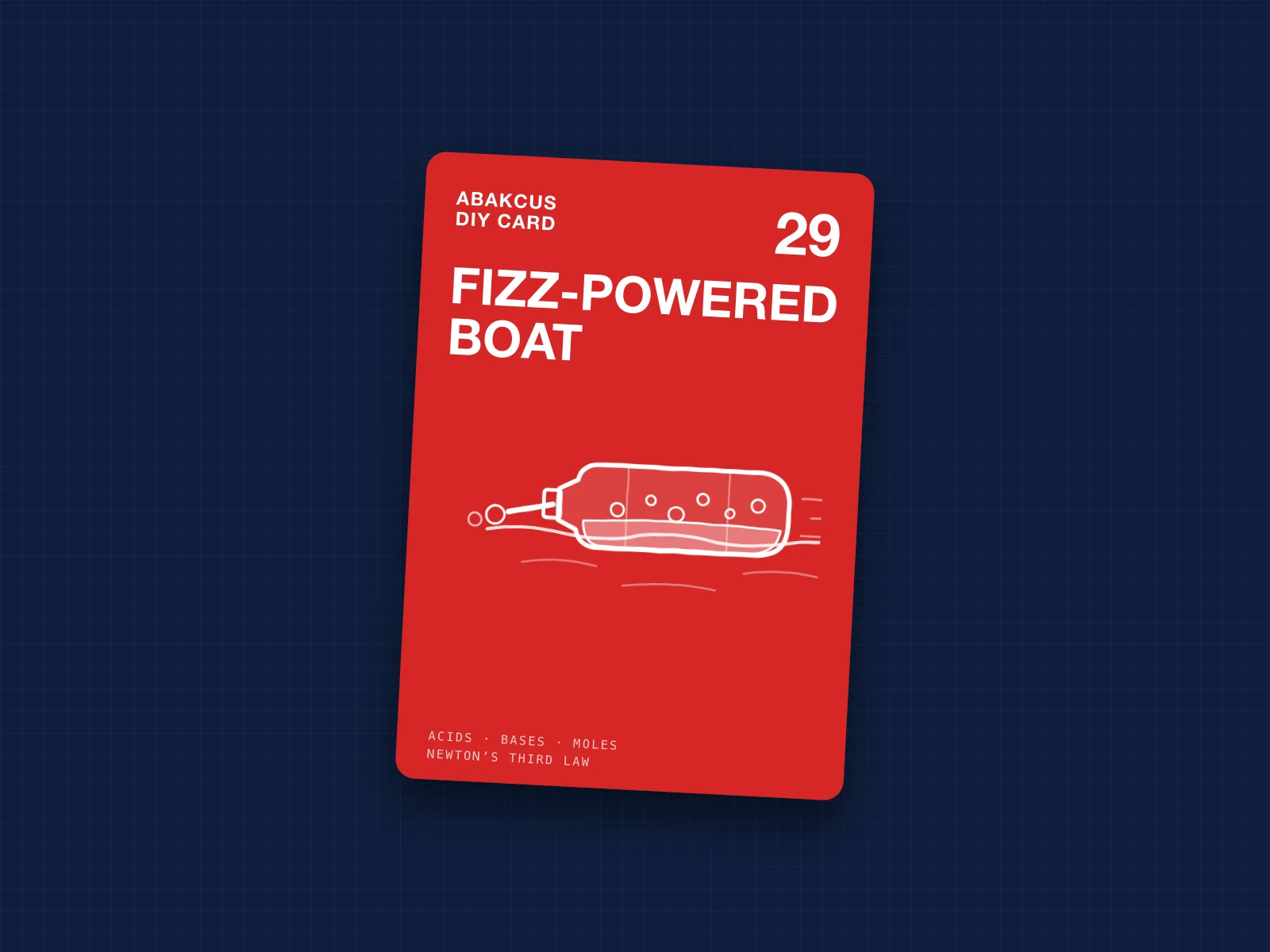
How to Build a Boat Powered by a Chemical Reaction
A bottle, a straw, a spoonful of baking soda and a splash of vinegar. The fizz has only one way out, and when it rushes out the back the boat shoots off the other way, like a tiny rocket.
Open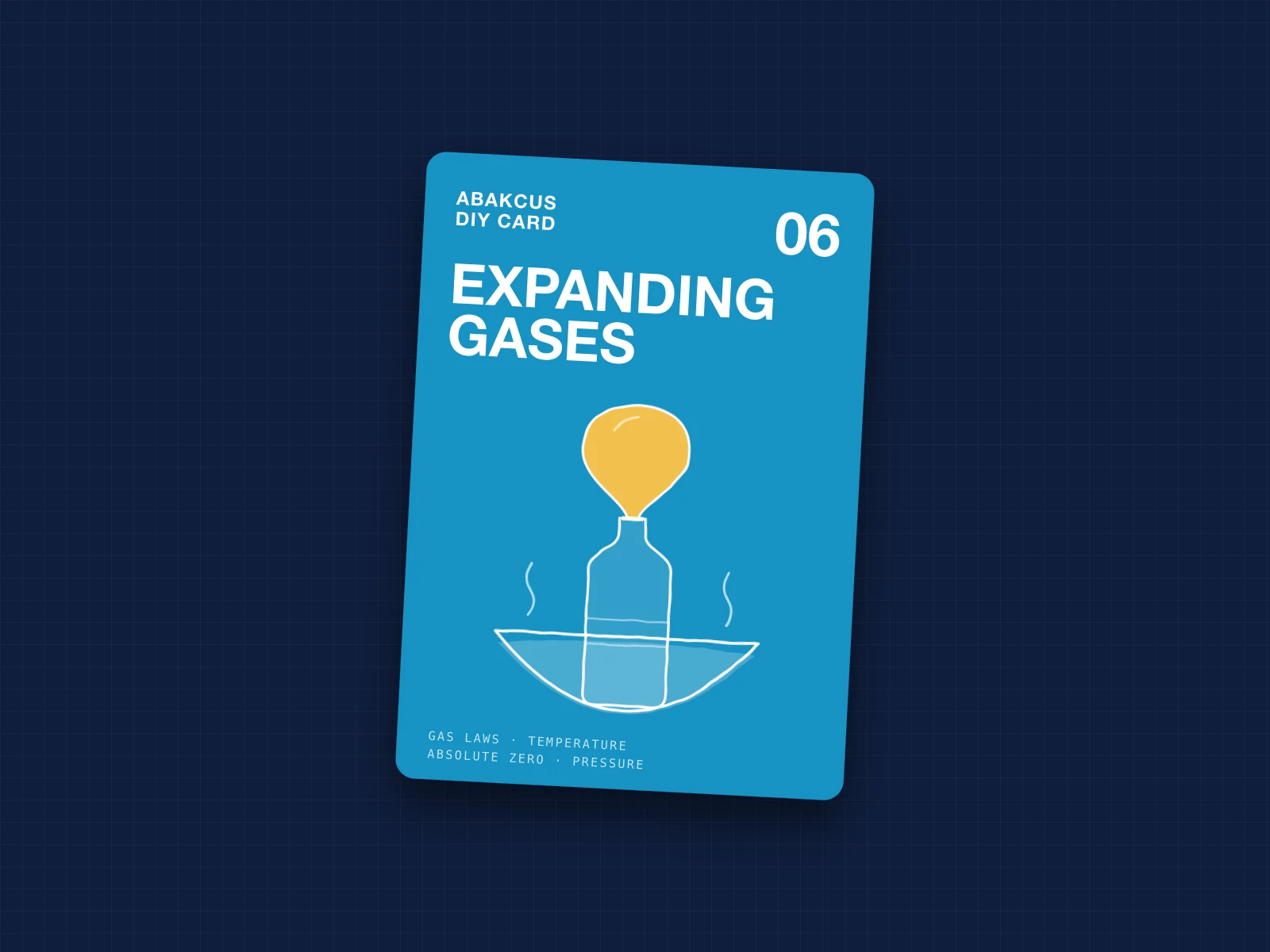
How to Blow Up a Balloon With Hot Water: Charles’s Law
Put a balloon on an empty bottle, stand the bottle in hot water, and the balloon lifts itself up. The air didn’t get any more of itself. It just needs more room, and from that one fact you can find absolute zero.
Open
How to Get an Egg Into a Bottle Without Touching It
Two days in vinegar take the shell away, a warm bottle does the rest. The egg goes through a mouth narrower than itself, pushed by ten tonnes of air per square metre.
Open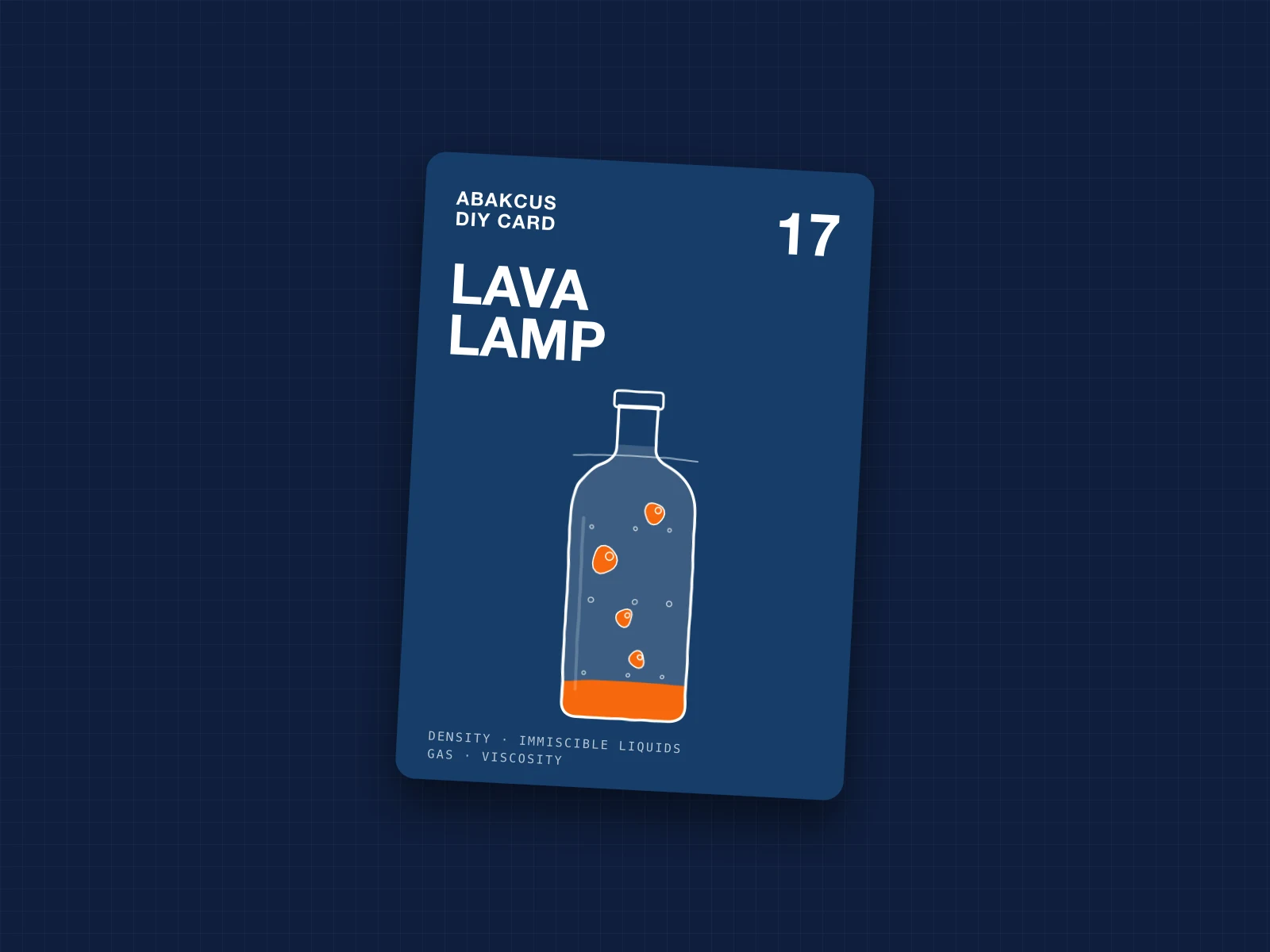
How to Make a Lava Lamp With Oil, Water and a Fizzy Tablet
Oil, coloured water and a fizzy tablet in a bottle: blobs of colour rise, hang at the top and fall back for as long as the fizz lasts. Oil and water refuse to mix, and bubbles do the lifting.
Open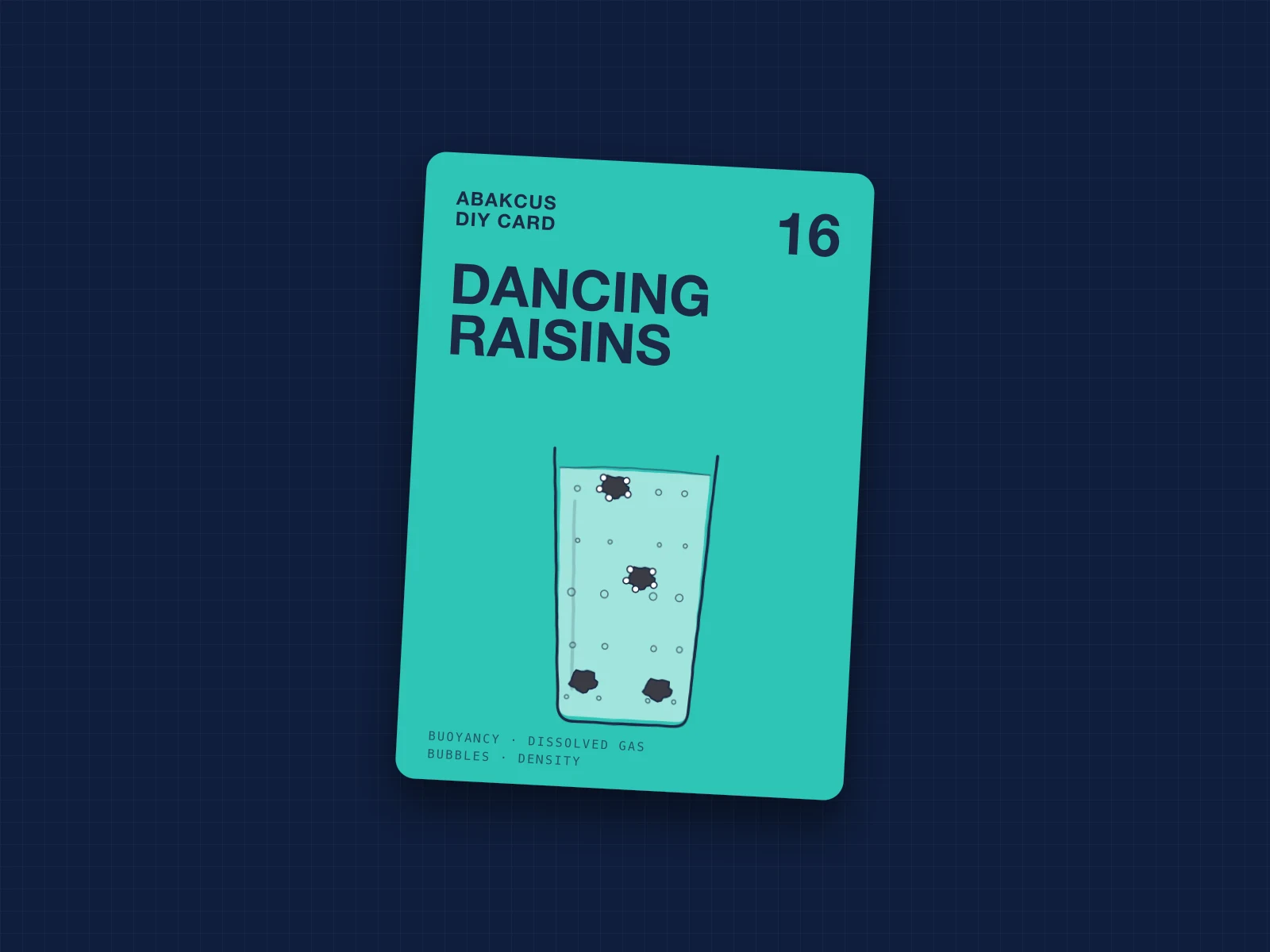
The Dancing Raisins Experiment: How Bubbles Lift a Raisin
Drop raisins into fizzy water and they sink, rise, turn over at the top and sink again, for an hour. Each one is a tiny submarine that fills its own ballast tanks with bubbles and empties them at the surface.
Open
How to Make a Barometer With a Jar and a Balloon
Stretch a balloon over a jar, glue on a straw, and the straw tips up and down as the air presses harder or softer. It is a real barometer, with one catch every homemade one shares: it is also a surprisingly good thermometer.
Open