
DIY · Card 67 · Science · Heat
A row of crayons glued to a canvas and a hair dryer on its hottest setting. The wax melts, gravity takes over, and streams of colour run down the canvas until they cool and set.
01The brief
Paint with heat and let gravity hold the brush.
41 °C
where crayon wax starts to soften
49–64 °C
the range over which it melts and runs
~10 cm
from the dryer: close enough to melt the wax
Ice melts in a drink, butter melts on hot toast, birthday candles drip onto the cake. Melting is all around us, and it is one of the simplest ways to see what heat does to matter.
This project turns melting into art. Warm a row of crayons with a hair dryer and their wax turns liquid and runs, painting long streams of colour down a canvas. It is the opposite of the fire extinguisher experiment, another one about heat, and a cousin of the lava lamp, with its slowly moving blobs.
02Kit
A canvas, a box of crayons and a hair dryer. And lots of newspaper.
Tick off what you have
0 of 5 ready
03Method
Glue first, let it set, then bring the heat.
Step 1 of 8 · Minute 0
You need a blank artist’s canvas about 30 × 40 cm, a box of wax crayons, strong white PVA glue or a hot-glue gun for a grown-up, a hair dryer, and plenty of old newspaper.
Nothing melts.
Why
The dryer is too far away or on a cool setting.
Fix
Use the hottest setting and bring the nozzle within about 10 cm of the crayon tips.
Wax splatters everywhere.
Why
Air blowing too hard straight at the crayons.
Fix
Use a low fan speed with high heat, and point the dryer down at the crayons rather than straight at them.
Crayons fall off.
Why
The glue hadn’t set, or got too hot.
Fix
Let PVA dry fully first, use plenty of it, and keep the hot air on the crayon tips rather than their tops.
04Melting
In solid wax the long molecules are packed tightly and can barely move. Heat makes them jiggle faster until they slide past each other: the wax flows. Take the heat away and they slow down and lock together again. Your drips freeze exactly where the wax cooled.
Try different settings, distances and tilts:
Air at the crayons
64 °C
Wax
melting
Runs downhill
100 % speed
Crayon wax softens at about 41 °C and melts between about 49 and 64 °C. The air from a dryer cools quickly as it spreads out, so distance matters as much as the setting. Once the wax runs, gravity pulls it down; tilt the canvas back and the drips slow, spread and stop sooner, setting solid as they cool.
Every substance has its own melting point. Turn up the heat and see what goes first:
Pure substances like ice melt at one exact temperature. Waxes and fats are mixtures of many different molecules, so they soften and melt gradually over a range of temperatures, which is why a crayon goes soft and bendy before it runs.
05The big idea
Heat changes
the state.
Solid, liquid, gas: the same substance can be any of them, depending on how much its molecules are jiggling. Add heat and wax melts; take it away and the wax sets again, unchanged.
It is the same physics that melts glaciers, makes lava flow and turns water to steam. Your canvas is a record of it: every drip shows where the wax was hot enough to flow, and where it cooled and stopped.
06The math
1 · Fahrenheit to Celsius
°C = (°F − 32) × 5 ⁄ 9
Crayola’s figures are given in °F.
2 · Air cooling
T ≈ T_room + ΔT · e^(−d ⁄ 18 cm)
Air temperature falls away from the nozzle, roughly exponentially.
3 · Downhill pull
g sin θ
The share of gravity along a canvas tilted θ from flat.
Crayola says its crayons soften at 105 °F, which is (105 − 32) × 5⁄9 ≈ 41 °C, and melt between 120 and 147 °F, about 49 to 64 °C. If a dryer’s air leaves at 95 °C on a 22 °C day, then at 10 cm it is roughly 22 + 73 × e^(−10⁄18) ≈ 64 °C: just hot enough. At 20 cm it’s down to about 46 °C, only softening the wax.
On an upright canvas gravity pulls the wax down with its full strength. Lean the canvas back to 30° from flat and only sin 30° = ½ of that pull runs down the slope, so drips crawl at about half the speed and stop sooner.
07Real life
From ancient portraits to candles, chocolate and volcanoes.
Encaustic painting
Painting with hot wax is ancient. The famous Fayum portraits, painted on wooden panels for mummies in Roman Egypt nearly 2,000 years ago, used pigment mixed into melted beeswax, and their colours are still bright.
Batik
In Indonesian batik, artists draw on cloth with melted wax, then dye it. The wax keeps the dye out, so the pattern stays pale. Repeating with more wax and more dyes builds complex designs.
Candles
A candle flame melts a little pool of wax, which climbs the wick and turns to vapour that burns. Michael Faraday’s famous lectures on the chemistry of a candle, published in 1861, used it to explain heat, light and combustion.
Chocolate
Good chocolate is made with cocoa butter, a fat that melts at about 34 °C, just below body temperature. That’s why it stays solid in the wrapper but melts in your mouth.
Lava flows
Molten rock behaves like your wax. Hotter, runnier lava flows fast in smooth sheets; as it cools it gets thicker and slower, and finally it freezes into rock wherever it stops.
Crayon factories
Crayola sold its first box of eight crayons in 1903. In the factory, melted paraffin wax mixed with pigment is poured into moulds, cooled until it sets, and the crayons are pushed out: your drips, run backwards.
1903
In 1903 a small American company, Binney & Smith, sold its first box of Crayola crayons: eight colours for a few cents. Made from paraffin wax and pigment, they were cheap, clean and safe for children, unlike the sooty industrial crayons of the time.
Every one was made by melting wax, stirring in colour, pouring it into moulds and letting it cool. When you melt a crayon onto canvas, you are running that process backwards, and letting gravity make the shapes instead of a mould.
08Is and isn’t
Wax melts at one exact temperature, like ice.
Crayon wax is a mixture of many molecules, so it softens first and melts gradually over a range, roughly 49 to 64 °C.
The hotter the dryer, the longer the drips.
Up to a point. Longer drips come from keeping the wax hot as it runs and from a steep canvas; very hot air mostly blows the wax sideways.
Melted crayon becomes a different substance.
Melting is a physical change, not a chemical one. Cooled again, the drips are the same wax and pigment as the crayon.
You need a heat gun.
An ordinary hair dryer is hot enough held close, and much safer for children.
09Go further
A
Rain of colour
Tape a paper umbrella shape on the canvas before melting, then peel it off afterwards to leave a crisp shape outlined by drips.
B
Race the colours
Do some colours melt faster than others? Time each one under the same dryer at the same distance.
C
Two directions
Melt for a while, turn the canvas a quarter turn, and melt again. What happens where drips cross?
D
Measure the air
Hold a kitchen thermometer in front of the dryer at 5, 10, 20 and 30 cm. How fast does the air cool?
E
Chocolate test
Put squares of chocolate, butter and crayon on a plate in the sun. Which melts first? Does it match the thermometer above?
10Questions
Glue a row of crayons along the top edge of a canvas, points down, and let the glue set. Stand the canvas almost upright on newspaper and blow hot air from a hair dryer onto the crayons. The wax melts and runs down the canvas in colourful drips, which set as they cool.
According to Crayola, its crayons begin to soften at about 41 °C (105 °F) and melt between about 49 and 64 °C (120 to 147 °F). They are made of paraffin wax and pigment, and wax melts over a range of temperatures rather than at one exact point.
Yes, on its hottest setting and held close. Air leaves a typical dryer at roughly 50 to 100 °C, hotter than crayon wax’s melting range, but it cools quickly as it spreads out. Hold the nozzle about 10 cm from the crayons; much further away, the air is too cool.
Melted wax is a thick liquid that gravity pulls downhill. As a drip runs away from the hot air it cools, gets thicker and finally sets solid, so each drip stops wherever it cools below its melting range.
With a grown-up nearby, yes. The dryer gets hot, molten wax can sting if it touches skin, and wax can spatter. Never use a heat gun or open flame, cover the area well, and keep the dryer’s air moving so nothing overheats.
Safety · A grown-up should be there throughout. Molten wax and a hot dryer nozzle can burn: never touch the drips while they are runny, never use a heat gun or flame, and work in a ventilated room.
All DIY cards →Keep wandering
A few more pieces in the same spirit — math, design, and slow attention.
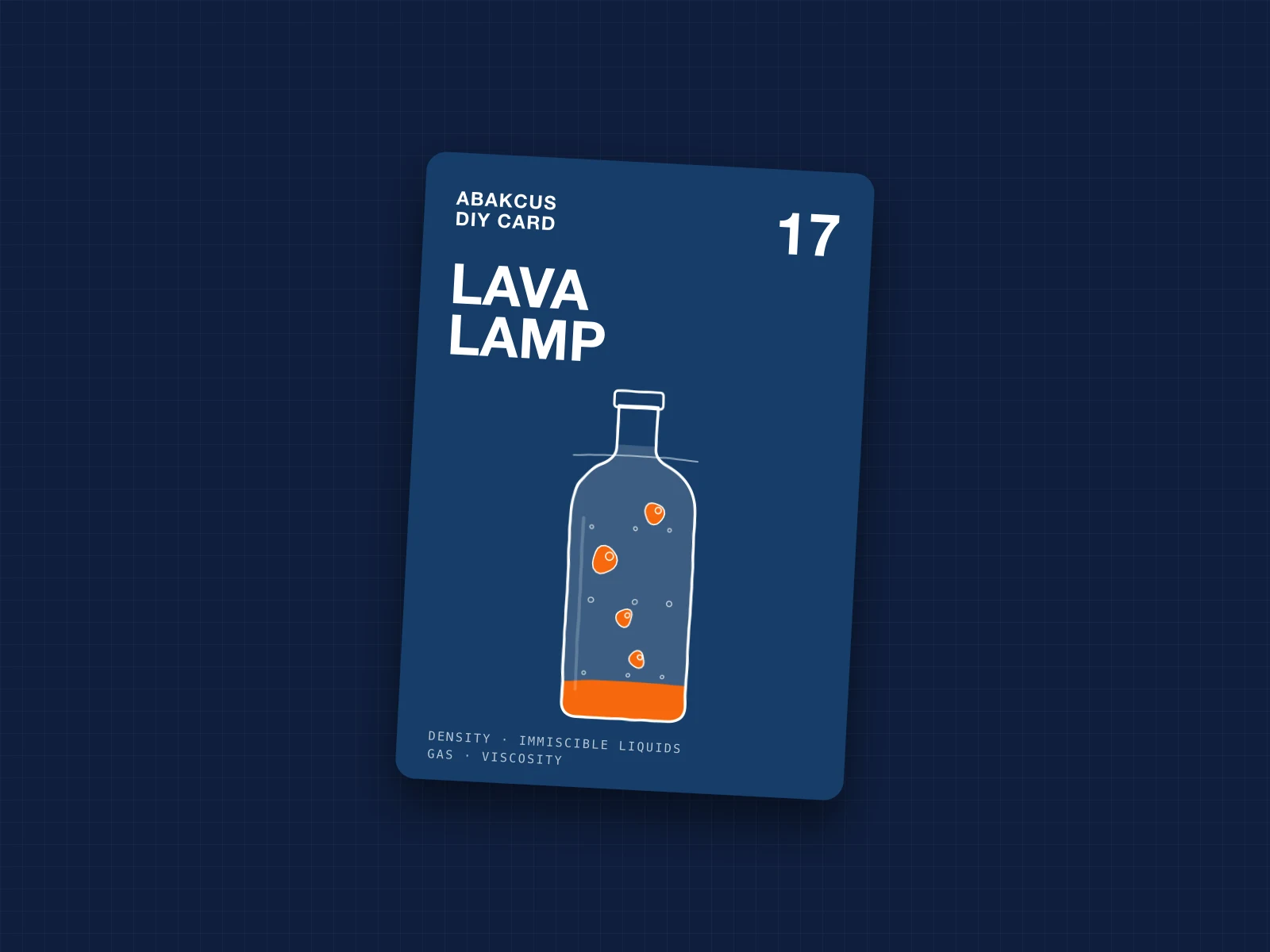
How to Make a Lava Lamp With Oil, Water and a Fizzy Tablet
Oil, coloured water and a fizzy tablet in a bottle: blobs of colour rise, hang at the top and fall back for as long as the fizz lasts. Oil and water refuse to mix, and bubbles do the lifting.
Open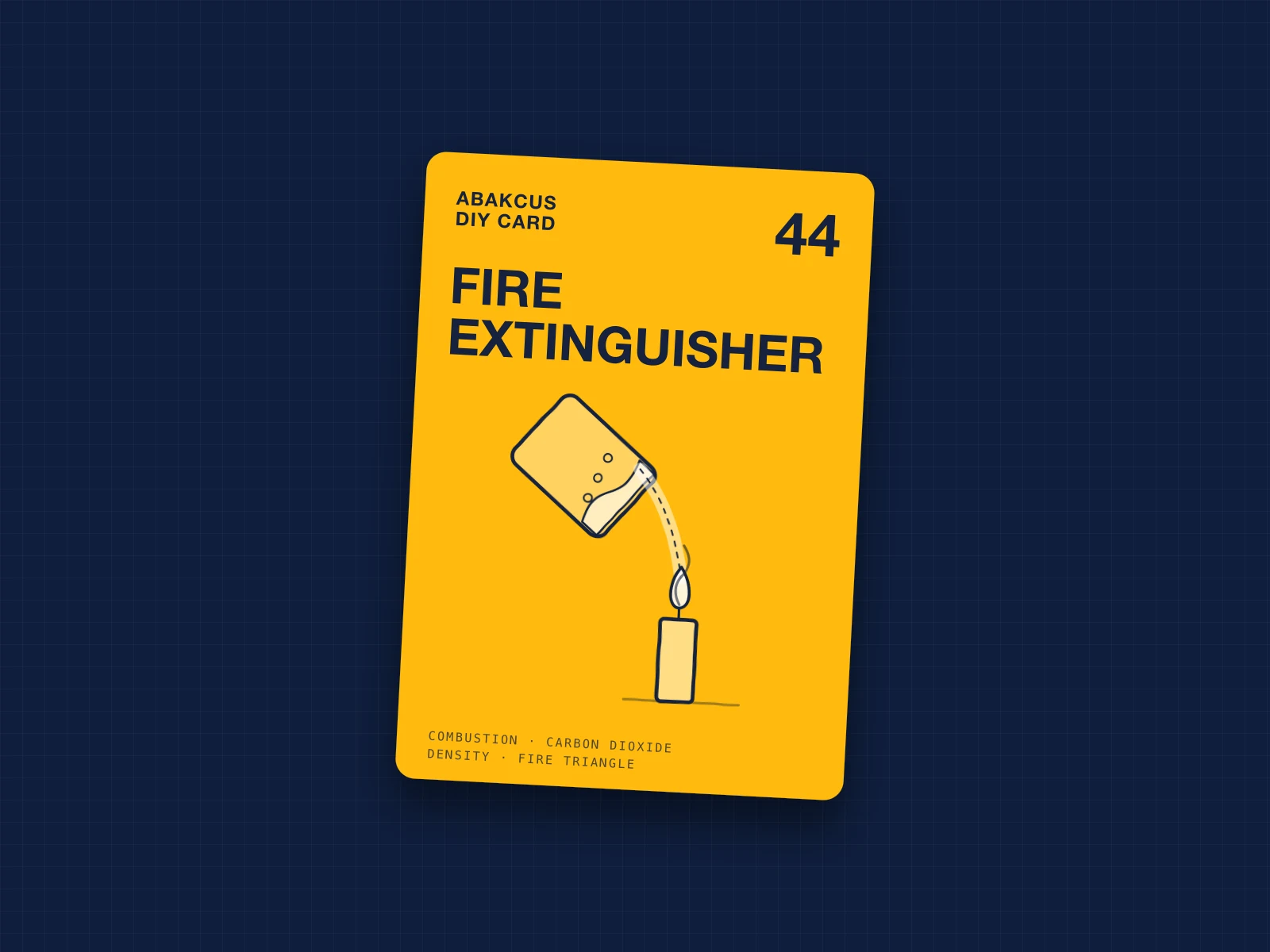
How to Make a Fire Extinguisher With Baking Soda and Vinegar
A jar, some baking soda and a splash of vinegar. Tip the jar over a candle as if pouring water, and the flame goes out, smothered by a gas you can’t see.
Open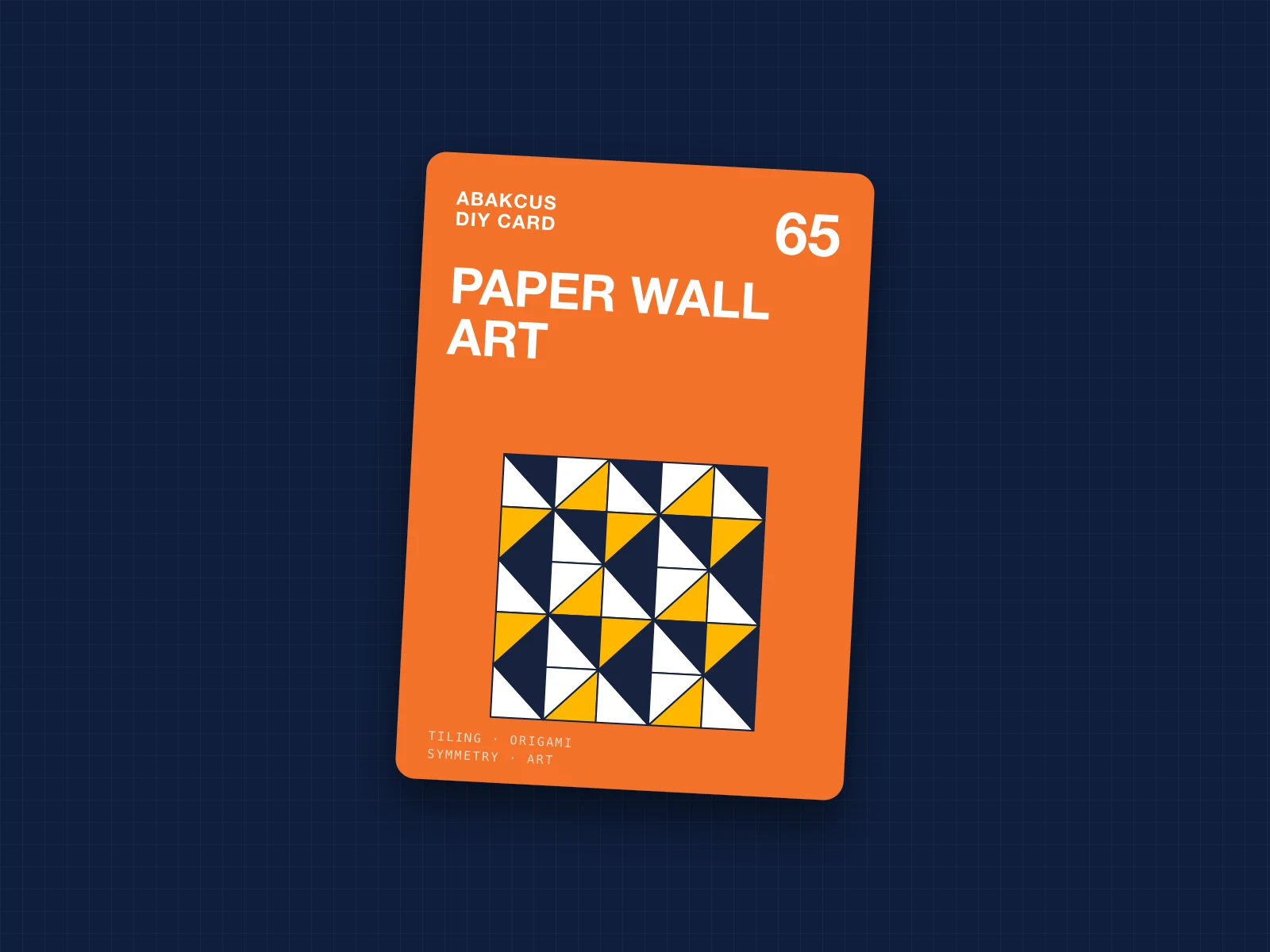
How to Make Geometric Paper Wall Art From Folded Triangles
Square sheets of coloured paper, one classic origami fold and a board. Fold two dozen identical triangles, turn them this way and that, and a pattern takes over the wall.
Open
How to Draw a 3D Hand Optical Illusion With Curved Lines
Trace your hand, then draw nothing but lines across the page, each arching up as it crosses the outline. Thirty lines later, your hand rises off the paper.
Open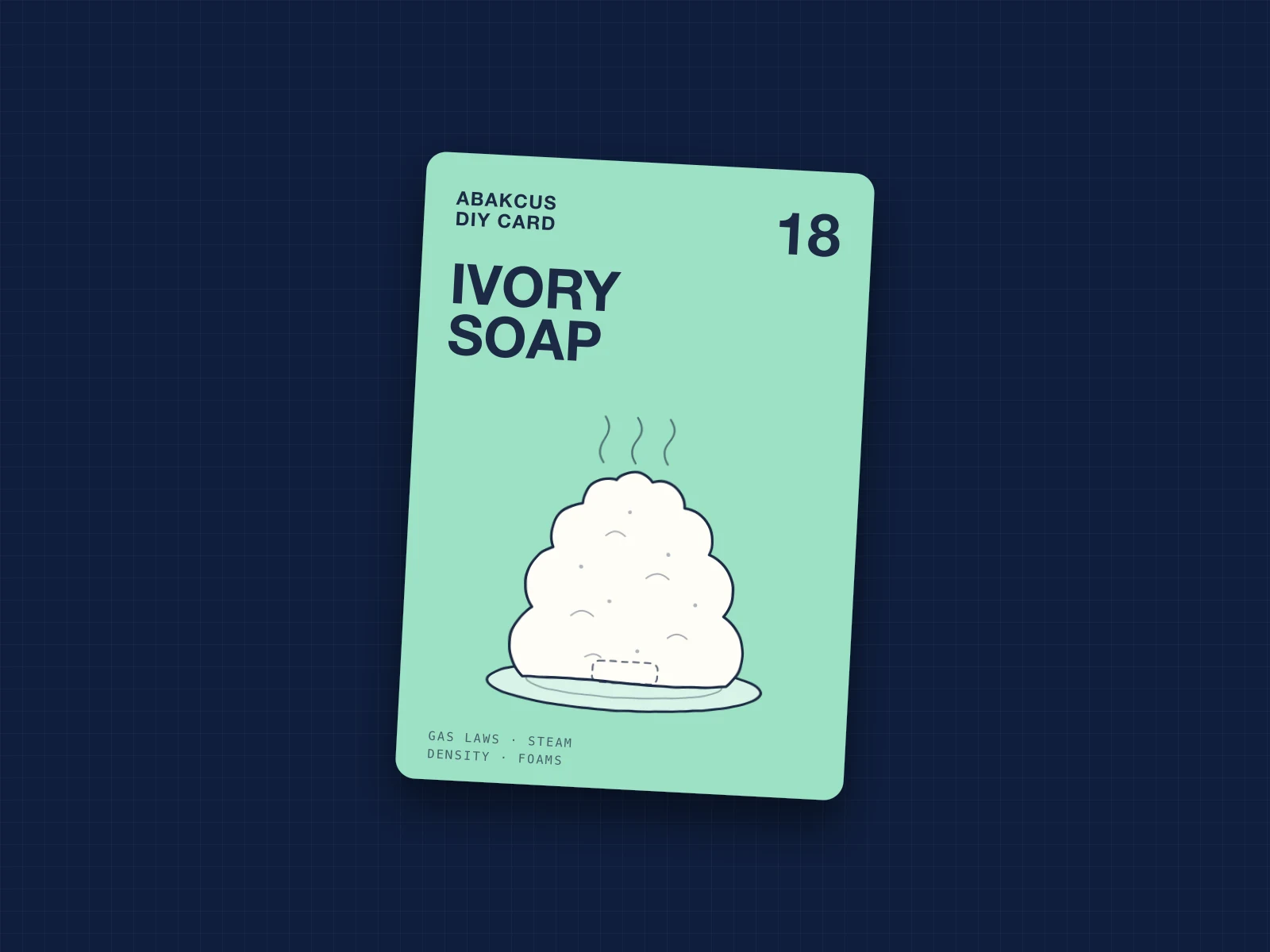
The Ivory Soap Microwave Experiment: Why the Bar Puffs Up
Put a bar of Ivory soap in the microwave and it swells into a cloud several times its size. Hot air alone can’t do that. The water hidden in the soap, turning to steam, can.
Open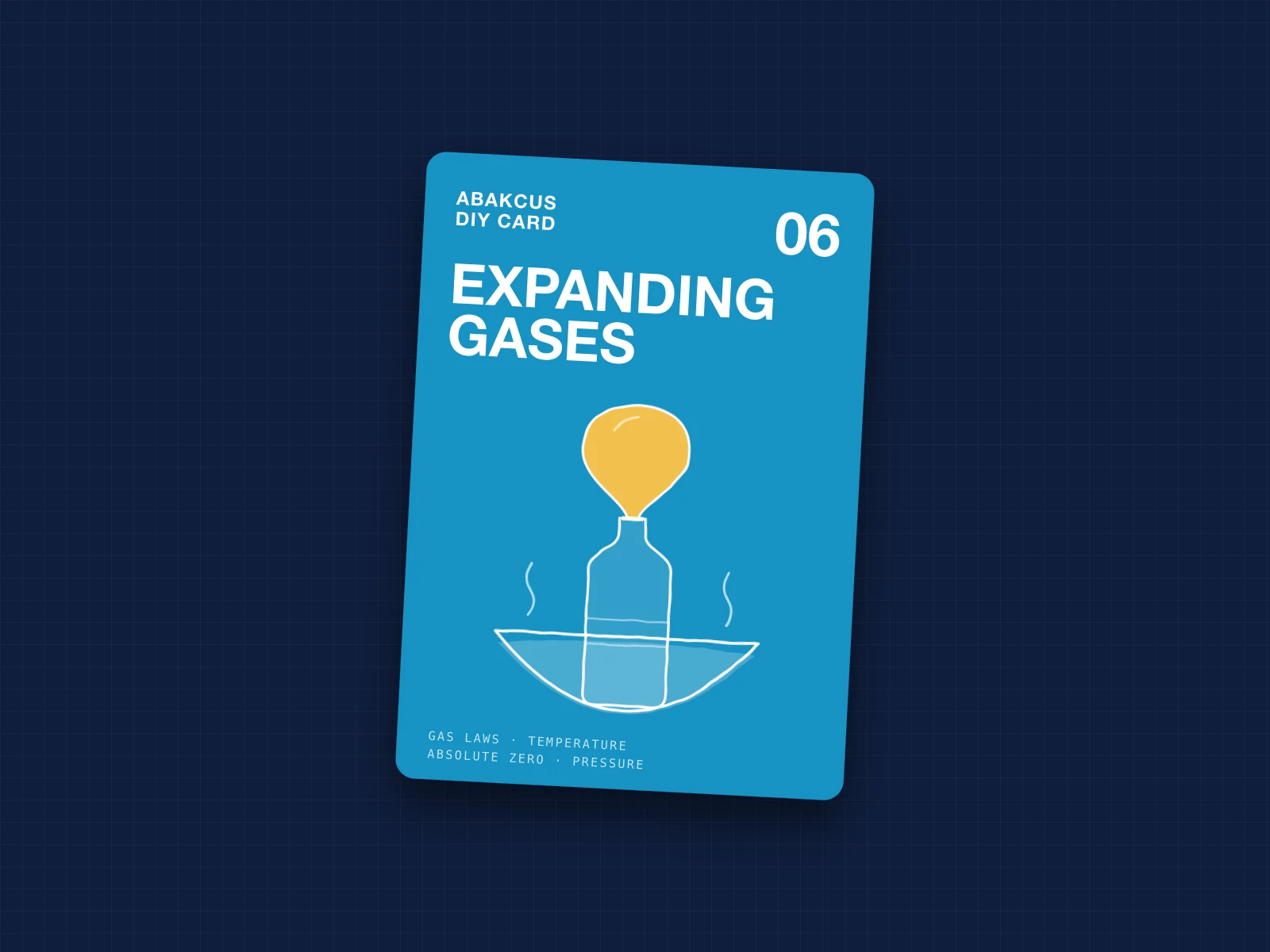
How to Blow Up a Balloon With Hot Water: Charles’s Law
Put a balloon on an empty bottle, stand the bottle in hot water, and the balloon lifts itself up. The air didn’t get any more of itself. It just needs more room, and from that one fact you can find absolute zero.
Open