
DIY · Card 18 · Physics · Chemistry
One bar of soap, one plate, one minute in the microwave. The bar swells into a crisp white cloud, and the reason it can is hidden in the soap from the day it was made.
01The brief
Make a bar of soap grow to several times its size, and work out what is really inflating it.
5–6×
how much a bar of Ivory can grow in a minute or two
1.27×
the most hot air can expand between room temperature and boiling
1.7 litres
of steam from a single gram of boiling water
It looks like the soap is made of something special. It isn’t. Ivory is ordinary soap with air whipped into it, which is why it floats in the bath. In the microwave those tiny air pockets become the moulds for something much bigger.
The obvious explanation is that the air in the bubbles heats up and expands, as it did in the expanding gases card. That is part of the story, but a small part. Do the sums and hot air can’t come close. Something else in the bar is doing the heavy lifting.
02Kit
A floating bar of soap and a microwave do all the work. Scales turn it from a trick into a measurement.
Tick off what you have
0 of 4 ready
03Method
Check it floats, look inside, then two minutes at most in the microwave. Weigh it before and after if you can.
Step 1 of 8 · Minute 0
Drop the bar of Ivory into a bowl of water. If you have another brand of soap, drop that in too.
It barely grew.
Why
An old bar that has dried out over time has little water left to turn into steam.
Fix
Use a fresh bar straight from the pack, and check it floats first.
It melted instead of puffing.
Why
The soap isn’t a whipped, floating kind.
Fix
Use Ivory, or test other bars in water first: only the floaters are worth trying.
Brown or burnt spots.
Why
It stayed in too long after it stopped growing.
Fix
Stop as soon as it stops getting bigger, and never run it for more than two minutes.
04Physics
A bar of soap is never completely dry. It still holds a few grams of water, spread through it. Microwaves are very good at heating water, so the inside of the bar warms quickly, and the soap around it softens until it is like stiff dough.
At 100 °C the water starts to boil, and boiling water takes up a startling amount of room as steam: well over a thousand times its volume as a liquid. Most of the steam escapes; you can see it rising. But in a bar full of tiny air pockets, some of it collects in them. The soft walls stretch, the pockets swell, and the whole bar inflates like a sponge of balloons.
When the water is gone, the swelling stops. As the soap cools it hardens around the bubbles, so the cloud keeps its shape. Run the microwave below, then switch to an ordinary bar and compare:
Inside
20 °C
Size
1.0×
Weight
90.0 g
The dashed green outline is the most that hot air alone could manage: 1.05× for this bar. Everything beyond it is steam. A toy model, sped up twice; real bars vary.
05The big idea
One gram of water,
1.7 litres of steam.
Heating a gas makes it grow, but only gently: warming air from a room to boiling point adds about a quarter to its volume. Turning a liquid into a gas is a completely different scale. The same molecules, freed from each other, suddenly need well over a thousand times as much room.
That jump is what pops corn, puffs rice, raises bread in the oven and once drove steam engines. In the soap, a few grams of water are enough to blow a fist-sized bar into a cloud, with plenty of steam to spare.
06The math
1 · Why it floats
ρbar = ρsoap (1 − a)
A bar with a share a of air has an average density ρ(1 − a). It floats once that drops below 1 g/ml.
2 · Charles’s law
V2 / V1 = T2 / T1
At constant pressure a gas’s volume is proportional to its absolute temperature, in kelvin.
3 · Steam from water
V = (m / 18) × 22.4 L × 373 / 273
Grams of water to moles, then the volume a mole of gas fills at 100 °C, about 30.6 litres.
Solid soap is roughly 1.07 g/ml, so a bar floats once about 7 % of it is air. Take a 90 g bar that is one fifth air. Its density is about 0.86 g/ml, and it takes up about 105 ml.
Now heat it. By Charles’s law, air warmed from 293 K to 373 K grows by 373 / 293 ≈ 1.27. But only a fifth of the bar is air, so the whole bar grows by just 1 + 0.2 × 0.27 ≈ 1.05. Five per cent. Not five times.
Steam settles it. Each gram of water that boils makes (1/18) × 22.4 × 373/273 ≈ 1.7 litres of steam. If the bar loses 4 g, that is about 6.8 litres. To grow fivefold, to about 525 ml, the soap only needs to keep around 6 % of that steam in its bubbles. The rest is the steam you see rising off the plate. Try your own numbers:
The bar
0.86 g/ml
Floats
Hot air alone
1.05×
Charles’s law, 20 → 100 °C
Steam made
6.8 litres
from 4.0 g of water
The soap only had to keep 6.1 % of its steam.
A 90 g bar with 20 % air takes up 105 ml; at 5.0× it fills 526 ml. A bar floats once about 7 % of it is air, taking solid soap at roughly 1.07 g/ml. Each gram of water that boils makes about 1.7 litres of steam, so only a tiny share of it needs to stay trapped; the rest is the steam you see rising.
07Real life
Kitchens and volcanoes run the same trick: soften something, fill its bubbles with gas, let it set.
Popcorn
A popcorn kernel is a tiny sealed pot with a little water inside. Heat it and the water turns to steam, pressure builds until the hull bursts, and the starch inside puffs into a foam that sets as it cools. It is the soap cloud, with a bang.
Pumice
When frothy lava cools fast, the gas bubbles in it are frozen in place. The result is pumice, a rock so full of holes that some of it floats on water. It is a floating bar of soap, made of stone.
Polystyrene foam
The white beads in foam packaging start as hard plastic grains with a little gas dissolved in them. Heated with steam, they soften and swell to many times their size, then fuse together. That is why foam packaging is mostly air.
Bread in the oven
A loaf grows most in its first minutes in the oven. The gas pockets left by the yeast expand with the heat and fill with steam, and the dough stretches until the crust sets around them and fixes the shape, just as the cooling soap does.
Puffed rice
Puffed rice and rice cakes are made by heating grains under pressure and then releasing it all at once. The water in each grain flashes to steam and blows the grain up into a crisp foam, the same trick on a breakfast scale.
Meringue
Whisk egg white and you trap air in a foam of protein. Bake it and the foam dries out and sets, with water leaving as steam, until it is light, brittle and crumbly: exactly the texture of the cooled soap cloud.
1863
For more than a century, Procter & Gamble told a happy-accident story: in 1879 a worker went to lunch and left a soap mixer running, the batch came out full of air, and customers wrote in asking for more of “the soap that floats”.
In 2004 the company’s archivist found a notebook that tells it differently. In 1863, the chemist James N. Gamble had written: “I made floating soap today.” The floating was a recipe, not a mistake. The name Ivory, trademarked in 1879, came from Harley Procter, who took it from a line in Psalm 45 about “ivory palaces”. Floating, like every layer in the density tower, is just a question of average density.
08Is and isn’t
Ivory floats because it’s so pure.
Purity has nothing to do with it. It floats because air is whipped into it while it is made. Pure soap with no air in it sinks.
The hot air in the bubbles makes it swell.
Air only grows by about a quarter between room temperature and boiling point, and only a fifth or so of the bar is air. The big swelling comes from water turning into steam.
It’s a chemical reaction.
It’s a physical change. The soap is the same soap before and after; it has lost some water and changed shape. Wet a flake and it lathers as usual.
Any soap does it.
Most bars don’t have air spread through them, so the steam has nowhere to gather. They soften, blister or melt rather than puffing up.
09Go further
A
Weigh it
Weigh the bar before and the cloud after. The difference is the water that left as steam. Put your numbers into the calculator above.
B
Measure the growth
Lower the bar into a full measuring jug and catch the overflow to find its volume. Do the same with the cloud, wrapped in cling film, and work out how many times bigger it got.
C
Half a bar
Try a half bar and a quarter bar. Does a smaller piece grow by the same factor, or does more of its steam escape?
D
Wet it first
Soak a bar in water for an hour, dry the outside and microwave it. Does more water inside make a bigger cloud?
E
Make a new bar
Crumble the cloud, knead the flakes with a few spoonfuls of water and press them into a mould. When it is dry, does your new bar still float?
10Questions
Ivory has tiny pockets of air whipped into it. The microwave heats the water in the soap until it boils, and the steam swells those pockets while the hot soap is soft enough to stretch. The bar puffs up into a foam several times its size, then hardens as it cools.
Air is whipped into the soap while it is made, so the bar is a little less dense than water on average. Most other bars are solid all the way through and sink.
It is a popular classroom demonstration, but it needs a grown-up. Use a microwave-safe or paper plate, run it for no more than two minutes, watch the whole time, and let the soap cool before touching it: it gets hot enough to burn. The microwave may smell of soap for a while.
Yes. Nothing about the soap has changed chemically; it has only lost some water and been stretched into a foam. Crumble it, mix the flakes with a little water, press them into a mould and let it dry into a new bar.
Without air pockets spread through it, the steam has nowhere to collect. It escapes, or makes a few blisters, and the bar mostly softens or melts instead of growing into a cloud.
Safety · A grown-up should run the microwave. Never go past two minutes, never leave it unwatched, and let the soap cool before touching it: it gets hot enough to burn. Keep soap away from eyes and mouths, and wipe the microwave out afterwards.
All DIY cards →Keep wandering
A few more pieces in the same spirit — math, design, and slow attention.
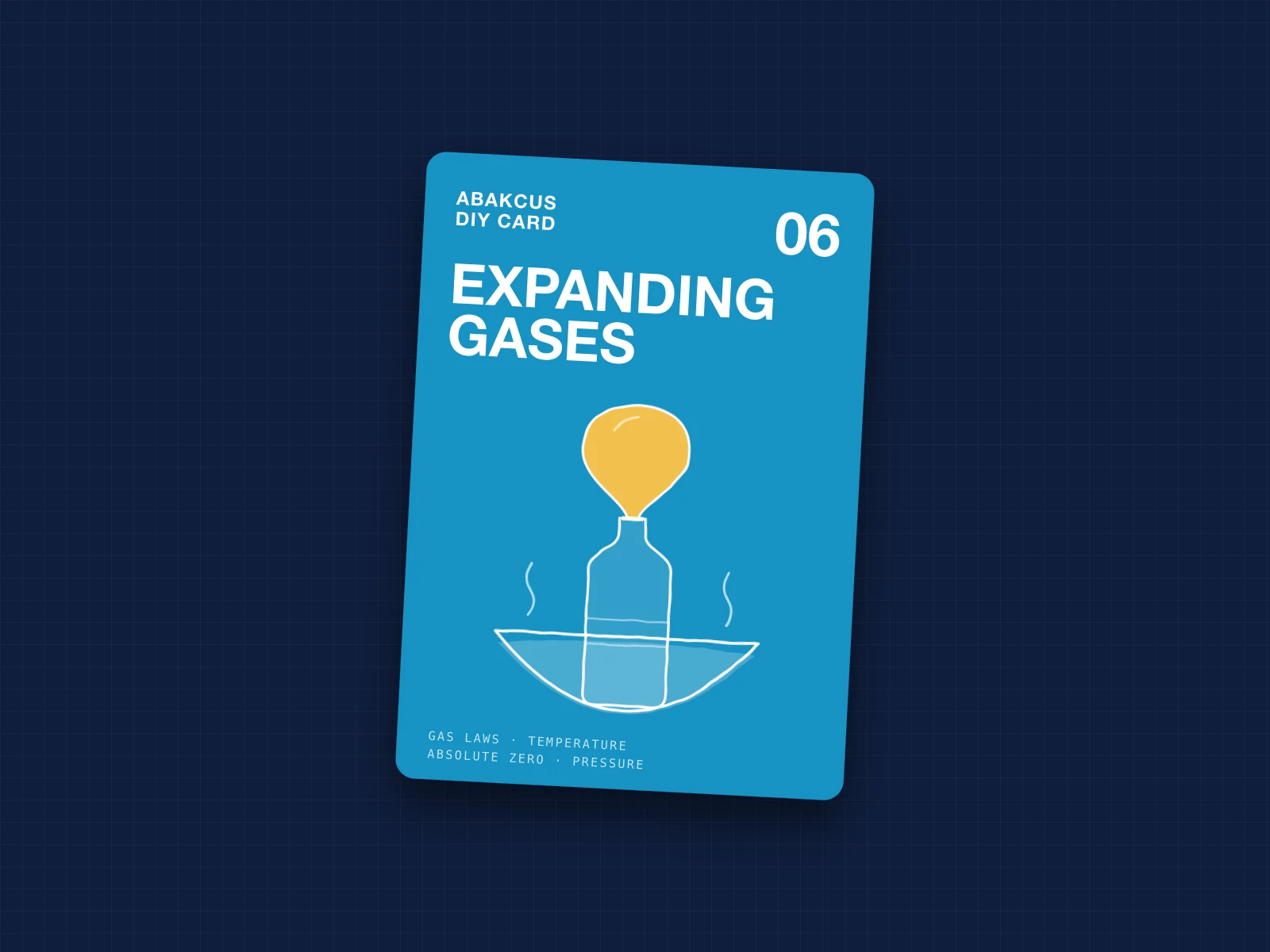
How to Blow Up a Balloon With Hot Water: Charles’s Law
Put a balloon on an empty bottle, stand the bottle in hot water, and the balloon lifts itself up. The air didn’t get any more of itself. It just needs more room, and from that one fact you can find absolute zero.
Open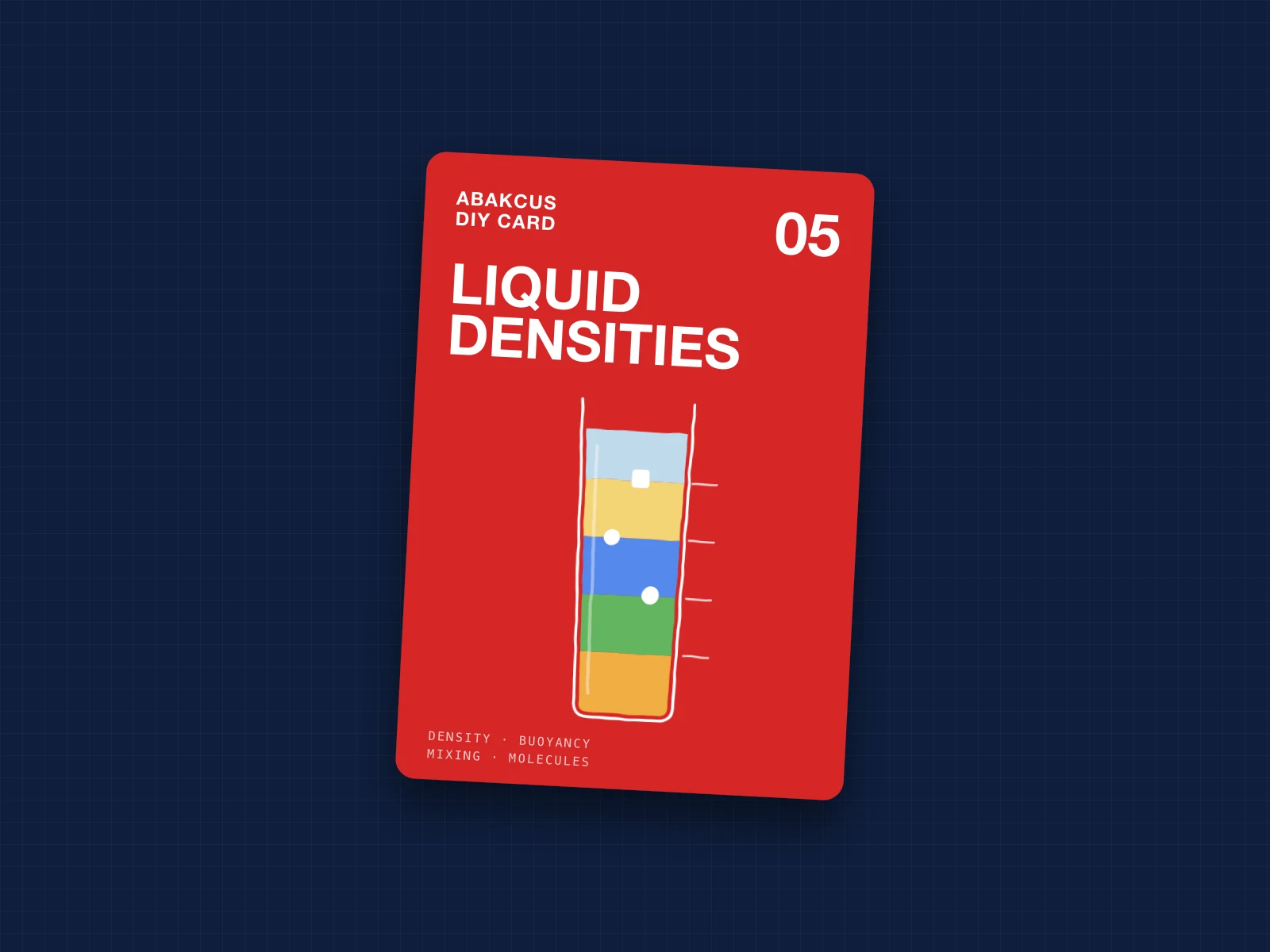
How to Make a Density Tower: Stacking Liquids in a Glass
Honey, washing-up liquid, water, oil and rubbing alcohol, poured one by one into a glass, settle into five sharp layers. Which goes where is decided by one number, and one of them only stays put thanks to the oil.
Open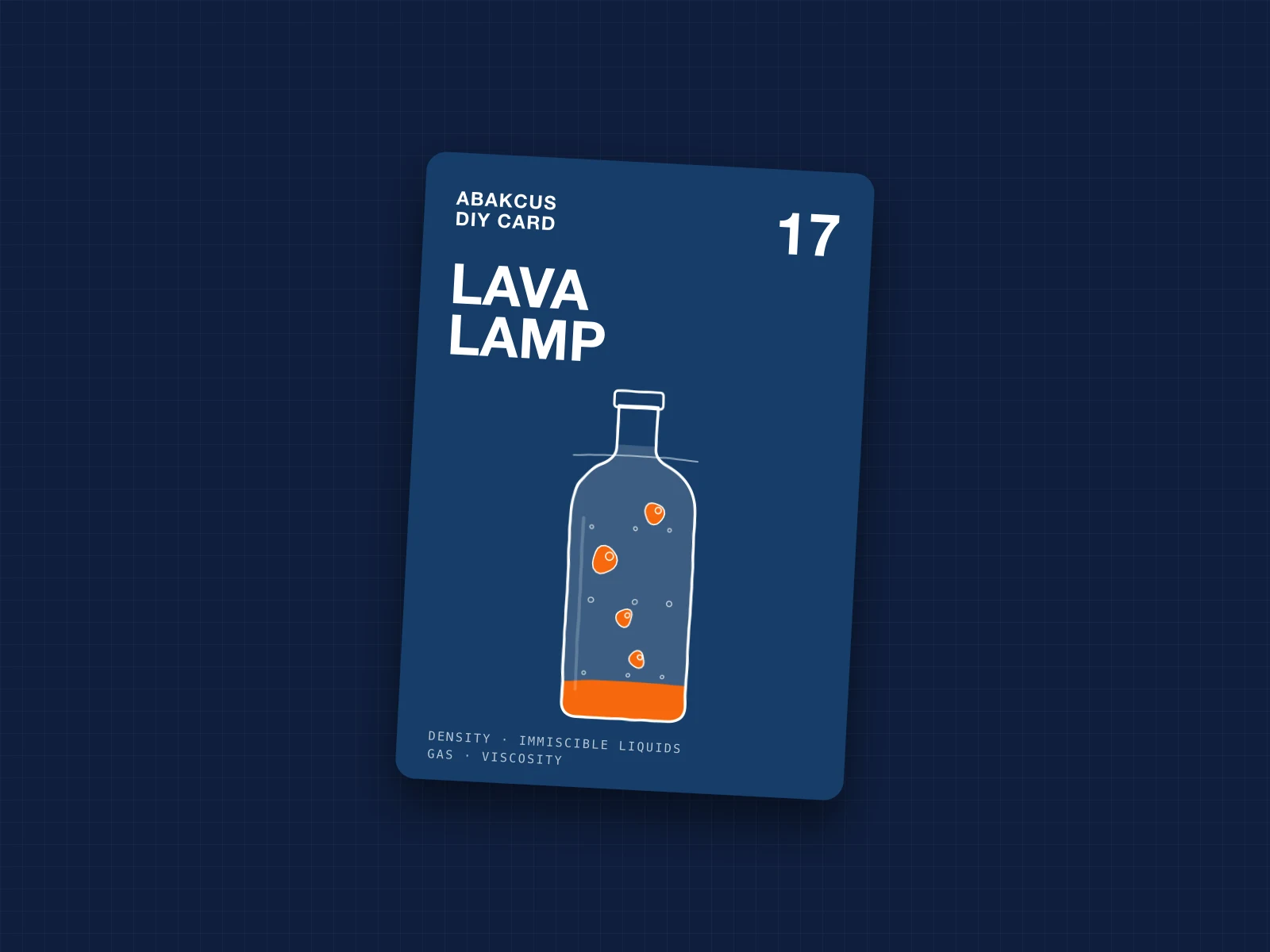
How to Make a Lava Lamp With Oil, Water and a Fizzy Tablet
Oil, coloured water and a fizzy tablet in a bottle: blobs of colour rise, hang at the top and fall back for as long as the fizz lasts. Oil and water refuse to mix, and bubbles do the lifting.
Open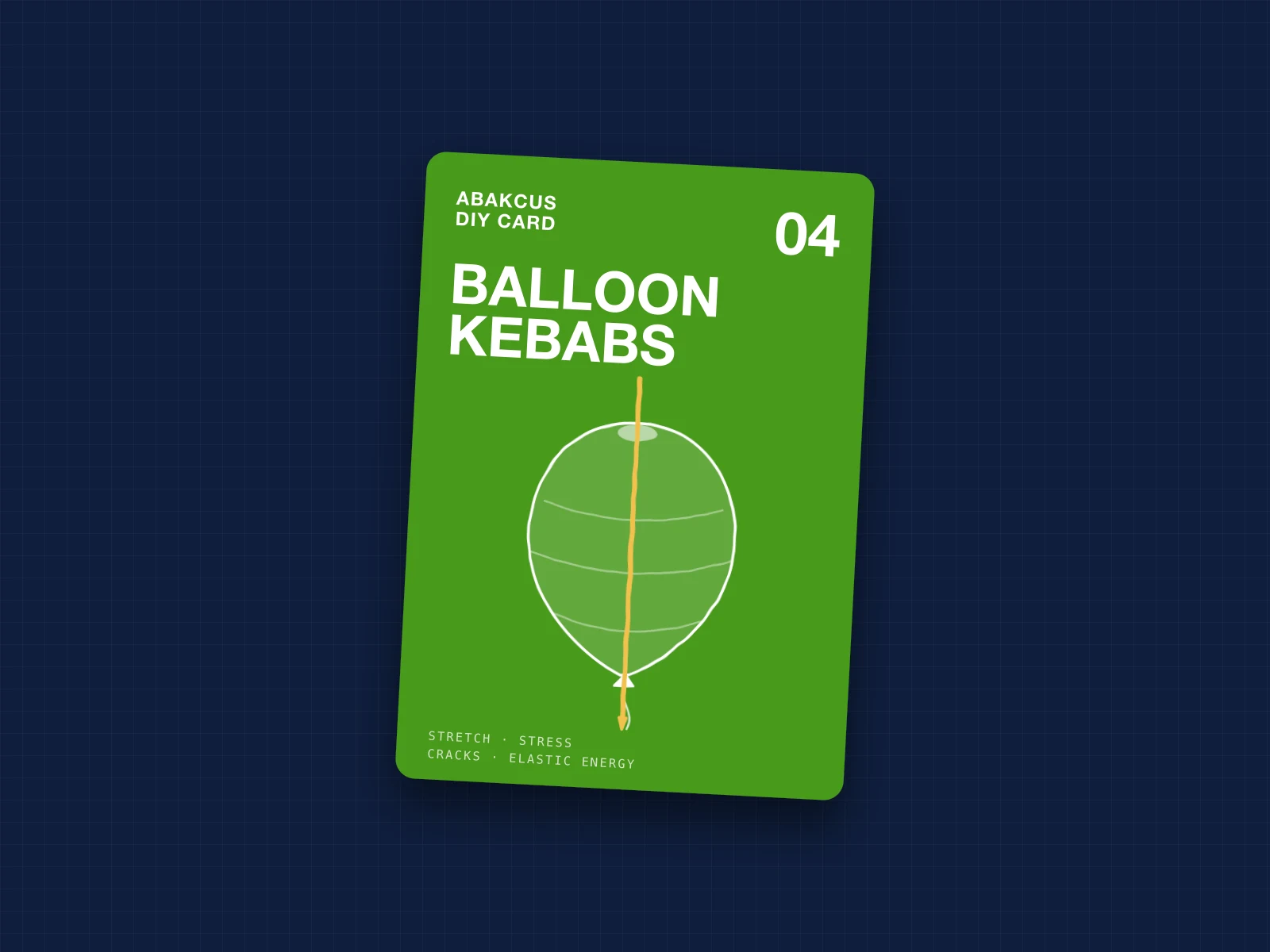
How to Push a Skewer Through a Balloon Without Popping It
A wooden skewer goes in at the top of a balloon and out beside the knot, and the balloon just sits there. The trick is knowing where the rubber is least stretched, and why stretch decides everything.
Open
How to Get an Egg Into a Bottle Without Touching It
Two days in vinegar take the shell away, a warm bottle does the rest. The egg goes through a mouth narrower than itself, pushed by ten tonnes of air per square metre.
Open
How to Float a Paper Clip on Water: Surface Tension
Steel is nearly eight times denser than water, and a paper clip still lies on top of it if you put it down gently. The surface bends into a dimple and holds it, like a trampoline, until a drop of soap breaks the spell.
Open