
DIY · Card 04 · Materials · Physics
A wooden skewer goes in at the top of a balloon and out beside the knot. The balloon just sits there, pierced twice, in one piece.
01The brief
Push a wooden skewer all the way through a balloon, in one side and out the other, and keep it in one piece.
2
spots on a balloon where this works: the tip, and the neck beside the knot
16×
thinner: rubber stretched four times each way, as it is around a balloon’s middle
570 m/s
how fast the crack runs when a balloon pops, faster than sound in air
A balloon feels like the most fragile thing in the house. Touch it with a pin and it is gone. So it is startling to watch someone slide a long, pointed skewer into the top of one, through the middle and out by the knot, and hand it to you like a kebab.
The balloon is not equally fragile everywhere. It is a map of stretch, tight in the middle and slack at the two ends, and whether a hole stays a hole or turns into a bang depends entirely on where on that map you make it. Once you can read the map, the trick works nearly every time.
02Kit
Three things and a few spare balloons. Your first attempt may well end in a bang; that is part of the experiment.
Tick off what you have
0 of 3 ready
03Method
Most of the work is in choosing where to push. The pushing itself takes a few seconds.
Step 1 of 8 · Minute 0
Blow up a balloon until it is round but not tight, about three-quarters of the way to full, and tie it off.
It pops the moment the skewer touches.
Why
The balloon is too full, or the point landed on stretched rubber.
Fix
Let a little air out, retie it, and aim for the darkest spot at the very tip.
It goes in fine and pops on the way out.
Why
The exit was too far from the knot, where the rubber is already stretched.
Fix
Aim right beside the knot, and twist slowly as the point breaks through.
The skin dimples but won’t break.
Why
The point is blunt, so it pushes the rubber instead of piercing it.
Fix
Use a sharp, fresh skewer, oiled, and twist rather than shove.
04Physics
Rubber is made of very long, tangled molecules, tied to each other here and there by cross-links. Left alone, the tangles coil up. Stretch the rubber and you straighten them out, and they pull back, which is what makes rubber elastic. Every bit of stretch stores a bit of energy, like a wound spring.
A balloon does not stretch evenly. The tip, opposite the knot, is moulded a little thicker, and the neck is held narrow by the knot itself, so both stay fairly slack while the middle balloons out. And because rubber keeps its volume as it stretches, the most stretched parts are also the thinnest and palest. The dark patches you look for are the slack ones.
Now make a hole. Any hole is the start of a crack, and a crack only grows if growing it pays: the stretched rubber around it has to release more energy as it tears than it costs to tear new rubber. Around the balloon’s middle, the skin is stretched so hard that a tiny cut has a huge store of energy behind it, and the crack runs. At the tip and the neck there is too little energy for that. The hole stays a hole, and the slack rubber closes round the skewer. Try it:
Stretch
—
Thickness
—
Stress
—
Hover over the balloon to read the rubber under the pointer.
Click anywhere on the balloon to push the skewer in.
A toy model: below about 0.9 MPa the hole holds; above it a crack runs; above 1.8 MPa the crack branches into fragments.
When a crack does run, it runs fast. In 2015, two physicists in Paris filmed stretched rubber sheets bursting with a high-speed camera and clocked the cracks at around 570 metres a second, probably close to the speed of sound in the latex itself. They also found the line between a pop and a shatter: below a stress of about 1.8 megapascals the skin tears along one crack; above it, the crack keeps splitting at its tip and the rubber flies apart into a branching tree of pieces.
05The big idea
It’s not the hole.
It’s the stretch.
The same skewer, the same push, the same balloon. In one place you get a kebab, in another a bang. Nothing about the hole itself is different. What is different is how much energy is waiting around it, and that is set by how far the rubber has been stretched.
This is why engineers worry less about whether a material has a flaw, since all of them do, and more about how much energy is stored around that flaw. Glass, steel, aircraft skins, rubber: they all break by the same rule.
06The math
1 · Rubber keeps its volume
t = t₀ / λ²
Stretch a patch of skin by λ in both directions and its thickness falls by λ². Four times wider means sixteen times thinner.
2 · Laplace’s law
σ = Δp · r / 2t
The stress σ in the skin of a sphere of radius r and wall thickness t, holding a pressure difference Δp.
3 · When a crack grows
G ≥ Γ
Griffith’s rule for glass, extended to rubber by Rivlin and Thomas in 1953: a crack grows when the energy it releases, G, beats the tearing energy of the rubber, Γ.
Put numbers on a three-quarter-full balloon. Around its middle, the rubber might be stretched about four times each way; at the tip, perhaps under twice. The first formula says the middle is then about 16 times thinner than the flat balloon and the tip only about 3 times. Typical balloon rubber starts out a few tenths of a millimetre thick, so the middle of the skin ends up a couple of hundredths of a millimetre thin.
For rubber like this, the stress in the skin climbs roughly with the square of the stretch, and the energy stored in every cubic millimetre climbs with it. In this example the middle carries about five times the stress of the tip and about eight times the stored energy per unit volume. That is the whole difference between a kebab and a bang.
The second formula hides a surprise. As a balloon grows, its radius goes up and its skin gets thinner, so the pressure it can hold, Δp = 2σt / r, can actually fall even while the stress rises. That is why the first breath is the hardest, and why two connected balloons often don’t share their air the way you’d expect:
Air flows from A into B
The smaller balloon is pushing harder, so it empties into the bigger one. Most people expect the opposite.
07Real life
Every one of these is the balloon’s rule: a flaw only matters if there is enough stored energy around it to drive it.
Rubber stoppers on medicine vials
A nurse pushes a needle through the rubber cap of a vial, draws out the dose and pulls the needle back. The cap seals itself. It is a balloon kebab in reverse: thick rubber, gently compressed, closes round anything thin that passes through it.
Rip-stop fabric
Parachutes, kites and sails are woven with a grid of thicker threads every few millimetres. A tear that starts can only run as far as the next thick thread, where it runs out of energy, just like a cut that reaches slack rubber.
Round aircraft windows
In 1954 two de Havilland Comet airliners broke up in flight. Investigators traced the failures to fatigue cracks growing from the sharp corners of openings in the cabin, where stress piles up. Aircraft windows have had rounded corners ever since.
The notch on a snack packet
Plastic film is tough to tear from a smooth edge, but a tiny notch concentrates the stress at one point and gives the tear a head start. Once it starts, it runs. The packet is designed with a weak spot on purpose.
Sausages split lengthwise
In a pressurised cylinder, the skin is pulled twice as hard around its circumference as along its length. So a sausage that bursts in the pan splits along its length, and so do overfilled pipes and boiled hot dogs.
Self-sealing fuel tanks
Second World War aircraft carried fuel tanks lined with layers of rubber. When a bullet punched through, the rubber closed back over the hole and swelled on contact with the fuel, sealing the leak before the tank emptied.
1824
The first rubber balloons were made by Michael Faraday at the Royal Institution in London, for experiments with hydrogen. He cut two discs of raw rubber, dusted the insides with flour so they wouldn’t stick, and pressed the tacky edges together until they sealed. A year later, toy balloons went on sale as a do-it-yourself kit.
The rubber in today’s balloons is latex, cured so its molecules are cross-linked into one stretchy net. Without that net there would be no elastic energy to store, and no pop, just a slow sag. The egg in the bottle was about the air pushing; here, it is the skin holding the air in that does all the work.
08Is and isn’t
The oil plugs the hole.
Oil only lets the skewer slide. The seal is the rubber itself, squeezing round the wood because it is still under a little tension.
The ends are safe because the rubber there is thicker.
Thickness is the symptom, stretch is the cause. Less stretched rubber is both thicker and far less stressed, and it is the stress, and the energy stored with it, that decides whether a hole becomes a crack.
A pin always pops a balloon.
Stick a square of tape on a balloon and push a pin through the tape. Nothing happens. The tape carries the load around the hole, so no crack can start.
When a balloon bursts, the air inside blows it apart.
The crack does the damage. It runs through the rubber at around 570 metres a second, faster than sound in air, so the skin is in pieces before the air has time to rush out.
09Go further
A
The tape trick
Put a square of clear tape on a blown-up balloon and push a pin through it. It won’t pop. Pull the pin out and the balloon slowly deflates through the tiny hole.
B
Draw a stretch map
Draw small circles all over a flat balloon with a marker, then blow it up. The circles near the middle swell into big pale rings, the ones at the tip barely change. You have drawn the stress.
C
Two balloons and a straw
Blow up one balloon a little and one a lot, connect their necks with a straw and release. The small one usually empties into the big one. The pressure lab above shows why.
D
Pop it with orange peel
Squeeze a strip of orange peel so its oil sprays on a balloon. It pops. The limonene in the peel softens the latex until it can no longer hold the stretch.
E
Film the pop
Pop a soft balloon and a very tight one in slow motion. The soft one tears along a single line; the tight one shatters into a branching tree of cracks.
If you have already floated a ball on a hair dryer in the previous card, try floating a small, half-filled balloon the same way. Then compare: the ball is held up by moving air, the balloon’s fate is decided by its skin.
10Questions
Blow the balloon up about three-quarters full, oil the skewer, and push it in gently, twisting, through the dark patch at the very top. Bring it out through the thick rubber right beside the knot. Those are the two places where the rubber is least stretched.
The rubber there is barely stretched, so it stores little elastic energy. A small hole only grows into a crack if the energy released by growing it is more than the energy needed to tear new rubber. At the tip and the neck there isn’t enough, so the hole stays a hole and the rubber grips the skewer.
Oil lets the skewer slide through the rubber instead of dragging on it. It does not seal the hole; the rubber squeezing round the wood does that.
Stretched rubber stores a lot of elastic energy. When it is cut where it is stretched hard, the crack can run on that stored energy, at hundreds of metres a second, and the skin tears apart before the air has time to escape.
The pressure a rubber balloon pushes back with peaks when it is still small, then drops as the skin thins out and the balloon gets bigger. Once you are past that first peak, each breath gets easier, until the rubber nears its limit and stiffens again.
Safety · Skewers are sharp: point them away from faces and let a grown-up help younger children. Pick up every scrap of popped balloon, since small children can choke on them, and skip latex balloons if anyone has a latex allergy.
All DIY cards →Keep wandering
A few more pieces in the same spirit — math, design, and slow attention.
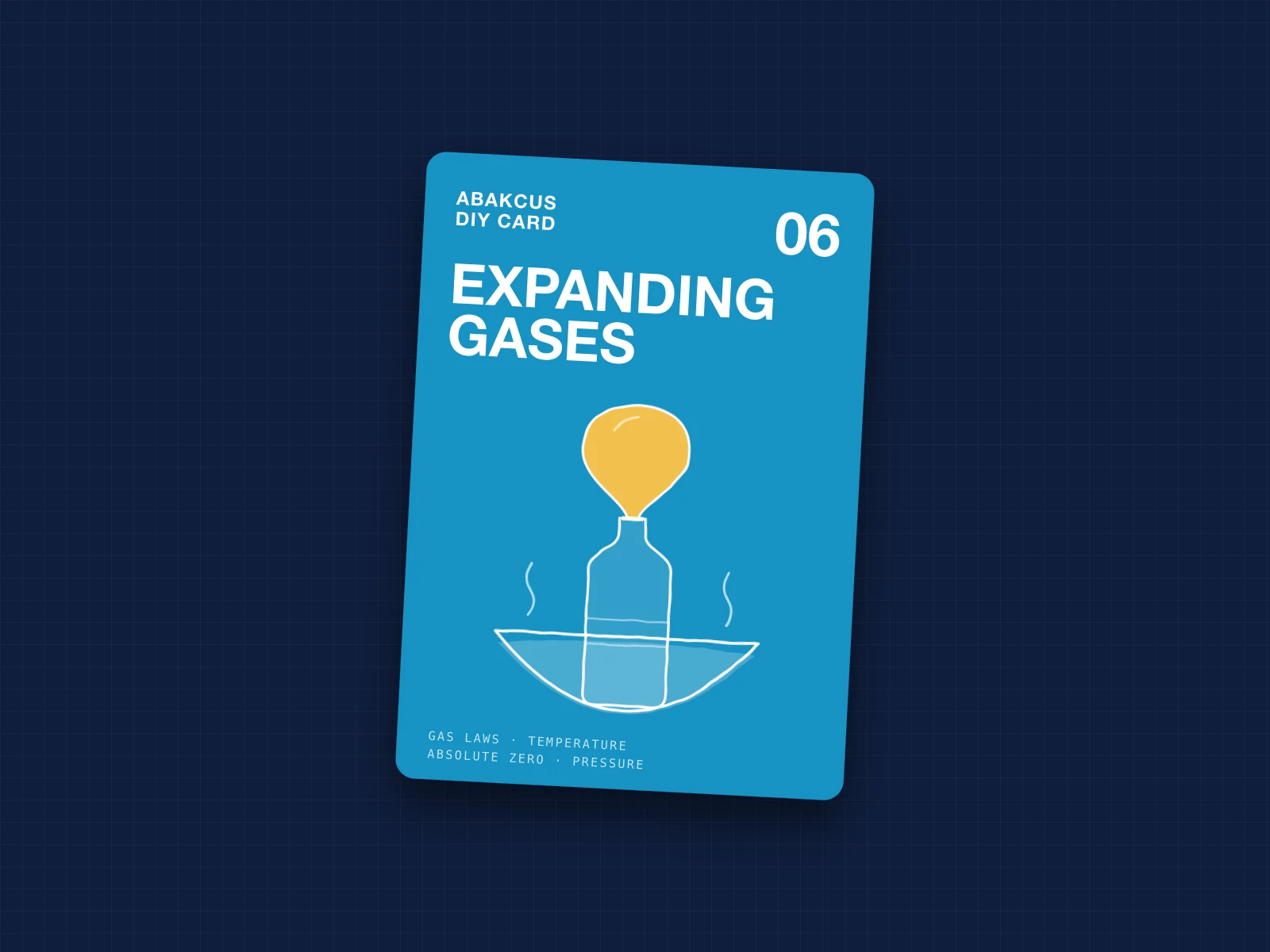
How to Blow Up a Balloon With Hot Water: Charles’s Law
Put a balloon on an empty bottle, stand the bottle in hot water, and the balloon lifts itself up. The air didn’t get any more of itself. It just needs more room, and from that one fact you can find absolute zero.
Open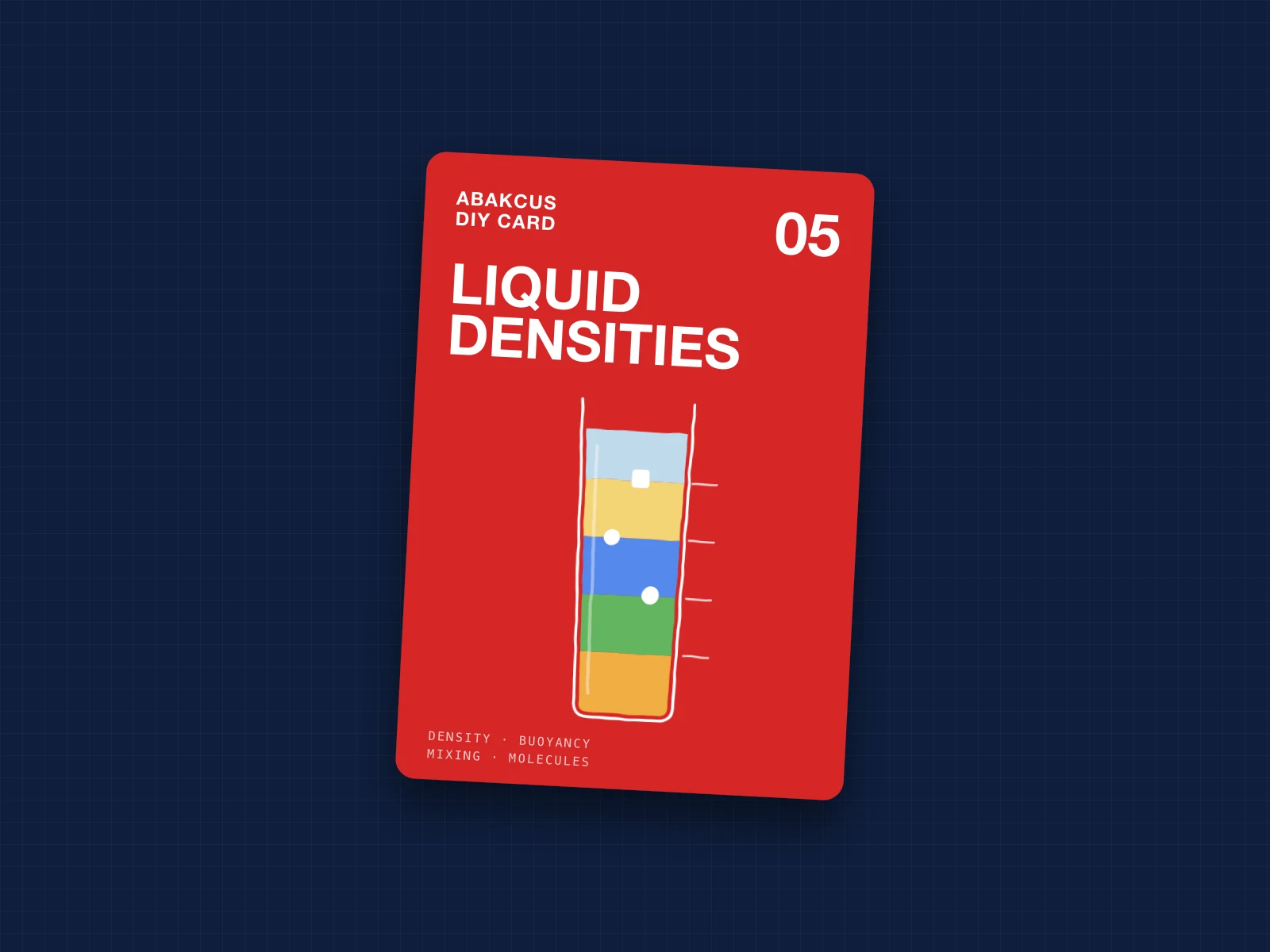
How to Make a Density Tower: Stacking Liquids in a Glass
Honey, washing-up liquid, water, oil and rubbing alcohol, poured one by one into a glass, settle into five sharp layers. Which goes where is decided by one number, and one of them only stays put thanks to the oil.
Open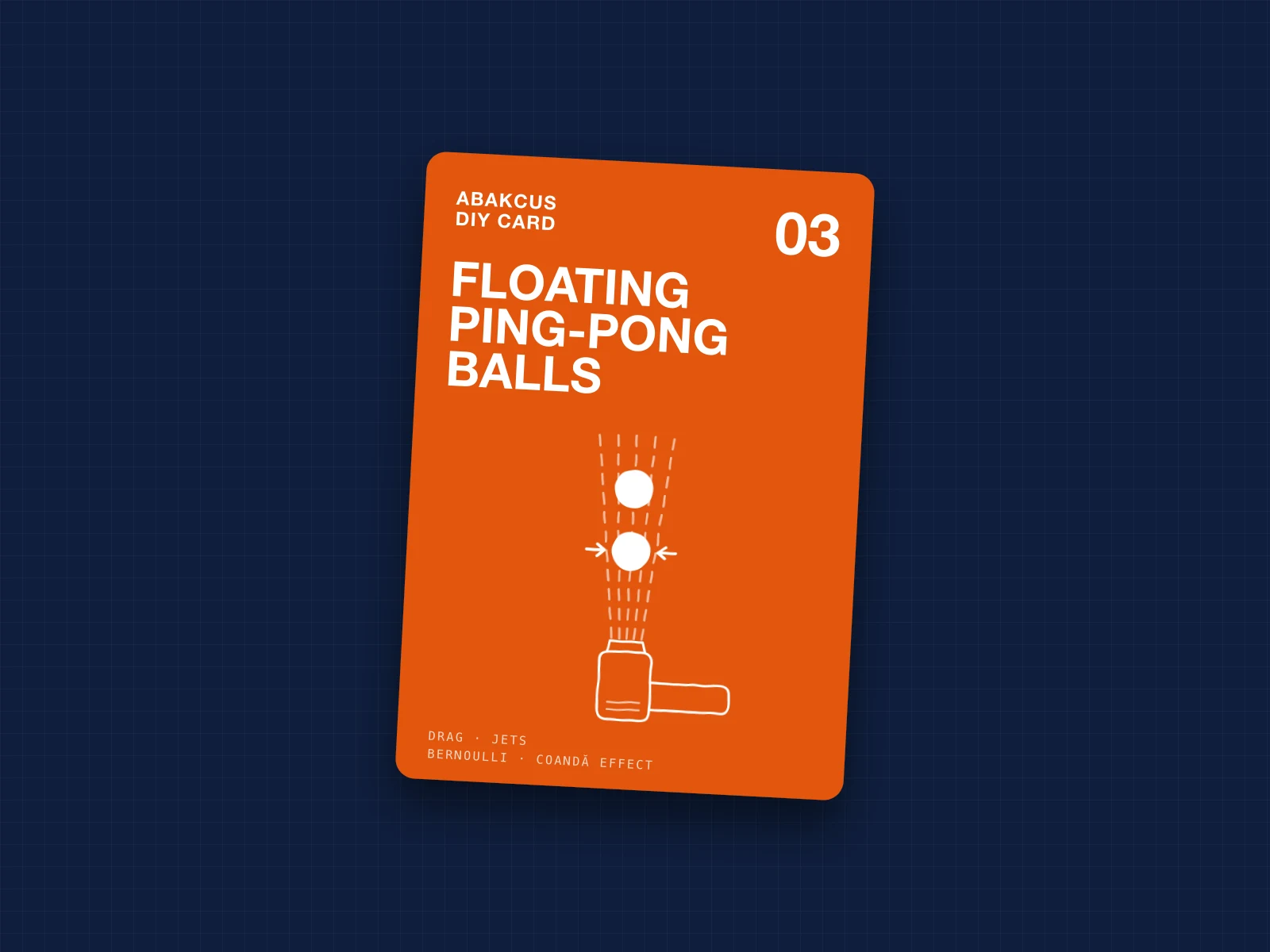
How to Make a Ping-Pong Ball Float With a Hair Dryer
Point a hair dryer at the ceiling and a ping-pong ball sits in mid-air, wobbling but never falling out. Most explanations of why are wrong, and the real one is better.
Open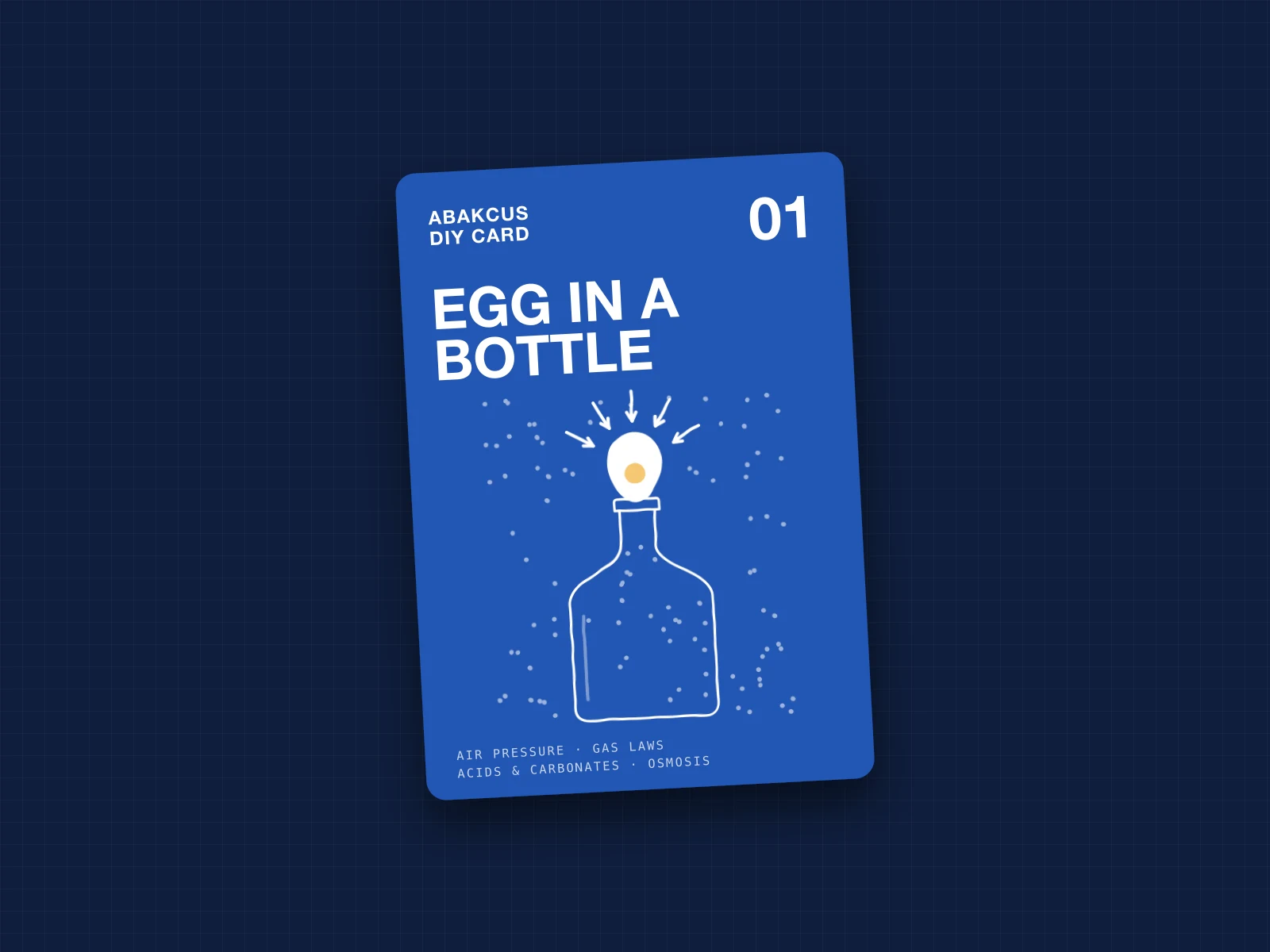
How to Get an Egg Into a Bottle Without Touching It
Two days in vinegar take the shell away, a warm bottle does the rest. The egg goes through a mouth narrower than itself, pushed by ten tonnes of air per square metre.
Open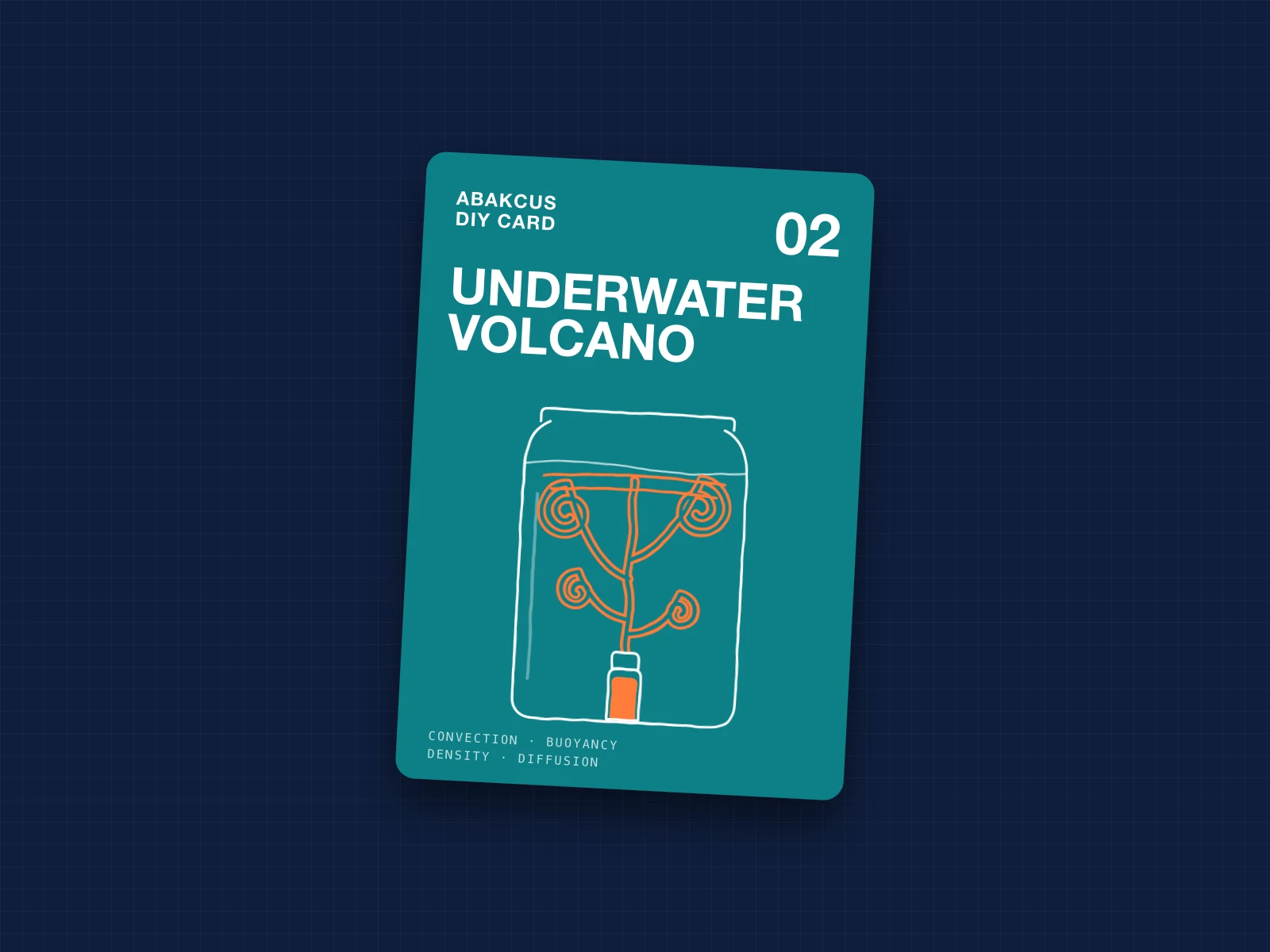
How to Make an Underwater Volcano: Convection in a Jar
Hot red water in a salt shaker, lowered into a jar of cold water. It erupts, curls into a mushroom, and lies on the surface like oil, because water one and a half percent lighter has nowhere to go but up.
Open
The Feynman Technique: A Complete Guide
The four-step learning method developed by Nobel Prize-winning physicist Richard Feynman. How it works, why it works, and how to apply it to anything.
Open