
DIY · Card 05 · Physics · Chemistry
Five liquids from the kitchen cupboard, poured one at a time into a glass, settle into five sharp stripes. Then you drop a grape in, and it stops in mid-glass.
01The brief
Stack five liquids in one glass, each in its own layer, and work out why they settle in exactly that order.
1.42
grams per millilitre: honey, the densest layer, at the bottom
0.86
grams per millilitre: rubbing alcohol, the lightest, floating on top
96 ml
what you get when you mix 50 ml of alcohol with 50 ml of water
There is something unreasonable about a glass with five stripes of liquid in it. Liquids are supposed to slosh and blend. Yet honey, washing-up liquid, water, oil and alcohol, poured in the right order, will sit on top of each other like the layers of a cake, and stay that way for hours.
The order is set by one number, density. But the tower has a secret that most versions of this experiment skip over: two of its layers, the water and the alcohol, would merge into one in seconds if they ever touched. The only thing between them is the oil. Building the tower turns out to be a lesson in two ideas at once: how heavy a liquid is for its size, and which liquids are willing to mix.
02Kit
Five liquids, two colours and a tall glass. Equal amounts of each look best; a few tablespoons is plenty in a narrow glass.
Tick off what you have
0 of 7 ready
03Method
The order matters as much as the liquids. Each layer goes on top of something denser than itself, gently, so nothing ever has to sink through anything.
Step 1 of 8 · Minute 0
Put the water and the rubbing alcohol in two separate cups and stir a drop of food colouring into each, a different colour for each one.
The layers are cloudy and blurred.
Why
The liquids were poured too fast and churned into each other at the boundaries.
Fix
Pour each one down the side of the tilted glass or over the back of a spoon, a trickle at a time.
The alcohol vanished into the water.
Why
It reached the water through a gap, or went in before the oil.
Fix
Make sure the oil forms a complete layer first, then pour the alcohol gently onto the oil.
The washing-up liquid foamed up.
Why
Splashing whipped air into it.
Fix
Pour it slowly down the side, and wait for the bubbles to rise before adding the water.
04Physics
Density is how much mass is packed into each bit of space: grams per millilitre. A millilitre of water weighs a gram; a millilitre of honey, packed with dissolved sugar, about 1.4 grams; a millilitre of oil only about 0.92. When two liquids share a glass, gravity pulls harder on every millilitre of the denser one, and it slides underneath. That is all it takes to sort them, the same push that sent the hot water in the underwater volcano to the top of its jar.
Mixing is a separate question, and density has nothing to say about it. Water molecules are small and slightly electrically lopsided, and they cling to each other through hydrogen bonds. Anything that can join in those bonds, such as sugar, alcohol or the soap in washing-up liquid, dissolves in water. Oil can’t, so the water holds itself together and pushes the oil out into a layer of its own.
So in the tower there are really two kinds of boundary. Oil against water is a true boundary: those two will never mix, however long you wait. Honey against washing-up liquid against water are layers of liquids that would mix if stirred, and only stay apart because they were poured gently and blend very slowly. And alcohol against water would vanish in seconds. Try building it in the wrong order:
Pour something in.
Pour · density in g/ml
Drop in
In the glass, top to bottom
05The big idea
Not heavier.
Denser.
An oil tanker’s cargo weighs hundreds of thousands of tonnes, and it would still float on a sea of honey. Weight is about how much stuff there is. Density is about how tightly it is packed. Only density decides what floats on what.
That one distinction runs through a surprising amount of the world: why ships float, why hot air rises, why ice floats on lakes, why the Earth has an iron core and a rocky crust. Every one of those is a density tower, sorted by gravity.
06The math
1 · Density
ρ = m / V
Mass divided by volume. Weigh a known volume on a kitchen scale and you have measured it.
2 · Where an object stops
ρabove < ρobject < ρbelow
An object sinks through every liquid lighter than itself and comes to rest on the first one that is denser.
3 · Mixing two liquids
ρ = (m₁ + m₂) / (V₁ + V₂ − ΔV)
Masses always add. Volumes don’t quite, so the density of a mixture can be higher than the average.
Weigh 50 ml of each liquid and the order of the tower falls out of the numbers: honey about 71 g, washing-up liquid 52 g, water 50 g, oil 46 g, rubbing alcohol 43 g. Divide by 50 and you have the densities, from 1.42 down to 0.86.
The second line explains the encore. A grape, at about 1.08, sinks through everything lighter and rests on the honey. A cherry tomato at about 1.02 stops one layer higher, on the washing-up liquid. An ice cube, 0.917, is almost a perfect match for vegetable oil, so it hangs at the very top of the oil, half in the alcohol.
The third line hides the surprise. When alcohol and water mix, the small water molecules tuck into the gaps between the larger alcohol molecules, and the two together take up less room than they did apart. It is like pouring a jar of sand into a jar of marbles. Slide the mix below and watch the millilitres go missing:
3.8 ml go missing
50 ml of alcohol and 50 ml of water weigh 89.3 g together, and that mass survives. The volume doesn’t: the mixture fills 96.2 ml, so its density is 0.929 g/ml, a little higher than a simple average would suggest.
07Real life
Ships, seas, blood and breweries: the tower turns up wherever liquids, or things in them, are left to settle.
The Plimsoll line
Painted on the side of cargo ships is a circle with a bar through it and a ladder of marks beside it. They show how deep the ship may load, and the marks differ because a ship floats higher in dense salt water than in fresh river water. The line became law in Britain in 1876.
Floating in the Dead Sea
The Dead Sea is so salty that its water weighs about a quarter more than fresh water, around 1.24 g/ml. The human body averages just under 1, so in the Dead Sea you float high, like a cork, and can’t easily swim.
Blood in a centrifuge
Spin a tube of blood fast and it separates by density, just like the tower: heavy red cells at the bottom, a thin white layer of white cells, and pale yellow plasma on top. Doctors read the height of the red layer as a test called the haematocrit.
Brewers’ hydrometers
A hydrometer is a weighted glass float with a scale on its stem. The denser the liquid, the higher it floats. Brewers and winemakers use one to measure the sugar in their brew before and after fermenting, and work out the alcohol from the difference.
Salad dressing
Shake oil and vinegar together and they look mixed, then the oil drifts back to the top within a minute. A spoon of mustard keeps them together longer: it coats the oil droplets so they can’t merge and rise.
Oil spill booms
Spilled oil is lighter than sea water and doesn’t mix with it, so it spreads across the surface as a thin film. Floating barriers called booms can corral it, because all of it is in the top few millimetres of the sea.
1586
Everyone knows the story of Archimedes leaping from his bath shouting “Eureka!” after working out how to test whether a king’s crown was pure gold. It comes from the Roman writer Vitruvius, two centuries after Archimedes died, and the method it describes, measuring the water the crown pushed out of a full bowl, would have been far too crude to work.
In 1586 a 22-year-old Galileo wrote a short essay, La Bilancetta, “the little balance”, proposing what Archimedes must really have done: hang the crown and a lump of pure gold from a balance and lower both into water. Gold is so dense that any silver mixed into the crown would show up as a tilt. It was density, measured with buoyancy, the two ideas this glass is built on. Sugar is what makes honey so dense, and it is also what pulled the water out of the naked egg left in syrup in the egg in the bottle card.
08Is and isn’t
Heavy liquids sink and light ones float.
A bucket of oil is far heavier than a teaspoon of honey, and it still floats on it. What decides is density, the weight of each millilitre, not the weight of the whole lot.
Oil and water don’t mix because oil is lighter.
Alcohol is lighter than water too, and it mixes with it completely. Oil stays separate because water molecules cling to each other and won’t let it in. Density only says which layer is on top.
Thicker liquids are denser.
Thick and dense are different things. Vegetable oil is far thicker than water and floats on it. Thickness is viscosity, how hard a liquid is to stir; it says nothing about where it ends up.
50 ml plus 50 ml always makes 100 ml.
Mix 50 ml of alcohol with 50 ml of water and you get about 96 ml. The smaller water molecules tuck in among the alcohol molecules. The mass adds up exactly; the volume doesn’t.
09Go further
A
The density ruler
Drop in a grape, a cherry tomato, an ice cube, a plastic bead and a cork. Each stops on the first layer denser than itself. You have built a scale that reads density by eye.
B
Swap the order on purpose
In a second glass, pour the water first and the honey last. The honey sinks through the water and partly dissolves on the way. Order matters as much as density.
C
Salt-water layers
Make three cups of water with no salt, one spoon and three spoons, each a different colour. Layer them with a spoon, saltiest first. Same liquid, three densities.
D
Rainbow sugar tower
Dissolve 0, 1, 2, 3 and 4 spoons of sugar in five cups of warm water, colour each, and layer them densest first. Leave it overnight and watch the colours slowly blur by diffusion.
E
The 96 ml surprise
Measure exactly 50 ml of surgical spirit and 50 ml of water, mix them in a measuring jug and read the level. Then weigh it: the mass hasn’t gone anywhere.
10Questions
Pour liquids into a tall glass from the densest to the least dense: honey, then washing-up liquid, then coloured water, then vegetable oil, then coloured rubbing alcohol. Pour each one slowly down the side of the glass or over the back of a spoon so it settles as its own layer.
Each liquid has a different density, its mass per millilitre. Denser liquids sink below lighter ones, so they end up stacked in order of density, with the densest at the bottom.
It would, instantly. Alcohol and water dissolve in each other completely. In the tower, the layer of oil sits between them and keeps them apart, because neither of them mixes with oil.
Water molecules attract each other strongly through hydrogen bonds, and oil molecules can’t join in. The water holds together and squeezes the oil out into a separate layer. Density only decides which layer ends up on top.
Honey is about 1.4 grams per millilitre, roughly 40 percent denser than water. A cup of honey weighs about 1.4 times as much as the same cup of water, which is why it sinks to the bottom of the tower.
Safety · Rubbing alcohol is flammable and poisonous to drink: a grown-up handles it, away from flames, and the finished tower is not for tasting. Pour it away down the sink with plenty of water, and wipe up honey before it reaches the floor.
All DIY cards →Keep wandering
A few more pieces in the same spirit — math, design, and slow attention.
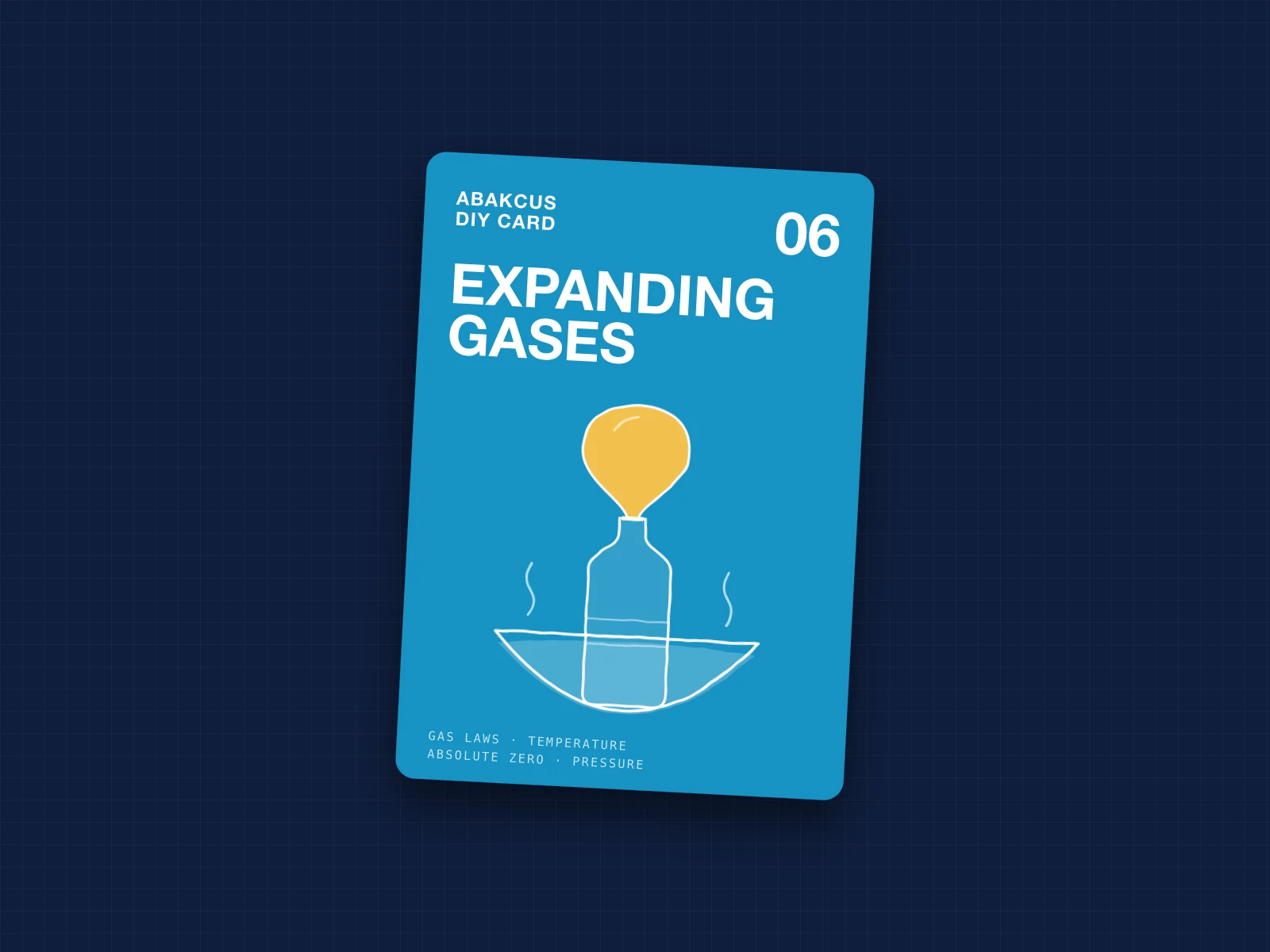
How to Blow Up a Balloon With Hot Water: Charles’s Law
Put a balloon on an empty bottle, stand the bottle in hot water, and the balloon lifts itself up. The air didn’t get any more of itself. It just needs more room, and from that one fact you can find absolute zero.
Open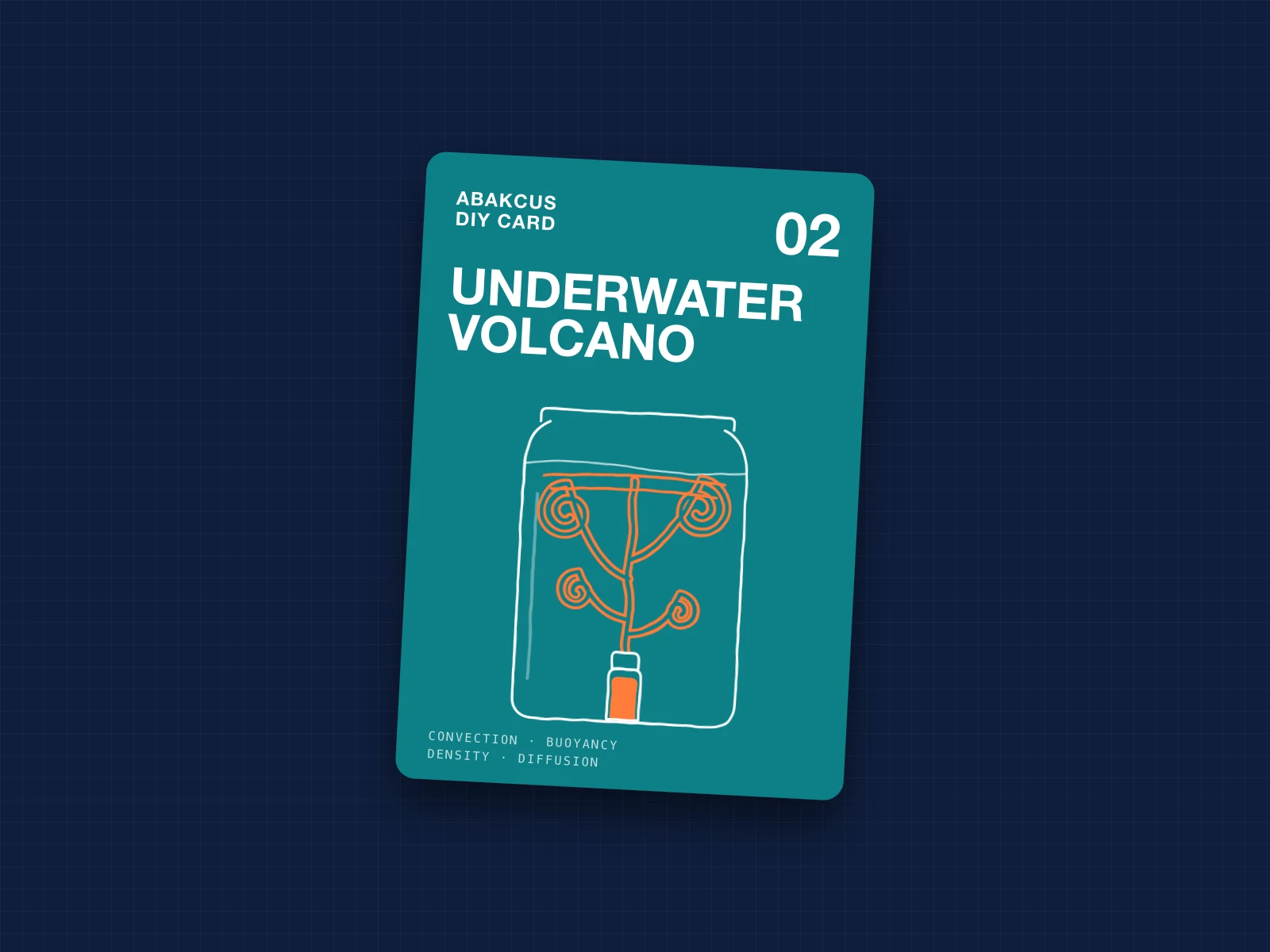
How to Make an Underwater Volcano: Convection in a Jar
Hot red water in a salt shaker, lowered into a jar of cold water. It erupts, curls into a mushroom, and lies on the surface like oil, because water one and a half percent lighter has nowhere to go but up.
Open
How to Get an Egg Into a Bottle Without Touching It
Two days in vinegar take the shell away, a warm bottle does the rest. The egg goes through a mouth narrower than itself, pushed by ten tonnes of air per square metre.
Open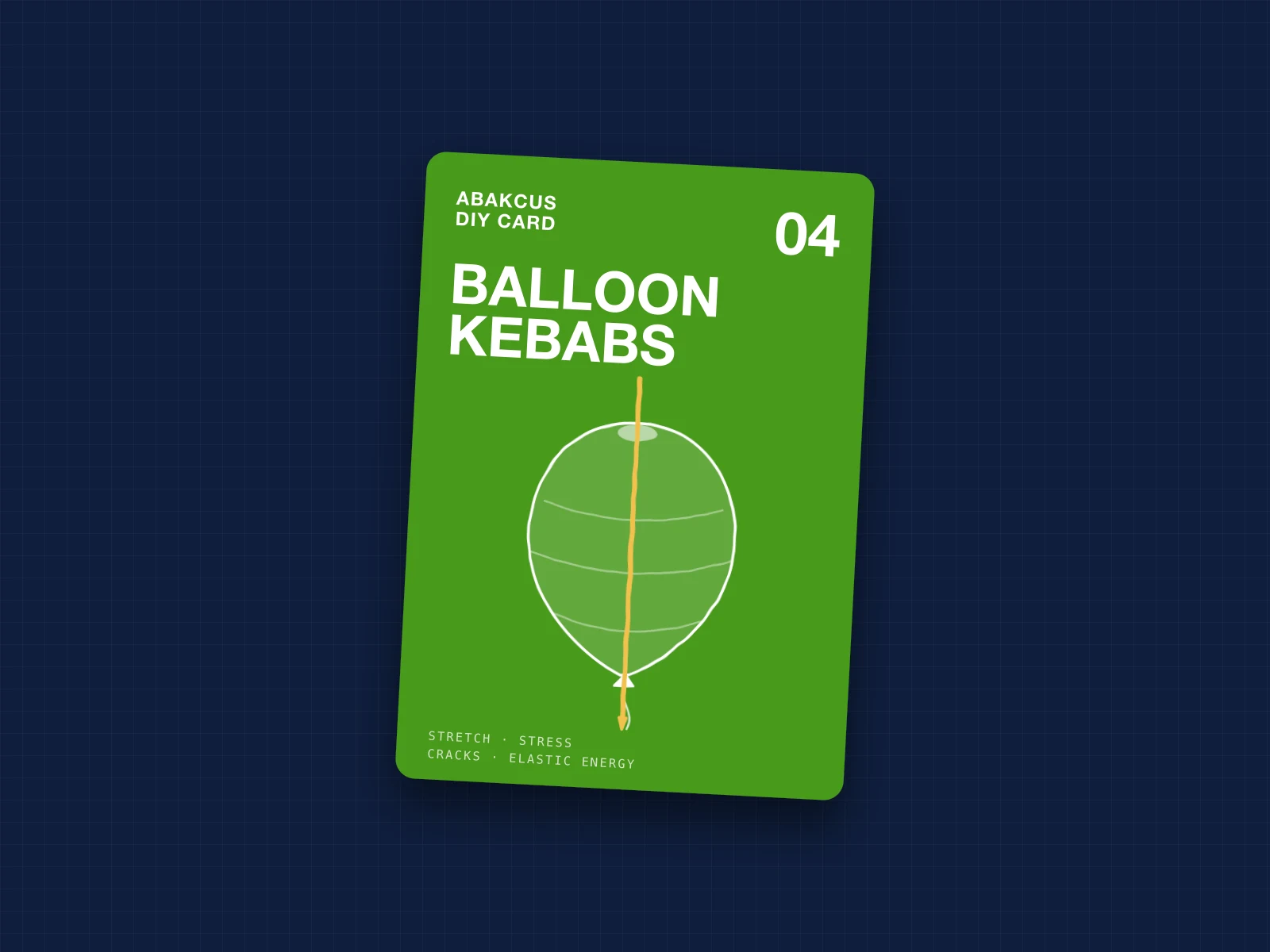
How to Push a Skewer Through a Balloon Without Popping It
A wooden skewer goes in at the top of a balloon and out beside the knot, and the balloon just sits there. The trick is knowing where the rubber is least stretched, and why stretch decides everything.
Open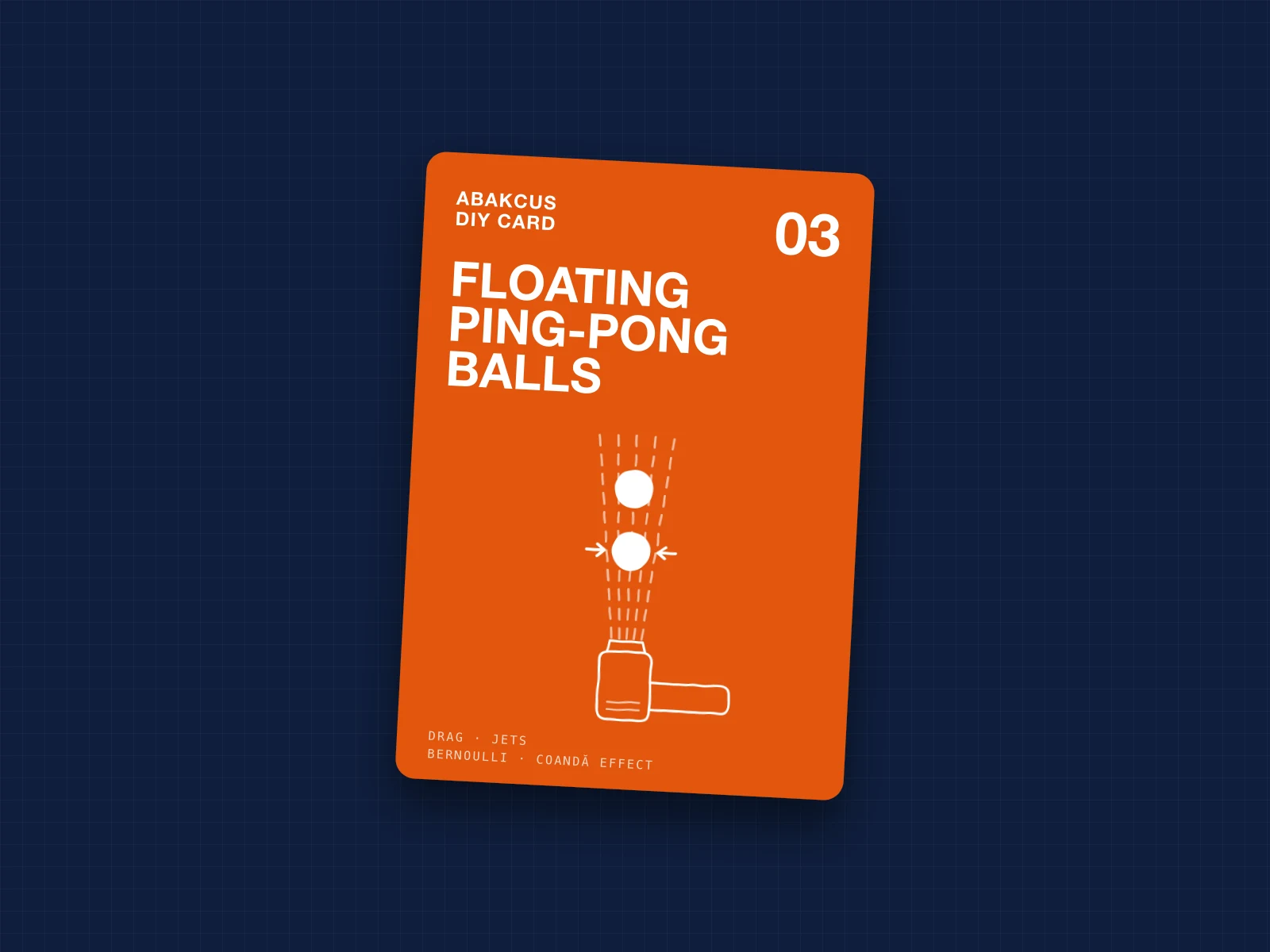
How to Make a Ping-Pong Ball Float With a Hair Dryer
Point a hair dryer at the ceiling and a ping-pong ball sits in mid-air, wobbling but never falling out. Most explanations of why are wrong, and the real one is better.
Open
The Feynman Technique: A Complete Guide
The four-step learning method developed by Nobel Prize-winning physicist Richard Feynman. How it works, why it works, and how to apply it to anything.
Open