
DIY · Card 30 · Engineering · Density
A scrap of straw, a pinch of plasticine and a bottle of water. Squeeze the bottle and the little diver sinks; let go and it floats back up, obeying your hand without ever being touched.
01The brief
Make a diver that sinks when you squeeze and rises when you let go.
0.8 cm³
of air trapped in the folded straw: the whole engine of the diver
1 kPa
extra pressure for every 10 cm deeper in water, which squeezes the bubble too
1648
the year a student of Galileo first described the diver in print
Most toys need a battery, a spring or a push. The Cartesian diver needs a squeeze, and the strange thing is that you squeeze the bottle, not the diver. Something you do to the outside of a sealed bottle reaches through the water and tells a scrap of straw to sink.
The secret is a tiny bubble of air. Water barely squashes; air squashes easily. Squeeze, and the bubble is the only thing in the bottle that gives. It shrinks, the diver loses buoyancy, and down it goes. It is the same pair of ideas as the cardboard boat and the straw through a potato: buoyancy, and air that pushes back when you squash it.
02Kit
A straw, a pea of plasticine and a big bottle. Five minutes of tuning is the only skill.
Tick off what you have
0 of 5 ready
03Method
Fold a straw, weight it, tune it in a glass, seal it in a full bottle, and squeeze.
Step 1 of 8 · Minute 0
You need a bendy or plain drinking straw, scissors, a little plasticine or modelling clay, a two-litre plastic bottle with its cap, a glass of water and a jug of water.
It won’t sink however hard you squeeze.
Why
The diver floats too high, or there is air at the top of the bottle.
Fix
Add plasticine until only the tip pokes out, and fill the bottle to the very brim.
It sinks and won’t come back up.
Why
Too much ballast, or the straw has filled with water.
Fix
Take off a little plasticine, or shake the water out of the straw and start again.
Bubbles leak out of the straw.
Why
The fold isn’t airtight, or the diver tips over.
Fix
Fold the straw tighter with a paper clip, and put the plasticine low so it hangs upright.
04Physics
The diver floats because, together with its bubble, it is a little lighter than the water it pushes aside. The bubble is what makes the difference: without it, the straw and plasticine would sink.
When you squeeze the bottle, the pressure goes up everywhere inside it at once, a rule Blaise Pascal worked out in the seventeenth century. Water is pushed into the open end of the straw and the bubble is squeezed smaller. Robert Boyle measured exactly how much smaller in 1662: double the pressure and a gas takes up half the space. A smaller bubble displaces less water, and once the diver is heavier than the water it displaces, it sinks. Tune your diver and squeeze:
Pressure inside
101 kPa
Air pocket
100 %
Squeeze to sink it
9.7 kPa
Push at the top
0.72 mN
It floats. Squeeze harder: at 9.7 kPa extra the air pocket is small enough that it sinks.
There is a twist. Water is heavier at the bottom of the bottle: every 10 cm deeper adds about 1 kPa of pressure. So a diver that starts to sink gets squeezed a little more by the deeper water, loses more buoyancy, and sinks faster. One that starts to rise does the opposite. Its balance point is unstable, like a pencil standing on its point. Try to keep it there:
Squeeze
+0 kPa
In the band
0.0 s
Best
0.0 s
Keep the diver in the blue band. Squeeze to sink it, ease off to let it rise. The trouble is that a diver that starts to sink gets squeezed more by the deeper water, so it speeds up. Catch it early.
Both models use a 3 cm straw 6 mm across, folded in half, plasticine of density 1.6 g/cm³ and a bottle 30 cm deep. Your diver will need a slightly different squeeze; the behaviour is the same.
05The big idea
Float by
changing size.
Whether something floats depends on two things: its weight and its volume. Most things can’t change either. A diver changes its volume, a fish does it with a swim bladder, an ocean robot with a bag of oil.
And all of them share the diver’s problem. A floating thing that controls its depth by squeezing gas has to keep correcting, because depth itself squeezes the gas. Staying still in water is not a resting state. It is a balancing act.
06The math
1 · Boyle’s law
P₁ V₁ = P₂ V₂
At a steady temperature, a gas’s pressure times its volume stays the same.
2 · Archimedes
F = ρ V g
The upward push is the weight of the water displaced, of density ρ and volume V.
3 · Pressure with depth
P = P₀ + ρ g h
Every metre of water adds ρgh, about 10 kPa per metre, on top of the air’s 101 kPa.
The straw traps about 0.85 cm³ of air at 101 kPa. Squeeze hard enough to add 10 kPa and Boyle’s law gives V = 0.85 × 101 ⁄ 111 ≈ 0.77 cm³. The bubble lost 0.08 cm³, so the diver displaces 0.08 g less water. That is all: if your diver was floating by less than 0.08 g, it sinks.
That is why tuning matters so much. The squeeze needed to sink the diver is set by how much spare buoyancy it has. A diver floating high might need more than 100 kPa, twice the air pressure, which no hand can manage. One that floats by a whisker needs only a few kPa, and sinks at the lightest touch.
07Real life
Animals, robots and people all control their depth with a pocket of gas, or a bag they can fill.
Fish swim bladders
Most bony fish carry a gas-filled sac called a swim bladder. By adding gas to it or absorbing gas from it, a fish sets its buoyancy so it can hang in the water without effort, a living Cartesian diver.
Argo floats
Nearly 4,000 robot floats drift through the world’s oceans. Each one pumps oil between its body and an outside bladder to change its volume, sinking to 2,000 metres and rising again every ten days or so, measuring the sea as it goes.
Scuba divers
A diver’s buoyancy jacket is an inflatable bag. Puff air in to rise, let some out to sink. Wetsuits are full of tiny gas bubbles, which are squashed at depth, so a diver gets heavier the deeper they go: the same instability as your straw.
Submarines
A submarine dives by flooding ballast tanks with sea water and surfaces by blowing them out with compressed air. It changes its weight rather than its volume, but the rule is the same: sink when heavier than the water you displace.
The nautilus
The chambered nautilus lives in a spiral shell divided into sealed chambers. It controls the gas and liquid in those chambers to stay near-neutral, rising at night and sinking by day, and it has done so for hundreds of millions of years.
Weather in a bottle
A sealed diver also feels the temperature. Warmth makes its bubble swell and cold makes it shrink, so a finely tuned diver left on a windowsill can sink on a cold morning and float again in the warm afternoon.
1648
In 1648 Raffaello Magiotti, one of Galileo’s favourite students, published a short book in Rome on what he called the ‘most certain resistance of water to compression’. In it he described little glass figures, hollow and open at the bottom, that sank and rose in a sealed vessel of water when it was pressed.
The toy took its name from René Descartes, who was writing about the physics of fluids at the same time, though no description by him survives. For centuries the divers were sold as glass imps and devils that danced in bottles. Today the same idea drifts through every ocean inside the Argo floats, and fills the lava lamp with blobs that rise and fall on their bubbles.
08Is and isn’t
Squeezing the bottle pushes the diver down.
You never touch the diver. The squeeze raises the pressure everywhere in the water, which squashes the bubble inside the straw. Less bubble means less buoyancy, and the diver sinks under its own weight.
The water gets denser when you squeeze it.
Water hardly compresses at all: a hard squeeze changes its density by about a thousandth of a percent. All the give is in the bubble of air, which shrinks by a tenth or more.
René Descartes invented it.
It carries his name, but no description by Descartes survives. The first printed account came from Raffaello Magiotti, one of Galileo’s students, in 1648.
A well-tuned diver can float halfway down on its own.
Not for long. The deeper it goes, the more the water squeezes its bubble, so a diver that starts to sink sinks faster, and one that starts to rise rises faster. Hovering needs constant correction.
09Go further
A
Three divers
Make three divers with slightly different ballast. Can you squeeze just hard enough to sink one, then two, then all three?
B
Measure the squeeze
Mark the water level inside the straw before and after squeezing. How much did the bubble shrink? Use Boyle’s law to work out the pressure.
C
Hot and cold
Stand the bottle in warm water, then in cold. Does the diver float higher or lower? Gases shrink as they cool, too.
D
Ketchup diver
Drop a sealed sauce sachet into the bottle instead of a straw. Its little bubble of air works the same way. Does it need more squeeze or less?
E
Salt water
Dissolve salt in the water and try again. The same diver now floats higher. How much more squeeze does it need?
10Questions
Cut 3 cm of drinking straw, fold it into a U and hold the fold with a small paper clip. Wrap plasticine round the legs near the open ends, and adjust it in a glass of water until only the top of the straw pokes out. Drop it into a two-litre bottle filled to the brim, cap it, and squeeze.
Squeezing the bottle raises the pressure throughout the water. Water pushes into the diver’s open end and squashes its trapped bubble of air, so the diver displaces less water and loses buoyancy. When it weighs more than the water it displaces, it sinks. Let go and the bubble expands again, and it rises.
It is floating too high, so the squeeze needed to sink it is more than your hands can give. Add a little plasticine until it only just floats, with the top barely above the surface, and make sure the bottle is filled right to the top with no air at the neck.
Two at once. Boyle’s law, that a gas squeezed to a higher pressure takes up less volume, and Archimedes’ principle, that the push of water on a floating object equals the weight of the water it displaces. Together they show how buoyancy can be controlled by changing volume.
It is named after the French philosopher René Descartes, but there is no record of him describing it. The first printed account was by Raffaello Magiotti, a student of Galileo, in a book published in Rome in 1648.
Safety · This one is safe for anyone. Mop up spills so nobody slips, and keep small pieces of straw and plasticine away from very young children.
All DIY cards →Keep wandering
A few more pieces in the same spirit — math, design, and slow attention.
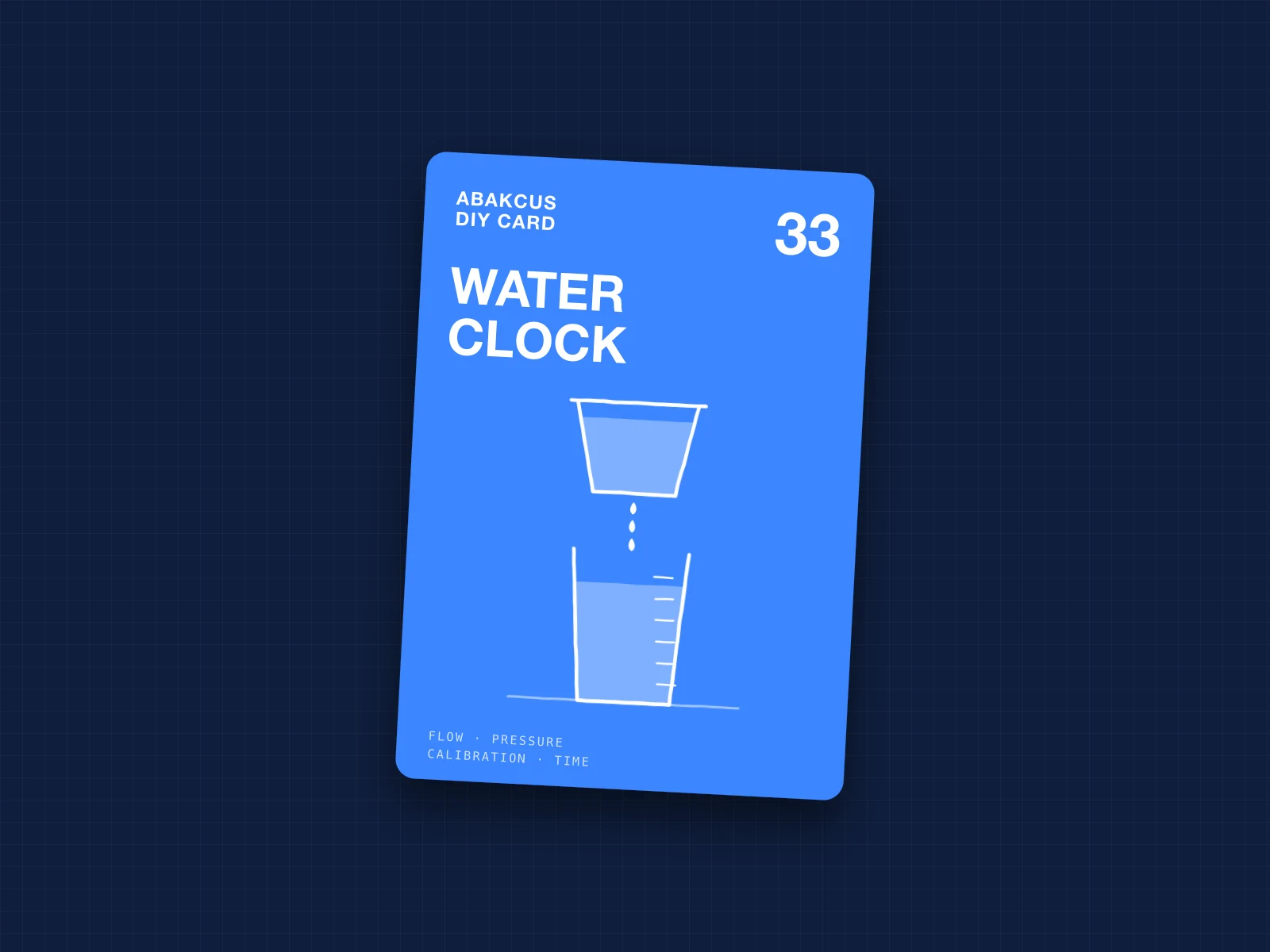
How to Make a Water Clock That Times Exactly One Minute
Two plastic cups, a pinhole and three-quarters of a cup of water. Tune the hole until it runs dry in exactly sixty seconds, and you have built the oldest kind of clock there is.
Open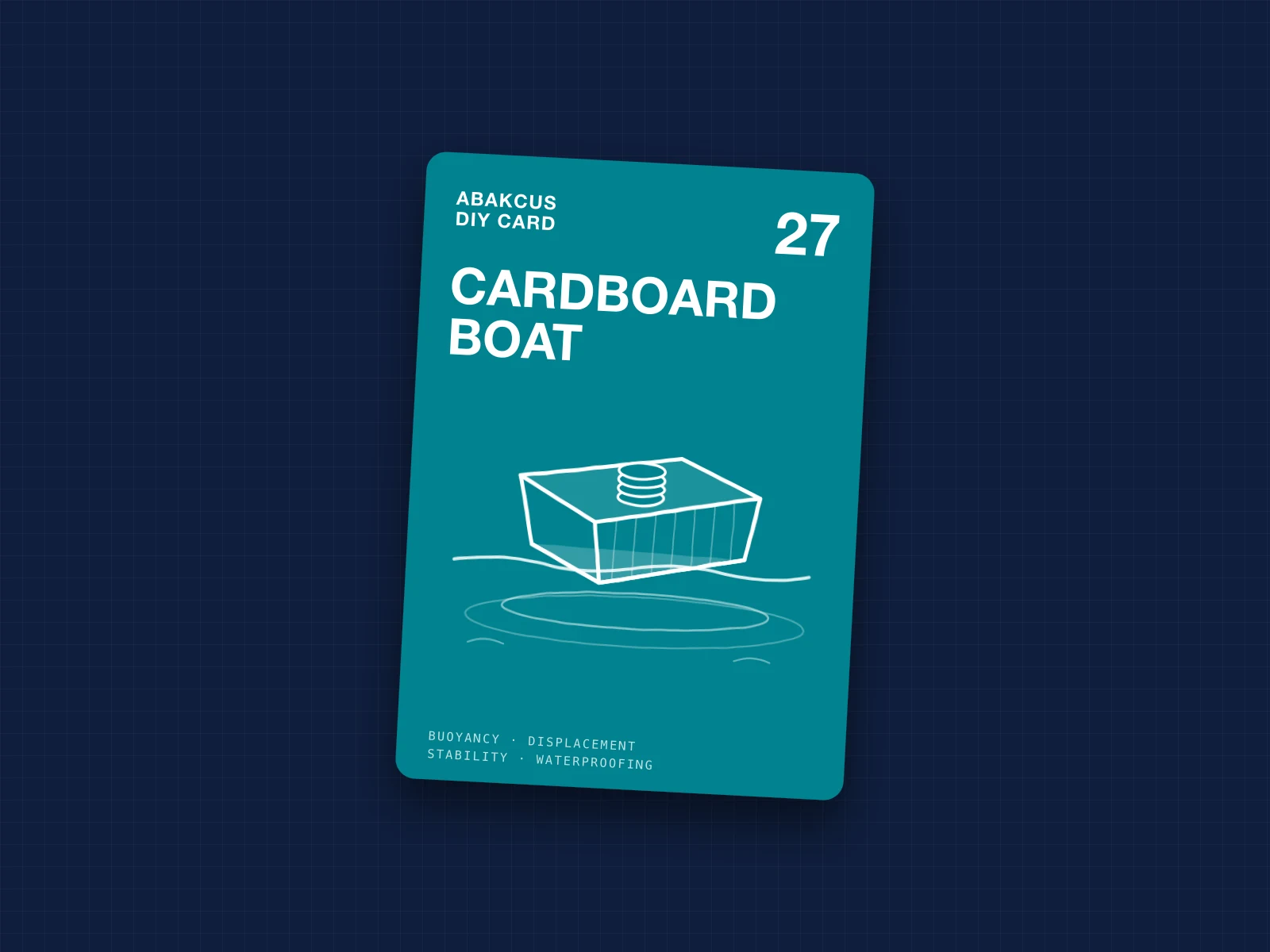
How to Make a Cardboard Boat That Floats (and Carries Coins)
One sheet from an old box, folded into a tray and sealed with tape and wax. Then the test: how many coins can it carry before the water comes over the side?
Open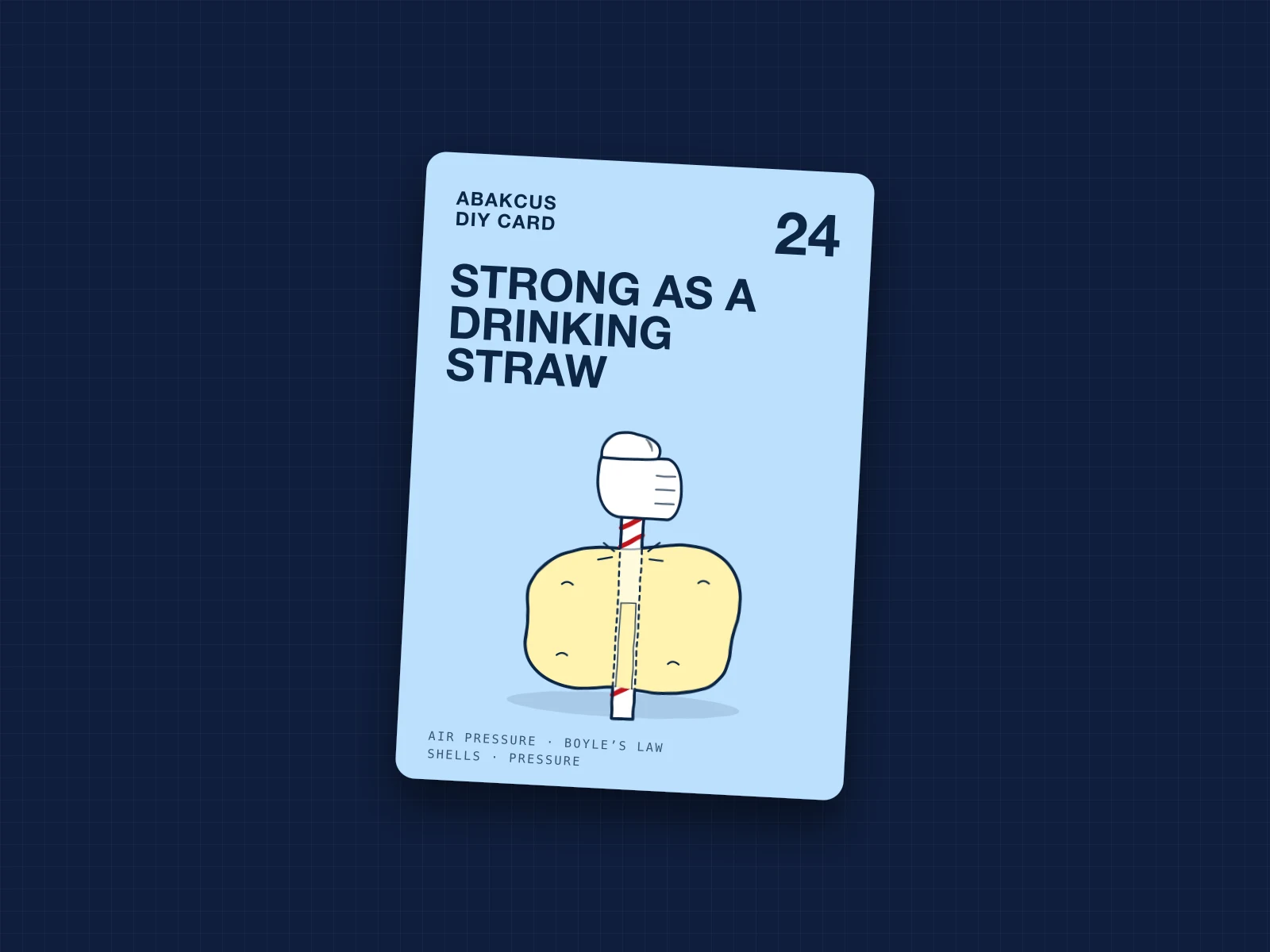
How to Push a Straw Through a Raw Potato
Stab a potato with a plastic straw and the straw crumples. Put your thumb over the top first and it goes straight through. The air trapped inside can’t get out, so the straw can’t cave in.
Open
How to Make a Density Tower: Stacking Liquids in a Glass
Honey, washing-up liquid, water, oil and rubbing alcohol, poured one by one into a glass, settle into five sharp layers. Which goes where is decided by one number, and one of them only stays put thanks to the oil.
Open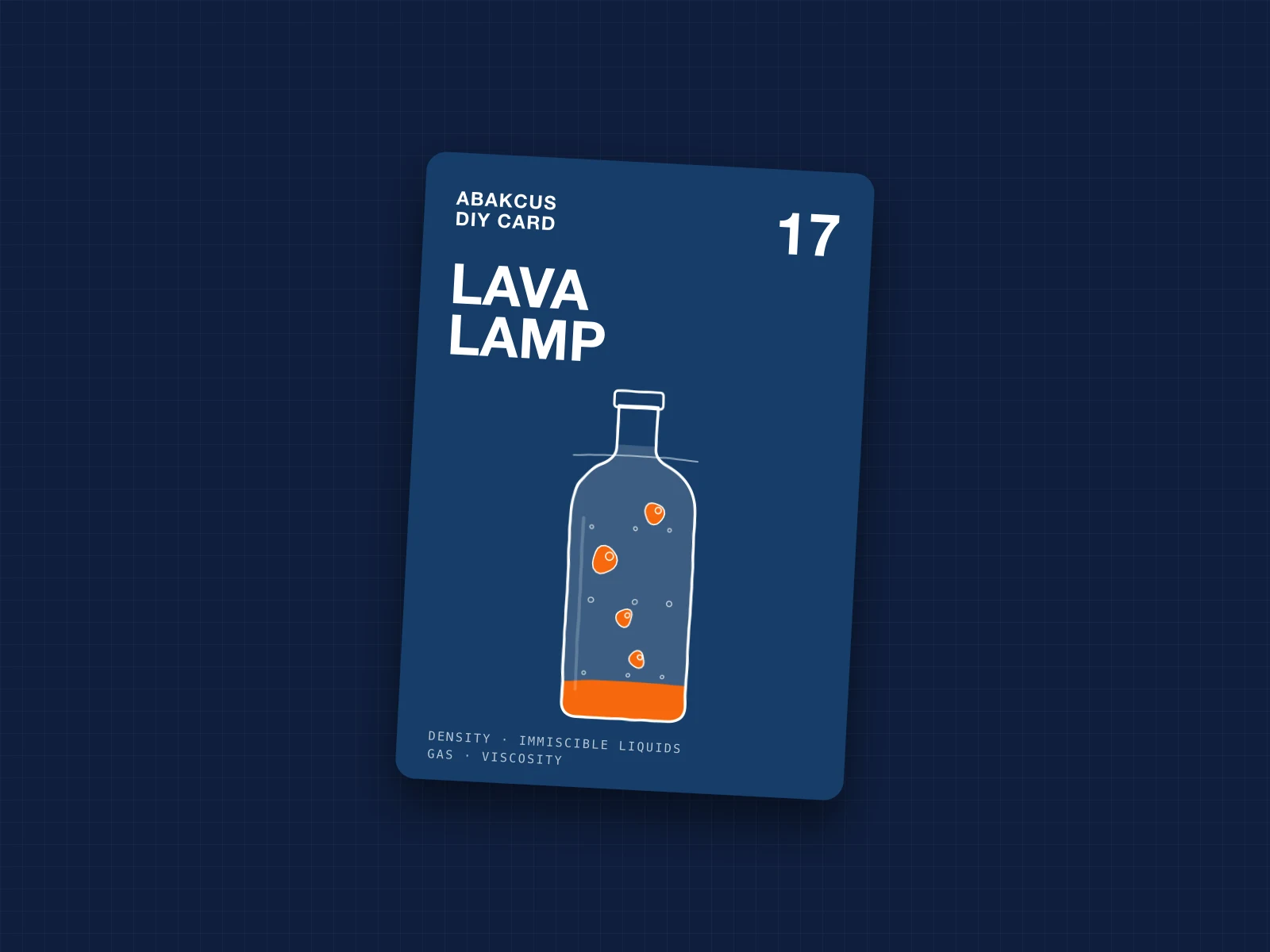
How to Make a Lava Lamp With Oil, Water and a Fizzy Tablet
Oil, coloured water and a fizzy tablet in a bottle: blobs of colour rise, hang at the top and fall back for as long as the fizz lasts. Oil and water refuse to mix, and bubbles do the lifting.
Open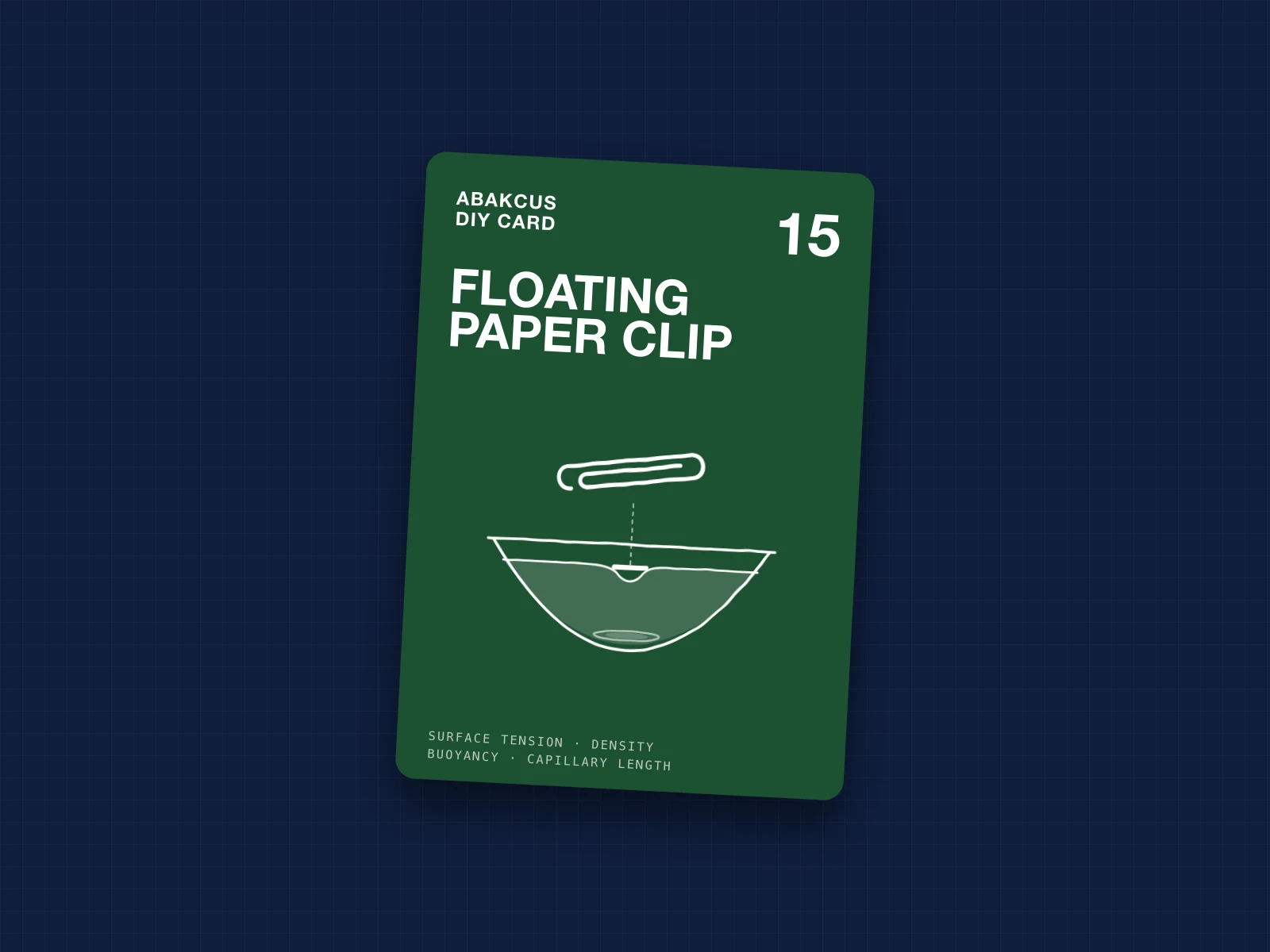
How to Float a Paper Clip on Water: Surface Tension
Steel is nearly eight times denser than water, and a paper clip still lies on top of it if you put it down gently. The surface bends into a dimple and holds it, like a trampoline, until a drop of soap breaks the spell.
Open