
DIY · Card 91 · Chemistry · Crystals
Sugar, water and a week of patience. Dissolve far more sugar than cold water can hold, hang a seeded stick in the syrup, and watch glittering crystals grow on it day by day.
01The brief
Grow a crystal you can eat.
204 g
of sugar 100 g of water can hold at 20 °C
487 g
it can hold at 100 °C: more than twice as much
~7 days
for a good stick of crystals to grow
A spoonful of sugar vanishes into a glass of water. Keep adding and eventually it stops dissolving. But heat the water and it swallows far more, and when it cools down, that extra sugar is left looking for somewhere to go.
Give it a stick to land on and it builds crystals, layer by molecular layer, into sparkling rock candy. It is a sweet cousin of the density tower and the ice cream in a bag.
02Kit
A lot of sugar, a little water and some patience.
Tick off what you have
0 of 5 ready
03Method
Seed the sticks, make the syrup, then leave it alone.
Step 1 of 8 · Day 1 · minute 0
You need 3 cups (about 600 g) of white sugar, 1 cup (240 ml) of water, a saucepan, wooden skewers, clothes pegs, tall glass jars, and a few drops of food colouring if you like.
Nothing grows on the stick.
Why
The syrup wasn’t supersaturated, or the stick had no seeds.
Fix
Reheat the syrup and dissolve more sugar, then hang a freshly seeded and fully dried skewer.
A crust forms on top and crystals cover the jar.
Why
Undissolved grains or a bumped jar started crystals everywhere.
Fix
Make sure the syrup is completely clear before pouring, and keep the jar perfectly still.
The candy is stuck to the jar.
Why
The skewer touched the glass.
Fix
Centre the skewer so it hangs freely. To rescue it, stand the jar in warm water to loosen the crystals.
04Growing crystals
Hot water dissolves far more sugar than cold. Dissolve it hot, let it cool, and the syrup is supersaturated: holding more than it should. That unstable extra is what grows the crystals.
Choose your recipe and temperature:
All dissolves above
45 °C
Extra sugar now
110 g
Mixture
supersaturated if it was dissolved hot
The green curve is how much sugar water can hold. Heat it to 45 °C and all 600 g dissolves. Let it cool to 20 °C and the water is holding 110 g more than it can: that is the sugar that will slowly come out as crystals on your stick.
Where does the extra sugar end up? That depends on the seeds:
Out of the syrup
89 g
On the stick
62 g
On the jar
27 g
Every grain of sugar stuck to the skewer is a ready-made crystal. Sugar molecules in the syrup find it far easier to join an existing crystal than to start a new one, so most of the growth happens on the stick. Growth is fastest in the first few days and slows as the syrup runs out of extra sugar. A simple model: real jars vary with temperature and how still they are kept.
05The big idea
Starting
is the hard part.
A brand-new crystal needs many molecules to meet in just the right arrangement at once, which rarely happens. Joining a crystal that already exists is easy: each molecule just has to find a place on its surface.
That is why a seed makes all the difference, here, in clouds forming round dust, and in factories growing perfect silicon crystals. Give the process a start and it runs by itself.
06The math
1 · Concentration
c = 100 · sugar ⁄ water
Grams of sugar per 100 g of water.
2 · Crystals available
extra = sugar − S(T) · water ⁄ 100
S(T) the solubility at the cooled temperature.
3 · Crystal growth
m(t) = m_max (1 − e^(−t ⁄ τ))
Growth slows as the extra sugar runs out.
The recipe puts 600 g of sugar in 240 g of water: 250 g per 100 g. That only dissolves above about 45 °C, so the water must be hot.
Cooled to 20 °C, the water can hold 204 × 2.4 ≈ 490 g, so about 110 g of sugar is extra: enough for several good sticks of rock candy. Evaporation over the week frees a little more.
07Real life
From the chips in your phone to caves of giant crystals.
Silicon chips
The silicon in every computer chip starts as a single giant crystal, grown by dipping a small seed crystal into molten silicon and slowly pulling it up while it turns, a method invented by Jan Czochralski in 1916.
The Cave of the Crystals
Deep under a mine at Naica in Mexico, gypsum crystals up to about 12 metres long grew for hundreds of thousands of years in hot, mineral-rich water that stayed very slightly supersaturated.
Geodes
Crack open a dull round rock and find it lined with sparkling crystals. Over long ages, mineral-laden water seeped into a hollow and slowly deposited crystals on its walls.
Crystallised honey
Honey is a supersaturated sugar solution. Given time, or a cool cupboard, it slowly crystallises. It hasn’t gone off: warm the jar gently and the crystals dissolve again.
Salt flats
When salty lakes dry up in the sun, the water evaporates and leaves the salt behind as a gleaming crust of crystals, like the Salar de Uyuni in Bolivia.
Snowflakes
A snowflake is a crystal of ice grown from water vapour around a speck of dust. Like your sugar crystals, it needs a seed to start and grows in the shape its molecules prefer.
khaṇḍa
Crystallised sugar is one of the oldest sweets there is. Cane sugar was first refined into crystals in India, and the Sanskrit word for a piece of it, khaṇḍa, travelled through Persian and Arabic, where crystallised sugar was called qandi, into many European languages.
That is where English got the word candy. For centuries, sugar crystals grown slowly on threads or sticks were a luxury, sold to sweeten tea and soothe sore throats. Your jar is following a very old recipe.
08Is and isn’t
The crystals form from sugar sinking onto the stick.
The sugar is dissolved, spread through the syrup as single molecules. They join the crystal one by one from all directions.
More sugar is always better.
Too much and some never dissolves, leaving grains that seed crystals all over the jar instead of on your stick.
Crystallised honey has gone bad.
It is perfectly good: just sugar coming out of a supersaturated solution. Warm it gently and it turns liquid again.
Rock candy is just hardened sugar.
It is a collection of true crystals, with flat faces and fixed angles set by how sucrose molecules stack together.
09Go further
A
Salt crystals
Try the same with salt. Salt barely dissolves more in hot water than cold. Do you get crystals, and how?
B
Measure the growth
Weigh your skewer each day (dripping over the jar). Graph the mass. Does it follow the curve in the growth lab?
C
A string of crystals
Hang a cotton string with a paper clip weight instead of a skewer. Do the crystals grow differently?
D
Magnify them
Look at a crystal with a magnifying glass. Count its faces and sketch its shape.
E
Colour bands
Make three jars with different colours, then move one crystal stick between them every two days. Do you get stripes?
10Questions
Dissolve about 3 cups of sugar in 1 cup of boiling water, let the syrup cool for 20 minutes and pour it into tall jars. Hang a skewer that has been wetted and rolled in sugar in each jar, not touching the glass, cover loosely and leave it undisturbed for about a week while crystals grow.
Rock candy grows from supersaturated syrup: water holding more sugar than it normally could. Hot water dissolves the extra sugar; as it cools, that extra has nowhere to go but onto the crystals.
The grains are seed crystals. Sugar molecules find it much easier to join an existing crystal than to start a new one, so seeds make the crystals grow on the stick rather than all over the jar.
Crystals usually appear within a day or two and are a good size after about a week. Growth is fastest at first and slows as the syrup runs out of extra sugar.
Usually the syrup wasn’t strong enough, so it wasn’t supersaturated when it cooled, or the jar was moved, starting crystals everywhere else. Use at least 2½ parts sugar to 1 part water, dissolve it all, and keep the jar still.
Safety · Hot sugar syrup is much hotter than boiling water and sticks to skin: a grown-up must do the heating and pouring. Use heat-proof jars, and remember rock candy is pure sugar, so brush your teeth after eating it.
All DIY cards →Keep wandering
A few more pieces in the same spirit — math, design, and slow attention.
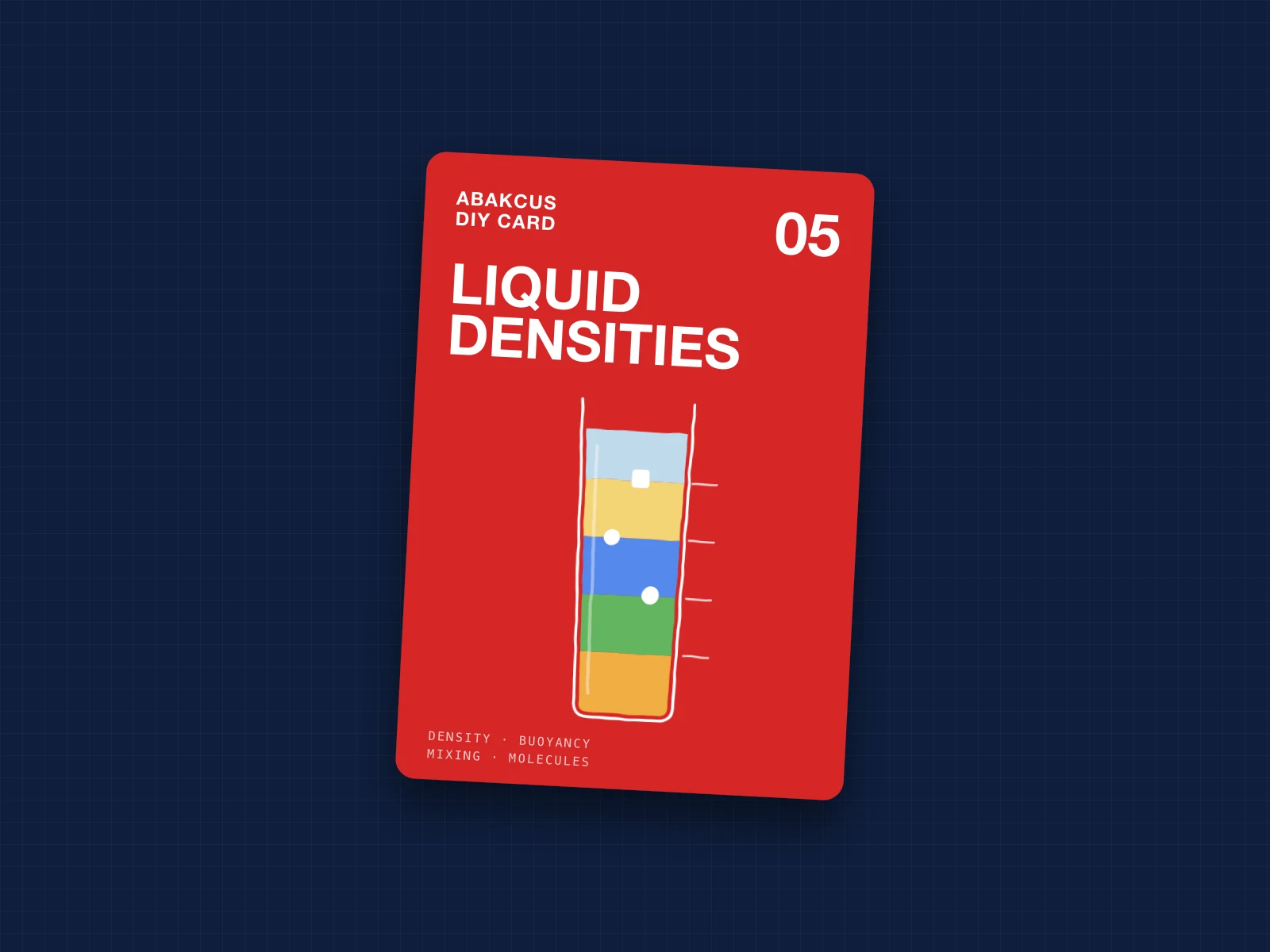
How to Make a Density Tower: Stacking Liquids in a Glass
Honey, washing-up liquid, water, oil and rubbing alcohol, poured one by one into a glass, settle into five sharp layers. Which goes where is decided by one number, and one of them only stays put thanks to the oil.
Open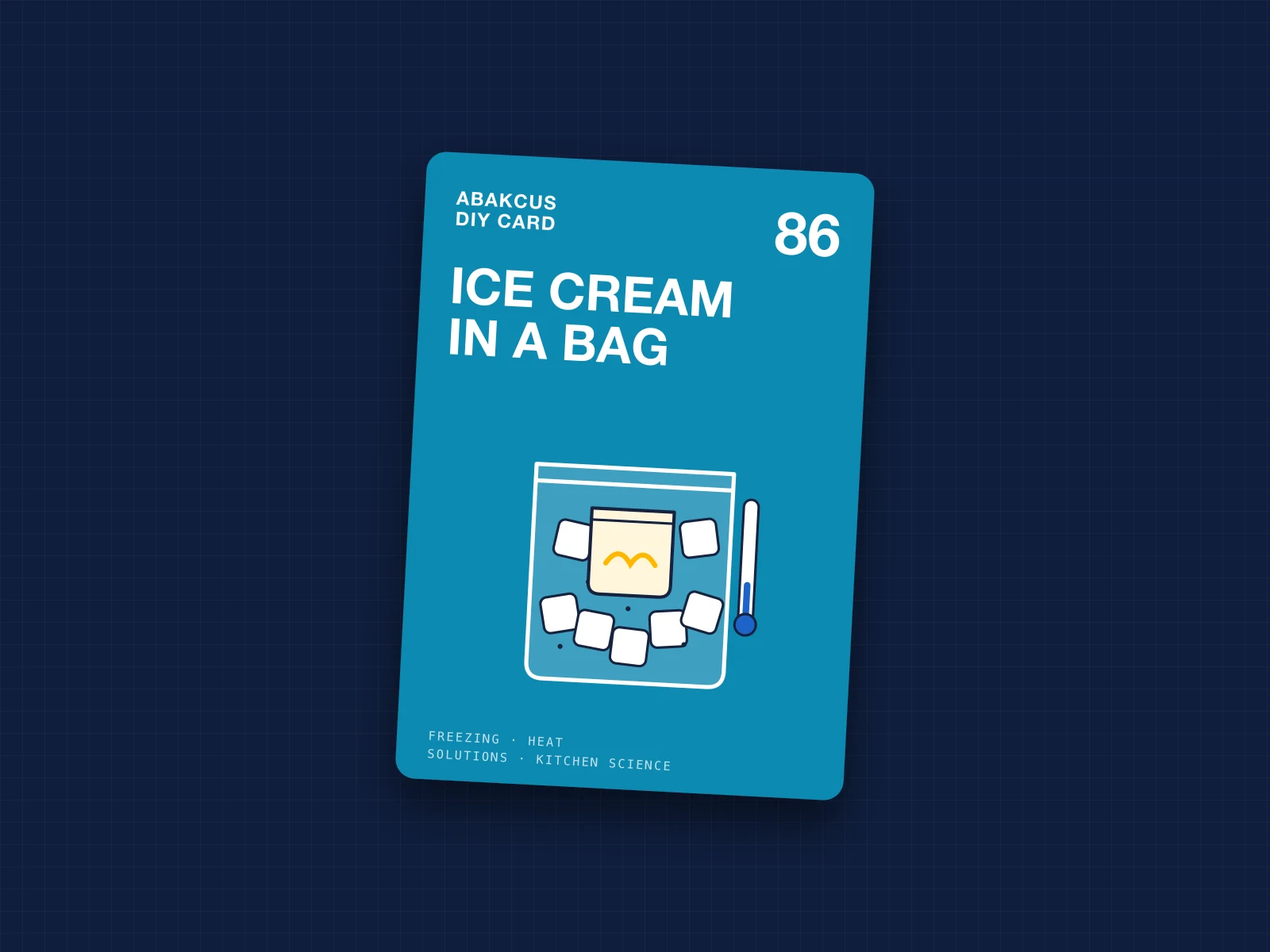
How to Make Ice Cream in a Bag With Ice and Salt
Milk, sugar and vanilla in one bag; ice and salt in another. Ten minutes of shaking makes real ice cream, colder than a freezer can get.
Open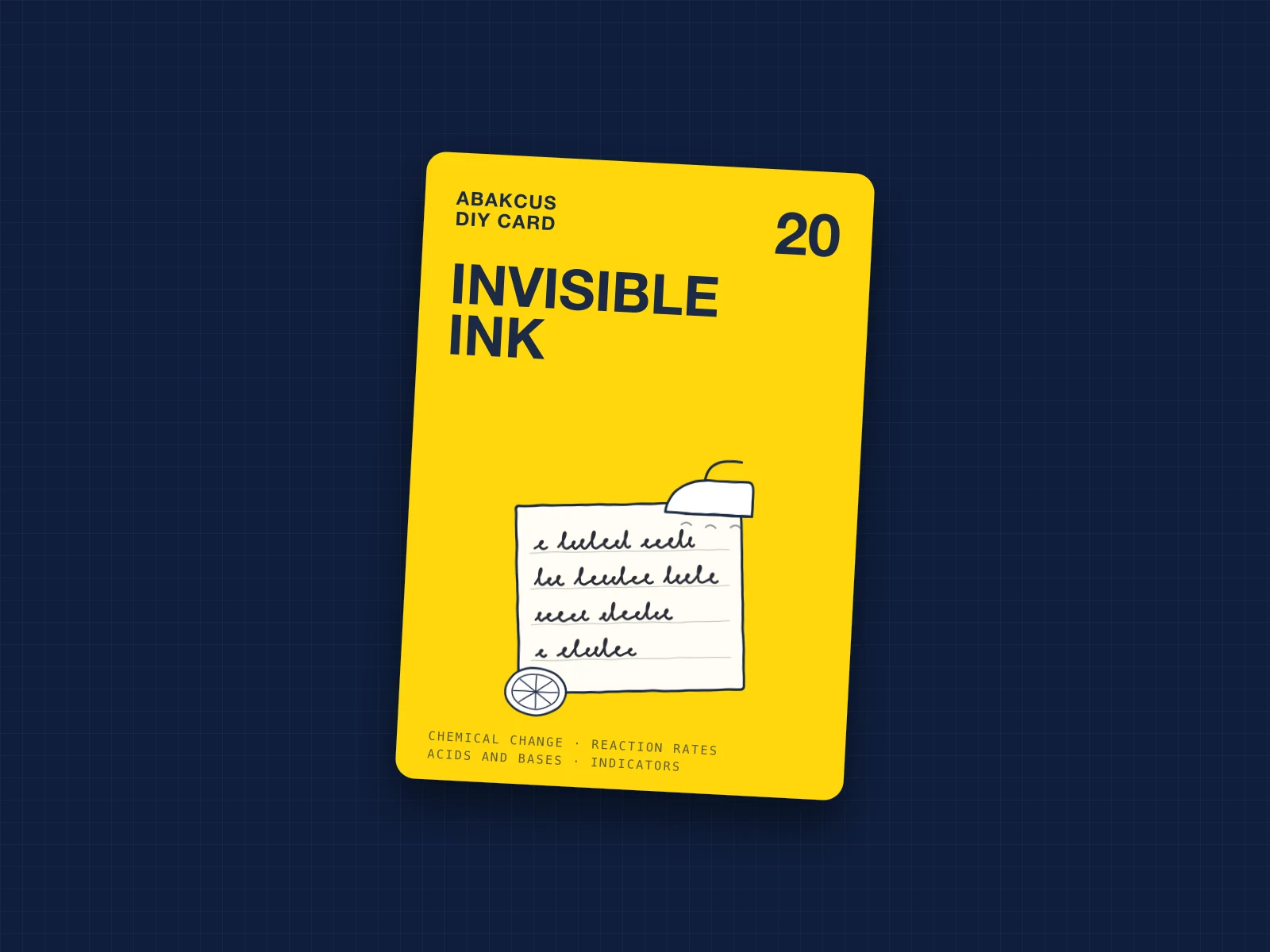
How to Make Invisible Ink With Lemon Juice, and Reveal It
Write with lemon juice, let it dry, and the page looks blank. Warm it and the message darkens into view, because the juice scorches long before the paper does. Spies used the same idea for centuries.
Open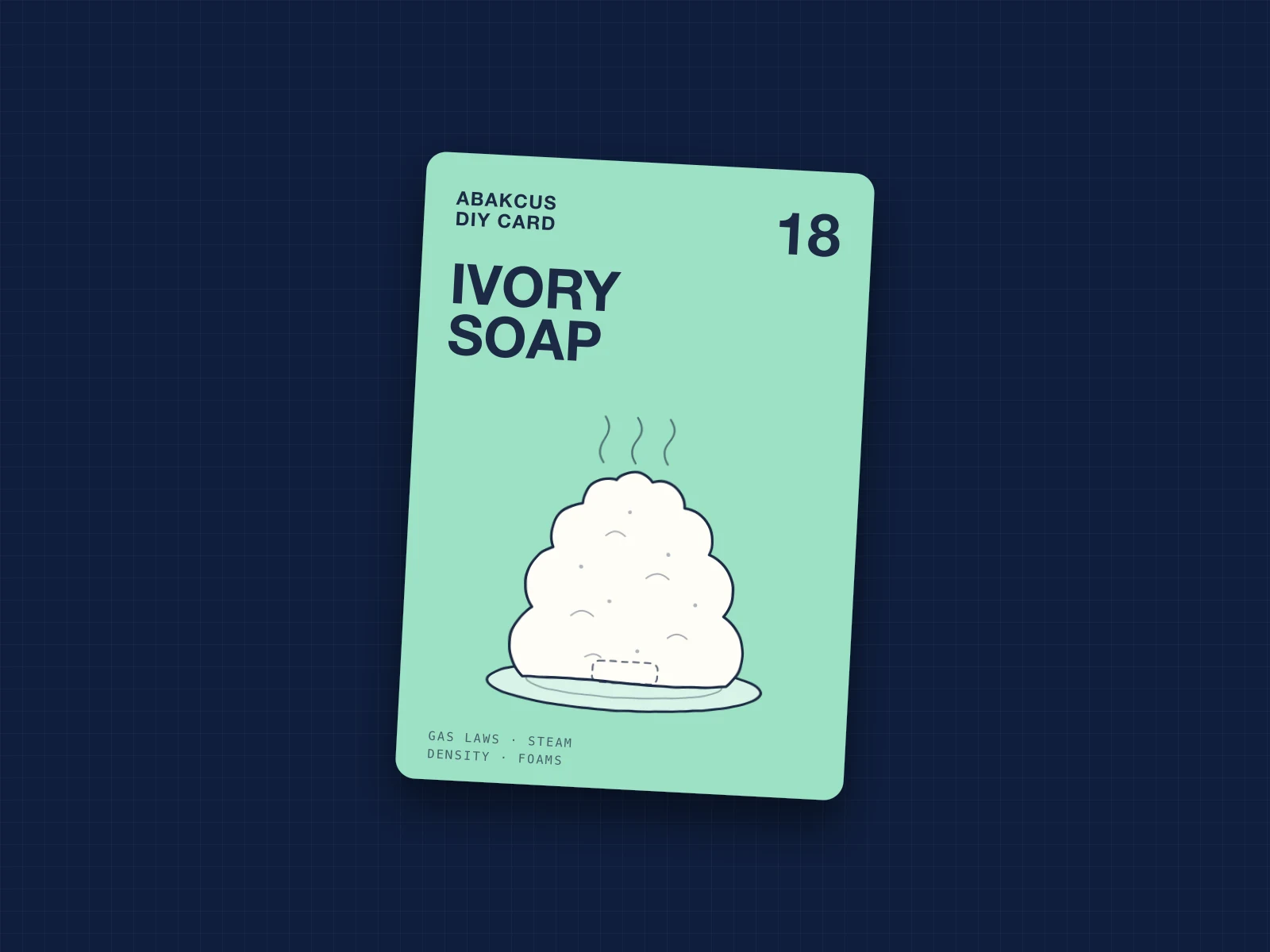
The Ivory Soap Microwave Experiment: Why the Bar Puffs Up
Put a bar of Ivory soap in the microwave and it swells into a cloud several times its size. Hot air alone can’t do that. The water hidden in the soap, turning to steam, can.
Open
How to Make a Cloud in a Jar With Hot Water and Ice
Hot water, an icy lid and one puff of hairspray. Within seconds a little white cloud churns inside the jar, made the same way clouds form in the sky.
Open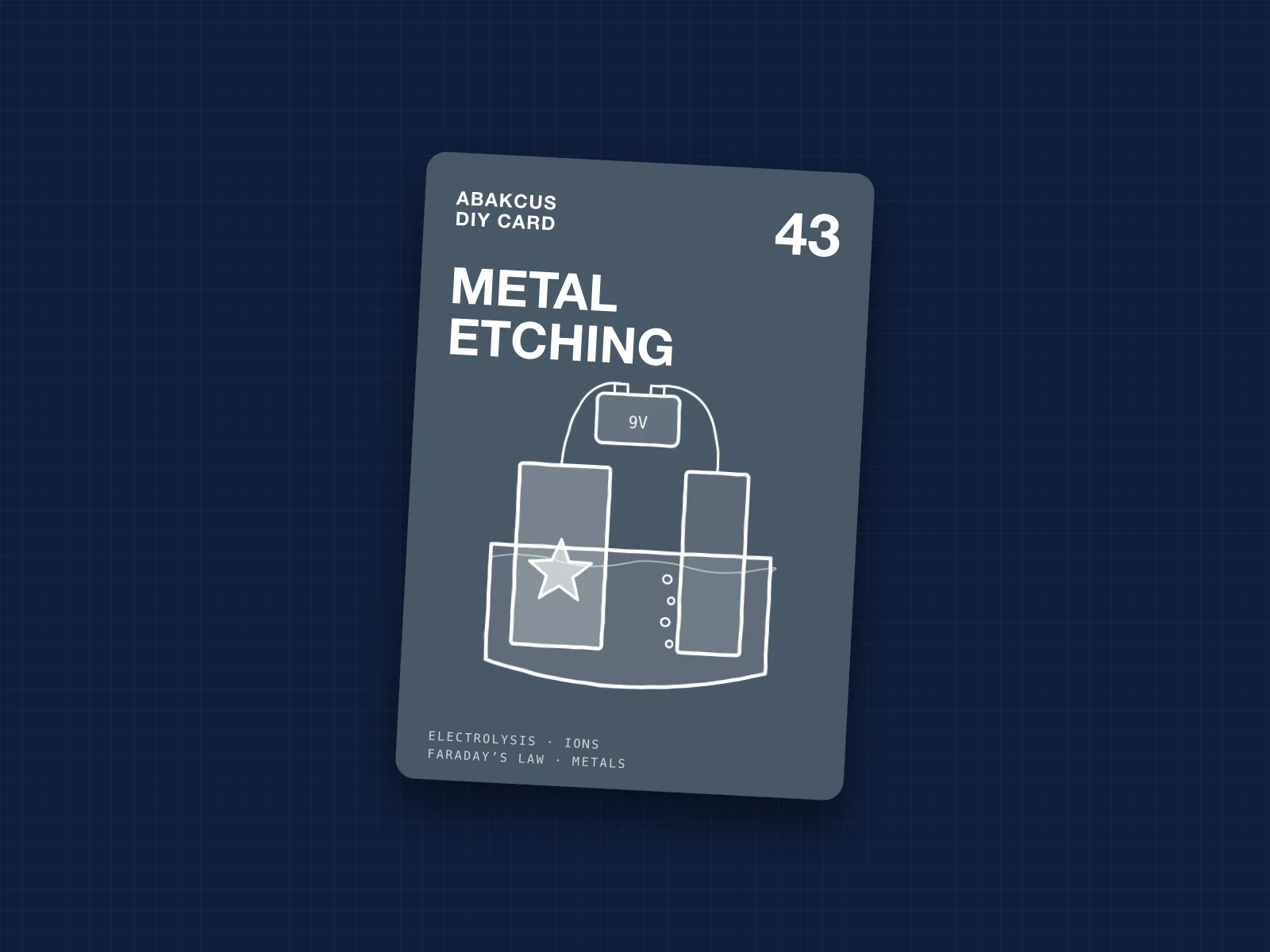
Metal Etching: How to Etch Steel With Salt Water and a Battery
A scrap of steel, a bowl of salt water and a 9 V battery. Draw on the metal, switch on, and twenty minutes later your drawing stands proud of a surface the current has eaten away.
Open