
DIY · Card 23 · Engineering · Structures
Hang five kilograms from one strand of dry spaghetti and it holds. Push down on the same strand with the weight of an apple and it bows and snaps. A good bridge is built around that one difference.
01The brief
Build a bridge of spaghetti and glue across a 30 cm gap that holds as many times its own weight as it can.
5 kg
that one strand of dry spaghetti can hold when it is pulled
180 g
that the same strand, 10 cm long, can take pushed end to end
443.58 kg
held by the record-holding spaghetti bridge at Okanagan College, Canada
Spaghetti is a surprisingly good building material, as long as you only pull on it. Pushed along its length, a long thin strand doesn’t get squashed; it bows out sideways and snaps long before the pasta itself gives way. That is called buckling, and beating it is the whole game.
The tools are the same ones engineers use for steel. Arrange the strands in triangles, so that every member is only ever pulled or pushed along its length. Keep the pushed members short. And glue strands together into bundles, which are far stiffer than the strands would be on their own. Like the newspaper dome, it is a build that takes an afternoon and a night for the glue to set, and like any real bridge, it gets tested until it breaks.
02Kit
One pack of spaghetti is plenty. The glue matters almost as much as the pasta.
Tick off what you have
0 of 5 ready
03Method
Draw, bundle, build two sides, box them, brace them, then load the bridge until it gives way and learn from the pieces.
Step 1 of 8 · Day 1 · 0 min
On a big sheet of paper, draw your truss at full size: 40 cm long and about 8 cm tall, split into triangles. Draw it twice, one for each side of the bridge. Mark which members are chords and which are the diagonals.
A joint pulls apart before any member breaks.
Why
Too little glue, or the strands only touch end to end.
Fix
Overlap the bundles at every joint and add a gusset: a small extra piece of strand glued across the joint.
The top bows sideways and the bridge folds over.
Why
The two sides aren’t braced to each other, so the top chords buckle sideways.
Fix
Add more cross pieces and diagonal bracing across the top.
Bundles crack while you build.
Why
Bending them to fit, or cutting with scissors.
Fix
Never bend spaghetti into place. Cut with a sharp craft knife on a board, rolling the bundle as you cut.
04Engineering
Pull a strand of dry spaghetti and every bit of its cross-section shares the load. It holds until the pasta itself tears, at roughly 20 MPa: about 5 kg for a strand 1.8 mm across.
Push the same strand end to end and something else happens first. Any tiny curve or wobble gets bigger under the push, the strand bows out, and once it starts bowing it carries less and less until it snaps. A 10 cm strand buckles at less than 200 g, nearly thirty times less than it can take pulled.
Two things fight buckling: shorter members and fatter ones. A fat bundle is only fat if its strands can’t slide past each other, so glue them along their whole length. Try it:
Each strand is about 1.8 mm across. Glued, the strands can’t slide past each other, so the bundle bends as one thick rod.
Pulled apart at
5.2 kg
Buckles at
181 g
It can take 29 times more pulling than pushing. Halve the length and it takes four times the push; glue the strands and it takes far more than the strands could on their own.
05The big idea
Pull long.
Push short.
Every structure carries its load as a mixture of pulls and pushes. Members that are pulled can be long and thin, like cables and spokes. Members that are pushed must be short, thick or braced, like columns and struts.
Look at a big steel bridge with that in mind and you can see it: slender rods and lattices where the steel is pulled, and heavy, boxed or braced members where it is pushed. Your spaghetti bridge follows exactly the same rule.
06The math
1 · Euler buckling
P = π² E I / L²
The push P a straight member of length L can take before it bows. E is the material’s stiffness, I how its cross-section resists bending.
2 · A round strand
I = π d⁴ / 64
I grows with the fourth power of the diameter, so a strand twice as thick is sixteen times as hard to buckle.
3 · A truss you can solve
m + 3 = 2j
With m members and j joints, on a pin and a roller, the forces follow from balancing each joint when this holds.
For spaghetti, E ≈ 3.5 GPa and d ≈ 1.8 mm, which gives I ≈ 5 × 10⁻¹³ m⁴. A 10 cm strand buckles at P ≈ π² × 3.5 × 10⁹ × 5 × 10⁻¹³ / 0.1² ≈ 1.8 N, about the weight of 180 g. Halve the length and the L² makes it four times as strong. Glue seven strands into a bundle and I becomes about 55 times that of one strand, because the outer strands sit away from the middle.
Leonhard Euler worked out the buckling formula in 1744. A century later, bridge builders were using it with trusses: frames of triangles in which each joint is balanced by the pulls and pushes of the members meeting there. Count them. A Warren truss of six bays has 13 joints and 23 members, and 23 + 3 = 2 × 13: exactly enough equations to find every force. Build one below, choose the pattern, and find the member that goes first:
Breaks at
9.8 kg
Bridge weighs
54 g
Holds its own weight
×182
Bucket now
31 % of limit
First to go: a diagonal near a support buckles. These are perfect joints and perfect bundles; real glue joints give way sooner, so expect a real bridge to hold perhaps half of this. Taller trusses shrink the chord forces but make the web members longer, and long pushed members buckle.
07Real life
Once you look for members that pull and members that push, you see them in every frame, from roofs to bicycle wheels.
Railway bridges
Truss bridges carried the railways across rivers in the nineteenth century, and the patterns still carry the names of their inventors: William Howe in 1840, Thomas and Caleb Pratt in 1844, James Warren and Willoughby Monzani in 1848.
Roof trusses
Most pitched roofs are held up by triangles of timber. The sloping rafters are pushed, the horizontal tie at the bottom is pulled, and without that tie the rafters would push the walls apart.
Cranes
A tower crane’s jib is a long lattice of thin steel tubes. It weighs a fraction of a solid beam, and every tube is short enough not to buckle under the push it carries.
Electricity pylons
A pylon is a tower of triangles. Its legs splay out so the wind’s push on the cables becomes pulls and pushes in the members, and the long members are braced so often that none can bow.
Bicycle wheels
Thin spokes can’t take any push at all; they would bow at once. So a bicycle wheel hangs its hub from the spokes above it, every one pulled tight, and a wire 2 mm thick carries a rider.
Tents
A tent is a lesson in tension and compression: the poles are pushed, the fabric and guy ropes pulled. Slacken a rope and the poles bow over, exactly like a long strand of spaghetti.
1907
The Quebec Bridge over the St Lawrence River was meant to be the longest cantilever bridge in the world. On 29 August 1907, while it was being built out over the river, two of the giant lower chords near the south pier, members carrying an enormous push, buckled. The south half of the bridge fell into the river in seconds, and 75 workers were killed.
The inquiry found that the bridge was heavier than its designers had allowed for, and that the lattice holding each compression chord together was too weak to stop it bowing. In the days before, workers had noticed chords starting to bend. The bridge was rebuilt with much heavier members; its centre span fell during lifting in 1916, and it finally opened in 1917. Like your spaghetti, steel is strong; what failed was a pushed member that was free to bow. The same lesson, at kitchen-table size, is in the balloon kebab: how a load is spread decides whether it breaks.
08Is and isn’t
Spaghetti is too weak to build with.
Pulled along its length, one strand holds about 5 kg. It only seems weak because it is so thin that a small push makes it bow sideways. That is a problem of shape, and engineers solve problems of shape.
More spaghetti always means a better bridge.
More spaghetti holds more, but contests score the load divided by the bridge’s weight. Pasta in the wrong place adds weight and nothing else; the best bridges put it where the pushes are.
Five strands are five times as stiff as one.
Only if they are loose. Glued, the outer strands work together like the flanges of a girder, and a glued bundle of seven is about 55 times as stiff as one strand, not seven.
Bridges break in the middle.
The biggest forces are often at the middle, but bridges fail at their weakest member, which is often a long pushed member or a joint. The Quebec Bridge failed near a pier, in a chord that was being pushed.
09Go further
A
The buckling ladder
Press single strands 5, 10 and 20 cm long straight down onto a kitchen scale until they bow. Does halving the length really give four times the push?
B
Pratt against Howe
Build two bridges with the same strands, one with diagonals sloping down towards the middle and one sloping up. Which breaks first, and where?
C
Snap it in two
Bend a strand until it breaks: count the pieces. Then twist one by about three-quarters of a turn before bending it. Do you get two?
D
Off-centre
Hang the bucket from a joint a quarter of the way along instead of the middle. Which members change from pulled to pushed?
E
Lightest wins
Set a target load, say 3 kg, and see who can carry it with the lightest bridge.
10Questions
Draw a truss of triangles at full size, about 40 cm long. Glue strands into bundles, build two identical side trusses on the drawing, stand them up and join them with cross pieces, and brace the top and bottom with diagonals. Let it dry overnight, then hang a bucket from the middle and add weight slowly.
A truss: a frame made entirely of triangles, such as a Warren or Pratt truss. Spaghetti is strong when pulled but buckles easily when pushed, so the best designs keep the pushed members short and made of thick, glued bundles, and let long members work in tension.
A careful school bridge of 40 to 60 g can hold several kilograms, a hundred or more times its own weight. In the heavyweight contest at Okanagan College in Canada, a Hungarian team’s spaghetti bridge held 443.58 kg, a record that has stood for years.
Use PVA or wood glue to make bundles, since it soaks in and dries hard, and hot glue or two-part epoxy for the joints, which need to set quickly and fill gaps. Hot glue needs a grown-up and gets soft if the bridge warms up.
When a bent strand snaps, the two halves spring back, and that wave of bending breaks them again. Richard Feynman puzzled over it; the snap-back explanation came in 2005, and in 2018 MIT mathematicians showed that twisting a strand by about 270 degrees before bending it makes it break cleanly in two.
Safety · A grown-up should handle the hot glue gun and the craft knife. Dry spaghetti snaps into sharp splinters, so wear glasses when you load the bridge and keep faces back. Put a box or cushion under the bucket so it has somewhere soft to land.
All DIY cards →Keep wandering
A few more pieces in the same spirit — math, design, and slow attention.
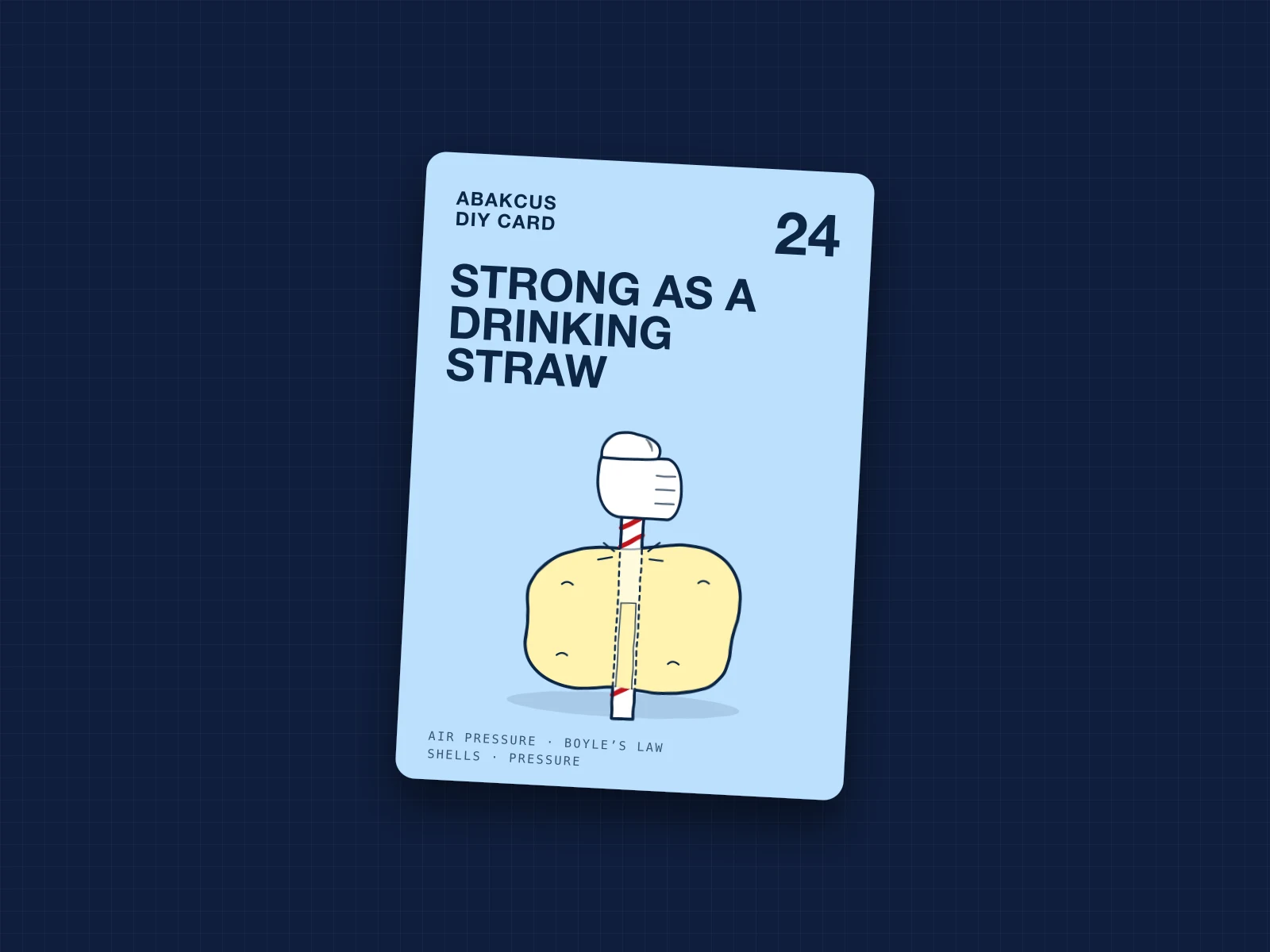
How to Push a Straw Through a Raw Potato
Stab a potato with a plastic straw and the straw crumples. Put your thumb over the top first and it goes straight through. The air trapped inside can’t get out, so the straw can’t cave in.
Open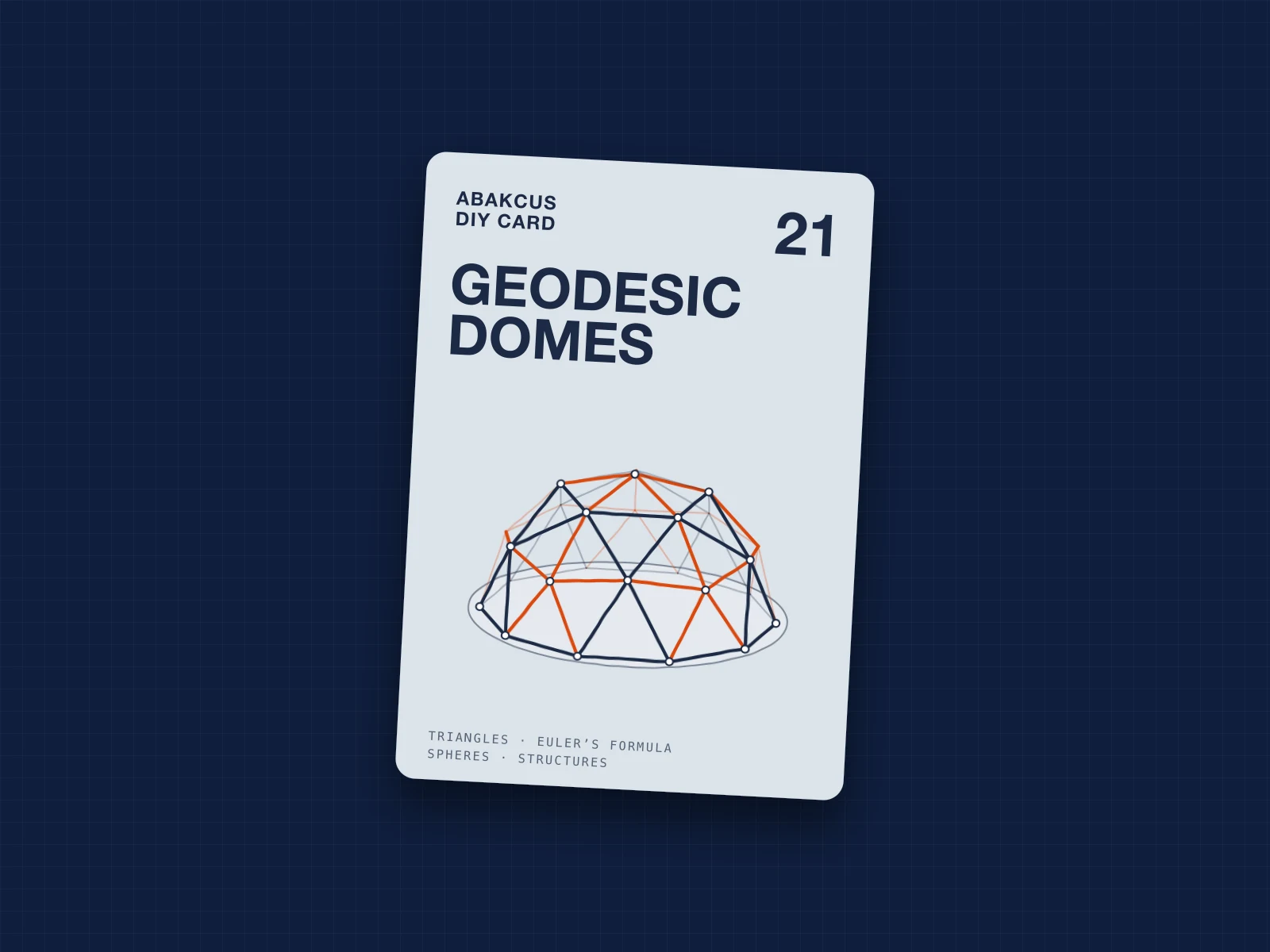
How to Build a Geodesic Dome From Newspaper
Sixty-five rolled-up newspapers, two lengths, a lot of tape: a dome two metres across that you can sit inside. Triangles can’t change shape, and that one fact holds the whole thing up.
Open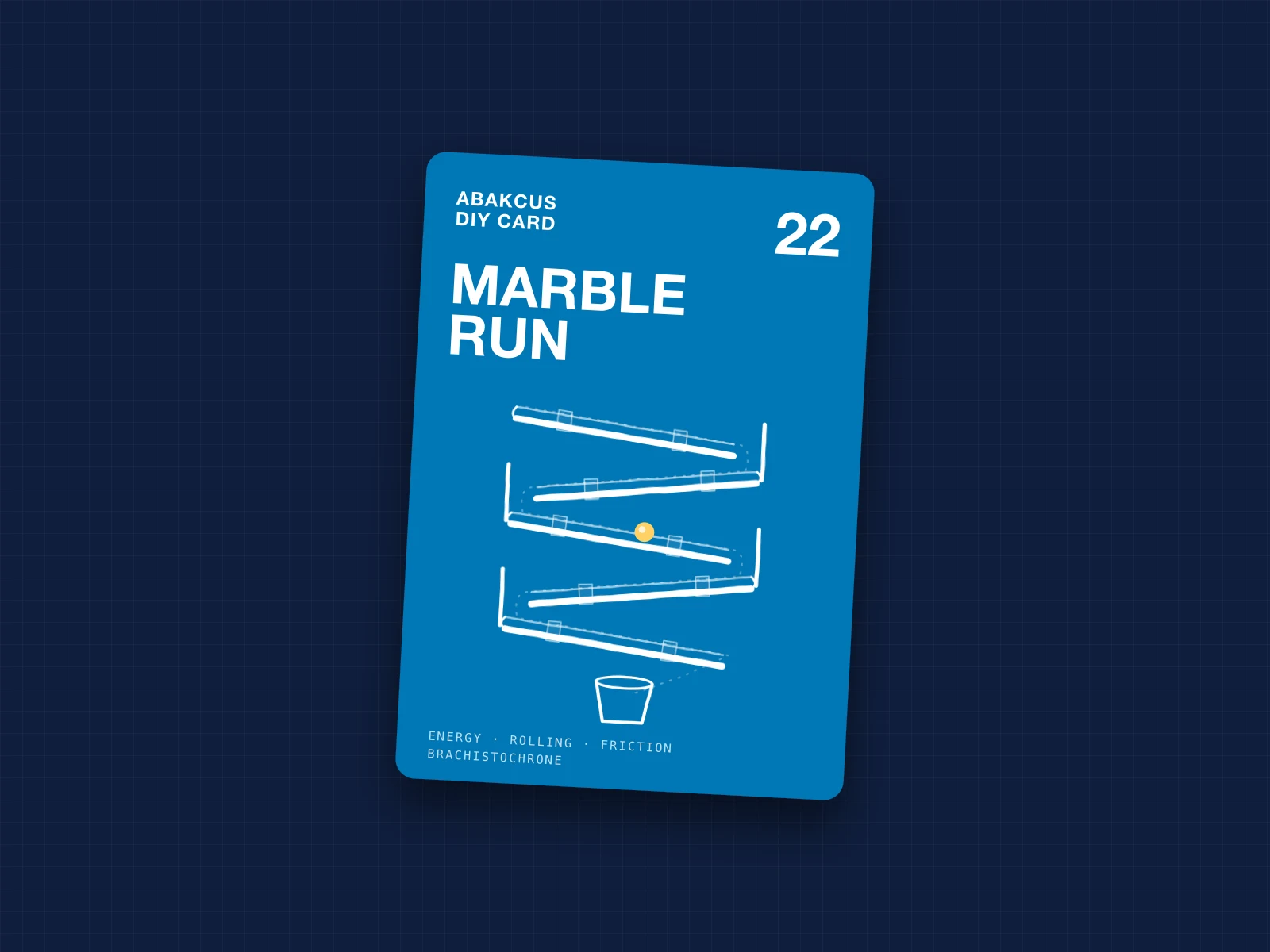
How to Build a Marble Run From Cardboard Tubes
Split tubes, a wall and some tape: a zigzag run that keeps a marble busy for half a minute on a one-metre drop it could fall in less than half a second. Height is the fuel; the trick is spending it slowly.
Open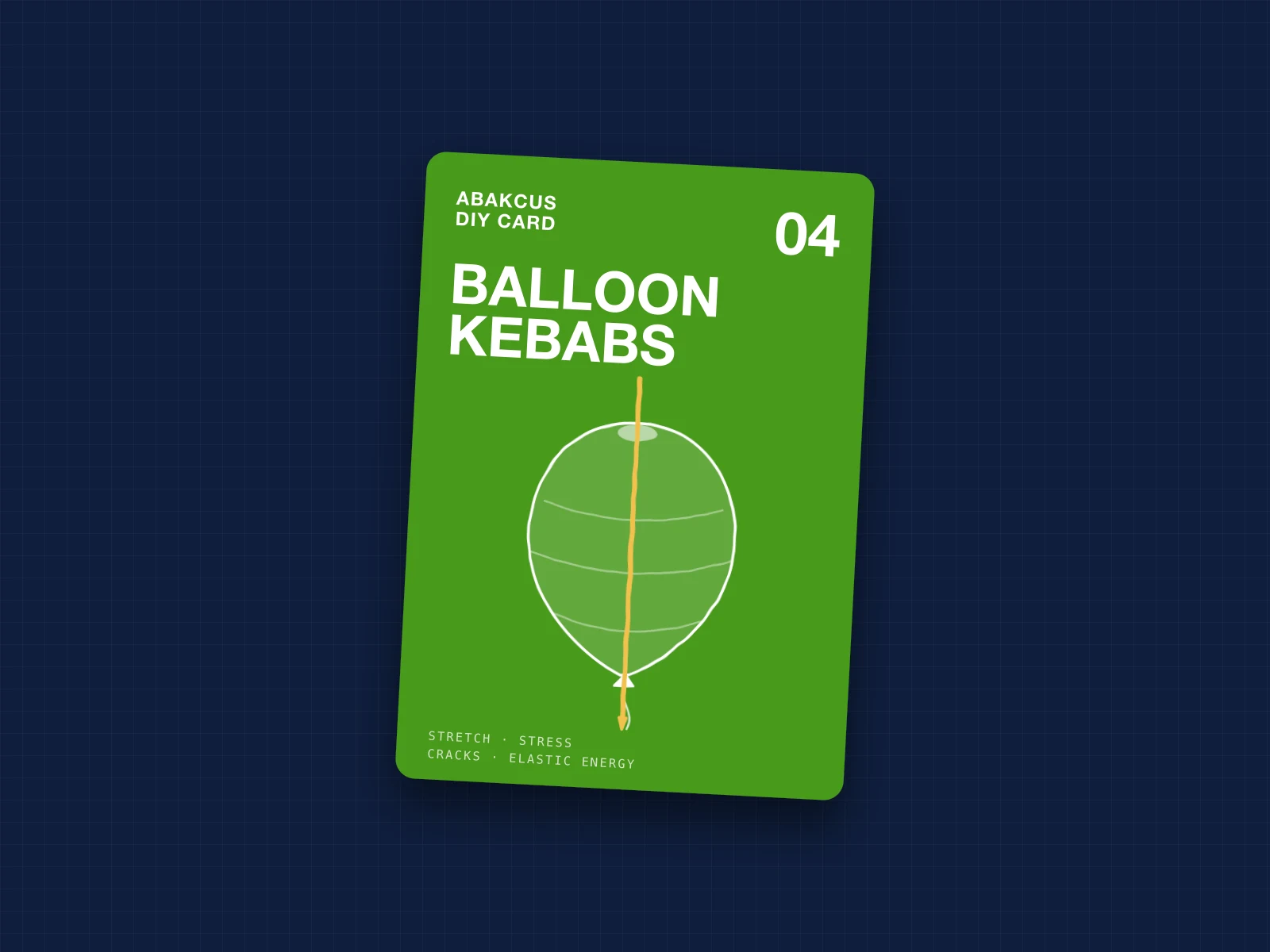
How to Push a Skewer Through a Balloon Without Popping It
A wooden skewer goes in at the top of a balloon and out beside the knot, and the balloon just sits there. The trick is knowing where the rubber is least stretched, and why stretch decides everything.
Open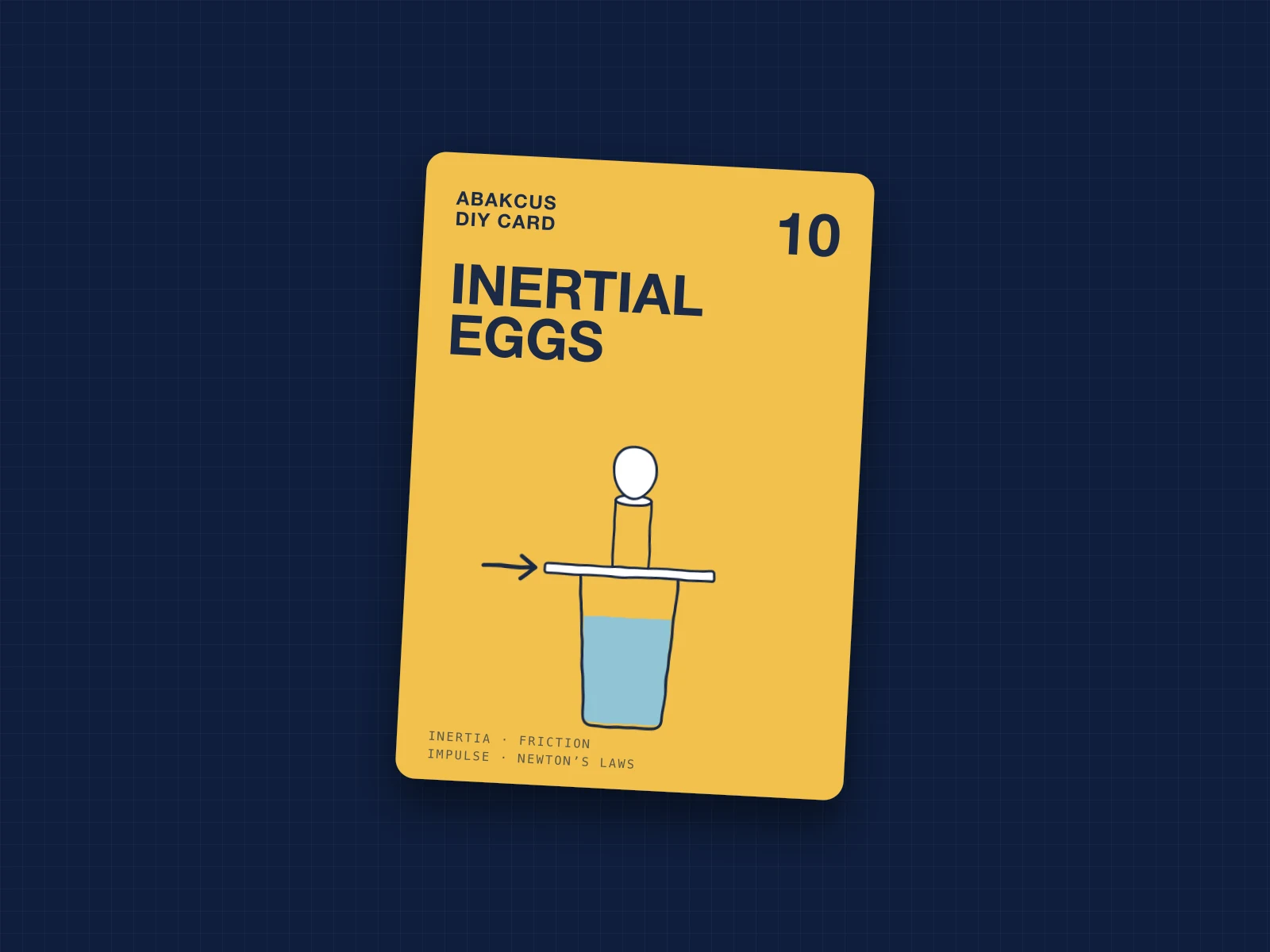
How to Do the Egg Drop Inertia Trick: Newton’s First Law
Knock a tray out from under an egg and the egg drops straight down into a glass of water. The trick is speed, not strength, and the egg’s weight turns out not to matter at all.
Open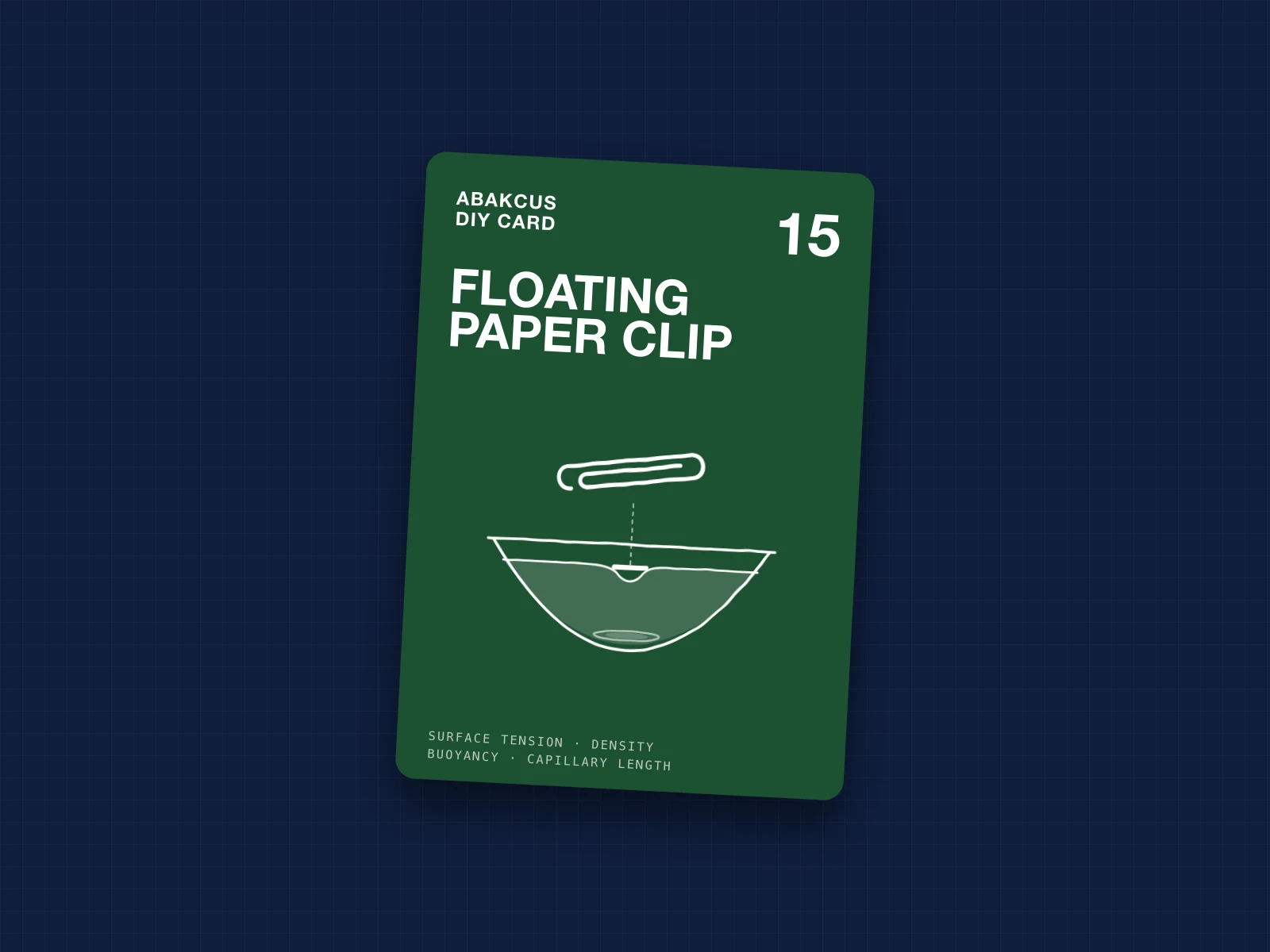
How to Float a Paper Clip on Water: Surface Tension
Steel is nearly eight times denser than water, and a paper clip still lies on top of it if you put it down gently. The surface bends into a dimple and holds it, like a trampoline, until a drop of soap breaks the spell.
Open