
DIY · Card 22 · Engineering · Mechanics
Dropped, a marble falls a metre in less than half a second. Give it a wall of split cardboard tubes to zigzag down and you can make the same metre last half a minute.
01The brief
Build a run down one metre of wall that keeps a marble rolling for as long as possible, and still lands it in the cup.
0.45 s
for a marble to fall one metre straight down
30 s
a good target for the same metre on a zigzag run
5/7
of gravity’s pull along the slope that speeds a rolling marble up
Most marble runs are built to be fast. This one turns the challenge around: the marble starts one metre above a cup, and the winner is the run that takes longest to get it there. You can’t add height, and you can’t stop the marble. All you can decide is how slowly it spends what it has.
Like the newspaper dome, it is an engineering card: you design, build, test and improve. The materials are cardboard tubes cut in half, cereal boxes and tape. The physics underneath is some of the oldest in science. Galileo rolled balls down ramps to slow falling down enough to measure it, and the question of the fastest possible ramp launched a whole branch of mathematics.
02Kit
Mostly recycling. Start saving tubes a week before.
Tick off what you have
0 of 5 ready
03Method
Split the tubes, mark a one-metre drop, then build from the top down, testing with a marble after every ramp.
Step 1 of 8 · Minute 0
Save up the cardboard tubes from kitchen rolls and toilet rolls, about ten of each. Add a cereal box or two, a paper cup, masking tape and a few marbles.
The marble flies off at the turns.
Why
It arrives too fast, or the backstop is too low or too far away.
Fix
Make the backstop taller and closer, curve it slightly inwards, or make the ramp above it gentler.
It stops in the middle of a ramp.
Why
The slope is too gentle, or there is a step at a join.
Fix
Tip the ramp a little steeper. Make every join overlap downhill, the upper channel resting on top of the lower one.
Ramps sag or peel off the wall.
Why
Tape on one side only, or a long channel with nothing under its middle.
Fix
Tape both ends and the middle, and wrap tape under the channel onto the wall like a sling.
04Physics
At the start, the marble’s only energy is its height. As it rolls down, height turns into motion: some into moving forward, and some into spinning, because a rolling marble has to turn as well as travel. For a solid ball the split is always the same, 5/7 into moving and 2/7 into spin.
Without losses, a marble that has dropped one metre would always arrive at about 3.7 m/s, whatever path it took. A slow run works because it doesn’t keep that energy. Every bump at a join, every clack against a backstop and every lap of a funnel turns a little motion into heat and sound. A long run on gentle slopes has many chances to lose speed; the turns take away the rest.
But there is a floor. Card is a little soft and every join has a tiny step, so rolling always costs something. On a slope gentler than about a degree, the slope can’t pay that cost and the marble stops. Try it on a board 60 cm wide and one metre tall:
Run time
22.9 s
Ramps
20
Free fall
0.45 s
Slower by
×51
The marble reaches the cup at 29 cm/s. Gentler ramps and harder turns make it slower, but every ramp adds tape and card, and too gentle a slope and it stops altogether.
05The big idea
Height is
the fuel.
Nothing in a marble run has a motor. Everything the marble does, every ramp, turn and spiral, is paid for by the metre it started above the cup. Energy is never created along the way, only moved around and, bit by bit, lost as heat and sound.
That is the same law that runs a roller coaster after the lift hill, a hydroelectric dam, and a pendulum clock. Designers can’t get round it. They can only decide where the energy goes and how quickly it is spent.
06The math
1 · Rolling down a slope
a = 5/7 · g · sin θ
A solid ball rolling without slipping. The 5/7 is the share of gravity’s pull along the slope that goes into speeding it up.
2 · Speed from height
v = √(10/7 · g · h)
After a drop h, with no losses, on any path. A sliding object would reach √(2gh); spin takes the rest.
3 · Galileo’s odd numbers
d ∝ t²
From rest, the distance grows as the square of time, so in equal times it covers 1, 3, 5, 7… units.
On a 5° ramp, a = 5/7 × 9.81 × sin 5° ≈ 0.61 m/s², about a sixteenth of free fall. From rest, a marble takes about 1.4 s to roll 60 cm, against 0.35 s to fall the same 60 cm. Rolling also explains the speed at the bottom: dropped one metre, a marble hits the floor at 4.4 m/s; rolled down a smooth ramp of the same height it reaches only √(10/7 × 9.81 × 1) ≈ 3.7 m/s, because some energy is in its spin.
In June 1696 Johann Bernoulli asked the mathematicians of Europe: along which curve does a body slide from one point to a lower one in the least time? The straight line is shortest, but the answer is a cycloid, the curve traced by a point on the rim of a rolling wheel. It drops steeply at first, so the marble gets up to speed early and spends the rest of the trip moving fast. Newton, Leibniz, Jakob Bernoulli and l’Hôpital all sent solutions; Newton’s arrived without his name, and Bernoulli is said to have recognised “the lion by its claw”. Galileo had already shown in 1638 that a circular arc beats the straight line, but the circle is not the best. Race them:
1. Cycloid
0.674 s
2. Circular arc
0.701 s
3. Drop and run
0.743 s
4. Straight line
0.845 s
The straight line is the shortest path but the slowest of the four. The cycloid drops steeply first, so its marble is fast early and stays fast for longer, and it even dips below the finish before climbing back up. The plunge overdoes it: too much track. A sliding bead without friction is faster on every track, by the same factor √(7/5) ≈ 1.18, so the order never changes.
07Real life
Anything that rolls or slides downhill without a motor is a marble run of sorts, from theme parks to parcel depots.
Roller coasters
A coaster is a marble run for people. A chain hauls the train to the top once, and from then on height is the only fuel: every hill must be lower than the last. Since 1976, loops have been tighter at the top than at the bottom, so riders aren’t crushed on the way in.
Warehouses and sorting
Parcels, boxes and luggage often travel on gravity roller conveyors and spiral chutes. Tilt a track of free-spinning rollers a few degrees and loads trundle along on their own; a spiral chute brings them down several floors without a motor.
The Marble Machine
In 2016 the Swedish musician Martin Molin of Wintergatan released a video of a hand-cranked music box he had built, played by 2,000 steel marbles falling onto a vibraphone, drums and bass. It has been watched over 270 million times.
Chain-reaction machines
The cartoonist Rube Goldberg drew absurd machines that did simple jobs in a dozen steps. Real ones built by students and engineers almost always include a marble run: it is the easiest way to carry a trigger across a room, with a delay you can tune.
Pinball and pachinko
A pinball table is tilted by a few degrees, so the steel ball always comes back down to the flippers. In pachinko, hundreds of small balls fall through a forest of pins, each one’s path decided by a sequence of tiny bounces.
Bobsleigh and luge
An ice track is a run that has to stay fast, not slow. Its banked curves turn the sled without the scraping a backstop would cause, and its whole profile is shaped so that riders keep the speed gravity gives them.
1638
Falling is too fast to time with a pulse or a candle, so Galileo slowed it down. In his Two New Sciences, published in 1638, he describes a wooden beam about 12 cubits long with a straight groove lined with polished parchment, down which he rolled a hard bronze ball. He timed the runs by letting water flow from a vessel and weighing what had run out.
He found that the distance rolled grows with the square of the time, at any slope, and concluded that a free fall does the same. Historians still argue about how precise his results could have been, but the idea of the ramp as a slowed-down fall was right, and it is the same idea as this card. Like the inertia egg drop, it also points to inertia: on a smooth level track, nothing would stop the ball.
08Is and isn’t
A heavier marble rolls down faster.
Mass cancels out: gravity pulls harder on a heavy marble, but it is harder to speed up by exactly the same amount. A glass marble and a steel ball bearing roll down together. Only friction and air make small differences.
The straight line is the fastest way down.
It is the shortest, not the fastest. A curve that drops steeply first gets the marble up to speed sooner. The fastest of all is a cycloid, and it can even dip below the finish before climbing back up.
A marble rolling down a ramp is just a slow-motion fall.
Not quite. The slope does slow it down, by sin θ, but rolling slows it further: 2/7 of the energy goes into spin. A marble rolls down any slope at 5/7 of the speed-up a frictionless slide would get.
Marbles stop because they run out of push.
Nothing needs to push a rolling marble. It stops because friction, bumps and squashing turn its motion into heat and sound. Galileo’s ramps led him to this idea: on a perfectly smooth level track, a marble would roll on for ever.
09Go further
A
Loop the loop
Make a loop from a strip of card bent into a circle. Find the lowest start that gets a marble round. Theory says 2.7 times the loop’s radius above its bottom; how close do you get?
B
Race the cycloid
Bend two strips of card between the same two points: one straight, one a deep curve. Release two marbles together. Which arrives first?
C
Galileo’s bells
On one long straight ramp, tape markers at 1, 4, 9 and 16 units from the start. Released from rest, the marble passes them at equal ticks of time.
D
A marble clock
Tune your run to take exactly 30 seconds, every time. What makes the time vary from run to run, and how can you make it repeatable?
E
Hollow against solid
Race a marble against a ping-pong ball on the same ramp. A hollow ball puts more of its energy into spin, so it accelerates at only 3/5 of g sin θ instead of 5/7.
10Questions
Cut kitchen-roll and toilet-roll tubes in half lengthwise to make open channels. Tape the first one high on a wall or a big sheet of card, sloping gently, put a card wall at its low end, and tape the next channel below it running the other way. Zigzag down to a cup at the bottom, testing with a marble after every ramp.
Use gentler slopes, more ramps and more turns, and add a funnel the marble spirals round before dropping through. Every turn and every lap takes away some speed. Don’t go below a slope of about 2 or 3 degrees on card, though, or the marble stops at the first bump.
A rolling marble has to spin as well as move. For a solid ball, 2/7 of the energy it gains goes into spinning, so its forward speed grows only 5/7 as fast as a frictionless sliding object’s would: its acceleration down a slope is 5/7 × g × sin θ.
Between two points, the fastest track is not a straight line but a curve called a cycloid, the path traced by a point on a rolling wheel. It drops steeply at first, so the marble gets up to speed early. This is the brachistochrone problem, posed by Johann Bernoulli in 1696.
For a solid marble rolling round a loop of radius R, the start must be at least 2.7 R above the bottom of the loop, ignoring friction. In practice start a little higher: a 10 cm-wide loop needs a start more than 13.5 cm up, and more like 16 to 18 cm on card.
Safety · Marbles are a choking hazard: keep them away from children under three. A grown-up should do the cutting. Use masking tape on walls and doors, test it on a hidden spot first, and pick up stray marbles so nobody steps on them.
All DIY cards →Keep wandering
A few more pieces in the same spirit — math, design, and slow attention.
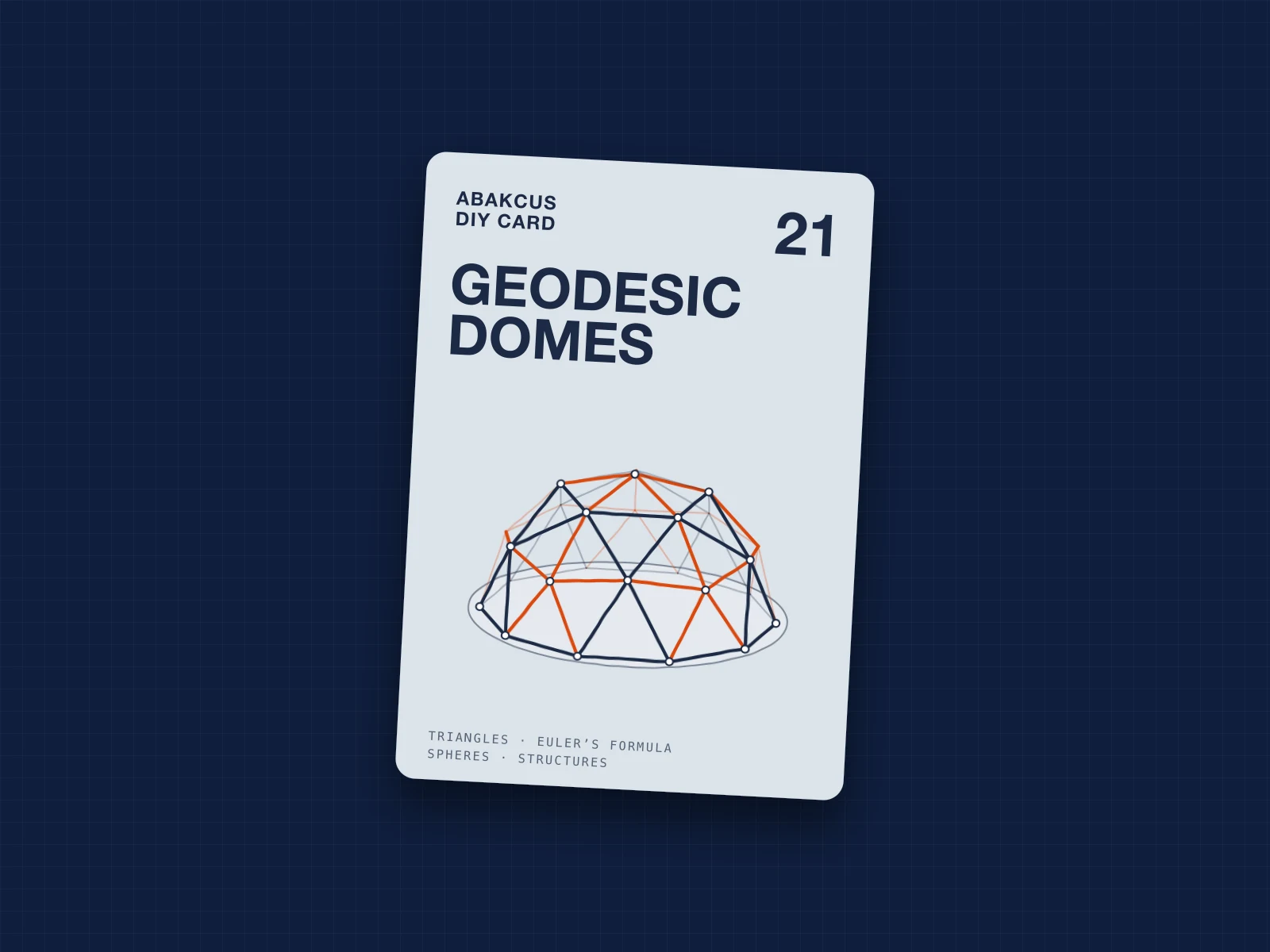
How to Build a Geodesic Dome From Newspaper
Sixty-five rolled-up newspapers, two lengths, a lot of tape: a dome two metres across that you can sit inside. Triangles can’t change shape, and that one fact holds the whole thing up.
Open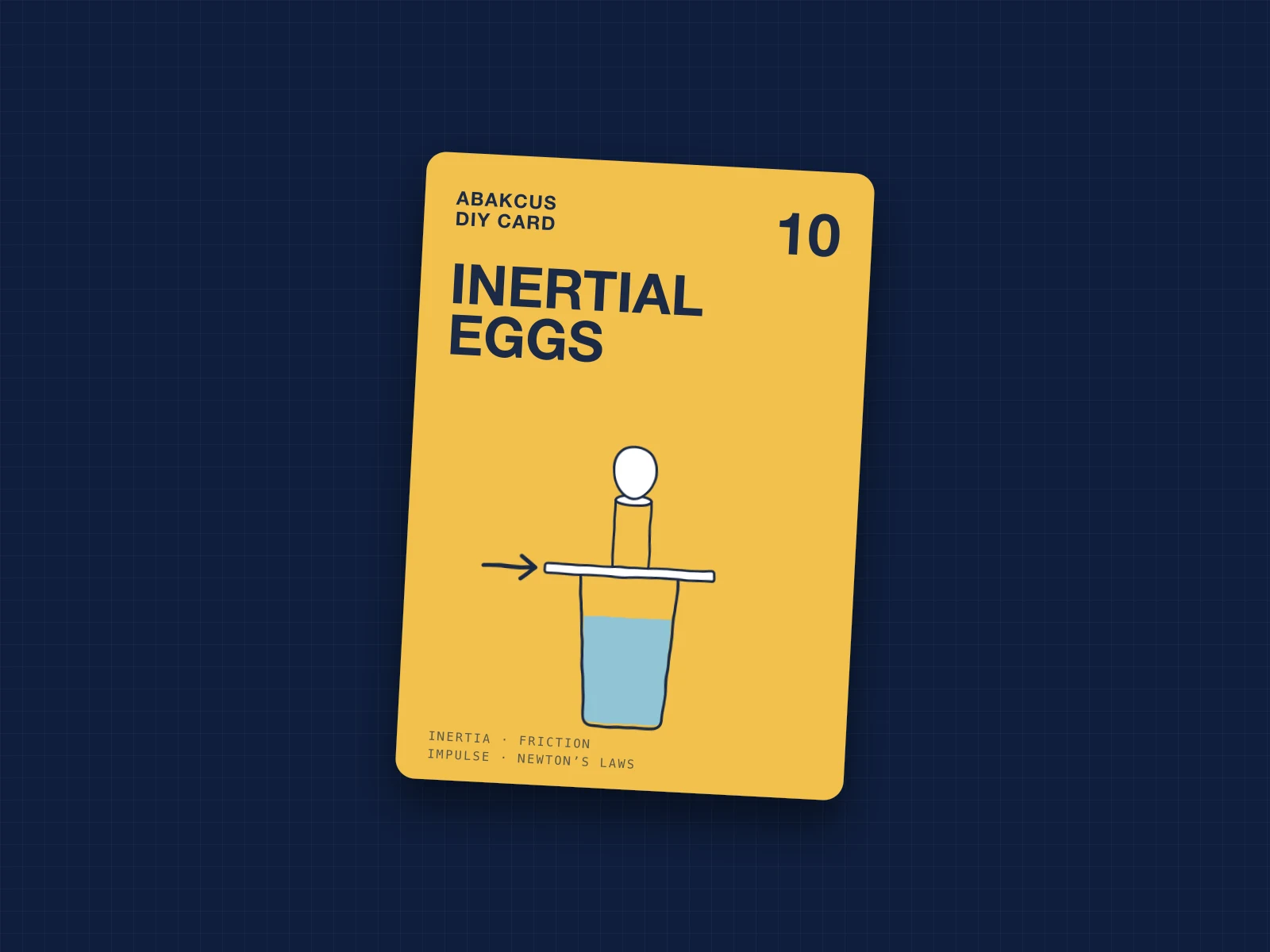
How to Do the Egg Drop Inertia Trick: Newton’s First Law
Knock a tray out from under an egg and the egg drops straight down into a glass of water. The trick is speed, not strength, and the egg’s weight turns out not to matter at all.
Open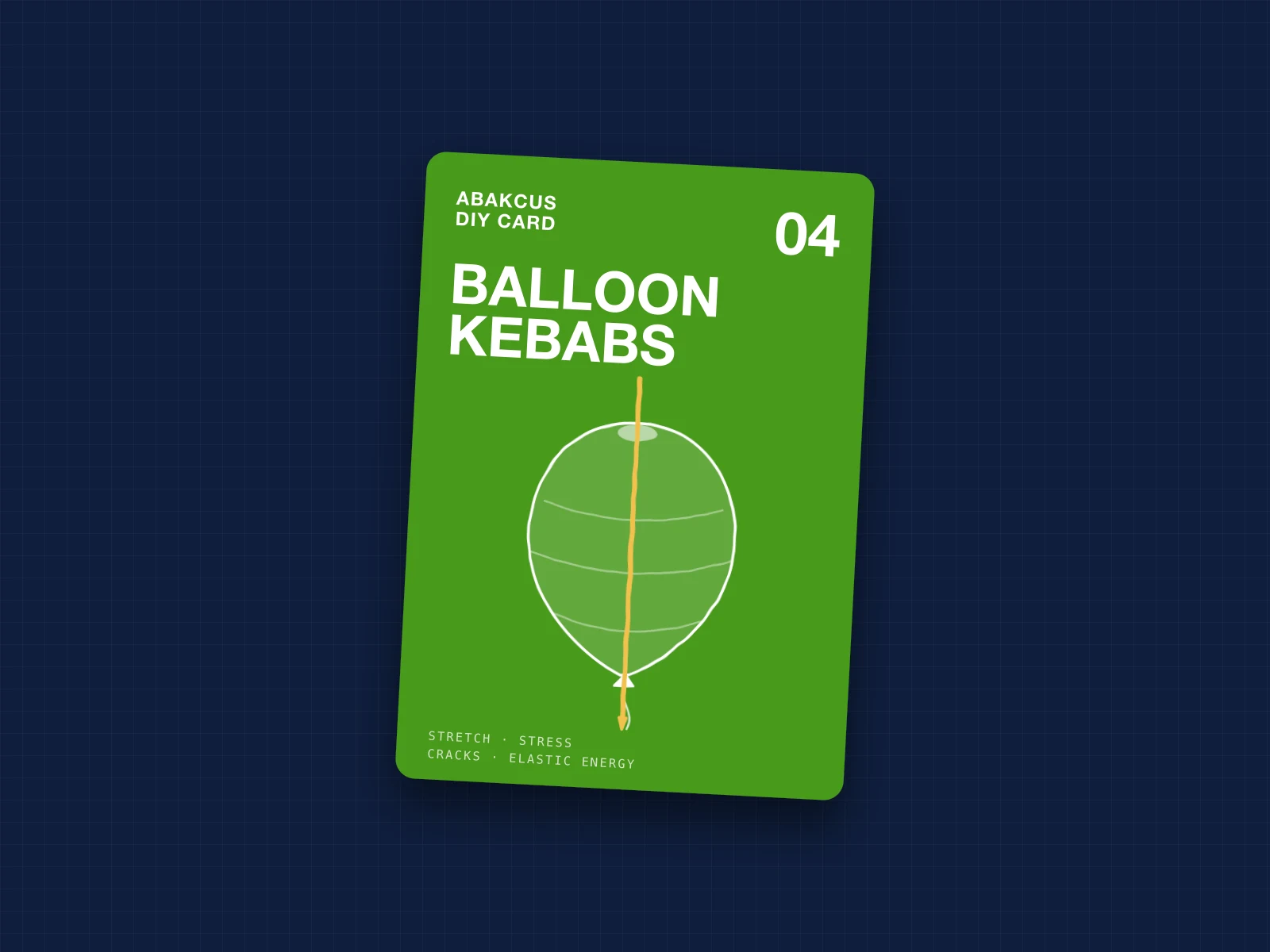
How to Push a Skewer Through a Balloon Without Popping It
A wooden skewer goes in at the top of a balloon and out beside the knot, and the balloon just sits there. The trick is knowing where the rubber is least stretched, and why stretch decides everything.
Open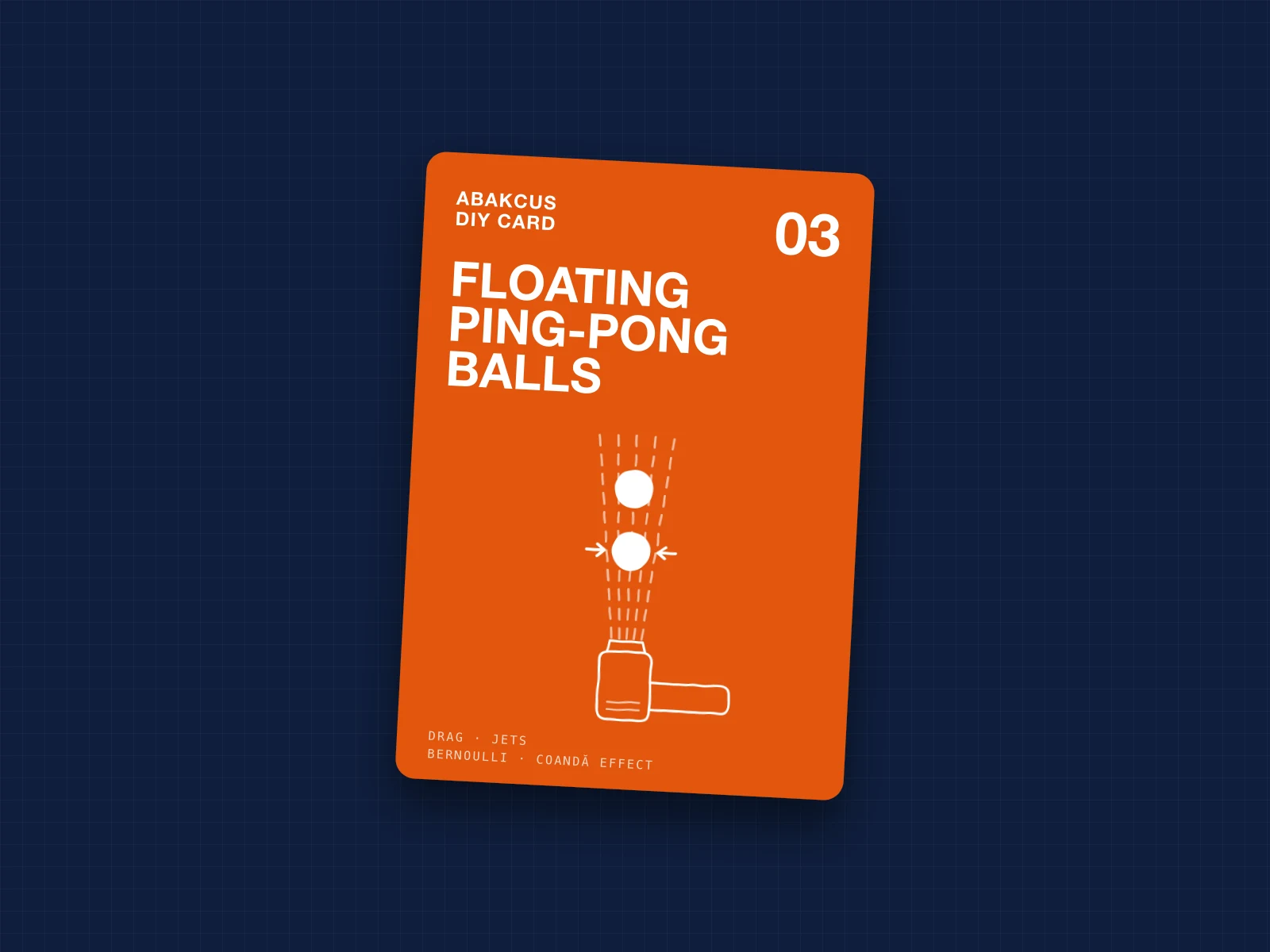
How to Make a Ping-Pong Ball Float With a Hair Dryer
Point a hair dryer at the ceiling and a ping-pong ball sits in mid-air, wobbling but never falling out. Most explanations of why are wrong, and the real one is better.
Open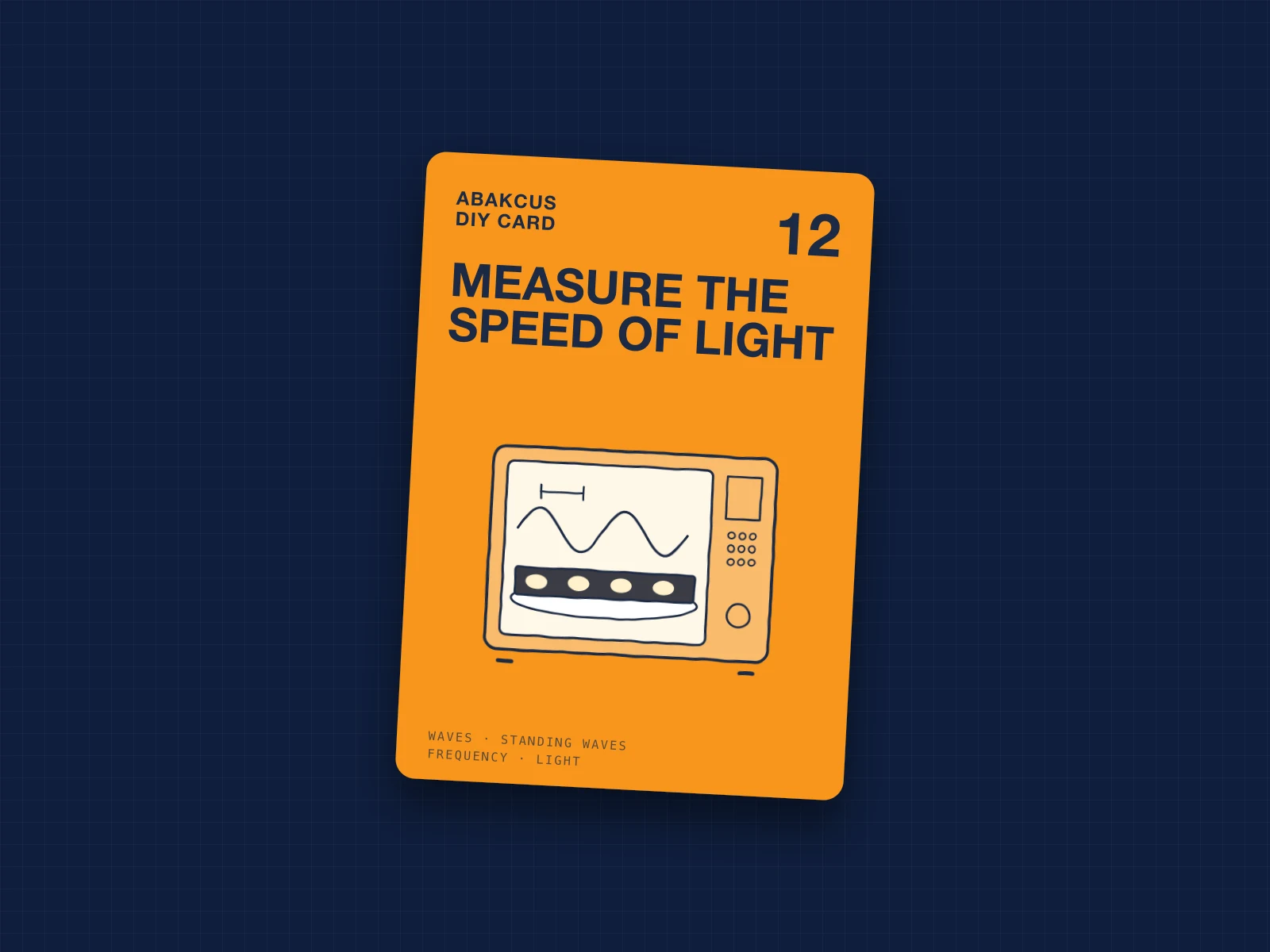
How to Measure the Speed of Light With Chocolate
Take the turntable out of a microwave, heat a bar of chocolate for twenty seconds, and measure the gap between the melted spots. Multiply by the number on the back of the oven and you get the speed of light, give or take a few percent.
Open
How to Get an Egg Into a Bottle Without Touching It
Two days in vinegar take the shell away, a warm bottle does the rest. The egg goes through a mouth narrower than itself, pushed by ten tonnes of air per square metre.
Open