
DIY · Card 52 · Mathematics · Probability
A board, forty pins and a handful of beads. Every bead takes its own random zigzag, yet together they pile up in the same graceful hump every single time: the bell curve, drawn by chance.
01The brief
Let chance draw a curve, the same curve, every time.
256
different left-right routes through eight rows of pegs
70
of those routes end in the middle bin; just one ends in each corner
1873
the year Francis Galton built the first board
Drop a bead onto a peg and it goes left or right. Then it hits another peg, and another. By the bottom, after eight random bounces, nobody could have told you where it would land.
Drop two hundred beads, though, and something remarkable happens. They don’t scatter evenly. They pile up in a hump, tall in the middle and low at the edges, and the hump has the same shape every time you try. This is the bell curve, the most important shape in statistics, and you can build the machine that draws it in an afternoon. It makes a good companion to the paper proof that a circle’s area is πr² and the marble run.
02Kit
A board, some pins and a lot of identical beads.
Tick off what you have
0 of 5 ready
03Method
Mark the grid carefully: the accuracy of the pegs is what makes the curve.
Step 1 of 8 · Minute 0
You need a sturdy board or the lid of a big box, about A3, around 40 push pins, a strip of thin card for the bins and funnel, glue, a ruler, a pencil and about 200 small beads, all the same size, around 5 mm across.
Beads pile up on one side.
Why
The board is tilted sideways, or the funnel is off centre.
Fix
Check the board is level from side to side, and that the funnel gap sits right above the top pin.
Beads get stuck between pins.
Why
The gaps are too narrow for the beads.
Fix
The gap between pins should be at least twice a bead’s width. Use smaller beads or space the pins wider.
Beads jump straight to the bottom.
Why
The board is too steep, so beads fly over the pegs.
Fix
Lower the slope to about 20–30°, and pour the beads slowly, a few at a time.
04Chance
Where a bead lands depends only on how many times it bounced right. Landing at the far left needs every bounce to go left; landing in the middle needs half left and half right, in any order. There are far more ways to mix left and right than to go one way every time, so the middle wins.
Drop one ball, then a few hundred, and watch the prediction come true. Then tilt the odds:
One ball is unpredictable: it could land anywhere. Drop a few hundred and watch a shape appear.
Count the routes to each peg and a famous pattern appears. Each peg can be reached only from the two above it, so its number of routes is theirs added together: Pascal’s triangle.
Routes to this bin
20
Routes in all
64
Chance
31.3 %
To reach bin 3, a ball must bounce right exactly 3 times and left 3 times, in any order. Each number in the triangle is the sum of the two above it, because every route to a peg comes from one of the two pegs above. The middle bins have the most routes, so they catch the most balls.
05The big idea
Order
from chance.
No single bounce can be predicted. But add up many small random nudges and the total behaves with astonishing regularity. That is the central limit theorem, one of the deepest facts in mathematics.
It is why the bell curve turns up wherever many small causes add together: in heights, in measurement errors, in the spread of a drop of ink. Galton built his board to make that law visible, and it still does.
06The math
1 · Routes to bin k
C(n, k) = n! ⁄ (k!(n − k)!)
Choose which k of the n bounces go right.
2 · Chance of bin k
P(k) = C(n, k) ⁄ 2ⁿ
Every route has the same chance, (½)ⁿ.
3 · Width of the bell
σ = √n ⁄ 2
The spread, in bins, around the middle.
With eight rows there are 2⁸ = 256 equally likely routes. The middle bin is reached by C(8, 4) = 70 of them, a chance of 70 ⁄ 256 ≈ 27 %; each end bin by just 1, a chance of 0.4 %. Drop 200 beads and expect about 55 in the middle bin and probably none, or one, at either end.
As the rows increase, the bars hug a smooth curve, the normal distribution, e^(−x²⁄2σ²). Abraham de Moivre showed in 1733 that the counts of coin tosses approach it. Its width grows only as the square root of the rows: 16 rows make a bell just twice as wide as 4 rows.
07Real life
Wherever many small, random effects add up.
People’s heights
Height depends on many genes and many influences, each adding or taking a little. Added together, they give the bell curve: most adults near the average, very few far above or below.
Errors in measurement
Measure the same thing many times and your readings scatter in a bell curve around the true value. Carl Friedrich Gauss used this to analyse astronomical observations, and the old German 10-mark note showed him beside the curve.
Plinko
The pegboard game on the TV show The Price Is Right, played since 1983, is a Galton board: a disc dropped from the top bounces down through pegs into prize slots, usually landing near where it started.
Spreading ink
A drop of ink in still water spreads as countless molecules each wander at random. After a while the ink is spread in a bell-shaped cloud, darkest where it started and fading outwards.
Factories
No two bolts or biscuits come out exactly alike. Engineers track the bell curve of their sizes and weights, and adjust the machines whenever it drifts or widens.
Coin tosses
Toss ten coins and count the heads. Five is most likely, but only about one time in four. Ten heads happens about once in 1,024 tries. Each toss is a bounce on a Galton board.
1874
The Victorian scientist Francis Galton was fascinated by how traits like height vary. In 1873 he had a device built to show where the bell curve comes from, and on 27 February 1874 he demonstrated it in a London lecture: shot poured through rows of pins, settling into the famous curve.
He described it again in his 1889 book Natural Inheritance, calling it a quincunx after the five-dot pattern of its pins. A century and a half later, the same idea runs through every statistics course in the world.
08Is and isn’t
If a ball goes left several times, it’s ‘due’ to go right.
Pegs have no memory. Each bounce is a fresh 50–50, whatever came before. Believing otherwise is called the gambler’s fallacy.
Random means without any pattern.
Each ball is unpredictable, but hundreds of them together make a shape you can predict precisely. Randomness has laws.
Every bin is equally likely, so the bins should fill evenly.
Every route is equally likely, but the bins aren’t. Hundreds of routes lead to the middle and only one to each end.
The bell curve only works for perfectly fair pegs.
Tilt the odds and the hump moves sideways, but it stays a bell. That robustness is what the central limit theorem describes.
09Go further
A
Count and compare
Count the beads in each bin and draw a bar chart. Compare it with Pascal’s triangle: 1, 8, 28, 56, 70, 56, 28, 8, 1 for eight rows.
B
More rows
Add two more rows of pins. Does the bell get wider or narrower, compared with the number of bins?
C
A lopsided board
Tilt the board slightly to one side. Where does the hump go? Is it still a bell?
D
Coins instead
Toss eight coins a hundred times and count heads each time. Plot the results. Do you get the same shape as the board?
E
A class height chart
Measure the heights of everyone in a class or club and plot them in 5 cm bins. Does a bell appear?
10Questions
A board with a triangle of pegs above a row of bins. Balls dropped in at the top bounce left or right off each peg and pile up in the bins in a bell-shaped curve. It was invented by Francis Galton in 1873, and is also called a quincunx or a bean machine.
Push pins into a board in staggered rows, each pin centred between the two below it. Glue a V-shaped funnel of card above the top pin and strips of card below the last row to make bins. Tilt the board and pour in small, identical beads.
Each ball’s landing place depends on how many times it bounced right. Far more routes lead to the middle bins than to the edges: with 10 rows, 252 different routes end in the middle bin but only one in each end bin. Add up many random bounces and you get the bell-shaped normal distribution.
The number of routes to each peg is the number in the same place in Pascal’s triangle. Every peg is reached from one of the two pegs above it, so its count is the sum of theirs, just as each number in the triangle is the sum of the two above.
The idea that adding up many small, independent random effects tends to give a bell curve, whatever the effects are like. The Galton board is a picture of it: each bounce is a tiny random nudge, and their total makes the normal distribution.
Safety · Push pins are sharp: a grown-up should help push them in. Small beads are a choking hazard, so keep them away from toddlers.
All DIY cards →Keep wandering
A few more pieces in the same spirit — math, design, and slow attention.
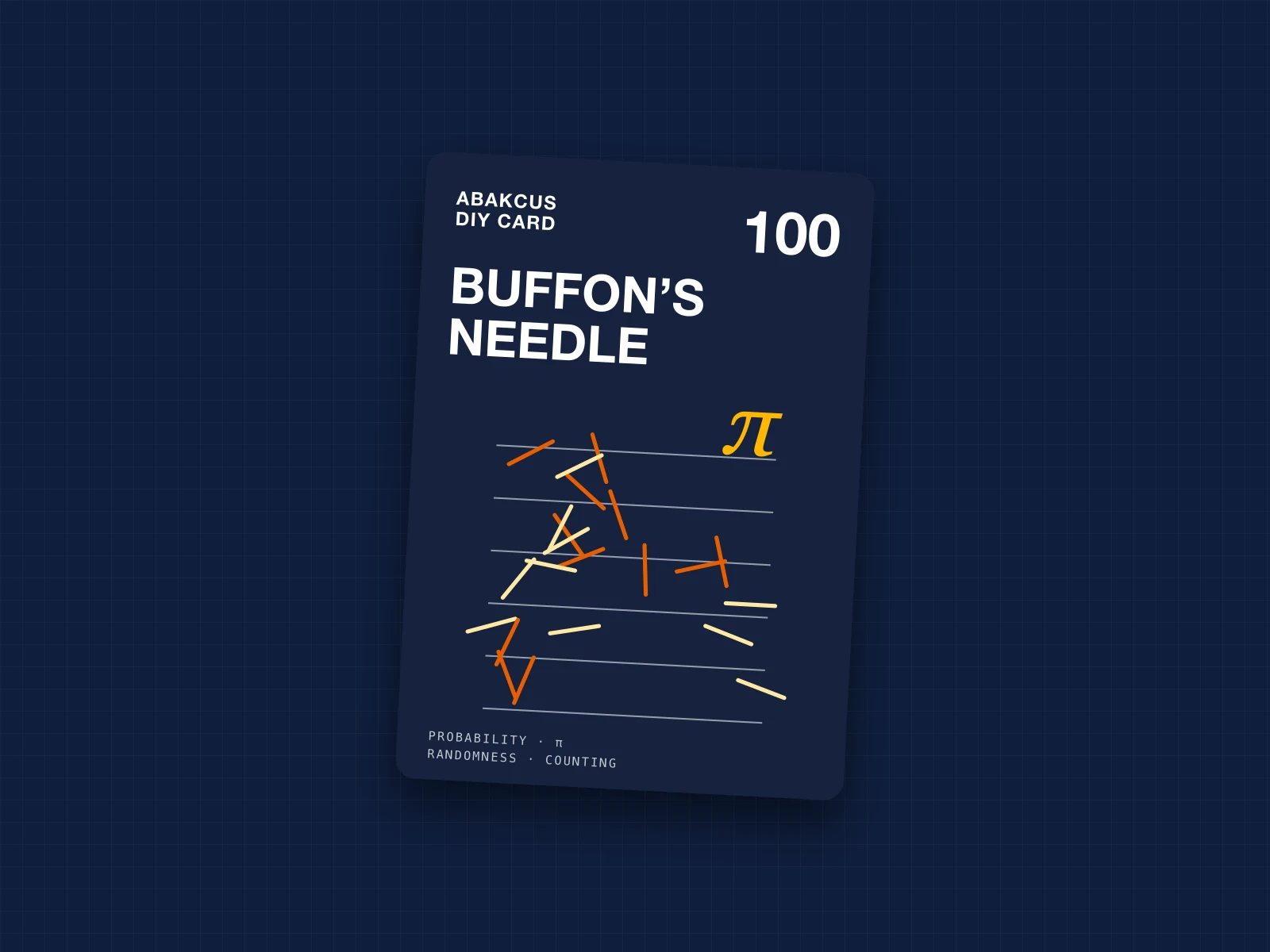
Buffon’s Needle: How to Find π by Dropping Toothpicks
Drop toothpicks on lined paper and count how many land across a line. Out of pure chance comes π, the number of circles, from a game with no circles in it.
Open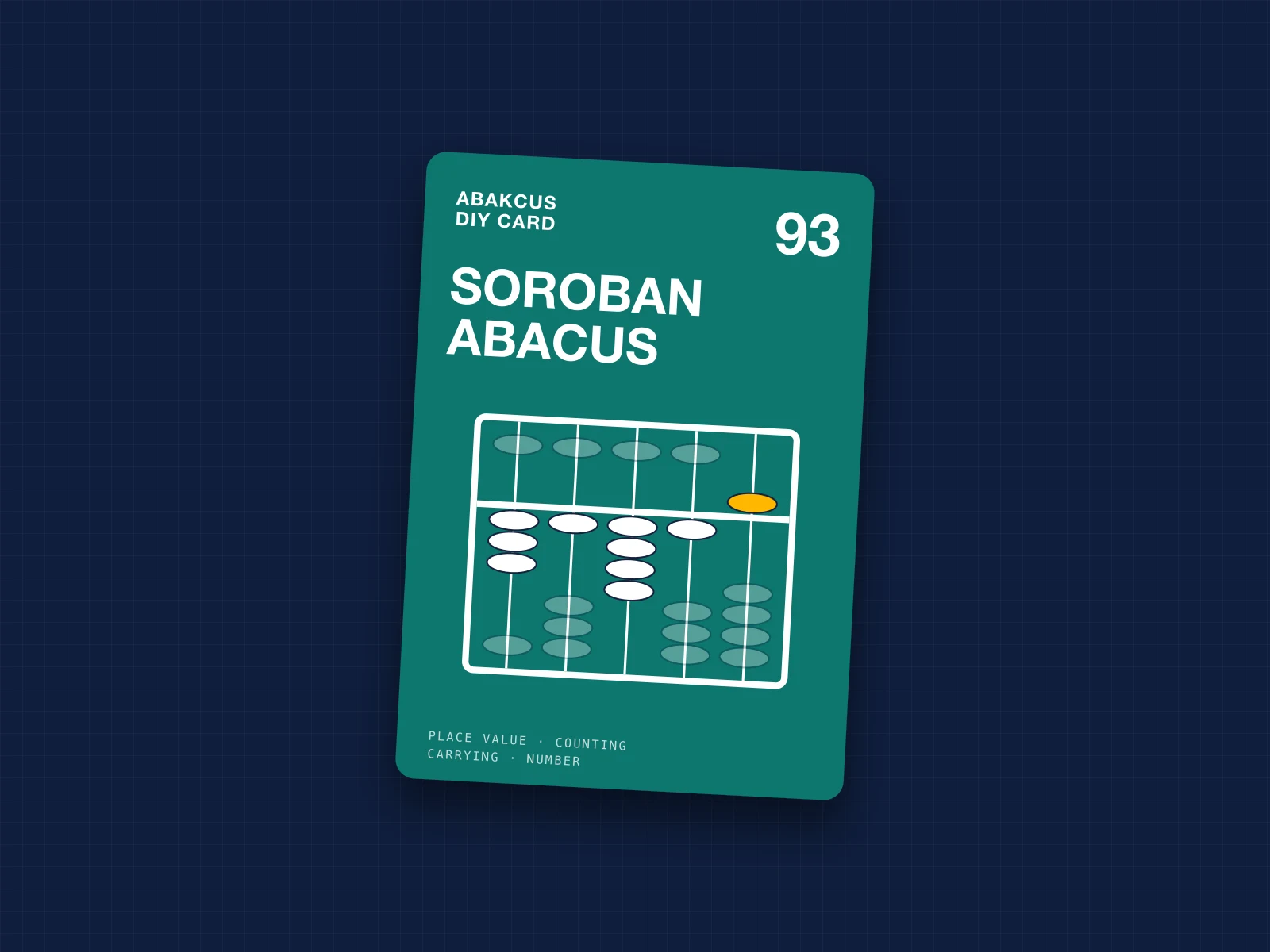
How to Make an Abacus: A Soroban From a Shoebox Lid
A shoebox lid, five skewers and 25 beads become a Japanese soroban that counts to 99,999 and makes place value and carrying visible.
Open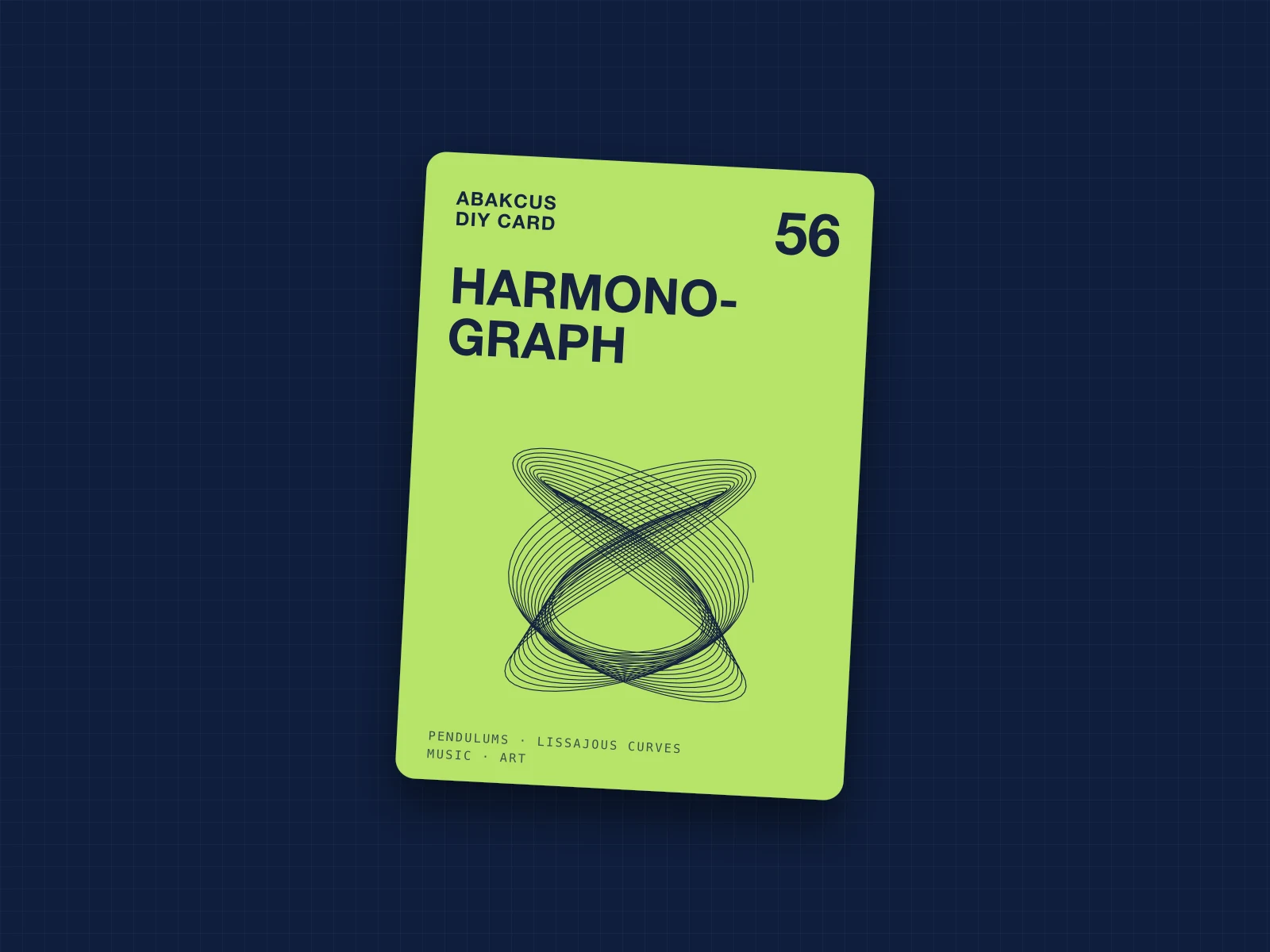
How to Make a Harmonograph That Draws With a Pendulum
A broom handle, a board on a Y of string and a felt-tip pen. Set it swinging and the pen draws figures of eight and woven shells, the shapes of musical harmony.
Open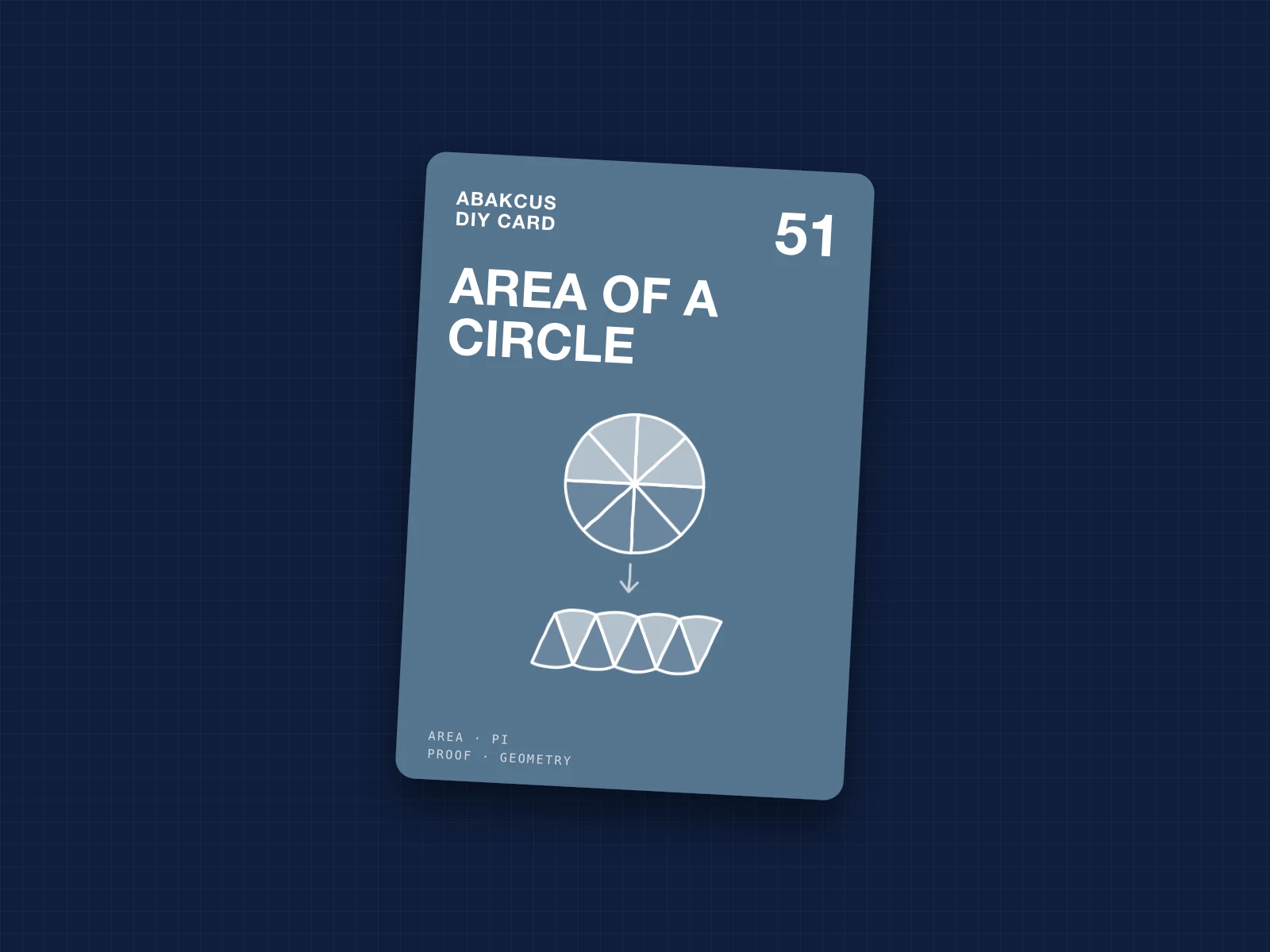
How to Show the Area of a Circle Is πr² With Paper Slices
A paper circle, three folds and a pair of scissors. Cut it into slices, lay them top to tail, and the circle becomes a rectangle that shows why its area is πr².
Open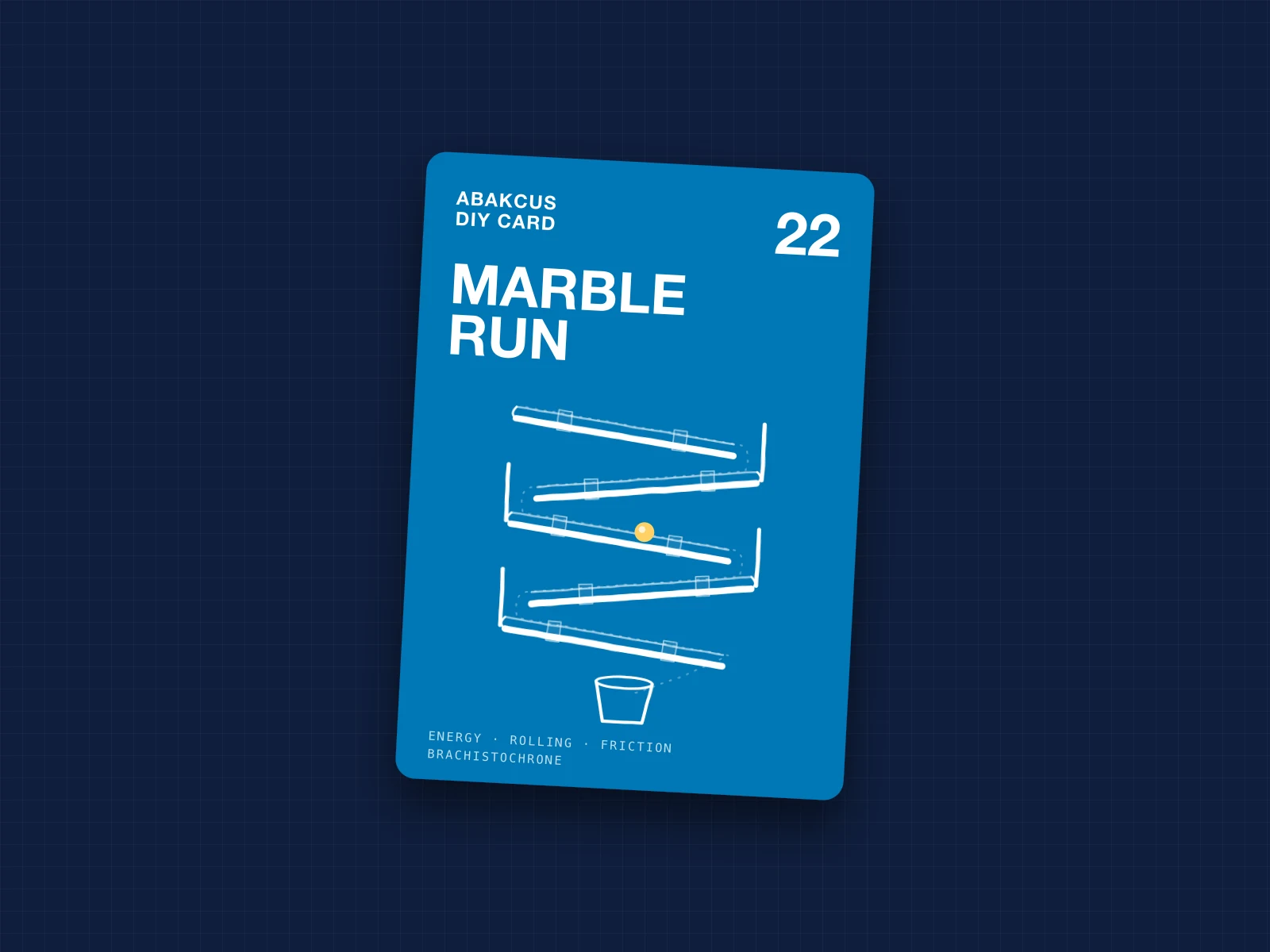
How to Build a Marble Run From Cardboard Tubes
Split tubes, a wall and some tape: a zigzag run that keeps a marble busy for half a minute on a one-metre drop it could fall in less than half a second. Height is the fuel; the trick is spending it slowly.
Open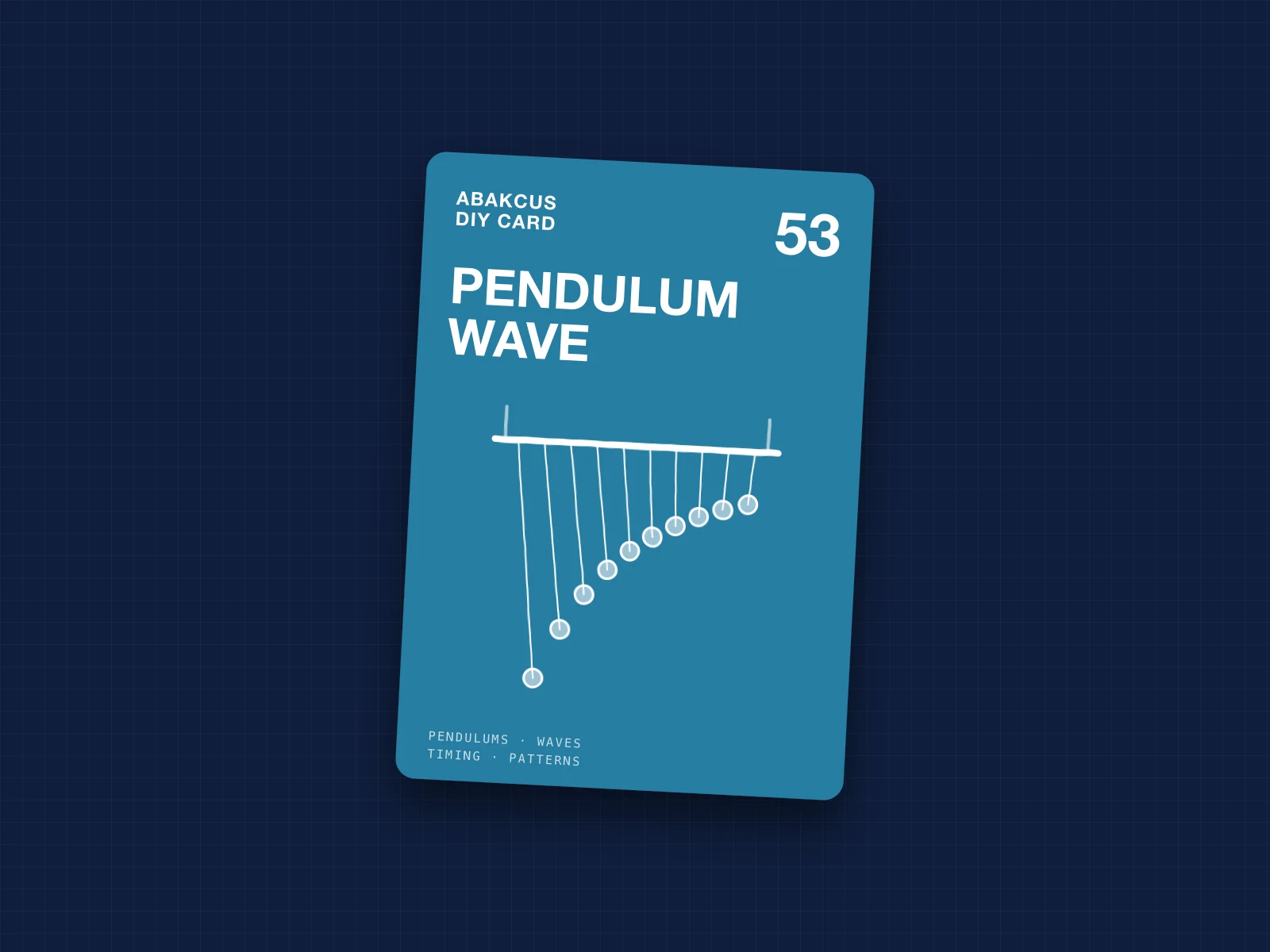
How to Make a Pendulum Wave Toy From Nuts and String
Twelve nuts on twelve strings, each a little shorter than the last. Let them go together and they weave waves and snakes, then swing back into a perfect line.
Open