
DIY · Card 90 · Physics · Engineering
Nine lolly sticks, a few rubber bands and a plastic spoon. Press, let go, and a marshmallow sails across the room on a perfect parabola, and with a little maths you can land it in a cup.
01The brief
Every throw is a parabola. Learn its shape and hit the cup.
45°
the angle for the longest throw, without air drag
½kx²
the energy stored in a stretched rubber band
1304
the siege where the biggest trebuchet ever built was used
A catapult is the simplest machine that turns stored energy into flight. Press the spoon, and the bands and sticks bend; let go, and they spring back, flinging whatever sits in the spoon.
What happens next is pure mathematics: the ammo follows a parabola set by just its speed and its angle. It pairs well with the recycled rocket and the marble run.
02Kit
Lolly sticks, rubber bands and a spoon.
Tick off what you have
0 of 5 ready
03Method
A stack, an arm, a spoon, and a target.
Step 1 of 8 · Minute 0
You need nine lolly sticks (popsicle sticks), five or six rubber bands, a plastic spoon or bottle cap, strong glue or a glue gun, and something soft to throw: mini marshmallows, pom-poms or scrunched paper balls.
The ammo just drops off.
Why
The spoon is flat or angled backwards.
Fix
Glue the spoon so its bowl faces up and slightly forwards, and press down further before letting go.
The stack slips out.
Why
The cross band is loose.
Fix
Wrap a band tightly in an X round the point where the arm crosses the stack.
It throws to one side.
Why
The arm is twisted or the stack is off-centre.
Fix
Line the arm sticks up straight over the middle of the stack before tightening the bands.
04Flight and energy
Once it leaves the spoon, the ammo moves sideways at a steady speed while gravity pulls it down ever faster. Put those together and you get a parabola.
Find the angle and speed that land in the cup:
Lands at
1.21 m
Highest point
47 cm
Longest throw at
44°
The dashed blue arc is launched at 35°, the angle that adds to 55° to make 90°: it lands almost in the same place, but flies higher or lower. The longest throw comes at about 44°, a shade under 45° because the spoon starts 5 cm above the table. This model ignores air resistance, which shortens light, fluffy throws a lot.
The speed comes from the energy in the bands. Here is how it is shared out:
where the stored energy goes
Energy stored
27 mJ
Launch speed
3.9 m/s
Ammo’s share
43 %
Range at 45°
1.6 m
A stretched band stores ½ k x² of energy: press twice as far and you store four times as much. When it snaps back, the energy is shared between the ammo and the arm itself, which also has to be flung forward. A light pom-pom gets only a small share but flies fast; a heavy marshmallow takes more of the energy but moves slower. In real life, air drag hits light fluffy things hardest, so the longest throws usually come from something small and dense, like a paper ball.
05The big idea
Sideways and down
don’t mix.
Gravity only pulls down; it has no effect on how fast something moves sideways. So a thrown object keeps its sideways speed while it falls exactly as if it had been dropped.
Galileo worked this out four hundred years ago, and it is why every throw, every fountain jet and every bouncing ball traces a parabola. Split the motion in two, and hard problems become easy.
06The math
1 · Range from the ground
R = v² · sin 2θ ⁄ g
v the launch speed, θ the angle, g = 9.81 m/s².
2 · Highest point
H = (v sin θ)² ⁄ 2g
Only the upward part of the speed counts.
3 · Spring energy
E = ½ k x²
k the band stiffness, x the stretch.
A marshmallow launched at 3.5 m/s and 45° travels about 3.5² × sin 90° ⁄ 9.81 ≈ 1.25 m and rises (3.5 × 0.71)² ⁄ 19.6 ≈ 31 cm. At 30° or 60°, since sin 60° = sin 120°, it lands at the same spot, about 1.08 m.
Two bands of stiffness about 60 N/m pressed down 3 cm store ½ × 60 × 0.03² ≈ 27 mJ. Shared with the swinging arm, that gives a small marshmallow a launch speed of roughly 4 m/s.
07Real life
From siege engines and aircraft carriers to basketball courts.
Siege engines
Ancient Greek and Roman armies used torsion catapults, powered by twisted bundles of rope or sinew, to hurl stones and bolts at city walls hundreds of metres away.
Trebuchets
Medieval trebuchets used a falling counterweight instead of a spring. With a long arm and a sling, the largest could throw stones weighing over 100 kg.
Aircraft-carrier catapults
A carrier deck is too short for a jet to take off by itself. Steam or electromagnetic catapults fling planes from standstill to over 250 km/h in about two seconds.
Basketball shots
A free throw follows the same parabola as your marshmallow. Players release at about 50° or more: a steeper arc gives the ball a wider target as it drops through the hoop.
The long jump
If 45° gives the longest throw, why do long jumpers take off at only about 20°? A jumper can’t keep their full running speed while pushing steeply upwards, so a lower, faster take-off wins.
Springboards
A diving board bends under a diver and springs back, storing and returning energy like your bent lolly sticks, launching the diver higher than a jump from solid ground.
1304
In the spring of 1304, King Edward I of England besieged Stirling Castle in Scotland. When the garrison held out for months, he ordered his engineers to build the biggest trebuchet anyone had ever seen: the Warwolf.
It took dozens of carpenters several months to assemble. According to the accounts, the garrison offered to surrender before it was even finished, but Edward insisted on testing his new machine on the castle walls first. It is still thought to be the largest trebuchet ever built.
08Is and isn’t
45° is always best.
Only when launching from ground level with no air resistance. Launching from a height, or fighting drag, the best angle is lower.
Heavier ammo goes further.
For the same stored energy, lighter things move faster. But very light, fluffy things are slowed hard by air, so small, dense ammo usually wins.
A catapult and a trebuchet are the same thing.
A catapult uses stretched or twisted material for power; a trebuchet uses a falling counterweight.
Pressing twice as far throws twice as far.
Further still. The band stores four times the energy, so the ammo leaves twice as fast and, without drag, flies about four times as far. Air drag cuts that back a lot.
09Go further
A
Range chart
Fire ten shots at each of three stack heights. Measure and average the distances, and graph them.
B
Ammo test
Compare a pom-pom, a mini marshmallow and a paper ball. Which goes furthest, and why?
C
Move the fulcrum
Slide the stack closer to or further from the bound end. How does it change the throw?
D
Build a trebuchet
Make a counterweight version with a pencil arm, a cup of coins as the weight and a string sling.
E
Target game
Set cups at different distances with points on each, and challenge friends to a catapult tournament.
10Questions
Stack seven lolly sticks and bind both ends with rubber bands. Bind two more sticks together at one end only, wedge the stack between them near the bound end, and fix it with a band. Glue a spoon or bottle cap to the free end of the top stick, load it, press down and let go.
With no air resistance and a launch from ground level, 45°. A catapult launching from a little above the table does best just under 45°, and light, fluffy ammo slowed by air does better at a lower angle still.
Store more energy: add rubber bands or press the spoon further down. Use small, fairly dense ammo like a scrunched paper ball, which loses less speed to air than a pom-pom, and aim at about 45°.
A catapult stores energy in something stretched, bent or twisted, like rubber bands, ropes or springs. A trebuchet uses gravity instead: a heavy counterweight falls and swings a long arm with a sling on the end.
The arm pivots on the stack of sticks, with the effort from the bands near the pivot and the load in the spoon far from it. Small, strong movements near the pivot become fast, wide movements at the spoon.
Safety · Only launch soft things like marshmallows, pom-poms and paper balls, never stones or hard objects. Never aim at people, pets or faces. A grown-up should handle the glue gun.
All DIY cards →Keep wandering
A few more pieces in the same spirit — math, design, and slow attention.
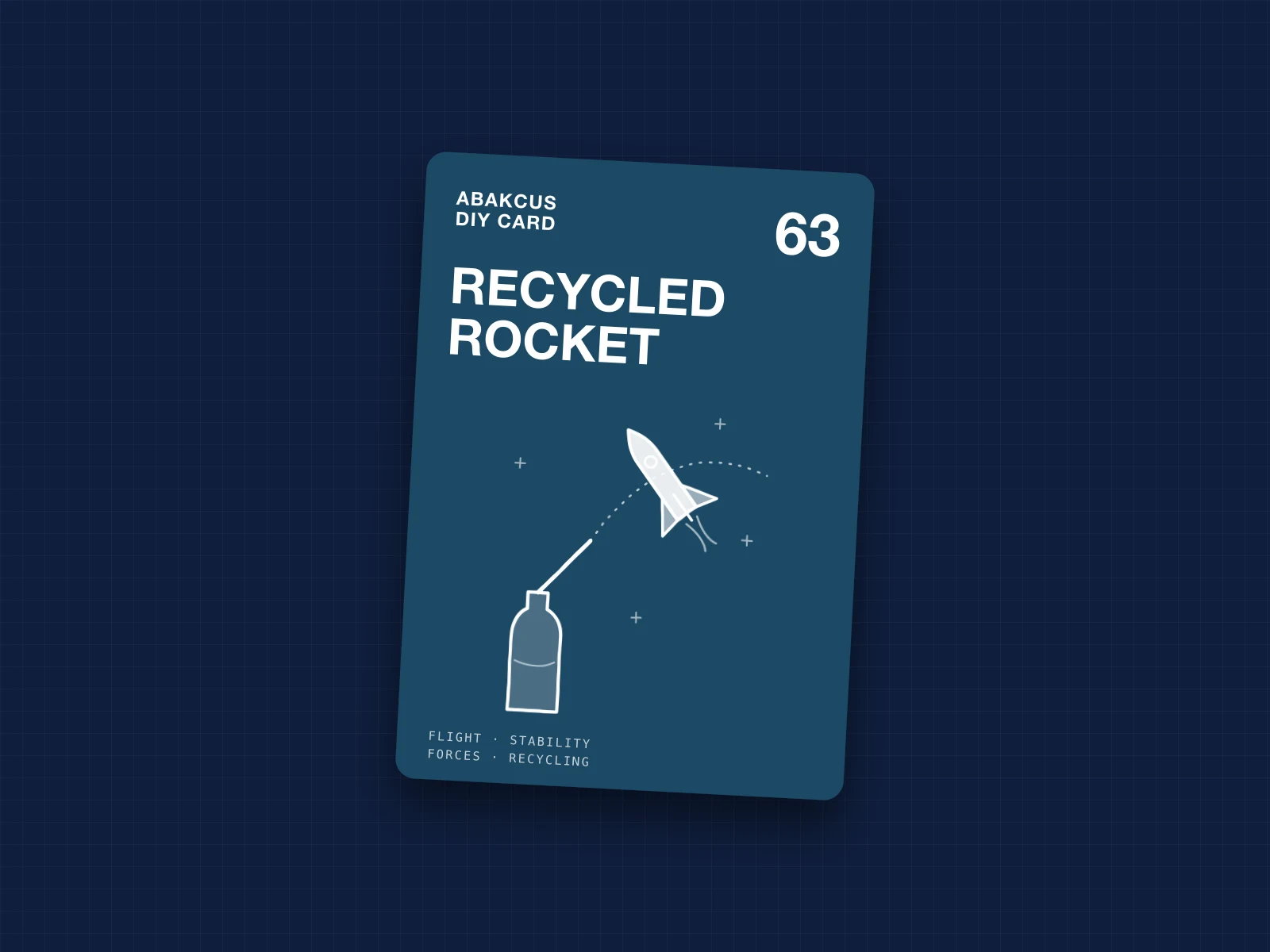
How to Make a Rocket Toy From the Recycling Bin That Flies
A plastic bottle, a scrap of paper and a corner of a cereal box. Roll a rocket, give it fins and a clay nose, then squeeze and watch it streak across the garden.
Open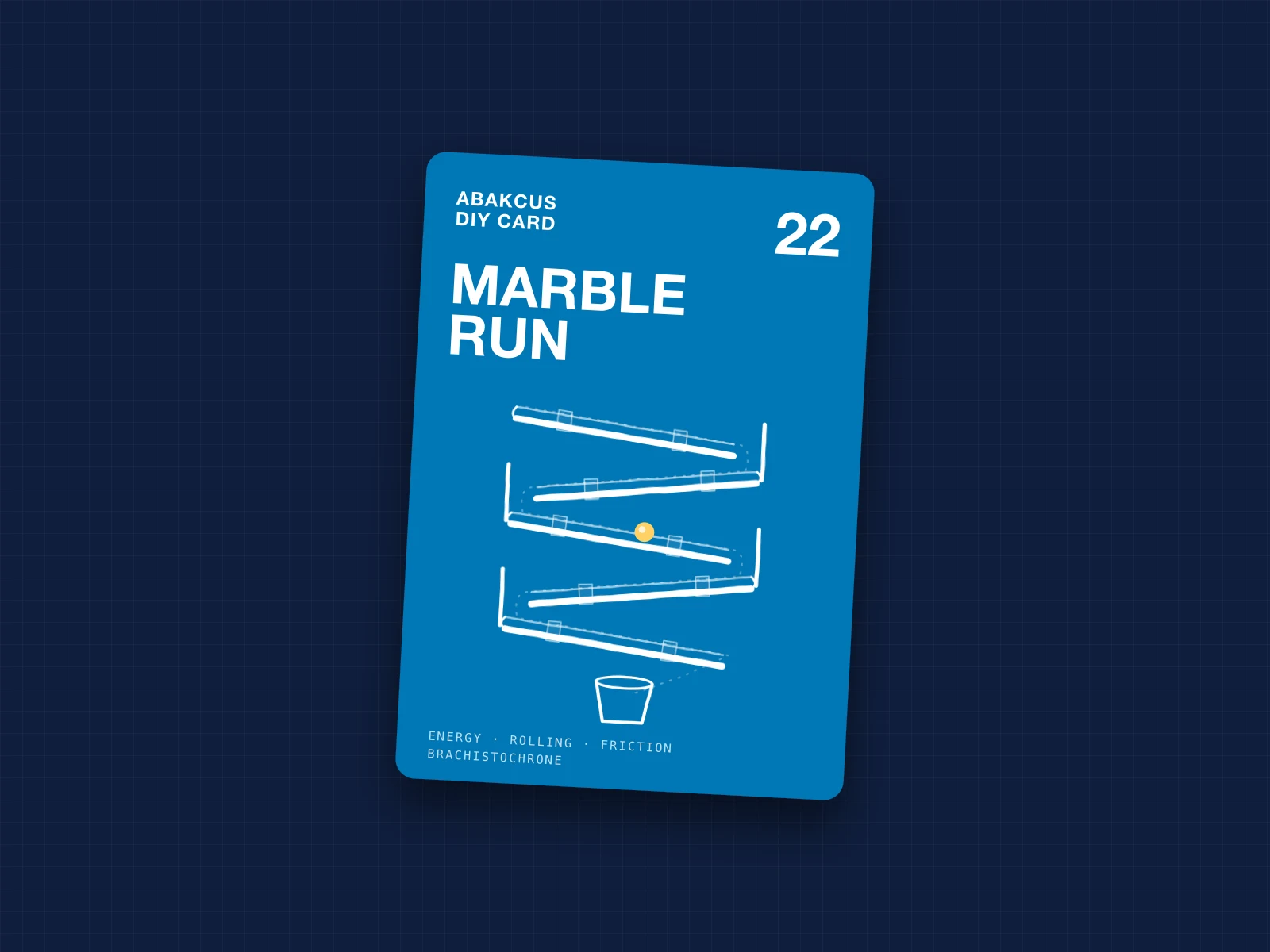
How to Build a Marble Run From Cardboard Tubes
Split tubes, a wall and some tape: a zigzag run that keeps a marble busy for half a minute on a one-metre drop it could fall in less than half a second. Height is the fuel; the trick is spending it slowly.
Open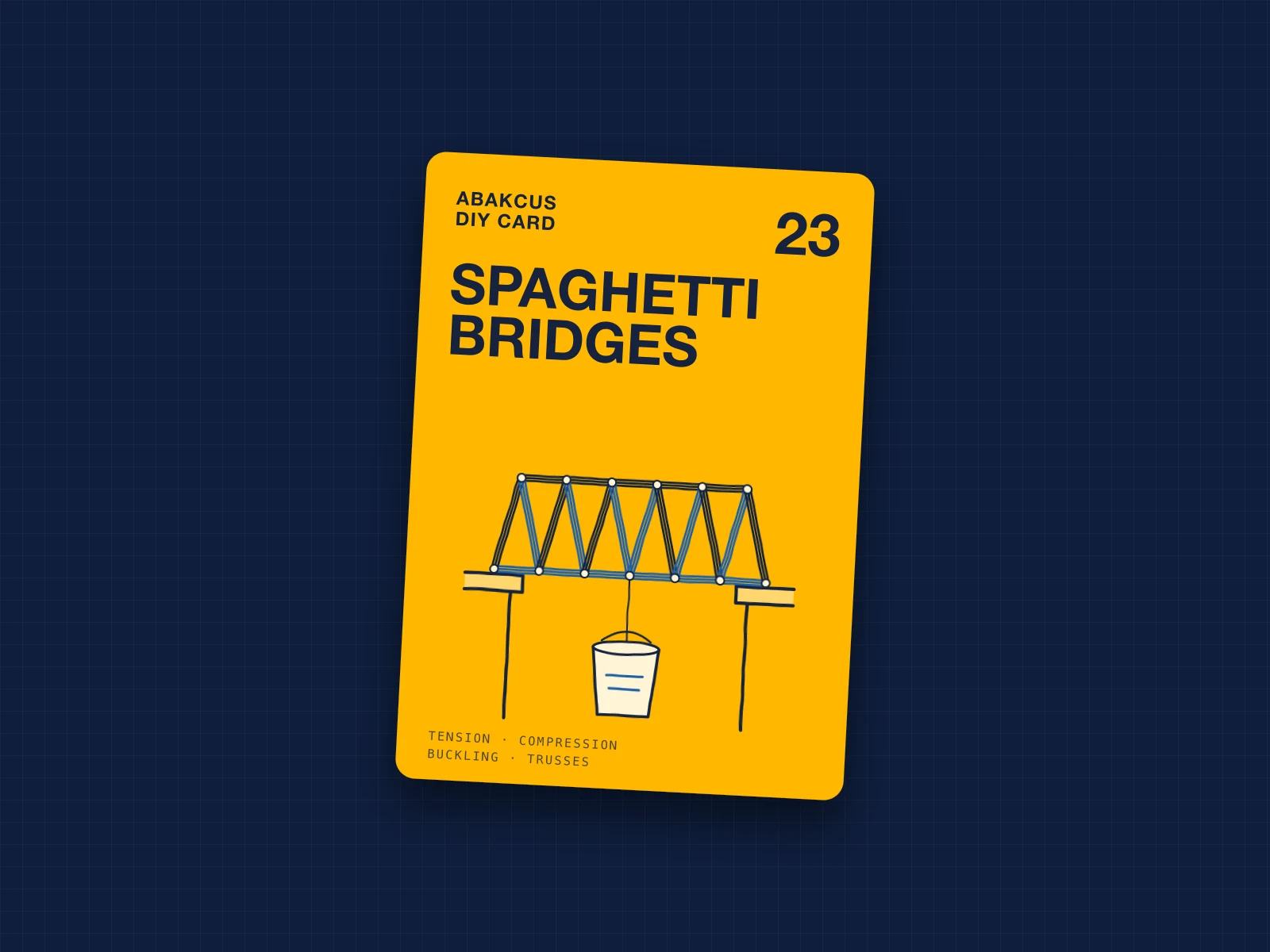
How to Build a Spaghetti Bridge (and Why Pasta Buckles)
One strand of dry spaghetti can hang five kilograms from its end, then buckles under less than two hundred grams pushed along it. A good bridge pulls where pasta is strong and keeps the pushes short.
Open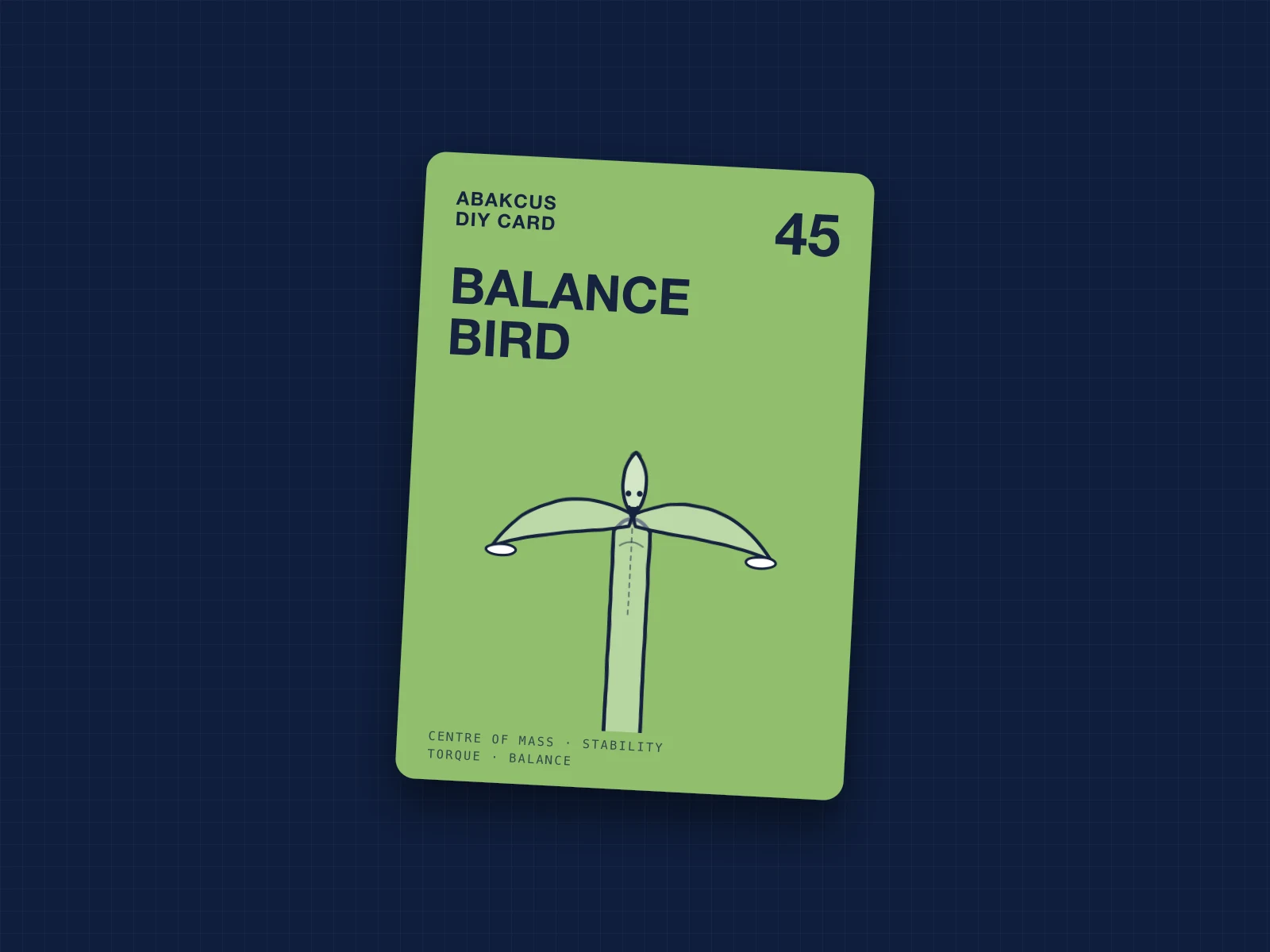
How to Make a Balance Bird That Perches on Its Beak
A bird cut from card, two coins and a fingertip. It balances on the very tip of its beak, rocks when you nudge it, and settles back, as if it had decided to stay.
Open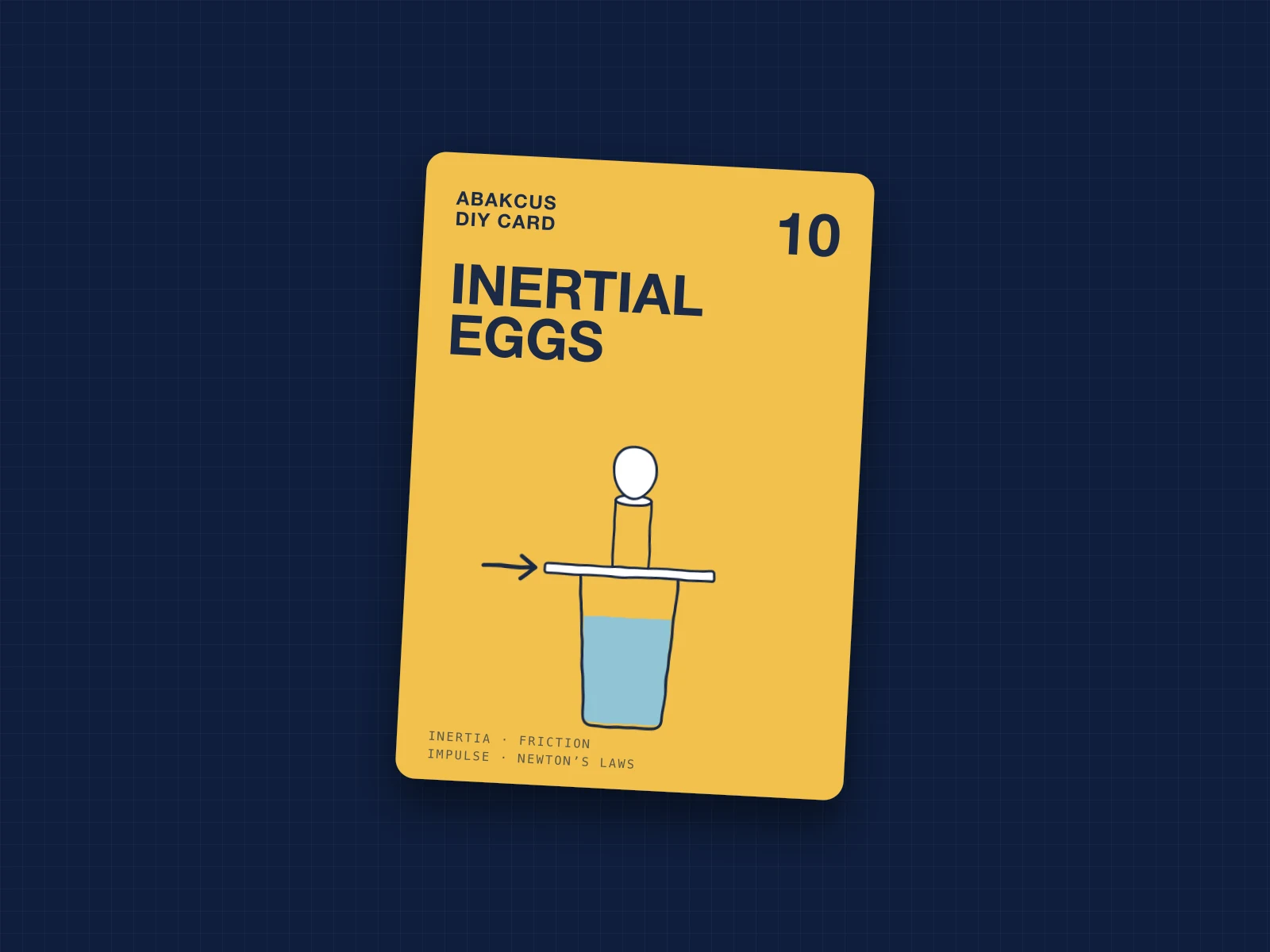
How to Do the Egg Drop Inertia Trick: Newton’s First Law
Knock a tray out from under an egg and the egg drops straight down into a glass of water. The trick is speed, not strength, and the egg’s weight turns out not to matter at all.
Open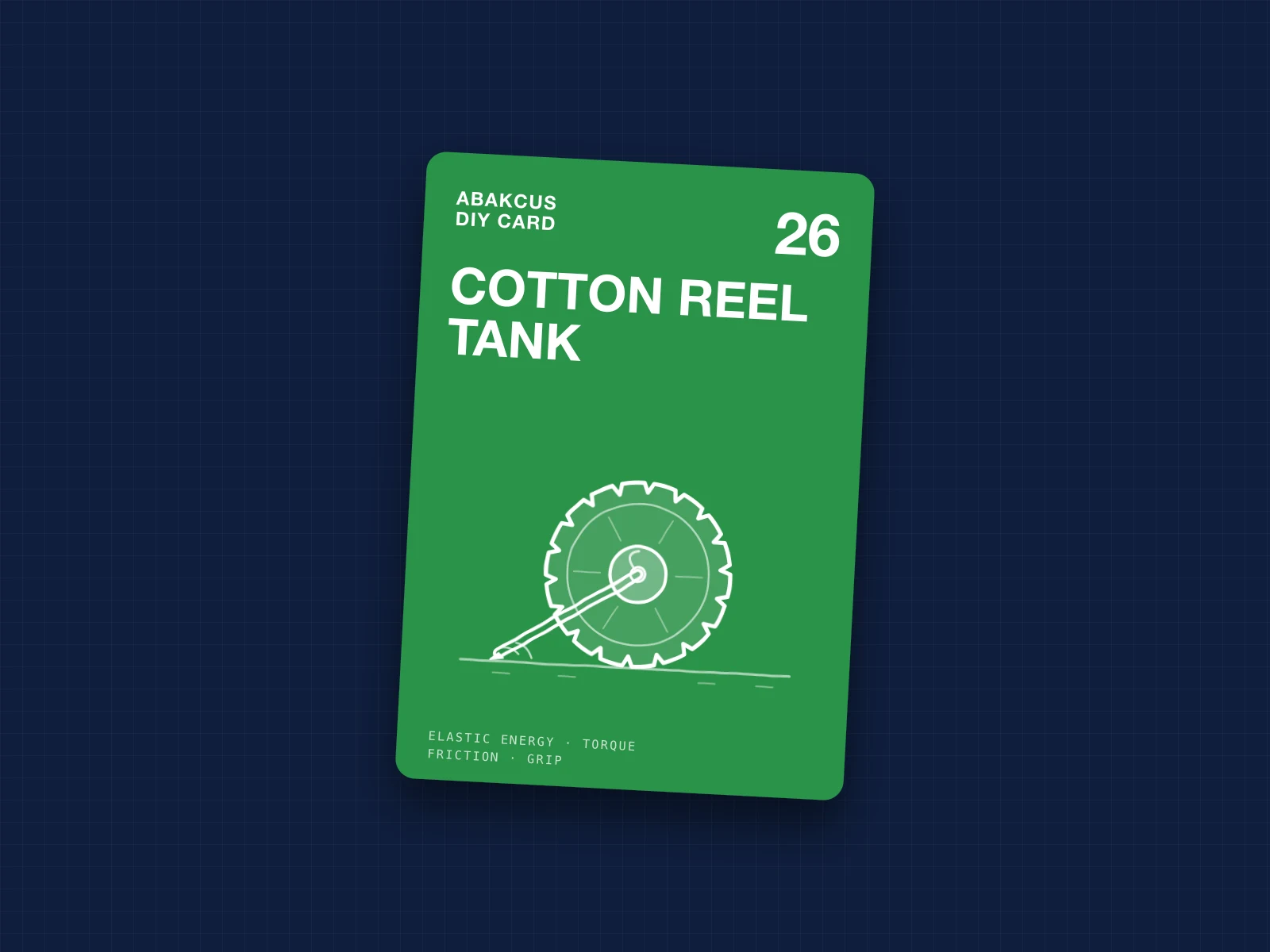
How to Build a Cotton Reel Tank (Thread Spool Tank)
An empty cotton reel, a rubber band, a pencil and a slice of candle. Wind it up and it crawls across the floor and over books, slowly giving back every turn you put in.
Open