
DIY · Card 15 · Physics
A steel paper clip, lowered gently onto a bowl of water, stays on top. It sits in a little dent in the surface, as if the water were a trampoline.
01The brief
Make a steel paper clip rest on top of water, then make it sink without touching it.
7.8×
how much denser steel is than water: the clip has no business floating
3×
how much more the surface can hold up than a paper clip weighs
2.7 mm
water’s capillary length: below this size, surface tension rules
Drop a paper clip into a bowl of water and it sinks, as you would expect from a piece of steel. But lower the same clip gently onto the surface, lying flat, and it stays there. Look from the side and you can see why: it is sitting in a shallow dent, as if the water had a skin and the clip were lying on it.
This is the second card in a row about that skin. The pepper experiment showed it pulling sideways; here it pulls up, strongly enough to hold a piece of metal eight times denser than water. And one drop of soap ends it.
02Kit
Everything here is on a desk or in a kitchen drawer. The thing that matters most is invisible: water with no trace of soap in it.
Tick off what you have
0 of 5 ready
03Method
The trick is getting the clip onto the surface without poking through it. A scrap of tissue does it for you.
Step 1 of 8 · Minute 0
Rinse a bowl thoroughly with hot water, no washing-up liquid, and fill it with fresh water. Let the surface go still.
The clip sinks with the tissue.
Why
The tissue was pushed down near the clip, or the clip got wet.
Fix
Push only the tissue’s far corners, slowly, and keep the clip dry until it’s on the water.
It sinks as soon as the tissue goes.
Why
The water or bowl has a trace of soap or grease, weakening the surface.
Fix
Rinse everything in hot water with no detergent and use fresh water. Try a smaller clip.
It floats, then sinks after a while.
Why
A wobble or a draught tipped one end through the surface.
Fix
Keep the bowl still and away from breezes. Once one end breaks through, the rest follows.
04Physics
Water’s surface behaves like a stretched sheet, always pulling to shrink itself. Lay a clip on it and the clip pushes the surface down into a dent. Now the surface around the clip is no longer flat: it slopes up and away on every side, and its pull, which always runs along the surface, has an upward part. All the way along the clip’s edges, the water is tugging it up.
A paper clip is mostly edge. Unbent, its wire is about 10 cm long, so the surface grips it along nearly 20 cm of contact line, both sides of the wire. That is a lot of edge for half a gram of steel, enough to hold it with plenty to spare.
Soap ends it in two ways at once. It weakens the surface’s pull, and it lets the water wet the metal, so the surface slides up the sides of the wire instead of holding it from underneath. Try different things on different liquids:
Put on the surface
Of
tension along the edge 14.4 mN · water pushed out of the dimple 3.8 mN
It floats, with 3.7× to spare
A rough model of the most a surface can manage. A clumsy drop, a sharp corner or a wet object can break through long before that.
05The big idea
Small things live
by other rules.
Make an object ten times bigger in every direction and its weight grows a thousand times, while the length of its edge grows only ten times. So the bigger something is, the less surface tension can do for it.
For us, surface tension is a curiosity. For a pond skater, a pollen grain or a paper clip, it is one of the strongest forces in the world, stronger than gravity. That is why insects can walk on water and elephants can’t, and why the world of the very small looks so strange to us.
06The math
1 · Pull along the edge
F = γ · 2L
The most surface tension γ can lift, pulling straight up along both sides of a wire of length L.
2 · Keller’s theorem
F = ρ g Vdisplaced
The total upward force on a floating object equals the weight of the water it displaces, dimple included.
3 · Capillary length
ℓ = √(γ / ρg)
The size at which surface tension and gravity are evenly matched. About 2.7 mm for water.
A paper clip of about 0.5 g weighs 0.5 × 10⁻³ × 9.8 ≈ 4.9 mN. Its wire, about 10 cm long, is gripped along both sides, so the most the surface can pull up is 0.072 × 0.2 ≈ 14 mN. That is nearly three times the clip’s weight, before counting the water pushed out of its dimple.
The third formula sets the scale of everything. With water’s surface tension and density, ℓ = √(0.072 / (1000 × 9.8)) ≈ 2.7 mm. The dent under the clip can be at most about √2 × 2.7 ≈ 3.8 mm deep before the surface lets go, and it flattens out again within a few capillary lengths, about a centimetre. Push the wire harder and watch the dent change shape:
The dimple is 1.7 mm deep
The surface leaves the wire tilted 37° from flat, pulling up with 60 % of its full strength. It flattens out again within about a centimetre: the dent is only a few capillary lengths wide.
The second formula is a lovely surprise. It says that surface tension isn’t a different kind of floating from the one that holds up a ship; it is the same Archimedes push, provided you count the water missing from the dimple. The heavier the clip, the deeper the dent, and the more water it pushes aside, until the dent can go no deeper. Density was the whole story in the density tower; here, a dent changes the sum.
07Real life
From navigation to fishing to rainwear, people and animals have long put the water’s skin to work.
The floating compass
Chinese navigators once found north with a magnetised needle floating in a bowl of water. Resting on the surface, the needle could turn with almost no friction, so even a weak magnetic pull swung it into line.
Pond skaters
A pond skater spreads its weight across long legs covered in waxy hairs. Each foot makes a dimple like the clip’s, and it can stand, run and jump without ever breaking through, the same surface that sent the pepper flying.
Mosquito larvae
Mosquito larvae hang upside down from the water surface by a tiny breathing tube with a water-repelling tip. A thin film of oil on the water, which lowers its surface tension, makes them lose their hold.
Dry-fly fishing
Anglers’ dry flies are made to sit on the surface like a landed insect. Stiff, splayed hackle fibres spread the hook’s weight over many points, and a water-repelling dressing keeps the surface from wetting them.
Lotus leaves
Water on a lotus leaf rolls into near-perfect balls and runs off, picking up dirt as it goes. The leaf is covered in microscopic waxy bumps that water can’t wet, so the drops sit on the tips, held round by surface tension.
Rain-shedding jackets
Outdoor jackets are coated with a water-repelling finish so rain beads up and rolls off instead of soaking in. Wash them with ordinary detergent and leave it in, and they start to wet out: the soap undoes the beading, just as it sank the clip.
1088
In his Dream Pool Essays of 1088, the Chinese scholar Shen Kuo described needles rubbed on a lodestone that pointed south, and noticed that they did not point exactly at true south, the earliest known account of magnetic declination. He suggested hanging the needle from a single silk thread to let it turn freely.
Later navigators used another way to let a needle turn without friction: they floated it on water in a bowl. It is this experiment, with a needle in place of a paper clip, and it helped ships find their way across open sea.
08Is and isn’t
The clip floats because it’s so light.
It is made of steel, nearly eight times as dense as water. Drop it in edge-first and it sinks at once. It floats only when laid flat, so the surface can hold it along its whole length.
Surface tension and buoyancy are two different explanations.
They describe the same push. In 1998 Joseph Keller showed that the total upward force on a floating object equals the weight of all the water pushed out of the way, including the water missing from its dimple.
Anything small enough will float.
It depends on how much edge an object has for its weight, and on whether the liquid wets it. A 1 yen coin floats; a 1 euro cent, about twice as heavy for its size, sinks.
Soap sinks the clip by breaking the water’s skin.
Soap does two things: it lowers the pull of the surface, and it lets water wet the metal so the surface slides up its sides. Either alone weakens the hold; together they sink it.
09Go further
A
How many clips?
Float one clip, then lay a second gently on the water beside it, and a third. How many can the surface hold before one breaks through?
B
Float with a fork
Skip the tissue: lay the clip on the prongs of a fork and lower it slowly into the water until the clip is left on the surface.
C
The 1 yen test
If you have a Japanese 1 yen coin, try to float it. It can be done, with clean water and a very gentle hand.
D
Salt and sugar
Float a clip on water, then stir salt into a second bowl and try again. Does it hold more clips, or fewer? Then try sugar.
E
The compass race
Float two magnetised needles at opposite ends of a bowl. Watch them swing to north, then drift together and click end to end.
10Questions
Lay a small piece of tissue on clean water, put a dry paper clip on top, then gently push the tissue’s corners down with a pencil until it sinks. The clip is left resting on the water’s surface, held up by surface tension.
It doesn’t float by buoyancy in the usual sense. The clip presses a shallow dent into the water’s surface, and the surface, which behaves like a stretched sheet, pulls up on it all along its edges. For a light, thin object that upward pull is several times its weight.
Soap lowers the water’s surface tension and also lets water wet the metal, so the surface slides up the clip’s sides instead of holding it from beneath. With much less upward pull, the clip falls through.
Most can’t: they are too heavy for the length of their edge. But the Japanese 1 yen coin, made of aluminium and weighing just one gram, will float on clean water if laid down very gently.
It is the distance over which surface tension beats gravity in shaping a liquid surface, about 2.7 mm for water. Dents, bumps and menisci on water are a few capillary lengths across, and objects much smaller than it are ruled by surface tension.
Safety · Needles and pins are sharp: handle them carefully and keep them, and the paper clips, away from small children. Pour the water away and dry everything afterwards.
All DIY cards →Keep wandering
A few more pieces in the same spirit — math, design, and slow attention.
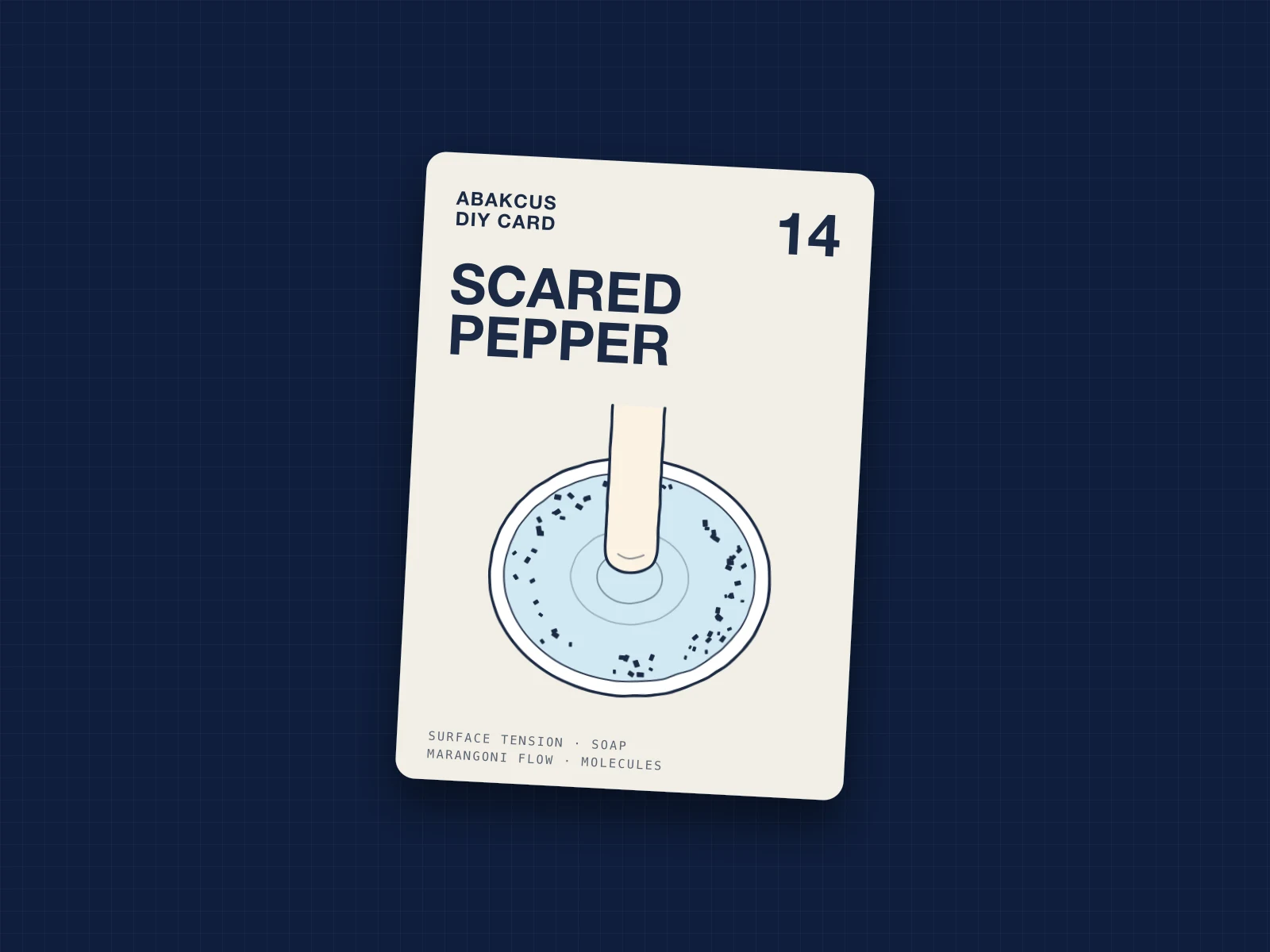
The Pepper and Soap Experiment: Surface Tension Explained
Sprinkle pepper on water, touch the middle with a soapy finger, and the pepper flees to the edge in a split second. It isn’t scared of the soap. The water’s skin is pulling it away.
Open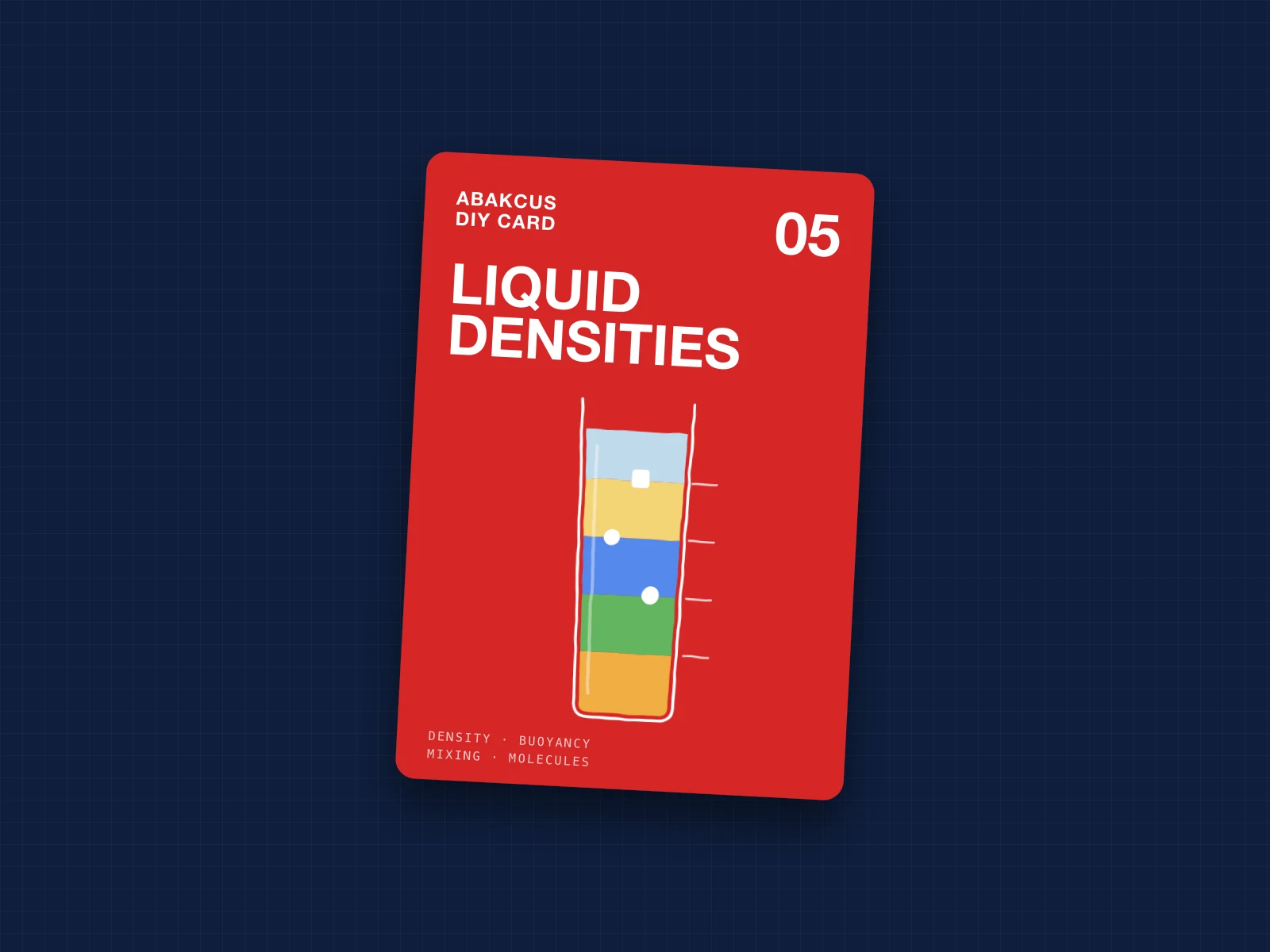
How to Make a Density Tower: Stacking Liquids in a Glass
Honey, washing-up liquid, water, oil and rubbing alcohol, poured one by one into a glass, settle into five sharp layers. Which goes where is decided by one number, and one of them only stays put thanks to the oil.
Open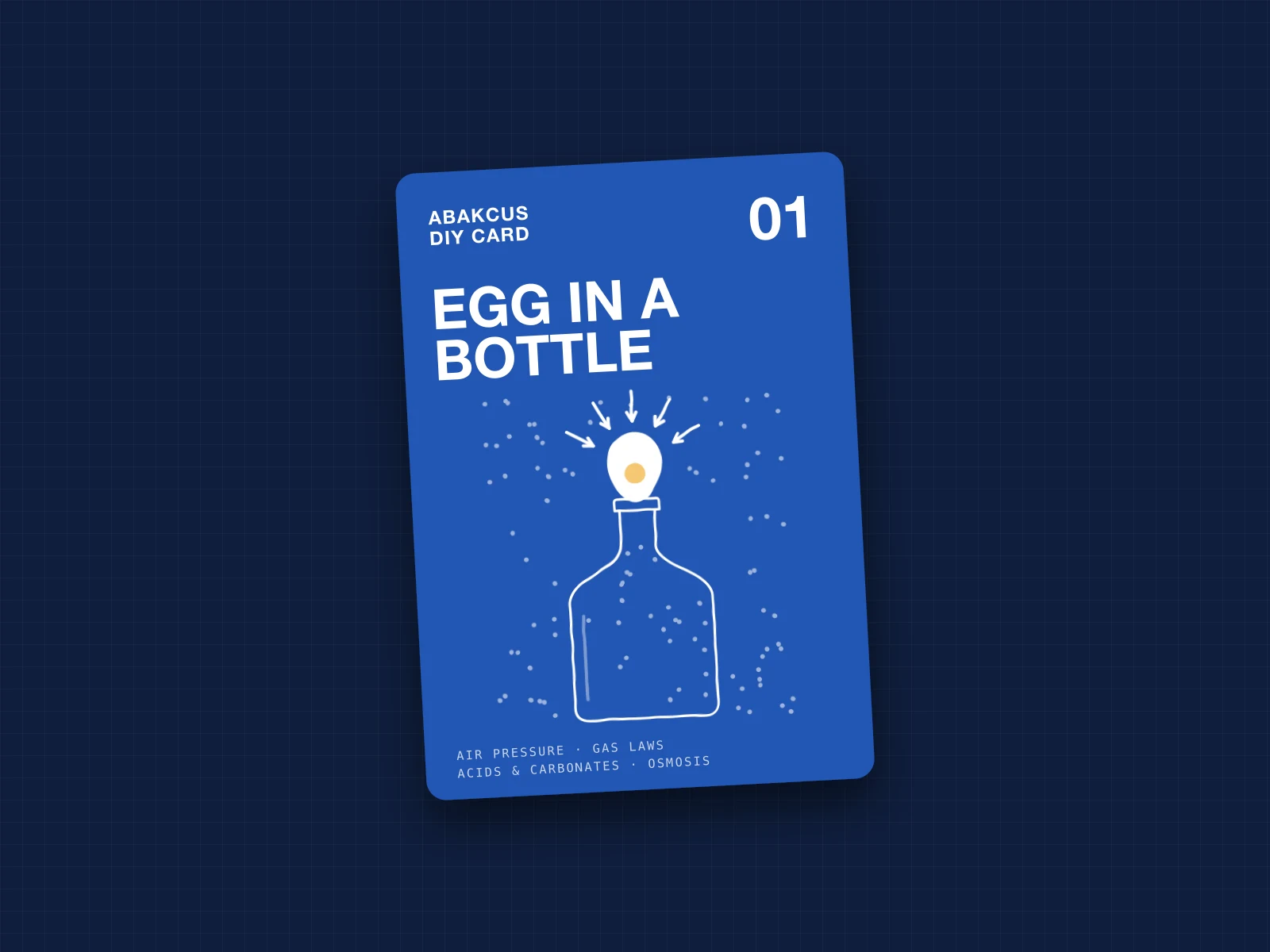
How to Get an Egg Into a Bottle Without Touching It
Two days in vinegar take the shell away, a warm bottle does the rest. The egg goes through a mouth narrower than itself, pushed by ten tonnes of air per square metre.
Open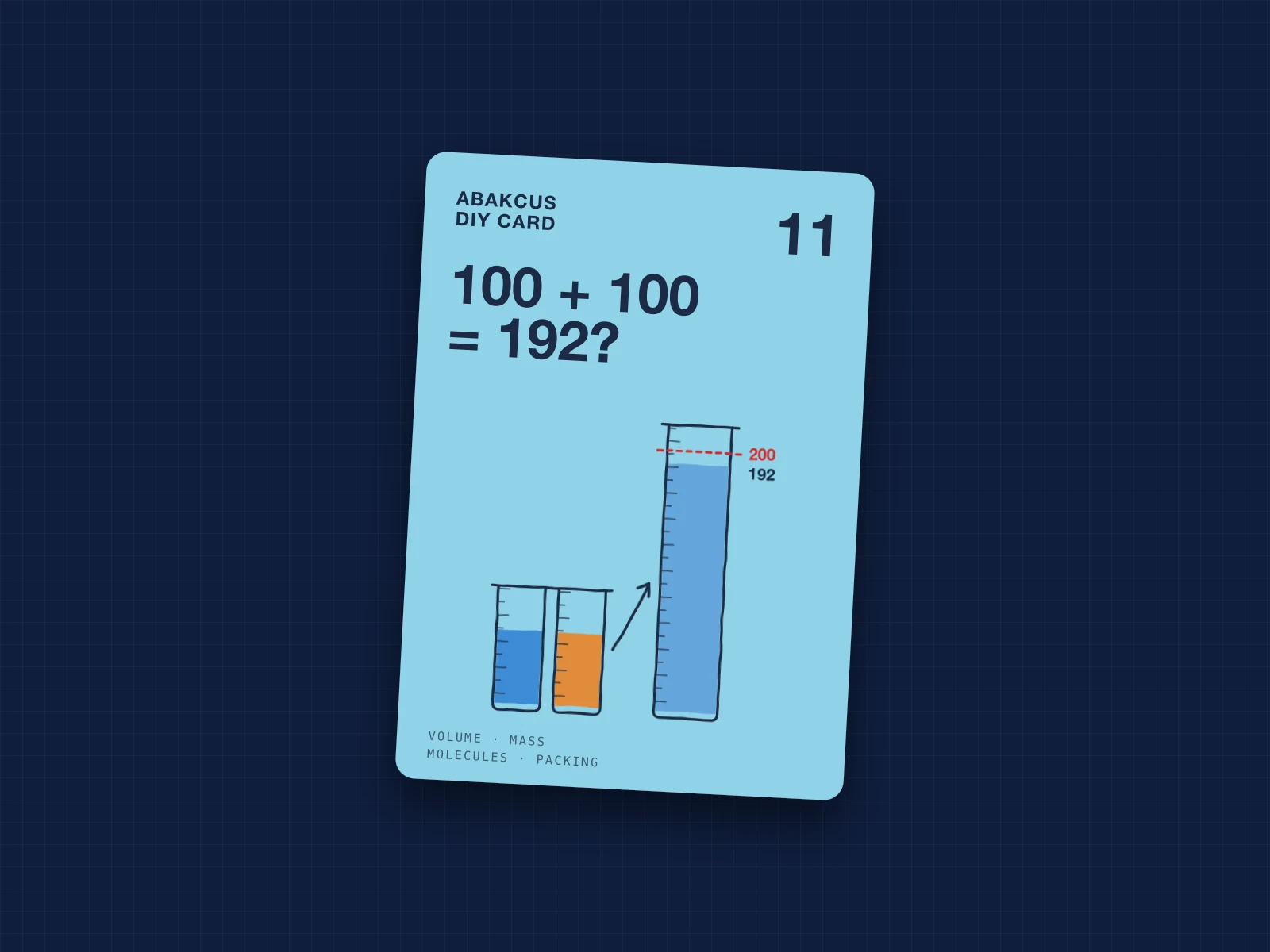
Why 100 ml + 100 ml Makes Less Than 200 ml
Pour 100 ml of alcohol into 100 ml of water and you get about 192 ml. Nothing leaks, nothing evaporates, and the scale says not a gram is missing. The molecules have simply moved in closer together.
Open
How to Make a Barometer With a Jar and a Balloon
Stretch a balloon over a jar, glue on a straw, and the straw tips up and down as the air presses harder or softer. It is a real barometer, with one catch every homemade one shares: it is also a surprisingly good thermometer.
Open
How to Make a Ping-Pong Ball Float With a Hair Dryer
Point a hair dryer at the ceiling and a ping-pong ball sits in mid-air, wobbling but never falling out. Most explanations of why are wrong, and the real one is better.
Open