
DIY · Card 19 · Biology · Physics
White flowers, coloured water, one night. By morning the petals have changed colour, and you can see the route the water took to get there.
01The brief
Change the colour of a white flower from the inside, and find out what is lifting the water.
~1 m
as high as capillary action alone can lift water in tubes as fine as a plant’s
10 m
the most any suction pump can lift water, pulling from the top
116 m
the height of the tallest known tree, which lifts water to its top every day
A cut flower in a vase isn’t just sitting there. It is drinking, steadily, all day and all night, and giving the water away into the air through its petals. Add colour to the water and you can watch the whole journey: up the stem, out along the veins, into the frilly edges of every petal.
The obvious answer is capillary action, the same pull at a surface that held up the floating paper clip. It helps. But do the numbers and it runs out of steam a long way below the top of a tree. The real engine is at the other end of the plant.
02Kit
White flowers, strong colour and patience. A magnifying glass for the last step.
Tick off what you have
0 of 5 ready
03Method
Five minutes to set up, a night to wait. Then split a stem for a two-colour flower, and race three flowers against each other.
Step 1 of 8 · Minute 0
Half-fill a few glasses with water and stir 20 to 30 drops of food colouring into each. Blue, yellow and green work best. Be generous: strong dye gives strong colour.
No colour after a day.
Why
The dye is too weak, or air got into the cut stem and blocked the tubes.
Fix
Use far more food colouring, and re-cut the stem under water before putting it back.
Only a faint tint.
Why
A cool, damp room means slow evaporation and slow drinking.
Fix
Move the glasses somewhere warm and bright, or let a fan blow gently on them.
The split stem only coloured one side.
Why
One half of the stem was damaged when it was split, or isn’t reaching into its glass.
Fix
Split carefully with a sharp knife, and make sure both halves sit well under the water.
04Physics
Running up the stem are bundles of fine tubes called xylem. In a living plant they carry water from the roots to every leaf; in a cut flower they start at the glass. The tubes are dead cells joined end to end, hollow pipes with nothing inside them but water.
The pull starts at the top. Water evaporates from the petals and leaves, and the water left at the surface of their wet cells gets tugged into the space it left. Water molecules cling to each other strongly, so that tug passes down from molecule to molecule, all the way down the tubes to the glass. The whole column is pulled up like a rope.
The dye is carried along for the ride. When the water reaches the petals and evaporates, the dye can’t evaporate with it and is left behind, building up where most water leaves: the thin, frilly edges. Speed up the evaporation and the flower drinks faster:
Time
0 h
Dye in stem
0 cm
Petal colour
0 %
Dye
Where it stands
One second here is about an hour. A toy model: real flowers vary a lot, but colour by the next morning is typical.
05The big idea
Plants don’t pump.
They pull.
There is no heart in a plant. The power comes from the sun warming the leaves, and from the dry air taking the water away. Every molecule that evaporates tugs on the one behind it, and that tug runs unbroken all the way to the roots.
It only works because water is sticky enough to be stretched without breaking. A column of water under tension, hanging from the leaves, is a strange idea, and when it was first proposed many scientists simply refused to believe it. Every tree on Earth depends on it.
06The math
1 · Jurin’s law
h = 2γ / ρ g r
How high water climbs in a clean, thin tube of radius r. γ is water’s surface tension, ρ its density, g gravity.
2 · Holding a column up
P = ρ g h
The pull needed just to hold a column of water h metres tall against gravity, before any friction.
3 · The suction limit
hmax = Patm / ρ g ≈ 10.3 m
Suction only lets air pressure push water up from below. One atmosphere, about 101 kPa, can hold up this much.
Water has a surface tension of 0.072 N/m. In a xylem tube of radius 20 µm, Jurin’s law gives 2 × 0.072 / (1000 × 9.81 × 0.00002) ≈ 0.73 m. That will do for a carnation. In a tube as fine as 5 µm it reaches about 3 m. Still nowhere near the top of an oak.
Suction is no better. However hard you pull at the top of a pipe, air pressure can only push the water up about 10.3 m. Above that, the water would simply boil away into a vacuum.
So how does a redwood 116 m tall do it? Holding up that much water takes 1000 × 9.81 × 116 ≈ 1.1 MPa, eleven atmospheres, before counting friction in the narrow tubes. The water in a tall tree is not pushed at all. It is under tension, pulled from above and held together by its own stickiness. Try the numbers for different plants:
Capillary action falls short by 29 m.
Just holding up 30 m of water takes a pull of 0.29 MPa, 3 times what any suction from the top could manage. The water column must be pulled while under tension, like a rope.
07Real life
From kitchen paper to the tallest trees on Earth, the same two forces lift water: capillary action for short distances, and the pull of evaporation for long ones.
The tallest trees
A coast redwood over 100 m tall lifts water from its roots to its top leaves with no pump at all. The leaves pull, and the water column in its xylem hangs from them under tension. Research on the tallest redwoods suggests that this pull, fighting gravity and friction, is what eventually limits how tall a tree can grow.
Paper towels and wicks
Dip the corner of a paper towel in water and it climbs a few centimetres up the fibres. That is capillary action on its own: real, quick, and limited, which is exactly why plants need something more to reach their tops.
Green carnations
Bright green carnations, sold in their thousands around St Patrick’s Day, are usually white ones that have drunk dyed water, exactly as in this experiment. Florists do the same with blue roses and rainbow chrysanthemums.
Reviving limp celery
Stand a floppy stick of celery in a glass of water overnight and it is crisp again by the morning. Its cells fill back up with water drawn up the same tubes; colour the water and you can see exactly which ones.
Trees that click in a drought
When the pull in the xylem gets too strong, the water column can snap and a bubble of air fills the tube. Sensitive microphones pick up these breaks as tiny clicks. Too many, and the tubes stop working and the plant wilts.
Watering plants
Water a pot plant on a hot, breezy day and it drinks far more than on a cool, still one, for the same reason the fanned flower coloured first. Gardeners water in the morning or evening so less is lost to evaporation from the soil.
1894
In 1727 the English clergyman Stephen Hales published Vegetable Staticks, in which he weighed plants and measured how much water they gave off through their leaves. He saw that leaves were doing the pulling, but nobody could explain how a pull could reach the top of a tall tree.
In 1894, two Irish scientists in Dublin, Henry Dixon and John Joly, proposed the answer: water in the xylem hangs together under tension and is drawn up by evaporation from the leaves. It was so strange that it was met with scorn. Francis Darwin, son of Charles, compared believing it to believing in “ropes of sand”. Today it is the accepted explanation, and the same tug works in reverse on the surface of water in the pepper experiment.
08Is and isn’t
Plants pump water up from their roots.
There is no pump. Roots can push a little, but the main force comes from the top: water evaporating from leaves and petals pulls the whole column up behind it.
Capillary action lifts water to the top of trees.
In tubes as thin as xylem, capillary action reaches a metre or so at best. That’s plenty for a carnation, but nowhere near the top of an oak, let alone a redwood.
Sucking from the top could lift water as high as you like.
Suction only works by letting the air push water up from below, and air pressure can only manage about 10 metres. Trees beat that limit because their water hangs together under tension, like a rope.
Shop-bought blue carnations are a special variety.
Most vividly blue or green carnations in shops are white ones that have been dyed this way. The dye fades from new growth, and their seeds would grow white flowers.
09Go further
A
Try celery
Put a celery stick with its leaves still on into dyed water. Next day, cut it across and count the coloured dots: each is a bundle of water tubes.
B
Mix two colours
What happens if the glass holds blue and yellow mixed together? Do the petals turn green, or do the two dyes travel separately?
C
Time the climb
Cut stems to different lengths, 10, 20 and 30 cm, and time how long each takes to show colour. Is it proportional to the length?
D
Leaves on, leaves off
Strip all the leaves off one flower and leave them on another. Which one colours faster, and what does that tell you about where the pull comes from?
E
Paper chromatography
Put a dot of green food colouring on a strip of kitchen paper and stand its end in water. As the water climbs, does the green split into other colours?
10Questions
A cut flower keeps drinking. Water evaporates from its petals, and that pulls more water up the stem through tiny tubes called xylem. The dye travels with the water, and when the water leaves the petals as vapour the dye is left behind, colouring them.
The first colour usually shows at the petal edges within a few hours, and the flower is clearly coloured by the next day. Warm, dry, airy rooms speed it up; cool, damp ones slow it down.
Partly, but capillary action alone can only lift water a short way, a metre or so in tubes as thin as xylem. The main force is the pull from evaporation at the top, passed down a continuous column of water held together by the attraction between water molecules.
White flowers show the colour best. Carnations, chrysanthemums, daisies and white roses all work; celery stalks with their leaves on work well too and show the coloured tubes clearly.
The edges are the thinnest part of the petal and lose water fastest, so more water, and more dye, flows to them. As the water evaporates there, the dye is left behind and builds up.
Safety · A grown-up should do the cutting and splitting. Food colouring stains hands, clothes and worktops, so cover the table and wear old clothes. Don’t eat dyed flowers or celery.
All DIY cards →Keep wandering
A few more pieces in the same spirit — math, design, and slow attention.
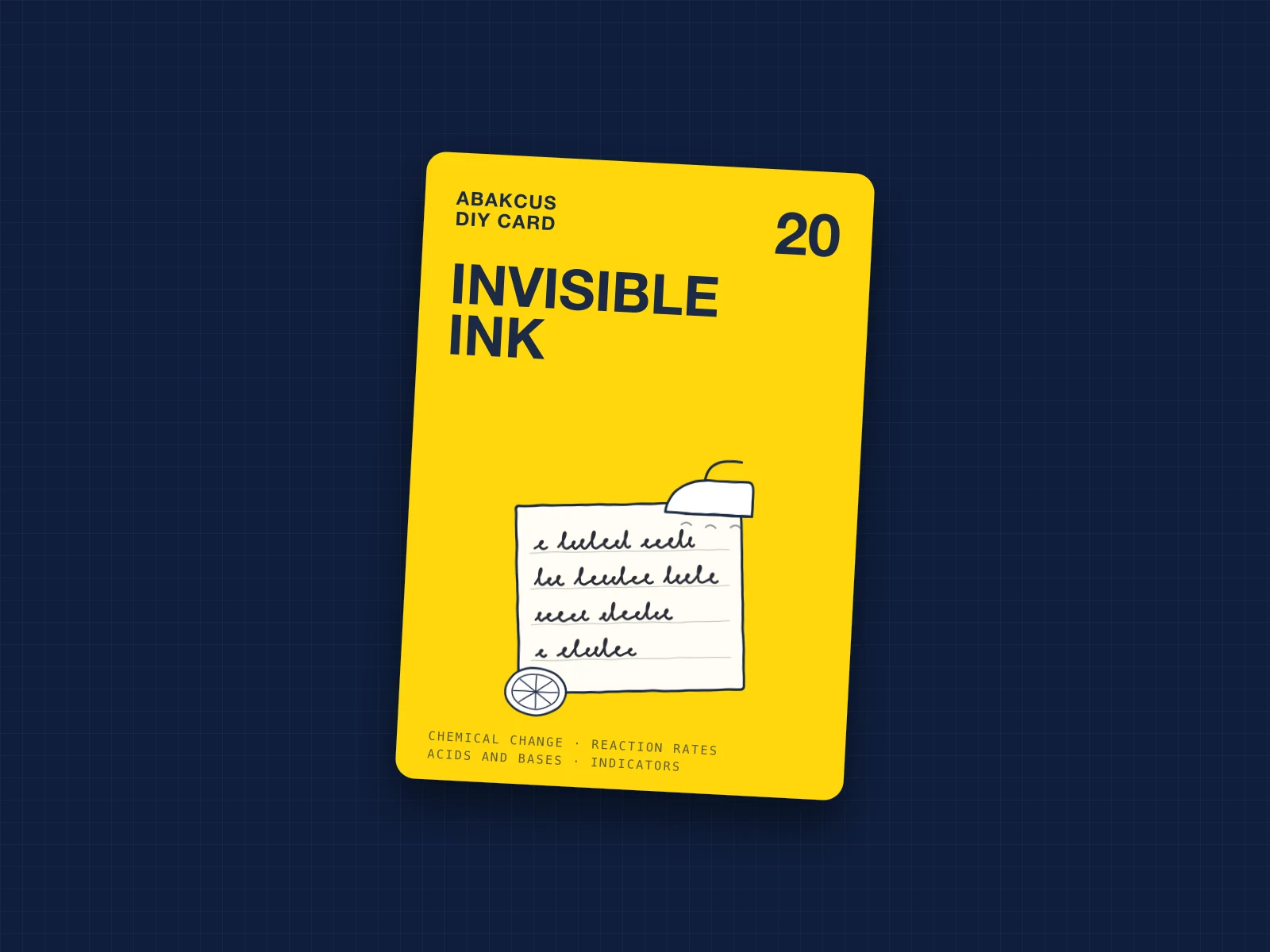
How to Make Invisible Ink With Lemon Juice, and Reveal It
Write with lemon juice, let it dry, and the page looks blank. Warm it and the message darkens into view, because the juice scorches long before the paper does. Spies used the same idea for centuries.
Open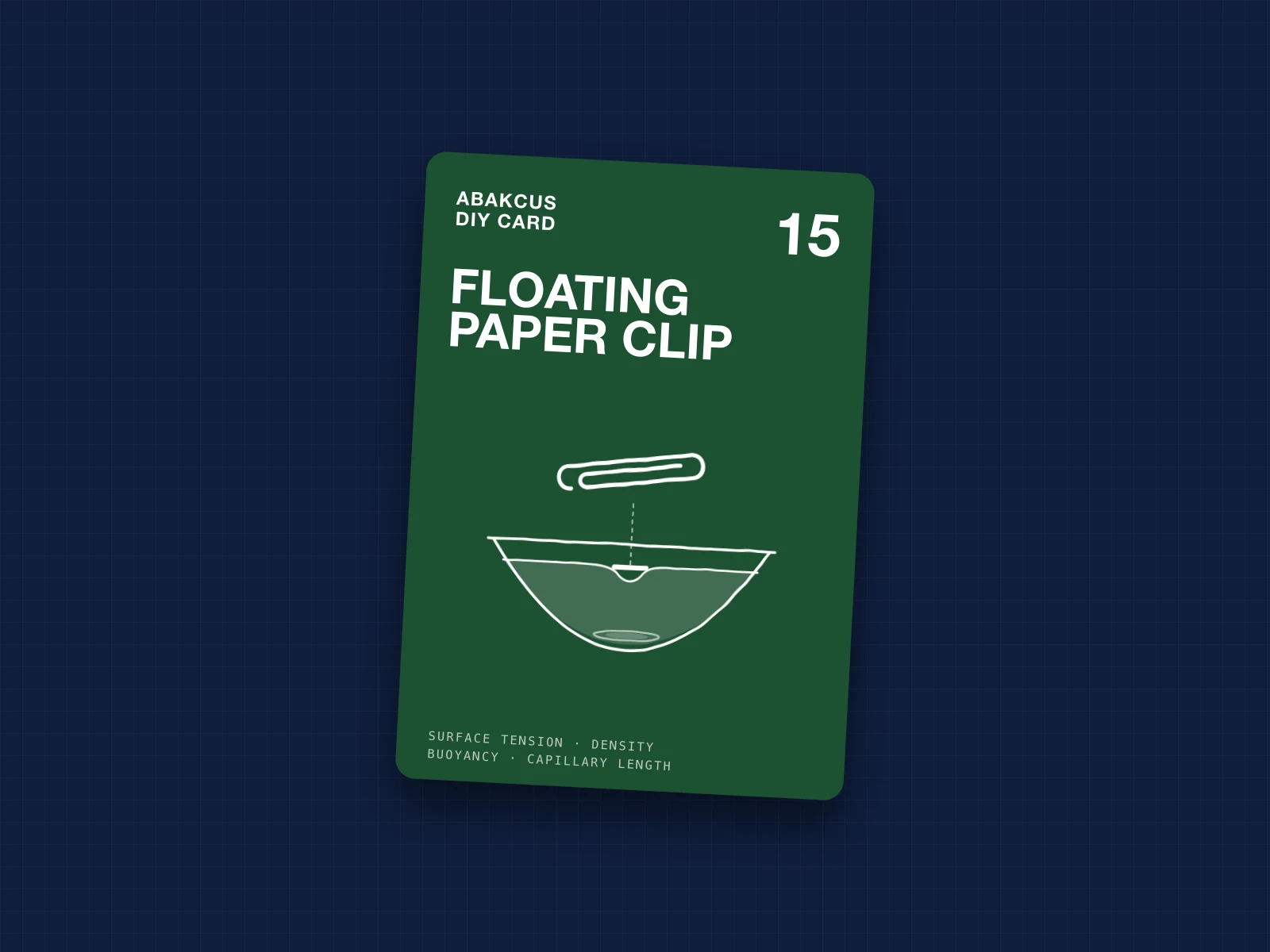
How to Float a Paper Clip on Water: Surface Tension
Steel is nearly eight times denser than water, and a paper clip still lies on top of it if you put it down gently. The surface bends into a dimple and holds it, like a trampoline, until a drop of soap breaks the spell.
Open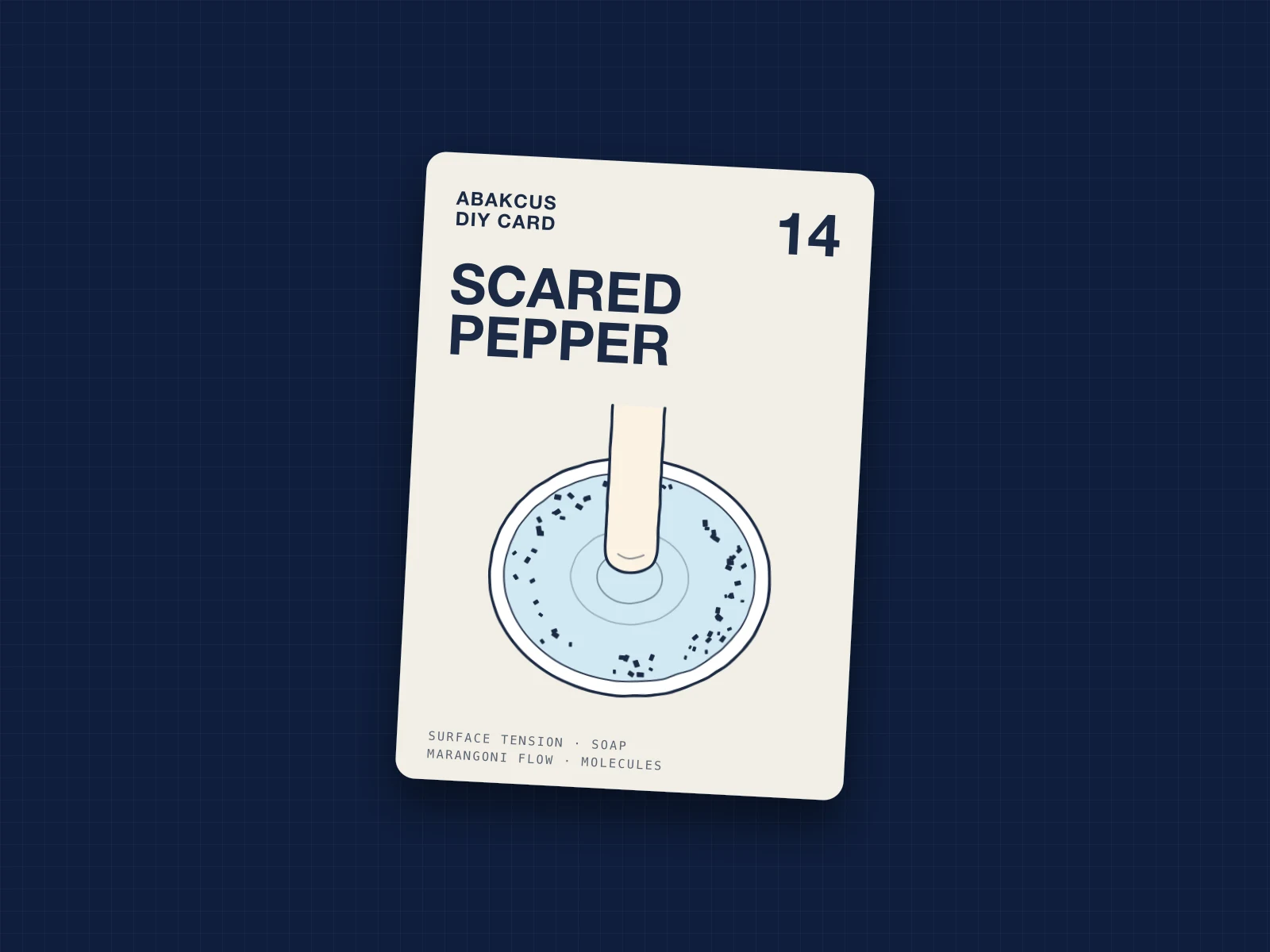
The Pepper and Soap Experiment: Surface Tension Explained
Sprinkle pepper on water, touch the middle with a soapy finger, and the pepper flees to the edge in a split second. It isn’t scared of the soap. The water’s skin is pulling it away.
Open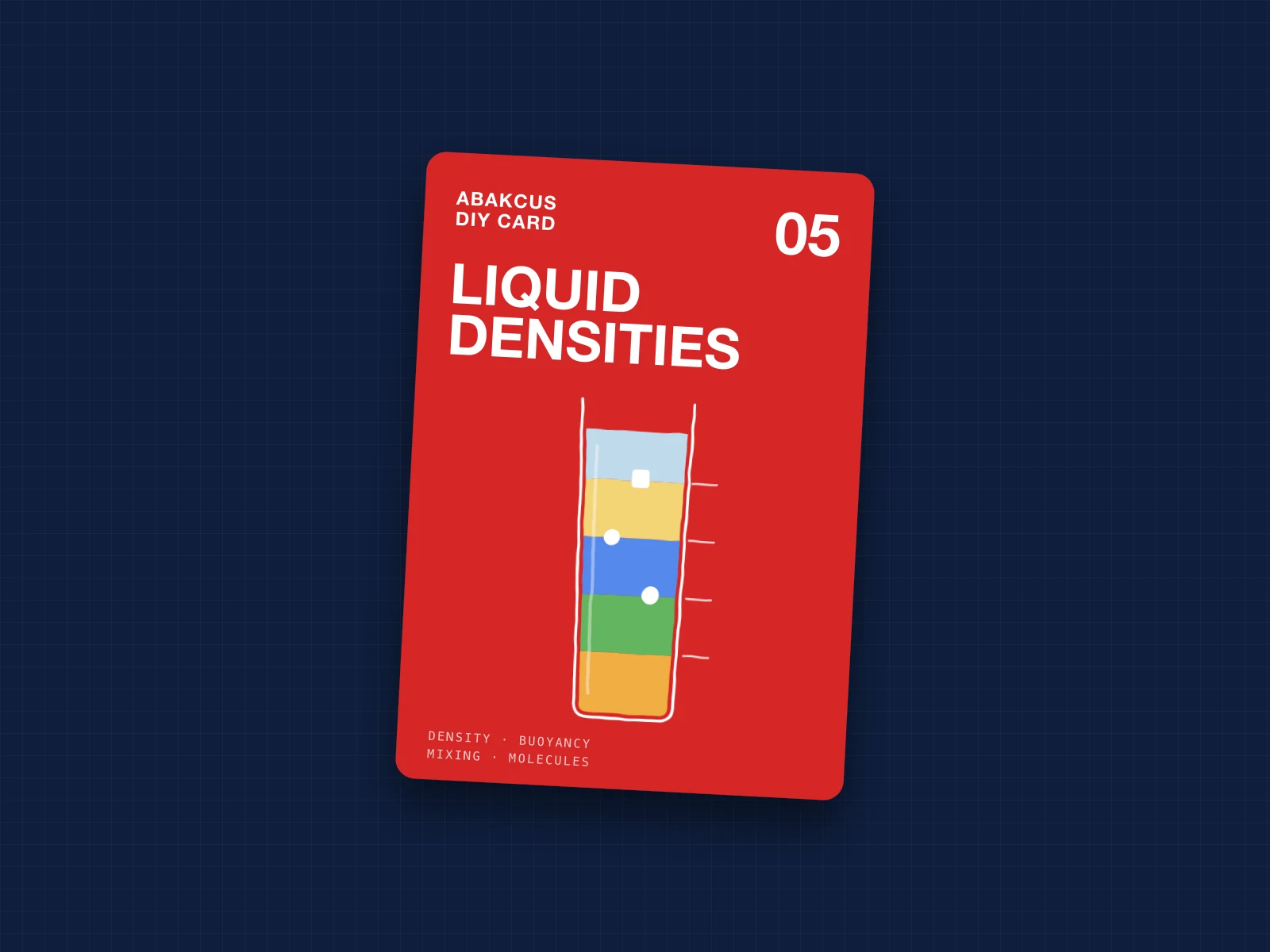
How to Make a Density Tower: Stacking Liquids in a Glass
Honey, washing-up liquid, water, oil and rubbing alcohol, poured one by one into a glass, settle into five sharp layers. Which goes where is decided by one number, and one of them only stays put thanks to the oil.
Open
How to Make a Barometer With a Jar and a Balloon
Stretch a balloon over a jar, glue on a straw, and the straw tips up and down as the air presses harder or softer. It is a real barometer, with one catch every homemade one shares: it is also a surprisingly good thermometer.
Open
The Ivory Soap Microwave Experiment: Why the Bar Puffs Up
Put a bar of Ivory soap in the microwave and it swells into a cloud several times its size. Hot air alone can’t do that. The water hidden in the soap, turning to steam, can.
Open