
Chemistry · Biology · Autumn
Every green leaf is hiding gold all summer. Here is the molecular story of how chlorophyll breaks down, carotenoids surface and anthocyanins are made from scratch.
By Ali Kaya
Pick a maple leaf in the first week of August and it is green, flat green, the green of every other leaf on the street. Pick one from the same branch ten weeks later and it might be gold, or tangerine, or the red of a stop sign. Nothing was painted on. No new tree grew. The leaf you are holding in October is the same leaf, made of the same cells, and most of the colour in it was already there in August, hidden.
Autumn colour is chemistry with a deadline. A deciduous tree cannot keep its leaves through a freezing winter, so every year it stops making the molecule that colours them green, strips the leaf of everything worth saving, and lets it go. What we call fall foliage is the view through the gaps while that happens: four families of molecules, appearing and disappearing on different schedules.
This piece walks through all four, from the physics of why a molecule has a colour at all to the moment the leaf lets go of the twig. Along the way there are six things to play with, including a leaf whose colour is computed from the light its pigments let through, and a season you can scrub through day by day.
4
families of pigment behind every autumn leaf: chlorophylls, carotenoids, anthocyanins, tannins
11
alternating double bonds in β-carotene, the chain that turns blue light into orange
½
roughly the share of a leaf’s nitrogen a tree pulls back before the leaf falls
Chapter 0
Before any leaf, a question: why should a molecule have a colour in the first place?
β-carotene · conjugated double bonds in orange
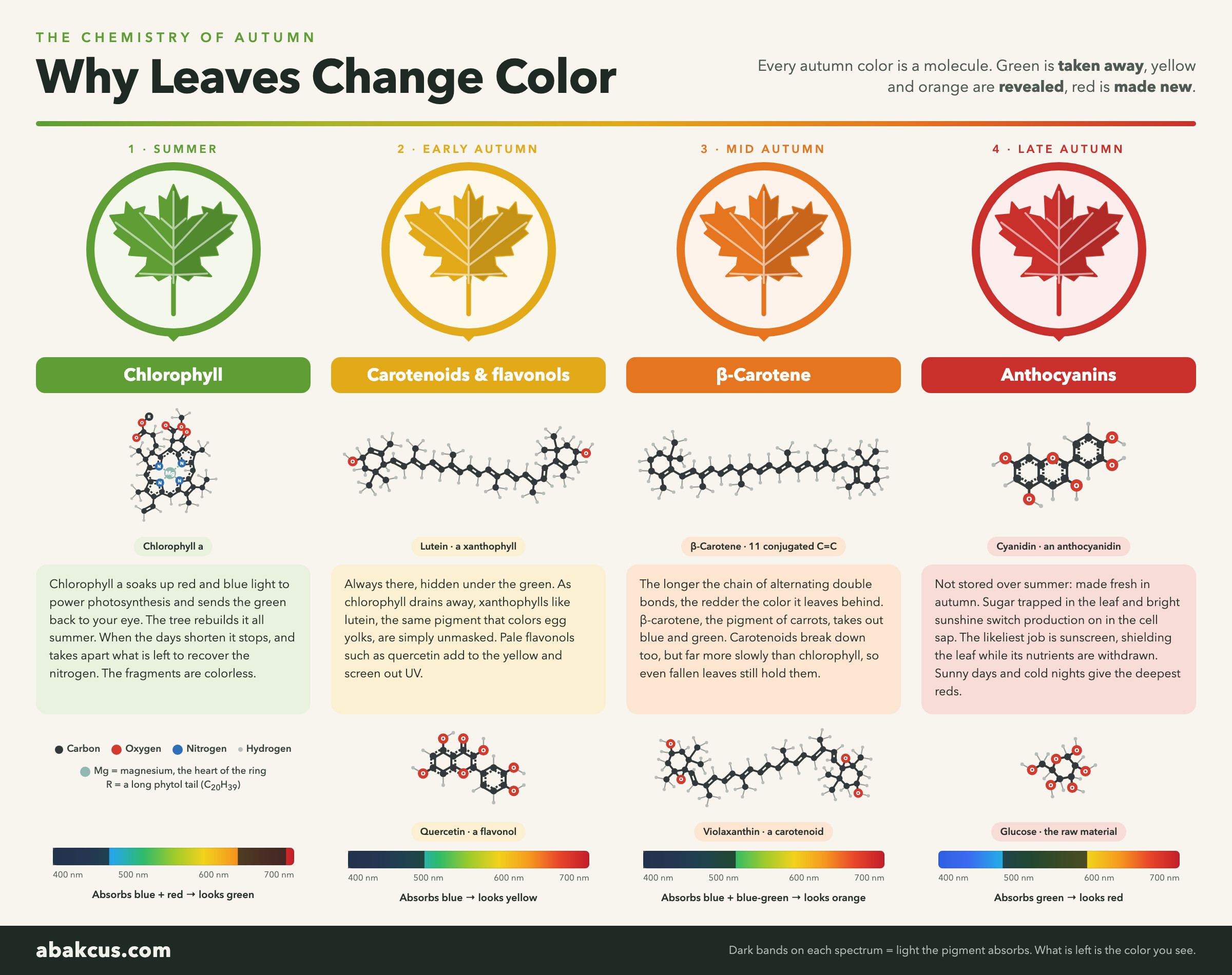
Sunlight is a mixture of every colour, from violet at around 400 nanometres to deep red near 700. When it lands on a leaf, some wavelengths are absorbed and the rest bounce back to your eye. The colour you see is whatever the molecules in the leaf did not want. A leaf looks green because its main pigment swallows blue and red and has little use for the green in between.
Whether a molecule can absorb visible light at all comes down to its electrons. In most organic molecules the electrons sit in single bonds, held tightly between two atoms, and it takes a hard ultraviolet kick to move them. But when a carbon chain alternates single and double bonds (single, double, single, double), the extra electrons in the double bonds stop belonging to any one pair of atoms. They spread out along the whole run. Chemists call this conjugation.
A longer conjugated run gives those electrons a longer box to move in, and the longer the box, the less energy it takes to lift them to the next level. Less energy means a longer wavelength. Add enough double bonds and the absorption slides out of the ultraviolet, into violet, then into blue, and the molecule starts to look yellow, then orange. Try it:
Widget · Add double bonds, watch the colour appear
11
alternating C=C
Absorbs most strongly near 452 nm. You see: Orange · β-carotene’s chain
Every coloured molecule in an autumn leaf works this way: chlorophyll’s ring, the carotenoids’ long chains, and the linked rings of the anthocyanins are all built around large conjugated systems. The colour of a leaf on any given day is simply the sum of what its pigments absorb, subtracted from white light. Which means you can build one from the spectra:
Widget · Shine white light through a leaf
What bounces back
Switch off both chlorophylls and the leaf turns gold: the carotenoids were there all along. Spectra are simplified to a few bell curves per pigment, and the leaf colour is computed from the light each one lets through.
Chapter I
Chlorophyll: the pigment that runs the planet, and that the tree is the first to take apart.
Chlorophyll is the molecule that does photosynthesis’ first job: catching light. Inside every chloroplast, packed into membranes, millions of chlorophyll molecules sit in antenna-like arrays, each a flat ring of four smaller rings with a single magnesium atom locked in the middle and a long oily tail that anchors it in place. The ring is the same basic design as the heme in your blood, which holds iron where chlorophyll holds magnesium. Leaves use two versions, chlorophyll a and b, in a ratio of roughly three to one. Between them they absorb strongly at the blue and red ends of the spectrum, which is why so much green is left over.
In summer there is so much chlorophyll that it drowns out everything else. And it is not a fixed stock: the molecule is damaged by the very light it catches and is constantly being torn down and rebuilt. That rebuilding needs warmth, long days and plenty of light. As autumn arrives, the days shorten, the nights cool, and the tree stops replacing it.
Autumn does not paint the leaves yellow. It takes the green away, and the yellow was there all along.
Then the tree goes further and starts dismantling the chlorophyll on purpose. The reason is nitrogen. The chlorophyll itself holds only a little of it, but the proteins that cradle it in the chloroplast hold a great deal, and nitrogen is one of the hardest things for a tree to get from the soil. Before the leaf is thrown away, the tree wants it back, and it cannot salvage those proteins while chlorophyll is still bound to them and still absorbing light.
Where the green goes was a puzzle for a surprisingly long time. Plant scientists could watch it vanish but could not find what it turned into. The answer, worked out from the early 1990s by the chemist Bernhard Kräutler and the plant physiologist Philippe Matile, is that enzymes snip the magnesium out, cut the big ring open, and turn it into small, colourless fragments that are parked in the cell’s vacuole. The green is not converted into some other colour. It is converted into nothing you can see. (A strange footnote from the same line of work: in ripening bananas, some of these breakdown products glow blue under ultraviolet light.)
Chapter II
Carotenoids: in the leaf since spring, outnumbered all summer, finally on show.
β-carotene · C₄₀H₅₆
Carotenoids are a huge family: hundreds have been described, and every green leaf contains a handful of them, sitting in the same chloroplast membranes as chlorophyll. They are long molecules, built on a chain of forty carbon atoms, and the middle of that chain is one long conjugated run. In β-carotene there are eleven double bonds in a row, just enough to pull the absorption into the blue and leave the leaf looking orange. Its oxygen-carrying cousins, the xanthophylls such as lutein, look more yellow.
They are not there for decoration. In summer, carotenoids catch some of the blue and green light that chlorophyll misses and pass the energy along. More importantly, they act as a safety valve: on a bright day a leaf catches more light than it can use, and the surplus energy can create reactive oxygen that tears cells apart. Carotenoids soak that excess up and shed it harmlessly as heat. They are, in a real sense, the leaf’s sunscreen.
In autumn the tree breaks carotenoids down too, but much more slowly than chlorophyll. So for a few weeks the balance flips. Chlorophyll falls away; the carotenoids are still mostly there. A birch, an aspen, a hickory or a ginkgo needs to do nothing new to turn gold: it only has to stop being green. The same molecules make carrots orange (β-carotene took its name from the carrot), give egg yolks their yellow (lutein, which hens get from their feed) and help colour tomatoes (lycopene, a close relative with a still longer conjugated chain).
Every year the colour arrives in a different place at a different time, which is why it can be forecast, county by county; the fall foliage prediction map does exactly that, from temperature and rainfall data. What it is really predicting is the date when the green mask slips.
Chapter III
Anthocyanins: the only autumn colour the tree builds from scratch, at the very moment it is shutting down.
Cyanidin · the commonest anthocyanin core
Here the story turns strange. Yellow is revealed; red is manufactured. Anthocyanins are not in the summer leaf at all, or only in traces. A maple starts making them in late summer and early autumn, at the same time as it is dismantling its chlorophyll and getting ready to drop the leaf. It is spending energy on a leaf it is about to throw away.
Anthocyanins belong to the flavonoids, a large family of plant compounds built on three linked rings. Unlike chlorophyll and carotenoids, which live in membranes, they dissolve in the watery sap that fills each cell’s central vacuole. They are made from sugar, and the trigger is a combination of sugar piling up in the leaf and bright light falling on it. That is why the red on a tree is often strongest on its sunny side, and why a leaf that was half-covered by another one can turn red everywhere except where the shadow lay.
They are also natural pH indicators: the same molecule shifts colour with the acidity around it. In the acidic sap of a leaf they are red. It is the same trick that turns red cabbage juice into a rainbow of test tubes in a school lab, and the same family of molecules that colours the skins of apples and cherries, which is why the painted fruit of the USDA pomological watercolours are, in a sense, an archive of anthocyanin.
Widget · The same molecule, a different sap
Anthocyanins are pH indicators. In the acidic sap of a leaf they sit in their bright red form; the less acidic the sap, the darker and cooler the red. Push them further toward neutral — in a jar of red cabbage water, say — and they swing all the way to blue.
So why bother? Nobody is completely sure, and that is the best part of the story. The leading idea is protection. While the tree is dismantling chlorophyll to recover its nitrogen, the leaf’s light-harvesting machinery is half-taken apart and vulnerable: sunlight that would once have been put to work now does damage. A layer of red pigment in the upper cells acts like a filter, absorbing some of the light before it reaches the chloroplasts beneath. In a 2001 study of red-osier dogwood, Taylor Feild, David Lee and Michele Holbrook found that red autumn leaves suffered less light damage, and recovered faster, than yellow ones. On this view, the red buys the tree a few extra days to finish salvaging the leaf.
There are rivals. The evolutionary biologist W. D. Hamilton suggested, in one of his last papers, that bright autumn colours are a signal aimed at aphids, which migrate to trees in autumn to lay their eggs: a tree that can afford a vivid display is advertising that it is healthy and well defended, and not worth attacking. Others have proposed that anthocyanins help leaves cope with cold, or that leaves falling with them leach compounds into the soil that discourage competitors. The ideas are not mutually exclusive, and the debate is still open.
A tree about to throw a leaf away spends sugar to make it red. Biologists are still arguing about why.
What everyone agrees on is the recipe. Anthocyanin needs sugar and it needs light, so the best red years come from a run of bright, sunny autumn days, when the leaf is still making sugar, followed by cool nights that slow the flow of that sugar out of the leaf. Cool, but not freezing: a hard frost kills the cells before they can finish. Drought, cloudy weeks or warm nights all give a duller year.
Widget · Forecast the reds
Spectacular reds
Bright days make sugar, cool nights trap it in the leaf: the recipe for red.
Anthocyanin index
There is also geography. The famous reds of New England and East Asia are much rarer in northern Europe, where autumn is mostly yellow. One hypothesis, put forward by Simcha Lev-Yadun and Jarmo Holopainen in 2009, reaches back millions of years: as ice ages came and went, North American and East Asian trees could retreat south and come back again, while in Europe the Alps and the Mediterranean, running east to west, blocked the way, and many species were lost. Among them may have been a large share of the trees that, along with their insect pests, had evolved the habit of turning red.
All together
Put the three stories on one timeline and every autumn tree becomes a mix of the same ingredients in different amounts. Chlorophyll falls first and fastest. Carotenoids fade slowly behind it. Anthocyanins rise from nothing, peak, and fade. Tannins wait at the end. Choose a tree and drag through the season:
Widget · The season machine
31 August
Sugar maple · Acer saccharum
Carotenoids and a moderate dose of anthocyanin together: the famous blazing orange of a New England hillside.
A cartoon of the chemistry, not a forecast: the curves are shaped after typical pigment measurements in senescing leaves, and real timing shifts with latitude, weather and the individual tree.
Chapter IV
Tannins, the abscission zone, and why the falling is as carefully planned as the colour.
A leaf does not fall because it dies and drops off. It is cut loose. Months earlier, at the base of each leaf stalk, the tree laid down a thin band of small, tightly packed cells: the abscission zone. As days shorten, the hormone balance in the leaf shifts (less auxin flowing from the blade, more ethylene), and enzymes start dissolving the glue that holds the walls of those cells together. Meanwhile the tree pulls back what it can. Studies across many species put the average recovery at around half of the leaf’s nitrogen and half of its phosphorus, drawn back into the twig through the same plumbing that once carried water and sugar.
On the twig side of the break, a layer of corky cells forms a seal, so the scar is closed before it ever opens. Eventually the leaf is held on by little more than its veins, and a gust of wind or the weight of rain does the rest. The ginkgo is the extreme case: it is famous for dropping nearly all its leaves within a day or two, carpeting the ground in gold at once.
Some trees never quite finish the job. Many oaks, and young beeches, keep their dead leaves through the winter and shed them only when the new buds push in spring, a habit botanists call marcescence. And when the bright pigments are gone, what is left in an oak leaf is mostly tannin: bitter polyphenols that deter insects and grazers, and that give late autumn its dull, papery tones. They are the last colour of the year, and the colour of the leaf litter itself.
Evergreens play a different game. Pines and spruces keep needles that are thick, waxy and narrow enough to survive freezing, and replace them a few at a time over several years, so they never need a season of letting go. The deciduous tree’s gamble is the opposite: build cheap, thin, efficient leaves every spring, use them hard all summer, and in autumn take back what is worth keeping and drop the rest. The colours are a by-product of that bookkeeping, and possibly, in the case of the reds, a deliberate investment in finishing it.
Water carries all of this in and out of a leaf through tubes thinner than a hair, the same capillary plumbing you can watch at work if you stand white carnations in coloured water overnight.
Field guide
Chlorophyll
Porphyrins
Spring to late summer
Absorbs blue and red, reflects green. A magnesium atom sits at its centre. Dismantled first in autumn so the tree can recover its nitrogen.
Carotenoids
Terpenoids · β-carotene, lutein
All year, unmasked in autumn
Long chains of alternating single and double bonds that absorb blue light, so they look yellow and orange. The same family colours carrots and egg yolks.
Anthocyanins
Flavonoids · cyanidin
Made new in autumn
Built from sugar in sunlight and dissolved in the cell sap. Their red shifts with the sap’s acidity. The same molecules redden apples and cherries.
Tannins
Polyphenols
What remains at the end
Bitter defensive compounds that show through once everything brighter is gone, giving oaks and beeches their late, dull tones.
Long before anyone could photograph a colour, naturalists tried to pin them down in words and paint. The colour charts in Werner’s Nomenclature of Colours tied each tone to a mineral, a bird and a plant, and the Mushroom Color Atlas does something similar today for the dyes hiding in fungi. An autumn leaf would have given those cataloguers trouble: it is not one colour but a slow chemical process, a few weeks long, that runs from green through gold to red and ends in tannin.
Next time you pick one up, you are holding a snapshot of that process. The yellow is what was always there. The red is what the tree made at the last minute, for reasons still being argued over. And the green that is missing has already been taken apart and carried back into the branch, to be spent again in spring. For more of the order hiding in plants, from leaf spirals to the arms of a snowflake, The Beauty of Numbers in Nature is a good place to keep going.
As days shorten and nights cool, a tree stops making chlorophyll and starts taking apart what it has. Without the green, the yellow and orange carotenoids that were in the leaf all summer become visible. Some trees also make new red anthocyanins from leftover sugar in the leaf.
Anthocyanins. Unlike the yellow carotenoids, they are not present in the summer leaf: the tree builds them in autumn, in the cell sap, from sugars and with the help of sunlight. Their exact shade depends on the acidity of that sap.
Red needs sugar and light. A run of bright, sunny days followed by cool nights that stay above freezing traps sugar in the leaves and pushes anthocyanin production up. Cloudy weather, warm nights, drought or an early hard frost all mute the colors.
Once chlorophyll and the brighter pigments fade, oak leaves are left with tannins, bitter compounds that look dull and brown. Many oaks also hold on to their dead leaves through the winter, a habit called marcescence.
The tree dismantles chlorophyll to recover the nitrogen in the proteins around it. The ring of the molecule is cut open and turned into colorless breakdown products that are stored in the leaf cells, so the green does not turn into another color; it simply disappears.
Sources
Keep wandering
A few more pieces in the same spirit — math, design, and slow attention.
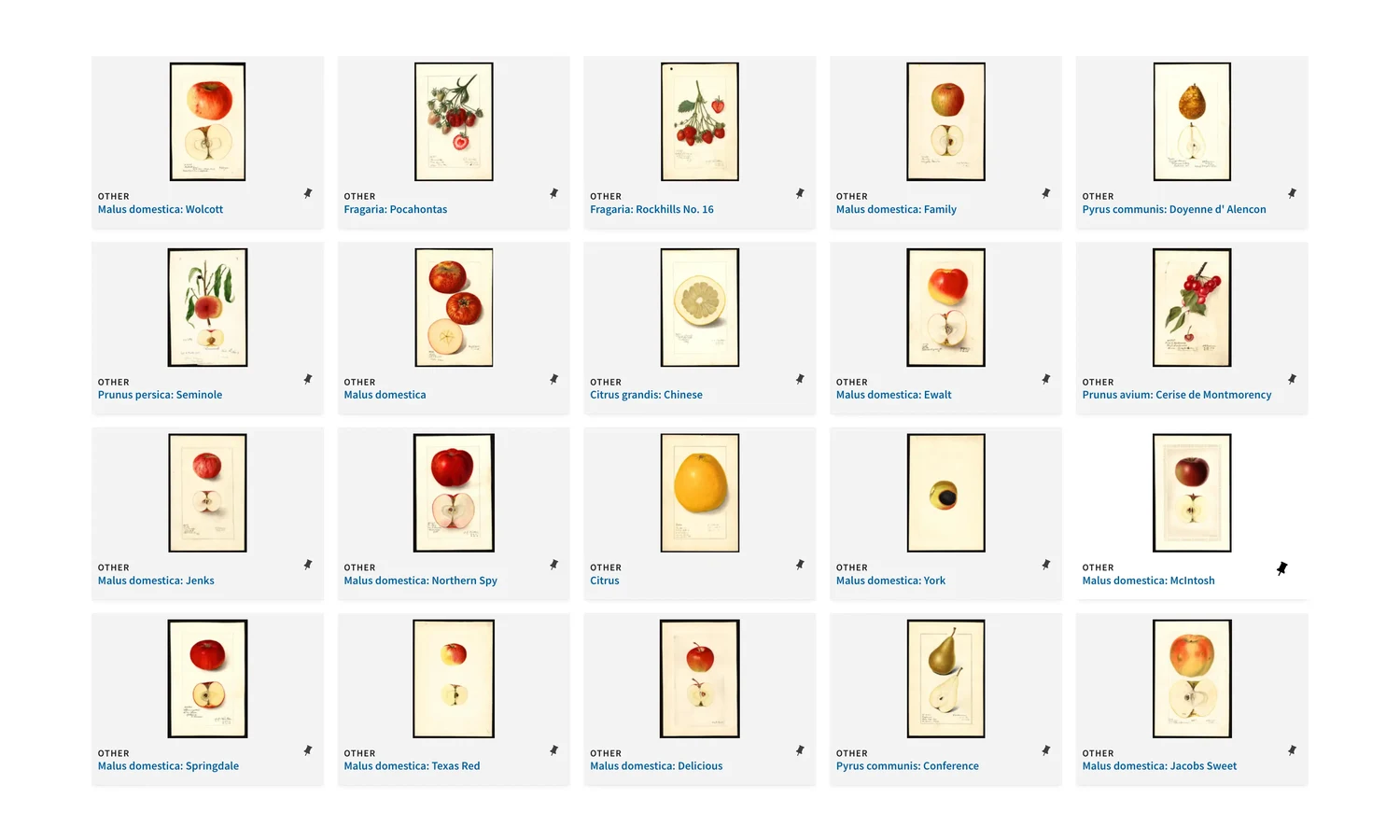
The USDA Pomological Watercolor Collection
In the years when photography could not hold a colour, the US Department of Agriculture hired painters to record the country's fruit, and fifty-six years later it was left with an archive of 7,497 pages.
Open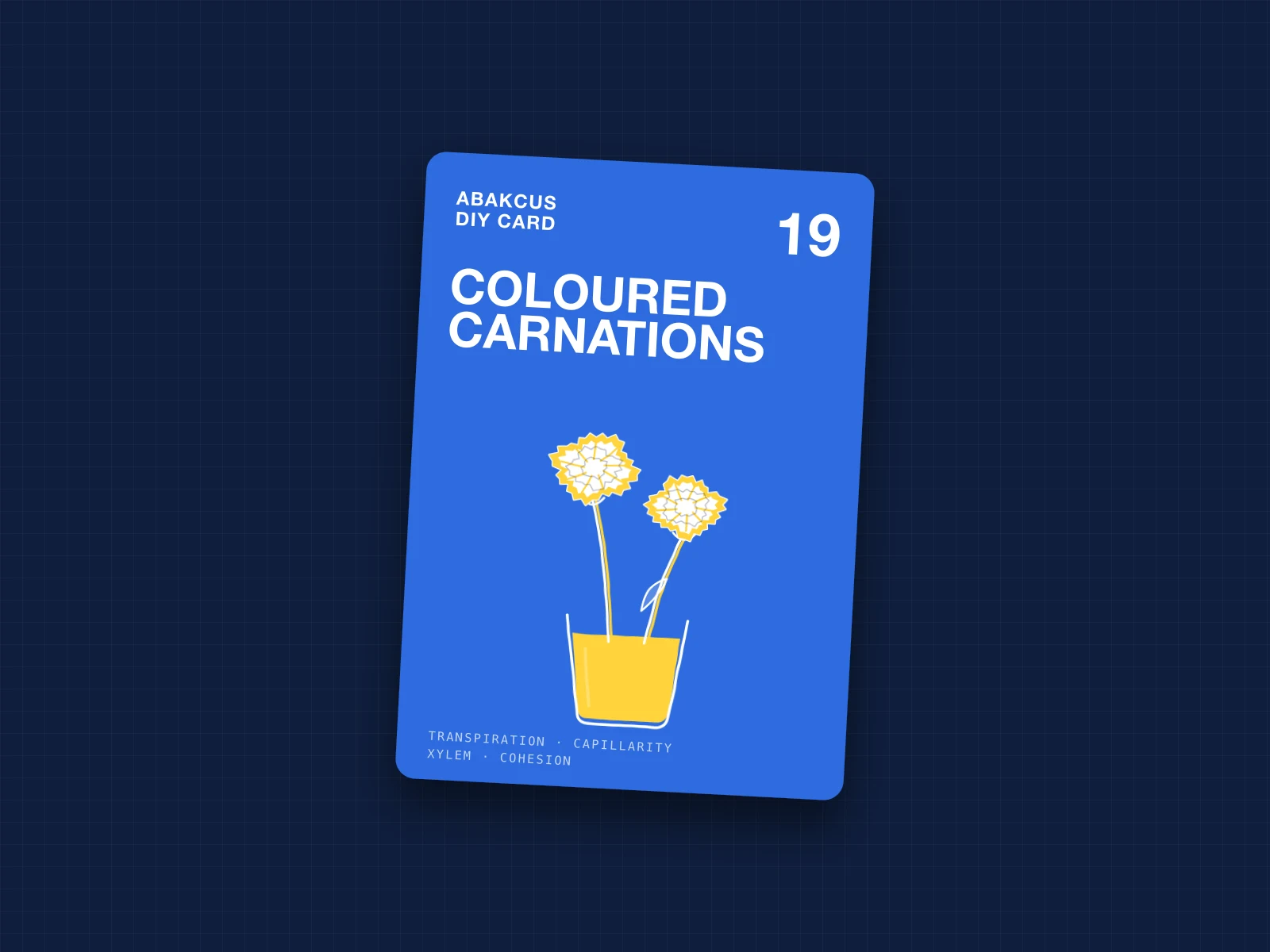
The Coloured Carnations Experiment: How Flowers Drink Water
Stand white carnations in coloured water and by the next day their petals have changed colour. The dye has climbed the stem through tubes thinner than a hair, pulled up by the flower itself.
Open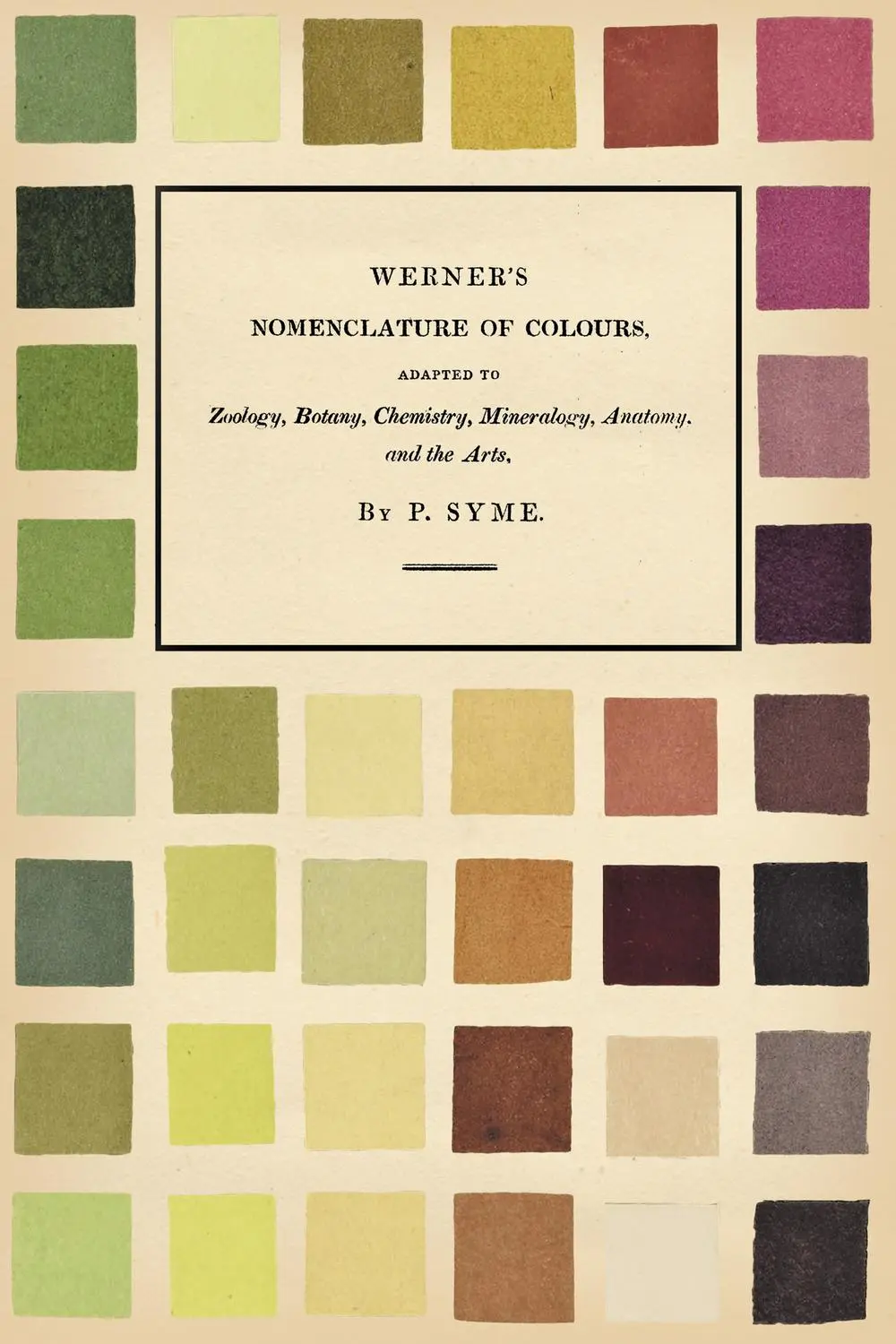
Werner's Nomenclature of Colours
Before colour photography, how did a scientist describe a colour to someone else? 108 hand-painted tones, each tied to a stone, a bird, and a flower.
Open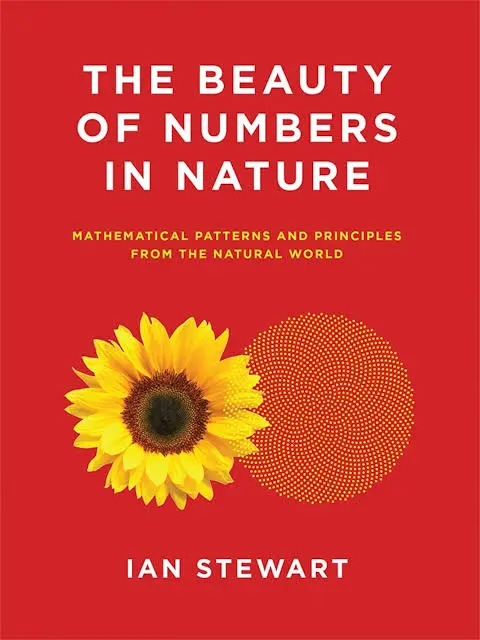
The Beauty of Numbers in Nature
A book that begins with a booklet asking why snowflakes have six arms, and ends up on a leopard's tail. 224 pages on the rules behind the patterns.
Open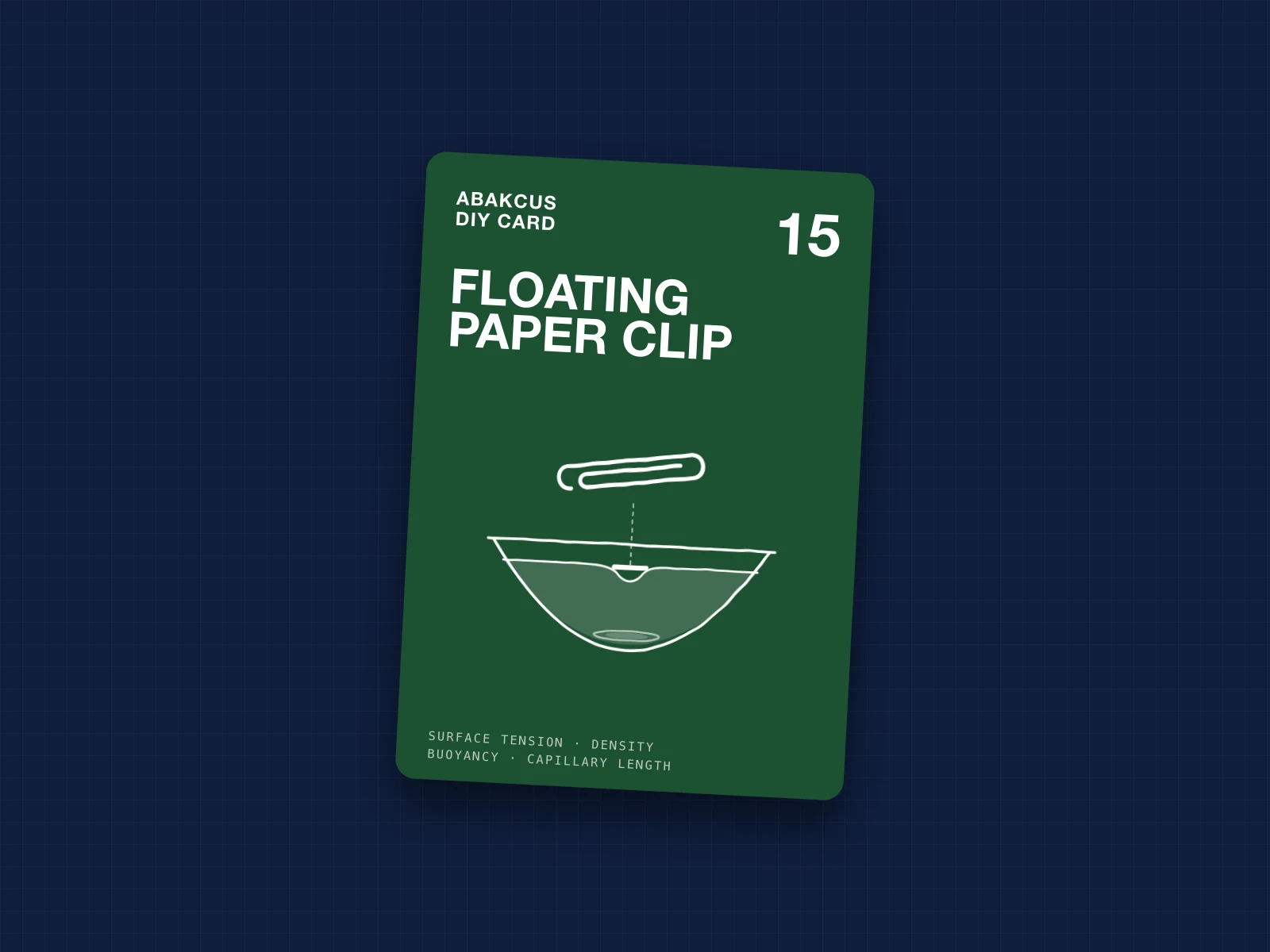
How to Float a Paper Clip on Water: Surface Tension
Steel is nearly eight times denser than water, and a paper clip still lies on top of it if you put it down gently. The surface bends into a dimple and holds it, like a trampoline, until a drop of soap breaks the spell.
Open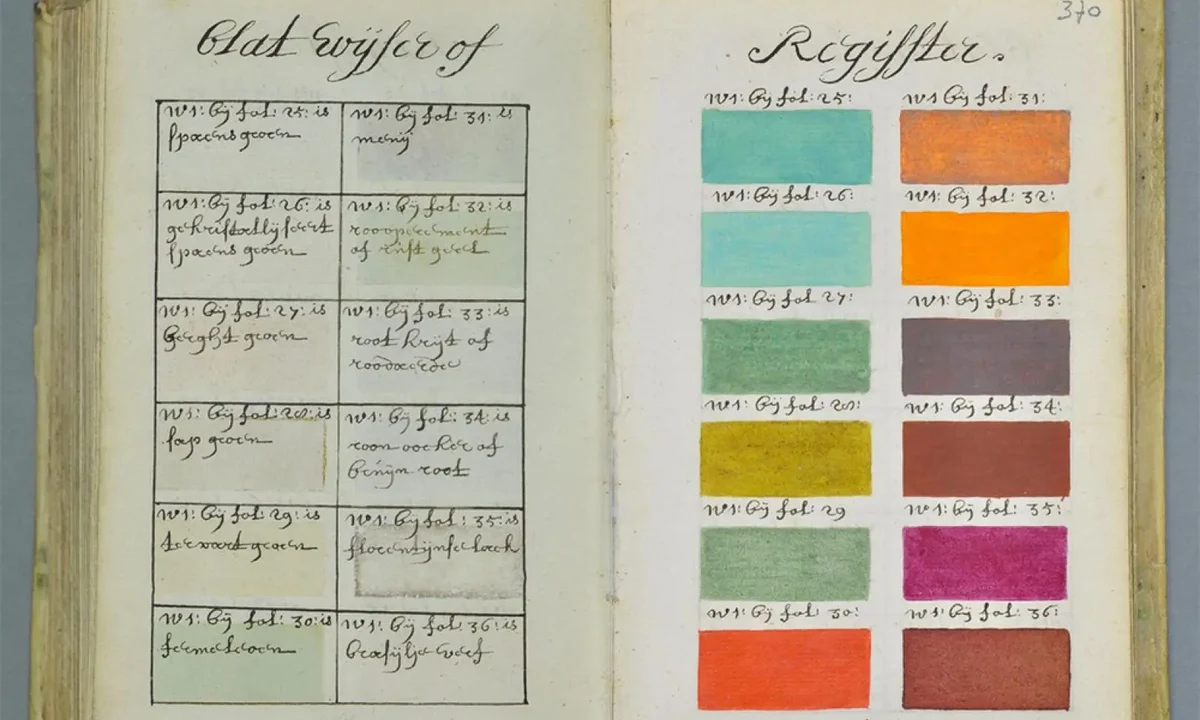
A. Boogert's 1692 Color Book, 271 Years Before Pantone
In 1692 a man in Delft thinned every watercolor with one, two and three parts water and painted them across nearly eight hundred pages. One copy survives.
Open