
DIY · Card 14 · Physics · Chemistry
A bowl of water dusted with pepper. Touch it with a plain finger and nothing happens. Touch it with a soapy one and the pepper flees to the edges, as if it were afraid.
01The brief
Make pepper scatter across a bowl of water without blowing on it, stirring it or touching a single flake.
72
millinewtons per metre: the pull of a clean water surface
~30
what that pull drops to where soap touches it
2 nm
the thickness of an oil film one molecule deep, measurable with a pond
It is the quickest experiment in the deck: under a minute, from shaking the pepper to the moment the surface clears. A soapy fingertip touches the middle of the water and the pepper rushes away to the edges of the bowl, leaving a clean circle behind, as if it had been frightened off.
Nothing frightened it, and nothing pushed it. The pepper is a passenger. What moves is the surface of the water itself, which turns out to be pulling all the time, in every direction, and what the soap does is let go on one side.
02Kit
Four things, and one rule: the bowl must be perfectly clean. A trace of soap left from washing up is enough to spoil it.
Tick off what you have
0 of 4 ready
03Method
Pepper, a control test, the soapy touch, and then the second touch that does nothing, which is just as telling as the first.
Step 1 of 8 · Second 0
Pour water into a wide, shallow bowl or a dinner plate with a rim, a couple of centimetres deep. Let it sit until the surface is still.
The pepper barely moves.
Why
The bowl or water was already a little soapy, so there was no difference in pull.
Fix
Rinse the bowl thoroughly in hot water with no detergent, and use fresh water.
The pepper sinks straight away.
Why
Coarse pepper, or too much of it in clumps.
Fix
Use finely ground pepper and sprinkle a thin, even layer from high up.
It works only on one side.
Why
You touched near the edge, so the clean water was all on one side.
Fix
Touch the exact middle of the bowl, and keep your finger still for a second.
04Physics
Water molecules cling to each other. Deep in the water, every molecule is tugged equally in all directions by its neighbours. At the surface there are no neighbours above, so each surface molecule is pulled sideways and down. The result is that the surface behaves like a stretched elastic sheet, always trying to shrink. That pull is surface tension, and it is the same clinging that kept oil and water apart in the density tower.
Now add soap. Soap molecules have one end that likes water and one that avoids it, so they crowd onto the surface with their water-avoiding tails sticking up. They push the water molecules apart and weaken the surface’s pull, from about 72 to about 30 millinewtons per metre.
Picture a tug of war over the bowl. Before the soap, every patch of surface pulls equally hard on every other, and nothing moves. The instant the soap lands, the middle goes weak while the clean water all around keeps pulling. The surface is dragged outward, fast, until the soap has spread everywhere and the pull is even again. The pepper simply rides along. Try it:
Touch the water with
Tap the water to touch it.
Try touching twice with soap, or soap after oil. A toy model: the numbers are the real surface tensions, the flow is simplified.
05The big idea
It isn’t pushed.
It’s pulled away.
It is natural to read the experiment as the soap pushing the pepper away. It is the other way round. The soap only weakens the surface where it lands. The pull that moves everything comes from the clean water further out, which hasn’t changed at all.
Flows like this, driven by differences in surface tension rather than by gravity or pressure, are called Marangoni flows. They are everywhere small things meet liquids: in wine glasses, in welding pools, in drying paint, in our own lungs.
06The math
1 · Surface tension
F = γ · L
Surface tension γ is a force per length: how hard the surface pulls across every metre of a line drawn on it.
2 · The tug of war
F = (γclean − γsoap) · L
Across a boundary of length L between soapy and clean water, the net pull is the difference in tension times the length.
3 · A film one molecule thick
t = V / A
Spread a volume V of oil over an area A as thinly as it will go and its thickness is t. Thin enough, and t is the size of one molecule.
Take a soapy circle 1 cm around. Its edge is about 3 cm long, and across it the tension drops by 72 − 30 = 42 mN/m. The net outward pull is 0.042 × 0.03 ≈ 1.3 mN, the weight of about 130 milligrams. A flake of pepper weighs a fraction of a milligram. No wonder it flies.
The third line comes from a pond in London. In the 1770s Benjamin Franklin poured a teaspoon of oil onto Mount Pond on Clapham Common and watched it calm the ripples over about half an acre. A century later Lord Rayleigh did the sum Franklin never did: a few millilitres spread over two thousand square metres is a film only about two millionths of a millimetre thick. Oil can’t spread thinner than one molecule, so that is the size of a molecule. Try it:
The film is 2.0 nanometres thick
4 ml spread over 2,024 m² is 4 × 10⁻⁶ m³ ÷ 2,024 m². That is about a single molecule deep: the oil can’t spread any thinner than one molecule, so this is a measurement of a molecule’s size, made with a teaspoon and a pond.
Measuring the size of molecules by spreading them out is the same kind of thinking as the 100 + 100 = 192 card, where molecules gave themselves away by how they packed together.
07Real life
At the size of insects, droplets and lungs, surface tension is one of the strongest forces around.
Pond skaters
Pond skaters stand on water without breaking through. Their long, waxy, hairy legs press dimples into the surface, and the surface tension pushes back like a trampoline. A drop of soap in their pond and they sink.
Tears of wine
Swirl a glass of wine and drops form on the inside, climb, and run back down. Alcohol evaporates faster from the thin film on the glass, raising its surface tension, so the film pulls more wine up from the bowl below. Marangoni flow again.
A newborn’s first breaths
The tiny air sacs in our lungs are lined with liquid, whose surface tension would make them collapse. The lungs make their own surfactant, a soap-like coating that lowers it. In 1959 Mary Ellen Avery found that premature babies who struggled to breathe lacked it; surfactant treatments now save many of them.
Washing up
Water alone beads up on a greasy plate and rolls off. Washing-up liquid lowers the surface tension so water spreads into every corner, then its molecules wrap tiny droplets of grease so they can be rinsed away.
Fruit-fly traps
A bowl of vinegar with a drop of washing-up liquid traps fruit flies. Without the soap, a fly can land on the surface and walk away; with it, the weakened surface can’t hold the fly up and it falls in.
Detergent on seabirds
Birds’ feathers shed water because of their fine structure and the way water’s surface tension keeps it from soaking in. Oil and detergents in the sea break that defence, the feathers soak through, and the bird gets cold and can sink.
1891
Agnes Pockels was never allowed to study at university. At home in Braunschweig, in Germany, she built a long tin trough with a sliding strip across it and spent years measuring how oils and soaps changed the surface tension of water, much of it alongside her household work.
In 1891 she wrote to Lord Rayleigh, who had been studying the same thing. He was so impressed that he sent her letter to Nature, which published it on 12 March 1891. Her trough became the basis of the instrument scientists still use to study films one molecule thick.
08Is and isn’t
The pepper is repelled by the soap.
Nothing pushes the pepper. The clean water around the edge pulls the whole surface outward, and the pepper is just riding along on it.
Soap destroys surface tension.
It lowers it, from about 72 to about 30 millinewtons per metre. Soapy water still has plenty of surface tension, which is why it can make bubbles.
Surface tension is a separate skin on the water.
There is no extra layer. It is the water’s own molecules at the surface, pulled inward and sideways by their neighbours. The surface just behaves like a stretched skin.
Add more soap and it will work again.
Once soap has spread over the whole surface, there is no stronger, clean water left to do the pulling. More soap does nothing until you change the water.
09Go further
A
Soap boat race
Cut two card boats with a notch in the back. Put a drop of soap in one notch and nothing in the other, and race them across a baking tray of water.
B
Float a paper clip
Lay a paper clip gently on a scrap of tissue on water. When the tissue sinks, the clip stays up, held by the surface. Then add a drop of soap.
C
Count the drops
Drip water onto a coin from a dropper and count how many it holds before spilling. Repeat with soapy water. Clean water piles up in a dome; soapy water doesn’t.
D
Milk fireworks
Put drops of food colouring on a plate of full-fat milk and touch the middle with a soapy cotton bud. The colours burst outward and swirl for a minute.
E
Talcum instead of pepper
Dust talcum powder over the water instead. The soap clears a sharp, white-edged circle you can watch growing.
10Questions
Water’s surface is under tension, pulling in every direction. Soap lowers that tension where it touches. The clean water all around still pulls hard, so it drags the surface away from the soap, carrying the floating pepper with it to the edge of the bowl.
Water molecules attract each other. A molecule at the surface has neighbours only beside and below it, so it is pulled inward and sideways, and the surface behaves like a stretched, elastic sheet. For clean water at room temperature the pull is about 72 millinewtons along every metre of surface.
After the first touch, a thin layer of soap spreads over the whole surface. There is no stronger, clean surface left to pull against it, so a second touch of soap has nothing to drive any movement. Fresh water brings the trick back.
It is the flow of a liquid’s surface from places where surface tension is low to places where it is high. The pepper trick, soap-powered boats and the ‘tears’ that run down the inside of a wine glass are all Marangoni flows.
Pepper is slightly water-repellent, which lets it rest on the surface. Soap helps water wet the flakes, and once they are wetted they lose their hold on the surface and sink.
Safety · Keep pepper away from eyes and noses, and wash your hands afterwards. Washing-up liquid stings in eyes, so don’t rub them with a soapy finger.
All DIY cards →Keep wandering
A few more pieces in the same spirit — math, design, and slow attention.
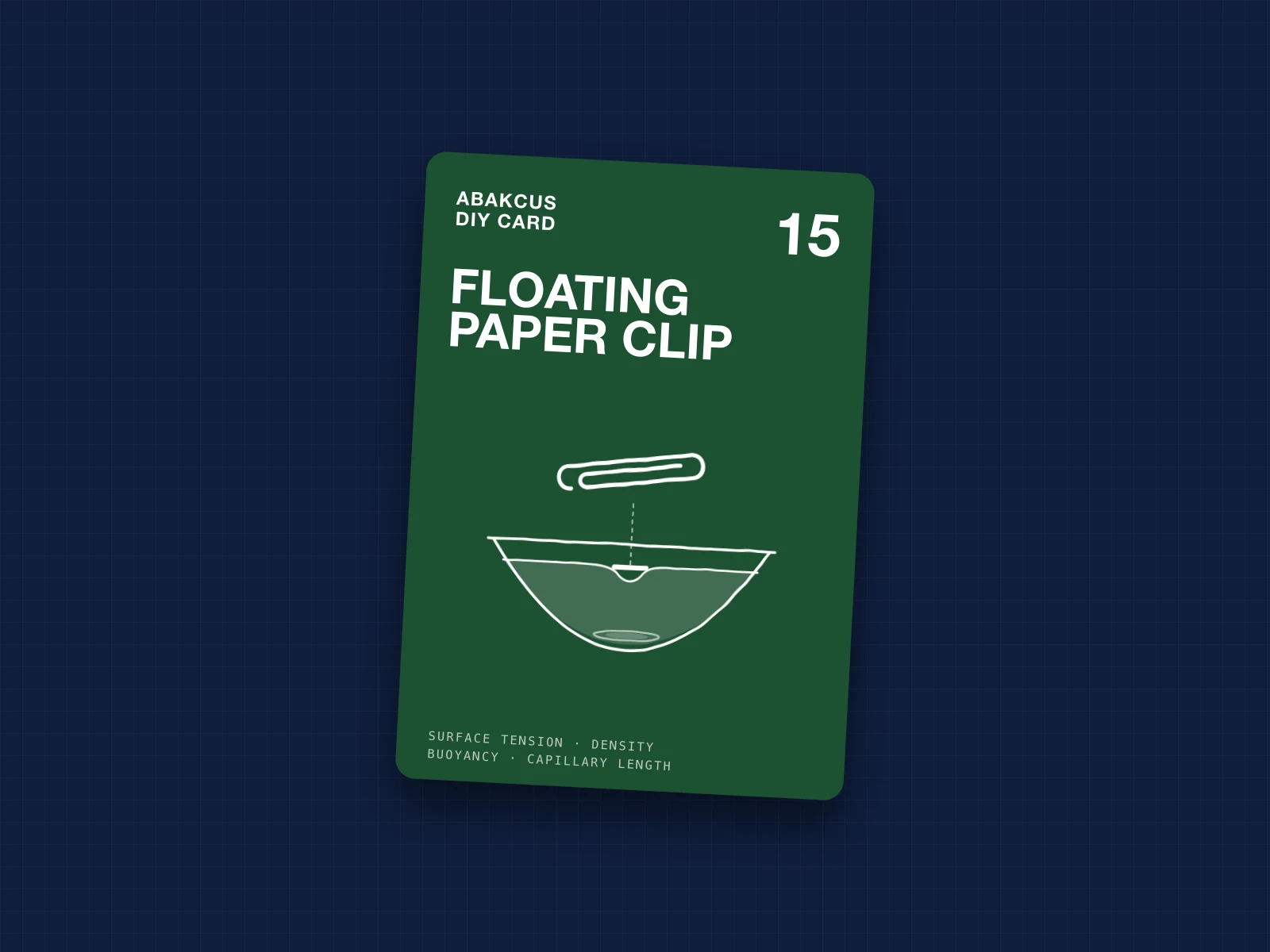
How to Float a Paper Clip on Water: Surface Tension
Steel is nearly eight times denser than water, and a paper clip still lies on top of it if you put it down gently. The surface bends into a dimple and holds it, like a trampoline, until a drop of soap breaks the spell.
Open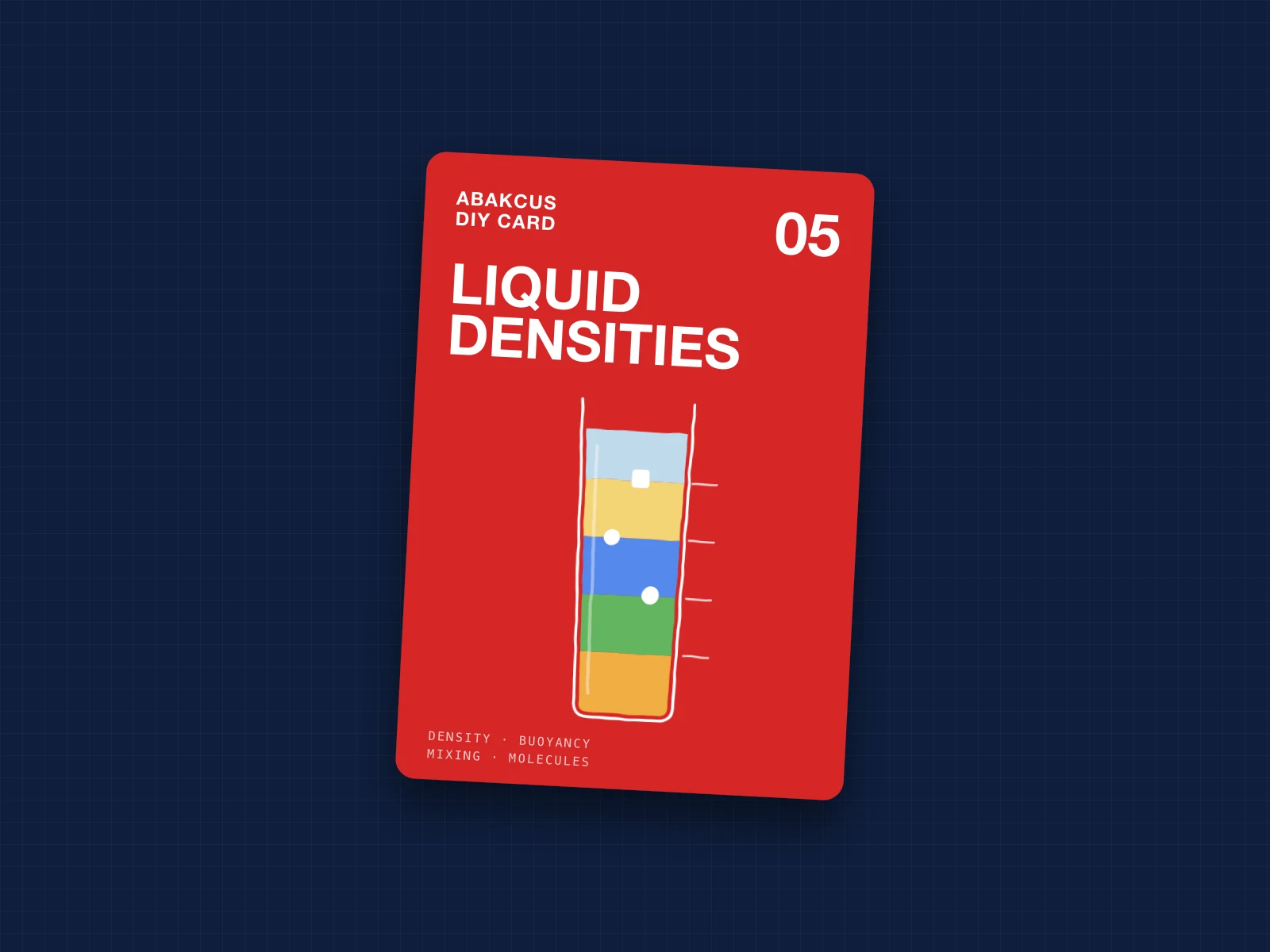
How to Make a Density Tower: Stacking Liquids in a Glass
Honey, washing-up liquid, water, oil and rubbing alcohol, poured one by one into a glass, settle into five sharp layers. Which goes where is decided by one number, and one of them only stays put thanks to the oil.
Open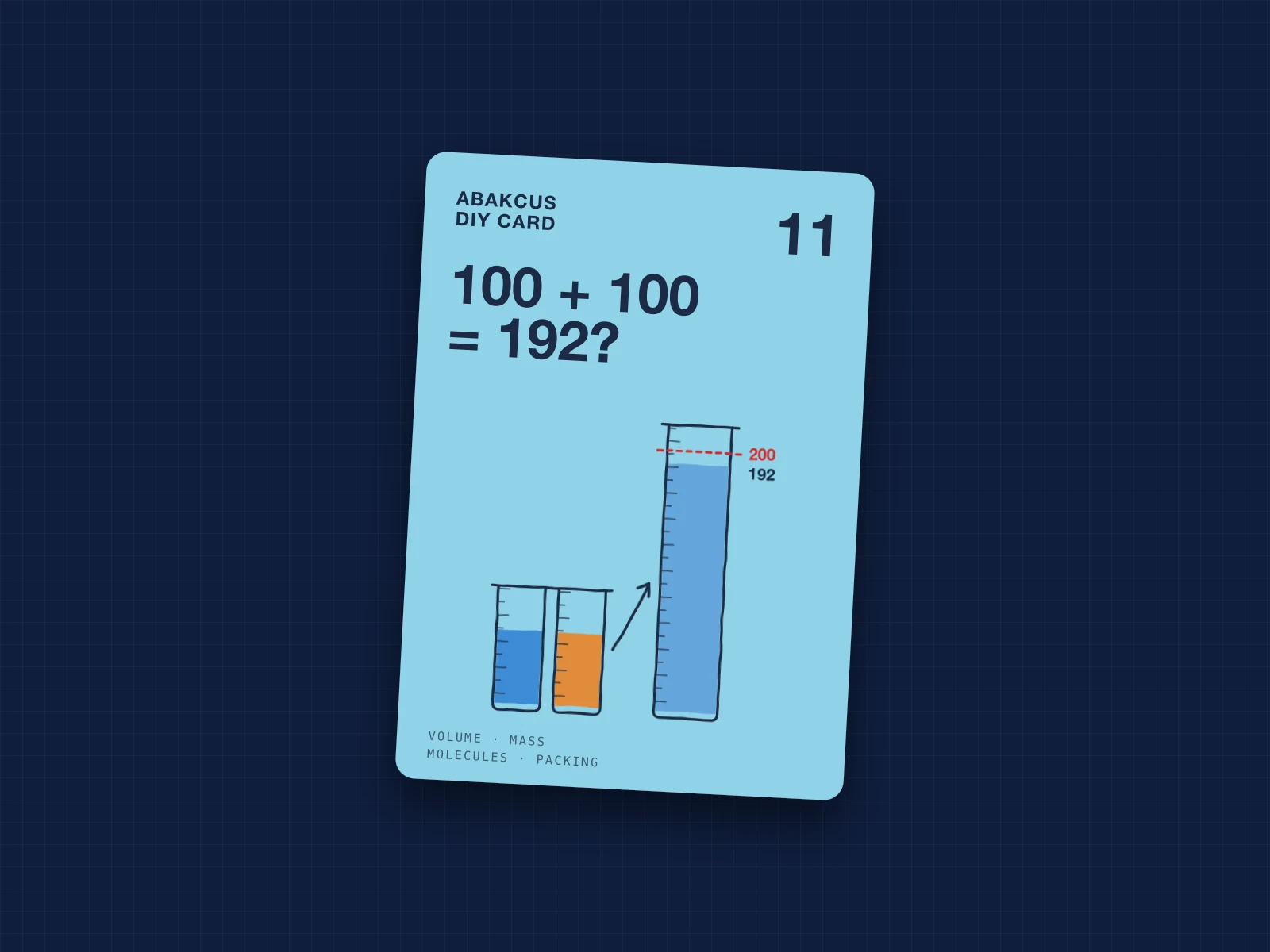
Why 100 ml + 100 ml Makes Less Than 200 ml
Pour 100 ml of alcohol into 100 ml of water and you get about 192 ml. Nothing leaks, nothing evaporates, and the scale says not a gram is missing. The molecules have simply moved in closer together.
Open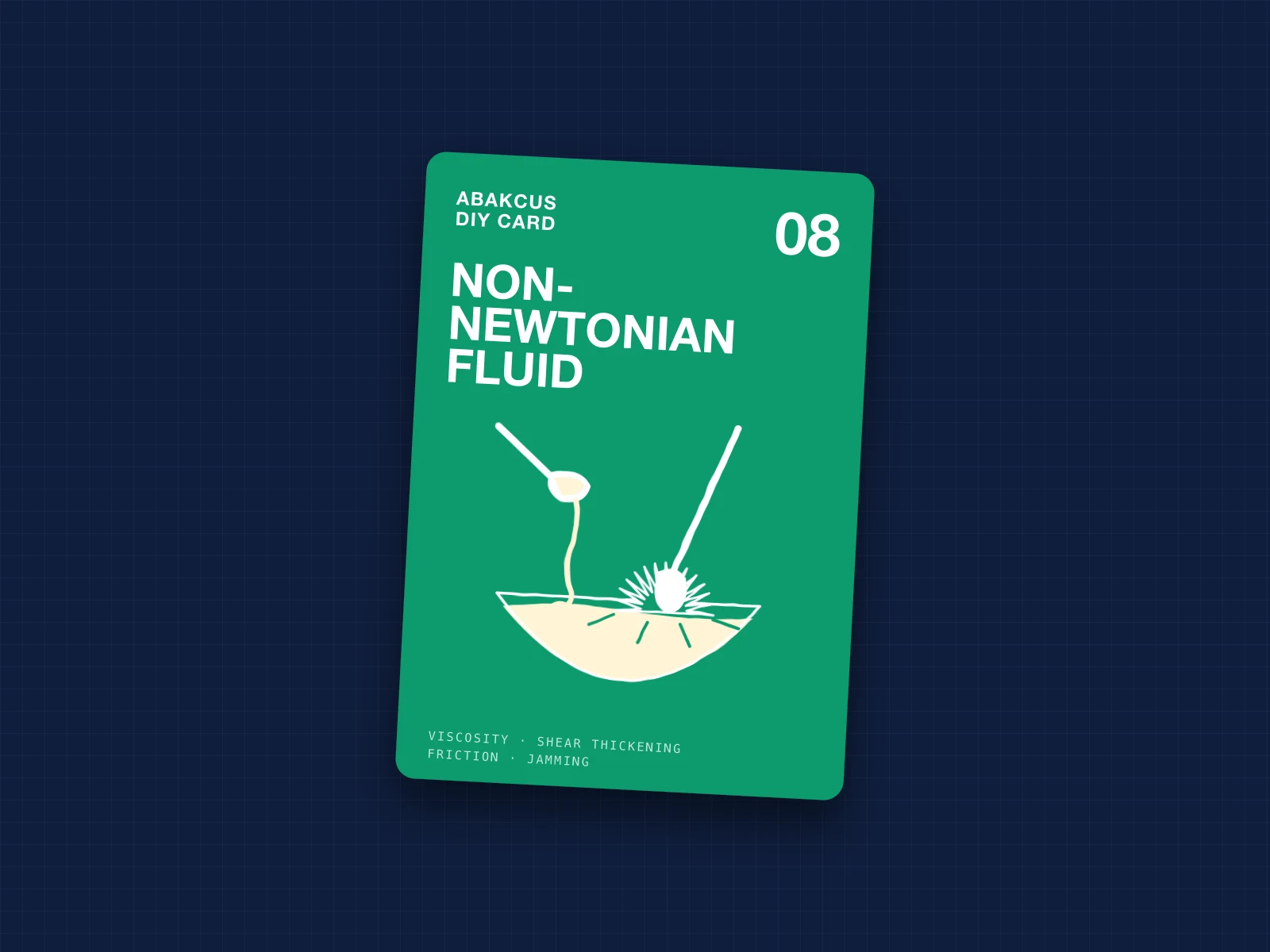
How to Make Oobleck: The Liquid That Turns Solid
Cornflour and water, stirred together in a bowl. Stir slowly and it pours like cream; punch it and it cracks like a brick. The grains inside are doing something physicists only pinned down in the last fifteen years.
Open
How to Clean a Penny: Cola, Vinegar and Salt Compared
Leave a dull penny in cola overnight and it comes out shining. Drop it in vinegar with a pinch of salt and it shines in seconds. The difference is one ingredient, and the same chemistry turned the Statue of Liberty green.
Open
How to Make an Underwater Volcano: Convection in a Jar
Hot red water in a salt shaker, lowered into a jar of cold water. It erupts, curls into a mushroom, and lies on the surface like oil, because water one and a half percent lighter has nowhere to go but up.
Open