
DIY · Card 11 · Chemistry · Measurement
Measure 100 ml of water and 100 ml of alcohol, pour one into the other, and read the level. It stops short of 200, and the scale insists nothing is missing.
01The brief
Mix 100 ml of water with 100 ml of alcohol, and find out why you don’t get 200 ml.
≈ 193 ml
what 100 ml of water and 100 ml of surgical spirit come to
0 g
the mass that goes missing: the scale reads the same before and after
⅓ +
of a jar of peas that is empty space, waiting for the rice
Arithmetic is supposed to be the one thing you can trust. A hundred and a hundred make two hundred. Yet measure out 100 ml of water and 100 ml of alcohol, pour them together, and the level settles a good seven or eight millilitres short. Check for leaks. There aren’t any. Weigh it. Every gram is still there.
What is missing is not stuff but space. Once the two liquids are mixed, their molecules arrange themselves more snugly than either liquid could on its own. The same thing happens, on a scale you can see, when you pour rice into a jar of peas. Volume, it turns out, is a much less reliable thing to count than mass.
02Kit
Good measuring is the whole experiment. The difference is real, but it is only a few percent, so use the most accurate jugs you have.
Tick off what you have
0 of 5 ready
03Method
Measure, weigh, mix, measure and weigh again. Then build the same thing out of peas and rice.
Step 1 of 8 · Minute 0
Pour water into a measuring jug or cylinder until it reads exactly 100 ml. Crouch so your eye is level with the surface, and read the bottom of the curve.
It came to exactly 200 ml.
Why
The measuring jug isn’t precise enough, or the alcohol is weak.
Fix
Use a measuring cylinder and the strongest surgical spirit you can find. Rubbing alcohol, already 30 percent water, shrinks much less.
It came to more than 200 ml.
Why
The first two measurements were slightly over, or the mix hasn’t settled.
Fix
Measure each 100 ml at eye level, and wait for the bubbles to rise before reading.
The scale reading dropped a little.
Why
Drips left in the jugs, or a little alcohol evaporating while you worked.
Fix
Weigh the empty jugs too, and work quickly with a lid nearby.
04Chemistry
A liquid is not a solid block. Its molecules are jostling, clinging to each other and leaving gaps. Water molecules in particular hold on to each other through hydrogen bonds into a loose, open network, the same network that makes ice float. There is more empty space in a glass of water than you would guess.
Alcohol molecules have a watery end, which can join that network, and an oily end, which can’t. When you mix the two liquids, the alcohol slots in among the water, and the water rearranges itself around the alcohol’s oily tails. The result is a tighter fit than either liquid had alone. Same molecules, less room, and a little heat given off as they settle into their new arrangement.
How much shrinks depends on the mix. Pure water shrinks by nothing, and so does pure alcohol. Somewhere in the middle the loss peaks, at a little under four millilitres in every hundred. Try different amounts and strengths:
100 + 100 = 193.3 ml
6.7 ml go missing. The mass doesn’t: the mix still weighs 179.7 g, exactly what the two weighed apart, so it is denser than either average would suggest.
05The big idea
Mass adds up.
Volume doesn’t.
We measure liquids by volume every day, in recipes and medicine and petrol, and we quietly assume that volumes add. Usually they nearly do. But volume is not a property of the stuff itself; it is a property of how the stuff is arranged. Change the arrangement and the volume changes, while the amount of stuff stays put.
Mass is different. Mass counts the molecules, and molecules don’t appear or vanish when you pour one liquid into another. That is why chemists, pharmacists and distillers who need to be exact reach for a balance, not a jug.
06The math
1 · Excess volume
ΔV = Vmix − (V₁ + V₂)
How far the real mixture falls short of the simple sum. For alcohol and water it is negative: the mix shrinks.
2 · Density of the mix
ρ = (m₁ + m₂) / Vmix
Masses add exactly, so the mixture’s density is the total mass over the smaller real volume.
3 · Packing fraction
φ = Vgrains / Vjar
The share of a jar that grains actually fill. For a random heap of same-sized balls it is around 0.62 to 0.64.
Take 100 ml of water, 99.8 g, and 100 ml of 95 percent surgical spirit, about 80 g. Together they weigh 179.7 g. If volumes added, the mixture would have a density of 179.7 / 200 = 0.899 g/ml. It actually fills about 193 ml, so its real density is 179.7 / 193 ≈ 0.931 g/ml. The excess volume is ΔV ≈ −7 ml.
The grains work the same way, with numbers you can see. A jar of peas has a packing fraction of about 0.62, so in 100 ml of peas, 38 ml is gaps. Small enough grains can trickle into some of that space and vanish from the total. They need to be less than roughly four tenths of the big grains’ size to fit at all, and the smaller they are, the more of the gaps they reach:
100 ml of big grains
100 ml of small grains
100 + 100 ≈ 192 ml
About 8 ml of rice disappear into the gaps between the dried peas, which leave more than a third of their jar empty. A rough model: real grains, shaken well, can do a little better.
The density of the mix matters elsewhere in this deck too: it is the same quantity that sorted the layers in the density tower, where alcohol and water had to be kept apart by a layer of oil for exactly this reason. Given the chance, they mix, shrink and warm.
07Real life
From whisky to concrete to breakfast cereal, anyone who mixes things for a living has to reckon with the gaps.
Distilleries
When a distiller waters down spirit to bottling strength, the volumes won’t add up, and the mix warms as well. So the industry works with careful tables, and measures alcohol strength at a fixed temperature, to know exactly what is in the bottle.
Concrete
Concrete is gravel, sand and cement. Builders choose the sizes so the sand fills the gaps between the gravel and the cement fills the gaps between the sand: the peas-and-rice trick, used to make strong concrete with less cement.
The half-empty cereal box
Cereal packets say the contents may settle. Shaken on its way to the shop, the cereal packs down as small pieces slide into the gaps between big ones. The weight on the label hasn’t changed; the volume has.
Salt in water
Stir salt into a full glass of water and it does not overflow nearly as much as the salt’s own volume would suggest. Water molecules crowd tightly around each dissolved salt ion, packing closer than they do in plain water.
Snow
Fresh, fluffy snow is mostly air: ten centimetres of it might melt down to about one centimetre of water. The flakes leave enormous gaps, which is why snow insulates, and why it packs into hard snowballs.
The Brazil nut effect
Shake a jar of mixed nuts and the biggest end up on top. When the jar jolts, small pieces slip into the gaps that open beneath the big ones, so the big ones ratchet upward. Packing decides where things go, as well as how much room they take.
1865
Four years before he drew up the periodic table, Dmitri Mendeleev defended a doctoral thesis in St Petersburg called On the Combination of Alcohol with Water. He measured the densities of alcohol and water mixtures with great care, and with them the way the volume shrinks depending on the proportions.
The story that the thesis gave the world 40 percent vodka is a myth; it dealt mostly with much stronger mixtures. What it did show is that mixing two liquids is a piece of chemistry in its own right. Mass, as in the penny experiment, is what you can always count on.
08Is and isn’t
Some of it must have spilled or evaporated.
Weigh it. The mixture has exactly the mass the two liquids had apart. Every molecule is still there; they just take up less room together.
The molecules get squashed smaller.
The molecules stay the same size. What changes is how they are arranged: together they settle into a tighter pattern than either liquid manages alone.
Liquid volumes always add up.
Only for liquids that ignore each other. Alcohol and water shrink; salt and water shrink; a few mixtures even grow slightly. Mass is the quantity that always adds up.
Mendeleev invented 40 percent vodka because of this.
A famous story, but not true. His 1865 thesis was on alcohol and water mixtures, mostly strong ones, and the 40 percent standard came from elsewhere.
09Go further
A
Peas and rice
Mix 100 ml of dried peas with 100 ml of rice, shake well and read the level. Then try marbles and sand.
B
Find the biggest shrink
Try 50 + 150, 100 + 100 and 150 + 50 ml of water and spirit. Which mix loses the most? Check against the lab above.
C
Feel the warmth
Put a thermometer in the water before you pour in the alcohol, and watch it rise as you stir.
D
Salt water overflow
Fill a glass exactly to the brim, then sprinkle in salt a pinch at a time. Count how many pinches go in before it overflows.
E
Shake the nuts
Fill a jar with rice and bury a walnut at the bottom. Shake it gently up and down and watch the walnut climb to the top.
10Questions
Water and alcohol molecules attract each other strongly and can arrange themselves more compactly together than either liquid does on its own. Nothing is lost: the mixture weighs exactly as much as the two liquids did. It simply takes up less room, about 192 to 193 ml with nearly pure alcohol.
Yes, exactly. Weigh the two liquids before and after mixing and the total is the same. Only the volume changes, which is why the mixture is slightly denser than you would expect.
Yes, slightly. As the two liquids mix, the molecules form new attractions that hold them together more tightly than before, and the energy released warms the liquid by a few degrees. You may also see tiny bubbles as dissolved air comes out.
Peas leave gaps between them, more than a third of the jar. Rice grains are small enough to trickle into some of those gaps, so the mixture fills less than the two jars did separately. It is a large-scale model of the molecules.
No, that is a popular myth. Dmitri Mendeleev did write his 1865 doctoral thesis on mixtures of alcohol and water, but it dealt mostly with strong mixtures, and the 40 percent standard for vodka has other origins.
Safety · Surgical spirit is flammable and poisonous to drink. A grown-up should handle it, away from flames, in a ventilated room. Label the mixture clearly and pour it away afterwards.
All DIY cards →Keep wandering
A few more pieces in the same spirit — math, design, and slow attention.
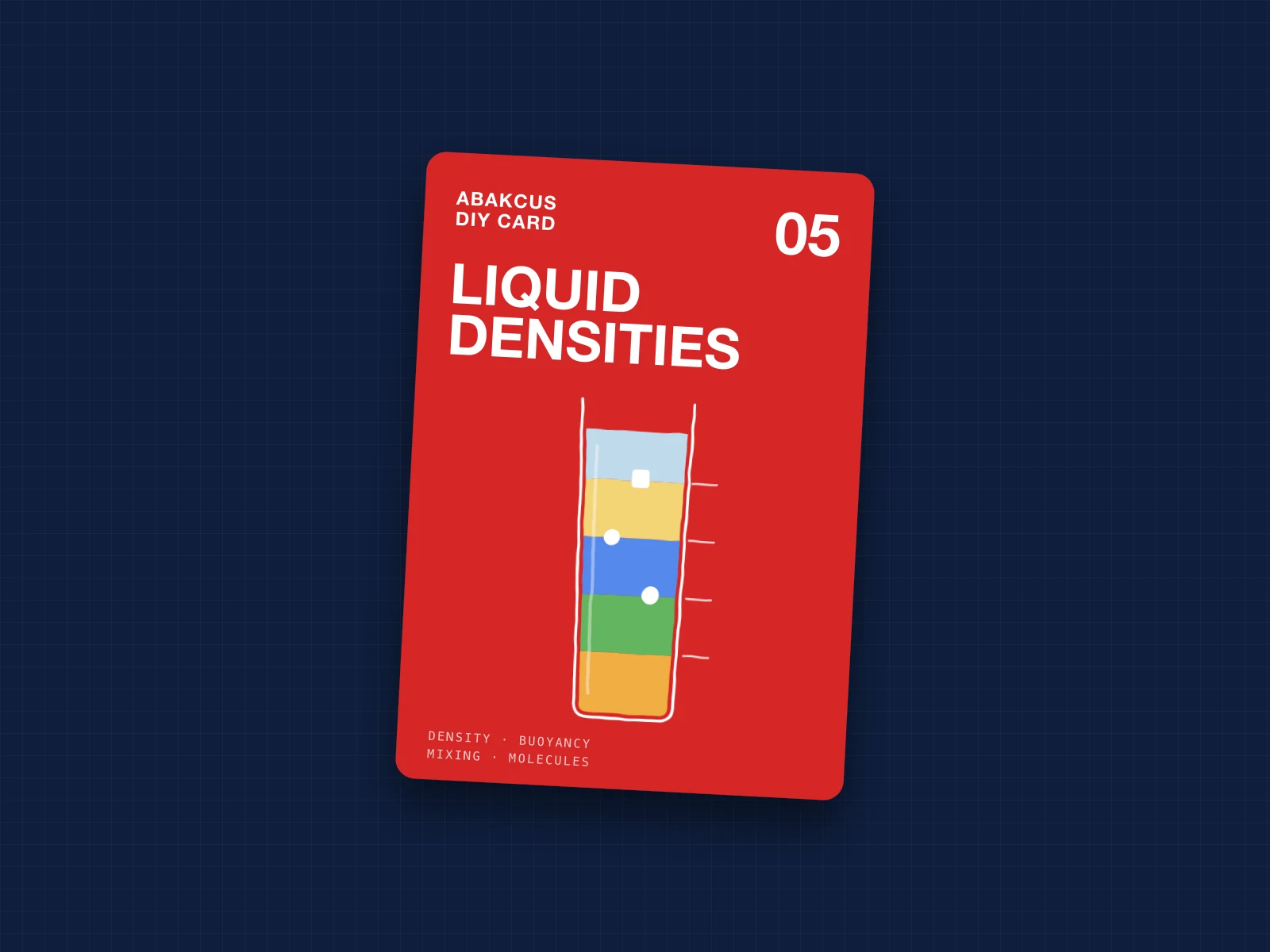
How to Make a Density Tower: Stacking Liquids in a Glass
Honey, washing-up liquid, water, oil and rubbing alcohol, poured one by one into a glass, settle into five sharp layers. Which goes where is decided by one number, and one of them only stays put thanks to the oil.
Open
How to Clean a Penny: Cola, Vinegar and Salt Compared
Leave a dull penny in cola overnight and it comes out shining. Drop it in vinegar with a pinch of salt and it shines in seconds. The difference is one ingredient, and the same chemistry turned the Statue of Liberty green.
Open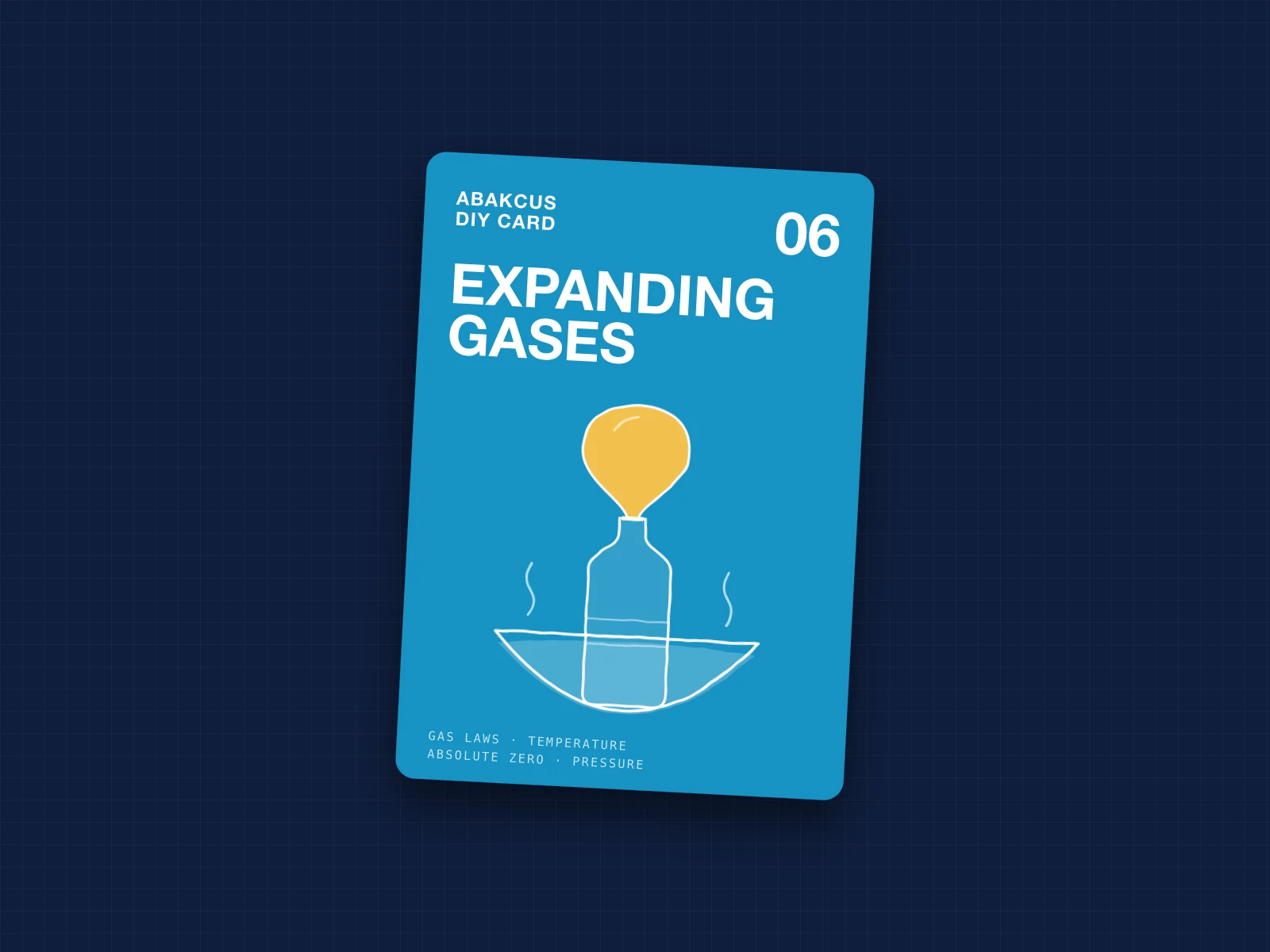
How to Blow Up a Balloon With Hot Water: Charles’s Law
Put a balloon on an empty bottle, stand the bottle in hot water, and the balloon lifts itself up. The air didn’t get any more of itself. It just needs more room, and from that one fact you can find absolute zero.
Open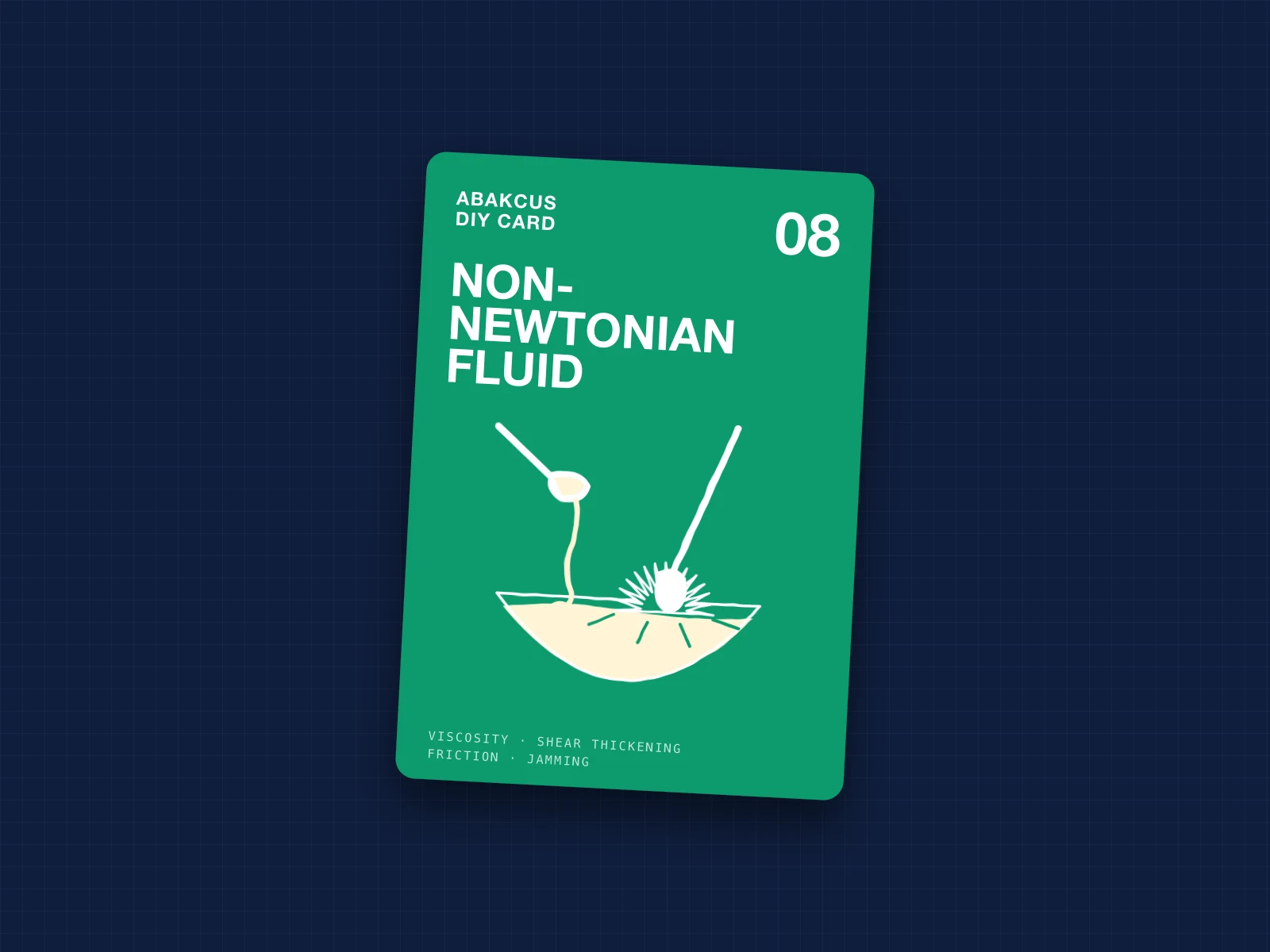
How to Make Oobleck: The Liquid That Turns Solid
Cornflour and water, stirred together in a bowl. Stir slowly and it pours like cream; punch it and it cracks like a brick. The grains inside are doing something physicists only pinned down in the last fifteen years.
Open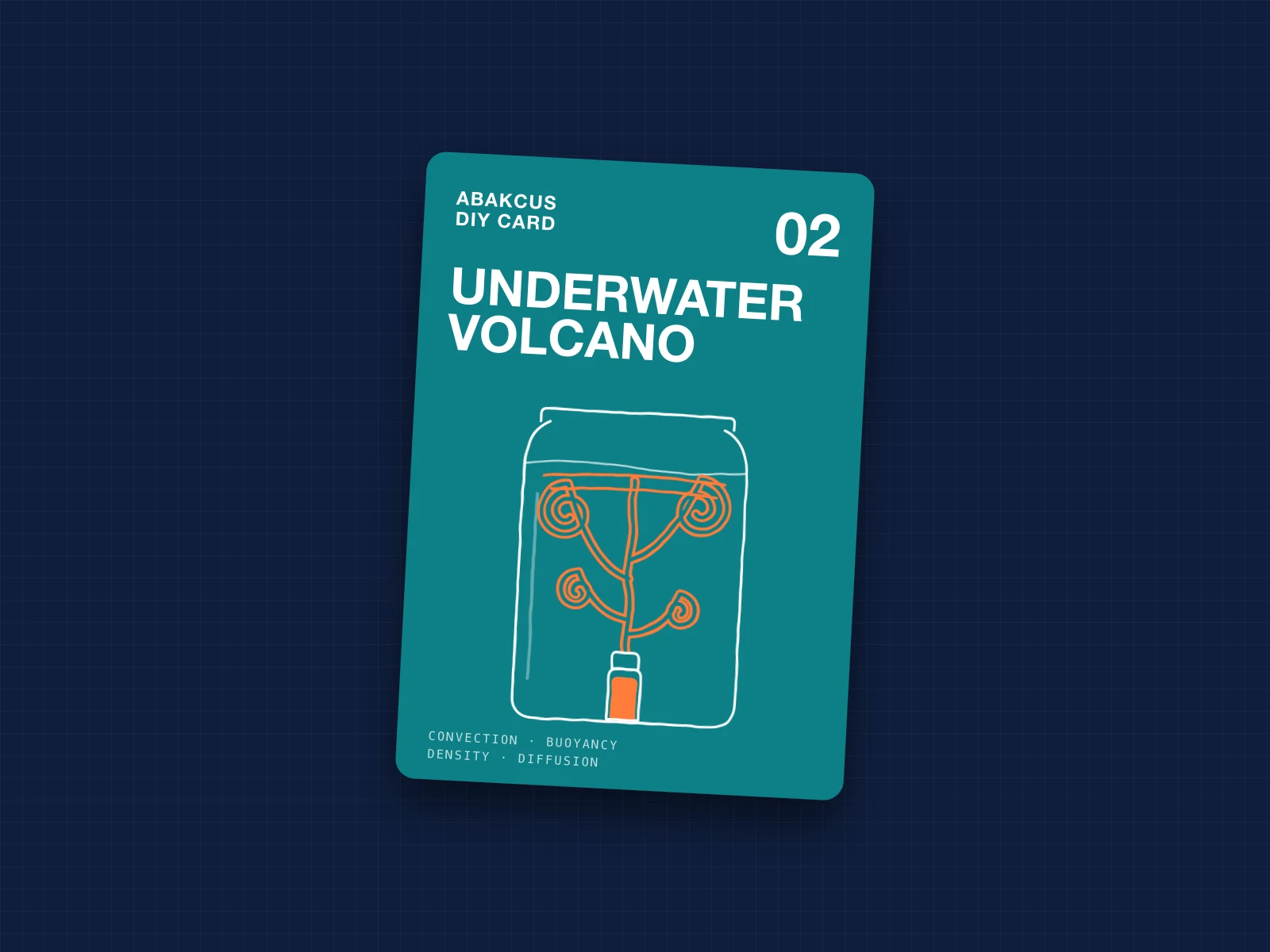
How to Make an Underwater Volcano: Convection in a Jar
Hot red water in a salt shaker, lowered into a jar of cold water. It erupts, curls into a mushroom, and lies on the surface like oil, because water one and a half percent lighter has nowhere to go but up.
Open
The Beauty of Numbers in Nature
A book that begins with a booklet asking why snowflakes have six arms, and ends up on a leopard's tail. 224 pages on the rules behind the patterns.
Open