
DIY · Card 65 · Art · Tiling
Square sheets of coloured paper, one classic origami fold, and a board. Fold two dozen identical triangles, turn them this way and that, and a bold geometric pattern takes over the wall.
01The brief
One fold, endless patterns.
1
unit, the waterbomb base, folded from an uncut square
2
triangles to a square, and squares tile a wall with no gaps
3
regular shapes that tile: triangles, squares and hexagons
Fold a square of paper one way, turn it over and fold it the other, then push its sides in: it collapses into a neat triangle. Do it two dozen times in three colours and you have a box of building blocks for a work of art.
Arranged on a board, the triangles make pinwheels, zigzags, diamonds and stripes, all from the same single unit. Behind it lies one of the oldest questions in geometry: which shapes can cover a surface with no gaps? It sits nicely beside the moiré patterns and the folding paper letters.
02Kit
Square paper in a few colours, a board and some tape.
Tick off what you have
0 of 4 ready
03Method
Learn one fold, repeat it, then let the arrangement do the work.
Step 1 of 8 · Minute 0
You need square sheets of origami or coloured paper, 15 cm across, in three or four colours, about 24 sheets in all, a large sheet of foam board or stiff card for the base, double-sided tape or a glue stick, and a ruler.
The square won’t collapse.
Why
The folds aren’t alternating: diagonals and halves are creased the same way.
Fix
Make the diagonals with one side up, then turn the paper over before creasing the halves.
The triangles are different sizes.
Why
The paper squares weren’t all square or the same size.
Fix
Use ready-cut origami squares, or cut every square from the same template.
The pattern drifts out of line.
Why
No guide grid on the board.
Fix
Draw a light pencil grid and place every triangle on it, starting from one corner.
04Tiling
A tiling covers a surface with shapes that fit together exactly, no gaps and no overlaps. Your folded units are right-angled triangles with corners of 90°, 45° and 45°. Two make a square, and four squares meet at a point with 4 × 90° = 360°: a perfect fit.
Plan your wall: pick a pattern, a size and the colours:
Triangles to fold
48
Finished size
64 × 42 cm
Per colour
18 · 18 · 12
Every unit is the same folded right-angled triangle; only its direction and colour change. Two of them make a square, and squares tile a wall with no gaps. Turning each unit a quarter turn, or swapping two colours, makes a completely new pattern from the same pieces.
Why squares and not pentagons? Try fitting regular shapes round a single point:
Each corner
108.0°
How many fit
3.33
Tiles a wall?
no
3 fit, leaving a 36° gap that nothing of the same shape can fill. Only 3, 4 and 6 sides work: their corners, 60°, 90° and 120°, divide 360° exactly.
05The big idea
Angles must
add to 360°.
Wherever tiles meet at a point, their corners must add up to a full turn, 360°. That one rule decides which shapes can tile. Squares, at 90°, fit four round a point; hexagons, at 120°, fit three; regular pentagons, at 108°, can’t fit any whole number.
From that simple rule grows a whole world: Islamic tilework, Escher’s interlocking animals, quilts, honeycombs, and patterns so strange they never repeat at all.
06The math
1 · A regular n-gon’s corner
180° − 360° ⁄ n
Each corner of a regular shape with n sides.
2 · Tiles if
360° ⁄ corner = whole number
A whole number of corners fits round a point.
3 · Your squares
square side = s ⁄ √2
Two triangles folded from paper of side s.
Triangles: 180 − 120 = 60°, and 360 ⁄ 60 = 6 fit. Squares: 90°, 4 fit. Hexagons: 120°, 3 fit. Pentagons: 108°, and 360 ⁄ 108 ≈ 3.33: three leave a 36° gap. Every larger polygon has corners over 120°, so two fit but leave a gap, and three overlap.
Folded from 15 cm paper, each triangle’s long edge is 15 cm, so two of them make a square 15 ⁄ √2 ≈ 10.6 cm across. A wall 4 squares by 3 needs 24 units and measures about 42 × 32 cm.
07Real life
From beehives to palaces to a discovery made in 2023.
Honeycombs
Bees build their combs from hexagonal cells. Hexagons tile with no gaps, like squares and triangles, but enclose the most space for the least wall, saving the bees precious wax.
Patchwork quilts
Quilters call your unit a half-square triangle. Sewing two of them into a square and turning the squares gives pinwheels, flying geese, zigzags and stars, the same patterns as your paper wall.
The Alhambra
The walls of this palace in Granada, Spain, built in the 13th and 14th centuries, are covered in tile patterns of astonishing variety, built from a few repeated shapes and symmetries.
M. C. Escher
After visiting the Alhambra, the Dutch artist M. C. Escher filled the plane with interlocking birds, fish and lizards, each one a carefully reshaped tile that fits its neighbours with no gaps.
Penrose tiles
In 1974 the physicist Roger Penrose found two diamond shapes that tile a plane in a pattern that never repeats. Similar patterns turned up in real crystals in 1982, earning Dan Shechtman a Nobel Prize.
The einstein hat
In 2023 David Smith, an amateur shape-hunter from England, found a single 13-sided tile that covers the plane only in patterns that never repeat, solving a problem mathematicians had worked on for decades.
2023
For decades mathematicians wondered whether a single shape could tile a floor only in a pattern that never repeats: an “einstein”, from the German for “one stone”. David Smith, a retired print technician who liked playing with shapes, found one in 2023 and called it the hat.
With three mathematicians he proved it works. Your triangles repeat in tidy rows; the hat never does, however far you go. Both obey the same rule at every corner: the angles add up to 360°.
08Is and isn’t
Any regular shape can cover a wall.
Only equilateral triangles, squares and regular hexagons. Regular pentagons, octagons and the rest always leave gaps.
Complicated patterns need complicated pieces.
Every pattern here uses one identical unit. Turning and colouring it is enough to make pinwheels, chevrons, diamonds and stars.
Origami needs cutting or glue.
Traditional origami uses a single uncut square. The waterbomb base is folded from one square with no cuts at all.
Tiling patterns always repeat.
Penrose tiles and the 2023 ‘hat’ cover the plane in patterns that never repeat exactly, however far you go.
09Go further
A
Colour swap
Keep the same layout but swap two colours. How different does the pattern look?
B
Count the symmetries
Turn your design a quarter turn. Does it look the same? How about a half turn, or a mirror flip?
C
Hexagons
Fold equilateral triangles instead, and fit six round a point to make hexagons. What patterns can you make?
D
A gradient
Use five shades of one colour and fade from light at one corner to dark at the other.
E
Spot tilings
Look for tilings at home and outside: floors, walls, paving, fabrics. Which shapes do they use?
10Questions
Fold square sheets of coloured paper into identical triangles, using the waterbomb base: crease both diagonals, turn over, crease both halves, then collapse the square into a triangle. Pair the triangles into squares, arrange them in a pattern such as pinwheels or chevrons, and stick them to a board with double-sided tape.
Fold a square in half corner to corner both ways and unfold, giving an X of creases. Turn it over and fold it in half edge to edge both ways and unfold. Turn it back, push two opposite edges in at their midpoints, and the square collapses along the creases into a triangle with two flaps on each side.
Two for every square of the design. A wall 4 squares across and 3 down takes 24 triangles. Folded from 15 cm paper, each square is about 10.6 cm across, so that design is about 42 × 32 cm.
Among regular shapes, only equilateral triangles, squares and regular hexagons, because only their corner angles, 60°, 90° and 120°, divide 360° exactly. Many irregular shapes tile too, including the right-angled triangles in this project.
A shape that can cover a whole plane but only in a pattern that never repeats. Mathematicians had searched for one for decades; in 2023 the amateur David Smith found it, a 13-sided shape nicknamed the hat, and proved it with three mathematicians.
Safety · Completely safe. Fix the finished board firmly to the wall, with a grown-up’s help, so it can’t fall.
All DIY cards →Keep wandering
A few more pieces in the same spirit — math, design, and slow attention.
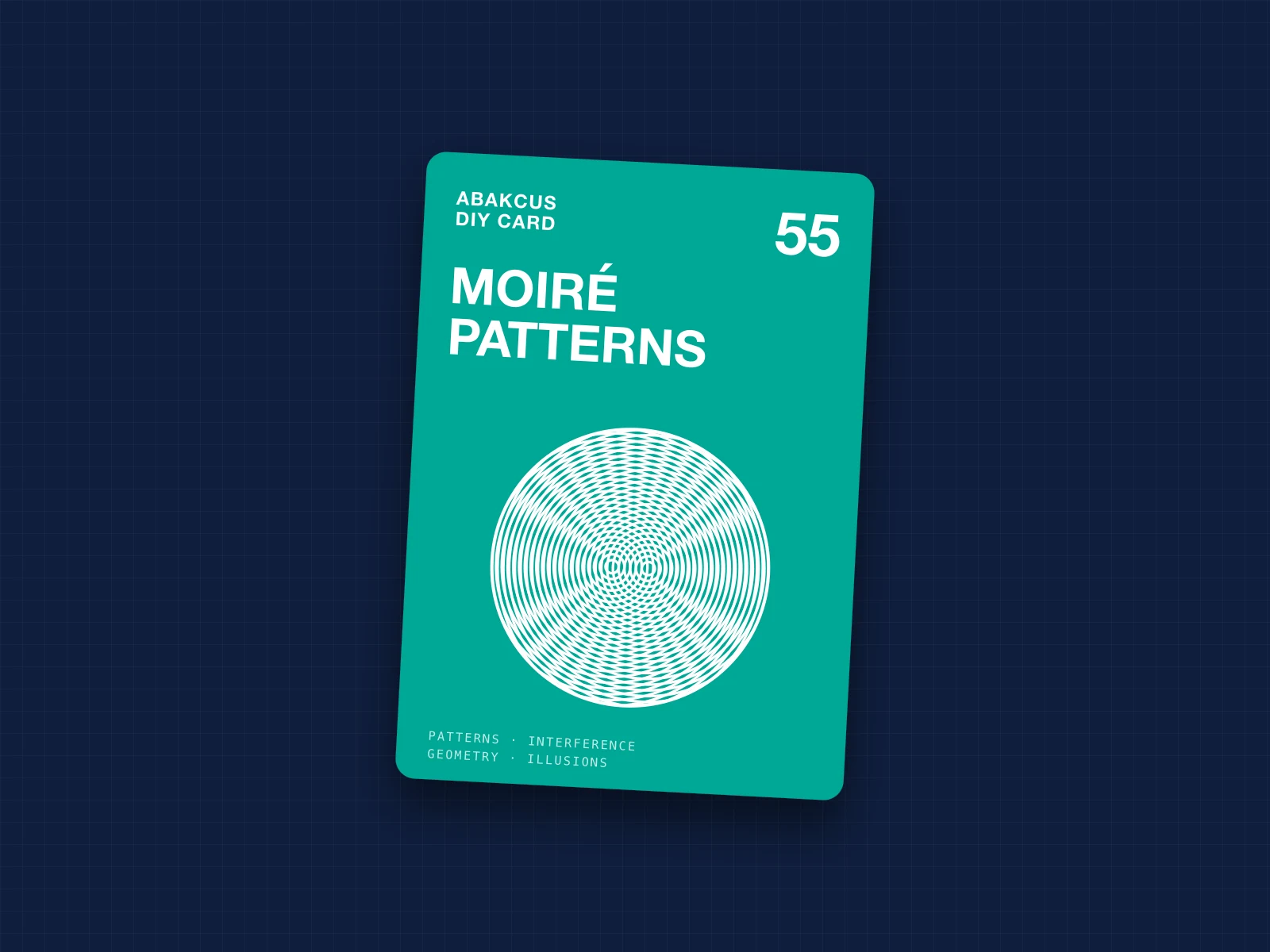
How to Make Moiré Patterns With Two Grids and a Turntable
Two squares of black mesh and a turntable. Spin one grid under the other and giant shimmering squares bloom and swirl, a pattern that exists in neither grid.
Open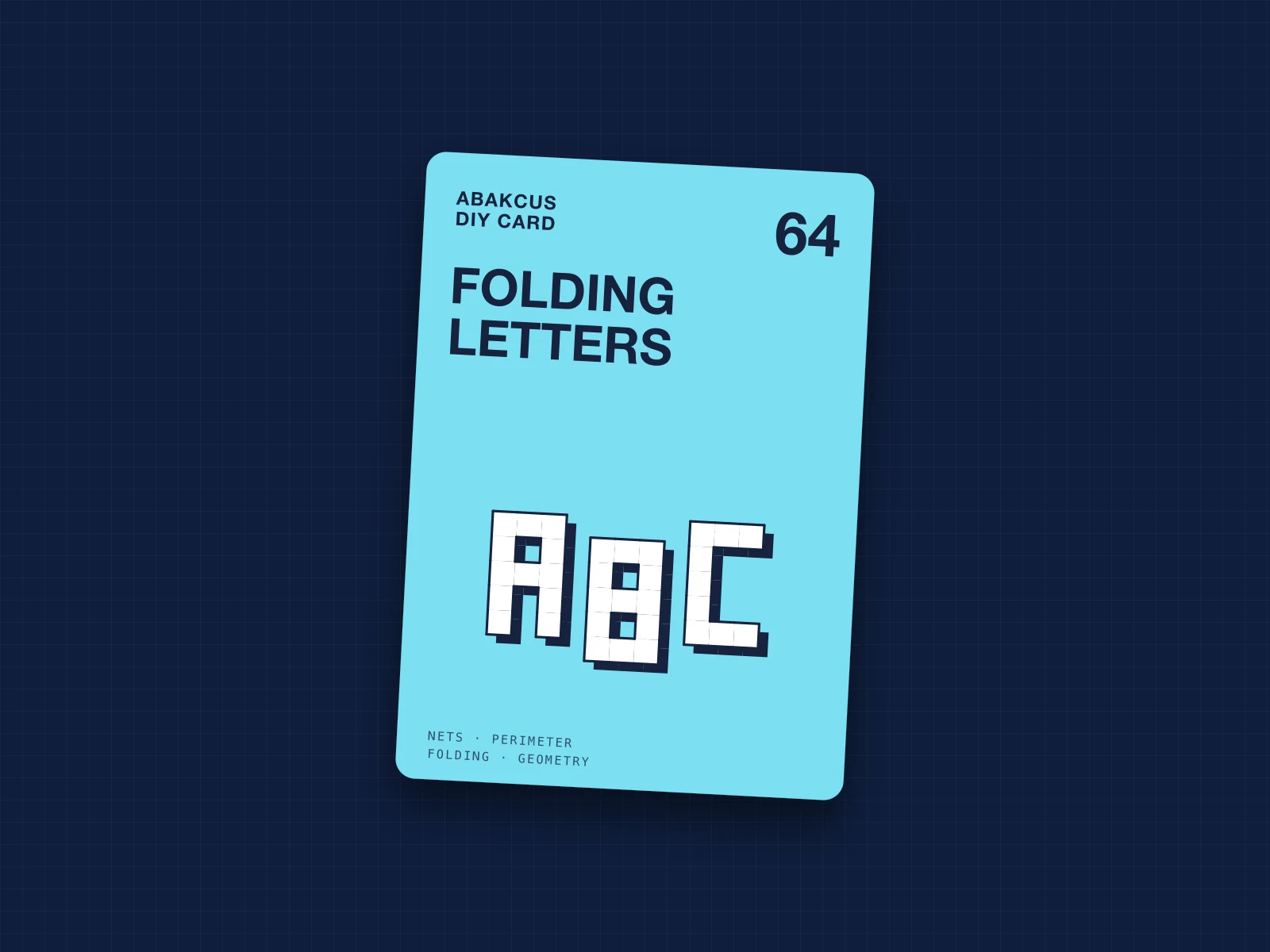
How to Make 3D Folding Paper Letters From Flat Nets
A sheet of card, a ruler and some careful folding. Two letter-shaped faces and one long strip make a bold 3D letter; make a few and spell out a name.
Open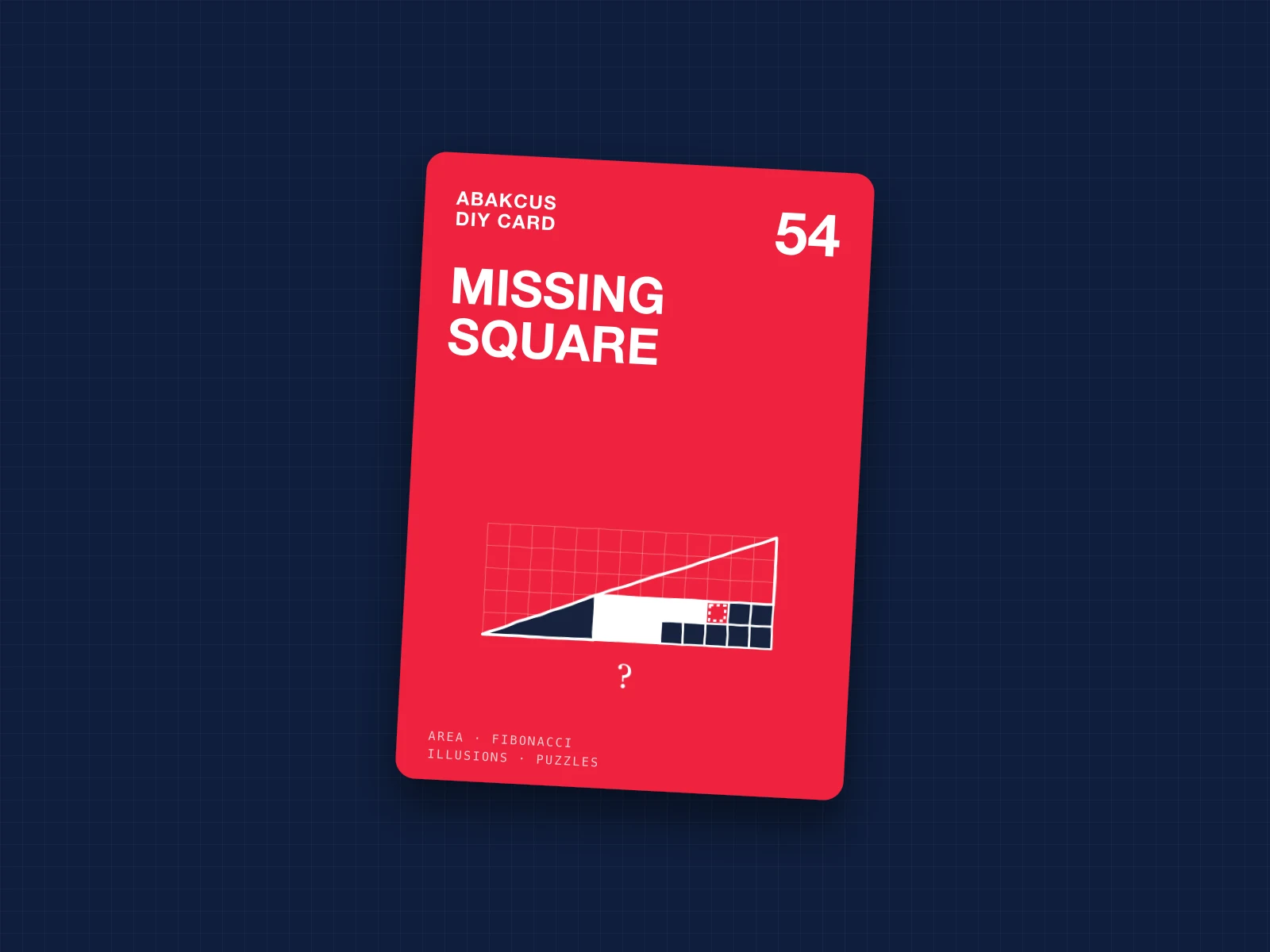
How to Make the Missing Square Puzzle and Find the Trick
Four pieces of card make a triangle. Swap two of them round and the same pieces make the same triangle, with a square missing. Where did it go?
Open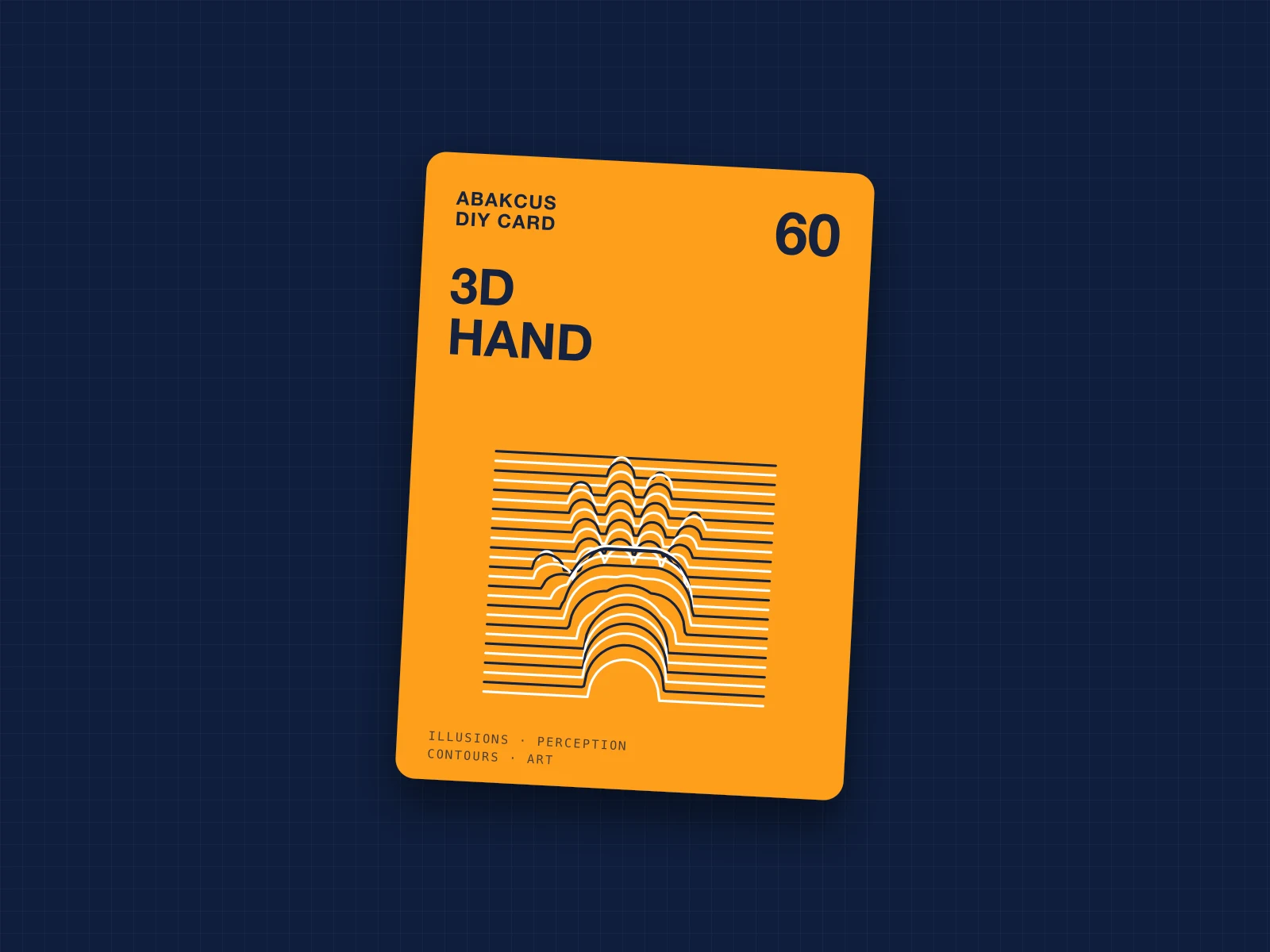
How to Draw a 3D Hand Optical Illusion With Curved Lines
Trace your hand, then draw nothing but lines across the page, each arching up as it crosses the outline. Thirty lines later, your hand rises off the paper.
Open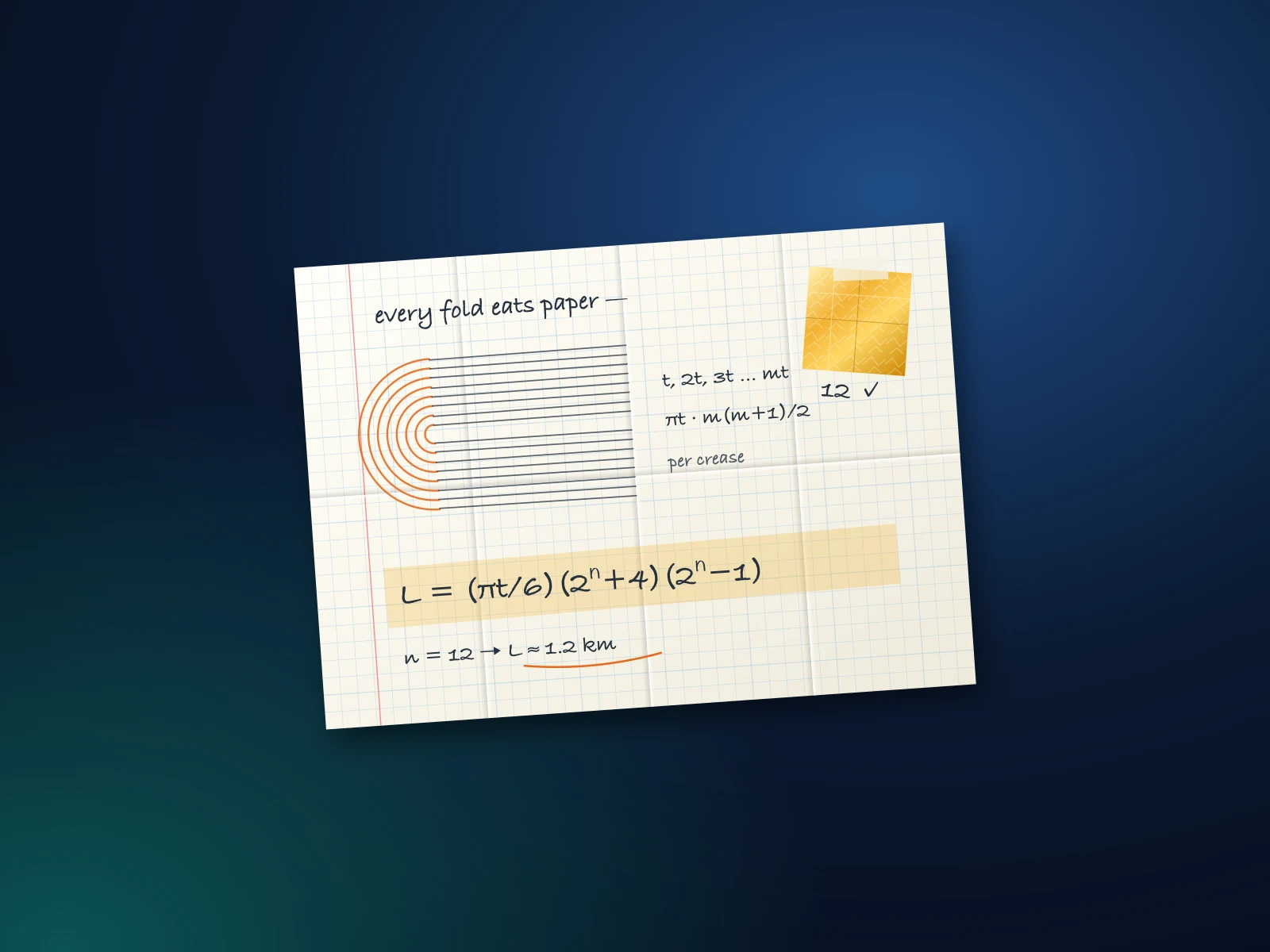
How Many Times Can You Fold Paper? Britney Gallivan's 12 Folds
Forty-two folds reach the Moon, yet paper quits at seven. A high-school junior worked out why — then folded a 1.2 km roll twelve times.
Open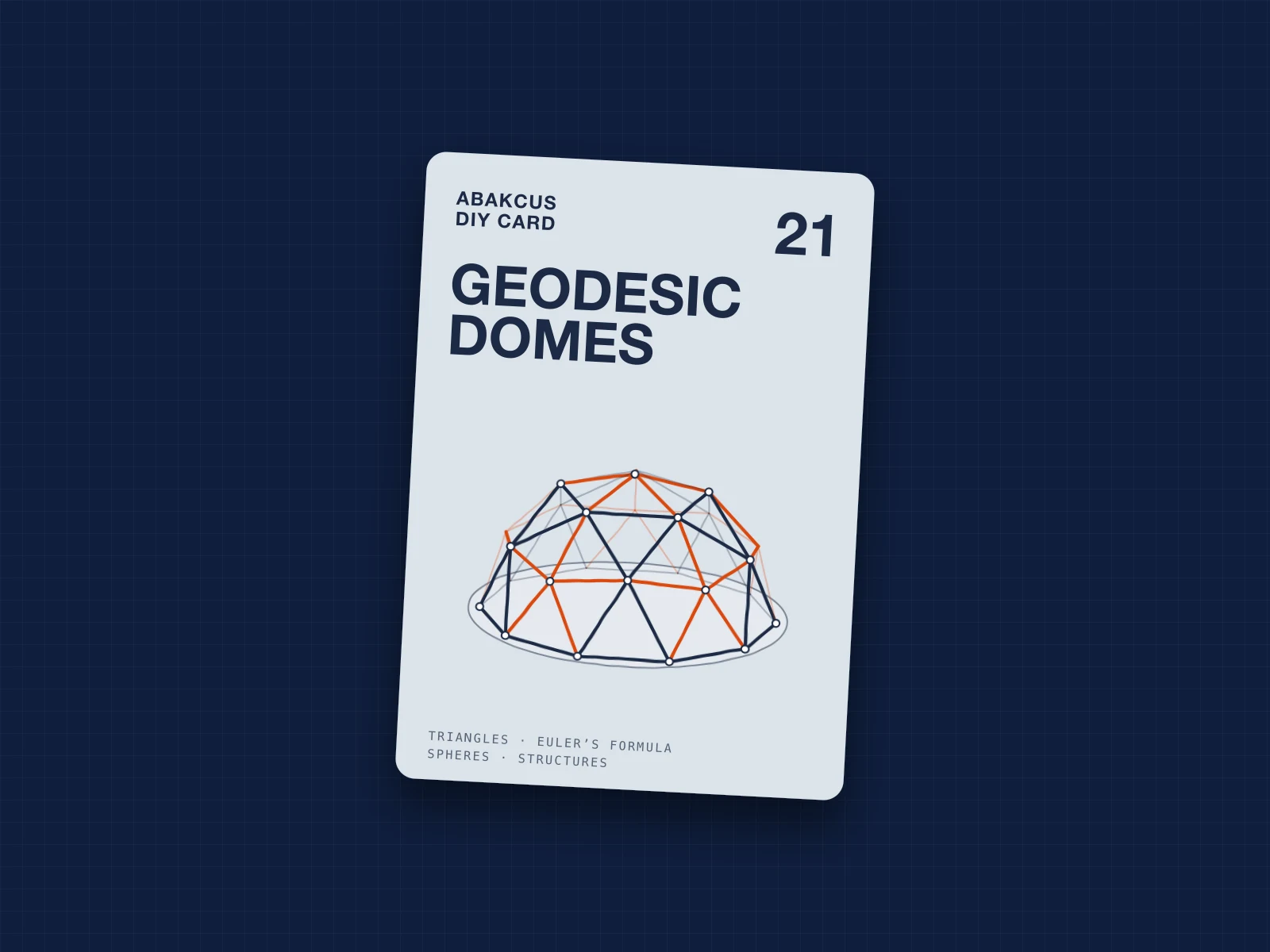
How to Build a Geodesic Dome From Newspaper
Sixty-five rolled-up newspapers, two lengths, a lot of tape: a dome two metres across that you can sit inside. Triangles can’t change shape, and that one fact holds the whole thing up.
Open