Book List · Einstein · Physics · Philosophy
Einstein never wrote a reading list. He left something better: the books that changed him, the ones he argued over in Bern, and the ones he wrote prefaces for.
Munich, a Thursday supper, 1889 — Bern, Kramgasse 49 — Princeton, 1953
Tap a cover to open the book.
18
books, every one documented in his own words or a friend's
64
years between the first (at 10) and the last (at 74)
10
read around one kitchen table in Bern
3
prefaces he wrote for books he loved
Most of the “books Einstein recommended” lists that circulate online have no source, because Einstein never sat down and wrote “read these ten books.” We have something better. In the Autobiographical Notes he wrote at sixty-seven, a text he called something like his own obituary, he described one by one which books changed him and how. A friend from his poor but crowded years in Bern later wrote down the books they took apart page by page at the Olympia Academy. And for the rest of his life he wrote prefaces for the books he loved and praised them by name in his letters.
I built this list from those three sources. Nothing is here that we don’t know Einstein actually read and dwelt on, and the order follows his life: from the booklet that fell into a twelve-year-old’s hands to the Galileo a seventy-four-year-old wrote a foreword for. Along the way you’ll find more philosophy than physics, and more literature than philosophy, which is the part I like best.
If you want the man behind the shelf, read this alongside When Einstein Walked with Gödel and the story of his Zurich Notebook, where two of these books quietly turn into general relativity.
Einstein’s life, one book at a time
1905
Age
26
On the shelf
13/18
The miracle year: light quanta, Brownian motion, special relativity, E = mc².
Part I · Books 1–3 · 1889–1892
A medical student comes to dinner every Thursday, and each time he brings a book a ten-year-old should not be able to read.
No. 01 · Read at 10, brought by Max Talmud
Aaron Bernstein · Naturwissenschaftliche Volksbücher, 1850s
Taught a ten-year-old that school could be wrong.
When Einstein was about ten, a poor medical student named Max Talmud came to the family for dinner every Thursday, and one day the young man brought Albert Bernstein’s volumes. Half a century later Einstein wrote that he read them with breathless attention. Across many small volumes Bernstein explained everything from light and distances to astronomy and nutrition in plain language, and thirty-two years later Einstein told Talmud the series was still very good, and in its day had been the best of its kind.
In the Autobiographical Notes Einstein also says these books convinced him that much of what he was taught at school could not be true, and planted a suspicion of authority that never left him.
No. 02 · Read at 12, the summer before school
Euclid, via Theodor Spieker's textbook · Lehrbuch der ebenen Geometrie, as Talmud remembered it
Showed a twelve-year-old that certainty is possible.
At twelve, before the school year began, a geometry book fell into his hands, and in the Autobiographical Notes Einstein called it the “holy geometry booklet.” What shook him was that a claim as far from obvious as the three altitudes of a triangle meeting in a single point could be proved beyond the faintest doubt. Around the same time an uncle told him about the Pythagorean theorem, and he wrote that he struggled to prove it on his own using similar triangles, and finally did — the same theorem that later found a proof from a future U.S. president.
Nobody knows for certain which book it was, but if you want to live through what Einstein lived through that summer, I’d skip the hunt for Spieker and go to the first book of Euclid’s Elements — ideally in Oliver Byrne’s colour edition. Forty-eight propositions later you arrive at Pythagoras, and anyone who has walked that road end to end understands why Einstein reached for the word “holy.”
He never forgot the booklet. In the Herbert Spencer Lecture at Oxford in 1933 he described Euclid’s geometry as the first logical system to advance with such certainty that none of its propositions could be doubted, and he put it bluntly: if Euclid failed to kindle your youthful enthusiasm, you were not born to be a scientific thinker.
Drag A, B or C. However you bend the triangle — even when it turns obtuse and the meeting point slips outside — the three gold altitudes never miss each other.
No. 03 · Read at 13
Immanuel Kant · Kritik der reinen Vernunft, 1781
Space and time as the mind’s own furniture — the idea he would later bend.
The third book on Talmud’s list was not a book for a thirteen-year-old, but Talmud handed it over and Einstein read it. Years later Talmud recalled that Albert, at that age, followed Kant comfortably even through the passages everyone else found impenetrable. For Kant, space and time came before experience: they were the moulds through which the mind looks at the world, and that is why Euclid’s geometry had to be true.
The irony of the story is that the boy reading this book would grow up to bend the very Euclidean space Kant called necessary, with general relativity. In later years Einstein wrote that the concepts Kant treated as given in advance are really conventions people freely choose — but he never lost his respect for him.
Part II · Books 4–13 · Bern, 1902–1904
A patent clerk, a philosophy student and a mathematician, one cheap supper, and ten books argued over until dawn.
In the spring of 1902, out of work in Bern, the young Einstein put a notice in the paper offering physics lessons. The first person to knock was Maurice Solovine, a Romanian philosophy student. Within weeks the lessons had turned into conversations, and when the mathematician Conrad Habicht joined them the three gave themselves a name with mock solemnity: the Olympia Academy.
Supper was usually a sausage, a slice of Gruyère, some fruit, honey and tea. Then they read until morning. Half a century later Solovine wrote the books down one by one, and the ten below come from his list.
No. 04 · The Academy's first book
Karl Pearson · The Grammar of Science, 1892
Science does not explain the world. It describes it, as economically as it can.
According to Solovine, this was the first book the Academy read. Pearson is remembered as one of the founders of statistics, but here he does something else entirely, arguing that science does not explain facts, it describes them as economically as possible. He takes force, matter and absolute motion, concepts physicists used without a second thought, and asks of each what it actually has to do with observation.
For a young clerk who spent his days at the patent office stripping hidden assumptions out of other people’s inventions, it’s hard to imagine a better opening book.
No. 05 · Olympia Academy, Bern
Ernst Mach · Die Mechanik in ihrer Entwickelung, 1883
The book that shook his faith in mechanics as the ground of everything.
At Olympia they read both Mach’s Analysis of Sensations and this book. In the Autobiographical Notes Einstein says plainly that this was the book that shook his dogmatic faith in mechanics as the foundation of everything. Mach goes after Newton’s spinning bucket of water and the idea of absolute space without mercy, arguing that rotation can only mean something relative to the other masses in the universe.
Einstein leaned on that idea so heavily while building general relativity that in 1918 he was the one who gave it a name: Mach’s principle.
No. 06 · Olympia Academy, Bern
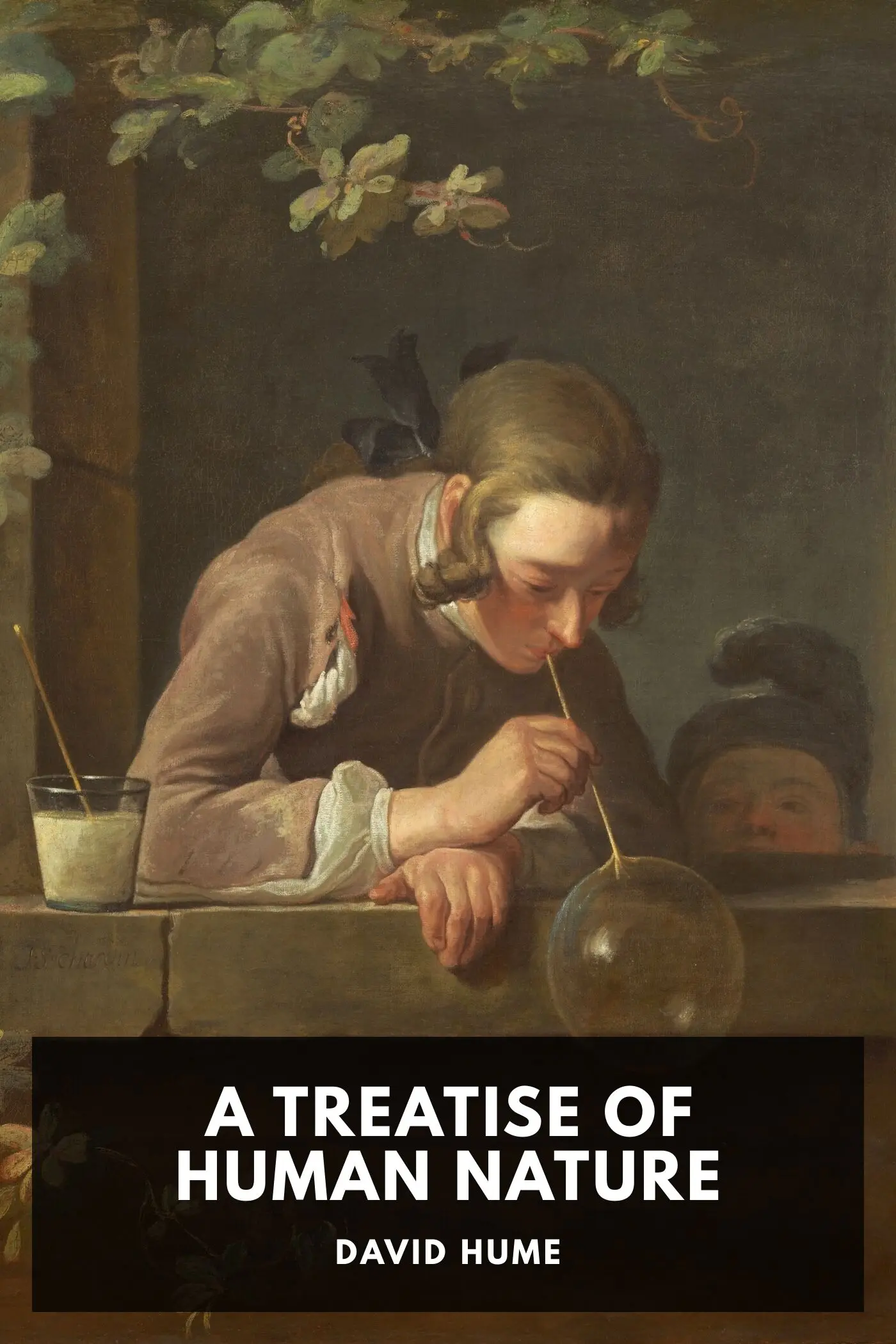
David Hume · A Treatise of Human Nature, 1739–1740
The habit of asking what “at the same time” actually means.
The book on this list most directly tied to special relativity may not be a physics book at all. In the Autobiographical Notes Einstein wrote that the critical thinking he needed to see that simultaneity is not absolute came from reading Hume and Mach, and in a 1915 letter to Moritz Schlick he stressed Hume’s influence even over Mach’s, saying he had read the Treatise with eager admiration shortly before finding relativity.
Hume says causation is not something we observe in the world; it is a habit born of seeing one event always follow another. Einstein turned the same gaze on time and showed that two distant events happening “at the same moment” is not given either — it needs a definition of how the clocks are to be synchronised.
No. 07 · Read for weeks, breathless
Henri Poincaré · La Science et l'Hypothèse, 1902
Read breathlessly for weeks, three years before 1905.
Solovine wrote that the Academy read this book breathlessly for weeks, and it seems to be the one that excited them most. Poincaré argues that the axioms of geometry are neither true nor false, only more or less convenient, and that non-Euclidean geometries are every bit as consistent as Euclid’s. In one chapter he argues that absolute space and absolute motion cannot be detected by any experiment, and that the laws of physics must stay the same for every observer in uniform motion.
The book came out in 1902. The special relativity paper came out in 1905.
No. 08 · Olympia, then for life
Baruch Spinoza · Ethica ordine geometrico demonstrata, 1677
Ethics laid out like Euclid, and a God of lawful harmony.
The full title means ethics demonstrated in geometrical order, and Spinoza really does proceed like Euclid, with definitions, axioms and propositions. It feels entirely natural to me that a child who found a geometry booklet holy would grow up attached to this book. Einstein never put down the Spinoza he read at Olympia, and in 1920 he even wrote a short poem about the Ethics.
In 1929, when a New York rabbi cabled to ask whether he believed in God, Einstein’s reply was a single sentence: he believed in Spinoza’s God, who reveals himself in the lawful harmony of all that exists.
No. 09 · Olympia Academy, Bern
Richard Dedekind · Was sind und was sollen die Zahlen?, 1888
Infinite means you can be matched with a part of yourself.
Picture a patent clerk, a philosophy student and a mathematician arguing after supper about what 1, 2, 3 actually are. In this slim book Dedekind builds the natural numbers while taking nothing for granted, using only sets and maps that send a set into itself, and proves why induction is a valid method of proof.
The book also gives the first rigorous definition of an infinite set. A set is infinite if it can be matched one-to-one with a part of itself, the way the natural numbers can be matched with the even ones. For a reader who loves mathematics, this is the most valuable book on the list — and if it hooks you, go on to Russell’s Introduction to Mathematical Philosophy, which picks up exactly where Dedekind leaves off.
n ↔ 2n
Top row: every natural number. Bottom row: only the even ones, a strict part of the top. Yet each number above has exactly one partner below, out to 8 and far beyond. For Dedekind, that is what it means to be infinite.
No. 10 · Olympia, understood ten years later
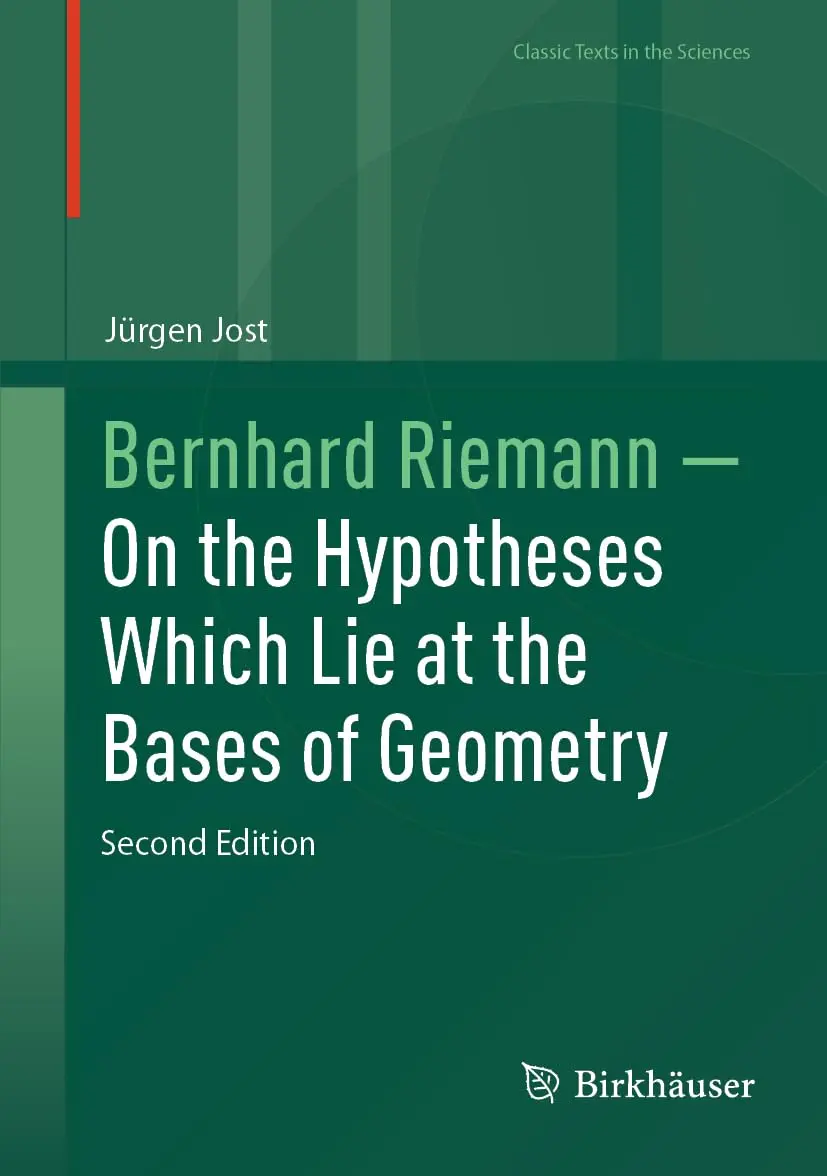
Bernhard Riemann · Über die Hypothesen, welche der Geometrie zu Grunde liegen, 1854
The language general relativity would one day be written in.
Riemann gave this talk in Göttingen as his habilitation lecture, and among the audience sat the seventy-seven-year-old Gauss. With almost no formulas he said that space might be curved, that its geometry cannot be known in advance, and that physics — the matter and forces inside it — might be what determines it.
Einstein read the text at Olympia but only understood how much it mattered ten years later. In 1912, when his old university friend the mathematician Marcel Grossmann showed him that the mathematics he was looking for was Riemannian geometry, general relativity had found its language. You can watch that happen, page by page, in the Zurich Notebook.
No. 11 · Olympia Academy, Bern
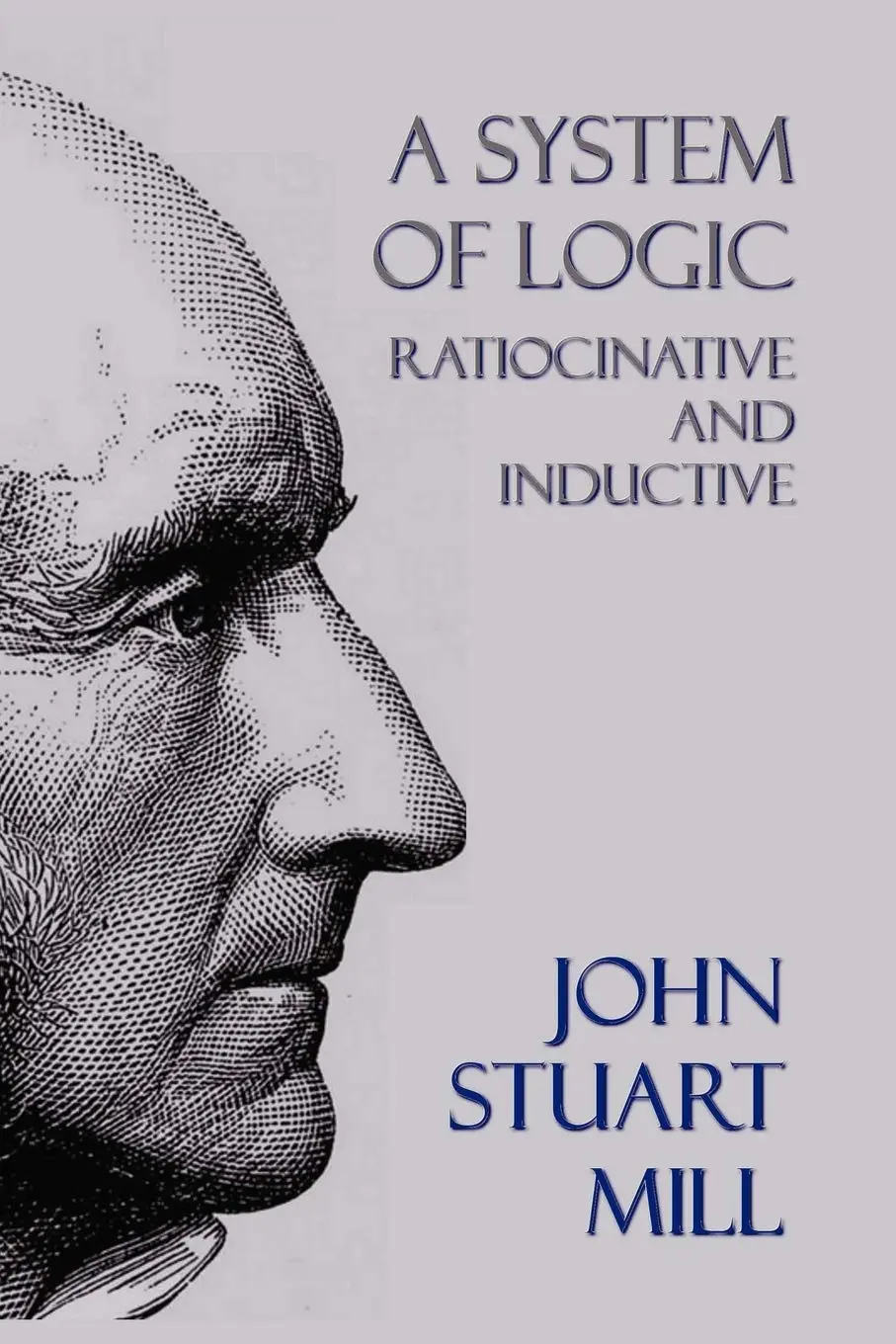
John Stuart Mill · A System of Logic, 1843
The view he built his own against.
Mill’s thick book is the most detailed defence of induction — of how we get from single observations to general laws — and Mill claims that even mathematics rests, in the end, on experience. The trio at Olympia wrestled with that claim, and in later years Einstein went the opposite way, arguing that the basic concepts of physics cannot be extracted from observation; they are free inventions of the mind.
I think the book is worth reading not because Einstein agreed with it, but to see what he was arguing against while he built his own view.
No. 12 · Olympia Academy, Bern
Sophocles · c. 441 BC
Conscience against the law of the state.
The Olympia Academy did not read only science and philosophy, and Sophocles’ Antigone was among the literature the three read together. The story of a girl who defies the king’s ban to bury her brother has, for two thousand four hundred years, told the conflict between the state’s law and a person’s conscience with the same sharp edge.
When you remember that in the First World War Einstein was one of only four people to sign a counter-manifesto against the war, that he stayed at odds with authority all his life, and that decades later his conscience would torment him over the letter to Roosevelt, it’s clear why this book sits on the shelf.
No. 13 · Olympia Academy, Bern
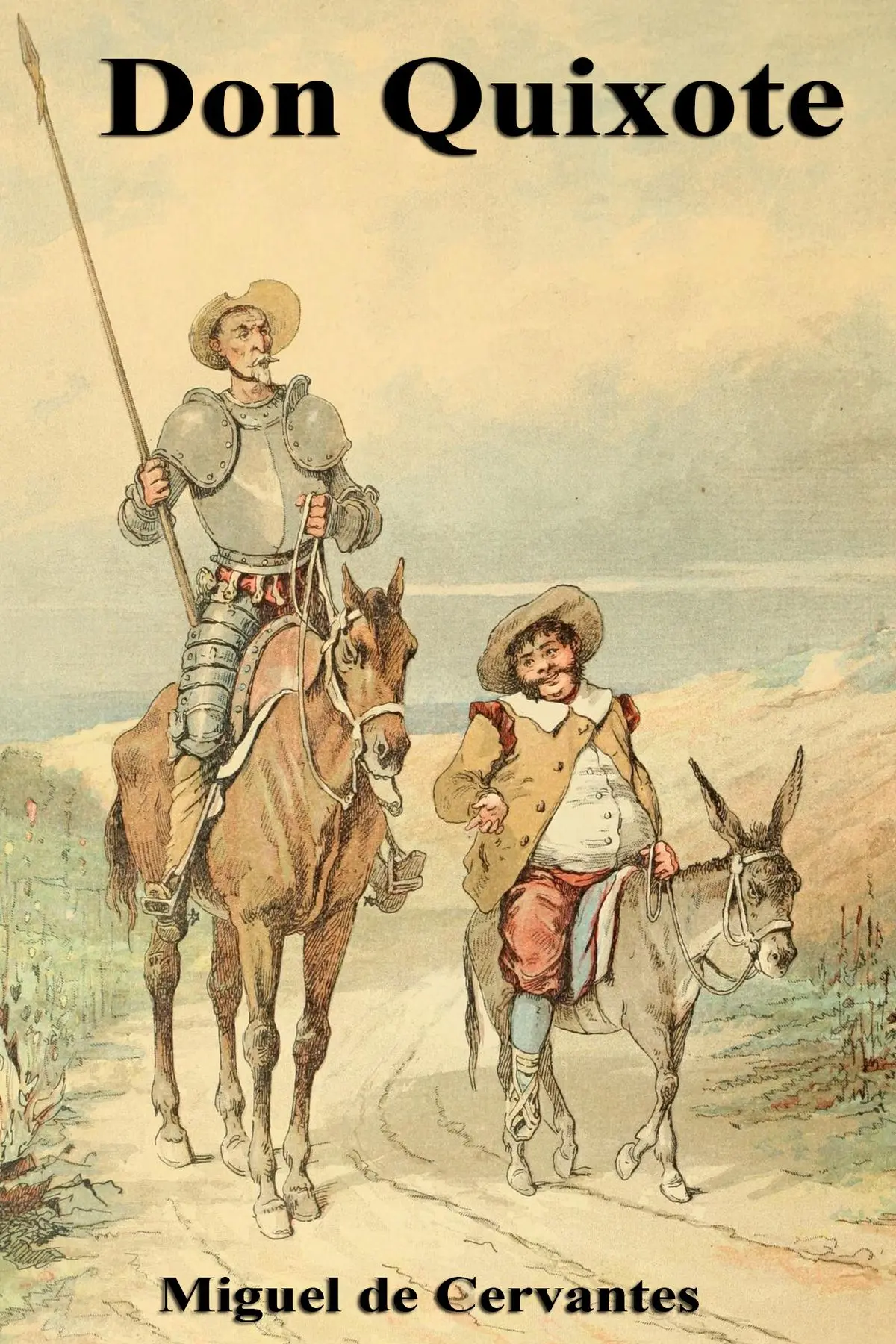
Miguel de Cervantes · El ingenioso hidalgo don Quijote de la Mancha, 1605–1615
The man everyone laughs at, charging anyway.
Cervantes’ novel was also among the literature read at Olympia. Surely nobody had to point out to Einstein the likeness between a knight charging windmills and a man who gives his years to an idea everyone else laughs off. For the ten years he spent building general relativity, most of his colleagues looked at him exactly that way.
“Somebody who reads only newspapers and at best books of contemporary authors looks to me like an extremely near-sighted person who scorns eyeglasses.”
Albert Einstein, on the classics, 1952
Part III · Books 14–18 · 1920–1953
The famous professor, now writing the forewords himself: a novel he loved above any scientist, and the old masters he felt he owed.
No. 14 · Praised to Ehrenfest, 1920
Fyodor Dostoevsky · Brat'ya Karamazovy, 1880
More than any scientist gave him — more even than Gauss.
The book a physicist praised most highly on this whole list is a novel. In 1920 Einstein wrote to his friend the physicist Paul Ehrenfest that The Brothers Karamazov was the most wonderful book he had ever laid hands on, and in conversations from the same years with the journalist Alexander Moszkowski he said Dostoevsky gave him more than any scientist — more even than Gauss.
The sentence gets its weight once you remember that the man saying it had put Gauss’s work on curved surfaces at the foundation of general relativity. I consider this novel the heart of Einstein’s list.
No. 15 · Foreword to Diels's translation, 1924
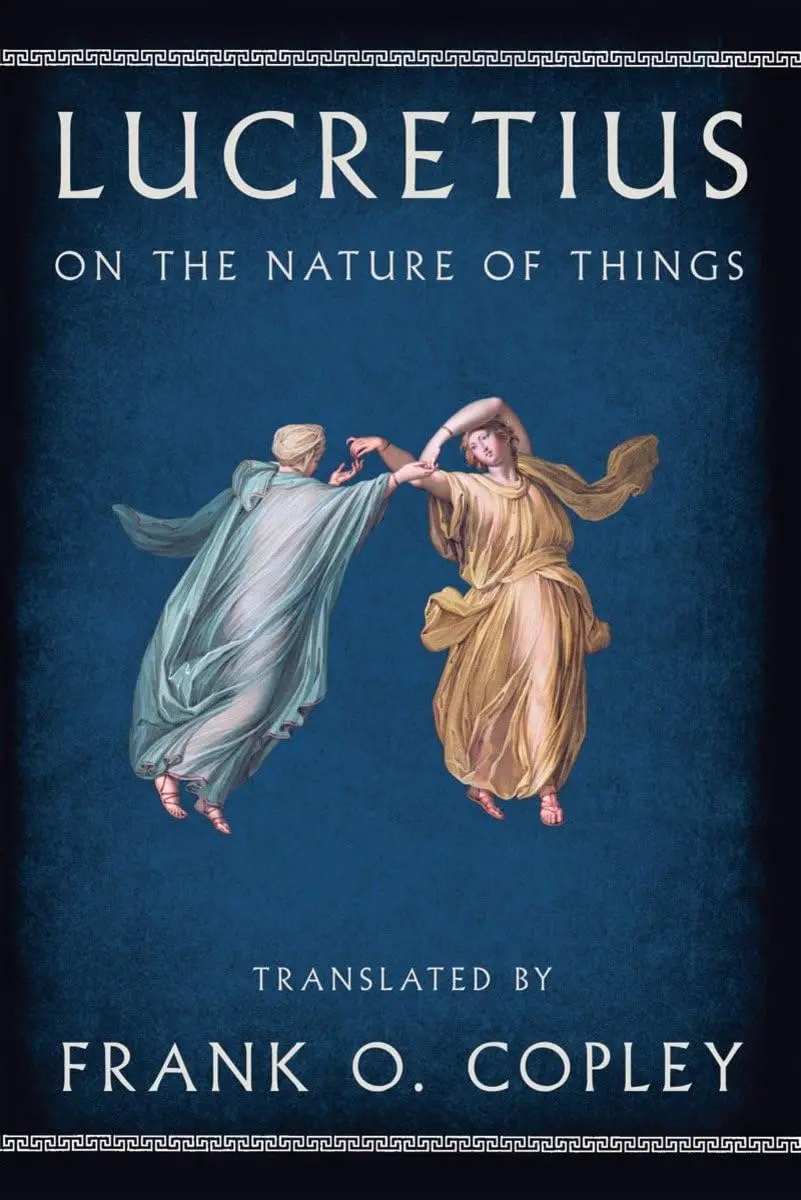
Lucretius · De rerum natura, 1st century BC
Atoms, sung two thousand years before Brownian motion.
The Roman poet Lucretius explains, in a long poem of six books, that everything is made of tiny indivisible particles. In 1924 Einstein wrote the introduction to the German translation by the classical philologist Hermann Diels, and said that anyone not wholly swept up in the spirit of the age would read the book with great pleasure.
What makes the foreword interesting is its author. One of the strongest pieces of evidence that atoms really exist was the 1905 paper on Brownian motion — written by Einstein, in the same miracle year as E = mc². The man who made an idea sung two thousand years earlier testable by experiment paid his respects to the poet with this foreword.
No. 16 · Quoted in “What I Believe”, 1930
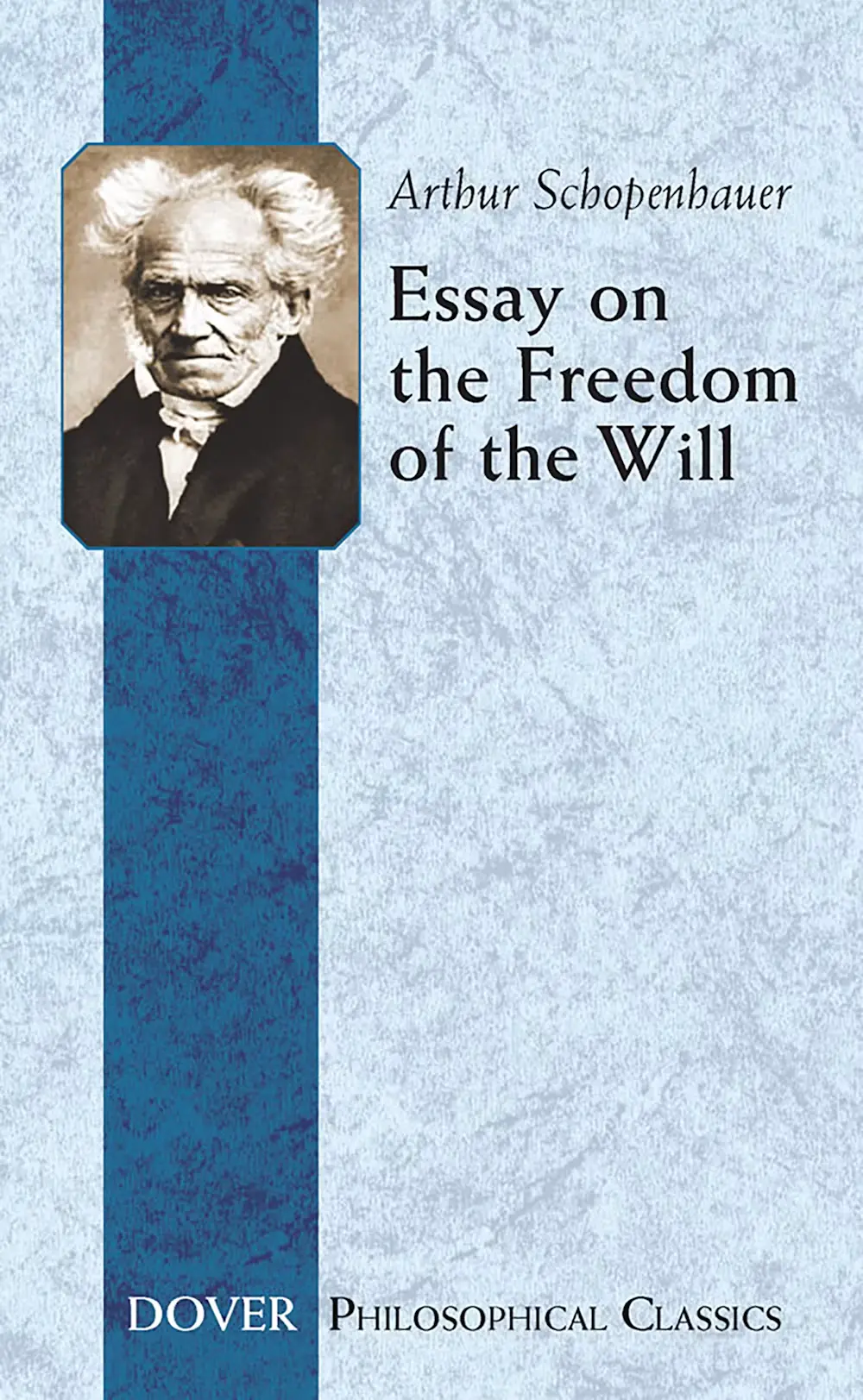
Arthur Schopenhauer · Über die Freiheit des menschlichen Willens, 1839
A man can do what he wills, but cannot will what he wills.
In 1930, in a short essay setting out his view of the world, Einstein said he had carried one sentence from this essay of Schopenhauer’s with him since his youth: a man can do what he wills, but he cannot will what he wills.
Einstein wrote that the sentence had been a comfort to him, both in the hardships of his own life and in looking at what others did, and that it kept him from taking himself and other people too seriously. The essay had won a prize competition set by the Royal Norwegian Society of Sciences.
No. 17 · Foreword, 1931
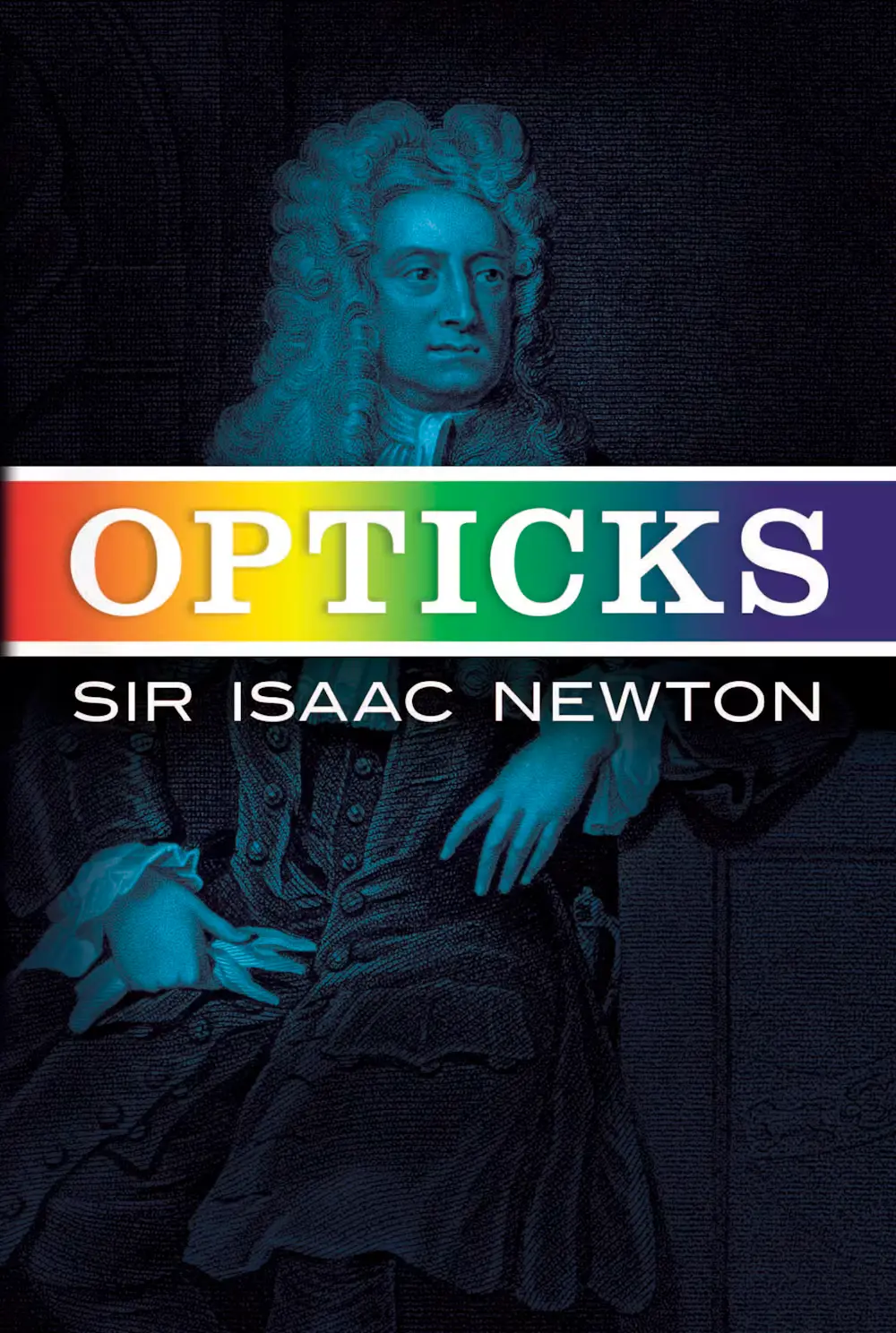
Isaac Newton · Opticks, 1704
The happy childhood of science.
In 1931 Einstein wrote a short foreword for a new edition of this book, and he ended it by addressing Newton directly, saying he had lived in the happy childhood of science. Newton splits white light into its colours with prisms, shows that each colour has its own angle of refraction, and tells all of it step by step, through experiments rather than formulas.
In the “Queries” at the end of the book Newton left open whether light is made of particles. The person who answered that question in 1905, with a paper proposing that light travels in packets of energy — and who won the Nobel Prize for that work, not for relativity — was, once again, Einstein.
No. 18 · Foreword to Drake's translation, 1953
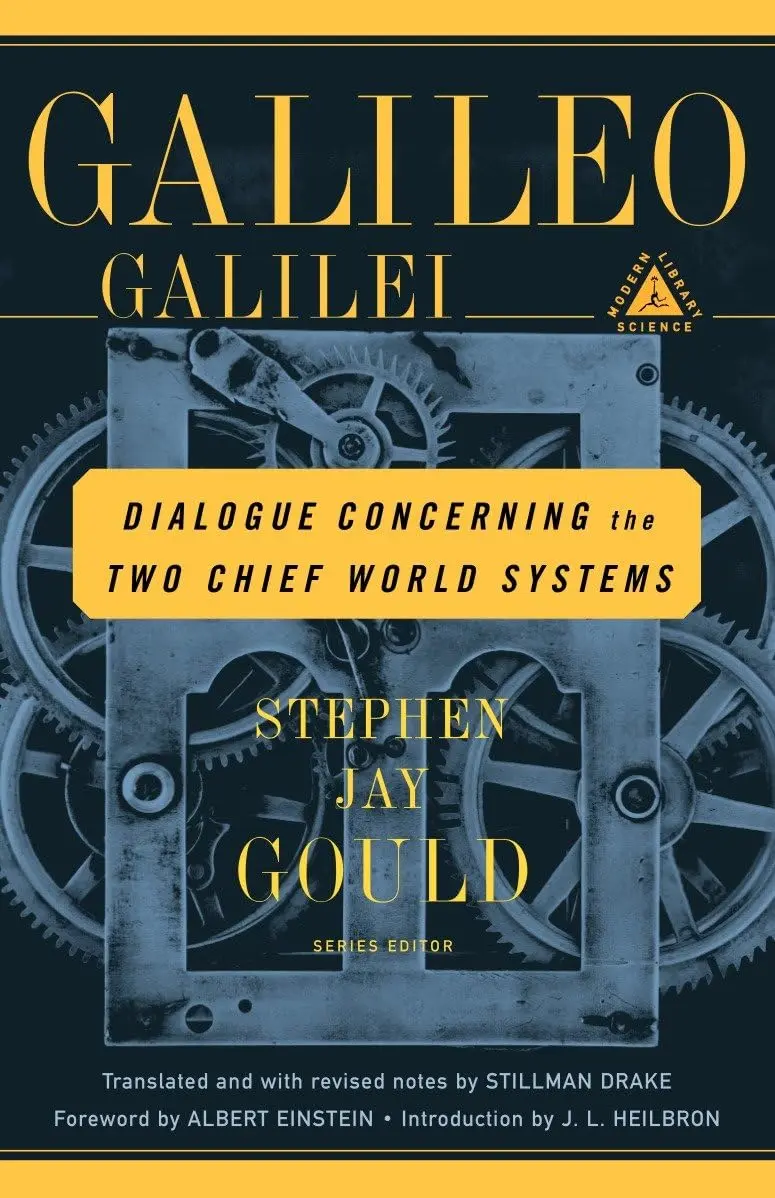
Galileo Galilei · Dialogo sopra i due massimi sistemi del mondo, 1632
The ship’s cabin where relativity begins.
This is the book that brought Galileo before the Inquisition. When this dialogue, in which three men argue over four days whether the Earth or the Sun stands at the centre, became readable again in Stillman Drake’s 1953 English translation, Einstein wrote the foreword. He presented Galileo as a man defending reasoning and experiment against dogma, and said that attitude was the book’s true hero.
You’ll also find Galileo’s ship in this book. Shut in the cabin of a ship moving steadily, no experiment can tell you whether the ship is moving at all, and that paragraph is the first clear statement of what we now call the principle of relativity. It’s a fitting place to end: the last book Einstein introduced was the one where his own idea first appeared, three centuries before him.
Read top to bottom, the list tells a story of its own. A boy learns from popular science not to trust his teachers, learns from Euclid what certainty feels like, and learns from Kant that space and time might be the mind’s own furniture. A young clerk and two friends then spend two years taking every one of those certainties apart. And the old man, famous everywhere, keeps going back to a Russian novel and to the masters he felt he stood on.
For a very different kind of physics shelf, see the books a Harvard physics student recommends, or start where Einstein started, with Euclid.
Keep wandering
A few more pieces in the same spirit — math, design, and slow attention.
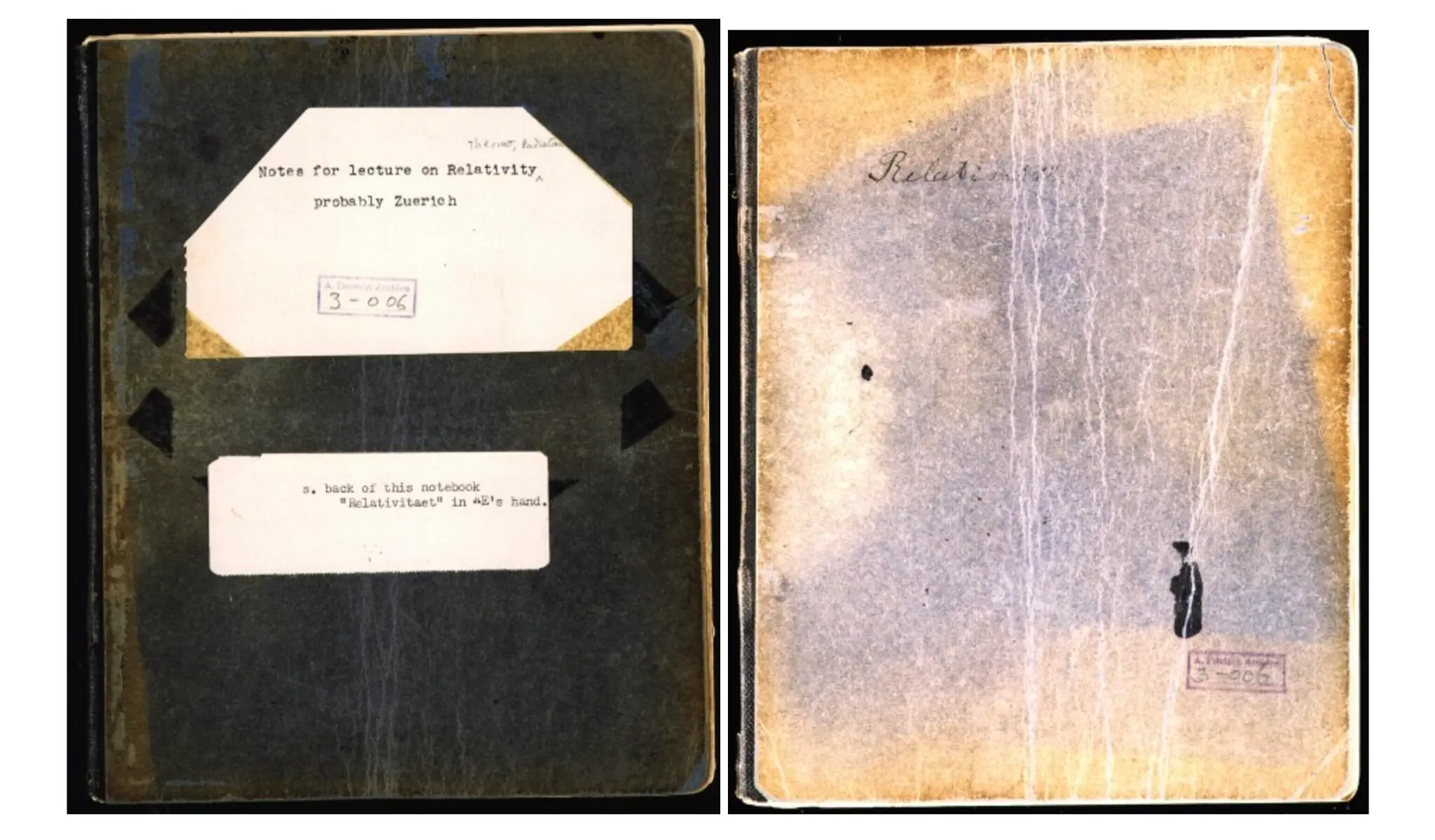
The notebook where general relativity didn't work yet
Zurich, 1912–1913 — puzzles, line elements, wrong turns, and the path to November 1915.
Open
When Einstein Walked with Gödel
The biggest questions in math and physics — told like stories worth losing sleep over.
Open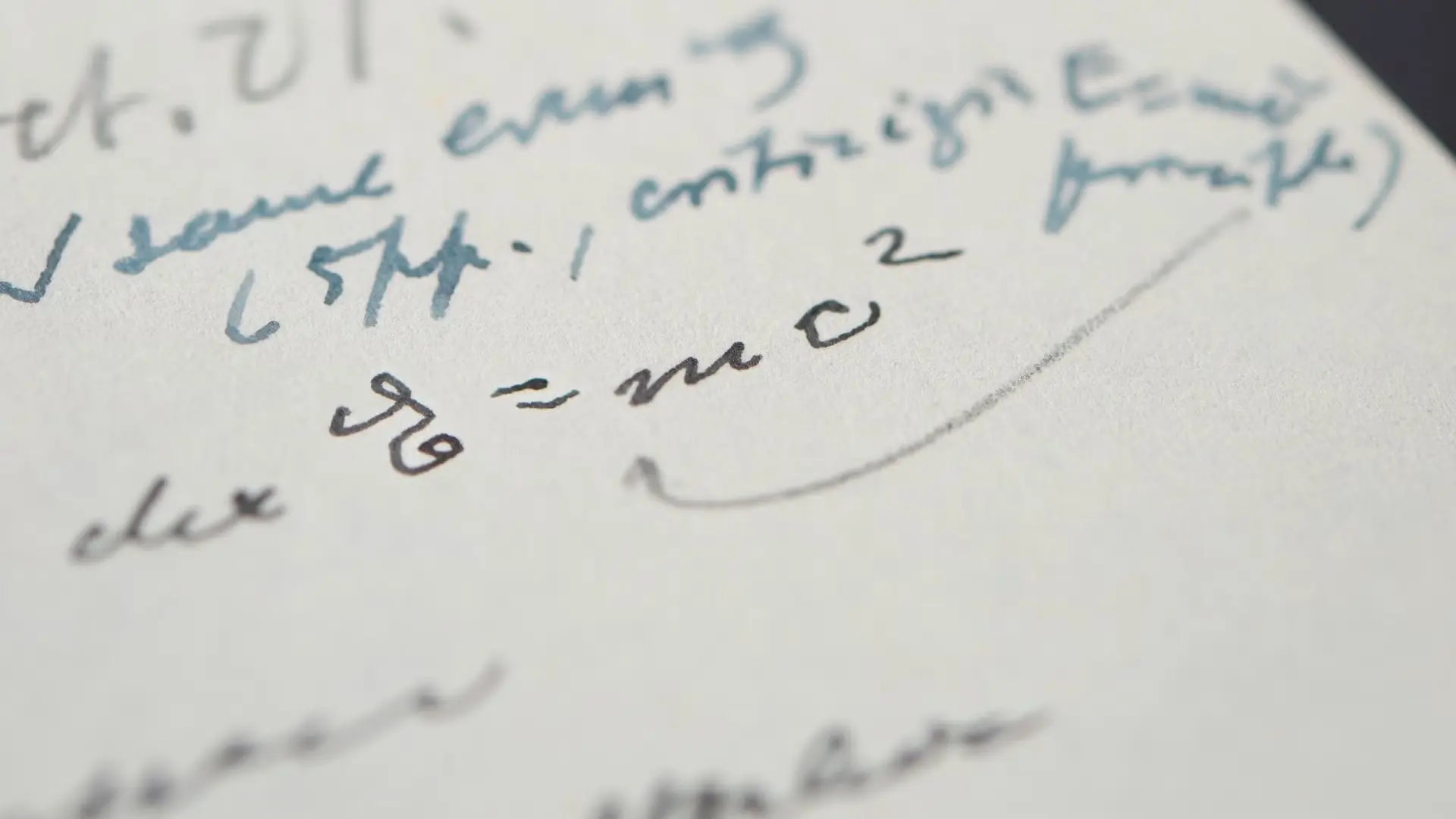
When Did Einstein First Write E = mc²?
The world's most recognized equation did not appear in its familiar form in 1905. The paper trail from Einstein's journal paper to the 1912 manuscript to the 1946 letter.
Open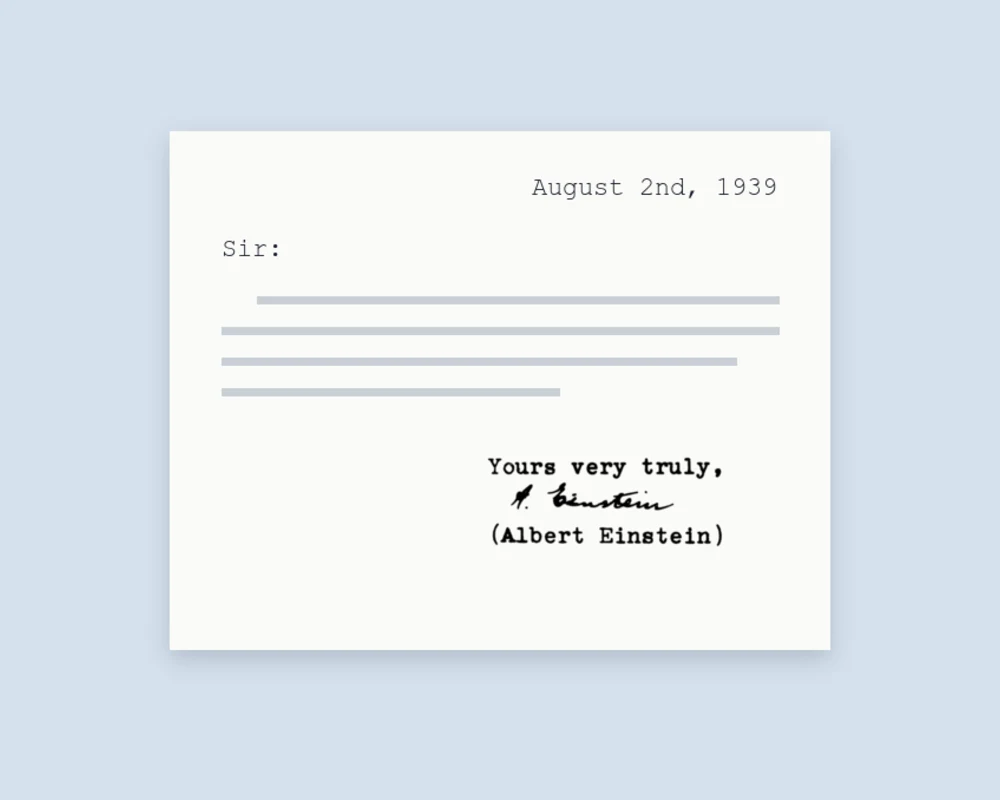
Einstein's Letter to Roosevelt, Read Line by Line
Two typed pages from August 2, 1939. Leo Szilard wrote them, Einstein signed them, and they became the first sheet of paper in America's atomic bomb program.
Open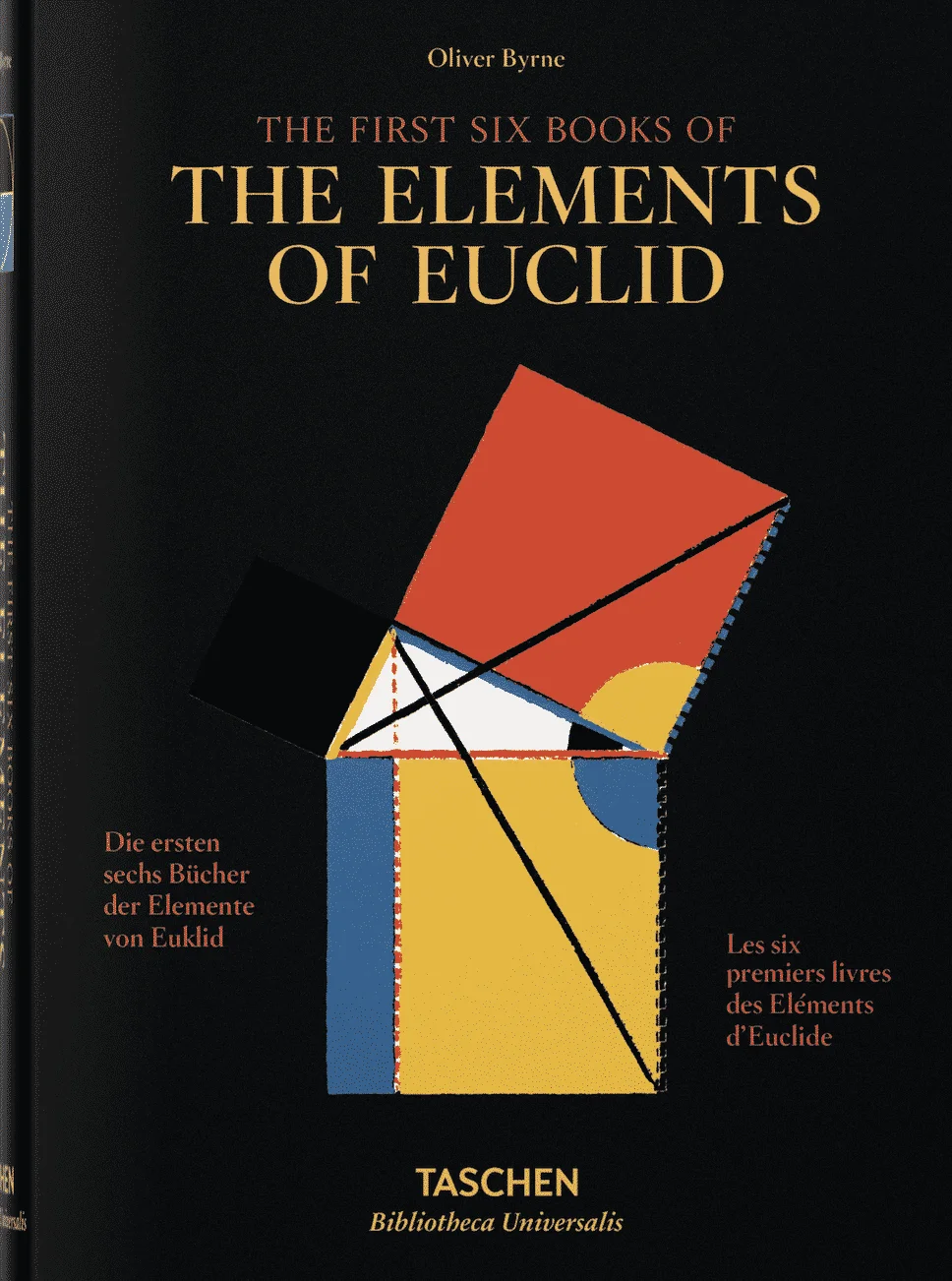
The First Six Books of the Elements of Euclid
Red, yellow, blue, black. Euclid in colour. Before Mondrian, before the Bauhaus — 1847.
Open
Written in Prison. In Print for a Century.
In 1918, Bertrand Russell was given a cell, a desk, and six months with nothing urgent to do. He used them to write the clearest introduction to the foundations of mathematics ever published.
Open