The Belgian photographer Barbara Iweins had moved house eleven times. After a divorce in which her ex-husband took nothing, she was left alone with all of it. She decided to photograph every single item she owned — not to curate, not to select, not to show her best side. Every item. Without exception.
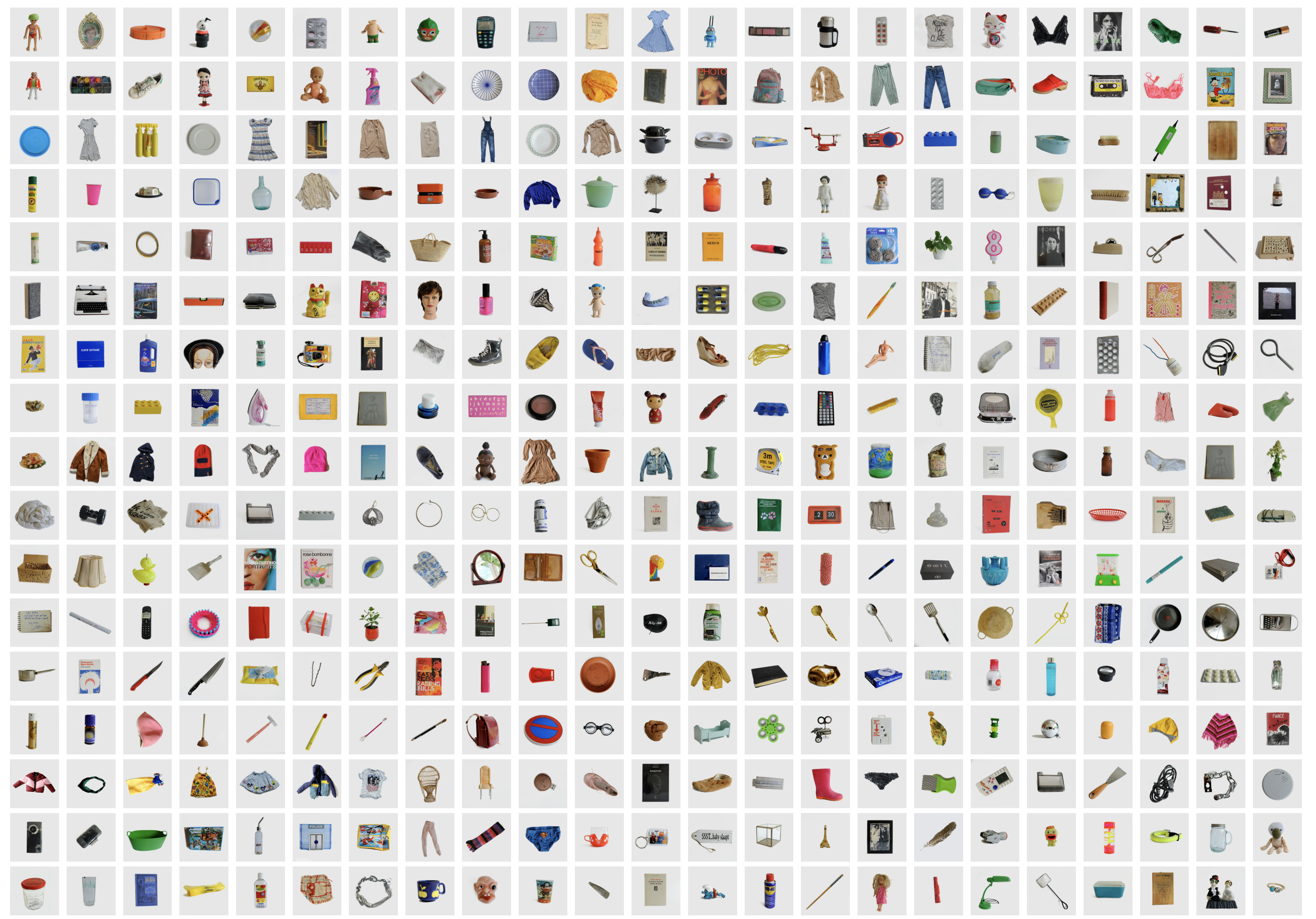
What followed was five years of work, averaging fifteen hours a week. The result was 12,795 photographs, a 360-page hardcover book, a shortlisting for the 2023 Rencontres d'Arles Author Book Awards, and a spreadsheet that knows things about Barbara Iweins that she did not know about herself before she built it.
Katalog — Barbara Iweins
The complete project, book, and exhibition details.
Selected findings from the inventory
The Method
Each object was photographed individually, isolated on a neutral light grey background — removed from its drawer, its shelf, its context — and classified along four axes: material, color, frequency of use (daily to never), and emotional value. The photographs are rigorously uniform. Same lighting, same angle, same white void. A lice comb gets the same treatment as a hospital bracelet from the day she gave birth.
This formal equality is not accidental. Placing everything on the same terms makes the sorting — the judgment — happen afterward, in the data. The eye is not guided. The camera does not editorialize. It is the same instinct that drives Byrne's decision to use color rather than labels in his Euclid — strip away convention, and see what the thing actually is.
“I hoped to say goodbye to many things, but ended up loving so much more of my belongings.”
— Barbara Iweins
What She Found
The project produced surprises of both kinds. Among the obviously funny: she owned six or seven metal lice combs. Each had been lost, replaced, found again. The inventory revealed a small stockpile of objects she had been continuously losing and re-buying without ever realizing it. Ninety percent of her cables were never used — packed and unpacked eleven times without examination.
Among the quieter revelations: she estimated the total value of all 12,795 items at 121,046 euros. Of those objects, she concluded that only one percent held genuine sentimental value — the things she could not replace. The other 99 percent were, in principle, disposable.
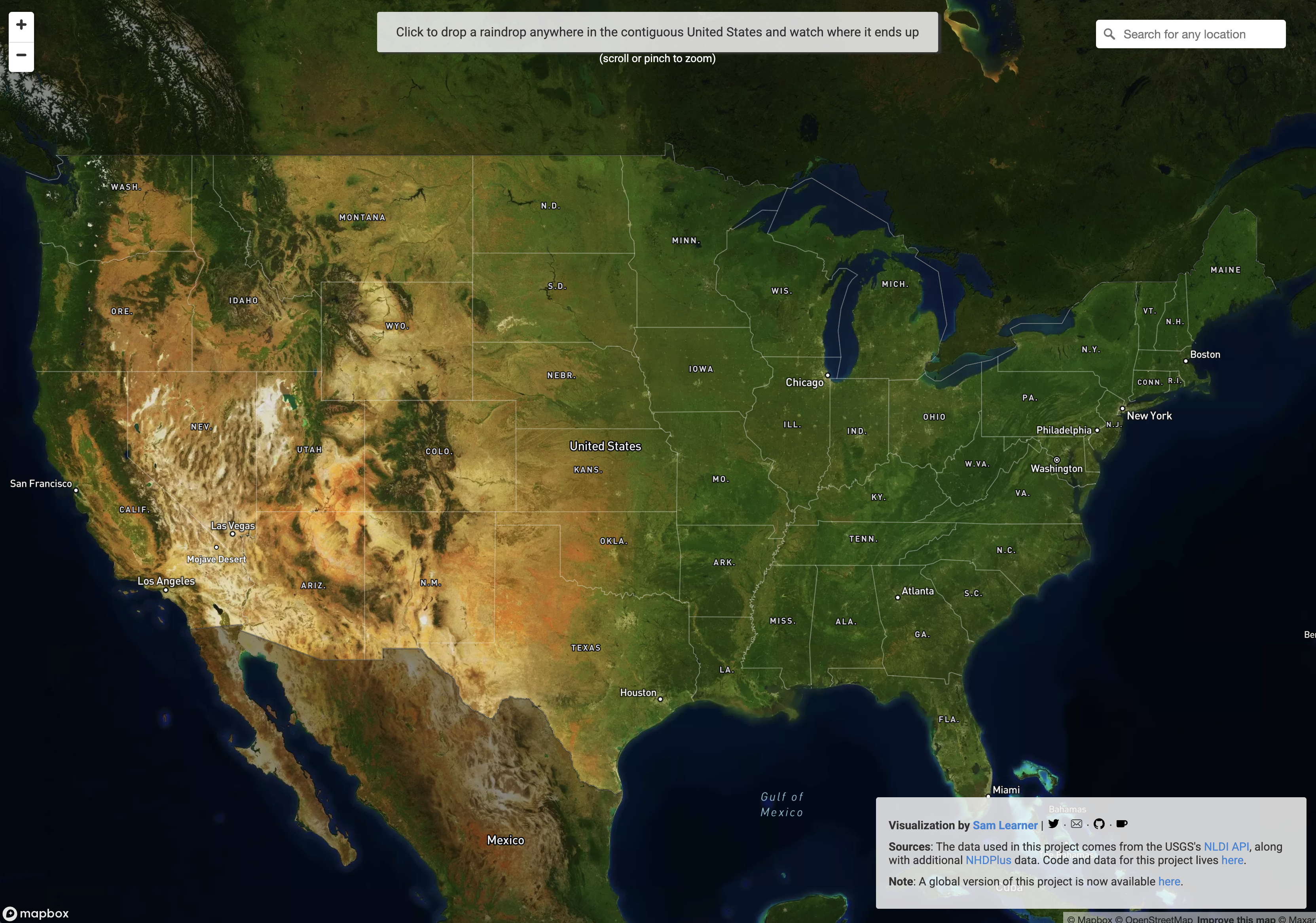
This is the number that stays with you. Not the 12,795, not the 16% blue, not the useless cables. The fact that a person can live surrounded by nearly thirteen thousand objects and conclude that only about 128 of them actually matter. It is a different kind of inventory than what River Runner does with watersheds — but the underlying move is the same: make everything visible, then see what you actually have.
Not Marie Kondo
Iweins is careful to distinguish what she was doing from the genre of minimalist decluttering with which it might superficially overlap. She did not throw things away. She did not apply a single criterion of joy or utility and discard whatever failed the test. She is, by her own description, a neurotic collector, and the project did not cure that. The act of isolating each object — photographing it, classifying it, placing it on a grey background where it had to be seen — produced something closer to the opposite: a renewed attachment to the mundane.
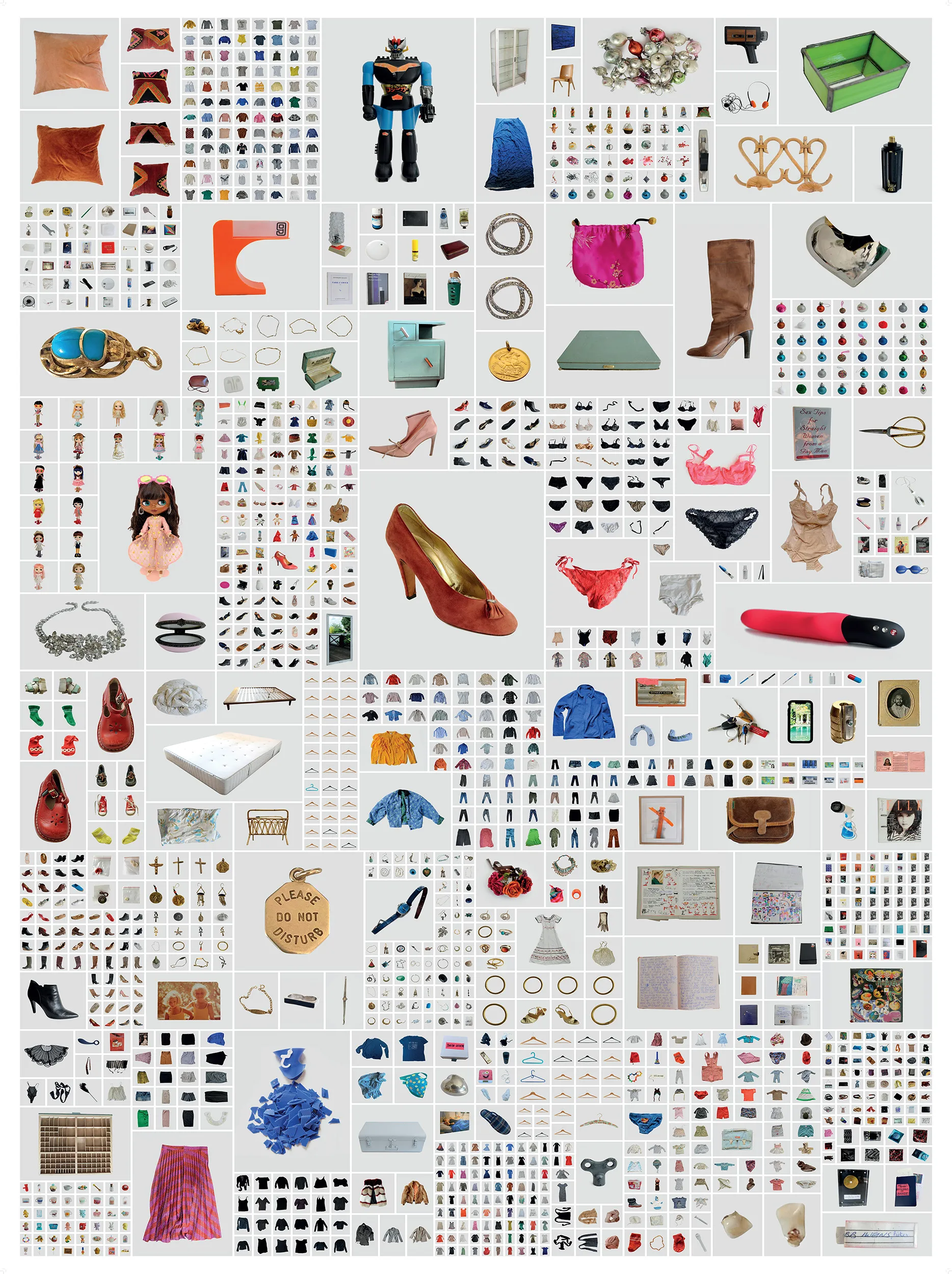
A fridge magnet that has lost its plastic coating but still holds a child's drawing acquires, when looked at directly, an importance it was never given while sitting on the fridge. A leaking bottle of cough syrup, isolated and lit properly, turns out to have aesthetic properties worth preserving. The grid starts to resemble taxonomy — scientific illustration, the kind where you see forty specimens of the same beetle arranged to show morphological variation. Except the subject is a single Belgian household, and the variation is biographical.
“Most of my possessions are more a source of confusion than pleasure.”
— Barbara Iweins
The Real Subject
Iweins had spent the preceding decade photographing other people's vulnerability. Katalog is the inversion: turning the same methodology on herself, using her possessions as the material of a self-portrait she could not have composed any other way. The timing was not incidental. A divorce, a boyfriend who subsequently died, the eleventh move, the opening of the last box.
The project began as, in her words, an act of self-preservation — something to do every day, a system for organizing her life by organizing the objects in it. Bringing order to the material world while the personal world was in disorder. The catalogue as therapy. The taxonomy as coping. It is the kind of self-imposed system that the Feynman Technique describes from the other side — you do not really understand something until you can lay it out completely, piece by piece.
Whether it worked, she is not entirely sure. But the project is done. She knows what she owns. She knows which 1% matters. She has, she said, identified which objects are valuable.
Now, she added, she can start living.