The Feynman Point: Six 9s in a Row at Digit 762 of π
Recite π for 761 decimal places and you run straight into 999999, a run so tidy it sounds like a punchline. Here’s where it sits, how unlikely it was, and where your own number is hiding.
- where the 9s start
- 762
- where the 9s start
- odds of six 9s this early
- 1 in 1,458
- odds of six 9s this early
- the next 999999
- 193,034
- the next 999999
Seven hundred sixty-one digits, then six 9s
π starts out the way you’d expect a random number to: 3.14159 26535 89793… Nothing repeats for long. The first pair of equal neighbours, a 33, shows up at the 24th decimal. The first triple, 111, waits until the 153rd. Then, at decimal places 762 to 767, the digits suddenly go 999999.
That spot is the Feynman Point. It is also the first place in π where any digit appears four times in a row, five times in a row, or six. π skips all the smaller runs and jumps straight to six.
Here’s a fun side effect: round π to 767 decimal places and the run flips over like an odometer. The digits …1134999999 followed by an 8 round up to …1135000000, so a perfectly honest rounding of π ends in six zeros.
“…nine, nine, nine, nine, nine, nine, and so on.”
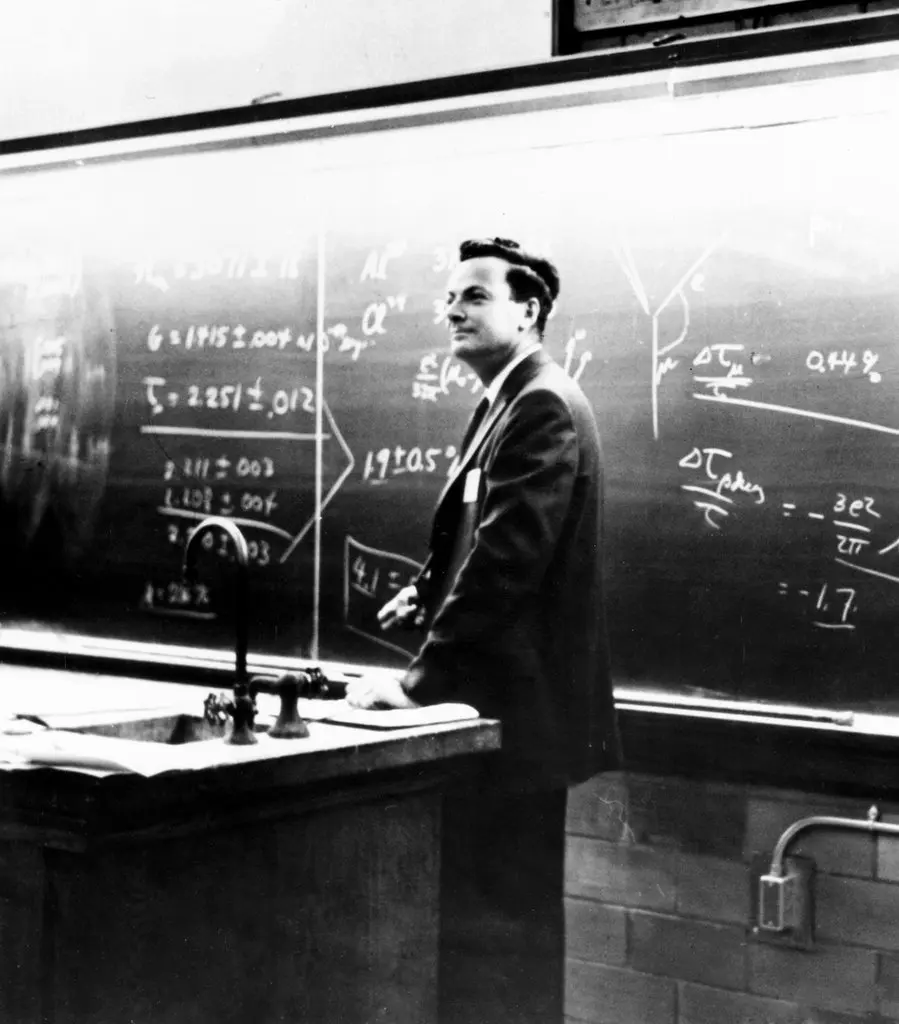
The name comes from a story about Richard Feynman. He supposedly said he’d like to memorise π up to that point, so he could recite 761 digits, finish on the six 9s and add “and so on,” as though π had settled into 0.999… forever and turned out to be a tidy rational number after all.
It sounds exactly like him, the same man who picked safes at Los Alamos and wrote it all up in Surely You’re Joking, Mr. Feynman! But the line itself is hard to pin down. Nobody has found it in his books, lectures or letters, so it’s best enjoyed as folklore that suits him perfectly. The name stuck anyway, and today pi reciters around the world treat the six 9s as a milestone.
Try it · Recite π
Walk to the Feynman Point
000
decimals said
3.14159265358979323846264338327950288419716939937510582097494459230781640628620899862803482534211706798214808651328230664709384460955058223172535940812848111745028410270193852110555964462294895493038196442881097566593344612847564823378678316527120190914564856692346034861045432664821339360726024914127372458700660631558817488152092096282925409171536436789259036001133053054882046652138414695194151160943305727036575959195309218611738193261179310511854807446237996274956735188575272489122793818301194912983367336244065664308602139494639522473719070217986094370277053921717629317675238467481846766940513200056812714526356082778577134275778960917363717872146844090122495343014654958537105079227968925892354201995611212902196086403441815981362977477130996051870721134999999837297804995
At a calm 3 digits a second, a reciter needs a little over four minutes to reach the punchline. The pace slows on its own for the 9s.
A 1-in-1,458 coincidence
If you wrote down digits at random, six 9s in a row would turn up roughly once every million digits or so. Getting them within the first 767 is a long shot: about 0.069%, or 1 in 1,458. Loosen the rule to six-of-a-kind in any digit and it’s still only about 1 in 146.
So it’s unusual, but not spooky. π has endless stretches where something improbable could happen, and we only gave this one a name because it sits early enough for a person to recite. Drag the sliders and see how fast the odds change.
Try it · How lucky was π?
Odds of a run this early
Imagine π’s digits were rolled on a fair ten-sided die. How often would a run like this show up so soon?
Chance
0.0686%
Roughly
1 in 1,458
Every digit gets its turn (almost)
Keep going and the other digits catch up. Here’s where each one first appears six times in a row within the first million decimals. The next 999999 doesn’t arrive until decimal 193,034. At 710,100 there are seven 3s in a row. And six 0s never show up in the first million at all.
- 999999
decimal 762 · and again at 193,034
- 888888
decimal 222,299
- 555555
decimal 244,453
- 666666
decimal 252,499
- 111111
decimal 255,945
- 777777
decimal 399,579
- 333333
decimal 710,100 · actually seven 3s
- 444444
decimal 828,499
- 222222
decimal 963,024
- 000000
— · not in the first million
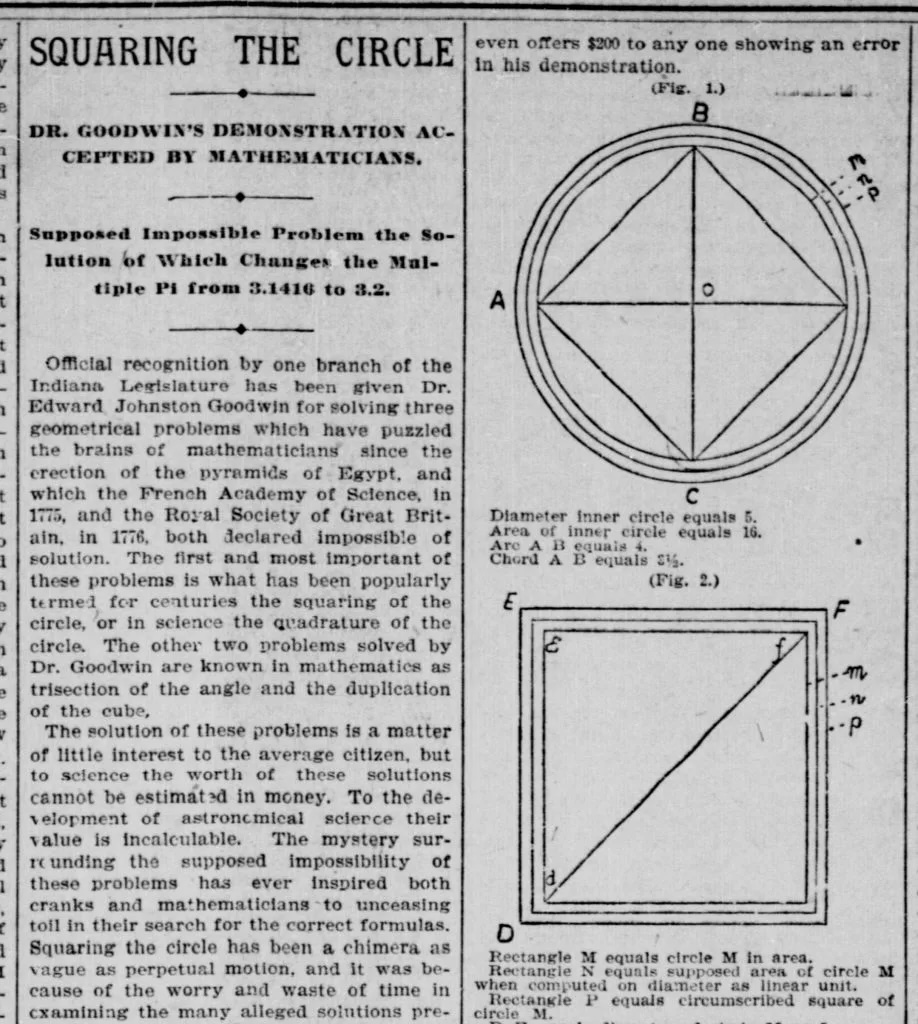
Is that fair play? Nobody knows. Mathematicians suspect π is normal, meaning every digit and every block of digits turns up equally often in the long run, but no one has proved it. Six 0s will very likely appear eventually. Proving that they must is another story. π has a way of drawing people in, from the obsessive hero of Darren Aronofsky’s Pi to the Indiana lawmakers who almost voted on its value.
Find your own Feynman Point
Any six-digit string, a birthday in DDMMYY for example, has about a 63% chance of showing up somewhere in the first million decimals. Type yours in. The digits were computed fresh for this page with the Chudnovsky formula, the same method record-setting π computations use.
Try it · Search a million digits
Where is your number in π?
A birthday (DDMMYY), a phone PIN, your jersey number. Up to 12 digits, searched across the first 1,000,000 decimals.
0.999… = 1
That’s why the joke works. A decimal that ends in 9s forever is just a rational number in disguise, the way 0.999… is exactly 1. π can never do that, and we’ve known it since Johann Lambert proved π irrational in 1761. So the six 9s are a feint: π looks like it’s about to settle down, then carries on with an 8 and never repeats.
If you like learning things by explaining them out loud, Feynman had a method for that too: the Feynman Technique. For more short curiosities like this one, browse the Math Facts collection.