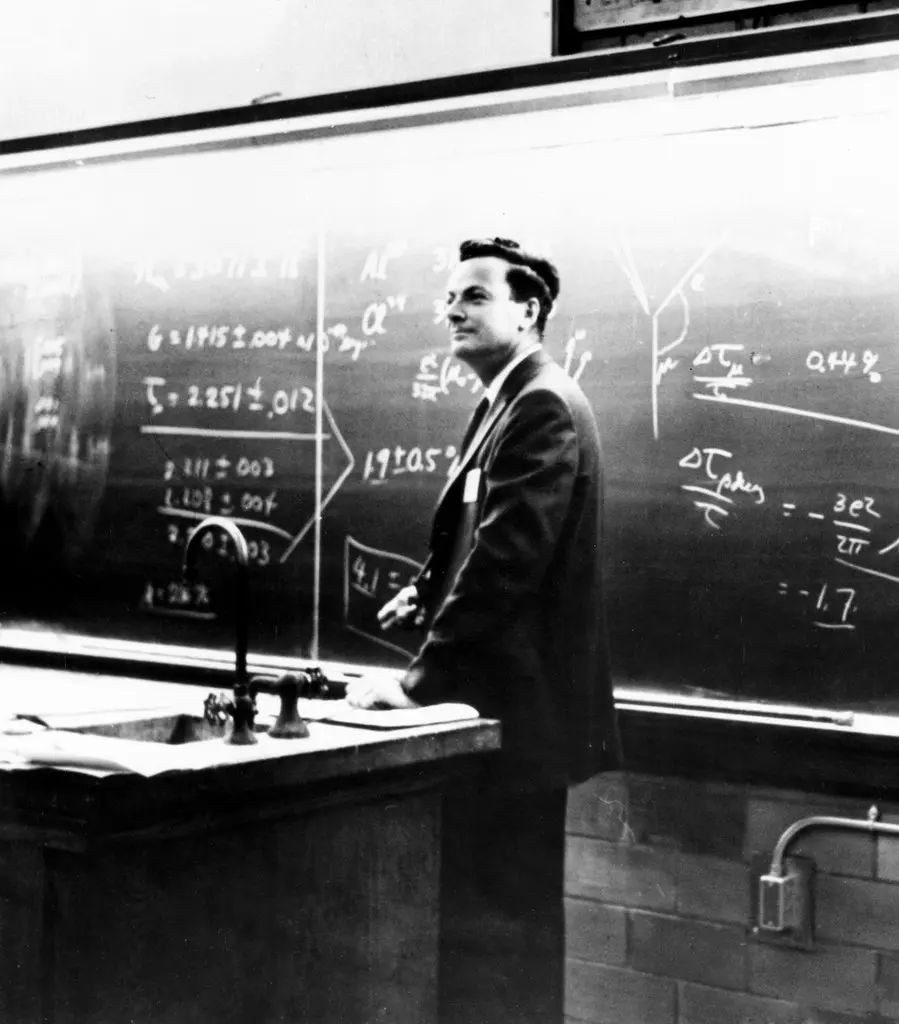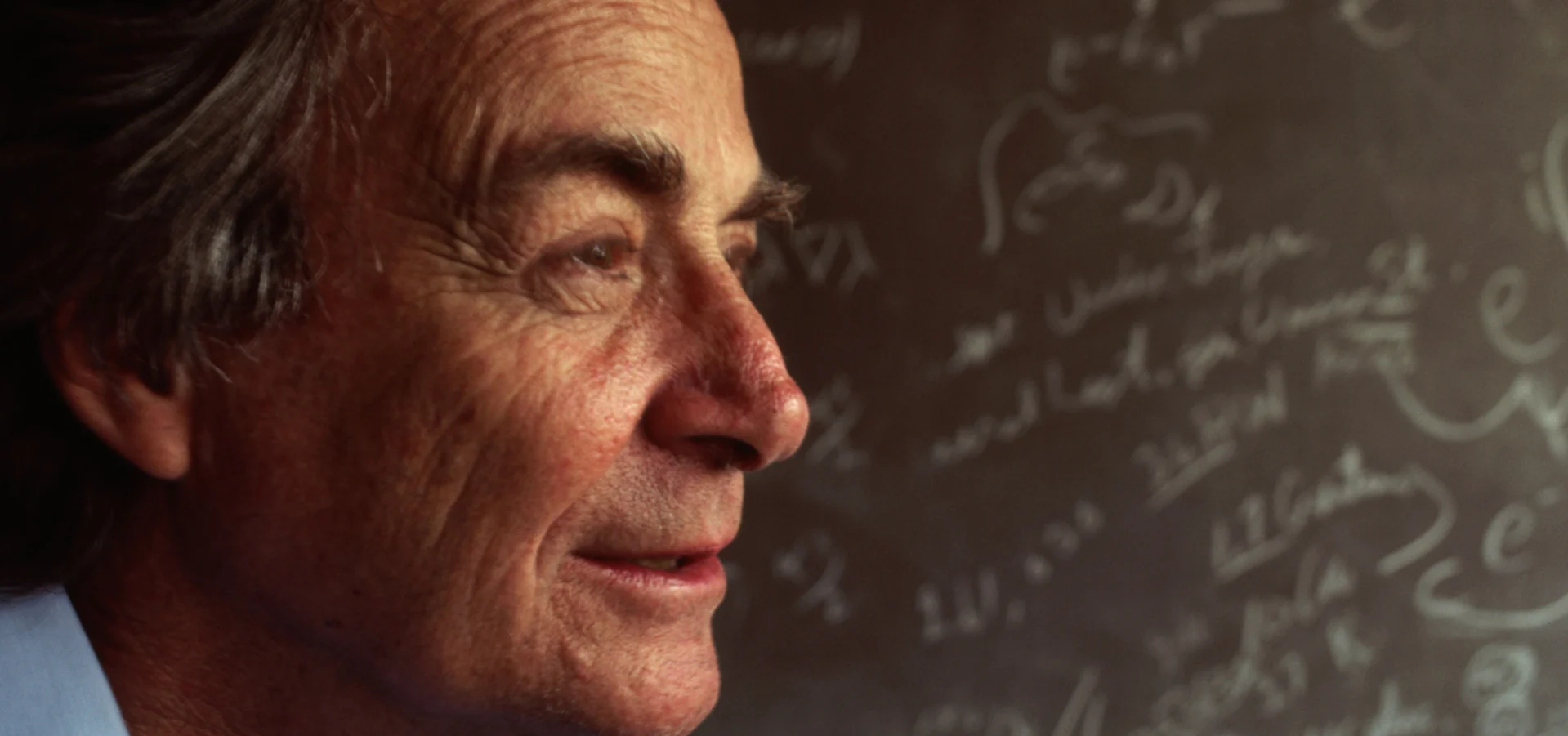
Richard Feynman is remembered for the things that can be drawn on a blackboard. The diagrams that carry his name turned pages of brutal calculation into little pictures of particles meeting and parting. He cracked safes at Los Alamos for sport, played bongo drums, and told the Rogers Commission exactly why the Challenger’s O-rings had failed by dropping a piece of rubber into a glass of ice water on live television. The public Feynman is all wit, all clarity, a man who seemed to find the universe more amusing than anyone else in the room.
This is not that letter. This is the one he wrote to a woman who had been dead for a year and a half, and never sent, because, as he put it at the very end, he did not know her new address.
Arline
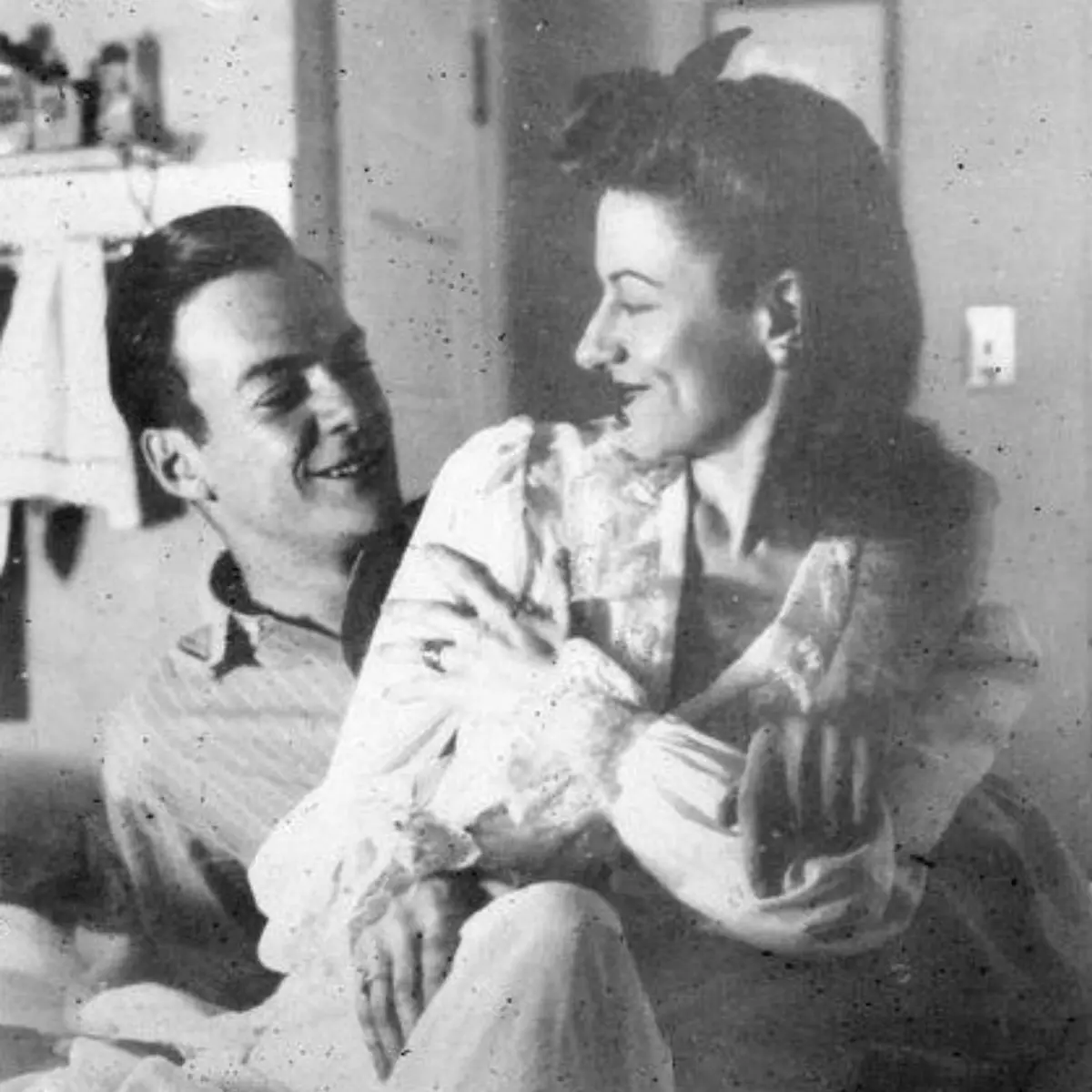
Arline Greenbaum lived down the road in Far Rockaway. They met as teenagers, and by his junior year Feynman already knew he wanted to marry her. He called her his idea-woman, the general instigator of their wild adventures, the one who loved and understood things he could barely appreciate himself. They were not alike. They were, in the words of one biographer, symbiotic opposites, each completing the other.
Then came the symptoms. Fevers, swellings, lumps that appeared and vanished. In 1941 the diagnosis arrived: lymphatic tuberculosis, most likely from unpasteurized milk. The doctors did not expect her to live more than two years. Antibiotics for tuberculosis did not yet exist. Streptomycin, the drug that would have saved her, finished its first clinical work only a few years too late. She died on the wrong side of a window that was closing as she lay in it.
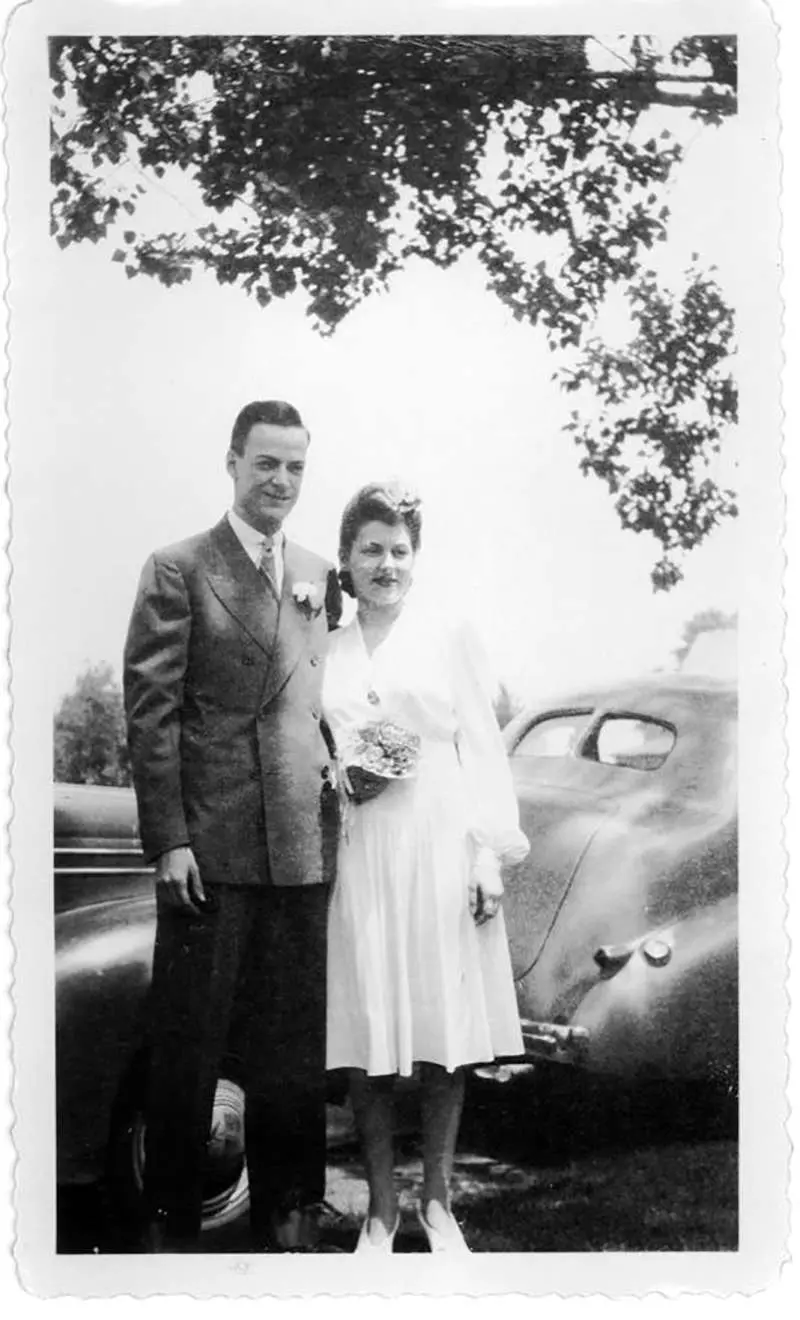
Feynman married her anyway, in 1942, against the protests of both families. His own mother said such a marriage should be illegal. They wed in a city office on Staten Island with two strangers pulled in from the next room as witnesses, and he could not kiss her on the lips for fear of the disease. He took her straight to a hospital and visited on weekends.
Los Alamos
When Oppenheimer recruited him to the Manhattan Project, Feynman accepted on one condition that mattered more to him than the bomb: a sanatorium had to be found for Arline within reach of the secret laboratory. They settled her in Albuquerque, two hours from the mesa. He ran the room of human computers all week and took the bus to her bedside on Sundays. They exchanged letters constantly, some of them written in code, partly for play and partly to needle the censors who opened every envelope leaving Los Alamos.
On June 16, 1945, a phone call reached him in the computing room. He borrowed a colleague’s car and drove fast to the sanatorium. He sat beside her for hours while her breathing thinned, until one last small breath ended at 9:21 in the evening. A clock in the room had stopped at that hour. In the small notebook where Arline had recorded her own symptoms, on the last page, Feynman wrote two words: June 16 — Death.
The Trinity test came one month later. He watched the first atomic explosion through a truck windshield, the only man there who looked without dark glasses, reasoning the glass would screen out the dangerous light. He was, by then, a widower of thirty days.
The letter
For sixteen months he wrote nothing to her. He was, by his own account, stubborn and realistic, and he could see no sense in writing to someone who could not read it. Then, in October 1946, the sense of it overtook the logic of it, and he wrote anyway.
D’Arline,
He tells her he adores her, and that he writes it not because she likes to hear it but because the writing itself warms him. He apologizes for the long silence and explains his stubbornness as something she always understood.
Then the heart of it. He finds it hard to understand what it means to love someone who is dead, yet he still wants to comfort her, to care for her, to have problems to discuss and small projects to build together. They had meant to learn to make clothes, to learn Chinese, to buy a movie projector. He asks whether he can still do something now, and answers himself: no, because she was the idea-woman, and without her the adventures have no instigator.
He tells her she once worried, while sick, that she could not give him what he needed. She needn’t have worried, he says, and it is even more true now: she can give him nothing, and he loves her so much that she stands in the way of his loving anyone else, and he wants her to stand there. He has met many women in two years. They all turn to ashes. Only she is real.
I love my wife. My wife is dead. — Rich.
PS — Please excuse my not mailing this. But I don’t know your new address.
That postscript is the line that undoes everyone who reads it. The whole letter is grief held together by tenderness, and then, in the final breath, the same precise mind that recorded a death at 9:21 reaches for the one practical fact it cannot supply. It is a joke and it is not a joke. It is the most rational sentence in the letter, and the most heartbroken.
Reason and love
There is a tired idea that a scientific mind is a cold one, that to see the world as atoms and forces is to feel it less. Feynman spent his life arguing the opposite. Knowing how a flower works, he said, does not subtract from its beauty. It adds. The same held for grief. He did not retreat into equations to escape what had happened. He brought his whole, exact, unsentimental attention to it, and what that attention found was not detachment but a love so stubborn it would not accept the fact of death as a reason to stop.
He kept the letter for the rest of his life, carrying it from pocket to pocket until the edges frayed. He married twice more, won the Nobel Prize, became one of the most beloved teachers in the history of physics. The letter stayed sealed. It was found only after his own death from cancer in 1988, when a biographer opened the envelope and read the words no one had been meant to read.
You, dead, are so much better than anyone else alive.
It is the sentence of a man who could not lie to himself, applying that honesty to the one subject where most of us would rather not be honest at all. He knew exactly what he had lost. He measured it the way he measured everything, and the measurement never came out smaller with time.
Sources
- James Gleick, Genius.
- Lawrence Krauss, Quantum Man.
- The Feynman letters in Perfectly Reasonable Deviations from the Beaten Track.