here is a recurring argument about what science does to beauty. The version you hear most often goes something like this: to name a thing is to diminish it; to explain a mechanism is to drain it of wonder; to know what a rainbow is made of is to lose the feeling of standing under one. It is a seductive argument. It is also, Feynman thought, completely wrong — and he said so with a flower in mind.
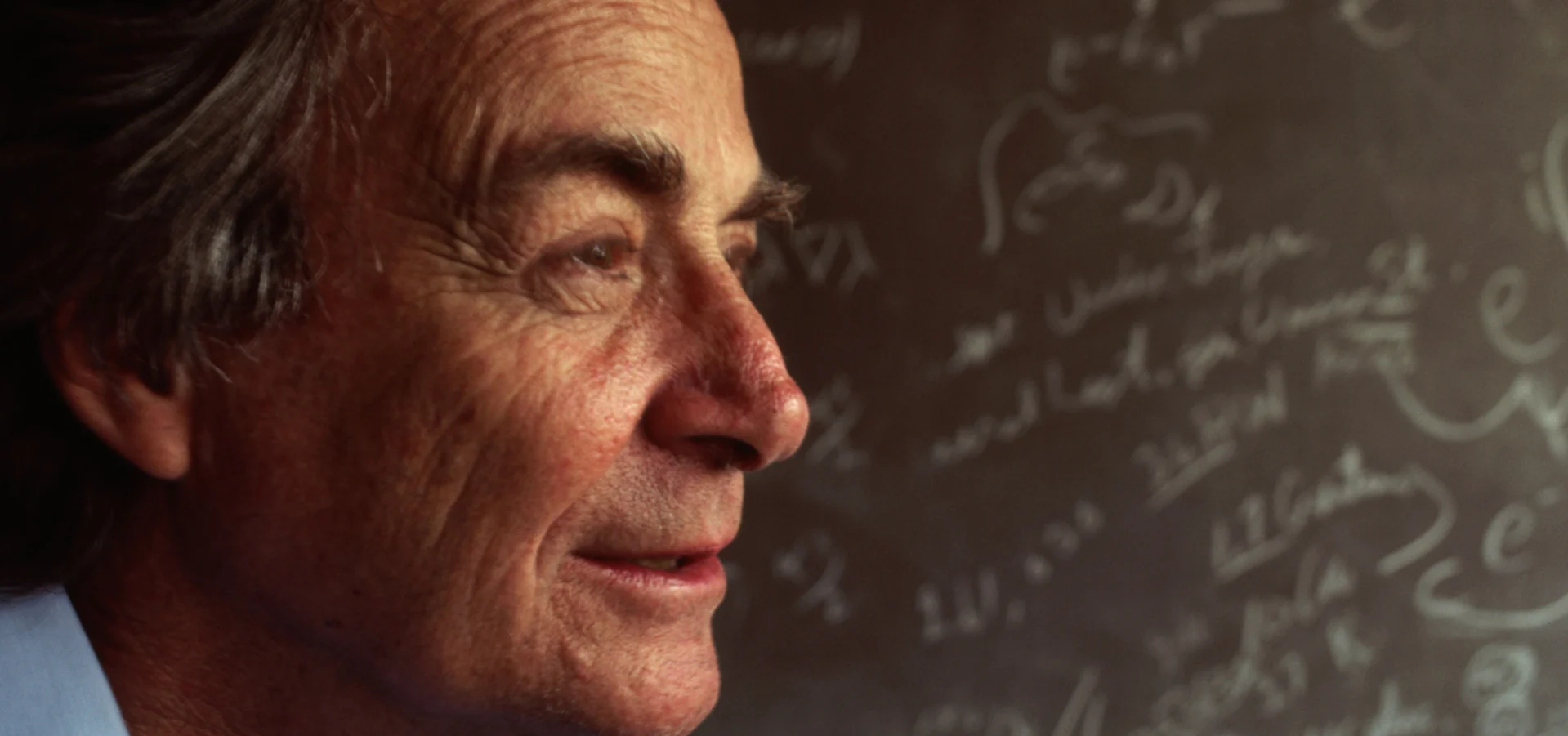
The clip is short. A minute and a half, maybe two. It comes from a longer BBC series called Fun to Imagine, recorded in 1981, and it circulates online in the way that things circulate when they keep striking people as true. In it, Feynman describes a conversation with an artist friend who believes that science strips the world of its beauty. Feynman's response is patient, warm, and quietly devastating.
I have a friend who's an artist and has sometimes taken a view which I don't agree with very well. He'll hold up a flower and say “look how beautiful it is,” and I'll agree. Then he says “I as an artist can see how beautiful this is but you as a scientist take this all apart and it becomes a dull thing,” and I think that he's kind of nutty.
First of all, the beauty that he sees is available to other people and to me too, I believe… I can appreciate the beauty of a flower. At the same time, I see much more about the flower than he sees. I could imagine the cells in there, the complicated actions inside, which also have a beauty. I mean it's not just beauty at this dimension, at one centimeter; there's also beauty at smaller dimensions, the inner structure, also the processes. The fact that the colors in the flower evolved in order to attract insects to pollinate it is interesting; it means that insects can see the color. It adds a question: does this aesthetic sense also exist in the lower forms? Why is it aesthetic?
All kinds of interesting questions which the science knowledge only adds to the excitement, the mystery and the awe of a flower. It only adds. I don't understand how it subtracts.
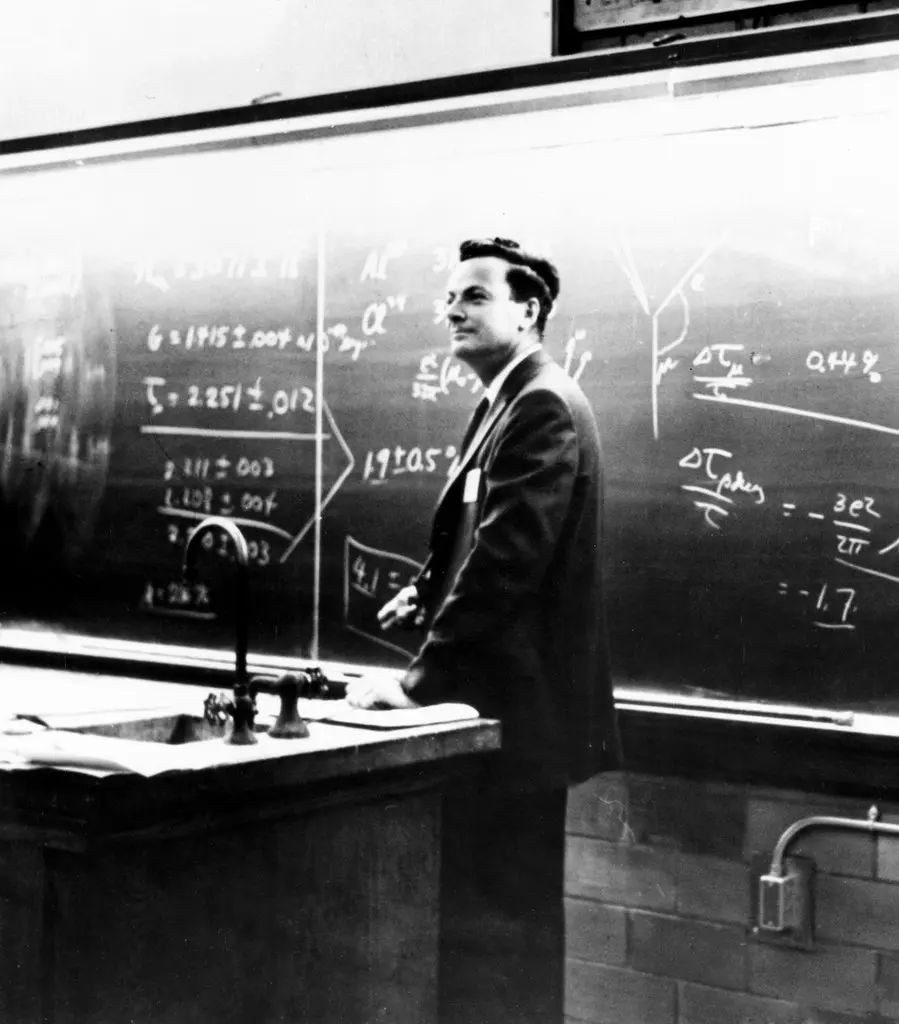
The clip is an excerpt from Fun to Imagine, a 1981 BBC documentary series in which Feynman walks through everyday phenomena — fire, rubber bands, magnets, mirrors — with the same disarming curiosity.
The argument Feynman is pushing back against has a long pedigree. Keats called Newton out for “unweaving the rainbow” — breaking white light into a spectrum and, in doing so, supposedly emptying the sky of poetry. It is a beautiful grievance. The problem is that it assumes beauty has a fixed quantity: that you must choose between the arc of colors and the physics of refraction, between the flower and the cell. Feynman's entire point is that this is a false trade. The cell is also beautiful. The refraction is also beautiful. Understanding the mechanism does not cancel the experience — it layers it.
“It's not just beauty at this dimension, at one centimeter. There's also beauty at smaller dimensions.”
Richard Feynman
The Question He Leaves Open
Feynman notes that flower colors evolved to attract insects — and then stops to ask whether insects experience something like aesthetics. Whether there is, in some minimal form, something it is like to be drawn to a color.
He does not answer the question. He just leaves it there, open, in the middle of a two-minute clip about a flower. This is the move that separates curiosity as a performance from curiosity as an actual way of being in the world — he finds the question more interesting than the answer would be. It is the same instinct that drove him to walk into a classroom in Brazil and ask why the students could pass every exam without understanding anything.
What makes the clip stick is not the argument — the argument is simple and correct — but the texture of how Feynman makes it. He is not defending science against art. He is genuinely puzzled that anyone would see them as competitors. The phrase “I don't understand how it subtracts” is not rhetorical. He actually doesn't understand. That bafflement is the whole video.
There is something else worth noticing. Feynman says the artist's beauty is “available to other people and to me too” — meaning he does not claim science gives him a superior kind of seeing, only an additional one. He is not standing over the flower. He is standing beside it, at multiple scales at once, none of them crowding the others out. The one-centimeter flower and the cellular flower and the evolutionary flower and the entomological flower are all the same flower, all at the same time. That is not a reduction. That is a view from everywhere. It is, in a different register, what he describes in Surely You're Joking as play — something that looks trivial and turns out to be the whole thing.
Two minutes. A flower. A question about whether bees find things beautiful. Not a bad use of a Tuesday afternoon.
In short
A two-minute argument against a grievance that has lasted three centuries. Feynman wins it by not arguing — only by being genuinely confused that anyone would disagree.
Richard Feynman — Fun to Imagine, BBC, 1981 · abakcus.com